I. INTRODUCTION
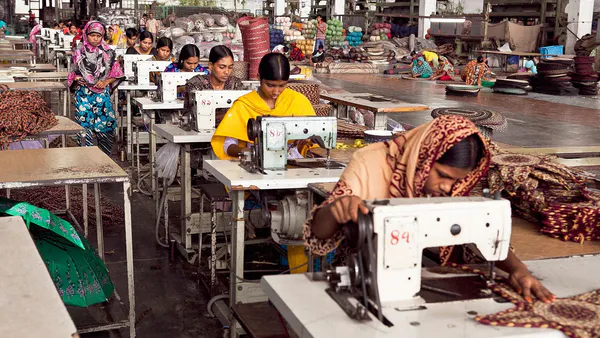
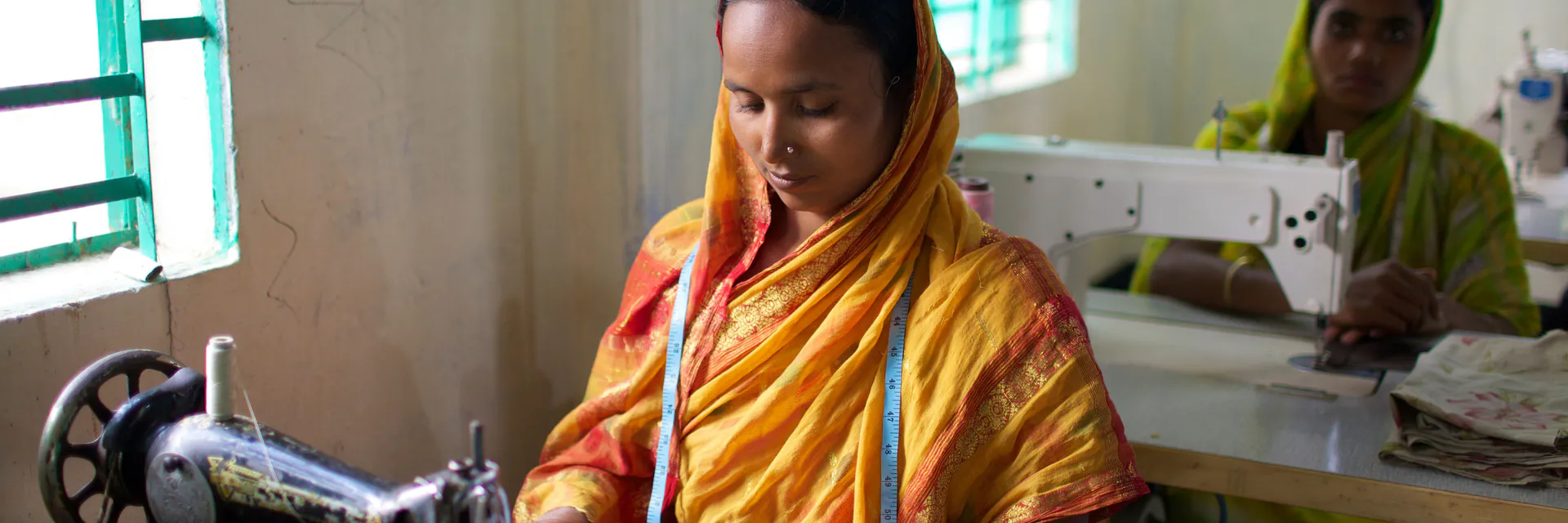
Bangladesh is a labor abundant country because of being available at very little wages, the garment industry gained the highest focus and has become the second-largest ready-made garment exporter in the world. The industry is taking on green manufacturing practices and employs about 4.00 million people, including 80% of them is women. The industry has created a platform for 3.2 million low skilled female to involve in the new productive activities in the society and to empower them through skills development and employment generation. It also creates vulnerabilities for them which are related to their social safety and security. In Bangladesh case, women RMG Workers are suffering from various risks because of working in unsafe home inside and outside conditions and under unrealistic factory rules. Hence, this study tries to find out how the garment industry is prompting violation of women workers' rights.
II. LITERATURE REVIEW
Social safety means freedom from the occurrence or risk of injury or loss mentally & physically. Alsorefers to the protection of workers from the danger of workplace accidents [1]. Security includes conditions of service ranging from the stage of appointment to the termination of service and even beyond and relates to matters about disciplinary action [2]. The 1980's mark the beginning of the rapid integration of Bangladesh's a small and open home-based garment industry into global garment chain as result of liberalization of the economy [3]. Pratima Paul Majumder and Anwara Begum in their paper discuss the gender imbalance in the export garment industry in Bangladesh [4]. Naila Kabeer and Simeen Mahmud, Rags, Riches and Women Workers: Export-oriented Garment and Women Workers, was about Bangladesh garments [5]. "Globalization and Bangladesh-A discussion on Bangladesh's Garment Industry" was about globalization and Bangladesh Garment industry [6]. Previously some studies worked on women workers' discrimination, health issues, workplace safety but there is much lack. No study was about women workers' social safety & security issues in RMG sector. This study highlights those areas where the women workers are deprived of the rights yet that are ensured by Bangladesh Labor Law 2016. It focuses on working condition, problems they face home, society & workplace, their conjugal life, and some other important topic.
a) Necessities of social safety & security for women workers of RMG sector in Bangladesh
Today organizations can change their material, needs, goods, and services to other organizations or other countries. But the only one resource which is not exchangeable is human resource. So, we can say that the human is the most competitive asset of any organization that cannot be exchangeable. Human resources or human assets mean the workers or the employee of any organization and a part of this human asset is the women workers who play a significant role in the overall production in RMG sector. If this indispensable part of the employee is not satisfied with the measures and incentives provided by the authority, it will have a negative impact, and the factory has to suffer in the long run. So it is a must to take necessary steps for their benefit as well as for their stakeholder.
III. OBJECTIVE OF THE RESEARCH
This study mainly aims at justifying the status of social safety and security of women workers' in RMG sector of Bangladesh in line with the national and standard practice coupled to investigating the main loopholes for the required social safety and security. The highlighted topics are -
√ Family & Society affairs, Facilities available according to labor law, Trade union membership, Workplace environment, Transportation support, Inadequate payment of overtime.
IV. RESEARCH METHODOLOGY
a) Research Design & Research Tools
The research design for this study was a descriptive survey through the questionnaire. The purpose of using descriptive survey was to collect detailed information that describes an existing phenomenon. From a review of the literature, a survey questionnaire was developed to collect data for the study. The primary data was collected through this form of questionnaire and was hand delivered to the target employees. The participating employees filled the questions and returned. After that, the results were further analyzed using descriptive statistical analysis method to find out how the employee turnover affects their production. This study is a descriptive survey because it adopted the use of questionnaire aimed at finding the impact of employee turnover on organizational performance..
b) Data Collection
Primary data collection: Workers provided primary data by oral interview according to the questionnaire. The Sample size was 400 respondents for this project from around fifteen factories around Gazipur, Dhaka, Narayangonj & Chittagong. The data collection time was October 2017 to January 2018.
Secondary data collection: The newspapers, internet & books provided the secondary data.
c) Data Processing & Analysis
According to the questionnaire, the collected data are represented in analytical charts in the quantitative method. Percentage method is used in the charts and diagrams.
Formula: (Frequency/Population) X 100 d) RMG Women Workers' Social Safety & Security Issues In Bangladesh
| Questions | Response variables | Parameters (Total)Frequency = 400Percentage=100% | |||||
| Strongly Agree | Agree | Neutral | Disagree | Strongly Disagree | |||
| 1. | Does your work have any negative impact on your family life? | 120 | 132 | 92 | 40 | 16 | 400 |
| 30% | 33% | 23% | 10% | 04% | 100% | ||
| 2. | Do you get proper respect from society? | 40 | 64 | 80 | 120 | 96 | 400 |
| 10% | 16% | 20% | 30% | 24% | 100% | ||
| 3. | Do you feel safe on the way traveling to factory? | 68 | 96 | 84 | 112 | 40 | 400 |
| 17% | 24% | 21% | 28% | 10% | 100% | ||
| 4. | Do you face any sexual harassment in your factory? | 56 | 80 | 24 | 148 | 92 | 400 |
| 14% | 20% | 06% | 37% | 23% | 100% | ||
| 5. | Does your factory have female membership facilityin trade union? | 16 | 80 | 64 | 140 | 100 | 400 |
| 04% | 20% | 16% | 35% | 25% | 100% | ||
| 6. | Do you get adequate maternity leave? | 52 | 64 | 36 | 152 | 96 | 400 |
| 13% | 16% | 09% | 38% | 24% | 100% | ||
| 7. | Do you get childcare & canteen facilities in the workplace? | 72 | 64 | 40 | 136 | 88 | 400 |
| 18% | 16% | 10% | 34% | 22% | 100% | ||
| 8. | Do you get proper payment for overtime? | 12 | 84 | 12 | 180 | 112 | 400 |
| 03% | 21% | 03% | 45% | 28% | 100% | ||
| 9. | Do you have to perform any dangerous work? | 80 | 160 | 44 | 92 | 24 | 400 |
| 20% | 40% | 11% | 23% | 06% | 100% | ||
i. Family life security
In Bangladesh, garment women workers' family life is affected by their work yet. 33% women agreed, and 30% strongly agreed that a negative impact is present here rudely. Women are being tortured mentally and sometimes physically by their husbands. And families have broken off many. Though women are working, being independent economically and contributing to the family, yet they are facing severe negligence in family life.
ii. Social respect
At present, RMG factories are increasing day by day, and the number of women workers joining this sector is just running with it. But the main problem is that the people does not respect women worker. 34% women agreed and 24% women strongly admit that they are disrespected most of the times by family and society. The society put rough remarks about them mostly which affects them mentally and thus hampers personal along with working life.
iii. Traveling way safety
Garment women workers are not safe at the proper level on the way traveling to factories. Maximum 28% disagreed in the case of safety. Almost all factories have no transportation system for women workers for taking care of their safety. Women are victimized through harassing situations and most of the time they are not safe on the way to returning to home especially after doing overtime.
iv. Sexual harassment in the workplace
In Bangladesh, garment women workers are yet harassed sexually by colleagues like a lineman, supervisor, and manager sometimes but the no. is little. 20% women agreed about harassment and 14% strongly agreed. Though it has been reduced to an extent, still women are threatened, raped and sometimes burnt by acids.
v. Female membership quota in trade union
At present, many factories have no trade union. Which factories have trade union, most of them do not have female membership quota. 35% women disagreed in getting this facility and 25% strongly disagreed. Most of the women did not know about labor rights and deprived of their rights. If there are quotas for women in the trade union, elected representatives can raise their voice to acquire all their rights to stated authority and can aware women about their labor rights.
vi. Maternity leave facility
In Bangladesh, almost all factories are giving maternity leave facility to women workers, but workers do not enjoy leave duration in the proper way according to labor law. Labor law says, eight weeks preceding the expected day of her delivery and eight weeks immediately following the day of her delivery with payment should be the maternity leave duration. And here 38% women disagreed, and 24% strongly disagreed in getting adequate maternity leave.
vii. Childcare & canteen facilities
At present, women workers are not getting childcare & canteen facility. Most of the factories do not have any childcare system, and some do not have canteen yet. Maximum canteen arrangements are very poor and unhygienic. So, workers have to go the home for their lunch. 34% women disagreed, and 22% strongly disagreed with having these facilities.
viii. Payment of overtime
Unfortunate but truth is in Bangladesh's perspective; women workers have to do overtime because of poverty although being a safety issue. But they are not paid according to labor law which hampers their economic security. Maximum disagreed, and strongly disagreed in getting the proper payment of overtime. Labor law says, overtime payment should be twice one's ordinary rate of basic wage and dearness allowance and ad-hoc or interim pay if any. But they are not getting this.
ix. Performing dangerous work
Women workers have to perform yet risky works in factories near machinery in motion like high-speed rotary machines which is not safe for them. According to labor law, operations in motion shall be made or carried out only by a specially trained adult male worker wearing tight-fitting clothing whose name has been recorded in the register prescribed in this behalf. So, these works are strictly prohibited for women. Many factories have no concern in taking care of this. 40% women agreed in this purpose.
V. FINDINGS
Very little family life security. Mental and Physical torture relating to their work.
Very little social respect. High negligence and bad remarks relating to work from society.
Inadequate transportation system from the factory.
Sexual harassment happened by the lineman, the supervisor and the manager in the workplace sometimes.
Not enough female membership quota in the trade union.
Not adequate maternity leave facility according to labor law.
Not enough childcare & canteen facilities.
Not proper payment of overtime according to labor law.
VI. RECOMMENDATIONS
To arrange high-level social awareness program & regular monitoring figure for women issues. Social counseling is needed as well.
To provide safe transportation facilities for women workers from a factory.
To implement government laws in women rights reservation issues in family & every level of society and manage proper punishment for offensive actions.
To make them feel safe & comfortable.
Globalization and Bangladesh-A Discussion on Bangladesh's Garment Industry, from: http://www.opendemocracy.net/debates/article-6-30-1840.jsp#
To arrange the motivational program to avoid ill-treatment for women workers.
To give them proper knowledge about their rights according to the labor law.
To provide quota for female membership in the trade union.
To ensure their adequate maternity leave and other leaves with payment.
To provide childcare in the factory.
To provide hygienic canteen facilities in the factory.
11. To ensure a proper allowance for overtime work
To have welfare officer and maintain welfare and counselor Register.
To implement labor law & prohibit dangerous works for women.
VII. CONCLUSION
Bangladesh readymade garment industry creates several vulnerabilities related to women rights, life standard, and life-threatening risks. The findings of this research is that employees are neglecting women workers' rights & have made the entire work environment dangerous and insecure for women. This study highlights the actual working condition prevailing in garment industries, women workers' demands, wants and needs, the problems continuously they face in their family, society, workplace, and all-over social safety & security conditions. This study also gives the solution should be taken to satisfy this workforce. Proper coordination between private & government measures should be ensured to uphold RMG women workers' social & occupational safety & security.
3. https://en.wikipedia.org/wiki/laborrights
Pratima Paul Majumder and Anwara Begum, June 2000, The Gender Imbalance in the Export Oriented Garment Industry in Bangladesh, The World Bank, Development Research Group/Poverty Reduction and Economic Management Network, from: http://www.worldbank.org/gender/prr.
Naila Kabeer and Simeen Mahmud, Rags, Riches and Women Workers: Export-oriented Garment and Women Workers: Export-oriented Garment Manufacturing in Bangladesh, from: http://www.wiego.org/publications