No ethics committee approval was required for this article type.
Data Availability
Not applicable for this article.
Dr. Kristine Joy C. Carriedo. 2026. \u201cSocio-Economic Factors Influencing the Adoption of LinksFarm Project by Vegetable Farmers in Malungon, Sarangani\u201d. Global Journal of Management and Business Research - E: Marketing GJMBR-E Volume 25 (GJMBR Volume 25 Issue E1): .
### CHAPTER I
## I. INTRODUCTION
### a) Background of the Study
Agriculture does not only help in ensuring food security but also serve as the backbone of the economy that stimulates economic activity though job creation and global trade (J, 2024). With the growing population and demand and an expected population growth of 9.6 billion by 2025, farmers need to adopt new strategies to cope up with increasing need of food supply(Nakelse, 2024). However, opposite to what is expected, farmers are facing challenges globally such as declining productivity (Lagare, 2021), disconnection from agriculture (Robinson, 2025), and market access (J, 2024).
Nora (2023) highlighted the factors affecting low-agricultural productivity which are low capital investment, lack of coordination between farmers and producers, and being too dependent on manual labor, neglecting the use of machinery to increase productivity. Nakelse (2024) emphasized the "Valley of Death" which refers to the gap that hinders the adoption of new methods and systems to help increase the Total Factor Productivity (TFP). According to Fuglie et al. (2024), global agricultural output decreased from $2.72\%$ (2001-2010) to $1.93\%$ (2011 to 2020) significantly impacting food security and agricultural sustainability.
During the height of pandemic, agriculture showed resilience with a $2.1\%$ growth for crops while other sectors are declining (Habito, 2023). However, it is evident that the industry still suffers from low growth in agriculture which can be attributed to the increase of rural population and declining farm size (Lagare, 2021). When compared to other countries, Philippines has fallen behind in agricultural outputs and shows a slowdown in technological progress concluding that lack of recognition for technology and innovation negatively impacts production (Talavera, 2023). According to Tangonan (2023), this challenge is due to lack of proper communication about technology features which must be provided by researchers to farmers, allowing farmers as end users to appreciate the benefits of using modern technology in agriculture.
While PhilSEED (2023), emphasized the top 5 problems most farmers are facing which are capital, postharvest facility, climate change, market access, and innovation. As noted, many farmers rely on money lenders who charged high interest ranging from $10 - 20\%$ per month, improper handling of produce which can result in income losses, rising temperatures that damages the crops, lack of capacity of small farmers to connect with bigger market, lack of transportation infrastructure, adoption, dissemination, and implementation of modern technology.
Malungon is a landlocked municipality serving as a border of General Santos City and Davao region. In one of its 2024 vision, the emphasis is on becoming a home to dynamic rural communities thriving with farmers transformed into farmer entrepreneurs whose transfor mation is guided by the sound practices of resource sustainability through improved farming productivity. One of the programs introduced to achieve the vision of Malungon towards its smallholder farmers is the LinksFarM project. LinksFarM project aims to help farmers in Malungon to improve their livelihood through enhancing agricultural productivity, managing agricultural production, and integrating farmers in value chain (Cudis, 2019). However, despite the potential benefit of this project, some small farmers in Malungon suffers from challenges while some farmers are hesitant to adopt the LinksFarM project.
Hence this project aims to understand the impact of LinksFarM project in the Municipality of Malungon, Sarangani Province and identify the challenges faced in the implementation of the program. The result of the study will be disseminated to all sectors that will benefit from this study including future researchers for further expansion of the study's scope.
### b) Statement of the Problem
This study aimed to identify socio-economic factors influencing the adoption of LinksFarM project by vegetable farmers in Malungon Sarangani Province.
Specifically, this study aimed to address the following questions:
#### 1. What is the demographic profile of the respondents in terms of:
1. Age;
2. Gender;
3. Marital status;
4. Household size;
5. Highest educational attainment; and
6. Membership in organization?
#### 2. What is the farm profile and economic status in terms of:
1. Years in farming;
2. Tenurial status;
3. Total farm size;
4. Farming system used;
5. Water management;
6. Estimated monthly income from vegetable farming; and
7. Other sources of income?
#### 3. What are the marketing dynamics employed and support services in terms of:
1. Selling the produce before the adoption of LinksFarM project;
2. Marketing activities employed in selling the produce;
3. Challenges faced in marketing the produce;
4. Major challenges faced as vegetable farmers;
5. Do they receive support services from government agencies;
6. Agencies giving support services; and
7. Services received?
4. What is the awareness and perception of LinksFarM project among vegetable farmers in Malungon, Sarangano Province?
5. What are the challenges farmers organization encountered in implementing the LinksFarM project in Malungon Sarangani Province?
### c) Significance of the Study
The researcher seeks to contribute to the current body of knowledge by offering an in-depth analysis of the Socio-Economic Factors affecting the adoption of the Linking Smallholder Farmers to the Market (LinksFarM) project implemented by DAR. The insights derived from this study will shed light on the factors influencing the adoption of vegetable farmers to participate in DAR's marketing assistance program, providing valuable information for policymakers, development researchers, and other stakeholders.
## i. Policy Makers
The outcome of this study will benefit policy makers in formulating relevant policies and programs that will enhance the livelihood of small farmers in Malungon, Sarangani province ensuring a more efficient and sustainable programs, projects, and activities (PPAs).
## ii. Smallholder Farmers
This study will help smallholder's farmers understand the potential benefits of participating in initiatives such as the LinksFarM project. Through active participation, collective efforts and technology adoption, maximizing income while lowering cost can be achieved. Better market access and technology adoption will not only help in enhancing productivity but lead to farming sustainability.
## iii. Farmers Organization
This study will provide farmers organization insights about the factors that hinders success of project implementation. The output will enable them to generate data-driven strategies on improving the existing project and collaborating with potential partners that could support the adoption of project.
## iv. Department of Agrarian Reform (DAR)
This study will benefit the DAR as the primary agency responsible for supporting smallholder farmers. Evidence-based and data-driven reports can help in identifying challenges and project enhancements such as conducting training and offering subsidies or financial support to help farmers acquire the needed technology for a more sustainable agricultural activity.
## v. Future Researchers
This study can serve as a foundation for future researchers exploring the same topic about smallholder farmers. The output of this study will serve as a guide for future research directions related to agricultural activities and farming practices of smallholder farmers.
### d) Limitation and Delimitation
This study aimed to uncover the socioeconomic factors of vegetable farmers in Malungon, Sarangani Province and the challenges faced by farmers organization in implementing the LinksFarM project. Through this study, the researcher aimed to provide data-driven and evidence-based result that will serve as a guide for sectors in formulating programs and practices to help elevate the livelihood of smallholder farmers in the municipality of Malungon. However, this study was limited only to vegetable farmers as primary source of data in this study.
The study included 86 respondents to answer the quantitative part of the study and 16 participants to answer the key-informant-interview questions which aims to delve deeper on the challenges of farmers organizations. The study was conducted from in March 2025 to give enough time for researcher to identify farmers who fit the criteria of the study.
### e) Definition of Terms
## i. Farm Profile
Operationally, a farm profile provides a detailed and comprehensive overview of a smallholder farm, typically including information such as landholding size, years in operation, types of crops grown (in this case, vegetables), farming practices (conventional or organic), access to resources (like irrigation facilities), economic performance (yield, income), and other relevant farm-specific data. Conceptually, it serves as a snapshot of the key characteristics, resources, practices, and performance indicators of a smallholder farm. It helps stakeholders, researchers, and policymakers understand the structure, dynamics, and capabilities of smallholder agricultural enterprises.
Adoption (Non-adapter and Adopter)
Operationally, non-adopter refers to a smallholder farmer who has not participated in or adopted the specific program or technology under study, in this case, the Linking Smallholder Farmers to the Market (LINKSFARM) program, and Adopter refers to a smallholder farmer who has actively participated in or adopted the specific program or technology under study, such as the LINKSFARM program.
Conceptually, Adoption signifies the acceptance, uptake, and implementation of a particular program, technology, or practice within a specified context, particularly among smallholder farmers. It reflects the willingness and ability of smallholder farmers to integrate new initiatives or innovations into their existing operations or routines.
## ii. Smallholder farmer
Operationally, a smallholder farmer is someone who works on a small plot of land, usually less than three hectares, relying mostly on the help of their family. They often don't have much access to money or advanced farming equipment, so they use traditional, hands-on methods to grow their crops.
Conceptually, a smallholder farmer is more than just their farm size and methods. They are deeply connected to their community, playing a vital role in local food security and poverty alleviation. These farmers are essential to rural development, maintaining traditions and fostering resilience in their communities.
## iii. Socio-Demographic
Operationally, socio-demographic characteristics are measurable attributes of individuals or groups, particularly smallholder farmers, that include age, gender, education level, household size, marital status, and other similar factors.
Conceptually, socio-demographic characteristics provide insights into the social and demographic makeup of smallholder farmers, helping researchers understand their composition and how these factors may influence behaviors, decisions, and outcomes within the agricultural context.
## iv. Socio-Economic
Operationally, socio-economic factors encompass economic and social attributes that influence individuals or groups, specifically smallholder farmers. These factors include income level, landholding size, years of experience in farming, access to resources (like credit and inputs), market practices, and other relevant economic and social indicators.
Conceptually, socio-economic factors reflect the interplay between economic conditions and social aspects among smallholder farmers, highlighting how economic circumstances, resources, and opportunities impact social well-being, livelihoods, and decision-making processes within the agricultural sector.
### CHAPTER II
## II. REVIEW OF RELATED LITERATURE
This section presents the overview of the literatures relevant to the current study especially on the role of agriculture in food security and sustainability, the adoption of modern farming techniques, the challenges of farmers, and the potential benefit of LinksFarM Project.
# a) The Role of Agriculture in Livelihood and Food Security
Agriculture stands out as one of the most impactful sources of livelihood for individuals globally (Amanullah et al., 2020). Not only does it create employment opportunities for farmers, but it also helps in poverty alleviation and hunger reduction (Amanullah et al., 2020). Agriculture is an economically active sector that mitigates food insecurity and offers a sustainable source of income to rural regions (Garbero&Jäckering, 2021; Zhang et al., 2025). Young (2018) also noted that agriculture serves as the primary contributor for alleviating poverty by elevating the economy of developing countries.
In Nueva Ecija, Philippines, known as the "Rice Granary of the Philippines," agriculture serves as the primary source of income for many, as evidenced by the significant portion of land used for agriculture (Lagasca et al., 2024).
With the increasing population, together with an intensive campaign for a sustainable development goal towards a sustainable future, the need to upgrade farming practices is crucial. In Punjab, with people becoming conscious of health dangers such as cancer resulting from the uneven use of pesticides and weedicides, farmers are investing in the use of organic farming regardless of the price (Bajpai & Kumar, 2022). While organic farming requires high initial capital, it can also bring long-term benefits for both farmers and consumers by providing a safe and chemical-free farming method and produce.
### b) Challenges in Agriculture
Smallholder farmers play a significant role in food security and national stability. In sub-saharan Africa, smallholder farmers are crucial in food production (Mwalyagile et al., 2024). However, concerns regarding aging population and dominance of male over females pose significant challenges in the agriculture industry.
In Poland, Satoja (2019) studied about the aging population of smallholder farmer and discovered that it is dominated by older age group leading to workforce deficiency. This implies the need for programs and policies that will encourage youth participation in farming. In china, many workforces have shifted from agricultural to non-agricultural employment which endangers the agricultural industry of the nation (Tong et al., 2024).
In terms adopting modern technology, elderly farmers are relying on the conventional practices that have worked for years making it challenging to adjust with the modern farming methods and technologies (Satoja, 2019). While the result shows that younger generations are more open to innovation and technologies, they lack the interest to continue farming as livelihood, which poses a challenge with long-term sustainability in farming industry. Tong et al. (2024) emphasized the reason for older farmers decline to new technology and farming practices to their declining physical abilities and unwillingness to risk. However, the study of Zhang et al. (2025) contradicts the reports of previous researchers, their study revealed a positive association with population aging and agricultural socialization services. This indicates that as population in rural areas ages, the likelihood of adopting new farming methods and technologies also increases despite the limitations in their physical abilities.
A study of coffee farmers in Davao City, Philippines was explored by Sabroso and Tamayo
(2022) who found out that farming agricultural lands has long been a primary source of livelihood for years most of the coffee farmers. In average, the demographic presentation in terms of age for coffee farmers in Davao is less than 50 years old. Agricultural industry in the Philippines is now facing the challenge of aging farmer population, evidenced by the dominance of older demographics within in the sector (Sabroso & Tamayo, 2022)
Gender differences in farming are also evident in many countries. In the study of Mwalyagile et al. (2024) in Tanzania, male farmers have larger population than females due to the farming management, hierarchical position in the family, and the decision-making power, and access to irrigation system. While in Nueva, Ecija, the prevalence of men in agricultural activities is due to the physical demands need in farming (Lagasca et al., 2024). This is consistent with the study of Orejudos et al. (2022) in North Cotabato, Philippines, revealing dominance of male over female in banana farming. The study of Bello et al. (2021) explored the difference in performance (productivity) gap between male and female, findings revealed that farms that are managed by male household are $11\%$ more productive them women. Concluding that a gap persists in the productivity between men and women even if women are given equal access to productive resources. This suggests the important role of the government in creating interventions that will give equal chances for both male and female in accessibility and decision-making, enabling a supportive environment for women.
The study of Ge et al. (2023) in China on crop diversification, also revealed the prevalence of male than female owning a land area of less than 1 hectare. Different result was revealed in the study of Peralta (2022) in Vanuatu, revealing high participation of women in agricultural activities from growing to harvesting of food crops. However, they females do not hold the decision-making power such as regarding income from crops, indicating that women are less empowered compared to men.
While, it was also revealed in the study of Satola (2019), that most of the farmers have finished vocational courses or primary education indicating lacking in advanced training and education that are necessary for a successful adoption of new farming techniques and innovation. While in the findings of Ge et al. (2023) in China, results revealed that although few farmers have finished college education, however, almost half were able to finish junior high school. Almost $50\%$ of the farmer respondents of Orejudos et al. (2022) in North Cotabato, Philippines were not able to finish elementary education. While these farmers have acquired expertise from years of farming experience, it is important that farmers have acquired courses that will enhance their knowledge and skills in agriculture amidst growing demand and technology advancements.
Lagasca et al. (2024) highlighted that the problem face but many farmers in the Philippines, is attributed to low income due to low yield, poor quality of produce, and losses during the post-harvest. The rice farmers in Nueva Ecija are facing challenge of market access (Lagasca et al., 2024). This emphasized the need for strategies that will promote market expansion to enhance profit margins especially for farmers who are heavily reliant on income from agricultural activities.
Meanwhile, Hossain et al. (2024) emphasized that financial poverty on a monetary basis is alleviated with regard to practically implemented agriculture development projects on financial aid and training access on intervention for farmers. The study of Orejudos et al. (2022) in North Cotabato also revealed that if there is no opportunity for credit access or financing is limited, it negatively impacts farmers likelihood of participating in a collective marketing. This highlights the need to have access to financial resources like loans or other subsidized aid which improve socio-economic conditions of a region, particularly for poorer farmers. This also emphasized on training farmers to apply new sustainable methods or practices that would help raise productivity.
Farmer organizations also faced the challenge of limited community participation. While these organizations help in collective marketing of the products, poor infrastructure quality and disagreements among members hinders the success of organization effectiveness and progress (Mugwe et al., 2018). Some farmers also own less than a hectare of land which makes disposal of their produce, wasting their effort to join to join in collective marketing of organizations (Orejudos et al., 2022). Implying that smallholder farmer who have less production input are less likely to join collective marketing.
### c) Conventional and Modern Farming Method
Many farmers are used to conventional method of farming using their bare hands during planting, growing, and harvesting. They have been using this process for years to earn income and feed their family. While traditional method is cost-effective, the unpredictable yields and low product quality may hamper the effort invested by farmers to grow their crops affecting the potential to earn better income. With the increasing population and increasing demand for food, farmers need to upgrade their practices to increase their productivity and sustainability. Modern agriculture helps in generating larger quantity of produce with less manpower focusing on maximizing production and consistent quality, thereby alleviating severe poverty (Bajpai & Kumar, 2022).
Vasant et al. (2024) conducted comparative analysis of modern farming and traditional farming in
India. Findings revealed that while modern method requires high investment; larger scale operations can reduce the cost per unit and can result in higher efficiency and yield. Adopting the farming method requires training and knowledge, which serves as obstacle for farmers especially for those who have been farming for years using the conventional method. In addition, to protect the farmers from price fluctuation, the government set a guaranteed price floor and subsidies on inputs to reduce the cost of production for farmers. They have also provided crop insurance to protect farmers from possible crop losses especially when market prices are low. Indian government also invested in rural infrastructure; however, the pace of the development is slow. It can be noted that Indian government provides support to their farmers through different initiatives that will empower them and shift to method that will best give them the higher return. Ultimately, this highlights the importance of government support to the farmers to facilitate the adoption of modern methods and ensure long-term sustainability.
In Africa, agricultural related development projects assist in those farming specific program objectives towards increasing the welfare of the farmers (Hossain et al., 2024). In the investigation of Cordonnier et al. (2024), they also pointed out the importance of large-scale policy or program related intervention for increasing agricultural production towards supporting low-income households. A success of a project relies to both the technology and the people working together enhancing productivity, improving efficiency, and managing of resources (Zhang et al., 2025).
### d) LinksFarM Project
Department of Agrarian Reform is an agency in the Philippines that is responsible for initiating agrarian reform program that aims to promote the living conditions of farmers.
Linking Farmers to Market (LinksFarM) is a project by Department of Agrarian Reform (DAR) to its beneficiaries and small farmers helping them to streamline the supply chain process (Cudis, 2019). The project aims to increase the agricultural productivity of the farmers, empower farmers to be entrepreneurs by developing their own products, and manage their own business, potentially uplifting the livelihood of many low-income farmers.
offering new product in the market, thereby increasing source livelihood of many small farmers.
LinksFarM project helps in promoting collective marketing for organization of farmers. Collective marketing is a solution for many farmers who have poor access to the market, it also helps in better prices, and low cost of inputs (Mugwe et al., 2018). Hence, it is important to have a facility that will hold the supplies until when the supplies are large enough to sell in the market. In Tulunan, Cotabato Province, DAR turned over an office building that can consolidate cardava banana amounting to P543,000. This facility serves as a central hub for banana farmers where they deliver their harvest every tuesday. This facility helps many farmers to prolong the life of their produce while still maintaining its quality. A study of Orejudos et al. (2022) in North Cotabato also revealed that increase in household members has positive impact on the likelihood of joining collective marketing. This indicates the only socioeconomic status the triggers a farmer to join in a collective marketing is the household size.
Hence, LinksFarM project bring potential benefit for improving the living conditions of many small farmers in the Philippines. By offering marketing support and credit access, it helps farmers transition from conventional to modern farming practices, empowering the to be maximize their opportunity and become successful farmers and entrepreneurs.
Department of Agrarian Reform is an agency in the Philippines that is responsible for initiating agrarian reform program that aims to promote the living conditions of farmers.
Linking Farmers to Market (LinksFarM) is a project by Department of Agrarian Reform (DAR) to its beneficiaries and small farmers helping them to streamline the supply chain process (Cudis, 2019). The project aims to increase the agricultural productivity of the farmers, empower farmers to be entrepreneurs by developing their own products, and manage their own business, potentially uplifting the livelihood of many low-income farmers.
LinksFarM project helps in promoting collective marketing for organization of farmers. Collective marketing is a solution for many farmers who have poor access to the market, it also helps in better prices, and low cost of inputs (Mugwe et al., 2018). Hence, it is important to have a facility that will hold the supplies until when the supplies are large enough to sell in the market. In Tulunan, Cotabato Province, DAR turned over an office building that can consolidate cardava banana amounting to P543,000. This facility serves as a central hub for banana farmers where they deliver their harvest every tuesday. This facility helps many farmers to prolong the life of their produce while still maintaining its quality. A study of Orejudos et al. (2022) in North Cotabato also revealed that increase in household members has positive impact on the likelihood of joining collective marketing. This indicates the only socioeconomic status the triggers a farmer to join in a collective marketing is the household size.
## i. Conceptual Framework
The figure below shows the conceptual framework of this study following the Input-Process-Output format which helps as a guide of the researcher in writing the study.
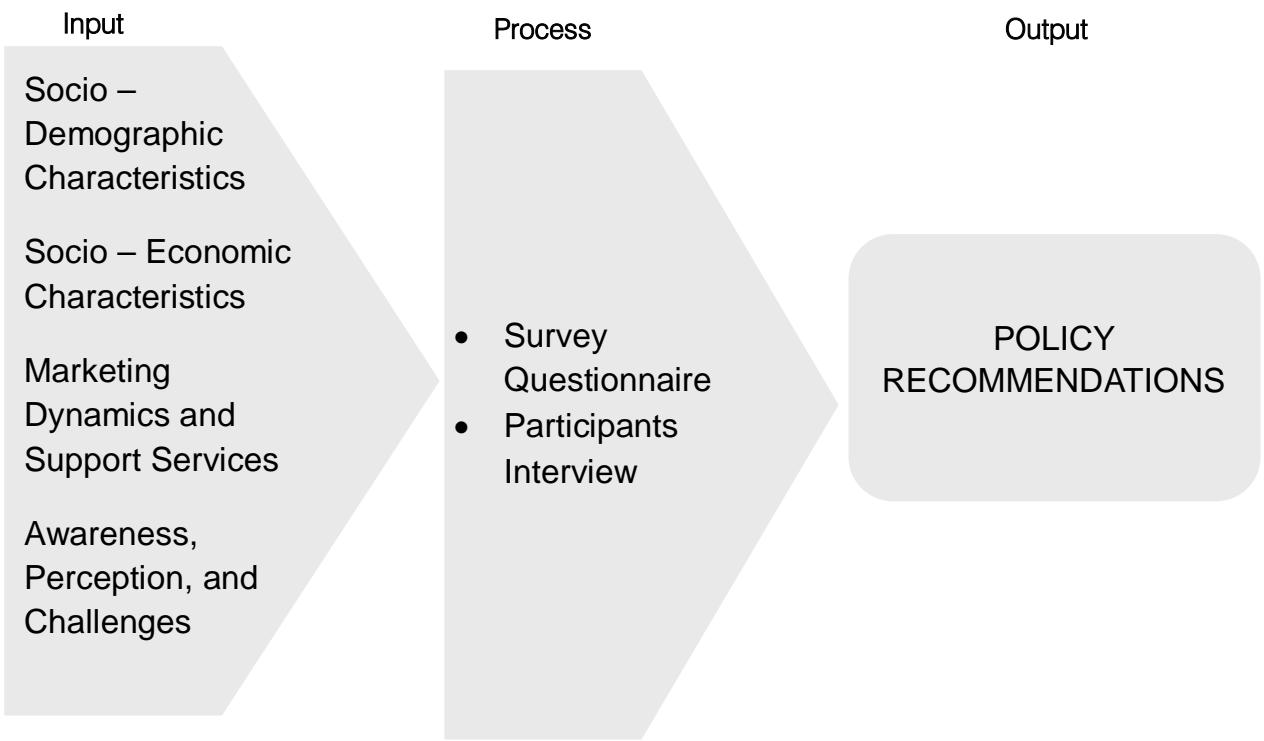
Figure 1: Conceptual Framework of the Study
The conceptual framework presents the roadmap of this study using the IPO format. This study aimed started with identifying the demographic and socio-economic characteristics of the respondents, the marketing dynamics and support services they received, and their awareness, perception, and challenges with LinksFarM project.
The process used two types of survey questionnaires. The types aimed to capture insights from 86 respondents where data will be analyzed using quantitative statistical treatments. While the second type of questionnaire aimed to delve deeper to the challenges faced by farmers organization during the implementation of the LinksFarM project. The final output of this study aimed to make an evidence and data based recommendation for policy makers that will help in crafting strategies aligning with the needs of the smallholder farmers in Malungon, Sarangani Province.
### CHAPTER III
## III. METHODOLOGY
This chapter provides an overview of how the study will be carried-out, including the research design, research locale, respondents of the study, sampling procedure, research instrument, research procedure, and ethical consideration.
### a) Research Design
The importance of this study stems from its potential to offer valuable insights and contribute to the comprehension of the Socio-Economic Factors influencing the adoption of the LinksFarM program by vegetable farmers in Malungon, Sarangani Province. By addressing the research questions, this study seeks to produce knowledge that can inform program and policy initiatives, ultimately improving the livelihoods of vegetable farmers.
A mixed-methods research approach combining quantitative and qualitative data gathering and analysis methods was employed, ensuring a comprehensive exploration of the research problems.
### b) Respondents of the Study
The study was conducted in the Municipality of Malungon particularly in Barangay Datal Batong, Datal Bila and Alkikan. Malungon is known for its agricultural production, particularly crops such as corn, coconut, cacao, pineapple, banana, rice, and high-value crops.
A list of vegetable farmers who have participated in LinksFarM program in Malungon, Sarangani Province will be obtained from the Department of Agrarian Reform Sarangani (DAR) Provincial Office. The LINKSFARM program benefitted 600 vegetable farmers.
Table 2: Number of Vegetable Farmers
<table><tr><td>Barangay</td><td>No. of Vegetable Farmers</td></tr><tr><td>Datal Batong</td><td>200</td></tr><tr><td>Datal Bila</td><td>200</td></tr><tr><td>Alkikan</td><td>200</td></tr><tr><td>Total</td><td>600</td></tr></table>
The sample size is computed using the Slovin's formula.
$$
n = \frac {N}{1 + N \times \mathcal {e} ^ {2}}
$$
Where:
$$
n = Sample size
$$
$$
N = Total population size
$$
$$
e = Desired margin of error (10%)
$$
$$
n = \frac {N}{\substack{1 + N\times \mathfrak{e}^{2}\\n = 86}}
$$
The total sample size of this study is 86 which is composed of both adopter and non-adopter of the LinksFarM project.
### c) Sampling Method
The researcher obtained the list of vegetable farmers from the office of the Department of Agrarian Reform (DAR). It serves as the basis of identifying the respondents and the participants of the study. The researcher aimed at capturing 86 respondents to answer the survey questionnaire and 16 participants to answer the key-informant-interview questions. Using stratified sampling method, the researcher divided the population into sub-groups which are: the adopters and non-adopters of LinksFarM project. Stratified sampling method involves dividing the groups into subgroups that shared similar characteristics which is also known as stratification (Hayes, 2025). Stratified sampling method is a type of probability sampling technique where everyone has an equal of being selected as respondent of the study. Using probability particularly stratified sampling method is essential since the researchers aims to uncover the insights and challenges of those who have adopted the project and not.
The specific respondents of the study were determined using draw lots using wheel of names. The names were drawn randomly until the desired sample size per subgroup was reached. The next process involved contacting the respondents and informing them about the study. This process ensured the bias was avoided and all data are relevant and correct.
### d) Research Locale
The study was conducted at Malungon Sarangani Province particularly in Barangay Datal Batong, Data Bila, and Alkikan. Malungon as previously mentioned is a border of General Santos City and Davao Region. It is a landlocked municipality that is rich in known for its rich agricultural production of crops such as corn, coconut, cacao, pineapple, banana, and rice, as well as other high-value crops. Malungon was selected as the beneficiary of LinksFarM project because of its compliance of the projects criteria which includes active farming activities in its communities, a need for better market access, and the interest of farmers to engage in new farming practices.
While the three Barangays which are Datal Batong, Datal Bila, and Alkikan were selected due to their potential for agricultural development. Hence, the researcher chose all of these three Barangays to capture relevant and diverse insights from the vegetable farmers living in the area. This approach will help to understand the impact of LinksFarM project from different barang and the challenges they faced during implementation. This also helped the respondents determine how different organization cope with the challenges in the implementation of the project and the factors that hinders the success of the program.
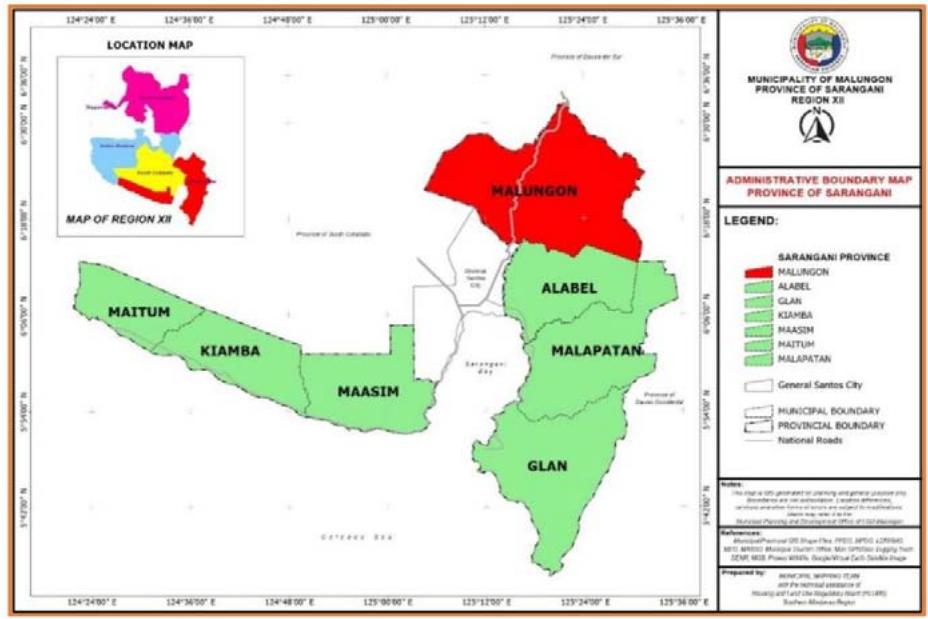
Figure 2: Map of Sarangani Province
### e) Research Instruments
The researcher crafted a survey questionnaire that will capture and address the problems of this study. There are two sets of questionnaires in this study as this study used mixed method research design which is composed of both quantitative and qualitative method. Both of the questionnaires were researcher-made and have undergone data validation to ensure that its validity and that it will measure what it intends to measure.
The quantitative method is composed of four sections which are all answerable by a checklist. The first part of the instrument aimed at gathering demographic profile of the respondents in terms of age, gender, marital status, household size, highest educational attainment, and if the farmer is a member of any organization. The second part of the instrument aimed to determine the farm profile and economic status of vegetable farmers in terms of years in farming, tenurial status, total farm size, farming system used, water management, and estimated monthly income from vegetable farming.
While the third part of the questionnaire aimed at understanding the marketing dynamics employed by farmers such as their method of selling their produce before the project, the type of marketing they engage, the challenges they faced in marketing their produce, and the major challenges vegetable farmers faced. Similarly, it aimed to determine if they received support services from government agencies such as LGU, DAR, and DA and what type of services they received from these offices. Lastly, the fourth part of the questionnaire aimed at understanding the awareness and perception of vegetable farmers about LinksFarM project such as if they have adopted the LinksFarM project, where they learned about the project, the benefits they expect in participating, and the hindrances in deciding not to participate in LinksFarM project.
The second set of the instrument is composed of key-informant-interview questions which aimed to delve deeper into the challenges faced by the farmers organization during the implementation of the program. Through identifying and understanding all these information will help the researcher create a more relevant recommendation to address the challenges and suggest improvement for successful implementation of the LinksFarM project.
### f) Data Gathering Procedure
With the assistance of the LinksFarM project point person of the DAR, the researcher was able to identify the beneficiaries through their database. The data collection process was completed in 3 months. The contents of the questionnaires and the instructions on how to fill out the matrix was thoroughly explained to the respondents. Before distributing the survey questionnaire, the researcher will write a letter to the organizations, including the Provincial Agrarian Reform Program Officer of the Department of Agrarian Reform.
The researcher with the help of the DAR personnel gathered the beneficiaries to their respective farmers' organization offices. The event was held in one day per farmers' organization or municipality. The researcher distributed the survey questionnaire to the respondents. They were given enough time to complete the survey.
After which, the data was be tallied, tabulated, analyzed, and interpreted.
### g) Statistical Treatment
The data were tabulated and analyzed using Statistical Package for the Social Sciences (SPSS) by an authorized statistician. The statistical treatment that was used was based on the problems that this study aimed to address. For the first set of the questionnaire which includes quantitative questions, frequency counts and percentages were used. These statistical treatments helped in summarizing and visualizing the data, making it easier to compare different categories.
### h) Data Analysis
The results of the tabulation were analyzed based on the researcher questions mentioned in the first chapter of the study. The use of tabular presentation was employed to provide a visual presentation of the frequency and percentages, revealing which category is high and low.
The second set of the questionnaire composed of qualitative responses were transcribed one by one, with codes for every participant to maintain anonymity. After transcribing the responses, the researcher used thematic analysis to identify the major themes and subthemes. Thematic analysis helped in identifying the common challenges faced by farmers organization in implementing the project.
### i) Ethical Consideration
The researcher adhered to the ethical standards set by the institution all throughout the research process. Following the nine dimensions, the researcher practiced the following processes.
Informed Consent: Ensured all respondents and participants, understand the purpose of the study and they agree to participate to the survey.
Confidentiality: The privacy and confidentiality of the participants information will not be shared to anyone beyond the researcher.
Intentional Participation: Participation in the study was voluntary. As part of the informed consent, the participants are free to withdraw from the survey anytime.
Data Security: To maintain the confidentiality and integrity of the collected data, robust data security practices were implemented. To prevent unauthorized access, the data is stored securely.
Prevent Injury: The researcher ensured that the study will not cause any harm to the respondents and will not lead to psychological or emotional distress.
Transparency: The researcher ensured that the goals of the research is transparent to the research respondents including the purpose and the extend of this study, and who will benefit from this study.
Fair Treatment: The researcher ensured the inclusivity of research avoiding discrimination or bias in selecting respondents.
Ethics Committee Approval: Prior to beginning a study, a permission from the Institutional Review Board (IRB) or ethics review committee was secured. A notice to proceed was then signed by the program coordinator and the acting dean allowing the researcher to proceed with the study.
#### CHAPTER IV
## IV. RESULTS AND DISCUSSION
This chapter will present the results for the data collected during the survey to address the problems stated in previous chapter. This will also present the analysis and interpretation, including the
Table 4.1: Demographic Profile of the Respondents
<table><tr><td colspan="2">Demographic Characteristics</td><td>Frequency</td><td>Percentage</td></tr><tr><td rowspan="5">Age</td><td>18-28 Years Old</td><td>1</td><td>1%</td></tr><tr><td>29-38 Years Old</td><td>7</td><td>8%</td></tr><tr><td>39-48 Years Old</td><td>26</td><td>30%</td></tr><tr><td>49-60 Years Old</td><td>32</td><td>37%</td></tr><tr><td>61 and above</td><td>20</td><td>23%</td></tr><tr><td rowspan="2">Gender</td><td>Male</td><td>49</td><td>57%</td></tr><tr><td>Female</td><td>37</td><td>43%</td></tr><tr><td rowspan="5">Marital Status</td><td>Single</td><td>4</td><td>5%</td></tr><tr><td>Married</td><td>75</td><td>87%</td></tr><tr><td>Widowed</td><td>7</td><td>8%</td></tr><tr><td>Separated</td><td>0</td><td>0%</td></tr><tr><td>In Domestic</td><td>0</td><td>0%</td></tr><tr><td rowspan="4">Household Size</td><td>1-2</td><td>9</td><td>10%</td></tr><tr><td>3-4</td><td>40</td><td>47%</td></tr><tr><td>5-6</td><td>29</td><td>34%</td></tr><tr><td>7 or more</td><td>8</td><td>9%</td></tr><tr><td rowspan="7">Highest Educational Attainment</td><td>Elementary Level</td><td>13</td><td>15%</td></tr><tr><td>Elementary Graduate</td><td>37</td><td>43%</td></tr><tr><td>High School Graduate</td><td>21</td><td>24%</td></tr><tr><td>College Level</td><td>9</td><td>10%</td></tr><tr><td>College Graduate</td><td>6</td><td>7%</td></tr><tr><td>Masters Degree</td><td>0</td><td>0%</td></tr><tr><td>Doctoral Degree</td><td>0</td><td>0%</td></tr><tr><td rowspan="2">Are you a member of the organization?</td><td>Yes</td><td>64</td><td>74%</td></tr><tr><td>No</td><td>22</td><td>26%</td></tr><tr><td>Total Respondents</td><td></td><td>86</td><td>100%</td></tr></table>
Table 4.1 presents the results for the demographic profile of the respondents. In terms of age, majority or $37\%$ of the respondents are 46-60 years old. This indicates that majority of the respondents are already matured and experienced farmers. This also shows that their growing is not a hindrance in the technology adoption. While the lowest percentage is $1\%$ with age range of 18-28 years old, indicating the lack of youth engagement in farming. As cited by Sabroso and Tamayo (2022), Philippines is now facing the challenge of aging farmer population, evidenced by the dominance of older demographics within in the sector (Sabroso & Tamayo, 2022). This is also consistent with the findings of Satola (2019), who revealed an aging population of smallholder farmers in Poland. This implies a problem with sustainability of adoption of LinksFarM, suggesting to create programs that will encourage the youth to continue the LinksFarM system.
In terms of gender, majority of the respondents are male with $57\%$, while female comprised the remaining $43\%$ of the respondents. This is consistent with the study of Mwalyagile et al. (2024) in Tanzania, where a gender difference is evident in the dominance of male in agriculture. This indicates that the dominance of males in farming roles. As highlighted by Peralta (2022), many pacific nations do not formally recognize the role of women in agriculture. The prevalence of men in agricultural activities is due to the physical demands need in farming (Lagasca et al., 2024). This suggests to include both males and females in the programs or strategies to promote LinksFarM project. Although, there is only few numbers of female, it should be considered to include and encouraged this demographic for a more gender-inclusive training.
In terms of marital status, majority of the respondents are married comprising $87\%$ of the total sample size. This indicates a strong family dependency where family members rely on the head of the household for decision making and in the provision of needs and income. This suggests to emphasize the benefits of program such as LinksFarM that helps in providing stability and income for the family.
In terms of household size, the highest number of respondents or $47\%$ have household size of 3-4 members, while $9\%$ have household size of 7 or more. The moderate household size suggests a manageable household will only few people relying on the head, indicating that there is a higher chance for them to adopt the program. While larger household presents a high ratio of dependency, which indicates an economic challenge and a lower chance of taking the risk of adopting a new program unless financial support is provided.
In terms of educational attainment, $43\%$ of the farmers have completed their elementary education. This suggest that any programs and trainings must be simplified and user friendly to fit this this demographic. While only $7\%$ have finished their college education, and $0\%$ for masters and doctorate degree. This suggest a gap in formal education specially agricultural knowledge in farming, however, this could mean that majority of the farmers acquired their skills through practical experience. As highlighted by Satota (2019), in his study about the case of Poland, that majority of the farmers have only finished vocational courses or education denoting a lacking of advance training and expertise in the field of business and innovation.
The majority of the farmers or $74\%$ have organizational membership which shows a strong community network that can be used as an advantage to leverage group trainings and collective marketing strategy. While $26\%$ or few of the farmers responded that they do not belong to any organizations which shows isolation from information suggesting a more intensive approach to reach this demographic, provide outreach program that will inform them of the benefits of the program and provide trainings to engage them with the LinksFarM Project.
Table 4.2: Farm Profile and Economic Status of Respondents
<table><tr><td colspan="2">FARM PROFILE & ECONOMIC STATUS</td><td>Frequency</td><td>Percentage</td></tr><tr><td rowspan="3">Years in Farming</td><td>Less than 10 Years</td><td>11</td><td>13%</td></tr><tr><td>11-20 Years</td><td>33</td><td>38%</td></tr><tr><td>More than 21 Years</td><td>42</td><td>49%</td></tr><tr><td rowspan="3">Tenurial Status</td><td>Owner Cultivator</td><td>52</td><td>60%</td></tr><tr><td>Leasehold</td><td>34</td><td>40%</td></tr><tr><td>Farmworker</td><td>0</td><td></td></tr><tr><td rowspan="3">Total Farm Size</td><td>Less than 1 hectare</td><td>47</td><td>55%</td></tr><tr><td>1.1-3 hectares</td><td>34</td><td>40%</td></tr><tr><td>3.1 or more</td><td>5</td><td>6%</td></tr><tr><td rowspan="3">Farming System Used</td><td>Conventional</td><td>75</td><td>87%</td></tr><tr><td>Organic</td><td>0</td><td>0%</td></tr><tr><td>Integrated Farming</td><td>11</td><td>13%</td></tr><tr><td rowspan="2">Water Management</td><td>Rainfed</td><td>83</td><td>97%</td></tr><tr><td>Irrigated</td><td>3</td><td>3%</td></tr><tr><td rowspan="3">Estimated Monthly Income</td><td>Less than 10,000</td><td>36</td><td>42%</td></tr><tr><td>10,000 – 20,000</td><td>26</td><td>30%</td></tr><tr><td>More than 20,000</td><td>24</td><td>28%</td></tr><tr><td rowspan="7">Other sources of income</td><td>None</td><td>39</td><td>45%</td></tr><tr><td>Livestock raising</td><td>8</td><td>9%</td></tr><tr><td>Fishing</td><td>0</td><td>0%</td></tr><tr><td>Employment</td><td>14</td><td>16%</td></tr><tr><td>Small Business</td><td>9</td><td>10%</td></tr><tr><td>Farming Coconut</td><td>1</td><td>1%</td></tr><tr><td>Farmworker</td><td>15</td><td>17%</td></tr><tr><td>Total Respondents</td><td></td><td>86</td><td>100%</td></tr></table>
The data above is the result for the farm profile and economic status of farmers. In terms of years in farming, majority or $49\%$ have been farming for over 21 years. This indicates that most of the farmers have acquired practical skills in farming through experience which may hinder the adoption of new program or hesitant to change since they already established farming methods and practices. While $13\%$ of the respondents are somewhat new to farming. This indicates that farming is mostly dominated by older and more experienced farmer. This also aligns with the result in table 4.1 which shows that majority of the farmers belong in older age demographic. This is consistent with the study of Sabroso and Tamayo (2022) on coffee farmers, revealing that most of the respondents have been farming all their lives. The aging population of farmers significantly harms the socio-economic and sustainable development especially for developing nations where substantial part of workforce are reliant in agricultural labor (Tong et al., 2024). A targeted approach may be done to train and orient the farmers of the benefit of the LinksFarM Project, in order to slowly shift their method from conventional to new one. This will also encourage young farmers to engage and continue the new farming practices.
For the tenurial status, $60\%$ of the farmers are owner-cultivators, this shows that these farmers have better control of their decision-making to adopt the new program. While majority are owning their own lands, $40\%$ is still a significant number which hinder many farmers to take necessary decision in adopting the new program of LinksFarM. While none of the respondents are farmworker, which indicates that many of the farmer would prefer to lease a land than to become a laborer of a farmer.
However, even though most respondents are land owners, they own less than a hectare of farms. Limited landholding means limited resources and lower chances of taking risks, which could negatively impact exploring and experimenting with the new program. As emphasized by (Orejudos et al., 2022), farmers in North Cotabato with less than a hectare of land with less produce found it easier to sell their products directly to the market than joining an organization's collective marketing.
In terms of farming system, $85\%$ of the farmers are still using the conventional method which shows the limited exposure or access of the farmers to diversified method which are more sustainable and beneficial such as those that are offered by LinksFarM. While integrated farming is practiced by $13\%$ of the farmers, no one uses organic method of farming, which indeed shows the limited knowledge of farmers regarding sustainable farming method. This suggests to raise awareness campaigns or trainings to motivate farmers about a benefits more sustainable method of farming practices like LinksFarM Project.
Majority or $97\%$ of the respondents are relying on rainfed system which hinders them to reach the maximum of their productivity and crops. While only $3\%$ of the respondents have access to irrigation system. This shows lack of irrigation infrastructure which could negatively impact the adoption of a more consistent and productive program implementation. With the Philippine climate especially the hot temperature during summer at SOCCSARGEN, it is important to implement a climateresilient solutions in the program.
In terms of income level among the respondents, $42\%$ are earning less than $\$ 10,000$ per month, with $30\%$ earning $\$ 10,000$ to $\$ 20,000$, and only $28\%$ earning more than $\$ 20,000$ per month. This shows the low income level among farmers which could impact their adoption of the program to financial constraint. As emphasized by Lagasca et al. (2024) many farmers are facing the problem of low-income. LinksFarM may consider giving subsidies or free-trial to farmers to encourage them to join the program.
In terms of income level among the respondents, 42% are earning less than \(10,000 per month, with 30% earning \)10,000 to $20,000, and only 28% earning more than \)20,000 per month. This shows the low income level of the farmers, which could impact the program and cause financial constrains. Links FarM may consider giving of subsidies to farmers to encourage them to join the program.
The data also shows that $45\%$ of the farmers do not have any source of additional income, which means that their income is solely dependent on the proceeds of their farm. However, $55\%$ of the farmers are exploring other potential income sources such as employment, livestock raising, small business, farmworker, and farming coconut. The same case for Nueva Ecija where majority depends on agriculture as primary source of income(Lagasca et al., 2024). However, being dependent on a single livelihood is risky, especially for farming, with no assurance that the crops will yield income or fail. It is essential to consider intensifying the efforts to promote the LinksFarM Project, as this could help increase the economic status of low-income farmers.
Table 4.3: Marketing Dynamics and Support Services
<table><tr><td colspan="2">MARKETING DYNAMICS AND SUPPORT SERVICES</td><td>Frequency</td><td>Percentage</td></tr><tr><td rowspan="7">How do you sell your produce before the project?</td><td>Direct to consumer</td><td>30</td><td>35%</td></tr><tr><td>Cooperative or farmer's group</td><td>30</td><td>35%</td></tr><tr><td>Wholesalers or Retailers</td><td>47</td><td>55%</td></tr><tr><td>Online</td><td>0</td><td>0%</td></tr><tr><td>Trader-Financier</td><td>42</td><td>49%</td></tr><tr><td>Institutional Buyer</td><td>34</td><td>40%</td></tr><tr><td>Century Pacific</td><td>4</td><td>5%</td></tr><tr><td rowspan="4">What types of marketing activities do you engage in to sell your produce?</td><td>Advertising</td><td>1</td><td>1%</td></tr><tr><td>Promotions</td><td>0</td><td>0%</td></tr><tr><td>Networking Events</td><td>1</td><td>1%</td></tr><tr><td>Direct Marketing</td><td>86</td><td>100%</td></tr><tr><td rowspan="4">What challenges do you face in marketing your produce?</td><td>Lack of access to markets</td><td>26</td><td>30%</td></tr><tr><td>Low prices for produce</td><td>76</td><td>88%</td></tr><tr><td>High Cost of transportation</td><td>43</td><td>50%</td></tr><tr><td>Lack of information about market prices</td><td>5</td><td>6%</td></tr><tr><td rowspan="6">Major challenges faced as vegetable farmers?</td><td>Climate change</td><td>11</td><td>13%</td></tr><tr><td>Pests & Diseases</td><td>21</td><td>24%</td></tr><tr><td>Price fluctuations</td><td>69</td><td>80%</td></tr><tr><td>Financial Constraints</td><td>53</td><td>62%</td></tr><tr><td>Market/Buyers</td><td>22</td><td>26%</td></tr><tr><td>Poor Infrastructure</td><td>1</td><td>1%</td></tr><tr><td rowspan="2">Do you get support services from government agencies?</td><td>Yes</td><td>71</td><td>83%</td></tr><tr><td>No</td><td>15</td><td>17%</td></tr><tr><td rowspan="3">Where did you get support services?</td><td>Local Government Unit (LGU)</td><td>18</td><td>21%</td></tr><tr><td>Department of Agrarian Reform (DAR)</td><td>67</td><td>78%</td></tr><tr><td>Department of Agriculture (DA)</td><td>43</td><td>50%</td></tr><tr><td rowspan="5">What services did you receive?</td><td>Trainings</td><td>68</td><td>79%</td></tr><tr><td>Provision of Farm Inputs</td><td>32</td><td>37%</td></tr><tr><td>Financial support</td><td>2</td><td>2%</td></tr><tr><td>Provision of Farm Machineries & equipment</td><td>9</td><td>10%</td></tr><tr><td>None</td><td>15</td><td>17%</td></tr><tr><td>Total Respondents</td><td></td><td>86</td><td>100%</td></tr></table>
Table 4.3 presents the results on Marketing Dynamics and Support Services. The largest group or $55\%$ of the farmers sell their products through wholesalers and retailers. This indicates that many of the farmers rely to their intermediaries to sell the crops, perhaps due to limited access to direct and large buyers, or low transportation costs. This limits the opportunity for them to market their crops at higher value. LinksFarM may help by reducing the dependence of farmers to middlemen to maximize their profit margins. It can be noted that no sellers are using online to market their produce, this highlights the gap in digital engagement among farmers as previous results show that majority of the farmers are reliant on the conventional method being hesitant to use the new methods to maximize their operation.
Direct marketing is the most common marketing method by all farmers, relying on the traditional method of marketing their produce personally to their connections rather than utilizing new methods such as promotions, advertising, and networking events which shows $0 - 1\%$ usage among farmers. This also suggest that farmers are hesitant to use the new method such as technologies to increase their reach and sales.
With direct marketing as the common method practiced by all respondents, $88\%$ of the respondents cited that low prices for their produce are the biggest challenge they face when they market their produce which affects their income. This is connected with the previous result of being reliant on intermediaries to sell their product. It is important to expand the market access and enhance the bargaining power of the
farmers. While only $6\%$ of the respondents emphasized lack of information about market prices as their greatest challenge. The same case with the rice farmers in Nueva Ecija who faced the challenge of market access (Lagasca et al., 2024). This emphasized the need for strategies that will promote market expansion to enhance profit margins especially for farmers who are heavily reliant on income from agricultural activities.
The biggest challenge vegetable farmers face is price fluctuation, comprising $80\%$ of respondents cited this, showing the unpredictable market conditions. LinksFarM Project may organized strategic partnership with buyers to reduce market volatility and provide farmers with sustainable income. While only $1\%$ of the respondents cited poor infrastructure as a challenge indicating that infrastructure concerns is not an immediate challenge by the farmers. However, this could still impact on the efficient transportation of the produce.
A large ratio (83%) of the respondents cited that they received support from government agencies. This indicates that farmers are already collaborating with government agencies such as the Department of Agrarian Reform (DAR), with 78% of respondents cited that they receive support from this agency and the Department of Agriculture (DA), with 50% of the respondents also receiving help from this agency. As highlighted by Vasant et al. (2024), the continued support from the government is important to empower the farmers and for successful adoption of modern methods in farming and for successful attainment of long-term sustainability. The existing relationship between farmers and government agencies can be leveraged by the LinksFarM Project to streamline the services provided to the farmers.
AWARNESS AND PERCEPTION OF LINKSFARM PROJECT
<td colspan="2">AWARNESS AND PERCEPTION OF LINKSFARM PROJECT</td>
Table 4.4 presents the result on awareness and perception of LinksFarM project among farmer respondents. The majority, or $60\%$ of the respondents, have not adopted the LinksFarM project despite its potential benefits. This highlights the factors that must be addressed that hinder farmers from adopting the LinksFarM project. In previous results, it is noted that most of the farmers belong to the old age range and own less than a hectare of land, which could be the leading factor that hinders the farmers from adopting the
project. Meanwhile, $40\%$ of the respondents have adopted the projects, highlighting the potential for improving the adoption rate through intensifying training and awareness about the project's potential benefits.
A large group of respondents, comprising $74\%$, cited that they learned about LinksFarM cooperatives or Agrarian Reform Beneficiary Organizations (ARBO). This highlights the significant role of these networks in raising awareness about the potential benefit of LinksFarM project information. At the same time, $6\%$ learned about
the project from local government sources. This low percentage indicates that local government communication channels are ineffective in delivering the project information to the farmers.
The majority of farmers, comprising $80\%$ of the total respondents, expect an increase in income as a benefit of joining the LinksFarM Project, highlighting the need for financial stability as motivation in adopting the project. It is noted in previous results that the majority of the farmers are earning less than 10k a month, with no other source of income, and have a family of 7 or more which shows have increase in income motivates the adoption of the project. According to Lagasca et al. (2024), that the problem faced by many farmers in the Philippines, is attributed to low income. The LinksFarM can emphasize how the project can help increase profit through better market access, pricing, and value-added opportunities.
Regarding what hinders the farmers from joining the LinksFarM project despite its potential benefits, $92\%$ of the respondents cited Capital or financial constraints as the primary barrier to participating. Given the low-income levels of the farmers, as shown in prior reports,
investing in the project is a risk due to their financial capacity. Hossain et al. (2024) emphasize the need to have access to financial resources like loans or subsidies to help improve socio-economic conditions for poorer farmers. This implies that the LinksFarM project may consider initiatives that address financial barriers, such as partnering with agencies to provide subsidies, loans, or financial assistance. At the same time, $10\%$ of the farmers cited time constraints as a hindrance. Though it is less of a problem than the economic constraint, this can be considered, and LinksFarM may consider providing farmers with a more flexible time to participate.
### a) Challenges Farmer Organizations Face in Implementing the LINKSFARM Project
This section will present the challenges faced by the farmers organization while implementing the LinksFarM project. All participants are coded to protect their confidentiality. Major themes and Sub-themes were also generated to present the challenges that needs to be addressed.
Table 4.5: Challenges Farmer Organizations Face in Implementing LinksFarM Project
<table><tr><td>Informant</td><td>Informant ID</td><td>Challenges Faced with LinksFarM</td></tr><tr><td>1</td><td>INFO001</td><td>Lack of Capital for the organization to support the need of the member/farmers</td></tr><tr><td>2</td><td>INFO002</td><td>Farmers sell their products to trader not in the organization.</td></tr><tr><td>3</td><td>INFO003</td><td>Complying with the volume of produce to be delivered.</td></tr><tr><td>4</td><td>INFO004</td><td>Supplying to the institutional buyer, some farmers wanted to provide more than the allocated quantity per farmer.</td></tr><tr><td>5</td><td>INFO005</td><td>Commitment of the farmers to deliver to market.</td></tr><tr><td>6</td><td>INFO006</td><td>Consolidating the product to meet required volume</td></tr><tr><td>7</td><td>INFO007</td><td>No available vehicle for transportation of produce</td></tr><tr><td>8</td><td>INFO008</td><td>Consolidating the product and marketing</td></tr><tr><td>9</td><td>INFO009</td><td>Capital and transportation</td></tr><tr><td>10</td><td>INFO010</td><td>Capacity of farmers to deliver required volume of the products</td></tr><tr><td>11</td><td>INFO011</td><td>capacity of the organization to deliver</td></tr><tr><td>12</td><td>INFO012</td><td>low buying price</td></tr><tr><td>13</td><td>INFO013</td><td>commitment of farmers in the project</td></tr><tr><td>14</td><td>INFO014</td><td>transportation of the products</td></tr><tr><td>15</td><td>INFO015</td><td>consolidating farming products</td></tr><tr><td>16</td><td>INFO016</td><td>awareness of the purpose of the project</td></tr></table>
The following table presents the major themes and sub-themes generated that summarizes the challenges faced by organizations in Implementing LinksFarM project.
Table 4.6: Major Themes and Sub-Themes of Challenges in Implementing LinksFarM Project
<table><tr><td>Major Themes</td><td>Sub-Themes</td></tr><tr><td rowspan="2">Market Access and Financial Constraints</td><td>Difficulty accessing high-paying markets</td></tr><tr><td>Lack of capital and financial resources for the organization</td></tr><tr><td rowspan="2">Organizational and Cooperative Challenges</td><td>Difficulty in forming or sustaining farmer organizations</td></tr><tr><td>Misunderstandings and conflicts among farmers, especially non-members</td></tr><tr><td rowspan="2">Infrastructure and Logistical Issues</td><td>Poor road infrastructure and delivery challenges</td></tr><tr><td>Lack of storage and post-harvest infrastructure</td></tr><tr><td>Training and Knowledge Gaps</td><td>Lack of training on new farming techniques and Agro-enterprise development</td></tr></table>
#### Major Theme 1: Market Access and Financial Constraints
The first generated theme is on market access and financial constraints. This aligns with the quantitative findings where $79\%$ of the respondents cited capital and financial constraints as the hindrance in not joining the LinksFarM project. Two major Sub-themes were also generated which are difficulty accessing high-paying markets and lack of capital and financial resources for the organization.
Sub-theme 1.1: Difficulty Accessing high-paying markets
One of the challenges farmers' organizations faces is difficulty accessing high-paying markets. They only sell their produce to small-scale buyers, who act as intermediaries, buying it at lower prices. The low prices affect their profit margins, reducing the chance of gaining more budget for reinvestment and improved economic status and livelihood.
The challenge of reaching large and institutional market worsen their issue of low prices. As mentioned by Info002, "Farmers sell their products to traders, not in the organization," which indicates that there is a problem with bypassing middlemen and connecting directly to institutional buyers which higher prices.
In a post by Department of Agririan Reform, LinksFarM aims to address this problem by streamlining agricultural production by applying value chain process from the farming stage al the way to selling it to the market.
Sub-theme 1.2: Lack of Capital and Financial Resources For the Organization
The second challenge faced by farm organizations is the lack of capital and financial resources. This is consistent with the result in the quantitative data that the reason for not joining the LinksFarM project is due to capital and economic constraints, which can also be attributed to low prices for produce encountered during marketing the produce. It can also be noted that only $2\%$ of the respondents cited that they receive financial support from the government. This limits the organization's investment in
crucial resources needed to upgrade farming methods, increase efficiency, and effectively market and transport the produce. Hence, this affects the opportunity to expand their process more significantly.
As highlighted by Info001, "Lack of capital for the organization to support the needs of the member/farmers" is a challenge for farmers. Obtaining loans from external sources is a struggle many farmers face, as financing companies sometimes require collateral or income history as proof of their capacity to pay. However, in previous results, most farmers only earned less than P10k and less than 1 hectare of land, disqualifying them from obtaining loans. This is consistent with the findings of Amanullah et al. (2020), which state that credit contracts are highly influenced by age, area of land, and family size. Young (2018) emphasized a strong correlation between productivity and income at a constant price. Hence, having enough financial support to acquire the necessary machinery and equipment to increase production efficiency is crucial.
As suggested by Hossain et al. (2024), agricultural intervention plays a significant role in poverty reduction and supports long-term potential benefits for the well-being of poor households. Cordonnier et al. (2024) also emphasized in their study the significance of large-scale agricultural intervention, such as programs or policies to generate higher agricultural yields, which help households in agrarian economies. Hence, LinksFarM can help address the gap by facilitating wider financial options for farmers through microfinance or subsidies to help farmers upgrade their farm-to-market practices.
### Major Theme 2. Organizational and Cooperative Challenges
The second challenge faced by farmers is the organization and cooperative challenges which is further categorized into difficulty in forming or sustaining farmer organizations and misunderstandings and conflicts among farmers, especially non-members.
#### Sub-theme 2.1: Difficulty in Forming or Sustaining Farmer Organizations
Farmers' organization or cooperative helps in improving the welfare of farmers through empowering them to have bargaining power, providing better ways to enhance market access, and the benefit of shared resources which helps in the productivity of farming. However, forming organization among farmers is not easy or hard to sustain. This can be due to lack of trust towards the organization, lack of interest in joining, or hesitant to venture new practices because farmers are used with conventional method of farming and selling. As presented in the quantitative result, $75\%$ of the respondents are still using the conventional method of farming system.
To sustain an organization, everyone must have collective efforts and trust to the organizations shared goals and leaders to effectively manage the organization. As cited by INFO013, "Commitment of farmers in the project" is a problem in implementing the LinksFarM project which shows that some farmers are not fully engaged and committed in contributing to the success of the project. This can hamper the shared goals of the organization which could result in failed project.
This suggest the need for LinksFarM to emphasize the importance of building trust and commitment in the organization, underscoring the role of everyone for attaining common goals of uplifting the economic status of farmers through a more productive farming and systematic marketing and selling of produce.
Sub-theme 2.2: Misunderstandings and Conflicts Among Farmers, Especially Non-Members
Misunderstanding and conflicts among farmers and between members and non-members is another challenge faced by farmers' organization. Some farmers failed to see the purpose and the value of organization resulting in conflicts within the community. As INFO013 cited, "commitment of farmers in the project", shows that some farmers do not trust the organizational goal of working together to promote the welfare of all farmers. The friction and divided efforts within the community hampers the efficiency which leads to failure in achieving the overall goals of the organization.
When farmers do not see the purpose and the goals of the organization, this creates chaos, defeating unity of direction within the community. This challenge must be addressed by LinksFarM project by initiating activities that will unite all farmers such conflict resolution training, facilitating regular communication, and setting a clear expectation about the roles and benefits the organization can bring, creating a more unified and inclusive environment where everyone will be given the equal chance towards a long-term sustainability.
Major Theme 3. Infrastructure and Logistical Issues
Another significant challenge faced by farmer organization in LinksFarM project is infrastructure and logistics, which hampers the ability to meet market demands, efficient and effective production, and delivery. This is further categorized into poor road infrastructure and delivery challenges lack of storage and post-harvest infrastructure.
Sub-theme 3.1: Poor Road Infrastructure and Delivery Challenges
Poor road infrastructure is the primary logistical challenge faced by organization which affects the timely delivery of their produce to the market. Delayed delivery may compromise the quality of the produce which could impact the expected profit of the farmers. As highlighted by INFO009, "Capital and transportation" and INFO0014, "transportation of the products"are problems affecting the ability of farmers to deliver their products effectively. Poor road infrastructure does not only contribute to delay and damage to produce but also cause increased transportation costs. This situation worsens the ability of farmers to bring their products to larger market. This resulted in selling their produce to intermediaries at lower price affecting their ability to increase their profit margin.
In addition, INFO007 cited, "No available vehicle for transportation of produce", which means that even with good road infrastructure, that absence of transportation vehicle such as trucks or delivery vehicles, still hinder the farmers in delivering their produce to the larger market on time.
Both poor road infrastructure and unavailability of transportation vehicles are obstacles in effectively delivery the produce to market on time, affecting both the quality of products and profit margin of farmers.
Sub-theme 3.2: Lack of Storage and Post-Harvest Infrastructure
The lack of storage and infrastructure structure are another bottleneck of farmer organizations. As highlighted by INFO006 and INFO006, "Consolidating the product to meet required volume" is important but is seen as challenge for farmers who do not have sufficient area to store all of their produce. This forces farmers to sell their produce immediately at lower prices, especially that they dealing with perishable products which may not be good to sell when it gets spoiled.
With no enough post-harvest infrastructure such as storage facilities, sorting equipment, and packaging tools, the quality of produce may be affected such as early deterioration or spoilage. This put pressures to the farmers to sell their produce and compromising the chance to sell them at the right time for better market prices. This negatively impacts the bargaining power and market opportunities.
LinksFarM could mitigate this by developing post-harvest infrastructures such as cold-storage that
will prevent early spoilage of products, allowing farmers to wait for the right time when the market prices are high enough maximizing the potential of earning better income.
#### Major Theme 4: Training and Knowledge Gaps
The last challenge faced by farmers organization is the training and knowledge gaps. As previously discussed in quantitative result, majority of the farmers belong to older generation and have been farming for more than 42 years using the conventional method. The following sub-theme will discuss further this bottleneck for organization adopting LinksFarM project.
#### Sub-theme: Lack of Training on New Farming Techniques and Agro-enterprise Development
A significant challenge faced by organization is the lack of training on new farming techniques and agroenterprise development. This can be related to being used with the traditional methods that has been practiced and passed through generations, which affect the capacity to meet the changing demands of the market today. While traditional method has worked for many the past years, coping up with change especially with new technologies for a more productive and sustainable farming is important. In Poland, elderly farmers are relying on the conventional practices that have worked for years making it challenging to adjust with the modern farming methods and technologies (Satoła, 2019).
As emphasized by INFO010, "Capacity of farmers to deliver required volume of the products" and INFO013, "commitment of farmers in the project", indicates that farmers are not fully accepting the new farming practices which results in lower volume of products affecting the ability to cope with the market demand.
Hossain et al. (2024) cited the importance of training farmers with modern methods for a more sustainable farming practices to raise productivity. LinksFarM may consider providing training on new farming techniques and agro-enterprise development. It is important to raise awareness about the potential benefits of full embracing LinksFarM project as this will help in maximizing the quantity and quality of produce, this will also empower the farmers on the strategies to employ for a more effective farming to distribution and selling of products to the market.
#### CHAPTER V
## V. SUMMARY, CONCLUSION, AND RECOMMENDATION
### a) Summary
1. The demographic characteristics of the respondents present diverse results. In terms of age, most of the respondents belong to older group with age
range from 39-48 years old, 49-60 years old, and 61-above, comprising $30\%$, $37\%$, and $23\%$ of the total sample size respectively. In terms of gender, $57\%$ of the respondents are male, however, as significant percentage of $43\%$ are female. In terms of marital status, it can be noted that majority of the respondents are married while the lowest sample size belongs to that are single which is $5\%$ of the total respondents. In terms of household size, $47\%$ of the respondents are with a household size of 3-4, while the lowest percentage are those with household size of 7 or more comprising $9\%$ of the total respondents. While in terms of Highest Educational Attainment, most of the respondents have only finished elementary education comprising $43\%$ of the total respondents, while $6\%$ have finished college education. In terms of membership in organization, a significant percentage of $74\%$ are members of famers organization while $26\%$ are still non-members.
2. On the farm profile and economic status of the respondents, in terms of years in farming $49\%$ of the respondents have more than 21 years of experience, comprising majority of the total sample size, while the lowest percentage of $13\%$ are those with less than 10 years in farming experience. In terms of tenurial status, $60\%$ owns the land they cultivate, and $40\%$ are tenants, and while no respondents are identified as farmworker. For the total farm size, most of the respondents owns less than 1 hectare which comprise $55\%$ of the total sample size and only $6\%$ are owning 3.1 hectares or more. In terms of farming system used, $87\%$ of the respondents still opt to use the conventional method of farming and no one is using the organic method of farming. In terms of water management, $97\%$ of the respondents are reliant on rainfed and only $3\%$ have access to irrigated system. It can also be noted that $42\%$ of the respondents are earning less than 10,000 in a month, while only 28 percent are earning more than 20k a month. In terms of whether farmers have another source of income, $45\%$ cited that they do not earn beyond what they earn from farming vegetables and $1\%$ earns from farming coconut.
3. In terms for marketing dynamics, $55\%$ of the respondent farmers are selling their product wholesalers and retailers and only $5\%$ are selling it directly to Century Pacific, while no one use online method to market their produce. On the type of marketing activities, $100\%$ of the respondents are using direct marketing with no one using promotional method to advertise their products. It can be noted that a significant percentage of $88\%$ of the respondents are suffering from low prices or products while $6\%$ emphasized the their problem is on the lack of information about market prices. When asked about their major challenges as
vegetable farmers, $80\%$ cited that price fluctuations is their main concern while $1\%$ is due to poor infrastructure. While despite the challenges, $83\%$ of the respondents received support from the government, with Department of Agririan Reform (DAR) receiving $78\%$ rating as an agency giving most of the support services the farmers. While $78\%$ cited that supports from the agency are mostly in the form of trainings, and $2\%$ in the form of financial support.
4. On the awareness and perception of the LinksFarM project among respondents. The data shows that majority of the respondents or $60\%$ have not adopted the LinksFarM project. The primary source of information came from Cooperatives or Agrarian Reform Beneficiary Organizations (ARBOs) where data shows that $74\%$ of the respondents learned from these sources, while $6\%$ learned in the from Local Government. While in terms of the expected benefits, $80\%$ are anticipating that the project will help them in increasing their income, while nobody are expecting that the project will help in strengthening farmer cooperatives, improving farming technologies, and support from government and NGOs. The lesser number of farmers adopting the LinksFarM program may be attributed to the factors such as capital or financial constraint wherein $79\%$ of the respondents cited this factor as biggest bottleneck while $6\%$ cited that lack of information about the project hinders them to participate in the program.
5. The most prominent challenges farmer organizations faced while implementing the LinksFarM program are categorized into four major themes: Market Access and Financial Constraints, Organizational and Cooperative Challenges, Infrastructure and Logistical Issues, and Training and Knowledge Gaps. Market access and financial constraints are divided into two subthemes: difficulty accessing high-paying markets and Lack of capital and financial resources for the organization. Organizational and cooperative challenges are further classified into difficulty forming or sustaining farmer organizations, misunderstandings, and conflicts among farmers, especially non-members. Infrastructure and logistical issues are further categorized into poor road infrastructure, delivery challenges, and a lack of storage and post-harvest infrastructure. Lastly, the challenge of training and knowledge gaps is further discussed in terms of the lack of training on new farming techniques and Agro-enterprise development.
### b) Conclusion
1. LinksFarM project provides a promising benefit to the farmer such as increased welfare and income. However, despite the potential benefit of the project,
several challenges are encountered during the implementation. This includes financial constraint, market access, farmers organization, infrastructure and knowledge gaps. Both the quantitative and qualitative result showed that financial constraint is the major challenge faced by farmers and organizations. With limited financial sources, farmers may not be able to procure the needed budget needed to materialize the project. Limited market access also hinders the farmers to directly connect with larger market and institutions minimizing the chance of earning bigger profit margin. The findings also revealed that many farmers are hesitant to join the organization due to lack of trust and misunderstanding between members and non-members. Availability of infrastructure are also relevant to process and store the produce while waiting for a higher market price. The old demographics of farmers and years of experience using the conventional method makes them accustomed to using traditional method than learning the technologies.
### c) Recommendation
1. Policy makers may help in facilitating credit access that offers microfinancing and subsidies at low interest rates to farmers. This initiative will enable farmers facing financial or capital constraint to invest on farming techniques that improve overall productivity. Policies may include farmers education and awareness by facilitating training programs that will highlight the use of sustainable farming methods and agro-enterprise development. This will equip the farmers with the knowledge and skills empowering them to adopt the new farming methods and participate actively in farmers organization.
2. Smallholder farmers are encouraged participate in trainings and programs focused on new farming technologies, agro-enterprise development, and business management. This will help them better understand the potential benefits of the LinksFarM project in enhancing their productivity, market access, and bargaining power. They may join farmers organization to benefit from collective marketing efforts, secure better pricing and share valuable resources. They are also encouraged to explore alternative income sources such as livestock raising or small business, to reduce their reliance on vegetable farming in case of price fluctuations.
3. Farmers association and organizations may focus on initiatives that will foster trust and commitment among members. This initiative may include regular communication through meetings to determine what goes right and wrong. This will allow all members to raise their concerns and collaborate on solutions.
- They may do team-building programs to strengthen camaraderie, revive team spirit, and ensure everyone stays committed to the organization's shared goals, ultimately contributing to a successful project implementation. - The Department of Agrarian Reform may collaborate with financial institutions to offer subsidies and loans for farmers to help them adopt new farming methods and improve productivity. They may help in facilitating infrastructure development such as irrigation systems, roads, and post-harvest facilities in Agrarian Reform Communities. This improvement will help to enhance efficiency in farming operations, better market access, streamline logistics, and prolong product quality, allowing farmers to hold their produce until market prices are favorable enough to maximize profit margins. - Future researchers may use this study as a framework for similar research endeavors. It is recommended to conduct longitudinal studies to determine the impact of LinksFarM project on farmers' productivity, income, and sustainability. By conducting longitudinal studies, one can help in identifying the success and challenges of LinksFarM project implementation. It is also recommended to explore the reasons for an aging farmer population and investigate why many youths are not continuing farming as a livelihood. - REFERENCES 1. Amanullah, N., Lakhlan, G. R., Channa, S. A., Magsi, H., Koondher, M. A., Wang, J., & Channa, N. A.(2020). Credit constraints and rural farmers' welfare in an agrarian economy. *Heliyon*, 6(10), e05252. https://doi.org/10.1016/j.heliyon.2020.e05252 2. Authentication challenge pages.(2024). PSA.Gov. Retrieved April 16, 2025, from https://psa.gov.ph/content/2022-census-agriculture-and-fischeries-agricultural-households-and-operators 3. Bajpai, M., & Kumar, A.(2022). Why farmers prefer traditional farming over modern farming. *Deleted Journal*, 14(1), 35-48. https://doi.org/10.51767/jsw1404 4. Bello, L. O., Baiyegunhi, L. J., Danso-Abbeam, G., & Ogundeji, A. A.(2021). Gender decomposition in smallholder agricultural performance in rural Nigeria. *Scientific African*, 13, e00875. https://doi.org/10.1016/j.sciaf.2021.e00875 5. Cordonnier, V., Covarrubias, K. A., & De La O Campos, A. P.(2024). The impacts of widespread agricultural interventions on yields and food security in Ethiopia. *Food Policy*, 124, 102626. https://doi.org/10.1016/j.foodpol.2024.102626 6. Cudis, C.(2019, May). DAR adds microfinance in new phase of project for small farmers. Philippine News Agency. Retrieved April 19, 2025, from https://www.pna.gov.ph/articles/1071191 7. Duerme, S. J.(2022, March 16). News. PIA. https://mirror.pia.gov.ph/news/2022/03/16/ip-group-in-tulunan-benefits-from-dars-linksfarm-project?Utm_source=chatgpt.com 8. Fuglie, K., Morgan, S., & Jelliffe, J.(2024, September). Global changes in agricultural production, productivity, and resource use over six decades.
### a) Research Instrument
SOCIO-ECONOMIC FACTORS INFLUENCING THE ADOPTION OF LINKING SMALLHOLDER FARMERS IN THE MARKET (LINKSFARM) PROJECT BY VEGETABLE FARMERS IN MALUNGON, SARANGANI
Dear Respondents:
Good day!
I am a graduating student of Mindanao State University currently completing my study on SOCIO-ECONOMIC FACTORS INFLUENCING THE ADOPTION OF LINKING SMALLHOLDER FARMERS IN THE MARKET. Please answer this questionnaire as honestly as possible. All the information obtained from this questionnaire will be kept confidential and will only be used for the purposes of this study. If you agree to participate, check the box below.

Agree
#### PART I. DEMOGRAPHIC PROFILE
Instruction: Please accomplish this questionnaire by CHECKING (√) the appropriate box.
<table><tr><td>1. Age</td><td>□ 18-28 Years Old
□ 29-38 Years Old
□ 39-48 Years Old
□ 49-60 Years Old</td></tr></table>
<table><tr><td>2. Gender</td><td>□ Male
□ Female</td></tr></table>
<table><tr><td>3. Marital Status</td><td>□ Single
□ Married
□ Widowed
□ Separated
□ In domestic relationship</td></tr></table>
<table><tr><td>4. Household Size</td><td>□ 1-2
□ 3-4
□ 5-6
□ 7 or more</td></tr></table>
<table><tr><td>5. Highest Educational Attainment</td><td>□ Elementary Graduate
□ High School Graduate
□ College Level
□ College Graduate
□ Masters Defree
□ Doctoral Degree</td></tr></table>
<table><tr><td>6.Are you member of the organization?</td><td>☐ YES ☐ NO</td></tr></table>
### a) Research Instrument
#### PART II. FARM PROFILE & ECONOMIC STATUS
Instruction: Please accomplish this questionnaire by CHECKING (√) the appropriate box.
<table><tr><td>1. Years in Farming</td><td>□ Less than 10 years
□ 11-20 Years
□ More than 21 years</td></tr></table>
<table><tr><td rowspan="3">2. Tenurial Status</td><td>□ Owner-Cultivator (The farmer owns the land and directly cultivates it.)</td></tr><tr><td>□ Leasehold (Tenant Farming)</td></tr><tr><td>□ Farmworker</td></tr></table>
<table><tr><td>3. Total Farm Size</td><td>□ Less than 1 hectare
□ 1.1 -3 hectares
□ 3.1 - or more</td></tr></table>
<table><tr><td>4. Farming System Used</td><td>□ Conventional □ Organic □ Integrated Farming</td></tr></table>
<table><tr><td>4. Farming System Used</td><td>□ Conventional □ Organic □ Integrated Farming</td></tr></table>
<table><tr><td>5. Water Management</td><td>☐ Rainfed☐ Irrigation☐ Others, specify _</td></tr></table>
<table><tr><td>6. Estimated monthly income from vegetable farming</td><td>□ Less than P10,000
□ P10,000 - P20,000
□ More than PHP 20,000</td></tr></table>
<table><tr><td>7. Other sources of income</td><td>□ None
□ Livestock raising
□ Fishing
□ Employment
□ Small business
□ Others (please specify)</td></tr></table>
#### PART III. MARKETING DYNAMICS & SUPPORT SERVICES
Instruction: Please accomplish this questionnaire by CHECKING (√) the appropriate box.
<table><tr><td>1. How do you sell your produce before the project?</td><td>☐ Direct to consumers☐ Cooperative or farmer's group☐ Wholesalers or retailers☐ Online☐ Trader-financier☐ Others (please specify)</td></tr><tr><td colspan="2"></td></tr><tr><td>2. What types of marketing activities do you engage in to sell your produce?</td><td>☐ Advertising☐ Promotions☐ Networking events (e.g., agricultural fairs)☐ Direct marketing☐ None☐ Others (please specify)</td></tr><tr><td colspan="2"></td></tr><tr><td>3. What challenges do you face in marketing your produce?</td><td>☐ Lack of access to markets☐ Low prices for produce☐ High cost of transportation☐ Lack of information about market prices☐ Others (please specify)</td></tr><tr><td colspan="2"></td></tr><tr><td>4. Major Challenges Faced as Vegetable Farmers?</td><td>☐ Climate change☐ Pests & Diseases☐ Price Fluctuations☐ Financial constraints☐ Market/Buyers☐ Poor infrastructure☐ Others (please specify)</td></tr><tr><td colspan="2"></td></tr><tr><td>5. Do you get support services from government agencies?</td><td>☐ Yes☐ No</td></tr><tr><td colspan="2"></td></tr><tr><td>6. Do you get support services from government agencies?</td><td>☐ Yes☐ No</td></tr><tr><td colspan="2"></td></tr><tr><td>7. What services did you receive?</td><td>☐ LGU☐ DAR☐ DA☐ others:</td></tr><tr><td colspan="2"></td></tr><tr><td>8. What services did you receive?</td><td>☐ Trainings☐ Equipment☐ Seeds☐ Financial Support☐ Others (please specify)</td></tr></table>
#### PART IV. AWARENESS AND PERCEPTION OF LINKSFARM PROJECT
Instruction: Please accomplish this questionnaire by CHECKING (√) the appropriate box.
<table><tr><td>1. Have you adopted LinksFarm?</td><td>□ Yes
□ No</td></tr><tr><td>2. How did you first learn about the LINKSFARM project?</td><td>□ Local government
□ Cooperative/ARBO
□ Fellow farmers
□ Others (please specify):</td></tr><tr><td>3. What benefits do you expect in participating in the LINKSFARM project?</td><td>□ Increased farmer income
□ Access to new markets
□ Strengthened farmer cooperatives
□ Improved farming technologies
□ Support from government and NGOs
□ Others (please specify):</td></tr><tr><td>4. What hinders you from participating in the LINKSFARM project?</td><td>□ Lack of information about the project
□ Capital/Financial constraints
□ Time
□ Transportation and logistics
□ Others (please specify):</td></tr></table>
#### QUESTIONS FOR FOCUS GROUP DISCUSSION
#### For Farmer Organization Leaders:
1. What motivated your organization to join the LINKSFARM project?
2. How does your organization encourage farmers to participate in the LINKSFARM project?
3. What are the biggest challenges your organization faces while implementing the LINKSFARM project?
4. How have these challenges impacted the farmers in your organization?
5. How could LINKSFARM project better support the needs of your organization's farmers?
#### APPENDIX B
### a) Statistician Certificate

#### CERTIFICATION
#### TO WHOM THIS MAY CONCERN:
This is to certify that the undersigned has thoroughly reviewed the statistical treatment and analysis of this paper entitled "SOCIO-ECONOMIC FACTORS INFLUENCING THE ADOPTION OF LINKSFARM PROJECT BY VEGETABLE FARMERS IN MALUNGON, SARANGANI" and the same has complied with the standards and acceptable statistical procedures.
This certification is being issued to Ms. Kristine Joy C. Carriedo for whatever purpose/s it may serve him best.
Done this $25^{\text{th}}$ day of April 2025 in the City of General Santos, Philippines.

JAY D. BUSCANO, Ph.D.
Dean, College of Natural Sciences and Mathematics
General Santos City
Our website is actively being updated, and changes may occur frequently. Please clear your browser cache if needed. For feedback or error reporting, please email [email protected]
×
This Page is Under Development
We are currently updating this article page for a better experience.
Thank you for connecting with us. We will respond to you shortly.