This article presents the results of a study of the peculiarities of cardiac rhythm and conduction disturbances in professional football players performing in specific energy-intensive positions on the field. The correlation of the revealed violations on the electrocardiogram with the presence of bradycardia and the level of physical performance was carried out. It was found that among football players playing in the positions of a defensive midfielder and a lateral defender, both rhythm and conduction disturbances, which characterize a high degree of heart adaptation to physical stress, and disturbances that are an indicator of maladjustment to stress, are expressed.
## I. INTRODUCTION
According to various studies, in professional athletes, changes in the electrocardiogram (ECG) in chronic overstrain of the cardiovascular system, requiring an in-depth examination by a cardiologist, are up to $40\%$, while in people involved in sports only periodically, only $12\%$ [1, 2, 3]. Modern standards in the interpretation of the ECG in athletes should include the determination of the change in indicators both in relation to the healthy part of the general population, and in relation to the ECG indicators in athletes, which are defined as the norm and reflect physiological adaptation to physical activity [4,5,6].
During preventive examinations, professional athletes often reveal electrocardiographic and hemodynamic disorders, which can be both a consequence of maladaptation processes and a consequence of organic cardiological pathology [9,11,12].
Today, football is one of the most popular team sports and the level of competition among professionals has increased significantly. In connection with the increased level of competition and the popularization of the sport itself, the requirements for professional football players have also increased, which, in turn, dictates the need for a deeper medical examination, taking into account the specifics of not only the playing sport itself, but also the specifics of the duties of the players on the field. Based on the foregoing, the study of cardiac arrhythmias and conduction disturbances, which are a manifestation of heart maladjustment, in football players playing in specific energy-consuming positions is relevant.
Purpose of the study is to investigate the features of heart rhythm and conduction disorders in football players playing specific roles.
## II. MATERIAL AND RESEARCH METHODS
The high level of competition in modern professional football has greatly complicated the game itself and the degree of tactical component in it. Today, football players, starting from a young age, are played in certain positions, which narrows the range of their duties on the field and affects the formation of the physiological properties of the body. In modern football, many positions or roles have appeared that require the player to have certain physical qualities that the athlete has been training for many years. Given the specifics of the style of play at the present time, among the numerous roles in football, two positions can be distinguished that require the highest performance and endurance from an athlete - the position of an extreme defender (in the specific language of football is called "lateral" or in the specific language of football is called "libero"). Players from both positions cover the longest distances during matches and their style of play requires tremendous stamina on the pitch [7,8,10]. In this regard, the analysis of rhythm and conduction disturbances was carried out in these groups of players, as the most at risk of developing heart maladjustment to physical exertion.
The study included 77 football players, who are the representatives of main and reserve squads from 11 teams of the country's professional league. Among the surveyed, 40 players played in the position of a defensive midfielder, the average age was $25.27 \pm 4.97$ years, and 37 players played in the position of fullback, the average age was $23.86 \pm 4.91$ years. During the planned in-depth medical examination, all football players underwent an ECG at rest, a study of general performance $(\mathrm{PWC}_{170}, \mathrm{kgm} / \mathrm{min} / \mathrm{kg})$ using bicycle ergometry and the value of maximum oxygen consumption (MIC, ml/min/kg) in terms of $\mathrm{PWC}_{170}$.
Football players with previously identified organic diseases that can cause rhythm and conduction disturbances were excluded from the study. Thus, this study was aimed only at studying rhythm and conduction disturbances as an indicator of heart disadaptation as a result of an irrational physical training regimen.
## III. RESULTS AND DISCUSSION
Analysis of the ECG showed that sinus bradycardia was detected in $65\%$ of football players playing in the position of a defensive midfielder (average heart rate $56.23 \pm 8.83$ per minute) and $73\%$ of football players who played in the position of fullback (average heart rate $55.5 \pm 8.79$ per minute) min). Bradycardia is one of the most common ECG findings in athletes, including team sports. Applicable to football players, a decrease in heart rate (HR) less than 60 per minute, without the presence of organic pathology, can be a normal variant and a positive indicator indicating the athlete's fitness and his high cardiorespiratory endurance.
An analysis of the prevalence of arrhythmias in the examined football players showed that such conditions as sinus arrhythmia, pacemaker migration, supraventricular and ventricular extrasystole, and changes in ventricular repolarization in the form of shortening and lengthening of the QT interval occurred with approximately the same frequency within $7.5 - 20\%$. At the same time, attention should be paid to the fact that sinus arrhythmia and pacemaker migration were inherent in all cases of football players with identified bradycardia. Migration of the pacemaker on the ECG is also a normal variant in athletes, if it is not accompanied by the presence of appropriate symptoms [11,12].
$\text{巧}$ cornerbacks defensive midfielders
prolongation of the QT interval>460 ms shortening of the QT interval\<360 ms
ventricular extrasystole
Inventricular extrasystolic pacemaker migration
sinus arrhythmia
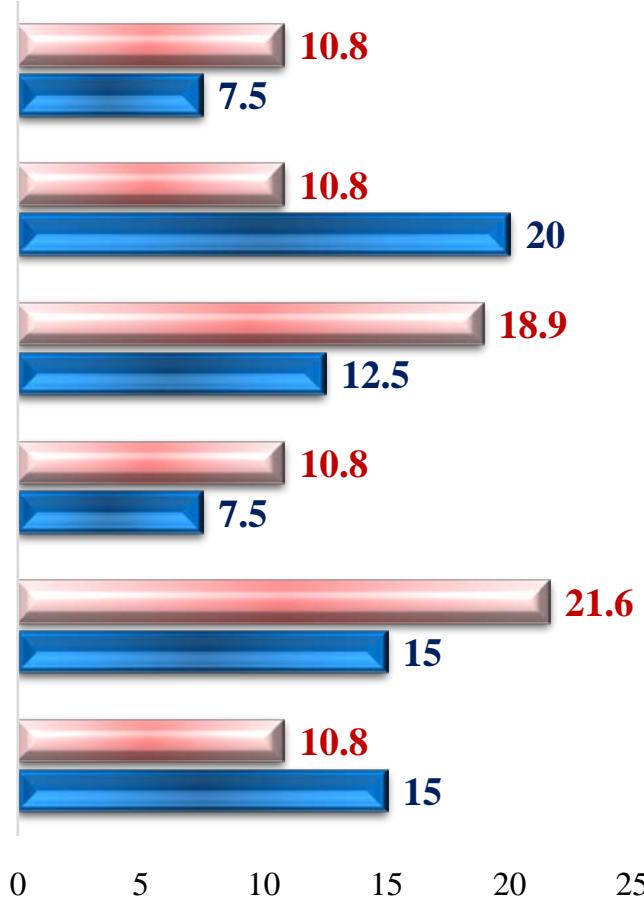 Figure 1: Prevalence of cardiac arrhythmias in football players.
Sinus or respiratory arrhythmia is typical for young athletes and its episodes become more frequent with increasing training. Some athletes have a pronounced sinus arrhythmia with a difference of 0.6 seconds, which disappears on the ECG during exercise [13,14]. The rest of the aforementioned arrhythmias occurred in football players with a heart rate of more than 60 beats per minute (Fig. 1). So, in athletes with
identified violations of the processes of repolarization, symptoms of a decrease in indicators of physical endurance and working capacity were determined.
An analysis of the prevalence of conduction disorders revealed only one case of AV blockade of the 1st degree in players of both groups and 1 case of incomplete blockade of the right branch of the His bundle and complete blockade of the right or left branch of the His bundle. At the same time, AV blockade of the 1st degree and incomplete blockade of the right bundle branch of His were detected only in football players with sinus bradycardia (Fig.2). Atrioventricular dissociations with normal complexes are also sometimes also found in athletes. Their feature is that during functional tests, atrioventricular conduction is restored to normal values. Atrioventricular blockade of the 1st degree, according to statistics, occurs in approximately $2\%$ of healthy athletes and in $10 - 30\%$ of athletes involved in cardiorespiratory endurance training [15,16].
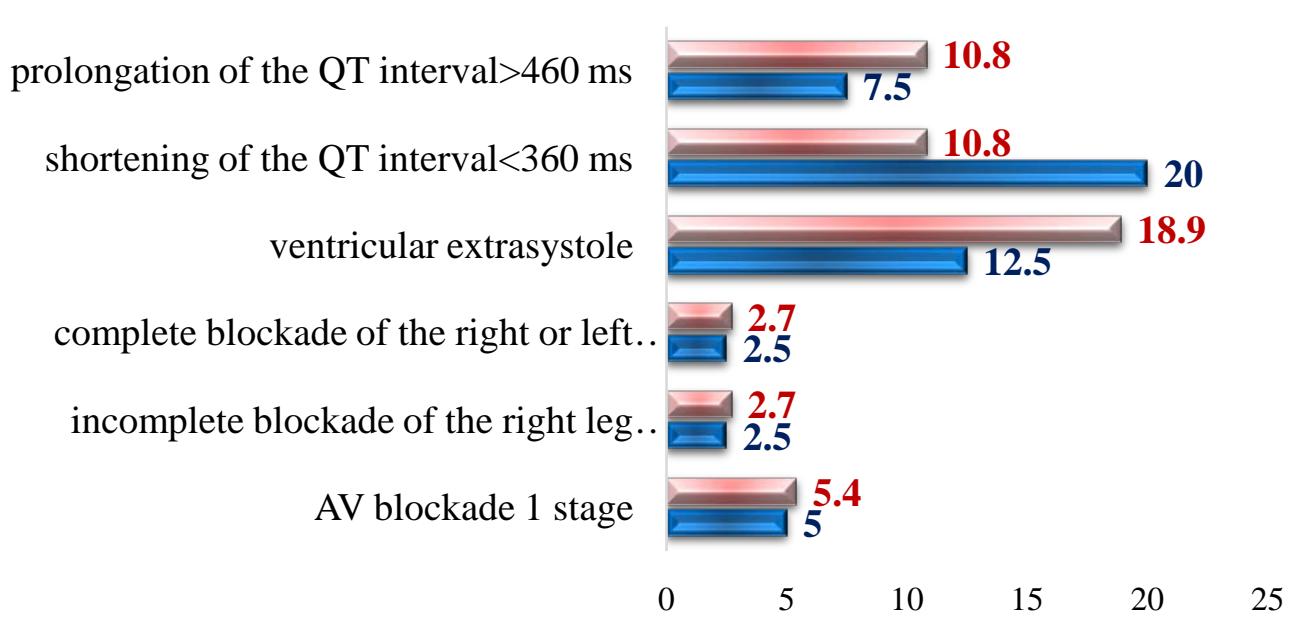 $\square$ cornerbacks $\blacksquare$ defensive midfielders Figure 2: The prevalence of cardiac conduction disorders in football players.
In terms of physical performance, it was determined that in football players with identified rhythm and conduction disorders in sinus arrhythmia, pacemaker migration, 1st degree AV blockade and incomplete blockade of the right bundle branch block showed that value of $\mathrm{PWC}_{170}$ ranged from 23.5 to 25.5 kgm/min/kg. Value of the maximum oxygen consumption (MOC) was in the range of 56.4-59.8 ml/min/kg. In football players with identified rhythm and conduction disturbances in the form of supraventricular and ventricular extrasystoles, changes in ventricular repolarization in the form of shortening and lengthening of the QT interval and complete blockade of the right and left bundle branches of His, the value of $\mathrm{PWC}_{170}$ ranged from 20.3 to 22.6 kgm/min/kg. Value of the MOC was in the range of 54.3-56.4 ml/min/kg.
## IV. CONCLUSION
Thus, the analysis of the ECG results showed that professional football players with high performance indicators normally have rhythm and conduction disturbances, which, depending on the type, may be indicators of a high or low level of physical development and training of an athlete. In most cases, they can be considered as a compensatory reaction associated with changes in myocardial contractility, as evidenced by the ability or inability of such athletes to demonstrate a high level of performance in training and during official matches.
Generating HTML Viewer...
References
14 Cites in Article
O Bokeria,Ispiryana,Yu (2013). Sudden cardiac death in athletes.
T Buryakina,D Zateyshchikov (2011). Clinical and diagnostic features of cardiological examination of athletes. // Difficult patient.
E Gavrilova (2015). The use of heart rate variability in assessing the success of sports activities.
N Garganeeva,I Taminova,V Kalyuzhin,E Kalyuzhina,I Smirnova (2012). Predictive factors of cardiovascular changes depending on the type and intensity of physical activity in professional athletes.
Philip Aagaard,Shishir Sharma,David Mcnamara,Elizabeth Hill,Colby Ayers,James Gentry,Andrew Lincoln,Alexander Kezia,Reginald Dunn,Andrew Tucker,Parag Joshi,Dermot Phelan (2018). RISK OF ARRHYTHMIA AND CONDUCTION DISEASE IN FORMER NATIONAL FOOTBALL LEAGUE PLAYERS.
William Abernethy,Joseph Choo,Adolph Hutter (2003). Echocardiographic characteristics of professional football players.
Aneesh Bapat,Yiyi Zhang,Wendy Post,Eliseo Guallar,Elsayed Soliman,Susan Heckbert,Joao Lima,Alain Bertoni,Alvaro Alonso,Saman Nazarian (2015). Relation of Physical Activity and Incident Atrial Fibrillation (from the Multi-Ethnic Study of Atherosclerosis).
Kawtar Bennis,Fatima Labbi,Mohamed Bennani,Ilham Touhami,Ahmed Bennis (2010). 143 Echocardiographic assessment of cardiac remodeling in the high-level football player.
D Corrado,A Pelliccia,H Heidbuchel (2010). Recommendations for interpretation of 12-lead electrocardiogram in the athlete.
Jonathan Drezner,Jordan Prutkin,Kimberly Harmon,John O’kane,Hank Pelto,Ashwin Rao,Jeffrey Hassebrock,Bradley Petek,Colin Teteak,Miranda Timonen,Monica Zigman,David Owens (2015). Cardiovascular Screening in College Athletes.
(2016). Letter to the Editor of The New York Times.
Olivier Huttin,Christine Selton-Suty,Clément Venner,Jean-Baptiste Vilain,Pierre Rochecongar,Etienne Aliot (2018). Electrocardiographic patterns and long-term training-induced time changes in 2484 elite football players.
John Kalin,Mark Link,N Estes Iii (2010). Arrhythmias in the Athlete.
Mark Link,Brian Olshansky,N Estes (1999). Cardiac arrhythmias and the athlete.
No ethics committee approval was required for this article type.
Data Availability
Not applicable for this article.
How to Cite This Article
Surayyo Z. Yuldasheva. 2026. \u201cSpecial Features of Heart Rhythm and Conductivity Disorders in Football Players of Specific Amplua\u201d. Global Journal of Medical Research - F: Diseases GJMR-F Volume 23 (GJMR Volume 23 Issue F4): .
Explore published articles in an immersive Augmented Reality environment. Our platform converts research papers into interactive 3D books, allowing readers to view and interact with content using AR and VR compatible devices.
Your published article is automatically converted into a realistic 3D book. Flip through pages and read research papers in a more engaging and interactive format.
This article presents the results of a study of the peculiarities of cardiac rhythm and conduction disturbances in professional football players performing in specific energy-intensive positions on the field. The correlation of the revealed violations on the electrocardiogram with the presence of bradycardia and the level of physical performance was carried out. It was found that among football players playing in the positions of a defensive midfielder and a lateral defender, both rhythm and conduction disturbances, which characterize a high degree of heart adaptation to physical stress, and disturbances that are an indicator of maladjustment to stress, are expressed.
Our website is actively being updated, and changes may occur frequently. Please clear your browser cache if needed. For feedback or error reporting, please email [email protected]
Thank you for connecting with us. We will respond to you shortly.