
Spintronics and Optical Properties of Advanced Bio Materials

§ East European University

Send Message

To: Author

Spintronics and Optical Properties of Advanced Bio  Materials

Article Fingerprint

ReserarchID

REO3P44

Spintronics and Optical Properties of Advanced Bio  Materials Banner

AI TAKEAWAY

Connecting with the Eternal Ground
  • English
  • Afrikaans
  • Albanian
  • Amharic
  • Arabic
  • Armenian
  • Azerbaijani
  • Basque
  • Belarusian
  • Bengali
  • Bosnian
  • Bulgarian
  • Catalan
  • Cebuano
  • Chichewa
  • Chinese (Simplified)
  • Chinese (Traditional)
  • Corsican
  • Croatian
  • Czech
  • Danish
  • Dutch
  • Esperanto
  • Estonian
  • Filipino
  • Finnish
  • French
  • Frisian
  • Galician
  • Georgian
  • German
  • Greek
  • Gujarati
  • Haitian Creole
  • Hausa
  • Hawaiian
  • Hebrew
  • Hindi
  • Hmong
  • Hungarian
  • Icelandic
  • Igbo
  • Indonesian
  • Irish
  • Italian
  • Japanese
  • Javanese
  • Kannada
  • Kazakh
  • Khmer
  • Korean
  • Kurdish (Kurmanji)
  • Kyrgyz
  • Lao
  • Latin
  • Latvian
  • Lithuanian
  • Luxembourgish
  • Macedonian
  • Malagasy
  • Malay
  • Malayalam
  • Maltese
  • Maori
  • Marathi
  • Mongolian
  • Myanmar (Burmese)
  • Nepali
  • Norwegian
  • Pashto
  • Persian
  • Polish
  • Portuguese
  • Punjabi
  • Romanian
  • Russian
  • Samoan
  • Scots Gaelic
  • Serbian
  • Sesotho
  • Shona
  • Sindhi
  • Sinhala
  • Slovak
  • Slovenian
  • Somali
  • Spanish
  • Sundanese
  • Swahili
  • Swedish
  • Tajik
  • Tamil
  • Telugu
  • Thai
  • Turkish
  • Ukrainian
  • Urdu
  • Uzbek
  • Vietnamese
  • Welsh
  • Xhosa
  • Yiddish
  • Yoruba
  • Zulu
Font Type
Font Size
Font Size
Bedground

Abstract

Spintronics is an interactive combination of electronics and magnetics that has grown in popularity in the twenty-first century as nanotechnology has advanced. Spintronics is a new type of electronics that employs mutual control of magnetic and other physical signals, such as electrical and optical signals. Spin current has recently received a lot of attention as a basic idea in spintronics. Understanding spin current entails deciphering the mechanisms underlying the mutual control of diverse physical signals, which should lead to future advances in spintronics. The notion of spin current and its historical context are discussed first in this chapter, followed by a discussion of innovative materials for spintronics. Much attention is also dedicated to the physical phenomena that result from the coupling of spins.

I. INTRODUCTION

Optical techniques are becoming increasingly important in medical diagnosis and treatment, there is an urgent need to develop and refine materials platforms for bio-photonic applications.

To enable therapeutically useful bio-photonic devices for transferring in vitro optical techniques into in situ and in vivo application, it is especially necessary to design biocompatible and biodegradable materials with appropriate optical, mechanical, chemical, and biological properties. This technological trend is driving the development of natural and synthetic polymeric biomaterials to replace brittle, non degradable silica glass-based optical materials.

We offer an overview of breakthroughs in polymeric optical material development, optical device design and fabrication techniques, and the associated applications to imaging, sensing, and phototherapy in this study.
II. METHODOLOGY & RESULTS

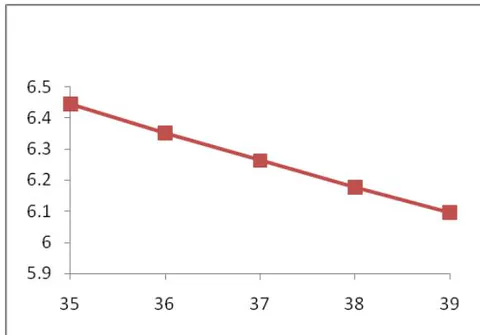
Sl. No.Acceleration Voltage (KV)Wavelength (nm) 10-3
1356.446
2366.352
3376.263
4386.177
5396.095
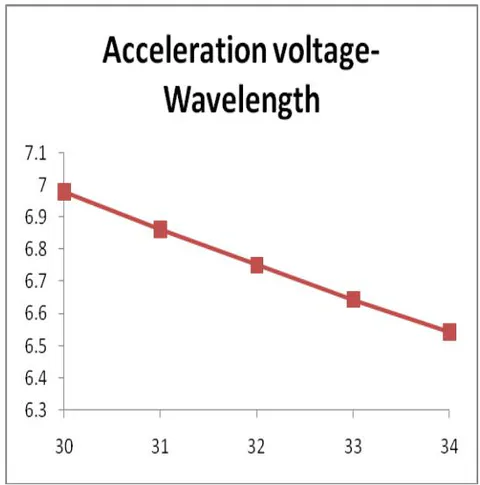
SI. No.Acceleration Voltage (KV)Wavelength (nm) 10-3
1306.979
2316.862
3326.751
4336.644
5346.543
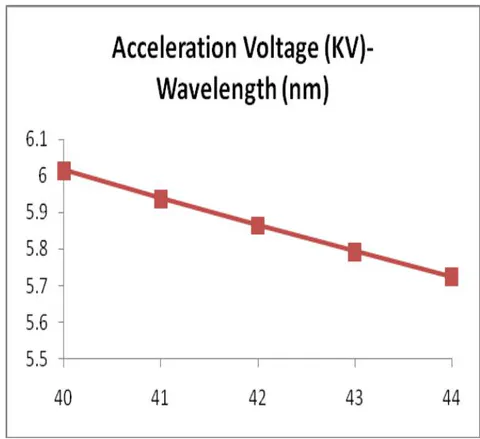
Sl. No.Acceleration Voltage (KV)Wavelength (nm) 10-3
1406.015
2415.938
3425.865
4435.793
5445.724

Optical materials are required to fabricate optical elements such as waveguides for bio-Photonic.

Photonics applications must have specified optical, mechanical, chemical, and biological qualities. The degree of transparency and the refractive index, as well as their Photonics applications must have specified optical, mechanical properties. Current synthetic biodegradable optical waveguide materials have restricted processability and designability, resulting in low-efficiency in vivo light delivery and limited functionality. A versatile material platform that can meet the diverse needs of optical (tunable refractive indices, low optical loss), mechanical (tunable mechanical flexibility for tissue compliance), and biological (biocompatibility, biodegradability, and bioactivity) functions is urgently needed. A citrate-based biomaterial platform has been investigated to overcome this issue. Citrate-based biomaterials are a class of polymers made by reacting citric acid with various diols and/or amino acids in a ne-pot poly condensation reaction. Flexible chemical and design properties have enabled citrate-based biomaterials with tunable degradation rates (from a few days to over one year), adjustable mechanical strengths (tens applications such as optical imaging, optical sensing, and light activated infrared (IR) spectral areas have Materials for bio- The degree of transparency and the refractive index, as well as their spectral dependence, are frequently the most significant qualities to consider when selecting an optical material. High-transparency materials have chemical, and biological qualities. Ultraviolet (UV), visible, and Optical materials are materials that have the capability of controlling altering.

III. CONCLUSION

Biomaterials are a broad category of natural and synthetic materials that can be used alone or in combination. It is, by definition, a chemical that has been created to interact with biological systems, primarily for medical and clinical purposes. The Increased understanding of biological systems and their interfaces with materials is opening up new avenues for the use of biomaterials, which have a diverse set of uses and requirements.

Millions of patients throughout the world have profited from biomaterials' technological advancement. Nonetheless, even as life expectancy rises, organ failure and catastrophic damage continue to crowd hospitals and degrade quality of life. Advances in disease understanding and tissue regeneration, together with increasing accessibility of modern technologies, have given unprecedented prospects for the use of biomaterials. Materials may now be swiftly generated and selecte.

This collection showcases biomaterials research that has been published in Advanced Materials technologies, with an emphasis on targeted drug delivery vehicles, high-throughput material synthesis, minimally invasive biodegradable shape-memory materials, and the development of techniques to promote tissue regeneration through the introduction of instructional. http://orcid.org/0000-0002-5091-3663.
References

10 Cites in Article
  1. Omid Farokhzad,Jianjun Cheng,Benjamin Teply,Ines Sherifi,Sangyong Jon,Philip Kantoff,Jerome Richie,Robert Langer (2006). Targeted nanoparticle-aptamer bioconjugates for cancer chemotherapy <i>in vivo</i>.
  2. Vaishali Bagalkot,Omid Farokhzad,Robert Langer,Sangyong Jon (2006). An Aptamer–Doxorubicin Physical Conjugate as a Novel Targeted Drug‐Delivery Platform.
  3. A Zisch (1995). Control of protein-ligand recognition using a stimuliresponsive polymer.
  4. Chunhui Xu,Jianjie Jiang,Virginie Sottile,Jim Mcwhir,Jane Lebkowski,Melissa Carpenter (2004). Immortalized Fibroblast‐Like Cells Derived from Human Embryonic Stem Cells Support Undifferentiated Cell Growth.
  5. Daniel Anderson,Weidan Peng,Akin Akinc,Naushad Hossain,Anat Kohn,Robert Padera,Robert Langer,Janet Sawicki (2004). A polymer library approach to suicide gene therapy for cancer.
  6. C Flaim (2005). An extracellular matrix microarray for probing cellular differentiation Nat Methods.
  7. Fan Tethered EGF provides a.
  8. A Khademhosseini (2006). Correction for Khademhosseini et al., Microscale technologies for tissue engineering and biology.
  9. Alla Dr,Srivani Investigation in Nano III-V Ternary InxGa1-xP semiconductor materials by chemical vapor deposition.
  10. Alla Dr,Srivani (2023). Determination of Wavelength and Peak position in Advanced Materials.

Funding

No external funding was declared for this work.

Conflict of Interest

The authors declare no conflict of interest.

Ethical Approval

No ethics committee approval was required for this article type.

Data Availability

Not applicable for this article.

How to Cite This Article

Dr. Srivani, Gurram Vasanth, Dr. Sharma. 2026. "Spintronics and Optical Properties of Advanced Bio Materials". Global Journal of Research in Engineering GJRE-F Volume 23 (GJRE Volume 23 Issue F2).

Download Citation

High-quality image showing research on synchrotrons and optical properties of bio-based acidic materials for advanced engineering applications.
Journal Specifications

Crossref Journal DOI 10.17406/gjre

Print ISSN 0975-5861

e-ISSN 2249-4596

Keywords
Classification
GJRE-F Classification DDC Code: 620.5 LCC Code: T174.7
Version of record

v1.2

Issue date
August 12, 2023

Language
English
Experiance in AR

Explore published articles in an immersive Augmented Reality environment. Our platform converts research papers into interactive 3D books, allowing readers to view and interact with content using AR and VR compatible devices.

Read in 3D

Your published article is automatically converted into a realistic 3D book. Flip through pages and read research papers in a more engaging and interactive format.

Article Matrices
Total Views: 445
Total Downloads: 37
All Trends

Request Access

Please fill out the form below to request access to this research paper. Your request will be reviewed by the editorial or author team.
X

This is the heading

Lorem ipsum dolor sit amet, consectetur adipiscing elit. Ut elit tellus, luctus nec ullamcorper mattis, pulvinar dapibus leo.

High-quality academic research articles on global topics and journals.

Spintronics and Optical Properties of Advanced Bio Materials

Dr. Srivani
Dr. Srivani East European University
Gurram Vasanth
Gurram Vasanth
Dr. Sharma
Dr. Sharma