I. AIM & OBJECTIVE OF THE WORK
- The present work is aimed at assessing the effects of Calcium Silicate (CaSiO3) in soil stabilization.
- We will be conducting an unconfined compressive strength test (UCS) on the laterite aggregate treated either by CaSiO3 or by cement.
- We will also be conducting a Consolidation by constant rate of strain (CRS) test on the black clay treated samples, untreated red clay and untreated black clay. The strengths of soils and their compression parameters will be observed and compared.
To fulfill the aim of this study, the following objectives have been framed.
To procure the treated black clay soil with CaSiO3.
To procure the treated laterite with CasiO3 and the treated laterite with cement samples.
To procure the untreated black clay and the untreated red clay samples.
To study the results in term of UCS for laterite samples or in term of consolidation by CRS for the procured clayey samples.
To compare the performance of these soils when stabilized with Calcium silicate with the same soils when stabilized with Portland-cement.
The Ngoundiane lateritic gravel borrow is located in the western part of the Senegal-Mauritania basin. The latter is the largest basin (340,000 km2) on the passive margin of Africa's Atlantic coast. It covers 3/4 of the surface area of Senegal.
The western domain extends west from the 30' W meridian to the slope of the continental slope, as the basement has not yet been reached by drilling. The Meso-Cenozoic sedimentary cover is estimated to be 8,000 m thick in Dakar and 10,000 m thick in Basse Casamance. The oldest known borehole deposits in southern Cape Verde date from the Bathonian to Callovian periods. On the Thiès plateau, the sedimentary series is masked by the fini-Neogene ferruginous cuirass, which extends northwards beneath Quaternary eolian deposits. This cuirass developed on the soils of the Thiès plateau after chemical alteration of the Eocene sediments (Flicoteaux, 1982; Ducasse et al, 1978).
(Latifi et al., 2015) have conducted a study on a treated tropical laterite soil with calcium-based powder stabilizer (commercial name Sh85 we studied as CaSiO3). A series of compressive strength tests was performed to determine the strength performance of the treated soil. The strength test results showed that the Sh85 stabilized laterite soil was roughly five times stronger than the untreated soil at the seven days of curing period.
III. METHODOLOGY ADOPTED
- Firstly, aggregate soil samples have been collected from Senegal 02 sites (Bambey and Thiadiaye) in
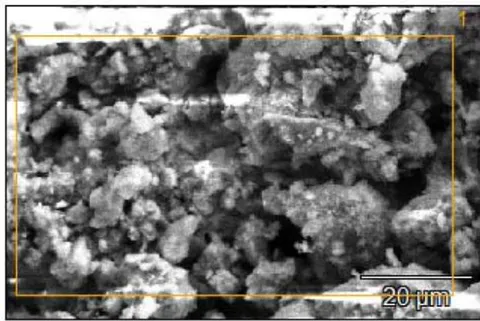
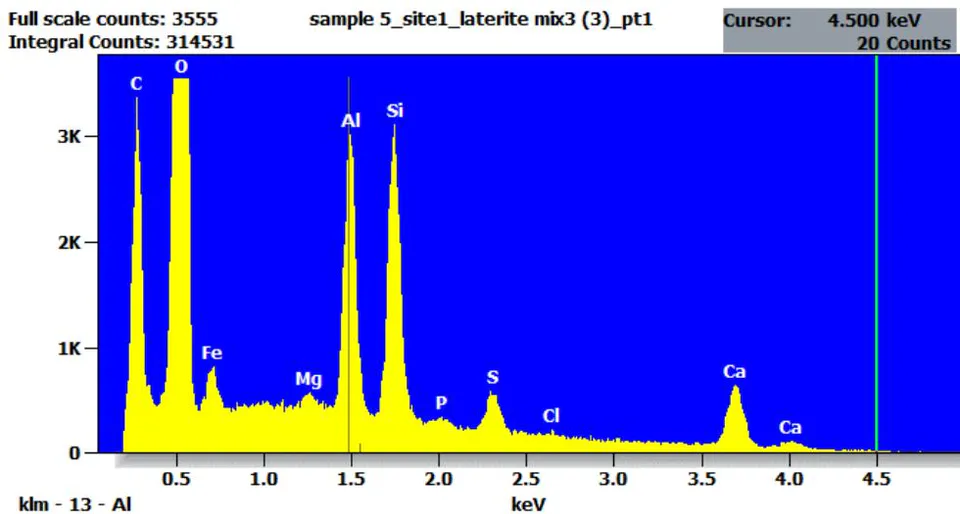
order to examine the elemental composition and the morphological images (see appendix). From where the Bambey laterite was chosen specifically from Ngoundiane pit.
Secondly, sieve analysis test has been performed to determine each type of soil that we brought at the Oregon state university, Civil and Construction engineering facility.
Once the mixture and compaction test were performed on the laterite sieved at to find out the optimum moisture content (OMC) at and Maximum dry density (MDD) at , and with obtained OMC and MDD:
A certain concentration of calcium silicate (CaSiO3) has been fixed, mixed and compacted with each soil sample using standard molders or .
The percentile of Calcium silicate is fixed to added in the laterite specimen and added in the black clay specimen soil, as which the studies have shown earlier.
The unconfined compressive strength has been performed to find the unconfined compressive strength (UCS) of the laterite soil and the black clay treated soil.
The consolidation part of test has been performed to evaluate the rate of compression for the untreated or treated black clay specimens and the untreated finest particles of clay found in the laterite specimen.
Finally, the results are compared for each type with cement additives at the same percentiles.
IV. EXPECTED OUTCOMES
It is expected that these soils specimens are stabilized, and their engineering properties are enhanced using that chemical additive at the appropriate content.
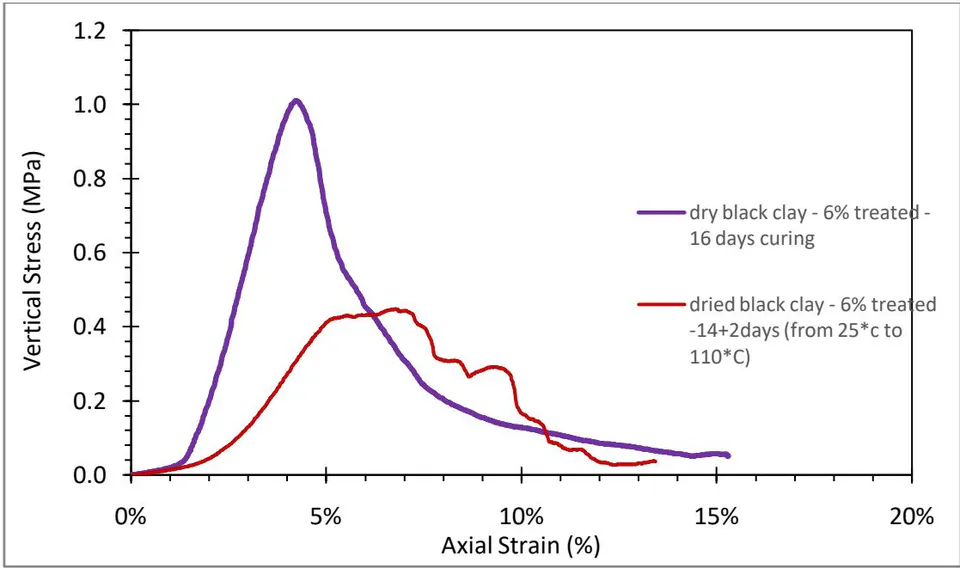
The analysis of the curve shows us a progressive evolution of the UCS of two (02) black clay specimens.
The "dried black clay" represents the specimen treated by of CaSiO3 and after 14 days normal curing to which we added 2 days (24H in wet at and 24H in dry at ).
The "dry black clay" curve represents the specimen treated by of CaSiO3 and kept in a dry conditions at during the same timing.
However, this evolution is even more important reaching 1.01 MPa of stress for "dry black clay" against 0.44 MPa for the "dried black clay" as peaks.
The black clay is a swelling material, consequently, its expansion in the presence of water weakens it and makes it unfit for construction (figure 2). The original swelling mechanisms of soils have been widely studied, but it is still difficult to establish a relationship between the progression of the issue and the time (Cisse and al., 2017).
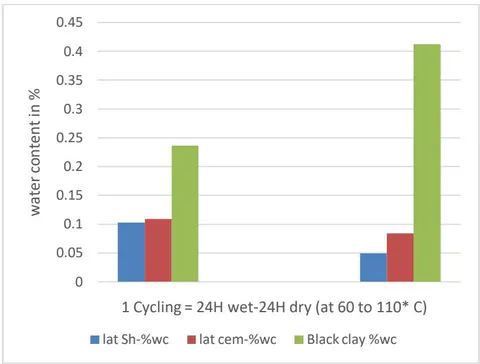
Alternating temperature between the wet environment at and the dried one at oven, during 2 cycles, showed the tendency of laterite samples treated with cement to absorb more water than those treated by calcium silicate (figure 3).
The black clay samples have showed much more absorbance even though they were treated at with CaSiO3 and curing in that same process of alternating temperature.
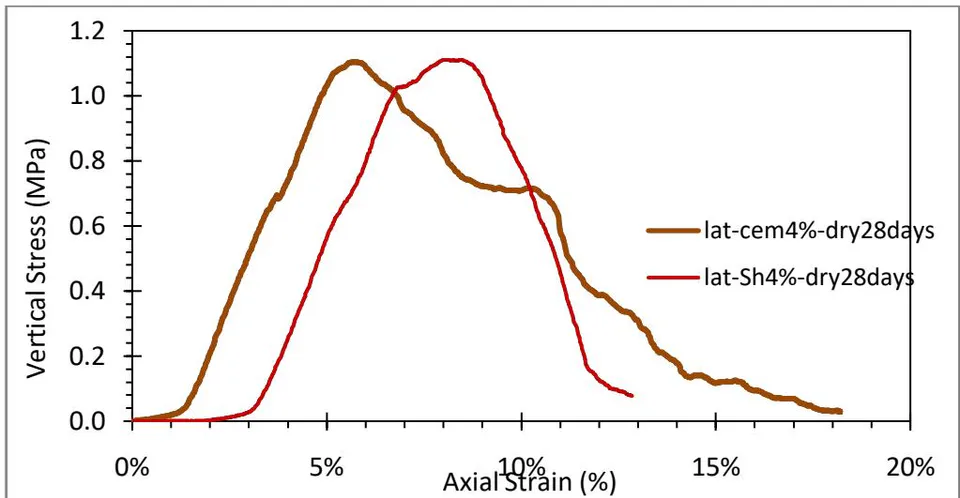
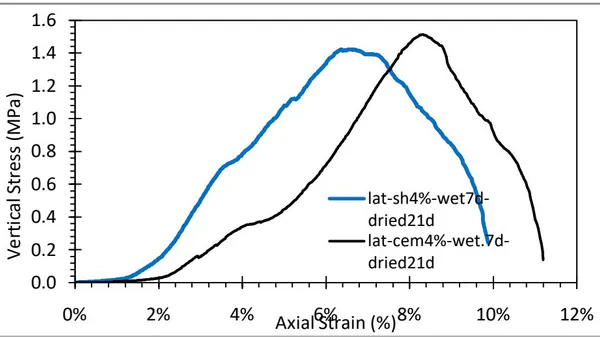
Under room temperature and dry storage conditions, the laterite samples were crushed at 28 days, under these conditions (figure 4), the laterite treated with cement (lat-cem -dry28days) reached a peak of with an elongation level of about before collapsing to elongation.
However, the calcium silicate-treated laterite (lat-sh4%-dry28days) in the same conditions, despite reaching 1.10 MPa with elongation, only collapses to about (figure 4).
But, this does not tell us much about the behavior in the natural environment with 3-4 months of rainfall out of 12.
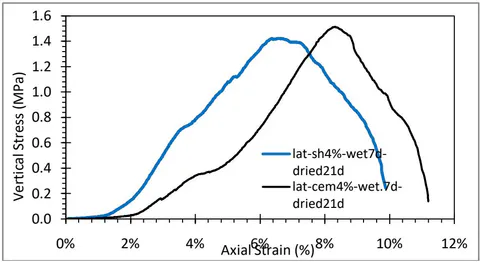
It was found that the CaSiO3-treated laterite reached its peak faster with a minimum elongation of about against for the cement-treated laterite, it collapsed well before the cement-treated laterite at about against .
Some complementary results in terms of consolidation rate for the untreated and the treated black clay samples once saturated can be used to support this thesis further.
VI. RESULTS WITH A CRS OF CONSOLIDATION FOR TREATED AND UNTREATED CLAY SPECIMENS
| Characteristics | Latérite of Ngoundiane | Foundation Specifications | Base Layer Specifications | |
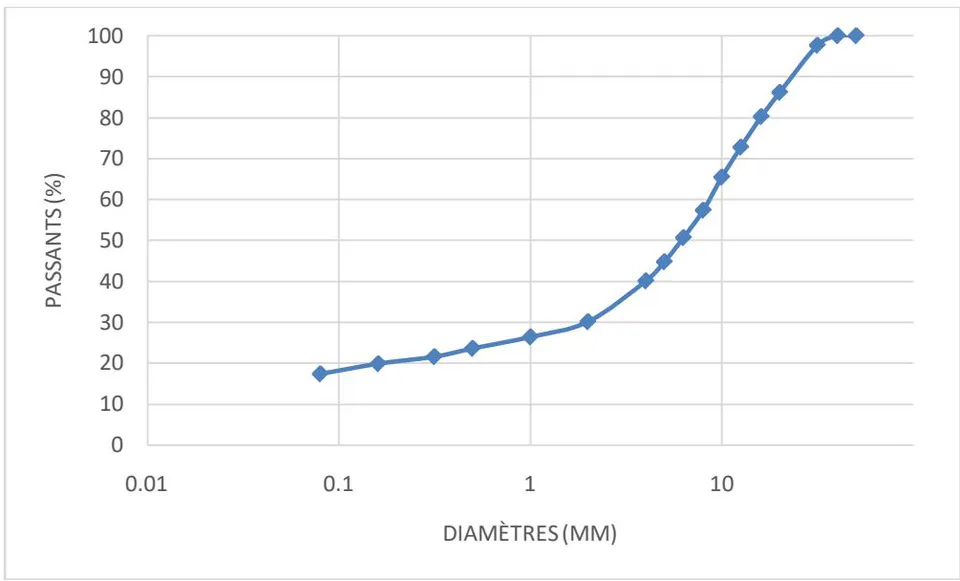
| Sieve analysis | % Ø < 0,008 mm | 17,33 | - | - |
| % Ø < 2 mm | 30,15 | - | - | |
| Limits of Atterberg | W1(%) | 43 | < 40 | < 35 |
| Ip(%) | 22 | < 20 | < 15 | |
| GTR Classification | B6 | |||
| USCS Classification | GC | |||
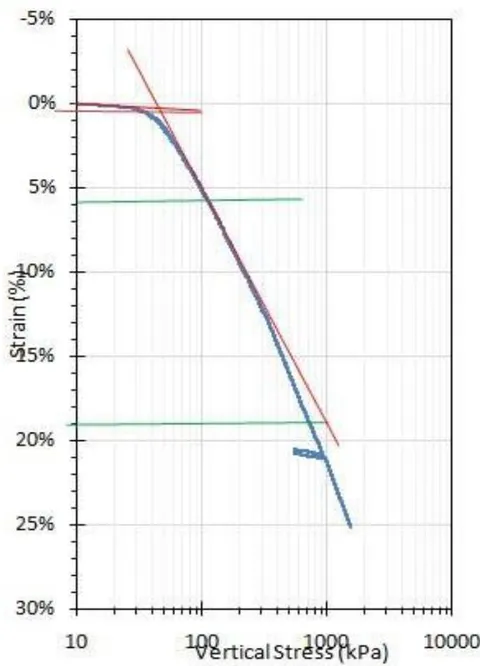
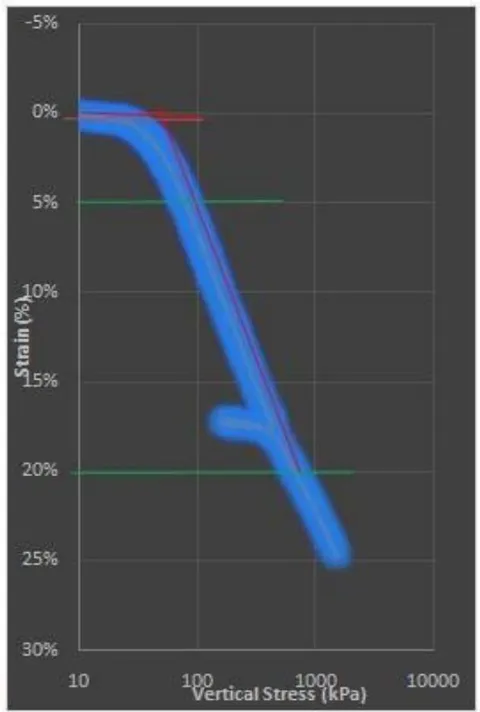
Curve (a): untreated black and Curve (b): treated black and
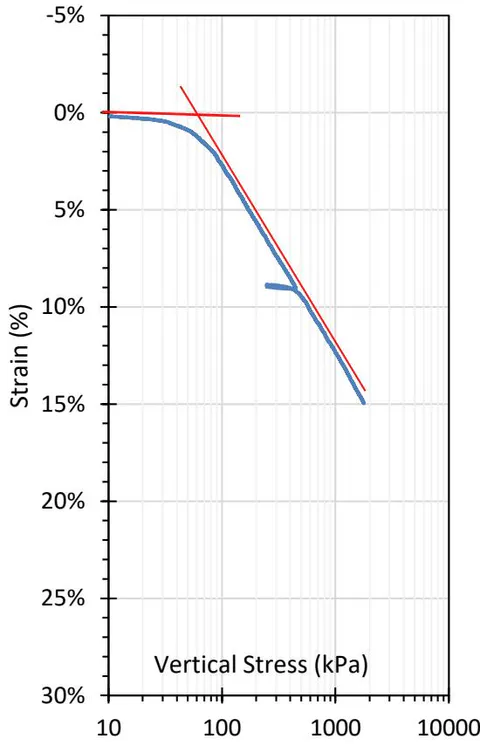
a) The values for untreated black clay of compression index, Cc and recompression index, Cr are 0.14 and 0.005, respectively.
b) While the Cc and Cr values for treated samples are 0.0875 and 0.0025, respectively.
c) Finally, the Cc and Cr values for untreated brown fine laterite specimen are 0.100 and 0.0025, respectively.
VII. CONCLUSION
Firstly, it was important to run the same UCS test carried out on samples treated with either cement or calcium silicate had to be carried out under alternating conditions of extreme temperature (heat transferred by a bituminous coating of about for 24H) and relative humidity absorbance by capillary lift at .
It's shown that the specimen treated by cement absorbed much more water than the one treated by silicate.
Secondly, running the consolidation process, has shown that the compression index, value of the treated black clay compared to the untreated black clay decreases by 0.0525, has indicated a significant improvement of the resistance to compressibility due to CaSiO3 treatment. Also, the water content percentile decreased from to after the consolidation process of the 02 specimens of black clay.
However, black clay has always been rejected in Senegal as a soil material that can support any construction. This study of its behavior in an environment of alternating heat and water makes it fragile and confirms its unsuitability for any use as a support soil or subgrade without other specific treatment.
Finally, the cement-treated sample was found to absorb much more water than the calcium silicate-treated sample. This would make it less resistant over time.
ACKNOWLEDGEMENTS
We would like to express our sincere gratitude to my hosting Professor, Matt Evans and his research assistant, Ehsan Yazdani for their invaluable guidance and support throughout the research process at Oregon State University (OSU). We also want to thank the Ageroute Senegalese Agency for their financial support, as well as the research technicians and students who participated in this work at the Merryfield 108 laboratory of the Civil and Construction Engineering department (CCE) at the OSU for their assistance in finding the necessary research materials. Finally, we are grateful to
Pr John Selker, who initiated and offered his 6-month sponsorship, as well as my mentor, Pr Makhaly Ba for his precious guidance and all the research participants who generously gave their time and effort to this project.
APPENDICE IN TERMS OF ELEMENTAL COMPOSITION FOR LATERITES
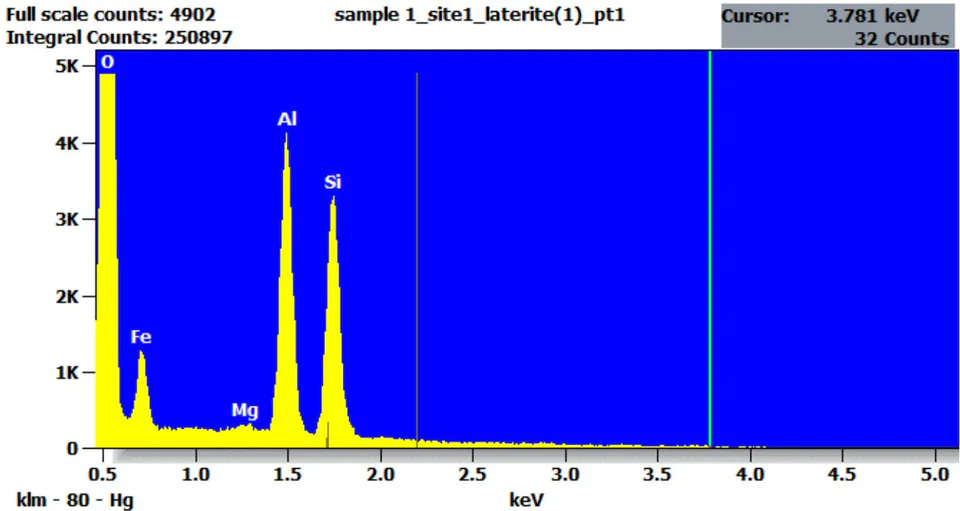
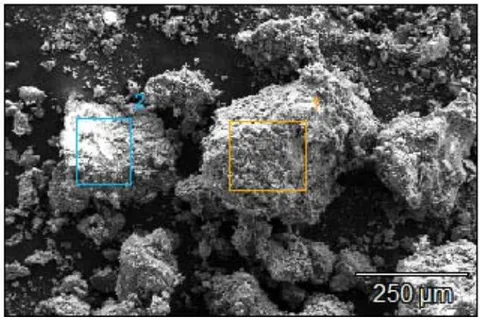
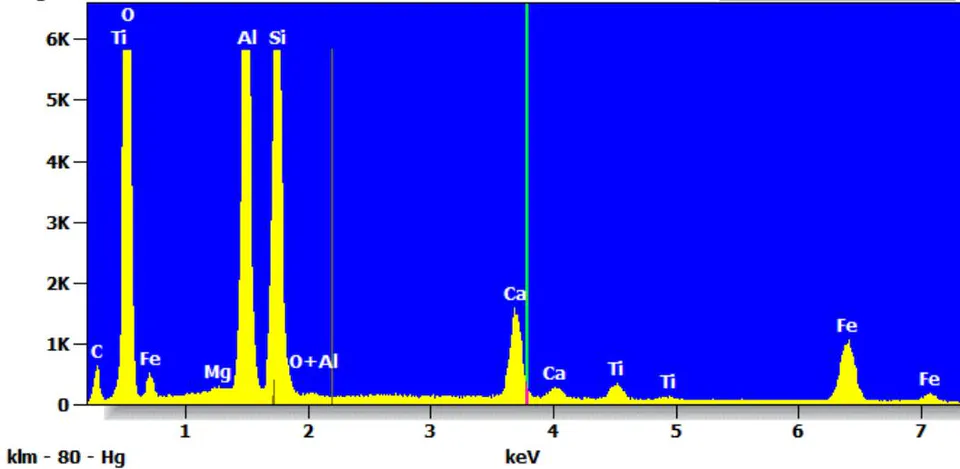
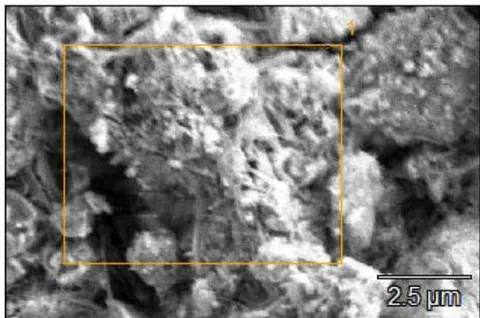
Calcium Silicate as a chemical additive is found that it will act as a good compaction aid between the soil particles, and it is very soluble in water. The images obtained by scanning electron microscopy (SEM) show the elemental composition of the most representative samples based on the percentile of atoms:
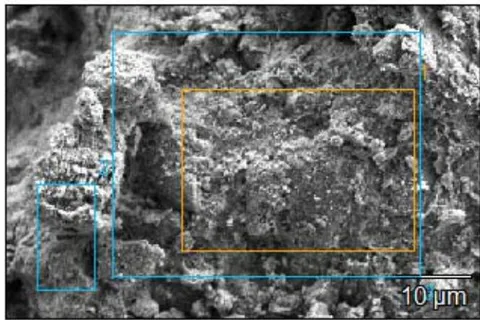
Full scale counts: 5823 Integral Counts: 385158 sample 3_site2_future mix compact(1)_pt1
Cursor: 3.781 keV 293 Cou
sample 5_site1_laterite mix3 (5) sample 5_site1_laterite mix3 (1)
sample 7_site1_bind (2)
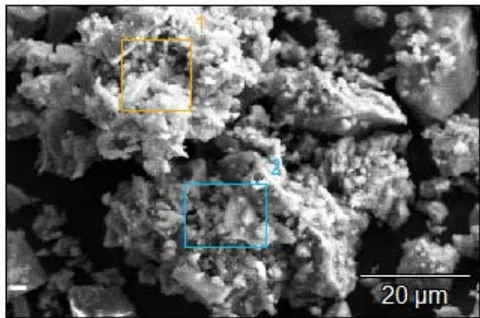
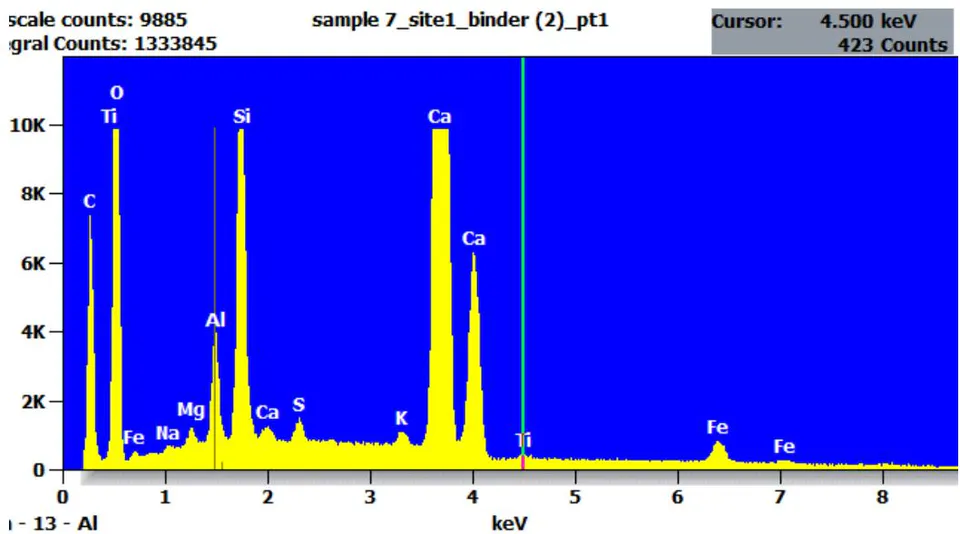
Tableau 1: Percentile of atoms in the pure binder as sample 7
| C | O | Na | Mg | Al | Si | S | Cl | K | Ca | Ti | Fe | Cu | |
| sample 7_site1 | 3.75 | 30.40 | 0.11 | 0.24 | 1.37 | 5.71 | 0.46 | 0.40 | 54.40 | 0.37 | 2.80 | ||
| _binder (2)_pt1 | |||||||||||||
| sample 7_site1 | 2.23 | 39.19 | 0.26 | 2.29 | 3.76 | 0.38 | 0.21 | 0.13 | 46.78 | 0.34 | 4.16 | 0.29 | |
| _binder (2)_pt2 |