
I. INTRODUCTION
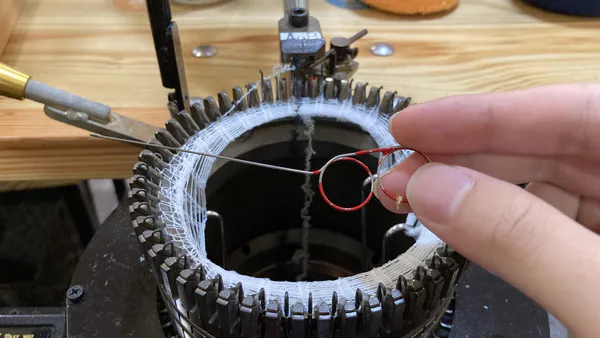
In the world of textile technologies, there has been a lot of attempt going on to find out effective quality, productivity, efficiency and longevity. Circular knitting machine is the first choice for knitted Fabric manufacturers. It is widely used throughout the knitting industry to produce fabric for its productivity and user friendliness. It has been designed and manufactured for mass production of knitted fabric. Huge range of diameter (12 inch to 60 inch) according to manufactures requirement that is perfect for manufacturing outerwear and innerwear. In this article I will explain how yarn pass through circular knitting machine. It has also been discussed about different parts of circular knitting machine with their functions.
a) Objectives
The objective of this study is to achieve the following:
To know standard procedure of servicing of single jersey and double jersey knitting machine(circular).
To know proper time setting of servicing of single jersey and double jersey knitting machine(circular).
To reduce lost time of servicing of knitting machine.
4. To increase knitting machine efficiency.
5. To increase knitting machine longevity.
6. To improve fabric quality.
II. LITERATURE REVIEW
a) Circular Knitting Machine
Knitted fabrics are produced by interlacing loops of yarn and can be classified as weft knits and warp knits. The knitting considered in this section is machine knitting.
Circular knitting machine is widely used throughout the knitting industry to produce fabric. This machine can be built in almost any reasonable diameter and the small diameter of up to five, which are used for wear. Machine for outerwear and innerwear may vary from 12 inch to 60 inch in diameter according to manufactures requirement. This machine can be used either as fabric or for making garments completely with fancy stitch. Latch needle are commonly employed in all modern circular machines because of their simple action and also their ability to process more types of yarns.
b) Important Parts of Circular Knitting Machine
Creel: The creel of the knitting machine controls the placement of yarn packages (bobbins) on all machines. Modern large-diameter circular machines use separate side creels, which are able to hold a large number of packages in a vertical position.
VDQ Pulley: It controls the quality of the product. Altering the position of the tension pulley changes the G.S.M. of the fabric. If pulley moves towards the positive directive then the G.S.M. is decrease and in the reverse direction G.S.M will increase.
Pulley Belt: It controls the rotation of the MPF wheel.
Brush: It cleans the pulley belt.
Inlet and Outlet Stop Motion: It stops the machine instantly when a yarn is break.
Yarn Guide: It helps the yarn to feed in the feeder.
MPF Wheel: It controls the speed of the MPF. Pulley belt gives motion to the wheel.
MPF: It is Memminger positive feed. It gives positive feed to the machine.
Feeder Ring: It is a ring where all feeders are placed together.
Feeder: Feeder helps yarn to feed in to the machine.
Needle Track: Where all needles are placed together in a decent design.
Needle: It is a principal element of the knitting machine. Its help the yarn to create a loop. And by this way fabric are produce. Prior to yarn feeding the needle is raised to clear the old loop from the hook, and received the new loop above it on needle stem. The new loop is then enclosed in the needle hook as the needle starts to descend.
Sinker: It is the most important element of the machine. Its help to loop forming, knocking over and holding down the loop.
Sinker Ring: Sinker ring is a ring. Where all sinkers are placed together.
Fabric-batching roller: The fabric, in tubular form, is drawn downwards from inside the needle cylinder by tension rollers and is wound onto the fabric-batching roller of the winding-down frame.
Cam Box: Where the cams are set horizontally.
Cam: The knitting cams are hardened steels and they are the assembly of different cam plates so that a track for butt can be arranged. Each needle movement is obtained by means of cams acting on the needle butts. [2]
Lycra Attachment Device: Lycra is placed here and fed to the machine.
Lycra Stop Motion: It is one kind of stop motion to stop the machine when the Lycra is break.
Cylinder: Needle track are situated here.
Cylinder Balancer: It helps the cylinder to set in a proper alignment.
Uniwave Lubrication: The Uniwave lubricator provides uniform lubrication to needles, cam tracks, lifters and other knitting machine components. The patented nozzle construction separates the air-oil mixture into air and droplets of oil.
Adjustable Fan: This part removes lint, hairy fibre from yarn and others. To clean the dust by air flow.
Expander: To control the width of the knitted fabric. No distortion of the knitting courses. Even take down tension in the knitting machine. As a result, an even fabric structure is achieved over the entire fabric width. The deformation of the knitted fabric goods can be reduced.
Needle Detector: This part detects the any type of faults of needles.
Air Gun Nozzle: To feed the yarn; sometimes it is used for cleaning purpose.
Take up roller: It is used to take-up the fabric from the knitting machine. Take up roller also controls the proper tension on the fabric.
c) Maintenance
Maintenance is a Procedure by Means of Which We Can Maintain Active Functioning in Operation according To the Behavior and Utility of Particular Elements/Substance. The efficient use of machinery relies on best technology of efficient drive and heating systems combined with good maintenance in production.
i. Types of Maintenance
Schedule Maintenance: Here mainly all the machines are checked on the basis of a fixed schedule of time. Different machine parts are opened, cleaned, lubricated, gauged and replaced if necessary.
Preventive maintenance: It is "a routine for periodically inspecting" with the goal of "noticing small problems and fixing them before major ones develop. [8]
Breakdown Maintenance: When a machine stops due to failure of machine parts, then it is called machine breakdown. The maintenance that is done to repair and make it ready to run is called breakdown maintenance.
ii. Lubricants
Lubricant is a substance which is placed in between two mating parts which are in relative motion with each other, so that they can move without any friction. At higher temperature they are expected to keep the moving parts apart to minimize wear.
iii. Function of Lubricants
To reduce the friction and wear between the contact surface.
To carry away the heat/to cool the moving elements.
3. To keep the surface clean
4. To prevent adhesion
5. To carry heavy loads
6. To prevent corrosion
- To absorb shock and transmit hydraulic power.
III. MATERIALS AND METHODS
a) Materials
Single Jersey Knitting Machine
Brand: Pailung, juinlung, Pillotelly
Double Jersey Knitting Machine
Brand: Pailung, Juinlung
b) Method
Most single-jersey fabric is produced on circular machines whose latch needle cylinder and sinker ring revolve through the stationary knitting cam systems that, together with their yarn feeders, are situated at regular intervals around the circumference of the cylinder.
The method we applied here is based on time and procedure system. We observed how they service machine and after that we applied to calculate the time what they take. And how we can improve it after that we observed to find out minimum time for servicing of knitting machine. Below we described the process as a flow chart.
| Sl. No. | Activities | Who | Responsible Person | Standardize Time (min) | Remarks |
| 1 | To disconnect the MPF Line | S.M-1 | Knitting Master | 1 | Simultaneously |
| To disconnect the MPF Belt | S.M-2 | Knitting Master | |||
| 2 | To break all the yarn from feeder | SM-1+S.M-2 | Knitting Master | 1 | Both work from two side |
| 3 | To take down fabric through manual drive | S.M-1 | Knitting Master | 1 | Simultaneously |
| To remove fabric from take down roller | S.M-2 | Knitting Master | |||
| 4 | To run the M/C freely after giving oil on needle & sinker | S.M-1 | Knitting Master | 20 | Simultaneously |
| To lay down fabric & prepare board to put down needle & sinker | S.M-2 | Knitting Master | |||
| 5 | To disconnect all air pipe from needle & sinker cambox | S.M-1 | Knitting Master | 1 | Simultaneously |
| To disconnect all oil pipe from needle & sinker cambox | S.M-2 | Knitting Master | |||
| 6 | To open bolt & pin from Needle cambox& Sinker Cambox. | SM-1+S.M-2 | Knitting Master | 30 | Both work from two usly |
| 7 | To put down all needle & sinker cambox | SM-1+S.M-2 | Knitting Master | 5 | Both work from two side |
| 8 | To open all needle & sinker from trick | SM-1+S.M-2 | Knitting Master | 20 | Both work from two side |
| 9 | To clean up the cylinder & take down parts properly | SM-1+S.M-2 | Knitting Master | 30 | Simultaneously |
| 10 | To clean up all needle & sinker properly | SM-1+S.M-2 | Knitting Master | 20 | Simultaneously |
| 11 | To clean up all cambox properly | SM-1+S.M-2 | Knitting Master | 25 | Simultaneously |
| 12 | To clean up all nozzle properly | SM-1+S.M-2 | Knitting Master | 15 | Simultaneously |
| 13 | To check all needle & sinker | SM-1+S.M-2 | Knitting Master | 40 | Simultaneously |
| 14 | To check & clean up some others M/C parts(Fan,MPF,Motor, VDQ,Panel board) | SM-1 | Knitting Master | 10 | Simultaneously |
| To check & clean up some others M/C parts(Grease, Gear Oil push) | S.M-2 | Knitting Master | |||
| 15 | Setting all needle & sinker | SM-1+S.M-2 | Knitting Master | 30 | Both work from two side |
| 16 | To keep all cambox on base & set bollt,pin | SM-1 | Knitting Master | 30 | Simultaneously |
| Setting all cambox | S.M-2 | Knitting Master | |||
| 17 | To tight all bolt properly | SM-1+S.M-2 | Knitting Master | 20 | Both work from two side |
| 18 | Setting all nozzle properly | SM-1+S.M-2 | Knitting Master | 2 | Simultaneously |
| 19 | To feed all yarn through MPF to needle through feeder & give weight on yarn | SM-1+S.M-2 | Knitting Master | 30 | Both work from two side |
| 20 | To connect MPF Belt & Line | SM-1+S.M-2 | Knitting Master | 2 | Simultaneously |
| 21 | To knit fabric through manual drive slowly | SM-1 | Knitting Master | 5 | Simultaneously |
| To check yarn feeding on needle | S.M-2 | Knitting Master | |||
| 22 | To knit fabric through inch motion up to take down roller | SM-1 | Knitting Master | 5 | Simultaneously |
| To clean laid fabric & board | S.M-2 | Knitting Master | |||
| Total | 353 | ||||
Now, Table-2 shows the Flow Chart of Double Jersey Knitting Machine (Servicing) Table 2: Flow Chart of Double Jersey Knitting Machine (Servicing)
| Sl. No. | Activities | Who | Responsible Person | Standardize Time (min) | Remarks |
| 1 | To disconnect the MPF Line | S.M-1 | Knitting Master | 1 | Simultaneously |
| To disconnect the MPF Belt | S.M-2 | Knitting Master | |||
| 2 | To break all the yarn from feeder | SM-1+S.M-2 | Knitting Master | 1 | Both work from two side |
| 3 | To take down fabric through manual drive | S.M-1 | Knitting Master | 1 | Simultaneously |
| To remove fabric from take down roller | S.M-2 | Knitting Master | |||
| 4 | To run the M/C freely after giving oil on needle | S.M-1 | Knitting Master | 20 | Simultaneously |
| To lay down fabric & prepare board to put down needle | S.M-2 | Knitting Master | |||
| 5 | To disconnect all air pipe from Cylinder & Dial cambox | S.M-1 | Knitting Master | 1 | Simultaneously |
| To disconnect all oil pipe from Cylinder & Dial cambox | S.M-2 | Knitting Master | |||
| 6 | To open bolt & pin from Cylinder & Dial cambox | SM-1+S.M-2 | Knitting Master | 20 | Both work from two side |
| 7 | To put down all Cylinder & Dial cambox | SM-1+S.M-2 | Knitting Master | 15 | Both work from two side |
| 8 | To open all needle from Cylinder & Dial trick | SM-1+S.M-2 | Knitting Master | 50 | Both work from two side |
| 9 | To clean up the cylinder,Dial& take down parts properly | SM-1+S.M-2 | Knitting Master | 40 | Simultaneously |
| 10 | To clean up all needle properly | SM-1+S.M-2 | Knitting Master | 20 | Simultaneously |
| 11 | To clean up all cambox properly | SM-1+S.M-2 | Knitting Master | 40 | Simultaneously |
| 12 | To clean up all nozzle properly | SM-1+S.M-2 | Knitting Master | 15 | Simultaneously |
| 13 | To check all needle | SM-1+S.M-2 | Knitting Master | 30 | Simultaneously |
| 14 | To check & clean up some others M/C parts(Fan,MPF,Motor,VDQ,Panel board) | SM-1 | Knitting Master | 20 | Simultaneously |
| To check & clean up some others M/C parts(Grease,Gear Oil push) | S.M-2 | Knitting Master | |||
| 15 | Setting all needle | SM-1+S.M-2 | Knitting Master | 70 | Both work from two side |
| 16 | To keep all cambox on base & set bollt,pin | SM-1 | Knitting Master | Simultaneously | |
| Setting all camboxTo tight all bolt, pin properly | S.M-2SM-1+S.M-2 | Knitting MasterKnitting Master | 60 | ||
| Both work from two side | |||||
| 17 | Setting all nozzle properly | SM-1+S.M-2 | Knitting Master | 5 | Simultaneously |
| 18 | Insert tube fabric at take down roller for drawn yarn | SM-1+S.M-2 | Knitting Master | 60 | Both work from two side |
| To feed all yarn through MPF to needle through feeder & drawn yarn | |||||
| 19 | To connect MPF Belt & Line | SM-1+S.M-2 | Knitting Master | 5 | Simultaneously |
| 20 | To knit fabric through manual drive slowly | SM-1 | Knitting Master | 20 | Simultaneously |
| To check yarn feeding on needle | S.M-2 | Knitting Master | |||
| 21 | To knit fabric through inch motion up to take down roller | SM-1 | Knitting Master | 5 | Simultaneously |
| To clean laid fabric & board | S.M-2 | Knitting Master | |||
| Total | 500 | ||||
IV. RESULTS AND DISCUSSIONS
From the table 3, we can see that there is different type of machine dia. Here most time is used in machine dia 42x24 GG.
Because there are more no. of needle, sinker, cam box, cam are used and less time used in machine dia 30X24 GG.
Because there are no. of needle, sinker, cam box, cam are less
| Machine No. | Machine Dia | No. of Needle | No. of Sinker | No. of Cam Box | No. of Cam | Dia Wise Duration |
| 1 | 30x24 GG | 2260 | 2260 | 96 | 96 | 298 min |
| 2 | 34X24 GG | 2562 | 2562 | 102 | 102 | 320 min |
| 3 | 38X24 GG | 2864 | 2864 | 114 | 114 | 340 min |
| 4 | 40X24 GG | 3014 | 3014 | 128 | 128 | 350 min |
| 5 | 42X24 GG | 3166 | 3166 | 134 | 134 | 360 min |
From The Table 4, we can see that there is different type of machine dia. Here most time is used in machine dia 44x18 GG.
Because there is more no. of needle, cam box, cam are used and less time used in machine dia 30X18 GG.
Because there are no. of needle, cam box, cam are less
| Machine No. | Machine Dia | No. of Needle | No. of Cam Box | No. of Cam | Dia Wise Duration |
| 1 | 30x18 GG | 3390 | 120 | 240 | 500 mins |
| 2 | 38X18 GG | 4296 | 152 | 304 | 530 mins |
| 3 | 44X18 GG | 4974 | 177 | 354 | 550 mins |
V. CONCLUSION
In this project, we tried to find out a standard procedure and time setting for servicing of single jersey and double jersey knitting machine. In the previous servicing method, they would take more time for servicing a knitting machine. There was no time limit as well as any standard procedure method. There was no fixed team as well as any responsible person. Here we fixed a team standard time and responsible person.
We also want to say that it's a very long term process to get the result of machine longevity but if we practice this process regularly we will be able to reduce the process loss time of knitting machine servicing.