Background: The multidisciplinary type of Forensic Ballistics science is an essential database for the medical examiner to define the most compatible sequence of events and to motivate reconstructive hypotheses. In gunshot victims, analysis of biological data alone may be insufficient for recon-structive purposes. Knowledge of the basic general principles relating to mechanisms, indicators, operating systems, power supplies, types of bullets, and so on, can make the difference between a “sterile” autopsy and one that can be useful to judicial investigations. Results: The reconstruction of the event, the final phase of criminal investigation, must include the interpretation and re-composition of the various elements of evidence and the overall evaluation of the same to obtain a legal characterization.
## I. INTRODUCTION
The multidisciplinary type of forensic ballistic science and the intrinsic difficulty of evaluating the plurality of related investigations, of correlating and integrating the findings acquired during the various speculative phases, constitute an indispensable database for the medical examiner. These are used to define the most compatible sequence of events and to motivate reconstructive hypotheses, scientifically correct and therefore concretely used in the juridical context for the definition of responsibilities, to confirm or refute specific accusatory and/or defensive assumption juridical, and to obtain an adequate punishment [1] [2] [3] [4].
In gunshot victims, the analysis of biological data alone may be insufficient for reconstructive purposes, especially when an event has a strong emotional impact, is of strong national importance, and is therefore subject to different interpretations not always strictly correlated with objective evidence [5] [6].
Knowledge of basic general principles regarding mechanisms, indicators, operating systems, power, types of bullet, and so on, can make the difference between a "sterile" autopsy and one that can be useful for judicial investigations [7].
An autopsy in this field, conducted without having any idea of how a firearm is made, especially in the presence of a large number of shots, and ignoring what damage can be produced based on various factors (caliber, type of ammunition, polygon, and much more), in our opinion it is like walking through a labyrinth on a moonless night and certainly does not meet the judge's needs to clarify the various aspects of judicial case [8] [9].
## II. MATERIALS AND METHODS
The reconstruction of the events during which a firearm is a problem that escapes the exclusive pathological study of ballistic agent injuries and requires an integrated assessment by other criminological investigations, whose practical relevance in the legal field and the intrinsic difficulty of the interaction of the plurality of correlated investigations, suggests a constant scientific, cultural and methodological exchange between various disciplines (chemistry, physics, mechanics, engineering, economics of goods, information technology, etc...), sometimes different from each other for purposes and procedures, the coordination of which recognizes in the figure of the medical examiner a role of enlargement and synthesis of undoubted value [10] [11].
The reconstruction of the event, the final phase of criminal investigation, must include the interpretation and recomposition of the various elements of evidence and the overall evaluation of the same to obtain a legal characterization; In other words, the effort to determine, on the basis on the available data, the various phases of a criminal episode and how much more reliable and chronologically they are [10] [11] [12].
In particular, the immediate effects on the behavior of a person hit by a firearm bullet are predictable (therefore partially) only with the knowledge of the type of weapon used, the firing distance, and the anatomical region concerned. The individual factors that can lead to wide variations of the "perception" of the lesion must be kept in mind; as well as in the case of people subjected to strong physical and mental stress or in a state of adrenaline stimulation, which can decrease it or in particular cases even abolish it, or, on the contrary, in severe states of fatigue and weakness or poor physical conditions efficiency that can significantly amplify [11] [13].
Therefore, it can be very difficult to express a scientifically valid and sufficiently motivated opinion on important issues relating to the immediacy or otherwise of death, the duration of survival, the possibility of residual acts committed by the victim after the injury, or autonomous movements or other acts conscious such invocations for help, recognition of persons, report of lived events. Circumstantial and testimonial data are often not available or, when available, they must in any case be supported by other objective factors that demonstrate or evaluate their reliability [11] [12] [13] [14].
So, for each of the following cases, it is necessary to combine all findings to be able to put forward a truthful reconstructive hypothesis. In particular, the medical examiner must consider the autopsy findings and all other circumstantial data to be able to make a differential diagnosis between the following situations [15] [16]:
- Suicide with more than one stroke [14];
- Homicide-suicide or double suicide;
- Injury with the victim's reaction;
- Injury followed by conscious movements or acts;
- Death followed by missed or delayed aid.
There are particularly complex cases. For example, a suicide could shoot himself multiple times to kill himself: this could happen in cases where the first shot was not fatal. Or again there are cases in which the victim, after being shot may make conscious movements or acts, such as even returning gunfire. Finally, the victim may die not from the gunshot injury, but from a delay in rescue. For example, this may occur in cases where the bullet does not hit a "vital" site but causes a loss of blood that, if treated promptly by rescue, may not prove lethal.
## III. RESULTS
The less early the investigator's at the crime scene, the more difficult it will be to collect data and evidence correctly; in other cases, the autopsies are supported by elements already acquired, not always sufficiently documented, and most of the time not verifiable both for the long interval of time that often elapses from the events under investigation and for profound changes in the characteristics of some elements, such as to preclude the repeatability of some investigations. In any case, all evidence should be available to the medical examiner. The same performs the autopsy and combines the autopsy findings with all other evidence to arrive at the reconstruction of the crime. [17].
It must be considered, however, that the forensic scientist must have an overall view. Considering only one piece of evidence could be misleading. Nothing should ever be taken for granted. For example, the finding of shell casings and bullets at the crime scene is not sufficient to answer the question of the location of the findings. A shell casing or bullet may have been moved from one place to another intentionally or occasionally: they may be "trapped" in the victim's body or in a vehicle that may have been moved from their original location. Or, they could have been accidentally moved by being kicked by passersby, due to their circular shape.
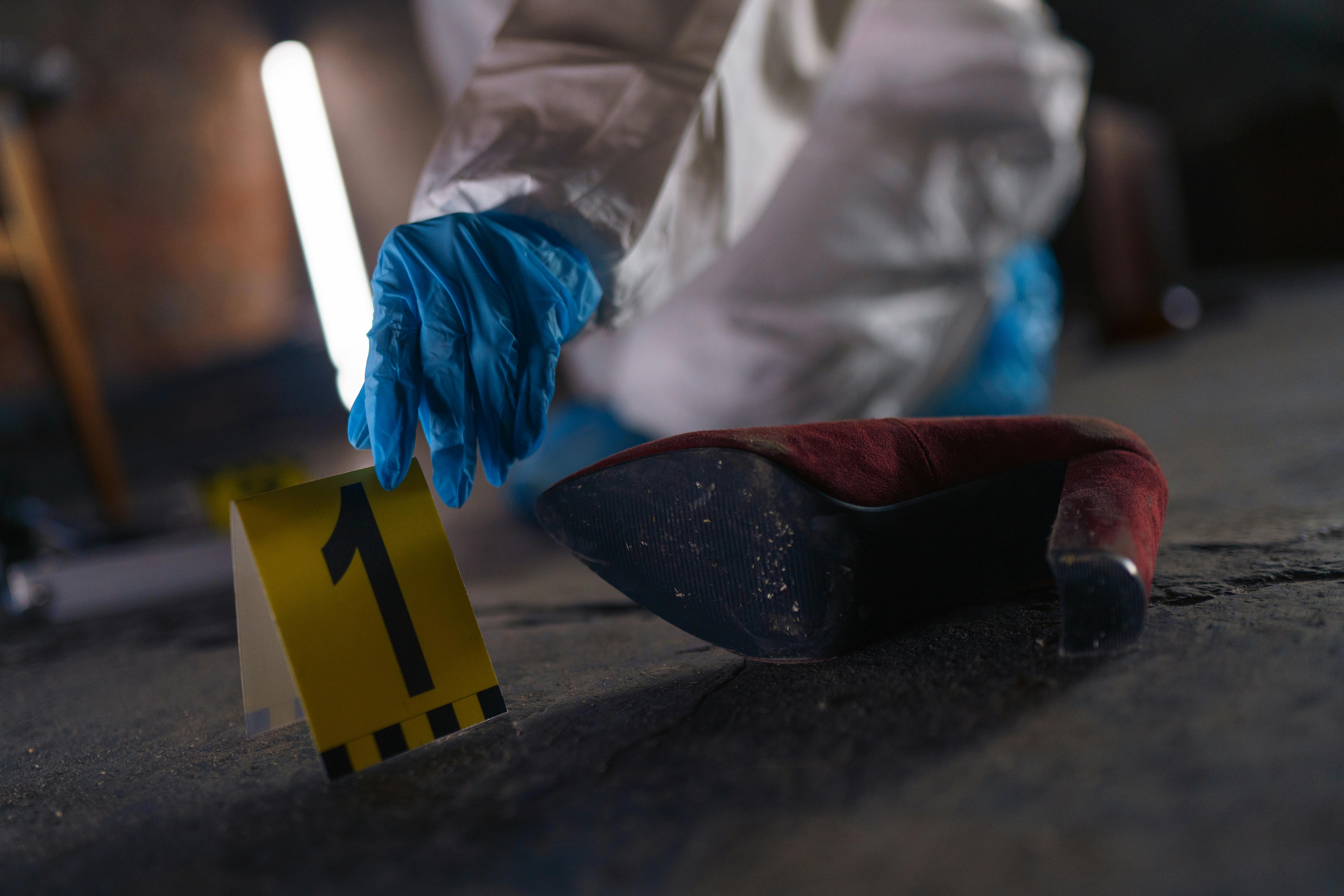
Crucially important indications in this regard come from the correlation of the findings (cartridges and bullets) with any defects in the environment (walls, furniture, vehicles, etc.) that could be impact points.
Moreover, the caliber of the spent cartridges found at the crime scene is not sufficient to make a judgment of certainty about the type of weapon used to kill the victim. Only the ballistic investigations carried out on the bullet found inside the victim's body make it possible to express a definite opinion on the caliber used to kill the victim. Therefore, one must wait for the results of the laboratory ballistic investigations carried out on the bullets found during the autopsy inside the victim's body. In addition, revolvers do not leave cartridge cases as the spent cartridge cases remain inside the drum: cartridge cases may explode from a revolver and can be found only if the shooter unloaded the gun by hand by removing the spent cartridge cases.
The number of weapons used during shooting is possible only after Comparative Ballistics investigations are carried out on bullets and shell casings.
In addition, the presence of blood traces at the crime scene must be carefully and adequately evaluated, from the point of view of quantity, morphology, and location. The possibility that the victim's body moved or made autonomous movements, even after being hit by one or more bullets, must always be considered [13] [18]. It should also be considered that the victim's body may have moved after being shot.
A reliable chronological diagnosis on the dating of the shooting is only possible through examination and interpretation of the data collected on the corpse. Any other inference, for example, based on the degree of oxidation of shell casings or bullet defects, is purely arbitrary and inaccurate. Very old and oxidized ammunition can be efficient even after more than 50 years. We observed a case in which an old French revolver built in 1870 and using pin cartridges was able to easily cause fatal wounds [11].
Finally, the determination of firing points and trajectories is only possible if the exact location and characteristics of the impact points in the environment and the position of the cartridge cases on the ground are known.
## IV. DISCUSSION
### a) Autopsy Strategies
- Even in particularly striking cases, postpone any judgment regarding the cause of death to the autopsy; existing natural disease, anatomical damage, functional impairment, viability of each lesion, interaction with other possible natural pathologies, and associated bleeding, must be appropriately assessed [11].
- Verify the adequacy of the position of the corpse at the crime scene with the arrangement of the hypostases and the attitude posed by the rigor mortis, to establish the place where the death occurred;
- The type of weapon (or weapons) and its caliber must be recognized based on the interpretation of the data emerging from the autopsy; the analysis of the morphology and extent of skin lesions is usually sufficient to express only a general judgment on the type of ammunition (whether single or multiple bullets); more difficult, and often impossible, is the definition of the caliber [13];
single bullet if no bullets were found during the autopsy, the dimension of the perforations of the flat bones (skull, scapula, iliac bones, etc.), which allow an orientation, with good approximation, can be of help on the diameter of the bullet that produced them. However, alongside the cases of simpler interpretation (subject hit by one or more bullets and then recovered during autopsy), it is not uncommon to have injuries caused by several bullets, all or part, not retained in the body. In this case, it is not possible to specify whether the injuries observed were produced by bullets of the same caliber and therefore whether they were fired from a single weapon; therefore the final evaluation should be based on a judgment of compatibility between the findings made during the autopsy and what is provided by the inspection, by historical and circumstantial data and above all by comparative findings on any material found during the inspection [19] [11];
#### - Weapons with Multiple Bullets (Rifles)
- The evaluation of the caliber is possible with certainty only with the finding of the wad during the autopsy.
- The evaluation starting from the pellet (weight - number of pellets - charge ratio on the pressure gauge) is considered too approximate, while it can be more reliable in the case of pellets, provided that all the components of the charge have been recovered:
- Some shots
- Single bullets
Apply the formula $N = E + R$ (Number of shots = exit wounds + recovered bullets), but consider the following possibilities:
- Bullets, usually two, entered through a single entry hole;
- Intracorporeal fragmentation of the bullet;
- More body regions are hit by the same bullet.
The last of the reported facts concerns particular positions of the victim at the time of the injury, which would justify more injuries than that of shots fired, regarding the possibility of multiple injuries produced by the same bullet (for example a bullet first hits a limb and then the trunk, or vice versa); in these cases, at the end of the autopsy, it will be possible to document the alignment possibilities of the different lesions with the use of rods (preferably metal, max diameter 5 mm, with rounded tips), highlighting the compatibility with particular positions of the limbs or trunk [20].
- Multiple rates
- Over very short distances the "ball" effect can make possible injuries in different anatomical sites (one of which is usually represented by a limb), like what is done by single bullets; this possibility must be verified using suitable positioning maneuvers.
- For shots fired at a distance that does not allow recovery of the wads, the definition of the number of shots can be cumbersome. It may be possible, depending on the case, to consider whether the saturation of a body surface by a given number of pellets may be due to the explosion of several shots at a distance. The certainty of the assessments can therefore only result in an explosion of test shots with the suspected weapon (loaded with pellets of adequate size), which will be used for the evaluation, at various distances, of the density of the pellets on the target [15].
- Form of wounds
- The round or elliptical shape of the entrance wounds and the disposition of the abraded ring (and/or the secondary phenomena of the shot) provide a first indication of the degree of incidence of the projectile's trajectory; in case of tangential lesions, the examination of its edges may be useful.
- Assessment of intracorporeal lesions
Follow the signs of the advancement of the bullet in the anatomical areas and organs, which can lead to an exit hole or can be interrupted at the site of retention of the bullet, whose position, as well as for skin wounds, will be noted in a system of Cartesian coordinate.
Of course, this reconstruction of the trajectory is only anatomical and doesn't include intra/extra-somatic deviations that may not coincide with the ballistic trajectory of the bullet. Therefore, any judgment on the direction of the shot (be it produced by a single bullet or by several bullets) and expressed based on autopsy data, will refer only to a standard position of the subject with limbs and torso in anatomical position. However, the possibilities offered by reciprocal variations of different anatomical regions (especially of the head and limbs against the trunk) can be considered [21] [22].
The data obtained from the autopsy will be taken into consideration to evaluate its compatibility with any environmental defect linked to the impact of the bullets. In any case, the reconstruction of the reciprocal position between the victim and shooter must be expressed in terms of compatibility; for example, postural changes in the trunk and head can make a crossing determined by a bullet that has described a horizontal trajectory appear oblique (downwards or upwards) [13].
Therefore, in the absence of elements of evaluation derived from a crime scene, the position of the shooter can only be established generically from what can be inferred from the location of the entry injuries, for example on the front, back, or side of the victim [11].
#### - Shooting range
It is necessary that surveys of the shooting ranges be made to get an overview of the place where the shooting occurred. In this way, an outline of the locations can be made with placement of all the findings and related legend. This is essential to put forward a correct reconstructive hypothesis.
### b) Single Bullet Injuries [20]
- Close contact wounds
a. On soft tissues
b. Possible bruises of the muzzle on the skin; soot and burning at the edges of entrance wounds. Any deposits of soot and cooking residues along with them through and bright red coloration of muscles from carbon monoxide;
c. On the scalp above the skull or the skin above the ribs:
d. Starry entrance hole, "unglued" edges with deposits of soot and grains of dust in the space between the skin and the bone surface; discontinuous and barely visible excoriated ring due to the presence of lacerations, the red color of the first portion of the loop (carbon monoxide);
- Near-contact shot (distances of up to 5 or $20~\mathrm{cm}$ ):
- Dense soot around the inlet hole, sometimes separated by a relatively clean area immediately surrounding the hole; charring and burning at the edges of the hole; bright red color of the first portion of the loop (CO); burning of hair [Intermediate-rangerange shot (20-50 cm) [18]:
Absence of soot, presence or absence of tattoos (about the length of the barrel), and the type of dust. The use of a silencer should always be considered: in some cases, this device can completely abolish the secondary effects of the shot (flame, soot, tattoo) [18].
- Distance shots (over 50 cm)
Absence of any deposits around the entrance hole: it is not possible to further specify the exact distance, if not using other surveys (evaluation of the penetration and comparison with data obtained from experimental test shots) [18].
To determine the firing distance we use the well-known easy-to-field colorimetric method: sodium rhodizonate, in a simple and practical small-size kit, to detect the surrounding skin and clothing.
To ascertain whether the victim had also used firearms the SEM-EDX analysis must always be performed mainly on the hands.
### c) Injuries from Multiple Charges
#### - Close
Circular entry hole approximately equal to the diameter of the barrel; regular, blackened margins; possible imprint of the muzzle; significant amounts of soot residues in the passage; red color of fabrics (CO); in areas of the skin in direct contact with the bone surfaces lacerations of the edges of the wound may be found; contact blows of the scalp are always destructive and may require reassembly of the skull fragments in the laboratory to try to identify the entrance lesion;
#### Near and intermediate distance
Circular hole with smooth edges; burning of the skin and/or hair; presence in varying amounts of soot and tattoo.
At distances of about $30~\mathrm{cm}$, the margins begin to have an uneven appearance, the tattoo persists, and hair burns may still be present; the swad penetrates the lesion. The tattoo can sometimes persist for up to 1 meter.
#### - Long shots
a. Between 1 and 5 meters $\rightarrow$ central hole with irregular edges; the presence of "satellite" holes around the edge of the inlet hole. The wad does not penetrate the body at the upper limits of this distance, but it can hit the target causing abrasions and lacerations, reproducing its shape and size.
b. Over 5 meters $\rightarrow$ complete diffusion of the pellet with the absence of the central hole. Almost constant presence (usually no more than 8 meters) of wad contusion injuries, often with a figurative appearance.
All the previous data are to be considered approximate especially if it was not possible to carry out the investigation and examination of the garments [23].
A more accurate estimate of the firing distance in cases where firearms have been used (loaded with single bullets, or with pellets) can be achieved with firing tests at various distances using the specific weapon and ammunition [13].
### d) Survival Time
Evaluate the influence of all the above factors with the different survival hypotheses based on the possibility of sensory integrity and availability of residual resources of the various systems (cardiovascular, respiratory, and musculoskeletal systems) [11].
Any attempt at reconstruction should be based on the preliminary acquisition of the available data, which include the classic biological parameters (type of injury, disposition of this, survival time, etc.), appropriately supplemented by the results of other criminalistic investigations (inspection, examination of ballistic findings, clothing, environmental, circumstantial and testimonial surveys, etc.). Indeed, it will be necessary to consider how long the victim survived the shooting and whether he was able to make subsequent movements. For example, the victim might survive long enough to respond to the shooting or still be able to move away from the scene of the shooting to get to safety.
### e) Other Types of Surveys
#### Clothing examination:
The examination of clothing can be of decisive importance, based on the correspondence evaluation of the total number of lesions found on the body; keep in mind the possibility of clothing non-buttoned or raised and fabric folds that can cause numerical inconsistencies.
#### Virtual autopsy:
Radiological investigations and, above all, a virtual autopsy could provide fundamental help in the search for bullets retained in the body, especially in those cases in which the body is hit by multiple gun bullets, visualizing the bullets and the effects thanks to radiological investigations can help in reconstructing the event.
#### Vehicle Examination:
- The presence of completely shattered crystals which may not be an expression of the action of a bullet, or may mask the passage of several bullets;
- Check all the trajectories reconstructed on the vehicle;
- Search the cockpit for firearm residues;
- Evaluate firing distance and report the characteristics of the materials involved progressively by each bullet along trajectories for experimental laboratory tests;
- Reconstruct the direction of the shots and demonstrate it with appropriate graphic methods, expressing the appropriate reservation in the case of completely shattered glass;
- To determine if the vehicle was in motion at the time it was hit, the evaluation of all acquired data can allow one to express an opinion on the sequence of shots;
- Answer if it is possible only after the laboratory tests on how many weapons they have fired. Therefore, it
may be necessary to repeat the examination of the car as the laboratory data is provided;
- In addition to the surveys of the trajectories of the bullets through the car's structure, the analysis of the biological traces possibly found in the car is of fundamental importance. Possibly useful use of luminol or alternative light sources.
### f) Proof and Illustration of Conjectures
The final phase of any criminalistics investigation is the reconstruction of the event, that is the interpretation and recomposition of the various elements of evidence and the overall evaluation of the same to the legal characterization of the event; In other words, the effort to determine or hypothesize how much more reliably and chronologically correct the various phases of a criminal episode are.
In Forensic Ballistics, perhaps even more than in other disciplines, graphic visualizations will facilitate the understanding of the various hypotheses.
The most important methodologies, more or less widespread, sometimes not updated, but cheap and easy, are:
- Freehand or computer graphics design: the more traditional one, not without major application problems.
- Advantages: low cost, ease, and speed of use.
- Disadvantages: two-dimensionality and risk of excessive approximation.
- Use of rigid rods and photographs: widely used in the United States by the police.
- Benefits: low cost, three-dimensional, good level of approximation. Disadvantages: highlights short trajectories.
- The use of flexible highlighters (threads) and photographs allows the highlighting of longer trajectories.
- Benefits: low cost, three-dimensional, good level of approximation. Disadvantages: relative difficulty of the method.
- Use of three-dimensional human models, real or simulated: allows a good visual rendering.
- Advantages: low cost, three-dimensionality. Disadvantages: risk of excessive approximation [24] [25].
- Three-dimensional reconstruction in the scale of closed or open spaces allows the reconstruction of even very long trajectories.
- Advantages: Accuracy. Disadvantages: complexity and trajectory documentation problems.
- Advantages: the three-dimensional, ability to break down the action into detailed sequences, acceleration, and deceleration of execution times, and the possibility of real-time illustration of the possible variants.
## V. CONCLUSIONS
- With this manuscript, the Authors want to provide useful elements so that the medical examiner can integrate his knowledge and provide valid answers to the questions posed by the judge [27].
- What emerges from what has been analyzed indicates that to face an autopsy in which firearms were used, it is necessary to integrate the main notions of Forensic Traumatology with those of Ballistics.
Generating HTML Viewer...
References
27 Cites in Article
R Shrestha,T Kanchan,K Krishan (2020). Gunshot Wounds Forensic Pathology.
D Molina,Vincent Dimaio,Rowena Cave (2013). Gunshot Wounds.
Slobodan Nikolić,Vladimir Živković,Dragan Babić,Fehim Juković (2012). Suicidal Single Gunshot Injury to the Head.
T Randall (1993). Clinicians' forensic interpretations of fatal gunshot wounds often miss the mark.
Lorin De La Grandmaison,G (2012). Blessures par projectile d’arme à feu : aspects anatomopathologiques.
Yaremchuk Vo (2019). The use of medical knowledge in the crime investigation.
P Handlos,M Joukal,M Dokoupil,M Uvíra,K Marecová (2019). Necessary Defense or Homicide?: The Importance of Crime Scene Reconstruction in Crossbow Injuries.
S Padosch,P Schmidt,C Schyma,R Hirsch,L Kröner,R Dettmeyer,B Madea (2004). Rechtsmedizi-nischeAspekte des Suizidesdurch Kopfschussvor-Zeugen. Teil II: Rechtsmedizinische Befunde und Schusshanduntersuchung [Medicolegal aspects of witnessed suicide due to a gunshot to the head. II. Legal medicine aspects and examination of the firing hand.
A Biver (1982). L'identification par analyse spectrographique des orifices de projectiles sur les vêtements.
Tom Stevenson,Debra Carr,Karl Harrison,Richard Critchley,Iain Gibb,Sarah Stapley (2020). Ballistic research techniques: visualizing gunshot wounding patterns.
P Mahoney,D Carr,K Harrison,R Mcguire,A Hepper,D Flynn,R Delaney,I Gibb (2018). Forensic reconstruction of two military combat related shooting incidents using an anatomically correct synthetic skull with a surrogate skin/soft tissue layer.
Bernhard Jacob,Jürgen Barz,Klaus Haarhoff,Carl Sprick,Dietmar Wörz,Wolfgang Bonte (1989). Multiple Suicidal Gunshots to the Head.
T Price,O' Neill,R (2020). EMS Crime Scene Responsibility.
N Kabaliuk,M Jermy,E Williams,T Laber,M Taylor (2014). Experimental validation of a numerical model for predicting the trajectory of blood drops in typical crime scene conditions, including droplet deformation and breakup, with a study of the effect of indoor air currents and wind on typical spatter drop trajectories.
Laurent Martrille,Steven Symes (2019). Interpretation of long bones ballistic trauma.
T Stevenson,D Carr,J Penn-Barwell,T Ringrose,S Stapley (2018). The burden of gunshot wounding of UK military personnel in Iraq and Afghanistan from 2003–14.
Peter Mahoney,Debra Carr,Richard Arm,Iain Gibb,Nicholas Hunt,Russ Delaney (2017). Ballistic impacts on an anatomically correct synthetic skull with a surrogate skin/soft tissue layer.
P Beat,Editor Wound Ballistics. Basics and Applications.
S Bell,W Feeney (2019). Single shot, single sample, single instrument detection of IGSR and OGSR using LC/MS/MS.
L Tuchtan,G Gorincour,M Kolopp,P Massiani,G Léonetti,M-D Piercecchi-Marti,C Bartoli (2017). Combined use of postmortem 3D computed tomography reconstructions and 3D-design software for postmortem ballistic analysis.
Jinming Wang,Zhengdong Li,Wenhu Hu,Yu Shao,Liyang Wang,Rongqi Wu,Kaijun Ma,Donghua Zou,Yijiu Chen (2019). Virtual reality and integrated crime scene scanning for immersive and heterogeneous crime scene reconstruction.
F Vinci,A Stellacci,C Perrone (2020). Medicina legale e balistica forense. La ricostruzione scientifica di reati consumati con armi da fuoco.
Explore published articles in an immersive Augmented Reality environment. Our platform converts research papers into interactive 3D books, allowing readers to view and interact with content using AR and VR compatible devices.
Your published article is automatically converted into a realistic 3D book. Flip through pages and read research papers in a more engaging and interactive format.
Background: The multidisciplinary type of Forensic Ballistics science is an essential database for the medical examiner to define the most compatible sequence of events and to motivate reconstructive hypotheses. In gunshot victims, analysis of biological data alone may be insufficient for recon-structive purposes. Knowledge of the basic general principles relating to mechanisms, indicators, operating systems, power supplies, types of bullets, and so on, can make the difference between a “sterile” autopsy and one that can be useful to judicial investigations. Results: The reconstruction of the event, the final phase of criminal investigation, must include the interpretation and re-composition of the various elements of evidence and the overall evaluation of the same to obtain a legal characterization.
Our website is actively being updated, and changes may occur frequently. Please clear your browser cache if needed. For feedback or error reporting, please email [email protected]
Thank you for connecting with us. We will respond to you shortly.