
I. INTRODUCTION
II. LITERATURE REVIEW
The literature on the intention of undergraduates to do research can be categorized under attitudes and gender of the students. Accordingly following is a review of literature relating to the above categories.
a) Student's Attitudes
A study done by Pacifica and Thomson (2011), examined possible differences between premed and non-premed students in their influences to do research and expectations of research. Questionnaire responses from 55 premed students and 80 non-premed students were analyzed. No differences existed in the hope of doing research between the two groups, but attitudes toward science and intrinsic motivation to learn more about science were significantly higher for non-premed students. Premed students, most of who are pursuing medicine are not motivated to learn more about science, but motivated to help people. They viewed research as a way to help them become doctors and to rule out the possibility of research as a career. Non-premed students participated in research studies to learn more about a specific science topic and gain experience that may be helpful in graduate school research.
Another study was done by Sachithra (2015) in order to understanding the research interest of undergraduates of a B.Com degree programme and to identify the factors that encompass undergraduates' research interest. Acknowledging the prior studies, the study has found that undergraduates' beliefs, attitudes, self-efficacy, and motivation about research could influence their interest in doing research.
b) Gender Differences
According to Sachithra (2015), there is no difference between male and female undergraduates regarding beliefs about research relevance and its complication. However, male undergraduates demonstrate comparatively positive attitudes towards research. Self-efficacy of conducting research is higher in female undergraduates though they compose a negative attitude towards research.
Review of literature reveals that studies regarding the intention of undergraduates to do research are not many in number and especially regarding the students specializing in the field of Finance. Accordingly, a gap exists in literature and, this research intends to address this gap and shed light to a grey area.
III. THE OBJECTIVE OF THE STUDY
This study aims at answering the question "Do undergraduates have an intention to do research?" with a special reference to the final year undergraduates pursuing a special degree in Finance.
IV. METHODOLOGY
Methodologically this study takes a quantitative approach and uses a questionnaire consisting of both open and close-ended questions. Quantitative research methods enable the researcher to use a larger sample and to collect data in a relatively shorter period (Rahman, 2017). Within quantitative method, questionnaire is a popular tool for collecting data. It is a well-established data collection instrument in social science research for collecting data on participants' social characteristics, present and past behavior or attitudes and beliefs and reasons for actions concerning the topic under investigation (Bulmer, cited in Bird, 2009).
V. DATA, ANALYSIS AND DISCUSSION
The study used only primary data collected through the questionnaires. The research population is the final year students following the BSc Finance (special) Degree program. A questionnaire was developed with 16 questions in order to assess the undergraduates' preference for conducting research. A questionnaire was administered via the Learning Management System (LMS) to the total population of 150 students. Questions included were as follows: personal information, intention to do further studies after graduation, type of employment preferred after graduation, whether completed any professional courses, intention to do a research study in the upcoming semester and reasons and opinion on making the research study compulsory for final year students.
Close-ended questions are analyzed using percentage analysis, and coding is used to analyze the open-ended questions. Data are presented using tables, graphs and charts. Data were analyzed based on following subtopics: personal information, intention to do further studies after graduation, type of employment preferred after graduation, whether completed any professional courses, intention to do a research study next semester and reasons and opinion on making the research study compulsory for final year students. The response rate of the survey lies at 42%. The following section comprises the analysis and discussion.
a) Personal Information
Gender composition of the Respondents
Although the sample consists of both male and female undergraduates within the degree program majority of the students are females. This gender imbalance is reflected in the analysis of the gender composition given below in Table 1 and Figure 1.
| Female | Male |
| 41 | 19 |
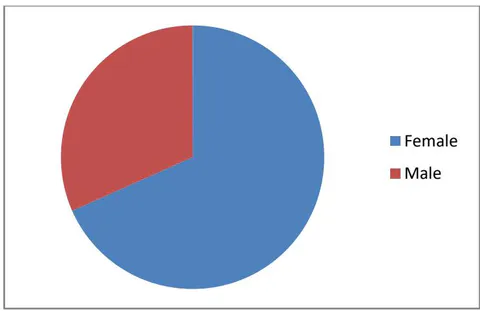
Figure 1: Gender composition of the Respondents
Classification of respondents based on their native place The analysis given in Table 2 below is about the native background of the respondents and, it is revealed that 58% of the respondents come from an urban background while 42% belongs to the rural areas.
| Female | Male | Total | |||
| Urban | Rural | ||||
| Urban | Rural | Urban | Rural | 58% | 42% |
| 26(72%) | 15(60%) | 09(28%) | 10(40%) | ||
b) Intention to do Further Studies
Whether the respondents intend to do further studies is analyzed and presented below in Table 3.
Percentage analysis reveals that male students intention to do further studies is higher than their female counterparts.
| Female | Male | ||
| Yes | No | Yes | No |
| 25 (60%) | 16 (40%) | 16 (84%) | 03(16%) |
c) Type of employment preferred after graduation
According to the analysis given in Figure 2 below, Financial Analyst is the most preferred employment after graduation, and it follows Accountant and Banker. Researcher and Teaching at School or University are the least preferred employments.
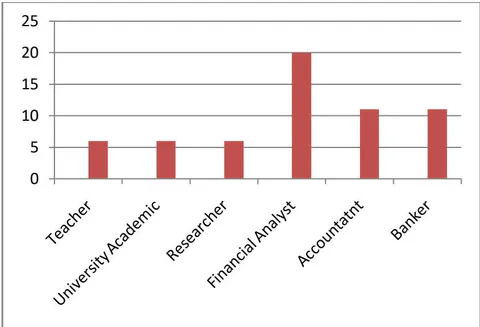
Figure 2: Type of employment preferred after graduation
d) Completed/Following a professional course
More female students than male students completed/follow professional study programs with percentages of 88 and 74 respectively.
| Female | Male | ||
| Yes | No | Yes | No |
| 36(88%) | 05(12%) | 14(74%) | 05(26%) |
e) Intention to do a research study as part of the degree program
Only nine respondents, four females and five males respectively prefer to do a research study as part of their degree program. This analysis is given in Table 5 below followed by the reasons given by respondents for their preference to do research.
| Female | Male |
| 4 | 5 |
Reasons given by the nine respondents who expressed their willingness to do a research study as part of the degree program are: a research study is important in pursuing further studies, gather a broader knowledge on a specific preferred subject area and ability to relate theory to practice.
In contrast, more than 75% of the respondents who are not intending to do researches bring about the fact that going for internship training is more valuable than doing a research. Other reasons for not intending to do a research are: not interested in doing research, no sufficient time to engage in a research study and conducting a research study is a stressful task.
f) Opinion on making the research study compulsory for the degree program
Only a few respondents have expressed their opinion and, the analysis is given below in Table 6. Accordingly, four female students and three male students are of the view that the research study should be a compulsory component of the degree program. Only one female student and one male student have pointed out that it has to be an optional subject. In contrast, 25 respondents namely 17 females and eight males, are in the view that the research study should not be made compulsory for the degree program.
| Female | Male | ||||
| Yes | No | Yes | No | ||
| Compulsory | Optional | Compulsory | Optional | ||
| 04 | 01 | 17 | 03 | 01 | 08 |