I. RELEVANCE
The availability of modern affordable drugs is the basis for the treatment and prevention of the vast majority of diseases of modern man and an indicator of the social and economic development of society. The creation and implementation of new highly effective medicines (PM) based on plant materials growing in the regions of Uzbekistan is a priority for experimental scientists, technologists, doctors and public health authorities of the Republic of Uzbekistan. The development of drugs for dental practice is a very relevant area, since infectious and inflammatory periodontal diseases are common among the general population. According to the WHO, inflammatory periodontal diseases (gingivitis, stomatitis, glossitis, etc.) affect up to 95% of the world's adult population and up to 80% of children.
One of the most pressing problems of modern dentistry is inflammatory diseases of the oral mucosa, as well as gum bedsores (decubital ulcers), which are often formed when using removable dentures. Statistics from the World Health Organization indicate that symptoms of periodontitis are observed in 98% of adults and 76% of children. The disease begins as inflammation, continues with the formation of periodontal (tooth-gingival) pockets and ends with the destruction of the cells in which the teeth are attached. Periodontitis is an inflammatory and destructive disease of the musculoskeletal system of the tooth, which occurs in almost 90% of the population. The development of drugs for dental practice is a very relevant area, since infectious and inflammatory periodontal diseases are common among the general population. The increased interest in medicinal plants, especially in the last decade, was the result of more frequent allergic reactions and complications after the use of antibiotics, hormones and other drugs. In contrast, medicinal plants rarely cause unwanted adverse reactions from the body, are non-toxic and well tolerated by patients regardless of age. Medicinal herbal remedies have high therapeutic efficacy and minimal toxicity [1].
Purpose of the study: The aim of this work is to study the acute toxicity of the Parodonfit liquid extract.
II. MATERIALS AND RESEARCH METHODS
The study of the acute toxicity of the test substance, with the Chlorophyllipt comparison drug, 1% alcohol solution in the first series of experiments was carried out according to the generally accepted method on 42 white mice weighing 19-21 g of both sexes. The studied substance of the Parodonfit alcohol liquid extract in a ratio of 1:10 was administered to animals orally at a dose of 0.25; 0.5 and 0.75 ml per animal weight, which corresponds to 12.5 mg/kg, 25 mg/kg and 37.5 mg/kg. Control was animals that were orally injected with saline in an equivalent volume.
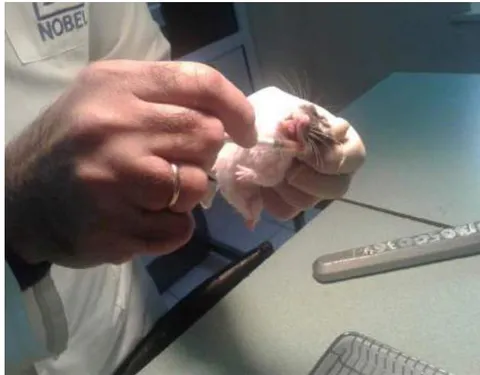
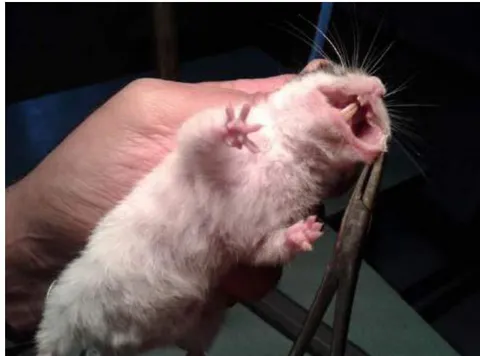
Observation of the condition of the animals was carried out in vivarium conditions for 14 days. In this case, the general condition and behavior of the animals was taken into account. With the introduction of the substance at a dose of 12.5 mg/kg-25 mg/kg, no changes were noted. Animals were active, took water and food, reacted to external stimuli. While the introduction of 37.5 mg/kg contributed to a marked limitation of mobility, respiration became superficial and rapid. The observed changes lasted for 30-40 minutes, then independently passed and the state of the animals returned to its original state. In this case, no pathological reactions in the behavior of animals were noted. They were active, there were no signs of intoxication and completely ate food. General behavior, coat color, mucous membranes, respiration, palpitations, locomotor activity, and death of mice were taken into account. The death of animals during the observation period (within 14 days) was not observed.
III. RESULTS AND DISCUSSION
| Paradonfit | Chlorophyllipt 1% alcoholsolution | ||
| Dosemg/kg | The number of mice dead/ total | Dose mg/kg | The number of mice dead/ total |
| 12,5 | 0/6 | 12,5 | 0/6 |
| 25 | 0/6 | 25 | 0/6 |
| 37,5 | 0/6 | 37,5 | 0/6 |
In the second series of experiments, in accordance with the methodological recommendations, acute toxicity was studied on Syrian sexually mature hamsters weighing 97-135 g by regularly treating the oral cavity of the Parodonfit liquid alcohol extract with a de-alcoholized evaporation method to 1/3 of the initial volume, followed by bringing water to the original amount 0.5-1.0 ml per animal. It is known that testing on Syrian hamsters is the most appropriate method for testing preclinical studies in dental practice [6]. To reproduce by irrigation, the studied alcoholic extract was introduced, which was prepared in advance in a dealcoholized form on the mucous membrane of the buccal space in an amount of 0.5-1.0 ml per animal.
| Paradonfit | |
| Dosemg/kg | Number of hamsters dead/total |
| 1 ml | 0/3 |
Irrigation of the oral cavity was carried out daily for 10 days in vivarium conditions. The control group of animals was irrigated with 1 ml of tap water. Cages with animals were placed in separate rooms. The air - General condition of the animal
Behavior features
The intensity and nature of motor activity
The presence and nature of seizures
Coordination of movement
Reaction to tactile, pain, sound and light stimuli
Frequency and depth of respiratory movements
Condition of hair and skin
All manipulations with animals were carried out in accordance with the "International rules for working with laboratory animals" [4,5,7]. As a study of acute toxicity showed, the behavior of animals from the experimental group did not differ significantly from the control group. The condition of the coat and mucous membranes remained unchanged. During the experiment, no deaths were observed. Due to the above parameters, there were no changes in laboratory animals.
IV. CONCLUSIONS
Thus, with a single oral administration, the Parodonfit liquid alcohol extract in terms of acute toxicity compared to Chlorophyllipt 1% alcohol solution belongs to the class IV of relatively harmless substances [3], as well as during the irrigation of the oral mucosa on mature Syrian hamsters, the alcohol extract under study can be considered harmless.