
I. INTRODUCTION
Hypertensive disorders are among the most common medical disorders during pregnancy and continue to be a serious challenge in obstetric practice. About of pregnancies are complicated by hypertensive diseases [1]. They are one of the deadly triad along with haemorrhage and infection [2].
These disorders comprise of spectrum of diseases that include pre-existing hypertension (i.e., Chronic Hypertension), gestational hypertension, preeclampsia, chronic hypertension with superimposed preeclampsia, eclampsia, and HELLP syndrome. Among these, preeclampsia syndrome either alone or superimposed on chronic hypertension, is the most dangerous.
WHO reported the incidence of preeclampsia to be in the range of in India, and India has an average of [3]. Eastern and north eastern states of India were reported to have highest incidence of preeclampsia [4].
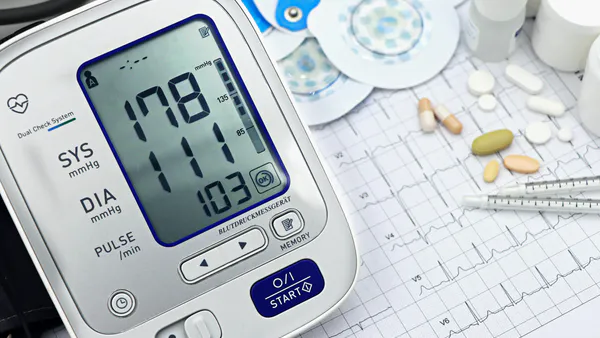
Criteria for hypertension- During pregnancy, hypertension is defined as systolic blood pressure mmHg and/or diastolic blood pressure mmHg. Severe hypertension is defined as systolic blood pressure mmHg and/or diastolic blood pressure mmHg.
Preeclampsia refers to the new onset of hypertension and proteinuria or the new onset of hypertension and significant end-organ dysfunction with or without proteinuria after 20 weeks of gestation or postpartum in a previously normotensive woman [5, 6, 7, 8].
The diagnosis of preeclampsia with severe features is made when the women with preeclampsia who have severe hypertension and/or specific signs or symptoms of significant end organ dysfunction. The specific criteria are following [9].
Severe BP elevation- Systolic BP mmHg and Diastolic BP mmHg on two occasions at least 4 hours apart.
Symptom of CNS dysfunction-1.New onset cerebral or visual disturbances such as Photophobia, scotomata, cortical blindness and retinal vasospasm 2.severe headache.
Hepatic abnormality- Impaired liver functions characterised by serum transaminase concentration
more than two times the upper limit of normal range or severe persistent right upper quadrant or epigastric pain unresponsive to medications.
Thrombocytopenia platelets/ .
Renal abnormality- Serum creatinine or a doubling of serum creatinine concentration in the absence of other renal disease.
Pulmonary edema.
Uteroplacental dysfunction- fetal growth restriction changes in doppler velocimetry studies of the umbilical artery especially if combined with uterine arteries.
The study was undertaken to study the management of preeclampsia, fetal and maternal outcome in preeclampsia and to correlate outcome to various responsible factors so as to include clinical knowledge of preeclampsia among the various group of patients and draw out a policy for management to improve maternal and fetal morbidity & mortality.
a) Aims and Objectives of the Study
To Study various risk factors responsible for increased fetomaternal morbidity and mortality.
To study the maternal outcome in terms of severity, complications of preeclampsia and maternal mortality.
To study the fetal outcome in terms of morbidity and perinatal mortality.
II. MATERIALS AND METHODS
a) Study Design and study population
This was a hospital based cross-sectional observational study, conducted between January 2019 and June 2020. 100 cases of non severe preeclampsia and 100 cases of severe preeclampsia admitted in Department of Obstetrics & Gynaecology in our institute. The study was approved by institutional ethical committee memo no 62, IEC RIMS, Ranchi.
b) Inclusion Criteria
All cases of severe preeclampsia.
All cases of non severe preeclampsia.
All cases of preeclampsia with complications related to preeclampsia.
c) Exclusion Criteria
Patients with BP
Patients who presented with convulsions.
Cases of Preeclampsia with medical complications which affect fetomaternal outcome. e.g.: Heart disease, Chronic hypertension, Diabetes, Haemoglobinopathies, connective tissue disorders, primary renal disorder.
Cases with obstetric complications not related to Preeclampsia e.g.: Placenta previa, Polyhydramnios.
Cases with Multifetal gestation.
d) Ethical consideration
- The study was approved by the institutional ethics committee before commencing the study.
e) Data collection procedure
Data on socio-demographic variables and obstetric characteristics were collected by using predesigned and pretested structured questionnaire. After admission in the antenatal ward, the patients were monitored for blood pressure, any imminent symptoms, proteinuria, fetal heart rate tracings. Details of labour, spontaneous or induced, and mode of delivery were recorded. Maternal complications were noted. Newborn's birth weight and condition at birth were recorded. All newborns were followed up to 7 days of their birth to determine the perinatal outcome. At the end of the study, the data was compiled and analyzed.
c) Data analysis
Data were entered and analysed by using SPSS version 20. Significance of statistical association were tested at P-value .
III. RESULTS
a) Socio Demographic Factors
It was observed that preeclampsia was most common in the age group of 21 to 30 years, women living in rural area, low socioeconomic class and in women with unbooked antenatal history. There was significant association of preeclampsia with above socio-demographic variables (Table No: 1).
Maximum number of patients in the study were Primigravida . cases belonged to second, third and fourth gravida. of cases in the study were grand multigravida (Gravida ).
Among the 200 patients with pre-eclampsia patients presented in gestational age of 28 to weeks, were in the group of to weeks, were in weeks.
Maximum number of patients were in gestational age weeks.
b) Anemia
Most of the preeclampsia patients had anemia. Presence of anemia was statistically significant with the severity of preeclampsia. (Table No:2) 159 patients were anemic according to WHO definition of anemia .
c) Antihypertensive drugs
All the patients of severe pre-eclampsia (100%) needed Antihypertensive drugs and 50% of non severe pre-eclampsia needed Antihypertensive drugs.
d) Inj. MgSO4
Inj. MgSO4 was used in of severe preeclampsia for eclampsia prophylaxis in those cases where BP couldn't be controlled with antihypertensive drugs. Out of 79 patients who received Inj.MgSO4, only one patient developed convulsions and 21 patients didn't receive any eclampsia prophylaxis, of these 3 patients developed convulsions.
e) Mode of delivery
50% patients had vaginal delivery, 50% had Caesarean section (Table No: 3).
f) Maternal outcome
Out of 200 cases of preeclampsia 134 patients had uneventful maternal outcome and in 66 patients the maternal outcome was eventful.
Although there was no statistical association between maternal outcome and severity of preeclampsia, the grave complications were more common in severe preeclampsia cases than in non-severe preeclampsia cases.
The most common complication in the cases of preeclampsia was Post Partum Haemorrhage, which was observed in 15 cases (7.5%), the next common complication was Abruption, which occurred in 10 cases (5%).
HELLP Syndrome occurred in 7 cases of severe preeclampsia, Eclampsia in 4 cases, Pulmonary edema in 3 cases, Renal failure in 3 cases, Sepsis in 6 patients, Cerebrovascular Accident in 1 case and 11 patients needed ICU care.(Table No:4). Maternal mortality occurred in 2 cases (1%).
g) Fetal Outcome
Of the 200 babies (81 from non severe and 66 from severe pre-eclampsia) were full term alive babies, preterm were (41 babies), (8 babies) IUD and (4 babies) stillbirth. Early neonatal death occurred in babies (9), (52) babies were low birth weight, were Growth restricted, babies had Neonatal jaundice and babies were admitted in Neonatal Intensive Care Unit. (Table No: 5)
IV. DISCUSSION
In our study majority of patients belonged to the age group of 21 to 30 years. Similar result was obtained by Kari Annapurna et al [22], Singh et al [23], Neha Kumari et al [16] and Dr. J B Sharma et al [24]. This is because most of the patients in our country get pregnant at this age group only.
There was preponderance of primigravida in preeclampsia cases (52.5%) i.e., 56% in non severe cases and 52.5% in severe cases. This was comparable with the results observed by various authors by Rakesh Gadsa et al 24, Parveen M. Aabidha et al 18 and Kishwara et al 14. In most of the literature on preeclampsia, this has been reported that preeclampsia is common among the primigravida [10, 11]. The maximum number of patients (78.5%) were in the gestational age ≥37 weeks, which is almost similar to study by Dr Ashok Kumar Kumawat et al (72%) [23].
In our study anemia was present in patients. In another study were anaemic [41]. Awol Yamane Legesse et al 30 reported only anemia. This is because the prevalence of anemia in Jharkhand is among pregnant women [31] and anemia itself is a risk factor for developing preeclampsia.
In our study patients had spontaneous labour, only had induced labour which is similar to the study by Al Mulhim A.-A et al [12] and elective caesarean section was done in .
In our study (100 patients) delivered vaginally and (100 patients) underwent Caesarean section. Similar to Aabidha et al [18] study in which patients delivered by Caesarean section. Kari Annapurna et al [22] observed Caesarean section. In another study delivered by Caesarean section [26]. It is more when compared with other studies by Singh et al [19] and Rathore R, Butt NF et al [27] .
It is also observed that there was no significant statistical association between the number of Caesarean sections and severity of preeclampsia. This is similar to the study by Juhi Patel et al [17]. The incidence of caesarean section was higher in our study because, in our institute most of the cases were referred complicated and previous caesarean section cases.
Prematurity was the most common complication associated with pre-eclampsia, which was seen in cases. Similar results have also been observed by Aabidha et al [22] . This is less when compared to the studies by Shaila Khan et al 13 and Muhammad Ashfaq et al. 21. In both studies prematurity was present in cases. Prematurity as a complication of preeclampsia is either due to spontaneous preterm onset of labour or due to preterm induction of labour [14].
In the present study babies had birth asphyxia. This is close to the study by Singh et al 23. Aslam et al. [29] at Karachi (2014). Incidence of MSL and Fetal Distress were high in these cases.
In the present study babies born to preeclampsia cases were growth restricted. This observation is similar to the study by Juhi Patel et al 17, in which had IUGR babies. While Shaila Khan et al [13] and Vajira HW Dissanayake et al [32] observed and respectively.
The perinatal mortality was observed in cases. similar result was also observed by Singh et al [23] . Rakesh P.Gadsa et al [20] and Parveen M. Aabidha et al [18] observed perinatal mortality and cases respectively. However lower perinatal mortality was observed by Al Mulhim A.-A et al [12] . This variability could be due to differences in availability of medical facilities. Main causes of fetal mortality were birth asphyxia, prematurity and IUGR.
a) Maternal outcome
The most common complication in the present study was post partum haemorrhage, which was observed in cases. This is similar to the study by Dr Ashok Kumar Kumawat et al [23] and Aabidha et al [18] . Preeclampsia patients lack normal pregnancy hypervolemia, are much less tolerant of even normal blood loss than are normotensive pregnant women [2].
The next most common complication in our study was Abruption, which was present in cases. Almost similar incidences were noted by Baha M Sibai et al. [28] and Rathore R, Butt et al at Lahore [27] . Hypertension in pregnancy is a most important risk factor for Abruption [10].
HELLP syndrome is a form of severe preeclampsia and is the most serious haematologic complications of preeclampsia [28]. In the present study cases of severe preeclampsia developed HELLP Syndrome. It is comparable to the study by Vithal Kuchake et al [25] and Baba M Sibai et al [28] where HELLP syndrome developed in and patients respectively.
In our study, cases developed convulsions. It is comparable to the study by Ashok Kumar kumawat et al [23] This is less when compared with studies by Juhi Patel et al [17] , Rathore R, Butt et al [27] , Vithal Kuchake et al [25] and Allilaj Minire et al [15] . Less number of preeclampsia cases was attributed to the proper selection of cases for eclampsia prophylaxis and timely administration of .
V. CONCLUSION
This study highlights various risk factors for preeclampsia. Unbooked, young primigravida in advanced period of gestation are at greater risk for preeclampsia related morbidity and mortality.
Preeclampsia tends to threaten maternal health and fetal viability adding to maternal and neonatal morbidity & mortality. There is a high frequency of preeclampsia in our setting and consequences of preeclampsia for neonatal morbidity and mortality are alarmingly high. Treating and improving socioeconomic status will improve maternal and neonatal outcome in preeclampsia. Antenatal care and educating women on significance of symptoms will markedly improve perinatal morbidity and mortality.
Prematurity, growth restriction and Low birth weight are neonatal complications to be anticipated and dealt with, when the mother has preeclampsia. A good Neonatal Intensive Care Unit (NICU) will help to improve neonatal outcome. Prompt treatment and management of its complications will certainly improve maternal and fetal complications.
Reversing the present trend in maternal health seeking behaviour is therefore an issue that needs to be effectively addressed if significant improvement in maternal health is to be achieved.
| S. No. | Anemia (Hb<11 gm%) | Non-Severe preeclampsia | Severe preeclampsia | Total |
| 1 | Not Anemic | 33 | 18 | 51(25.5%) |
| 2 | Anemic | 67 | 82 | 149(74.5%) |
| Chi square X2=4.10 | ||||
| P value=0.038 P= <0.05 | ||||
| S. No. | Mode of delivery | Non Severe preeclampsia | Severe preeclampsia | Total |
| 1 | Vaginal delivery | 54 | 46 | 100(50%) |
| 2 | Caesarean section | 46 | 54 | 100(50%) |
| Chi square X2=1.28 | ||||
| P value=0.254 P= >0.05 | ||||
| S No | Maternal complications | Non Severe Preeclampsia (N/%) | Severe Preeclampsia (N/%) | Total |
| 1 | PPH | 12 | 3 | 15 (7.5%) |
| 2 | Abruption | 2 | 8 | 10 (5%) |
| 3 | HELLP syndrome | 0 | 7 | 7 (3.5%) |
| 4 | Sepsis/Infection | 3 | 3 | 6 (3%) |
| 5 | Pulmonary edema | 0 | 3 | 3(1.5%) |
| 6 | Acute Renal Failure | 0 | 3 | 3 (1.5%) |
| 7 | Eclampsia | 0 | 4 | 4 (2%) |
| 8 | CVA | 0 | 1 | 1(0.5%) |
| 9 | ICU Admission | 0 | 11 | 11(5.5%) |
| 10 | Death | 0 | 2 | 2(0.5%) |
| S No | Fetal Outcome | Non Severe Preeclampsia (N/%) | Severe Preeclampsia (N/%) | Total |
| 1 | Full term alive baby | 66 | 81 | 147 (73.5%) |
| 2 | Preterm alive baby | 26 | 15 | 41 (20.5%) |
| 3 | Intrauterine death | 5 | 3 | 8(4%) |
| 4 | Stillbirth | 3 | 1 | 4(2%) |
| 5 | Birth Asphyxia | 15 | 17 | 32(16%) |
| 6 | Early neonatal death | 7 | 2 | 9(4.5%) |
| 7 | Low birth weight babies | 33 | 19 | 52(26%) |
| 8 | Newborn jaundice | 7 | 4 | 11(5.5%) |
| 9 | IUGR | 22 | 15 | 37(18.5%) |
| 10 | NICU Admission | 23 | 14 | 37(18.5%) |