I. INTRODUCTION
Microbiological standards of health are essential for a healthy lifestyle. However, changing the practices found in standard hygiene standards in developing and developed countries. This study confirms such differences, as different types of viruses have been identified in cell phones. (1) A cell phone (also known as a cell phone, cell phone or cell phone) is a device. You make and receive phone calls over the phone while traveling around a large area in the area; research shows that the cell phone poses a serious health risk. 2000, World Health Organization (WHO) defines telephone radiation in and out of life-threatening radiation because radiation has been reported to be altered. Electrical activity in the brain causes insomnia, headaches, mental retardation, memory retention and low sperm quality. It damages the DNA of sperm production. (2,3) There was also a cell phone The germ cell is called, a cell for transmitting infectious diseases Always communicate by hand. (4) Cell phones can be dangerous to the health of tens of thousands of people. Viruses live on every square inch of the phone.
Staphylococcus aureus, a common bacterium Found in the skin and nose of up to 25% of people and animals Diseases from acne and abscesses to pneumonia and meningitis, and its close relative Methicillin Anti Staphylococcus aureus (MRSA). (5) Because a small group of isolated microbial viruses of the common skin microbiota proposed by previous researchers. (6) Staphylococcus aureus is a well-known microbiota of human skin that can be replaced by a cell phone or phone contact.
It serves as the primary vehicle for hand distribution of various small items. Escherichia coli and the accompanying bacteria make up 0.1% of intestinal flora, and Stool-oral transmission is the main pathway for pathogenic bacteria that cause disease. (7) Causes infections from acne and abscesses to pneumonia and meningitis Not available on cell phones. Confirmed by many colonial people. (8) Choto et al has shown that cell phones can be contaminated by sources such as human skin or hands. Bag, phone bag, bags, packs, ecosystems and food particles, these sources links what germs infect the cell in the colony, causing mild to chronic diseases. (9) However, germs have so far been identified by health researcher's especially indigenous plants Pollution.
They cause opportunistic infections. Karabe et al (10) Escherichia coli, Bacillus spp. and coagulase-negative staphylococcus, they are nosocomial infections, which can be separated from health workers' cell phones. (11) The presence of Escherichia coli in men's personal cell phones indicates contamination. - Microbes grow very isolated from cell phones. (12) Staphylococcus epidermidis and other coccyx Negative staphylococci (CoNS) have emerged as major causes of nosocomial infections. These organisms, which are an important part of normal skin and mucosal microflora,
It specializes in catheter-related infections and other medical devices Today mobiles have become one of the most important adornments in professional and social life. Closely (13,14) the purpose of this study is to examine the personal hygiene and contamination of cell phone viruses belonging to Baghdad University students, and if available these mobile phones pose serious health risks.
II. MATERIAL AND METHODS
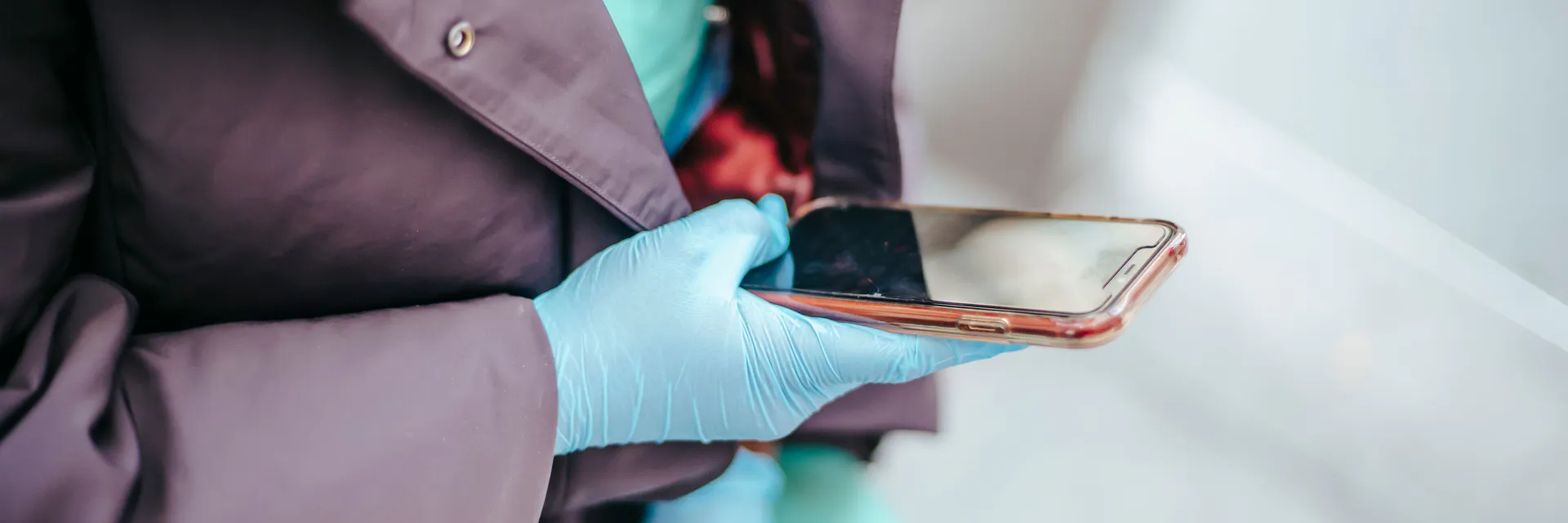
Samples were systematically collected and analyzed by Kololanireza et al. The Streak plate method has been used with 100 phones for 100 students (50 men and 50 women) in Junagadh, Gujarat, India. Streak blade Technique was used for the first test, the cell phone started to be held with the help of sterile gloves. With a sterile cloth, sterile saliva moistens the face on both sides of the wire. The element is embedded in agar by a cellular sample fabric. Vaccinated plates are incubated back to a temperature of for 48 hours. Thereafter the plates were recognized the presence of individual colonies. The tiny organisms are separated from the petriplate into a tube containing a media element called agar. Thereafter, pure cultures of bacterial isolates were classified on the basis of morphological and biochemical experiments. Berkeley's treatise on official bacteriology was used in Note for Identification. (15) P-value statistical analysis (0.05).
III. RESULTS
Usually the microorganisms were isolated and their percentage frequency Staphylococcus aureus (70%), Staphylococcus epidermidis (21%), Bacillus spp. (41%) and Escherichia coli (10%) (Table 1), microbial isolation in personal mobile phones for men Their frequency of occurrence is Staphylococcus aureus (60%), Staphylococcus epidermidis (22%), Bacillus spp. (50%) and Escherichia coli (10%) (Table 2), when private Mobile phones for women Staphylococcus aureus (48%), Staphylococcus epidermidis (24%), Bacillus spp. (40%) Escherichia coli (6%) observed.
These results were due to the fact that mobile phones are polluted by different types of bacteria Their individuality and proximity to the vital part of our body in use such as faces, ears, lips Users' hands can become real reservoirs of infections, which can lead to infections. Personal hygiene and hygiene activities such as hand washing and cleaning the environment Wash hands before and after handling food and phone cleaning People to prevent bacterial infections. The rate of bacterial contamination of personal mobile phones in general was 81.5% privately Mobile Phones for Men The rate of bacterial contamination in personal mobile phones is 80% Female 84%.
Table- 1: Frequency of bacteria isolated from personal mobile phones in general.
| Bacteria | Personal mobile phone n = 100 | Prevalence rate (%) |
| S. aureus | 70 | 70 |
| S. epidermidis | 21 | 21 |
| Bacillus spp. | 41 | 41 |
| E. coli | 10 | 10 |
Table- 2: Frequency of bacteria isolated from personal mobile phones for male
| Bacteria | Personal mobile phone n = 50 | Prevalence rate (%) |
| S. aureus | 30 | 60 |
| S. epidermidis | 11 | 22 |
| Bacillus spp. | 25 | 50 |
| E. coli | 5 | 10 |
Table- 3: Frequency of bacteria isolated from personal mobile phones for female
| Bacteria | Personal mobile phone n = 50 | Prevalence rate (%) |
| S. aureus | 24 | 48 |
| S. epidermidis | 12 | 24 |
| Bacillus spp. | 20 | 40 |
| E. coli | 3 | 6 |
IV. Discussion
The result is similar to Yusha et al (I6), which found the average cell phone viral load was 80.0% 11, and Illusania et al. Food contamination of food retailers is 100% (2). High susceptibility to bacterial agents Cell phone isolation caused by poor health and hygiene habits. The results did not show a significant difference (p < 0.05) in isolated microorganisms. The percentage of frequency that occurs between male and female cell phones results of studies indicate that Staphylococcus aureus and Bacillus spp. Major virus classification often associated with personal calls as shown in Table 1 above. High classification of Bacillus spp. As shown in Table 1 above, it confirms the ubiquitous character Bacillus spp. This can empower the colonies and be able to withstand its grains Natural changes, dry heat and occasional mild disinfection, some Bacillus spp. Bacillus cereus is a common plant of water, vegetables, grains and cooked foods. It can cause toxic infections and allergies in humans. (16) Ilusanya et al. (17), Specify classified items and their percentage of Occurrences Staphylococcus aureus (50%), Streptococcus faecium (34%), Bacillus serius (30%), Escherichia coli (26%) and Micrococcus ludius (10%). The pathogenesis of Staphylococcus epidermidis is highly dependent on device-related infections. The ability of bacteria to adhere to the surface of the device. (18) Cell phones are a real pool of germs on the face, ears, lips and hands of various users of various health conditions. (19) These infections can be reduced by identifying and controlling predictive, educational and microbiological surveillance. (20) Most people do not realize the dangers of phone sharing. Sharing phone calls undoubtedly means excessive sharing. (21) Best ways to kill germs on cell phones should be developed to reduce the potential biological risks.
V. CONCLUSION
These results have shown that cell phones are contaminated in a variety of ways Microbes, and their diversity and proximity to an important part of our body Use like faces, ears, lips and hands of users can be real repositories of germs. Infection is possible. Personal hygiene and hygiene activities such as hand washing and cleaning Hand washing before and after handling environmental hygiene and food and telephones People must be accepted to prevent bacterial infections. Suggestions for street food vendors are; it is important to keep cell phones away from children, the spread of germs, your people are encouraged to be interested in human hygiene and sanitation, Prevent the outbreak and spread of disease. Develop effective prevention strategies such as cleaning cell phones with alcohol having an antibiotic reduce the risk of infection. Phones Another way to reduce cell phone contamination is to enlighten the generalization of small cell phone colonies and the use of standard cleaning agents and redesigning their environment. The phone is easy to use while you are in the toilet or toilet and eating so even washing your hands after using the toilet, can lead to food pollution Mobiles Do not handle phones in toilets, toilets or dirty places.
Conflict of interest: NIL
ACKNOWLEDGMENT
Author acknowledges street vendors for cooperating in this study and Noble Pharmacy College for providing support to carryout experiments.