Anhomaua-B daHHoI cTaTbe TOBOpHTcra O HeHCCJIeIOBaHHbIX Hn HacToHIIee BpeM npOH3BeHEnHX BCemn JIO6HMOrO KOMIO3HTopA A3ep6aJkaHa ToHkA KyJIHeBa, HAnHCaHHbIe Hm IJIa CmfoHNueCKoro opKeCTpa, a TaKke O erO npOH3BeHEnHX NOD Ha3BaHHe "XopeorpaΦHuEcKne HOBeJIb".B cTaTbe BbIAIBJeTc8 60rATCTBO n pa3HOo6pa3He, THIb H φOpMbI pa3BHTNa MeJOIDKN B acHEKTe JKaHpOBoi KJIaccNfHKaIIHH. HccJIeIOBaHbI TaKHe fakTopb My3bIKAJIbHO r3bIka, KaK MeJOIDKn, RapMOHHa, HauHOHaJIbHa My3bIKAJIbHaa OCHOBA, THIb H φOpMbI MeJOIDNUeCKoro pa3BHTNa (IOBTOphocTb, CeKBHeUHOHHocTb, BapHaHTHOCTb, cKaChu, oneBaHne). Bce 0To akTyaJIIN3Hpyet H3yuHHe TBOpueCKoro HacJIeIne ToHkA KyJIHeBa.
IeIb uccledobua: BBIBJEHHe CTNHCTHueckHX 0c06eHHoctei H DaTb aHaJIH3 IpoH3BeDeHHN "XopeorpaΦHuECKHe HOBeJIbToΦHka KyJIHeBa, 0c060 ydeJIHB BHHMaHHe Ha Oc06eHHocTH My3bikaJbHOrO IoohePk KOMIO3HTopa, IIIOHOCTbIO IOKa3ab pa36Op HnKeYIOmMyHTOro IpoH3BeDeHHN.
Memodolozua uccledobua: HccJIeObaHne ochoBaHO Ha MeToe KOMIIJEKCHOR aHaJIH3a. CtaTbB KJIIOUaET KOMIIIEKCHBI aHaJIH3 cTHJIa IIHCbMa H My3bIkaJIbHO r3bIka T. TyJIHeBa, KOtOpB bKJIIOuAet B c6b I3yueHne pa3JIuHbIX opm IBHXKeHH MeJIoHH, Oo6eHHocTei pa3BHTN, OCHObI HAIOHOJIbHO r cTHJIa H KOMIO3HIOHHO r cTpoi. CJeIyER OTMeHTb, YTO IIpr H3yueHH M y3bIkaJIbHO r 3bIka KOMIO3HTopa, IIOMIMO bblIepeHcJIeHHbIX KOMIOHOHTOB, BAJHO 6blIO BBIBHTb eTo CB83b c HauHOHaJIbHBIMH KopHMn.
Bb60bbl: TJIaBHBIM BBIBOdom OcyuieCTBJeHHoro HAMn HayHoro HccJeiIOBaHn8 6blIoo nppeJeHne CTNJIHCTNuueckHe oc06eHHocTH TofHKa KyJIeBa B IpoHN3BeDeHH "XopeorpaΦnuueckHe HOBeJIbI." My3blKaJIbHn J3blK KOMIO3HTopAp OTJIHuaeTc BOIIIOUeHHem B ce6e HaUNHOJIbHO - HapOJHO NOpBEHHoCTC eBPoneEckHM. OprAnHueckoe cJINHHe CO3JaET CNHTe3 MY3blKN, KOTOpBn OtpaKaetcB OOC6eHHOC3TX My3blKAJIbHO TCHJn H 06IeTO My3blKaJIbHO r3blKa IIPOH3BeDEHH, KyaO ATHOscTcraPMOHH, MeTp o - pHTM N dpytHe fOpMOo6pa3yIOUHe CBoiCTBa. My3blKa, HAINcaHHa DJIa CmΦoHHueCKOrO opKeCTpa, 6blIa CO3daHa KOMIO3HTopMn Ha OCHObe BbICOKHX DoCTNKeHHn B JkaHpe HeCHn, KOtopa8 bepet CBOe NaaJIO TJIaBBHm OBpa3OM c HapOJHO My3blKn.
I. INTRODUCTION
The work of the great Azerbaijani composer Tofig Kuliyev is constantly in the center of attention of musicologists and is one of the urgent problems of scientific research. However, despite this, most of the composer's musical creations still remain unexplored.
The work is devoted to the study of the musical language of the composer Tofig Kuliyev. For the first time, a theoretical analysis is given on the basis of archival materials. Such factors of the musical language as melody, harmony, national musical basis, types and forms of melodic development (repetition, sequence, variance, jumps, singing) are studied. All this actualizes the study of the creative heritage of Tofig Kuliyev.
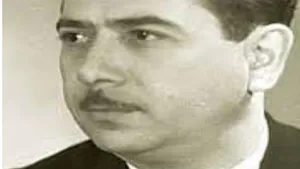
It is known that in the history of music, Tofik Kuliyev is famous as the author of a number of works recording and publishing mughams, which have always been of great importance for the development of national musical culture. Along with this, he is also known as the author of piano, symphonic works, cantatas, musical comedies, and numerous songs. The inimitable music of T. Kuliyev, written by him for many performances and national films, has gained immense popularity and wide recognition among many peoples of the world. Captivating, musical creations of Tofik Kuliyev have always attracted attention and were performed with great love.
II. PURPOSE OF THE RESEARCH
The purpose of the study is to study the main features of T. Kuliyev's melody, the foundations of the musical language. The purpose and objectives of the article are a deep and comprehensive review that will allow you to penetrate into the world of the composer's music, to feel the originality of the work, and also to trace many areas of the genius of the artist's work: expressive features of symphonism in the music of T. Kuliyev; interpretation of the ideological content, as well as consideration of the individual characteristics of symphonic dramaturgy; identification of interrelations and patterns of national and European musical traditions; revealing the structural features of T. Kuliyev's melody, forms of melodic movement.
a) Recent research and publications analysis
Of particular note are the scientific works at different stages of the Azerbaijanjani musical culture of the 20th century, revealing the panorama of the multifaceted development of the creative heritage of T. Kuliyev. Our research is based on the scientific works of Z. Bakikhanova, R. Zograbov, I. Afendiyeva, E. Melikova and many other authoritative musicologists.
b) Main research material
One of the most prominent representatives of the Azerbaijani musical culture of the 20th century, people's artist, composer, film composer and conductor Tofig Kuliyev, throughout his creative life, turning to different musical genres, created extremely valuable works that entered the chronicle of national musical culture. Among them are such as "The Joy of Azerbaijan", "Four Symphonic Pictures", "Gaytagy" for piano and orchestra, the cantata "Song of Moscow", works for piano, music written by him for drama performances, films and, finally, unique songs, which are an ornament, that is, an adornment of the composer's creation.
It should be noted that the composer, at various stages of his work, repeatedly turned to symphonic music and thus wrote a sufficient number of works in this area. The general study shows that Tofig Kuliyev, as well as other composers who turn to this musical field, is faced with the search for a solution to a number of issues related to the subject of music, he tries to create a specific character for dramatic images, to open and show the essence of the main musical theme. It should be remembered that the composer's creative possibilities in this area of music are extremely limitless. The debut in the composer's symphonic work was his compositions, created in the 50-60s, which included "Two Azerbaijani Dances" for a symphony orchestra, "Symphonic Dances" and symphonic suites.
Another work by Tofig Kuliyev, "Choreographic Novels," refers to the 1960s-80s. Although the author does not mention this period in his manuscript, nevertheless, the style of writing and the handwriting are characteristic of the period.
characteristic of the composer himself makes it possible to come to this conclusion.
1. Song
"Choreographic short stories" left a bright mark in the work of Tofik Kuliyev. As we have already mentioned, ballet (dance) music not only plays a leading role in the composer's work, but at the same time, on the basis of this music, the author shows his own individual style. It should also be noted that the feature of orchestration presented in the work also confirms the composer's extraordinary style.
The first musical number of the collection is called "Song", where the author synthesized two genres, that is, combined them.
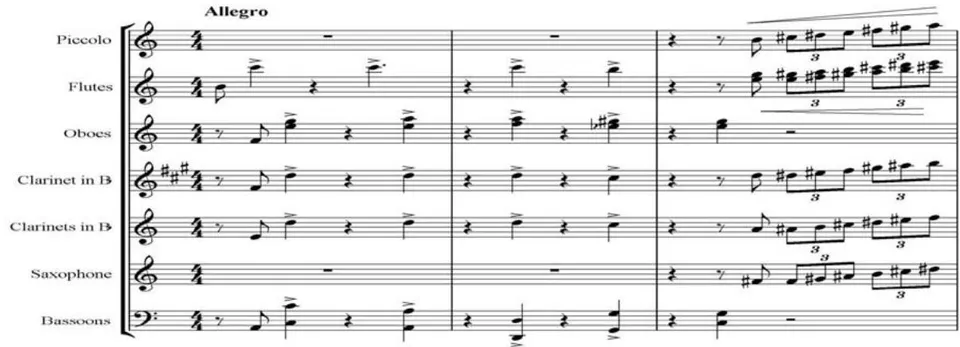
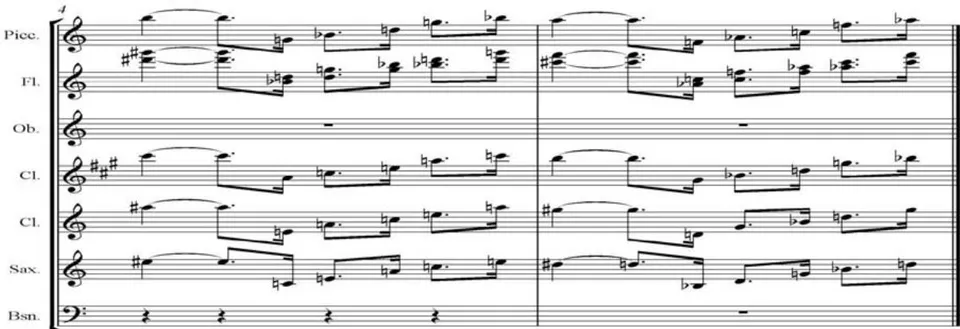
First of all, it should be noted that the song genre and all the patterns related to this genre, as well as the dance (choreography) music presented here, were accurately executed by the composer. A vivid display of characteristic features once again confirms this. In addition, the interesting composition of the orchestra also attracts attention, where, along with other musical instruments, there are also a saxophone and a guitar.

The introductory part of the work emphasizes its rhythmic character, creates the basis of melodic thought.

The main theme played by the flute plays an important role in revealing the characteristic features of the image. The melodiousness of the melody, its lyrical expression of style, is of great importance for the discovery of this genre form. The line of plot development is confirmed here by the presence of a complex texture in the orchestration.

The form of the structure of this work was written in the form of a period, that is, the sounding main theme here, its double transition and the climactic direction of the theme once again confirms this form. The formation of the unity of brass-wind and violin instruments on the basis of the climactic sound is manifested in the composer's work in a particularly vivid form.
2. Autumn
The second number of the musical example is called "Autumn". Here the composer expresses the beauty of nature, his admiration in the language of music.
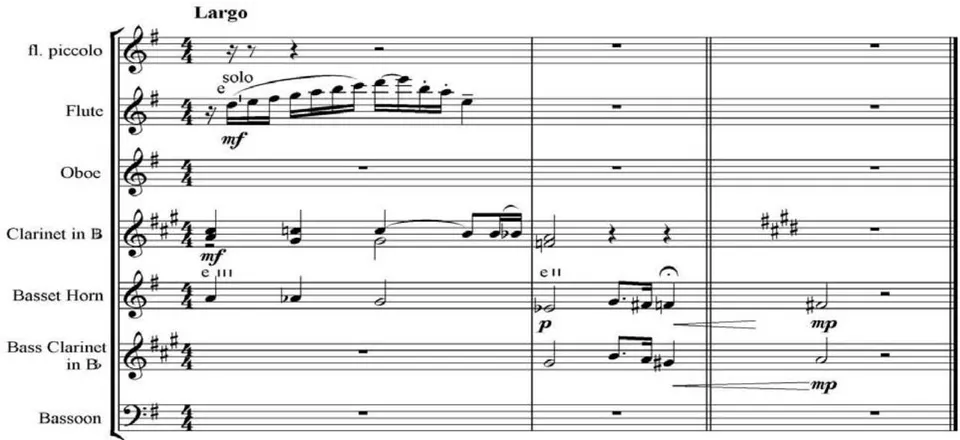

This melody, played by a flute, expresses the main idea of the work. This episode is being played in parallel clarinet and flute, which creates a single intonation pattern of the melody.

The change of keys that occurs in the middle part (2) of the work is one of the features of the composer's work.

should be noted that here the principle of the dynamic development of the work was implemented with the joint group consonance of the orchestra and on the basis of the dynamic promotion of variance. The structure of the work is written in the form of a period.
3. Russian-shaped
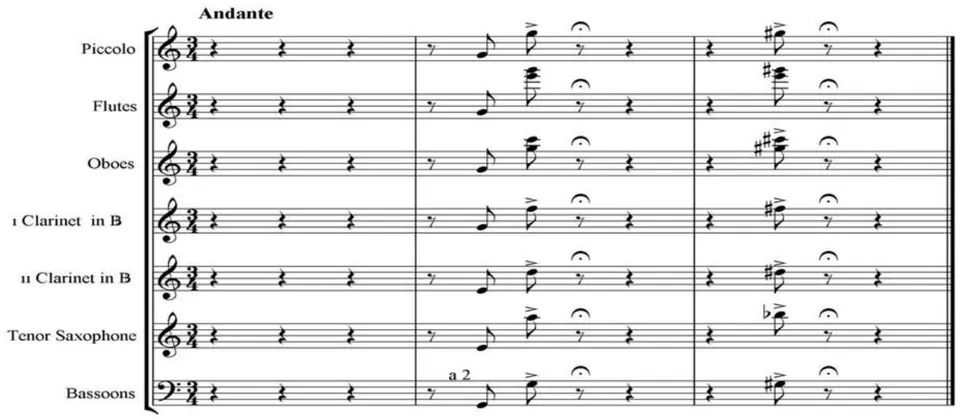
The third musical number of this collection is based on a very interesting concept. Here the composer created samples of melodies typical of Russian national music. However, it should be noted that writing a melody on a Russian theme and expressing its inherent musical features is one of the difficult things, but the composer's talent allowed him to create it skillfully, with taste.
This musical number was written in the form of a waltz, in 3/4 time.

In the second transition of the main melody, there is a change in size, which leads to the creation, as it were, of a new mood.

It is from this episode that the size of the melody changes. And at the same time, here, from the point of view of identifying the musical image, a variant multiplicity of performance is revealed.

The climax of the work traditionally written by the composer in the form of "tutti", emphasizes the main plot of the music. In the same form (tutti), the accentual performance of the violins realizes the image of music, which is the culmination point, where the composer clearly and emphasizing shows the main theme and its variation turns.
The middle part of the work is especially emphasized by the composer. Here, woodwinds play an accompaniment in the form of "ostinato".

This episode, related to the middle part, sounds in the performance of the first violins.
The reprise of the work consists of repetitions of the main theme. The structure of the building has the form . The composer here, as in the previous work, makes extensive use of elements of variation.
4. Fugue
The last presented work of the collection has a special style.
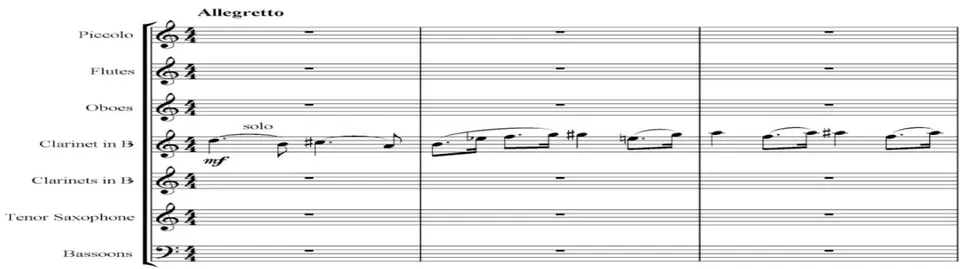
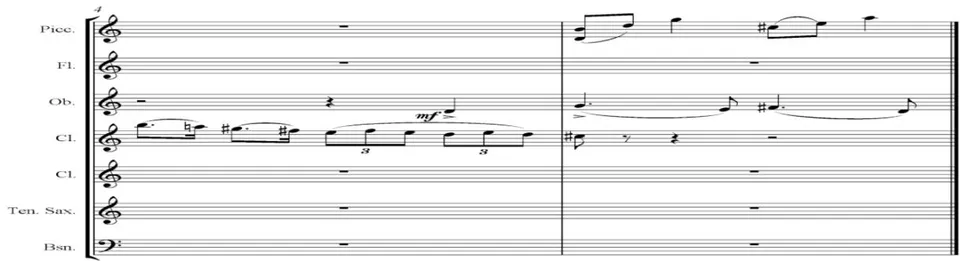
This work - a fugue, written on the basis of the polyphonic genre, has an interesting and complex feature of the structure, and is one of the finest examples of the composer's creation.

The main theme of the fugue is played by the first clarinet. Based on this, in the transition of the theme, the flute solo as the second voice imitates, repeating the clarinet part. It should also be noted that the above polyphonic fugue at the same time, without violating the laws of the classical polyphonic genre, creates a combination of modern music.
The addition of string instruments to the main theme indicates the complexity of polyphony within the overall texture.

The culmination of the fugue here (5 pp.) is carried out by the performance in the form of "tutti" by the orchestra in the transitional part of the theme. And imitation, being the main means, creates a complex structure of the melody, and at the same time expresses the modern style of music. In the last bars of the work, there is a repetition of the initial theme. Such a turn, inherent in the reprise, serves as a means of recalling the general leading melody that sounds at the beginning of the work. In this way, the complete musical thought of the fugue is clearly and skillfully revealed here.
III. CONCLUSIONS
Listening and analysis of the works of Tofig Kuliyev shows that the musical creativity of this most talented composer is distinguished by the embodiment of national and folk soil. from European. That is, this organic fusion creates a synthesis of music, which is reflected in the features of the musical style and the general musical language of the works, which include harmony, metro - rhythm and other formative properties. The music written for the symphony orchestra was created by the composer on the basis of high achievements in the genre of song, which originates mainly from folk music. Here one should mention the scientific thoughts of the great Azerbaijani composer Uzeyir Hajibayli: "Composers should learn from the people, use the inexhaustible wealth of folk music. It is necessary to find new artistic means, enriching the language of music" (Hajibekov, 1966, p.)
In conclusion, it should be noted that the composer's work, his amazingly wonderful music, written in all genres, has become an invaluable pearl in the history of Azerbaijani music and left an indelible mark on his invaluable creative heritage. Musical decorations, patterns, which are often found in the works of Tofik Kuliyev, characterize the musical style of the author. Music and content complement each other, the lyricism of music gives pleasure and peace to everything that surrounds you.