Supply chain risk management (SCRM.) has become a subject of significant interest in academic and business circles in today’s highly competitive business environment. The purpose of the study is to investigate the risks associated with the poultry sector in Bangladesh and mitigation strategies. This study utilizes qualitative field studies and interviews to explore risk factors and mitigation strategies in Bangladesh’s poultry industry, guided by a systematic review. Financial, technical, human resources, policy, and nature are among the main identified risks. To decrease chances and strengthen the resilience of the supply chain, respondents propose that improved technology, insurance, human resources management, disease control, transport, support from governments, or feeds should be considered. This paper proposes a theoretical framework and practical risk mitigation methods, addressing sustainability challenges and aiming to support the industry and associated livelihoods in Bangladesh.
## I. INTRODUCTION
The poultry sector is an essential component of the agricultural sector in Bangladesh, and it plays a significant role in ensuring food security and economic growth (Zaman et al., 2021). The poultry sector is also able to meet the nutritional requirements of its population, and it has considerable employment potential due to national demand for various poultry products, particularly chicken and eggs (Ali, 2018). The industry now plays a crucial role in combating malnutrition and enhancing public health by providing economical protein sources, all the while fostering rural economies by backing small-scale farming and entrepreneurship projects. (Zaman et al., 2021). The challenge of addressing the associated risks is increasingly important as the sector continues to experience robust growth driven by a growing population, changes in food preferences, and supportive government policies (Mars & Weir, 2020). To ensure the sustainability of this sector and its economic contribution, strict risk management practices need to be put in place (Mars & Weir, 2020). A key to ensuring a resilient supply chain is active identification and prevention of possible disruptions, which may arise from disputes with suppliers or disasters such as market volatility (Chopra, 2019). The importance of an efficient supply chain must be considered in the poultry sector (Ali, 2018). To maintain competitiveness and customer satisfaction, it plays an essential role in ensuring that production is carried out at a pace that ensures timeliness of delivery as well as cost control (Kotler et al., 2017). A well-managing supply chain ensures compliance with both the demand and quality standards, thereby reducing operating risks, which helps sustain a more extended period of sustainable development (Chopra, 2019). The poultry sector in Bangladesh still faces a few challenges (Zaman et al., 2021). Outbreaks of diseases such as influenza are very dangerous and devastate the livestock industry, which may lead to considerable losses (Mars & Weir, 2020). Profitability can also be affected by the volatility of feed prices, variations in demand, and changes in world trade policy (Chopra, 2019). The integrity of the supply chain is also at risk from severe weather events, dependence on suppliers' networks, and labour issues (Chopra, 2019). In addition, the evolution of animal welfare rules, food safety, and environmental standards must be constantly adapted by industry (Zaman et al., 2021). Advances in technology and automation, which offer opportunities for modernization and efficiency gains but threaten traditional operators who may be challenged to stay at the cutting edge, are two divergent swords (Kotler et al., 2017). These challenges will have to be dealt with head-on if Bangladesh's poultry industry is to remain in good shape and even improve its impact. The sector will need not only to deal with possible financial losses but also to retain its reputation, maintain continuity, and increase customer confidence to secure the supply chain and use effective risk management strategies (Mars & Weir, 2020). Finally, a robust and reliable supply chain is not just an integral component of the poultry industry's management structure; it is crucial for supporting its development, profitability, and flexibility in challenging market conditions (Mars & Weir, 2020). A key determinant of the industry's ability to contribute significantly to Bangladesh's economy and food landscape will continue to be its robustness within this supply chain, which is ensured by complete risk management (Chopra, 2019).
### a) Literature Review
Bangladesh is one of the most densely populated countries, with a population of 190 million living within 147,570 square miles, according to Zaman et al., 2021. Despite its densely populated urban centres, about $80\%$ of the population resides in towns and villages. Farming, in particular poultry farming, has a vital role to play in the livelihood of this substantial agricultural population (Ali, 2018). The poultry sector in Bangladesh has experienced impressive growth over the past two decades, with an annual growth rate of approximately $20\%$ (Ali, 2018). According to the BRAC (Bangladesh Rural Advancement Committee) annual report, more than $70\%$ of households in rural areas are engaged in poultry rearing, which underlines its socioeconomic importance. Nevertheless, it is difficult to deal with issues such as high poultry mortality rates of $25\%$ due to wrong feeding practices, lack of knowledge about animal husbandry, and insufficient distribution of vaccines (Zaman et al., 2021). In 1990, investments in the poultry sector multiplied exponentially from Tk 15,000 to much more now, which reflects its economic importance (Shamsuddoha, 2021). This industry can potentially create 10 million jobs (Shamsuddoha, 2021). The decreasing trend, with a lack of security and investment, avian influenza outbreaks, and a fluctuating market price, which sometimes leads to cash farmers being out of business overnight, threatens the sector (Shamsuddoha, 2021). In 2007, Sheel wrote, "This sector is severely affected by disease outbreaks and rising feed costs." Poultry farming is attractive even for those from the lower income category, with its potential as a part-time job also available to women, older people, and children because of its relatively low entry barrier (Ali, 2018). Despite its economic importance, promoting an environmentally responsible commercial poultry sector needs more attention (Ali, 2018). This gap suggests that proper institutional backing can contribute to the success of S.M.E.s in poultry farming (Ali, 2018). Low productivity and an approach of scavenging continue to hamper the current market system for locally reared poultry (Ali, 2018). Many poultry producers in Bangladesh still need to be more indifferent to market dynamics despite the increased demand for poultry (Ali, 2018). While much attention has been paid to improving poultry production in Bangladesh, there needs to be more studies focusing on the risks associated with supply chain management. An efficient marketing system, which emphasizes the product's value in the supply chain, should be added to ensure increased production (Kotler et al., 2017). Producers are faced with a challenge in maximizing their potential due to insufficient information about the chicken marketing system (Kotler et al., 2017). Disease outbreaks, food scarcity, and infrastructure shortcomings threaten the supply chain (Lambert, 2019). Comprehensive research on risk management, tailored to the specific context of Bangladesh, is essential for dealing with these concerns. Risk management, as well as the resilience of the poultry supply chain, can be improved by considering sustainable strategies and frameworks (Lambert, 2019).
### b) Research Objective
The study intends to establish robust, evidence-based strategies for risk mitigation that could be effectively implemented within the sector. These strategies will be designed to enhance the resilience of the poultry supply chain, assuring sustainable production and distribution networks that can withstand a variety of disruptions. The ultimate goal of this research is to contribute substantive, peer-reviewed knowledge to the field, warranting publication in top-tier journals, and to provide actionable recommendations that stakeholders can adopt to fortify the poultry industry in Bangladesh against current and future challenges.
## II. METHODS
This research employs a qualitative field study as its research paradigm, chosen for its suitability in investigating risk factors and mitigation strategies within the poultry sector, particularly in relatively unexplored areas (Zikmund et al., 2013). The qualitative field study is well-matched for such research contexts. Data collection in this study utilizes various methods, with interviews being the primary method due to their proven effectiveness in gathering qualitative data (Cooper, 2019).
In the initial exploratory phase, a literature review was conducted to identify, compile, and adapt essential factors relevant to the research (Zikmund et al., 2013). These factors were later contextualized, confirmed, and refined. The semi-structured interview questions were used in the study. See the Appendix for a sample of the questionnaire.
### a) Research Sampling
The selection of participants for this study was based on their availability and easy accessibility, focusing on individuals who were conveniently located (Zikmund et al., 2013). The primary criteria for subject selection were their positions and experience within their respective organizations. Therefore, this research utilized purposive sampling, inviting fifteen interviewees, including employers and employees, from three well-established traditional poultry farms with extensive experience in the poultry sector. These individuals were contacted via telephone to participate in a field study (Zikmund et al., 2013). In each of the three participating farms, namely, Farm F1, Farm F2, and Farm F3, five interviews were conducted from each farm. It's important to note that all participants willingly volunteered for this research. Table 1 provides an overview of the demographic information for each organization.
### b) Data Collection
In the data collection, interviews were conducted in a sequential manner, which allowed researchers to examine more deeply questions that arose as their conversations took place (Cooper, 2019). This method enables a more natural flow of conversation between interviewer and interviewee, facilitated by flexibility (Cooper, 2019). Before the interviews, participants were given a description of the research's objectives and duration for one hour each (Zikmund et al., 2013). Observations were carefully gathered, the interviews were recorded with the consent of the participants, and transcription was carried out promptly to preserve accurate information (Cooper, 2019).
### c) Data Analysis
Analyzing data in qualitative research can be a demanding task (Cooper, 2019). Various tools and techniques are documented in existing literature, and selecting these tools should align with the research's objectives. Given the exploratory nature of this study, content analysis has been chosen as the technique for analyzing the collected data from interviews (Cooper, 2019). We conducted a detailed line-by-line review of the transcripts to identify factors and variables, labelling them appropriately for organization and further analysis (Zikmund et al., 2013). The database of information contains more than 100 pages of notes from the interviews. For the identification of recurring themes and patterns, these data were analyzed using intrusive methods (Cooper, 2019). During the inductive phase, specific instances within the transcripts were tagged and categorized into nodes based on familiar concepts (Cooper, 2019). To analyze high levels, these nodes were then classified into 'trees.' For example, risk factors in the supply chain were divided into thematic areas such as "financial risks," "technological risks," and "natural risks." The qualitative tools used in this process were manual coding and thematic analysis (Zikmund et al., 2013). To obtain a complete understanding of the data, these tools have made it possible to identify patterns and themes that are then assessed against existing literature (Cooper, 2019). To provide a detailed understanding of risk factors in Bangladesh's poultry industry, we used an informal interviewing methodology complemented by qualitative tools such as manual coding and thematic analysis (Cooper, 2019).
## III. RESEARCH FINDINGS
The results and discussion of the qualitative data analysis are included in this section. It consisted of a summary of every variable taken from the interviews; at the end of this section, there is a detailed table with this data.
### a) Demographic Information
The farms participating in the field study have their demographic information displayed in Table 1. Three well-established traditional poultry farms, among which have grown recently and are presently dealing with different risk-reduction issues. Noticed is the lengthy history of farms. At these farms, there are between 20 and 50 number of employees. The interviewees were employed for 8 to 15 years in various roles, from managing director to general staff. The information on the current number of poultry being held on the farms is provided in the table's final column, which can be used to estimate the sizes of each farm.
Table 1: Demographic information about the interviewee
<table><tr><td rowspan="2">Farm</td><td rowspan="2">Respondent</td><td rowspan="2">Position</td><td rowspan="2">No. of years involvement in work</td><td colspan="3">About the Farms</td></tr><tr><td>Size (Number of Employees)</td><td>Age of farm</td><td>No. of Poultry</td></tr><tr><td rowspan="5">F1</td><td>A1</td><td>Managing Director</td><td>2</td><td rowspan="5">30(+/-)</td><td rowspan="5">12</td><td rowspan="5">10000</td></tr><tr><td>B1</td><td>Production Manager</td><td>4</td></tr><tr><td>C1</td><td>Supervisor</td><td>15</td></tr><tr><td>D1</td><td>Farm Manager</td><td>4</td></tr><tr><td>E1</td><td>Feed Doner</td><td>1</td></tr><tr><td rowspan="5">F2</td><td>A2</td><td>Managing Director</td><td>3</td><td rowspan="5">50(+/-)</td><td rowspan="5">16</td><td rowspan="5">12000</td></tr><tr><td>B2</td><td>Production Manager</td><td>5</td></tr><tr><td>C2</td><td>Supervisor</td><td>10</td></tr><tr><td>D2</td><td>Farm Manager</td><td>3</td></tr><tr><td>E2</td><td>Feed Doner</td><td>2</td></tr><tr><td rowspan="5">F3</td><td>A3</td><td>Managing Director</td><td>4</td><td rowspan="5">20(+/-)</td><td rowspan="5">9</td><td rowspan="5">5000</td></tr><tr><td>B3</td><td>Production Manager</td><td>2</td></tr><tr><td>C3</td><td>Supervisor</td><td>6</td></tr><tr><td>D3</td><td>Farm Manager</td><td>7</td></tr><tr><td>E3</td><td>Feed Doner</td><td>2</td></tr></table>
### b) Factors and Variables
The research employed comprehensive content analysis techniques to ascertain many factors and variables associated with risk concerns and possible mitigation strategies. Following that, these variables and factors were, whenever feasible, grouped according to the body of current literature. (Guritno, 2015) The investigation showed that the supply chain for poultry in Bangladesh is exposed to a variety of risks in several different industries, which is impeding the expansion and advancement of the poultry sector in that nation (Masudur Rahman, 2021). According to Farm F2 interviewee A2, Effective risk mitigation is a prerequisite for the growth of Bangladesh's poultry farming system. Businesses and the government must put mitigation plans into place to address the risks related to the poultry supply chain that are social, functional, environmental, and economic. Every respondent in the field study underlined the importance of putting different mitigation strategies into practice across various sectors, including production, storage, processing, and distribution. For example, a respondent from Farm F1 named C1 proposed that political uncertainty can be removed, and technological advancements can help reduce storage-related risks. In a similar vein, Farm F1's A1 noted that political unpredictability can occasionally cause product distribution to be delayed, requiring the need for more cold storage space following processing.
## i. Risk Factors
Participants in the field study focused mainly on identifying different risk issues related to Bangladesh's poultry industry during the production, storage, processing, and distribution stages. Notably, 19 risk-related variables were standard across all these levels. Twelve specific variables were identified at the processing level, seven at the distribution level, eight at the production level, and six at the storage level. A lack of technology and inadequate financial resources were the causes of some of these risks, while hazards were the cause of others. Specific hazards were linked to social responsibility, like political circumstances, unethical employee conduct, and inadequate government backing; other risks were uncontrollable natural occurrences, like floods and storms. Inadequate distribution-level equipment also contributed to several input risks that impacted processing operations. Tables 2, 3, 4, 5, and 6 provide an extensive inventory of all risk factors and variables. We go into more detail in the following sections about the most prevalent and significant risk factors and the ways to mitigate them.
## ii. Financial Risk
Several financial concerns that have a substantial influence on several parts of poultry-related activities, including production, storage, processing, and distribution, were disclosed during the interview. These risks arise from various financial problems that often impede the expansion and development of the poultry sector, which in turn impacts supply chain operations. Participants in the survey talked about various financial concerns, such as difficulty obtaining loans, complex loan application procedures, high interest rates, insufficient funds, and no insurance coverage. A responder named A3 made the following statement regarding loan accessibility: "Most financial institutions in our country do not show interest in investing in the poultry sector, particularly in providing loans to this industry." Furthermore, he said, "The current loan application process is excessively complicated." A1, a different participant, mentioned that "Inadequate loans and financial resources are impeding our organization's growth. Additionally, he expressed that "the interest rates are prohibitively high".
## iii. Technological Risk
Several risks stem from a lack of technological resources. Survey participants have identified several technical deficiencies that hinder and impede their production and operational processes. These technological shortages encompass insufficient cooling systems in the hot season and insufficient heating systems in the winter season, a scarcity of feed storage facilities, automated feed-served systems, automated feed mixing, and enhanced processing capabilities, among other things. As an illustration, respondent B2 commented on technological advancements, "We continue to rely on manual systems in all sectors like production to distribution, which is a time-consuming process, demands greater staff involvement, and raises the potential for mismanagement and pollution."
## iv. Human Resources-Related Risk
Risks associated with human resources may be divided into a few categories, such as labour conflicts, worker inefficiency and illiteracy, a shortage of trained workers, and high staff turnover. Workers with skill and experience are essential for farming operations to succeed. For example, respondent A3, who works at farm F3, needs help keeping workers on for a long time. He said, "After we invest in training and skill development for our staff, they often choose to leave." The need for more competent and qualified labourers causes processing operations to take longer.
Table 2: Common Risk Factors and Variables in all Levels (Production, Storage, Processing, and Distribution)
<table><tr><td rowspan="2">Sustainability Aspects</td><td rowspan="2">Risk Factor</td><td rowspan="2">Risk Variables</td><td colspan="5">F1</td><td colspan="5">F2</td><td colspan="5">F3</td></tr><tr><td>A1</td><td>B1</td><td>C1</td><td>D1</td><td>E1</td><td>A2</td><td>B2</td><td>C2</td><td>D2</td><td>E2</td><td>A3</td><td>B3</td><td>C3</td><td>D3</td><td>E3</td></tr><tr><td rowspan="8">Economical</td><td rowspan="5">Financial Risk</td><td>Insufficient Loan Facilities</td><td>Y</td><td></td><td></td><td>Y</td><td></td><td></td><td></td><td></td><td></td><td>Y</td><td>Y</td><td></td><td></td><td></td><td></td></tr><tr><td>Complex loan Procedures</td><td></td><td></td><td></td><td></td><td></td><td>Y</td><td></td><td></td><td></td><td></td><td></td><td></td><td></td><td>Y</td><td>Y</td></tr><tr><td>Increasing Rate of interest</td><td>Y</td><td></td><td></td><td></td><td></td><td></td><td></td><td></td><td></td><td></td><td></td><td></td><td>Y</td><td></td><td></td></tr><tr><td>Inadequate Finance</td><td></td><td></td><td>Y</td><td></td><td>Y</td><td>Y</td><td>Y</td><td>Y</td><td>Y</td><td>Y</td><td>Y</td><td></td><td>Y</td><td>Y</td><td>Y</td></tr><tr><td>Absence of Enough Support System</td><td>Y</td><td></td><td></td><td></td><td></td><td>Y</td><td></td><td></td><td></td><td></td><td></td><td></td><td></td><td></td><td>Y</td></tr><tr><td>Technological Risk</td><td>Unavailability of Improve Technology</td><td>Y</td><td>Y</td><td>Y</td><td>Y</td><td>Y</td><td>Y</td><td>Y</td><td>Y</td><td>Y</td><td>Y</td><td>Y</td><td>Y</td><td>Y</td><td>Y</td></tr><tr><td>Functional Risk</td><td>Marker volatility creates uncertainty</td><td>Y</td><td>Y</td><td>Y</td><td>Y</td><td>Y</td><td>Y</td><td>Y</td><td>Y</td><td>Y</td><td>Y</td><td>Y</td><td>Y</td><td>Y</td><td>Y</td></tr><tr><td>Delays in the delivery</td><td>Y</td><td>Y</td><td>Y</td><td>Y</td><td>Y</td><td>Y</td><td>Y</td><td>Y</td><td>Y</td><td>Y</td><td>Y</td><td>Y</td><td>Y</td><td>Y</td><td>Y</td></tr><tr><td rowspan="8">Social</td><td rowspan="5">Human Resource Risk</td><td>Workplace conflicts</td><td>Y</td><td>Y</td><td>Y</td><td>Y</td><td>Y</td><td>Y</td><td>Y</td><td>Y</td><td>Y</td><td>Y</td><td>Y</td><td>Y</td><td>Y</td></tr><tr><td>Employee inefficiency and illiteracy</td><td>Y</td><td>Y</td><td>Y</td><td>Y</td><td>Y</td><td>Y</td><td>Y</td><td>Y</td><td>Y</td><td>Y</td><td>Y</td><td>Y</td><td>Y</td><td>Y</td></tr><tr><td>Absence of qualified personnel</td><td>Y</td><td>Y</td><td>Y</td><td>Y</td><td>Y</td><td>Y</td><td>Y</td><td>Y</td><td>Y</td><td>Y</td><td>Y</td><td>Y</td><td>Y</td><td>Y</td></tr><tr><td>Changing employees regularly</td><td>Y</td><td>Y</td><td>Y</td><td>Y</td><td>Y</td><td>Y</td><td>Y</td><td>Y</td><td>Y</td><td>Y</td><td>Y</td><td>Y</td><td>Y</td><td>Y</td></tr><tr><td>Government Policy and Support</td><td>Absence of set government regulations</td><td>Y</td><td>Y</td><td>Y</td><td>Y</td><td>Y</td><td>Y</td><td>Y</td><td>Y</td><td>Y</td><td>Y</td><td>Y</td><td>Y</td><td>Y</td><td>Y</td></tr><tr><td>Poor state of law and order</td><td>Y</td><td>Y</td><td>Y</td><td>Y</td><td>Y</td><td>Y</td><td>Y</td><td>Y</td><td>Y</td><td>Y</td><td>Y</td><td>Y</td><td>Y</td><td>Y</td><td>Y</td></tr><tr><td>Political Risk</td><td>Political Parties Violence</td><td>Y</td><td>Y</td><td>Y</td><td>Y</td><td>Y</td><td>Y</td><td>Y</td><td>Y</td><td>Y</td><td>Y</td><td>Y</td><td>Y</td><td>Y</td><td>Y</td></tr><tr><td>Management and Unethical practices of employees</td><td>Corruption</td><td>Y</td><td>Y</td><td>Y</td><td>Y</td><td>Y</td><td>Y</td><td>Y</td><td>Y</td><td>Y</td><td>Y</td><td>Y</td><td>Y</td><td>Y</td><td>Y</td></tr><tr><td rowspan="2">Environmental</td><td rowspan="2">Natural Risk</td><td>Damage to the farm's assets Theft</td><td>Y</td><td>Y</td><td>Y</td><td>Y</td><td>Y</td><td>Y</td><td>Y</td><td>Y</td><td>Y</td><td>Y</td><td>Y</td><td>Y</td><td>Y</td></tr><tr><td>Natural uncertainties (storms, excessive rain, flood)</td><td>Y</td><td>Y</td><td>Y</td><td>Y</td><td>Y</td><td>Y</td><td>Y</td><td>Y</td><td>Y</td><td>Y</td><td>Y</td><td>Y</td><td>Y</td><td>Y</td></tr></table>
## v. Political Risk
Events like hartals (political disruptions caused by rallies or other actions) and other forms of political unrest, which disrupt the ordinary course of the production cycle, are characteristics of Bangladesh's political environment. Regarding these hazards, which have an immediate impact on the distribution and processing operations, every responder has expressed that worry. Long-lasting protests and strikes might cause severe delays throughout the procedure. "For political uncertainties, we sometimes must stockpile large quantities of poultry products, which necessitates us to find additional space in our chiller for storing undistributed products," stated respondent D3. Another responder, E2 from farm F2, said, "Five years ago, three of our poultry feed-bearing vans were attacked and destroyed by picketers, resulting in financial losses for our business."
## vi. Unethical Behavior Shown by Employees
Most research participants have identified instances of unethical behaviour and poor management by staff members. These include theft, damage to farm equipment, incorrect handling leading to poultry deterioration, and corruption (mixing with tainted feed). The mishandling of employees has caused manu facturing expenses to rise. Respondent A1 said in this context: "We frequently witness unethical behaviours like theft, corruption, and misuse among employees in our industry because the income of people in our country is limited." We must continue to be on the lookout since this is a persistent problem.
Table 3: Qualitative data containing variables and risk factors (Production level)
<table><tr><td rowspan="3">Sustainability Aspect</td><td rowspan="3">Risk Factors</td><td rowspan="3">Risk Variables</td><td colspan="14">Respondent</td><td></td></tr><tr><td colspan="5">F1</td><td colspan="4">F2</td><td colspan="5">F3</td><td></td></tr><tr><td>A1</td><td>B1</td><td>C1</td><td>D1</td><td>E1</td><td>A2</td><td>B2</td><td>C2</td><td>D2</td><td>E2</td><td>A3</td><td>B3</td><td>C3</td><td>D3</td><td>E3</td></tr><tr><td rowspan="7">Economical</td><td rowspan="2">Hazard risk</td><td>Human errors, negligence, and lack of training</td><td>Y</td><td></td><td></td><td></td><td></td><td>Y</td><td>Y</td><td>Y</td><td>Y</td><td></td><td>Y</td><td></td><td></td><td></td><td></td></tr><tr><td>An overly lengthy chain slows down the flow of products</td><td>Y</td><td></td><td></td><td></td><td></td><td>Y</td><td></td><td></td><td></td><td>Y</td><td></td><td>Y</td><td>Y</td><td></td><td></td></tr><tr><td rowspan="2">Inadequate infrastructure</td><td>Poor conditioned road for moving product (delay and spoilage)</td><td></td><td>Y</td><td></td><td>Y</td><td></td><td>Y</td><td>Y</td><td></td><td>Y</td><td>Y</td><td></td><td></td><td></td><td>Y</td><td></td></tr><tr><td>Issues with the supply chain</td><td>Y</td><td></td><td></td><td>Y</td><td></td><td></td><td></td><td>Y</td><td></td><td></td><td></td><td></td><td></td><td>Y</td><td>Y</td></tr><tr><td rowspan="3">Functional Risk</td><td>The risk of equipment failure or breakdown</td><td>Y</td><td></td><td>Y</td><td></td><td>Y</td><td></td><td>Y</td><td>Y</td><td></td><td>Y</td><td></td><td></td><td>Y</td><td></td><td>Y</td></tr><tr><td>A lack of skilled or available labour</td><td>Y</td><td>Y</td><td>Y</td><td></td><td>Y</td><td></td><td></td><td></td><td>Y</td><td>Y</td><td>Y</td><td></td><td></td><td></td><td></td></tr><tr><td>Energy and Resource unavailability</td><td></td><td></td><td></td><td>Y</td><td></td><td></td><td></td><td></td><td>Y</td><td></td><td>Y</td><td></td><td>Y</td><td>Y</td><td></td></tr><tr><td>Social</td><td>Incompetence and unethical actions by workers or intermediaries</td><td>Poor workforce scheduling or inadequate supervision</td><td></td><td>Y</td><td>Y</td><td></td><td></td><td></td><td></td><td>Y</td><td></td><td></td><td>Y</td><td></td><td></td><td></td><td>Y</td></tr></table>
## vii. Input Risk
The research participants voiced worries regarding input dangers during the production stage. Disruptions in the essential material supply might result in input hazards. The most often cited input hazards include lack of regular vaccinations and veterinary care, feed shortages, and restricted availability of high-quality feed. There is a clear correlation between these input hazards and production disruptions and variations in output volumes. Except for respondent E3, almost all respondents voiced discontent with the continuously escalating food prices and medication they frequently need. They also expressed dissatisfaction with the government's uneven and inadequate vaccination program.
## viii. Hazard Risk
The respondents have identified various categories of hazard risk. It is crucial to remember that depending on the level, different hazards have distinct characteristics. These include personnel injuries during processing, illnesses among poultry, fires at farm buildings, damage to machinery in cold storage, and mishaps involving transport trucks during distribution. Every responder, without exception, concurred that the most prevalent and severe threats to the poultry sector are illnesses.
## ix. Natural Risk
The responder believes that natural disasters can affect Bangladesh's poultry supply chain. Unpredictable occurrences such as floods, storms, droughts, high humidity, and severe rainfall are included in these natural dangers. They are also concerned about the chicken's quick spoilage, pollution, and dirty surroundings. For all supply chain players, these risks translate into significant losses. Respondent A3, for example, observed that "temperature control is a challenging task due to our highly erratic climate, which varies greatly in moisture levels and occasionally experiences excessive rainfall."
Table 4: Qualitative data containing variables and risk factors (storage level)
<table><tr><td rowspan="3">Sustainability aspect</td><td rowspan="3">Risk Factors</td><td rowspan="3">Risk Variables</td><td colspan="14">Respondent</td><td></td></tr><tr><td colspan="5">F1</td><td colspan="4">F2</td><td colspan="5">F3</td><td></td></tr><tr><td>A1</td><td>B1</td><td>C1</td><td>D1</td><td>E1</td><td>A2</td><td>B2</td><td>C2</td><td>D2</td><td>E2</td><td>A3</td><td>B3</td><td>C3</td><td>D3</td><td>E3</td></tr><tr><td rowspan="3">Economical</td><td rowspan="3">Hazard risk Technological shortage</td><td>Equip mental function or damage in cold storage</td><td>Y</td><td></td><td></td><td></td><td></td><td></td><td>Y</td><td>Y</td><td></td><td>Y</td><td>Y</td><td></td><td>Y</td><td>Y</td><td>Y</td></tr><tr><td>Insufficient cold storage facilities</td><td></td><td>Y</td><td></td><td>Y</td><td></td><td></td><td></td><td></td><td></td><td></td><td></td><td></td><td></td><td>Y</td><td>Y</td></tr><tr><td>Poor cold storage facilities</td><td></td><td>Y</td><td></td><td></td><td>Y</td><td>Y</td><td></td><td></td><td></td><td></td><td></td><td>Y</td><td></td><td></td><td>Y</td></tr><tr><td>Social</td><td>Incompetence and unethical actions by workers or intermediaries</td><td>Increasing Death rate from incorrect handling</td><td></td><td></td><td>Y</td><td></td><td>Y</td><td>Y</td><td>Y</td><td>Y</td><td></td><td></td><td></td><td></td><td>Y</td><td>Y</td><td>Y</td></tr><tr><td rowspan="2">Environmental</td><td rowspan="2">Environmental risk</td><td>Bacterial contamination for improper temperature</td><td></td><td></td><td></td><td></td><td></td><td>Y</td><td></td><td></td><td></td><td></td><td></td><td>Y</td><td>Y</td><td></td><td></td></tr><tr><td>Pollution and an unclean atmosphere</td><td></td><td></td><td></td><td></td><td></td><td></td><td></td><td>Y</td><td>Y</td><td>Y</td><td></td><td>Y</td><td></td><td>Y</td><td></td></tr></table>
## x. Inadequate infrastructure
This study shows that insufficient infrastructure not only hinders the growth and development of the sector but also interferes with the effective delivery of goods. The inability to expand farms is due to the need for more available land. Respondent A1 expressed concern regarding the lack of land by saying, "We have intentions to expand and diversify, but we are unable to put these plans into action due to our limited land resources." Every respondent emphasized that poor condition of roads and highways causes delays and spoilage of products during transit.
Table 5: Qualitative data containing variables and risk factors (processing level)
<table><tr><td rowspan="3">Sustainability aspect</td><td rowspan="3">Risk Factors</td><td rowspan="3">Risk Variables</td><td colspan="14">Respondent</td><td></td></tr><tr><td colspan="4">F1</td><td colspan="4">F2</td><td colspan="6">F3</td><td></td></tr><tr><td>A1</td><td>B1</td><td>C1</td><td>D1</td><td>E1</td><td>A2</td><td>B2</td><td>C2</td><td>D2</td><td>E2</td><td>A3</td><td>B3</td><td>C3</td><td>D3</td><td>E3</td></tr><tr><td rowspan="9">Economical</td><td rowspan="4">Hazard risk</td><td>Poultry diseases</td><td>Y</td><td>Y</td><td></td><td></td><td>Y</td><td></td><td></td><td>Y</td><td>Y</td><td>Y</td><td>Y</td><td></td><td></td><td></td><td>Y</td></tr><tr><td>Equipment failure at the processing facility</td><td></td><td></td><td></td><td>Y</td><td></td><td></td><td>Y</td><td></td><td></td><td></td><td>Y</td><td>Y</td><td>Y</td><td>Y</td><td></td></tr><tr><td>Fire at the farm shed.</td><td></td><td></td><td></td><td>Y</td><td></td><td></td><td>Y</td><td>Y</td><td></td><td></td><td></td><td>Y</td><td>Y</td><td></td><td>Y</td></tr><tr><td>Accident (Staff injury)</td><td></td><td></td><td></td><td></td><td></td><td></td><td>Y</td><td>Y</td><td></td><td></td><td>Y</td><td></td><td></td><td></td><td>Y</td></tr><tr><td rowspan="4">Input risk</td><td>A scarcity of high-quality feed</td><td>Y</td><td></td><td></td><td></td><td></td><td></td><td></td><td>Y</td><td></td><td>Y</td><td>Y</td><td></td><td>Y</td><td>Y</td><td></td></tr><tr><td>Exorbitant feed and medication costs</td><td>Y</td><td>Y</td><td>Y</td><td>Y</td><td></td><td>Y</td><td>Y</td><td>Y</td><td>Y</td><td>Y</td><td></td><td></td><td></td><td></td><td>Y</td></tr><tr><td>Limited availability of food</td><td>Y</td><td></td><td></td><td></td><td>Y</td><td>Y</td><td>Y</td><td>Y</td><td></td><td></td><td>Y</td><td>Y</td><td></td><td></td><td>Y</td></tr><tr><td>Inadequate immunization and veterinary care</td><td>Y</td><td></td><td></td><td></td><td></td><td></td><td></td><td></td><td></td><td>Y</td><td></td><td></td><td>Y</td><td></td><td>Y</td></tr><tr><td>Inadequate infrastructure</td><td>Lack of space to expand a farm</td><td>Y</td><td>Y</td><td>Y</td><td>Y</td><td>Y</td><td></td><td>Y</td><td>Y</td><td>Y</td><td></td><td></td><td>Y</td><td></td><td></td><td></td></tr><tr><td rowspan="2">Social</td><td>Lack of support and policy from the government</td><td>Irregular vaccination supplies from the government</td><td></td><td>Y</td><td></td><td></td><td></td><td>Y</td><td></td><td></td><td></td><td></td><td>Y</td><td></td><td></td><td>Y</td><td>Y</td></tr><tr><td>Strategic Risk</td><td>Rivalries between the farms</td><td>Y</td><td></td><td></td><td></td><td></td><td></td><td></td><td>Y</td><td></td><td>Y</td><td></td><td>Y</td><td>Y</td><td></td><td>Y</td></tr><tr><td>Environmental</td><td>Natural Risk</td><td>Seasonal Virus</td><td></td><td></td><td></td><td></td><td>Y</td><td></td><td>Y</td><td></td><td>Y</td><td></td><td></td><td>Y</td><td>Y</td><td>Y</td><td>Y</td></tr></table>
## xi. The Unethical Actions of Intermediaries
Intermediaries are highly active at the distribution level throughout the entire supply chain. As the respondents saw the middleman as the "profit sucker," they wanted to put an end to unethical practices such as adulteration, deprivation, and upward pricing.
Table 6: Qualitative data containing variables and risk factors (distribution level)
<table><tr><td rowspan="3">Sustainability aspect</td><td rowspan="3">Risk Factors</td><td rowspan="3">Risk Variables</td><td colspan="14">Respondent</td><td></td></tr><tr><td colspan="5">F1</td><td colspan="4">F2</td><td colspan="5">F3</td><td></td></tr><tr><td>A1</td><td>B1</td><td>C1</td><td>D1</td><td>E1</td><td>A2</td><td>B2</td><td>C2</td><td>D2</td><td>E2</td><td>A3</td><td>B3</td><td>C3</td><td>D3</td><td>E3</td></tr><tr><td rowspan="6">Economical</td><td rowspan="3">Hazard risk Distribution risk</td><td>Transport vehicle accidents</td><td>Y</td><td></td><td></td><td></td><td></td><td>Y</td><td>Y</td><td>Y</td><td>Y</td><td></td><td></td><td></td><td>Y</td><td>Y</td><td>Y</td></tr><tr><td>Intermediaries' existence or an excessive number of them</td><td>Y</td><td></td><td>Y</td><td></td><td></td><td>Y</td><td></td><td></td><td></td><td>Y</td><td></td><td>Y</td><td>Y</td><td></td><td>Y</td></tr><tr><td>A chain that is too long delays the movement of products.</td><td>Y</td><td>Y</td><td></td><td></td><td>Y</td><td>Y</td><td>Y</td><td>Y</td><td></td><td>Y</td><td>Y</td><td></td><td></td><td>Y</td><td>Y</td></tr><tr><td rowspan="3">Inadequate infrastructure</td><td>Roads in poor condition cause product spoilage and delays</td><td>Y</td><td>Y</td><td></td><td>Y</td><td>Y</td><td>Y</td><td>Y</td><td>Y</td><td>Y</td><td>Y</td><td>Y</td><td></td><td>Y</td><td></td><td>Y</td></tr><tr><td>Not enough transportation capacity to move goods regularly</td><td>Y</td><td></td><td>Y</td><td></td><td></td><td></td><td></td><td>Y</td><td></td><td></td><td>Y</td><td>Y</td><td>Y</td><td></td><td>Y</td></tr><tr><td>Absence of chilling facilities for storing poultry</td><td></td><td>Y</td><td></td><td></td><td>Y</td><td>Y</td><td></td><td></td><td></td><td>Y</td><td></td><td>Y</td><td></td><td>Y</td><td>Y</td></tr><tr><td>Social</td><td>Incompetence and unethical actions by workers or intermediaries</td><td>Intermediaries acting unethically by adulterating, charging more, or depriving</td><td></td><td>Y</td><td></td><td>Y</td><td></td><td>Y</td><td></td><td>Y</td><td></td><td>Y</td><td>Y</td><td>Y</td><td>Y</td><td>Y</td><td>Y</td></tr></table>
### c) Strategies for Mitigating Risks
We have investigated different approaches to risk mitigation in the poultry supply chain, as recommended by the respondents, through our analysis. Upon being asked to elaborate on these risk mitigation tactics, several respondents offered various suggestions. While some emphasized the value of technological breakthroughs, others argued in favour of insurance coverage's accessibility. While other respondents highlighted the importance of government support, financial management, backup capacity, off-farm income, investments, business policies, and practices, others stressed the importance of training and human resource management. Respondent A2 underlined, "Since we deal with living things, risks can occur at any time. We always need to be prepared to confront and mitigate these risks" about risk mitigation techniques. Table 7 is displayed below, featuring all the derived variables about the standard level of production, storage, processing, and distribution.
Table 7: Common Mitigating Factors and Variables in All Levels (Production, Storage, Processing, and Distribution)
<table><tr><td rowspan="3">Mitigating Strategy Factors</td><td rowspan="3">Mitigating Strategy (Variables)</td><td colspan="14">Respondent</td><td></td></tr><tr><td colspan="5">F1</td><td colspan="5">F2</td><td colspan="4">F3</td><td></td></tr><tr><td>A1</td><td>B1</td><td>C1</td><td>D1</td><td>E1</td><td>A2</td><td>B2</td><td>C2</td><td>D2</td><td>E2</td><td>A3</td><td>B3</td><td>C3</td><td>D3</td><td>E3</td></tr><tr><td>Technology improvement</td><td>Using more advanced technology (feed mixtures, processing facilities, machinery, etc.)</td><td>Y</td><td>Y</td><td>Y</td><td>Y</td><td></td><td></td><td>Y</td><td>Y</td><td>Y</td><td></td><td>Y</td><td></td><td>Y</td><td>Y</td><td></td></tr><tr><td>Insurance Management</td><td>Purchasing output-loss insurance</td><td>Y</td><td></td><td></td><td></td><td></td><td>Y</td><td>Y</td><td>Y</td><td>Y</td><td>Y</td><td></td><td>Y</td><td>Y</td><td>Y</td><td>Y</td></tr><tr><td rowspan="2">Human resource management</td><td>Hiring skilled staff</td><td></td><td></td><td>Y</td><td></td><td></td><td></td><td></td><td></td><td></td><td></td><td></td><td></td><td></td><td></td><td></td></tr><tr><td>Facilities for staff motivation and incentives</td><td></td><td></td><td></td><td></td><td></td><td></td><td>Y</td><td></td><td></td><td></td><td></td><td></td><td></td><td></td><td></td></tr><tr><td rowspan="2">Government support</td><td>Initiative to eliminate uncertainty in politics</td><td></td><td></td><td></td><td></td><td></td><td></td><td></td><td></td><td></td><td></td><td></td><td>Y</td><td></td><td></td><td></td></tr><tr><td>The establishment of a set policy for the automotive industry</td><td></td><td></td><td></td><td></td><td></td><td>Y</td><td></td><td></td><td></td><td>Y</td><td></td><td></td><td></td><td></td><td></td></tr><tr><td rowspan="2">Financial Management</td><td>Guarantee of sufficient institutional financing support at a reasonable interest rate</td><td></td><td></td><td></td><td></td><td></td><td></td><td></td><td>Y</td><td></td><td></td><td></td><td></td><td></td><td></td><td></td></tr><tr><td>Introducing off-farm activities</td><td></td><td></td><td></td><td></td><td></td><td></td><td>Y</td><td></td><td></td><td></td><td></td><td></td><td></td><td></td><td></td></tr><tr><td>Off-farm income and investment</td><td>Pay attention to product diversification and value addition.</td><td></td><td></td><td></td><td></td><td></td><td></td><td></td><td></td><td>Y</td><td></td><td></td><td>Y</td><td></td><td></td><td></td></tr><tr><td rowspan="2">Business policy and practice</td><td>Encourage good corporate conduct through collaboration, improved planning, and information exchange.</td><td></td><td></td><td></td><td></td><td></td><td></td><td></td><td></td><td></td><td></td><td></td><td></td><td>Y</td><td></td><td></td></tr><tr><td>Integration, acquisition, and merger risk reduction.</td><td>Y</td><td></td><td></td><td></td><td></td><td>Y</td><td></td><td></td><td></td><td>Y</td><td>Y</td><td>Y</td><td>Y</td><td></td><td>Y</td></tr></table>
## i. Technological Improvement
Technical improvement is the poultry supply chain risk mitigation technique that receives the highest support. Adoption of enhanced technologies, such as automated feed processing and automated feed mixing, upgraded facilities for processing, coldstoring, and so forth. Most of the Participants concurred that technical advancement. It would boost output and profitability, lowering the incidence of poor management and cost savings through reducing labour participation and increasing the time administration.
## ii. Insurance Management
Getting insurance to guard against production losses can help supply chain players handle a range of risks resulting from mishaps, illnesses, erratic weather patterns, and dangers. Regarding insurance coverage, respondent A3 voiced frustration, stating, "We face difficulties in guaranteeing our survival in the event of any disaster because the poultry industry in our country is not insured."
## iii. Managing Human Resource Properly
Within the agricultural industry, human resource management functions as a risk mitigation tactic that includes hiring competent staff, supervising their work through incentives and motivation, planning training programs, and setting up observation teams. The study emphasizes how crucial it is to have knowledgeable and capable employees to reduce the risks of poor management, improper temperature control, and other possible dangers, including staff injuries and machinery damage. Many of the participants stressed the need to give employees training opportunities, characterizing it as crucial for improving their abilities and productivity as well as acting as a source of inspiration.
## iv. Diseases Management
The study's results unequivocally show that a few participants gave disease control through implementing consistent, improved, and enhanced poultry vaccination programs a high priority as a risk reduction strategy. Diseases have the potential to be so detrimental to the poultry industry that they may even force companies to close. To protect their farming operations, the respondents stressed the significance of vaccinating their livestock regularly.
## v. Transport Management
According to this study, maintaining a sufficient transportation supply is a critical component of transport management and is necessary for effective distribution. Chickens perish quickly, so timely distribution is crucial. To avoid substantial temperature increases, it must be distributed and transported in insulated vehicles. Keeping an adequate number of transportation options is essential to achieving timely and efficient distribution. Regarding refrigerated transport facilities following chicken processing, respondent A1 said, "Last year, we invested in two refrigerated vans, which has relieved our worries when transporting our products over long distances."
## vi. Government Support
All the speakers stressed the significance of government support. This support is needed to implement a consistent policy for the poultry industry, remove political uncertainty, guarantee a steady supply of vaccines, lower feed costs, lease abandoned land to poultry farmers, and promote the development of infrastructure and technology. Respondent E3 voiced her dissatisfaction with the government's erratic vaccination program, stating, "We occasionally do not receive vaccines from the government promptly, which makes it difficult to vaccinate poultry on time. We could ensure a calf every year and preserve the health of our farm animals if the government was more vigilant in this regard."
## vii. Feed Management
Feed management is an additional strategy to reduce hazards in the supply chain of poultry. According to most research participants, it entails giving recognized feed providers priority to guarantee a consistent supply of high-quality feed. Respondent E1 elucidated the possible advantages by stating, "It would be lessening our dependency on inferior concentrated feeds if we could secure sufficient land and a production plant to produce more poultry feed using local raw materials." Thus, our feed expenses would be reduced.
## IV. RESEARCH IMPLICATION
The resource-based view and previous research are the sources of the supply chain risk management model that this study offers (Figure 1). This model links risks at the production, storage, processing, and distribution stages to social, economic, and environmental factors by evaluating them through the lens of sustainability. The study presents a theoretical framework based on sustainability and contingency theories, enabling the classification of different risk factors in the poultry supply chain. The study also uses content analysis to identify practical risk mitigation techniques, significantly advancing our theoretical knowledge of risk management in poultry supply chains. Because of the external pressures from different stakeholders to incorporate sustainable elements into supply chain practices, implementing sustainability in supply chain management is a complex task. The present circumstances, influenced by the organization's scale, technological advancements, and environmental unpredictability, determine the risks connected to the poultry supply Chain. Regarding livelihoods,
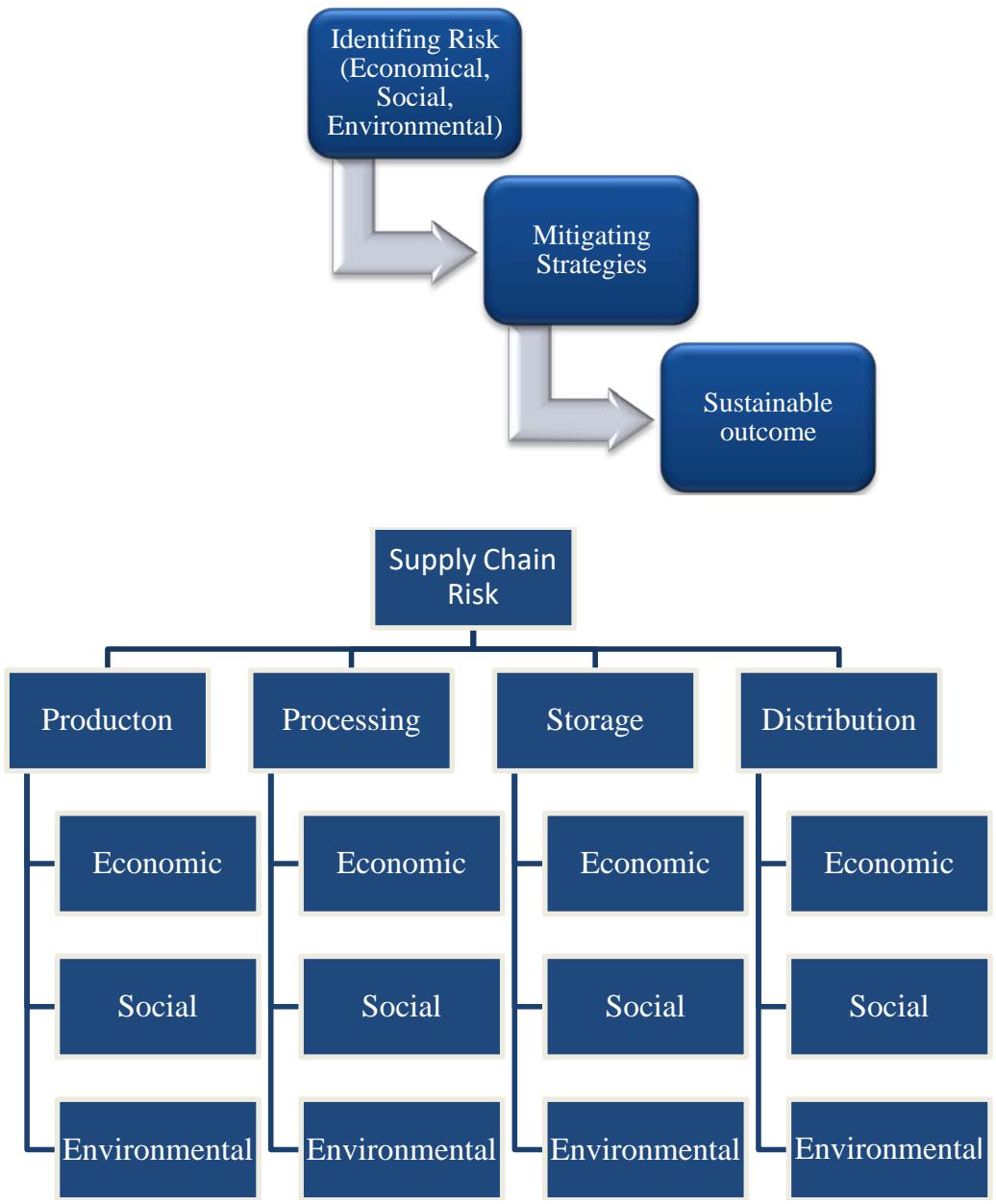 Figure 1: Poultry supply chain strategies for mitigating risk model
This industry also provides direct or indirect support to a sizable population. The purpose of this research is to discuss the challenges facing sustainability today, considering the risks associated with the poultry supply chain. Furthermore, by assisting in mitigating current threats, it is anticipated that the practical application of this research will significantly benefit Bangladesh's poultry industry.
## V. CONCLUSION
The primary objective of this paper is to provide readers with a comprehensive grasp of the crucial components and factors associated with various risks in Bangladesh's poultry sector. This was achieved by using a qualitative field study methodology that comprised fifteen interviews with key players from three well-established traditional poultry farms that are currently experiencing rapid growth and managing various risks in their day-to-day operations. The results of these interviews pointed to various typical risk factors and variables that need to be effectively mitigated. A methodical process was followed to review the transcripts of the interviews thoroughly. The study also found viable and appropriate methods for reducing these risks. Most of the findings favor using a contingency framework to identify and classify supply chain risk issues in the context of sustainability in the poultry industry in Bangladesh. In addition, the study looks at possible risk-reduction tactics that could improve how contingency theory explains supply chain risk management in the poultry sector. It is imperative to highlight that this study excludes any potential outcomes that may arise from implementing risk mitigation strategies. The sustainable outcomes that
arise from the implementation of these suggested mitigation strategies may be the subject of future research. Future studies may focus on these long-term effects, and the investigator may also evaluate the model more thoroughly using quantitative techniques in empirical surveys.
## APPENDICES
- How does your organization go about identifying potential risks in its supply chain?
- What specific challenges is your company addressing or concerned about in its operations?
- What are the potential hazards or risks associated with storage in your supply chain?
- How frequently are these storage-related risks likely to occur?
- What are your crucial production facilities and locations for poultry farming?
- What measures or strategies are in place to reduce these storage-related hazards?
- If these risks are successfully minimized, how will they be sustained over time?
- Are there any hazards during the processing stage of your supply chain operations?
- What feed and nutrition programs do you employ to optimize poultry growth and product quality?
- How often might these processing-related hazards manifest?
- What steps are taken to mitigate or lessen the impact of these processing-related dangers?
- What are the long-term benefits or consequences that can be expected from effectively managing and mitigating these risks?
- Are there any risks or challenges specific to the distribution phase of your supply chain?
- What measures are taken to monitor and improve the overall efficiency and sustainability of your poultry production?
- How do you engage with and support local communities or address concerns related to your poultry farming operations, such as odor or environmental impacts?
- How frequently can these distribution-related risks be anticipated to occur?
- How do you manage the supply of water, ventilation, and lighting for your poultry housing
- What actions or strategies are implemented to reduce these distribution-related dangers?
- What are the anticipated long-term outcomes if these distribution-related risks are effectively reduced or controlled?
- What are your crucial production facilities and locations for poultry farming?
- Could you describe your poultry housing and environmental control systems for maintaining optimal conditions?
- What methods do you employ for the humane handling and transporting poultry to processing facilities?
- What technologies and automation are integrated into your poultry production to improve efficiency and reduce labour costs?
- What is your approach to reducing the environmental impact of poultry farming, including waste disposal and resource consumption?
Generating HTML Viewer...
References
30 Cites in Article
Geraldine Amori,L Wolper (2006). Preventing and responding to medical identity theft.
C Albert (2013). Risk management.
Holger Arndt (2021). Supply Chain Management.
Y Attia (2022). Poultry production and sustainability in developing countries under the COVID-19 crisis: Lessons learned, Animals: an open access journal from M. D. P. I.
A Barua,Y Yoshimura (1997). Rural Poultry Keeping in Bangladesh.
T Bányai (2022). Supply Chain - Recent Advances and New Perspectives in the Industry 4.0 Era.
S Chopra (2019). Supply Chain Management.
D Cooper (2019). Business research: A planning guide, conducting, and reporting your study.
M Cruz (2002). Modeling, measuring and Hedging Operational Risk.
S Das,S Chowdhury,M Khatun,M Nishibori,N Isobe,Y Yoshimura (2008). Poultry production profile and expected future projection in Bangladesh.
D Francis (2014). Risk.
M Hamid,M Rahman,S Ahmed,K Hossain (2016). Status of Poultry Industry in Bangladesh and the Role of Private Sector for its Development.
P Hopkin (2014). Risk management.
Y Karmoker (2022). Self-sufficiency in protein: Poultry industry in Bangladesh.
K,E (2023). Unknown Title.
G Mars,D Weir (2020). Risk management.
Md Moniruzzaman,Sheikh Jahan (2017). Exploring Business Ecosystem of Poultry Industry in Bangladesh.
M Powell (2007). New risk or old risk, high risk or no risk? How scientists' standpoints shape their nanotechnology risk frames.
(2023). Challenges facing the global poultry industry to 2020, Challenges Facing the Global Poultry Industry to 2020 |The Poultry Site.
J Ridley,J Channing (1999). Near Misses in Pulmonary and Cardiothoracic Critical Care.
Mohammad Shamsuddoha (2011). Reverse Supply Chain Process as Environmental Sustainability in the Poultry Industry of Bangladesh.
H Snider (2009). Risk management.
Steven Stenhouse (2008). The poultry industry.
Gauri Agarwal,Alpana Razdan,Rakesh Samal,Vandana Sharma,Shikha Koul,Vandana Mishra (2005). Genetic Signatures of Chromosome 20 Mosaicism in Recurrent Pregnancy Loss.
N Walliman (2022). Research methods.
Mahmud Zaman,Mashkur Zaman,Abdullah Rakib,Md. Bhuiyan (2021). The Poultry Industry of Bangladesh: An Overview.
Mahmud Zaman,Mashkur Zaman,Abdullah Rakib,Md. Bhuiyan (2021). The Poultry Industry of Bangladesh: An Overview.
W Zikmund (2013). Business research methods.
A Guritno (2015). Supply Chain Risk Management: An Approach to Reduce The Agricultural Product's Logistics Costs.
E Masudur Rahman (2021). Small-scale poultry production in Bangladesh: challenges and impact.
No ethics committee approval was required for this article type.
Data Availability
Not applicable for this article.
How to Cite This Article
Sazib Islam Shakil. 2026. \u201cSupply Chain Risk Management: A Field Study on the Poultry Industry of Bangladesh\u201d. Global Journal of Management and Business Research - E: Marketing GJMBR-E Volume 24 (GJMBR Volume 24 Issue E1).
Explore published articles in an immersive Augmented Reality environment. Our platform converts research papers into interactive 3D books, allowing readers to view and interact with content using AR and VR compatible devices.
Your published article is automatically converted into a realistic 3D book. Flip through pages and read research papers in a more engaging and interactive format.
Our website is actively being updated, and changes may occur frequently. Please clear your browser cache if needed. For feedback or error reporting, please email [email protected]
Thank you for connecting with us. We will respond to you shortly.