I. INTRODUCTION
Autoimmune/Inflammatory Syndromes Induced by Adjuvants (ASIA) comprise a group of immune-mediated disorders that flourish in genetically predisposed individuals after environmental exposure to so-called adjuvants . The most described adjuvants related to this syndrome include silicone (i.e. Breast silicone implants), aluminium salts, and other metals and vaccines . The removal of these agents tend to lead to an improvement of the symptoms and reduction of the related autoantibodies levels when present . The adjuvants are responsible for stimulating both the innate and the adaptive immune system and for activating pattern recognition receptors, increasing the immune response to non-pathological stimuli in a genetically prone subject .
Sarcoidosis, Sjogren's syndrome, silicone implant incompatibility, and undifferentiated connective tissue disease (UCTD) are examples of conditions that could be considered to have a common pathogenic mechanism for ASIA syndrome, in which individuals genetically prone to autoimmunity, such as those with HLADRB1 or having the PTPN22 genes, develop the disorder after being exposed to the external triggers[9-11].
II. CASE IN POINT
A 32-year-old woman presented with arthralgia in her both wrists, knees and ankles, pain in the Achilles tendon area and morning stiffness of one to two hours everyday, dry mouth and eyes, generalized fatigue, right hand and right hemifacial weakness and hyperesthesia of the right leg that appeared two months ago. She had no fever or skin rashes. Additionally, she complains of headache and blurred vision that started around four months ago, with no photophobia or nausea and vomiting, as well as tachycardia and dizziness when standing up. Her physical examination had no remarkable findings, orthostatic hypotension test was negative, but tachycardia of 125 bpm was detected during the maneuver. On her laboratory examination, she had no outstanding results, including low inflammatory phase markers on her blood and negative ANA, anti-Ro, anti-La and ANCA. Her sacral MRI shows no signs of acute or chronic sacroiliitis or findings compatible with spondyloarthritis, her regular and angio-CT of the head were normal, as well as lumbar puncture (LP). On her brain MRI there was no acute findings, and she was treated with IV hydration and caffeine with partial response. To evaluate her peripheral neurological complaints, a Nerve Conduction Study Electromyogram (NCS-EMG) was performed showing a decreased sympathetic response on her right foot and normal on her right hand, with no signs of large fiber polyneuropathy or radiculopathy, that may be compatible with small fiber neuropathy, requiring a skin biopsy for confirmation. When looking for circulating autoantibodies against G protein-coupled receptors of the autonomic nervous system, she had high levels of antibodies against beta1adrenergic receptor, Beta 2 adrenergic receptor and M3 acetylcholine receptor.
On her medical background, she had a previous diagnosis of Crohn's disease (CD), made two years ago, when she had fatigue, generalized arthralgia and diarrhea, positive Anti-saccharomyces cerevisiae antibodies, colonoscopy and capsule endoscopy with signs of inflammation in the terminal ileum and confirming biopsy for CD. At the time, it was started treatment with Prednisone 40 mg, with partial improvement. Biological therapy with Vedolizumab was recommended, but the patient refused the treatment. She had no CD symptoms until four months ago when she had disease flare with diarrhea and abdominal pain, treated with steroids. In addition to CD, her past medical history is positive for depression and anxiety, treated with selective serotonin receptor inhibitor, endometriosis and deep venous thrombosis in her right arm in 2017, treated with clexane for three months.
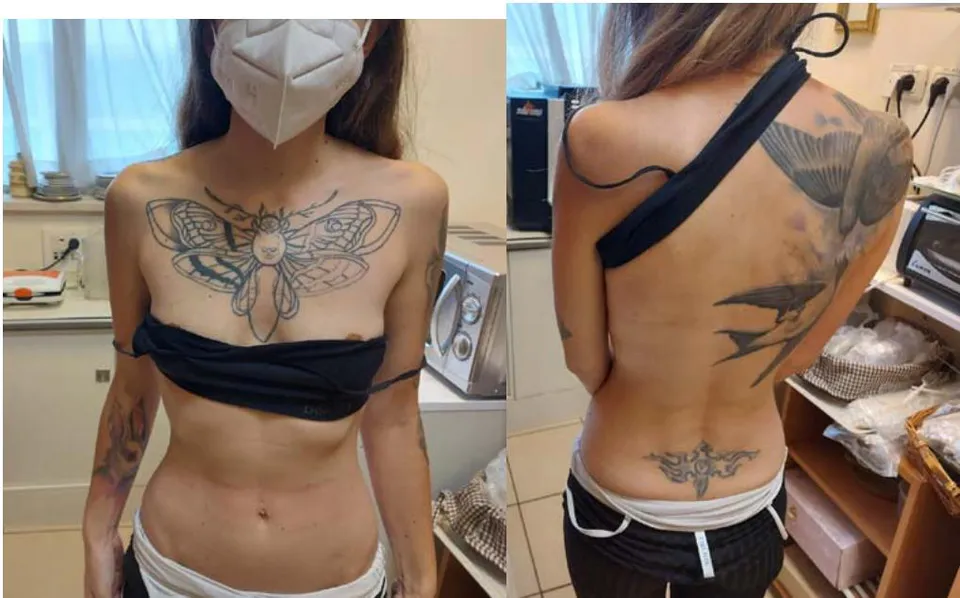
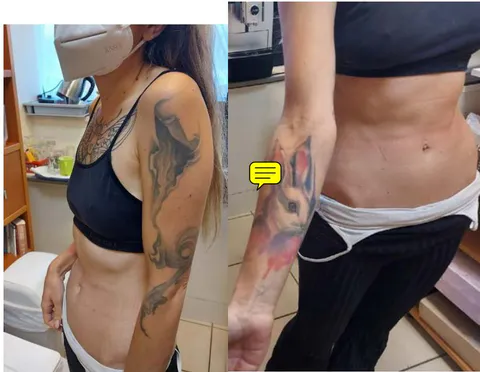
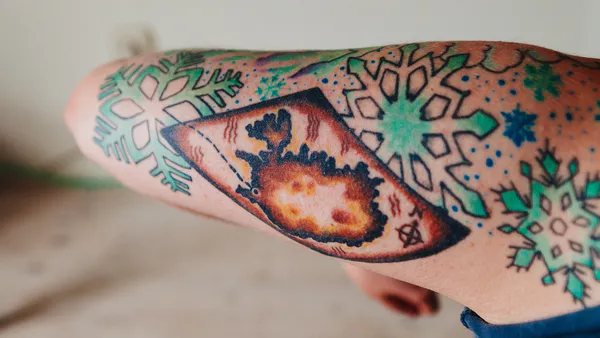
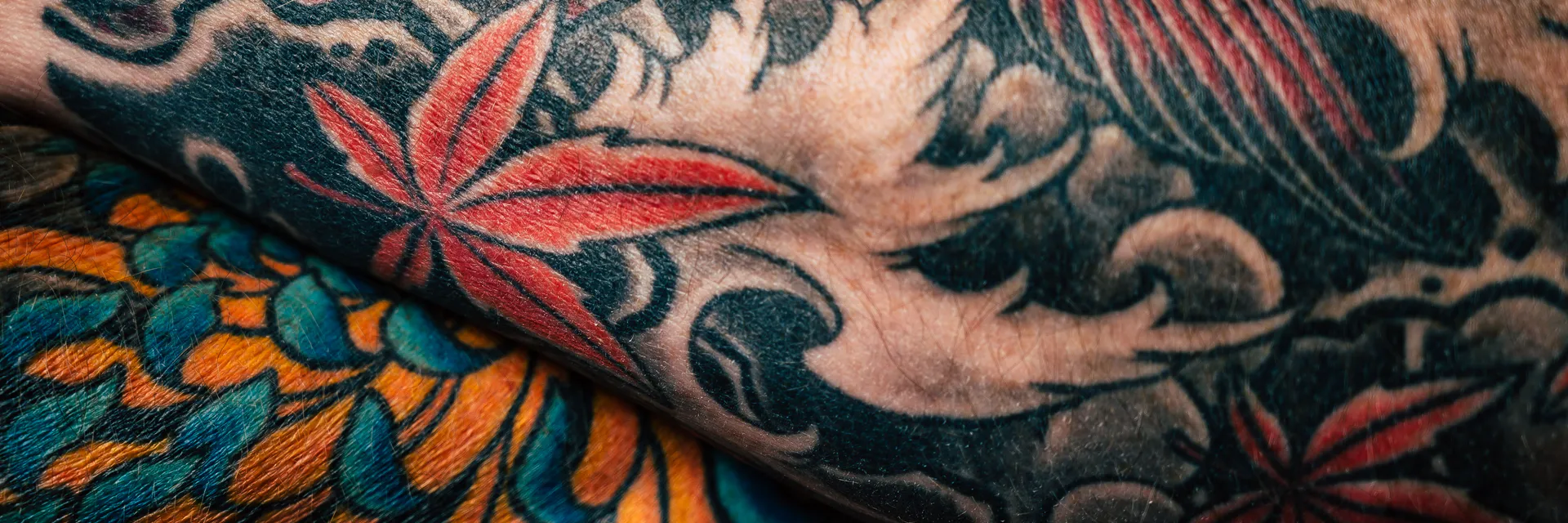
The patient works as a tattoo artist and has personally done extensive tattoos on her own (Fig. 1-4). Before her tattoos, she had no symptoms.
a) Aluminium and other metals and tattoo
Interestingly, aluminium salts and other metals were described as components of different colors of tattoo ink . Specifically, the aluminium salts were described as ingredients of the violet ink. Our patient, that had no symptoms previous to her fist tattoo, has various and extensive tattoos, including some with violet ink (Fg. 1-4). The presence of aluminium in ink could explain the mechanism through which tattoo may lead to ASIA syndrome, as observed in the described patient.
b) Sjogren's syndrome and Tattoo
Sjogren's syndrome (SS) is an autoimmune condition in which salivary and lacrimal glands inflammation lead to a glandular dysfunction, resulting clinically in dry eyes and mouth and commonly other extra-glandular manifestations, including arthralgia [12]. It can be primary or secondary to other autoimmune conditions, such as rheumatoid arthritis [12]. Our patient presented to us with generalized arthralgia, as well as dry mouth and eyes with a positive Schirmer test. Even though SS is considered one of the classic examples of ASIA syndrome[9], there are no reports in the literature that associate those symptoms with the presence of tattoo pigments. Sarcoidosis, on the other hand, another classic manifestation of ASIA syndrome, had been previously associated with the presence of tattoos[13-15].
c) Sarcoidosis and Tattoo
Sarcoidosis is a systemic granulomatous pathology of still unclear etiology that develops when a prone individual is exposed to an antigen capable of inducing Th1 immune response and consequent granuloma formation in different organs, including mainly the lungs and lymph-nodes [16]. Infections, autoantigens and inorganic compounds were already described as common triggers[17]. A 29-year-old man had been reported to develop systemic sarcoidosis after tattoo. He had pleuritic chest pain, dyspnoea and cough. On physical examination, there were papules over his tattoo areas and bilateral basal crackles on lung auscultation. Chest X-ray showed bilateral lymphadenopathy and reticulonodular opacities. In the skin biopsy, noncaseating granulomas with black tattoo pigments were observed[15].
Systemic sarcoidosis and granulomatous reaction without sarcoidosis were previously described in more than 30 patients following permanent tattoo, in the presence or absence of uveitis [13]. It is well known that sarcoidosis granulomas tend to develop in previous scars sites, explaining the finding of granulomas in the tattoo areas in those patients [15]. Interestingly, three tattooed patients were described with isolated eye inflammation, which included posterior uveitis, panuveitis and retinal vasculitis, without other manifestations or granuloma formation elsewhere [18–20]. This may suggest that tattoo ink contains a specific antigen that could stimulate the immune response, locally seen by granuloma formation in the tattoo area or other systemic inflammatory manifestations such as uveitis. A vitreous biopsy performed in a patient with tattoo-associated uveitis showed no tattoo pigment or granulomas, but infiltration of T-lymphocytes with atypia, supporting the explanation of this symptom occurring due to an autoinflammatory/immune reaction [21].
d) Post Orthostatic Tachycardia syndrome, ASIA syndrome and tattoo
Our patient also presented with tachycardia and dizziness when standing up. Post-orthostatic Tachycardia syndrome (POTS) is a clinical condition in which patients present with tachycardia and discomfort symptoms when assuming the orthostatic position, without hypotension. The orthostatic tachycardia is described as an elevation of 30 bpm from the heart rate measured before standing or maintaining the heart rate, within 10 minutes of standing, superior of 120bpm[22]. The symptoms include palpitations, lightheadedness, blurred vision, generalized weakness, fatigue, among others. The physiopathology of POTS combines multiple and coexistent mechanisms, such as autonomic denervation, hypovolemia and hyperadrenergic stimulation [23]. Although its etiology remains unclear, many studies had recently supported the hypothesis of it being an autoimmune disease[24]. The central argument for this hypothesis is the finding of autoantibodies in POTS patients' sera. These antibodies mainly target G-coupled proteins, including muscarinic, nicotinic and adrenergic receptors[24–27]. POTS was previously associated with small fiber neuropathy and, thus, may also be a part of ASIA syndrome. In Germany, C fiber involvement was observed in 45% of the 84 patients with POTS analyzed – and the reduced density of those fibers was correlated with a decreased adrenergic cardiac 123 l-metaiodobenzylguanadine (MIBG) uptake – suggesting an association between the small fiber neuropathy and the reduced myocardial postganglionic sympathetic innervation that could explain the abnormal tachycardia in those patients[28]. Other researchers looked for the correlation between
POTS and SFN. It was found that 20% of POTS patients' skin biopsy had signs of SFN[29].
e) Similarities between Silicone Incompatibility Syndrome and ASIA syndrome following tattoo
Recently, silicone breast implants were associated with the development of many general symptoms, for example, sleep disturbances, general fatigue, generalized pain, depression, hair loss, among others [9]. It has been proposed that those symptoms may relate to an autoimmune neurosensory dysautonomia, involving autoantibodies against G-protein coupled receptors of the autonomic nervous system such as the adrenergic and endothelin and angiotensin ones, which may result in small fiber neuropathy in a subgroup of these women [31]. Similarly, our patient had depression, anxiety and multiple neurologic complaints with an NCS-EMG showing decreased sympathetic response on her right foot, with no signs of large fiber polyneuropathy.
As for the above mentioned, autonomic-related manifestations (POTS, sicca syndrome, paresthesia and other signs of small fiber neuropathy) reported by our patient, we hypothesized the potential involvement of autoantibodies against GPCRs of the autonomic nervous system. These functional antibodies have already been described to be involved in the development of autoimmune diseases and other suspected immune- and dysautonomic-related disorders (such as Sjögren's syndrome, RA, SLE, MS, myasthenia gravis, POTS etc.[32–38]) and were found to be dysregulated in women with SBIs as well (Submitted/Personal communication). Indeed, we found increased circulation levels of anti-beta1, anti-beta2 and anti-M3 AAbs in our patient as compared to the normal ranges in healthy women, which might play a role in the appearance of autonomic-related symptoms in our patient.
f) Potential therapies for ASIA syndrome following tattoo
Some cases of ASIA syndrome had also been described following injection of S.C. methylmetacrylate . Methylmetacylate S.C. injections have been used in the last decades mainly with aesthetic goals in different body areas, from the lips to the buttocks. It has been recently proposed to treat those patients with intralesional neodymium laser . Intralesional laser technique has been largely used as well for tattoo removal . As previously mentioned, frequently, in ASIA syndrome, the removal of the adjuvant exposure may ameliorate the signs and symptom of the disease. Extraction of silicone implants, for instance, was shown to improve the symptoms such as fatigue, arthralgia and sicca syndrome . Hence, tattoo laser removal could be a potential treatment option for those patients.
III. CONCLUSION
In this review, we raise the hypothesis of tattoo pigment as a new component of the group of adjuvants that trigger ASIA syndrome and question its safety in individuals genetically prone to develop autoimmunity. To reinforce our proposal, we described a 32-year-old woman with known Chron's disease that presented with arthralgia, morning stiffness, dry mouth and eyes, POTS and neurological complaints compatible with small fiber neuropathy after exposure to an extensive tattoo pigmentation (Fg 1-4). Although those symptoms had not been previously associated with the presence of tattoo ink, permanent tattoos had been previously linked to sarcoidosis and isolated uveitis [15, 46]. In addition, those symptoms have been related to other environmental exposures, such as to aluminium, other metals, silicone and vaccines [1, 6, 7, 9, 47]. In fact, some of the tattoo inks have been demonstrated to contain aluminum [30]. Moreover, removing the adjuvants had been shown to improve the clinical presentation and the laboratory markers in ASIA syndrome [9]. Tattoo removal with laser technique could be a potential solution for ASIA syndrome following tattoo.
ACKNOWLEDGMENT
We would like to express our acknowledgment to Yaron and Dina Shamia for their support.