## I. INTRODUCTION
Increasingly, we face the need to engage teachers in their pedagogical practice, transforming their work environments into spaces for professional development. Several authors argue that teacher education should be viewed as a continuous lifelong process (Day, 2001; Dubar, 2012; Nogueira, 2012), as this training process strengthens professionalism, contributing to an education grounded in self-reflection on life experiences, critical reflection, inclusion, and social justice, thus embracing the fundamental principles of education based on Human Rights.
The literature highlights the role of pedagogical narratives and active listening as essential epistemological tools for constructing teacher knowledge, enabling not only the analysis of formative processes but also understanding the (re)construction of professional identities (Passeggi, 2021). Furthermore, participatory research is considered a means of valuing knowledge produced in educational contexts, aligning with the premises of evidence-based education (Demo, 1995). Teachers must reflect on their pedagogical practice, making it a reflective practice. What is interesting is seeing how the profession itself incorporates research dynamics into its routine, a professional reflection conducted through systemic analysis of the work developed, done in collaboration with colleagues. The dimension of teacher professional development is built through the sharing of experiences and intercommunicative analysis, which produces and is produced by reflection in action, on action, and about reflection in action (Schön, 1983, as cited in Silva, 2000). It is crucial to provide collaborative spaces and environments for teachers to feel they are not alone, that they can count on their peers for the development of their work, that teaching should not be confined to complete isolation but should be open to sharing and mutual assistance (Sanches, 2007; Dias, 2015). According to Formosinho and Machado (2015), "it is in promoting a collaborative work standard that we can find an organizational alternative that enhances alternative pedagogical projects" (p. 105). In this sense, the movement of reflective practice involves recognizing that teachers must play an active role in formulating the goals and purposes of their work (Zeichner, 2008).
In this context, "Qualitative research is not a methodological concession, in the sense of a tolerable procedure, acceptable at the limit, but necessary..." (Demo; Calisto, 2025c, p. 33), and therefore, conducting research with narratives allows for an awareness of the life experiences of study participants, leading to the emergence of a developing individual through their critical reflection, thus enabling access to their life history. This is, as Passeggi (2023) argues, the life narrative, but also the construction of each individual's historicity. Therefore, as Sarmento, T. and Leal da Costa (2019) defend, "narratives are fundamental foundations in the (re)construction of professional identities; they ultimately reveal that teachers, as professionals in development, are both the process and the product of training, and thus agents of humanization in education and schools" (p. 60).
For reflective, plural education that is capable of promoting the training of emancipated subjects who construct their own history, certain questions must be addressed regarding the role of teacher education in building habits and educational practices that contribute to emancipatory education, promoting processes that enable the construction of historically self-sufficient and critical subjects. It is important to understand how relations occur in the structure, in educational spaces, and in the realization of habits and practices, observing how these translate into the effects of training on the teacher profile and pedagogical praxis, moving toward Education, in and for Human Rights. "The teacher education that emerges from this reading is not neutral; it is situated, insurgent, and challenges the boundaries of the legitimacy of school knowledge" (Demo; Calisto, 2025b, p. 48). Understanding teacher education and its implications in the outcomes of educational processes from an emancipatory perspective requires a deeper study that should focus not only on aspects related to the "pedagogical doing," but also on the formal and political quality of education, as well as the processes inherent in class struggles, the relations of production and social division of labor, and ethnic-racial and gender issues. Thus, considering the aspects discussed thus far, this research is guided by the aim of understanding the role of teacher education for education, in and for human rights, and vice versa, particularly considering the following dimensions:
a) Formal Quality: Observation of habits, practices, instruments, methods, techniques, and procedures applied in teacher education that contribute to the construction of teaching-learning relations embedded in pedagogical praxis;
b) Political Quality: The capacity of education to contribute to creating socially emancipated individuals, understanding that political quality in education means knowing how to think better to intervene better, so that this education is aimed at combating political poverty (Demo, 2010, p. 16).
Since we are all endowed with emotions that influence our behavior in any given situation, in the case of teachers, they also influence teaching practice and the development of professional identity. In this sense, it is important to promote educational contexts that provide teacher training and professional development pedagogies that enable the development of professional identity, including the personal, social, and reflective components in the training and professional development process. According to Flores (2015), the professional identity of teachers is related to their experiences within and outside the school context, with their personal way of being and their approach to the profession. Furthermore, it represents a mutable, evolving, continuous, relational, and constructive process developed through the interaction between the individual and the collective, which leads teachers to reflect on themselves, their practices, motivations, how they understand the profession and contexts, and what it means to be a teacher. In this sense, the ongoing construction of professional identity is essential for their training and for teachers to become aware of and reflect on themselves as individuals and professionals. This is how the research component in teacher education has become one of the most debated aspects in the scientific community. In a way, research is assumed to be the structuring axis of training, making teachers not only producers but also consumers of research (Flores, 2017). As Sarmento, T. (2002) states:
The construction of professional identity is associated both with the interactions that the teacher establishes with their profession, with the communities they work with, and with their peer group, and with the symbolic, personal, and interpersonal construction that these interactions imply" (p. 115).
## II. METHODOLOGY
In this study, we chose to conduct systematic research in academic databases to identify publications related to teacher education, research-based education, and human rights in education. Internationally recognized databases were used, and the selection of studies was conducted using specific descriptors and Boolean operators. The inclusion and exclusion criteria for the articles followed strict guidelines to ensure the relevance and quality of the sources analyzed. At this point, we present the methodological processes applied in identifying publications that discuss teacher education within the context of education for and in human rights. To ensure the breadth and quality of the studies reviewed, the following databases were initially selected:
- Scopus: One of the largest indexing databases for peer-reviewed scientific articles.
- Web of Science: A global reference for multidisciplinary scientific research.
- ERIC (Education Resources Information Center): Specializing in educational studies.
- SciELO: An open-access repository with a strong presence of Latin American academic literature.
- Google Scholar: An academic search engine indexing articles, theses, and books.
a) Research in the SciELO Database and Unsatisfactory Results
- SciELO was selected as a relevant database due to its role in disseminating Latin American academic production and its open access. However, searches conducted using descriptors in Portuguese and English, combined with various Boolean operators, did not return satisfactory results. Several attempts to adjust the terms and search strategies were made, but it was still impossible to retrieve scientific articles aligned with the objectives of the Systematic Literature Review. Not knowing the exact reason for this outcome, we assume that among the possible situations that may have occurred, we can consider the absence of publications on the specific topic in the database, limitations in the indexing of articles in SciELO, or failures in the platform's search mechanism. Therefore, in accordance with the steps and conditions outlined in the PRISMA protocol, while the methodology adopted in this review, we chose to exclude SciELO from the research context.
b) Exclusion of Google Scholar as a Data Source
Google Scholar was initially included as a search engine to broaden the scope of the search due to its wide coverage of indexing articles, theses, and academic books. However, searches conducted returned an excessive volume of articles, often without rigorous academic quality criteria. This large number of results made it difficult to triage and apply the inclusion and exclusion criteria defined for this study. Furthermore, Google Scholar did not allow for precise filtering by publication type (e.g., only peer-reviewed articles), which compromised the reliability of the data collected. Many results included non-scientific documents, such as conference presentations without formal review and institutional repositories with texts not indexed in recognized databases. Due to these limitations, we opted to exclude Google Scholar from this Systematic Literature Review, ensuring that the selection of articles was carried out only in databases that allowed for better control of academic quality and study indexing.
### c) Research Procedures
The strategy used in this research was structured using specific descriptors related to the topic, combined through Boolean operators AND and OR to expand or refine results. The descriptors used were grouped into six sets (Folders 0 to 5), each representing a specific focus of the research. For each of these sets, different combinations of Boolean operators were applied, as represented in the table below for better understanding:
<table><tr><td>Folder</td><td>Research Focus</td><td>Boolean Operators</td><td>Search Descriptors</td></tr><tr><td>0</td><td>General coverage of the research.</td><td>("Teacher Education" OR "Teacher Training" OR "Teacher Preparation") AND ("Professional Development" OR "Teacher Professional Growth" OR "Continuing Teacher Education") AND ("Emancipatory Education" OR "Critical Pedagogy") AND ("Human Rights Education" OR "Educational Justice" OR "Equity in Education")</td><td>Teacher Education, Professional Development, Emancipatory Education, Human Rights</td></tr><tr><td>1</td><td>Relationship between teacher education and human rights.</td><td>("Teacher Education" OR "Teacher Training" OR "Teacher Preparation") AND ("Human Rights Education" OR "Educational Justice" OR "Equity in Education" OR "Emancipatory Education")</td><td>Teacher Education, Human Rights, Emancipatory Education</td></tr><tr><td>2</td><td>Teacher education and professional development.</td><td>("Teacher Education" OR "Teacher Training" OR "Teacher Preparation") AND ("Professional Development" OR "Teacher Professional Growth" OR "Continuing Teacher Education") AND ("Human Rights Education" OR "Educational Justice" OR "Equity in Education")</td><td>Teacher Education, Professional Development, Human Rights</td></tr><tr><td>3</td><td>Reflective pedagogical practice and narrative inquiry.</td><td>("Teacher Education" OR "Teacher Training" OR "Teacher Preparation") AND ("Professional Development" OR "Teacher Growth") AND ("Reflective Teaching Practice" OR "Reflective Pedagogical Practice" OR "Teacher Reflection") AND ("Narrative Inquiry" OR "Narrative-Based Research" OR "Narratives of Experience")</td><td>Teacher Education, Reflective Practice, Narrative Inquiry</td></tr><tr><td>4</td><td>Participatory research and collaboration in teacher education.</td><td>("Teacher Education" OR "Teacher Training" OR "Teacher Preparation") AND ("Professional Development" OR "Continuing Teacher Education") AND ("Participatory Research" OR "Collaborative Inquiry in Education")</td><td>Teacher Education, Participatory Research, Research-Training</td></tr><tr><td>5</td><td>Teacher education based on research-training.</td><td>("Teacher Education" OR "Teacher Training" OR "Teacher Preparation") AND ("Professional Development" OR "Continuing Teacher Education") AND ("Training-Research" OR "Teacher Inquiry")</td><td>Teacher Education, Research-Training</td></tr></table>
### d) Article Selection Process
Specific criteria were adopted for the inclusion and exclusion of articles. The inclusion criteria were: publications in peer-reviewed journals; studies published in the last ten years (2014-2024); works using qualitative or mixed methodologies; research in Portuguese, English, and Spanish; studies addressing teacher education, human rights in education, and research-based education. The exclusion criteria considered were: non-peer-reviewed articles; publications before 2014; exclusively quantitative studies; articles not explicitly discussing teacher education; articles in languages other than Portuguese, English, or Spanish.
After defining and applying the research criteria, the articles were filtered based on titles, abstracts, and keywords. Studies that met the inclusion criteria moved on to a more detailed analysis of the full text. The methodology adopted ensured that the review was systematic, replicable, and comprehensive, guaranteeing a rigorous selection of publications relevant to the investigated topic.
## i. Use of the Zotero Program as a Bibliographic Manager and Artificial Intelligence
To ensure efficient organization of the selected articles and scientific documents, the Zotero program was used as a reference manager. This software allowed for the structured storage of found texts, organizing them in a way that maintained all the data and metadata of the files appropriately and accessibly. Furthermore, Zotero allowed the categorization of articles according to the inclusion and exclusion criteria, facilitating traceability and control of the gathered academic production. The resulting bibliographic reference library was shared among the researchers involved in the study, enabling continuous collaboration and ensuring methodological alignment. This sharing was essential for the completion of all stages of the research, ensuring that the results were discussed jointly and that the Systematic Literature Review adhered strictly to the PRISMA protocol (Preferred Reporting Items for Systematic Reviews and Meta-Analyses).
In this study, artificial intelligence (AI) was used as an auxiliary tool in the screening, organization, and analysis of the included and excluded texts in the Systematic Literature Review (SLR). With the support of natural language processing algorithms, it was possible to automate the verification of duplicates, identify semantic patterns, and carry out preliminary classification of contents according to the criteria defined in the PRISMA protocol. This application did not replace the critical and interpretative analysis of the researchers but optimized operational stages and helped ensure greater precision and transparency in decision-making, particularly during the exclusion phases due to thematic relevance, repetition, or methodological inconsistency. The experience reaffirms the potential of AI as an ally in critical educational research, provided it is used with ethical and epistemological rigor.
### e) The PRISMA Protocol and Its Application in Research
The PRISMA protocol (Preferred Reporting Items for Systematic Reviews and Meta-Analyses) refers to a set of guidelines designed for conducting Systematic Literature Reviews (SLR) and Meta-Analyses. It establishes a structured flow to ensure transparency, reproducibility, and methodological rigor in the selection, analysis, and presentation of the reviewed studies. The PRISMA protocol structures the systematic review into four main stages:
1. Identification: Initial survey of studies in databases using descriptors and Boolean operators for structured searching;
2. Screening: Application of inclusion and exclusion criteria for the preliminary selection of studies based on titles and abstracts;
3. Eligibility: Detailed analysis of the full texts of the selected studies to verify their alignment with the research objectives;
4. Inclusion: Final selection of the articles to be included in the Systematic Review, followed by data extraction and analysis of relevant information.
In the identification phase, structured searches were conducted in the selected databases using specific descriptors and Boolean operators to ensure a broad and precise survey. In the screening phase, In the eligibility phase, the selected articles were analyzed in full to check their suitability for the research objective. Finally, the inclusion phase was carried out, consolidating the studies that became part of the Systematic Literature Review and organizing the extracted data for analysis and discussion of the results. Initially, 1,023 articles were obtained, which, after applying the temporal exclusion criterion, resulted in 587 articles. After applying the exclusion criterion for articles that were not peer-reviewed, the research was reduced to 415 articles. After the final inclusion criterion, a critical reading of titles and abstracts to check for methodological and thematic adherence to the SLR objectives, 17 articles were selected for full analysis.
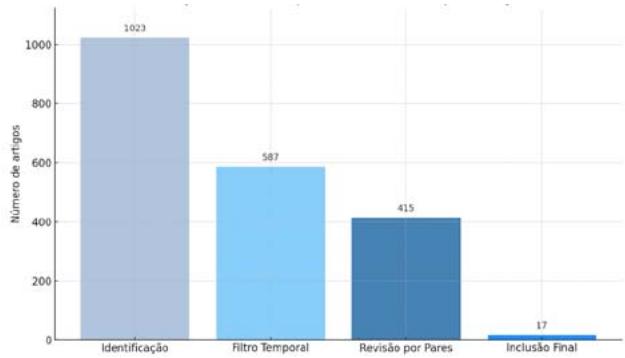 Fig. 1: PRISMA Flowchart (adapted) - Article Selection Process.
### f) Results and Discussion
From the analysis of the selected texts, it was possible to construct a robust analytical framework that integrates methodological elements, emerging categories, and contributions to critical teacher education. This systematization not only highlights the individual contributions of each study but also allows for the identification of patterns, convergences, and theoretical and methodological shifts between them.
The studies analyzed show remarkable methodological diversity, including qualitative approaches (autoethnography, narrative, ethnography), theoretical analysis, case studies, and mixed research. This methodological plurality converges in a common political commitment to social transformation and educational justice, revealing that the method is not just a technique but an ethical and epistemological choice. "To sustain this expectation, we need an epistemology of complexity or diversity..." (Demo; Calisto, 2025c, p. 97). The central contributions revolve around three structuring axes:
- Teacher Agency: Understood as the ability for critical action and the transformation of the educational context;
- Equity and Social Justice: As guiding principles for assessment, education, and pedagogical practice;
Insurgent and Localized Knowledges: Valuing experiences, narratives, and formative practices anchored in specific territories.
Studies such as those by Luna et al. (2022), Gollifer (2022), and Kinloch et al. (2020) demonstrate how narrative and ethnographic practices involve teacher authorship, radical listening, and symbolic resistance. Authors such as Cochran-Smith and Reagan (2022) and Jurow and Freeman (2020) propose evaluative and experimental models rooted in racial justice and formative equity. The analysis also highlights recurring limits, such as:
- The difficulty of generalizing research, given the contextual anchoring of the investigations;
- Fragility in structured policies, particularly in the field of Human Rights Education (HRE);
- The mismatch between curriculum proposals and actual formative practices (Van Katwijk et al., 2021).
Analyzing the emerging categories reveals a strong connection with the foundations of critical pedagogy, epistemology, and cognitive justice. The most frequent of these include:
- Situated Education
- Insurgent Narratives
- Education as an Emancipatory Practice
- Critical Hermeneutics
- Collaborative Research
Subcategories, in turn, materialize these overarching themes into specific formative practices, such as "autoethnography as a critical praxis" or "change projects as training."
The studies analyzed adopt a methodological diversity with a focus on qualitative, mixed, and action research-based approaches, reflecting the political and formative commitment to social transformation in the context of teacher education. Luna et al. (2022) use an approach based on autoethnography and Grounded Theory, allowing for the interpretation of teaching practices as forms of symbolic resistance. Gollifer (2022), in turn, uses narrative analysis of interviews to investigate the critical knowledges mobilized in Human Rights Education (HRE). Kinloch et al. (2020) combine ethnography and narrative, highlighting storytelling as a political and humanizing practice. Zembylas et al. (2016) adopt a critical hermeneutical methodology, based on documentary analysis and in-depth interviews, with a focus on HRE in conflict contexts. Mayra and Daniel (2020) adopt action-research using interviews and discussion groups, promoting reflection on pedagogical practice. Brooks and Adams (2015) and Hardy (2014) conduct case studies focusing on teacher agency and research as a continuous formative axis. Lucena (2024) investigates popular education contexts through interviews, highlighting the relevance of community educational programs as critical training territories. Villa et al. (2020) explore "training incubators," research-action environments that integrate theory, practice, and collaborative knowledge production.
Van Katwijk et al. (2021) use a combination of questionnaires and focus groups to understand teacher research training in the Netherlands. Ramirez et al. (2023) apply a mixed methodology to investigate the impact of conceptual change pedagogy on educational practice. Poultney (2016) adopts a sequential mixed-methods model, focusing on practical evidence and the networked sharing of pedagogical knowledge. Ullah et al. (2024) use a multi-wave survey based on the Theory of Planned Behavior to investigate the influence of networks for sharing and collaboration in initial teacher training.
Cochran-Smith and Reagan (2022) develop a critical theoretical analysis of evaluative policies, proposing a model focused on equity and social justice. Ahmed et al. (2020) combine critical documentary analysis with international case studies (Bangladesh and the USA), reflecting on agency as a tool and formative goal in HRE.
In summary, critical teacher education research is characterized by a methodological plurality that integrates ethnography, narrative analysis, Grounded Theory, action-research, and mixed methods, consolidating reflective and collaborative practices focused on equity, agency, and social justice.
## i. Synthesis and Implications
The data reinforce that collaborative research not only generates knowledge but also constitutes a formative device, stimulating critical reflection and the co-construction of pedagogical meanings. It is grounded in the necessity to understand the specificity of professional practice in context, highlighting the research cycle as a driver of teacher development. This cross-sectional analysis allows us to affirm that, more than a mere juxtaposition of studies, what emerges is a critical map of teacher education, where theory, practice, politics, and ethics intertwine to promote an education committed to equity and human rights.
## ii. Analysis of Selected Studies in Light of Education in and for Human Rights
Education in and for Human Rights (HRE) starts from the premise that education must be a tool for emancipation and the promotion of equity, being committed to social transformation. This perspective is clearly present in the following authors: Ahmed, Martin, and Uddin (2020), who emphasize "agency" as both the objective and tool of HRE, focusing on political empowerment; Jurow and Freeman (2020), who propose critical remediation practices as a response to racial evasiveness, connecting HRE to racial justice; Lucena (2024), who highlights popular education programs as territories of resistance and formative practices against structural exclusions. These works materialize the transformative principles of HRE by directly addressing structures of power, exclusion, and oppression, promoting an education geared toward critical action and social engagement.
The analysis of the seventeen studies included in the Systematic Literature Review (SLR) reveals a theoretical and methodological commitment to critical, situated, and emancipatory teacher education. The analyzed texts demonstrate that formative processes capable of producing reflective and politically engaged teacher subjects require more than content transmission: they require research practices, authorship, and resistance to the reproductive paradigms of modern education. It is essential to highlight that "without one's own production, there is no teaching" (Demo, 2011, p. 58), a stance that destabilizes the logic of the class as an end in itself and proposes learning through research as a fundamental educational principle. Research, in this sense, is seen as a right, with the task of critically reconstructing the lived world.
The results of the SLR also emphasize the need to build an authorial teacher education, committed to social justice and critical praxis. This perspective aligns with Paulo Freire's (2019) critique of banking education and Michel Foucault's (2014) call for analyzing power discourses operating within educational institutions. As Louis Althusser (2022) proposes, the school, as an ideological apparatus of the state, must be questioned about the type of subject it forms and the role it plays in maintaining or rupturing the dominant order.
In this context, it is crucial to situate the influence of neoliberalism on formative processes and the field of human rights education. The rise of neoliberalism in recent decades not only reconfigured global economic dynamics but also deeply penetrated educational structures, transforming teacher education into a space for technocratic management and standardization. In the context of education, neoliberalism operates through managerial rationality, turning the school into a business, students into clients, and teachers into workers of instruction. As Laval and Dardot (2016) warn, this regime is not merely an economic model but a form of subjectivation that redefines the meanings of pedagogical action, eroding teacher autonomy and obscuring its critical social function. In this model, continuing education tends to be reduced to performance control instruments, subject to quantitative evaluations and productivity metrics that ignore the sociocultural realities of the training subjects. "Resisting neoliberalism in education is also claiming the school as a space of dignity, authorship, and social transformation" (Demo; Calisto, 2025, p. 50).
In the field of human rights, the effects of this logic are even more pernicious: by prioritizing efficiency, competition, and meritocratic individualism, neoliberalism undermines the foundations of social justice, solidarity, and equity. Education, when subjected to this rationality, ceases to be understood as a universal right and becomes treated as a service conditioned by the cultural and economic capital of individuals. Instead of promoting inclusion, it reproduces inequalities, naturalizes exclusion, and makes structural oppressions of race, class, and gender invisible. As Demo and Calisto (2025) argue, the challenge of education committed to human rights requires directly confronting this model, embracing diversity as a political and epistemic principle, rather than as a tolerant concession or empty rhetoric. Therefore, resisting neoliberalism in education is also claiming the school as a space of dignity, authorship, and social transformation.
Continuing education, especially when instrumentalized by public policies, is regarded in the studies as a space of epistemic and political disputes. The texts highlight, for example, the tension between emancipatory proposals and the limits imposed by hierarchical structures and normative curricula. This contradiction is also discussed by Demo and Calisto (2025a), who argue that, especially in poor and developing countries, "public schools continue to be poor for the poor and white for the white" (p. 02), exposing the colonial face of the school and human rights when these are not rooted in the real diversity of the subjects.
In this scenario, studies that address practices such as autoethnography, narrative research, teacher training in peripheral territories, and collaborative methodologies align with the proposal for a political quality of education (Demo, 2010), which is not limited to evaluating outcomes but commits to epistemic equity and teacher authorship as criteria for cognitive justice (Santos, 2007, 2009). Teacher education that emerges from this reading is not neutral; it is situated, insurgent, and challenges the boundaries of the legitimacy of school knowledge.
The reference to phenomenology as an interpretative lens is also present, especially when understanding teacher education as lived experience — as a lived world and meaning within the relations of power, school practices, and social expectations. Phenomenology, as Nogueira (2004) affirms, allows us to uncover the intentions behind practices, becoming a hermeneutic key to understanding the effects of teacher education on the subjective constitution of teachers.
The analysis of the studies also reveals the systematic absence of consolidated teacher education policies for and in human rights, a gap that highlights the persistence of neoliberal logic and technicism in formative programs. This finding reinforces the critique by Demo (2023), who states that Brazil has normalized a public school system that systematically fails its subjects while legitimizing it as the only space for social ascension — thus operating as a technology of exclusion.
The texts analyzed also engage with the critique presented in "Human Rights: Equal and Diverse: Challenges of Egalitarianism," a work in which Demo and Calisto (2025) propose a reconceptualization of human rights through the articulation between equality and diversity. The authors assert that "the claim for equality is essential, but it is only half. Diversity is the other half" (Demo; Calisto, 2025, p. 16), challenging the Eurocentric foundations of Enlightenment thought and denouncing the erasure of the multiple forms of existence that constitute human experience. This position is central to understanding teacher education as a political act that requires the recognition of the cultural, epistemic, and subjective plurality of the subjects involved. By emphasizing that science and education must be open to epistemic and cultural plurality, Demo and Calisto (2025) advocate for a radical critique of the dominant civilizational model, asserting that "there can be no peace in a society divided by such violent exclusions" (p. 39). This argument calls on education to overcome both institutional indifference and homogeneous curricula, positioning itself as a place of dispute and the reconstruction of human dignity.
Finally, by valuing the listening of teacher narratives, collaborative work, and the analysis of practice, the selected studies point to pathways for an education that integrates critical thinking, creativity, and commitment to transformative education. This analytical journey aligns with Freire's (1970) concept of praxis and with Demo-Foucault's demand to interrogate the educational system at its epistemic and political foundations.
## III. CONCLUSION
From the analyses conducted, it is clear that the systematized studies converge in advocating for teacher education as a critical, situated, and transformative practice. Each of the methodologies adopted not only reveals the multiplicity of educational contexts investigated but also broadens the understanding of teaching as a field of epistemic and political dispute. "The plurality of approaches is also crucial because it is part of the qualitative vision of meaning through diversity..." (Demo; Calisto, 2025c, p. 97). The constant presence of the notion of agency as the critical capacity of subjects highlights a significant shift in recent literature: training teachers is not merely about preparing them to teach content but about preparing them to read the world and intervene in it with social responsibility.
The analysis revealed that agency must be understood in multiple layers. In Luna et al. (2022), it appears as teacher authorship, symbolic resistance, and intellectual action in the face of neoliberal rationality. In Brooks and Adams (2015), agency is activated through collaborative change projects, allowing in-service educators to play a leading role in reinventing their practices. In Ahmed, Martin, and Uddin (2020), agency is both an end and a means, integrating into human rights education as political emancipation. This multiplicity points to a relational and situated understanding of the concept, influenced by social, cultural, epistemic, and historical contexts. In feminist and decolonial approaches, this concept is further deepened: Judith Butler associates it with performativity and the possibility of subverting normative discourses (1990). bell hooks (2013) highlights its connection to resistance against intersectional oppressions (1994). Paulo Freire proposes agency as praxis, a union of action and critical reflection, as the foundation of liberatory pedagogy (1968). Authors like Giddens (1984) situate agency in the dialectical relationship between structure and action, emphasizing the ability of subjects to modify or reproduce social systems. From a decolonial perspective (Mignolo, Quijano, Santos, 2005), agency emerges as epistemic disobedience, claiming the right to think outside the margins of Eurocentric universalism.
Thus, this systematic review not only offers a methodological and analytical contribution to the literature but also provides a powerful conceptual map for future research. The commitment to human rights education, shaped by dialogical practices, insurgent narratives, equity policies, and plural epistemologies, requires recognizing agency as a key axis for articulating knowledge, power, and transformation. Therefore, quality is written with politics, not with rankings (Demo; Calisto, 2025a), connecting with their transformative proposal. The ethical and political challenge remains: how can we ensure that teacher education programs, whether institutional or popular, can effectively cultivate critical, sensitive, and committed subjects to anti-racist, decolonial, and socially just education?.
Generating HTML Viewer...
References
63 Cites in Article
L Althusser (2022). Aparelhos ideológicos de Estado: Nota sobre os aparelhos ideológicos de Estado.
M Archer (2003). Structure, agency and the internal conversation.
L Bardin (2011). Análise de conteúdo.
Gert Biesta,Michael Tedder (2007). Agency and learning in the lifecourse: Towards an ecological perspective.
C Brooks,P Adams (2015). Researching the teacher educator: Professional identity and conceptions of pedagogy.
J Butler (1990). Gender trouble.
Judith Butler (2004). Undoing Gender.
M Cochran-Smith,E Reagan (2022). Facing teacher education's own history: The need for critical evaluation and the case for equity audits.
C Day (2001). Desenvolvimento profissional de professores. Os desafios da aprendizagem permanente.
P Demo (2008). Autoria e construção do conhecimento.
P Demo (1994). Educação e qualidade.
P Demo (2010). Educação e qualidade: O direito de aprender.
P Demo (2011). Educar pela pesquisa.
P Demo (2021). Educação e política: Do discurso à prática.
P Demo (1995). Metodologia científica em ciências sociais.
P Demo,C Calisto (2025). Direitos humanos iguais e diversos: Desafios do igualitarismo.
Pedro Demo,Cristiano Calisto (2025). A quem interessa uma escola tão inepta?.
P Demo,C Calisto (2025). Productivity of the unproductive school: An education policy designed not to work.
P Demo,C Calisto,S De (2025). Pesquisa qualitativa precisa de fundamentos epistemológicos: Argumentando pela necessidade da pesquisa qualitativa para dar conta de realidades complexas, sobretudo do mundo da vida.
M Dias (2015). Trajetórias profissionais dos professores do 1º ciclo do ensino básico.
C Dubar (2012). A construção de si pela atividade de trabalho: A socialização profissional.
Maria Flores (2015). Formação docente e identidade profissional: tensões e (des)continuidades.
M Folque,C Leal-Da-Costa,Artur,A (2016). A formação inicial e desenvolvimento profissional de educadores/professores monodo-centes: Os desafios do isomorfismo pedagógico.
J Formosinho,J Machado (2015). Escola, trabalho e aprendizagem -entre a retórica da colegialidade e a socialização num padrão de trabalho fragmentado.
M Foucault (2014). A ordem do discurso.
P Freire (2019). Pedagogia do oprimido.
P Freire (1968). Pedagogia do oprimido.
H Giroux (1997). Cultural studies and education: Towards a performative practice.
Luana Castro (1997). Os professores como imigrantes digitais na disciplina de artes visuais.
A Giddens (1984). The constitution of society: Outline of the theory of structuration.
A Gollifer (2022). 3. Developing Teacher Agency and Identity in Bilingual/ Bicultural Educational Contexts: Critical Pedagogies for Hope and Transformation.
L Gonzalez (2020). Por um feminismo afro-latinoamericano.
J Habermas (2002). Agir comunicativo e razão descentralizada.
J Habermas (1989). Consciência moral e agir comunicativo.
B Hooks (2013). Ensinando a transgredir: A educação como prática da liberdade.
V Kinoloch (2020). Counter-narratives in urban teacher education: Interrogating pedagogies of critical hope.
A Krenak (2022). Futuro ancestral. Companhia das Letras.
C Leal-Da-Costa,C Biscaia,A Parra (2018). Aprender pensando sobre a própria vida: Um ateliê biográfico na formação de educadores/ professores.
C Leal-Da-Costa,I Cavalcante (2017). Alteridades(s), escritas de si e reflexão.
A Lopes (2013). Teorias pós-críticas, política e currículo.
G Louro (2014). Gênero, sexualidade e educação: Uma perspectiva pós-estruturalista.
L Lucena,S Da (2024). Narrativas de resistência na formação de professores populares: Uma análise autoetnográfica.
Diego Luna,José Pineda-Alfonso,Francisco García-Pérez,Conceição Leal Da Costa (2022). Teacher Training, Research and Professional Development in a Neoliberal School: A Transformative Experience in Social Sciences.
P Mclaren (2000). A vida nas escolas: Uma introdução à pedagogia crítica nos fundamentos da educação.
W Mignolo (2014). Epistemologias do Sul.
David Moher,Alessandro Liberati,Jennifer Tetzlaff,Douglas Altman (2009). Preferred Reporting Items for Systematic Reviews and Meta-Analyses: The PRISMA Statement.
M Nogueira (2004). Fenomenologia como método de pesquisa em educação: Possibilidades e desafios.
C Nogueira (2012). Liderança, cultura e trabalho colaborativo na escola.
O Oyèwùmí (2021). The invention of women: Making an African sense of Western gender discourses. Bazar do Tempo.
Matthew Page,Joanne Mckenzie,Patrick Bossuyt,Isabelle Boutron,Tammy Hoffmann,Cynthia Mulrow,Larissa Shamseer,Jennifer Tetzlaff,Elie Akl,Sue Brennan,Roger Chou,Julie Glanville,Jeremy Grimshaw,Asbjørn Hróbjartsson,Manoj Lalu,Tianjing Li,Elizabeth Loder,Evan Mayo-Wilson,Steve Mcdonald,Luke Mcguinness,Lesley Stewart,James Thomas,Andrea Tricco,Vivian Welch,Penny Whiting,David Moher (2021). The PRISMA 2020 statement: an updated guideline for reporting systematic reviews.
M Passeggi (2021). Narrativas (auto)biográficas e a construção da identidade docente.
Maria Passeggi (2023). Transformações das figuras de si e do outro na mediação biográfica.
A Quijano (2005). Colonialidade do poder, eurocentrismo e América Latina.
R Richardson (2012). Pesquisa social: Métodos e técnicas.
D Sampaio (2018). Ukushé Kiti Niíshé: Direito à memória e à verdade na perspectiva da educação cerimonial de quatro mestres indígenas.
M Sanches (2007). Liderança dos professores em contexto de comunidades de prática.
B Santos,S De (2007). A gramática do tempo: Para uma nova cultura política.
B Santos,S De (2009). Epistemologias do Sul.
T Sarmento (2002). Histórias de vida de educadoras de infância.
T Sarmento,Leal Da,C Costa (2019). O que fazemos com o que fazem conosco… Trilhar caminhos em interação.
Ana Silva (2000). A formação contínua de professores: uma reflexão sobre as práticas e as práticas de reflexão em formação.
L Van Katwijk (2021). Promoting teacher research through professional learning communities.
Kenneth Zeichner (2008). Uma análise crítica sobre a "reflexão" como conceito estruturante na formação docente.
No ethics committee approval was required for this article type.
Data Availability
Not applicable for this article.
How to Cite This Article
Dr. Cristiano De Souza Calisto. 2026. \u201cTeacher Education, Research, and Human Rights: A Systematic Literature Review Unveiling Participation as a Transformative Principle of Education\u201d. Global Journal of Human-Social Science - G: Linguistics & Education GJHSS-G Volume 25 (GJHSS Volume 25 Issue G8): .
Explore published articles in an immersive Augmented Reality environment. Our platform converts research papers into interactive 3D books, allowing readers to view and interact with content using AR and VR compatible devices.
Read in 3D
Your published article is automatically converted into a realistic 3D book. Flip through pages and read research papers in a more engaging and interactive format.
Our website is actively being updated, and changes may occur frequently. Please clear your browser cache if needed. For feedback or error reporting, please email [email protected]
Thank you for connecting with us. We will respond to you shortly.