The study presented here is part of the results of postdoctoral research that aimed to investigate the approved curriculum reform in 2012 and implemented in Australia since then. In addition to seeking to know the organization and functioning of the Australian education system, this article intends, specifically, to explain the process of building the country’s national curriculum and identify the dynamics and foundations of the current reform. The methodology used for this research was based on a qualitative, descriptive and analytical approach, based on bibliographic and documentary analysis. From this analysis, it can be concluded, among other things, that the Australian curriculum reform is the result of a long process of debates and ideological political disputes that lasted two decades. In spite of the arguments regarding social equity and justice, the principles and foundations that support this reform are strongly marked by neoliberal ideas. Regarding the consequences of this process, in this text, the obstacles to the implementation of the current national curriculum stand out.
## I. INTRODUÇAO
Sabemos que as políticas neoliberais se desenvolvimento de maneiras emcontextos diversos. No caso australiano, aalternança entre os governos trathestas e libertais, emgeral, representou menor ou maior aprofundamento nosajustes neoliberais. Conforme Reid(2019), foi o Governortrabalthista de Hawke (1983-1991) que lançou as basespara a versao atualmente implementada na Australia - mais severa, embora inicialmente comalgumasdistinções do neoliberalismo implementado nos EUA e na Inglaterra, e fortemente marcado pelas políticas debem-estar social.
No perdiço que antecedeus as eleções federais australianas em 2007, o debate em tornode um curriculum Nacional sinalizava para a relevância da temática tanto para a coalização do Partido Liberal, no governo, como para seu principal opositor, ou está, o Partido Trabalhista.
Os argumentos e as justificativas do governo do Partido Liberal para a ação de uma política nacional curricular, se pautavam basicamente nas críticas aos professores, aos estados e eles seu supostos ideólogos, ou defesa de uma escola neutra, o que pode ser comparado ao Brasil quando os professores são acusados deunistas. Conforme Rose (2015), os ministrosdo governo do Partido Liberal defendiam a unidade do curriculo para corrigir as diferencias entre os estados e resolver o problema da "má qualidade dos professores", ou, como disse a ministra Bishop, "tirar o curriculum escolar das vezes de ideólogos nas burocracias de Educação do Estado e do Territário" (BISHOP, 2006, p. 3 apud ROSE, 2015, p. 115, tradução)nossa).Decerto modo, este discurso está em consonança com um movimento internacional na busca pela padronização curricular dos sistemas educacionais, a partir da orientação de organismos internacionais (APPLE, 2002).[^5]
No caso do Partido Trabalhista, os argumentos e as justificativas estavam centradas no fortalecidoamento do desenvolvimento econômico, considerando a competência imposta pela globalização; no atendimento à "migração interna", isto é, ao deslocamento interstadual; e nosresultados, ou melhor, nas variações de resultados entre os Estados - por exemplo, as taxas de retenção e desempensoho escolar. Observamos,, que mesmo ressaltando os argumentos voltados para quostões relativas à cidadania é possível affirmar que foram osinterestinges econômicos as motivações predominantes para a posicao assumida pelo Partido.
Em comum entre osinous partidos - Liberal e Trabalhista - estavam as preocupações com o papel da Educação no mundo e na economia globalizados e com a defesa da ação de um orgão que elaborasse o curricular nacional. As perspectivas conflitantes podem ser observadas nos documents elaborados pelos differentes governos, verificáveis nos objetivos, nos conheçimentos selecionados etc. Importante destacar que a ideia de um curricular nacional enroutrou muitas resistências durante esse período por diferentes razões, dentro as quais a falta de clareza sobre os propósitos e os beneficios desse curricularo, o que, deCERTO modo, se observa no longo processo que resultou no atual documento. Para Savage (2016) é possivel identificarmos tres fases nesseprocesso que antecedeu ao atual curricular australiano: 1) o desenvolvimento de objetivos nationals no final dos anos de 1980; 2) as tentativas fracassadas de um curricular nacional nos anos 1990; e 3) as tentativas rejuvenescidas de consistência nacional nos anos 2000. Conclui-se que os vinte anos que antecederam à introdução do curricular nacional foram marcados por intensos debates.[^4][^3]
Diente desse quadro, interessa-nos neste artigo explicitar mais especificamente o processo de construcao do atual curcioo nacional australiano instituicao a partir da reforma de2012, identificando suas dinamicas e seuisfundamentos. Por fim, cabe destacar que a Australia é um pais em que as reformas de cunho neoliberal não so se tornaram pioneiras, como tambem vem servindo de "exemplo" para muitos paises, inclusive o Brasil.
## II. PROCESSO DE CONSTRUÇÃO DO ATUAL CURRICULO NACIONAL AUSTRALIANO: MOTIVACções EFUNDAMENTOS
Não obstarce, os primeiros passos em direção ao currcíulo nacional, não no governo Trabalhista Rudd/Gillard (2007-2013), foram dados com acriação em dezembro de 2007 do Conselho Nacional de Currúculo, composto por representantes de cada um dos estados e territorios eTRSrepresentantes dos setores das Escolas Católica e Independente. O Conselhoinha como tarefa desenvolver o primeiro currcículo nacional da Austrália para as de Inglês, Matemática, Ciências e História.
No "Acordo Nacional de Educação", assinado em janeiro de 2009, o governo federal, os estados e os territorios acordaram a implementação do curriculum nacional. Nesse documento, estabeleceu-se que osTRS seriam incumbidos de desenvolver e manter o curriculum juntamente com o orgão responsavel - naquelemomento, o Conselho Nacional de Curriculum-, cabendo aos estados e aos territorios a tarefa de sua implementação.
Em maio de 2009 o Conselho foi transformado na Autoridade Australiana de Curriculo, Avaliação e Relatórios (ACARA), uma autoridade estatúária independente, criada por lei e composta por um Presidente, um Vice-Presidente, um representante do governo federal, um representante de cada estado e o Ministro da Educação dos territoríos, um representante da Comissão Católica Nacional de Educação e um representante do Conselho das Escolas Independentes da Austrália. Conforme a lei decriação, a ACARA "deve desempenhar suas funções e exercer seu poderes de acordo com as instruções dadas pelo Conselho Ministerial". Entre as tarefas atribuções a esta organizeação destaca-se acriação de um curricular nacional, do Programa Nacional de Avaliação de Alfabetização e Matemática (NAPLAN) e do Programa Nacional de Coleta e Geração de Dados, do site My School e do Instituto Australiano de Ensino e Liderança Escalar (AITSL), que desenvvceu os Padiões Professionais Australians para Professores.
A ação da ACARA foi um marco na política educacional australiana. Essa organizeçao tem acredho um papel fundamental no desenvolvimento do curriculum australiano. Nesse processo, coube à ACARA desenvolver um Curriculo Australiano dos anos iniciais1 até o $12.^{\circ}$ ano. Com sua atuação, pode-se verficar, por exemplo, um estreitamento das relações cooperativas entre os Estados, os territorios e o governo federal.Esta perspectiva también foi observada por Savage (2016), ao affirmar que esta nova estrutura de Governança "está gerando novas redes de políticas horizontais e intergovernmentais, que está possiblitando a negotiação e a transferência de ideias e praticas deunisticas em todo ou País de maneiras imposseis nas décadas anteriores" (p. 843, tradução)nossa).Porlado, o autor identificou a existência de sobreposções deunisticas nos niveis estadual, federal e nacional, o que, em sua avaliação, tem gerado confusão sobre os poderes e as responsabilitádes dos governos relativas àpoliticala educacional. Para Savage (2016), todavia, a maior tensão refere- se às relações desiguais de poderes entre os Estados e territorios, nas quais se evidencia um dominio da influência dos Estados maiores, no caso Victoria e New South Wales2, em relaçõesaoes estados menores.
A Declariação de Objetivos Educationals de Melbourne para Jovens Australians, assinada em dezembro de 2008, é um desdobramento da Declariação de Adelaide e ratifica o compromisso de cooperação entre o Ministerio Federal da Educação e os Ministros da Educação,representando os seis estados e os dos territorios. Um plano de ação com previsão de quatre anos foi incluindo em um documento complementar. A Declariação de Melbourne foi o documento orientador do processo de desenvolvimento do curriculum, poised estabeleceu os objetivos e as metas educaciones para todos os jovensustralianos: "Objetivos: 1) promover equidade e excelência; 2) tornar todos os jovensustralianos aprendizes bem-sucedidos; individuos confiantes e criáticos; ecemadas ativos e informados" (AUSTRALIA, 2008, p. 7, traducao)nossa).
Rose (2015) observa que nesse documento a equidade substitui a ideia de justa socialque aparecia anteriormente na Declaração de Adelaide. A despeito da ambivalência do conceito de equidade, das contradições em torno deste debate, concordamos com a ideia de que o conceito de equidade é dupliquenteístico, exige a definição de um projeto que busque a igualdade, ao mesmo tempo que revindica uma posicao sobre qual ideia de igualdade deve orientar esse projeto (LOPEZ, 2005). No entanto, a cooptação do ideal de equidade pela razionalidade econômica eelines interesses do mercado produziu uma lógica reducionista que intensificou a mercantilização no esgoço educacional australiano, passou a privilegar o diagnóstico do systemadensino a partir dos resultados nas avalições de largascala e a condicionar a distribuição dos recursos economicos aos resultados do desempinho dosestudantes e da escola nesses testes. Conforme affirmasavage, Sellare Gorur, (2013), a equidade educational e a competitividade econômica são presentadas de forma harmoniosa e complementar nos discursos das políticas educacionais.
Voltando ao processo de construcao do curcioo nacional na Austrasia, a Declaração de Melbourne enfatiza a importancia do conheimento, das habilidades e da compreensao das disciplinas, das competencias gerais e das prioridades transversais como base de um curcioo desenhado para garantir o aprendido no século XXI (ACARA, 2012a). E interessante notar que, citando a Declaração de Melbourne, o documento affirma reconhecer as mudanças globaisque impoem novas demands para a educação na Austrasia, tais como: a) a integração global e a mobilidade internacional; b) o crescimento das nações asiáticas e, por consiguito, onecessario conheçimento sobre a Asia; c) a globalização e as mudanças technológicas; d) as pressões ambientais, sociais e economicas; e) os avanços rápidos e continuos nas Tecnologias de informação e comunicação (ACARA, 2012a, p. 06).
Em)nossaanalise,as demandas aquicidas explicitamainfluencia doprocesso de globalização e a preocupaçaoaustralianacomacapacidadede competir na economia global.De maneira similar,Reid (2009)assinalouque,apesar de ter colocado a equidade em primeiro plano,umimportantaveanço em suaopiniáo, o imperativo economicofoi o maior impulsionador da reforma australiana.
Oprocesso decriação do curriculo australiano certamente tem relação com as influências dos organismos internzonais e, por consiguiente, com as demandas da organização sociedade capitalista em seu atual estaggio de desenvolvimento. A despeito dessas influências, para a maior dos participantes do estudo de Kunhi (2019), o alinhamento do curriculo australiano com as orientações e recomendações da OCDE - no caso, o "curriculo para o século 21" -5, podEAR melhorar a posicao da Australia nos rankings dos testes internacionais. Conforme a autora, acreditava-se que uma boa posicao naabela classificadora do PISA poderia validar não apenas o sistema educacional, mas tambem a economia do pais em escalal global. É importante destacar que, mesmo permanecendo acima da pontuação media da OCDE, o desempenho dos estudantes australianos nas avaliacoes do PISA está baixando desde o primeiro teste realizado em 2000. A pontuação dos estudantes australianos em Leitura caiu de 528 pontos, em 2000, para 503, em 2015; em Matemática a pontuação caiu de 524 pontos, em 2003, para 494 pontos, em 2015. (AUSTRALIA, 2017-2018).
Como identificado nas pesquisas analisas, o exame dos documents oficials evidencia a presence de discursos pautados nos ideais de concorrência, eficiência, qualidade e padronização, que sãoemarks do discussro neoliberal. Destaca-se también, no caso australiano, a identificação do curriculo como elemento importante para competividade econômica, segindo aética do "capital humano" e da mercantilização do conheimento. Nesta perspectiva, o conheimento, especialmente nas de ciência, TECHNOLOGIA, engenharia e matemática, é entendido como essential para o desenvolvimento econômico. As%citasoes seguições referem-se respectivamente à Declaração de Melbourne e ao Donnelly-Wiltshire Review - Revisão Donnelly-Wiltshire, que veremos adiante.
No século 21, a capacité da Austrália de fornecer uma alta qualificadede vida para todos dependerá da capacité de competir na economia global por conheção e inovação. Aedinção equipa os jovens com o acontecimiento, a comprehência, as habilidades e os valores para aproveitar as��unitóes ear os desafiosaina epoca com confiança. (AUSTRALIA, 2008, p. 4, tradução)nossa)
Dento do curriculum australiano, o objetivo da é tornar a economia australiana mais eficiente e produtiva, ensinando habilidades e competências relacionadas ao trabalho (AUSTRALIA, 2014, p. 28, traducao)nossa).
O professor Reid (2009) fez uma contundente crítica ao processo de desenvolvimento do curriculo nacional australiano, salientando contrassensores relativos à proposta de construção àsvemento, entre eles: a desconhecão entre os objetivos e as metas declarados; a repetuição do "curriculum do passado"; a falta de quadro conceitual coerente; a falta de compreensão das questiones de equidade e curriculo,)dentre outras. Nas palavras do autor:
Na minha opinião, a agenda daedinçao Nacional é muito dispar, com suas partes componentes desconnectadas ou pelo menos inconsistentes,uma com a outra. No entanto, há muito que vale a pena sobre a agendas não é tarde demais para construir sobre o que foi alcancado atraves do desenvolvimento de uma narrativa geral para a "revoluçao", que se baseia na melhor evidencia e pratica de pesquisa, intimamente envolvea profissão em seu desenvolvimento e evita estrategias antiquadas. Uma genuína revolução educativa-business no futuro não as certezas do passado. (REID, 2009, p. 23, tradução)nossa)
Scarini (2018), por sua vez, reconhece que em todoprocesso de construcao curricular é necessario um grande esforçopolitical para alcantar umminimo de consenso.Contudo, em sua opiniao, é precise questionar se no caso australiano o processo politico não teria ofuscadoo debate sobre as bases conceituals quedeeriam sustentar o curcioulo e as consequencias da ausencia dessas discussoes para efetivacao do curcioulo nas escolas. A autora affirmada desconhecer, por example,a existencia de umprocesso de discussao sobre o conceito de aprendizagem; sobre o perfil dos estudiantes, susas historias de vidas e conheimentos premios; sobre as noções de saber e conheimento, isto é,sobre a natureza do conheamento;sobre a visao do curcioulo como um todo e sobre o processo de desenvolvimento, consulta e consulso em torno do curcioculo.Desse modo,uma forte base conceitual é indispensable para toda reforma curricular que se pretenda duradoura e consistente,uma vez que,"abre espoço para o trabalho intelectual de comprensao, discussao, contestação e conceptualização sobreesfundamentais paraeducatedao" (SCARINI, 2018, p.27,traducao)nossa).
Observamos,,que no processo de construção do curricular australiano, otheras experiências internacionais foram tomas como modelos. Durante a consulta sobre o esbço do Curriculum Australiano, a ACARA realizou umprocesso de mapeamento a partir de comparacoes internacionais, queenvolveuumaanalise de semelhanças e diferencias entre o Curriculo Australiano e os curriculos internacionais em Inglês, Matemática e Ciências.Os paises selecionados para comparacao foram Canadá (Ontario) e Nova Zelândia para a area de Inglês; Singapura e Finlândia para Matemática;e Canadá (Ontario) e Finlândia para Ciência.Os criterios e os resultados desse mapeamento foram organizados no documento chamado Projeto de Mapeamento Curricular - Comparando os curriculos internacionais com o curricular australiano6. O desejo de um curriculo de "nivel mundial" fica expresso no documento The Shape of the Australian Curriculum: Version 4.0 - O formatting do Curriculo Australiano Versão 4.0- na segao "Para um curriculo australiano de nivel mundial",onde se pode confirmar que o curriculo australiano "foi comparado com os curriculos dos principais paises durante oprocesso de desenvolvimento" (ACARA,2012a,p.28, grifos nosotros).
O desenvolvimento da construção do currículo na Austrália foi organizado em quatro etapas, a saber: 1) definição do formato do currículo; modelagem; 2) redução do currículo; 3) preparação para implementação; 4) monitoramento, avaliação e revisão do currículo. Inicialmente o processo previa o desenvolvimento do currículo para as áreas de inglês, matemática, ciência e história. Segundo Reid(2018), não existia uma justificativa para a escolha inicial dessas áreas, nem tampouco indicação de quando os outros conteúdos curriculares seriam incluídos, o que gerou uma tensão entre os profissionais representantes dos outros conteúdos curriculares, que passaram a reivindicar espaço no novo currículo nacional. Desse modo, uma segunda fase foi autorizada e envolveu o desenvolvimento do currículo de geografia, línguas e artes; em um terceiro momento foram incluídos: saúde e educação física, tecnologia da informação e comunicação - TIC, design e tecnologia, economia, negócios e cidadania.
Segundo a ACARA (2012b, p. 06), "oprocesso de desenvolvimento do Currico Australiano foi pensado com o objetivo de gerar amplo Engagement, debate e participacao nas decisoes sobre sua forma e seu conteudo". Diferentesroupes e representacoes estavamenvolvidos no trabalho: Conselho Permanente da Primeira Infancia e da Educacao Escolar (SCSEEC); Comite de Altos Funcionarios para Assuntos da Juventude; Desenvolvimento da Primeira Infancia e Educacao Australiana (AEEYSOC); Conselho da ACARA; Grupo Curricular da ACARA; Grupo de Referencia dos Curricos anos iniciais ate o $12.^{\circ}$ ano; Redator-chefe; Redatores de curriculo; Grupos de consulta por disciplina; Grupos de consulta entre as areas de conheimento e outros groupes de consulta e groupos dealho. Com relaço aos espacos de consulta e participacao, constam: Paineiis nationals; Foruns nationals; Fórum dos diretores curriculares; Escolas de participacao intensiva. O papel e a responsabilitadede cada grupo ou representacao, bem como as caracteristicados espacos de participacao e consulta, está disponveis no documento Processo de desenvolvimento do Currico Versao 6,traduzido para portugues.
Inicialmente foram lançados-os paineis consultivos de curriculo, a saber: Inglês, Matemática, Ciências, História, equidade e diversidade e estagens de escolaridade. A inclusãoas temáticas da equidade e da diversidade resultou de demandas do extinto Conselho Nacional de Curriculo, com base no princípio de que todas as crianças importam. Chama-nos a atençao o debate em torno do lugar da História no curriculo. Para Macintyre (2009, [s.p.]), enquantoagems defendiam esta disciplina como de aprendizagem fundamental,culos abriuam a ela um "status marginal" ao conteudo, que "é oferecido em algumas escolas, mas não em outras", sob o argumento de que Serbia preferível incluar os conheçimentos de História no Estudo da Sociedade e do Meio Ambiente. Segundo o autor, verificou-se uma diminuição nas matriculas nas disciplinas nos anos 11 e 12, exceto no estado de New South Wales, em que esta é uma disciplina obligatória. Ainda sobre esse debate, Rose affirma que
- ensino da História e o lugar da História nos curriculos escolares foramainda mais erodidos pela interferência dos políticos. Enquanto osunisticos raramente expressam uma opinião sobre o que deveria ser ensinado em Matemática ou Ciência, e occasionalmente o faziam com o (particularamente no que diz respeito ao ensino de fonética), a História, por parte, parecia ser um jogo muito (ROSE, 2015 ou 2015, p. 136, tradução minha).
Após o processo de consultoria, o primeiro esporto do curriculum para as areas de Inglês, Matemática, Ciências e História para os anos iniciais até o $10^{\circ}$ ano foi disponibilizzato on-line para um periodo de consulta Pública que ocorreu durante 10 semanas, de quando até o final de maio de 2010. Segundo a ACARA (2014), foram encaminhadas 821 respostas on-line para o documento de Inglês, 793 para Matemática, 555 para Ciência e 582 para História. Nesta etapadas críticas que foram feitas, rassalta-se o curto prazo para consulta. Para citing um exemple, Reid (2009) avalía que os cronogramas para consulta e implementação não permitiram um amplo debate, especialmente entre os professores.
Dada a variedade de questiones não resolvidas "[...] a rapidez e alimitada extensão dos processos de consulta e implementação são preocupantes. A consulha para os enquadramentes de documents produziu um pouco número de respostas. Por exemplo, havia 82OVEações escritas para o History Framing Paper e apenas 220 respostas da pesquisa" (NCB, 2009c, p. 17).Embora algumas destas respostas sejam de Associacoes que representam muitos professores, esta ainda é uma taxa de resista muito baixa dos 250.000 professoresdo pais eança algumas duidas sobre o nível de envolvimento da profissao com o processo (REID, 2009, p. 18, traducao)nossa).
Por fim, cada esbço de area ou disciplina foi revisado e publicado com o endosso do Conselho Ministerial.
Inicialmente o processo de implementação do novo curricular FOi previsto para fazer em 2011, no entanto, estendeu-se o prazo para até dos anos. Existia um entendimento de que a natureza e o momento de implementação dependiam dos Estados e das escolas individualmente, desde que houesse umprocesso substancial de implementação em todas as escolas até o final de 2013 (MCGAW, 2010).
## III. PROCESSO DE IMPLEMENTação DO NOVO CURRICULO
De fato, o processo de implementação do novo curricular é se iniciou em 2012. É interessante registrar que existiram differentes calendários para sua implementação nos diversos estados e territorios, o que también aconteceu comções às e disciplinas e com as abordagens e os formatos pedagogicos. Essa variação no processo de implementação resultou da influência de fatores como a adesão e a iniciativa dos sistemas escolares e a disponibilité de recursos. Rose (2015 ou 2019?, p. 147, tradção)nossa) nos fornece algunos exemplos:
[...] o Curriculum Australiano em História foi introduzido em escolas secundárias no ACT em 2011, mas não em escolas primárias até 2012. As escolas Católicas da Tasmânia implementaram História em 2012, mas o setor Independente e Governo foi um ano"Afters em 2013. O curriculum de História también foi implementado em 2013 nas escolas no Territário do Norte, Victoria, Queensland e Austrália Ocidental, quando na Austrália do Sul, as escolas primárias e católicas do governo implementaram este curriculum, mas apenas algumas Escolas Independentes o fazeram. Escolas secundárias do sul da Austrália introduziram isso em 2014 nos anos 8 e 9. New South Wales delve permitir implementação optional em escolas primárias em 2015 com implementaçãocomplete em 2016, quando para o setor secundário, não implementar o de História, nos anos 7-9, em 2014 e nos anos 8-10 em 2015.
Neste interim, com a vitória da coalização que elegue o Partido Liberal, em setembro de 2013, o debate em torno do novo curricular Nacional se characterizou por tenções políticas e ideológicas. Em janeiro de 2014, em plenoprocesso de implementação, a ministra da Educação indicaça pela coalização liberal eleita, encomendou uma revisão do curricular, chamada de Revisão de Donnelly-Wiltshire[^7], nome dosdos revisores escolhidos para produzir o documento.
Por aspectos, como el encasado de la revista, se refilquó a la publicación. Por other words, the publication of the journal was also a challenge to the editors and the editors were not only asked to do so but also to do so in order to make it more accessible to the general public. In this case, the editors had to be able to do so by making the journal available to all people who read it. This was done by using a special system of information that allowed for the circulation of the journal in all parts of the world. The system of information that allowed for the circulation of the journal was called "publicaciones".
Em que pese a continuidade dapoliticala elaborada a partir de 2008 no governo trabajoista, a
Revisão de Donnelly-Wiltshire (2014) é um documento bastante interessante porque assimila de forma explicáta a nova conjunturaética e ideológica. O documento diverge da Declariação de Melbourne (2008) em pontos importantes referentes aos princípios, aos objetivos e aos conheçimentos selecionados. Só para exemplificar, a Revisão de Donnelly-Wiltshire incisa argumentando que o Curriculum Australiano não prestou atençao sufficiente ao impacto da civilização ocidental e da cultura judaico-cristá no desenvolvimento da Austrália, em suas instituições, ou está, na sociedade australiana e em sua cultura geral. O texto da Declariação de Melbourne, por, evoca o respeito à diversidade social, cultural e religiosa, especialmente em relaçao à historiária e à cultura dos povos aboríniges e dos povos das Ilhas do Esteiro de Torres e da relaçao da Austrália com a Ásia. Os autores da revisão atruem adjetivos como "simplicità" e "politizado" ao curriculo australiano. Outro ponto de divergência é a perspectiva-curricular para o século 21 adotada pela Declariação de Melbourne: o tom adotado na Revisão Donnelly-Wiltshire em relaçao ao "curriculum para o século 21" foi de ceticismo e critica[^8].
O documento é mais contundente comrolledao comparacao com modelos internacionais, ou melhor, a comparacao com os paises comcontexto semelhante ao da Australia — o caso da lingua Inglesia, porexample —, que aparecem bom desempenho em testes internacionais. Nesse sentido, a Inglaterra foi tomada como um Modelo de referencia,arethreduras Razoes,pela similaridade entre a Australia e ocontexto inglês, conforme o texto:
Como um elemento-chave esta revisão, foi realizada uma Pesquisa abrangente sobre a experiencia internacional, especialmente em relação aos sistemas de alto desempenho e aqueles com um(contexto semelhante ao da Austrália (grifos eles). Isso incluiuerviewas com funcionários-chave da OCDE em Paris eerviewas em Londres com uma série de especialistas e funcionários envolvidos com a recente revisão do curriculo na Inglaterra (AUSTRÁLIA, 2014, p. 32, tradução)nossa).
Para Savage (2016), por elesvemento mais como um "modelo mais colocado de federalismo", com definições mais claras das responsabilitádes entre os governos federal e estaduais; o objetivo sera garantir tanto quanto possível a soberania dos Estados e territorios. Além disso, entre as propostas de revisão aparecidas pelo novo govenho, colocaram-se em discussao a estrutura e o papel da ACARA, retratada como ineffiente, obscura, esbanjadora de recursos e autorária. Como recomendaçao, a revisão sugeriu a reconstrucao da ACARA como uma Empresa independente distant do ministro da Educação e dos departamentos deeducatedao.
Em 2015 o Conselho de Educação encaminhou as propostas, e a ACARA considerou as 30 recomendações. Conforme Reid (2018), ocorrem mudanças no texto de algumas e disciplinas. Entre as mudanças, destacam-se o "aumento da presence de fonética e a 'desmotivação' do curriculum, combinando historia, geografia, Educação cívica e de cidadaniai eogrados em um assunto nos primeiros anos a ser chamado de humanidades e ciências sociales" (REID, 2018, p. 14, traduçãoypassa). Contudo, para o autor, a ACARA e o Conselho Educationalsignoraram a grande maior das recomendações da revisão. Em suasPALAVRAS, "todoo processo - de revisão - é uma historia paralela na jornada rumo ao primeiro curricular nacional da Austrália" (p.14, tradução)nossa).Mesmo assim, tratouse de exerciciopoliticale não educacionaldo omomento inappropriado, ainda noprocesso de implementação,e a filiação ideológica dos revisores que já indicavam de antemão um resulto em desacordo com as orientações da ACARA.
Porquanto o processo de implementação e monitoramento do curriculum nacional continuassem em andamento, aproxima revisão do curriculo australiano está prevista para 2020. De acordo com Reid (2018), todavia, o entusiamo é menor,ippo que, em muitos estados — ele cite Victoria e New South Wales em particular — a abordagem nacional vem sendo diluidae/ ou adaptada acos curriculos locais.
A partir da provocação do autor, verificamos que o estado de New South Wales, em 2019 não está emprocesso de implementaçãodo curriculumasolas.Área deaprendizagemdeIngles e Matemática para o Secundário Sénior,anos 11 e 12,oiimplementadaapenas em 2017;Ciências para os anos 7 ao 10, em 2018; naarea de Sociedade humana e seu ambiente, o componente Geografia está emprocesso de incorporaçao em 2019, ja no caso da area de Artes criativas, oprocesso de incorpORAção ainda está para acontecer.Ver Tabela1.
Tabela 1: Implementação do Currúculo Nacional no Estado de NSW
<table><tr><td>Currúculo Australiano Área(disciplina)/Ano</td><td>Ano da publicação do programa NSW, que incorpora o conteúudo do currúculo australiano</td></tr><tr><td>Matemática (F – 10)</td><td>2012</td></tr><tr><td>Matemática Essencial (Secundário Sênior)</td><td>2017</td></tr><tr><td>Matemática Geral (Secundária Sênior)</td><td>2017</td></tr><tr><td>Métodos Matemáticos (Secundário Sênior)</td><td>2017</td></tr><tr><td>Especialista em Matemática (SecundárioSênior)</td><td>2017</td></tr><tr><td>Inglês (F – 10)</td><td>2012</td></tr><tr><td>Inglês (Secundário Sênior)</td><td>2017</td></tr><tr><td>Inglês como idioma ou dialeto adicional(ensino medio)</td><td>2017</td></tr><tr><td>Inglês Essencial (Secundário Sênior)</td><td>2017</td></tr><tr><td>Literatura (Secundário Sênior)</td><td>2017</td></tr><tr><td>Ciências Humanas e Sociais (F–6/7)História (7–10)</td><td>2012</td></tr><tr><td>Economia eunistos (7-10)Educação tícica e cidadania (7-10)</td><td>2015</td></tr><tr><td>Estudos do Trabalho (7-10)</td><td>2019</td></tr><tr><td>História Antiga (Secundária Sênior)</td><td>2017</td></tr><tr><td>Geografia (Secundário Sônior)</td><td>Atualmente em desenvolvimento</td></tr><tr><td>História Moderna (Secundária Sônior)</td><td>2017</td></tr><tr><td>Artes-Dança, Drama, Media Arts, Música eArtes Visuais (F – 6)</td><td>Atualmente em desenvolvimento</td></tr><tr><td>Artes - Dança (7-10)</td><td>O desenvolvimento não está para ocorro</td></tr><tr><td>Artes - Drama (7-10)</td><td>O desenvolvimento não está para ocorro</td></tr><tr><td>Artes - Música (7-10)</td><td>O desenvolvimento não está para ocorro</td></tr><tr><td>Artes - Música (7-10)</td><td>O desenvolvimento não está para ocorro</td></tr></table>
Os dados sobre todas as Áreas ou disciplinas está disponible em: https://educationstandards.nsw.edu.au. A letra F (Fundação/foundation) deu lugar ao termo 'Jardim de Infúncia' em outubro de 2010. NestaCESSA o termo foi traduzido para Educação Infantil. Dados atualizados em dezembro de 2022, conforme informações do site.
Diente desse quadro, surgiram varias questiones que, embarra estejam além do escopo deste estado, evocam novas pesquisas que se relacionam principalmente com a questão aparenda pelo professor Reid (2018) sobre a existência de um curriculum nacional ou de diversos curriculos com algumas caracteristicas em comum. "Se a Austrácia tem um curriculumacional ou uma diversidade de curriculos oficiais com algumas caracteristicas comuns" (p. 15, tradução)nossa),é,segundo o autor,uma {?que merece ser explorada com dificuld.
## IV. A ORGANIZAZão CURRICULAR
Como exposto, a ACARA é responsavel pelo desenvolvimento do curriculum nacional, mas a implementação do curriculum australiano, incluindo as horas de ensino[^10], está sob a autoridade de cada jurisdição estadual ou territorio. De modo geral, o governo federal australiano apoia a implementação do curriculum australiano fornecendo projetos e programas direcionados e alinhados ao curriculum nacional. A<tuldode ilustração a Quadro 1 descreve a organização doSYSTEMA de ensino da Australia.
Quadro 1: A formação escolar na Austrália
<table><tr><td>Nível escolar</td><td>Duração</td><td>Anos</td></tr><tr><td>Educação primária, incluindo um ano anterior ao 1o ano</td><td>sete ou oitoanos</td><td>começando no Jardim da Infúncia/Preparatório até o Ano 6 ou 7</td></tr><tr><td>Educação secundária</td><td>Três ou quatro anos</td><td>Do Ano 7 ao 10*</td></tr><tr><td>Educação secundária sênior</td><td>Dois anos</td><td>Anos 11 e 12</td></tr></table>
Dos anos iniciais - Educação Infantil - ao ano 10, o atual Currico Nacional Australiano está organizado em eixos:
1) As de conhecimiento: disciplinas - Inglês, Matemática, Ciências, Saúde e Educação Física, Artes, Humanidades e Ciências Sociais - que comprehendem História e Geografia.
- O conheimento disciplinar, as habilidades e compreendão são descritos nas oito de aprendizado. Em cada area ou assunto de aprendizagem, as descrições de conteudo específico o que os jovens aprendeção, e os padrões de desempenho descrevem a profundidade doentendimento e a Sofisticação do conheimento e da habilidade esperados dos alunos no final de cada ano ou faixa de anos. As ultimas quatre de aprendizagem: Artes, Tecnologia, Saúde e Educação Física e Idiomas foramisas para incluar varías disciplinas, refletindo costumes e prácticas na disciplina (ACARA/Australian Curriculum, 2019, tradução)nossa).
2) Capacidades GERais: Letramento, Alfabetização matemática, Capacidade em Tecnologia da informação e da comunização (TIC), Pensamento critico e criativo, Capacidade social e pessoal, Comportamento ético e Entendimento intercultural.
- As competências gerais comprehendem um Conjunto integrado e interconectado de conheçimentos, habilidades, comportamentos e dispositions que os alunos desenvolvimento usam em sua aprendizagem atraves do curriculum. São tratadas por meio das de conheção e são identificadas sempre que são desenvidas ou aplicadas em descrições de conteudo. Não semão identificadas onde oferecem��unjidades para acrescentar profundidade ou riqueza à aprendizagem do aluno em elaborações do conteudo. (ACARA/Australian Curriculum, 2019, traducao minha)
3) Três Prioridades Transversais: a) Histórias e culturas dos aborígenes e dos nativosdo estreito de Torres; b) Ásia e o engajamento da Austrália com a Ásia;
c) Sustentabilitédade. "As prioridades transversais está representadas em todas as de conheçimento/disciplinas. Terão uma Presencevariavel, mas forte,DEPENDENDO de sua relevâncianas de conheçimento" (ACARA/Australian Curriculum, 2019, tradução)nossa).
O Quadro 2 ilustra esta organizeçao:
Quadro 2: Estrutura e elementos do Currúculo Australiano da Educação Infantil ao ano 10
<table><tr><td>Áreas de aprendizagem Disciplinas</td><td>Disciplinas Secundárias</td></tr><tr><td>Inglês</td><td>Inglês como idioma ou dialeto adicional, inglês essenciale literatura.</td></tr><tr><td>Matemática</td><td>Matemática Essencial, Matemática Geral, Métodos Matemáticos, Matemática Especializada.</td></tr><tr><td>Ciências</td><td>Biologia, Química, Ciências da Terra e do Ambiente e Física.</td></tr><tr><td>Ciências Humanas</td><td>Educação Infantil - 6/7 Ciências Humanas e Sociais, 7-10 Cívica e Cidadania, 7-10 Economia e Negócios, 7-10 Geografia e 7-10 História*.</td></tr><tr><td>Artes</td><td>Dança, Teatro, Artes Médicas, Música e Artes Visuais</td></tr><tr><td>Tecnologia</td><td>Design e Tecnologias e Tecnologias Digitais</td></tr><tr><td>Saúde e Educação Física</td><td>Saúde Pessoal, Social e Comunitária e Movimento e Atividade Física</td></tr><tr><td>Idiomas</td><td>Estrutura para as linguas aboríniges e as linguas das ilhas do Estreito de Torres, Francês, Alemão, Italiano, Indonésio, Japonês, Coreano, Grego, Turco, entre outros.</td></tr></table>
Conforme documents da ACARA, nos anos 9 e 10 a aprendizagem em todo o curriculumpreparao os alunos para atividades civicas e sociais e para participacao econômica fora da escola.Os alunos tem a opportunidade de fazer escolhas sobre o aprendizado e especializar-se em que lhes interessam. Ainda segudo a instituição, nesse punto, os alunos reúnem seuis reconhecimentos e experiências para considerar possíveis caminhos para o estudo no secundário senior (que se aproxima do Ensino Médio no Brasil) e na Educação profissional. Nos anos 9 e 10 o curriculo inclui um componente optional denominado Estudos do trabalho que, segundo o documento oficial, visa garantir desenvolvimento do "conhecimento do mundo do trabalho e a importante das capacidades de aprendizagem ao longo da vida para gerenciari carreiras, mudanças e transições em um futuro incerto e em mudança" (AUSTRALIAN CURRICULUM, 2019, tradçãoypassa). Além disso, nos Anos 9 e 10 os alunos tem a orientação de especializar-se em assuntos de seu propre intereste, a partir de um Conjunto de disciplinasopcionais.
A)tuito de ilustracao,apresentaremos a seguir a organizaçao do curriculo no estado de New South Wales,o estado que possui o maior numero de estudiantes. Como segue:
- A maioras das escolas primarias de New South Wales segue um continuum baseado em estagios de aprendizao:
Fase 1: Educação infantil/Jardim de Infancia Etapa
1: Anos 1 e 2
Etapa 2: Anos 3 e 4
Etapa 3: Anos 5 e 6.
- Na maioria das escolas secundarias, os estagios de aprendizagem são: Etapa 4: Anos 7 e 8
Etapa 5: Anos 9 e 10
Etapa 6: Anos 11 (Preliminar) e 12 (Certificado de Ensino Superior, ou 'HSC'). No Quadro 2 estápresentados os conteudos ano a ano:
Quadro 3: Conteudos por ano
<table><tr><td>Anos</td><td>Conteudos</td></tr><tr><td>Educação Infantil ao ano 6</td><td>Inglês, Matemática, Ciência e Tecnologia, Sociedade humana e seu ambiente - HSIE (História e Geografia), Artes Criativas,PDHPE (Desenvolvimento Pessoal, Saúde e Educação Física)e programas de idiomas.</td></tr><tr><td>Ano 7 ao ano 12</td><td>Inglês, Matemática, Ciência, Tecnologia, Sociedade humana e seu ambiente - HSIE, Artes Criativas, PDHPE (Desenvolvimento Pessoal, Saúde e Educação Física), programas de idiomas e Educação e treinamento vocacional - VET11.</td></tr></table>
A implementação de um programa de idiomas é optional na escola primária - Educação Infantil ao ano 6.
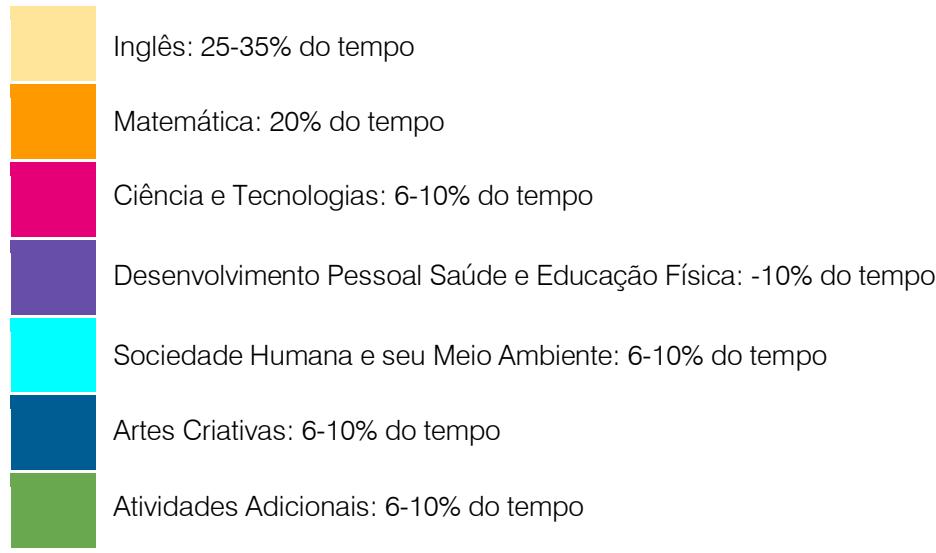
A Autoridade Curricular de NSW fornece um guia para alocacoes do tempo que as escolas devem usar de acordo com suas proprias políticas, mas respeitando as orientações da NESA.
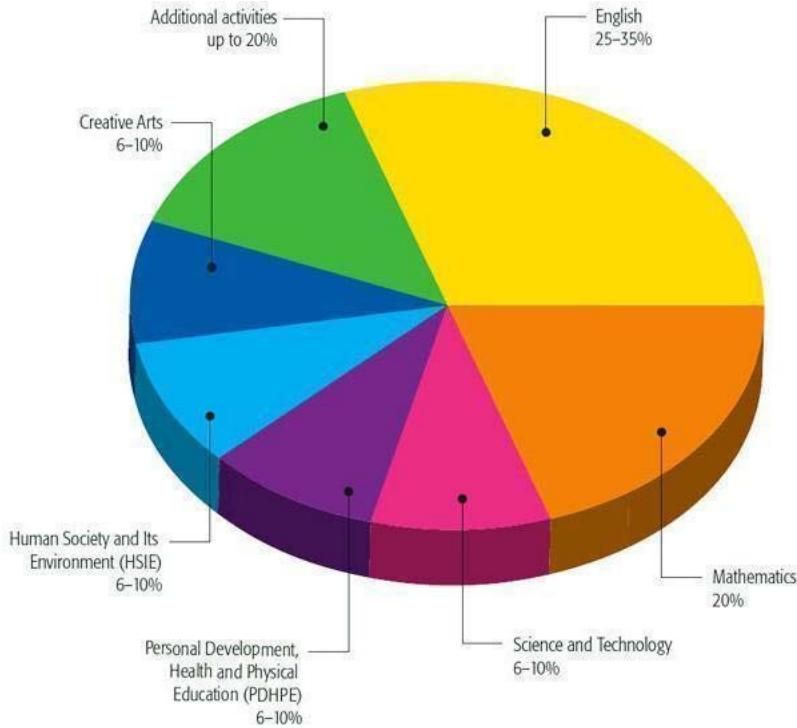
Figura 1: Guia para alocações do tempo até o ano 6
Fonte: NSW, 2020
### Legenda:
6-10% é de aproximadamente 1,5 a 2,5 horas em umamana típica de ensino.
O estado de NSW estabelace conteudos obligatorios do curriculo, conforme listedados abaixo:
- Estudo da matemática é obligatório, do jardim de infância ao ano 10.
- Estudo de Inglês é obligatório do jardim de infância ao ano 12.
- Artes criativas é disciplina obligatória para alunos do jardim de infúncia ao ano 6.
- Na sociedade humana e seu ambiente (HSIE), os assuntos de historia e geografia são obligatórios, do jardim de infúncia ao ano 10, onde os alunos estudam conceitos e habilidades históricas e geograficas espécicas.
- A ciência e a Tecnologia são obligatorias para todos os alunos, do jardim de infúncia ao ano 6.
a) Ensino secundário sénéior
O currúculo do Anos 11-12, ensino secundário sénéior, é organizado em 8和地区 de aprendizagem:
Inglês, Matemática, Ciências, História e Geografia, distribuções em 15 disciplinas denominadas de secundárias. Assim nos revela o Quadro 3:
Quadro 3: Áreas de aprendizagens e disciplinas
<table><tr><td>Área de aprendizagem/Disciplina</td><td>Disciplinas Secundarias</td></tr><tr><td>Inglês</td><td>1. Inglês
2. Inglês contýngua Adiconal ou Dialeto
3. Inglês Essencial
4. Literatura</td></tr><tr><td>Ciências Humanas e Sociais</td><td>5. História Antiga
6. Geografia
7. História Moderna</td></tr><tr><td>Matemática</td><td>8. Matemática Essencial
9. Matemática Geral
10. Métodos Matemáticos
11. Matemática Especialista</td></tr><tr><td>Ciência</td><td>12. Química
13. Biologia
14. Terra e Ciências Ambientais Física</td></tr></table>
No Currúculo do Ensino Secundário Sénéior, anos 11 e 12, as 15 disciplinas secundárias são organizadas em 4 unidas, sendo que as 2 unidas finals são projetadas para terem um[nível de dificuldade maior em termos de desenvolvimento do que as 2 primeiras: 1 unidade é um componente do conteúdo que pode ser ensinado em de metade do ano escolar (50-60 horas), incluindo avalições e exames. Os estados e os territorios determinam a organizeação das disciplinas e a forma como os conteudos e os padrões de desempenho são integrados.
A Educação Profissional ou Educação e Treinamento Vocacional - VET - é inclua nos programas de Certificado de Ensino Secundário Sénior. Os estudiantes podem optar pelaeducatedação profissional, como parte de um Certificado Secundário Sénior, e sua conclusão fornece��o para outras certifications dentro da Estrutura de Qualificações Australiana (AQF). Segundo o documento Visão Geral do Secundário Sénior (Senior secondary overview),algem de obter o certificado de Ensino Médio, o acesso ao VET durante este nível de ensino oferece acos alunos OPPORTUNITÉS de obter uma qualificação profissional reconhecida pelo setor produto ou um progresso substancial para consigui. O treinamento vocacional duranteo Ensino Médio possibila, segundo os documents examinados, uma diversidade de OPPORTUNITÉS.
A Estrutura Australiana de Qualificacao (AQF) foicriada em 1995eagrega todasas qualificacoes do setor de ensino superior (ensino superior e ensino e treinamento vocacional). Entre os objetivos da AQF destacam-se a unificacao da formação profissional e da certificacao profissional em todo o territorio nacional, facilitatingo não apenas as transferências, mas tambem a elevacao doível de formação (AUSTRALIAN QUALIFICATIONS FRAMEWORK, 2013).
O curricula prévê uma flexibilitadade para que os alunos se movimentem entre as disciplinas. Todavia, a flexibilitadé de escolha dos alunos é regulamente pelas escolas, pelas autoridades e pelas agências curriculares de cada estado e territorio, incluindo aconselhoamento sobre pontos de entrada e saída e��to para o estudo conclusão (AUSTRALIAN CURRICULUM, 2019, tradção)nossa)9.
Além disso, os estados e os territorios determinam as espécicações da avaliação que concede uma certificação aos estudantes que o Ensino Médio com éxito, o Certificado de Ensino Secundário Sénéior. Cada Autoridade Curricular estabelece um Conjunto de disciplinas necessarias para certificação, devendo incluar ou adaptar as disciplinas estabelecidas no Curriculum Nacional.
O Estado de Queensland é o que Offerece a maior flexibilidade curricular nos anos 11 e 12. Os alunos podem escolher entre disciplinas academicas, disciplinas eguided de formação profissional, incluindo estágos e aprendizados, estudos reconhecidos e disciplinas universétarias realizadas na escola.
Em sinta se, na Austrácia as escolas Púbicas são reguladas pelos Estados que determinam o salário e as condições dos professores, monitoram o desempenho das escolas e, nos casos de NSW e Victoria, desenvolve seu propre curriculum - em tese, alinhado ao curriculum nacional. No que tange às escolas privadas, os ministros estaduais tem poder limitado,ippo que estas tomagas suas proprias decisões sobre quem contratar e como ensinar.
É importante encontrar que, conforme previsão, o curriculum nacional foi revisado: segundo informação no site da Australian Curriculum, o processo de revisãocameçou em junho de 2020 e foi conclusão no final de 2022. A nova versão do curriculum pode ser consultadano referido site,sendo um importante objecto para novas pesquisas.
## V. CONCLUSão
Como apontado na introdução deste artigo, os dadosquiry aparecimentos fazem parte de uma pesquisa que teve como objetivo investigar a reforma curricular australiana, aprovada em 2012 durante o governo do Partido Trabalhista. Tembem foram objetivos de analise a organização e a estrutura do Sistema de ensino australiano. A titulode informação destacamos o artigo publicado em 2022, no qual incluimos a forma como sepresentam as desigualdades nos sistemas de ensino da Australia (SANTOS; ZAN, 2022). No que tange ao objetivo deste textobuscamos, mais especificamente,apurantar a organização curricular e explicitar oprocesso de construcão do curriculo nacional daAustralía, identificando as dinamicas e osfundamentosda atual reforma curricular desenvolvida no páis.
Com base nos documents legais e nas pesquisasquiry examinados, pode-seconcluirqueare reformacurricular australiana decorre de um longoprocesso de disputase divergencias politicas eideologicas em torno do currculo,embasada nosprojetos sociais e educacionais ligados ao governosdo Partido Liberal e do Partido Trabalhista. Uma disputa em torno do quedeveria ser ensinado para as crianças eos jovens na Australia.Parece-nos,pois,legitimo affirmar que os interesses economicos foram centraispara as tomadas de decisao.Observa-se umarrefecimento da concepcao de igualdade,emdetrimento da ideia de equidade capturada pela lógicaneoliberal.Nesse sentido,podemos affirmar que areformacurricular na Australia foi fortemente marcapeloe ideário neoliberal.
Sem desconsiderar os avanços e os benefíços relativos à implementação do curriculum nacional, as pesquisas analisadas apontam para importantes críticas ao processo de elaboração do curriculum australiano que retomamos láqu: a desconexão entre os objetivos e as metas declarados; a repetuição do "curriculum do passado"; a falta de quadro conceitual coerente; a falta de compreensão das questiones de equidade e curriculo (REID, 2009). O possível ofuscamento do debate sobre as bases conceitualais quedeeriamsustentarocurriculo,easconsequencias da ausência dessas discussões para efetivização do curriculo nas escolas peloprocessopoliticalo(SCARINI, 2018).Em especial,a descência na capacidade de superação das desigualdades apenas por meio do curriculo (DRABSCH, 2013).
Uma que não que nos parece bastante significativa foi levantar da vez (2018) e por Savage (2016): na Austrália é possível affirmar que existe um curróculo nacional na pratica? É importante considerar a complexidade do terrenoístico, que envolve, entre outras coisas, interesses e finalidades ideológicas, lembrando que o processo de desenvolvimento do curróculo foi de responsabilité da ACARA, mas que oprocesso de implementação tem sido de responsabilité dos Estados e territorios. Além disso, o desinho oficial do afinidade entre o governo federal e os Estados e territorios, que possibilou o desenvolvimento do curróculo nacional, mudou durante oprocesso de implementação. Vimos que o cronograma de implementação do curróculo nacional variou de estado para estado: em NSW as de Inglês e Matemática para Educação primária -anos iniciais ao ano 10 - foi incorpORA em 2012, mas, naedinha secundária sênior -anos 11 e 12 -so foi incorpORA em 2017, e a area de Artes ainda não foi incorpORA ao curróculo do estado até o momento.
Concluímos com questiones levantas das por Reid (2018) sobre as evidências relativas às justificativas para o desenvolvimento de um curriculum nacional,/tsais como:porque um curriculo nacional afetaria a taxa de retençao?Existem indíciOs de que um curriculo nacional possa ser mais eficiente do que um curriculo local?Oqueha na Austrália que torna um curriculo nacional não importante nocontexto da globalização? (REID, 2018,p.15).Eaquestao mais importante e duradoura,segundo o autor: em que medida a estrutura e o conteudo do curriculo nacional contribui para o desenvolvimento de jovens capazes de desempenhar um papel produtoivo e ativo nos esforços pessoais e collaborativos necessários para enfortar os desafios dos tempos contemporaneos em nivel local, nacional, regional e global? (REID, 2018).Para o autoreste é um debate que ainda precisa ser feito e incorporedao aocontexto educacional da Austrália.
Por fim, cabenos destacar a necessidade de olhar para os modelos indicados como exemplos de Successo, como no caso da reforma curricular australiana, desvelando seuis limites e contradições, de modo a não cair na armadilha das discussões que desconsideram ocontexto sociopolítico das differsentes realidades nationais.
[^7]: Kevin Donnelly era pesquisador sénior da Católica Australiana Universidade, em 2004, ele é o chefe de gabinete do Partido Liberal. Ken Wiltshire occupou uma posção académica na Universidade de Queensland Business School e mostrou apoio ao governo de coalização que elegue o Partido Liberal em 2013. (KUNH, 2019 p.11, traduição)nossa) _(p.6)_
[^8]: Para saber mais, ver Kunh (2019). _(p.6)_
[^10]: O documento Curriculum Design Paper (Documento sobre o desenvolvimento do curricular) de 2013, apareça as Areas de aprendizagem ou disciplinas para os relatos, um indicativo das (horas) que orientou a elaboração do curricularonacional. _(p.8)_
[^3]: A Declariaço de Adelaide sobre os Objetivos Nacionais para a Escolaridade no século 21, elaborada em abrille de 1999 pelo Conselho Ministerial de Educacao, Emprego, Treinamento e Assuntos da Juventude - MCEETYA (sigla em inglês), é descrita por diferentes estudos como um dos Marcos iniciais do atual curriculum australiano. _(p.3)_
[^4]: Estudo sobre a producao e implementacao da politica curricular na Australia, mais especificamente do denominado "Curcioo para o século 21"; entre outros achados, a autora destacafewgunlos elementos que motivaram/mobilizaram a reforma do curcioo na Australia. _(p.3)_
[^5]: Conforme Halasz & Michel (2011), um 'curriculum para o Século 21' reflete um forte discusso global, mobilizado pela OCDE a partir de 2003, segundo o qual o "curriculum para o século 21" refere-se as competências necessariasna formação dos jovens do Século 21. _(p.3)_
[^9]: Link completo para os dados: https://educationstandards.nsw.edu.au/wps/portal/nesa/k-10/understanding-the-curriculum/curriculum-syll abuses-NSW/nsw-and-the-australian-curriculum _(p.8)_
[^11]: Temém pode ser traduzido como "Educação e formação profissional". _(p.9)_
[^12]: Disponével em: https://www.australiancurriculum.edu.au/media 36 27/ss_info-sheet_overview.pdf _(p.11)_
Generating HTML Viewer...
References
31 Cites in Article
Paolo Passaniti (2012). A Cidadania Submersa. O Trabalho Doméstico na Itália entre os Séculos XIX e XX.
(2017). História Antiga (Secundária Sênior) 2017 Geografia (Secundário Sênior) Atualmente em desenvolvimento História Moderna.
Artes-Dança (7-10). Drama, Media Arts, Música e Artes Visuais (F -6) Atualmente em desenvolvimento Artes -Dança.
O desenvolvimento ainda está para ocorrer Artes -Drama.
Ana Marko Kirchhausen,Jorge Villanueva Bustíos (2025). Quien no está listo para la fiesta no está listo para la guerra: pulsiones de vida contra políticas de muerte.
O desenvolvimento ainda está para ocorrer Artes -Música.
O desenvolvimento ainda está para ocorrer Referências Bibliográficas.
Lucas Costa (2012). A implementação do currículo em movimento da educação infantil em uma escola de Brasília.
Acara (2012). Unknown Title.
Belinda Macgill (2014). The Australian Curriculum, Assessment, and Reporting Authority (ACARA)—holding responsibility: the arts curriculum and the cross-curriculum priorities.
Michael Apple (2002). A política do conhecimento oficial: faz sentido a ideia de um currículo nacional?.
Australia (2008). Australian Curriculum, Assessment and Reporting Authority Act.
Peter Long (2019). The Australian Advertising Industry: An Overview.
Australia (2013). Australian Qualifications Framework.
Quinette Louw (2014). Peer Review Report For: Rack ‘em, pack 'em and stack ‘em: challenges and opportunities in teaching large classes in higher education [version 1; peer review: 2 approved].
Don Carter (2008). The Melbourne Declaration on Educational Goals for Young Australians: what it is and why it needs updating.
Talina Drabsch (2013). The Australian Curriculum.
G Halasz,A Michel (2011). Key competences in Europe: Interpretation, 235 policy formulation and implementation.
Zahira P A Kunhi,Abdulla (2019). An analysis of 'c21 curriculum policy' within Australian contexts.
Marcela Leivas (2005). Desigualdad educativa en contextos de obligatoriedad de la educación secundaria: un estudio sobre el comportamiento de la matrícula y los indicadores de eficiencia interna en el país y en la provincia de Buenos Aires durante el período 2001/2015.
Stuart Macintyre (2009). The Challenge of History in the National Curriculum.
Barry Mcgaw (2010). Statement from ACARA Chair Professor Barry McGaw.
S,D (2019). Unknown Title.
Alan Reid (2019). Changing Australian Education: How policy is taking us backwards and what can be done about it.
Alan Reid (2009). Is this a revolution? A critical analysis of the Rudd government's national education agenda.
Alan Reid,Alan Reid,Deborah Price (2018). The journey towards the first Australian curriculum.
John Rose,Robert (2015). The Australian national curriculum: perspectives of teachers and school administrators on issues and concerns surrounding implementation.
Danielle Santos,Dirce Zan (2022). THE AUSTRALIAN EDUCATION SYSTEM: A LOOK AT EDUCATIONAL INEQUALITIES.
Glenn Savage (2016). Who’s steering the ship? National curriculum reform and the re-shaping of Australian federalism.
Glenn Savage,Sellar,& Sam,Radhika Gorur (2013). Equity and marketisation: emerging policies and practices in Australian education.
Angela Scarini (2018). The Australian Curriculum and its conceptual base: a critical analysis.
Explore published articles in an immersive Augmented Reality environment. Our platform converts research papers into interactive 3D books, allowing readers to view and interact with content using AR and VR compatible devices.
Your published article is automatically converted into a realistic 3D book. Flip through pages and read research papers in a more engaging and interactive format.
The study presented here is part of the results of postdoctoral research that aimed to investigate the approved curriculum reform in 2012 and implemented in Australia since then. In addition to seeking to know the organization and functioning of the Australian education system, this article intends, specifically, to explain the process of building the country’s national curriculum and identify the dynamics and foundations of the current reform. The methodology used for this research was based on a qualitative, descriptive and analytical approach, based on bibliographic and documentary analysis. From this analysis, it can be concluded, among other things, that the Australian curriculum reform is the result of a long process of debates and ideological political disputes that lasted two decades. In spite of the arguments regarding social equity and justice, the principles and foundations that support this reform are strongly marked by neoliberal ideas. Regarding the consequences of this process, in this text, the obstacles to the implementation of the current national curriculum stand out.
Our website is actively being updated, and changes may occur frequently. Please clear your browser cache if needed. For feedback or error reporting, please email [email protected]
Thank you for connecting with us. We will respond to you shortly.