The present paper deals with the problematic of labor and social security rights of domestic workers in Brazil and around the world, highlighting the importance of more inclusive and fair public policies and private actions for this category of workers. The research analyzed official documents and statistics, as well as bibliographic research from authors who discuss the subject. The aim of the article is to contribute to a reflection on the need to advance in guaranteeing rights for domestic workers, as well as to encourage the adoption of effective public policies to protect these workers. Therefore, it is essential that governments, organizations, and society as a whole engage in actions to ensure labor and social security rights for this important, but historically vulnerable, category of workers.
## I. INTRODUCTION
The social protection of domestic workers is a topic that has gained prominence in discussions about public policies and labor rights in Brazil and around the world. Despite being an important category in the labor market, domestic workers often face precarious conditions, low wages, and lack of social protection. Therefore, this article aims to discuss the advances and challenges for the effective implementation of labor and social security rights for domestic workers in Brazil.
The research investigated documents and reports produced by institutions such as the International Labor Organization and Brazilian research institutes, as well as official labor statistics in Brazil from the Brazilian Institute of Geography and Statistics (IBGE). In addition, it was based on bibliographic research conducted in recent years by researchers who have been discussing the issue in the national scenario.
Therefore, focusing on the Brazilian reality, topics such as the recognition of labor rights of domestic workers, the importance of formalizing domestic work, the challenges faced in implementing social protection policies, the prospects for the future, and the importance of public debate on this issue and the need for effective policies and actions to protect these workers will be addressed.
In this sense, the following text has been organized into three sections, in addition to this introduction and conclusions. It begins with a broader discussion aimed at contextualizing the Brazilian reality in the international scenario of paid domestic work. The next section focuses on the main points of the issue within the Brazilian context. In the last section before the conclusion, proposals for addressing this issue in Brazil are discussed based on the topics being debated both nationally and internationally.
It is hoped that this article will contribute to a reflection on the need to advance in guaranteeing rights to domestic workers in Brazil and around the world, as well as to encourage the adoption of more inclusive and fair public policies regarding these workers.
## II. INTERNATIONAL DEBATE GUIDELINES ON THE WORKING CONDITIONS OF PAID DOMESTIC WORKERS
In recent years, the debate on the relations and conditions under which paid domestic work is carried out has gained relevance and entered the global public debate, especially due to the poor working conditions and the history of prejudice, stigma, and social invisibility that has been its hallmark in various places, assuming the particularities of the socio-historical context of each country. Article 1 of the International Labor Organization's (ILO) Convention No. 189 on Decent Work for Domestic Workers defines domestic work as "work performed for pay by a person in or for one or more households." Regarding the possibilities of occupation, tasks, or activities that can be performed, they include cleaning, taking care of children, elderly or disabled people, being a watchman, cooking, taking care of the garden, among others.
More recently, under the framework of the care economy, it is recognized that domestic workers "[...] provide services and goods that are socially necessary for the maintenance of households and the well-being of families, most often in the form of direct or indirect care activities" (ILO, 2021, p. 6). The growth in demand, as well as the number of workers, has highlighted the social meaning of this activity, the tensions and contradictions that it entails, and the conditions under which work is performed around the world.
ILO estimates indicate that in 2010, a contingent of approximately 53 million people, including men and women aged 15 or older, were employed as domestic workers worldwide (ILO, 2013). More recent data indicate that in 2019, this number was already close to 75.6 million people (ILO, 2021). It is important to note that these data did not yet consider the impacts caused by the Covid-19 pandemic. In some regions, there was a lot of unemployment in the domestic services sector, which alters these statistics.
However, in 2019, paid domestic work represented $4.5\%$ of global employment. In turn, if the different regions of the globe are considered, the participation of domestic work in the employed workforce varies significantly. In the Arab States, domestic workers represent $14.8\%$ of all employees. In Latin America and the Caribbean, Africa, and Asia and the Pacific, the percentages are $8.4\%$, $7.3\%$, and $4.6\%$. Meanwhile, in Europe and Central Asia, it does not exceed $1\%$. Latin America and the Caribbean is the region that concentrates the second-largest number of domestic workers worldwide, where more than 14.8 million people are in this occupation, representing a percentage of $19.6\%$ of the world's total domestic workers. This is where domestic work concentrates the largest population of women, $91\%$. Moreover, in this region, $17.8\%$ of women are employed in this sector, demonstrating its relevance to women's work (ILO, 2021).
Paid domestic work is commonly carried out by workers in conditions of social vulnerability and belonging to ethnic-racial groups victimized by a history of discrimination, oppression, and prejudice. They are generally undervalued professionals with low labor regulation, with a prevalence of social unprotectedness associated with reduced remuneration. There are several records of mistreatment and abuses committed in the workplace. Additionally, in many countries, domestic work is largely carried out by children, still being a significant stronghold for child labor (ILO, 2010).
These aspects impact the conditions and relationships of work, as well as on the organization and representation of domestic workers. In this sense, the agenda of social protection for work becomes a central discussion in addressing the debate about the construction of better living and working conditions for this category of workers.
At the 100th International Labour Conference held in Geneva in 2011, the ILO adopted an international instrument for the protection of domestic work in the form of Convention No. 189, entitled "Decent Work for Domestic Workers," accompanied by Recommendation No. 201, with the same title. The notion of decent work is anchored in four dimensions or areas according to the decent work manual: labor rights; employment; social protection and security; and the right to voice and representation.
In 2017, Brazil ratified this Convention, two years after approving the most important regulation of domestic work in the country to date, Complementary Law No. 150 of 2015, which has regulated domestic employment contracts since then. At least from a formal point of view, these actions have expanded the recognition of the status of domestic work and, consequently, of its associated rights.
With its approval, for the first time in the country's history, a maximum workday of 8 hours per day and 44 hours per week was established, as well as the right to paid weekly rest for domestic workers. They also gained the right to paid vacation of 30 days for each 12 months of work, and to payment of the 13th salary and overtime, if the regulated daily or weekly working hours are exceeded, among others.
It is important to note that this was not just a concession from the Brazilian government, but represents a social achievement of the struggle of domestic workers, despite suffering from low union representation. A long and slow trajectory was traveled for recognition of their worker status and, consequently, their rights throughout the 20th century.
In the 1940s, Brazil consolidated a set of rights for urban workers through an instrument known as the Consolidation of Labor Laws. However, domestic work, despite being one of the first occupations recorded in the national territory, was not included in the set of workers guaranteed by the rights provided for.
This discrimination lasted for several decades, and the regulations of paid domestic work were occurring in the country partially. The right to collective organization and unionization came late (only with the Federal Constitution of 1988), which did not prevent the persistence in the struggle of organized groups of domestic workers for changes in legal statutes, fighting the exclusion and discrimination historically suffered by them, demanding recognition of the social value of domestic work and the importance of labor rights. This movement included awareness campaigns, mobilization of workers, participation in forums and debates, and legal actions, and was supported by other segments of social movements linked to human rights, anti-racism struggles, and movements in favor of women's rights.
The late regulation, as well as prejudice and discrimination against people employed in domestic services, associated with conditions of social vulnerability, intensified the challenges for the realization of rights in Brazil. The next section exposes and problematizes some of the aspects that characterize this set of challenges, which are updated in contemporary scenarios.
## III. PAID DOMESTIC WORK IN BRAZIL: A REFLECTION OF A BROADER REALITY OF VULNERABILITY AND PRECARIOUSNESS
Brazil stands out quantitatively in the context of paid domestic work, both in Latin America and in the world, having one of the most significant populations (ILO, 2021). According to the estimates of the Brazilian Institute of Geography and Statistics (IBGE), in the fourth quarter of 2021, there were 5.7 million people employed in paid domestic services, $93\%$ of whom were women, following the predominant profile in the Latin American region. This massive female predominance has remained over the years, showing little variation around this percentage.
In the context of the reproduction of the super exploitation of the Brazilian workforce (COSTA; SANTOS & RODRIGUES, 2022), this significant contingent experiences their social reproduction in a context of vulnerability, which is aggravated by the fact that this is a predominantly female occupation, historically occupying this socially demarcated place. Thus, it is possible to agree that,
"[...] paid domestic work is a pocket of employment for female labor in Brazil because culturally it constitutes women's place, and performing these tasks does not require any qualification. This activity is therefore the refuge of workers with low education and no training in society" (MELO, 1998, p. 1, our translation).
Domestic work is one of the oldest occupations known in the history of Brazil, dating back to the slave period. This implies considering that the analysis of this phenomenon presupposes its linkage to the culture of servitude and class, gender, and race subordination, which historically marks it in the national context. Therefore, this reality is directly linked to the societerritorial and economic development conditions of the country and Latin America in the context of the formation of the modern-colonial world system and its persistent reproduction, with strong incidences on work, the working class, and the social question in countries in this region (COSTA; SANTOS & RODRIGUES, 2022).
Contemporary statistics on working conditions, income, and education reaffirm the social vulnerability and precariousness to which these women are subjected. The estimates made by the National Institute of Applied Economic Research (IPEA), arranged in Table 1, based on data from the first quarter of 2021 of the Continuous PNAD, exemplify this reality (COSTA; RUSSO; HIRATA & BARBOSA, 2021). According to this data, in 2021, there were approximately 4.5 million women working as domestic workers in Brazil.
Table 1: Some Characteristics of Domestic and Non-Domestic Female Workers
<table><tr><td></td><td>Female domestic workers</td><td>Other female workers non-domestic workers</td></tr><tr><td>Quantity (thousands)</td><td>4.505</td><td>15.006</td></tr><tr><td>Black or indigenous (%)</td><td>65,15</td><td>50,65</td></tr><tr><td>Average age (years)</td><td>45,05</td><td>35,45</td></tr><tr><td>Have completed high school (%)</td><td>34,5</td><td>77,3</td></tr><tr><td>Working hour value (R$)</td><td>33,23</td><td>56,82</td></tr></table>
Another striking demographic characteristic of this group of Brazilian workers is their race. About $65\%$ are Black or Indigenous, as can be seen in Table 1. Thus, they are mostly women belonging to historically marginalized and vulnerable groups in the Brazilian population.
The age at which they start working, often driven by early pregnancy, creates a significant barrier to educational progression, as argued by Costa (2017). This is reflected in the low levels of education in the group. That is, they are women with an average age of 45, of whom only $34.5\%$ have completed high school (Table 1). Compared to women in other sectors of the labor market, whose average age is 34 and $77.3\%$ have
already completed high school, it is clear that domestic workers are in a disadvantaged position.
Regarding their income, it is found that domestic workers are paid about half the hourly rate compared to women in other professions (Table 1). Additionally, as women in general already earn less than men, domestic workers face a double disadvantage compared to other women, as they are in an occupation that already has lower social and economic status.
In addition to low wages, since 2012, there has been an increase in the number of workers without formal employment contracts, reaching almost $76\%$ in 2021 (Figure 1). At the same time, the domestic workforce has become more diarized, as evidenced by the curve of women who self-identify as daily workers in
IBGE statistics. In 2012, it was $21.7\%$, reaching $30\%$ in 2021 (Figure 1).
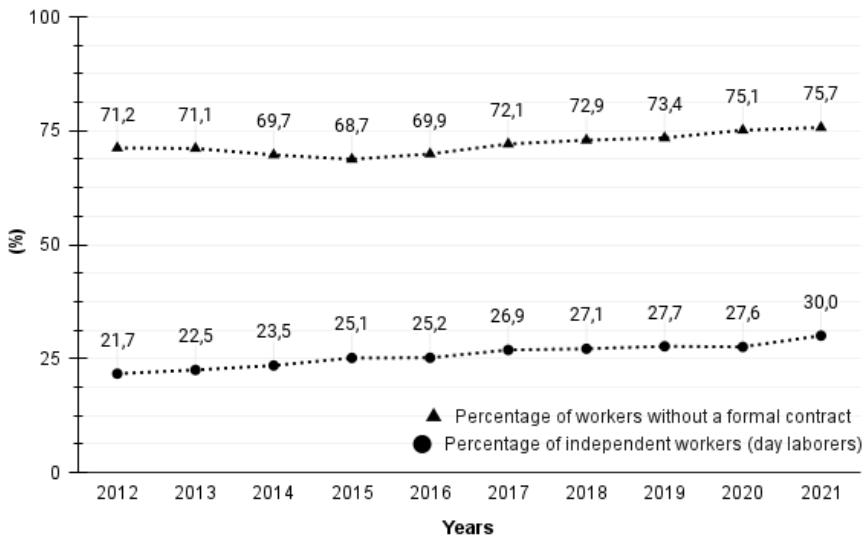
Figure 1: Percentage of Domestic Workers without a Formal Employment Contract and Percentage of Daily/Hourly Domestic Workers among Domestic Female Workers - Selected Years (Source: Developed by the Authors Based on Data from the PNAD)
In addition to these vulnerability factors, the low attachment of domestic workers to the social security protection system is also a concern. On average, half of the day laborers do not contribute to the social security
system. This is demonstrated in the graph in Figure 2, which shows the stability of this data over the selected years.
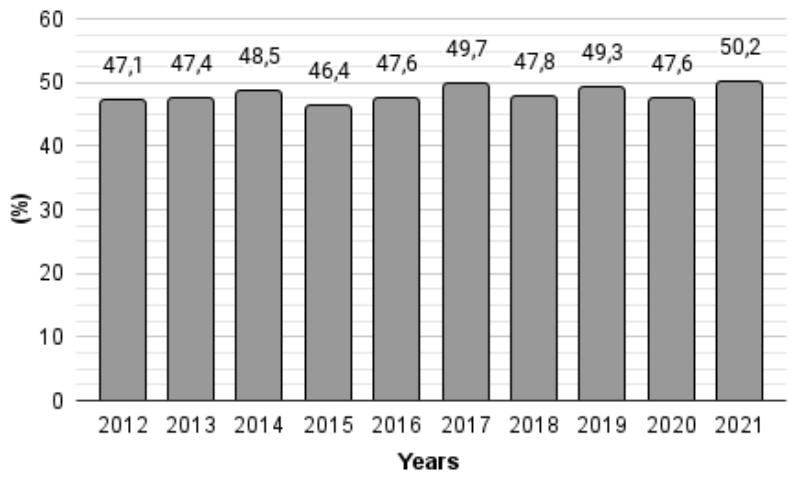
Figure 2: Percentage of Daily/Hourly Domestic Workers Who Contribute to Social Security - Selected Years (Source: Developed by the Authors Based on Data from the PNAD)
The persistence of informality and low access to effective social security and labor rights for domestic workers, even after Brazil's adherence to ILO Convention 189 and the approval of Complementary Law 150/2015, is concerning. Data indicates that, despite legal advancements, there has not been a significant change in the reality of social unprotectedness to which Brazilian domestic workers are subjected. Informality indicators, which were already high before these two events, have continued to grow in recent years.
With the approval of the current regulation of domestic work contracts, Complementary Law 150 in 2015, the Brazilian government began to enable mechanisms to facilitate and encourage the formalization of domestic work contracts. In this sense, it established the unified regime for the payment of taxes, contributions, and other employer's charges, the Domestic Simplified Tax (Simples Dométrico). Taxes refer to social security contributions, both from the domestic employee and the employer; social
contribution for financing the insurance against work accidents; payment to the Guarantee Fund for Length of Service (FGTS), with anticipation of the percentage for the case of rescission fines, and income tax withheld at the source, when applicable.
The Domestic Simplified Tax is an electronic system, where the domestic employer registers the work contract and processes all the movements related to it during its validity, including generating the monthly payroll for the worker, as well as the unified tax payment guide from the contract.
The measures adopted by the government continue to be essential to encourage and facilitate the formalization of domestic labor contracts in the country. This is particularly important for employment relationships, which are regulated by law. According to Article 1, the law applies to domestic employees, defined as someone who provides continuous, subordinate, onerous, and personal services, without a profit-making purpose, to a person or family, within their homes, for more than two days a week. However, this definition limits the potential extension of social labor protection provided for in the new domestic labor regulation in the country.
The registration of the employment contract only becomes mandatory when the weekly frequency of service provision to the same family is more than two days. This means that a portion of domestic workers who do not meet this requirement are not protected by the law. Simply put, the legal provision does not apply to this employment relationship, which is not an employment relationship but rather a self-employed or independent service provision, to use the term employed in the ILO report (ILO, 2021, p. 7). Without labor rights, the daily worker must access the social security system as an individual contributor, assuming the burden of self-employment alone.
In terms of labor regulation, this is the current scenario of domestic work in Brazil, of which we highlight the persistence of informality, through neglect of contract formalization and the growth of daily work. Even with the new law that expanded rights and measures taken by the government to encourage and facilitate formalization, the picture of lack of protection persists. The accumulation of social disadvantages that overlap with domestic workers throughout the country's history, among other factors, causes this resistance, which is historical and social. It also does not move away from the broader movement of determinations involving the development of the capitalist system at the local, regional, and global levels.
It is also impossible to ignore the influence of the pandemic scenario faced since 2020. Its consequences have impacted, and still continue to impact, many lives and economies in the global context, including domestic workers.
Data from the Continuous National Household Sample Survey (Pnad C) by IBGE reveals that between March and June 2020, Brazil lost 1.257 million domestic jobs. While the job loss in the period of the employed population was around $9.6\%$, in domestic work, it represented $21.1\%$. Among other factors, the economic crisis installed with the pandemic impacted domestic budgets, so that many families were unable to afford the expenses of maintaining a paid domestic worker. Social isolation, as well as the expansion of the work-from-home model, favored families performing domestic tasks themselves during this period, resulting in layoffs of domestic workers (BRAZIL, 2020).
Despite the intensification of the income transfer policy implemented by the Federal Government through the Brazil Aid Program, the lack of government positioning regarding specific planning facing the needs and particularities of these workers allowed social neglect and vulnerability to worsen in the pandemic context. For the Secretary of Trade Union Formation of the National Federation of Domestic Workers (FENATRAD), Chirlene Brito, the impact caused during this period reflects that domestic workers were a category that,
"[...] had no visibility, and we are still suffering from this impact. Several companions lost their jobs. The support of FENATRAD, unions, and partner organizations was fundamental in allowing us to demand our rights and value our work. We are being enslaved so that we are not included in the law and our rights are not recognized" (NATIONAL FEDERATION OF DOMESTIC WORKERS, 2022, our translation).
In the scenario of the COVID-19 pandemic, there has been a real fight waged by sectors that advocate for the rights and lives of domestic workers, notably the unions, FENATRAD, the Labor Prosecutor's Office, and other organizations that also support the struggle of domestic workers, such as the nongovernmental organization Themis. Several campaigns have been carried out to sensitize society and employers about the importance of dismissing domestic workers during quarantine and periods of greater social isolation, while preserving their jobs and incomes, regardless of whether they are salaries or daily wages.
One of these campaigns, developed by the National Federation of Domestic Workers (FENATRAD) in partnership with the Themis NGO, launched in the first semester of 2021, was "Black Lives Matter". The campaign aimed to make Brazilian society reflect on the fact that the lives of domestic workers and their families matter just as much as the lives of the people they serve. Just as their work is essential, their rights as citizens and workers are essential.
Therefore, it is possible to conclude that elevating the levels of social security and labor protection for domestic workers in Brazil remains a great challenge. It requires recognition and social appreciation of this work and these workers within Brazilian society, as well as more attentive care from the government and other power segments in meeting the specific demands of this category of workers.
Urgent efforts need to be made to reverse the trend of informality, which will require political will, social involvement, and creativity and innovation in the face of the major challenges posed by the intensification of the disputes between capital and labor in the global scenario.
To contribute, even briefly, to this agenda, we will develop a brief dialogue with an executive summary of the ILO report, which draws attention to some points that countries need to consider in formulating agendas to advance the guarantee of decent and dignified work for their domestic workers.
## IV. CONTRIBUTIONS TO THE ADVANCEMENT OF THE AGENDA OF STRUGGLES FOR GREATER SOCIAL PROTECTION FOR PAID DOMESTIC WORK
In 2021, the ILO released a report that takes stock of the achievements and challenges for achieving the objectives for decent work for domestic workers, ten years after the approval of Convention No.
189. In 2022, an Executive summary titled "Making the right to social security a reality for domestic workers: a global review of policy trends, statistics and extension strategies" was released. In its introduction, it is considered that,
domestic work is among the oldest of occupations. The human right to social security was enshrined in the Universal Declaration of Human Rights as far back as 1948. It is unacceptable that domestic workers are over-represented among the 53 per cent of the world population that remain deprived of this fundamental right. Considering the ever-growing number of domestic workers on whom households rely for their most personal and human needs, it is high time for societies to recognize their value and contribution to society, the care economy and social protection systems and to enable them to enjoy their human right to social security (ILO, 2022, p. 2).
The considerations above highlight the fact that the human right to social security, enshrined in the Universal Declaration of Human Rights since 1948, and yet domestic workers are overrepresented among those who are deprived of this fundamental right, is a clear indication of the profound inequality that exists in our societies.
It is imperative that societies recognize the value and contribution of domestic workers to the care economy and social protection systems, and allow them to enjoy their human right to social security. This requires concrete policy changes to ensure that domestic workers are protected and supported. This includes measures such as formalizing their work, ensuring fair wages and working conditions, and providing access to social security and other benefits.
The text goes on to present seven messages that summarize content that can contribute to the design of improved strategies and public policies to address the informality and social insecurity of domestic work, both by governments and by the working class and social movements.
1) Domestic workers experience significant social security deficits; 2) Domestic workers face multiple barriers to enjoying legal coverage and effective access to social security; 3) Social protection has great potential for enabling the transition of domestic workers into formal employment; 4) The challenges to the effective social protection coverage of domestic workers are real but not insurmountable; 5) Ensuring that domestic workers enjoy treatment at least as favourable as other workers should be the beacon of national policy and legal reforms; 6) Legal reforms are an essential stepping stone that will need to be accompanied by adapted administrative procedures and improved governance to ensure tangible results; 7) Social protection extension in practice will require solidarity in financing (ILO, 2022, p. 2-3).
The first two messages can be seen as reinforcing the observation of the insecurity and lack of social protection faced by domestic workers around the world, including in Brazil. The third message discusses the potential of social protection to enable domestic workers to transition to formal employment. In this sense, it needs to be seen more broadly, including policies and programs to ensure financial security and access to basic health services, education, and other rights, can help promote the transition of domestic workers to formal jobs, that is, jobs with full labor protections. Social protection can provide financial and service support that helps ensure workers' economic stability and well-being, allowing them to seek better job opportunities.
The document also highlights that the obstacles to implementing effective social protection policies and programs for domestic workers are real, but they can be overcome with appropriate efforts and policies. Although there are challenges to be faced, such as the lack of formal recognition of their work and the difficulty of monitoring and regulating working conditions in private households, it is possible to develop policies and strategies to overcome these obstacles and ensure social protection for domestic workers.
The message "ensuring that domestic workers enjoy treatment at least as favorable as other workers should be the beacon of national policies and legal reforms" emphasizes the importance of ensuring equal rights and treatment for domestic workers compared to other workers. This goal should be a guiding principle in decision-making, indicating that the main objective is to ensure equal rights and opportunities for domestic workers.
In this sense, in the case of Brazil, an alert is raised for the situation of day laborers, whose labor rights are not guaranteed like other domestic workers, due to the restriction contained in the legislation itself. Although strong efforts from society are absolutely necessary to enforce the Law, by encouraging the formalization of employment contracts, the growth of independent domestic work in the country cannot be ignored.
These issues require the observation contained in the message about administrative procedures and the improvement of governance, in order to obtain more concrete results. The emphasis here is on the importance of simplified, innovative, and digital solutions for registering and paying contributions for domestic workers and their employers, due to the limited contributory and administrative capacities of these workers. The Brazilian government has already made progress in this area, but the data shows that more investment and greater attention are still needed for more effectiveness.
Furthermore, it is necessary to strengthen inspection mechanisms, complaints, and appeals to ensure compliance with labor and social security legal frameworks. It is also necessary to increase awareness and training of domestic workers, employers, and other stakeholders, such as NGOs and civil society, to ensure the effective implementation and application of legal frameworks. The expression "strong institutional capacities" refers to structures and institutions that can facilitate the implementation of these policies and programs, but also the strengthening of popular participation and social control towards the improvement of democratic mechanisms in the country, important indicators of the reduction of social inequality and injustices (BRASIL, 2021).
The last message that emphasizes the need for solidarity in financing for the extension of social protection in practice is in line with the idea of democratic strengthening. We interpret this solidarity from the broad point of view of collective construction of solutions and financing. In Brazil, there is still a public fund that finances social policies, but it has been directly affected by reform attempts, as well as appropriations by private capital (BRASIL, 2017). Anyway, the importance of cooperation and sharing responsibility in guaranteeing social protection for domestic workers is marked.
Beyond the important recommendations of the ILO for addressing vulnerability and social insecurity by promoting decent work for domestic workers, it is necessary to think about this issue from a broader perspective, which involves the crisis of the current global economic model.
The contradictions between capital and labor intensify and reveal what is really at the heart of this issue: the deepening of social inequality without precedent in human history, structural precariousness of work, and weakening of public social protection systems, as neoliberal discourses advocate for a minimal state in social matters. The COVID-19 pandemic has highlighted this process: "a new billionaire emerges every 26 hours since the beginning of the pandemic. The ten richest men in the world doubled their fortunes, while more than 160 million people were pushed into poverty" (AHMED, 2022).
In particular, understanding these phenomena in the context of peripheral capitalist countries, such as Brazil, requires a nuanced analysis in light of the condition of labor superexploitation experienced by workers, which amplifies degradation and precariousness to very high levels, as it occurs in a social context of complex vulnerability.
Therefore, there will be a compromise in elevating the standards of dignity in work and decent work itself whenever it is not taken into account that at the base of this vulnerability lies an exacerbation of the condition of insufficiency for social and human development, in a broad sense, of workers, mainly due to being deprived of access to socially produced wealth. These insufficiencies are built from a profound social inequality, expressed by precarious living and working conditions, erected by the association of a complex of determinants related to race and ethnicity, gender, and social class.
## V. CONCLUSION
The international scenario for paid domestic work in terms of labor and social security rights coverage is still unfavorable for its workers around the world.
In Brazil, the long trajectory of recognizing domestic labor rights throughout the 20th century and early 21st century resulted in their regulation occurring late, which has had a negative impact. Domestic workers still face a social context of prejudice and discrimination, which, combined with complex conditions of social vulnerability, intensifies the challenges for effective social protection. Women workers accumulate social disadvantages, which become even more significant for domestic workers given their educational, age, income, and race indicators.
Informality persists through the non-formalization of employment contracts, as well as an increase in the provision of services on an independent or daily basis, resulting in a low realization of labor and social security rights. The measures taken by the Brazilian government to facilitate and encourage the formalization of domestic work contracts have not yet demonstrated the ability to reverse this trend.
The social struggle for expanding social protection for domestic workers in Brazil takes place within a context where protection itself is divided by contradictions, threatened in its legitimacy, and facing a severe social condition, which is not only imposed on domestic workers but on the vast majority of the country's population. This demands social commitment and engagement from broad sectors of society, as well as the ability to critically analyze the socio-environmental consequences of the current economic model.
Generating HTML Viewer...
References
24 Cites in Article
Nabil Ahmed,Anna Marriott,Nafkote Dabi,Megan Lowthers,Max Lawson,Leah Mugehera (2022). Inequality Kills: The unparalleled action needed to combat unprecedented inequality in the wake of COVID-19.
Armando Barrientos (2011). Social protection and poverty.
Brasil (2023). Lei Complementar no 150 de 1 o de junho de 2015.
A Brasil (2020). Home office foi adotado por 46% das empresas durante a pandemia.
O Brasil (2017). Unknown Title.
O Brasil (2021). Democracia inacabada: Um retrato das desigualdades brasileiras.
F Costa,C Santos,M Rodrigues (2022). Racismo, colonialidade do poder e trabalho doméstico remunerado no Brasil.
F Costa,M De (2017). A diarização do trabalho doméstico remunerado no Brasil e os dilemas atuais da (des) proteção social.
Joana Costa,Felipe Russo,Guilherme Hirata,Ana Barbosa (2021). Emprego doméstico no Brasil : transições em contextos de crises.
F Fenatrad,T Das FENATRAD analisa pesquisa sobre os impactos da pandemia no trabalho doméstico-Fenatrad.
Rita Villas Boas,Denise Silva (2012). O curso de desenvolvimento de habilidades em pesquisa do ibge.
I Ibge,De G. E E (2013). Pesquisa Nacional por Amostra de Domicílio (PNAD).
I Ibge,De G. E E (2014). Pesquisa Nacional por Amostra de Domicílio (PNAD).
I Ibge,De G. E E (2015). Pesquisa Nacional por Amostra de Domicílio (PNAD).
I Ibge,De G. E E (2016). Pesquisa Nacional por Amostra de Domicílio (PNAD).
I Ibge,De G. E E (2017). Pesquisa Nacional por Amostra de Domicílio (PNAD).
I Ibge,De G. E E (2018). Pesquisa Nacional por Amostra de Domicílio (PNAD).
I Ibge,De G. E E (2019). Pesquisa Nacional por Amostra de Domicílio (PNAD).
I Ibge,De G. E E (2020). Pesquisa Nacional por Amostra de Domicílio (PNAD).
Rita Villas Boas,Denise Silva (2021). O curso de desenvolvimento de habilidades em pesquisa do ibge.
I Ilo (2010). Introduction.
(2013). Maternity protection.
(2011). III.O.13 ILO CONVENTION (NO 189) CONCERNING DECENT WORK FOR DOMESTIC WORKERS (WITH RECOMMENDATION NO 201).
No ethics committee approval was required for this article type.
Data Availability
Not applicable for this article.
How to Cite This Article
Francilene Soares de Medeiros Costa. 2026. \u201cThe Challenges to Make Decent Work a Reality for Domestic Workers in Brazil\u201d. Global Journal of Human-Social Science - H: Interdisciplinary GJHSS-H Volume 23 (GJHSS Volume 23 Issue H3): .
Explore published articles in an immersive Augmented Reality environment. Our platform converts research papers into interactive 3D books, allowing readers to view and interact with content using AR and VR compatible devices.
Your published article is automatically converted into a realistic 3D book. Flip through pages and read research papers in a more engaging and interactive format.
Subject: Global Journal of Human-Social Science - H: Interdisciplinary
Authors:
Francilene Soares de Medeiros Costa, Dr. Tiago Barreto de Andrade Costa, Ana Carolina Soares Cardoso, Ana Paula Ramos Gomes, Cleice Santos Santos (PhD/Dr. count: 1)
The present paper deals with the problematic of labor and social security rights of domestic workers in Brazil and around the world, highlighting the importance of more inclusive and fair public policies and private actions for this category of workers. The research analyzed official documents and statistics, as well as bibliographic research from authors who discuss the subject. The aim of the article is to contribute to a reflection on the need to advance in guaranteeing rights for domestic workers, as well as to encourage the adoption of effective public policies to protect these workers. Therefore, it is essential that governments, organizations, and society as a whole engage in actions to ensure labor and social security rights for this important, but historically vulnerable, category of workers.
Our website is actively being updated, and changes may occur frequently. Please clear your browser cache if needed. For feedback or error reporting, please email [email protected]
Thank you for connecting with us. We will respond to you shortly.