This study attempts to present and highlight through their theatricality the historical processions, parades and anniversaries of remembrance in the early 20th century that took place respectively in the natural environment of cities in Greece and Australia. Inspired by the ideals of the state, the principles of democracy, but also the evolutionary reflexive dynamics of the correlation of space with the urban environment, the grand Assemblies reflected and underlined important historical turning points, strengthening the spirit of the populations in the early 20th century. Ultimately, as it turns out, the earth marches in parallel steps and the setting of the cities of Athens and Thessaloniki and the megacities of Melbourne and Sydney significantly influenced and emotionally charged the great celebrations.
## I. INTRODUCTION
This article aims to present the great gatherings that took place in the natural setting of the cities of Greece and Australia in the context of celebratory events and anniversaries of memory, reflecting critical turning points in history and strengthening the spirit of the people.
The celebratory events of the people are directly related to the semiology of the performing arts and theatricality, which in the early 20th century took place within the city stage, emotionally charging the spaces and creating new data in the theories of theatricality.
As the megacities of the 19th century expanded the landscape of the urban scene with the addition of impressive building volumes, offering a crowded solitude that the previous rural population ignored, new needs were created for the masses of the people to come together and interact with each other but with state structures.
Starting from the historical review of major events from antiquity, the Middle Ages, the Renaissance to the early 20th century, it is initially observed that large gatherings, whether driven by religiosity, political goals, carnival events and others, are undoubtedly a great social need of the individual to celebrate with the whole and to be reflected in front of it. Individuality is expressed through collectivity and the city scene hosts the crowds that celebrate. $^{2}$ Referring to the history of the cities of Athens and Thessaloniki in Greece and Melbourne and Sydney in Australia, the weight of its monuments is observed through the physiognomy of the cities. The places emotionally charge the people who seek through these events to express the principles of democracy and the hope for a better future. At the beginning of the 20th century, the cities of Athens and later Thessaloniki were established and the state mechanisms felt the need to consolidate themselves through cultural events. At the same time, the same thing happened in Melbourne and Sydney where the multicolor of the peoples was linked to the Pageant of Nations. The Parades constitute another strong point in the celebration of national anniversaries of memory. As it is presented, diametrically opposed cities of the two hemispheres operate and react through the same mechanisms, which are reflected in the same mirror.
## II. HISTORICAL REVIEW
Since ancient times, the public life of citizens took place in the center of the Athenian city, which functioned as a gathering place for citizens and the holding of rhetorical demonstrations, legal contests and spectacles. The Ancient Athenian Agora was a symbol of freedom of expression. It was a place for the movement of ideas and goods and was in direct visual view of its citizens.[^3] Public life was constantly visible as a continuous theatrical event, reflections of which were preserved in ancient tragedy and comedy. The perception of the Athenian Agora was reflected in the architecture of the Greek residence where the characteristic atrium was the stage space where the plots of classical plays were played out. Heroes, demigods, kings fought their fate and destiny fiercely, outside their palaces and homes, in plain sight before the dance, as public spaces were part of people's lives in ancient Greek and Roman cities and reflected the basic Principles of Democracy. The important events of the daily life of citizens, such as transactions, gatherings, celebrations, took place in plain sight. However, during the Middle Ages, the demarcation of space with the creation of hermetic castles and other fortifications, although it surrounds the public passages and Agora squares with glamour and brightens them conspicuously, closes the limits of the citizen's view.[^4]
Although in the Renaissance the open-air space gradually urbanized with the rise of the educational level and the progress of the Sciences and Arts, spectacles that trace their origin to the Middle Ages and were played out in public spaces were revived through general celebrations such as carnival, where disguise and various "attractions" flourished, from jesters, jugglers, etc. Later, in the 18th century, with the rapid development of economic and social life, the city expanded beyond the boundaries of the wall, the streets and squares became part of a system of axes, and the term public took on its modern meaning, noting that it "included a variety of people." (Senet 1999). The 19th and 20th centuries restructured the concept of the city, as it gradually housed populations of millions of inhabitants. However, collective events, such as celebrations, parades, and theatrical performances, always took place in the public spaces of large cities, as all major historical events were surrounded by a universal character and a public tone. As has been the case from antiquity to the present day, in all urban cities of the world, Humanity has always celebrated or commemorated historical memories, or anniversaries at the Epicenter of Cities. Gatherings and processions, although in primitive societies they were one of the most basic manifestations of communal unity, either as part of a religious ritual (for the expulsion of evil spirits, or for the fertility of the land), or as a demonstration of military power, have retained their main basic characteristics over the centuries. From the processions of the "Anthereria", to the "Saturnalia" and "Lupercalia", the weddings of Mary Tudor in 1514 and the carnival events in Europe, Asia and America, the ostentatious public procession known as the parade was a kind of Pageant (Callisteia). The historical representation of Renaissance events found its full expression in 1905, in the first outdoor work of the artist, Louis Napoleon Parker, where the contest of history constitutes "a theatrical timeline in which the social body takes the lead instead of the individual".
Historical pageants were very popular in Britain in the early 20th century. The power and "appeal of nondramatic display lies in the coordinated visual spectacle", where by linking the past with the present the individual can stand out... as "royal" and placed at the center of promoting the institutions of the state while simultaneously commemorating historical events.[^7]
Judith Butler illuminates the dynamics of public assembly under prevailing economic and political conditions, analyzing what it signifies and how. Approaching assemblies as multiple forms of collective action, Butler extends her theory of performativity to argue that precarity, the destruction of the conditions of survival—has been a driving force and theme of today's highly visible protests.[^8]
## III. THE SETTING OF THE SPACE IN CITIES OF GREECE AND AUSTRALIA
The penetration of an expanded "theatricality" into the urban fabric of cities as well as the interaction that the theatrical element achieves with the wider society, are examined in the present analysis in relation to the cities of Greece and Australia.9
Within the natural environment of the Cities, peoples have always celebrated and honored great events of their history, representing them physically, within their real space. The open spaces (parks, gardens, squares), with the corresponding decoration, the monuments or works of art that surrounded them and the combination of the building composition, referred to atypical incidents and events.[^10]
The setting of the cities has always functioned evocatively, framing the events that took place within it. The urban landscape partly shaped the style of the various spectacles that unfolded in its spaces, as each public urban space, as a creation of society, reflects its perceptions and visions, but mainly its culture.
The architectural appearance of public buildings (houses, parks, avenues, squares) composes the spatial framework within which public life takes place and shapes the cultural foundation of its social structures, reflecting the cultural vision of social structures. As the festive events of the people are directly related to the semiology of the performing arts and theatricality, cities such as Athens, Thessaloniki but also Melbourne and Sydney respectively became the great stages in which the masses starred within them. The particular individuality of people was preserved through ritual participation in the behavior of the crowd.
Within the natural setting of the Cities, people revived great historical events by representing them naturally, in their real space.
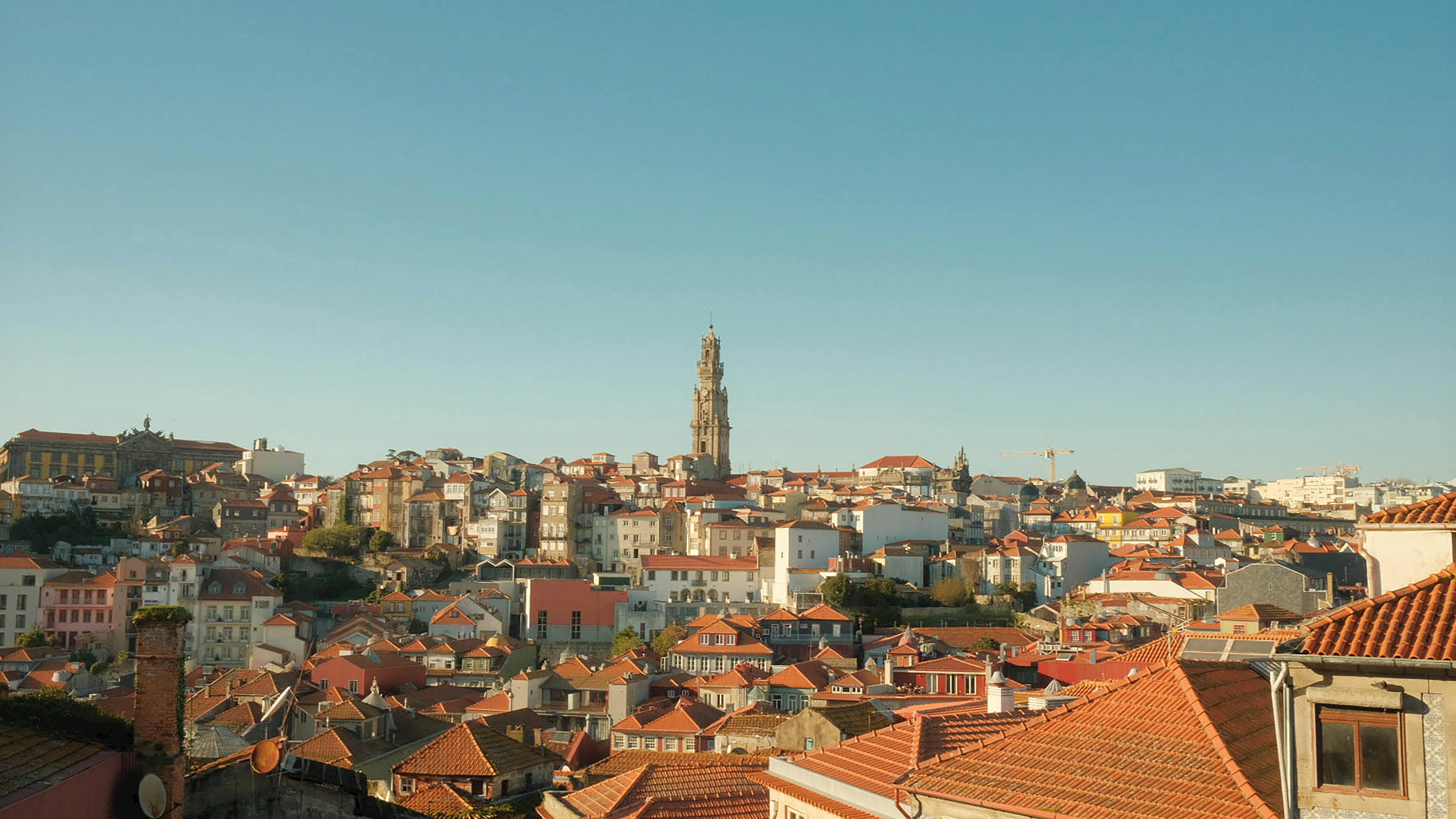
The city of Athens developed gradually until the beginning of the 20th century and preserves monuments of antiquity, the Roman era, Byzantine monuments and later the Ottoman period, which are evident in its historic center.
The city has various architectural periods that have passed through its urban planning and are evident as remnants of other civilizations. The facades of the buildings and their interiors in public buildings with neoclassical influences from late modernism dialogue with its history. Growing gradually from a small settlement at the foot of the Acropolis, Athens acquired its first public buildings when it was chosen in 1832 to become the capital of Greece. Built at the beginning of the $20^{\text{th}}$ century, the well-known Athenian Trilogy, the complex of three public buildings of neoclassical architecture, the Valiane Palace of the National Library of Greece, the main building of the National and Kapodistrian University of Athens and the Academy, the work of the Hansen brothers, was built, while the rock of Lycabettus and the Acropolis, which have dominated since antiquity, reflect the historical importance of the city.[^11]
Accordingly, Thessaloniki presents monuments from the entire spectrum of historical time, with a multitude of ancient, Hellenistic, Roman, early Christian and Byzantine. A well-known symbol of Thessaloniki is the White Tower, while other important monuments are the Roman Agora, the Arch of Galerius and the mausoleum of Rotunda-Agios Georgios, the city walls, many Byzantine churches and monasteries. Since 1912, when the city of Thessaloniki was liberated from the Ottomans, it has received a large number of Greek refugees from Asia Minor and Thracians who shaped its uniqueness, while at the beginning of the 20th century, as part of urban regeneration, Aristotelous Square was created, designed by the French architect and urban planner Ernest Embrar with its main axis perpendicular to the sea.[^12]
Since 1851, when Melbourne became the capital of the newly formed colony of Victoria, although it has evolved into a modern metropolis with skyscrapers, large avenues and bridges, and huge business districts, it has maintained its Victorian-style architectural identity and friendly spirit. Melbourne Town Hall is a cornerstone of the city's identity, a blend of history, culture and community that characterizes the city. It is an outstanding example of Victorian Second Empire architecture, with an imposing façade, Corinthian columns, ornate gables and a distinctive clock tower rising above the cityscape. It was built in the mid-19th century, during a time when the city experienced an economic and population boom due to the Victorian Golden Age, by local architect Joseph Reed. The wealth created by the gold rush is reflected in many magnificent buildings, such as the Royal Exhibition Building, one of the oldest surviving exhibition pavilions in the world, the Block Arcade and Flinders Street Station are iconic examples of Melbourne's Victorian architecture. In the city center, the old colonial buildings are reminiscent of North American cities with their red bricks, while the diversity of its peoples is also strong, with Chinese neighborhoods and Greek suburbs. However, the most important war memorial and perhaps the central landmark of Melbourne is the "Shrine of Remembrance" (Temple of Memories), which honors the soldiers and all those who sacrificed themselves to secure peace in both the First and Second World Wars.[^13]
Along with Melbourne, Sydney began to see a large influx of immigrants from 1851. The wealth from gold exports created the conditions for the explosive rise of the city, which grew rapidly, creating its infrastructure of railways, trams, roads, ports, telegraph, schools and civic services. The population of Sydney and its suburbs increased from 95,600 in 1861 to 386,900 in 1891. New sandstone public buildings were erected, including the "University of Sydney" (1854), the "Australian Museum" (1858), the "Town Hall" (1868) and the "General Post Office" (1866), while elaborate palaces, cafes and hotels were built. In districts such as "The Rocks", a part of the old city of Sydney from 1788 is preserved with buildings of special architecture and cobblestone streets, while the life of the first settlers is represented in the museum of the area. In the 20th century, Sydney continues its rapid development, shaping the image of the modern city built on one of the most beautiful natural harbors in the world, with attractions such as the opera house, the harbor bridge and the Royal Botanic Gardens, huge parks, museums, rich cultural history, lively neighborhoods, large suburbs.[^14]
## IV. CELEBRATIONS IN THE CITIES
Theatricality transfers the cosmopolitan image of the square to the city stage. As events of public life are represented in the open air, it is transformed into a space of collective memory, where events that concern the whole of society take place and everyone has the opportunity to access and participate.
### a) Athens
The first celebration of March 25 in Greece took place in 1838 in Athens, in what is now Klafthmonos Square, in front of Otto's first palace, amidst a general atmosphere of emotion. It was seventeen years after the Greek Revolution that the people poured into the streets with folk instruments, lutes and zournas to celebrate. Guilds and associations paraded in a climate of enthusiasm and set up a dance around the palace.[^15] From 1900, school students also began to participate in the parades. In fact, as the press of the time describes, they sang at the same time: "As long as the whole world lives, so long may your name, oh my Greece, and your glory together live".[^16]
In 1924, the parade was established as a "celebration of democracy," following the model of parades that were already taking place in European capitals, especially in Paris. That year, however, Greece, in addition to its own memories and anniversaries, also honored its philhellenes. At the celebrations of Lord Byron's Centenary in 1924, thousands of his lovers gathered under the moonlight on the Acropolis, while three hundred of the "most beautiful girls in Athens" came twice from the Parthenon and sang Byron's Maiden of Athens to the music of Gounod. Recitations of verses from Byron's poems followed, and the festival ended at midnight with the crowd singing "Rule Britannia". The 1930 celebrations in Greece were the culmination of a planned celebration for the centenary of the beginning of the Revolution of 1821, which the complications of the Asia Minor Campaign did not allow for in 1921. The President of the Republic, Alexandros Zaimis, was symbolically placed at its head, while the theme of the celebration shifted to Greek independence and not to the beginning of the Revolution. The celebrations began on March 25 and lasted almost the entire year. However, emphasis was placed on the capital. The grandeur of the celebrations also had a symbolic weight, calling on the people within their national space to unite culturally. At the same time, smaller celebrations were held in the provinces. The formality of the celebrations in Athens included elements already existing since the 19th century, such as cannon shots from Lycabettus, military parades, religious processions. However, new dynamic elements also crystallized that responded to the imposingness that the government wanted to give to the celebration: mass ceremonies at the Panathenaic Stadium - organized either by the Lyceum of Greek Women or by the government itself -, historical reenactments, long processions of a historical nature with the participation of the Army, important institutions and various associations. Special committees were established with the aim of strengthening the government's work and connecting the glorious historical past with the progress of the state. The Committee on Celebrations and Reenactments was concerned with issues regarding the extent to which it was possible to accurately represent historical events and the contribution of the bodies that would carry them out. The members of the committee were historians, journalists, painters, sculptors, folklorists. Issues were raised regarding whether it was possible to carry the Greek flag in the Panathenaic procession instead of the veil, etc. Although some of the elements of the celebration had already appeared in the past, the magnificent composition attempted by the government was in the context of similar impressive grand celebrations in European cities, such as England and the satellite country of Australia. The impressive ceremonies of the centenary celebration were held with their official opening on March 25 with a doxology at the Metropolis, a ceremony at the University, a military parade in the city center, a crowning of statues at the Propylaea by University professors and a ceremonial session at the Academy. In the evening, the city was illuminated and a torchlight procession was held. Also, the ceremony organized by the Lyceum of Greek Women on April 6 at the Panathenaic Stadium, which is reported to have gathered a crowd many times the capacity of the Stadium. The core of the event was the parade of actors who played fighters and kings and with their entourage presented important figures of the Revolution. This particular ceremony presented as a theme and spectacle an allegorical image with an ideological goal. The same happened at the ceremony organized at the Stadium on April 21st and mainly concerned the "national wars" of 1912-1922. In this celebration, disabled people from the Balkan Wars, the Asia Minor Campaign and the campaign in Ukraine, as well as military units and soldiers in Revolution-era clothing, marched. In addition, the Metropolitan of Athens blessed the banners of the Revolution and Zaimis laid wreaths, making a strong connection between 1821 and the recent wars on a semiotic level, and creating a genealogy of the struggles for the nation. Finally, the procession of April 27th began with a cannon shot and crossed the city center with the Acropolis as its main destination. It presented the entire narrative of Greek history, from Antiquity to the recent "national wars". In addition, it included military units, priests, nurses, scouts, expatriates, etc. Finally, the flag was raised on the Acropolis by Zaimis while the National Anthem was sung. The dramaturgy with which the entire event was staged shows us clear performativity, according to the media of the time. The celebrations certainly had political implications and through the connection of the archaic past with the modern, an attempt was made to stimulate the spirit of Hellenism in a difficult period after the Asia Minor tragedy as
Venizelos, in the context of the celebration at the Holy Lavra, emphasized that during the past century, Greece surpassed childhood and entered adolescence.[^18]
Since 1932, schools have regularly participated in a parade before the officials at the Tomb of the "Unknown Soldier". That year, during the celebration of March 25, the unveiling of the monument with a soldier lying on the ground was also held by Prime Minister Andreas Michalakopoulos with great solemnity and the participation of many foreign delegations. In 1936, the student parade for the first time took on an official and complementary character to the military one, and in March the schools marched at the head of the procession, in front of Metaxas and the king. At the same time, as in Greece, since 1893 in New York, a Greek parade has been held continuously on 5th Avenue.[^19]
### b) Thessaloniki
Thessaloniki, which was later liberated in 1912, had a different military parade, as it had the character of the city's sovereignty. However, this process was not easy. On October 27, due to the threat of the Bulgarians, Hasan Tahsin Pasha was forced to sign the protocol of surrender of Thessaloniki to the Greeks, handing over the city to the Greeks unconditionally, freeing 25,000 prisoners.
On October 27 1912, two battalions of Evzones entered Thessaloniki and the Greek flag was raised at the city's command post, while in the morning King Constantine entered the city with his staff. At the same time, the Bulgarian division was waiting. However, four Greek divisions had already taken strategic positions on the outskirts of the city, preventing any possibility of its capture by the Bulgarians. Thus, thanks to Venizelos' foresight, a national tragedy was averted, namely the occupation of Thessaloniki not by the Greeks, but by the Bulgarians. However, the Greek population of Thessaloniki celebrated and enthusiastically welcomed the Greek army and its leadership, while Athens also celebrated the liberation with 100 cannon shots from the Pnyx.[^20]
### c) Melbourne
Although the celebrations in Australia were grand in all cities, we will mention Melbourne and Sydney as examples. "Australia Day" is mentioned in the earliest records as having been celebrated since 1908, with each state of Australia celebrating its founding on a different date. The "appeal of dramatic projection through coordinated visual spectacle" found fertile ground in the historical anniversaries of the founding of
Australia's major cities, which eventually settled on 26 January as the date of celebration. The events and celebrations were impressive and grand, with the arrival of Aboriginal people in the states to participate in the official celebrations.
In Melbourne during the period 1913-1920, the female students' residence in collaboration with all the colleges held events of an archaic nature, the "Pageant of ancient nations", a procession that included all the ancient civilizations. One of the most spectacular, with three-day celebrations, took place in 1914, where the Greek team was led by the poet Sappho. The celebrations included ancient Greek-style performances with balls, classical poses and juggling.[^21] In 1918, "Our Boys Day" was celebrated in Melbourne, which aimed to raise money for the Allied War Fund. All the nations presented traditional pavilions where they displayed products from their homeland, including Greece. First prize went to America with the work of architect Griffin, second to New Zealand with an ancient Maori dwelling, and third to Canada with a red-and-white pavilion.
In October 1928, Melbourne Town Hall was the stage for a pageant for 2000 artists, depicting the rise of British culture in Australia and the building of a new free world in the Southern Hemisphere. Australia was emerging from its infancy as a group of colonies that had once been a remote part of the British Empire to a Commonwealth of free nations, with a significant role for all humanity. Facing the new world being rebuilt after the world war, with all nations united so that peace could bring about a creative period in human history, the pageant, entitled "The Call of the World", was held at Melbourne "Town Hall" from 9 to 13 October.[^22]
The pageant was an appeal to the imagination of young Australia. The groping of ancient civilizations into the light, the unveiling of that light to the world, and the founders of British civilization will be depicted. The pioneers who discovered Australia are brought to light, and the activities that have been carried out to date in the formation of a new world will bring before us the problems of the future.[^23] In 1934, the Competition of Nations was held to celebrate the centenary of the founding of Melbourne. A herald announced the entry of Victoria, which was presented accompanied by Peace and Prosperity. Later, Britain, Australia, along with the states and territories of England, Scotland, Wales, Northern Ireland, entered in succession. The other members of the empire followed: Canada, India, the Irish Free State, Malta, New Zealand and South Africa. The groups of colonists who arrived in the countries finally appeared on stage as a single body, representing the eternal friendship of nations. The Greek group presented the early years of the founding of the
Greek state. Othon, Amalia, the ladies of honor, the goddess Athena were represented. In the chariot of Peace, a Greek national as the god Bacchus offered Victoria a basket of grapes, the gift of Greece.[^24] In 1935, at the International Ball in Sydney, the Greek team represented the various products of Greece. In the same year, the celebrations of the centenary of Melbourne were repeated, which ended equally spectacularly with flashes and illuminations on the Yarra River. On June 25, 1936, an International Ball was organized at the "Palais de Dance", St. Kilda, Melbourne, where national dances were danced. The Greek team presented traditional dances.[^25]
### d) Sydney
At the Olympic Ball that took place on 2 October 1923 in the "Town Hall" Sydney hall with the aim of representing Australia in the Olympic Games in Paris, the organization was Greek. Kon. Servetopoulos, was presented as Apollo, with a purple tunic and a laurel wreath. The representation was framed by the sea of corals, the nine muses, Poseidon and the Oceanids. The stage of the "Town Hall" was transformed into an ancient Greek temple, while the contribution of Kon. Servetopoulos was important in terms of the evaluation of the Australian participation in Paris.[^26] In 1927, at the International Ball of the United Nations at the "Palais Royal" in Sydney, Greece received second prize among England, France, Russia, China, Germany and Mexico, presenting the revolutionary history of Greece and the struggle for freedom. The following year, 1928, the Governor's daughter, de Chair, appeared as the Queen of Peace in an allegorical set. At this event, among the other organized sets, the Greek team won first prize.[^27] In 1929, at the International Ball of the United Nations, the most spectacular event was the goddess Athena, the central figure of the Greek set that won among eighteen teams in the competition.[^28]
The sets presented at the Pageant of Nations in Sydney in 1938 were also impressive. Important moments from Sydney's Australian history were reenacted in the celebrations of the 150th anniversary of its founding. Scenes from the landing of Captain Arthur Phillip's fleet, with the Aborigines fleeing and other events were presented in the ceremonies. To cover the footage of the event, an airplane from Melbourne flew over Sydney for aerial photographs, while the following year, 1939, the Pageant of Nations was repeated at "City Hall", as above.
The declaration of World War II marked the beginning of the official celebrations of Greek Day.
During the War, every form of entertainment and artistic events took on a national and patriotic tone. The main goal was to raise money for the needy. In Sydney in 1941 a large procession of infantry platoons of Evzones, old warriors and reservists, passing through all the major streets of the city, ended at the cenotaph where Greece (Miss K. Zikos) and Britain (Miss Bluebell Heather Searby) stood in a prominent position.[^29]
## V. CONCLUSION
As demonstrated in the early 20th century, the cultural wealth of the peoples was recalled and captured on the occasion of festive parades and other events in the cities of Greece and Australia. Despite the asymmetrical sizes of the cities, the differences in their historical memory, in the large gatherings the active participation of the crowd seeking to find its footing after major wars, national tragedies and disasters is impressive. In the Critique of Critical Power, Kant formulates a particularly fruitful principle where nature "is beautiful when it resembles art and art is beautiful when it resembles nature".[^30] Driven by this theory, we conclude that peoples seek beauty and elegance in order to disengage from painful events in their history and to face their future with optimism, while at the same time creating imaginary places and landscapes within their own cities. Although the asymmetry of the magnitudes of reception and inclusion also reflects the aesthetic perception of the event that balances between the two settings of the cities of the country of origin and of one's residence. Theatrical events, when unfolding in the scenic space of the natural environment, are surrounded by the beauty of art combined with the naturalness of the landscape in an informal theater of encounters (of spectators and spectators), as new aesthetic theories illuminate the anthropological basis of the theatrical process. Already, the theatrical phenomenon has been disconnected from its conventional form, while the defining principles of materiality, semioticity and aestheticity already occupy a prominent position in performances, action art, happenings and events of the Fine Arts.[^31]
The cultural exchanges of the peoples are an integral part of the mirror of their history, however, they are reflected and diffused throughout the length and breadth of the world as a connecting link of the memory of nations. By connecting the past with the present, with events where each individual could stand out by being placed at the center of the whole, the institutions of the state were promoted with the simultaneous celebration of important moments in Australian and Greek history. As is proven, the achievement of social assimilation and cohesion had as a prerequisite the preservation of the cultural difference of the nations. Parallel celebrations in cities of the opposite hemisphere demonstrate that the representation of the theatrical phenomenon through the ideal representation of landscapes of the homeland gradually established new mechanisms and global idols in the transformative dynamics of the festive events. And as the example of Greek and Australian cities mirrors and reflects the need of peoples to celebrate their history, we conclude that perceptions and theories of performance and world theater are being repositioned and redefined through cultural events and rituals.
[^3]: Alkistis Kontogianni, "Prologue", Theatre Polis, Interdisciplinary Journal for Theatre and the Arts, Department of Theatre Studies, University of the Peloponnese, issue 1, 2014, p. 4. _(p.1)_
[^4]: One example is the creation of the Uffizi in Florence, a space for a walk over the Arno River for the nobles, which was decorated with unique paintings, as an extension of the natural surrounding space and in order to prevent the nobles from blending in with the common people [History - Visit Uffizi, accessed 2-1-2025]. _(p.2)_
[^7]: Pageant | History, Rules & Benefits | Britannica, accessed 2-1-2025. _(p.2)_
[^8]: "Judith Butler and the Politics of the Performative", in Review Essay, Political Theory, vol 27, August 1999. _(p.2)_
[^10]: Giovanni Campus, The City as Theatre: The performing Space, Thesis, Università degli Studi di Sassari Dipartimento di Architettura, Design e Urbanistica, 2018, pp. 8-65. _(p.2)_
[^11]: Thanassis Yohalas, Kafetzaki Tonia, Athens, Tracking the City with a guide to history and literature, Estia Publication, 2013, pp. 4-55. _(p.3)_
[^12]: Apostolos Vakalopoulos, History of Thessaloniki, Stamoulis Publications, Athens1983, pp. 220-442. _(p.3)_
[^13]: Granville Wilson, Building a City: _(p.3)_
[^14]: City of Sydney, accessed 3-2-2025. _(p.3)_
[^15]: https://www.cretalive.gr/istoria/1838, accessed 3-2-2025. _(p.4)_
[^16]: Newspaper Empros, 20 March 1900. _(p.4)_
[^18]: https://enthemata.wordpress.com, accessed, 24-2-2025. _(p.5)_
[^19]: https://info-war.gr, accessed, 22-1-2025. _(p.5)_
[^20]: Spyros Karavas, "One Hundred and One Cannonballs for Thessaloniki", in Anna Mattheou, Stratis Bournazos, Popi Polemi, eds, In the Orbit of Philip Ilyus: Ideological Uses and Obsessions in History and Politics, Benaki Museum, Athens 2008, pp. 75-88. _(p.5)_
[^21]: The Argus, 16 April 1914. _(p.5)_
[^22]: Daily Telegraph, 24 November 1928. _(p.5)_
[^23]: Rutherglen Sun and Chiltern Valley Advertiser, 28 September 1928. _(p.5)_
[^24]: Daily Telegraph, 21 December 1935. _(p.6)_
[^25]: Greek Herald, 26 November 1936 _(p.6)_
[^26]: The Sydney Morning Herald, 3 October 1923. _(p.6)_
[^27]: The Sun, 13 July 1927. _(p.6)_
[^28]: Evening News, 4 September 1929. _(p.6)_
[^29]: Daily Telegraph, 28 February 1941. _(p.6)_
[^30]: This principle transforms technique into an essential component of the beauty in nature and freedom into an essential condition of the beauty in art. Kant accepts that beauty is nothing other than nature in the field of technique, freedom in the field of the artistic and in order to visually grasp a quantity with the imagination, two acts of imagination are required: "apprehension" and "comprehension aesthetical". It is the feeling of the inadequacy of the imagination to depict the Ideas of a whole, when it reaches its maximum limit, while in the attempt to expand it it re-immersedes itself within itself, in a way that leads to a state of emotional contentment (Immanuel Kant, Kritik der Urteilskraft, Hamburg, 2001, pp. 47-81). _(p.6)_
[^31]: Casey, Maryrose, Transformative Integration: Cross-Cultural Performance, Monash University Publishing, 2015. _(p.6)_
Generating HTML Viewer...
Funding
No external funding was declared for this work.
Conflict of Interest
The authors declare no conflict of interest.
Ethical Approval
No ethics committee approval was required for this article type.
Data Availability
Not applicable for this article.
How to Cite This Article
Olga Papazafeiropoulou. 2026. \u201cThe City as a Stage: The Mirror Reflections of Grand Assemblies in Greece and Australia in the Early 20th Century\u201d. Global Journal of Research in Engineering - J: General Engineering GJRE-J Volume 25 (GJRE Volume 25 Issue J1): .
Explore published articles in an immersive Augmented Reality environment. Our platform converts research papers into interactive 3D books, allowing readers to view and interact with content using AR and VR compatible devices.
Your published article is automatically converted into a realistic 3D book. Flip through pages and read research papers in a more engaging and interactive format.
This study attempts to present and highlight through their theatricality the historical processions, parades and anniversaries of remembrance in the early 20th century that took place respectively in the natural environment of cities in Greece and Australia. Inspired by the ideals of the state, the principles of democracy, but also the evolutionary reflexive dynamics of the correlation of space with the urban environment, the grand Assemblies reflected and underlined important historical turning points, strengthening the spirit of the populations in the early 20th century. Ultimately, as it turns out, the earth marches in parallel steps and the setting of the cities of Athens and Thessaloniki and the megacities of Melbourne and Sydney significantly influenced and emotionally charged the great celebrations.
Our website is actively being updated, and changes may occur frequently. Please clear your browser cache if needed. For feedback or error reporting, please email [email protected]
Thank you for connecting with us. We will respond to you shortly.