I. INTRODUCTION
The Bhakti movement was a medieval religious reform movement that preached direct devotion to God without the mediation of a priest. It aimed to reform society by removing the boundaries of caste, creed and sex between the devotee (bhakta) and God (bhagwan). Bhakti is rooted in the Sanskrit word "Bhaj", meaning to serve. 'Bhakti' literally means fondness for, homage, faith or love, devotion, worship, and piety. The central theme of the Bhakti movement is that when devoted to God, a person must forget all distinctions and boundaries. Bhakti saints travelled to several places writing poems in languages of their mother toughh, attracting many people under their fold. It was reported that the term 'Bhakti' itself originated in the Vedas and was extensively used in the Bhagavat-Gita by the great
sage Veda-Vyasa. However, Bhakti movement as a socio-cultural phenomenon started much later in the 6th century CE.
The Bhakti movement first emerged in South India in the to century CE, mainly in the poems of Alvars and Nayanmars. Later, it spread all over India, especially in North and East India, through the puranic literature such as Bhagavata-Purana and Bhagavad Gita. It reached its peak between the and centuries CE (1).
In this paper attention is not paid to the causes of bhakti movement; however, historians denote Religious, Social, Political, Economic, Influence of Sufism and Solace in violent times are the main reasons for the cause of bhakti movement. In the wonderful book authored by Swami Vireshwarananda "Brahma Sutras" brought out by Advitha Ashrama says Vedas are the scriptures of the Hindus, to whatever sect or denomination they may belong. They are the earliest extant religious literature today and form the cornerstone of the Indo-Aryan cultural edifice (2).
Apart from the four Vedas, the Upanishads and the Bagavat Gita etc., one can find bakthi literatures in the South India (Tamil Nadu) such as the Nalayira Divya Prabandum written by the 12 Alwar's. The Thiruvaimozhi which was written by Nnamalwar was believed to have lived five thousand years ago which can be found at Alwar Thirunagari (existing between Tirunelveli and Thiruchendur) where the famous Vishnu temple exists even today and Nnamalwar who had meditated under a tamarind tree which is still in existence in the temple.
It is said that suddenly the great Prabandam had vanished may be just before the birth of Nada Muni. Nathamuni is born in 823 CE and died in 951 CE. His birth name was Aranganathan (3). Though there is difficulty in identifying Nathamuni's date of birth and age, he is considered to have lived during the lifetime of Madhurakavi Alvar's parampara (lineage) (4). The story goes that Nathamuni, while at the Vishnu temple at Kattumannar Koil, Tamil Nadu, South India, his native place, heard some Brahmins from the Southern end of the Peninsula recite Tamil verses of Satakopa addressed to the Vishnu God of Kumbhakonam and was astonished with their diction. He also found that these verses concluded with the words "These ten out of the thousand, composed by Satakopa". With sheer determination Nathamuni visited Thirukurgur, birth place of Nnamalvar. He enquired about the Prabandhams written by Nnamalvar to Madhurakavi's direct descendants who lived at Thirukurgur at that time. There, the descendants of Madhurakavi gave 10 pasurams written by Madhurakavi entitled "Kanninun Cirutampu". They also informed Nathamuni that whoever sings these 10 pasurams with dedication would meet Nnamalvar himself at the shrine in the city. Natha Muni determined to chant these verses and started chanting the pasurams with dedication under the tamarind tree at the same place where Nnamalvar himself believed to have sat during his lifetime. Once he had completed the count 12,000 times, Nnamalvar appeared in front of Nathamuni and asked him what he wanted. Nathamuni requested that all the verses of Thiruvaimozhi written by Nnamalwar to be given to him but Nnamalwar showed all the 4000 pasurams so that Nathamuni could write them. In this way Nathamuni had revived Naayira Divya Prabandham, hence becoming the first acharya of the Sri Vaishnava tradition. Therefore, Nayira Divya Prabandam came in to existence in the CE is incorrect and it was retrieved by the great saint Nathamuni in CE and thereby Nayira Diva Prabandam definitely dates back well before the incarnation of Nathamuni.
Upon restoring the verses, Nathamuni undertook the monumental task of systematizing the hymns. He categorized them according to each Alwar's authorship and the temples they praised, creating a coherent structure that facilitated learning and recitation. By restoring the sacred Tamil hymns of the Alwars, he not only enriched temple worship but also championed the spiritual dignity of the vernacular. His legacy continues to guide countless devotees, artists, and scholars, ensuring that the vibrations of those four thousand verses reverberate through time. In honoring Nathamuni's achievement, future generations embrace a tradition that celebrates the universal capacity for devotion, inviting every soul to participate in the eternal dialogue between the human and the divine (5).
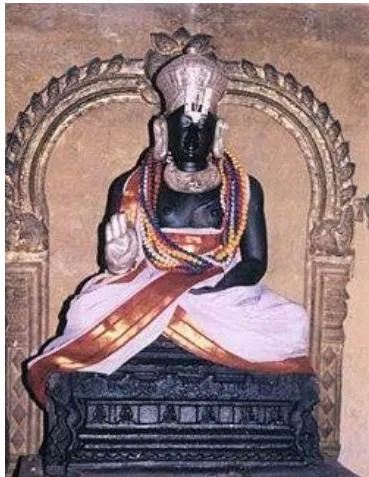
Nayanmars:
The Nayanmars, were a group of 63 Tamil Hindu saints living during the 6th to 8th centuries CE who were devoted to Lord Shiva (6). Along with the Alvars indicated above their contemporaries who were devoted to Vishnu, they influenced the Bhakti movement in early medieval South India (7). The names of the Nayanars could be found in the works of Sundarar. The list was expanded by Nambiyandar Nambi in his compilation of Tirumurai(8). Nalvar the great four seers who are the three foremost Nayanars i.e. Appar, Sundarar,
Sambandar along with Manikkavacakar made great contributions by way of their immaculate poem praising Lord Siva (9). The details about the lives of the saints can be found in Tevaram. (10). The credit of unearthing the volumes of these great hymns goes to King Raja Raja Chola-I (11). The king's priest Nambiyandar Nambi compiled the hymns into a series of volumes called the Tirumurai. He arranged the hymns of three saint poets Sambandar, Appar and Sundarar as the first seven books which he named as Tevaram. He compiled Manikkavasakar's Tirukovayar and Tiruvasakam as the eighth book, the 28 hymns of nine other saints as the ninth book, the Tirumandiram of Tirumular and 40 hymns by 12 other poets as the tenth book. In the eleventh book, he created the Tirutontanar Tiruvanthathi (also known as Tirutontar Antadi, Necklace of Verses on the Lord's Servants), which consists of 89 verses, with a verse devoted to each of the saints. With the addition of Sundarar and his parents to the sequence, this became the canonical list of the 63 saints (12). In the 12th century, Sekkizhar added a twelfth volume to the Tirumurai called Periya Puranam in which he expands further on the stories of each of 63 Nayanars.
Both Alvars and Nayanmars never struck to any caste; equality among the casts prevailed in them because they promoted universal love that never new separation of human beings in the name of caste as their ultimate aim is to attain salvation through bakthi. There were women saints among the Nayanmars and one among the Alvars i.e. Andal. Apart from Tamil Nadu we can find number of saints promote Bakthi movement in Karnataka they are namely Basavanna of Century
Vedantic Bhakti Schools:
and Akka Mahadevi (most prominent woman poet) as well as Allama Prabhu all belong to century the trump-card holder of Veera Saivam. Before them Madara Chennai, an 11th-century cobbler-saint (during Western Chalukyas), is regarded as the "father of Vachana poetry".
In the north we could find great names like Jnaneswar of Century, Chokhamela and Namdev of Century, Eknath of Century and Saint Thukaram of Century besides them Janabai, Purandara Dasar also belong to this group. These bunch of great and noble souls belong to Maharashtra and their sole God was Vittala of Pandarpur. It seems there were numerous saints lived in and around Vittala Temple and attain emancipation. These great devotees enacted many poems in praise of Vittala and these poems were called abangam which means faultless verses. We will be failing in our duties if we cannot remember the great works done by Adi Sankara Acharya (Advaida Philosophy), Ramanuja Acharya (Vashistatvaida), Madvacharya (Duvoidam), Chaitanya Mahaprabhu and Sri Vallabacharya. The list is endless as the concept of bakthi is deep and enchanting.
The above is only a bird's eye view about bakthi movement to deal them in detail will fill many pages and the authors would like to only indicate about bakthi movement to a limited extent to the premise that the readers of the research paper should be made aware of the bakthi movement in India that had really transformed the socio-cultural pattern of the society by large that promote one-ness among the devotes tearing the veil of ignorance of caste, creed and colour.
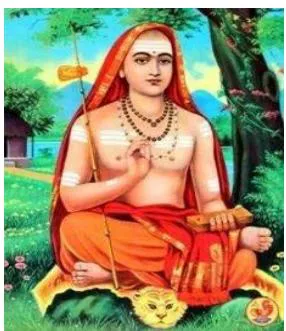
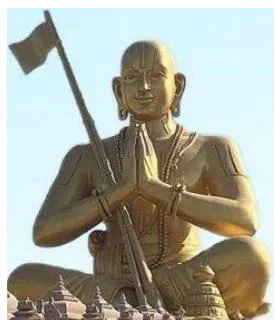
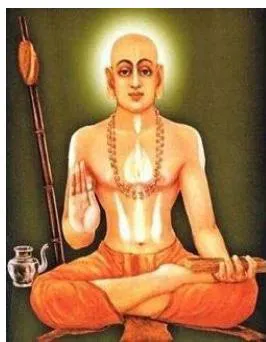
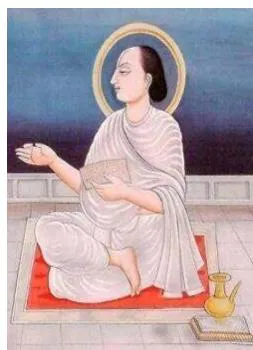
Chaitanya Mahaprabhu
(1486-1534)
Philosophy of Shuddha Advait (Pure Non-dualism). The Maya is not unreal, and everything is Krishna's Leela. He founded the Pushti Marg.
Advocated the Philosophy of Advait (Non-dualism) and established shun-matha. i.e. Shiva, Vishnu, Sakthi, Surya, Ganesha and Skanda.
Source: Wikipedia
The Concept of Bakthi:
Swami Vivekananda in his Bakthi-Yoga says, Bhakti-Yoga is a real, genuine search after the Lord, a search beginning, continuing, and ending in love. One single moment of the madness of extreme love to God brings us eternal freedom. "Bhakti", says Nārada in his explanation of the Bhakti-aphorisms, "is intense love to God"; "When a man gets it, he loves all, hates none; he becomes satisfied for-ever". "This love cannot be reduced to any earthly benefit", because so long as
worldly desires last, that kind of love does not come; "Bhakti is greater than karma, greater than Yoga, because these are intended for an object in view, while Bhakti is its own fruition, its own means and its own end." He also states that the one great advantage of Bhakti is that it is the easiest and the most natural way to reach the great divine end in view; its great disadvantage is that in its lower forms it oftentimes degenerates into hideous fanaticism (13).
In the Bagavat Gita Bagavan Sri Krishna enunciates the qualities of a Baktha in the Chapter verse 13 to 20 (14). The 35 qualities of a true devotee that are mentioned in the verses 13 to 20 of Chapter XII of Bhagavad Gitaare given below: (15)
- Not hating any being; 2) Friendliness; 3) Compassionate; 4) Free from attachment; 5) Free from egoism; 6) Balanced in pleasure and pain; 7) Forgiving; 8) Contentment; 9) Yogi One uniting with the Self; 10) Selfcontrolled; 12) Having Firm conviction; 13) Surrendering the mind and intellect to God; 14) The world not being agitated by him. 15) He being unagitated by the world; 16) Absence of joy, envy, fear and anxiety; 17) Desire-lessness; 18) Purity; 19) Competence in action; 20) Indifference; 21) Freedom from anxiety; 22) Renunciation of the fruits of action; 23) Absence of elation, hatred, fear and desire; 24) Renunciation of good and evil; 25) Equal-mindedness towards friends and enemies; 26) Equanimity in honor and dishonor; 27) Equanimity in heat and cold; 28) Equanimity in joy and sorrow; 29) Non-attachment; 30) Equalmindedness in praise and blame; 31) Silence; 32) Contentment with what-so-ever obtained by chance; 33) Absence of attachment to home; 34) Firmness in decision; 35) Devotion to God
In the great epic Mahabharatha, in Yaksha, Prasna of Vana Parva the God of Death the Dharma during the conversation on ethics with King Yudhisthira put the following question- to the King- "What is THE WAY? By whom it is constituted?
King Yudhisthira answered that "those that are good constitute THE WAY".
Dharma again asked Yudhisthira as to "What is the PATH?" to this Yudhisthira answered, "Arguments lead to no certain conclusions. The Shrutis are all different, one from to other. There is not even one Rishi whose opinion can be accepted as infallible. The truth about religion and duty is hidden in the caves. Therefore, THAT alone is THE PATH along which the Greats have trod.
Therefore, it should be simply understood that religious practice is walking towards the path set forth by the greats with faith. In other words, one has to humbly set their steps towards the path shown by the greats. And there is no use in fighting for the identity of a particular Rishi or a particular religion, so long as there exist only one goal in the religious pursuit.
Let us also understand the concept of bakthi as enunciated by the great Acharya Adhi Sankara in his timeless wisdom in the Baja-Govindam. Shri Sankara had produced great many works of knowledge and rituality. One such very interesting work is the famous "Baja-Govindam". The first word of the first stanza Baja means "worship" and Govindam means "Vishnu". It simply means the worship of Lord Vishnu. As a whole this book contains 31 slokas. The Aacharya in his opening sloka itself emphatically proclaimed that "it is a foolish thing to merely repeat meaningless grammatical words, instead of this, one should do service to the God by way of thought, speech and action. True worship is a total subjective surrender, in love and devotion at the altar of the Lord. This process of self-liquidation at the feet of the Lord is classified in the following manner:
Listening to the glory of the Lord (sravanam)
Singing the glory of the beloved (God) (keertanam)
Constantly thinking about his nature and beauty (saranam)
Adoring the feet of the Lord in a spirit of self-oblitration (paadesevam)
With the help of selected mantras and sacred vedic hymns, worship the Lord (archanam)
To pay obeisance to Lord (vandanam)
Serving the Lord (daasyam)
To invoke the Lord affectionately and to discuss with Him as a friend (Sakhyam) and family.
To offer oneself in total self-surrender to the Lord, as a humble gift at His alter (aatmanivedanam).
In all the above nine process we can find the spirit of worship i.e. Baja enshrined in it (16).
It is the belief of the researcher that Bhattar in the Abirami Antati emphasized the above nuances in a very lucid manner and the sacred stanzas are dealt with one by one. Care has been taken not to compare the concepts identified by Bhattar with any other school of thought or work thus enables the reader to fully imbibe with the nectar produced by Abirami Bhattar in his Abirami Antati. Now let us see the life history of Abirami Bhattar and the consequences that lead for the composition of Abirami Antati.
History of Abirami Bhattar (Bhattar):
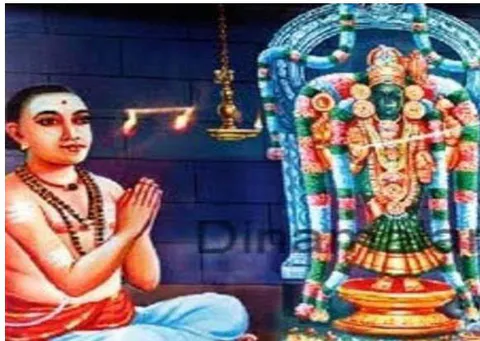
Three hundred years ago in Tanjore district where the river called Ponni flows in the city called Thirukadaiyur. Abirama Bhattar was born to an orthodox brahmin family who are devotees of Abirami Devi. Very near to his birth place the ancient temple known as Kalasamhara Moorti exist. Bhattar is well versed in music, and composing poems. He was deeply devoted to Abirami Devi right from his childhood days and could see Devi in the light form. However, many people considered him as a lunate because of his attire and attitude. Bhattar never mind such careless comments of people.
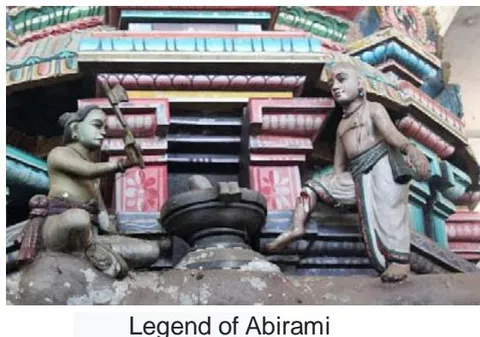
During those days Tanjore was ruled by king Saraboji who hailed from Maharashtra. He is devoted and visited Thirukaiyur temple in the Tamil month called "Thai" on a new moon day. Bhattar was deeply engrossed in meditation when the king came to worship mother Abirami and did not noticed the arrival of the king. People went to the king and talked about the disrespectful behavior of Bhattar. The King decided to check the attitude of Bhattar and went near him and woke him up from his meditation and asked him what his duties are; to which Bhattar replied, I used to tell the panchangam. The king then asked Bhattar what is the "thithi of the day". Bhattar replied, it was full moon day. The king again asked the same question; Bhattar after seeing the glowing form of mother's face replied that it was full moon day. The king then got wild and ordered that Bhattar should be made to sit on a wooden plank that should be hanging on a rope under neath fire should be burnt. The rope should be lowered gradually and by the evening if whatever Bhattar had said did not appear true he should be lowered to the fire to die.
Bhattar then begun to compose the great hymens of Abirami Anthati with great devotion. When he reached the verse Abirami Devi appeared before Bhattar and swung her ear-ring on the sky that caused great commotion in the sky and suddenly full moon appeared on the sky to the utter bewilderment of everyone assembled there. The king realized that Bhattar is a great saint and wanted to lower the hanging wooden plank and requested Bhattar to continue and complete the remaining poem. Bhattar wrote twenty-two more verses and completed the Abirami Antati. People came to him and begged for forgiveness. The king gave many gifts of gold and also large portions of land. However, Bhattar refused to accept them. But the king insisted Bhattar's relatives and his wife to accept them. Even today the inscriptions made on the copper plate denoting the measures of land given by the king is available with the relatives of Bhattar as reported in Dinamalar (17). Bhattar's parent named him as Subramaniya lyer the King Saraboje named him as
Abirama Bhattar. In this research work we reverentially call him Bhattar.
Methodology of the Study:
Any research work is based on the methodology followed. In this research work a Novel methodology is adopted to narrate and describe the concept of devotion enunciated by Abirami Bhattar (Bhattar) in his priceless work on Abirami Anthati. The origin of the work is narrated above, it is true that Bhattar on a trying, difficult and dangerous situation composed the Abirami Anthati. It has been decided to bring each stanza under a "Context" and each context will contain the original verse written by Abirami Bhattar in Tamil, and translation of the stanza in English as well as a critical analysis wherein the sum and substance of what Bhattar wishes to state in the particular stanza has been summarized. As a whole this methodology is aimed to cover the gamut of what Bhattar intend to state as far as devotion is concerned.
Limitations of the Research Work:
Many may say that critical analysis is devoid in terms of wonderful narration Bhattachar has made about the form, attitude and attire of Abirami Devi - to a great extent it is correct and it is requested that the readers to leave it to the consciousness of the researchers.
Bhattar has written Abirami Antati in Sen-Tamil (i.e. poetical Tamil) only few people know Sen-tamil throughout Tamil Nadu and therefore the researcher referred several books where explanation has been given on the verses of Abirami Antati and would like to acknowledge the books here under:
- https://aanmeegam.in/slogas/abirami-anthathi/
- Sri Abirami Antati Moolamum Uraiyum (Tamil) The little flower Company. Chennai-600017 (2003).
- Abirami Anthati Moolamum Uraiyum (Tamil) Sri Vanni Vinayagar Book Stall, Meenakshi Amman Kovil, Madurai. (2009).
Now, let us see the stanzas as written by Abirami Bhattar one by one under each context:
CONTEXT-1
Original verse written by Abirami Bhattar in Sen-Tamil (i.e. Poetical Tamil)
511 111 111 111 111 111 111 111 111 111 111 111 111 111 111 111 111 111 111 111 111 111 1
Translation in English
Lord Siva (who wore two garlands made out of wild flowers and the flower called shenbagam) who is situated at the pace called "Thillai i.e. Chidambaram" whose consort "Parvati Devi who is half of the Lord and their son who resembles like dark cloud Lord Ganesa. This poem rather known as Antathi is in praise of the grace and bliss of Abirami Devi who has yielded all the fourteen worlds. Let it be in my mind for ever – this is my prayer.
Critical Analysis
This is a prayer offered by Abirami Bhattar before composing this wonderful poem in the form of antati to Lord Ganesa so that his endeavour in composing the poem completes without any hurdle.
CONTEXT-2
Original verse written by Abirami Bhattar in Sen-Tamil (i.e. Poetical Tamil)
2 5555555555, 2 5555555555, 2 50011600L G u n t 1 555555555, 1 1100000000, 1 1100000000, 1 1100000000 5 555555555, 1 110000000, 1 110000000, 1 110000000
Translation in English
Abirami Devi's tilak on her forehead appears as a rising sun; she also appears as a diamond and the bud of pomegranate flower; even Goddess Lakshmi who resides on the Lotus flower adores mother Abirami. She appears to me as lean light of a thunder and has a red like form just as the red colour of tilak from where sweet smell emerges. She alone is my great guide.
Critical Analysis
In this stanza Bhattar describes the form of Abirami Devi as he has seen and he takes shelter under the blessed feet of mother Abirami as his last resort. Generally great devotees dedicate all their actions and the results obtaining unto their chosen God. Here Bhattar shows how dedicated he is towards mother Abirami and vindicates devotion as the foremost in the religious pursuit.
CONTEXT-3
Original verse written by Abirami Bhattar in Sen-Tamil (i.e. Poetical Tamil)
5600u, G5n (p1G5u (p1G Lm)T u, 5500u, G5n (p1Lg5nT L600u, G5n (p1Lg5nT L600u, L600u, L600u, L600u, L600u, L600u, L600u, L600u, L600u, L600u, L600u, L600u, L600u, L600u, L600u, L600u, L600u, L60
I have realized Abirami Devi. She alone is my guide, the worshiping deity, mother who yielded me. She alone is the root of the Vedas, the branch of Vedic tree. She bears arrow made out of flowers, bow made out of sugarcane, a lean rope and a weapon called angusa. This Tiripura Sundari alone is my abode and guide.
Battar states in this stanza that he had realized the form of Abirami Devi and thus taken shelter unto the blessed feet of mother as his only abode and guide. Battar also brings home the sacred book which was regarded as a holy book by every sincere seeker of truth belong to Indian Philosophy. Battar exclaims that mother Abirami is the root cause of the Vedas and the resultant
Upanishads thereby declares himself as the learned devotee of the old school of thought of Vedas.
CONTEXT-4
Original verse written by Abirami Bhattar in Sen-Tamil (i.e. Poetical Tamil)
L 500155, C500155, LNTUPT (P600155, UNTU, G500155, LNTUPT) (500155, C500155, C50155, G50155, UNTUPT) LNTUPT (P600155, LNTUPT, LNTUPT) LNTUPT (P600155, LNTUPT) LNTUPT (P600155, LNTUPT)
Translation in English
Human beings, the Gods in the heaven and the saints who had dispelled their thought of fear of death adore your blessed feet oh Devi Abirami you are ever younger. Yourself and Lord Siva who wear the crescent moon and Ganga Devi on his mated hair, the deadly serpent on his neck the purity personified should ever remain in my mind effervescingly.
Critical Analysis In this stanza Bhattar describes the supreme power of Abirami Devi who is adored by the Gods in the heaven and the flawless saints on the earth. One of the essential qualities of a devotee is that his mind should
constantly think of his chosen deity. Here Bhattar offers his prayer that both Devi and her Lord should remain in his mind forever. That means Bhattar has cleansed his mind from all impurities and made the mind to focus on the form of Devi uninterruptedly. Such a great devotees would alone qualify to see the form of the God and realize Brahman. In other words, the condition precedent to realize God is to make the mind pure from all impurities and there are no desires left over in the mind. Bhattar is such an exalting personality who is going to list out all the great qualities of pure devotee who will qualify to become saint in his Anthati here after too.
CONTEXT-5
Original verse written by Abirami Bhattar in Sen-Tamil (i.e. Poetical Tamil)
UUPuLWpLcWn,0FuLcWnGsUuL460wT(p60uWn6u, UuPbUuOuO uRnUoCOTnOoU, UuPf6oLGuNToA(uBbUuHsUoTtssUuOuL9o5, uUuCuouuBbUuOuOuOuOu,
Translation in English For the living being Abirami Devi does threefold tasks i.e. creation, sustenance and destruction and therefore called Tiripura Sundari. She wore costly jewels such as diamond and the like and has a lean waist thereby known as Manonmani. She turned the poison into nectar consumed by Lord Siva and gained the name of Uma Devi. She is beauty personified, I bear your blessed feet on my head which is softer than the lotus flower on which you reside.
In this stanza Bhattar states that Abirami Devi is the cause for creation, maintenance and dissolution of the worlds and thereby called Tiripura Sundari. Bhattar further states that because she looks beautiful with all adorned jewels, she is called Manonmani. As mother Abirami turned the poison into nectar consumed by Lord Siva she is called Uma Devi. Bhattar finally states that he bears her blessed feet on his head which is softer than the lotus flower on which she resides. Who would dare to declare that he bears the blessed feet of the mother other than Bhattar? This signifies that as mother kept her blessed feet on Bhattar's head he has become the fountain head of wisdom that had resulted in composing the wonderful Abirami Antati which is the great gift granted by mother Abirami to Bhattar out of eternal compassion on her devotee.
CONTEXT-6
Ggto 1u,20r Gtto 1u,5u,5u,5u,5u,5u,5u,5u,5u,5u,5u,5u,5u,5u,5u,5u,5u,5u,5u,5u,5u,5u,5u,5u,5u,5u,5u,5u,5u,5u,5u,5u,5u,5u,5uu.
Oh Abirami Devi your blessed feet are there on my head forever. I chant your sacred mantra in my mind always. Oh beautiful mother you resemble like the red colour safron. I always mingle with your devotees and do all my activities in consonance with them. My daily routine is what has been enunciated in your sacred book.
Critical Analysis
The great Bhattar in this stanza brings home the essential quality of a devotee. Bhattar says that he is always in the company of the devotees of mother Abirami and perform action in accordance with what they do and his daily routine would be to adore mother Abirami in consonance with the nuances prescribed in the sacred book (i.e. the Vedas). If anyone calls himself as a devotee of mother Abirami they should introspect with what Bhattar says in this stanza – whether they had associated themselves with the true devotees of mother and do their religious pursuit in accordance with what was contemplated in the sacred book. Otherwise, they are not the real devotee of mother Abirami.
CONTEXT-7
Original verse written by Abirami Bhattar in Sen-Tamil (i.e. Poetical Tamil)
山山山山山山山山山山山山山山山山山山山山山山山山山山山山山山山山山山山山山山山山山山山山山山山山山山山山山山山山山山山山山山山山山山山山山山山山山山山山山山山山山山山
Translation in English As the curd travels up and down when it is churned, my life too is also experiencing birth and death in the world. Kindly grant your grace so that I escape from this life of ignorance and I shall not be born in this world again. Oh Abirami Devi you are worshipped by Brahma who resides on the Lotus flower, Lord Siva who bore the crescent moon on his head and Thirumal.
Critical Analysis In this stanza Bhattar brings home the concept of birth-lessness or deathlessness which is known as moksha (i.e. emancipation). Bhattar also gives sane
example of ordinary, monotonous and routine life - end of such life one witness death and death leads to rebirth in accordance with the past deeds in this and the previous life. This sorrowful life continues as a vicious circle, only those who understand the ignorance of life looks beyond it and indulge themselves in religious pursuit as enunciated in the Vedas and crave the mercy of mother Abirami who alone has the grace to grant wisdom so that there will be no re-birth to the exalting devotee who will enjoy bliss absolute because of their absolute devotion to Devi Abirami as they cleansed their mind from all impurities and adore Devi alone forever.
CONTEXT-8
Original verse written by Abirami Bhattar in Sen-Tamil (i.e. Poetical Tamil)
5 6000000000000000000000000000000000000000000000000000000000000000000000000000000
The best of beauty my father's consort kindly destroy my bondage with your grace which are the cause of sorrow and joy. Possessing saffron colour due to the fact that you wore the tilak. You stand on the head of demon Mahisasura and finally destroyed him. Oh, Durga Devi you also have a blue-coloured body. Though you are the mother of this universe you remain a young maiden. You create Bhrahma who holds the Vedas in his hand - I adore your blessed feet for ever which are like flowers.
In this stanza Bhattar requests mother Abirami to destroy his bondage that creates ignorance and in that man experiences pleasure and pain and that makes one to believe whatever sufferings and enjoyments undergone by him alone are real thereby the bondage becomes a stumble block restricting man to look beyond ignorance. Bhattar understands the whims and fancies of the so-called bondage, the vicious circle that causes both joy and sorrow of the mundane existence of the world and requests mother Abirami to destroy this bondage. Only on destruction of bondage, wisdom could be attained that will put an end to rebirth so that the devotee can attain emancipation. Bhattar indirectly points out to the sincere devotees to pray to mother Abirami to destroy the bondage of life thereby they can cross the ocean of sorrowful samsara (life).
CONTEXT-9
Original verse written by Abirami Bhattar in Sen-Tamil (i.e. Poetical Tamil)
55(5560760)556055607607,616060765605560560
GLI(H),LIT6U(L)LgLgOoTgE H6uOoT,CLJ(H)
LITUH,
山山山()
Translation in English
Oh Abirami Devi you bore the colour of dark and stand as the tendency and the eyes of my father Lord Siva. You stand like a golden mountain bigger than the Meru. To show that you are the mother of all the beings in the world you gave milk to Gnanasambandar that made him a wisdom full saint. Your grace and the chain you wore on your neck and the bow and arrows on your red like hands and the eternal smile on your face – thus grant your form to my vision.
Critical Analysis In this stanza Bhattar makes it clear that Abirami Devi is the power behind Lord Siva and grace personified. Bhattar points out that mother Abirami due to unexplainable mercy came down to earth along with her consort and gave milk of wisdom to Gnanasambandar, similarly he requests her to grant the vision of wisdom so that he can see mother through his physical eyes.
CONTEXT- 10
Original verse written by Abirami Bhattar in Sen-Tamil (i.e. Poetical Tamil)
Lto, 15u, L to, L to, 60tL t6060t,
GtOuUoUoUoUoUoUoUoUoUoUoUoUoUoUoUoUoUoUoUoUoUoUoUoUoUoUoUoUoUoUoUo
G
LmHsGn, HwTpSg
Translation in English
Whatever state I am in, whether standing, sitting, sleeping and walking I am thinking of yourself alone. At all states, I adore only your blessed feet. You reside in the Vedas which has not been written by any authority but realized its meaning alone. You are the grace personified and born as the daughter of Himavan. You are ever non-destructible "immortal bliss".
Critical Analysis
In this stanza Bhattar states that he always thinks about Abirami Devi in all walks of life and always adore the blessed feet of mother. Bhattar declares that Abirami Devi resides in the Vedas and Vedas are not written by any authority and Devi is the source of emancipation (Moksha) or immortal bliss. Bhattar gives a wise advice that the mind should be tuned to think of Abirami Devi in all the states whether walking, sitting, sleeping (in the dream) that will lead one to true devotion and result in attaining Moksha.
CONTEXT- 11
Original verse written by Abirami Bhattar in Sen-Tamil (i.e. Poetical Tamil)
260155555555555555555555555555555555555555555555555555555555555555555555555555555555555555
Abirami Devi alone is the reason for my joy, my knowledge and the bliss in me. She alone is in the form of the five elements. She is the end of the four Vedas. Such a grand mother whose blessed feet appears as garland on the head of Lord Siva who performs eternal dance at Thiruvenkadu.
In this stanza Bhattar declares that Abirami Devi alone is the cause for his joy, the knowledge of wisdom gained by him and the bliss he enjoys out of the wisdom he gained. A devotee who dispels his ego and regards everything that he has, is owing to the grace of mother alone is a true devotee. In the subsequent verse of the sloka Bhattar explains the greatness and superior power of Abirami Devi.
CONTEXT-12
Original verse written by Abirami Bhattar in Sen-Tamil (i.e. Poetical Tamil)
5608001112 2-4L5p, 561112-4T 1110, 5611111112 2-4T 1110 1110 1110, L56u 1110 1608001112 2-4T 1110 1110 1110 1110, L56u 1110 1608001112 2-4T 1110 1110 1110 1110, L56u 1608001112 2-4T 1110 1110 1110 11
Translation in English
The song I would like to sing is in praise of you alone. What I learn is to utter your name. The devotion, I have is to adore unto your blessed feet alone. The company I wish to always have is with that of your devotees alone. I know that I do all these only due to your mercy alone and I do not know what noble deeds I did in the previous births to attain this state Oh Abirami Devi you have yielded all the seven worlds.
Critical Analysis In this stanza the great Bhattar enunciates what is true devotion? Devotion should come from the mercy
of the Devi alone; this is the secret of devotion. A man or woman can by hard and fast rule try to show that they have devotion towards mother, to them Bhattar indirectly asks whether they sing in praise of mother always? Whether they would like to be among the company of her devotees always? The only mantra is to chant the name of devi. This is the extraordinary power of devotion and it should come from the mercy of Devi alone.
CONTEXT- 13
Original verse written by Abirami Bhattar in Sen-Tamil (i.e. Poetical Tamil)
L5555G6T, L5555L 5555555555555555555555555555555555555555555555555555555555555555555555555555555555555555555555555555
Translation in English
Abirami Devi you create all the fourteen worlds. As you benevolently create the worlds you sustain them; thereafter you destroy them within yourself. You are foremost even to Lord Siva who got the name of Neelakantar in view of the fact that he had consumed the poison while churning the milk sea. You are the younger sister to the ever-young Thirumal. You possess incensive tapas within yourself - how can I adore other deities other than you.
Critical Analysis In this stanza Bhattar declares that Abirami Devi is superior to all the Gods and she is the creator, sustainer and then destroyer of all the fourteen worlds and thereby adore her alone. The duty of a devotee is adoring his chosen deity at all times and Bhattar wonderfully describes his devotion to mother Abirami in this stanza.
CONTEXT- 14
Original verse written by Abirami Bhattar in Sen-Tamil (i.e. Poetical Tamil)
山山山 2606060, 111000151000151001510, 山山山,山山山,山山山,山山山,山山山,山山山,山山山,山山山,山山山,山山山,山山山,山山山,山山山,山山山,山山山,山山山,山山山,山山山,山山山,山山山,山山山,山山山,山山山,山山山,山山山,山山山
Oh Abirami Devi, the Devas and Asuras adore you forever. The four faced Brahma and Thirumal think of yourself and meditate upon you forever. Lord Siva who binds you out of his love for you who is the nondestructible Brahman. However, what is bewildering Oh foremost, is that leaving the above great Gods you grant your mercy on your devotees on the earth.
In this stanza Bhattar wonders about the mercy of mother Abirami; though the Gods of heaven adore her unswervingly but she grants her mercy on the mankind who worships her and thereby confirms that persons who worship mother Abirami would certainly receive her blessing, grace above all protection from evils occur due to their past deeds or karmas. In the previous stanzas Bhattar emphasizes the necessity of self-surrender and pure devotion that should be part of the devotee, however, in this stanza Bhatar comes one step down and informs that mother Abirami grants her
blessings to those who worship her. There is a difference between mere worship and self-surrender unto the blessed feet of Mother by her devotees.
CONTEXT-15
Original verse written by Abirami Bhattar in Sen-Tamil (i.e. Poetical Tamil)
56000000000000000000000000000000000000000000000000000000000000000000000000000000000000000000000
Translation in English In order to attain your blessed feet devotees, undertake various austerities. Indeed, they not only obtain the wealth of the world but also the boon of taking birth as Devas to live in the heaven among the Gods and finally attain eternal bliss - Oh Abirami Devi the consort of Lord Siva uttering words of grace and blistering grandeur around you ever.
Critical Analysis In this stanza Bhattar explains the objective and scope of undergoing tapas (meditation) upon Abirami Devi. Such extraordinary devotees obtain all the wealth of the world and qualify to born in the heaven;
finally attain immortal bliss so that they will not be born again in this sorrowful world again.
Bhattar wants the devotees of Devi to understand the purpose of meditation and practice of religion. Undertaking austerities and practicing meditation should not be construed as part time pass time as many of us do but the single pointed devotion and endeavor that will take the devotees to the next stage. Having undergone such an exalting practice of austerity and tasting bliss absolute in this very life and seen the form of Devi, Bhattar shows the path to the sincere seeker of truth through his trumpet voice – that is the greatness of Bhattar.
CONTEXT-16
Original verse written by Abirami Bhattar in Sen-Tamil (i.e. Poetical Tamil)
Gw, 000000000000000000000000000000000000000000000000000000000000000000000000000000
Translation in English
You are like a beautiful parrot. You are the atman that glows in the heart of your devotees forever. Thinking about you, you are ever pervading space. You pervade beyond the five elements too. Appearing before me an ordinary being is a wonder oh merciful Abirami Devi.
In this stanza Bhattar declares Abirami Devi is the atman that glows in the heart of her devotees. It is a fact atman or brahman exists in every being and pervades the universe. What Bhattar wanted to emphasize here is that atman glows in the heart of the devotees, is due to the fact that they perform austerities unlike others. Atman pervades the universe less to say about the five elements. Such an exalting personality appears as a form before great devotees like Bhattar is a wonder indeed.
CONTEXT-17
LNTOTUQJIOULWNT,HTG
山 60808 6169
山山山山山山山山
LNTsFtSsLIOuFSUONSSGmTnTuLNTssGus
Abirami Devi who is beauty personified possess a victorious flower like face which has been admired by the flowers including lotus and adore her. What is bewildering is that Abirami Devi occupies half of Lord Siva who had destroyed the husband of Rathi Devi and made all victory of Manmatha futile.
In this stanza Bhattar describes the beauty, the grandeur and the foremost power of mother Abirami who is half of Lord Siva who destroyed Lord Manmatha and made all his effort futile.
CONTEXT-18
Original verse written by Abirami Bhattar in Sen-Tamil (i.e. Poetical Tamil) uouu uuuu uuuu uuuu uuuu uuuu uuuu uuuu uuuu uuuu uuuu uuuu uuuu uuuu uuuu uuuu uuuu uuuu uuuu uuuu uuuu uuuu uuuu uuuu uuuu uuuu uuuu uuuu uuuu uuuu uuuu uuuu uuuu uuuu uuu uuuu uuuu uuuu uuuu uuuu uuuu uuuu uuuu uuuu uuuu uuuu uuuu uuuu uuuu uuuu uuuu uuuu uuuu uuuu uuuu
山山
Gg Gg Gg Gg Gg Gg Gg Gg Gg Gg Gg Gg
Translation in English
I wish to see yourself occupied at the right side of Lord Siva and also your marriage outlook when the God of Death approaches me Oh Abirami Devi as you have already dispelled the darkness of ignorance from my mind by placing your blessed feet on my head so that I can attain the highest position of Brahma Gnanam (immortal bliss).
Critical Analysis
In this stanza Bhatar prays to Abirami Devi to grant a boon that both Lord Siva and Abirami Devi to appear before him at the time of his demise so that he will attain the state of birthless-ness; because his mind has already been cleansed from all impurities by Devi and he has no more desires of the world of things and beings and even the thought of living in this world any further. Who will get such a feeling – many people at the time of death would think of their wealth, children, near and dear but only great devotee like Bhattar who will think of Abirami Devi at the time of death because there are no desires in his mind as it had attained serenity.
CONTEXT-19
Original verse written by Abirami Bhattar in Sen-Tamil (i.e. Poetical Tamil)
GouenlntoTgur Gcogou LntjGsot gH
55n160m G 550T 550oL 5606u 555
GOTMgGOTGOT,(H)GOTGOT?
26n160m G55n6oovruee 60tU 6uL 6uL6u
Translation in English
Devi you have appeared on the sky when I prayed unto you. Due to this fact my eyes and heart attained boundless joy and wisdom alone prevail in me. Your grace is such that you had granted both joy and wisdom to me – Oh Devi you reside in the Shree Chakra effervescingly.
In this stanza Bhattar states that Abirami Devi appeared on the sky and was visible to his naked eyes when he prayed to Devi. That wonderful sight brought joy of bliss and wisdom to his heart and he was bewildered to the grace of mother who had granted this wisdom due to her mercy. Bhattar introduces the concept of idol worship in this stanza that Devi resides in the Shree Chakra. This famous Chakra was designed by Jagat Guru Adhisankara Acharya for the worship of Sakthi.
CONTEXT-20
260m 560r 56C5nTu96u 56oT 566tJg L55sCLn,
HwM HnTo LwMgnt HqGmT (uGmT,
GtGmGtQHbSsSsU,Lo0mGtGnTgUIN?L1600TTF6U Lm560GU.
Oh Abirami Devi the temple you reside is the left part of Lord Siva the ever incomparable? Or you are the foremost of the four vedas which are being chanted by the noble saints or its end, the Upanishads. Or you are the moon that emits the white nectar or the lotus flower or my heart or the milky sea which contains all the wealth or the atman that pervades everywhere.
Critical Analysis In this stanza Bhattar denotes Abirami Devi as the one that occupies the left part of Lord Siva, the
prime of the four vedas that are being chanted by the noble brahmanas etc., and finally, he founds Abirami Devi as all-pervading Brahman. It is said that saints through their single pointed devotion and meditation realize brahman that resides in their heart is also pervading everywhere. This is what has exactly happened to Bhattar who proves to be a great devotee of Abirami Devi in this stanza.
CONTEXT-21
Original verse written by Abirami Bhattar in Sen-Tamil (i.e. Poetical Tamil)
L15560u, Gf1556uL (L60uWNT, L60uWNT, U(560uF 560uGf1556uGf1556u 56uWtU uGf1556u Gf1556uGf15uLgUcWtU L60uWtT 2uWtT L1556u, fGf1556u, Gf1556uWtT, L60uWtT.
Translation in English
Abirami Devi is a married maiden and possess great outlook and known as the daughter of Himavan the Lord of Hills. She is master of all arts and wears bangles made out of sea-couch which are going up and downwards in her hands. She is part of Lord Siva who has the Ganges on his mated hair. She is the head of everyone and possess everything. She possesses a body which is golden; blue and black in color just like a creeper.
Critical Analysis In this stanza Bhattar describes the form of Abirami Devi and reiterates the fact that Devi is the part of Lord Siva in this stanza also.
CONTEXT-22
Original verse written by Abirami Bhattar in Sen-Tamil (i.e. Poetical Tamil)
Gw, Gw Gw Gw Gw Gw Gw Gw Gw Gw Gw Gw Gw Gw Gw Gw Gw Gw Gw Gw Gw Gw Gw Gw Gw Gw Gw Gw Gw Gw Gw Gw Gw Gw Gw Gw Gw Gw Gw Gw Gw Gw Gw Gw Gw Gw Gw Gw Gw Gw Gw GW Gw Gw Gw Gw Gw Gw Gw Gw Gw Gw Gw Gw Gw Gw Gw Gw Gw Gw Gw Gw Gw Gw Gw Gw Gw Gw Gw Gw Gw Gw Gw Gw Gw Gw Gw Gw Gw Gw Gw Gw Gw Gw Gw Gw Gw Gw Gw Gw Gw Gwu
Translation in English
Oh Abirami Devi you are like a creeper and a growing stick. You have granted wisdom to this unqualified devotee. You are the flavor of Vedas. You are just like a female elephant that resides at the snow-clad Himalayas. You have yielded the foremost Gods like the Brahma. Grant me the highest boon of not to be born again after my demise from this body.
grace of Abirami Devi who had granted wisdom to him whether he is qualified to receive it or not. (ii) Secondly, he prays to Abirami Devi to grant freedom from rebirth since Devi had already granted wisdom and Bhattar tried to walk in the path of renunciation and freed himself from all impurities and waiting for the exit from the body and thus qualifies to obtain the grace of Devi from being born again in this sorrowstricken world.
In this stanza Bhattar emphasizes two significant things: (i) he was so humble in declaring the
CONTEXT-23
G 55106G6T6, L60555555555555555555555555555555555555555555555555555555555555555555555555555555555555555555
Oh Abirami Devi, I will not think of forms other than you and will not depart from the company of your blessed devotees. I will not adore other religion apart from yours Oh blessed Devi who rules all the three worlds from its inner as well as outer self and pervading everywhere. You are the bliss of the heart and the enjoyer too. Oh Devi who had showered mercy of glory on this poor devotee and like the eye led to me.
Critical Analysis In this stanza Bhattar reassures to his mind that he will not disassociate from the company of the noble
devotees of Abirami Devi and shall not also approach other religion because it is not necessary for him to do so as he had already achieved the purpose of austerity and the object of practicing meditation. Such self-analysis and self-introspection are necessary for a devotee to walk in the right path. Bhattar again reiterates in this stanza that Abirami Devi pervades everywhere in all the worlds who is within and outside everything and without a doubt she is para-Brahman praised by the Vedas and realized by him.
CONTEXT- 24
Original verse written by Abirami Bhattar in Sen-Tamil (i.e. Poetical Tamil)
Gw, uwouul oot gw, 10001100000000000000000000000000000000000000000000000000000000000000000000000000
Translation in English
Oh Abirami Devi, you are the diamond, its rays and the ornaments made out of diamond. You are the beautifying factor of all the ornaments in the universe. You are the disease that threatens to those who do not adore you in accordance with their sins. You are the medicine to those who adore you that protect and guard them from disease attacking due to their past karmas. You are adored by the saints who attained the boon of birth-lessness (i.e. moksha). How can I think of other Gods after adoring to your blessed feet apart from you!
Critical Analysis In this stanza Bhattar after glorifying the beauty of Abirami Devi declares one certain thing i.e. Devi to protect the devotees from the sins attacking them and thus they can meditate upon Devi relentlessly. Bhattar also declares that the saints who attained immortality adore her.
CONTEXT-25
Original verse written by Abirami Bhattar in Sen-Tamil (i.e. Poetical Tamil)
G 10000000000000000000000000000000000000000000000000000000000000000000000000000000
Translation in English
I went along with your devotees and did service to them and thus obtained the fortune of birth and deathlessness owing to the ere long austerities I did Oh Abirami Devi the one who yielded the three foremost Lords. You are the greatest drug that cures all the diseases of the world; your fame and grace indeed are incomparable; I adore you forever.
In this stanza Bhattar brings out an old cannon of devotion of the scripture i.e. serving the elder one gets wisdom. Bhatar emphasizes here that he had travelled along with the noble devotees and did service to them and thereby his mind has been freed from the urge for joy and sorrow of the world and thereby obtained the wisdom of not to be born and die again. This is the great secret of devotion. The association with the noble ones would lead to practice renunciation of action and attain wisdom.
CONTEXT-26
Original verse written by Abirami Bhattar in Sen-Tamil (i.e. Poetical Tamil)
,FCT(600000000L)
山,山山山山山山山山山山山山山山山山山山山山山山山山山山山山山山山山山山山山
F5s16 5600000000000000000000000000000000000000000000000
5nTnGooTgQoToHnSsLcGIOUOTyIoum,HoouL
Translation in English
Oh Abirami Devi those who adore you are the three Lords (Brahma, Vishnu and Siva) who create, sustain and destroy all the fourteen worlds. Oh Godly maiden you wore a garland made out of wild flower from which emerges sweet smell. It is a wonder that my words in the poem as accepted by you really praise you as you were adored and praised by the primeval three Lords.
Critical Analysis
In this stanza Bhatar declares that the Lords who create, sustain and destroy the fourteen worlds of the universe adore and praise the fame of mother Abirami. In such a case Bhattar wonders how the words contain in the Antati composed by him that has been accepted by Abirami Devi could praise and adore her.
CONTEXT-27
Original verse written by Abirami Bhattar in Sen-Tamil (i.e. Poetical Tamil)
2-60L-5560608u(54)Lm6nou,2-6tπ12-(54)
L60L556060T, L55L55L55L55L600160T55
L 606
L5060, 5060
Translation in English
Oh Abirami Devi you had destroyed the enemies of mind such as desire, anger, ignorance, pride and aversion and thereby put an end to my life leading to rebirth. You had created a thought of love and the attitude of thinking about you alone forever. You gave me the action of thinking about your lotus like blessed feet alone. You cured all the impurities of my mind with your grace and mercy. How can I praise your grace and mercy Oh Devi!
Critical Analysis In this stanza Bhattar declares that Abirami devi had destroyed the desire, anger, ignorance etc. and also
granted a boon that he could think of the blessed feet of Devi un-interruptedly; through these two covetous boons of Devi enabled Bhattar's life immortal and there could be no rebirth to him henceforth.
Through the above, Bhattar indicates two things i.e., (i) one should destroy desire, anger etc., t hat will cleanse the mind from all impurities (ii) enable one to think of God alone and thereby put an end to the concept of rebirth. This is the secret of performing austerity and meditation.
CONTEXT-28
QnTouuL QLIINH 60r, H L OITb 516000701 (L60
LgU LgUgUgUgUgUgUgUgUgUgUgUgUgUgUgUgUgUgUgUgUgUgUgUgUgUgUgUgUgUgUgUgUgUgUgUgUgUgUgUgUgUgUgUgUgUgUgUgUgUgUg
L 55
Gouuun
Oh Abirami Devi you are united like the word and its meaning with your husband Lord Siva who enact eternal dance. Those devotees who adore your lotus like blessed feet day in and out, you grant them not only the wealth of this world like the kings but also enable them to attain the path of austerity and gain immortal bliss to live in the abode of Lord Siva.
In this stanza Bhattar states that Abirami Devi is united with Lord Siva in one body. Devi grants wealth of the world to her blessed devotees who adore her blessed feet day in and out and show the path of meditation to attain immortal bliss the objective of austerity or tapas or meditation.
CONTEXT-29
Original verse written by Abirami Bhattar in Sen-Tamil (i.e. Poetical Tamil)
山,山,山,山,山,山,山,山,山,山,山,山,山,山,山,山,山,山,山,山,山,山,山,山,山,山,山,山,山,山,山,山,山,山,山,山,山,山,山,山,山,山,山,山,山,山,山,山,山,山,山
Translation in English
Oh Abirami Devi you are the siddhi i.e. that which grants all the welfare. You are Parasakthi i.e. the abode from which all the great powers emerge including Lord Siva. You are the immortal bliss to those who meditate on yourself and the cause of the thought of the immortal bliss including the guardian of such thought.
Critical Analysis In this stanza Bhattachar declares that Abirami Devi is (i) the abode of the siddhi from which all the great powers emerge including Lord Siva; (ii) the objective and scope of meditation of her devotees (iii) she creates such a thought of immortal bliss in the minds of her devotees and guard it till they achieve it.
CONTEXT-30
Original verse written by Abirami Bhattar in Sen-Tamil (i.e. Poetical Tamil)
Gm 5h560600g G55n60tL n, G55n60tL 5uov stotow 560tG m 2-6oTgof t60r G uol, H55uov t G 60tG m 600tG m 600t G (H)610G, Gom, Luv2 (H)G, H(G), stot 2-60uW G.
Translation in English
Oh Abirami Devi you have chosen me as your devotee right from my childhood days thereby enabled me to walk in the path of devotion without indulging in sins or sinlessness in my life. Thus, making me your devotee long ago and letting me down indeed is right? Whatever I do now - though I fell in the ocean of samsara - is it not your grace to save me from bother? Oh mother you are the sole God to those who worship you and the idol of millions who worship in their mind and formless to those who adore you from their inner self.
Critical Analysis In this stanza Bhattar declares that Abirami Devi had chosen him as her devotee from his childhood days
just like Gnana Sambandar who attained wisdom when he was a baby. Due to this fact both Sambandar and Bhattar practiced renunciation of action right from their childhood days and never indulged in either sin or sinlessness in their lives and practiced devotion alone. It is said that one should attain wisdom right from the childhood days that is the reason why Brahmins are made to wear the sacred thread at a very young age and advised to recite Gayatri mantra. When Bhattar attained wisdom at a very young age and walked in the path of devotion how can he degrade himself to indulge in action that will result in sin or not is the question.
CONTEXT-31
Original verse written by Abirami Bhattar in Sen-Tamil (i.e. Poetical Tamil)
20001000100010001000100010001000100010001000100010001000100010001000100010001000100010001000100010001000
Both Abirami Devi and Lord Siva came in a single form to the lowest person in the world and granted their grace so that I have become their devotee. I therefore need not think of any other religion and there is no one to beget me henceforth and the urge for worldly affairs cease to exist in me.
In this stanza Bhattar emphatically declares that both Abirami Devi and Lord Siva came in one form and made him their devotee; thereby he attained wisdom and the urge to enjoy the worldly affairs cease to exist in him and therefore he will not be born again and will attain eternity after he leaves the body. This goes to say that a person who attained realization there is no religion for him the path shown by him becomes religion to his followers.
CONTEXT-32
Original verse written by Abirami Bhattar in Sen-Tamil (i.e. Poetical Tamil)
50000000000000000000000000000000000000000000000000000000000000000000000000000
Translation in English
Oh Abirami Devi, I was about to plunge in the ocean called samsara of desire-stricken life and experience distress resulting in death. You came to me on your own and placed your blessed feet on my head and made me your devotee - how can I praise your mercy on me oh Abirami Devi who reside at the left side of Lord Siva.
Critical Analysis In this stanza Bhattar declares that it was Abirami Devi who saved him from plunging in to the sorrow stricken painful life of the world and made her devotee and emphasizes the fact that mercy of Devi is must to attain devotion. In other words, devotion cannot be gained by simply straining oneself but through the mercy and grace of mother Abirami alone.
CONTEXT-33
Original verse written by Abirami Bhattar in Sen-Tamil (i.e. Poetical Tamil)
G 5000000000000000000000000000000000000000000000000000000000000000000000000000000
Translation in English
Oh Abirami Devi you make my father Lord Siva's mind into a trance by your grandeur, I consider you as my mother. Oh Devi, when the God of death approaches me with a view to take away my life in accordance with my sins, I implore you to save me and grant me birth-lessness.
Critical Analysis In this stanza Bhattar implores Abirami Devi to save him when the God of Death approaches him to take away his life according to his sins. Bhattar doubts whether he can remember mother Abirami Devi when death approaches and thereby makes his prayer now so that she can save him at the time of death.
CONTEXT-34
Original verse written by Abirami Bhattar in Sen-Tamil (i.e. Poetical Tamil)
G 55 55 55 55 55 55 55 55 55 55 55 55 55 55 55 55 55 55 55 55 55 55 55 55 55 55 55 55 55 55 55 55 55 55
Abirami Devi grants emancipation to her devotees who take shelter under her blessed feet. The same Abirami Devi resides as Saraswathi of Lord Brahma who recites the four Vedas; as a garland consisting of blistering jewels on the chest of Lord Vishnu; as a part of Lord Siva's body; as a golden flower and as the light of both sun and moon.
In this stanza Bhattar declares that Abirami Devi grant's emancipation (immortal bliss or birthless-ness) to her devotees who adore her feet. Devi resides in all the three primeval Gods such as Brahma, Vishnu and Lord Siva and grants light to both sun and moon. In other words, according to Bhattar Devi Abirami is the all-pervading Brahman and that which has to be realized by her devotees.
CONTEXT-35
Original verse written by Abirami Bhattar in Sen-Tamil (i.e. Poetical Tamil)
L L 55 55 55 55 55 55 55 55 55 55 55 55 55 55 55 55 55 55 55 55 55 55 55 55 55 55 55 55 55 55 55 55 55 55
Translation in English
I do not know how we got your blessed feet on our head that enabled us to perform meditation on you when numerous Gods in the heaven wish to perform such tapas oh Abirami Devi you rest on the five headed white snake on the milky ocean as paramatma (supreme soul).
Critical Analysis In this stanza Bhattar wonders how could he obtain the boon of Abirami Devi placing her blessed feet
on his head thereby enabled him to perform meditation on the form of Devi such an opportunity has not been granted even to the Gods of heaven. What is important here is that Bhattar declares Abirami Devi as paramatma who rests on the five headed snake on the milky sea.
CONTEXT-36
Original verse written by Abirami Bhattar in Sen-Tamil (i.e. Poetical Tamil)
GLIITGCT, GLIITBt (LgLgGluCCu, AILGCUI 5 GluuLwCST, LwSfleu uUuGcST, stot UoT GluuFyUu (HsTuLgOuMn) OnguOuNl Uu (HsTuL2-60r50 Aitur, mUeoumGcuot AuLuuuueo
Translation in English
Oh Abirami Devi you are the wealth and the pleasure arising out of enjoying the wealth. The ignorance that caused owing to enjoying the pleasure and the fact of clear understanding after enjoying the pleasure. You are the grace that saves me from the distress caused by ignorance – how can I express my gratitude to you oh Devi who resides on the lotus flower.
Critical Analysis In this stanza Bhattar declares that Abirami Devi is the wealth, the enjoyment and the experience caused by enjoying the wealth. However, Abirami Devi saves Bhattar from such temporary enjoyment caused by enjoying wealth and enable him to go beyond the state of ignorance and thereby remain grateful to Devi forever.
CONTEXT-37
Original verse written by Abirami Bhattar in Sen-Tamil (i.e. Poetical Tamil)
G 5 G 5 G 5 G 5 G 5 G 5 G 5 G 5 G 5 G 5 G 5 G 5 G 5 G 5 G 5 G 5 G 5 G 5 G 5 G 5 G 5 G 5 G 5 G 5 G 5 G 5 G 5 G 5 G 5 G 5 G 5 G 5 G 5 G 5 G
Oh Abirami Devi you possess sugarcane at your hand; for the lotus like body of yours, you wore milky pearl; for your waist you wore silk cloth and jewels consisting of diamonds and you reside at the left side of Lord Siva whose body consists of all the eight sides of the universe and its wealth too.
In this stanza Bhattar describes the form of Abirami Devi and the various ornaments she wore.
Bhattar also states that Devi forms the left side of the body of Lord Siva and it is difficult to imagine how big the body of Lord Siva as Bhattar describes that it consists of all the eight sides of the universe; just imagine the viswaroopa of Lord Siva and Abirami Devi; indeed, form the whole of this Universe and such a grand spectacle has been seen by Bhattar from his human eyes, that is why Bhattar is superior and can be compared with great and noble saints of ancient era.
CONTEXT-38
Original verse written by Abirami Bhattar in Sen-Tamil (i.e. Poetical Tamil)
L6uTg GsTg uUv Lgfofofofofofofofofofofofofofofofofofofofofofofofofofofofofofofofofofofofofofofofofofofofofofofofofofofofofofofofofofofofofofofofofofofofofofofofofofofofofofofofofofofofofofofofofofofofofofofofofofofofo
Translation in English
Abirami Devi has lips like the red coral; her form is like the cool breeze; her enchanting smile with her tooth appears like Peral beads that makes our Lord Siva to forgo his tapas and admire her grandeur – those who adore her blessed feet will surely reach the heavens.
Critical Analysis In this stanza Bhattar describes the beauty of Abirami Devi that makes even Lord Siva to admire leaving his austerities. Bhattar also says that those who adore Devi's blessed feet will certainly reach the heavens and live among the Gods.
CONTEXT-39
Original verse written by Abirami Bhattar in Sen-Tamil (i.e. Poetical Tamil)
,
Translation in English
Oh Abirami Devi! to rule me your lotus like blessed feet are there; to save me from the grip of Lord of Death your graceful vision is there; Oh Abirami Devi, you possess glittering forehead as you reside at the left side of Lord Siva who once destroyed Tripura! Indeed, it may be my fault that your graceful vision has not fallen unto me.
Critical Analysis In this stanza Bhattar adores that the blessed feet of Abirami Devi alone are his guiding principle; the
graceful vision of Devi would certainly save him from the grips of death; in all circumstances, if the grace of Abirami Devi has not fallen on anyone else (or him), it is due to their (his) fault not anything else.
The above wonderful and humble attitude alone would lead one to attain devotion nothing else.
CONTEXT-40
Original verse written by Abirami Bhattar in Sen-Tamil (i.e. Poetical Tamil)
G 56000000000, 56000000000000000000000000000000000000000000000000000000000000000000
Oh Abirami Devi you possess a third eye which is glittering indeed; the Gods in the heaven would like to take birth on earth to adore our leader, Abirami Devi; mother will not be visible to the ordinary mortal. The very thought that I wished to see the form of mother is the result of the accumulated noble deeds of mine in the previous several lives.
In this stanza Bhattar emphasizes that it is not possible for an ordinary person to view the form of Devi
Abirami, as even the Gods in the heaven wanted to take birth on earth to adore the blessed feet of mother. To such an exalting personality, I wanted to visualize – this very thought is the result of several of the noble deeds I did in the previous lives. What Bhattar wanted to indirectly state in this stanza is that "even to think of Abirami Devi one would have done austerities in their previous lives - what to say about getting a vision of Devi".
CONTEXT-41
Original verse written by Abirami Bhattar in Sen-Tamil (i.e. Poetical Tamil)
L6007001 5455555555555555555555555555555555555555555555555555555555555555555555555555555555555
Translation in English
Oh mind what good deeds you did in the several of your pervious births so that our Devi and her husband came down on their own to place us among their devotees and also keep their blessed feet on our head.
Critical Analysis In this stanza Bhattar wonders what noble deeds he had done in the previous many lives so that both Abirami Devi and Lord Siva placed him among the devotees and also placed their blessed feet on his head and granted wisdom to realize Brahman the absolute.
CONTEXT-42
Original verse written by Abirami Bhattar in Sen-Tamil (i.e. Poetical Tamil)
L L 555555555555555555555555555555555555555555555555555555555555555555555555555555
Translation in English
Oh Abirami Devi you hail from a place that brings pride; you wore a wonderful garland made out of pearls that covers your beautiful upper body that appears as huge mountain and make the mind of Lord Siva to whirl to your tune. Oh Leader! you have an attitude to protect your devotees and showering your grace to them. You wore anklet in your legs from where emerges the incantation of Vedas.
Critical Analysis In this stanza Bhattar describes the beauty and grandeur of mother Abirami. The noteworthy thing that
should be understood here is that Devi always protect her devotees; the Vedas emerge from the sound of her anklets and thereby it becomes evident that Abirami Devi is sum and substance of Vedas from her alone all the four Vedas emerge and indeed she is the one Brahmam that which should be reached by her undisputed devotees.
CONTEXT-43
Original verse written by Abirami Bhattar in Sen-Tamil (i.e. Poetical Tamil)
山山山士 美山山山山山山山山山山山山山山山山山山山山山山山山山山山山山山山山山山山山山山山山山山山山山山山山山山山山山山山山山山山山山山山山山山山山山山山山山山山山
Abirami Devi wears anklets in her beautiful legs; in her hands she holds unfailing deadly weapons. She also holds five kinds of arrows made out of flowers; when utters she utters kind words alone and she is most beautiful in all the three worlds. Her body resembles red colour like sindur. Those giants who had ill-will towards the Gods in the heaven known as Tripurars; in order to destroy them Lord Siva who has fire like fiery body, took mount Meru as bow at his blessed hands as Devi Abirami formed part of the left side of his body.
In this stanza Bhattar describes the divine form of Abirami Devi with all the ornaments and weapons who formed part of the left side of Lord Siva's body when he took mount Meru to destroy the Tirupuras and that is why Devi is known as Tripurasundari.
CONTEXT-44
Original verse written by Abirami Bhattar in Sen-Tamil (i.e. Poetical Tamil)
G 6016T, 6016T, 6016T, 6016T, 6016T, 6016T, 6016T, 6016T, 6016T, 6016T, 6016T, 6016T, 6016T, 6016T, 6016T, 5516T, 5516T, 5516T, 5516T, 5516T, 5516T, 5516T, 5516T, 5516T, 5516T, 5516T, 5516T, 5516T, 5516T, 551G.
Translation in English
Our mother Abirami Devi is the consort of Lord Siva and the begetter of all the prosperity of the house of Lord Siva. She alone is Adiparasakthi the foremost and the mother of Sankarar, I therefore need not adore any other Gods and get disoriented.
Critical Analysis In this stanza Bhattar identifies mother Abirami Devi as the foremost among all the Gods and it is therefore imperative to adore her feet to attain emancipation rather than slipping in to any other religion.
CONTEXT-45
Original verse written by Abirami Bhattar in Sen-Tamil (i.e. Poetical Tamil)
Ggnto Ggshuunnol Lnnl Ggntpns, 100016000G u Loo00000000000000000000000000000000000000000000000000000000000000000000000000000
Translation in English
Oh Abirami Devi, there may be certain person who in the past existed without doing service and also did not adored your blessed feet – suppose I happen to go in that manner, I implore unto you Oh Devi; is it not your duty to protect and save me from degradation.
Critical Analysis In this stanza Bhattar implores Abirami Devi to correct him in case he derails from devotion unto the blessed feet and put him back to the right track as Abirami Devi alone is the only way to attain birthlessness and go beyond the sorrowful human life.
CONTEXT-46
Original verse written by Abirami Bhattar in Sen-Tamil (i.e. Poetical Tamil)
Gm 5005001056t Gf uu, f u u u u u u u u u u u u u u u u u u u u u u u u u u u u u u u u u u u u u u u u u uu uuuu.
Translation in English
Oh Abirami Devi, though I do actions that bring infamy, it is not new that the elders forgive the mistakes of the lesser ones – you too forgive me, oh golden Devi, you reside at the left side of the Lord who once consumed the dangerous poison and thereby his neck had become black – though I do infamous action, I will not fail to adore you.
Critical Analysis In this stanza Bhattar pleads to Abirami Devi though he intends to commit actions that might bring infamy to him but he will never stop his chosen path of adoring the blessed feet of Devi and thus seeks the grace of Devi even at the bad times of his life.
CONTEXT-47
UPIU L14 6080 G5500 TGL60r, Uo0sG 2(5uJ UPOLOU4 6080 LUL400r, G000u 6uU UPOLOU 6080 STLH, STLPLuO u 6uL56u EUPLOU L7555 BcU LLH LfLfFtMg.
I have understood Abirami Devi is permanent in life (i.e. bliss absolute); those who discovered that will never falter. Those who had attained that path will find it difficult to explain the nature to others. That exist beyond the seven islands surrounded by oceans and the eight
mountains too- however, it could not be attained. That great glow; glows during days and nights, the sun and the moon derives power from it and exist because of it (i.e. Abirami Devi).
Critical Analysis In this stanza Bhattar emphatically declares the nature of Brahman which he defines it as permanent
and it is Abirami Devi. Indeed, it exists beyond everything in the universe, those who could trace it, find it difficult to explain its nature. Indeed, the stars, the moon, the sun and everything else in this universe functions due to its power and therefore, it is profitable to be a devotee to Abirami Devi indeed.
CONTEXT-48
Original verse written by Abirami Bhattar in Sen-Tamil (i.e. Poetical Tamil)
L 5606u5 160uL 560L
2011LULUHUNUTU 500
LLLLLLLLLLLLLLLLLLLLLLLLLLLLLLLLLLLLLLLLLLLLLLLLLLLLLLLLLLLLLLLLLLLLLLLLLLLLLLLLLLLLLLLLLLLLLLLLLLL
Translation in English
Lord Siva who bore the half-curved moon on his matted hair whose body looks like a small mountain - Abirami Devi appears as a creeper that spread over the mountain - those who meditate on this resplendent form in their mind for ever with a tendency of treating sorrow and joy as equal will not attain human body which is consisting of flesh and blood in their next life.
Critical Analysis In this stanza Bhattar describes Abirami Devi as a green creeper on a small mountain of Lord Siva. Bhattar emphatically declares that those who meditate on the blessed form of mother Abirami Devi will not be born again in the human form and remain one with paraBramham enjoying bliss absolute.
CONTEXT-49
Original verse written by Abirami Bhattar in Sen-Tamil (i.e. Poetical Tamil)
L 10000000000000000000000000000000000000000000000000000000000000000000
Translation in English
Oh Abirami Devi when the life force that tries to ebbs out of the body, at the call of the God of Righteousness - I implore you oh Devi to point your blessed hand towards me and come along with your personal guards (i.e. the seven demigods) and say do not worry son - Oh you are like the music that emerges from the strings of great instrument called Veena.
Critical Analysis In this stanza Bhattar implores Abirami Devi that in case he forgets the name and form of Abirami Devi at
the time when death approaches, Abirami Devi should descend from the Heavens and save him from certain rebirth. Because it is a rule said in the scriptures that the devotee will remember and utter the incantation of God when death approaches so that he will not be born again. Bhattar rightly points out this important nuance and establishes himself as the best among the ancient sages embraced the Vedas.
CONTEXT-50
HPIU,HPTOTU,HPTTUGO,605 HSTGOT UfF TUTU, FNTU,FMTU,FTU606T,FTU 1uTTU LNTU,SNTU,SNTU,LNTU,STU,UU TUTU 2-UTUOT FNTOT UOTOT
Abirami Devi is the Goddess of all the universe - She is the power behind Brahma and Vishnu - She possess five arrows made out of flowers in her lotus like hands. She is also the power behind Lord Siva and the provider of joy and wears various garlands around her
neck and the protector of the universe thereby known as Varahi – She holds a great weapon called "Trishul" – she obtained the name Mathangi as she was the daughter of Mathanga Muni – She wore a deadliest snake around her neck and possess various such fame - her blessed feet alone are guardian to her beloved devotees.
In this stanza Bhattar narrates the fame of Abirami Devi and concludes that the foremost God of the Universe is Abirami Devi alone. Her blessed feet would guard her devotees.
CONTEXT-51
Original verse written by Abirami Bhattar in Sen-Tamil (i.e. Poetical Tamil)
J6001 56001, 56001 56001 56001 56001 56001 56001 56001 56001 56001 56001 56001 56001 56001 56001 56001 56001 56001 56
Translation in English
Those asuras who are known as Tripuras never had any mercy towards anyone and only creating havoc, thought their place of residence that they built with the use of gold, silver and iron is non-destructible and permanent. But Lord Siva destroyed it using Lord Vishu as the arrow. However, these Lords adore the blessed feet of Abirami Devi regarding her as foremost. She grants emancipation to her devotees and will not make them to born and die again and again in the world.
Critical Analysis In this stanza Bhattar declares that Lord Siva and Lord Vishnu together destroyed the great place belong to the Tripuras who were asuras and creating havoc among the devas. Even such powerful Gods adore the blessed feet of Abirami Devi as the foremost and Devi grants emancipation to her devotees and never allow them to be reborn again in this sorrow-stricken world.
CONTEXT-52
Original verse written by Abirami Bhattar in Sen-Tamil (i.e. Poetical Tamil) muiu,unus,uus,uT uL,g605 uuuua 5605u,u(u)u,u(u) uUo (u)u(u)u(u)u(u)u(u)u(u)u(u)u(u)u(u)
Translation in English
To rule the vast earth, to go round it with powerful horses, big elephants, crown, palanquin, the gifts of gold from the lesser kings and costly chains made out of gold and diamond indeed would surely be attained by those who had meditated (in their previous lives) on the blessed feet of Abirami Devi whose consort is Lord Siva who wore the rising moon on his matted hair.
In this stanza Bhattar gives a picture that devotees of Abirami Devi who will attain luxurious life as a king and rule over the earth due to the fact that they would have meditated upon the blessed feet of Abirami Devi in their previous lives and perhaps missed the factor of attaining emancipation. This factor emphasizes that not all those who adore the blessed feet of Abirami Devi would qualify as the perfect devotee like the Bhattar who attained all the nuances of devotion and enjoyed bliss absolute in the present life itself.
What are the nuances of devotion is the question mark and can it be found in the Abirami Andati written by the great Bhattar? Yes to give few clues please read stanza's 37, 39, 40, 42 and 45.
CONTEXT-53
Gn Gm L nnnn nn nnnn nnnn nnnn nnnn nnnn nnnn nnnn nnnn nnnn nnnn nnnn nnnn nnnn nnnn nnnn nnnn nnnn nnnn nnnn nnnn nnnn nnnn nnnn nnnn nnnn nnnn nnnn nnnn nnnn nnnn nnnn nnnn nnnn nnnn nn.
Oh Abirami Devi, the silk cloth you wore on your slim waist, the broad chest, the chain that you wore which is made out of pearls, your black colored hair on which you bore the famous wild flower, the two eyes and the third one on your forehead - those who visualize the above form and meditate unswervingly upon it, indeed is considered as the best meditation among the ascetics in the world.
In this stanza Bhattar enunciates the concept of meditation which is to visualize the form of Abirami Devi (as indicated above) unswervingly indeed is the best among all the meditations in the world. Who can do it? Only a person renounced all the enjoyments in the world and has no desires in his mind and longing only for emancipation indeed is the best among the devotees.
CONTEXT-54
Original verse written by Abirami Bhattar in Sen-Tamil (i.e. Poetical Tamil)
G uuua GFT, 15u L L M G F o, 1u L H H uuuu uu u u u u u u u u u u u u u u u u u u u u u u u u u u u u u u u u u u u u u u u u u u u u u u u u u u uu.
Translation in English
Seeking financial support from the rich due to poverty who treats you with contempt – Oh listen to me fellow being, just adore the blessed feet of Thirupura Sundari, who is the Lord of the three worlds, as I do, you will never be humiliated by such thieves who hoards their wealth.
Critical Analysis In this stanza Bhattar advises fellow human beings that instead of approaching the wealthy people for financial assistance and being humiliated by them, it is advisable to adore the blessed feet of Abirami Devi as Bhattar was doing and never get humiliated by wealthy humans.
CONTEXT-55
Original verse written by Abirami Bhattar in Sen-Tamil (i.e. Poetical Tamil)
Uu uuuu uuuuuuuuuuuuuuuuuuuuuuuuuuuuuuuuuuuuuuuuuuuuuuuuuuuuuuuuuuuuuuuuuuuuuuuuuuuuuuuuuuuuuuuuuuuuuuuuuuuuuuuuuuuuuuuuuuuuuuuuuuuuuuuuuuuuuuuuuuuuuuuuuuuuuuuuuuuuuuuuuuuuuuuuuuuuuUUUUUUUUUUUUUUUUUUUUUUUUUUUUUUUUUUUUUUUUUUUUUUUUUUUUUUUUUUUUUUUUUUUUUUUUUUUUUUUUUUUUUUUUUUUUUUUUUUUUUUUUUUUUUUUUUUUUUUUUUUUUUUUUUUUUUUUUUUUUUUUUUUUUUUUUUUUUUUUUUUUUUUUUUUUUUUUUUUUUUUUUUUUUUUUUUUUUUUUU
Translation in English
Abirami Devi possess a form of lightening grace which consists of thousand twinkles appear together—she is joy personified and is the beginning, middle and end of Vedas—even the people of the world did not adore her it never bothers her.
Critical Analysis In this stanza Bhattar declares the lightening form of Abirami Devi who is the beginning, middle and end of Vedas whether the multitude adores her or not that will not affect her.
CONTEXT-56
Original verse written by Abirami Bhattar in Sen-Tamil (i.e. Poetical Tamil)
MnHn HnHn HnHn HnHn HnHn HnHn HnHn HnHn HnHn HnHn HnHn HnHn HnHn HnHn HnHn HnHn HnHn HnHn HnHn HnHn HnHn HnHn HnHn HnHn HnHn HnHn
Abirami Devi is the primeval Soul that pervades everywhere in all the things and beings of the universe. Indeed, she is above all the above things and beings – that grand soul resides in me too and the cause for what I do. This secret of the fact is known to both Lord Vishnu who sleep as a baby end of destiny of the universe after universe on a single lotus leaf guarding the whole universe in his stomach and Lord Siva too.
In this stanza the great Bhattar establishes the fact that Abirami Devi is the para-brahma that pervades everywhere in the Universe in the things and beings and above them too and thereby it also resides in the heart of Bhattar and rules him. The secret of this truth is known to both Gods Lord Vishnu and Lord Siva.
CONTEXT-57
Original verse written by Abirami Bhattar in Sen-Tamil (i.e. Poetical Tamil)
2L60T 16n5uL4 111111111111111111111111
2-uuu uuuu 2-urueuuiu Cunu, uuuu uuuu
Lusu u Liusu uuuu u 55nntg Gsor, uuuu u
L60155n,S1G2n2-0850T G1uWwC.
Translation in English
Oh Abirami Devi with the two measures of rice Lord Siva had given, you establish righteousness in all the universe and rule them too and I praise you with thisanthathi. Kindly do not place me in a situation wherein, I praise the rich people with my Tamil prowess granted by you - such is not your grace Devi and therefore grant me emancipation at once.
Critical Analysis In this stanza Bhattar requests Abirami Devi that he does not wish to enact poem in praise of the rich with the Tamil wisdom granted by Devi. Thereby he indirectly asks Devi to grant emancipation as he does not wish to live long after completing this antati knowing fully well that he will attain fame of the world after composing this antati.
CONTEXT-58
Original verse written by Abirami Bhattar in Sen-Tamil (i.e. Poetical Tamil)
()
601L(y60)5656uH6uH6t,5605GJ60
56001LWp,6601LWp,5701LWp,5601LWp
6666666666666666666666666666666666666666666
Translation in English
Oh, best among the women in the Universe you reside on the lotus which lounges for the sun during the night and blossoms at the dawn and you also reside in my mind and lotus like your eyes from which only grace of mercy emerges - your lotus like face - lotus like blessed hands and foot are my abode nothing else oh Abirami Devi.
Critical Analysis In this stanza Bhattar takes shelter under the blessed feet of Abirami Devi who is grace personified. Bhattar emphatically declares that there is nothing in the world that he relies and denotes he is the best among the devotees of Abirami Devi.
CONTEXT-59
Original verse written by Abirami Bhattar in Sen-Tamil (i.e. Poetical Tamil)
L 1
160606060606060606060606060606060606060606060606060606060606060606060606060606060606060606060606060606
山山山山山山山山山山山山山山山山山
Lg 21g 10uueu uunj uun j uumun
Though I know that your blessed foot alone is my abode – I did not practice that eternal austerity of adoring your blessed feet, Oh Abirami Devi you stood with your famous bow made out of sugarcane with five arrows made out of flowers – Do not punish me as the noble mothers who possess flower like soft foot forgive the mistakes of their children.
In this stanza Bhattar impleads Abirami Devi to forgive his mistakes i.e. even though the blessed feet of
Devi alone would yield emancipation, he did not practiced the tapas of adoring the blessed feet of Devi relentlessly earlier in his life.
CONTEXT-60
Original verse written by Abirami Bhattar in Sen-Tamil (i.e. Poetical Tamil)
LIT691uGgTtWuTu, Lc0nIaTcWuTuLIT5uOuTu 11061uTu, GgTuUcTuTuTu, IeotGmTeoTuGtuTuTuTuL uTuTu, GtuTuTuTuTuTuTuTuTuTuTuTuTuTuTuTuTuTuTuTuTuTuTuTuTuTuTuTuTuTuTuTuTuTuTuTuTuTuTuTuTuTuTuTuTuTuTuTuTuTuTuTuTuTuTuTuTuTuTuTuTuTuTuTuTuTuTuTuTuTuTuTuTuTuTuTuTuTuTuTuTuTuTuTuTuTuTuTuTuTuTuTuTuTuTuTuTuTuTuTuTu Tu?
Translation in English
Oh Abirami Devi your words indeed are sweeter than the milk. Your blessed feet are adored by Thirumal, the four Vedas and Lord Siva who is adored by all the Gods in the heaven. Your feet therefore are noble and sacred, how than can you place them on my head which is the lowest, this certainly shows your mercy.
Critical Analysis
In this stanza Bhattar extols the greatness of Abirami Devi whose blessed feet are adored by the foremost of the Gods including the Vedas and he wonders such a sacred foot has been placed on his head indeed is shear mercy of mother Abirami Devi and nothing else.
CONTEXT-61
Original verse written by Abirami Bhattar in Sen-Tamil (i.e. Poetical Tamil)
HnGw6060tU1 2uHg GnLITbTT5bUbUuB, Gw H6060tU1 2uWt GnTcU. Gw6060tU1 2uWt 2uWt GnWt UoWt L Gw6060tU1 2uWt 2uWt Gm60 TGw, L6060tU1 2uWt GmUuGm60 TGw, L6060tU1 2uWt GmUuGm60
Translation in English
Oh Abirami Devi, you granted a boon to this lowest among the dogs out of grace and mercy so that I forget myself and made me to realize that you are the foremost of mercy personified. To attain this wisdom out of your grace - what good deeds did I do in all my pervious lives - Oh great mother, the daughter of Himavan and the sister of Vishnu who is the granter of grace to his devotees.
Critical Analysis
In this stanza Bhattar states that mother Abirami Devi granted a boon through which he can realize ParaBrahmam and wonders what great deeds did he do in his previous lives that made mother to grant him the wisdom.
CONTEXT- 62
Original verse written by Abirami Bhattar in Sen-Tamil (i.e. Poetical Tamil)
515555555555555555555555555555555555555555555555555555555555555555555555555555555555555555555555555555
Oh Abirami Devi, Lord Siva your husband took Meru Mountain as the bow and destroyed the three giants of Tripura; thereafter wore the skin of the mad elephant and become red colored and you are part of such grand Lord. I meditate the bow on your blessed hands and your graceful eyes forever.
on the form of Abirami Devi forever confirms that he is the best among the foremost of ascetics of ancient India.
In this stanza Bhattar states that Abirami Devi is part of Lord Siva who destroyed the three giants of Tripura using Mount Meru as his bow and Bhattar meditates on the form of Devi Abirami forever. Visualizing the form of Devi once and meditating itself is a difficult process and Bhattar states that he meditates
CONTEXT-63
Original verse written by Abirami Bhattar in Sen-Tamil (i.e. Poetical Tamil)
GmLgUvSgUuUuU, UoT Gfouufofofofofofofofofofofofofofofofofofofofofofofofofofofofofofofofofofofofofofofofofofofofofofofofofofofofofofofofofofofofofofofofofofofofofofofofofofofofofofofofofofofofofofofofofofofofofofofofofofofofo
Translation in English
Knowing fully well that among the paths shown by Abirami Devi six are foremost and Devi is the primeval deity. However, those hypocrites who exclaim that some other religion is better is trying to crush a mountain with the help of a wooden stick.
Critical Analysis In this stanza Bhattar exclaims that Abirami Devi had shown various paths for her devotees to follow among them six are foremost and Devi is the presiding deity; however, those who claim that there are other paths better than this is foolishness to the core.
CONTEXT-64
Original verse written by Abirami Bhattar in Sen-Tamil (i.e. Poetical Tamil)
G60T L60 5612 G60T L60 5612 G60T L60 5612 G60T L60 5612 G60T L60 5612 G60T L60 5612 G60T L60 5612 G60T L60 5612 G60T L60 5612 G60T
Translation in English
Oh Abirami Devi, I will not adore other deities that takes the offerings and cannot grant what they want. I chose you as my only abode and praise your fame as I see your form alone everywhere (both on the earth and above in the sky).
Critical Analysis In stanza Bhattar declares that he chose Abirami Devi alone as his abode and cannot worship other deities as he sees the form of Abirami Devi everywhere.
CONTEXT-65
Original verse written by Abirami Bhattar in Sen-Tamil (i.e. Poetical Tamil)
555601p1o 555601p1o L601p1o 555601p1o, 555601p1o 23551055601p1o GfUg 55uLGLUuTg, 5L555u1o GfUo 555601p1o, 5p1p1oGg (EgUg) 60rS GsTmU 555601p1o L555601p1o 2.60T L p1o 260T? u6u9, fGfUg 5u6uUuGn.
Translation in English
Lord Siva to the utter bewilderment of those on the earth and the heaven too absolved the God of Love who held a bow made out of sugarcane sheerly by his power of austerity – to that Lord you had granted power to create Lord Muruga (who is also called Thagapan Swami) who possessed long and powerful twelve hands; graceful six faces and eternal fame of the
Universe – Alas what wonder is your power - Oh Abirami Devi.
Critical Analysis
In this stanza Bhattar praises the power of Abirami Devi who was responsible in creating Lord Muruga by Lord Siva who once absolved the God of Love.
CONTEXT-66
uueuuiuueumgusoe gugusoe, 1eot uunu. uueuuaueumgusoe uugumtouueo, uuuuuguunuUuU uuuueuuaueumgusoe uugumtuoueo Gsntu
Oh Abirami Devi, I do not have intelligence and a lowest person. I do not have any other attachment excepting your blessed feet. Oh Abirami Devi you sit along with Lord Siva who once took mount Meru as his bow – kindly accept this poem (antati) enacted by me, as it consist of your name at many places though the words are infirmity than that of your undisputed fame.
In this stanza Bhattar doubts his composition of Abirami Antati and pleads Devi to accept it as it consist of Devi's name at many places, however, it can be regarded as a scholarly stotra and is equivalent to that of the ancient Upanishads.
CONTEXT-67
Original verse written by Abirami Bhattar in Sen-Tamil (i.e. Poetical Tamil)
G5n5n5n5n5n5n5n5n5n5n5n5n5n5n5n5n5n5n5n5n5n5n5n5n5n5n5n5n5n5n5n5n5n5n5n5n5n5n5n5n5n5n5n5n5n5n5n5n5n5n5
Translation in English
Oh Abirami Devi those who do not adore you and did not meditate even for a minute on your lightening form will lose their philanthropy, fame of their heritage, scholarship and good tendency day by day and would roam from place to place in search of alms.
Critical Analysis In this stanza Bhattar warns those who do not adore the blessed feet of Abirami Devi will lose their pride and would lead to a situation of roaming from place to place for alms.
CONTEXT-68
Original verse written by Abirami Bhattar in Sen-Tamil (i.e. Poetical Tamil)
L1n(H,L60u,560u,GunB5nU,L1n6nL1n, 2(H,(H555uWuTm)uOtnoFML556u,,,,,
Translation in English
Oh Abirami Devi the five elements such as earth, water, fire, air and ether; the resultant five effects i.e. smell, taste, sight, touch and sound – all these rests at your blessed feet and thereby you are known as Sivagama Sundari. Those who adore your blessed feet are the most fortunate ones and they will certainly attain all the wealth in the world.
Critical Analysis In this stanza Bhattar declares that all the five elements and their resultant effects emerge from the blessed feet of Abirami Devi – therefore those who adore the blessed feet of Devi are fortunate though they attain all the wealth in the world but never dissuade from the path of devotion.
CONTEXT-69
Su Su, Su u Su, Su T Su T u T u T u T u T u T u T u T u T u T u T u T u T u T u T u T u T u T u T u T u T u T u T u T u T u T u T u T u T u T u T u T u T u T u T u T u T u T u T u T u T u T
Abirami Devi's merciful look will provide: - wealth, scholarship, determination, an outlook of divinity, friends who never knew malice, whatever goodness that is in the world, eternal love and humbleness owing to devotion.
In this stanza Bhattar declares that a merciful look of Abirami Devi alone would provide wealth, scholarship etc., One should understand from this stanza that even devotion resulting to eternal love would be granted by Abirami Devi alone not straining by oneself in the disguise of devotion.
CONTEXT-70
Original verse written by Abirami Bhattar in Sen-Tamil.
Translation in English
Oh Abirami Devi, I have seen you to the fullest satisfaction of my eyes as you dwell in the forest called Kadambavanam; your graceful voice even attracted by music; holding the Veena; your beautiful attire with green color was liked by the mother of earth; with all these combined together you have born in the family known as mathanga.
Critical Analysis
In this stanza Bhattar states that he had seen the form of Abirami Devi at Kadambavana forest and describes the beauty of Devi who has born in the family of Mathanga Muni.
CONTEXT-71
Original verse written by Abirami Bhattar in Sen-Tamil (i.e. Poetical Tamil)
H
山山
LIOI LIOI UUO 50
GgMm 160m GgCg 260sGgSgT 50m?
Translation in English
Our leader Abirami Devi who is beauty personified and no one is equal in this universe. The Vedas adore her blessed feet effervescing-ly and thereby her feet on the lotus appears to be red in colour. The full moon appears just behind her head like a baby and she bore green colour. Therefore, oh mind though you think that you have lost something in the mundane life, when our mother is there, there will be no void.
Critical Analysis
In this stanza Bhattar warns his mind that it need not worry for any loss of enjoyment in the mundane world as it thinks, when the all-conquering mother Abirami Devi's grace and mercy is there, there should be no question for despondency.
CONTEXT-72
Original verse written by Abirami Bhattar in Sen-Tamil (i.e. Poetical Tamil)
GgGgGgGgGgGgGgGgGgGgGgGgGgGgGgGgGgGgGgGgGgGgGgGgGgGgGgGgGgGgGgGgGgGgGgGgGgGgGgGgGgGgGgGgGgGgGgGgGgGgG
H 10000000000000000000000000000000000000000000000000000000000000000
Oh Abirami Devi, I adore and praise you so that my sins are to be absolved. In case I have to be born again, it is your fault not of mine. Oh Devi you have a waist thinner than the lightening of the sky and your blessed feet on the head of Lord Sankara would get all his sins get absolved.
In this stanza Bhattar pleads Abirami Devi to get all his sins appeased and show mercy so that he is not born again in this world. Bhattar quotes that Abirami Devi has got the power even to appease the sins accrued to Lord Siva.
CONTEXT-73
Oh Abirami Devi the garland you wore is made out of different kinds of fragrant flowers; you possess five kinds of arrows made out of flowers and the bow you hold is made out of sugarcane; your devotees offer oblations unto you during mid-night; my only wealth is your blessed feet; four graceful hands; and the glittering form; your name is Tripura-sundari and your merciful eyes are three.
In this stanza Bhattar describes the blissful form of Abirami Devi and declares that his only wealth is the blessed feet of Devi and thereby he desires nothing in this world as he had kept his mind beyond the pale of mundane existence of the world.
CONTEXT-74
Original verse written by Abirami Bhattar in Sen-Tamil (i.e. Poetical Tamil)
Hwotn 10000000000000000000000000000000000000000000000000000000000000000000000000
Translation in English
The three eyed Lord Siva who is the foremost; the Vedas; the all-pervaded Lord Narayana and the Brahma who creates all the worlds adore Devi Abirami's blessed feet. Those devotees who uphold the blessed feet of Abirami Devi as their lost resort, will never turn their eyes towards heaven wherein the damsels dance and the bed made out of gold.
Critical Analysis In this stanza Bhattar declares that all the three primordial Gods adore the blessed feet of Abirami Devi and the best among the devotees who regard the blessed feet of Devi as their lost resort will never fall down to heaven and its enjoyment even if that comes on their way to the path of emancipation.
CONTEXT- 75
Original verse written by Abirami Bhattar in Sen-Tamil (i.e. Poetical Tamil)
山,山,山,山,山,山,山,山,山,山,山,山,山,山,山,山,山,山,山,山,山,山,山,山,山,山,山,山,山,山,山,山,山,山,山,山,山,山,山,山,山,山,山,山,山,山,山,山,山,山,山
Translation in English
Abrami Devi who is possessing big many mountains; great many oceans; fourteen worlds in her stomach and beautiful long hair and flowers on it - those who meditate on the above form for ever will live under the tree called Karpa-tree located in the world belong to Abirami Devi and will not be born again and there will be no mothers to beget them on the earth.
Critical Analysis In this stanza Bhattar describes the form of Abirami Devi and declares that those who meditate on the form for ever will not be born again on the earth and attain emancipation and live in the world of the mother.
CONTEXT-76
Gg Gg Gg Gg Gg Gg Gg Gg Gg Gg Gg Gg Gg Gg Gg Gg Gg Gg Gg Gg Gg Gg Gg Gg Gg Gg Gg Gg Gg Gg Gg Gg Gg Gg Gg Gg Gg Gg Gg Gg Gg Gg Gg Gg Gg Gg Gg Gg Gg Gg Gg
Oh Abirami Devi I am able to think of your form at all the times; because of this, I am able to stop the God of death approaching me and therefore there will be no death to me. Lord Siva who wore a kind of garland made out of wild flowers which is attracted by the bees and Abirami Devi is part of him holding five arrows made out of flowers which are responsible for the mundane existence of mankind in the world.
In this stanza Bhattar declares that as he was able to meditate on the form of Abirami Devi and he could stop death approaching him and enjoying bliss absolute in the very existence with the human body. Abirami Devi is responsible for the beings to experience the worldly affairs.
CONTEXT-77
Original verse written by Abirami Bhattar in Sen-Tamil (i.e. Poetical Tamil)
LUIJ69, L55, L175, L105, L105, L105, L105, L105, L105, L105, L105, L105, L105, L105, L105, L105, L105, L105, L105, L105, L105, L105, L105, L1
2u12u126080g12 u1f 60tq,5nTf
201111111111111111111111111111111
Gulj 16000000000000000000000000000000000000000
Translation in English
Oh Abirami Devi you create havoc in the minds of the bad elements; you are the presiding deity of the five elements; you hold deadly weapons and the five arrows made out of flowers; you are called Chandigai as you destroy the lives of bad elements; you are also called Maha Kali; you grant all the fine arts; you reside in the Sun and the Moon thereby you are called Mandali; as you wear great garland and you are known as Malini;
as you hold a kind of weapon called Soolam you are known as Soolini; as one of your form is Varaha you are called Varahi; your devotees chant your names as contain in the Vedas and attain purity.
Critical Analysis In this stanza Bhattar enunciate the different names and forms of Abirami Devi adoring it in the sense it was described the devotees will attain purity of mind.
CONTEXT-78
Original verse written by Abirami Bhattar in Sen-Tamil (i.e. Poetical Tamil)
Lli, 5605 56uF (pLgU LgU, Lli 56T U LgU O16o, 6005 56T O5nLli, 56T U LgU, 56uO T O5nLli,
L,,6012 5
Translation in English
Oh, Abirami Devi your upper body resembles like a tiny golden pot, from it spread sweet smell of sandal paste; the chain you wore made out of pearls around your neck, the ear rings made out of diamonds; your merciful and graceful glance and the moon like face of yours – I visualize in my eyes forever.
Critical Analysis In this stanza Bhattachar describes the form of Abirami Devi, visualize and meditate on the same forever. This shows the extraordinary devotion of Bhattachar who is second to none of the foremost devotees of Abirami Devi.
CONTEXT-79
Original verse written by Abirami Bhattar in Sen-Tamil (i.e. Poetical Tamil)
61
GgIgIgIgIgIgIgIgIgIgIgIgIgIgIgIgIgIgIgIgIgIgIgIgIgIgIgIgIgIgIgIgIgIgIgIgIgIgIgIgIgIgIgIgIgIgIgIg
GtLs, 1uL LsLluye Gg, 0uLi Liuus
G
As Abirami Devi's graceful look is there on me and I have the tendency to worship mother as per the path shown by the Vedas - why should I have relationship with the evil minded who indulge in sinful acts and dwell in the mundane existence alone.
In this stanza Bhattar is of the opinion, when Abirami Devi's merciful look is on me I should not indulge with people who commit sins and lead a life regarding bodily pleasures alone as final.
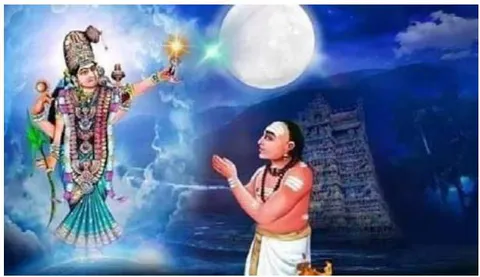
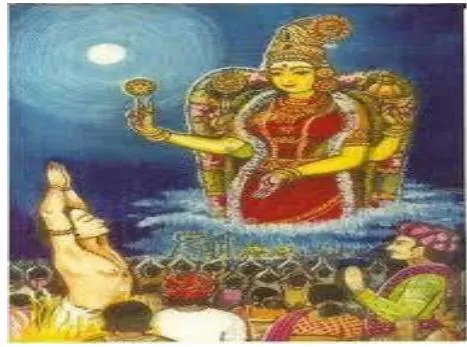
CONTEXT-80
Original verse written by Abirami Bhattar in Sen-Tamil (i.e. Poetical Tamil)
LqU6Tg0r06050rA1uWnI6u,G5tUu6060LqU6U, 60T560T LqU6T 560T6060T26T60U600T U5T LqU6U, 560U L560T U560T U560T U560T U560T U560T U560T U560T U560T U560T U560T U560T U560T U560T U560T U560T U560T U560T U560T U560T
Translation in English
Oh Abirami Devi, you attached me with your devotees; you have dispelled my dreadful sins; grant me your grace and also show your form to me. To see me dance in ecstasy upon seeing your form indeed is your mercy alone oh Abirami Devi who sits on the golden flower.
Critical Analysis In this stanza Bhattar praises the grace and mercy of Abirami Devi who at the outset made him to be
among the devotees of Devi, then removed the dreadful sins and made his mind to constantly worship Devi and finally shown the form to him thereby made him to go to the state of dance in ecstasy - such fortune could be attained through the mercy of Abirami Devi alone.
CONTEXT-81
Original verse written by Abirami Bhattar in Sen-Tamil (i.e. Poetical Tamil)
G, 10001556700000000000000000000000000000000000000000000000000000000000000000000000
Translation in English
Oh Abirami Devi you are the only God I worship though other Gods belong to you as courtier, I will not adore them. I will not praise other Gods in my heart; I will not be friend with the cowards at heart; I will not breakup the friendship with those nobles who regard everything is yours; though I am not intelligent you have granted your mercy on me; how can I praise you.
In this stanza Bhattar shows what is single pointed devotion?
It is to adore the ista-deivam (deity of liking) and do not have friendship with cowards; never go off the track with that of the devotees who regard everything as given by Devi. However, matured one may be a devotee should not nurture pride in his attitude. In the foregoing many stanzas Bhattar declared that he had seen the form of Abirami Devi yet in this stanza he pleads innocence as far as the divine grace of Devi is concerned; such humbleness and steadfastness are hall marks of noble devotees who go near to Devi's blessed feet every moment.
CONTEXT-82
Original verse written by Abirami Bhattar in Sen-Tamil (i.e. Poetical Tamil) 5u6u6u6u6u6u6u6u6u6u6u6u6u6u6u6u6u6u6u6u6u6u6u6u6u6u6u6u6u6u6u6u6u6u6u6u6u6u6u6u6u6u6u6u6u6u6u6u6u6u6u
Translation in English
Oh Abirami Devi you sit on the lotus flower which is surrounded by the bees; all the worlds are reflected by the glow that emanate from that glow; upon seeing such a grand glow, I am enthralled with boundless joy both inward and outwardly. How can I forget the path of virtue shown by you oh incomparable intellectual?
Critical Analysis In this stanza Bhattar describes Abirami Devi as a formless glow that lights the whole universe. Seeing such a great glow Bhattar experienced eternal bliss forgetting his own body.
CONTEXT-83
Original verse written by Abirami Bhattar in Sen-Tamil (i.e. Poetical Tamil)
201 15 15 15 15 15 15 15 15 15 15 15 15 15 15 15 15 15 15 15 15 15 15
Translation in English
Oh Abirami Devi those who worship your blessed feet by fresh flowers day in and out will attain the position of Indra which is admired by the Gods in the heaven; White elephant called the Ayravadham; Ganges belong to the heaven; the great weapon called Vajra; the all providing tree called the Karpagatharu.
Critical Analysis In this stanza Bhattar describes the great many things that could be achieved by the devotees of
Abirami Devi who worship her blessed feet day in and out. However, these are not the final goal of worship or devotion. They should cross all these impermanent attainments that may come on the way in their pursuit of devotion and reach the blessed feet of Abirami Devi and attain immortality mercifully granted by Devi.
CONTEXT-84
Original verse written by Abirami Bhattar in Sen-Tamil (i.e. Poetical Tamil)
2LWNT60T, 5uGfLULb60LWNT60T, 5uTlUgF60LWNT60T, u60f5T LWNT60T, 5uM1560Tu60LWNT60T, LWNT60T, LWNT60T, LwLWNT60T, LwLWNT60T, LwLWNT60T,
Abirami Devi possess all the worlds and its beings; she wears red colour silk cloth which glitters; she wears the moon on her mated hair; she never tries to enter into the hearts of the cowards; she possesses lean waist and resides on the left side of Lord Siva; she alone can grant me birth-lessness and she will definitely make you all birthless Oh blessed devotees of Devi.
In this stanza Bhattar after describing the form and power of Abirami Devi states that it is Abirami Devi alone can grant one the highest goal of meditation or devotion i.e. birth-lessness which can also be called emancipation wherein the devotee after leaving the body reaching the blessed feet of Devi experience bliss absolute.
CONTEXT-85
Original verse written by Abirami Bhattar in Sen-Tamil (i.e. Poetical Tamil)
LITJ5I 1000000000000000000000000000000000000000
山山山山山山山山山山山山山山山山山山山山山山山山山山山
山山山山山山山山山山山山山山山山山山山山山山山山山山山山山山山山山山山山山山
GnTg 510 (pOeouuL (pOeouuGcuo (pOeui LIOeouuGcu.
Translation in English
Oh Abrami Devi, wherever I see I witness you hold your weapons, arrows made out of flower that are surrounded by the honey-bees and bow made out of sugarcane. The grand form of Devi that could dissolve all my struggles with her grace, and the upper body that was smeared by kum-kum (saffron) and glistening chain made out of pearls.
Critical Analysis In this stanza Bhattar describes the form of Abirami Devi as seen by him that could dissolve the sorrows and struggles, he had marveled to reach the blessed feet of Devi.
CONTEXT-86
Original verse written by Abirami Bhattar in Sen-Tamil (i.e. Poetical Tamil)
LNTUUL, LDOOM C5L, 6TNTOTUJ C5L mTm TNTOUGUH,
L5560560,G55n60rH 5555C6u66u G21n55n66o
Gtouu 601uLCLIT5, G2uTn 560uL
LIT66uH 5500TuH LIT65uH C1IgH LiouqunGu.
Translation in English
Oh Abirami Devi, Thirumal, Brahma, Vedhas and the Gods in the Heaven searched for your blessed feet and hands with bangles but in vain. When the God of Death approach me with his deadly weapon to take away my life, I implore you to appear before me and save me from re-birth again - Oh Devi possessing voice as sweet as milk and honey.
Critical Analysis In this stanza Bhattar implores Abirami Devi to appear before him when death approaches and grant birthlessness thereby he will reach the blessed feet of Devi that could not be achieved even by the Gods in the heaven.
CONTEXT-87
Original verse written by Abirami Bhattar in Sen-Tamil (i.e. Poetical Tamil)
Gnpiydsu 16000000000000000000000000000000000000000000000000000000000000000
山
LgUuunl UusuL1q,(LTTsLgNtLITnL1G
Translation in English
Oh Abirami Devi, it is bewildering that I could not conceive in my mind nor express it in terms of words, I see your form which stands beyond my sight and sins. Lord Siva who is our leader destroyed Manmatha through his third eye coming out from his long meditation. Abirami Devi occupies the left side of the Lord and the world praises her as the foremost.
In this stanza Bhattar was bewildered to see the form of Abirami Devi which cannot be described by thoughts or words and Devi is the foremost.
CONTEXT-88
2-60T15555555555555555555555555555
山
GUNI 15000000000000000000000000000000000000000000000000
Oh Abirami Devi among your devotees I am here depending on your grace and mercy alone; please do not let me down treating as a failing devotee. Oh Devi you occupy the left side of Lord Siva who once destroyed the Rakshasas taking Mount Meru as his bow thereafter plucked one of the head of Brahma who sat on the lotus flower.
In this stanza Bhattar impleads Abirami Devi not to let him down treating him as not a devotee as his life depends only on the mercy and blessings of Abirami Devi alone nothing else.
CONTEXT-89
Original verse written by Abirami Bhattar in Sen-Tamil (i.e. Poetical Tamil) m m 150000000000000000000000000000000000000000000000000000000000000000000
Translation in English
Oh Abirami Devi, you reside on the lotus flower, when I thus forget all my sense and ready to leave the body, I implore you Devi yourself along with Lord Siva to appear before me and place your blessed feet on my head thereby grant me emancipation.
Critical Analysis
In this stanza Bhattar implores Abirami Devi to appear before him at the time when his life-force ebbs out and place her blessed feet on his head and grant him immortality.
CONTEXT-90
Original verse written by Abirami Bhattar in Sen-Tamil (i.e. Poetical Tamil) u()b5π6u,6oT L6055πL60πufou uBuiLuoB, ()b5π6T,L60uU ()LULoT5,ufof 605 ()b5πG5π()G5U()6o6u6o6u CuaL6u()5 ()b5πG5u()b5πo6u5u()GuaWgCeu.
Translation in English
Oh Abirami Devi – Due to your grace and mercy you entered and made my mind as your permanent residence. Therefore, I need not worry about the vicious circle of birth and death anymore and I do not aspire for anything else in the world. Abirami Devi who got the impossible nectar for the Gods of the Heaven from the ocean which cannot be achieved by anyone.
Critical Analysis In this stanza Bhattar exclaims that as Abirami Devi entered in to his mind due to her mercy thereby he is saved from the vicious circle of birth and death and he need not aspire for anything else in the world.
CONTEXT-91
Original verse written by Abirami Bhattar in Sen-Tamil (i.e. Poetical Tamil)
G uo 1u 1u 1u 1u 1u 1u 1u 1u 1u 1u 1u 1u 1u 1u 1u 1u 1u 1u 1u 1u 1u 1u 1u 1u 1u 1u 1u 1u 1u 1u 1u 1u 1u 1u
Oh Abirami Devi you possess lean waist like the lightening, you are just like molten gold and mingled with Lord Siva. Those who worship the devotees of mother who adore Devi as enunciated in the Vedas will be granted the position of Indra by Abirami Devi who will be entitled to travel in the heaven on the white elephant called Iyravatham with the bards and music enacted by the Gods in the heaven.
In this stanza it is bewildering that Bhattar declares, those who worship the beloved devotees of mother Abirami Devi who adore mother in accordance with Vedas will be granted the position of Indra by Devi.
CONTEXT-92
Original verse written by Abirami Bhattar in Sen-Tamil (i.e. Poetical Tamil)
L2-(),,LITL155GvLo6oTuL
2-00000000000000000000000000000000000000000000000
Tt 15uL5sGgL5uL5uHcG6o, HJU GUNO uuui G6u
GgUgUgUgUgUgUgUgUgUgUgUgUgUgUgUgUgUgUgUgUgUgUgUgUgUgUgUgUgUgUgUgUgUgUgUgUgUgUgUgUgUgUgUgUgUgUgUgUgUgUg
Translation in English
Oh Abirami Devi, you made me to melt in to trance by chanting your name and placed my mind on your blessed feet forever and adhere what you think as your devotee, therefore I will not think about other religions and go according to what they say. Oh Devi, the eternal smile on your face is being adored even by the three primeval Gods (i.e. Brahma, Vishnu and Lord Siva).
Critical Analysis In this stanza Bhattar declares that it was Abirami Devi who made his mind to think about Devi and rest his mind on her blessed feet and this faith cannot be shacked by any other religion or its philosophy.
CONTEXT-93
Original verse written by Abirami Bhattar in Sen-Tamil (i.e. Poetical Tamil)
H605Gg 5155 5n6u Gueueunu Gmu m HnW
()
A 1000000000000000000000000000000000000000000000000000000
山
Translation in English
Abirami Devi who had yielded all the worlds however, people try to compare her eyes with that of the deer's and her form which cannot be described in words but call her as the daughter of the king of mountain and further trying to describe her limitless mercy are mere hypocrisy by the Pundits who could not realize the real nature of mother.
Critical Analysis In this stanza Bhattar criticizes the Pundits who did not realize the real form of mother calling and comparing with that of mundane things are mere exaggeration and hypocrisy. Bhattar indirectly advises them instead they should surrender at the blessed feet of mother and seek her mercy that alone will help them to become her devotee.
CONTEXT-94
Original verse written by Abirami Bhattar in Sen-Tamil (i.e. Poetical Tamil)
65151555555555555555555555555555555555555555555555555555555555555555555555555
Giuu Liangxidaii#
5uL 5uT 5uT 5uT 5uT 5uT 5uT 5uT
5uL 5uT uTgTmTe, uTnT uTuTgTgTm.
When the devotion to Abirami Devi matures, the devotee will experience tears in their eyes, forget their body and go in to a trance of excitement, forgetting their sense and the mind they enjoy bliss just like tasting the juice of sugarcane and will be unable to explain the above experience in terms of words and perhaps behave like a lunate - such is the indication of real devotion unto Abirami Devi.
In this stanza Bhattar explains the experience of a devotee who tamed his mind in to null in terms of expectations of mundane existence and focused his attention unto the blessed feet of mother Abirami Devi that made him to enjoy bliss absolute even when he is alive in the world, such an experience will qualify him to attain immortality when he leaves the body.
CONTEXT-95
Original verse written by Abirami Bhattar in Sen-Tamil (i.e. Poetical Tamil)
B60Cm 6U(5)GgU, Gc5 69606TgU,
Hpiot 2mouu 200tGumu uuue, 2-oo5L1u,
605
山山 500
Translation in English
Oh Abirami Devi, whether good or bad happens to me, I will not distinguish them because you know that I have renounced everything unto your blessed feet long ago Oh mercy personified mother! the daughter of Himavan.
Critical Analysis In this stanza Bhattar clearly explains the fact that he had renounced both good and bad that would
come on his way towards devotion. Therefore, he will not worry when sorrow comes and happy when good thing happens. In other words, he will treat both sorrow and joy as equal and keep his mind in equanimity and engage his mind adoring mother Abirami such is the concept of true devotion.
CONTEXT-96
Original verse written by Abirami Bhattar in Sen-Tamil (i.e. Poetical Tamil)
G51106T 6u6u6uW, u6u6uW, 51106uW G51106u W, u6u6uW, 51106uW, 51106uW, u6u6uW, 51106uW, u6u6uW, 51106uW, u6u6uW, u6u6uW, u6u6uW, u6u6uW, u6u6uW, u6u6uW, u6u6uW, u6u6uW, u6u6uW, u6u6uW, u6u6uW, u6u6uW, u6u6uW, u6u6uW, u6u6tuW, u6u6tuW, u6u6tuW, u6u6tuW, u6u6tuW, u6u6tuW, u6u6tuW, u6u6tuW, u6u6tuW, u6u6tuW, u6u6tuW, u6u6tuW, u6u6tuW, u6u6tuW, u6u6tuW
Translation in English
Abirami Devi is ever young just like a creeper, she resides in the temple which is made out of lotus and water-lily; she stands as part of Lord Siva most beautiful like a peacock and knows all the arts in the universe – those who adore Devi adequately will attain fame wherever they go.
Critical Analysis In this stanza Bhattar not only describes about the grandeur of Abirami Devi but the fame obtained by those who adore her.
CONTEXT-97
Original verse written by Abirami Bhattar in Sen-Tamil (i.e. Poetical Tamil)
,山L,山,山,山,山,山,山
LUTU LUTU,LTNTU,UTNTU
5πL LLIπ(LL60L, 560T, 560T L, 5πL60T
()
Translation in English
The sun, the God of fire, Moon, the head of all wealth i.e. Lord Gubera, Lord Indra who has no demise, Lord Brahma who sits on the lotus flower, Lord Siva who destroyed Tripura, Lord Vishnu who destroyed demon Murasuran, Sage Agastiya who lives in the mountain known as Pothigai, Lord Muruga who has great army of power to destroy any demon; the head of the five elements Lord Ganapathy, Lord of Love, have all obtained great benefits by adoring Abirami Devi.
In this stanza Bhatar establishes the fact that Abirami Devi is the foremost and the Gods derive powers from Devi.
CONTEXT-98
60521 51 5607 60L 55 55 50 60T (山
山山,山山,山山
QnUuBqNnEeEeEeEeEeEeEeEeEeEeEeEeEeEeEeEeEeEeEeEeEeEeEeEeEeEeEeEeEeEeEeEeEeEeEeEeEeEeEeEeEe
山山山山山山山山山山山山
Abirami Devi is best among the women, Lord Siva appeared in front of Devi and she kept her blessed feet on his head then where did the fire on his hand and Ganges on his head gone? Abirami Devi will reside only in the hearts of pure and noble devotees not in the hearts of covetous, Devi is just like the coocoo bird.
In this stanza Bhattar adoring the glories of Abirami Devi emphatically states that Devi will reside only in the hearts of pure and noble devotees not in cowards.
CONTEXT-99
Original verse written by Abirami Bhattar in Sen-Tamil (i.e. Poetical Tamil) uouuuu u (uusuLusuLusuLusuLusuLusu, GsTuu u u u u u u u u u u u u u u u u u u u u u u u u u u u u u u u u u u u u u u uu
Translation in English
Abirami Devi is like a coocoo bird in the forest called Kadambavana, she also resides as a peacock at the coolest place of Himalaya, she is there as the sun in the sky, she is also like a swan sitting on the lotus flower, Devi is just like the lovely ear-ring presented by Himavan to Lord Siva of Kailasa.
Critical Analysis In this stanza Bhattar means to say that Abirami Devi is like a Coocoo Bird at Madurai, Peacock at Himalayas, Sun of wisdom at Chidambaram and Swan sitting on the lotus at Thirvaroor as was the custom.
CONTEXT-100
Original verse written by Abirami Bhattar in Sen-Tamil (i.e. Poetical Tamil)
560pWuS 54911111111111111111111111111111111111111111111111
Translation in English
Oh Abirami Devi the garland you wore that touches your ear-rings, your shoulder is similar to the well grown bamboo, your blessed hands hold the bow made out of sugarcane and arrows made out of flowers, the eternal smile on your face and your graceful eyes are equivalent to that of deer's - all are could be seem by my mind again and again just like the rising sun.
Critical Analysis In this stanza Bhattar describes the graceful form of Abirami Devi that could be seen by him again and again like a rising sun. Thus, Abirami Devi had shown her form to Bhattar who was her undisputed devotee.
CONTEXT-101
Original verse written by Abirami Bhattar in Sen-Tamil (i.e. Poetical Tamil)
555606, 55560L11111111111111111111111111111111111111111
Abirami Devi who is our sole mother, who had yielded all the worlds and the universe, whose colour is that of the pomegranate flower, the protector of all the worlds and the Universe, possessing in her hands - arrows made out of flowers, the bow made out of sugarcane (which are important for the maintenance of the universe) and the deadly weapons, with her three eyed face - those who adore her distress will not recur.
In this final stanza Bhattar declares the benefit accruing out of reading and rendering the Abirami Antati as written by him.
II. CONCLUSION
Thus, in this paper the concept of bakthi as authoritatively enunciated by Abirami Bhattar in his Abirami Antati has been summarized without altering the real meaning of what Bhattar wished to say about devotion. This research paper is devoid of comparison with any other work with a view not to divert the attention of the reader and they should enjoy the nectar directly from each stanza of the great work of Abirami Bhattar. As a whole this research paper gives a glimpse of bakthi
(-devotion) that a sincere seeker of truth wishes to attain and would guide them for greater perfection of their mind towards devotion to Devi Abirami the foremost of all Gods. Just wish to reiterate what the great Bhattar emphasized in his work under context-27 above:
CONTEXT-27
Oh Abirami Devi you had destroyed the enemies of mind such as desire, anger, ignorance, pride and aversion and thereby put an end to my life leading to rebirth. You had created a thought of love and the attitude of thinking about you alone forever. You gave me the action of thinking about your lotus like blessed feet alone. You cured all the impurities of my mind with your grace and mercy. How can I praise your grace and mercy Oh Devi!
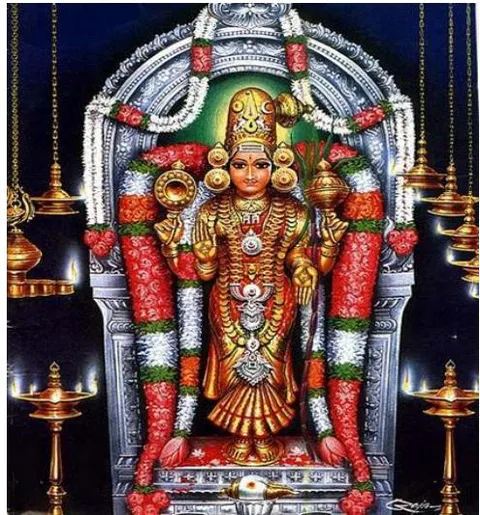
The researchers would like to conclude this research endeavor with humble prayers to Abirami Devi to grant such purity of mind to her dedicated devotees who reads this research work so that the cannon of devotion which is time immemorial should continue forever.
ACKNOWLEDGEMENTS
I wish to place on record my heartfelt and humble regards to Dr. P. Thiraviaraj, the famous urologist of this part of Chennai, Tamil Nadu, India. I was hospitalized on July 2024 for urinary infection. Actually, I was half way through this research work by then. I never thought that I will complete this research work. I had undergone three medical procedures from July 2024 to Jan 2025. Dr. Thiraviaraj gave hope and new lease of life to me there by I gather strength to complete this research work – a long time endeavour. I will be failing in my duties if I do not acknowledge the benevelonce, kindness and the tenderness Dr. Thiraviaraj shown to me. His wife Dr. Prema Thiraviaraj's words of hope and kindness are hall marks of greatness to madam. My friend Dr. Arun Babu who had introduced this expert Doctor. To them I wish to express my humble gratitude through this paper.
Thanks are due to my two sisters Malliga Roobal, Sangeeta daughter of Malliga and Chitra Sivakumar and two children Mirdul Ganesh, Varshitha; inlaws Sree Devi and Meshak Raj for their love, affection and tender care unto me.
My great friend Sri. Salai Thirunavukkarasu Sivakkani who had taken pains to come down to Chennai, Tamil Nadu from USA and stayed with me for few days - these days brought fresh memory of gratitude and I remain ever grateful to you Salai for your kindness, grace and the financial support too.
Thanks are due to Mr. Ramana Reddy my long-time family friend who is always supportive during my days of hardship.
I also wish to place on my humble thanks to Shri. M. Elangovan for his invaluable help and assistance always. He surprised me with his love and affection – he is called MGR in IIT Madras circle.
MOTIVATION
I wish to quote what was said by Einstein in his letter to Carl Seelig dated March 1952 (Einstein Archives 39-013):
"I have no special talents, I'm only passionately curious" From the above invaluable wisdom of Einstein, we learnt that no one can make contribution (even academically) without the help of millions of others directly or indirectly. These various others may be numerous and it is a fallacy in belief to construe that we have done this research work without anyone's help.
Finally, we bow before the great and noble Abirami Bhattar who had given this philosophical Antati touching all the nuances of devotion towards the immaculate deity Abirami Devi so that posterity to follow his line of devotion towards Devi.
Translation in English
Original verse written by Abirami Bhattar in Sen-Tamil (i.e. Poetical Tamil)
Translation in English
Translation in English
Translation in English
Translation in English
Original verse written by Abirami Bhattar in Sen-Tamil (i.e. Poetical Tamil)
Translation in English
Original verse written by Abirami Bhattar in Sen-Tamil (i.e. Poetical Tamil)
Translation in English
Original verse written by Abirami Bhattar in Sen-Tamil (i.e. Poetical Tamil)
Translation in English
Original verse written by Abirami Bhattar in Sen-Tamil (i.e. Poetical Tamil)
Translation in English
Translation in English
Translation in English
Translation in English
Translation in English
Translation in English
Original verse written by Abirami Bhattar in Sen-Tamil (i.e. Poetical Tamil)
Translation in English
Original verse written by Abirami Bhattar in Sen-Tamil (i.e. Poetical Tamil)
Translation in English
Original verse written by Abirami Bhattar in Sen-Tamil (i.e. Poetical Tamil)
Translation in English
Translation in English
Translation in English
Translation in English
Original verse written by Abirami Bhattar in Sen-Tamil (i.e. Poetical Tamil)
Translation in English
G55πF#I, 556, 560T, 560T, 5π@, 546, 556T G55πM LTTG 55πG. L6952pWPI M LTTG.
Original verse written by Abirami Bhattar in Sen-Tamil (i.e. Poetical Tamil)
Translation in English
Translation in English
Original verse written by Abirami Bhattar in Sen-Tamil (i.e. Poetical Tamil) 5L L, L60L1675 L16007, 55555555, 55555555, 55555555, 55555555, 55555555, 55555555, 55555555, 55555555, 55555555, 55555555, 5555555, 55
Translation in English
Original verse written by Abirami Bhattar in Sen-Tamil (i.e. Poetical Tamil)
Translation in English
Translation in English
Translation in English
Original verse written by Abirami Bhattar in Sen-Tamil (i.e. Poetical Tamil)
Translation in English
Translation in English
Translation in English
Original verse written by Abirami Bhattar in Sen-Tamil (i.e. Poetical Tamil)
Translation in English
Translation in English