This study looks at the perception and manifestation of the concept of ‘states’ in African communities. A state, in African context, is an organisation of human beings connected by a system of relations. Within the states, different groups of people exist and different individuals have different roles to play. Some exercise special powers or authority, capable of giving command, which is obeyed by the people they rule. In the Bamenda Grassfields of Cameroon (present-day North West Region), these individuals are called fons and chiefs and they rule fondoms. In Westernised societies, they would be called kings. Sincecolonial period, government administrators refer to them as traditional rulers or natural rulers. Amongst these rulers are some who rule over what is commonly referred to as semi-autonomous polities within the fondoms. They are called sub-chiefs on grounds that colonial administrators came out with this appellation to differentiate the authority and position of a ruler from that of his subalterns. In Bafut this classification spark waves of wrangles and conflict between the fon and his subalterns.
## I. CONCEPTUAL FRAME
A state, in the African context, according to Fortes and Evans-Pritchard, is an organisation of human beings connected by a complex system of relations. In this study, emphasis is on this aspect which says that a state is any organisation of human being connected by a complex system of relations. The complexity of the system of relations is also a serious area of interest to us here given that at one point it is the complexity in the system of relations that generates the conflicts under study. The various dimensions in the relations within the organisation or system equally constitute the sensitive areas of analysis made in this study. Generally, as the definition goes, a state is an organisation of human beings connected by a complex system of relations. Some of the states are centralised societies while others are decentralised entities. The centralised ones are large, composite, and heterogeneous polities made up of people of various ethnic groups and cultural background living together in one location (Fortes and Eans- Pritchard, 1967:15).
Semi-autonomous states in African context are smaller entities or groups of people within the bigger or heterogeneous polities. A number of criteria determine the existence of these states amongst which are conquest, ethnicity and indigenous (autochthone) status. Often, ethnic groups of smaller sizes and population constitute semi-autonomous states within bigger ones. In the Northwest Region of Cameroon, the colonial master attributed the appellation 'chiefdom' to distinguish a semi-autonomous state from the fondom. This automatically distinguished the territorial jurisdiction and power of control of a subaltern Leader (sub-chief) from that of his superior, the fon. The power legacy and paraphernalia of semi-autonomous states revolved around the following: Their leaders were attributed hereditary dynasties and royal titles over their people and area of control. These titles were those the leaders brought from their places of origin as they led their followers in the process of migration to the new site or settlement. Once settled, the leaders established ruling dynasties over their people and maintained the royal titles of origin. Examples of semi-autonomous chiefdoms (states) of this character in the Northwest Region are found in Nso and Bafut fondoms.
However, some semi-autonomous states (chiefdoms) came to existence through conquest, assimilation, association, alliances or colonial fabrication. Some powerful migrant leaders and groups conquered indigenes (autochthones) and imposed their dictates and supremacy over them. In the position of weakness, the autochthones and leaders were compelled to accept a subaltern position under the foreign invading leader and his people. Some groups in search for security against invaders and predators, decided to either seek refuge under a stronger, reliable group and leader or create a protective alliance (association) with the powerful group so that a stronger front can be created against the invading enemy or aggressor. Alliances were common among groups or states in the Northwest Region especially with the onslaught of Bali chambers invasion and aggressions in the area. The Bali decision to ally with the Germans to bring the other groups or people in the area under their swear increased the spirit of defensive and protective alliances (association) amongst the states and groups in the area. A typical example was the alliance between Bafut and Mankon formed to fight their common enemy the Bali and Germans.
Some alliances eventually resulted to the assimilation of the weaker groups by the stronger ones (against their will) thus reducing them to a semiautonomous state or position in the union. Their leaders also become subaltern to the leader of the stronger group. In other instances, some leaders by consensus, decided to hand over their power and authority to a superior leader to legislate on their behalf while they support him from the rear. In this case, such leaders automatically made themselves and their people subordinate to the stronger group and leader. Others by means of coup d'etat took control of an area or community and made themselves and leader superior over the rest of the people whose leaders were bound to assume subaltern position under the superior leader and group. All the aforementioned constitute the base of semi-autonomous states in African communities. The Bafut fondom went through these processes at different times in its history and evolution.
The introduction of colonial rule came with a different interpretation and application of the concept of semi-autonomous states in Africa. First, the procedure of willfully handing over power or ones autonomy to a superior leader while assuming a lower position under him is what modern state systems refer to as federations (federated states). This modern concept gave a different paradigm to what the Africans initially understood and practiced within the context of semi-autonomous states. In actual fact, federated states are created partly out of the willingness of different groups of people to come together for a common interest and to leave as one body (entity); while still maintaining some of their identities and cultures peculiar to the different people or groups within the federation. Examples of such federated states in Africa are found in Nigeria, Cameroon, Mali and many others. In local African context, this arrangement will be regarded or described as semi-autonomous states (polities) within a state. In all these, one thing is evident and it is the fact that the form of the state in Africa at any given time was determined by the interest at stake. Some states resulted from self-interest (orchestrated by personal zeal, ambitions and anxiety) or common interest orchestrated by the desire to work for the general good of a multitude. This brings to question the metamorphosing process of state formation in Africa from origin to present.
## II. STATE ORGANISATION (FORMATION) IN AFRICA
An understanding of the process of state formation in Africa requires a historical investigation from precolonial to colonial and post-colonial Africa. State organisation in Africa took the form of groupings which ranged from families, quarters, lineages, villages, tribes, clans, kingdoms and empires. Any of these forms could represent a state at any given time in the process of evolution. According to Catherine Coquery, states in Africa were not created or defined through specified lines or margins drawn on a map to differentiate a state from another. African leaders (family heads, lineage and village heads) new the extent and limit of their authority and understood that beyond a certain level, their authority was no more biding on people (Catherine, 1999: 39-54).
Group relations at the level of families, villages, kingdoms and empires were regulated within a complex and diversified mechanism of links and network. Given the complex nature of relations, these structures could not by any means be compared or reduced to the kind of vertical and hierarchical monarchies, dynasties and republics obtained in Europe. In fact European structures (states) were regulated by a system of governance with well-defined territorial jurisdiction and powers. African states were constituted based on relations that assumed one of the following forms: Lineages founded on family links. That is, through blood affiliation or reconstructed social relations such as marriages, religion, culture and traditions (Ibid: 39-40).
The second form was political relations based on the recognition of an authority over a group or state. Such a group was characterized by a hierarchical territorial structure which existed long ago in the continent. Examples include the Ashanti empires of Ghana, Mali, Songhai and other isolated creeks, Islands and lakeside communities. The third form of relations had to do with personal dependence (interdependence). Such relations were created between people, communities or villages by means of trade network or economic exchanges. Social needs and obligations such as unity and security imposed dependence relations between lineages, villages and between families. Even superior leadership at the helm of the structures (states) needed a kind of personal dependence relations to disseminate their authority to the least commoner or grass root community in the structure. For this to succeed, the authority had to pass through intermediaries such as subaltern leaders (subchiefs) whose lineages, villages, tribes, provinces or states were linked to the superior leader by personal dependence relations. This is where an apt definition of the concept of states within a state fitted well in the African political system. Coexistence in the same system or structure also required personal dependence relations (Ibid: 40). All these made state formation in Africa a complex issue. However, this arrangement did not stop the African leaders from clamouring for a certain degree of territorial boundaries or frontiers that will portray their authority and autonomy.
From colonial rule henceforth, a different interpretation of the concept of states in Africa emerged. Here the concept was interpreted within the context of how much power and authority a leader wield or exercised in society. In this, history, tradition, native customs and culture or status were not prerequisites or determining factors in the eyes of the colonial masters. Colonial rule created new chieftaincies in African communities which never existed before and empowered some. They empowered some subaltern leaders and mounted some against their natural bosses and superiors. This situation caused the existence of the phenomenon of warrant chiefs in the African states (Afigbo, 1972: 1-35). Whatever that meant, the fact remains that colonialists created such leaders and power structures for their interest so that they can facilitate their exploitative administration in Africa. Out of this, a new mentality about power and subalternship emerged in African political structures. The concept of states within a state took a different twist. Some leaders exploited their warrant positions under colonial leadership to wield much power and authority in their respective communities or local areas. Some exploited the security accorded them by colonial leaders to challenge the authority of leaders they initially honoured and respected as their superiors. Some used new colonial ideas such as liberty, freedom, human rights, democracy to liberate themselves from any form of oppression that had existed in the past. The sure course was to assert their autonomy and independence. This attitude was encouraged by the fact that under colonial rule, the power and authority of an African leader could increase or decrease depending on his relation with the colonial master. Thus it became possible for a subaltern leader to woe the support of the colonialist to fight or challenge his superior. This led to wanton power tussles and wrangles amongst the African leaders.
Another aspect was the creation of states in Africa by the colonialist. States were created out of the balkanisation of African Communities and people with no recourse to the family, lineage, and village, ethnic, tribal or cultural relations. The systematic fragmentation of the continent created arbitrary frontiers or boundaries in the African communities (Olufemi, 2003). The consequence of this situation was the disappearance of solidarity and unity amongst the people. Brotherhood made no meaning any more as families became estrange to each other. This turned out to be an indirect ploy that created 'states within state' in African relations and mentality. That became a source of conflict. The situation was aggravated by the nature of the states created by the colonialist in terms of sizes. Some of the states were either too big in size while others were too small. This was done without any conventional formula to determine the sizes and creation of the states. This attitude became imbued in the African mentality who now thought that at any time and in any form a state can be created in the community irrespective of the size. Subaltern leaders thus developed a spirit where once they felt jilted or uncomfortable in their relations with their superiors, the solution was to assert their autonomy and independence. This has remained in the physical and mental psyche of African leaders more as a vector of conflict than peace building. To them being autonomous is the only panacea to their problems. However the failure to consider the context, environment and situation at hand in such bid has rather created more complex situations and conflicts than solutions.
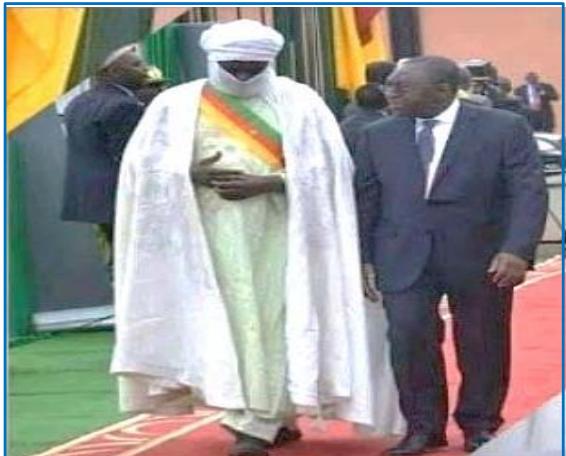
We earlier mentioned, the kind of power system instituted amongst African leaders by the colonialist. All was geared towards serving colonial interest and causing it to succeed. One attitude cultivated by African leaders from this was that while the authority of some leaders grew beyond proportions in their communities, others thought that their opinion on issues of local state politics determined the final decision taken. In other words, higher state authorities cannot decide on an issue without consulting them. Consequently, some communities and leaders became permanent actors and acolytes of state machinery. Their opinion in state decisions and policies could eventually influence the final decision taken by the state on an issue. In fact, where subaltern authorities impact the policies and politics of the state, Africans ironically described such as a state within a state. In north Cameroon for instance, the Lamido of Ray Bouba and his community are considered a strategic power and political bastion in the area. When it comes to issues of state politics such as elections, the Lamido and his palace decides who occupies what position. Any gallery in the form of democratic elections is mere window dressing. The final choice comes from the Lamido and the state government ratifies. State authorities consulted the Lamido on state policies related to the northern region of Cameroon and on special occasions he was invited to the Unity Palace in Yaounde (see fig 1a). No Cameroon politician of significant importance went
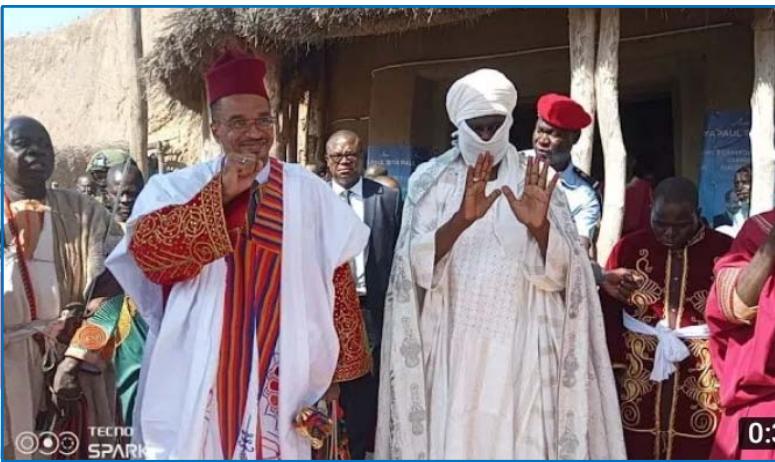
ahead with his political agenda without consulting the Lamido of Rey Bouba for his blessings. Reason why even the son of the President of the Republic, Franck Biya visited the Lamido for blessings (see fig. 1b). Part of the personal security of the Lamido or Rey Bouba is ensured by the elements of the Cameroon military and gendarmes especially during public appearances (see fig 1c and b).
Source: U-Tube Rey-Bouba Production
Source: Rey-Bouba Production

Fig. 1a: Lamido of Rey Bouba at the Presidency Fig. 1b: Franck Biya on a visit to the Lamido of Rey Bouba Source: U-Tube Rey-Bouba Production
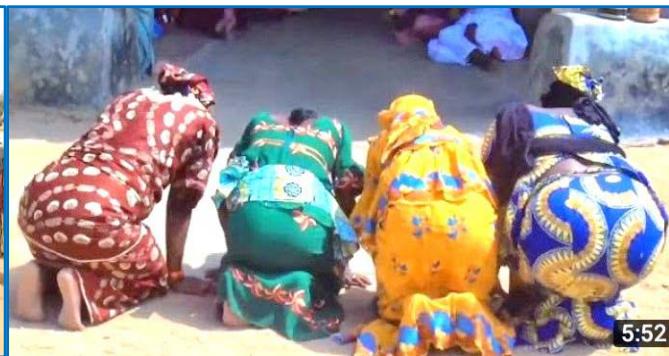 Fig. 2a: Women worshipping the Lamido of Rey Bouba
Source: U-Tube Rey-Bouba Production
Fig. 1c: Cameroon Military Guarding the Lamido of Rey Bouba
The Lamido of Rey Bouba is worshiped as a demi-god by both men and women of his kingdom (see fig 2a and b). In fact, the aura around the power and authority of the Lamido of Rey Boubamakes him and his kingdom 'a state within a state' without necessarily creating geographical boundaries or frontiers. Many of such psychological states existed in Africa and Cameroon during and after the colonial period. Conspicuous cases in hand include the Sultan of Bamoun in the West Region of Cameroon and the Fon of Bafut in the North West Region.

Source: U-Tube Rey-Bouba Production
 Fig. 3a: The Bamoum Royal Palace of German Design
Source: Foumban- wikipedia
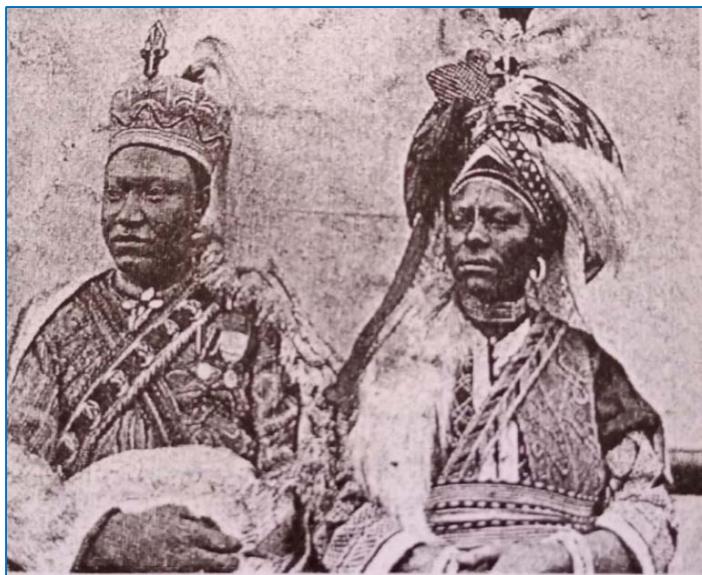
Fig. 2b: Man bowing in Honour of Lamido Rey Bouba In the German colonial period, the influence of Sultan Njoya Ibrahim and his Bamoun Sultanate on German administration made it indispensable for the Germans to take some decisions or policies without consulting the Sultan of Bamoun. His image, power and personality rose to prominence in the West Region as the Germans assisted in projecting Bamoun image and prowess in the area. It was during the German Period that a magnificent edifice of German architecture was built for the royal palace of the Bamoun (see fig. 3a above). Njoya fell in love with German authorities to the
point that he changed his traditional dressing code to embrace that of the German Kaisers (see fig 3b). This was clear evidence of the degree of cordial relations and power romance that Njoya had with the Germans. The Sultan of Bamoun was worshiped as a demi-god by his people (see fig 3c. With a German authority at close watch). In such circumstances, the Bamoun kingdom and leader was seen as 'a state within a state' though no defined geographical boundaries existed anywhere to show the demarcation.
Source:Matateyou,P.200
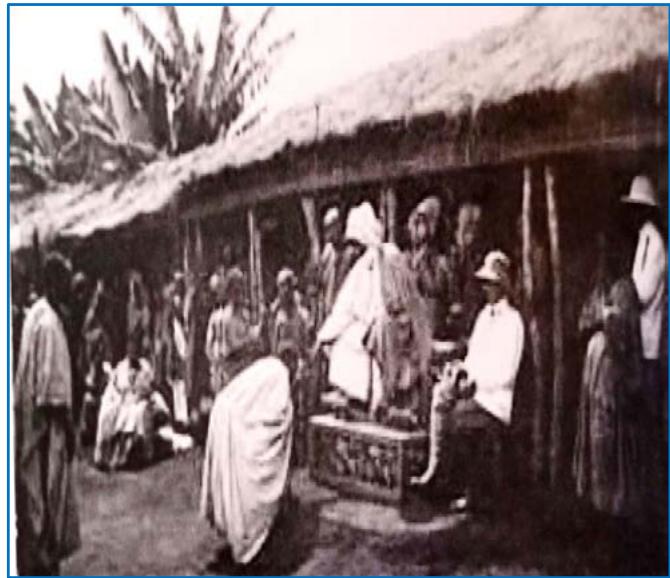 Fig. 3c: Bamoun Man Pays Honour to His King
Source:Matateyou,P.238
Fig. 3b: The Bamoun Sultan and Wife in German Administrative Dressing
The power and authority of Sultan Njoya grew to prominence as the Germans projected him above all other leaders and communities in the West Region. They awarded him a medal for loyal services to them (see fig 3b above). Fortunately or unfortunately, the Germans were defeated in the First World War and bundled out of Cameroon by the French and British. The Bamoun
Sultanate fell within the zone controlled by the French. Sultan Njoya mounted a stiff resistance against the new French administration that had embarked on curbing and sapping away the excessive power of the Bamoun leader. This brought strains in their relations and the French were compelled to dethrone Sultan Njoya and send him on exile to Yaounde where he died on 30 May
1933 (Matateyou, 2015: 7-8). It was the dethronement of the Sultan that enabled the French to gain authority and local control over the people in the western region of Cameroon. The Power of Sultan Njoya had grown to prominence and made his kingdom to exist as though it was 'a state within a state.' His dethronement also depicts how an African kingdom and leader can wield power to the point of being a threat or rival to the national government authorities or state. This attitude is imbued in the mind and always it provokes the desire to be liberated from any form of alien oppression or subordination. The fight for secession and independence has often occurred within the ambit of conflicts that impact peace ventures negatively.
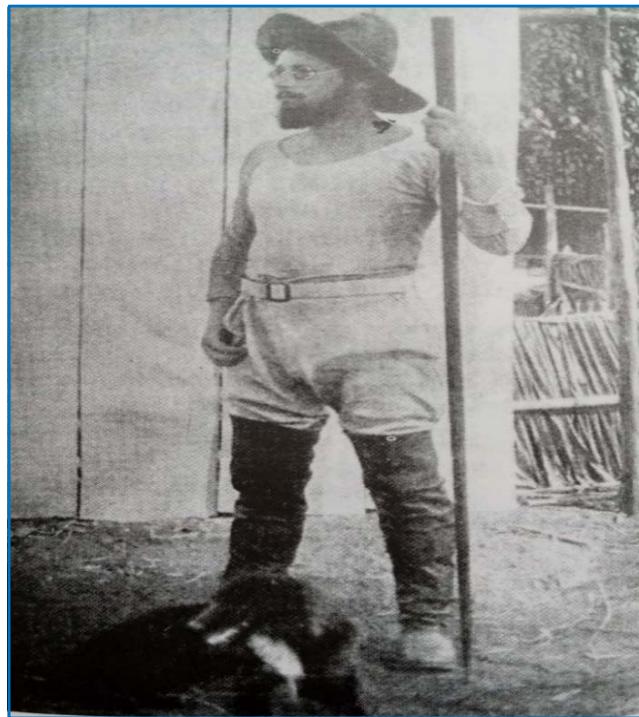
On the part of Bafut in the North West Region of Cameroon, the German and British colonialists projected the image of the Fon of Bafut to a point that he was more or less a permanent consultant on matters of native administration in his area of jurisdiction. To begin with the Germans, Abumbi I had resisted German rule for 6 years (Niba, 1986:86-101). This was one of the longest resistance faced by the Germans from an African leader. The long resistance also reflects the power and authority an African leader wielded over his state or community. The German explorer, Eugene Zingtgraff (see fig 4a) on his passage in Bafut had earlier remarked that the Fon of Bafut Abumbi I (see fig 4b) was the greatest African despot he has ever seen nor was he to see again (Ngwa, 2011:10).
Source:Bafut Customs, P.42
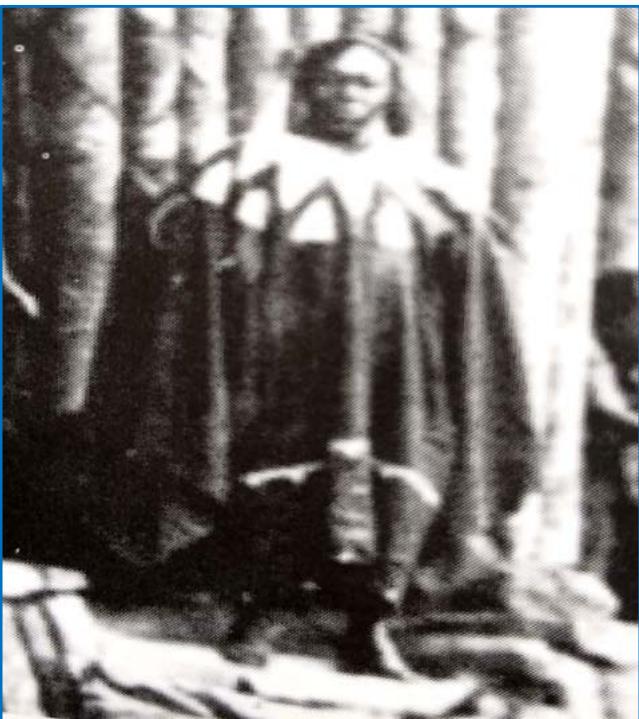 Fig. 4b: Abumi I Fon of Bafut
Source:Bafut Customs, P. 36
Fig. 4a: Zingtgraff the German Explorer
Zingtgraff was struck by the punctilious protocol and the regal and potent air exuded by the Fon. Thus, it prompted him to describe the Fon, Gwalem (Abumbi I), as an African despot. Zintgraffhad indeed painted the picture of the absolute power of the African leader, and this clearly affirms why it took the Germans such a long time to institute German administration in Bafut. However, Abumbi I was finally captured and dethroned by the Germans. As punishment for his actions and attitude, the Germans exiled him to the coast of Cameroon where he was subjected under hard labour.[1] In the absence of the Fon, the Germans could not succeed in ruling or administering the Bafut people. According to Niba, a report from the military commander of the Bamenda station had strongly urged the restoration of the Fon as "orderly government in Bafut was impossible without him (Niba, 1995:66; Chilver and Kaberry, 1963: 7-8).
The German authorities accepted the recommendation to bring back the Fon. He was eventually reinstated and recognised as 'a convenient agent of administration' and so long as he danced to their tune, he went unmolested. Bafut internal affairs were on the whole left alone (Chilver and Kaberry, 1963:94). The interpretation given to this arrangement holds that the Germans identified the Fon of Bafut as the only leader of substance and empowered him within the context of colonial rule. Whatever happened between the Fon and his subaltern chiefs inside Bafut that was not part of German business in the area. Thus such favouredfons exploited the German presence to grow their power and influence to prominence in the area.
In fact, the favoured fons took decisions in state politics when consulted by the colonial administration. But one aspect of German responsibility which they did not border about were the smaller states they coerced and brought into union with bigger chiefdoms to constitute a larger state. The colonialist neglected the smaller states and allowed them on their own to face the wrath, whims and caprices of their superior or paramount leaders. It is important to note here that German actions in the Bamenda area were viewed from the backdrop of the Bali Nyonga paramountcy and the treaty Zintgraff concluded with Galega in 1891. Here Galega formerly surrendered his powers of execution and war-making to the Germans in return for sovereignty right over the surrounding non-Bali who were mostly widikum peoples. Galega was to collect taxes and tolls from those chiefdoms placed under him and was the main labour recruiter for the Germans.
This constituted the principal policy of German administration and state organisation in the Bamenda area namely, to prop up friendly chiefs wherever they could be found and to place as many smaller ones as possible under them as vassals. This was the German dimension of creating 'states within a state' in Africa. The realisation of this policy for the entire Bamenda District was problematic since it required the complete subjugation of the area in order to unite people under leaders other than their own (Niba, 1995:66). In the absence of support, there was no option left than for the small states to indulge in power tussles and wrangles with their superiors in the bid to liberate themselves from oppression. Songs of freedom and independence became common place even within local and 'remote' communities. In such circumstances, peace made no meaning to anybody and peace ventures ended in deadlock given that all moves towards peace were punctured by persistent bitterness, envy and conflicts. Expressions such as 'self-determination' became pivotal in state politics and relations.
By 1916, German colonial administration gave way to British and French administration. The British had their own method of state organisation or better still, creating states within a state. They opted to involve natives in colonial administration following the prescriptions of Indirect Rule policy. Besides, the Resident for Bamenda, E. C Duff advised that for native administration to succeed it was necessary to enhance the powers of the principal chiefs in the area by appointing them presidents of the native courts while subaltern chiefs and even ward-heads within the 'principal communities' (fon doms) were to be recognised and brought in to support the principal chiefs as court members (File Ja/d, 1916). In this arrangement, the disparity in the powers of the Chief (fon) and his subaltern (sub-chief) began to surface in the British colonial political system. It was also the beginning of British implantation of states within a state in African communities as viewed by the people.
In July 1917, G. S. Podevin, the District Officer, inaugurated an 'Instructional Court' in Bamenda (The Nigerian Gazette, 1922:331). This was an assembly of chiefs from surrounding communities summoned to be instructed in the new native court. Twenty- seven chiefs made up the court and the Fon of Bafut was appointed president while that of Bali Kumbat was vice president. In the minds of the chiefs, the Fon of Bafut has automatically become the boss and superior in a new political set up (state). They have eventually assumed subaltern positions under him and by extension it was another ploy to create new states within a state.
In August 1932, the Bafut Fon, Abumbi, died and was succeeded by his son, Su Ayieh, who took the royal name of Achirimbi, and ruled for the remaining years of British administration. Almost at the same time, in 1936, Fon Vugar of Babanki also died and was succeeded by his son Vubanghsi. The two fons, Achirimbi and Vubanghsi Vugah, belonged to the Bafut Native Authority Area (BNAA) which was later on re-organised into the South Eastern Federation Native Authority Area (SEFNAA). These fons had received some elementary western education under the Germans and were expected to boost the new organisation under the British, given their level of education. But the situation turned out to be the opposite. In the BNA area, the element of Bafut 'paramountsy' remained with the Bafut Fon who was regarded as the most important dignity and received the highest stipend from colonial administration (Niba, 1995:70).
This position was reinforced by the creation of a treasury at the Bafut palace in 1941 to serve the entire native authority area. In 1943, through the assistance of the Bassel Mission architects, a monumental rest house was constructed in the Bafut palace (see fig. 4c).

Source: Author's Collection
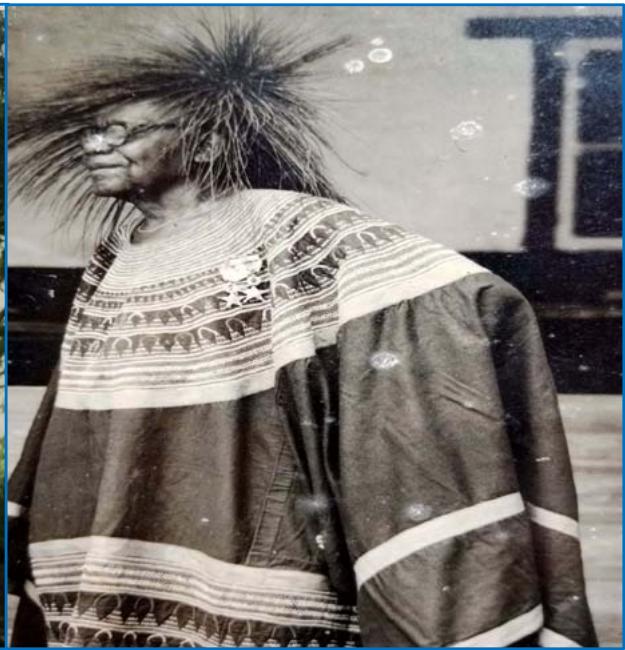 Fig. 4d: Achirimbi II Awarded a Medal and Certificate by the British Government
Source: Photo Ambition
Fig. 4c: The Bafut Palace Rest House In 1946, Achirimbi was awarded a medal and certificate of honour: "as a record of valuable services rendered by him to his own country and people and to the British government... and loyal services given to the administration in the maintenance of good order (Niba, 1995:7; also see fig 4d)."
The other chiefs did not take this kindly and thus under the leadership of the Fon of Babanki, the rest of the chiefs of the BNA contested the coveted position of the Fon of Bafut and requested the British to accept their demand for autonomy and separation from the BNA area. Fon Vubanghsi Vugah is quoted to have written:
The Bafut chief has no authority over us... his authority is only limited to his own village.... We have been independent villages before the advent of European administration on the West Coast of Africa, and are still independent and still wish to keep to our hereditary ways to remain like that. We the seven chiefs who make the Bafut Area should be called fons or village Heads in place of giving the title to the Bafut chief alone which is not correct (File N. A 1949/43, 1944).
From this situation a number of things were made clear. First, in the Bafut Native Authority Area, respective chiefs guarded their autonomy so jealously that any mention of cooperation with another chief was viewed as a surrender of sovereignty. By 1949 it was clear that the delicate balance of power in the Bafut political system had been upset by the loss of sovereignty. The colonial masters made things worse following the way they handled issues related to the powers of chiefs. Here, when colonial authorities picked out the chief they wanted, he was supported to the exclusion of other organs of indigenous or traditional administration. Such was the case with subaltern leaders (chiefs) and Kwifor who now became tools in the hands of the all-powerful fon to carry out his obligations to the white man (colonialist). The independent position which the sub-chiefs, kwifor and takumbeng structures enjoyed in the past was therefore compromised.
The British reinforced this feeling by the differential treatment they accorded the Fon. He was given a girded state umbrella, a Union Jack to fly over the palace and a portrait of His Majesty the King of England (the sovereign) to display in the audience hall of his palace. These were new symbols of power introduced by the colonial master that were completely different from those that the African leaders in the Bamenda Division were accustom to (Ngwa, 2022: 141-168). This in the long run constituted an arena of conflict amongst the Bafut leaders. Here the chiefs insisted to have their own power symbols (regalia) not so much out of love for the British flag and majesty but rather to boost their egos and power especially in the face of treats from the big chief to usurp and sap away their powers.
For instance big chiefs sought to compensate for loss of sovereignty (to colonialist) by arrogating to themselves residual powers that sub-chiefs (batangchuo) had retain over land matters. Again, the batangchuo collected taxes on behalf of the Fon but he received the collectors' rebate. Failure to share the rebate with the sub-chiefs led to conflict where each chief in Bafut wanted to become autonomous or independent so as to enjoy the tax rebate (Ngwa, 2021:
263). The Bafut Fon was worshiped as a demi-god by his people. The British assisted in projecting this image and power of the Bafut Fon in the entire British Southern Cameroons. For instance in 1956, Fon Achirimbi II of
Bafut was chosen to present a gift of an elephant tusk to Queen Elizabeth II of Britain on behalf of the Southern Cameroons Chiefs on the occasion of the queen's historical visit to Nigeria (see fig 4e).
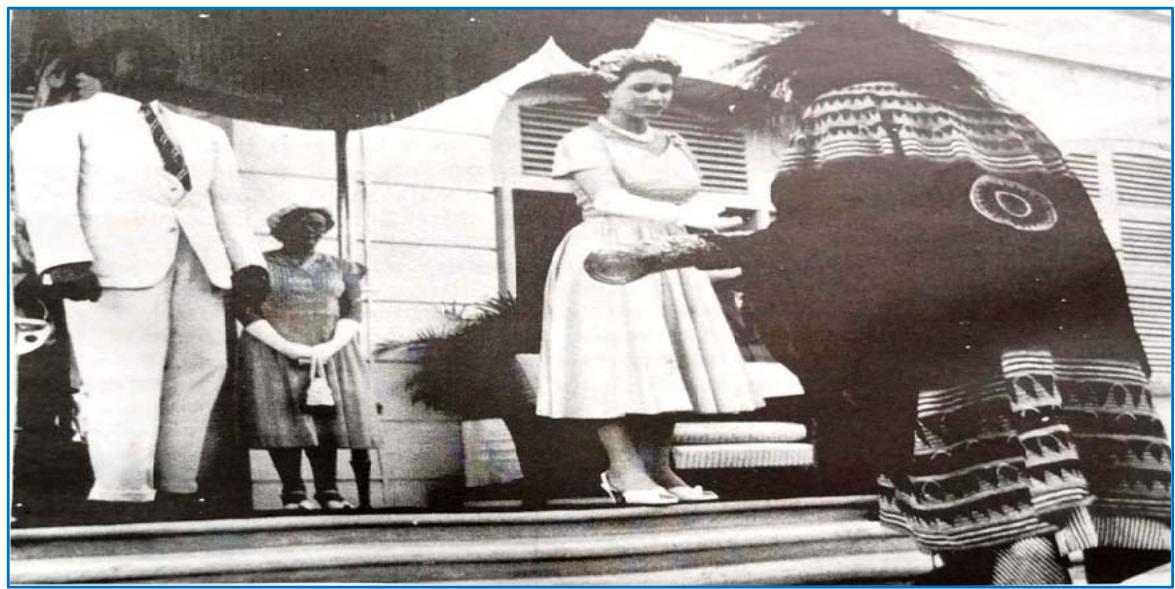
Source:Customs and Traditions of Bafut,P.44 Fig. 4e: Achirimbi II and Queen Elizabeth in Nigeria, 1956
The images presented a great sovereign African leader meeting another great leader of European breed. This opportunity was rare and uncommon amongst African leaders at the time. Many died without setting eyes on the Queen of England, in whose name they were colonised and ruled by the British. Achirimbi II, Fon of Bafut had the single opportunity to meet the British sovereign (Her Majesty the Queen), face to face. Generally at the end of colonial rule a number of secession conflicts amongst the Bafut subaltern leaders were recorded. Each leader wanted to create his own autonomous state. At independence therefore, African states inherited political structures and people that were atone to conflict related to issues of states. They also inherited a faulty form of state whose foundation was laid by the colonialists.
However, it can be said that from the Lamido of Rey Bouba in North Cameroon to the Sultan of Bamoun in the West an to the Fon of Bafut in the North West, the grandeur and honours attributed to these leaders leaves no one indifferent to the fact that even in the midst of alien rule they were 'states within a state.' In the minds of these leaders, it was clear that they rule independent states. In Bafut, the people called the fondom in mother tongue: ahah Befeu, meaning Bafut state. This state alongside others mentioned earlier were typical African states par excellence, far from any resemblance with the European fabricated states in the continent. The colonialist recognised this greatness and that is why they adopted a collaborative approach with the leaders of these great states for the success of colonial rule. Within this context the powers of the African leaders were sandwiched and embellished in colonial administration thus portraying them more as states within a state.
Besides, the nature of diplomacy and relations amongst the states depicted their autonomy and independence from each other. For instance, shortly before the reunification of Cameroon, the Sultan of Bamoun from French Cameroon paid a diplomatic state visit to the Fon of Bafut in Southern Cameroons. This visit marked the peak of state relations in typical African style. The Fon of Bafut, Abumbi II, paints a picture of the visit of Sultan Njoya to Bafut as follows:
We were hunting... in the palace forest when... suddenly we heard Fulani music and trumpets blaring in the central court yard of the palace. We took to the darker part of the forest where we hid ourselves thinking the palace was attacked by Fulani people. We came out of our hiding when we saw Bafut people pouring out to defend the palace and were told by palace guards... (ndongaries) that the Sultan of Fumban was on a friendly visit to the palace. The visit took place one month before $1^{\text{st}}$ October 1961. The Fulani at the time were feared and considered as a hostile people. The war in the Bamileke area was raging and women and children war refugees were in the palace. My mother was given nine by the Fon to house and feed them (Abumbi II, Personal Communication, 30 January 2023).
From the above it is evident that the sultan of the Bamoun came to Bafut to thank a colleague brother who had opened the doors of his state to receive war victims coming from his own state or area. The Fon and Bafut people had cordially welcomed the refugees with whom they were cohabiting peacefully as the Bafut took care of their welfare. This was typical of African state solidarity and relations in times of need. Secondly, the Sultan did not bring war per se; the Fulani music and trumpets described by Abumbi II were part of the aura that went with the entourage of a great Fulani leader (Head of State), on a friendly diplomatic visit to a colleague of another far-off state as Bafut. Our U-Tube sources on the Lamido of Rey Bouba demonstrate this atmosphere of great power and aura that accompanied the great African leaders in their public outings (see fig1cabove). Such outings were indeed moments of great demonstration of African power and the sovereignty of its states.
Achirimbi II demonstrated this when he represented Southern Cameroons on the occasion of the visit of Queen Elizabeth to Nigeria (see fig 4e above). The visit of Sultan Njoya to Bafut in 1961 partly explains the holding of the Constitutional (Reunification) Conference in Fumban to ratify the existence of the two federated states of Cameroon. It was another way of bringing together African states that had established wonderful state diplomacy and relations amongst them without necessarily copying any lesson from Europeans on matters of state. When Achrimbi and Njoya met in Fumban, they understood that two old-aged brothers have come to cement their old state relations and to live cordially in peace while respecting their state integrity, values and traditions. It was also an opportunity for them to cooperate closely and develop their sovereign states in a new arrangement. That was the meaning Achirimbi and Njoya gave to the word federalism. For the fact that cordial relations, peaceful coexistence and unity (even in diversity) are virtues of power and strength, Njoya and Abumbi gave their blessings to the creation of the two federated states of East and West Cameroon embodied in the Federal State of 1961 (Fusi Martin, Personal Communication, 1996). This was a visa that legalised another dimension of 'states within a state' in Africa and Cameroon in particular. How the African leaders battled it out (in this new system) at independence, is another borne of contention.
The nationalist politicians who fought for independence in a way respected the structures or organisation which the colonialist left behind. Hence, the big fons(acolytes of colonial administrators), continued to enjoy the power and affluence accorded them by the colonialist. In the first decade of independence, they lavish in affluence of power and enjoyed government support while the subaltern leaders groan in anguish and agony. However by 1977, the Cameroon government put a smile on the faces of the subaltern leaders following the enactment of a chieftaincy decree.
## III. THE CHIEFTAINCY DEGREE OF 1977
In July 1977, the President of the Republic promulgated a decree concerning the organisation of traditional chieftaincies in Cameroon (Decree No. 77/245, 1977). The aim of Government was to resolve many litigations that had plagued the chieftaincy institution by reorganising it so that order, good governance and administration would be ensured at the grassroots. According to the Decree, traditional chieftdoms were organised territorially into first, second and third class chieftdoms. Every chiefdom was placed under the authority of a chief assisted by Traditional Council formed according to the traditions of the area. The chief could appoint from within the council, a notable who would represent him in cases of absence or unavailability. First class chieftdoms were to be created and the chiefs appointed by Prime Ministerial decree, the second class chiefdom by the Minister of Territorial administration and third class by the respective Prefects.
In connection with the duties of traditional rulers, they were to act as auxiliaries of administration transmitting the directives of the administration to their people, ensuring that such directives were implemented. Under the direct supervision of the administration, chiefs were to maintain law and order and help in the economic, social and cultural development of the areas under their control. They were also charged with the duty of collecting taxes and other public funds according to regulations and conditions fixed by law.
In terms of remunerations, the first and second class chiefs were to receive a monthly salary and other financial benefits such as rebates on poll tax collection, and special duties. They also received efficiency bonuses from the Ministry of Territorial Administration (MINAT). These extra bonuses depended on the chiefs' dynamism, output and recommendations from the Prefects or Sub-Prefects. Chiefs of the first grade received as salary the sum of 100,000 Frs. CFA while 75,000 Francs were allocated to chiefs of the second category. Chiefs of the third category received 50,000 Francs.
On discipline, administrative authorities were to evaluate the activities of the chiefs in their administrative areas taking into consideration their efficiency, output and the economic and social development of the areas under their jurisdiction. In the event of any shortcoming, inertia or extortion from citizens, chiefs were to be sanctioned accordingly. Sanctions included call to order, warning, ordinary reprimand, reprimand with suspension of all allowances for a period of time and finally, deposition. All disputes arising from the appointment of Traditional Rulers were to be brought before the authority vested with the powers of appointment and his decision should be final. Matters were to be resolved in conformity with the dispositions of another law (Law No. 79-17, 1979). With this arrangement, all other previous regulations related to chieftaincy institution were henceforth repealed.
By extension therefore, on 30 June 1979, the President of the Republic, further enacted a law related to disputes arising from the appointment of traditional rulers (Ibid.). It stated that all such disputes should be brought before the authority vested with the power of appointment and his decision should be final. However, the decision taken might be revoked by the competent authority if such authority felt that he was misled. On 27 November 1980, another law was further enacted defining the competent jurisdiction in charge of affairs related to opposition raised on the occasion of the appointment or designation of traditional chiefs (Loi No.80-31, 1980). According to the law, all law courts and practitioners of common law and administrative status were barred from intervening or having jurisdiction over all matters brought before it in relation to protest against the designation of a chief. The matters were to be resolved in conformity with disposition or prescriptions of law No. 79-17 of June 1979.
With all these chieftaincy arrangements made, on 7 February 1981, the Prime Minister issued an arrêtedetermining First Class Chiefdoms and appointing first class chiefs in the United Republic(Arrête No. 019/CAB/PM, 1981). By this arrêté, the Bafutfondom and its leader, Abumbi II were recognised as first class chiefdom and chief respectively. On 19 January 1982, the Minister in charge of Territorial Administration issued an order determining second class chiefdoms and chiefs in the national territory. According to the order, the Chiefdoms of Mambu, Bawum, Banji, Mankwi, Obang, Mbekong, Mankanikong and Nsem were made second class chiefdoms in Bafut (Order No. 36, 1982). This arrangement brought in a new traditional chieftaincy organisation in Bafut in the post-colonial era. It was to an extent different from arrangements that had existed under the Colonial and West Cameroon governments. By this act, Government seem to have official and formally ratified the existence of states within a state in Bafut in modern times. These new arrangements came with their own problems which generated conflict and aggravated other problems of relations within the Bafut community.
## IV. THE SYSTEM OF RELATIONS AND THE ISSUE OF AUTONOMOUS STATES WITHIN BAFUT
The system of relations established in Bafut and even till date is so complex that political wrangles, tussles, are common place amongst its leaders. The present deadlock keeps many wanting as to what is the way forward and when peace and harmonious cohabitation will return in this great fondom. However, the cultural environment and the traditional setting of the area in which the fondom is situated (North West region of Cameroon) is also a contributory factor.
To begin with, in the Bamenda Grassfields, the natural rulers were people who had special duties and roles to play in the social, political and economic life of their people. Their authority over them was legally recognized. They had the capacity and legitimate right to command. They were endowed with privileges and duties of the supreme judge, head of the army, chief priest or supreme ritual head (Robert and Pat Ritzenthaler, 1962:27). In fact, the various duties, activities, rights, prerogatives and privileges of these natural rulers make up a single unified whole. Also, the traditional rulers were the axes of political relations in the societies in this area. The people and the subordinate chiefs saw the fonsas the symbols of their unity and exclusiveness, and the embodiment of their essential values. The fons (in line with pre-colonial traditional norms) were more than secular rulers and their credentials were believed to be mystical and derived from antiquity (Fortes and Pritchard, 1967:16). A distortion of this arrangement at any given time in history led to conflict. Since German period three great fons have ruled Bafut namely, Abumbi I, Achirimbi II and presently Abumbi II (seefigs 5a, b and c).
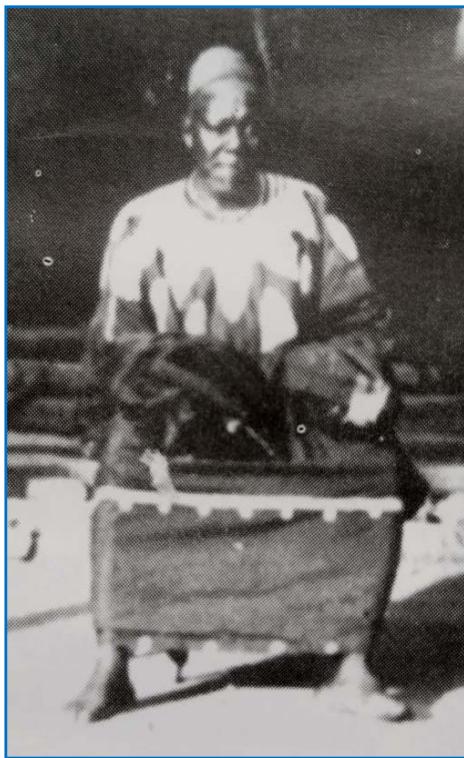
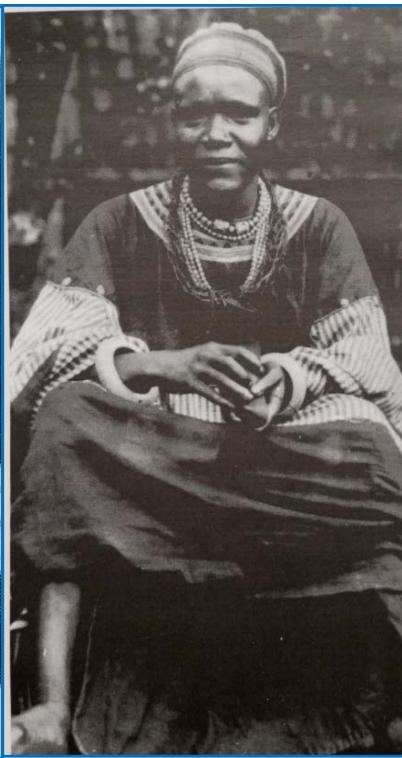
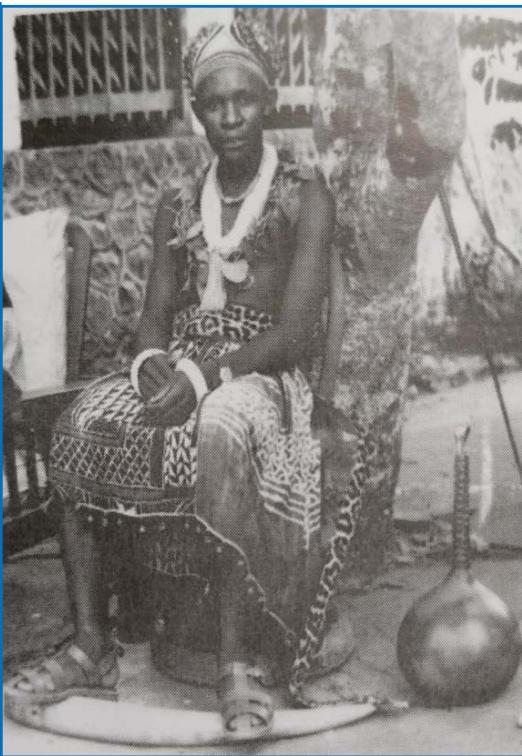 Fig. 5c: FonAbumi II
Source:Customs and Traditions of Bafut,PP.36,43&52
Fig. 5A: FonAbumbi I
Fig. 5b: FonAchirimbi II For the fons to fully succeed in their administration of the fondoms, there must be a kind of hierarchical cordial relationship between the chief (at the grassroots) and the fons. Where such relations were strained or broken, conflicts erupted. The conflicts were often characterised by wrangles within the ranks of the rulers and each struggle ended up assuming a political dimension with subaltern leaders attempting to secede or create independent autonomous states within the state. As mentioned earlier, colonial rule introduced a new system of relations amongst the African leaders in this area. It distorted the traditional system that existed before. Unable to master the complex colonial system or organisation conflict ensued in the relations amongst the leaders. Peace and cordial cohabitation became far fetch. Solutions to the return of peace were only seen in separation and autonomous living apart from each other.
In Bafut these political conflicts involved the Fon (king) and the chiefs of some semi-autonomous chiefdoms in the fondom. These chiefdoms were Obang, Benji, Bawum, Manbu, Mankahnikong and Mbebeli. Relations between the chiefs and the Fon of Bafut were not always cordial. The problems started far back before the advent of colonial rule in the Bamenda Grassfields. Long before the German and the British arrival, Bafut had been a composite and heterogeneous kingdom. It was made up of several chiefdoms with the major ones being Bawum, Mambu, Mankahnikong, Obang, Benji and Bukari. At the centre of the kingdom, clustered around the Fon's palace (see fig. 6) at Mumalaa, were villages such as Bujong, which served as the capital of Bafut, Manji, Mbebali, Njinteh, Niko, Mankaa, Nchum and Njibujang. The Fon directly ruled these villages. The chiefdoms referred to above were made up of people from different cultural and historical backgrounds that constituted semi-autonomous entities in the area (Hawkesworth, 1926).
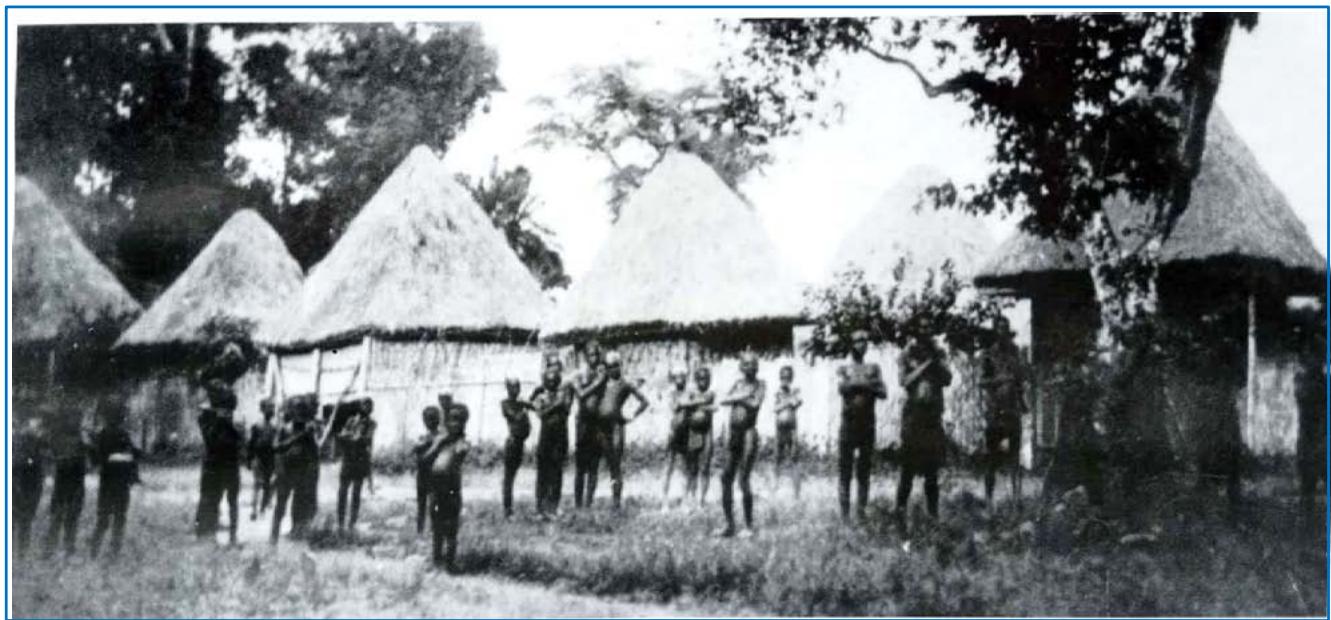 Fig. 6: The Bafut Palace in 1889
Source:Customs and Traditions of Bafut,p.37.
The Bafut group came to Ndop after leaving Tikari. Following the death of their leader, a succession dispute, arose between two sons, Nkenjoh and Aghanjoh. Aghanjoh left with his group of supporters towards what is today Bafut (Niba, 1981: 12). On arrival, Aghanjoh was received in the village of Mbebeli by Nibachi, the Chief. After staying with him as a guest for some time, Aghanjoh won over Nibachi's subjects by his lavish generosity, because Nibachi was a selfish and crafty ruler. Consequently, the council of elders conspired with Aghanjoh and urged him to depose their chief and seize the throne. The newcomer did so in a cleverly conceived plan of stepping on Nibachi's foot in public, a sign of deposition. The deposed chief subsequently committed suicide. Later on, one of Aghanjoh's successors moved the palace from Mbebeli to its present site at Bujong in Mumalaa. Then the immigrants subdued the Bukari and Buwe people, who apparently along with the Mbebeli people were the autochthonous inhabitants of Bafut.
The expansion of the Bafut fondom from its original nucleus to its present size was due to both internal and external factors. One important external factor was the incursion of the Bali Chamba into the Bamenda area at the beginning of the nineteenth century. This incursion greatly affected the balance of power in the area. It brought them into conflict with the bigger chiefdoms and drove the smaller chiefdoms to seek refuge under the bigger ones. After initial clash with the Chamba, Bafut became a rallying point for refugees from the south and southwest of the Ngemba area (Tweed, 1926:6). Some of them eventually returned to their areas after the danger was over but others who stayed were the Mambu and Mankanikong who claimed the same area of origin, namely Mberewi (Chilver and
Kaberry, 1967:19). These chiefdoms became tributaries of Bafut through voluntary submission.
The expansion of the Bafut fondom northwards into the Mentchum valley after the Chamba incursion, in the middle of the nineteenth century was dictated by land hunger as well as by a desire for tribute (resources). In a series of raids, the Bafut subdued some of the peoples of the area, such as the Otang, Buwi, Bugri and the rest of them (Mbekong, Manta and Butang) had to voluntarily submit. Another area which the Bafut brought under their control was Banji (Njimuya–across the Mezam River) with its rich savannah farming and hunting grounds. They subdued the inhabitants and forced them to pay tribute. The Bafut also began to settle there (File NW/QF/1933/1, 1933).
Thus, on the eve of the German annexation of Cameroon in the last quarter of the nineteenth century, the Bafut fondom had expanded to its present size, and assumed her present composition. It was a heterogeneous fondom, ruled by an immigrant dynasty and prepared to defend her territory and sovereignty as a conquest state. This is what gives the Bafut Tikars and leader the strong legal argument that none of these subaltern chiefs can succeed in creating an autonomous state within Bafut.
However, Aletum discards this argument by intimating that the problem or conflict began when the Tikar leader usurped the throne from the indigenous chief, Nibachi. From then, the central chiefdom developed the tendency of setting the chiefdoms against each other in order to weaken their regional authority, thereby gaining through a conflict situation the ability to enforce its central authority. Aletum made reference to the fact that it was not easy for some of the chiefdoms such as those of Bawum and Mambu to retain their hereditary sub-chiefs' privileges and titles. The retaining of these rights by Ntoh of Bawum and Wanki of Mambu was not through peaceful means but through strong political competition and conflict(Aletum, 1974:31). In fact the usurpation spirit of the Tikar leader was at extreme and as time went on, the conflict multiplied and increased in magnitude. The conflicts were openly manifested during colonial rule.
Aletum further state that the seizure of the throne of Nibachi, the chief of the autochthones in Mbebeli, by the Tikar leader on his arrival, to him was "a palace coup d'Etat" that effaced the political influence of the chiefdom of Mbebeli, whose leader, Nibachi, lost his throne to the Tikar leader called Aghanjo (Ibid.). As time went on, the Tikar leader in Bafut consolidated his authority in a new palace that was constructed in a valley referred to today as Mumelaa. From Mumelaa, the Tikar leader began to wield a lot of power and control over the rest of the chiefdoms in the area. For the fact that the political institution of the Mumelaa chiefdom were far superior to those of the other chiefdoms in the area, the authority of the Bafut leader of Tikar origin grew stronger. Open confrontation and political conflicts became common. On the one hand, Aletum noted, in some of the semi-autonomous chiefdoms, the political institution were subdued but not to the point of rendering them entirely ineffective. These institutions in the chiefdoms, though weak, still exist, but always as a point of conflict. The conflicts are manifested in many different ways, cutting across the Bafut society and the core of traditional politics in the fondom. The intention of the chiefs of the semi-autonomous chiefdom had been to break away from the main society to establish or gain full autonomy over their chiefdoms in the area (Ibid.). However, colonial rule aggravated the situation beginning with the Germans.
German colonial intrusion into Bafut was felt for the first time around 1889, with the arrival of the first white man, Dr. Eugen Zintgraff (a German explorer) in the Bamenda Grassfields. The presence of Zintgraff in the area terrified the Bafut people and their Fon, Abumbi I, and caused much anxiety and uneasiness among them. Abumbi I was unwilling to accept German colonial rule and it was after a series of wars the Germans from 1900 to 1906 that he was compelled to succumb to German rule (Niba, 1986: 86-101). As time went on, traditional authority in Bafut suffered some mutations, difficult for the ordinary Bafut person to understand. German rule in Bafut saw the emergence of conflict within the traditional political system caused by ignorance and the desire to protect interests.
Internal cleavages between the groups of people in Bafut were conspicuous. They remained competitive with each other, giving rise to political competition among the natural rulers. With the establishment of German rule in Bafut, the traditional political institutions appeared to be dormant. But, even with the dormant nature, the institution remained the core of political competition and political conflict, prepared for action when the opportunity presented itself (Aletum, 1974: 31). The situation was aggravated when Bafut came under British rule. British colonial rule served as a catalyst that activated tension among the Bafut leaders. British rule brought stress in relations between the Bafut Fon and his chiefs. Effervescence was added to old personality conflict and skirmishes that existed between the Fon and his chiefs in the past.
First, before the arrival of the British, the status of the traditional rulers in Bafut was well defined. The different people addressed their leaders as $nfor$ (king). The status of the most influential of them, who was at the head of the kingdom, was distinguished from those of the subordinates by praise names such as $ati-njong-njong$ (thorny tree), $munah-ngwe$ (the leopard cub), $nongubu$ (a python), $mooh-kwifor$ (son of kwifor), $tsabufor$ or $atsah-te-yeyah$ (he who passes and his footpath cannot be traced) (Suh and Mbungwa, 1995:7). When the British established their rule in the area, they started differentiating the traditional rulers by using titles like "paramount chief" and "sub-chief". In Bafut, Abumbi I and later on Achirimbi II were recognised as paramount chiefs. No other leader within the fondom was recognised as such. When the title 'fon' was later adopted and popularised in the Bamenda Grassfields, the title received official recognition in the circles of colonial administration. Thus, the colonial masters recognised only one traditional ruler of great importance in Bafut in official circles as "fon". This title thus became a source of conflict among the traditional leaders in Bafut. As time went on, the conflict became tense and has continued unabated in recent times.
However, the problem was not with the title per se. It was with the colonial privileges and duties that went with it. The Fon's duty to collect taxes, rates and dues in his jurisdiction caused the closer relationship between the chiefs and the Fon to dwindle and the authority of the Fon over the semi-autonomous chiefdoms began to be weakened. The chiefs refused to pay tributes to the Fon of Bafut and the controversy was that they viewed the tax rebates retained by the Fon as a substitute for tributes from the people in the various chiefdoms (Chilver and Kaberry, 1960:1-9).
In 1948, Nanoh, the chief of Obang village or chiefdom took a bold step and gave the spark of the struggle for sovereignty when, for 2 years, he refused to pay his tributes of 2 tins of oil and 2 baskets of dry fish (per annum) to the Fon, Achirimbi II (FileAb(1926)3, 1926; File No. 213). Achirimbi on his part decided to sue Nanoh to court. Yet, before Achirimbi could have time to settle the dispute with Nanoh, news reached him that Talah, the chief of Banji, had confiscated a leopard meant for him as tribute, and made use of the meat, skin and whiskers (Criminal Case no.85/1949, 1951; File No 2408).
In 1951, Achirimbi sued Talah. In 1961 (the year of Southern Cameroons release from colonial rule), the ruler of the Bawum chiefdom, Ntoh, sued Achirimbi for appropriating Bawum land (Abumbi II, 1995). At the time Achirimbi died in 1968, the conflict with Bawum chiefdom over land in Bafut has not yet been resolved. The conflict was further aggravated by petty skirmishes and personality conflict between the Fon and the chief of Bawum. A local market problem was the last straw that kept Ntoh and Achirimbi at reasonable distance apart in their relations.
Besides, when the British authorities carved out their first inter-tribal boundaries in the Southern Cameroons, these groups were recognised as entities within the Bafut fondom. We refer to in this work as 'states within a state'. These states within Bafut, were placed under the authority of the Fon. The Bawum, Banji, Obang, Mambu and Mankahnikong leaders were eventually made subaltern leaders under the Fon of Bafut. They also retained their original royal titles called Ntoh, Talah, Nanoh, Wanki and Muwah respectively. The ancestors of most of these chiefs migrated into the area today called Bafut with the aforementioned royal titles brought from their different places of origin. They installed their ruling houses in the various sites they occupied in the area and have maintained their hereditary titles up till date. Recently, some of these chiefs (as explained in the chieftaincy decree earlier) have been classified as "second-class chiefs" ruling "second-class chiefdoms" within the Bafut fondom (Aletum, 1974: 55-7).
Fortunately or unfortunately, the generations of chiefs from these chiefdoms have been in conflict with the Fon and the central authorities in the Bafut palace. Sporadic tensions flare up each time the opportunity occurs. The time and nature of the conflict is not determined but what is evident is that it imposes the need for peace, in this way state and non-state institutions are bound to engage peace ventures and efforts to calm down the situation. The dynamics of the conflict and its impact on the community are examined below.
## V. DYNAMICS OF THE CONFLICT IN PRESENT DAY
We asked the question as to why this conflict has continued in Bafut to recent times. What are the factors that sustain this conflict till present? The dynamics of the political conflict among the Bafut traditional rulers, which this paper examines, has been analysed by many scholars over the years. However the issue is not limited to the Bafut fondom. It touches a good number of the great fondoms of the Bamenda Grassfields. It also concerns a wide range of African traditional societies especially in states where British and French colonialism was established. The conflict deals mainly with history, traditions and practices that acted as sources or causes of secession tendencies among traditional rulers in Bafut and the Bamenda Grassfields' fondoms as a whole. In this article and alongside other researchers on Bafut, we discovered an entangled and complex web of relations and issues amongst the rulers and people. A number of concepts and practices imbued in the Bafut political system are not working well as to shelve conflict in favour of peace in the fondom in present day.
To begin with, the name 'Bafut' was first mentioned in any historical document in modern times by Dr. Eugen Zintgraff in one of his works which recorded his passage through Bafut in 1889. Here, Zintgraff's view about the Fon of Bafut on his first encounter with Abumbi I is highlighted. Zintgraff described the Fon of Bafut, Abumbi I, as an African despot such as he had not seen before or was he ever to see again (Zintgraff, 1895:16). In fact the Bafut worshiped their fon as a demi-god and even whites who came to Bafut joined the people to perform traditional rites that honoured the Fon(see fig. 7).
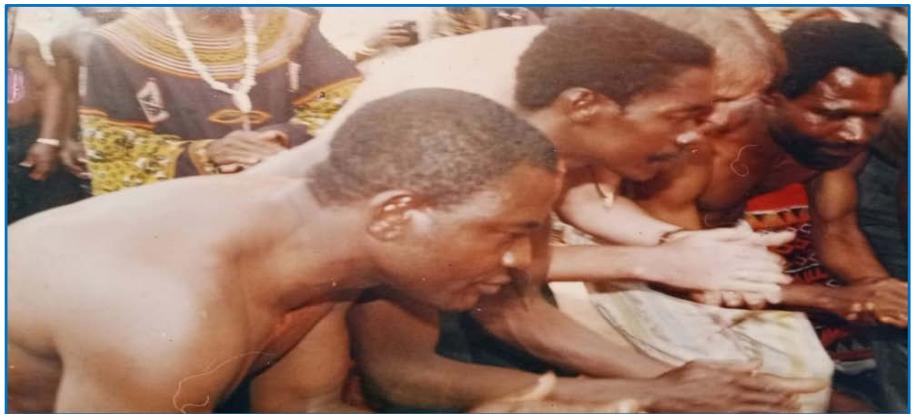
Source: Author's Collection Fig. 7: Bafut Men and a whiteman performing Honours to Fon From Zintgraff's description, it is evident that the authority of the Bafut Fon over his people was so strong that his decisions at one point could cause a conflict situation of great magnitude. There is no clear evidence as to whether his successors changed from this despotic attitude as Bafut evolved into modernism and democratic practices. In the Northwest region and in Mezam Division in particular, the Bafut people were the last to receive modern administration put in place by the Cameroon government. This is indicative of the fact that Bafut remained rooted in its old traditional practices and absolutism till 1994. Even then, the state administrators in the exercise of their administrative duties met stiff resistance from the traditional system in Bafut.
Chilver and Kaberry on their part highlighted the type of relationship that existed between the Bafut Fon and the sub-chiefs since the inception of the Bafut dynasty. For generations, there has been tension between the Fon and some of his chiefs. Such tension led to the killing in the Bafut palace of one of the chiefs of Bawum shortly before the arrival of the Germans in 1888 (Chilver and Kaberry, 1967:19). This assertion became an issue of sharp controversy and disagreement among scholars studying the history of Bafut. While some, like M.T. Aletum and Mathias Livinus Niba, hold the view that there is evidence that the said Ntoh was murdered through mysterious means and buried under a tree near a riverbelow the Fon's palace called Nkinsare, other scholars argue that Abumbi I was not responsible for the killing. According to them, the said Ntoh was eliminated within the core of kwifor in conformity with the will of the greater faction of the Bawum traditional authorities and princes who declared their intention to get rid of the chief and install their own favourite candidate in his place (Tumensang, 2000:6). Whatever the case, the fact is that the fifth Ntoh of Bawum was killed and the Bawum people up till date have been using the point as a reference to justify their struggle to break away from the Bafut fondom.
In this conflict among the Bafut rulers, ethnicity plays an important role in precipitating tension. Jean-Pierre Warnier described this phenomenon as "ethnic processes." He pointed out that various societies constantly change with modified institutions falling in line with changing fortunes. Thus, no matter the degree of integration and change, ethnicity will sometimes lead to ethnic tension and conflict (Warnier, 1975:78). Mathias Livinus Niba added that such tension and conflicts increased in Bafut due to the misinterpretation or reinterpretations of the three topographically demarcated geographical zones in the fondom (Ntare, Mumelaa and Mbunti). The inequality in the distribution of resources in these three main zones is a serious problem among the Bafut ethnic groups. Also, the integration of conquered peoples, slaves and captives in the Bafut society was received and interpreted in various ways by the different peoples in the various chiefdoms. Hence, discrimination and open manifestation of ethnic differences and strife for superiority in the fondom were not uncommon (Niba, 1999: 22-33).
Crawford Young further buttress the significant role of ethnicity in traditional societies when he said: "Even the least separatist sentiments among a group of people suffices to illuminate conflict in a state. Cultural cleavages accompanied by different histories of people's origins are widely believed to cause tension within a society. They broaden and deepen cultural identities, which ultimately strengthen secessionist spirit even in traditional societies. The struggle has often taken the form of demands for sovereignty expressed by cultural or ethnic community within an existing territorial entity (Young, 1976:33)." In fact, there is no palpable evidence to show that vices linked to ethnicity were eliminated in the Bafut community as it evolved into modernity.
Apart from ethnicity, the question of land remains cardinal in Bafut society. Miriam Goheen, in a study of similar conflicts between the Fon of Nso and his sub-chief, the Fon of Nse, revealed that land and stewardship constituted major symbols of political leadership. Thus, the least conflict over land and its resources could inflict negative consequences on the entire society. Strained relations among traditional rulers could result to secession. As society evolved, the conflicts multiplied and traditional authority gradually withered away (Goheen, 1996: 399-424).
In this, the character of man and his attitude towards landed property aggravates the magnitude of conflict related to land and power (authority). Robert Ardrey, pointed out that man's quest for territory and property undoubtedly raised greater storms in traditional societies. To him, man is a predator and, from time to time, he goes out looting, "raping" and raising general havoc in the surrounding countryside or neighbouring villages. Ardrey described traditional rulers as people who will like to reap where they have not sown. The final outcome is an unavoidable reprisal from the offended. A conflict thus erupts among the leaders involved. Ardrey draws a number of conclusions. First, the common cause for any form of conflict revolves around man's ignorance. Second, group of family loyalty to traditional rulers in local societies depends on joint attachment to private territory or land. When the land is tempered with, conflicts with greater magnitudes occur (Ardrey, 1966:46). Land matters between the leaders of Bafut are seemingly going to balkanise the great fondom in modern times.
The conflict in Bafut today equally revolves around authority. The rulers here are so attached and full of authority in such a way that none is willing to relinquish any iota of it. They all claim to be powerful and equal. None accepts to be regarded as the subordinate of the other or to be treated as such. This is an attitude which Paul Nchoji Nkwi had earlier highlighted and warned against when he examined the concept of traditional authority within the political institutions of the Kom people. Nkwi pointed out that traditional authority is the centre of all relations. First, the authority is built on consent and consensus rather than on coercion. To Nkwi, Bafut, Bali, kom and Nso in the nineteenth century emerged as centralised states with centralised authority. The Fon was at the head of a hierarchical political structure, which permitted him to delegate powers and authority to regional representatives. In this political system, therefore, the king or fon, according to Nkwi, is a sovereign leader with a hierarchical authority. In the nineteenth century, most of these rulers were also ruling over confederacies, which were often a mixture of pyramidal and hierarchical authority (Nkwi, 1987:56). Nkwi's view is that the groups of people in the Grassflieds' fondoms did not live in complete isolation. Friendly contacts dominated their history but many of them too had hostile conflicts and contacts with one another. These hostilities could have been wars, boundary problems and various forms of conflict that strained relations among the groups. Hostilities or strained relationships among the traditional rulers themselves became a common feature too (Ibid.). Thus, in a situation where subordinate authority discards history and rise to claim equal rights, privileges power, and position with his superior in recent times, such a community can hardly be peaceful. It is the case with Bafut.
In fact, to deal with authority in Bafut today is to deal with a sensitive and precarious situation. Traditional authority is in the blood of the rulers more as a vector of controversy, bitterness and deadlock. It provokes senseless conflicts in a great fondom that by dint of its status is expected to be dynamic and evolving rapidly in present day. One is quick to conclude that even in the midst of modern education nowadays many traditional authorities have failed to learn from their history and construct better peaceful communities for their people. Little wonder then that Fortes and Evans-Pritchard remarked that in dealing with traditional authorities, one is dealing with law on the one hand, with conflict on the other, and with peace and order where necessary(Forts and Eans-Pritchard, 1967: 27). Within a locally defined community, an authority may commit some acts or adapts some modes of behavior, which may spur up conflict in the society. Traditional leaders who generate tension in the society claim to be great men. Subordinate chiefs play the role of representatives of the people within central authority (hierarchy). But, without cooperation among the people who hold these offices, it becomes very difficult, if not impossible, for the administration of the society to succeed. The king himself confronts difficulties in obtaining his revenue, assert his judicial and legislative supremacy, or retain his secular and ritual prestige. Sabotage becomes a salient feature of conflict among traditional leaders (Ibid.). The circumstances prevailing in the society at the time thus determine the magnitude of the conflict.
In Bafut the traces of colonial administration continue to reign havoc up till date. The bone of contention is on issues emanating from acculturation which the people have been unable to manage several decades after the departure of the colonial master. The relics of colonial administration had remained indelible in the traditional political system of Bafut more as a source of conflict in modern time. Walters Che Fombong lamented on this when he remarked that the Bafut society, which was purely traditional, gradually evolved into the colonial era where foreigners and external influence infiltrated the "traditional society." Chieftaincy matters for instance, were intricately linked to British local administration. The colonial classification of chiefs into grades (first, second and third class) in the Bamenda Division was not necessary given that it became a source of conflict and disagreements over titles among the traditional rulers of powerful states or fondoms.
Till date, the disagreement has not stopped. The word "paramount" used to clearly distinguish the authority of few first class chiefs is still in conflict. While the paramount chiefs were placed on a monthly salary and held in high esteem by the British colonial masters, the second-class and the third-class chiefs were less important and thus ignored. Today, in spite the 1977 chieftaincy decree many paramount or first class chiefs still think that the second and third class chiefs should be permanently ignored and deprived of any privileges. The envy and jealousy aroused among the traditional rulers during colonial rule had seldom disappeared. The secession tendencies among the traditional rulers in Bafut multiplied in recent times (Fombong, 1980:79). The post-colonial government inherited and continued with the system of classifying traditional rulers into grades and this has never resolved the separatist tendencies among the rulers in Bafut.
Apart from the classification of chiefs, colonial masters created artificial or warrant chieftaincies. The consequences of this act in Africa and Bafut in particular today are vividly described by Thomas Bierschenk who pointed out that, some chieftaincies in African societies today are not traditional institutions originating from pre-colonial times and extending into colonial era. The colonial authorities created chieftaincies where such had not existed before. As time went on, traditional rulers became involved in modern politics. It became difficult to distinguish chiefs from the modern elite for they did not constitute two distinct social groups. On the one hand, some politicians took the chiefs as potential allies or opponents. The concept of "tradition" and "modernity" was not antithetical to the politicians. Thus, in the face of this confusion, internal conflicts over the social status of chiefs became prominent among traditional rulers. With the advent of colonial rule, chiefs with pre-colonial titles and history could not survive the democratisation of the chieftaincy structures and institutions by the colonial administration. It became difficult to differentiate a traditional chief from a modern politician (Bierschenk, 1993:217-43). Up till date, it is indeed difficult to distinguish a traditional ruler from a modern politician or elite.
The emergence of party politics in later years intensified the conflict and brought in new dynamics in chieftaincy matters. These political parties offered themselves as national political counterparts to opposing factions in local conflicts. Chiefs and would-be chiefs now needed to secure political support by siding with the national power groups. Governments now used the chiefs to enhance their rural constituencies. As for the "earth priests" (the kingmakers responsible for the enthronement of the chiefs) who were basically cut off from the sort of official recognition, it now appeared that the only way open for them to increase their local influence was to ally with various factions of chiefs (Ibid.). It is within this wider political context that many of the puzzling alignments of chiefs in conflict can best be understood in Bafut and many other fondoms, which came under British rule and thereafter. With the advent of multipartism in Cameroon in the 1990s, two prominent political parties existed namely, the Cameroon People's Democratic Movement (CPDM) and the Social Democratic Front (SDF).
The impact of these two parties on local politics and traditional authority in Bafut was enormous. It suffices to mention here the consequences of political alignments created by these parties on the Bafut rulers and their people. These parties carefully and cynically set up their political agendas and strategies to further balkanise the Bafut people and leaders under the guise of supporters or followers. While each party struggled to make Bafut its bastion, the syndrome of 'states' existing within the Bafut fondom was gradually fortified and consolidated given the political strife that emanated amongst the political elite and traditional rulers, especially at the level of the central palace. Many political elite accused the central palace for either withdrawing support from them or supporting their opponent because they were not from the same chiefdom or origin. Of course the political elite who had impressed on the government to create the second class chiefdoms within Bafut had a bone to contend with during political campaigns and elections in Bafut (Niba, Personal Communication, 2012).
We noted that the paramountcy and status of the Bafut Fon also became a source of bitter conflict among the chiefs of the ethnic groups inhabiting the fondom. The problem has remained unresolved up till date as each chief wants to be recognised as paramount fon, advancing various arguments to back up his claims (Ngwebufor, 2000:3-4). During colonial rule, the powerful position of the Fon of Bafut permitted him to impose his will on the other chiefs in his realm who were not fortunate to have their status recognised by the colonial masters. He was made the paramount chief in the Bafut Native Authority Area (which also included Bambui, Nkwen, Mendankwe, Bambili and the two Banankis). The colonial authorities paid him all the respect, "closed their eyes to his wrong-doing," and gave him a higher allowance. They increased the Fon's power without considering the traditional context or implications and this inevitably caused tension among the traditional rulers especially the chiefs of the semiautonomous chiefdoms in the fondom. Although this tension has not resulted in any organised armed conflict, it has resulted in violence (Niba, 1981). Traditional politics became more complicated because of the envy and jealousy that surrounded the position of the Fon. The Fon felt threatened in his position and thus adopted various strategies to deal with the situation and consolidate his position. In the course of doing this, more tension arose in present day.
However, John Neba Chungong thinks that this tension should have subsided by now but for the fact that independent governments and regimes continuously arrogate to themselves the right to have the final say in chieftaincy matters or the recognition of chiefs. Consequently, government authorities permanently intrude in chieftaincy matters such as succession to the thrones of traditional rulers, especially in the North West Region of Cameroon. The involvement of government authorities in issues considered to be purely traditional affairs to an extent increased tension in areas where succession conflicts occurred. In Bafut, political conflicts among the traditional rulers in the fondom were aggravated by succession conflict where government authorities and state functionaries were involved. (Chungong, 1977: 43).
Divine F. Ngwa aligns with Chugong by illustrating the 1968 succession conflict in the Bafut palace. Here, the involvement of some of the chiefs of the semi-autonomous chiefdom in the affair gave a wider dimension to it. Their role in the issue created more tension and increased the magnitude of the conflict. The chiefs especially those from Bafut, threw their support behind princes whose mothers' origins were from their chiefdoms. They mounted a strong opposition against the prince who was apparently designated to succeed. Politicians and government ministers from these chiefdoms in Bafut did all in their power to ensure that the throne was succeeded by the prince they and their chiefs supported. Ngwa, in his conclusion, pointed out that succession conflicts were avenues or sporadic opportunities where the chiefs used to revenge or manifest old grudges and grievances that they bore against the Fon of Bafut and the central authorities in the palace (Ngwa, 1999). Such grudges and grievances are not unconnected to the political conflict, rivalry and secessionist tendencies that have existed among the traditional rulers till date.
For instance, when Achirimbi died in 1968, it was expected that the conflicts and wrangling among the rulers in Bafut would subside following the occupation of the throne by a new fon, Abumbi II. But on his accession to the Bafut throne, Abumbi found himself entangled in a web of bitter and estranged relationship with the chiefs of the semi-autonomous chiefdoms in Bafut. These differences have continued up till date. Again, in 1995, Abumbi II appointed some new "third-class" chiefs in the fondom. The appointment sparked new waves of resentment amongst the chiefs of the semi-autonomous chiefdoms. This time around, the chiefs of Mambu, Mankahnikong and of the recently revived Mbebeli chiefdom joined the old clique of chiefs in opposition to the Fon's authority. The Chief of Mambu, Wanki Nibanchang II, spearheaded the strife. He wrote several petitions to government administrators contesting the legitimacy of the "third-class" chiefs appointed by the Fon in the Mambu chiefdom.
The respond of government eventually embolden the chiefs to continue in their actions against the Fon. The plea of the revolting Bafut chiefs gained sympathy within the ranks of government authorities in the area. At one point in time, the Senior Divisional Officer for Mezam wrote a letter related to Chieftaincy disputes in Bafut Sub-Division. The letter pointed out that the Fon had illegally created some chieftaincies in Bafut, which were contrary to the decree of 1977. The Senior Divisional Officer in his letter informed the Fon that the list of chiefs he forwarded to the administration was not the right one. Consequently, the Fon was requested to withdraw any traditional authority and insignia conferred on any individual as a chief (Ref. No. 472/L/E29/SP, 1998). Such ultimatum were nothing short of empowering the subaltern chiefs in Bafut and reinforcing the existence of states within a state.
In fact, the decision of government authorities seemed to have added more insult to injury in the chiefs' revolt against the Fon. In April 2000, under the canopy of the. Ntare chiefs," the traditional rulers of Bawum, Mambu, Mankahnikong and Mbebeli addressed a letter to the Divisional Officer for Bafut Sub-Division concerning the traditional titles of "chief" and "fon" in Bafut. They challenged the Bafut Fon's claim that he is the only fon in the fondom. The chiefs argued that they too were fons and their titles must be recognised and respected (Note of Information, 3 April 2000). It is this conflict among the traditional rulers in Bafut that is seemingly going to tear the fondom apart in modern times. In this, the 1977 chieftaincy decree quoted severally by Divisional Officers and government officials in Bafut is the bone of contention and source of all other conflicts among the Bafut rulers in modern times. The impact on the community is enormous.
## VI. IMPACT OF CONFLICT
The traditional political system in Bafut is endangered. The conflict has diminished the mystical element of the institution of kingship in Bafut. The authority of the Fon is gradually withering among the people in the various chiefdoms. The development of the fondom is endangered. Also, the conflict discourages outsiders from settling in Bafut. A stranger would not like to settle in an area where the first condition for the acquisition of land forcefully compels him to pay allegiance only to a particular traditional authority and not to the other. The Nsoh quarter in Bafut is a victim of this feat.
Furthermore, the conflict among traditional authorities (since its inception) scares potential well-wishers who would have liked to help Bafut in one way or the other. The conflict today represents an impending doom for Bafut development, which all Bafut people should aspire to. Disunity has entered the fabric of the society. The saying that "united we stand divided we fall" means nothing to the traditional rulers in Bafut. Political, ideological, personal and social differences have permeated the society. Social relation and inter chiefdom marriages have been reduced drastically. Each person is suspicious of his fellow brother or sister coming from a different chiefdom. All these are clear indications of the ultimate disintegration that looms large over the Bafut fondom.
More fears are directed towards the future generation of rulers in Bafut. It has been noticed that each generation of rulers inherits the conflict. The magnitude increase with the passage of time. The future of the fondom as a political unit is seriously threatened. From the conflicts and wrangling that characterise relations among the traditional rulers here, one can hastily draw the conclusion that, if efforts are not made to arrest the situation, future generations shall inherit "arms" of genocide, massacre, hatred and jealousy.
Furthermore, the role of the Bafut people, scholars, elite and Cameroon Government administrators in the conflict among the traditional rulers in Bafut is significant. They are also points of controversy, which need critical examination. As far as the people are concerned, those in the various chiefdoms relentlessly support their individual chiefs.
On the part of the elite, they manipulate the rulers for their own ends. In the main towns and cities of Cameroon, the elite from the rebellious chiefdoms boycott the central Bafut manjong in obedience to the express desires of their chiefs (The Bafut Observer, 2000: 6-7). Yet, most of these elite are traditional title holders in the fondom. Their role in traditional politics in the face of conflict are equally damaging to the Bafut people. The people are even more confused and misled by some writers of newspaper article who fall short of having a mastery of the historical facts, political developments and traditional politics in the fondom. Some writers or scholars writing on Bafut have contributed in sparking a controversy over the status of the Bafut fondom. Some call Bafut a federation; others feel that it is a confederation while some are categorical on the fact that it is a monarchy.
Beside, traditional authority is gradually decaying and great African states like the Bafut fondom are threatened. The respect due traditional rulers in their societies had withered away. Their role as peacemakers is virtually defeated. The moral values bestowed on the African tradition are seemingly being destroyed by conflicts among the rulers who are considered as custodians of these customs, norms, and moral values. Our greatest hope is that this article should arouse the interest of other scholars or researchers in the study thus enhancing intellectual scholarship that will restore peace in this great fondom.
Today the North West Region has been affected by this 'state' syndrome that dealt a big blow to the local communities in the past. With the advent of multiparty politics in the 1990s, the political elite from Ndonga-Mantung Division, led by Honourable Tamfu (of late) campaigned for the split of the North West Region to create a far-north west region with capital in Nkambe (Mbah Ndam Joseph, personal communication, March
2015). The benefits of this act could best be explained by its orchestrators or perpetrators. But one thing is clear that it was an attempt to create a state within a state. This divisive attitude had remained in the brain of the political elite from this division who think that whatever happens in the North West Region as a whole, is not part of their business. To them they are by inference autonomous or independent of the North West Region.
For instance, with the insurrection of the amba revolution in 2016, ghost towns and school boycotts were respected all over the North West Region but for Nkambe. With the creation of the Concept of Junior Senators in Cameroon in 2022, the junior Senator from Ndonga-Mantung, Nseka Ndi Anatole insisted that there is no way the North West can present a general project for the Region (Nseka Ndi, personal Communication, November 2022). Each division and its senators should concentrate in the development of projects in their divisions and forward the reports directly to the Assembly in Yaounde. This attitude in a sense, sustained the vices of states within a state.
In a follow up of the elections of the bureau of the Junior Regional Council for the North West on 3 February 2023, Nseka Ndi Anatol declared:
Donga Mantung won the presidency... the person who won... is the person the whole Donga Mantung will pay respect to... any other arranged candidate is a farce. We worked for that, we are not going to leave our efforts go in vain. Arrangements can be done on any other position, not the position of the person who won the presidency. Youths... paid their transport from very far distance like Ako, Misaje, Nkambe... to come for this event... if any other person should replace our president, it should be someone from Donga Mantung and nothing else... stripping us from our position of responsibility is something we cannot condone (personal Communication, 3 February 2023).
To emphasis that if the president is not from Donga Matung, people from that Division will not accept or respect was in essence reiterating the fact that Donga Mantung wants to be a state within a state.
Today, the union between English speaking and French speaking Cameroonians created in 1961 is suffering from socio-political crises that continue to threaten the foundation and existence of that union as the bid for the creation of an independent English speaking Cameroon state animates the political scene. In fact, leaders of the *amba* revolution of 2016 hold swear that the two English speaking regions in Cameroon must have an independent or autonomous state of their own. The future and way forward in this crisis remains the million dollar question to answer. Yet, all these had its origin in the colonial concept of states vis-à-vis the African concept as explained in this article.
The consequences in the communities till date are enormous.
## VII. CONCLUSION
This study focused on the perception and manifestation of the concept of states in African communities and most especially where groups of diverse people exist as one body in a state. It is what we also referred to here as 'states within a state.' Here, the problem is not about the physical and geographical form of the state(s); it is about the welfare and wellbeing of the people concern. Where oppression exist and the state instrument cannot satisfy the needs of the citizens nor provide avenues for them to fetch for livelihood, separatist tendencies will occur. No human by nature is ready to sustain torture and misery for long. One state system in the world which is a succinct example of unity in diversity is the American federal structure. In fact the American federated states show how people from diverse background and origin can cohabit peacefully under the same canopy called a state.
The Canadian state model also portrays vividly how people with different cultural and linguistic background can live together in the same house (state). In the minds of Canadians, it is clear that before they were made French and English speakers, they were first and foremost Canadians. The desire to live harmoniously and peacefully is compelling. It is even a fundamental right and priority to them. America (USA) and Canada translate to the world how 'states within a state' can exist and move on with life. They can serve as inspiration to Cameroon in the bid to solve the secession or separatist revolution imbued in the English speaking regions for decades now.
In fact, the issue is about self-determination and how a people are treated within the context of states. In the Union of two cultures since 1961, the English speakers claim to be passing through life challenges sandwiched with torture, discrimination, misery and marginalisation (Ngwa, 2022: 846-853). The subaltern chiefs (leaders) and people in Bafut had accused their Fon for not giving them 'dash.' Meaning, he did not care for their welfare and well-being. Besides, instead of using the much power he had acquired since colonial rule to enable them live a better life, he used it to oppress them. This gave the sub-chiefs and people reason to secede. Attempts in this direction led to conflicts with enormous impact on peace building ventures in that community. Till date, peace is a relative and fragile issue in Bafut. Yet many yearn for peace. The resolution of conflicts and the restoration of lasting peace in Bafut and Cameroon as a whole requires a revisit of the concept of states within a state as perceived and practised in Cameroon.
The concept of states is an issue of people coming together in a political structure or arrangement made in the society. When this happens, the people are bound to cohabit, live and work together in the system. Relations amongst the people are dictated by the perceptions they have towards the structure or arrangement. Always conflict ensue in the relations to jeopardise peace and harmonious living because of the non-respect of the fundamental rights of each other. This brings to light the question as to how some people cohabit, cooperate and develop within the context of 'states within a state.' We earlier mentioned the USA and Canada as glaring examples.
In this article, we defined a state as an organisation of human beings connected by a system of relations. From precolonial to colonial and post-colonial era, we saw the various organisations or structures put in place to regulate relations amongst the Bafut and the people around them. Bafut went through a number of internal arrangements which built a strong centralised but diverse kingdom (fondom) under the leadership of an all-time powerful fon. We equally saw the organisation made by the colonial masters- Germans and British hoping to create harmonious and peaceful relations amongst the people.
In this bid, the native authority areas and the south eastern federation were created. On a general note, we will say that European structures dealt a big blow to African political arrangements and relations. First, European powers in Africa were more interested in the economic and geographical mapping of states (structures) for exploitation. That is, carving out spheres or areas endowed with resources for personal administration, control and exploitation. They overlooked the socio-political relations that constituted the bases of state formation in Africa. This eventually generated conflicts in the African communities including Bafut.
The post independent states came up with reforms and new structures (such as the chieftaincy decree in Cameroon) yet conflicts continued unabated. Peaceful cohabitation continued to suffer strains given that peace efforts were confronted with deadlocks. Generally for peace to reign in Bafut, Cameroon and Africa as a whole, some colonial relics, oppression and influence from ex-colonial masters must however be eliminated in the states and communities. This will permit development and peace to reign. The sociopolitical crisis in the English speaking regions of Cameroon depict a conflict of states whose form and origin emanated from colonial relics. Since inception in 1961, there is no evidence to show that a proper follow up is made to ensure that the welfare of the people in the union (with La republice du Cameroun) as manifested in their aspirations during the reunification is respected.
Besides, in Bafut we saw that the Fon's authority and control over other leaders and people in his state (fondom) is justified by some accepted African concepts of state formation such as conquest and alliances. We also saw that by African dictate, assimilation as a vector of state formation caused conflict at the very inception of the state. Such a state is hardly stable for always the political system or structure is subject to fragmentation and strains. The use of assimilation to consolidate power or control over people (especially in a state that is built by federated structures within it), is a potential seed of discord in that community. Reason why the perception of the concept of 'states within a state' has to be revisited in Bafut and Cameroon as a whole.
The conflict in the Bafut fondom created confusion and made people to attempt a redefinition of the term states in search for a better and convenient application that can bring peace and cordial relations in that community. While Bafut suffers from this at a local level, Cameroon suffers at the national level given that a proper and acceptable definition of 'states' amongst the people had not been ascertain. The state has moved from a Federal Republic to a United Republic, back to a Republic and now to a Decentralised Republic. In fact the Cameroon state needs to answer some questions as to whether colonies or groups of people conquered by French speaking Cameroonians exist in the state. Second, is assimilation a proper policy to apply in the governance of a state made up of people with diverse culture and linguistic background?
From an African perspective, it is clear that assimilation as a policy has hardly succeeded in consolidating the form of a state nor its existence over time. It is more of a vector to conflict and destruction in state formation. From 1961, the construction of a state or nation for Cameroon has been on the move. Two states with two linguistic cultures (within a state) are involved in the process. History and current happenings have shown that the process of consolidating the foundation and form of the state is still porous and shaky. The numerous and sporadic socio-political crisis emanating from the English speaking part of the country portray a conflict of states within a state. Peace ventures have been futile as deadlock takes an upper hand in the crisis. Separatists' propaganda holds that secession is the ultimate solution to the problem. But the Bafut example also portrays that there is still possibility to hold states or people under one canopy (state).
To succeed in any peace venture here, frank dialogue is necessary for the parties concerned to sit and discuss freely and agree on the form of state that will ensure the general welfare and well-being of the people. It is never too late to redefine the form of a state for the sake of peace and progress of a people. It takes just the will to do it. 'States within a state' are not only sources of conflict within that community; they can also become good potentials for rapid economic development, industrialisation, progress, unity and peace in the state. The USA and Canadian states are glaring examples for Bafut and Cameroon as a whole to emulate.
### Unpublished Thesis and Dissertations
28. Che-Mfombong, W. (1980). Bamenda Division under British Administration 1916-1961: From Native Administration to Local Government. M. A. thesis, University of Yaounde.
29. Chungong, J. N. (1977). Le pouvoir traditionnel et la pouvoir d'Etat: Cas de la province de Nord-Ouest du Cameroun. Thèse de Doctorat de 3ème Cycle, Université de Nice-France.
30. Niba, M. L.(1981). Origins and Development of Colonial Administration Among the Bafut, 1900-1949. M.Phil Dissertation, University of Nigeria, Nsukka.
31. Ngwa, D. F.(1999). The 1968-69 Succession Conflict in the Bafut Kingdom. M.A. Dissertation, University of Yaounde I. 32.(2011). Fon, Chiefs and People in Conflict in Bafut, North West Cameroon, 1900 - 1982. Ph.D. Thesis, University of Yaounde I.
33. Tam, L. N.(2000). Relations between the Bali and Non-Bali Chiefdoms in Bali-Nyonga from Pre-Colonial to Colonial Times. M.A. Dissertation, University of Yaounde I.
34. Warnier, J. P.(1975). Pre-Colonial Mankon: The Development of a Cameroon Chiefdom on its Regional Setting. Ph.D. Thesis, University of Pennsylvania.
#### Archives
35. File Ja/d (1916). Native Administration in Ossidinge, Resident to D. O Bamenda. N. A. B.
36. File Ab/1926/3 (1926). E. G. Hawkesworth (A.D.O), Assessment Report on the Bafut Tribal Area of Bamenda Division. NAB.
37. File NW/QF/1933/1 (1933). The Bamundum and Bafut Land dispute. BPA.
38. File N. A. 1949/43 (1944). Atuabah Central Court, Bafut Area, Bamenda Division, Cameroon Province. BDA.
39. File No 213 (1951). Petition from the people of Banji-Bafut, in Regard to the Bafut Criminal Case No 85/1949. NAB.
40. File No C2/784/m10/mw/Ak/1961/1, (1961). Chieftaincy Disputes and Complaints, Bamenda, Mezam Division. DAB.
41. File No 2408 (1995). Memorandum on the Customs of Bafut Kingdom in Connection to the Organisation of Chieftaincy and Traditional Authority in the Bafut Kingdom. NAB.
42. JORUC (1980). Loi No. 80-31 du 27 Novembre 1980 dessaisissant les juridictions des'affaires relatives aux contestations soulevées à l'occasion de la désignation des chefs traditionnels.
43. JORUC (1981). Arrête No. 019/CAB/PM du 7 Fémvrier 1981 déterminant les chefferies traditionnelles de $1^{\text{er}}$ degré.
44. Note of information of 3/4/2000 (2000).. The Chiefs of Upper Bafut, (letter) Addressed to the Divisional Officer for Bafut on the Subject: The Traditional Title of "chief" and "fon" in Bafut. (Type written).
45. Official Gazette of the United Republic of Cameroon. (1977). Decree No. 77/245 of 15 July 1972 relating to the Organization of Chieftaincies in Cameroon.
46. Official Gazette of the United Republic of Cameroon. (1979). Law No. 79-17 of 30 June 1979 Relating to
Generating HTML Viewer...
References
47 Cites in Article
Philip Leis (2016). <i>The Fon of Bafut.</i> P<scp>at</scp> R<scp>itzenthaler</scp>.
A Afigbo (1972). The Warrant Chiefs: Indirect Rule in Southern Nigeria 1891-1929.
M Aletum (1974). Political Conflict within the Traditional and Modern Institutions of Bafut-Cameroon.
R Ardrey (1966). The Territorial Imperative: A Personal Inquiry into the Animal Origins of Property and Nations.
E Chilver,P Kaberry (1967). Traditional Bamenda: The Pre-Colonial History and Ethnography of the Bamenda Grassfields.
(1967). African Political Systems.
E Matateyou,Ed (2015). L'Ecriture du Roi Njoya: Une Contribution de l'Afrique a la Culture de la Modernité.
P Nkwi (1987). Traditional Diplomacy: A study of inter-chiefdom relation in the Western Grassfields.
Robert Ritzenthaler,George Quimby (1962). The red ocher culture of the upper Great Lakes and adjacent areas / Robert E. Ritzenthaler, Curator of Anthropology, Milwaukee Public Museum, and George I. Quimby, Curator of North American Archaeology and Ethnology, Chicago Natural History Museum..
A Suh,B Mbungwa (1995). About the Authors.
Elizabeth Normandy (2003). Olufemi Vaughan, ed. Tradition and Politics: Indigenous Political Structures in Africa. Trenton, N.J.: Africa World Press, 2005. 395 pp. Endnotes. References. Index. $34.95. Paper..
C Young (1976). The politics of Cultural Pluralism.
E Zintgraff (1895). Nord Kamerun.
T Biershenk (1993). The Creation of Tradition: Fulani Chiefs in Dahomey/Benin.
E Chilver,P Kaberry (1960). From Tribute to Tax in a Tikar Chiefdom.
Divine Ngwa (1963). Traditional Rule in the Face of Emerging Elitism in Bafut Noth West Cameroon, 1970-1982.
C Lentz (1993). Chieftaincy and Political Culture: The Case of Ghana - Petr Skalník.
M Niba (1995). Bafut under Colonial Administration 1900-1949.
Niba Matthias L. (1999). Ethnic Tensions in the Bafut Kingdom of the Northwest of Cameroon.
D Ngwa (2021). Tax Burden, Conflict and Political Wrangles in Bafut, Cameroon in the Late 1940s.
Divine Ngwa (2022). Power, Symbolism and Conflict in Bafut, Cameroon.
(2022). Minority Question (Issue): The Root of Political Entanglement and Social Dilemma in Cameroon.
Mitzi Goheen (1996). Chiefs, subchiefs and local control: negotiations over land, struggles over meaning.
M Niba (1996). The Germans in East Africa.
Adrian Carleton,Erica Dewitt,Fey Thurber,Kamil Quinteors,Pari Riahi,Pieter Boersma,Yahya Modarres-Sadeghi (2023). Experiencing the Vortex: An Immersive Exploration of a Natural Phenomenon.
N Tumensang (2000). Historical Essays on the BafutFondom.
T Ngwebufor (2000). Are Our Rulers 'fon' or 'chiefs'?.
V Coquery (1999). Histoire et perception des frontières en Afrique de XIIe au XXe siècle.
Che-Mfombong,W (1980). Bamenda Division under Bristish Administration 1916-1961: From Native Administration to Local Government.
J Chungong (1977). Le pouvoir traditionnel et la pouvoir d'Etat: Cas de la province de Nord-Ouest du Cameroun.
M Niba (1900). Origins and Development of Colonial Administration Among the Bafut.
C Ali,T Ejiofor,F Ifeanyieze,A Okadi,C Eze,G Eze,F Onah,T Nwakile,C Ugwuoke,R Mgbenka,O Onah,C Nwachukwu,F Ezebuiro,B Omeje,L Ekenta,E Ogbonna (2020). Proximate qualities and lycopene contents of three watermelon (Citrullus lanatus) fruit varieties grown with climate-smart integrated fertilizer management in sandy loam soil.
D Ngwa (1999). The 1968-69 Succession Conflict in the Bafut Kingdom.
Divine Ngwa (1900). Defence and Security Exigencies amidst Conflict in Bafut North West Cameroon, 1888-2023.
L Tam (2000). 2. Colonial Policy and Political Relations in Bali.
J-P Warnier (1975). The mankon language and its transcription.
File Ja (1916). Native Administration in Ossidinge, Resident to D. O Bamenda.
E Hawkesworth,A Assessment Report on the Bafut Tribal Area of Bamenda Division.
A Millspaugh (1933). The Persian-British Oil Dispute.
N File (1944). Unknown Title.
Angu Nji (2019). Mother Tongue-Based Bilingual Education and Concept Formation in Children in Bafut Sub-Division.
(1951). Petition from the people of Banji-Bafut, in Regard to the Bafut Criminal Case No 85/1949.
Tanifum Akongnwi,Nsagha Mboshi,Lambert Wirdze (2024). PEER SUPPORT AND ADOLESCENT DEVIANT BEHAVIOR: THE IMPLICATION OF TEACHING LEARNING PROCESS IN MEZAM DIVISION, NORTHWEST REGION OF CAMEROON.
Niba Matthias L. (1995). Ethnic Tensions in the Bafut Kingdom of the Northwest of Cameroon.
Joruc (1980). Rapport du Secrétaire général de l’OCDE aux chefs d’État et de gouvernement des pays du G20 sur les activités du Forum inclusif sur les approches d’atténuation des émissions de carbone (Afrique du Sud, novembre 2025).
Joruc (1981). Arrête No. 019/CAB/PM du 7 Février 1981 déterminant les chefferies traditionnelles de 1 er degré.
Philip Leis (2000). <i>The Fon of Bafut.</i> P<scp>at</scp> R<scp>itzenthaler</scp>.
No ethics committee approval was required for this article type.
Data Availability
Not applicable for this article.
How to Cite This Article
Ngwa Devine. 2026. \u201cThe Concept of ‘States within a State’ Admist Conflict and Peace Building Ventures in Bafut, Cameroon\u201d. Global Journal of Human-Social Science - H: Interdisciplinary GJHSS-H Volume 23 (GJHSS Volume 23 Issue H3): .
Explore published articles in an immersive Augmented Reality environment. Our platform converts research papers into interactive 3D books, allowing readers to view and interact with content using AR and VR compatible devices.
Your published article is automatically converted into a realistic 3D book. Flip through pages and read research papers in a more engaging and interactive format.
This study looks at the perception and manifestation of the concept of ‘states’ in African communities. A state, in African context, is an organisation of human beings connected by a system of relations. Within the states, different groups of people exist and different individuals have different roles to play. Some exercise special powers or authority, capable of giving command, which is obeyed by the people they rule. In the Bamenda Grassfields of Cameroon (present-day North West Region), these individuals are called fons and chiefs and they rule fondoms. In Westernised societies, they would be called kings. Sincecolonial period, government administrators refer to them as traditional rulers or natural rulers. Amongst these rulers are some who rule over what is commonly referred to as semi-autonomous polities within the fondoms. They are called sub-chiefs on grounds that colonial administrators came out with this appellation to differentiate the authority and position of a ruler from that of his subalterns. In Bafut this classification spark waves of wrangles and conflict between the fon and his subalterns.
Our website is actively being updated, and changes may occur frequently. Please clear your browser cache if needed. For feedback or error reporting, please email [email protected]
Thank you for connecting with us. We will respond to you shortly.