## INTRODUCTION
Time is ticking, seven years are remain the door of the Sustainable Development Goals (SDGs) closes on 2030, after the success of the Millennium Development Goals (MDGs) which were introduced in 2000 which focused on eight goals (Eradicate Extreme Poverty and Hunger, Achieve Universal Primary Education, Promote Gender Equality and Empower Women, Reduce child mortality and Improve Maternal Health, Combat HIV/AIDS Malaria and other diseases, Ensure Environmental Sustainability, and Develop a Global Partnership for Development) and end 2015 after which the Sustainable Development Goal (SDGs) will replace the MDGs initiatives whose aim is to go further and end all forms of poverty. The new goals are unique, therefore call for action from all countries, poor, rich and middle-income to promote prosperity and to protect the planet.
To implement the SDG initiatives, social and economic projects were introduced mainly to a large extent at grassroots level (climate change, agriculture, livestock, fishing, home products, clean energy (solar energy and wind energy), construction, sustainable forest and other entrepreneurship) to accomplish the 17 goals worldwide. At that time social media was in its infancy and was not considered as a critical tool for poverty. Some platforms for the first time were developed and used for the first time in Developed Countries particularly in the United State of America and Western Europe for people to share information on social issues before it became a business platform. For instance, Myspace made its first appearance in 2003 and achieved its milestone around 2004 after reaching 1 million users in a month, this was followed by Facebook in 2004, and YouTube was launched in 2005 and provided internet users a platform to communicate: create, view and share videos.
According to investopedia.com, (retrieved on 25th September 2022) "Social media refers to a computer-based technology that facilities the sharing of ideas, thought and information through virtual networks and communities. Social media is internet-based and gives users quick access to electronic communication of content such as personal information, documents, videos and photos."
When Sustainable Development Goal (SDGs) were launched in 2015 with its 17 goals, social media was at its high pace trying to expand everywhere around the globe for instance by 2010, social media had 970 million users, even though its rapid growth hasn't reached the peak of its popularity, yet it is not considered by the new SDGs as tool for spreading education and poverty reduction and the challenges brought out by climate change which aim to lessen important natural resources for us and the future generations.
Currently, the expansion of social media worldwide has attracted 4.59 million users (Facebook 2.74 billion users, YouTube 2,29 billion users, and WhatsApp 2 billion users, Facebook Messenger 1.3 billion users, Instagram 1.22 billion users, We Chat 1.21 billion users, TikTok 2 billion, QQ 617 million users etc.) worldwide out of 7.7 billion people. This means $58\%$ of the world population are using social media for various issues related to socio-economic and political activities. Social media platforms are used by one in every-three people in the world and more than two-thirds of all internet users (ourworlddata.org(retrieved on 26th January 2022) though approximately $90\%$ of social media users aged between 18-29 years use at least one form of social media- the young generation are supposed to gain skills and knowledge through this use. (Users of social media are young generation (even though how young people are defined in developed and developing countries differs. At least young people in developed countries) continue to be the highest users of social media and also currently have access to smartphones and other electronic gadgets).
According to an article published by Maryan mahsin, (12th September 2022) on www.oberlo.com states that "social media has changed the way we live our lives the way we get our news and the way we interact with our loved ones. Social media is everywhere. Its unavoidable, it's powerful and it's here to stay" - the world has been taken by storm by social media. When you move to and from, people focus on and concentration is on their smartphones it is as if they are digging for precious metals such as gold or diamonds.
Ourwordindata.org (retrieved on 12th September 2022) support the argument above by saying that "social media has changed the world. The rapid and vast adoption of these technologies is changing how we find partners, how we access information from news, and how we organize to demand political change".
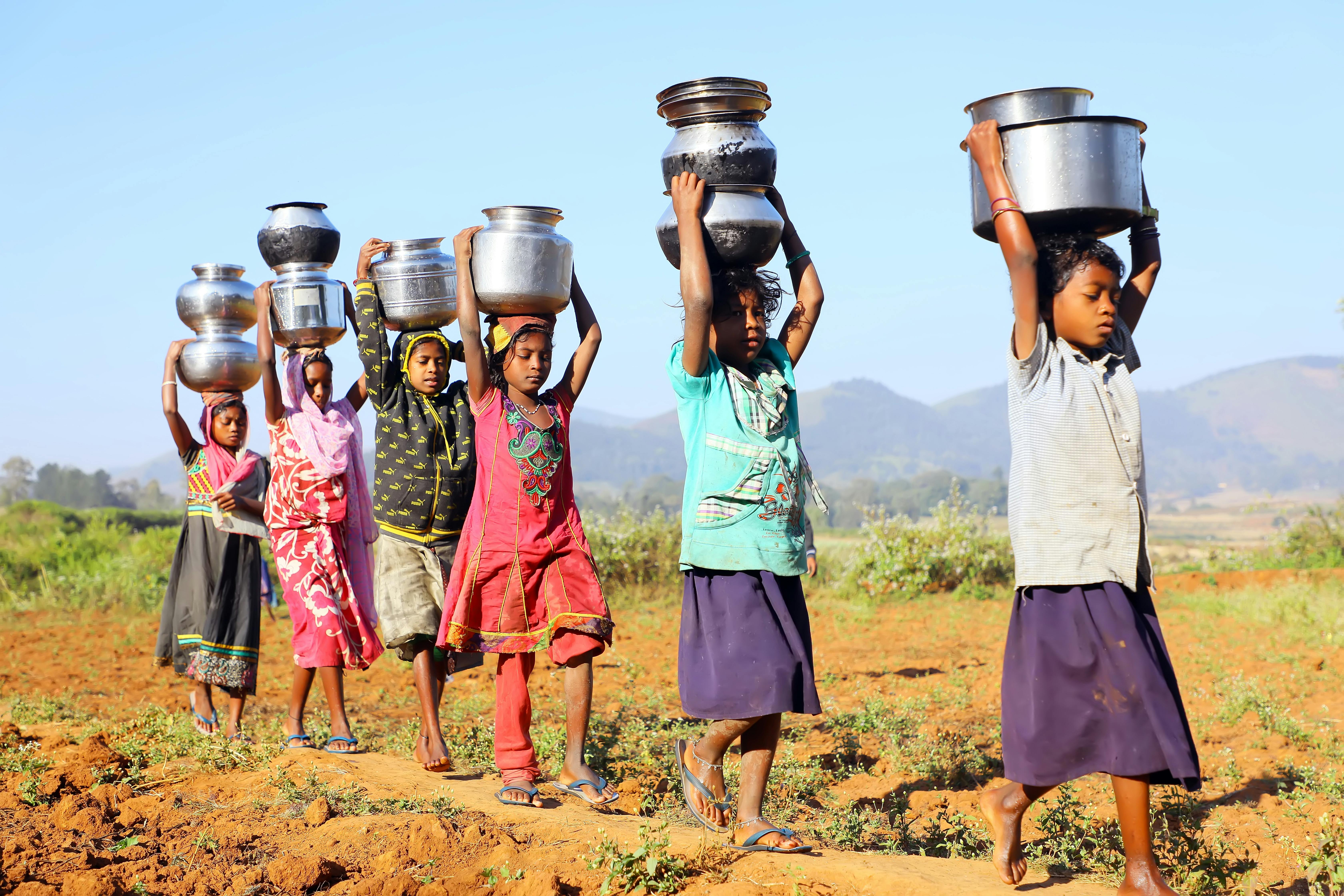
Behind the iron curtain, poverty is booming serious among the world society particularly in the least Developed Countries. People have in adequate money to meet their basic needs: food, clothing and shelter even though the definition of poverty can be relative between the urban and rural dwellers, because there are some places where they have all access to basic needs but they don't have access money like in some remote areas of the Africa continent. Even though food is available, clothes are purchased once and shelters are available yet they are categorized as the people who live below 2 USD per day.
According to the World Bank 2008-2009) "Poverty is hunger. Poverty is lack of shelter. Poverty is being sick and not being able to see a doctor. Poverty is not having access to school and not knowing how to read. Poverty is not having a job, is fear for the future, living one day at a time.
Poverty has many faces, changes from place to place and across time, and has been described in many ways. Most often poverty is a situation which people want to escape. So poverty is a call action-for the poor and the wealthy alike- a call to change the world so that many more have people can enough to eat, adequate shelter, access to education and health, protection from violence and to have a voice in what happens in their communities".
About $9.25\%$ of the people worldwide, or 689 million people live in extreme poverty or less than $ 1.90 a day, according to the World Bank. And according to world vision 1.3 billion people in 107 developing countries which account for $22\%$ of the world population, live in multidimensional poverty whereby about $84.3\%$ of the multidimensional poor live in sub-Saharan Africa and south Asia.
Poverty is more linked with lack of skills and competence and to some people does not promote their skills to ensure they are unique so that the person can be in more demand in a particular society in terms of skills or gifts he/she has. Our schools teach us maths, science, history and other subjects but do not consider life skills, when students are out of school, college, or university, and certain practical skill can help him/her to survive without necessarily a white color job.
In another context, unemployment is likewise associated with lack of skills and in adequate knowledge about a particular issue or environment someone exists in, because a person who has a certain skill(s) is likely to accomplish daily tasks that constrain him/her. Practical life skills are not only important for
living and a means for a productive, efficient and successful life but also for simply being able to exist in the world. Mastering the environment key to human achievement, key for conquering poverty. Knowledge and skills like how to plant a garden in squeezed area and ensure, food banks in abundant seasons, food packaging, animal husbandry, homemade products i.e. soap, extracting milk from soya, to make different kinds of beverages, types of food (not eating common unhealthy foods), artificial intelligence (AI), proper water sanitation, knowledge on mosquitoes repellent flowers(mosquitoes kill millions of energetic people in developing countries), innovations, big data analysis and land management and so on can uplift society from one stage to the next.
Do poor people use social media? The answer is yes. According to Google, "social networks are used more often in poor neighborhoods than in affluent neighborhoods while the latter tend to consume information from traditional online media". In addition, the latest social media statistics show that "an average of two hours and 25 minutes are spent by a person per day on social media" (Data Reportal, 2021).
The agenda above shows us, that most social media users are hungry for information but not knowledge and transformation, that's why countless educational and knowledge materials online that reveal numerous skills to fight poverty do not trend like entertainment media.
Current, social media users upload photos and videos on numerous social media platforms: including Facebook, Instagram, Tiktok, YouTube, Google, WhatsApp, Twitter, Snap chat, and other social sites, more than $133+$. This means that, 3.2 billion images and 720,000 hours of video are uploaded every day on popular media like Facebook, WhatsApp, and Instagram. Music audio, videos, movies, computer and TV games, and sports from various fields are more popular and trend more than various important educational materials posted on social media.
Despite the availability of skills and knowledge from numerous social media, the global society is confronted with a number of challenges, a majority particularly the younger generation, can find solutions but sometimes they forget to search online for information on how to solve these problems.
Therefore, one of the critical questions which has not been posed practically to this contemporary generation by development specialists is 'how do we really harness the Power of Social Media to Fight Poverty'.
In 2017 at a conference, The U.N first asked "how can the international community best harness the power of media...to educate and transform?" even though this requires a complicated response social media and poverty reduction can be connected concretely addressed by harnessing the power of
information to foster development in a technologically advancing world.
The U.N recognizes the many "opportunities available in which communities can play a strategic role in eradicating poverty". This responsibility rests heavily on the media's ability to inform and educate the general public about poverty and ramifications of society. This can be achieved in many cases by disseminating information through using voices of those who have truly experienced poverty. Social media provides an inclusive and open platform and forum to share the views and concerns of people living in vulnerable situations.
The world of social media is quite incredible; everyone who is aware of technology has the opportunity to become a content creator on social media, and can upload anything in the hopes of impressing the world society, or people around him/her as long as they adhere to the terms and conditions established by platform owner(s). As a result, the content uploaded can sometimes perplex social media users when browsing, and are left dire straits regarding what content to best chose, hence they end up clicking anything that comes up in front of them, especially that which looks to have more engagements or trending videos- (we understand the existence of algorithm).
Attention-seeking by attention seekers is a major problem of this contemporary generation, some media users tend to opt for unwise things in order to get known, and if their videos trend in one way or another, income is created. Attention seekers are on the increase worldwide daily, hence it is difficult to abstain from people's desires as long as they are not breaking laws of their land, but we can do otherwise.
One day I attended a religion training in my city about social media, the presenter said, "the availability of content online, has three types of digital users: (1) Those who don't know what to do (majority of social media users), (2) Those who know what they want but do not know where to get and (3) Those who know what they want, know where and how to find it (estimated to be $5\%$ )".
As indicated earlier, only seven years are remaining until the SDGs period ends, yet little effort has been made to harness the power of available social media platforms in the eradication of poverty' in extreme areas particularly in the urban centers of Third World Countries, where social media is available in the hands of youth and other members of society. These media provides new opportunities for free learning, but it is constrained, because there no mechanisms put in place, to facilitate independent learning or youth and society members in general. By contrast, most social media users do capture other things trending on social media platforms.
Therefore, 'a blueprint' was prepared and the way forward and mechanism to implement the 'forgotten Impressive Videos' (fiV), (A dependent social media).
Similarly, a prototype is in preparation for this project. The best impressive video content is not viewed frequently by the world society, yet 'forgotten Impressive Videos' are rich in knowledge and provide numerous skills, experience, competences uplifting their livelihoods by learning numerous Income Generating Activities (IGA).
Non-government Organizations (NGOs) and numerous Colleges and Universities particularly in Third World Countries will part of the project (mechanism was proposed in a blueprint), to implement Sustainable Development Goal (SDGs).
According to www.exlodingtopics.com, video is one of the most effective methods for transmitting information and viewers can retain $95\%$ of the messages presented in the video unlike messages which requires to read the content presented in written texts in which only $10\%$ of information /knowledge is retained. This is why marketers try to optimize for ROI (Return on Investment) videos have long proved to be effective tools for disseminating/transmitting information, knowledge and skills. Revenues of Marketers who use grow $49\%$ faster than for non-video users. The uniqueness of the video platform will ensure hidden knowledge and skills are easily seen and captured by users, unlike those appearing in numerous social media platforms, where various video content are mixed up regardless of their titles, which do not conquer or capture the nature and desire of human particularly those who prefer too much information and entertainment over knowledge or skills.
In view of the above, this project calls for concerted efforts from all stakeholders unnamed and named involved in this project, to discuss how the blueprint can be implemented: our stakeholders are: social media companies, (YouTube, Google, Facebook, Apple, Estee Lauder, Ikea, Intel, Patagonia, Unilever) NGOs, FBOs, CBEOs and INGOs like United Nations and associate organizations: UNESCO, ILO, FAO, UNICEF, other organizations: The Organization for Poverty Alleviation and Development, Concern Worldwide, End of Poverty Now, Global Citizen, Care International, Institute for Research on Poverty, Innovation for Research Action, The Borgen Project, Association for Childhood Education International, Education International, The Global Partnership for Education, and Plan International and World Hope International, Trickle Up, Village Enterprise, Results and Smithsonian Science Education Center, akin.
Finally, after launching the site this project will contribute to the following SDG goals; goal number 1, 2, 3 and others coherent with poverty reduction, this dependent social media project will also speed up this global movement, and will create revenues for companies involved and will, assist internet users in search of inspirational educational films that will educating them on a variety of human topics. The project will also attract millions of students and experts from all over the world, willing to learn about hidden skills available on social media and these combined will contribute greatly to poverty eradication and uplifting of people's livelihoods.
Generating HTML Viewer...
References
12 Cites in Article
Jan Kietzmann,Kristopher Hermkens,Ian Mccarthy,Bruno Silvestre (2001). Social media? Get serious! Understanding the functional building blocks of social media.
Jose Dijck,Van (2013). The culture of Connectivity: A Critical History of Social Media.
Army Dennis (2017). 5 Social Media Outlets Ruling the World.
Chenda Ngak (2011). The and now: a history of social networking sites.
Anat Gesser-Edelsburg,Yaffa Shir-Raz (2017). Risk Communication and Infectious Diseases in an Age of Digital Media.
Sascha Genders (2022). Sustainable Development Goals (UN Global Goals).
(2022). LAS VEGAS SANDS CORP., a Nevada corporation, Plaintiff, v. UKNOWN REGISTRANTS OF www.wn0000.com, www.wn1111.com, www.wn2222.com, www.wn3333.com, www.wn4444.com, www.wn5555.com, www.wn6666.com, www.wn7777.com, www.wn8888.com, www.wn9999.com, www.112211.com, www.4456888.com, www.4489888.com, www.001148.com, and www.2289888.com, Defendants..
Vikas Pathe (2022). Book Review: Social Media and Hate.
(2022). Social media.
Kelly Bergstrom,Nathaniel Poor (2022). Signaling the Intent to Change Online Communities: A Case From a Reddit Gaming Community.
No ethics committee approval was required for this article type.
Data Availability
Not applicable for this article.
How to Cite This Article
Godwin Mwesiga. 2026. \u201cThe Condensed Treasure: Forgotten Impressive Video. ‘How can we Harness the Power of Social Media to Fight Poverty?’\u201d. Global Journal of Human-Social Science - E: Economics GJHSS-E Volume 23 (GJHSS Volume 23 Issue E1): .
Explore published articles in an immersive Augmented Reality environment. Our platform converts research papers into interactive 3D books, allowing readers to view and interact with content using AR and VR compatible devices.
Your published article is automatically converted into a realistic 3D book. Flip through pages and read research papers in a more engaging and interactive format.
Our website is actively being updated, and changes may occur frequently. Please clear your browser cache if needed. For feedback or error reporting, please email [email protected]
Thank you for connecting with us. We will respond to you shortly.