## I. INTRODUCTION
The Hijra population, marginalized and confined to the periphery of society, represents a multifaceted interaction of social and economic forces within Bangladeshi society. Within these complex dynamics of challenges and prospects, the pursuit of empowerment emerges as a central theme in this research. This study centers on the complexities of the Hijra community's efforts to gain social recognition, and economic sustainability, using the Mohammadpur area in Dhaka as the case study.
Titir and Ibrahim (2023) argued that there exists a vague conception regarding the identification of Hijra individuals which poses a hindrance towards the effective participation regarding their enjoyment of basic rights. As a result, the definitional clarification is significant to avoid any misconceptions. The Hijra community can be defined as a subculture of people from poor socio-economic circumstances who are born male and are feminine- identified within a Guru-Chela hierarchy which is a Hijra traditional kinship system. Some Hijras feel uncomfortable identifying as transgender women, and not all transgender women are Hijra. The Hijra community is a tiny part of the transgender community.
Bangladesh, in today's world of intricate globalization, has the complex challenge of balancing tradition and modernization. Within this context, the Hijra group navigates the delicate balance between conforming to society's standards and seeking acknowledgment. The Mohammadpur locale, which mirrors the larger national context, provides a relevant case study to examine the many layers of empowerment obstacles encountered by the Hijras. The objective of this research is to analyze the fundamental reasons that contribute to the marginalization of Hijra individuals, examining the societal structures that sustain their exclusion and impede their integration in social, and economic aspects. With the application of the theoretical framework consisting of Muted Group Theory coupled with Co-cultural Communication theory and the concept of Social Exclusion to dissect these triadic aspects of empowerment, this paper aims to analyze a range of difficulties encountered by the Hijra community in Mohammadpur. It seeks to identify the obstacles that impede their overall empowerment and emphasize the need for capacity building for the enhancement of positive inclusion. The study is conducted using an exploratory research analysis and thematic qualitative research method using interviews, observations, and secondary sources. By using these aspects, the methodology was chosen to provide detailed understanding and suggest recommendations to promote comprehensive empowerment for the Hijra people in Bangladesh.
### a) Research Questions
#### Primary Research Question
Despite legal inclusions, why are Hijra people in Bangladesh still not allowed to effectively participate in society, and the economy?
Secondary Research Question
What are the prevailing challenges in terms of the attainment of social, and economic strands of Hijra people in Bangladesh?
### b) Problem Statement
This paper revolves around the Social, economic empowerment strands of one of the discriminated populations, 'Hijras', in Bangladesh. The Hijra community in Bangladesh, in the Mohammadpur region of Dhaka, confronts a range of complex obstacles that span across social and economic domains, impeding their ability to gain influence and integrate into society. Their marginalized position persists because of enduring social stigma, restricted access to school and career prospects despite being legally recognized. The objective of this study is to investigate the structural obstacles despite the legal inclusiveness that prevent the complete empowerment of the Hijra community. It seeks to identify significant social and economic factors that hinder their complete integration and suggests specific recommendations to promote their overall empowerment within the local setting.
### c) Rationale & Significance
This paper aims to dissect the challenges faced by Mohammadpur Hijra community in terms of social, and economic empowerment in Bangladesh. There exists a lack of research regarding this locality. It can be a valuable contribution to the existing literature on the gender studies of Bangladesh to empower this community.
## II. LITERATURE REVIEW
### a) Literature Review
The literature review on the Hijra population in Bangladesh highlights a complex and difficult situation, characterized by many social, economic, and legal inequalities. Diverse academics have studied various facets of the Hijra community's encounters, illustrating both advancements achieved and enduring obstacles faced by this marginalized collective. An intricate comprehension of the Hijra community's predicament in Bangladesh is shown via the comparison of different literatures.
Titir and Ibrahim (2023) depict that the Hijra group encompasses persons who are designated male at birth who identify as feminine. They often come from poorer socio-economic origins and adhere to an established Guru-Chela hierarchy, which is a traditional familial system among Hijras. Although members of the Hijra community might be considered "transgender women," this does not necessarily mean that all transgender women identify as Hijra and some Hijras feel uncomfortable with the term. Therefore, the Hijra makeup only a tiny fraction of the larger transgender population, which includes transgender women and men as well as non-binary people, koti-identified persons, and others. As a result of a previous publication from the Ministry of Social Welfare that described Hijra people as "genitally and sexually handicapped," the widespread belief that they are "sexually disabled" has persisted. This report shows that another often believed but false belief is that Hijra people are intersex, meaning they do not normally have a male or female reproductive system. These false beliefs provide the basis for many acts of violence and lead to the unfair treatment of individuals belonging to the Hijra group. Furthermore, these practices result in the disqualification of several people from current government aid programs and provoke conflicts within the community about their legitimacy, namely in determining who is considered a genuine Hijra and who is not. The government of Bangladesh has implemented many measures in recent years to provide social protection and promote the involvement of Hijra groups. In 2013, the Cabinet made a deliberate decision to officially acknowledge the Hijra community. This was followed by actions to include them in national identity cards and censuses, which were all aimed at ensuring their legal rights. In 2013, the Ministry of Social Welfare (MSW) implemented many livelihood programs targeting the Hijra people. This report agrees that although the government is showing a desire to interact with the Hijra community and protect their constitutional rights, there is still a lack of specific legislation or regulations that explicitly forbid discrimination based on gender identity. Simultaneously, the practical implementation of legislative safeguards for transgender persons remains essentially non-existent. This report focuses on the lack of a well-defined and efficient strategy to guarantee that transgender persons have the ability to modify their name and gender on official identity papers.
Islam (2016) highlighted hijras as the isolated and excluded individuals within our culture. Nevertheless, his research discovers that these groups of individuals are consistently being deprived of their rights. He affirms that unpleasantly, their current condition of being has been reduced to utter poverty, lack of education, animosity, and humiliation. The Hijras continue to endure marginalization, being denied fundamental rights. The primary objective of this paper is to address the extent to which our school system remains unsuitable for those who identify as eunuchs in our society. The global population has collectively neglected to acknowledge their shared humanity and the equal entitlement to rights that accompanies it. The author shows that the pervasive negativity and social alienation of the individuals have resulted in a complete absence of opportunities for them. The government has granted them voting rights although they confront an uncertain future devoid of educational opportunities.
In similar vein, Goni & Hoque (2020) point out that Hijra people exhibit less involvement in mainstream schooling in Bangladesh. Due to their sexual orientation, they are unable to pursue their studies for an extended period of time. Teachers, students, and other members of society hold the belief that schools are not meant for Hijra individuals, and this prevailing attitude ultimately leads to the marginalization and invisibility of the Hijra group. The authors argued that deprived of the right to study, their ability to thrive with honor, decency, and plenty will be severely hindered. Consequently, individuals withdraw from educational institutions and disengage from the broader community, preferring to live alone (Goni & Hoque, 2020). This viewpoint corresponds with the research conducted by Islam (2016) which identifies a deficiency in inclusion within the education system. This deficiency is a systemic problem that perpetuates the marginalization and obscurity of the Hijra community.
Amanullah et al., (2022) used cross-sectional data in his study to discover many instances of fundamental rights infringements seen by the Hijra group in Bangladesh, while also investigating the variables linked to human rights abuses. The survey revealed that the Bangladesh Hijra group often reported instances of human rights abuses. The statistics done by the article show that two-thirds of the hijra population reported breaches of their economic rights, while over half of them had encountered violations of their political and social rights. Hijras who were not residing with their families had a greater likelihood of experiencing economic infringements compared to those who resided with their families. According to reports, Hijras who exhibit abnormal feminine behaviors throughout early infancy may cause their families to feel ashamed, resulting in their exclusion from family-related occasions. The authors analyzed that hijras often choose feminine attire, however they may sometimes adopt a masculine appearance to protect themselves from exploitation, harassment, and desertion. Hijra individuals possess the ability to transition between conventional masculinity and the Hijra identity, and a portion of them exercise this capability. The authors stress that efforts should be made to prevent social isolation and prejudice against the Hijras in Bangladesh, starting from the family level. It is essential for family members, particularly parents, to have a favorable outlook towards the Hijras.
Titir and Ibrahim (2023)'s analysis provides a sophisticated comprehension of the Hijra group. The intricacy of the matter is clearly distinguished when comparing it to Amanullah et al., (2022)'s crosssectional research, which primarily examines the occurrence of human rights violations. The presence of several intersecting identities within the transgender spectrum, as emphasized by the authors, emphasizes the need of specific treatments that tackle the distinct obstacles encountered by Hijra persons.
Khan & Habiba (2021) emphasizes the evaluation of the socio-economic state of the Hijra group. This research revealed that individuals belonging to the Hijra community exhibit lower levels of education, experience significantly impoverished economic circumstances in comparison to other groups, possess less civil rights, and have both physical and psychological vulnerabilities in comparison to their counterparts. In short, they are the most disadvantaged populations in Bangladesh. Individuals hold animosity against them due to their aggressive conduct. They lacked any established social rank in society. The authors highlight that hijras would greatly benefit from increased government focus on ensuring the availability, accessibility, and quality of services for both people and the community.
Amanullah et al., (2022)'s study, which uncovers human rights breaches, is consistent with the research conducted by Khan & Habiba (2021) on the socioeconomic challenges experienced by the Hijra group. Both sources emphasize the susceptibility and limited availability of crucial services encountered by the Hijra community. This comparison highlights a more general subject of systemic difficulties that appear in many ways, affecting the overall welfare of the society. S. Islam (2019) points out the fact that Bangladesh, as an independent nation, has signed various international agreements such as the 'International Covenant on Civil and Political Rights and the International Covenant on Economic, Social, and Cultural Rights' and these agreements may establish the social, legal, and political rights of transgender individuals. The Human Rights Commission of Bangladesh has been instrumental in addressing the legal and social standing of the hijras. However, she stresses that the government of Bangladesh has yet to pass any legislation specifically addressing the legal recognition of hijras. This work provides the insights that hijras often face deprivation of their rights to property, work, healthcare, education, and other basic rights that are provided by the constitution. This is due to the absence of legislation that officially recognizes the status of hijras. Hence, the writing emphasizes that it is imperative for the Bangladesh government to pass legislation in order to safeguard the rights and social standing of the hijra community, while also ensuring their entitlement to inheritance, work, healthcare, education, and suffrage (S. Islam, 2019).
Al-Mamun et al.,(2022) illustrate that the Hijra community in Bangladesh experiences significant discrimination as a result of socio-cultural norms. This marginalized community experiences profound social, cultural, political, and economic marginalization in Bangladesh. Their means of survival diverges from those of other groups in society. Begging and prostitution are the main sources of earnings for hijras in Bangladesh. They lack any kind of participation in community affairs, even during recreational pursuits and marriage engagements. Individuals exhibit an irrational fear of their existence in public spaces. In addition to that, they endure physical and psychological mistreatment and are denied adequate medical and legal assistance. According to the authors, hijras in Bangladesh face deprivation of government amenities and endure a dreadful existence. Their vulnerability and disadvantage stem from their limited access to high-quality services, healthcare, and job prospects. Attaining social acceptance and achieving financial independence might serve as the first measures to mitigate prejudice against individuals belonging to the third-gender group. This study emphasizes that the government and NGOs should prioritize the protection of the rights of the Hijra people.
S. Islam (2019)'s legal analysis, which highlights the lack of particular law acknowledging the rights of Hijras, aligns with Al-Mamun et al., (2022)'s examination of discrimination and social exclusion. The legal void emphasized by Islam seems to have a role in the broader exclusion examined by Al-Mamun et al.,(2022) underscoring the interdependence between legal acknowledgment and society perspectives. Sifat & Shafi (2021) present a well-combination of the analysis about the marginalization of the hijra population in Dhaka city, the capital of Bangladesh, with a focus on their limited social, economic, cultural, and political involvement. The study results indicate that the formal acknowledgment of hijra as a third gender has not resulted in any tangible improvements in their circumstances. The findings determined that they continue to be marginalized from social, economic, cultural, and political engagement. Government and non-governmental organizations (NGOs) should implement initiatives to reduce the vulnerability of hijra individuals and improve their living conditions. This aligns with the overarching concepts of social, economic, and legal inequalities explored in earlier literature, indicating a coherent narrative of systemic obstacles.
In conclusion, the literature review provides a thorough overview of the current situation of the Hijra population in Bangladesh, including aspects such as legal acknowledgment, societal perceptions, economic inequalities, and infringements on their human rights. Comparative research reveals the intricate relationship between legislative initiatives, social attitudes, and the actual experiences of the Hijra community, underscoring the need of a comprehensive strategy to tackle the many obstacles they confront.
### b) Literature Gap
The previous literature on Bangladesh's Hijra community mostly focused on any single issue or any particular cause of social exclusion. Most of the existing literature emphasize on a broad area-based research encompassing and generalizing the Hijra communities throughout the country. For example, there is a lot of work revolving around the specific districts or cities, such as Sifat and Shafi (2021)'s research on 'A Narrative Analysis of Hijra Community in Dhaka City', or Khan and Habiba (2021)'s study on 'Exploring the Social Status of Hijra Community Based Study on Khulna City' etc. This research lacks a grassroots centric community based approach which leads to the failure of developing context specific policies. This is the literature gap the researchers could identify. That's why this paper found the necessity to identify the strands of social and economic empowerment of Mohammadpur Hijra community which can contribute in terms of context-based policy development.
## III. METHODOLOGY AND LIMITATIONS
### a) Methodology
The study is conducted using an exploratory research method and qualitative thematic research analysis using interviews, observations, and secondary sources. A survey has been conducted over a sample size of 38 Hijra people in the Mohammadpur area using a semi-structured questionnaire through convenience sampling techniques. The variables of Social (Education level, social harassment, living style, digital inclusion, government-issued identification, access to public services), and Economic Empowerment (Income source, Employment opportunities, Workplace challenges) of Hijra factions in Mohammadpur have been weighed through semi-structured responses of the 38 Hijra people chosen through convenience sampling where the age group has been considered to be diverse (20-45). All the respondents who were interviewed identified themselves as hijra.
For this study, hijra factions from the Mohammadpur area in Dhaka, Bangladesh was selected. Based on the most recent data from the Bangladesh Bureau of Statistics (BBS), it has been reported that 904 hijra individuals reside within the jurisdiction of the Dhaka North City Corporation (DNCC). Despite Mohammadpur falling under the DNCC's jurisdiction, the available report does not provide specific information regarding the hijra population size in the Mohammadpur area (Bangladesh Bureau of Statistics, 2022). According to the data collected through personal communication, the total number is 250. Among the 38 people interviewed, the respondents provided their opinions regarding the social and economic aspects of empowerment.
For Key Informant Interview (KII), the judgmental sampling covering experts of advocacy, capacity building and social mobilization specifically focusing on gender empowerment issues and prevention of gender-based violence has been adopted for better understanding of the study. In this vein, Ms. Tahrima Rahman Huq who has 24 years of experience in UNICEF, BRAC, Association of Development Agencies in Bangladesh
(ADAB), Gonoshahajjo Sangstha (GSS), Centre for Training and Rehabilitation of Destitute Women (CTRDW -Bangladesh), and Syeda Samara Mortada who has 13 years of experience in UN Women Bangladesh, Bonhishikha - Unlearn Gender, Rage Against Rape movement in Bangladesh, and core member of the coalition called Feminists Across Generations were contacted for the experts' insights. To get their insightful feedback, we employed an open-ended questionnaire and collected information via email, phone, and personal interviews. The study's thoroughness has been enhanced even more by this.
Secondary data has been used through a study of existing literature. The survey questionnaire was semistructured including both close-ended and open-ended questions. Finally, due to time and mobility challenges, the convenient and best available sources were used for data collection. Despite these challenges, this paper will try to maintain the diversity of the samples regarding their age so that it can portray a comprehensive representation of the entire Hijra population of the Mohammadpur area.
### b) Research limitations
There are some challenges in terms of research limitations:
1. Conducting interviews with Hijra individuals proved to be the most difficult task in this study. They were not acquainted with many academic terms or jargon which the researchers had to break down to make it understandable for them.
2. They were reluctant to communicate and share their perceptions with the researchers as they hold a negative attitude toward the general population outside of their comfortable sphere. Besides, they have shared their experience with several media research professionals who had fabricated their information and presented it in a way which exacerbated their present condition negatively.
## IV. THEORETICAL FRAMEWORK
### a) Muted Group Theory & Co-cultural Communication Theory
Utilizing the Muted group theory, this study offers valuable understanding of the dynamics surrounding the views and experiences of Hijras, who face discrimination and remain silent in Bangladeshi society. Social anthropologists Ardener and Ardener developed the concept of muted group theory, which posits that in society, there exists a dominating group that suppresses the voices of other subordinate groups (Meares et al., 2004).
The basis of co-cultural communication theory was established based on the frameworks of muted group theory. This study examines how people or groups from diverse co-cultural backgrounds adjust, bargain, and plan their communication behaviors within the dominant culture in order to accomplish their objectives, overcome obstacles, and handle the inherent power imbalances in the social framework. The Co-Cultural Communication Theory offers a vital framework for comprehending the intricacies of communication between dominant cultures and co-cultural communities (Ardener, 1978).
This research applies Co-cultural Communication Theory to analyze the encounters of Hijra individuals inside the predominant social fabric of Bangladesh. Co-cultural theory is an analytical paradigm that examines culture as an unequal space for communicative relationships. One of its core premises is that it organizes societies in hierarchical principles. This establishes a position of dominance for some cultural groups, while also marginalizing other (Ramírez-Sánchez, 2008). This paper examines the customary marginalization of Hijra or third gender individuals within our social structure.
### b) Social Exclusion
"Social exclusion refers to a series of interconnected processes that result in individuals, groups, communities, and territories being marginalized and placed in inferior positions in terms of power, resources, and dominant values. These processes stem from economic and societal factors (Estivill, 2003)."
According to Beall and Piron, they propose a concept that refers to both a process and a condition that hinders people or groups from fully engaging in social and economic activities. It originates from relationships of exclusion that are founded on power dynamics (Beall & Piron, 2005). Contributing factors to social exclusion encompass poverty, marginalized social identities such as race, ethnicity, religion, and gender, social positions such as migrants and refugees, demographic characteristics such as occupation and educational level, and health conditions including disabilities and stigmatized diseases like HIV and AIDS (United Nations, 2007).
The exclusion of individuals from society, driven by social, economic, cultural results in the denial of essential necessities for existence (Beall & Piron, 2005). The Social Exclusion Knowledge Network (SEKN) model, formulated by Popay et al., posits that social exclusion arises from imbalanced power dynamics and manifests in four interrelated and interdependent dimensions (namely cultural, economic, political, and social) across various levels (Johnston, 2009). The power dynamics create a spectrum that ranges from inclusion to exclusion, influenced by interconnected elements such as cultural, economic, political, and social challenges. The investigation of the experiences of Hijra is likewise framed within this multifaceted concept of social exclusion. The explicit connection between exclusion and rights involves the act of discriminating against someone based on their gender orientation. Many researchers classified excluded groups as ethnic, religious and linguistic minorities, and handicapped individuals. Inclusion often extends to older individuals, migrants, refugees, domestic workers, women, illiterate individuals, and those living in severe poverty (United Nations, 2007).
Nevertheless, the list does not include the transgender community or those who choose to live with alternate gender identities and sexual orientations. Gendered exclusion was only examined in relation to women across different contexts. This study has used the SEKN model to direct the theoretical and conceptual investigation of social exclusion in the lives of Hijra individuals.
## V. FINDINGS AND ANALYSIS
### a) Social Empowerment
A person's sexual orientation is the sole basis for deprivation of fundamental rights like education, or access to public services (healthcare facilities, public transportation, access to public places), facilities of digital inclusion (bank account, social media access, mobile banking), government issued identification (NID, passport) etc. Our society's dominant culture is based on fixed male-female roles and these roles will always be used to oppress sexual minority groups. There are varied aspects of social harassment (illegal arrest, sexual, physical and verbal abuse, illegal threat) that a hijra individual has to go through just because of their sexual orientation. This can extend to the living style where hijra individuals feel uncomfortable living with the general population. Consequently, positive inclusion gets hampered as the tendency towards isolationist approach looms larger among the hijra individuals.
groups, such as hijras, are marginalized and oppressed when society normalizes heterosexual roles. Promoting acceptance of varied gender identities and sexual orientations should be the primary goal of social empowerment initiatives, with the deconstruction of the heterosexual norm as a secondary goal. Because they do not adhere to conventional gender roles, hijras may be subject to prejudice and social exclusion as a marginalized minority. In order to empower hijras, we must challenge and change cultural views towards them, promote understanding and acceptance, and fight against discrimination in all its forms, both legally and socially.
The challenge of discrimination and social stigma is also echoed in our Key Informant Interviews (KII). While explaining the basic challenges faced by the hijra people, Ms. Tahrima Rahman Huq pointed out that hijra people in Bangladesh suffer complicated and multifaceted challenges, with the major causes being long-standing societal stigmas connected with traditional family structures. As a result of the emphasis on traditional gender norms, persistent social stigma occurs, preventing people from effectively participating in mainstream society in a variety of ways, including the education system, the workplace, and community events. As a result of this isolation, a lack of acceptability develops, which impacts a hijra person's life in a variety of ways, beginning with non-acceptance in educational institutions and extending to impediments regarding employment and other forms of empowerment. The prevalence of phobias and misconceptions about them exacerbates these issues and hinders their positive participation into larger society.
to exclusionary behaviors and practices which is evident in terms of the sidelining of hijra as a marginalized group in our society, paving the way for hindering social empowerment.
#### Case Study 1:
Sunny is one of the first empowered Hijra individuals from Mohammadpur who holds a diploma degree in engineering. Society, her school, and, worst of all, her own family have all subjected her to humiliation and ridicule. She persisted in her studies despite the obstacles because she knew that knowledge would give her the strength to overcome her predicament. After receiving rejection from her family, she feels comfortable to live with the Mohammadpur Hijra community and often she visits the area whenever she gets time.
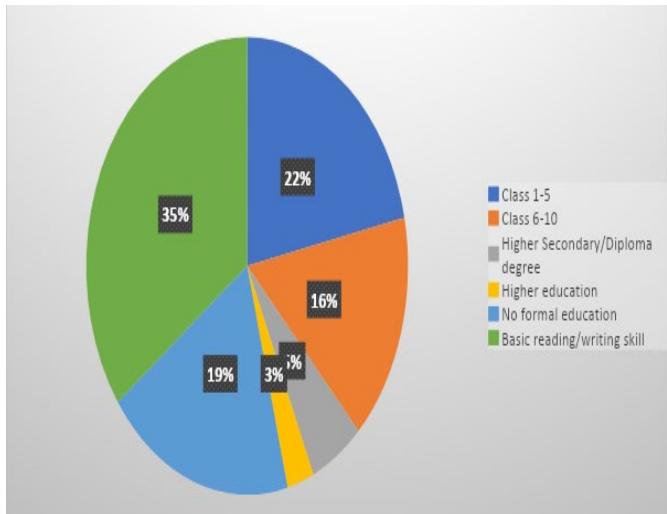
Note: Adapted from the researchers' own data. Figure 1: Education Level In Figure 1, in terms of educational qualification, in the area concerned, among the 38 respondents, $22\%$ completed their primary level education (Class 1-5), $16\%$ completed their secondary level (Class 6-10) education, $5\%$ finished higher secondary/ Diploma degree while higher education was possible only for $3\%$. $19\%$ of respondents have opined that they didn't get any formal education, and the majority of the respondents have basic reading/writing skill which is $35\%$.
Through our personal communication, the dominant challenge is revealed to be the social stigma. The respondents shared that everyone at the school, from instructors to pupils, would act badly toward the Hijra students. For example, verbal harassment, the fact that no one wanted to sit next to a Hijra student, etc. Because of these reasons, most of the respondents couldn't get a chance to access formal education and the majority of the respondents only possess basic reading/ writing skills. Some of the respondents are confined only to primary and secondary level education and very few of the respondents could reach up to the higher education level.
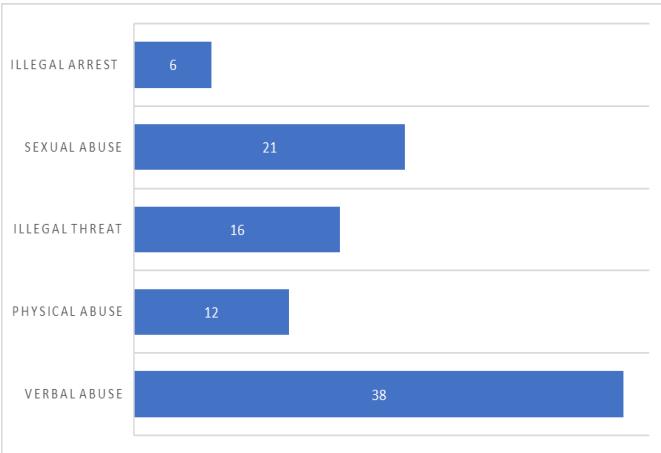
Note: Adapted from the researchers' own data, respondents were asked, "Have you ever faced any of the following social harassment?" Figure 2: Social Harassment
Despite legislation that officially acknowledged Hijras as a third gender in 2013, they continue to endure severe prejudice, stigma, physical assault and various kinds of social harassment in Bangladesh. Although most Hijras dress like women, there are those who may pretend to be males in certain situations to protect themselves from abuse, illegal threat, or exploitation (Hossain, 2012). Noticeably, in Figure 2, it was found that, among the number of 38 respondents, all of them have experienced verbal abuse whereas other forms of human rights concerns are also prevalent. 12 respondents exposed to physical abuse, 16 respondents encountered illegal threat, 21 respondents faced sexual abuse, and 6 respondents were the victims of illegal arrest.
Based on our personal communications, it has been observed that a significant portion of hijra individuals still encounter verbal abuse from the broader public, leading them to develop a certain level of resilience to such mistreatment. Additionally, approximately half of this community shares a common history of experiencing sexual abuse, with instances of illegal threats or arrests being relatively infrequent within the community.
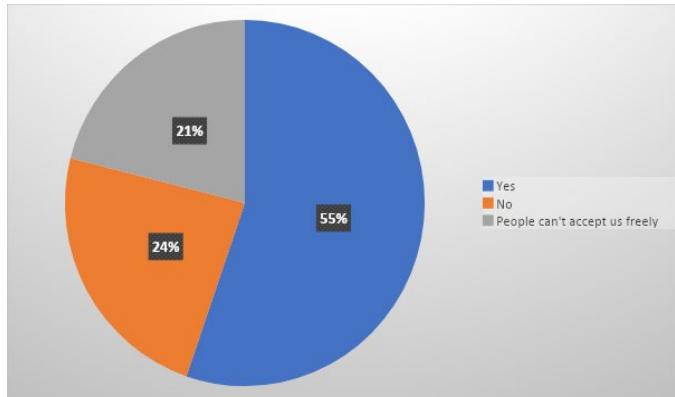
Figure 3: Community Life
Note: Adapted from the researchers' own data, respondents were asked, "Do you ever feel comfortable mixing up with common people in this area?"
Hijras primarily live with a community (Known as Para in the local language) in which they are led by a community leader. The leader of any Hijra group (known as "Para" in the local language) is responsible for establishing norms and policies that all members must adhere to. Their community's pedestal head was the head, who was known as "Guru Ma" (mother) (Khan & Habiba, 2021).
In Mohammadpur Hijra community, their leader is known as "Mohajon". In terms of community living style, in Figure 3, the majority of the respondents which is $55\%$, have been informed that they feel affirmative about the positive inclusion and the co-habitation with the general population. In contrast, $24\%$ of the respondents perceive the co-habitation as uncomfortable. And $21\%$ of the respondents have opined that they aren't accepted freely by the common people.
Through our personal observation, the positive inclusion is demonstrated through the co-habitation of Hijras and the common people in most of the same buildings in the area. Most of the Hijra do not want to leave the place they are living right now because they are habituated and the rate of social acceptance is comparatively better. The common people were also likewise openly embracing and socializing with them. The isolationist approach is also somewhat prevalent among the factions who shared that because of the social stigma, people don't accept them freely. They also overlap with those who want to live with the common people, but they don't receive the same level of reciprocation in society.
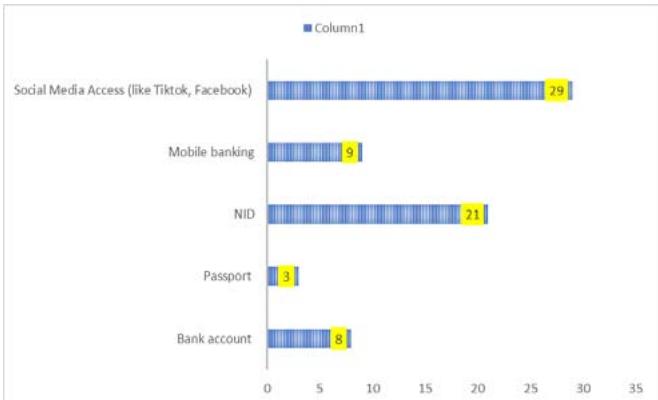
Figure 4: Access Support Inquiry
Note: Adapted from the researchers' own data and respondents were asked, "Do you have the following access support?"
In terms of government issued identification, in Figure 4, there were 21 respondents who had NID where 3 individuals had access to passports. Eight participants reported using financial services such as bank accounts. Besides, the presence of digital inclusion is prevalent. Social media access (such as TikTok and Facebook) is observed in terms of 29 respondents. Nine respondents said that they have access to mobile banking services.
Through our personal communication, it was observed that digital inclusion is commonly found among most of the respondents. In recent years, they have felt even more powerful due to the emergence of social media platforms such as TikTok, and Facebook, which have facilitated interactive communication. Anyone can sign up for a platform, post tales and multimedia, and get immediate replies. Besides, some of them have access to digital financial services like mobile banking (Bkash, Nagad, Rocket etc.). As a result, those who don't have any bank accounts can easily make money transactions. The majority of individuals had access to government identification services, such as possessing a National Identification (NID) card, although only a small number held passports. The reason for a significant number is the lack of bank accounts and passports due to feelings of unwelcome reception in banks or passport offices. They often encounter verbal abuse and delays in processing compared to typical individuals. Consequently, they prefer direct, in-person monetary transactions and rely on agent services from popular Mobile Financial Services (MFS) when needed for money transfers.
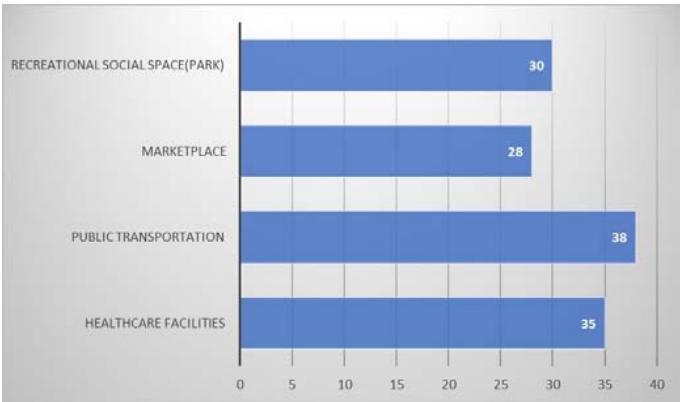
Note: Adapted from the researchers' own data. Figure 5: Access to Public Services
Hijras have historically faced significant social stigma, discrimination, isolation, and segregation, and a considerable number of Bangladeshi still have unfavorable perceptions about those belonging to this group (Al-Mamun et al., 2022). This is also evident when looking at the availability of public services. 35 out of 38 respondents had access to adequate healthcare facilities (Figure 5). All responders have access to the amenities provided by public transport. 28 respondents of those who took the survey feel safe entering the market. 30 participants have expressed that they feel comfortable in visiting recreational social venues such as parks. According to the respondents, as their main income derives from the collection of money from the public, they need to go to places like markets, parks, public transport, etc., or social gatherings like wedding ceremonies despite facing social stigma.
Most of the respondents said that they get proper healthcare facilities from the local clinics or hospitals of Mohammadpur as the doctors or health professionals like nurses perceive a more tolerant outlook. However, the Hijras residing in Mohammadpur have experienced adverse consequences as a result of the COVID-19 epidemic, particularly during the period of the statewide lockdown. They did not get any governmental or non-governmental organizations provided healthcare facilities. Consequently, the lockdown had a detrimental impact on the mental wellbeing of the Hijra population in the study area, leading to heightened levels of depression and anxiousness.
### b) Economic Empowerment
A person's sexual orientation is the sole basis for facing obstacles in terms of accessing employment opportunities (unwillingness of employers, fear of hijras, perceived unreliability, lack of govt. initiatives and others) leading to sources of income through collection of money or entertainment, working in parlors and other manual work. Our society's dominant culture is based on fixed male-female roles and as these roles will always be used to oppress sexual minority groups. This can extend to multifaceted workplace challenges (threats or violence incidents, workplace entry denials, incomplete payment incidents, equal capacity and denied access) etc. that a hijra individual has to go through because of their sexual orientation. Consequently, positive inclusion gets hampered as they cannot make a place for themselves in the spheres of traditional employment opportunities.
resorted to begging, sex work, or performing at ceremonies to make ends meet. Therefore, to foster inclusive spaces that value different gender identities, intersectionality must be considered.
The phenomena of adaptation, strategizing and negotiating by hijra individuals to increase visibility within the confines of the dominant society can be dissected using the Co-cultural Communication theory. For example, in terms of capacity building, they're gradually making progress towards mainstream employment opportunities by utilizing the implementation of governmental or nongovernmental initiatives or training programs. This explains the adaptation of marginalized groups within the culture of dominant groups and this process also helps to redefine the expression of their identity and interests.
In terms of social empowerment, The Social Exclusion Knowledge Network (SEKN) model can be applied where social exclusion arises from imbalanced power dynamics and where cultural and economic are one of the four interrelated and interdependent manifested dimensions. Prevailing attitudes with a cultural belief also contribute to exclusionary behaviors and practices which is evident in terms of the sidelining of hijra as a marginalized group in our mainstream workplace, paving the way for hindering economic empowerment. Considering the poor socioeconomic level of hijra persons, their inclusion in public discussions has mostly been seen from a humanitarian perspective rather than being based on a thorough knowledge of gender diversity. While low income groups like Hijras may have some level of societal acceptance, they nonetheless suffer marginalization.
#### Case Study 2:
Bipasha, a hijra who had been taunted by her community and rejected by her family, tried to be independent by getting a job at a beauty parlor in Gulshan. But the pathway of her empowerment faced the trial of social stigmatization and prejudice. Even though the business owner accepted and treated her as any other regular employee, she had to leave the job due to the discriminatory behavior of the customers. In this vein, she expressed her frustration in terms of facing denial in employment opportunities.

Figure 6: Source of Income
Note: Adapted from the researchers' own data, respondents were asked, "What is your source of income?"
The majority of the 35 respondents have shared that the lion's share of their source of income comes from collecting money by begging or entertainment. 21 respondents work in parlors and 12 respondents work as laborers or pursue other occupations (Figure 6). Majority of the respondents have shared that their primary source of income is collection of money through begging or entertaining the public such as in birthday parties, wedding ceremonies or birth of newborns. They also overlap with those who work at Parlours and other manual work (labor and others).
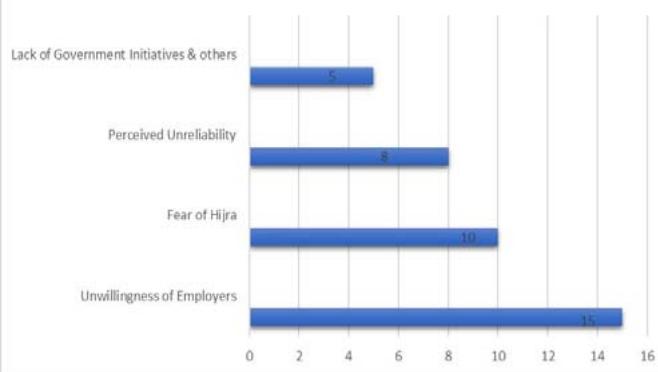
Figure 7: Job Opportunity Dilemma
Note: Adapted from the researchers' own data and respondents were asked, "What are the underlying reasons behind lack opportunities of employment?"
From the graph (Figure 7), it is revealed that 15 respondents faced the unwillingness of employers. Other reasons for the lack of employment opportunities can also be seen. 10 respondents have expressed that many of the general people have the fear of 'Hijra'. 8 respondents have shared that most of the general people perceive that Hijra people are unreliable as employees. 5 respondents have said that they face challenges while seeking employment as there is a lack of implementation of government initiatives in terms of capacity building or training programs. There also exists a lack of initiative by the nongovernmental organizations regarding the employment opportunities of hijras in the study area, which is exacerbating the unemployment issues.
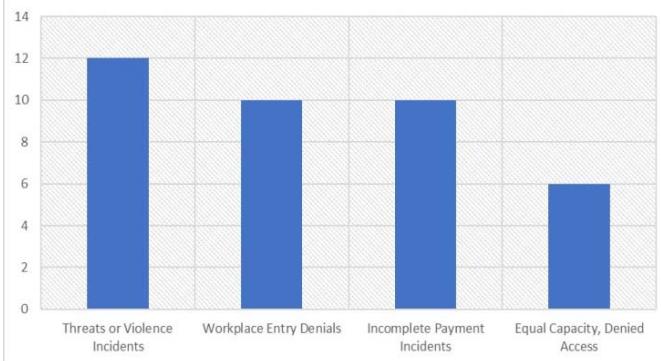
Note: Adapted from the researchers' own data, respondents were asked, "What are the underlying reasons behind lack of opportunities of employment?" Figure 8: Workplace Challenges
The respondents have shared multifaceted workplace challenges. Among the respondents, 12 of them have experienced threats or violent incidents, 10 of them faced Workplace entry denials, 6 of them have shared that they're denied access despite having equal capacity and finally, 10 of them complained about the incomplete payment incidents (Figure 8). According to the respondents, the most comforting occupation is working in a parlor. However, they have shared about encountering refusals and intimidation at that place also.
## VI. RECOMMENDATIONS AND CONCLUSION
### a) Recommendations
The implementation of effective policy developments regarding social and economic empowerment of the Mohammadpur Hijra community calls for a holistic approach where the focal point should take into consideration the local intricacies or context specifics. 'One-size-fits-all' attitude should be discarded and grassroots voices should be integrated. Establishing and maintaining a comprehensive database specifically dedicated to hijra individuals can be one of the starting points that should be taken by the government. In this vein, it is important to seek the input of hijras about the specific rights they want to acknowledge. Besides, it is necessary to include certain measures in the succession acts of various faiths to ensure that hijras have the right to inherit their family's property. Through our personal communication, the recurrent theme was the challenges faced by hijra individuals in terms of accessing the mainstream employment opportunities. Government and nongovernmental organizations should take capacity building or training program initiatives to ensure the financial independence by which they will be able to be empowered by true means. Social stigma still looms larger in our society which hinders positive inclusion.
This is why efforts should be made to enhance positive perceptions of the hijra population within society. In this regard, the media can play a significant role to emphasize the positive attributes of the hijra population. The change should start from the family which would eventually reverberate across the society. Finally, the coupling of examining the living realities of the hijra community in Bangladesh and context-specific studies in relation to the pervasive social marginalization they encounter in several domains should be prioritized by the subsequent research.
### b) Conclusion
This research focuses on investigating the social and economic empowerment of the Hijra group in the Mohammadpur area of Dhaka, Bangladesh. Through the application of the theoretical framework consisting of Muted Group Theory coupled with Co-cultural Communication theory and the concept of Social Exclusion to analyze these dual aspects of empowerment. To ensure the effective participation of this area's Hijra community in the above-mentioned aspects, an inclusionary approach is needed to create a spillover effect throughout all the Hijra communities of Bangladesh as empowerment can't be possible by only making progress in one axis because these spectrums are intertwined.
In this regard, this study highlights the urgent need for comprehensive policy initiatives that include cultural acceptance, political acknowledgment, and economic inclusiveness to support this marginalized group. The study area functions as a small-scale representation, showcasing larger systemic problems and providing a platform for experimenting and improving inclusive policies. Ultimately, the enhancement of the Hijra community's influence in Bangladesh, namely in the Mohammadpur area of Dhaka, requires a comprehensive strategy that addresses social and economic aspects.
The implementation of this vision has the capacity to not only profoundly change the lives of the Hijra community, but also to enhance the fabric of society by promoting diversity, inclusion, and collective advancement.
Generating HTML Viewer...
References
16 Cites in Article
Unknown Title.
Edwin Ardener (1978). Some Outstanding Problems in the Analysis of Events.
(2022). Census of Population and Housing, 2000 [United States]: Minor Civil Division/County-to-Minor Civil Division/County Worker Flow Files.
J Beall,L.-H Piron (2005). DFID Social Exclusion Review.
J Estivill (2003). Concepts and Strategies for Combating Social Exclusion: An Overview.
Md Goni,M Hoque (2020). Communication as an Obstacle for Education: An Analysis on Participation of Hijras in Mainstream Education System of Bangladesh.
A Hossain (2012). Beyond Emasculation: Being Muslim and Becoming Hijra in South Asia.
Md. Islam (2016). Right To Education of The Third Gender of Bangladesh: An overview.
S Islam (2019). A Theoretical Analysis of the Legal Status of Transgender: Bangladesh Perspective.
H Johnston (2009). Relationships of Exclusion and Cohesion with Health: The Case of Bangladesh.
M Khan,U Habiba (2021). Exploring the Social Status with Psychoactive and Physical Impacts of HIJRA Community: An Evidence Based Study on Khulna City, Bangladesh.
Mary Meares,John Oetzel,Annette Torres,Denise Derkacs,Tamar Ginossar (2004). Employee mistreatment and muted voices in the culturally diverse workplace.
Rubén Ramírez-Sánchez (2008). Marginalization from Within: Expanding Co-cultural Theory Through the Experience of the <i>Afro Punk</i>.
R Sifat,F Shafi (2021). Exploring the Nature of Social Exclusion of the Hijra People in Dhaka City.
A Titir,A Ibrahim (2023). Towards Equality and Inclusion: A Review of Laws and Policies in Bangladesh.
No ethics committee approval was required for this article type.
Data Availability
Not applicable for this article.
How to Cite This Article
Shadya Naher Sheyam. 2026. \u201cThe Crux of Social and Economic Empowerment of Transgender (Hijra) Communities in Bangladesh: A Case Study of Mohammadpur Area in Dhaka\u201d. Unknown Journal GJHSS-C Volume 25 (GJHSS Volume 25 Issue C1): .
Explore published articles in an immersive Augmented Reality environment. Our platform converts research papers into interactive 3D books, allowing readers to view and interact with content using AR and VR compatible devices.
Your published article is automatically converted into a realistic 3D book. Flip through pages and read research papers in a more engaging and interactive format.
Our website is actively being updated, and changes may occur frequently. Please clear your browser cache if needed. For feedback or error reporting, please email [email protected]
Thank you for connecting with us. We will respond to you shortly.