

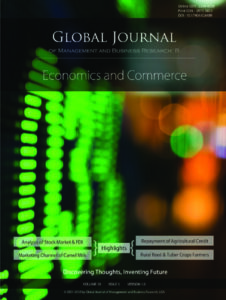
The Determinants of Money Demand Function in ASEAN-5 Countries

§ Al Hikmah University, Ilorin

Send Message

To: Author

The Determinants of Money Demand Function in ASEAN-5 Countries

Article Fingerprint

ReserarchID

MBRMOC9Q

The Determinants of Money Demand Function in ASEAN-5 Countries Banner

Key Research Insights

Synthesized scholarly intelligence & interactive research assistant
  • English
  • Afrikaans
  • Albanian
  • Amharic
  • Arabic
  • Armenian
  • Azerbaijani
  • Basque
  • Belarusian
  • Bengali
  • Bosnian
  • Bulgarian
  • Catalan
  • Cebuano
  • Chichewa
  • Chinese (Simplified)
  • Chinese (Traditional)
  • Corsican
  • Croatian
  • Czech
  • Danish
  • Dutch
  • Esperanto
  • Estonian
  • Filipino
  • Finnish
  • French
  • Frisian
  • Galician
  • Georgian
  • German
  • Greek
  • Gujarati
  • Haitian Creole
  • Hausa
  • Hawaiian
  • Hebrew
  • Hindi
  • Hmong
  • Hungarian
  • Icelandic
  • Igbo
  • Indonesian
  • Irish
  • Italian
  • Japanese
  • Javanese
  • Kannada
  • Kazakh
  • Khmer
  • Korean
  • Kurdish (Kurmanji)
  • Kyrgyz
  • Lao
  • Latin
  • Latvian
  • Lithuanian
  • Luxembourgish
  • Macedonian
  • Malagasy
  • Malay
  • Malayalam
  • Maltese
  • Maori
  • Marathi
  • Mongolian
  • Myanmar (Burmese)
  • Nepali
  • Norwegian
  • Pashto
  • Persian
  • Polish
  • Portuguese
  • Punjabi
  • Romanian
  • Russian
  • Samoan
  • Scots Gaelic
  • Serbian
  • Sesotho
  • Shona
  • Sindhi
  • Sinhala
  • Slovak
  • Slovenian
  • Somali
  • Spanish
  • Sundanese
  • Swahili
  • Swedish
  • Tajik
  • Tamil
  • Telugu
  • Thai
  • Turkish
  • Ukrainian
  • Urdu
  • Uzbek
  • Vietnamese
  • Welsh
  • Xhosa
  • Yiddish
  • Yoruba
  • Zulu
Reading Preferences
Font Size
Line Spacing
Background
This converted HTML version may contain rendering inconsistencies. Please refer to the PDF for the authoritative version, or click here to provide feedback.

Abstract

This paper aims to investigate the determinant of money demand function for ASEAN-5 countries over the period from 1987-2014. Macroeconomic data of these countries from World Bank Data Stream were obtained for the period between 1987 until 2014 was collected and analyzed using panel data regression analysis. Money demand function model is designed and tested using Stata 13. The results obtained showed that all the independent variables except stock price are determinants of money demand function in ASEAN-5 excluding time-invariant variables. This current study provides empirical results regarding the relationships between money demand function and its determinants in ASEAN 5 countries from 1987-2014. The finding of this study provides useful insights for policymakers; it could be used by the central bank of ASEAN 5 Countries as a guide for effective monetary policy. Even though the findings are fairly significant with a stable money demand in the five ASEAN 5 countries, they have some limitations. Other scholars should look at the other methods of analysis in determining the money demand functions in the region.

References

31 Cites in Article
  1. 1. Ahmed Abdulkheir (2013). An Analytical Study of the Demand for Money in Saudi Arabia. International Journal of Economics and Finance, 5(4), 31-38.
  2. 2. Hussin Abdullah,Jamal Ali,Hylmee Matahir (2010). Re-Examining the Demand for Money in Asean-5 Countries. Asian Social Science, 6(7), 146-155.
  3. 3. M Abdullah,M Chani,A Ali (2012). Determinants of money demand in Pakistan: Disaggregated expenditure approach. Economic Policy, 765-771.
  4. 4. Augustine Arize,Kiseok Nam (2012). The Demand for Money in Asia: Some Further Evidence. International Journal of Economics and Finance, 4(8), 59-71.
  5. 5. M Asif,K Rashid (2014). Estimation of money demand function through partial adjustment model. Journal of Economic and Social Research, 16(1-2), 87-102.
  6. 6. P Azim,N Ahmed,S Ullah,M Zakaria (2010). Demand for money in Pakistan: an Ardle approach. Global Journal of Management and Business Research, 10(9), 6-10.
  7. 7. D Bathalomew,S Kargbo (2009). Exchange Rates and Monetary Dynamics in Sierra Leone: Evidence from a Modified Money Demand Function. Journal of Monetary and Economic Integration, 9(2), 115-138.
  8. 8. Siddha Bhatta (2012). Stability of Money Demand Function in Nepal. Banking Journal, 3(1), 1-27.
  9. 9. Dario Cziráky,Max Gillman (2006). Money Demand in an EU Accession Country: A VECM Study of Croatia. Bulletin of Economic Research, 58(2), 105-127.
  10. 10. C Dharmadasa,M Nakanishi (2013). Demand for money in Sri Lanka: ARDL approach to cointegration. 3 rd International Conference on Humanities, Geography and Economics, 143-147.
  11. 11. Bülent Dogru,Mürsit Recepoglu (2013). Dynamic Analysis of Money Demand Function in Turkey. International Journal of Economics and Finance, 5(9), 20-27.
  12. 12. Pasquale Foresti,Oreste Napolitano (2013). Modelling long-run money demand: a panel data analysis on nine developed economies. Applied Financial Economics, 23(22), 1707-1719.
  13. 13. C Gu (2007). Empirical analysis of money demand in China: A cointegration approach. Empirical analysis of money demand in China: A cointegration approach
  14. 14. S Hassan,U Ali,M Dawood (2016). Unknown Title. Measuring money demand function in Pakistan
  15. 15. M Hussain,A Wijeweera (2013). Estimation of the money demand function in a heteregeneour panel for selected Asian countries. Indian Journal of Economics and Business, 12(1), 23-35.
  16. 16. U Iftekhar,D Mamoon,M Hassan (2016). Revisiting determinants of money demand function in Pakistan. Journal of Economics Bibliography, 3(4), 389-412.
  17. 17. Komain Jiranyakul,Timothy Opiela (2014). An Empirical Test of Money Demand in Thailand from 1993 to 2012. SSRN Electronic Journal
  18. 18. Komain Jiranyakul,Timothy Opiela (2014). Instability of Money Demand: Recent Evidence for Thailand. Modern Economy, 05(08), 907-913.
  19. 19. H Khrawish,A Khasawneh,F Khrisat (2012). The impact of budget deficits on money demand in Jordan: Co-integration and vector error correction analysis. Investment Management and Financial Innovations, 9(2), 101-108.
  20. 20. Saten Kumar,Mamta Chowdhury,B Rao (2013). Demand for money in the selected OECD countries: a time series panel data approach and structural breaks. Applied Economics, 45(14), 1767-1776.
  21. 21. A Musibah (2014). Determinants of the corporate social responsibility: An evidence of the mediating role of financial performance. International Research Conference on Business
  22. 22. O Okonkwo,E Ajudua,S Alozie,I Polytechnic (2014). An Empirical Analysis of the Money Demand Function in India. Indian Economy, 5, 9-26.
  23. 23. M Rutayisire (2010). Economic Liberalization, Monetary Policy and Money Demand in Rwanda: 1980-2005. Rwanda: African economic research consortium. Economic Liberalization, Monetary Policy and Money Demand in Rwanda: 1980-2005. Rwanda: African economic research consortium
  24. 24. A Samimi,S Kenari,M Ghajari,E Rate (2013). Analysis The Impact of Economic Growth, The Inflation Rate and Money Supply (M2) On Exchange Rate. International Journal of Business and Technology Management, 5(1), 39-60.
  25. 25. Haroon Sarwar,Masood Sarwar,Muhammad Waqas (2010). Stability of Money Demand Function in Pakistan. Economic and Business Review, 15(3), 1-20.
  26. 26. Haroon Sarwar,Masood Sarwar,Muhammad Waqas (2013). Stability of Money Demand Function in Pakistan. Economic and Business Review, 15(3), 197-212.
  27. 27. Tuck Tang (2002). Demand for M3 and expenditure components in Malaysia: assessment from bounds testing approach. Applied Economics Letters, 9(11), 721-725.
  28. 28. T Tang (2007). Money demand function for Southeast Asian countries: An empirical view from expenditure components. Journal of Economic Studies, 34(6), 476-496.
  29. 29. A Valadkhani (2008). Long-and short-run determinants of the demand for money in the asianpacific countries: An empirical panel investigation. Annals of Economics and Finance, 9(1), 77-90.
  30. 30. A Valadkhani,M Alauddin (2003). Demand for M2 in developing countries: An empirical panel investigation. Demand for M2 in developing countries: An empirical panel investigation, 149.
  31. 31. George Vamvoukas (1998). The relationship between budget deficits and money demand: evidence from a small economy. Applied Economics, 30(3), 375-382.

Funding

No external funding was declared for this work.

Conflict of Interest

The authors declare no conflict of interest.

Ethical Approval

No ethics committee approval was required for this article type.

Data Availability

Not applicable for this article.

How to Cite This Article

Hussaini Umaru. 2018. "The Determinants of Money Demand Function in ASEAN-5 Countries". Global Journal of Management and Business Research - B: Economic & Commerce GJMBR-B Volume 18 (GJMBR Volume 18 Issue B5).
Download Citation

Journal Specifications

Crossref Journal DOI 10.17406/GJMBR

Print ISSN 0975-5853

e-ISSN 2249-4588

Keywords
Classification
GJMBR-B Classification JEL Code: G00
Version of record

v1.2

Issue date
July 30, 2018

Language
English
Order Article Reprint
Experiance in AR

Explore published articles in an immersive Augmented Reality environment. Our platform converts research papers into interactive 3D books, allowing readers to view and interact with content using AR and VR compatible devices.

Read in 3D

Your published article is automatically converted into a realistic 3D book. Flip through pages and read research papers in a more engaging and interactive format.

Article Matrices
Total Views: 1.2K
Total Downloads: 49
All Trends

Request Access

Please fill out the form below to request access to this research paper. Your request will be reviewed by the editorial or author team.
X

This is the heading

Lorem ipsum dolor sit amet, consectetur adipiscing elit. Ut elit tellus, luctus nec ullamcorper mattis, pulvinar dapibus leo.


High-quality academic research articles on global topics and journals.

The Determinants of Money Demand Function in ASEAN-5 Countries

Hussaini Umaru
Hussaini Umaru Al Hikmah University, Ilorin
