
I. INTRODUCTION
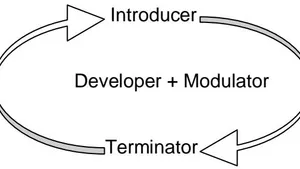
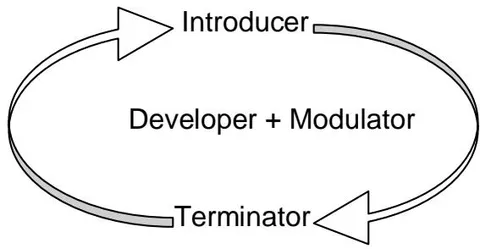
Paragraph is the smallest unit of any writing or the smallest division of any composition writing. It is a cyclic process to give a particular shape to the fundamental unit of composition. The process begins with the key idea and travels it through the congruent supporting ideas and concludes with reminding the key idea of the topic in the topic sentence in a varied mode of language construction. The cycle rotates among four basic elements known as IDMT which are a must to write a complete paragraph. The elements are introducer, developer, modulator and terminator. Generally, the introducer ignites the theme in the outset, the developer brings out its completion throughout the body of the paragraph, the modulator bridges the supporting ideas of the developer through the transitional devices and the terminator finalizes the paragraph restating the ignited theme of the introducer in a varied way of language.
There is a general idea in our society that paragraph is a matter of mugging up. It does not follow any rule – a bad catch phrase usually prevailing in the mind set of our teachers as well as our innocent learners. They think it is just to commit and vomit in the answer script of the examination. That will do. But it misguides our young learners and spoils their valuable time and efforts. Actually, there are many rules to write an ideal paragraph. So, it is a must for them to know these rules in detail to make their writing practice precise and systematic.
Keeping in view the best of the completeness of the paragraph, the writer is to select the theme or central idea of the topic following the selection process of the theme discussed in DAFTI, and then to implement the mechanism of starting, developing and ending discussed in STOAP and SCARF maintaining the unity throughout the paragraph. He has to follow the cohesive and rhetorical devices to give an organized shape to the paragraph. Now, this study investigates the important query about how effectively the rules of paragraph writing can be culled and compiled for the young learners.
II. LITERATURE REVIEW
The data and materials of paragraph were collected from various sources ie from the consultation of the books and journals of various writers as mentioned in bibliography, standard data collection was from the class lectures of Professor Dr Rabeya Begum, Department of English, Al Jazan University, Saudi Arabia, from the seminar conducted by Professor Dr Rezaur Rahman, Department of English, University of Dhaka in 2005.
III. THE STUDY
The materials used to conduct the research in the class room were discussed below:
a) Basic structure of paragraph.
b) Illustration of the acronymic words-DAFTI, SCARF and STOAP.
Purpose of paragraph.
c) Element of paragraph.
d) Type of paragraph.
a) Basic Structure of Paragraph i. The Normal Structure: The structure of the paragraph has three basic parts - selection of theme determined by the acronymic word 'STOAP', the body developed by the acronymic word 'DAFTI' and conclusion terminated by the acronymic word 'SCARF'. Under the body portion, there are arguments, thoughts, ideas, concepts, quotations, discussions, evidences etc as supporting ideas to the body. There is no limit of the number of supporting ideas. It may be as many as the
completeness of the paragraph allows without breaking the unity.
ii. Skeleton of Paragraph: A paragraph must have a topic sentence related to the topic which gives an attitude to develop it. The body is the cohesive and coherent development of the topic and ends with the restatement of the theme of topic sentence, but structurally different. The skeleton is shown in the graph below:
a. Topic Sentence (STOAP) b. Body (DAFTI)
(1) Arguments (2) Evidences (3) Discussion (4) Thoughts (5) Concepts (6) Quotations c. Conclusion (SCARF) d. Four basic elements in the cyclic disposition of the paragraph are:
b) Illustration of Acronymic Words
Factors to Select a Theme. All the paragraphs must thematically fall under any category of the following factors. You have to select the best probable theme in which you can develop more or you can present more number of related sentences. If we acronym the initial letters of the factors, it becomes DAFTI. It (actually DAFT) means a stupid person. These five letters stand for five specific ways of thematic development of paragraph.
D = Different attitudes, types, factors, reasons etc.
- A = Advantages or disadvantages.
- Factual accounts or facts.
- T = Time.
- I = Importance of the topic in human life.
D = Different Attitudes, Types, Factors, Reasons, Natures Etc. A paragraph can get the theme on different attitudes, types, reasons, factors, categories etc i. e. 'University Students.' The theme can be on various categories or types of university students. If you can just plainly discuss the nature and activities of various groups of students sequentially, you will get an excellent paragraph.
A = Advantages or Disadvantages. The theme of the paragraph can be on merits or demerits of the topic or both of them on the basis of comparison and contrast i.e. 'The Cow'. We can develop very less on its colour, its physical description, its kinds, its demerits etc whereas we can discuss a lot on its usefulness. So, the theme is to be on merits or advantages of the cow.
Factual Accounts or Facts: Generally, in this type of paragraph, the facts are placed in support of the topic. The facts or ideas are presented in the listing method maintaining the cohesion and finally ends with the restatement of the theme of the topic sentence i.e. 'My Bosom Friend'. The topic sentence may be 'My bosom friend is a strictly religious man.' How religious? What are the religious practices he does? Just discuss the facts in support of the topic and you will get a good paragraph.
: This type of paragraph can chronologically be on the time sequence of different events, incidents, facts etc i.e. 'Our Liberation War.' The topic can be 'Our Liberation War is a nine-month durational war.' It starts on the march, 1971 and then develops the events or fights as per the time sequence. It will be good paragraph.
I = Importance of the Topic in Human Life: What will be the effect of the topic in human life is the subject matter i.e. 'Scientific Method of Cultivation.' The topic sentence can be 'Scientific method of cultivation has a great importance in our national economy.' What are the aspects of importance? Just discuss and get an excellent paragraph.
Factors to Start a Paragraph: The following factors tell us how to start or introduce a paragraph. If we acronym the initial letters, it becomes a word 'STOAP' found in British Slang Dictionary.
S = Speech
T = Theme
Opinion
A = Action
P = Proverbial Statement/Quotation
Speech: It is clear that a paragraph can start with a speech i.e. 'Democracy'. The topic sentence can be 'Democracy is of the people, for the people, by the people'. Why is Democracy completely related to the people and how? Just discuss accordingly and it will be a good paragraph.
Theme: A paragraph can start with the theme directly i.e. 'The Cow'. The topic sentence can be 'The cow is a useful animal'. Why useful? Just discuss.
Opinion: A paragraph can start with the opinion of what you like or dislike i.e. 'Student Politics'. The topic sentence can be 'I do not like student politics'. Why? Just write the reasons and get an excellent paragraph.
A = Action: A paragraph can start with the activities i.e. 'Shakespeare'. The topic sentence can be 'Shakespeare is mostly known for his dramas.' Now describe the characteristics of his dramas and their effects in human life.
Proverbial Statement/Quotation: A paragraph can start with the proverbial expression or quotation i.e. 'Self-effort'. The topic sentence can be 'where there is a will, there is a way.' Now prove how a will can create a way.
Factors to Terminate a Paragraph: The following factors dictate the conclusion as the restatement of the topic sentence but structurally different. If we acronym the initial letters of the factors, it becomes a word 'SCARF'. It means a piece of fabric worn by women.
- up.
- C = Climax.
- .
- Repetition of the topic.
- Future Indication.
: It is to sum up the paragraph restating the theme of the topic sentence.
C = Climax: It concludes with the great importance to the end i.e. 'Travelling.' If the topic sentence is 'travelling is a good means of learning', the conclusion is 'Thus a man can gather vast knowledge by travelling'.
A = Air of Finality: It gives the final indication to the end i.e. 'Students' Failure in English.' If the topic sentence is 'Students' failure in English tremendously affects the career of our students', the conclusion is 'it will limit the range of knowledge of our students.' Actually, the failure itself gives the air or final indication of career wrecking.
Repetition of the Topic: It is similar to sum up. Exactly repeat the topic but change the structure of the sentence.
Future Indication: The paragraph ends indicating something future activities i.e. 'Poverty Alleviation.' If the topic sentence is 'there are different ways to alleviate poverty', the conclusion is 'these are the steps to be taken to alleviate poverty.' It means the action to take steps indicates future.
c) Components of Paragraph
Introducer: It is basically the topic sentence expressing the central theme through an attitude or an outlook to develop.
Developer: It deals with the body of the paragraph. Its elements are as following:
Unity of Paragraph: Unity in a paragraph begins with the topic sentence and continues till the terminator. It means all the sentences will be coherent to the main idea.
Order or Logical Arrangement of Ideas: Order refers to the way you organize the supporting sentences. It may be on chronological order, order of importance, or another logical presentation of detail. Order helps the reader grasp the meaning and avoid confusion.
Variety of Language: Paragraph is an important field of language varieties. It is odd to repeat a sentence or an expression in a paragraph. That is why; a writer needs a vast store of words, choice of diction, bent of expression etc to make the paragraph lucid, simplified and understandable.
Coherence: Coherence is the sequential presentation of congruent supporting ideas. Sentences within a paragraph need to connect to each other and work together as a whole. One of the best ways to achieve coherency is to use transitional words which create bridges from one sentence to the next.
Cohesion: It is the glue to connect two logical ideas in a paragraph. It brings the smooth transition from one idea to another to develop the paragraph.
Modulator or Cohesive Devices: It is mostly known as smooth transitional devices or cohesive devices. It is of the following kinds:
Sentence Connectors: The sentence connectors are as the following:
To Show Addition: And, Furthermore, Also, Moreover, Besides, In addition etc.
To Show Contrast: But, On the other hand, However, On the contrary, Instead, etc.
To Show Comparison: Similarly, Likewise, In the same way, In like manner etc.
Substitution: It is also of three types:
Nominal: The knife is blunt. Give me a sharper one.
Verbal: Did the baby eat the sweet? It may do so.
Clausal: Are you going to Dhaka? If so, we can travel together.
Ellipsis: It is of three types:
Nominal: Why don't you use a pen? I haven't got any (pen).
Verbal: Is it going to rain? It may (rain) or not (rain).
Clausal: Can you swim? Yes (I can swim).
Terminator: It is the restatement of the 'Introducer', but structurally different.
d) Type of Paragraph
Descriptive: It is the paragraph on the description of concrete or solid things. i.e. 'The Cow'. If the topic sentence is 'The cow is a four-footed animal', you have to describe the physical appearance.
Narrative: The paragraph written as a narration is a chronological presentation of events that adds up to a story.
Reflective or Expository: Expository paragraph is explanatory in nature. It requires reflection or thought of the writer. Generally, our learners are given this type of paragraph for practice. It is a sort of paragraph development by:
Fact: In this type of paragraph, the facts are put sequentially in support of the topic sentence i.e. 'My Friend'. The topic sentence is 'My friend is the stingiest man I have ever seen.' How stingiest? Just put the facts.
Comparison and Contrast: It compares or contrasts two or more objects, characters, events etc. A chart can be prepared before writing this type of paragraph for the items compared or contrasted, and the criteria by which they are compared or contrasted. This type of paragraph has two styles of development which are as following:
Point by Point Method: In this type of paragraph, one point as comparison is presented in contrast to one opposite point and sequentially maintained this trend with proper cohesive devices till the end.
Block Method: In this type of paragraph, generally the points of one aspect of the topic are arranged together sequentially and then the opposite points are discussed accordingly. Actually, two separate blocks of the reverse points are presented one after another.
Definition: This type of paragraphs provides the meaning using events and happenings. A strong effort should be made to clearly explain what something is, and what it is not.
Cause and Effect: In this paragraph, the topic sentence is the effect of some causes. Then put the causes sequentially i.e. 'Students' Failure in English.' The topic sentence can be 'There are many reasons of students' failure in English.' Now put the reasons or causes to get a paragraph.
Classification: In this paragraph, the theme is divided into several classes which are to be developed i.e. 'University Students.' The topic sentence can be 'University students can be divided into a number of groups.' Now discuss the first group, second, third--- and get a paragraph.
IV. RESULTS AND DISCUSSION
Results of the research coming from the assimilation test and the evaluation on the implementation of the rules of paragraph by the students of different groups in both of the courses were framed below to show the comparative state of the groups:
Blended Communicative Skills-BMA, Chittagong
| Free Group-15 Students | Controlled/Guided Group-15 Students | |||||||
| Number | Entrance Test (10) | Assimilation (15) | Implementation (75) | Number | Entrance Test (10) | Assimilation (15) | Implementation (75) | |
| 1. | 05 | 2.5 | 7 | 35 | 01 | 6.5 | 8 | 65.5 |
| 2. | 07 | 3 | 6.5 | 39 | 05 | 7 | 6.5 | 55 |
| 3. | 03 | 3.5 | 4.5 | 43 | 06 | 6 | 5.5 | 45 |
| 4. | - | - | - | - | 03 | 5.5 | 4 | 35.5 |
| Total(Avg) | 3 | 6 | 39 | 6.25 | 6 | 50.25 | ||
Intermediate Level English Language Course-BIPSOT, Gazipur
| Ser | Free Group-10 Students | Controlled/Guided Group-10 Students | ||||||
| Number | Entrance Test (10) | Assimilation (15) | Implementation (75) | Number | Entrance Test (10) | Assimilation (15) | Implementation (75) | |
| 1. | 05 | 2 | 5 | 45 | 01 | 7 | 8 | 60 |
| 2. | 03 | 1.5 | 7.5 | 32 | 03 | 9 | 9.5 | 48 |
| 3. | 01 | 3.5 | 6 | 29 | 04 | 6.5 | 7.5 | 43 |
| 4. | 01 | 1.5 | 5 | 33 | 02 | 7.5 | 10 | 47 |
| Total(Avg) | 2.125 | 5.875 | 34.75 | 7.5 | 8.75 | 49.5 | ||
V. SUMMARY OF FINDINGS
From the structure and the skeleton of the paragraph, it is clear that a paragraph is a cyclic organization of thoughts or ideas – the topic sentence, the supporting sentences and the concluding sentence.
Despite having constant guidance to the free group, the students of controlled/guided group could select the theme under any of the categories dictated by DAFTI as any topic in the world must follow any one of them, start the paragraph in any one way dictated by
STOAP and terminate it in any suitable one prescribed by SCARF in a better way.
The elements are the essential parts for a paragraph. Unity is the heart of paragraph, logical order is the ornament of paragraph, language variety is the beauty of paragraph, cohesion and coherence are two factors to maintain the unity and completeness is the fulfillment of paragraph development. But the students of free group missed some elements while developing the paragraph and brought out less completeness.
Types of paragraphs are the manifestation field to develop it. It may be the development of paragraph by facts, examples, definition, comparison and contrast, persuasion etc. It is the writer's prerogative to select the type in which he can develop more. But most of the students of both groups follow the development of paragraph by facts. So, paragraph development by facts is the easiest type proved by the analysis.
VI. CONCLUSION
A paragraph is a development of one main idea unified by some related ideas. There must have one central idea expressed in the topic sentence through an attitude or outlook which is taken as the theme of the paragraph. This idea is developed throughout the paragraph by the supporting ideas. The developing ideas are to be coherent or congruent to the main idea. These ideas are smoothly connected by the cohesive devices. No incoherent idea is to be incorporated to maintain the unity of paragraph. Then, the central idea is restated at the end as a terminator. But it is to be mentioned that there are several limitations of the research which are as following:
The number of students was poor.
Some students studied at home. It was beyond my monitoring.
Different students were attentive at different degrees. It was beyond the control of any teacher to make the students attentive at the same scale.