
Abstarct- Malaysia's foreign policy has traditionally focused on Southeast Asia and its friends in the West. West Asia was not a priority in its foreign policy despite the long established historical, social, and religious connection between Malaysia and the region. It was not until April 1965 that Malaysia began to develop closer cooperation with members of the Organisation of the Islamic Conference (OIC). The OIC was established with the fundamental purpose of strengthening the solidarity and cooperation among the 59 Members States. Malaysia values its participation within the OIC as part of its foreign policy strategy with other Muslim countries. During the 2003-2007 period, Turkey, Saudi Arabia, and Malaysia were the three largest Muslim majority economies registering significantly larger growth in trade with OIC member countries than with the rest of the world. This paper examines factors shaping Malaysia-West Asia international relations through the perspective of social capital networking with a focus on establishing an "ummah network" between Malaysia and West Asia.
I. INTRODUCTION
The relationships between Malaysia and countries in West Asia have been evolving in the political, economic, social, as well as cultural fields. Relations have been enhanced through a shared history and religion. Malaysia's political stability, economic progress, and its image as a progressive Muslim country have attracted the attention of many countries in West Asia to reinforce their relations with Malaysia.
In its most basic definition, international relation or foreign policy is the policy of a sovereign state in its interactions with other sovereign states. It is a policy that a nation pursues in its dealings with other nations designed to fulfill its national objectives. Essentially, foreign policy can be defined as goals that a nation seeks to attain abroad, the values that give rise to those objectives, and the means and instruments used to pursue them. A state's foreign policy is determined by both domestic and external factors, which may change from time to time, thus forcing it to review its foreign policy to ensure that it operates in the best possible conditions to achieve those objectives. Malaysia's foreign policy towards West Asia has been largely determined by the need to balance the domestic factors and the external demands of international politics.
In general, Malaysia has good and stable political relations with countries of the region, not only because of religious affinities and historical connections, but also because of the geographical distance between them, which reduce the possibility of political and strategic interferences. Malaysia's relations with the region have been fostered through bilateral and multilateral means. It has strong bilateral relations with major countries in West Asia such as Saudi Arabia, Egypt, United Arab Emirates, Qatar, Oman, and Iran. Malaysia is also a strong supporter of OIC and has established close rapport with its members. In recent years, the scope and content of Malaysia-West Asia relations have increased both at the official state-to-state level as well as in the private sector level. This has become more visible since the event of September 11, 2001.
II. THE PREMISE OF MALAYSIA'S FOREIGN POLICY
Since Tunku Abdul Rahman Putra al-Haj, Malaysia's foreign policy has consistently been premised on national interest, pragmatism, and adherence to the to the principles enunciated in the Charter of the United Nations. Malaysia's former Minister of Foreign Affairs, Dato' Seri Hamid Albar characterised Malaysia's foreign policy as "principles with rests on the values of humanity, justice and equality" and "recognizes diversity and pluralism which makes up the mosaic of the nation and the international community".
Malaysia's foreign policy has shifted from the staunchly pro-West position in the 1950s and 1960s to a policy of non-alignment in the 1970s beginning with Tun Abdul Razak's administration. Since then, Malaysia has continued with this foreign policy stance. The coming of Tun Dr. Mahathir Mohamad to power in 1981 brought a significant change in Malaysia's foreign policy who sought to keep foreign policy under his close control.
During his period, ASEAN was ranked first, followed by the Islamic countries in second position, and thirdly by the Non-Aligned Movement (NAM).
Tun Dr. Mahathir wanted to enhance Malaysia's role in international affairs through an assertive and active foreign policy, summed up as a foreign policy of "active internationalism". His successes are seen in the growing recognition accorded to Malaysia by several international organisations by the latter half of the 1980s.
Tun Dr. Mahathir was an outspoken leader and conducted his diplomacy with a heady mixture of high profile and plain speaking compared with the cautious foreign policies and the discreet ways of previous Malaysian administrations. He was critical of almost everybody-the West, the developing countries, as well as his fellow Muslims, although he more often 'identified Malaysia with other developing countries'. Some contended, "Tun Dr. Mahathir's diplomacy seemed destined to lose friend if not designed to gain enemies". His critical views on the weaknesses of West Asia did not endear him to the Arab governments, and he was definitely popular among Arab 'streets'.
Since the departure of Tun Dr. Mahathir as PM, Malaysia has adopted a 'quiet and soft diplomacy' rather than a combative approach. When he resigned in October 2003, as the new Prime Minister Tun Abdullah Ahmad Badawi, Malaysia's foreign policy become more measured without losing sight of Malaysia's national interest. According to him, "a good foreign policy will make other countries comfortable in dealing with Malaysia". Malaysia's foreign policy should not be a static doctrine...it must always be a dynamic instrument while staying true to its principles.
Tun Abdullah's top foreign policy was the East Asia Summit process (EAS), which would eventually lead to an East Asian Community. He also mended relations with Australia which became frosty during Tun Dr. Mahathir's administration. When Tun Abdullah stepped down in April 2009, the premiership was handed over to Dato' Seri Mohd Najib Tun Abdul Razak who has visited many countries, including ASEAN countries, China, United Arab Emirates (UAE), Qatar, Kuwait and many other countries in West Asia.
III. THE SIGNIFICANCE OF WEST ASIA
West Asia is a theatre in which the struggle for resources and global supremacy continues to be played out. The United States, Europe, China, and Russia have been traditionally interested in West Asia for political, economic, and strategic reasons, particularly its huge energy resources.
West Asia and North Africa accounts for 60.4% of global oil and liquid natural gas reserve. It is also strategically and politically crucial to the West, especially to the US because of Israel is in the heart of the region. Countries such as Iran, Turkey, and Syria have also emerged as important geo-strategic players in the region.
The designation of geo-strategic players are neither permanent nor fixed, which may increase the potential for regional political instability and rivalry. Changes in the status of a regional player would represent major events and involve shifts in the distribution of power. Iraq for example, used to be an important geo-strategic player in the region, but has been weakened and is presently recovering from political instability in the aftermath of the dismissal of Saddam Hussein and the US occupation in 2003.
Over the years, countries in West Asia have experienced enormous economic growth and have become important sources for both finance and investment. Saudi Arabia, UAE, Qatar, and Kuwait have been at the forefront of growth with expanding infrastructural development programmes. Trade and investments between Malaysia and the region have been encouraging these past few years.
IV. AN OVERVIEW OF MALAYSIA-WEST ASIA INTERNATIONAL RELATIONS
Early relations between Malaysia and West Asia evolved around the religion of Islam which continued to shape their interactions throughout the centuries. It was through Islam that the Malay society was exposed to the political and social developments in major West Asian countries such as Saudi Arabia, Egypt, and Turkey. Developments in these countries, especially in the early 20th century, influenced many Malay thinkers and religious elite. Saudi Arabia and Egypt have long been favourite countries for Malays to study. In addition, interaction with Saudi Arabia has always been important because of the pilgrimage to Mecca by Muslims.
British colonial power in the 18th century gradually changed the focus of the Malay elite and intellectual class from West Asia to the West. After the Second World War, Western educated groups dominated Malaysian administration and politics.
However, Islam continues to play a role in shaping Malaysia's position on many international issues especially those related to the Muslim world. There has been a conscious effort on the part of the
Malaysian government to develop a strong consciousness membership of a global Islamic brotherhood. Because of its long established relations with Malaysia and the religious affinity, West Asia occupies an important position in Malaysia's conception of the Muslim world. In recognition of Malaysia's effort to promote solidarity among Muslim countries, its first Prime Minister, Tunku Abdul Rahman Putra al-Haj was nominated as the first Secretary-General of OIC after his retirement in 1970.
Under Tun Dr. Mahathir's administration, Malaysia identified itself as an Islamic state in its foreign relation. During April and May 1983, in order to promote the causes of South-South dialogue and encourage more direct trade with other countries, Tun Mahathir paid official visits to Turkey among other Muslim countries. Besides that, Turkey was also one of the few Muslim countries with whom Malaysia's joint commission agreements were extended by his administration to include political matters.
Turkey has always been a major trading partner of Malaysia. During June 2003, the visit of Turkish Prime Minister, Recep Tayyib Erdogan to Malaysia further enhanced the existing relationship between both countries. Not only was the bilateral relations between both countries improved, Turkey also aimed to boost bilateral trade between both countries to U.S. ^{12}$
As for the UAE, to broaden Malaysia's international contacts, in 1975, then Prime Minister, Tun Abdul Razak boosted relationships by visiting Gulf States. Ties between Malaysia and UAE had been growing in mutual confidence. The bilateral relations between both countries are particularly strong in trade and commerce.
According to Dato' Mubin Razali, Malaysia Ambassador to the UAE, both countries not only share common aspiration and views at international and regional levels, they also share close and good cooperation within international organisations such as the UN, NAM, and OIC.
In 2005, Malaysia's export to the UAE stood at Dh 7 billion with the main export items including gold, jewellery, wood products, palm oil, petroleum products and electrical appliances. The imports from UAE recorded a sharp increase, equivalent to Dh 2.8 billion involving import items such as petroleum product and chemicals. According to the International Monetary Fund's Direction of Trade Statistics and Dinar Standard Research, UAE was the second OIC trading partner of Malaysia in 2007, and is considered to be the most important trading partner for Malaysia in West Asia.
V. RE-ORIENTATION OF WEST ASIA BILATERAL RELATIONS WITH MUSLIM COUNTRIES IN SOUTHEAST ASIA
West Asia and Gulf States previously saw their interests as far more closely tied to the West than to the Muslim countries in Southeast Asia. Changes in the global economy, West Asia, and the Muslim World compelled the Gulf States, Malaysia and other Muslim states in Southeast Asia to “re-orient” their economic and strategic interests.
West Asia and Gulf governments sought new markets for both their capital and hydrocarbon exports that would deliver higher returns than they could get with their traditional Western partners. They also sought opportunities for education, leisure, and advanced medical care that were world-class but cheaper than those in the West, and in a place where their religious values would be respected. For their part, Malaysian leaders and other Southeast Asia's Muslim leaders hoped that greater Gulf and West Asia trade could help balance China's growing influence, mitigate declining Western markets, and promote growth.
In the eyes of West Asia and Gulf leaders, the emergence of Iran and Muslim Brotherhood in Egypt can be regarded as another factor that reinforced their need for new friends, particularly from among Muslim countries in Southeast Asia.
The networks that have shaped links between West Asia and Southeast Asia reflect centuries of intellectual exchange and travel between the Muslim of Southeast Asia and the wider West Asia. These intellectual and religious ties, however, were not matched by extensive commercial ties, especially in the twentieth century. While West Asian and Gulf countries contributed generously to religious institutions in Southeast Asia in the twentieth century, they made few investments in the region's economy, still preferring safer opportunities in the West.
The Arab Malaysia Development Bank observed in 1979 that religion factored little into the economic decisions of the West Asia and Gulf business groups and leaders.
When the West Asia and Gulf states “re-designed” their focus toward Asia and Muslim countries in Southeast Asia, that process began with an advertising campaign on al-Jazeera and other West Asia broadcast networks that featured images of modern cities of West Asia nations with the catchy phrase, "Malaysia-Truly Asia." The advertising campaign branded Malaysia as a tropical paradise, a nexus of Asian cultures, and a nation that blended modernity and Islam in a way West Asia and Gulf Muslims could emulate. For Muslims in West Asia and Gulf States, Malaysia was an attractive alternative destination to Western countries for education, healthcare, investment, and leisure, especially after the 9/11 attacks and the 2008 global financial crisis. Malaysia also offered two additional benefits: an entryway to Indonesia and the other growing economies in Southeast Asia and a way to check the growing influence of Iran in the region.
Among the most important indicators of the West Asia and Gulf states shift to the Malaysia and other Southeast Asian nations was business trade. Between 1996 and 2001, Malaysian-West Asia and Gulf trade rose from U 14.5 billion, while trade with Indonesia grew from U 5.9 billion. Although the steep rise in petroleum prices and Indonesia's declining supplies of petroleum help explain part of the surge, Southeast Asia exports to West Asia and the Gulf played an important role in trade for the first time in many years.
Malaysian exports to West Asia and the Gulf rose from U 6.3 billion in 2011, while Indonesian exports to West Asia and Gulf states nearly doubled, from U 2.3 billion in 2009. The growth in bilateral trade reflected increasing commercial and diplomatic ties between West Asia and ASEAN. Since 2009, senior ministers from both GCC and ASEAN have meet annually, and there was a fivefold increase in trade from 2004 to 2011 among member states.
We also find that many well-known financial companies based in West Asia and the Gulf such as the Al-Rajhi Bank, Kuwait Finance House, the Islamic Development Bank, Abu Dhabi National Energy & Gulf Investment, and the Qatar Islamic Bank have established footholds in Southeast Asia. In 2006,
Qatar's al-Jazeera opened a regional bureau in Kuala Lumpur. In addition, Saudi investor poured U^{28} 2 billion.
Between 2007 and 2010, Malaysia invested U^{34} 100 million worth of investments in the UAE. Malaysian companies have secured contracts worth U^{36}30 billion contract for the Jizan Economic City in Jizan Province, in addition to another U5.6 billion contract for the Jabal Omar project to improve accommodations for Hajj in Makkah.
In Indonesia, Saudi Arabian businessmen are some of the top foreign investors, having invested nearly U^{30} 1.2 billion in Indonesia's Axis. In 2009, the Bin Laden Group announced a U 335 million in rice and palm oil in Indonesia. West Asia and Gulf countries have also invested heavily in Islamic banking in Malaysia and Indonesia and in Malaysia's Takaful market. Together, Malaysia's Islamic finance and Takaful markets are second in size to Saudi Arabia.
The leaders of Muslim countries in Southeast Asia believed that the ties between two regions which based on the ummatic belonging reaffirmed their Islamic identity and links to the wider Muslim world. They also promised economic growth in a period of global instability and balance against China, whose rise is at once welcomed as a way to check Western hegemony but which also threatens domestic and regional political balances in Southeast Asia.
Malaysia and Indonesia maintain extensive commercial links to China, have important populations of Chinese descent, and control international seaways vital to Chinese commerce. In fact, Malaysia claims a portion of the South China Sea; the July 2012 meeting of ASEAN foreign ministers collapsed because of disagreements over Chinese claims to the strategic waterway. For West Asian and Gulf leaders, Southeast Asia offered an alternative partner to a still economically stagnant West and strategic allies in the Muslim world to replace those that collapsed during the Arab Spring revolution. In addition to that, Indonesia and Malaysia could help to offset domestic instability and the rise of Iran and Ikhwanul Muslimin in the Muslim world, both of which are mistrusted by West Asia and GCC governments.
Although West Asia and Gulf countries' relation with Southeast Asia is set to grow, but the Southeast Asia bilateral trade with West Asia and the Gulf is still smaller than its West Asia and GCC bilateral trade with China, Europe, Japan, and the United States. Although the number of West Asia and Gulf tourists have grown rapidly in recent years, that number represents only a fraction of the seven million tourists annually from West Asia and the GCC countries. Although the number of West Asia and GCC students in Southeast Asian universities has risen, there are now 50,000 Saudis studying in the United Sates-many more than in Indonesia and Malaysia.
VI. MALAYSIA-QATAR DIPLOMATIC RELATION
The diplomatic relation between Malaysia and Qatar was inked through an agreement in 1974. Thanks to the ever-increasing brotherhood-like relationship between the leaders of the two nations and the rising trade-tourism activities, both Malaysia and Qatar grew simultaneously.
The State of Qatar has also initiated the Islamic Summit Meeting for Cooperation of Muslim Countries in Doha in November 2000. Malaysia initiated the same summit in October 2003 in Kuala Lumpur. By September 2004, both nations agreed to run their embassies in each other's countries with residence representative-a significant milestone for their diplomatic and trade activities.
As an active member in NAM and OIC, both Malaysia and Qatar have enjoyed similarities in views and stand on foreign political issues, especially with their ‘moderate foreign policy’ approach towards providing a peaceful resolution to the conflicting parties in the Muslim world.
The close personal relation between leaders of two countries has resulted in the exchange of visits between these leaders which first began in May 2010 and the following visit in December 2011. The arriving kingdom's delegates in Kuala Lumpur were His Highness Amir Walid, and Qatar's former Prime Minister and the Minister of Foreign Affair, Sheikh Hamad bin Jasim bin Jabir al-Thani. Malaysian Prime Minister, Dato' Sri Mohd Najib Tun Abdul Razak fulfilled the kingdom's invitation by visiting Doha in May 2011. In addition, in July 2015 the new kingdom's successor/Qatari Amir, Shaikh Tamim bin Hamad Al-Thani visited Kuala Lumpur. His Highness has conducted a fruitful discussion on bilateral relations with Dato' Sri Mohd Najib, and both leaders committed to find ways to further bolster ongoing cooperation in all fields.
VII. THE ACHIEVEMENT OF DIPLOMATIC
RELATION BETWEEN MALAYSIA AND QATAR
Following the successful opening of the Qatar Embassy in Kuala Lumpur in 2004, key milestones as listed below have been achieved to uplift greater diplomatic and economic ties between the two nations. High impact agreements and memorandums of understanding (MOUs) that have been signed includes: 1. Agreement to Avoid Tax Duplication in the year 2008, 2. Agreement of Trade Cooperation in 2009, 3. The Agreement on the Establishment of a Joint Economic Cooperation, 4. Memorandum of Understanding Between Qatari Diar and the KLCC Company, 5. Memorandum of Understanding Between the Qatar Foundation for Investment and the Foundation for Investment Malaysia Bhd.
In addition, some ongoing agreements to be accomplished include: 1. Agreement on the
Encouragement and Reciprocal Protection of Investment, 2. Draft on Air Transport, Signed in Initial on May 14, 2001, 3. A Memorandum of Understanding for Cooperation Between the Diplomatic Institute of Malaysia Foreign Services and the Qatari Diplomatic Relations, 4. Memorandum of Understanding for Cooperation in the Field of Higher Education, 5. A Draft of Memorandum of Understanding on Tourism Cooperation.
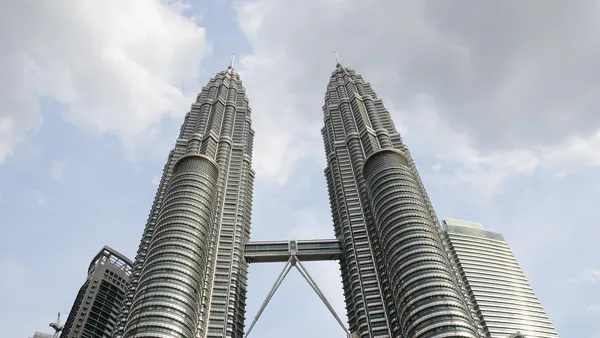
Prominent economic programs by both countries include: 1. The opening of a permanent exhibition of industrial products in Doha, in 2014, 2. Laying the foundation stone for the project of Harrods Hotel Commercial Complex for the Qatar Investment Foundation in Kuala Lumpur in 2013, 3. Laying the foundation stone for a tourist resort project in the State of Terengganu in 2014, implemented by the Qatar Investment Cooperation with the Terengganu State Government, 4. Laying the foundation stone for the opposite tower at the Petronas Twin Towers in the City of Kuala Lumpur which will be Implemented by the Qatari Diar.
The Qatar Embassy is currently working on a follow-up to the completion of establishing the Malaysian-Qatar Business Council project in both countries in order to encourage their respective private sectors to cooperate in joint ventures, especially involving construction and other sectors.
With regard to the Qatari Public Diplomacy Relations, the ambassador himself has exerted tremendous effort in establishing close relationship and cooperation between him and the Malaysian Ministries, senior officers, as well as members of parliament. This development has certainly allowed better positioning of by the Qatari, covering various field of international issues and enables them to facilitate ongoing cooperation including the possibility to engage with different state governments within Malaysia.
As far as the Qatar Embassy consular services in Kuala Lumpur are concerned, the embassy seeks to provide all types of services needed by the Qatari citizens who visit Malaysia,. The embassy also works on the documentation and certification of commercial transaction and other corporate needs of the citizens of these two friendly countries. In the 2013 alone, Qatari tourists to Malaysia numbered 7264.
VIII. EXPLORING THE BENEFICIAL MALAYSIA-QATARI PARTNERSHIP
According to the statement issued by the Malaysian Ministry of International Trade and Industry on February 23, 2004, the Malaysian Trade and Investment
Mission to West Asia will select Qatar as its first destination followed by UAE and Saudi Arabia. The delegates are made up of 90 representatives from Malaysian government agencies and companies to explore avenues for expanding cross border trade and investment.
MITI added that this mission was part of Malaysia's efforts to strange then economic ties with the OIC. Many programs are being pursued to expand trade and promote other forms of economic cooperation. Concurrently, Malaysia is also undertaking measures to tie the bilateral trade and economic relations with individual OIC countries.
Since the establishment of a diplomatic relation some 20 years ago, Malaysia and Qatar have been working very close to address many issues, especially those effecting the Muslim community. Both countries champion the interest of developing countries in multilateral trade negotiations under the WTO. In particular, it is essential that the key elements of the Doha Development Agenda are accorded the proper priority to ensure that the concerns of developing countries will be a major part of the WTO work program. Better market access opportunities for developing countries and technical assistance for capacity building are among the needed solutions and should take precedence over issues that mainly benefit the developed countries.
On the eve of the 51st anniversary of Malaysia's independence on August 31, 2008, the Malaysian Ambassador to the State of Qatar, Dato' Shahrul Ikram invited Qatari companies to take the huge opportunities available in Malaysia to invest and told Malaysian businessmen to make use of the prospects in Qatar. According to him, bilateral trade between Qatar and Malaysia was relatively small but was growing. The total bilateral trade between Malaysia and Qatar for 2007 was QR 1.1b bn, a “huge jump” from the figure of QR 613 mn in 2005. The ambassador added that in 20007 alone, the total value of project awarded to Malaysian companies was about QR 4.8 bn. According to him, the two countries last month signed an agreement on avoidance of double taxation and this could further boost business relations. Although Qatar currently has two projects in Malaysia-Asian Islamic Finance, of which the Qatar Investment Authority has 60% equity, no individual Qataris having investment in Malaysia.
The Qataris and Malaysian governments have showed and demonstrated their keen desire to boost economic cooperation through the participation of several businessmen from both countries in the ‘Malaysia-Qatar Business Forum’ held at the Ritz-Carlton Hotel in Doha on January 21, 2009. The signing of memorandum of understanding (MoU) and exchange of agreement papers between the officials of the premier companies of the two countries were witnessed by the Chairman of the Qatari Businessmen’s Association (QBA) HE. Sheikh Faisal bin Qasim al-Thani and the Malaysian Prime Minister at the time Tun Abdullah Ahmad Badawi.
The second MOU was signed by Qatari Diar's CEO Mr. Ghanim bin Saad al-Saad and Zecon Berhad's CEO-cum-Managing Director Dato' Hj Zainal Abidin Hj Ahmad, stipulates that a business relationship under which Zecon Bhd will provide services for Qatari Diar's construction projects. According to a Zecon Bhd, the MoU between two premier companies enhanced business relationship and will bolster cooperation between Qatar and Malaysia, and Qatar will benefit from Malaysian expertise in civic engineering, building construction, infrastructure and property development through several Qatari Diar projects.
An exchange of joint venture saw agreements between Sime Darby Engineering Sdn Bhd of Malaysia and Al-Mana Trading Company W.L.L. of Qatar witnessed by HE Sheikh Faisal and Tun Abdullah. In his welcome address HE Sheikh Faisal said: "QBA is happy to participate in this special event which aims to boost economic integration and exchange of investments between two countries". According to him, such initiatives will help our business and contribute to the development of the private sector which will lead to more progress and prosperity in the future," he remarked. In turn, Tun Abdullah provided an overview of the state of the Malaysian economy, detailing its strengths and that of Malaysia's business environment. He pointed out that the strong trade relation between Qatar and Malaysia was manifest in the increase of their trade volume from 503.8mn until November 2008, an impressive increase of 59% from U^{60}$
On May 19, 2009 bilateral trade between Malaysia and Qatar was given a boost with the signing of a trade agreement between the Malaysian Prime Minister Dato' Mohd Najib Tun Abdul Razak and the previous Amir of Qatar His Highness Sheikh Hamad Khalifa al-Thani. Apart from promoting and diversifying trade between the two countries, the objective of the agreement is to facilitate consultation and cooperation in trade and investment related matters. It is believed that Qatar was Malaysia's eighth largest trading partner in West Asia in 2008, with total trade amounting to RM 1.699mn.
On May 13, 2010, the Qatar Investment Authority (QIA) signed a MoU with 1 Malaysia Development Berhad (1MDB) at the Prime Minister's Office in Putrajaya-Malaysia witnessed by Prime Ministers of the State of Qatar and Malaysia. The MoU was signed by Dr. Hussain Ali Al-Abdulla, Board Member-Executive of QIA and Mr. Shahrol Halmi, Managing Director and Chief Executive Officer of 1MDB, on behalf of the respective entities.
This MoU provides a framework for facilitating investment cooperation between the two entities to explore, evaluate and implement investment opportunities in Malaysia, including in the energy sector and a strategic real estate development in the Klang Valley. A Joint Committee will be established between QIA and 1MDB to assess the viability and other commercial aspects of the various investment opportunities to be considered. QIA proposes to invest U$D 5 billion (approximately MYR 16 billion). His Excellency Sheikh Hamad Jassim bin Jabir Al-Thani, Prime Minister of the State of Qatar as well as Vice Chairman and CEO of QIA said, “Malaysia is an attractive investment destination with plenty of opportunities to consider and explore, and this MOU allows us to bring both our countries closer together to create mutual economic benefits for future."64

Dato' Sri Mohd Najib, Prime Minister of Malaysia and Chairman of the Board of Advisors of 1MDB, said, "We welcome the partnership between Malaysia and Qatar based on a mutual long-term vision for sustainable economic development. It comes at an opportune time when we are looking out for new sources of growth with high multiplier effects on the economy."65
On January 28, 2011, the Qatari Crown Price at the time, Sheikh Tamim bin Hamad Al-Thani, in a meeting with the Malaysian's Prime Minister Dato' Sri Mohd Najib who is visiting Qatar. During the meeting, they reviewed the bilateral relations between the two countries and ways of supporting and developing them.
On his next visit to Malaysia on December 5, 2011, the Qatar Prime Minister at the time, His Excellency Sheikh Hamad Jasim al-Jabir Al-Thani, in his meeting with the Malaysian Prime Minister, both countries agreed to inject U^{67}^{68}$
At the national level, The Malaysian Prime Minister pointed out the possibilities for closer cooperation within the country, including investment opportunities in the Iskandar region in the Johor's state and the possible development of Langkawi. As Dato' Sri Mohd Najib added that the commitment to implement the Economic Transformation Programme means there are greater investment opportunities for Qatar." Say Dato' Sri Mohd Najib.
Meanwhile, the Qatar Prime Minister noted that the increase in trade for both countries, which expanded by almost 200 percent to Rm.3.3 billion in the first nine months, was a sign of a strong relationship. Economic cooperation between the two countries has grown rapidly, especially over the past five years. For instance, the Qatar Investment Authority (QIA), a part-owner of the Pavillion REIT, has recently raised RM 710 million in an initial public offer (IPO) on Bursa Malaysia. Sheikh Hamad concluded his visit to Malaysia by witnessing a memorandum of understanding with 1 Malaysia Development Bud (IMDB) which indicated that QIA will participate in a U^{70}$
In January 28, 2013, the Vice Chairman of Qatar Holding LCC, Mr. Hussain Ali Abdullah in his visit to Kuala Lumpur said that Qatar may invest up to U^{71}55.84 billion) in investments by the time it begins operations in 2016. The complex includes the 60-billion-ringgit Petron as Refinery and Petrochemicals (RAPID) project by state-owned oil firm Petroleum Nasional Berhad. In addition to this type of investment, Qatar Holding has spent 100 million ringgit in 2012 to establish itself as a cornerstone investor in agricultural commodities firm Felda Global Venture Holding Bhd. According to Vice Chairman of Qatar Holding that Qatar Holding's total investment exposure to Malaysia will eventually exceed US 10 billion in various sectors.
On June 15, 2013, The Sarawak Chief Minister, Pehin Sri Abdul Taib Mahmud received a business delegation from the State of Qatar led by Mr. Remy Rowhani, the director of Qatar Chamber of Commerce together with Abdel Mustafawi, Masraf al-Rayan Group chief executive officer, expressing interest in starting halal food ventures in the state of Sarawak. The CEO al-Rayan Group, Mr. Feizal Ali and senior manager Mr. Azaidi bin Mohd Lazim, said to the chief minister Pehin Sri Taib that the shareholder from Saudi Arabia, where the financial institution has large operations, would also be “very interested in heavy industry investment.”
According to Chief Minister of Sarawak, the Sarawak government in 2012 was able to attract U^{76}^{77}$
The Chief Minister also mentioned that the heavy industries complex already set up in Samalaju Industrial Park, a growth north of the Sarawak Corridor of Renewable Energy, and has attracted RM 4 billion investment.
Although no details have been released on what have been agreed with the Qatar investors, nevertheless, it is anticipated that the foreign investment will target one of the next two mega-dams Sarawak, the Murum and the Bakum Dams, in addition to Baram and Baleh dams. The Chief Minister revealed to the audience that the completion of these two proposed dams, along with Murum and the already operational 2,400-megawatt (MW) Bakun dam, would generate about 6,000MW of clear energy for the state.
According to him, outside financing was necessary, the state of Sarawak feels confident in the formula that has been developed to attract investment subscriptions, noting that the Murum dam project received numerous subscriptions under this programme. He added, if one thing can be for certain it is that Qatar wants to move, and move in big. The State of Sarawak looks likely to receive them with open arms.
On January 7, 2014, The King of Malaysia Almu'tasimu Billahi Muhibuddin Tuanku Alhaj Abdul Halim received the credentials of HE Issa bin Mohammed Al-Mannai as the new Qatar Ambassador Extraordinary and Plenipotentiary to Malaysia. During the meeting, HE Ambassador Al-Mannai conveyed the greetings of the Amir of Qatar, His Highness Sheikh Tamim bin Hamad Al-Thani and his wishes of best of health to the King of Malaysia and further progress and prosperity to the Government and people of Malaysia. For his part, King Abdul Halim entrusted HE the Ambassador to convey his greetings and wishes of best of health to His Highness the Amir of the State of Qatar. At the same time also, the King of Malaysia wished HE the Ambassador Al-Mannai success in his new mission and assured him of providing all the support to upgrade the bilateral relations to closes cooperation in various fields between two countries.
Realising the close relation between two countries, on July 30, 2015, the new Amir of the State of Qatar, His Highness Shaikh Tamim bin Hamad Al-Thani met the Malaysian Prime Minister, Dato' Sri Mohd Najib Tun Abdul Razak in Putrajaya-Kuala Lumpur, and both leaders have focused their discussion on strengthening bilateral relations and to enhance ways of further bolstering joint cooperation in all fields.
In an interview with Bernama news agency, Qatar Ambassador to Malaysia, HE Issa Mohamed Al-Mannai stated that due to Malaysia's open and stable economic environment, its active role in the Association of Southeast Asian Nations, as well as the country's strategic location were among the factors that would continue to attract investors to the country.
Al-Mannai told Bernama that economic conditions fluctuate because of various factors. There is hope that the current situation will pass and the world economy will get back on its feet again." The Ambassador added that the Qatar Investment Authority (QIA) was always looking for opportunities in Malaysia that were of interest and beneficial to it. As an example, he referred to Qatar's investment at the Banyan Three Signatures Pavilion Kuala Lumpur, a partnership between Pavilion Group and the Qatar Holding LCC, where the Pavilion Group's unit represented by Lumayan Indah Sdn Bhd, the developer of the project, has a 51% stake and Qatar Holding 49%. The envoy also said there would also be more investments in similar icons in the future for tourists, as this is also something important on a friendship basis. The Ambassador Al-Mannai also expressed his hope that the new luxury beachside resort, Movenpick Resort & Spa Chendering in Terengganu, through joint company, Success Diar Sdn Bhd, would be completed by the end of 2016. The Success Diar is a joint company between Success Circle Sdn Bhd, a leading private investment company, and Qatari Diar Asia Pacific Ltd, a subsidiary of Qatari Diar Real Estate Investment Company, which is the investment arm of the QIA. As the State of Qatar at the moment is on the preparations for the 2022 FIFA World Cup and the Ambassador encouraged Malaysian companies to be part of this development.
IX. FUTURE PARTNERSHIP PLATFORM FOR BILATERAL RELATION
The bilateral relation between West Asia and Malaysia has formerly been focusing on politics and finance. With current trade progress between West Asia-Malaysia as well as Southeast Asia, the opportunity to a new era of cooperation seems promising. In particular the ancient silk and spice routes is believe to help restore current trade and investment flow between West Asia and Muslim countries in Southeast Asia.
During Malaysian former Prime Minister, Tun Dr. Mahathir tenure, effort were made in promoting greater economic cooperation and trade relations among the Muslim countries. Like the early Muslim who were great traders, he said, Malaysia believes in free trade and has established an Islamic financial system to enable Muslim to enjoy the benefits of modern financial system. He had hoped that the rich nations of the West Asia and Gulf countries would be willing to work within bilateral and multilateral frameworks for the economic betterment of the Muslim Ummah as a whole.
We define "Muslim Ummah", or "Ummah" in particular as brotherhood of Islam, in which economic context is concern, refers to the business and investment network between Muslim countries or individual investors from those countries. "Ummah" is "collective nation of states", "community of the Believers" or "brotherhood of Islam". The phrase Ummah Wahidah in the Qur'an (the "One Community") refers to the entire Muslim World unified.
a) The Rationale for an Ummah Network
The proposed "ummah network" is an 'informal set-up' and remain as a virtual network. Informal in this context refers to "unbound" by explicit agreement between nation-state". Therefore, this network is unbound by sovereign borders, hence providing this network with virtually unlimited space for expansion, and the focus of this network should be on trading and investment partnership among members of OIC.
To some extend, this ummah network should be initially bound by religious belief, but this boundary could be faded away due to integration with other formal and informal global network. The rationale is that greed has become so embedded in human civilization, especially in developed countries which mostly consists of non-Asian countries. The eagerness to dominate and maximized self interest have been so strong that it is very likely endangering the existence of mutual benefit of a "strong-weak" partnership.
Each of the Western Asia and Gulf countries including Malaysia, Indonesia and Brunei (the Malays World of Southeast Asia) are considered as "weak" as individual country but are "strong" as partner-unit. Trade and investment negotiation between the ummah partnership with individual developed countries or strong economic bloc like the European Union could be fairer, allowing greater potential and sustainable partnership to be establish.
Hence, the formation of ummah network should be viewed as catalyst for free trades and global partnership in investments, not vice versa. Importantly, ummah network should also be a catalyst for trade and investment partnership among its members. It will speed up the development of member countries.
Malaysia's position as a Muslim country with close socio-cultural affinities to the West Asia region can play the role to kick off this virtual concept of ummah network. To "move" the ummah network from its "motionless" state, change are required. To gather such a big commitment, it needs politically construct push mechanism. Muslim countries of West Asia, Gulf countries, Malaysia, Indonesia, and Brunei need to publicly affirm their encouragement for an ummah partnership that seek mutual helping hand and not preparing window opportunity for self-centered agenda among Muslim countries. The non-Muslim countries should also be welcome to join the network if they are seeking mutual benefit partnership and not exploitation.
Over the years, Malaysia has been well involved with active bilateral and multilateral ties involving both developed and developing countries at the regional and international levels; there is no reason for the current government to change that policy. In short, pragmatism will continue to dominate Malaysia foreign policy in matters pertaining to Malaysia's interest abroad.
In addition to that, the country's ties with the Muslim world and its strategy to expand its economic relation with the Muslim countries might boost Malaysia's bilateral relation with the West Asian and Gulf countries. Statistics and empirical facts showed that Malaysia-West Asia and Gulf economic ties are sustained by the current investment in oil and gas, trade, constructions sectors and not forgetting the expatriate dynamics, which pave ways for greater synchronization of economic interest. Other key sectors which are seen as comparative an advantage to each other include Islamic banking services, Tourism sector, education, Halal market, and many other.
b) Islamic Banking Services
Malaysia is aggressively involved in the promotion of the Islamic Capital Market. Globally, it is estimated to be worth U$ 200 billion and offer potential growth spectrum of 10 to 15% annually. It is imperative that Muslim countries, particularly from West Asia-Gulf region to work together with the Southeast Asian Muslim countries to ensure continued development of the global Islamic Capital market.
Locally, Malaysia's Islamic capital market is growing rapidly. Shari'ah compliant stocks represent 81% of the total listed shares on the stock exchange Islamic bonds accounts for 38% of total corporate bonds outstanding in the country. With the growing demand of the Islamic financial services from Muslim investor, traders as well as consumers, numbers of banking and financial institutions from Malaysia have penetrated into the West Asia, Gulf countries and vice versa. Malaysian bankers such CIMB Islamic Bank Berhad and Maybank are among the players going into the GCC region Islamic financial hub such as Bahrain, Kuwait and Qatar, providing Islamic financial services.
It is believed that the contributions of Islamic banks from West Asia and Gulf region such as Al-Rajhi Bank, Kuwait Financial House and many others in enhancing the competitiveness of Islamic banking sector but also play the role of attracting more investment from other renowned Islamic banks from Muslim countries globally. Despite allowing selected Islamic banks to invest and operate in Malaysia, there is not much effort to further liberalize the Islamic banking. Therefore, any breakthrough in liberalizing and developing this sector shall need commitment of belief, in which can be provided through ummah network that operate based on trust and mutual benefit. Besides, the ummah network can act as an enhancement to existing global partnership like Islamic Development Bank (IDB) and International Islamic Trade Finance Corporation (IFTC).
At the moment, a number of West Asia and GCC countries companies, such as Al-Rajhi Bank, Kuwait Financial House, Qatar General Insurance and Reinsurance Company (QGIR) have operated their services in Malaysia. Al-Rajhi Bank and Kuwait Financial House are among the well known GCC's bank providing Islamic banking services in Malaysia. The existence of Labuan International Offshore Financial Centre (IOFC) which established in 1990 by Malaysian Government is another avenue for West Asia financial investors. This IOFC Labuan offers a wide range of financial products and services internationally including banking insurance, trust services and fund management with the Labuan Offshore Financial Services Authority, and the Qatar government has made a secondary listing of U^{90}$ Malaysia welcomes a bigger presence from Qatar in the Malaysia's financial market.
c) Halal Market Within Muslim Countries
The demand for halal products is ever increasing and expected to continue with the increasing Muslim population all over the world. The great success of minority population in Southern Thailand in exporting halal products all over the world has drew both envy and encouragement to Malaysia in aggressively developing its halal market. The Malaysian government see its potential but massive effort and investment are still needed to success. In the recent Economic Development Plan, Malaysian government has allocated more than RM 100 million for the development of halal product industry by establishing Halal Parks as a part of Malaysia's Halal Hub framework.
The Halal industry is a rapidly expanding business now reaching 1.8 billion consumers worldwide and worth to be estimated at U^{92} 20 billion. Muslims awareness on their obligation to consume products based on Islamic requirements also contributes greater demand for halal food and non-food products. Importantly, the halal market does not focus on Muslim countries only; however, non-Muslim countries also provide huge potential for the halal products. Malaysia, now is looking forward to facilitate a one-stop center for activities related to halal industries. These activities include inspection, certification, R&D, analysis, legislation, enforcement, sampling and laboratory facilities, marketing, management, consumerism, reference, education, information technology and networking. In the mean time, Malaysia now has a Showcasing Mart in Dubai that promotes products from Malaysia's SMEs to buyers in the West Asian region and promoting Malaysian processed Halal foods and beverages.
Currently, many global alliances have been established such as International Halal Integrity Alliance (IHI). It is an international non-profit organization, created to uphold the integrity of the halal market concept in global trade through certification, collaboration and membership. There is also the World Global Forum which act as a focal point for global halal industry to discuss, collaborate and promote industry-specific issues and not forgetting the Organization of Islamic Conference's Trade Preferential System (OIC-TPS) that aimed to create a world free trade zone for Muslim countries.
d) Higher Education
Malaysia is fast becoming a major centre for education in the Asian region. As a Muslim country which socio-cultural closely affiliates to the West Asia region it is well positioned to enhance cooperation in social and educational areas.
Malaysia offers quality higher-education at affordable prices. In addition to locally developed programmes that are internationally recognized, a number of Malaysian universities and colleges also provide twining programmes with foreign universities.
There has been a tremendous increase in the number of students from West Asia region studying in Malaysia, with current estimate of more than 39,577 in 2003, and 31,288 of those students studied at higher learning institutions. The number of West Asian student currently studying in Malaysia is more than 10,000. Fortunately, the government of Qatar is giving added emphasis to education for its citizens. Malaysia invites students from Qatar to pursue their higher education in Malaysia as an alternative to studying in the Western countries.
e) Tourism
Malaysia is well known as a tourist destination. Since 2001, Malaysia has been actively promoting tourism with the Muslim countries. Malaysian government through Ministry of Tourism has highly strived to drew tourists from West Asian and Gulf countries.
Tourism is a "subjective" matter, meaning that choice of tourism destinations still being heavily influence by philosophical factor including cultural and religion bonding. Hence, enhancing the ummah bonding could increase the attractiveness of tourism. Hospitality industries in Malaysia, especially hotels follow halal requirements in their operation making them more tourists friendly to Muslim visitors. Similar case applies to Malaysian Muslim tourists when they visit West Asian countries. According to Professor Har Wai Mun this type of tourism is termed as "halal tourism", in which growth due to the both pull and push factors. He defined push factor as difficulties to obtain visa for West Asian people to visit the West, thus is should be addressed within the ummah network but much detail cooperation from tourism services (airline, hotels, food and beverages) to finance need to be sorted out collectively especially in funding it.
The Malaysian government efforts in attracting foreign tourist so far has been quite successful. In 2003, alone, 10.6 million tourists from all parts of the world visited Malaysia. Total arrivals from West Asia was 80,216. In 2013 Qatar tourist who have visited Malaysia were 7264 in number. On 17 October 2010 the Qatar Tourism Authority (QTA) completed its Asian Road show in Kuala Lumpur at Rizt Carlton. QTA has met more than 65 leading tourism and trade professionals in Kuala Lumpur to boost awareness for Qatar's destination, particularly the MICE (meetings, incentive, convention, exhibition), sport, culture and upscale leisure tourism area.
Qatar Tourism Authority chairman, Mr Ahmed Al-Nuaimi stated that: "the objective of this road show throughout Asia is to strengthen our ties and build new relationship with the tourism and travel professionals in Malaysia including the delegates from other major cities participating in the tour. Through this road show we aim to build network facilitating future businesses in tourism between the state of Qatar and Malaysia". Mr Al-Nuaimi added that Qatar and Malaysia are also two countries that have strong diplomatic relations, and share the same common views affecting the Muslim world".
Malaysia is a haven for shopping for a wide range of products including branded items and exquisite local products. A variety of leisure and recreational activities as well family entertainment are also available. In fact, record indicated that tourists from West Asian and Gulf countries have increased almost 100 percent during the 10 years period. It shows that Malaysia has become a favorite holiday destination for many tourists from all parts of the world.
According to the Minister of the International Trade and Industry, Malaysia welcome Qatar citizens to participate in 'Malaysia-My Second Home' Programme, a programme organized to encourage foreigners to stay in Malaysia. The programme applies to all citizens with no age limit and participants can also bring along their dependents. Those who qualify can stay in Malaysia as long as the social visit pass with a multiple entry visa permits.
f) Oil and Gas
Spearheaded by PETRONAS (the national petroleum company), the oil and gas sector has been a major contributor to the Malaysian economy. This sector has spawned a large number of companies involved in the upstream and downstream operations. Many are already offering their services overseas and among their activities include logistics, environmental management; infrastructure development, refineries, petrochemical plants; engineering and fabrication, production chemicals, and customized components.
The Qatar Investment Authority (QIA) aware of the importance of cooperation in the energy sector and as well as other strategic sectors, and for that reason QIA signed a MoU with 1 Malaysia Development Berhad (1MDB) at Putrajaya on May 13, 2010. This MoU provides a framework for facilitating investment cooperation between the two entities to explore, evaluate and implement investment opportunities in Malaysia, particularly in the energy sector. On January 28, 2013, the Vice Chairman of Qatar Holding LCC, Mr. Hussain Ali Abdullah in his visit to Kuala Lumpur said that Qatar may invest up to U 55.84 billion) in investments by the time it begins operation in 2016.
X. CONCLUSION
Malaysia current policy towards West Asia is on the right track and therefore there is no hurry for a change. Political relations are good with all the countries in the region and there is no critical issue that may disrupt this relationship. Domestically, there is no pressure from Malaysia's domestic constituencies to revise or alter the existing foreign policy towards the West Asia.
Malaysia is best defined as a broad-based economy led by the manufacturing sector. Other key sectors that contribute to the economy include agricultural, services, ICT and oil and gas. Companies from West Asia can look for relevant partners in Malaysia for a wide range of business activities.
Due to the ease of doing business in Malaysia, West Asian businessmen can be assured that they are dealing with a country that is stable and pro-business government. Malaysia also offers a conducive business environment with sophisticated and well-developed supporting services such as finance, banking, telecommunication and transportation.
Malaysia's international relation is a hidden resource to many global partners but it offers great impact to drive economic growth. However, this hidden treasure has been treated as an endogenous variable in various economic modeling, in which it would not explicitly being captured by the model nor utilized in the real world. Thus, this conceptual study on international relation between Malaysian and West Asia possess the possibility of establishing a virtual but powerful ummah network which could bring mutual benefit to all participating countries.
The growing economic link between the West Asian countries and Malaysia represents the increasing economic ties among the Muslim countries. In the meantime, as the West Asian countries are expanding their economic and strategic relation with Southeast Asia, Malaysia is seen as a potential market for the West Asian countries to explore various opportunity in order to diversify their trade portfolios and partners in Southeast Asian countries and vice-versa. Nonetheless, the development of Malaysia-West Asia economic relation faces few challenges which must be recognized and addressed.