I. INTRODUCTION
It is expected that almost of the world population will live in urban areas by 2050 and this rapid urbanization makes access to vegetated green spaces (GS) more rare (LU, SARKAR, XIAO; 2018), bringing impacts to human health, as GS are associated with various psychological and physical benefits, such as, for example, better attitudes towards perceived stressful everyday situations (BERG et al. 2010);
decreased cases of asthma in children (LOVASI et al. 2008); decreased obesity (LOVASI et al. 2013); direct action in increasing life expectancy (TAKANO et al., 2002); and even in the quality and quantity of sleep (SHIN et al. 2020). In a study funded by the World Health Organization - WHO, Rojas-Rueda et al. (2019) affirm that GS surrounding homes are inversely associated with several causes of mortality and, therefore, the authors draw attention to the fact that all interventions to increase GS should be considered as a public health strategy.
The reduction of GS in parallel with the growing urbanization directly impacts the physical environment, bringing to surface the effects of urban heat islands, a phenomenon characterized by the anomalous increase in city temperatures in relation to the nearby rural areas, which has been presented as a threat to urban ecology, causing damage to the residential and environmental health of cities (YAO et al. 2020). In this sense, increasing urban GS presents itself as an effective approach in mitigating and decreasing the effects of heat islands, through climate regulation in urban areas, and can also provide important positive impacts on the concentration of pollution and air (RYSWYK et al. 2019; YAO et al. 2020). On the other hand, when investigating the implications of GS on human thermal perception through the study of thermal comfort, we can perceive the complexity of the factors involved in this process, since although the microclimate parameters directly influence the thermal sensation, they cannot totally explain the wide variation between the assessment of objective and subjective comfort, showing that psychological adaptation is a factor of considerable impact in these assessments (NIKOLOPOULOUJA; STEEMERS, 2003).
Amidst these oppositions, attempts to understand these impacts permeate, as already exposed by Lee and Maheswaran (2011), who stated that most studies on the impact of GS report the benefits of these in relation to human health, but fail to totally establish a causal relation of these benefits and this happens in view of the complexity of the parameters that base them, where the evidences that relate physical/mental health, well-being and urban GS are not totally defined, because they are based on individual parameters; for this reason, many studies fail in the method of analysis, leaving gaps to be observed and understood.
Based on this, also considering the emerging theme of Covid-19 that forced the world population to quarantine for long periods (CHEN, 2020; CUI, 2020; DžIUGYS, 2020; SHEN, 2020) and that natural environments, especially when available in the neighborhood favor mental health (Liu et al. 2020), understanding the perceived effects of GS is a promising field for new research, since experiencing these environments on a daily basis is associated with positive self-reported health behaviors of relaxation, improvement in restoration levels, positive mood, reduction of physical and mental stress (Nath et al. 2018; Mesimäki et al. 2019; Elsadek et al. 2019).
In an analysis of the reactions caused by health professionals who face Covid-19 on a daily basis, FUKUTI et al. (2020) assessed the high level of stress suffered while working to cope with the pandemic and found a high level of emotional stress that has reflected in insomnia, irritability, depression and anxiety, among other negative symptoms to mental health, indicating the need for - in addition to psychiatric medical treatment - the promotion of spaces favorable to the self-reported restoration of these professionals.
Based on the above, which points to physical and mental health benefits arising from the availability of
GS on the negative perceptive effects caused by daily stressors, as well as the current moment generated by the Covid-19 pandemic and also considering the lack of studies that relate the possible contributions provided by GS as mitigators of the negative impacts generated by such stressors, the present research aims to analyze the state of the art on the implications and differences in the perception of GS, in order to present a set of evidence already scientifically validated on the benefits that vegetated natural environments, whether internal or external, can offer to human beings. In addition, the objective is also to verify the pattern of publications of these implications in the period of analysis.
II. METHOD
As a reference for the systematic review process, the method used by Ahmad, Aibinu and Stephan (2019) was used, which was applied in order to understand the current state and future directions of the management of the development of green buildings.
Through the PICOS diagram presented in chart 1, it was possible to safely construct the research question: "What is the impact of green spaces on the perception of human well-being and on the human thermal perception?"
| Description | Abbreviation | Question component |
| Population | P | Adults (men and women) aged 18+ |
| intervention | I | Vegetated green spaces |
| Comparison | C | Human perception/local microclimate |
| Outcome | O | Impact |
| Study type (optional) | S | That applied interviews to the population |
Chart 1: PICOS Anagram
Search platform Science Direct (https://www.sciencedirect.com/) was chosen, a page operated by Editora Elsevier, which gathers a large number of periodicals and books grouped in the following sections: Physical Sciences and Engineering, Biological Sciences, Health Sciences and Social and Human Sciences. The determining factor in choosing this database was the fact that the platform has access to the main journals that publish research on the subject of study in this review.
After reading studies within the theme for greater knowledge of the keywords usually used, the following keywords were searched on the search page: "green spaces" OR "vegetation" AND "thermal perception" AND "microclimate" AND "interview", as a research article from 2010 to 2020.
The present study considered as GS any and all vegetated environments such as: balconies with vegetation, parks, vegetated squares, tree-lined streets, community gardens, rural areas and environments built with integrated vegetation in the surroundings.
For the selection and exclusion of papers for the next phase of the process, the following factors were chosen:
- Research published in peer-reviewed journals;
- Research published in Portuguese/English;
- Research on the impact of (vegetated) GS on the perception of human well-being with the application of a questionnaire;
- Research on the impact of (vegetated) GS on human thermal perception with and without microclimate measurement, in addition to the application of a questionnaire;
- Research published in the last decade (2010 - 2020), until the search date (May 13, 2020).
The search was carried out on May 13, 2020 and found 1,441 studies using the aforementioned keywords and, from these, all titles were read in order to select papers for the next phase. Then, titles that could answer the research question were selected ( ).
448 papers were selected for reading of the abstracts, and after reading them, the selection/exclusion was carried out based on the criteria already mentioned, leaving 128 papers for complete reading. Of these, 55 were excluded, leaving 73 to compile data, which make up the results of this review.
Of the 73 selected papers, the following data were collected from each study: authors; year of publication; journal; objective; place of study; climatic zone (polar, temperate, tropical); continent (North America, Central America, South America, Europe, Africa, Asia, Oceania, Antarctica); microclimate measurement (carried out or not); number of respondents; type of study (cross-sectionao or longitudinal); type of questionnaire applied (perception of well-being or climate perception/vote of sensation); thermal comfort index (used or not used); and main contributions of the study, which were later presented as 14 implications and 7 demographic differences, in the perception of GS.
Based on the sample size analyzed here (73 selected papers), it was possible to verify the search trend for certain implications, through meta-analysis. The collected data were tabulated in a Microsoft Excel® spreadsheet and imported for use in the Minitab® Statistical Software v.19 used to perform statistical analysis. A descriptive analysis of the data was performed through the construction of tables with frequencies and their respective percentages.
The Chi-square test of independence was used, but when there was more than of expected values below five, not meeting the necessary assumption for its use, and for that reason, we chose to carry out Fisher's exact independence test (SIEGEL; CASTELLAN JR., 2008).
III. RESULTS
a) Presentation of data
This research sought to understand the impacts caused by green spaces (GS) on the perception of human well-being and human thermal perception, using research criteria, as presented in the method.
This research is based on the assumption that the application of questionnaires to the population is a fundamental tool for the understanding of human perception and, in view of that, it searched only for papers that used this method. The surveys presented here have a wide range of number of respondents: ( ) interviewed from 1 to 300 people; ( ) interviewed 301 to 500 people; ( ) interviewed from 501 to 1,000 people; ( ) interviewed from 1,001 to 2,000 people; ( ) interviewed from 2,001 to 5,000 people and ( ) interviewed 5,001 or more people. This denotes the complexity of conducting surveys that involve interviews, as of the papers use up to 500 responses for population analysis and only of the papers were able to interview more than 5,000 people.
97.3% (n=71) of the studies applied questionnaires with questions aimed at the perception of well-being and health. In contrast, only 6.8% (n = 5) applied only or simultaneously questionnaires aimed at thermal/climatic perception/vote of thermal sensation and in this sense, only 8.2% (n = 6) used thermal comfort indexes for analysis of the local microclimate, where 5 studies used the PET index and 1 used the UTCI index.
Of the 73 papers analyzed here, only , conducted interviews parallel to microclimate measurements of GS, compared to that conducted only interviews.
Most of the studies conducted, , were cross-sectional, while were longitudinal. Only 1 study was conducted in both cross-sectional and longitudinal ways (Cleary et al. 2019).
The climatic zones where the studies were developed (polar 1, temperate 2, and tropical 3) were also verified. ( ) of the studies conducted were in the temperate zone (2) and ( ) were conducted in the tropical zone (3).
Table 1 shows the confidence interval for the proportions (p) calculated from the data extracted from the studies analyzed here:
| Data Extracted | N | Event/Occurrence | P | 95% Confidence Interval For P |
| Climate Zone 3 | 73 | 11 | 0.151 | (0.068; 0.233) |
| Questionnaire on perception of well-being and health | 73 | 71 | 0.972 | (0.935; 1.000) |
| Thermal/climatic perception/vote of sensation questionnaire | 73 | 5 | 0.068 | (0.0105; 0.126) |
| Microclimatic Measurements | 73 | 7 | 0.096 | (0.028; 0.163) |
| Cross-sectional study | 72 | 66 | 0.916 | (0.853; 0.980) |
| Papers published up to 5 years ago | 73 | 48 | 0.657 | (0.549; 0.766) |
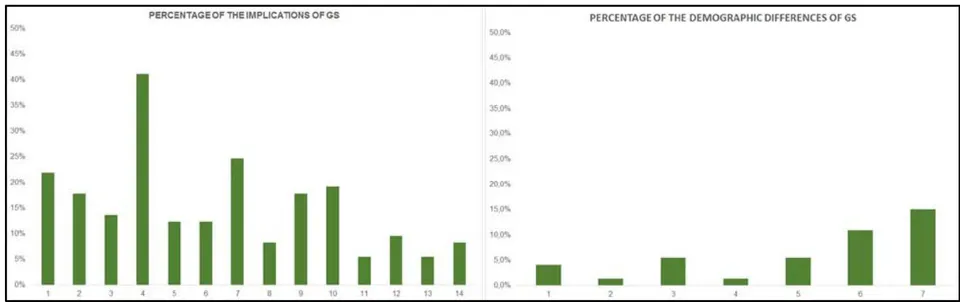
Based on the selected surveys, there were 14 implications of GS for well-being and mental health, in addition to 7 demographic differences in the way of perceiving GS. Table 2 presents the synthesis of these variables and figure 1 summarizes the percentage with which each of these verifiable was researched among the 73 studies.
| TYPE OF PERFORMANCE OF GREEN SPACES (GS) | REFERENCE | |
| GS contributions to human mental health | ||
| 1 | Report of restorative effect when in a GS (n = 16): | Grilli et al. (2020); Elsadek et al. (2019); Gulwadi et al. (2019); Elsadek et al. (2019); Mesimäki et al. (2019); Dzhambov et al. (2018); Al-Akl et al. (2018); Nordh et al. (2017); Scopelliti et al. (2016); Cervinka et al. (2016); Thomas (2015); Pietilä et al. (2015); Finlay et al. (2015); Carrus et al. (2015); White et al. (2013); Peschardt et al. (2013). |
| 2 | Report of satisfaction/positive quality with life when in a GS (n = 13): | Han et al. (2020); Yigitcanlar et al. (2020); Wenjie et al. (2020); Li et al. (2019); Gulwadi et al. (2019); Yuan et al. (2018); Coldwell e Evans (2018); Bertram e Rehdanz (2015); Mansor et al. (2015); Wassenberg et al. (2015); Conedera et al. (2015); Thompson et al. (2013); Mansor et al. (2012); |
| 3 | Report of self-assessed positive health when in a GS (n = 11) | Han et al. (2020); Vujcic et al. (2019); Nath et al. (2018); Yuan et al. (2018); Romagosa (2018); Liu et al. (2018); Wood et al. (2017); Dadvand et al. (2016); Thomas (2015); Pietilä et al. (2015); Dzhambov et al. (2014). |
| 4 | Report of feeling well-being when in a GS (n = 30) | Bell et al. (2020); Han et al. (2020); Chang et al. (2020); Liu et al. (2020); Li et al. (2019); Cleary et al. (2019); Wang et al. (2019); Elsadek et al. (2019); Mesimäki et al. (2019); Vujcic et al. (2019); Nath et al. (2018); Yuan et al. (2018); Lewis et al. (2018); Coldwell e Evans (2018); Wood et al. (2017); Panno et al. (2017); Artmann et al. (2017); Shanahan et al. (2017); Van Den Berg et al. (2016); Cervinka et al. (2016); Thomas (2015); Finlay et al. (2015); Gilchrist et al. (2015); Carrus et al. (2015); Mansor et al. (2015); Nasir et al. (2012); Wendel et al. (2012); Mansor et al. (2012); Taib et al. (2012); Martens et al. (2011). |
| 5 | Report of feeling well-being when viewing a GS (n = 9) | Liu et al. (2020); Wenjie et al. (2020); Elsadek et al. (2019); Mesimäki et al. (2019); Lam e Hang (2017); Scopelliti et al. (2016); Van Den Berg et al. (2016); Gilchrist et al. (2015); Conedera et al. (2015). |
| 6 | Report of positive mood when in a GS (n = 9) | Kondo et al. (2020); Elsadek et al. (2019); Lin et al. (2019); Navarrete-Hernandez e Laffan (2019); Li et al. (2019); Elsadek et al. (2019); Mesimäki et al. (2019); Dzhambov et al. (2018); MacKerron e Mourato (2013). |
| 7 | GS influences the practice of physical activity (n = 18) | Bell et al. (2020); Lin et al. (2019); Li et al. (2019); Wang et al. (2019); Vujcic et al. (2019); Nath et al. (2018); Dzhambov et al. (2018); Bornioli et al. (2018); Triguero-Mas et al. (2017); Artmann et al. (2017); Dadvand et al. (2016); Akpinar (2016); Thomas (2015); Finlay et al. (2015); Astell-Burt et al. (2013); Thompson et al. (2013); Sugiyama et al. (2013); Mansor et al. (2012). |
| 8 | Safety pointed out as a critical factor in the use of GS (n = 6) | Campagnaro et al. (2020); Navarrete-Hernandez and Laffan (2019); Barrera et al. (2016); Bertram and Rehdanz (2015); Finlay et al. (2015); Thompson et al. (2013). |
| 9 | GS relieve stress (n = 13) | Campagnaro et al. (2020); Lin et al. (2019); Navarrete-Hernandez e Laffan (2019); Li et al. (2019); Yang et al. (2019); Wang et al. (2019); Nath et al. (2018); Triguero-Mas et al. (2017); Akpinar (2016); Thomas (2015); Wassenberg et al. (2015); Astell-Burt et al. (2013); Peschardt et al. (2013). |
| 10 | GS contribute to and improve the individual's social cohesion (n = 14) | Yang et al. (2020); Liu et al. (2020); Wang et al. (2019); Lewis et al. (2018); Triguero-Mas et al. (2017); Artmann et al. (2017); Barrera et al. (2016); Dadvand et al. (2016); Thomas (2015); Pietilä et al. (2015); Finlay et al. (2015); Wendel et al. (2012); Mansor et al. (2012); Taib et al. (2012). |
| 11 | GS contribute to the individual's settlement/belonging in the region (n = 4) | Chang et al. (2020); Liu et al. (2020); Barrera et al. (2016); Mansor et al. (2012). |
| 12 | Perception of the larger area of GS implies less perception of stress and greater feeling of well-being (n = 7) | Yang et al. (2020); Cleary et al. (2019); Yang et al. (2019); Dzhambov et al. (2018); Wood et al. (2017); Shanahan et al. (2017); Akpinar et al. (2016). |
| 13 | GS imply less perception of pollution and noise (n = 4) | Wang et al. (2019); Yuan et al. (2018); Finlay et al. (2015); Wendel et al. (2012). |
| 14 | GS contribute to perceived thermal comfort (n = 6) | Liu et al. (2020); Elsadek et al. (2019); Wang et al. (2018); Panno et al. (2017); Lam e Hang (2017); Klemm et al. (2015). |
Demographic differences in GS contributions to human mental health
| 1 | Differences between the level of education in the perception of GS (n = 3) | Root et al. (2017); Triguero-Mas et al. (2017); Van Den Berg et al. (2016). |
| 2 | Differences between race in the perception of GS (n = 1) | Root et al. (2017). |
| 3 | Differences between income level in the perception of GS (n = 4) | Barrera et al. (2016); Scopelliti et al. (2016); Zhang et al. (2013); Wendel et al. (2012). |
| 4 | Differences between weight in the perception of GS (n = 1): | Thomas (2015). |
| 5 | A study points out that it did not find differences between gender in the perception of GS (n = 4): | Yang et al. (2019); Elsadek et al. (2019); Romagosa (2018); Taib et al. (2012). |
| 6 | Study points out that it found gender differences in the perception of GS (n = 8) | Yang et al. (2020); Liu et al. (2018); Triguero-Mas et al. (2017); Dadvand et al. (2016); Thomas (2015); Conedera et al. (2015); Zhang et al. (2013); Wendel et al. (2012). |
| 7 | Study points out that it found differences between age groups in the perception of GS (n = 10) | Chang et al. (2020); Kondo et al. (2020); Li et al. (2019); Romagosa (2018); Riechers et al. (2018); Triguero-Mas et al. (2017); Dadvand et al. (2016); Conedera et al. (2015); Dzhambov et al. (2014); Astell-Burt et al. (2013); Zhang et al. (2013). |
Chart 2: Complete summary of implications and demographic differences of the review.
Source: The authors.
We also sought to understand the pattern of publications made in the last decade. Despite the research looking for papers published since 2010, the studies selected for full reading do not include this year. It was observed, according to Table 2, that of the papers were published after 2015 and only were published in the first half of the last decade, within the criteria presented in the method of this review. In order to understand the publication patterns within the theme addressed here, Table 3 presents the synthesis of the independence tests used.
| Year of Publication | N=73 | % |
| 2011 | 1 | 1.37 |
| 2012 | 5 | 6.85 |
| 2013 | 7 | 9.59 |
| 2014 | 2 | 2.74 |
| 2015 | 10 | 13.70 |
| 2016 | 7 | 9.59 |
| 2017 | 8 | 10.96 |
| 2018 | 11 | 15.07 |
| 2019 | 11 | 15.07 |
| 2020 | 11 | 15.07 |
| Variable | Year Of Publication P-Value | Study Climate Zone P-Value | Type Of Study (Cross-Sectional Or Longitudinal) P-Value | N | Event/ Occurrence | P | 95% Confidence Interval for P |
| GS contributions to human mental health | |||||||
| Report of restorative effect when in a GS | 0.949 | 0.436 | 0.326 | 73 | 16 | 0.219 | (0.124; 0.314) |
| Report of satisfaction/positive quality with life when in a GS | 0.347 | 1.000 | 0.583 | 73 | 13 | 0.178 | (0.090; 0.265) |
| Report of self-assessed positive health when in a GS | 0.477 | 1.000 | 1.000 | 73 | 10 | 0.136 | (0.058; 0.215) |
| Report of feeling well-being when in a GS | 0.891 | 0.006 | 0.390 | 73 | 30 | 0.410 | (0.298; 0.523) |
| Report of feeling well-being when viewing a GS | 0.709 | 0.616 | 1.000 | 73 | 9 | 0.123 | (0.047; 0.198) |
| Report of positive mood when in a GS | 0.152 | 0.338 | 0.160 | 73 | 9 | 0.123 | (0.047; 0.198) |
| GS influences the practice of physical activity | 0.979 | 1.000 | 1.000 | 73 | 18 | 0.246 | (0.147; 0.345) |
| Safety pointed out as a critical factor in the use of GS | 0.405 | 0.582 | 1.000 | 73 | 6 | 0.082 | (0.019; 0.145) |
| GS relieve stress | 1.000 | 1.000 | 1.000 | 73 | 13 | 0.178 | (0.090; 0.265) |
| GS contribute to and improve the individual's social cohesion | 0.535 | 0.005 | 0.589 | 73 | 14 | 0.191 | (0.101; 0.282) |
| GS contribute to the individual's settlement/belonging in the region | 1.000 | 0.010 | 1.000 | 73 | 4 | 0.054 | (0.002; 0.107) |
| Perception of the larger area of GS implies less perception of stress and greater feeling of well-being | 0.087 | 1.000 | 0.075 | 73 | 7 | 0.095 | (0.028; 0.163) |
| GS imply less perception of pollution and noise | 0.602 | 0.105 | 1.000 | 73 | 4 | 0.054 | (0.002; 0.107) |
| GS contribute to perceived thermal comfort | 0.657 | 1.000 | 1.000 | 73 | 6 | 0.082 | (0.019; 0.145) |
Demographic differences in GS contributions to human mental health
| Differences between the level of education in the perception of GS | 0.546 | 1.000 | 1.000 | 73 | 3 | 0.041 | (0.000; 0.086) |
| Differences between race in the perception of GS | 1.000 | 1.000 | 1.000 | 73 | 1 | 0.013 | (0.000; 0.040) |
| Differences between income level in the perception of GS | 0.602 | 0.105 | 1.000 | 73 | 4 | 0.054 | (0.002; 0.107) |
| Differences between weight in the perception of GS | 0.342 | 1.000 | 1.000 | 73 | 1 | 0.013 | (0.000; 0.040) |
| Study points out that it found gender differences in the perception of GS | 0.740 | 0.374 | 1.000 | 73 | 12 | 0.164 | (0.079; 0.249) |
| Study points out that it found differences between age groups in the perception of GS | 1.000 | 1.000 | 1.000 | 73 | 11 | 0.150 | (0.068; 0.232) |
Source: The authors.
The independence tests revealed some findings between the study's Climate Zone (polar, temperate and tropical) and the implications presented:
- At the significance level, there was dependence with the variable "report of feeling well-being when in a GS" ;
- At the significance level, there was dependence with the variable "GS contribute to and improve the individual's social cohesion" ;
- At the significance level, there was dependence with the variable "GS contribute to the individual's settlement/belonging in the region" .
b) Discussion
Within the presented scope, the main contributions of this review are:
- To present the compilation of the implications and demographic differences provided by GS raised in publications of the last decade that can contribute to the mitigation of negative psychological effects generated by daily stressors as well as by the Covid-19 pandemic, by providing the compilation of validated scientific evidence by scientific journals, so that public planners, architects and urbanists can consider providing greater availability of GS in the public and private urban context;
- To present, through meta-analysis, the research pattern of the variables observed here (implications and differences) and analyzed by researchers, in the publications during this period.
Based on this, starting from the main assumption considered in this review, that interviewing people is the most coherent way of identifying the perceptive effects of GS and bearing in mind that all the studies analyzed here had as one of the selection criteria to use interviews with the population, we opted for the individual presentation and discussion of each of the verified implications, as the demographic differences will be presented and discussed together. Therefore, the verified implications will be discussed individually from item 3.2.1 to 3.2.14, demographic differences will be discussed in item 3.2.15, the pattern of publications observed within the scope of this review will be discussed in item 3.2.16 and the limitations of the work and suggestions for future research in item 3.2.17.
Before starting the discussion, it is important to highlight that, in order to understand the perceptive actions of GS in human beings, it was noticed that all the studies analyzed here ( ) bring contributions from these environments to mental health, a broad term without an official definition by the World Health Organization (WHO). There are several descriptions of factors that make up mental health, such as the dimensions of emotional, psychological and social wellbeing, which in turn can be measured and analyzed through self-report of self-esteem, mood, anxiety, stress, type of sleep, depression, loneliness, mental vigor, patience, energy, happiness, optimism, among others (Yigitcanlar et al. 2020). Liu et al. (2020) complement these factors, stating that mental health refers to a general state of well-being where an individual is able to perform his/her duties productively in the midst of daily stress, contributing to the community.
However, there is a consensus that understands the term "mental health" as a means of describing a level of cognitive or emotional quality of life and the way an individual reacts to daily challenges and demands by balancing his/her emotions (Hospital Albert Einstein, 2020). Therefore, any benefits perceived through the action of GS indirectly contribute to mental health (Yang et al. 2020; Campagnaro et al. 2020; Bell et al. 2020; Han et al.2020; Yigitcanlar et al. 2020; Grilli et al. 2020; Chang et al. 2020; Bogerd et al. 2020; Liu et al. 2020; Wenjie et al. 2020; Kondo et al. 2020; Elsadek et al. 2019 (a); Lin et al. 2019; Navarrete-Hernandez e Laffan 2019; Li et al. 2019; Cleary et al. 2019; Yang et al. 2019; Wang et al. 2019; Gulwadi et al. 2019; Elsadek et al. 2019 (b); Mesimaki et al. 2019; Vujcic et al. 2019; Nath et al. 2018; Yuan et al. 2018; Dzhambov et al. 2018; Romagosa 2018; Liu et al. 2018; Lewis et al. 2018; Coldwell e Evans 2018; Riechers et al. 2018; Bornioli et al. 2018; Al-Akl et al. 2018; Wang et al. 2018; Wood et al. 2017; Root et al. 2017; Panno et al. 2017; Triguero-Mas et al. 2017; Nordh et al. 2017; Artmann et al. 2017; Lame Hang 2017; Shanahan et al. 2017; Akpinar et al. 2016; Barrera et al. 2016; Dadvand et al. 2016; Scopelliti et al. 2016; Van Den Berg et al. 2016; Akpinar, 2016; Cervinka et al. 2016; Bertram e Rehdanz 2015; Thomas 2015); Pietilä et al. 2015; Finlay et al. 2015; Gilchrist et al. 2015; Carrus et al. 2015; Klemm et al. 2015; Mansor et al. 2015; Wassenberg et al. 2015; Conedera et al. 2015; Weber et al. 2014; Dzhambov et al. 2014; Astell-Burt et al. 2013; Thompson et al. 2013; MacKerron e Mourato 2013; Sugiyama et al. 2013; White et al. 2013; Peschardt et al. 2013; Zhang et al. 2013; Nasir et al. 2012; Wendel et al. 2012; Mansor et al. 2012; Taib et al. 2012; Hofmann et al. 2012; Martens et al. 2011).
i. Report of restorative effect when in a GS
Of the total surveys gathered in this review, addressed this effect, which is presented as an individual's ability to recover from everyday stress (Grilli et al. 2020; Pietilä et al. 2015), showing a connection to privacy and the feeling of being away from the city (Al-Akl et al. 2018; Nordh et al. 2017). There are also a range of benefits that help and are directly linked to the restorative effect, such as mental wellbeing (Thomas, 2015; Finlay et al. 2015) that occurs through the relief of stress and anxiety, favoring emotions, clarity and security, as well as the maintenance of positive family dynamics (Thomas, 2015), which corroborates the assumptions of the foundation of the concept of mental health, reported at the beginning of this discussion. Some of these aspects are addressed individually in the next discussion items.
Some research found that GS are essential in cities and that they imply a greater restorative effect for users of these environments through positive associations between perceived green and perceived mental restoration. (Grilli et al. 2020; Gulwadi et al. 2019; Scopelliti et al. 2016; Peschardt et al. 2013). The effect generated by the visualization of green facades, as opposed to facades without vegetation, has positive associations with the optimization of brain activity, suggesting that people experienced a greater sense of relaxation (Elsadek et al. 2019 a) in the same way as people who were able to view and be on a small green roof, which provided a high level of perceived restoration (Mesimäki et al. 2019).
Aspects of length of stay and number of GS have impacts on the restorative effect. For Dzhambov et al. (2018), the greater the amount of vegetation surrounding the residences, the greater the quality of the restoration effect of GS for these residents. Carrus et al. (2015) observed that both the location and the biological quality of the GS affect the relationship between humans and nature and that peri-urban GS and high biodiversity GS are more likely to have restorative effects on their users, that is, for the author, spending more time in urban and peri-urban green areas consequently contributes to greater restorative effects, favoring mental health (Carrus et al. 2015), a fact that is in accordance with the indications made by White et al. (2013), where they state that the duration of the visit is positively associated with restorative impacts. Elsadek et al. (2019 b) claim that short walks through tree-lined streets already provide mechanisms capable of favoring human mental restoration. In this sense, it is not possible to state the time required for a better favoring of the restorative effect, however, it is possible to state that being in a GS, regardless of time, has positive impacts on an individual's ability to recover from everyday stress.
Some peculiarities regarding the type of GS were also analyzed. One of the papers (Cervinka et al. 2016) analyzed the perceived restoration capacity of private gardens and found that this type of garden has a strong restorative potential that occurs through the emotional bonds that arise in the design of this type of garden. Another type of GS addressed here are cemeteries (Al-Akl et al. 2018; Nordh et al. 2017) which, although at first denoting some curiosity, were considered restorative environments by its users.
ii. Report of satisfaction/positive quality with life when in a GS
Of the total surveys gathered in this review, addressed this effect, where satisfaction and positive quality with life is a concept that can be measured empirically through self-report of subjective evaluations that an individual does about the circumstances of his/her life (Wenjie et al. 2020).
In this sense, the reduction in perceived quality of life is related to the absence of accessible public GS (Conedera et al. 2015), that is, visits to parks have an impact on improving individual satisfaction with life (Yigitcanlar et al. 2020), where GS have an indirect role in building satisfaction (Han et al. 2020; Mansor et al. 2015).
Vegetations can be the most significant attributes of these spaces, leading users to have experiences that promote a better quality of life (Wassenberg et al. 2015). This sensation may be associated with the perception of less air pollution (Yuan et al. 2018), as well as with the environment that surrounds GS through residential experience and even the income range observed in these places (Wenjie et al. 2020; Gulwadi et al. 2019, Conedera et al. 2015). Residents who have access to private gardens and individuals who live less than 100 meters from GS tend to have a better assessment of their quality of life (Conedera et al. 2015), as well as people living in rural settings, which are also associated with higher levels of satisfaction (Coldwell and Evans; 2018).
The aspects of satisfaction and positive quality with life can also be associated with the age group of people, since, for example, older adults tend to experience these moments of visiting GS more calmly, reflecting a higher level of satisfaction (Li et al. 2019).
On the other hand, Bertram and Rehdanz (2015) found that GS at first increase satisfaction and quality of life, however, above a certain limit there is a drop in this feeling and this is due to some factors such as traffic jams, crime and noises.
When analyzing underprivileged areas, it was observed that environmental interventions are able to positively impact the environmental perception and quality of life of residents (Thompson et al. 2013), since GS provide contact with nature that triggers several positive implications on mental health and in this sense, satisfaction with life is one of them (Mansor et al. 2012).
iii. Report of self-assessed positive health when in a GS
Of the total surveys gathered in this review, addressed this effect, showing that self-assessed health is linked to the feeling of well-being provided by GS, capable of influencing user satisfaction (Han et al. 2020). Vujcic et al. (2019) indicate that people who use GS tend to visit doctors less frequently and, consequently, spend less money on medication, corroborating the indications of Romagosa (2018), who states that the search for physical health is a strong motivation for women visits to GS, showing a positive correlation between self-assessed health and the motivation for visits to these spaces. Dzhambov et al. (2014) also add that the impact of GS is related to the individual awareness of the experience with nature. On the other hand, people who have already presented some type of nervous disease tend to prefer indoor spaces to outdoor spaces, using less vegetated areas (Vujcic et al. 2019).
The effects of GS on self-reported health can also be related to the feeling of insertion of an individual in that environment, since Nath et al. (2018) found that although visitors to a GS spend more time inside these spaces, residents in the vicinity of the same GS are able to better perceive health benefits. Therefore, living close to GS may be associated with increased physical activity and positive health behaviors (Nath et al. 2018), as already noted by Wood et al. (2017) and by Dadvand et al. (2016), who found that the greater the availability of GS in the neighborhood, the better the self-assessed health, which is also in accordance with the findings of Liu et al. (2018), who indicate that self-assessed health has a positive relationship with the perception of the natural attributes of GS.
The social opportunities generated by GS also imply on perceived health. On the poorest neighborhoods, participating in outdoor recreations in GS was vitally important in self-assessed health (Pietälä et al. 2015), once again relating the practice of physical activities to this perception. Another implication of GS that favors the perception of health is the perception of reduced air pollution. The higher the perception of air pollution by a given individual, the lower is his/her assessment of the positive perception of health (Yuan et al. 2018).
iv. Report of feeling well-being when in a GS
Of the total surveys gathered in this review, addressed this effect, presenting wellbeing as a major impact factor on the construction of mental health, which covers physical, psychological and social aspects. Considering their characteristics and accessibility (Wendel et al. 2012), GS can contribute to human relaxation, physical activity practices, social cohesion (Liu et al. 2020; Vujcic et al. 2019), as well as more time spent with friends and family members positively impacting well-being (Bell et al. 2020). Likewise, people look for GS because they provide shade, fresh air and the real presence of vegetation (Wendel et al. 2012), as well as a place to rest where you can enjoy the company of other people and the landscape (Taib et al. 2012). In this sense, it is perceived that both GS in indoor and outdoor environments, of private or common access significantly and directly influence the self-reported well-being (Bell et al. 2020; Han et al. 2020).
The quality of GS indirectly impacts the way they are perceived, through the perception of environmental factors and the settlement of individuals in the place, providing experiences throughout their lives that affect them positively, implying a relationship between the quality of the place and well-being, based on individual emotional perspectives, perception of environmental stressors and perceived thermal comfort (Chang et al. 2020; Nasir et al. 2012). In addition to quality, the perception of quantity of GS directly implies the perception of well-being. Cleary et al. (2019) and Wood et al. (2017) affirm that when the increase in these spaces is noticeable, there is a greater probability of reporting improvements in well-being, in the same way that the perception of decreased GS implies a greater probability of reporting a decrease in the state of wellbeing. On the other hand, Wang et al. (2019) state that the urban green landscape, even if in a small size, enhances protection against stress and mitigation of air pollution and noise (Wang et al. 2019; Yuan et al. 2018), considering that larger GS are scarce in highly urbanized locations. Corroborating with Wang et al. (2019), Elsadek et al. (2019 b) state that making trees available alongside roads provides less experiences with negative emotions, discomfort, nervousness and disorders. Likewise, Mesimäki et al. (2019) claim that a small green roof influences the feeling of well-being, through visual and sensory experiences.
Well-being due to the length of stay in GS also stands out in some studies. Li et al. (2019) say that people who walked through these spaces quickly realized less benefits compared to people who had stayed longer in the place, just like Wood et al. (2017), Van Den Berg et al. (2016), Gilchrist et al. (2015), Carrus et al. (2015) and Mansor et al. (2015), who highlight that the longer the time spent in GS, the greater the benefits to self-reported well-being.
In addition to quality, size, length of stay and biodiversity (Carrus et al. 2015), living close to GS is associated with several factors that imply a better perception of well-being, such as practice of physical activities and positive health behaviors, as well as feelings of renewal and restoration (Nath et al. 2018; Cervinka et al. 2016; Thomas, 2015; Finlay et al. 2015). Shanahan et al. (2017), in a survey that considered participants from different countries, show that keeping nature close to homes is an important factor to protect people's experiences with nature, also stating that lower levels of tree cover in the neighborhood are associated with reductions in visits to public and private GS, since this surrounding environment already favors human-nature interactions. In this sense, practicing gardening services also favors the feeling of well-being, making it in principle motivating, through the perception of interaction with nature (Lewis et al. 2018). Likewise, according to Gilchrist et al. (2015), GS in work environments, as well as their view through the window, provide higher levels of well-being. These aspects denote that, regardless of the environment, home or work, providing access and view to GS is a key factor in promoting well-being and, consequently, mental health.
Coldwell and Evans (2018) were unable to associate the size of the city and actual levels of urbanization with well-being, however they claim that visits to GS contributed to higher levels of perception of well-being regardless of level of urbanization, among their study participants. Several aspects, together, contribute to better perceptions of well-being, where the reduction of exhaustion, already mentioned by Panno et al. (2017), as well as how these spaces are favorable to the practice of physical activity, recreation and social interactions, are key in the construction of this perception (Artmann et al. 2017). Corroborating these statements, Mansor et al. (2012) highlight that contact with nature favors people in a physical and cognitive way as well as relaxation, comfort and satisfaction with life, directly impacting the perception of well-being.
In contrast to the aspects discussed here favoring the perception of well-being regardless of time spent in these places, Martens et al. (2011) state that the attractiveness generated by GS does not affect changes in well-being and that the level of tiredness of individuals does not interfere differently in how they perceive well-being, that is, for the authors, people more or less psychologically exhausted do not have different benefits. Panno et al. (2017) point out that the reduction in exhaustion favors well-being, however they do not report differences in this favoring for people more or less exhausted. Thus, based on the above, it is not possible to say whether or not there are differences between more or less tired or exhausted people, however, Martens et al. (2011) also state that GS that present themselves in a more "carefully maintained" way have a more positive impact on the perception of well-being compared to wild GS, corroborating with Artmann et al. (2017), who state that aesthetics was an important factor for the participants in their study.
v. Report of feeling well-being when viewing a GS
Of the total surveys gathered in this review, addressed this effect. As already mentioned in the previous item, there are several factors associated with GS capable of promoting well-being and, in this sense, exposure to green by viewing, in the work or domestic environment, can provide a feeling of attachment in individuals which impacts their well-being and, consequently, their mental health (Liu et al. 2020), as well as connective, restorative and affective feelings with nature, increased positive emotions and reduced negative emotions (Scopelliti et al. 2016). Wenjie et al. (2020) found in their research that residents living close to golf courses perceive the impact of green on life satisfaction and well-being, through the viewing of these spaces, and this association tends to decline in a nonlinear manner with the distance from these fields.
Elsadek et al. (2019 a), in an analysis that compared the view of green walls with built walls, claim that the viewing of vegetated walls had positive associations with improved brain activity. The authors also state that when participants observed the green walls, there was an increase in the relative alpha power and parasympathetic activity, which denotes better relaxation, which provides better mood and higher levels of attention. Similarly, for Mesimäki et al. (2019), the participants of their research had, in addition to sensory experiences, visual experiences such as the impact with the beauty of the place, as well as interest and desire to explore the GS.
For Van Den Berg et al. (2016), visual exposure to GS can promote vitality, well-being and mental health. For Gilchrist et al. (2015) spending more time on visits to GS provides higher levels of well-being, however the viewing of GS was also positive and independently associated with self-reported levels of well-being in the study participants. Corroborating with these authors, Conedera et al. (2015) suggest that the reduction in the perception of quality of life of the participants in their study is related to the absence of accessible GS, which could be compensated by the high visual scale of the surrounding nature, suggesting that eye contact in general also contributes to increase the feeling of wellbeing.
On the other hand, Lam and Hang (2017) tried to verify differences in the thermal sensation, through the viewing of shaded GS, however they were unable to find significant differences that would affect this perception which, consequently, would indirectly affect the feeling of well-being.
vi. Report of positive mood when in a GS
Of the total surveys gathered in this review, addressed this effect, showing that exposure to natural environments affects several factors that make up mental health, such as cognitive functions and mood (Kondo et al. 2020). Thus, it can be inferred that people exposed to GS are substantially happier (MacKerron and Mourato 2013). In this sense, several studies have attempted to measure mood as a function of exposure to GS, such as Kondo et al. (2020), who found that residents of environments with lower GS availability experience a greater positive response when immersed in these environments. The authors also observed that 10 minutes of exposure to GS were more efficient to mood when compared to 30 minutes of exposure, suggesting that the impact of these spaces on mood may be short-term, thus corroborating the research by Elsadek et al. (2019 b) that states that simple interventions like trees by the side of roads are already capable of raising people's mood. Elsadek et al. (2019 a) state that the physical impact on brain activity caused by the viewing of GS causes people to experience better sensations of mood, in the same way that Mesimäki et al. (2019), who indicate that when viewing a green roof, participants in their study reported feeling more joy, bringing benefits to their mood, among other sensations. In addition to viewing GS, visiting these environments for recreational activities is associated with a significant improvement in self-reported mood (Li et al. 2019) and in this sense, the reduction in noise provided by GS leads to less annoyance for people (Dzhambov et al 2018), bringing positive effects to the mood sensation.
Regarding the availability of GS, Lin et al. (2019) state that medium to high per capita areas of these environments provide lower rates of negative mood and Navarrete-Hernandez and Laffan (2019) complement this by stating that whatever the ecological intervention inserted in an environment, it will have the ability to significantly improve mood.
vii. GS influences the practice of physical activity
Of the total surveys gathered in this review, addressed this effect. There are several physical and mental benefits provided by physical activity and, thus, providing favorable and motivating environments (Finlay et al. 2015) of these activities has direct implications for the health and well-being of the population. In this sense, several studies sought to understand how GS can impact and contribute to the practice of physical exercises, since physical activity is a partial mediator between perception of GS and wellbeing (Wang et al. 2019), as well as has its practice facilitated through GS (Thomas, 2015). Bell et al. (2020) found that people who have access to GS tend to better meet the physical activity guidelines, which leads them to report a better sense of self-assessed health, as for example by the practice of walks that are favorable to relaxation, improvement of stress and mood (Lin et al. 2019). For the elderly, if the GS have attractive elements for their attention, they can spend more time on these visits, stimulating them to various activities that are favorable to physical and mental health (Li et al. 2019), where physical activity and recreation activities are the most perceived benefits in the quality of life of this group (Artmann et al. 2017).
Vujcic et al. 2019 found that the participants in their research who have or had nervous diseases tend to prefer indoor spaces when compared to participants who did not report nervous problems, who perceived the social benefits of GS and used to associate walking with common activities, in the same way that participants who did not use medications and associated running, as well as more time spent outdoors.
Nath et al. (2018) found that residents of neighborhoods with good availability of GS better perceive benefits related to health and physical fitness, as well as the maintenance of body weight, when compared to people who visit parks, but who do not live nearby, which led the authors to affirm that living close to urban GS leads to an increase in physical activity and positive health behaviors, corroborating Dzhambov et al. (2018), Astell-Burt et al. (2013), Thompson et al. (2013) and Mansor et al. (2012), who also state that greater availability of GS around the residence increases the practice of physical activity by local residents and reduces physical inactivity.
Akpinar (2016) also associated the accesses close to the GS and the quality of these environments to the increase in the practice of physical activity and this increase, according to the author, implies less stress and better mental health, where stress presents itself as a mediator of the relationship of physical activity and mental health.
On the other hand, Bornioli et al. (2018) found that, although walking practices in areas with vegetation are positively evaluated, walking in a quality urban environment also shows positive results and, for the authors, the critical factor for analysis was the reduction of traffic, that is, offering quality urban environments can provide the same benefits as GS. Similarly, Triguero-Mas et al. (2017) state that in their study stress was a mediator between associations of mental health and natural outdoor environments, however the practice of physical activity was not. On the other hand, Dadvand et al. (2016) state that the practice of physical activity was a mediator between general subjective health and exposure to green in their study, and there may be some changes between age and sex.
Regarding the motivation for exercising, although GS have already been cited as a motivator for this practice (Bell et al., 2020; Akpinar, 2016; Finlay et al. 2015; Thomas, 2015), Sugiyama et al. (2013) state that in their research no attribute of GS was associated with the beginning of a walk, however the perception of the presence of green was significantly associated with a greater probability of maintaining these walks. It is clear that the sample size, methodology and technique used imply different ways of observing this variable.
viii. Safety pointed out as a critical factor in the use of GS
Of the total surveys gathered in this review, addressed this factor and among the papers that deal with the theme of safety within GS, it was noticed that it is a determining factor in the patterns of use, since the attitudes towards GS are directly linked to the perception of safety (Thompson et al. 2013), which is also associated with the quality and location of the GS (Campagnaro et al. 2020). Together with the feeling of stress relief and happiness (Navarrete-Hernandez and Laffan, 2019), safety is the main factor that influences the use of GS and in this sense the presence of people becomes essential for the use of these environments to transmit security for the practice of activities, whether recreational or physical activities (Campagnaro et al. 2020; Navarrete-Hernandez and Laffan, 2019; Barrera et al. 2016).
Bertram and Rehdanz (2015) present results that show that, at first, the increase in GS improves participants' satisfaction with life, however this satisfaction tends to decrease above a certain limit. For the authors, this is due to the fear of criminality, among other variables, in accordance with what was exposed by Finlay et al. (2015), who state that the sense of security in the use of GS influences the entire therapeutic relationship of the research participants with the landscape.
ix. GS relieve stress
Of the total surveys gathered in this review, addressed this effect and although GS provide several positive implications for their users, if they are not associated with safety they cannot positively impact stress relief, which is one of the main motivators for using these environments (Campagnaro et al. 2020) In this sense, the available per capita area of GS can bring different benefits depending on the activity practiced. Lin et al. (2019) state that walking in an area of high GS per capita and sitting in an area of low GS per capita have the best effects for stress reduction, corroborating with other studies presented above, on the benefits of GS, regardless of their size (Cleary et al. 2019; Elsadek et al. 2019 a; Mesimäki et al. 2019; Wang et al. 2019; Wood et al. 2017), as well as with Wang et al. (2019), who report that small GS positively correlate with stress protection and with Astell-Burt et al. (2013), who state that residents of greener neighborhoods are exposed to a lower risk of psychological suffering, impacting on stress reduction. Navarrete-Hernandez and Laffan (2019) state that all types of green interventions have strong benefits in reducing perceived
stress, with varying effect sizes according to different interventions.
Yang et al. (2019) also found that the presence of GS reduces the uncertainty of stress with life, where the larger the area per capita, the greater the decrease in stress. According to the authors, there are no differences in this perception due to gender. For Nath et al. (2018) both residents of areas with good availability of GS and visitors to these environments agree that vegetated areas are calm places for relaxation and that these help to reduce stress. Triguero-Mas et al. (2017) go further, stating that perceived stress is a mediator of several relationships between mental health and natural outdoor environments, and Peschardt et al. (2013) complement by stating that the perceived sensory dimension of GS was presented, in their research, as more important for more stressed individuals.
Li et al. (2019), in a survey focused on the elderly, state that visits to parks for recreational purposes are significantly associated with the reduction of stress that occurs through improved mood and self-reported perception of mental health benefits. Akpinar (2016) and Thomas (2015) refer to the other beneficial implications of GS mentioned above, where reductions in stress levels are caused by increased physical activity, which in turn is motivated by better access to GS. Wassenberg et al. (2015) complement by stating that plants are the most significant attributes of GS, leading research participants to experience stress relief, new experiences and relaxation.
x. GS contribute to and improve social cohesion
Of the total surveys gathered in this review, addressed this effect. Social cohesion occurs through the interaction between people that promotes contacts and experiences while using an environment. Several studies have sought to understand how this factor occurs due to the green space, such as Yang et al. (2020), who found that GS are directly and indirectly related to mental health as they reduce perceived environmental disturbances and are able to improve social cohesion. For the authors, GS are also inversely related to environmental disturbance and positively to social cohesion.
The perception of the urban landscape is positively correlated with mental health and social cohesion acts as a mediator of this correlation (Wang et al. 2019). Viewing GS on the streets of the neighborhood in which the individual lives contributes to mental health through the feeling of social cohesion that occurs through attachment to the place and community interactions (Liu et al. 2020; Lewis et al. 2018), showing that small GS, as places for small community gardening practices (Lewis et al. 2018), are favorable to mental health, acting as protectors from stress, mitigating environmental pollutants and presenting themselves as essential, especially in highly urbanized cities (Wang et al. 2019). Mansor et al. (2012) had previously stated that green infrastructures, from small domestic gardens to large parks, provide and motivate various activities and promote better social interactions, where people can enjoy the company of others (Taib et al. 2012).
Barrera et al. (2016) and Dadvand et al. (2016) reinforce that neighborhoods with good availability of GS cause residents to have the habit of meeting in these spaces, building a better sense of community, belonging and positive family dynamics (Thomas, 2015); in addition, having the opportunity to participate in recreational activities and social engagement (Finlay et al. 2015) in GS is vital for self-reported health assessment (Pietilä et al. 2015). Similarly, Artmann et al. (2017), who surveyed the elderly, claim that GS are essential to social interaction, keeping them active. Corroborating these statements, Wendel et al. (2012) had already verified that parks around the neighborhood were referred by users as places of social gatherings and that they had facilities for children.
Triguero-Mas et al. (2017) found no statistically significant associations between mental health and exposure to natural outdoor environments. In their research, social contact was not a mediator between associations, unlike Wang et al. (2019), who found that social cohesion was a significant partial mediator of the perception of urban vegetation and mental health. However, Triguero-Mas et al. (2017) found that contact with natural outdoor environments was statistically and significantly linked to better mental health.
xi. GS contribute to the individual's settlement/ belonging in the region Of the total surveys gathered in this review, addressed this effect, where the relationship between the quality of the GS and mental health and well-being, in addition to environmental stressors, occurs in the emotional perspective with these spaces. For Chang et al. (2020), the quality of GS has no direct influence on well-being, however it contributes positively to this, through the availability of environmental factors and the feeling of settlement in the place. Likewise, Liu et al. (2020) state that the view of the neighborhood with tree-lined streets contributes positively to mental health through the feeling of residential attachment. Mansor et al. (2012) found in their research that the social experience generated by GS offers empowerment and cohesion to the community, which provides an opportunity for socialization that positively strengthens territoriality and the feeling of belonging to a place.
Regarding differences related to income class, Barrera et al. (2016) observed that in middle and low income neighborhoods the residents have the habit of meeting in GS, favoring the sense of community and belonging, unlike the high income neighborhoods, where these spaces are less valued, used only as an environment for children's recreation and not for social interactions.
xii. Perception of the larger area of GS implies less perception of stress and greater feeling of well-being Of the total surveys gathered in this review, addressed this effect. Some studies sought to identify whether the perception of a larger area of GS available would bring benefits to stress and self-reported well-being, as GS are directly and indirectly related to mental health, by reducing perceived environmental stressors (Yang et al. 2020). In this sense, Cleary et al. (2019) found positive correlations between perceived quantity of GS and well-being, whereby the greater the availability of GS, the greater the likelihood of participants in their research to report higher levels of psychological well-being and, similarly, they found that the lower the availability of GS, the more likely they were to report a drop in well-being levels. Wood et al. (2017) corroborate these statements, as they investigated several types of parks and for all these types, the greater the availability, the greater the perception of them, providing an increase in mental health measures. The authors also state that the possibility and the act of spending more time in these environments increase the benefits offered to mental well-being.
The higher the perceived GS, the greater the opportunities for residents to experience restorative benefits and also, the lower the opportunities for boredom (Dzhambov et al. 2018). Yang et al. (2019) found that when the per capita area of GS increased (more than 40 ha/1,000 people) there was a significant reduction in stress levels, reaching reduction.
The perception of the number of available GS also correlates with the type of relationship that people have with nature, that is, the number of visits to these environments. Shanahan et al. (2017), in a survey conducted in Brisbane, in Australia, and the Cranfield Triangle, in the United Kingdom, found that lower levels of tree cover availability in the neighborhood were associated with a reduction in the frequency of visits to public and private GS, as well as in time spent on these visits. The authors also state that the responses from both places surveyed had a good correlation and that regardless of the urban design, it is vital to maintain the availability of nature in the vicinity of the homes in order to protect the experiences with natural environments.
On the other hand, Akpinar et al. (2016) found that when they tried to associate all types of GS they researched, there were no associations between them and mental health in the applied statistical tests, however they observed that greater availability of urban GS was associated with fewer days of mental health complaints and that the size of the forest in urban areas seems to be an important factor in the relationship between GS and mental health.
xiii. GS imply less perception of pollution and noise Of the total surveys gathered in this review, addressed this effect. Yuan et al. (2018) found evidence that air pollution affects self-reported satisfaction with life and that green coverage increases this satisfaction. Thus, GS are able to improve people's well-being not only because of the positive impact on mental health, but also through their indirect effects of improving air quality and their subjective health conditions. In this sense, in highly urbanized cities with scarcity of GS, small vegetated environments are positively correlated with mental well-being, as they protect people against stress by mitigating environmental pollutants, including air pollution and noise (Wang et al. 2019).
Wendel et al. (2012) and Finlay et al. (2015) address the perceived aspects of pollutants stating that their participants reported that GS motivate them to leave home to practice physical activity and to experience environments with fresh/clean air, which denotes the perception of better air quality in these spaces.
xiv. GS contribute to perceived thermal comfort Of the total surveys gathered in this review, addressed this effect. Thermal comfort is a state of mind that represents satisfaction with the thermal environment (Fanger, 1970) and has been widely studied around the world. Its parameters include physical, environmental and psychological factors, since two people can perceive the same environment in different ways, therefore many studies seek to understand comfort through different methods: in loco microclimate measurements, application of in loco questionnaires, use of thermal comfort indexes and models calibrated according to the region of the study; thermoenergetic simulations, remote sensing, satellite images, among others. However, surveys that apply questionnaires to ascertain the vote of sensation tend to be more accurate, given that the psychological parameters that underlie human responses can determine an individual's state of comfort. It was found, within the scope of this review, that most of the studies that seek to verify thermal comfort do not apply simultaneous questionnaires to measurements or simulations.
Corroborating the difficulty of determining an individual's state of comfort, Wang et al. (2018) investigated three types of GS in Guangzhou, China, and concluded that the GS that physically produced the best cooling capacity was perceived as the hottest and most uncomfortable environment by the participants and, similarly, the GS that presented the highest air temperatures was perceived as the most comfortable place by them. This study suggests the individuality of the parameters that underlie human thermal comfort, as well as the importance of investigating the vote of sensation in research on human perceptions of GS.
Elsadek et al. (2019 a) found that viewing green facades, as well as other types of GS (Liu et al. 2020), compared to built facades, significantly increased parasympathetic nerve activity and decreased sympathetic nerve activity, a significant decrease in skin conductance, as well as a substantial increase in the comfortable and relaxed sensations of participants, suggesting that they could experience better sensations of relaxation, humor and attention, favoring the perception of a comfortable environment. Panno et al. (2017) had already presented results that are in accordance with Elsadek et al. (2019 a), in which GS users have higher levels of well-being in the summer and also a lower level of ego exhaustion. For the authors, the results suggest that people with higher levels of exhaustion tend to overestimate the maximum air temperatures, also bringing the importance of investigating the individual parameters that underlie the state of individual comfort.
Lam and Hang (2017) had a hypothesis that the viewing of shaded GS could affect the perceived thermal comfort of the participants of their research, however the authors found no significant differences in the thermal sensations of the people analyzed. However, the authors point out that visual comfort may affect thermal comfort in outdoor environments, but that this effect may occur differently between shaded and exposed environments.
On the other hand, Klemm et al. (2015) state that GS are generally perceived as thermally comfortable, since the participants in their research assessed that these spaces have positive effects of thermal comfort in the summer. For the authors, the thermal comfort of GS is also greater than the comfort experienced in built environments, and they claim that a large part of the variation in comfort is perceived by the type of environment.
Xv. Demographic differences in the perception of GS Of the total surveys gathered in this review, ( ) addressed differences in education, ( ) addressed differences between race/ethnicity, ( ) addressed differences in income, ( ) addressed weight differences, ( ) researched gender differences and found positive results, ( ) researched gender differences but did not find results that supported this statement and, finally, ( ) addressed the age group difference.
As already seen in this review, there are several factors that interfere with how a person perceives an environment. Root et al. (2017) state that the sense of place differs by ethnicity and level of education, considering that among the participants of his research,
Hispanics and blacks with low education have consistently lower GS assessments than people with higher education. The authors are unable to establish the parameters that underlie these differences but suggest that education alters the perceptions and experiences of these groups in relation to the environment.
For Van Den Berg et al. (2016), the associations with visits to GS were significantly modified by the level of education of the participants as well as the time they spent in nature during childhood. Higher levels of vitality associated with GS were found among low-income participants when compared to people with a high level of education. Corroborating these findings and without verifying ethnic issues, Triguero-Mas et al. (2017) state that contact with GS outdoors is related to better levels of mental health, where younger men with low-middle schooling had greater reflexes in the levels of mental health.
Regarding differences by race/ethnicity, as already presented above, Root et al. (2017) found ethnic/racial differences between the participants in their research. For the authors, environmental perceptions and preferences occur differently between ethnic/racial groups, as well as groups of different socioeconomic levels. In this sense, the authors investigated, among other parameters, differences between non-Hispanic whites, non-Hispanic blacks and Hispanics in Denver, USA, and when they analyzed the effect of ethnicity/race and education interaction, they found different aesthetic perceptions of GS between the analysis groups, where Hispanic and black participants had lower GS aesthetic assessments.
As for income, for Barrera et al. (2016) the pattern of use of GS is influenced by an individual's income level, reflecting a greater use of these environments in a middle - and low-income neighborhood. In these locations, according to the authors, social cohesion is favored, since neighbors have the habit of meeting in these vegetated environments and for the residents of these regions, the availability of GS is perceived as an indicator of local development, unlike high-income neighborhoods, which tend to have less use of local GS, and residents of these environments perceive GS only as amenities already expected from urban design.
Scopelliti et al. (2016) corroborate these statements, in part, since they found evidence that middle-income people reported higher levels of relationships with nature, which reflected in better self-assessments of affective feelings, well-being and restoring benefits assigned to GS. On the other hand, the authors found that for low- and high-income groups, the feeling of well-being was more related to economic factors than to the surrounding nature. The authors also observed that the low-income group was the group that reported the lowest levels of perceived accessibility to
GS. For the high-income group, it was observed that the variables related to the use of parks did not present themselves in a relevant way in the promotion of wellbeing, which is in accordance with the findings of Barrera et al. (2016).
In accordance with the findings of Scopelliti et al. (2016) and Barrera et al. (2016), Zhang et al. (2013) identified that the participants in their study who had a monthly income of less than US 960, the need for social cohesion decreased. Wendel et al. (2012) also found this pattern of differences in the use of GS between low- and high-income groups, and data from their research show that low-income residents had more need for the health, social and environmental benefits promoted by GS.
Addressing weight differences, in a survey that sought to examine how the experiences in different types of GS and blue spaces provide important health and well-being benefits for women in Copenhagen, Denmark, Thomas (2015) found that a minority of women participating in his study reported not-so-favorable experiences in natural spaces. This fact was observed among low-income and overweight women, since for these women spending time on GS, which are associated with the practice of physical activities and healthy lifestyles, exposed them to the criticisms and opinions of others, so this was a psychological pattern presented by the participants of that study.
Regarding gender differences, Liu et al. (2018) found that both men and women had a good relationship between self-reported health and the perception of the natural attributes of GS, however only for men, a cognitive response to restoration and perceived health was observed. Similarly, for Triguero-Mas et al. (2017) contact with natural outdoor environments was significantly linked to better mental health, however this relationship was stronger for men, since they experience higher levels of stress in urban life, which implies lower levels of mental health, Yang et al. (2020). Dadvand et al. (2016) corroborate these statements, since they also observed that benefits to mental health and social support were better perceived among the male participants of their research.
Thomas' findings (2015) show that overweight and socio-political associations among women seemed to be critical factors in the use of GS in these groups. On the other hand, Conedera et al. (2015) found that, like the elderly, women are more likely to feel part of the GS and therefore spend more time in these places, which allows them to feel free from their responsibilities and daily activities.
Zhang et al. (2013) found recreational needs in GS for both men and women, however, noted that for men this need was greater between 45 and 64 years of age, and for women, under the age of 45. As for usage patterns, Wendel et al. (2012) observed that higher frequencies of uses of GS were found for men, which was due to the availability of existing sports fields in the analyzed GS.
Yang et al. (2019) found beneficial effects of GS on the daily stress of participants in their research, where larger areas of GS resulted in a significant decrease in stress, however when the authors included gender in the analyzes, there was no marked influence on this relationship. Likewise, Elsadek et al. (2019 b) found among their participants several benefits of trees by the side of roads, however did not observe significant differences between men and women in the perception of these benefits.
Corroborating with Yang et al. (2019) and Elsadek et al. (2019 b), Romagosa (2018) states that of the surveyed GS visitors reported that physical health motivated visits to GS and reported improvement in physical health during visits to these GS, however, the correlations between motivation to visit and gender were weak, as also noted by Taib et al. (2012).
Addressing age group differences, it was found that neighborhoods with availability of GS provide benefits to well-being through human experiences with nature, which favors mental health (Kondo et al. 2020). Elderly people have better abilities to perceive the beauty of GS (Conedera et al. 2015), and among this age group, residents of peri-urban areas have greater preferences for ecosystem services of GS that are related to their experience with these natural environments (Riechers et al. 2018).
Chang et al. (2020) found that elderly residents seek GS in the vicinity, not for interactions with nature but for strengthening social cohesion, since these environments provide meetings between friends and the community. Also for the authors, when the perception of environmental stressors is reduced, the elderly are more likely to visit, improving their social adhesion. Romagosa (2018) found that although participants from all age groups in their study perceive physical health as motivating visits to GS, it is the elderly who have higher levels of motivation for this purpose.
As for the pattern of use, Li et al. (2019) found that the elderly have different patterns of activities in GS and this requires that these environments favor these activities by offering diverse environments. In addition, the authors observed that for the group of elderly people who experience these recreational activities in GS, a significant reduction in stress and improved mood was associated, favoring experiences of greater relaxation, satisfaction with life, as well as less anxiety and depression for these people.
Zhang et al. (2013) found that adults aged 45 to 64 years have greater needs for the use of GS for recreational activities and Astell-Burt et al. (2013) state that middle-aged adults who live in neighborhoods with good availability of GS have a lower risk of experiencing psychological distress, unlike people who are not physically active, which suggests, according to the authors, that the association between health mental and GS is dependent on the individual lifestyle as people get older. Zhang et al. (2013) complement that by stating that among the participants in their study, women under 45 years of age have greater needs to practice recreational activities in GS.
Dzhambov et al. (2014) observed that the elderly participants in their research had higher levels of health anxiety when compared to other participants and in this sense, interactions and experiences with nature were predictors of health anxiety, regardless of other factors.
Regarding younger people, Triguero-Mas et al. (2017) found that exposure to natural outdoor environments was favorable to mental health and that these interactions were better for people of younger age groups, male and low to medium income. Corroborating with the authors, Dadvand et al. (2016) also observed that people under the age of 65 perceived in a more relevant way the benefits offered by the GS in relation to the general health perceived in the vicinity of their homes.
Regarding the preferences for services offered by GS, Riechers et al. (2018) state that among the participants in their research, younger residents tend to prefer cultural ecosystem services, as these facilitate their social interactions.
xvi. The pattern of publications within the scope of this research
Statistical tests proved the hypothesis of independence between the years of publication and studies that investigated the variables raised in the review (14 implications and 7 demographic differences), even when these were grouped into groups of 3 and 5 years.
Likewise, there was independence between the type of study (cross-sectional or longitudinal) and studies that investigated the variables raised in the review (14 implications and 7 demographic differences).
However, the independence tests revealed some statistical dependencies and important findings, regarding the Climate Zone in which the study site is located (polar, temperate and tropical) and some of the variables raised in the review (14 implications and 7 demographic differences):
At the significance level, there was dependence between the Climate Zone and variable "report of feeling well-being when in a GS" , that is, studies carried out in the tropical zone proportionally investigated and used such variable more;
At the significance level, there was dependence between the Climate Zone and variable "GS contribute to and improve the individual's social cohesion" , that is, studies carried out in the tropical zone proportionally investigated and used such variable more;
At the significance level, there was dependence between the Climate Zone and variable "GS contribute to the individual's settlement/belonging in the region" , that is, studies carried out in the tropical zone proportionally investigated and used such variable more.
These findings prove that surveys that took place in tropical countries investigate in a relevant way the issues of well-being within GS, the contributions of GS to the social cohesion of individuals, as well as perceptions of settlement and belonging to the place of residence. This may be due to the recent climate projections that point to an increase in global temperatures in the coming decades, where the tropical zones - the warmest areas - will be the most affected by this increase (Chou et al. 2014; IPCC, 2014), and this fact can explain the findings presented here, since we seek to mitigate heat islands in these regions, aiming at GS as an alternative for this purpose. This also corroborates the increase in research on the theme that addresses the perceptive aspects of GS, in the last 5 years, as already shown in Table 2.
Although the tests did not show dependencies between the years of publication and type of study (cross-sectional or longitudinal), the descriptive levels of the independence tests showed a possible tendency for dependence between year of publication and variable "Perception of the larger area of GS implies less perception of stress and greater feeling of well-being" , as well as for the type of study (cross-sectional or longitudinal) and the same variable . In other words, there is the possibility that, with a larger sample, the dependence between variables can be verified, proving that in the last 5 years of publications variable "Perception of the larger area of GS implies less perception of stress and greater feeling of well-being" has been investigated and used more in the studies carried out and, likewise, its dependence on the type of study (cross-sectional or longitudinal) could be verified.
xvii. Research limitations and suggestions for future studies
This review sought to answer the basic question that supported the adopted methodology. Bearing in mind that the 1,441 papers located in the initial search were based on the keywords adopted, as well as on the platform chosen for search, the inclusion of other keywords and the search on other platforms could bring a greater number of studies to be analyzed, which consequently could give greater theoretical support to discussions and meta-analysis.
Likewise, although this research has contact with an extensive number of papers published in peer- reviewed scientific journals, the research started at the beginning of the quarantine period generated by the Covid-19 pandemic, therefore the extraction of data from the selected papers does not rely on the theoretical contribution of surveys that have been carried out during this confinement period.
We suggest that future research should include published papers focusing on GS during the pandemic, so that it is possible to analyze the real perception of people in the quarantine period in relation to the benefits of GS, so that they serve as complementary studies to this research.
IV. FINAL CONSIDERATIONS
Through an extensive literature search, we sought to answer the question "What is the impact of green spaces on the perception of human well-being and on the human thermal perception?". Based on this review, it was possible to verify that being in a GS, as well as viewing these environments, imply better self-reported levels of: restoration; satisfaction and positive quality with life; health assessment; well-being when in a GS and viewing a GS; mood; physical activity; stress; social cohesion; settlement and belonging; less perception of pollution and noise; as well as changes in perceived thermal comfort.
It was also found that the perception of a larger area of GS available can benefit well-being and reduce the level of stress. However, the perception of safety in these environments was presented as a critical factor for use that can become an obstacle to all the benefits mentioned.
In addition, it was possible to identify demographic differences in the construction of the perception of GS, such as: level of education; race/ethnicity; income; weight; gender; and age group.
The compilation of the implications and differences in the perception of GS presented here can be used as a theoretical basis for contributions to planners, architects and urbanists, in the design of public and private spaces that are favorable to human well-being, especially in the current pandemic period faced by all nations. Based on all the studies analyzed here, it is possible to state that making GS available to the population presents itself as a public health measure, capable of easing and mitigating everyday stress, whether due to the high work demand in the modern world, as well as the period of confinement imposed by the Covid-19 pandemic.
Finally, we suggest that future research analyzes human perceptions in pandemic periods and that they be included in the database presented here, in order to increase the evidence regarding the implications and differences in the perception of GS.
ACKNOWLEDGMENTS
"We thank the Mackenzie Research Fund for Research and Innovation (MackPesquisa) and the Coordination of Improvement of Higher Level Personnel (CAPES), PROEX Program/Editorial Portaria CAPES n° 34/2006 - Aid Number: 0425/2021 - Process Number: 23038.006765/2021-64.
Authors 'Contribution
Conceptualization, first author; Methodology, first and second authors; Software, third author; Validation, first and fourth authors; Formal analysis, first, second, third and fourth authors; Research, first and fourth authors; Data curation, first author; Writing - Original Preparation of the project, first, second and fourth authors; Writing - Review and editing, first author; Visualization, first author; Supervision, according to author; Project administration, first and second author.
Conflicts of Interest
The authors declare in the conflict of interest.