
I. INTRODUCTION
Low levels of blood pressure are not considered a significant disease as they do not imply a risk to a patient's life. Nonetheless, people suffering from Hypotension, mainly chronic or constitutive hypotension, suffer from physical and psychological symptoms such as temporary fatigue and sensation of weakness that usually affect their daily life and health-related quality of life [1, 2]. Several herbal remedies have been traditionally used to treat hypotension, such as those plants rich in purine bases (i.e., caffeine, theobromine [3]), likecoffee tea (Camellia Sinensis [4]) or cola (Cola nitida or Cola acuminata [5]), or different essential oil-containing plants. Rosemary (Rosmarinus officinalis L.) is a spontaneous shrub growing in the Mediterranean. It; belongs to the Lamiaceae family and has been used because of its medicinal properties in the earliest times The first references cited the traditional use of rosemary oil as a tonic for asthenia relief, blood circulation, and the nervous system, chronic weakness, as then and, peripheral vascular disorders. For medicinal purposes, Rosemary oil was distilled during the Middle Ages and used as a tonic, stimulant, and carminative for dyspepsia, headache, and nervous tension, as described in the Dioscorides Materia Medica in 1555 [6,7]; as a bath additive, it has been traditionally used in conditions of exhaustion and for stimulation of circulation [8]. And, Indian Materia Medica [9], described it as having carminative and stimulant actions. The; British Herbal Pharmacopoeia (1983) lists the specific indications of "Depressive states with general debility and indications of cardio-vascular weakness" for Rosemary oil. Nowadays; rosemary essential oil has used as a brain and nerve tonic, and as a remedy for mental fatigue [10]. Several; other activities are reported in the literature: antiseptic, diuretic, antidepressant, and antispasmodic; it is also used to treat colds, influenza, and rheumatic pain [11,12] and has proved to enhance the performance for overall quality of memory and secondary memory factors [13]. Rosemary leaves contain no less than of essential oil, whose composition may vary according to the plant chemotype or other factors such as climatic conditions, geographic origin, or time of collection [14-17]. This work aims is to study Rosmarinus officinalis essential oil's effect on primary hypotension and so, its positive impact on the HRQOL of patients. To determine the relationship between the two types of variables in the study and to assess the effectiveness of Rosemary essential oil, statistical methods were used as a key tool. Quantitative variables (SBP and DBP), and scores from physical and mental summary measures were obtained from the SF-36 Health Survey.
II. CARDIOVASCULAR DISEASES
Cardiovascular diseases (CVD) [18] are disorders of the heart and blood vessels and include conditions such as Hypertension, hyperlipidemia, thromboembolism, coronary heart disease, and heart failure. The most prevalent of these is hypertension, which is a major factor in the development of CVDs [19]. According to tong, World Health Organization (WHO), over 17 million people die per year (31% of all global deaths) from CVDs). Before 2030, it is predicted that mortality will reach 23.3 million due to the rise in CVD diagnoses [20].
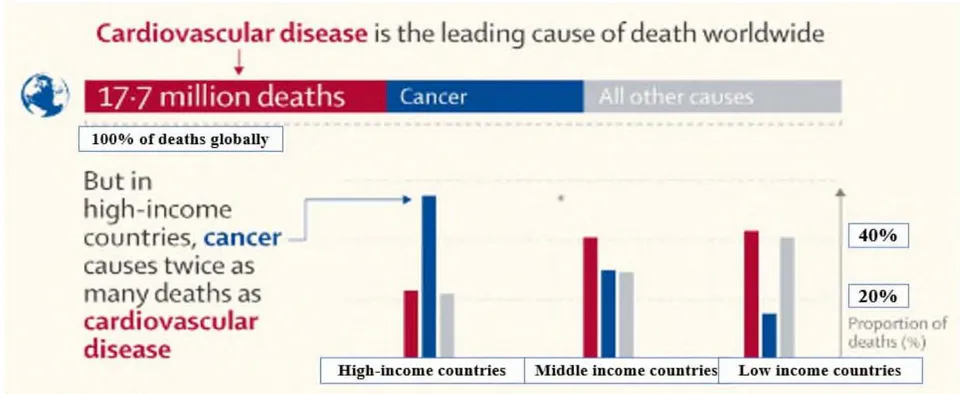
For instance, the most common cause of death in Morocco is cardiovascular disease. These illnesses can be divided into various categories., namely, valvulopathy, heart failure, arterial Hypertension, ischemic heart disease, cardiomyopathy, and arterial diseases. This project's goal is to describe the prevalence of cardiovascular diseases according to the age and sex of patients and to study the association between sex, age, and the appearance of different types of cardiovascular diseases [21].
![Figure 3: Distribution of Patients by Age and Sex [21]](https://doc.globaljournals.org/ksqj77_58200/ocr/images/derivatives/be/bef3b01aa621428ca6cd239c9945f802eac7e28c91f0350b0ba90b42fa7daba8.webp)
![Figure 4: Prevalence of Cardiovascular Diseases during the Study Period [21]](https://doc.globaljournals.org/ksqj77_58200/ocr/images/derivatives/1a/1aeb51ab9ccc68f1937a3a7fddbcea2bc0124eb356f0dab72cb59632f9c36d65.webp)
The survey involved 16002 patients, including 7232 women and 8770 men with a slight male predominance (sex ratio , chi-square test , ). It was 70.27 16.5 years on average. Women are most affected in young adults, while men outnumber women in adults and seniors (Figure 3). Cardiovascular disease prevalence was as follows: Hypertension , cardiomyopathies , valvulopathies , ischemic heart disease , cardiac insufficiency , and arterial diseases (Figure4) [21].
Cardiovascular diseases include pathologies that affect the heart and all blood vessels, such as (WHO):
Stroke
Atherosclerosis
Congenital heart disease
Myocardial infarction
Heart failure
Diseases of the vessels
Heart rhythm disorders
High blood pressure (Hypertension)
III. HYPERTENSION
Blood pressure is the force exerted by circulating blood on the walls of the arteries, that is to say, the main vessels that allow blood circulation in the body. We speak of hypertension when this pressure is too high (WHO).
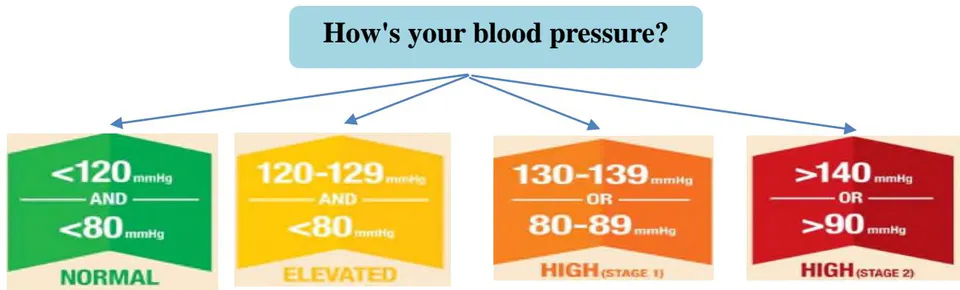
As per a statement of the World Health Organization (WHO), Hypertension is one of the silent killers in the 21st century and is one of the biggest global public health concerns. Hypertension is amajor contributor to cardiac complications, stroke, heart disease, kidney failure, blindness, premature death, and disabilities. Hypertension is curable and treatable, for which there is a need for involvement from individual entities, government and private sectors, health workers, and civil societies moreover, personal awareness is highly recommended.
As per the estimation of WHO, globally more than 1.13 billion people are affected with Hypertension among which less than 1 in each 5 is under control. Unhealthy diets, lack of physical activities, and consumption of alcohol & tobacco are the main contributing factors to Hypertension. In 2016, the Global
Heart Initiative was launched by the World Health Organization and the US Centers for Disease Control and Prevention. Globally, Hypertension or High Blood Pressure leads million death cases which, share about of all death cases recorded. Hypertension also accounts for about 57 million disabilities adjusted life years which is about of total adjusted life years. In 2016, the Global Heart Initiative was launched by the World Health Organization and the US Centers for Disease Control and Prevention.
The Global prevalence of Hypertension in adults aged was about in 2008. From 1980 to 2008, there was a moderate prevalence. But, due to sharp growth in population, the aging population uncontrolled Hypertension reached 1 billion in 2008 from 600 million. The prevalence of Hypertension was highest in Africa and lower in the Americas [22]
![Figure 6: Hypertension Statistics World 2020 [22]](https://doc.globaljournals.org/ksqj77_58200/ocr/images/derivatives/6d/6d3ddd94970e820ded65081094f51081100c0260fb15957a682d01ad7eea7025.webp)
What is the risk factor?
![Figure 7: Factors of the Risk of Cardiovascular Disease and Hypertension (A&B [24], D [23] E [24], C [25])](https://doc.globaljournals.org/ksqj77_58200/ocr/images/derivatives/0d/0d7c18902236f7f7f9d5cf96596b12a2fffabd99fb8e78478aa250a7dea15228.webp)
IV. ROSEMARY
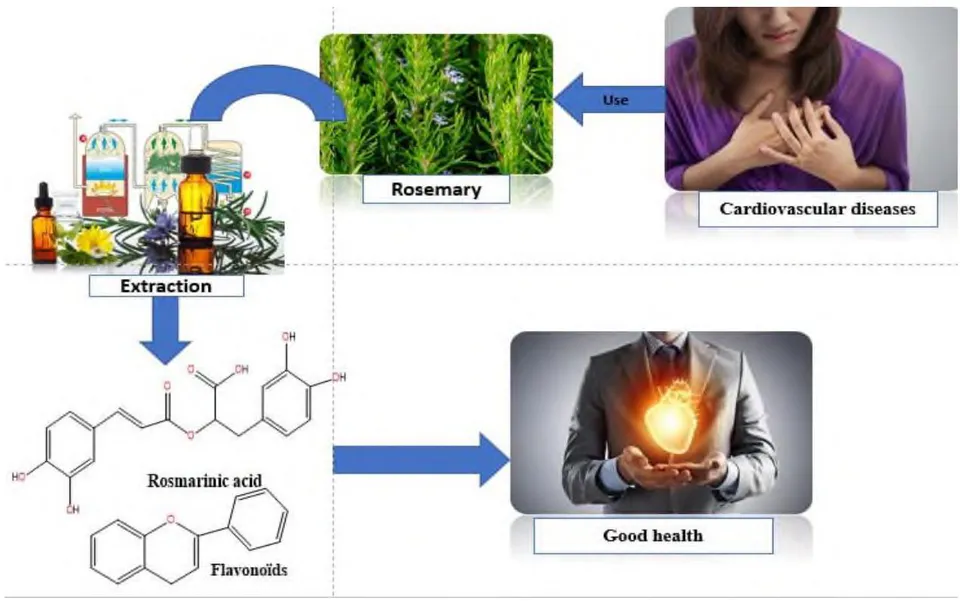
Rosemary is a medicinal plant of the Lamiaceae family which is called in Arabic Azir and French Romarin, the scientific name of this plant is Rosmarinus officinalis. Rosemary, a plant Abundant in the wild all around the Mediterranean, is traditionally valued for its bioactive constituents, with antioxidant, anti-inflammatory, and anti-cancer, antifungal, antibacterial, insecticide, and hepaprotective properties, which can be removed by distillation under form aromatic oils or by extraction in solvents in the form of extract or oleoresin. Rosemary leaves contain macronutrients (Ca, K, P, Na) and micronutrients (trace elements) (Cu, Zn, Mn, Fe) [26]. They are a good source of vitamins A, B, and C [27].
Rosemary is similarly used in cosmetic formulations and in treating pathological and non-pathological conditions, such as cellulite, alopecia, ultraviolet damage, and aging [28].
a) Other Names
- Azir, barkella, haselban, Aklilljabal, kilege (in North Africa) [29].
- Grass-aux-courounnes, sea dew, sea rose, rosemary of the troubadours, bouquet-de-la-vierge (France).
- Folia Anthos, Folia Rorismarini, Encensier, rosemary (Angle), Rosmarinblatter, Krankrautblatter, Kranzenkrautblatter, Rosmarein (Allemand).
Rosemary has long been known for its medicinal properties, especially by the Greeks and Romans. Later produced crowns, thus the Arabic name Ikilal-Jabal (mountain crowns), translated from Latin. In the Middle Ages, it enjoyed great prestige as a medicine for paralysis. The water of the Queen of Hungary, famous in the seventeenth century because Queen Isabella, tasty and paralytic, used it as water of youth, was nothing but rosemary alcoholate. It is also a grilling condiment. Rosemary supplies an important distillation industry in Maghreb [29]. Since Morocco has excellent potential in the field of aromatic and medicinal plants.
b) Botany
Branched, woody, 1 m tall, bushy, and aromatic shrub. The leaves are narrowly lanceolate and up to 3 cm long and 4 mm wide, causes, and friable; The edge is involuted downwards (top row). On their upper side, young leaves are pubescent, while the older ones are glabrous. They are wrinkled and streaked due to a sunken midrib, which is very prominent on the underside, and covered by a dense white pubescence. The January blooming of the flowers, pale blue or lilac, are grouped in axillary and terminal racemes in the upper part of the branches [29]. These spiciform inflorescences bear subsessile flowers in all seasons. The gamosepalous calyx, bilabiate bell-shaped, has three lobes. The gamopetalous corolla is long and tubular with a helmet-shaped upper lip with two lobes and a lower lip with three lobes. The two protruding stamens protrude well beyond the corolla; two others are reduced to square brackets. The fruit is brown achene [30]. This very polymorphic species has several varieties. But Many botanists prefer to use the chemical makeup of the essential oil to classify four chemotypes instead of this sporadic morphological differentiation., according to the dominant compound:
- Rosemary in cineole,
- Rosemary with verbenone,
- Rosemary with camphor,
c) Chemical Composition
Essential Oils: 1 to Rosemary flowering tops provide 10 to of an essential oil whose main constituents are: camphor (15 to ), cineole (15 to ), alpha-pinene (10 to ) and borneol, free and esterified. Among other things, the essential oil's composition varies. Depending on the origin, the French pharmacopeia retains two types of products: the Morocco and Tunisia type and the Spain type. resulting from hydro-distilling natural populations, these essential oils differ slightly in their composition and physical constants [30].
| Compound | Mroroccooil | Spain oil | Algerieoil |
| α-Pinene | 12.51 | 24.7 | 5.2 |
| 1, 8-Cineole | 47.44 | 18.9 | 52.4 |
| Camphene | 3.62 | 11.2 | 3.0 |
| β-Myrcene | 1.57 | 4.9 | 1.7 |
| Borneol | 2.97 | 4.5 | 3.4 |
| Verbenene | - | - | - |
| Bornylacetate | 0.23 | 1.0 | 1.1 |
| Camphor | 7.9 | 18.9 | 12.6 |
| Verbenone | 0.46 | - | - |
| Verbenol | - | - | - |
| β-Pinene | 7.2 | 3.4 | 5.7 |
| Linalool | 0.7 | 1.0 | 1.1 |
| β-Caryophyllene | 3.31 | 2.2 | 4.2 |
| 3-Octanone | - | - | - |
| β -Phellanderene | - | - | - |
| Limonene | 1.9 | 3.1 | - |
| Sabinene | 0.12 | 0.4 | - |
Other Chemical Compositions of Rosemary
- Flavonoids: luteolin, apigenin, quercetin, diosmin.
- Diterpenes:carnosic acid, rosmadial.
- Triterpenes and steroids: oleanolic acid, ursolic acid.
- Tannins.
- Lipids: n-alkanes, isolalkanes, alkenes.
- Rosmarin.
- Rosmarinic acid.
There are two ways to extract bioactive molecules from Rosemary.:
- By conventional so-called conventional methods: Hydrodistillation; Steam distillation; Aqueous Alcoholic Extraction by Fermentation; Maceration; Two-step extraction with organic solvents (hexane, ethanol); Extraction by pressurized liquid.
- By new and innovative methods: extraction; Supercritical extraction; Subcritical state extraction ; Extraction assisted by ultrasound; Microwave assisted extraction; Extraction by microwaves without solvents; extraction by hydrodiffusion by microwaves and gravity; Extraction by microwave vapor diffusion; Extraction by instantaneous controlled pressure drop; by Advanced Technology Phytonics (non-chlorinated fluorohydrocarbons); Extraction by High Voltage Pulse Fragmentation Technology...[32].
V. THE EFFECT OF ROSEMARY ON
CARDIOVASCULAR DISEASES AND
HYPERTENSION
Epidemiological and clinical studies on the influence of flavonoids on cardiovascular diseases are rare and inconsistent. The main issue outlines the evolutionary exposition of flavonoids through diet and developed mechanisms that reduce their bioavailability (transporters that reduce absorption and metabolism that increases excretion from the body). Although studies on the European population show consumption of flavonoids of more than per day [33], the bioavailability of flavonoids is limited to up to as reported for quercetin. As the half-life of quercetin in plasma is 11 to 28 hours, it is regarded that slow elimination increases the accumulation of quercetin in the body [34]. Usually, concentrations up to 1 mol L-1 are reported for plasma [35]. According to research conducted by our team, flavonoids can have clinically significant interaction with the ristocetin and arachidonic acid-induced platelet aggregation assay. even at very low flavonoid concentrations (i.e., 60 nmol L-1) can influence platelet aggregation assays induced by arachidonic acid and ristocetin. These assays are used for the assessment of von Willebrand factor (vWF) function [36], and flavonoids can consequently cause misdiagnosis of blood clot disorders related to vWF. In a clinical study on healthy males, the influence of tomato (Solanum lycopersicum L.)[37] pomace extract was tested ex vivo [38]. It showed a reduction of platelet aggregation in the test induced by ADP (5 days after starting the treatment, three hours after the last dose was consumed). While the polyphenol profile of tomato extract was analyzed by high-performance liquid chromatography coupled with mass spectrometry (HPLC-MS), no clear indication of component(s) responsible for the activity was provided. Polyphenols-enriched beverage of gallic acid equivalent) reduced platelet aggregation in healthy athletes after stress (marathon)[35]. Anthocyanin consumption (320 mg per day) by healthy volunteers reduced ex vivo platelet aggregation by in platelet aggregation assay induced by ADP [38]. Nearly all epidemiological research on the impact of flavonoids on cardiovascular diseases is inconclusive and calls for more research [39]. However, one of the rare studies confirming the beneficial effects of flavonoids in cardiovascular diseases was one performed by Wang et al. [40]. Meta-analysis of published data from 1966 to 2013 shows that an increase in flavanol intake by per day reduces the risk of stroke by in men. The same effect was not confirmed in females.
Rosmarinic acid (AR) is a purely natural compound derived from herbs belonging to the Lamiaceae family, such as Rosemary, sage, basil, and mint. These plants are widely and frequently utilized in recipes for food. Rosmarinic acid is an ester of caffeic acid and 3,4-dihydroxy phenyl lactic acid. The biological benefits of chronic RA use on cardiometabolic abnormalities have been revealed. Rosmarinic acid reduces blood pressure by inhibiting of angiotensin-converting enzyme (ACE). (ACE) [41], promotes nitric oxide production and regulates endothelin-1 (ET-1) production, and downregulates endothelin-1 (ET-1) production [42]. Chronic treatment with RA improves whole-body insulin sensitivity in fructose-fed hypertensive rats [43] and high-fat diet (HFD)-induced diabetic rats [44]. It also reversed streptozocin-induced decreases in skeletal muscle plasma membrane GLUT-
4 content in diabetic rats [44]. However, the mechanisms through which RA increases glucose uptake need to be elucidated. Angiotensin II (ANG II) is a potent hypertensive agent. It is involved in the generation of reactive oxygen species (ROS) that activate p38 MAPK, reduce Akt phosphorylation, and decrease GLUT-4 translocation in skeletal muscles [45, 46]. The antioxidant properties of RA inhibit the production of ROS via c-Jun N-terminal kinase (JNK) and extracellular signal-regulated kinase (ERK) in a cell death model of cardiac muscle [47]. A previous study reported that ERK plays a crucial role in the therapeutic actions of RA in the hippocampus [48]. Moreover, exercise and 5-aminoimidazole-4-carboxamide-1-betad-riboside (AICAR) increase skeletal muscle glucose transport through the activation of ERK and adenosine monophosphate-activated protein kinase (AMPK) activities [49]. Together, RA might induce skeletal muscle glucose transport via the ERK pathway. In addition, RA could improve both cardiovascular and metabolic problems in hypertensive conditions. Therefore, this study aimed to evaluate the effects of acute and chronic RA administration on blood pressure and skeletal muscle glucose transport in rats treated with ANG II. Moreover, this study assessed the signaling pathways involved in skeletal muscle glucose transport.
VI. TREATMENT REGIMEN
The dosage of rosemary essential oil of 1 ml every eight hours has been indicated according to the German Commission E monograph on rosemary essential oil, as well as the safety profile derived from its use in its clinical and traditional use [50]. Rosemary essential oil samples were purchased by Meta pharmaceutical (Barcelona, Spain). The main components were 1,8-cineol , camphor , and -pinene , which corresponds to a Moroccan-type rosemary oil. The minor components were -pinene, camphene, borneol, limonene, -terpineol, p-cymene, -myrcene, bornyl acetate, and verbenone. Rosemary essential oil and placebo were supplied in 30ml vials. made of topaz-colored glass with a dropper. Patients received the corresponding dose by dropping 1 ml on a sugar cube to avoid an unpleasant taste. Sugar cubes to avoid any unpleasant taste[51]. This study is a part of many others works on the valorization of natural products started since 2006 [52-84].
VII. CONCLUSION
The antihypertensive and cardiovascular disease-stimulating effects of rosemary essential oil are shown in this work, along with the corresponding improvement in patients' quality of life. The study, which was conducted in a pharmacy, allowed for the evaluation of both the therapeutic efficacy and the significance of pharmaceutical care in patient compliance. The findings of this study can act as a roadmap for future investigations aimed at advancing scientific understanding of widely used plants.
ACKNOWLEDGMENTS
The authors would like to thank you for the financial support of the project ANPMA/CNRST/UMP/VPMA347 /20 entitled "Fungal, insecticide, or acaricide formulations of essential oils of aromatic and medicinal plants and their extracts".