I. INTRODUCTION
Exposure of human beings to poisons and some other toxic materials has been responsible for many mortality cases in our generation most of which are accidental. Reports indicate that nothing less than 200,000 were dead as a result of organophosphate compound, one of which is 2, 2- Dichlorovinyldimethylphosphate (DDVP) . The organophosphate compounds is unarguably one of the toxic and adequately chronic organophosphates that is of detrimental effect to the health of humans and animal . It was said that the continuous exposure to humans and animals to DDVP has been identified as one of the leading causes of acetyl cholinesterase (AChE) inhibition especially at the presynaptic cleft, thus leading to the accumulation of acetylcholine as well as the triggering of postsynaptic neurons in animals, and ultimately to death . Notably, the exposure of humans and animals have been fingered to be a key player in respiratory problems including that of discomfort in the chest, bloody or running nose, severe and sometimes dry coughing, difficulty in breathing and increased fluid in the bronchial tubes . Oxidative stress arising from free radicals like reactive oxygen species (ROS) now appears to be a fundamental mechanism underlying many degenerative diseases such as diabetes, viral infection, auto-immune pathologies and probably aging. Evidence suggests that ROS can be scavenged through chemoprevention utilizing antioxidant compounds present in foods and medicinal plants . Plants play a significant role in maintaining human health and improving the quality of human life. They serve humans as valuable components of food, cosmetics, dyes, and medicines. The World Health Organization estimated that 80% of the earth's inhabitants rely on traditional medicine for their primary healthcare needs, and most of this therapy involves the use of plant extracts and their active components . Senna siamea has a long history of use as a folk-medicine and its therapeutic efficacy is well recognized. Different parts of S. siamea can be used for various medical purposes . The fruit is used to charm away intestinal worms and to prevent convulsions in children. The heartwood is said to be a laxative, and a decoction is used against scabies . Senna siamea also known as Siamese cassia, kassod tree, cassod tree and cassia tree is a legume in the subfamily Caesalpinioideae. It is native to South and Southeast Asia, widespread in Africa, although its exact origin is unknown . This plant has proven to contain some important biochemical components like alkaloids, volatile essential oils, phenols and phenolic glycosides, resins, oleosins, steroids, tannins and terpenes. Senna siameais a medicinal plant acknowledged to be rich in phenolics, consisting of condensed tannin and phlobatannin, Gallic acid, protocatechuic acid, pyrocatechol, (+)-catechin, (-) epi-gallocatechin-7-gallate and (-) epigallocatechin-5, 7-digallate . Its antioxidative property and ameliorating effects on organophosphate toxicity has not been done. This current study however tends to investigate the effects of Senna siamea leaf extracts on some biochemical indices in 2, 2-dichlorovinyldimethyl phosphate (DDVP) induced brain toxicity using Wistar albino rats.
II. MATERIALS AND METHODS
a) Collection and Extraction of the Senna siamea leaf
The fresh leaves of Senna siamea (Lam) Irwin & Barneby (Fabaceae) were obtained from Ifaki-Ekiti community, Ekiti State and was authenticated at Department of Plant Science, Ekiti State University, Ado-Ekiti and the plant specimen was preserved with Herbarium numbers (UHAE 2020055). The leaves were rinsed with water and then air-dried by spreading them on a clean surface at room temperature in the laboratory. The air-dried leaves were then pulverized and three major separate extractions were carried out with two hundred grams portions each of the dried powdered leaves soaked in 500mL each of water, ethanol and methanol as solvents to obtain three different extracts. The extracts were then concentrated by increased surface area evaporation to obtain dried extracts for analyses.
b) Phytochemical screening and in-vitro anti-oxidant parameters determination of the leaf's extracts
The qualitative phytochemical screening [flavonoids, saponin, phlobatannins, terpenoids, Salkowski test for cardiac glycosides (steroidal ring or terpenoids), Keller-Killani test for cardiac glycosides (deoxysugar), Lieberman's test for steroidal nucleus and test for tannins] of aqueous, methanol and ethanol extracts of the leaves were carried out according to the methods of to identify the active constituents while the in-vitro antioxidants properties were determined by the following methods:
a. Hydrogen Peroxide Scavenging Effects: The ability of the leaf extracts to scavenge hydrogen peroxide was assessed by the method of Ruch et al .
b. ABTS Scavenging Effects: The antioxidant effect of the leaf extracts was studied using ABTS (2,2'-azinobis-3-ethyl benzthiazoline-6-sulphonic acid) radical cationde colourisation assay according to the method of Shirwaikar et al .
c. Measurement of Nitric Oxide Scavenging Activity: The extent of inhibition of nitric oxide radical generation in vitro was followed as per the method reported by Green et al .
d. DPPH spectrophotometric assay: The free radical scavenging activities of the samples by DPPH method were determined according to the method reported by Brand-Williams et al .
e. Measurement of Superoxide Scavenging Activity: The superoxide scavenging ability of the extracts was assessed by the method of Winter bourn et al .
f. Estimation of Total Phenols: The total phenolic content was determined according to a well-cited protocol .
g. Estimation of Flavonoids: The total flavonoid contents in the samples were determined following the method reported by Zhishen et al .
c) Animal management
Thirty-two (32) healthy albino Wistar rats were obtained and housed in the animal house of the College of Medicine, Ekiti State University, Ado- Ekiti, Nigeria. The animals were acclimatized for two weeks before administration of DDVP. The acclimatization was done under standard environmental conditions of good lighting, moderate temperature and adequate ventilation. They were also fed on standard rat feed containing adequate proteins, carbohydrate, fats, vitamins, minerals back up with clean and adequate water. The animals were handled under standard laboratory protocols as stipulated by the Institutional Animal Care and Use Committee .
d) Experimental design
The animals were divided into six groups according to their weights with Groups 2 having 3 subgroups, one for each of the three extracts. Each group had four animals. The animals were orally administered with 0.5mL of 6.6mg/kg body weight of 500 folds dilution of DDVP solution for two weeks except for Groups 1 and 2 followed by treatments with 0.5mL of 3.3mg/kg body weight of each extract of the plant for another two weeks of the four weeks study.
Group 1 Normal Control
Group 2 Extract control (Each subgroup animal was given 0.5mL of 3.3mg/kg body weight of 0.5g/100mL of each solvent (aqueous, methanolic and ethanolic) extract of the plant)
Group 3 DDVP control (animals were administered orally with 0.5mL of 6.6mg/kg body weight of 500 folds dilution of DDVP solution to induce brain toxicity)
Group 4 DDVP induced animals + 0.5mL of 3.3mg/kg body weight of 0.5g/100mL aqueous extract of the plant.
Group 5 DDVP induced animals + 0.5mL of 3.3mg/kg body weight of 0.5g/100mL methanolic extract of the plant.
Group 6 DDVP induced animals + 0.5mL of 3.3mg/kg body weight of 0.5g/100mL ethanolic extract of the plant.
All animals in the groups were also given rats feed and drinking water ad libitum.
e) Preparation of serum and brain homogenate
At the end of the experiment, the rats were chloroform anesthetized and quickly dissected with their blood samples and brain removed. 10% of the brain homogenate was prepared in 6.7nM potassium phosphate buffer (pH 7.4) using the Top driven electric homogenizer. The homogenate was centrifuged at 3,000rpm for 10 minutes at 4°C to obtain a clear supernatant while serum sample was prepared from the whole blood collected from the heart into the plain sample bottle and centrifuged at 3,000 rpm after coagulation. The individual serum and brain homogenate were used for measurement of the studied biochemical parameters. The lipid peroxidation was done by measuring the TBARS in accordance with the modified method of Utley et al ; GGT activity was determined using standard Sigma-Aldrich kit from USA while the antioxidants enzymes activities [Catalase (CAT), superoxide dismutase (SOD), Glutathione-S-transferase (GST), Glutathione reductase (GR) and Glutathione peroxidase (GPx)]; reduced glutathione (GSH) were determined by the methods described by Chance and Maehly as calculated by Von Euler and Josephson ; Misra and Fridovich ; Habiget al ; Carlberg and Mannervik ; Mohandas et al and Jollow et al respectively.
f) Statistical analyses
The results obtained were evaluated using the statistical test of Means triplicates results of four animals per group.
III. RESULTS
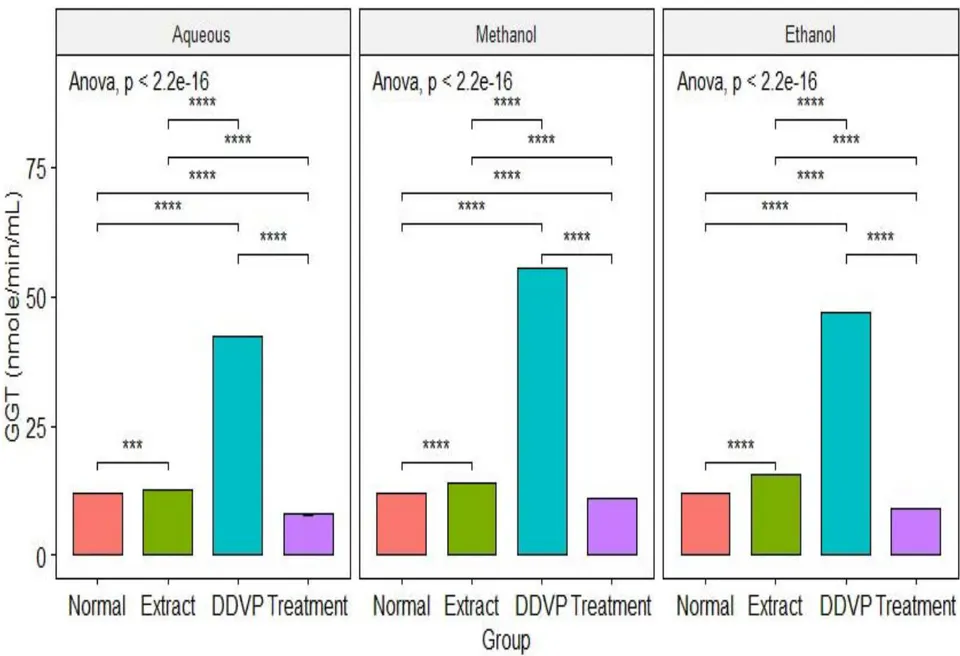
Effects of extracts on Brain GGT
Group Normal Extract DDVP Treatment
Glutathione transferase
IV. DISCUSSION
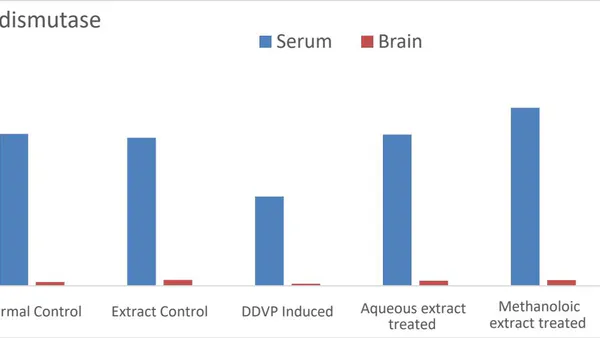
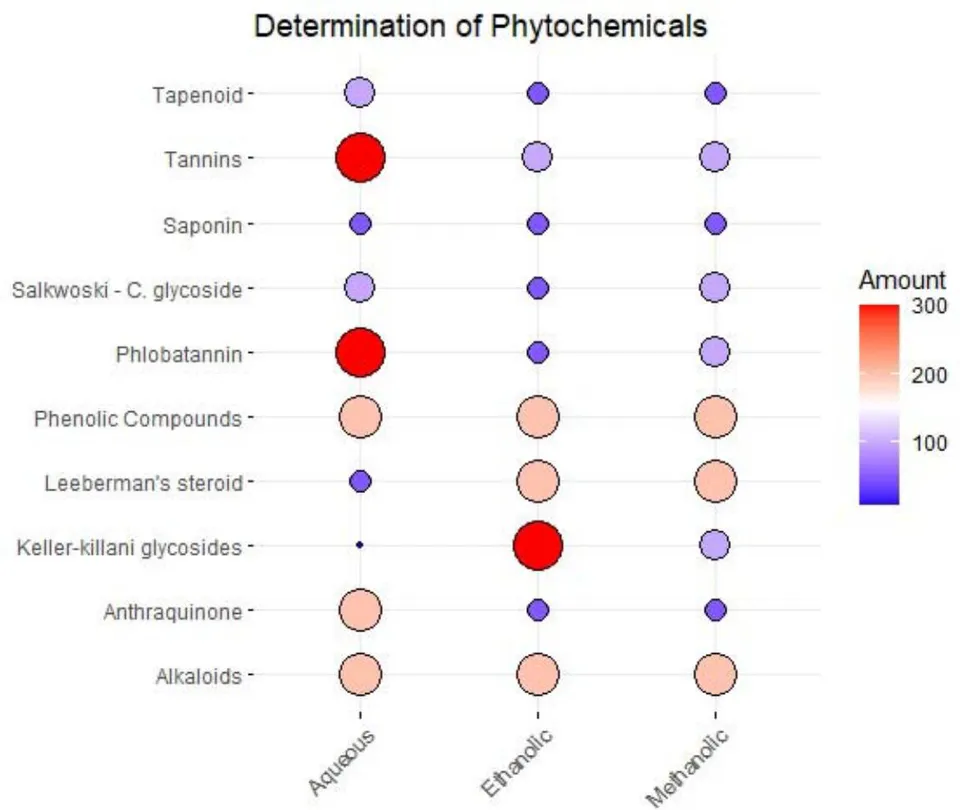
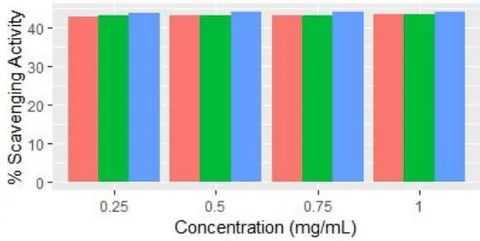
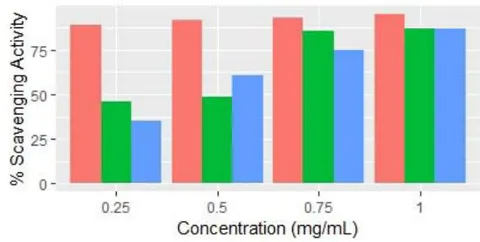
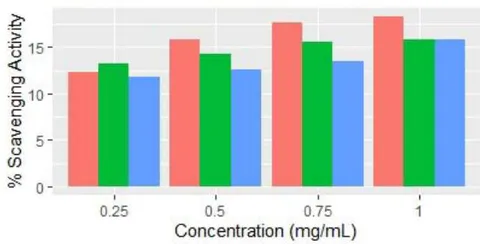
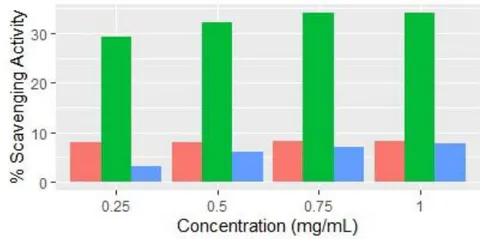
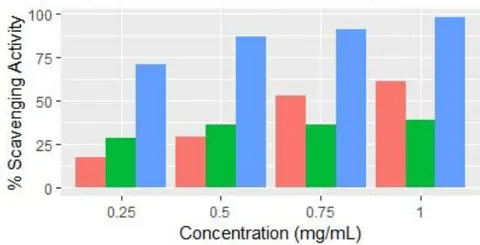
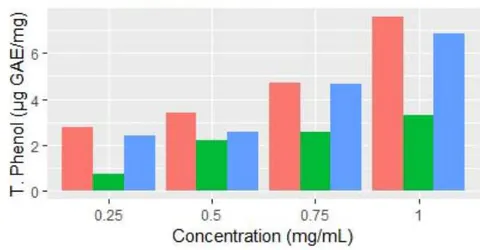
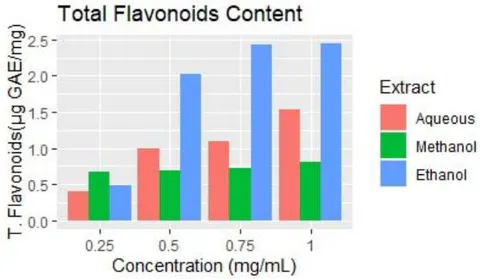
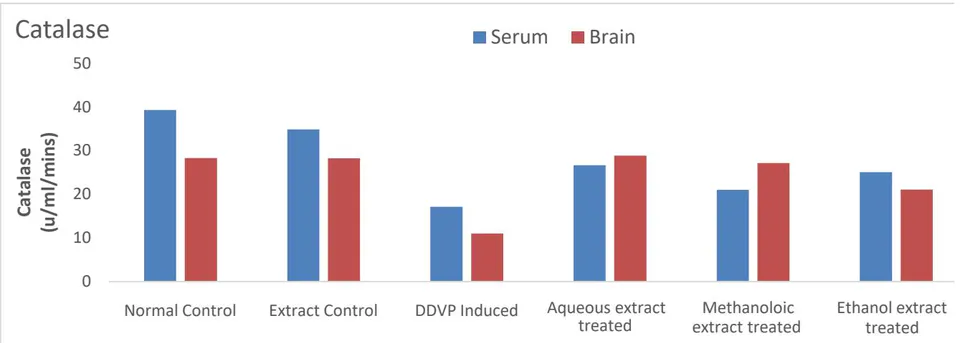
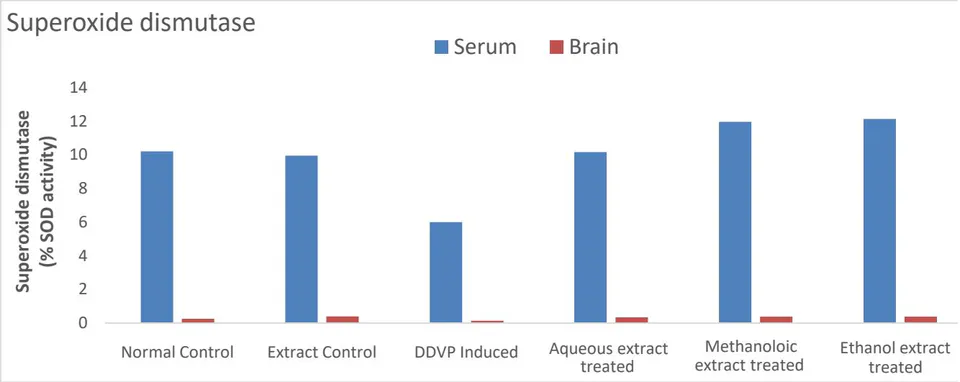
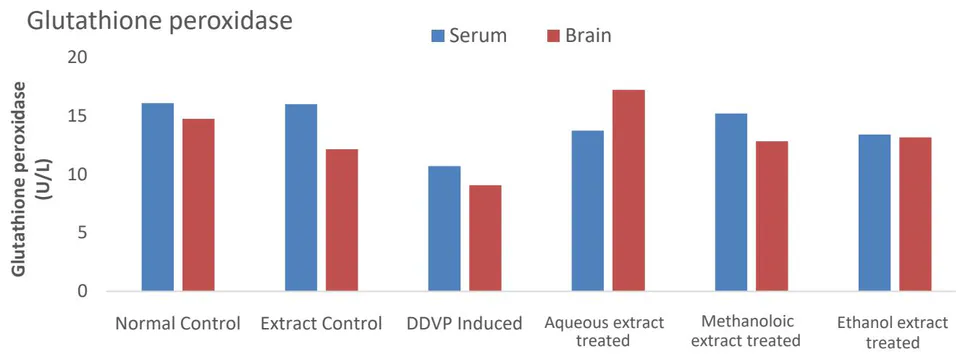
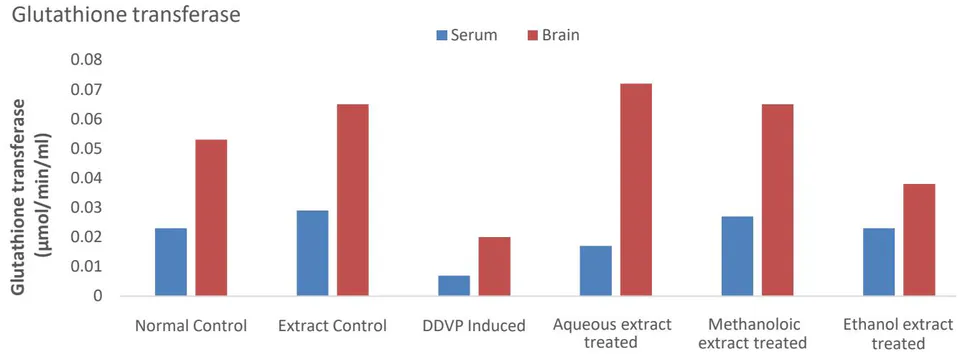
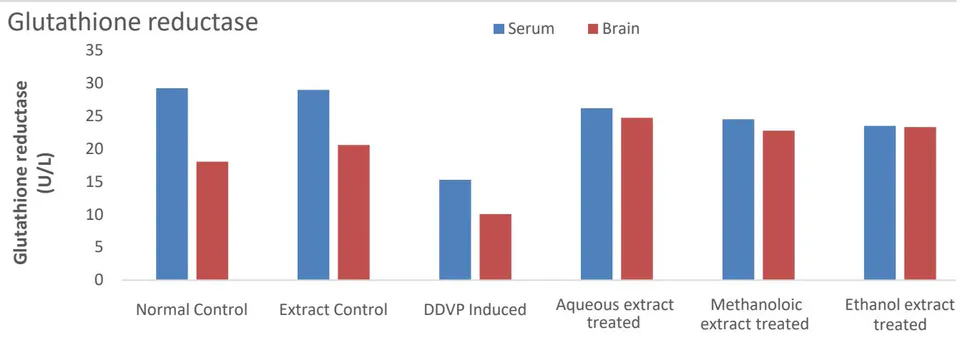
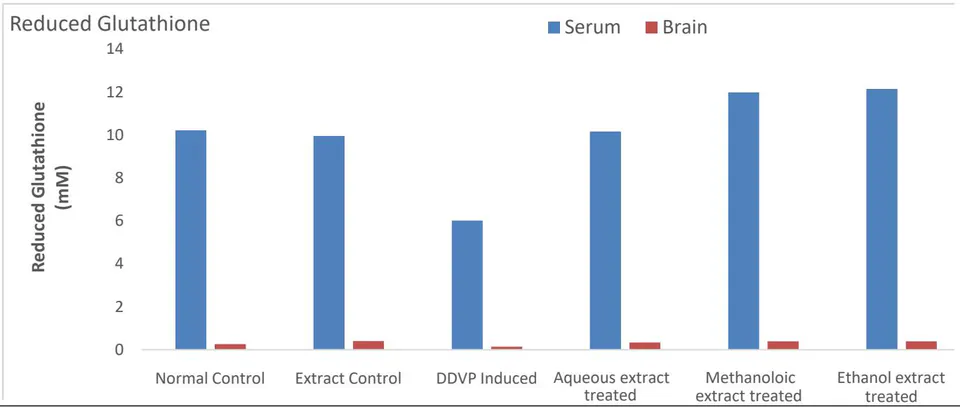
The Phytochemical assessment of the three solvents extracts of the leaves of Senna siamea contained some plant chemicals of interest and important medicinal potentials as shown in Figure 1.0. This important plant phytochemicals are known to support bioactive activities in medicinal plants and may therefore be responsible for the medicinal properties of these leaves extracts which was similar to many other reported studies by in protective effects of the ethanolic extract of Alstonia boonei stem bark and in in-vitro compositional investigations of antioxidants, phytochemicals, nutritional and minerals in the fruit of Kigelia africana (Lam.) Benth. Figure 2.0 related the in-vitro antioxidant properties of the plants extracts studied within 0.25 and 1.0mg/mL concentrations range for both extracts. The% H O ,%ABTS,%NO,%DPPH and%SO scavenging activities which occurred in a concentration dependent fashion similar to what was obtained for total phenol and total flavonoids concentrations which are the bioactive compounds responsible for the antioxidant potentials of the Senna siamea various solvents extracts. The three extracts of the leaves showed appreciable scavenging potentials for nitric oxide, the nitric oxide scavenging property of any plant extract has been said to help in the arrest of various chains of reactions initiated by excess generation of NO that are detrimental to the wellbeing of the body. The results obtained in this study however corroborated the earlier obtained for the nitric oxide scavenging activity of Ceropsdecandra . The three extracts of the leaves showed appreciable scavenging potentials for DPPH radicals in a concentration dependent manner. indicating that the higher the concentration used, the higher the scavenging activity with the highest scavenging activity found in methanol extract. The ability of the plant to freely scavenge DPPH radicals may be due to the presence of flavonoids . The scavenging of DPPH radical by antioxidants agents is due to the reaction between antioxidant molecules and radical progress which results in the scavenging of the radicals by hydrogen donation. It is visually noticeable as a change in colour from purple to yellow. Hence, DPPH is usually used as a substance to evaluate the antioxidant potential of medicinal plants . The Ethanolic extract of Senna siamea displayed a more superior superoxide scavenging activity at the 1mg/mL concentration which is far greater than the results for both aqueous and methanolic extracts at the same concentration. The super oxide scavenging activity of Senna siamea can be seen in its ability to scavenge super oxide radical ions to form stable radicals and by such can help in the termination of radical chain reaction . In the hydrogen peroxide scavenging activity, the ethanolic extracts possess the highest activity than those aqueous and methanol. However, Shaluetal reported a similar observation for the plant in their study. Total phenols and total flavonoids were also observed to be considerably present in all the plant extracts. The total phenol aqueous extract had the highest value followed closely by the ethanolic and methanolic extracts concentrations. These results obtained for Senna siamea showed resemblance to the work of Jyotietal on Acacia nilotica. Phenols are said to contribute to the quality and nutritional value in terms of modifying aroma, color, taste and flavor . Phenolic compounds could be a major determinant of antioxidant potentials of food plants and could therefore be a natural source of antioxidants . In this study, the results obtained for total flavonoids showed that ethanolic extract contained the highest level of flavonoids than aqueous and methanolic extracts. Flavonoids are part of the secondary metabolites present in plants as part of its arsenal and has been reported by Choudharyetal that flavonoids show some antioxidant activity and that it has considerable effects on both human's health and nutrition. He described its mechanisms as the one with either scavenging or chelating process. They are said to possess hydroxyl groups which prompted their radical scavenging effects in the plant. Figure 3.0 showed the effects of the leaf extracts on the level of lipid peroxidation both in the serum and brain of the studied animals which revealed that the DDVP induced control group 3 caused almost tenfold elevation in the malondialdehyde concentration of both serum and brain tissue. The treatment of the rats with the three solvents extracts showed that both extracts produced ten-fold reduction effects in the concentration of malondialdehyde in both serum and brain tissues when compared with the DDVP-induced group. It has been reported that enhanced lipid peroxidation leads to tissue damage and failure of antioxidant defense mechanism to prevent formation of excessive free radicals . It is clearly evidenced in this study that treatments of the induced animals with the aqueous, methanolic and ethanolic extracts of the Senna siamea leaf respectively caused a substantive decrease in the level of lipid peroxidation of both serum and brain tissues. This result however corroborated the observation of Ojo et al who postulated that DDVP induction would lead to an increased MDA value and the treatment with antioxidant containing extracts would lead to the reduction of the MDA value. The induction of DDVP in group 3 from Figure 4.0 showed a significantly increase in the value of GGT which thus implies that the exposure caused a damage to the brain including increased permeability, possible neurosis in the brain. This result also showed that the treatment with the various solvents extracts caused a significant decrease in the level of the GGT indicating that the extracts of Senna siamea caused reversal to the detrimental DDVP induction in the animals. This is in line with the results of Ojo et al who also postulated that DDVP induction will lead to an increased GGT value and the treatment with a good antioxidant plant like Senna siamea will reverse back the damage caused by the exposure to DDVP; it should also be noted in this study that all the solvents extracts of the plant produced tremendous attenuating effect of the brain toxicity. Figures 5a and 25b presented the results of some antioxidant enzymes of (catalase, superoxide dismutase, glutathione peroxidase, glutathione transferase, glutathione reductase) and reduced glutathione. Oxidative stress plays a major role in the pathogenic of many disorders including aging, cancer, diabetes, Alzheimer's, strokes, viral infections (that cause airway epithelial inflammation), neurodegenerative processes (including cell death, motor neuron diseases and axonal injury) and infraction, and brain edema. Antioxidant enzyme plays an important role in protecting oxidative injury to the body. One of the therapeutic approaches by which these disorders can be prevented is to increase the levels of these antioxidant enzymes . The catalase activity was significantly increased at in the aqueous, methanolic and ethanolic treatments groups towards the control and extract treated groups when compared with the DDVP induced group. Other researchers have also reported an upward trend in catalase level using various plants extract treatments in other complications as we observed in this study . Catalase are heme-containing enzymes that convert hydrogen peroxide to water and , and they are largely localized in subcellular organelles such as peroxisomes . The%SOD activity observed in this study showed a significant increase in the various treatment's groups after a gross reduction by the DDVP induced group when compared with the normal control and extracts treated groups. Similar observations were also reported in earlier studies of and Sani et al . SOD is the antioxidant enzyme that catalysed the dismutation of the highlyreactive superoxide anion to and to the less reactive species ; the peroxide can then be destroyed by Catalase or glutathione peroxidase reactions as reported by . Glutathione peroxidase, glutathione transferase and glutathione reductase in addition with SOD are antioxidants enzymes that work in synergy to protect the organism from reactive oxygen species (ROS). These enzymes were observed to be significantly increased in all the treatment groups when compared with the induced group to reverse the effects of induction towards the normal control group. Our observation is in consonance with what was reported by 51,52in their various studies on amelioration of thioacetamide-induced oxidative stress and hepatic damage in albino rats by Solanum trilobatum and antioxidant effect of grapevine leaf extract on the oxidative stress induced by a high-fat diet in rats respectively. Reduced glutathione (GSH) is another compound that play a vital role as an antioxidant. Senna siamea solvents extracts were found to significantly reverse the reduced GSH in DDVP induced rats to the normal control as observed in this study. Reduced glutathione is found in high concentrations in cellular systems and plays a major role in detoxication of various electrophilic compounds, deficiency of which puts the cell at risk for oxidative damage. Previous works have also shown that medicinal plants extracts have abilities to enhance glutathione concentration to reverse the effects of oxidative stress .
V. CONCLUSION
This study has reasonably showed that the oral exposure of the rats to DDVP (Dichloros) caused the brain oxidative stress in the Wistar albino rats as indicated by the increased level of lipid peroxidation, increased GGT activity, reduced antioxidant potentials both in the serum and brain while the aqueous, methanolic and ethanolic extracts of Senna siamea showed a significant and protective effects against the action of DDVP induced oxidative stress in the rats.
The plant studied here will in no doubt do well as a neurotoxicity protective agents and further researches needed to be carried out to explore it for raw materials needed for the treatment of neurodegenerative diseases like Alzheimer's diseases and other complications.
Ethics approval and consent to participate: All necessary National and International ethical considerations were fully followed in handling the animals.
Consent for publication: The consent for publication was given by all the Authors.
Availability of data and material: All data and material regarding the manuscript are available and not under any restriction elsewhere.
Competing interests: The Authors declare that no Competing interests exist in any-form
Funding: The research was self-funding by the authors
Authors' contributions: The Authors OOA and OOP designed the work concept, involved in laboratory Analyses, and write up of the manuscript. Author OOS was involved in the statistical analysis and proof-reading of the manuscript.