## I. INTRODUCTION
In the 20th and 21st centuries, the tourism sector has changed dramatically as a result of globalization, rising disposable income, and advancements in technology. The promotion and coordination of international tourism initiatives was greatly aided by organizations such as the UNWTO. The development of social media and the internet has completely changed the way people plan trips, making it simpler for them to look up and contrast different kinds of lodging, flights, and activities. Tourism is a major driver of the country's economy, supporting sectors such as hospitality, transportation, and entertainment while also creating jobs and revenue. Nevertheless, the industry faces difficulties like overcrowding, environmental concerns, and environmental impact. Sustainable tourism practices, which emphasize lessening environmental effect and encouraging responsible travel, have gained popularity as a response to these problems (Ranasinghe et al., 2021).
Destination management companies (DMCs) are a key player in the global tourism industry, relying on transparency, resources, good governance, and professionalism for their operational success (Sheehan et al., 2016). Transparency involves openness, honesty, and accountability, which is crucial for maintaining trust with customers, suppliers, and other stakeholders. It involves clear communication, accurate pricing, and disclosure of relevant information, fostering positive relationships and enabling effective decision-making (Parris et al., 2016). Resources are essential for DMCs, including financial, human, and technical resources. Financial resources are needed for marketing, infrastructure, and service quality, while human resources, including skilled staff and knowledgeable tour guides, contribute to exceptional customer experiences. Technological resources, such as reservation systems and online platforms, improve operational efficiency and customer convenience (Holzmayer, & Schmidt, 2020). DMCs offer individualized experiences tailored to travelers' needs and preferences globally because they possess extensive knowledge and expertise about a particular destination. They serve as a link between tourists and the regional travel sector, guaranteeing that they have access to the greatest experiences, amenities, and attractions.
There studies that have been conducted related to tourism industry in Sri Lanka and (Ediriweera, 2011; Chandralal, 2010; Kadyl, 2021) regarding SMEs and destination management systems and impact on community development and overall operations of DMCs. However, there are limited studies that have been conducted regarding the success of business operations in DMCs in Sri Lanka. To fill this gap, empirical research in the Sri Lankan context is crucial and further to fill the knowledge gap in the factors that would be most significant for sustainable operations in DMCs in Sri Lanka. Considering the above, this research offer valuable insights and practical recommendations for DMCs to improve their operations and increase their chances of success. The research answers the research question on What are the factors determining the successful operation of Destination Management Companies (DMCs) in Sri Lanka?
## II. LITERATURE REVIEW
By definition, destination management is "the integrated process of managing any of the three types of tourism (urban, resort, and rural), "(Negruşà & Coros (2016). Pavlovć (2015) stated, the tourist value chain has seen significant and unpredictable changes, particularly in the distribution of tourism goods and services. These developments have resulted in a high level of activity and have caused arriving travel agents to take on a new role. Additionally, this has led to the rise of destination management corporations (DMC). DMC, or destination management companies, are travel firms that focus on a broader variety of activities inside certain locations. Pavlovć (2015) also stated, a destination management company (DMC) acts as a mediator between a network of local travel service providers and travel agencies, facilitating the resale of these services to travellers.
Martins et al. (2021) mentioned, the administration of tourist destinations is a highly significant responsibility that falls within the purview of organizations that specialize in destination management. These organizations rely heavily on destination management systems as an essential component of their technology infrastructure. In terms of the elements that contribute to the implementation of destination management systems, this study highlights the significance of the various partnerships that are established by the private sector within the destination, the benefits that are a direct result of governance, and the participation of partners in the operations of destination management organizations. According to Aurélien & Herinandrianina (2014), when it comes to the factors that contribute to the success of these systems, this study emphasizes the significance of a phased implementation, the fact that having a large number of functionalities within the system is detrimental to success, and the significance of having a revenue model that is capable of supporting both financial and operating costs.
Baker et al. (1996) described effective destination management organizations (DMOs) as having the following characteristics: a long-term vision of destination development; the ability to clearly designate responsibilities to stakeholders and to develop appropriate operational structures; and a decision-making process that is both transparent and responsible, involving all stakeholders. Al Balushi (2021) mentioned, within the realm of transparency research, the primary focus has been on outward openness, whereas internal transparency has received very less attention. In particular, there is a dearth of empirical study on the connection between internal transparency and the overall resilience of an organisation). According to the results, more internal transparency improves the capacity to accumulate, identify, and exchange information, which in turn leads to improved preparation in the face of bad situations (Volgger & Pechlaner, 2014).
Khalifa (2020) mentioned, organizations and businesses in the tourism sector, like those in other sectors, frequently encounter challenges in developing their e-business strategy due to inadequate evaluation of the influence of technological advancements in applied information and communication technologies. This issue frequently arises due to the limited size of these organizations and businesses, which are typically small or mediumsized enterprises. Belias et al. (2017) stated, in Greece, the tourist sector has seen a recent movement towards providing high-quality services, notably competitive customer service that ranks quite well on a worldwide scale. There are many problems about whether the strategies being implemented, or the absence of particular strategies, meet the high service requirements of tourist organizations and contribute to the general growth of the tourism industry in Greece. Explores the potential for developing a method to transfer technical advancements to small and medium-sized firms in the tourist industry, impacting the sustainability of their e-business systems and the development of their effective business strategies. A deep comprehension of the need to develop superior human resource management techniques is crucial for a thorough tourism strategy planning.
Joppe et al. (2014) mentioned, good governance, as defined by Law no. 28 (1999), refers to the administration of government that adheres to the fundamental principles of good governance. Government Regulation Number 101 of 2000 offers a comprehensive explanation of good governance, which encompasses the development and implementation of professionalism, accountability, transparency, excellent service, democracy, efficiency, effectiveness, and adherence to the rule of law, all of which are deemed acceptable by society (Aprilizar & Madjid, 2023). The assessment of good governance, as defined by Law no. 32 of 2004, includes the concepts of legal clarity, orderly administration of the state, public interest, transparency, proportionality, professionalism, accountability, and effectiveness. Good governance has gained prominence in public sector management in recent years, primarily because of its crucial role in the health community (Teare et al., 2013). Governance, including comprehensive strategic methodologies for the administration of rural tourism, participatory planning, long-term plans, and enhanced coordination at the national level, also fosters the conditions for innovation in rural tourism (Aprilizar & Madjid, 2023).
James (2005) stated, the study's results suggest that professional event organizations are only partly performing their designated duty. As discussed in the literature review, professional associations serve three main purposes; they allow networking between members to assist with business and personal growth in a professional context; they act as a conduit between members and the community more broadly; and finally, they play an important role in monitoring compliance. This research is based on the understanding that the global tourist industry's performance will eventually rely on the professionalism of its workers (Dickson & Arcodia, 2010). Although there is a widespread agreement on the advantages of increased professionalism, and the importance of education in driving the process of professionalization is unquestionable, providing continuous education for owner/managers of micro/small firms poses challenges (Volgger & Pechlaner, 2014).
### a) Theoretical Background
According to a resource-based approach, the resources and competencies that are distinctive to a business are regarded very important in explaining its competitive performance. Resources refer to the concrete and abstract assets that a company use to choose and execute its plans (Taher, 2012). Companies are not seen as uniform when it comes to these resources, and this diversity of resources is believed to explain the differences in performance across companies. The resource-based perspective aims to comprehend the underlying reasons for organizations' expansion and diversification. The hypothesis originated mostly from Taher's (2012) research, where she identified untapped management resources as the main catalyst for development. Freeman et al. (2021) acknowledged that the internal management resources of a corporation play a dual role as both catalysts and constraints on the organization's ability to grow. The resource-based approach emphasizes the significance of company-specific resources, which are resources that retain value within the specialized markets of the organisation and are difficult for other enterprises to imitate. As to the resource-based view (RBV) of the business, a company may achieve better performance compared to other organizations by effectively integrating its technological, human, and other resources (Freeman et al., 2021).
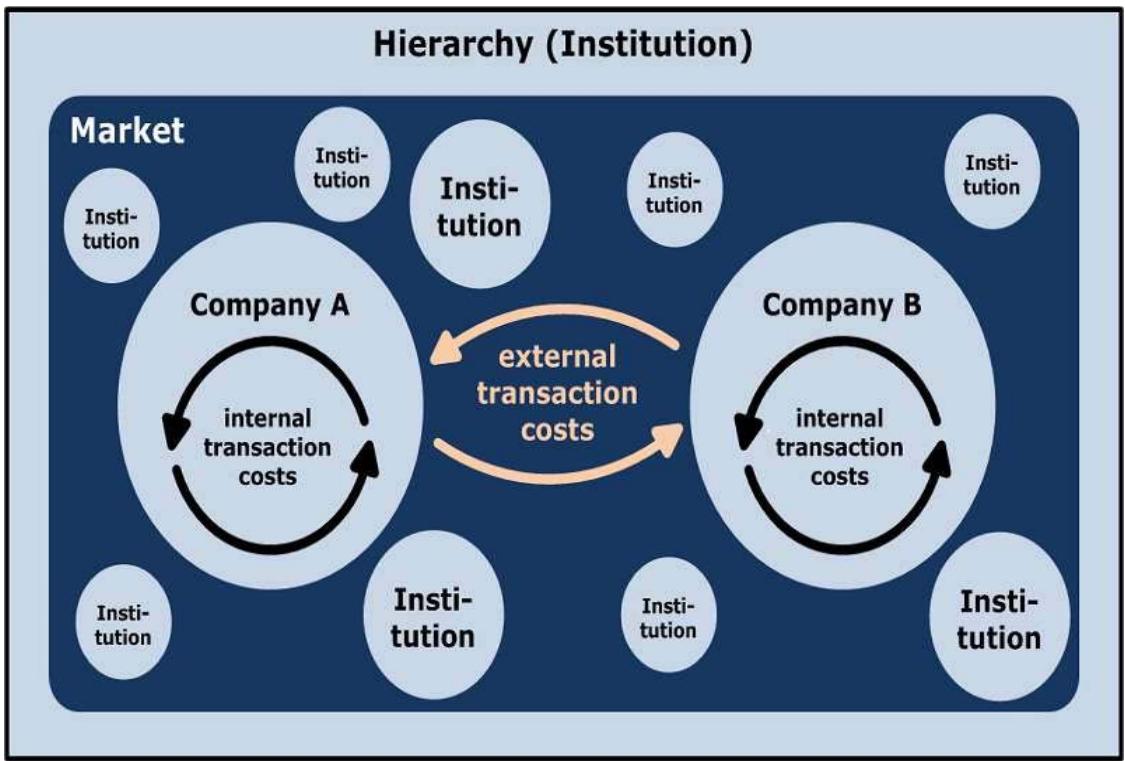 Source: Rindfleisch (2020) Figure 2.1: Transaction Cost Theory
According to Rindfleisch (2020), transaction cost theory, developed by Williamson in 1991, seeks to determine the circumstances under which operations are conducted in the market vs inside the corporation, with a particular emphasis on establishing clear boundaries. Transaction cost theory accurately forecasts the circumstances in which hierarchies, markets, or hybrids (such as coalitions) would be used as governance arrangements. Also according to
Rindfleisch (2020), he saw transactions as the movement of commodities or services between different systems, and contended that when the costs associated with these transactions were significant, it was more suitable to handle them inside a hierarchical structure. In contrast, when transaction costs were minimal, purchasing the item or service on the market was the favored choice (Cuypers et al., 2021).
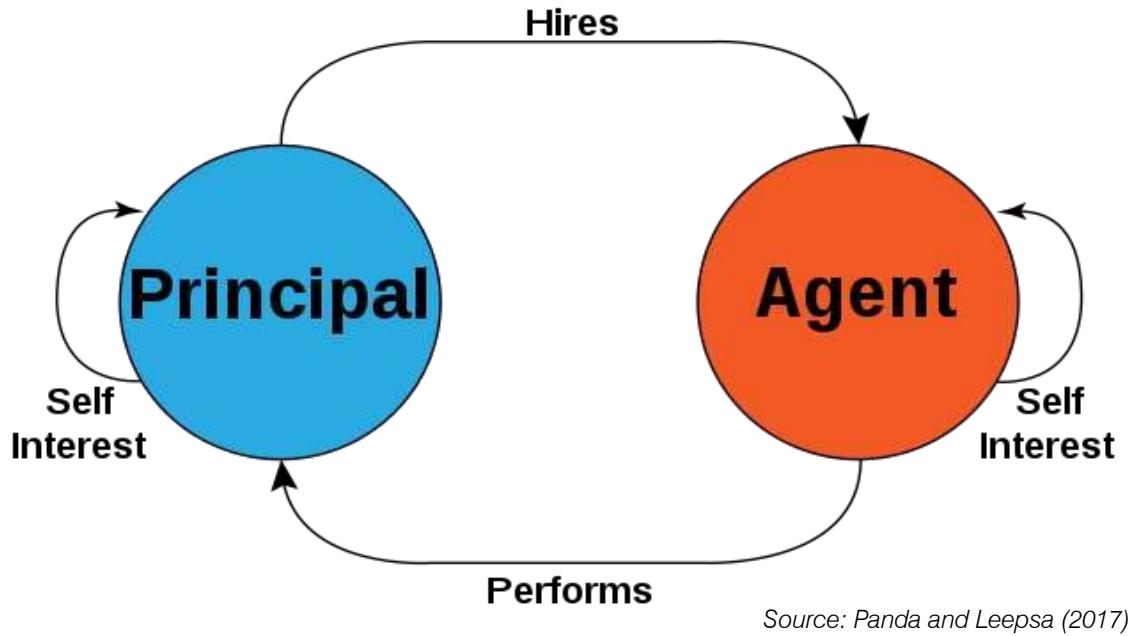 Figure 2.2: Agency Theory
Panda and Leepsa (2017) stated, Agency theory is a paradigm that is used to describe and address challenges in the interaction between corporate owners and their agents. Typically, this relationship refers to the connection between shareholders, who act as principals, and corporate executives, who act as agents. Principals depend on agents to carry out specific transactions, leading to a divergence in agreement over priorities and approaches. The principal-agent dilemma refers to the divergence in priorities and interests between agents and principals. The process of reconciling divergent expectations is referred to as "mitigating agency loss." Performance-based pay is a method used to establish equilibrium between a principal and an agency (Bendickson et al., 2016).
Dynamic capabilities refer to a company's capacity to effectively combine, develop, and adapt both internal and external resources and competencies in order to navigate and influence quickly evolving business landscapes (Teece, 2014). The objective is to produce atypical profits. Dynamic capabilities may be based on specific change routines, such as product development following a predetermined path, and analysis of investment decisions. However, they are mostly derived from innovative management and entrepreneurial endeavors, such as venturing into unexplored areas.
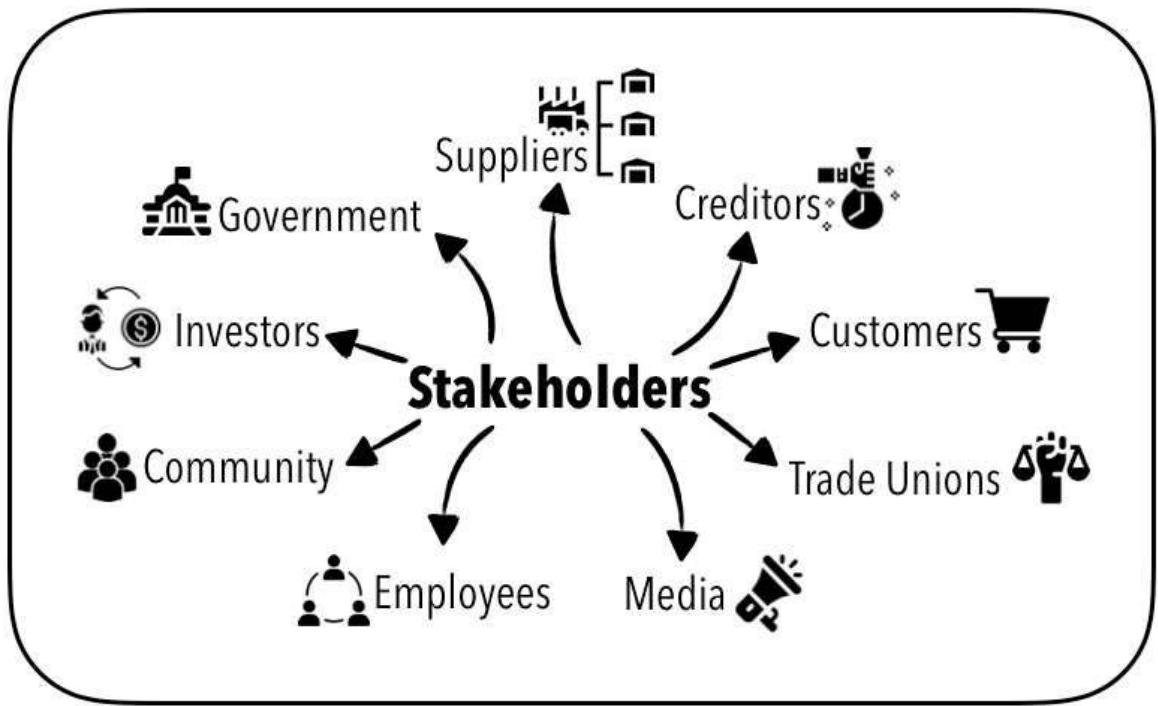 Figure 2.3: Stakeholder Theory Diagram Source: Freeman et al. (2020)
Freeman et al. (2020) stated, stakeholder theory is an ideology of capitalism that emphasizes the interdependent connections between a corporation and its customers, suppliers, workers, investors, communities, and other individuals or groups that have a vested interest in the organisation. The philosophy posits that a company ought to generate profit for all stakeholders, rather than only prioritizing shareholders. This idea has emerged as a crucial factor in the examination of corporate ethics and has played a pivotal role in facilitating more investigation and advancement in the scholarly work of several experts, including those shown on this website.
Freeman et al. (2020) mentioned, since the 1980s, the theory's importance has significantly increased, with researchers worldwide persistently challenging the sustainability of prioritizing shareholders' income as the primary purpose of business. Stakeholder
Theory directly opposes the 'mono approach' proposed by Friedman by asserting that organizations have a responsibility towards several stakeholders, with shareholders being only one of them (Freeman et al., 2020). The stakeholder theory has broad applicability and may be effectively used in several important domains, including project management, strategic management, and corporate ethics. It is closely related to CSR (Corporate Social Responsibility) and, thus, sustainability as well. Consequently, the only reliance on profit as the sole measure of corporate performance is inadequate, since value creation extends beyond monetary considerations.
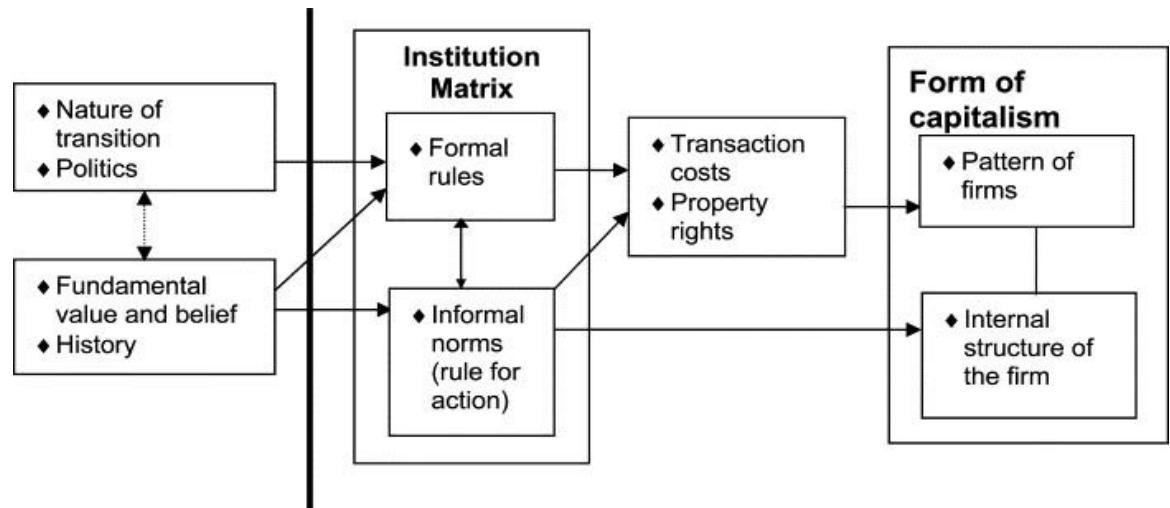 Figure 2.4: Institutional Theory Source: Hanna et al. (2023)
Willmott (2015) stated, institutional theory is a significant viewpoint in current studies on organizations. This field spans a wide range of theoretical and empirical research that is united by a similar focus on cultural interpretations and collective expectations. Institutional theory is often used to explain the process by which formal organizational structures, such as written rules, standard practices, and novel forms of organisation, are adopted and disseminated. Willmott (2015) also stated, the institutional theory of organizations places institutions at the center of the examination of organizations' structure and behavior. Organizations may be seen as local manifestations of broader institutions. Institutions, which refer to commonly accepted ideas, regulations, and conventions, have a significant influence on the development and dissemination of organizational structures, design characteristics, and operational methods. Adhering to established rules and regulations is seen as a way to acquire credibility, reduce ambiguity, and enhance understanding of an organization's actions and operations (Tina Dacin, 2002). The increasing prominence of institutional considerations in organizational analysis stems from a frustration with theories that prioritize efficiency as the key driver of organizational behavior. Organizations do not function alone or in isolation. They are required to manage a wide range of external factors, including cultural disparities, legal obligations, customs, and norms. Additionally, they must address the needs and expectations of many stakeholders, like as suppliers, consumers, regulatory bodies, non-governmental organizations (NGOs), and trade unions (Tina Dacin, 2002).
### b) Literature Gap
This research addresses the literature gap in Destination Management Companies (DMCs) in Sri Lanka by focusing on the factors determining their success. There is a lack of research on the unique challenges and opportunities faced by DMCs in Sri Lanka and how these factors impact their success. The selected independent variables of transparency, resources, good governance, and professionalism have not been extensively studied in relation to DMCs. This suggests a need for further research to understand how these factors influence the successful operation of DMCs globally and in the Sri Lankan context. The research aims to contribute to the existing body of knowledge on DMCs by providing insights into the factors determining their success, specifically in Sri Lanka, and to shed light on the importance of transparency, resources, good governance, and professionalism in the successful operation of DMCs.
## III. METHODS
The study aligns with the positivism research philosophy due to its objective observation, quantitative data collection, and cause-and-effect relationships. Quantitative data collected through questionnaires to quantify the factors affecting the success of DMCs for this study. The Deductive approach of research was applied to establish causal relationships between variables, to investigate and test hypotheses to determine causal relationships. Four hypothesis derived as shown in the figure 3.1 conceptual framework of this study. Generalizability of research allows the application of findings to other destinations or industries, thus aligning with the positive goal of producing generalizable knowledge.
The framework, based on a literature review, serves as a theoretical foundation for the investigation and understanding of the relationships between variables. The independent variables, Transparency, Resources, Good Governance, and Professionalism, were chosen based on a comprehensive review of relevant literature and theoretical frameworks. Figure 3.1 depicts the conceptual framework of the study followed by the hypothesis.
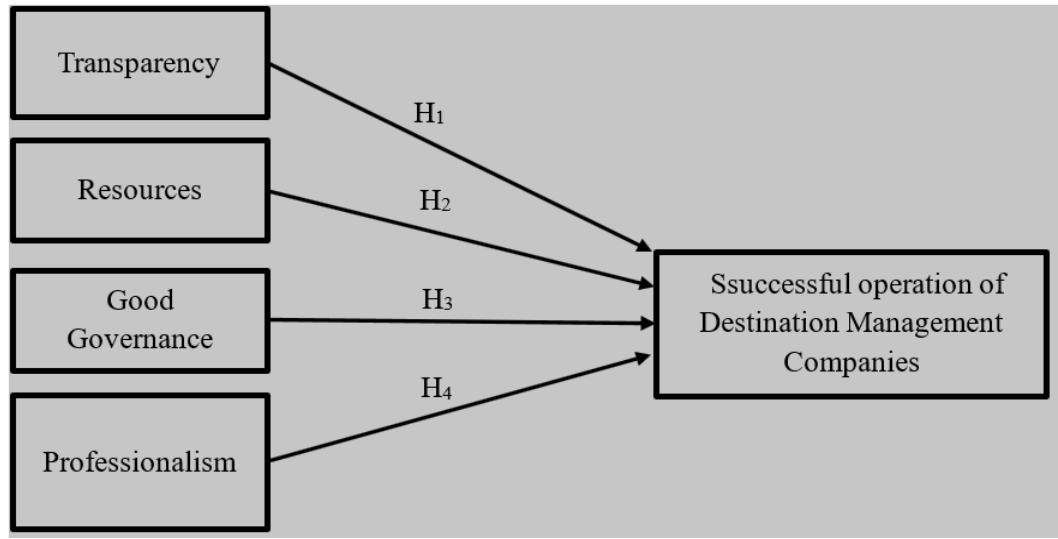 Figure 3.1: Conceptual Framework
### Hypotheses
- H1- There is an impact of Transparency on the successful operation of destination management companies.
- H2- There is an impact of Resources on the successful operation of destination management companies.
- H3- There is an impact of governance on the successful operation of destination management companies.
H4- There is an impact of Professionalism on the successful operation of destination management companies.
The table 3.1 presents the operationalization of the variables that derived the hypothesis. It outlines how each variable is defined, observed, and measured. It provides the respective dimensions of the variable, the corresponding measurement scales and the sources where it was derived.
Table 3.1: Operationalization of the Variables
<table><tr><td>Variable</td><td>Indicators</td><td>Dimensions</td><td>Scale</td><td colspan="2">Source</td></tr><tr><td rowspan="11">Independent
variables</td><td rowspan="3">Transparency</td><td>Openness</td><td rowspan="3">5-point Likert Scale</td><td rowspan="3">Parris et al. (2016)</td><td></td></tr><tr><td>Honesty</td><td></td></tr><tr><td>Accountability</td><td></td></tr><tr><td rowspan="3">Resource</td><td>Financial</td><td></td><td rowspan="2">Holzmayer and Schmidt (2020)</td><td></td></tr><tr><td>Human</td><td></td><td></td></tr><tr><td>Technical resources</td><td>5-point Likert Scale</td><td></td><td></td></tr><tr><td rowspan="2">Good governance</td><td>Regulations</td><td rowspan="2">5-point Likert Scale</td><td rowspan="2">Arulrajah (2016)</td><td></td></tr><tr><td>Ethical standards</td><td></td></tr><tr><td rowspan="3">Professionalism</td><td>Competence,</td><td rowspan="3">5-point Likert Scale</td><td rowspan="3">Sarkum and Syamsuri (2021)</td><td></td></tr><tr><td>Expertise</td><td></td></tr><tr><td>Ethical behavior</td><td></td></tr><tr><td rowspan="3">Dependent
Variable</td><td rowspan="3">Successful operations</td><td>Customer satisfaction</td><td rowspan="3">5-point Likert Scale</td><td rowspan="3">Schaumann, (2004). Holm, and Breiter, (2017). Delaney, (2022).</td><td></td></tr><tr><td>Lower employee turnover</td><td></td></tr><tr><td>Finance performance Competitive advantages</td><td></td></tr></table>
Sampling
The sample population of the study was the Sri Lankan destination management companies (DMCs) executive staff members who manage administrative tasks. By 2021, there were more than 1,000 travel agencies and tour operators in Sri Lanka, according to the Sri Lanka Tourism Development Authority (SLTDA) that represents both formal and informal sector. Not all registered travel agencies, nevertheless, can concentrate only on DMC activities. To ensure diversity and variability, the sample size of this study represented the executive employees working in the administrative operations of DMCs and considering the statistical power a sample size of 120 executive level employees were taken in to consideration and convenience sampling technique was adapted due to no sample frame was available.
The framework provided a theoretical basis for the study, outlining key variables and their relationships. Operationalization defined how these variables would be measured as shown above in table 3.1. A questionnaire was created as a data collection instrument, consisting of two sections: one for demographic information and the other for study variables. Respondents were provided with a five-point Likert scale to indicate their level of agreement or disagreement with the statements. Data collection was conducted using online forms and paper questionnaire forms, with the online forms (google forms) allowing participants to complete the questionnaire electronically. Data analysis was conducted with the use of SPSS version 20 where the conbahc alpha reliability test was done to evaluate the realizability of the data collection instrument and the multiple regression analysis was conducted to test the hypothesis.
## IV. RESULTS
Using SPSS software, the researcher performed a methodical analysis of the data that had been gathered. In order to maintain the validity of the analysis and assure data quality and reliability, they assigned numerical codes to the responses and looked for missing values. Consequently, the researcher identified 2 responses that had missing values. Thus, the researcher eliminated those six sets of data. As a result, the sample size was reduced to 118. To find extreme or uncommon values in the data that could have a big impact on the analysis's findings, an outlier test was run. The data set was reduced from 118 to 114, reducing the outliers. Since many statistical techniques assume that the data follows a normal distribution, a normality test was performed to determine whether this was the case.
The Cronbach alpha reliability test is a statistical tool used to evaluate the internal consistency of a scale or questionnaire. It measures how closely related items are to one another and to the same underlying concept within a variable or construct. Greater values of the coefficient, which vary from 0 to 1, denote greater internal consistency.
Table 4.1: Cronbach Alpha Reliability Test
<table><tr><td>Variable</td><td>Number of items</td><td>Alpha Value</td></tr><tr><td>Transparency</td><td>04</td><td>0.848</td></tr><tr><td>Resources</td><td>04</td><td>0.812</td></tr><tr><td>Good Governance</td><td>04</td><td>0.768</td></tr><tr><td>Professionalism</td><td>04</td><td>0.795</td></tr><tr><td>Successful operation of DMCs</td><td>05</td><td>0.751</td></tr></table>
Statistical tools like the KMO and Bartlett's tests are used to evaluate a sample's suitability for additional analysis like factor analysis and its adequacy. Table 4.2 depicts the KMO values and In the present study, all variables have KMO values greater than 0.6, indicating an acceptable sample adequacy. Bartlett's test also shows a significance value of 0.000 for all variables, indicating that the variables are related and can be used together to derive significant factors or constructs.
Table 4.2: KMO and Bartlett's Test
<table><tr><td>Variable</td><td colspan="2">Number Items of</td><td>KMO Valu</td><td>Significance Value</td></tr><tr><td>Transparency</td><td>04</td><td></td><td>0.808</td><td>0.000</td></tr><tr><td>Resources</td><td>04</td><td></td><td>0.745</td><td>0.000</td></tr><tr><td>Good Governance</td><td>04</td><td></td><td>0.766</td><td>0.000</td></tr><tr><td>Professionalism</td><td>04</td><td></td><td>0.695</td><td>0.000</td></tr><tr><td>Successful operation of DMCs</td><td>05</td><td></td><td>0.696</td><td>0.000</td></tr></table>
As per the demographic analysis the study found that $52.6\%$ of the total sample consisted of men, while $47.4\%$ were female. The study reveals the age distribution among the participants: between 18 and 25 years old represent $18.4\%$ of the participants. The largest age group was 26 to 35 years old, representing $56.1\%$. Age group was 36 to 45 years old, representing $13.2\%$. The oldest age group was 46 to 55 years old, representing $7.9\%$. These results provide insight into the demographics of DMC operators in Sri Lanka, allowing researchers to analyze potential differences or patterns between different age groups. The largest educational category was the higher national diploma, with representing $33.3\%$. Graduates represented $28.9\%$ of the participants, while postgraduates represented $14.9\%$. This information helps researchers understand the educational background of DMC operators and analyze possible differences or patterns between different educational categories.
Multiple linear Regression analysis statistical method was used to examine the relationship between a dependent variable and one or more independent variables.
Table 4.3: Model Summary for the Impact of Multiple Regression Model
<table><tr><td>Model</td><td>R</td><td>R Square</td><td>Adjusted R Square</td><td>Std. Error of the Estimate</td><td>Durbin Watson</td></tr><tr><td>1</td><td>.856a</td><td>.733</td><td>.723</td><td>.26832</td><td>1.927</td></tr></table>
Source: Analysis results
The model summary of a multiple regression analysis provides an overview of the goodness of fit and overall performance of the regression model. As per table 4.3, with a coefficient of multiple correlation (R) of 0.856 indicating a strong positive relationship between the independent variables (transparency, resources, good governance, and professionalism) and the dependent variable (successful operation of DMCs). The coefficient of determination (R squared) is 0.733, indicating that approximately $73.3\%$ of the variance in the successful operation of DMCs can be explained by the independent variables. The adjusted R square value is 0.723, providing a more conservative estimate of the proportion of variance explained by the independent variables. The standard error of the estimate is 0.26832, representing the average distance between the observed and predicted values. The Durbin-Watson statistic tests for the presence of autocorrelation, which is the relationship between the residuals, with a value around 2 indicating no autocorrelation. In this case, the DurbinWatson value is 1.927, suggesting no significant autocorrelation.
Table 4.4: ANOVA Table for the Multiple Regression Model
<table><tr><td>Model</td><td>Sum of Squares</td><td>df</td><td>Mean Square</td><td>F</td><td>Sig.</td></tr><tr><td>Regression</td><td>21.535</td><td>4</td><td>5.384</td><td>74.782</td><td>.000b</td></tr><tr><td>1 Residual</td><td>7.847</td><td>109</td><td>.072</td><td></td><td></td></tr><tr><td>Total</td><td>29.383</td><td>113</td><td></td><td></td><td></td></tr></table>
Source: Analysis results (2023)
The ANOVA table is a statistical tool used to analyze the variance of a regression model. As per table 4.4, The F value is 74.782. The level of significance (p-value) indicates the probability of obtaining the F value observed solely by chance. A small pvalue (typically less than 0.05) suggests that the regression model is statistically significant, indicating that it explains a significant amount of the variance in the dependent variable.
In this study, the regression model with the independent variables of transparency, resources, good governance and professionalism significantly explains a large proportion of the variance in the successful functioning of DMCs. The F value is large and the p value is less than 0.05 (0.000), indicating that the regression model is highly significant.
Table 4.5: Coefficients for the Multiple Regression Model
<table><tr><td rowspan="2">Model</td><td colspan="2">Unstandardized Coefficients</td><td colspan="2">Standardized Coefficients</td><td colspan="3">Collinearity Statistics</td></tr><tr><td>B</td><td>Std. Error</td><td>Beta</td><td>t</td><td>Sig.</td><td>Tolerance</td><td>VIF</td></tr><tr><td>(Constant)</td><td>.652</td><td>.223</td><td></td><td>2.926</td><td>.004</td><td></td><td></td></tr><tr><td>Transparency</td><td>.295</td><td>.076</td><td>.343</td><td>3.873</td><td>.000</td><td>.313</td><td>3.197</td></tr><tr><td>1 Resources</td><td>.242</td><td>.087</td><td>.257</td><td>2.792</td><td>.006</td><td>.288</td><td>3.468</td></tr><tr><td>Governance</td><td>.207</td><td>.074</td><td>.192</td><td>2.790</td><td>.006</td><td>.519</td><td>1.926</td></tr><tr><td>Professionalism</td><td>.176</td><td>.071</td><td>.182</td><td>2.495</td><td>.014</td><td>.459</td><td>2.181</td></tr><tr><td colspan="8">a. Dependent Variable: Successful operation of DMCs</td></tr></table>
The coefficient table is a statistical tool used to analyze the relationship between independent variables and dependent variables. Table 4.5 indicates that for the independent variables transparency, resources, good governance, and professionalism The constant term in the regression equation is 0.652, representing the predicted value of the dependent variable when all independent variables are zero.
According to the coefficient results the significance value is recorded less than 0.05 there is a significant impact of transparency on the successful operation of DMCs in Sri Lanka. Therefore, when one unit of transparency is increased 0.295 unites of successful operation of DMCs will be increased. Since the analysis identified a positive correlation between transparency and successful operation of DMCs and the positive influence of transparency on the successful operation of DMCs, the analysis accepted the first hypothesis of the study. This supports the findings of Al Balushi (2021) and Della Corte et al. (2017) that transparency has a positive influence on the successful operations of a business. Moreover, Al Kurdi et al. (2022) and Volgger and Pechlaner (2014) also suggested that transparency positively influences the business operation's success. Therefore, the findings of the current study related to the positive influence of transparency on the successful operations of DMCs in Sri Lanka support the existing literature.
Additionally, resources exhibit an unstandardized coefficient of 0.242, with a recorded significance value of 0.006. This concludes that resources have a major impact on the effective operation of DMCs in Sri Lanka because the significance value was less than
0.05. As a result, 0.242 units of DMCs will operate more successfully for every unit of resources that is increased. The analysis accepted the second hypothesis of the study a positive significant relationship between resources and the successful operation of DMCs. According to Khalifa (2020) and Belias et al. (2017), resources have a favorable impact on a company's ability to operate profitably. Additionally, it has been suggested by Miltchev and Neykova (2015) and Cohen and Olsen (2013) that resources have a positive impact on the success of business operations. As a result, the current study's findings regarding the beneficial impact of resources on the prosperous operations of DMCs in Sri Lanka are consistent with previous research.
Furthermore, good governance has an unstandardized coefficient of 0.207, the significance value is recorded as 0.006. Since the significance value is recorded less than 0.05, there is a significant impact of good governance on the successful operation of DMCs in Sri Lanka. Therefore, when one unit of good governance is increased 0.207 unites of successful operation of DMCs will be increased. There is a positive singificant relationship between good governance and successful operation of DMCs and the third hypothesis of the study is accepted. Daryaei et al. (2012) and Joppe et al. (2014) stated that good governance has a positive influence on the success of a business. Therefore, the findings of the current study related to the positive influence of good governance on the successful operations of DMCs in Sri Lanka support the existing literature.
The results revealed that professionalism has an unstandardized coefficient of 0.176, with a recorded significance value of 0.014. Indicating that professionalism have a major impact on the effective operation of DMCs in Sri Lanka because the significance value was less than 0.05. As a result, 0.176 units of DMCs will operate more successfully for every unit of professionalism that is increased. The fourth hypothesis of the study is acc peted with a positive significant relationship between professionalism and the successful operation of DMCs. According to Hussey et al. (2010) and James (2005), professionalism has a favorable impact on a company's ability to operate profitably. As a result, the current study's findings regarding the positive impact of professionalism on the prosperous operations of DMCs in Sri Lanka are consistent with previous research.
## V. DISCUSSION
Based on the research findings,, the multiple regression analysis results indicated that all the independent variables (transparency, resources, good governance, and professionalism) had a positive influence on the dependent variable (successful operation of DMCs in Sri Lanka). This means that each of these factors individually contributes to the overall success of DMCs in Sri Lanka. The positive influence suggests that higher levels of transparency, resources, good governance, and professionalism are associated with a higher likelihood of successful operation of DMCs. Furthermore, the analysis indicates that transparency and resources are the most significant factors $(B=.343\& B=.257)$ that has an impact on the successful operation of DMCs followed by governance and professionalism.
Therefore, based on the key findings, the following recommendations are drawn for the managers and policy makers of DMCs.
- Transparency is a crucial aspect of service-based businesses (DMCs) in Sri Lanka, as it builds trust and confidence among clients. By providing clear and accurate information about services, itineraries, and associated costs, DMCs can build trust and satisfaction, ultimately contributing to the success of their operations. To implement this recommendation, DMCs should provide clients with detailed brochures, websites, and maintain clear communication with them. This helps them make informed decisions and builds trust in the DMC's operations. Open pricing and fees should be disclosed, avoiding misunderstandings or surprises for clients. Ethical business practices should also be upheld, avoiding hidden fees, misrepresentation of services, or unethical practices that could damage the reputation of the DMC. Increased client satisfaction can result from transparent operations, as clients feel they are getting what they paid for, leading to positive reviews, repeat business, and referrals. Transparent operations also enhance a DMC's
reputation, as word-of-mouth recomm-dations and positive online reviews can attract more clients and differentiate the DMC from competitors. Fostering open and honest communication between clients and DMCs can lead to better relationships, fostering customer loyalty and long-term success. Furthermore, incorporating AI-driven personalization, blockchain transparency toolscan elevate the identified key success factors, particularly transparency and professionalism Internal and external audits must evaluate the practice of transparency in the operations of the DMCs.
- DMCs should allocate sufficient resources to effectively operate their businesses, in prioritized areas of investing in upgrading the technology, infrastructure, and skilled staff. This can enhance their ability to deliver high-quality services, meet client demands, and improve profitability. Implementing this recommendation involves investing in modern technology solutions such as reservation systems, online booking platforms, CRM software, and data analytics tools. Infrastructure development is crucial for DMCs, including office space, transportation vehicles, equipment, and facilities for various activities. Well-maintained and up-to-date infrastructure contributes to the overall quality and reliability of services provided by the DMC. Skilled staff recruitment and development are also essential, with opportunities for ongoing training and development to stay updated with industry trends. The importance of allocating sufficient resources cannot be overstated, as it is essential for delivering high-quality services, meeting client demands, and maintaining a competitive edge in the industry. Without sufficient resources, DMCs may struggle to provide a seamless and enjoyable experience for clients, negatively impacting their reputation and profitability. Potential outcomes of implementing this recommendation include improved service quality, enhanced operational efficiency, a competitive advantage, customer loyalty and referrals, increased market share, new business opportunities, and improved profitability. By allocating resources appropriately, DMCs can ensure a seamless and enjoyable experience for clients, leading to increased business growth and a strong reputation in the industry.
- Good governance is a critical aspect of the success of Direct Marketing Companies (DMCs). It involves establishing clear policies and procedures, promoting accountability and responsibility, and ensuring compliance with industry regulations. This not only enhances the reputation of DMCs but also fosters a culture of professionalism and efficiency. To implement good governance in DMC operations,
DMCs should establish clear policies and procedures covering financial management, human resources, customer service, risk management, and ethical practices. These policies provide a framework for decision-making, ensure consistency, and promote transparency and accountability. They should also promote accountability among staff by clearly defining roles, setting performance targets, and implementing monitoring mechanisms. Compliance with industry regulations is essential for DMCs to stay updated with legal requirements, such as obtaining necessary licenses and permits, adhering to safety and security standards, and following guidelines related to environmental sustainability and cultural preservation. Compliance with regulations not only protects the DMC's reputation but also ensures the well-being of clients and the sustainability of the tourism industry. The potential outcomes of implementing good governance include enhanced reputation, improved operational efficiency, compliance and risk management, and ethical and responsible operations. A positive reputation can lead to increased business opportunities, customer loyalty, and positive word-of-mouth referrals. Clear policies and procedures can also help streamline operations, reduce risks, and minimize penalties, lawsuits, and reputational damage.
- DMCs should prioritize professionalism in all aspects of their operations, including maintaining high standards of service, interactions with clients and stakeholders, and continuous professional development for staff. Especially in the Sri Lankan context whether the operatoin is carried out in the formal or informal sector. By embracing professionalism, DMCs can differentiate themselves in the market, attract more clients, and increase profitability. To implement this recommendation, DMCs should establish and maintain high standards of service, ensuring prompt communication and providing accurate information to clients. This will build a reputation for professionalism and quality. Professional interactions with clients, suppliers, and stakeholders should be courteous and respectful, addressing inquiries and concerns promptly. Continuous professional development is essential for DMCs, as it helps them stay updated with industry trends, new technologies, and best practices. This can be achieved through training programs, workshops, and conferences, enabling staff to deliver high-quality services and demonstrate expertise to clients. A strong reputation attracts more clients, increases customer loyalty, and leads to positive word-of-mouth referrals. Satisfied clients are more likely to become repeat customers and
ambassadors for the DMC, resulting in business growth and improved profitability.
- DMCs should adopt a culture of continuous improvement to adapt to changing customer needs and remain competitive in the rapidly changing industry. This involves actively seeking client feedback, staying updated on industry trends, conducting regular evaluations, and investing in staff training and development. Client feedback can be obtained through surveys, reviews, and direct communication. Industry trends and best practices can be identified through attending conferences, networking events, and market research. Regular evaluations of operations, services, and internal processes can identify inefficiencies, bottlenecks, and opportunities for streamlining processes or enhancing service delivery. Investing in staff training and development can enhance service quality and customer satisfaction. This can be achieved through training programs, workshops, and professional certifications. The potential outcomes of implementing this recommendation include enhanced service quality, adaptation to changing customer needs, innovation and differentiation, operational efficiency and cost savings, and business growth and sustainability. Enhanced service quality can lead to increased customer satisfaction, positive reviews, and repeat business. Adapting to changing customer needs allows DMCs to meet evolving client needs and maintain a competitive edge. Innovation and differentiation can attract new clients and open up new business opportunities. Operational efficiency and cost savings can be achieved by identifying and eliminating inefficiencies in operations. By continuously improving their operations, DMCs can position themselves for long-term growth and sustainability. Meeting customer expectations, staying ahead of market trends, and delivering highquality services contribute to a strong reputation, increased market share, and improved profitability.
The current study on the success of Destination Marketing Companies (DMCs) in Sri Lanka has limitations and suggests several recommendations for future research. These include larger and more diverse samples to increase the representativeness of the findings and provide a more comprehensive understanding of the factors influencing success across different industry segments. A longitudinal design could be adopted to track changes and trends in the factors determining success, providing deeper insights into the industry's evolution and identifying long-term patterns. Furthermore, comparative studies between DMCs in Sri Lanka and similar emerging destinations, or mixed-method studies that explore the client's perspective on these success factors would be recommended to be conducted by the future researchers.
## VI. CONCLUSION
This research study aimed to identify the factors that determine the success of destination management companies (DMCs) in Sri Lanka. The study used a questionnaire validated using Cronbach's alpha reliability test and the KMO and Bartlett tests. The researcher collected 120 of data set and after screening 114 data set was use for final analysis. The demographic profile of the respondents was also analyzed. The Multiple regression analysis confirmed the positive influence of the independent variables on the dependent variable, providing a deeper understanding of their relative importance in achieving success in the Sri Lankan DMC industry. Recommendations to the policy makers, managers and future researchers were drawn based on the key findings of the study and concluding that transparency and resource allocation should be at at the top most priority in DMCs successful business operations
Generating HTML Viewer...
References
37 Cites in Article
Al Balushi,M (2021). How internal transparency impacts organizational resilience.
Al Kurdi,B Alshurideh,M Alshurideh,H (2022). Impact of Service Transparency And Service Control On Competitivness.
Aprilizar,Faisa,Iskandarsyah Madjid (2023). THE ROLE OF ORGANIZATIONAL CULTURE MEDIATION ON THE EFFECT OF PERFORMANCE MANAGEMENT INFORMATION SYSTEM (SIMANJA) APPLICATION IMPLEMENTATION AND GOOD GOVERNANCE ON ORGANIZATIONAL PERFORMANCE AT THE ACEH CULTURE AND TOURISM OFFICE.
A Arulrajah (2016). Literature review on good governance in the organizations through human resource management: A corporate level analysis.
Dare Aurelien,Jing Zhao (2014). Determinants of Destination Management System (DMS) and Tourism Industry Assessment of Madagascar.
M Baker,C Hayzelden,S Sussmann,D Belias,P Trivellas,A Koustelios,P Serdaris,K Varsanis,I Grigoriou (1996). Can destination management systems provide competitive advantage? A discussion of the factors affecting the survival and success of destination management systems.
J Bendickson,J Muldoon,E Liguori,P Davis (2016). Agency theory: the times, they are achangin.
K Chandralal (2010). Impacts of tourism and community attitude towards tourism: A case study in Sri Lanka.
J Cohen,K Olsen (2013). The impacts of complementary information technology resources on the service-profit chain and competitive performance of South African hospitality firms.
Ilya Cuypers,Jean-François Hennart,Brian Silverman,Gokhan Ertug (2021). Transaction Cost Theory: Past Progress, Current Challenges, and Suggestions for the Future.
A Daryaei,M Aliashrafipour,K Eisapour,M Afsharian (2012). The effect of good governance on tourism industry development.
E Delaney (2022). The role of DMOs in business events.
V Della Corte,C D'andrea,I Savastano,P Zamparelli (2017). Smart cities and destination management: Impacts and opportunities for tourism competitiveness.
Chantal Dickson,Charles Arcodia (2010). Promoting sustainable event practice: The role of professional associations.
R Freeman,S Dmytriyev,R Phillips (2021). Stakeholder theory and the resource-based view of the firm.
R Freeman,Jeffrey Harrison,Andrew Wicks,Bidhan Parmar,Simone De Colle (2010). Stakeholder Theory.
R Freeman,Robert Phillips,Rajendra Sisodia (2020). Tensions in Stakeholder Theory.
Michelle Holm,Debrorah Breiter (2017). Communication and Hands- on Problem Resolution: A Case in Event Management.
F Holzmayer,S Schmidt (2020). Dynamic managerial capabilities, firm resources, and related business diversification-Evidence from the English Premier League.
D James (2005). Leadership and coordination: a strategy to achieve professionalism in the Welsh tourism industry.
M Joppe,E Brooker,K Thomas (2014). Drivers of innovation in rural tourism: The role of good governance and engaged entrepreneurs.
K Kadyl (2021). Factors affecting successful adoption of destination management systems in Sri Lankan hospitality sector.
Gamal Khalifa (2020). Factors Affecting Tourism Organization Competitiveness: Implications for the Egyptian Tourism Industry.
Catarina Martins,Maria Carneiro,Osvaldo Pacheco (2021). Key factors for implementation and success of destination management systems. Empirical evidence from European countries.
R Miltchev,M Neykova (2015). The impact of technological innovations on the sustainability of the e-business systems of organizations operating in the tourism sector.
A Negrușa,M Coroș (2016). Final paper.
Brahmadev Panda,N Leepsa (2017). Agency theory: Review of Theory and Evidence on Problems and Perspectives.
Denise Parris,Jennifer Dapko,Richard Arnold,Danny Arnold (2016). Exploring transparency: a new framework for responsible business management.
D Pavlović (2015). The role of destination management companies (DMC) in improving competitiveness of Serbia as a tourism destination.
Ruwan Ranasinghe,Jayathree Herath,Dhananjaya Nawarathna,Namal Gangananda,Asanka Bandara,Shashika Pattiyagedara (2021). Lockdown Pressure of Corona Pandemic, Tourism Industry Pull, and Individual Travel Push: A Critical Review.
Aric Rindfleisch (2020). Transaction cost theory: past, present and future.
S Sarkum,Sya,A Suri (2021). The role of marketing function for competitive advantage.
P Schaumann (2004). Jarvis, Dr John Herbert, (born 16 May 1947), Senior Vice President Advisor, John Wiley & Sons Inc., 2007–09 (Senior Vice President, John Wiley and Sons - Europe, 1997–2007).
Mahdieh Taher (2012). Resource-Based View Theory.
Richard Teare,Chandrarathne Bandara,Chandana (chandi) Jayawardena (2013). Engaging the rural communities of Sri Lanka in sustainable tourism.
David Teece (2014). A dynamic capabilities-based entrepreneurial theory of the multinational enterprise.
M Tina Dacin,J Goodstein,Richard Scott,W (2002). Institutional theory and institutional change.
No ethics committee approval was required for this article type.
Data Availability
Not applicable for this article.
How to Cite This Article
D. A. S Perera. 2026. \u201cThe Impact of Transparency, Resources, Good Governance and Professionalism on Successful Operations of Destination Management Companies (DMCs)\u201d. Global Journal of Management and Business Research - F: Real estate, Event, Tourism Management & Transporting GJMBR-F Volume 25 (GJMBR Volume 25 Issue F1): .
Explore published articles in an immersive Augmented Reality environment. Our platform converts research papers into interactive 3D books, allowing readers to view and interact with content using AR and VR compatible devices.
Your published article is automatically converted into a realistic 3D book. Flip through pages and read research papers in a more engaging and interactive format.
Our website is actively being updated, and changes may occur frequently. Please clear your browser cache if needed. For feedback or error reporting, please email [email protected]
Thank you for connecting with us. We will respond to you shortly.