This study focuses on the influence of emotional skills development on the performance of special operations forces, specifically within the context of the Special Forces Course in Brazil. The research aims to fill a knowledge gap by exploring how enhancing these skills can positively impact coping with stressful situations in high-risk operational environments. The central problem involves understanding how modifying military training methods can assist fighters in dealing with stressful situations. The hypothesis suggests that improving the psychosocial aspect of military training can result in significant benefits. The study adopts a mixed-methods approach, combining numerical data and analysis of open-ended responses. It employs an experimental design with characteristics of action research, implementing planned interventions to analyze the results. The research is longitudinal, with data collection at the beginning and throughout the Special Forces Course, involving 30 students stratified from the Commando Actions Course. Results are analyzed in four main areas: personal planning, mindfulness, emotional intelligence, and interpersonal relationships. Personal planning shows an overall improvement of 3.4%, emphasizing precise decision-making, problem prevention, and time optimization.
The Influence of the Development of Emotional Skills in the Performance of Special Operations Troops in Stressful Situations não apenas beneficiam as Forças Especiais, mas também têm implicações mais amplas em ambientes operacionais de alto estresse. O desenvolvimento de habilidades emocionais emerge como uma estratégia fundamental para lidar com os desafios específicos enfrentados por tropas de operações especiais em missões críticas. O estudo proporciona uma base sólida para intervenções práticas que podem melhorar o desempenho e a resiliência dos militares diante de situações estressoras.
## I. INTRODUÇÃO
### a)Tema/área de pesquisa e contextualização
Elees estudo investiga a influência do desenvolvimento de habilidades emocionais no desempenho de tropas de operações especiais diante de situações estressoras, focalizando o Curso de Forças Especiais (CFE) do Exército Brasil (EB). Em um ambiente operacional de alto risco, onde missões de alta precisão são realizadas, a ansiedade e o estresse atingem níveis elevados, tornando essencial compreender o papel dessas habilidades.
### b) Problema de pesquisa
A pesquisa preenche uma lacuna ao explorar como o desenvolvimento dessas habilidades é fundamental para o desempenho em cenários desafiadores. Ao abordar a problemática de modificar o método de formação para enfrentar situações estressoras, o estudo oferece informações valiosas que podem impactar positivamente não apenas as Forças Especiais, mas também ambientes operacionais similares.
### e) Justificativa
Será possível compreender que o ambiente de alto risco causa elevados níveis de estresse nos profissionais deste meio, influenciando nos resultados individuais e coletivos, chegando até mesmo a causar prejuízo psicológico para o indivíduo. Situações potencialmente estressoras estão inseridas na rotina do pessoal operacional de alto risco, não podem ser evitadas, então o que pode ser feito para preservar a segurança emocional do combatente?
É neste contexto que se situa a problemática que norteia esta pesquisa: Qual modificação pode ser realizada no atual método de formação dos combatentes para auxiliá-los no enfrentamento de situāções estressoras? E a hipótese apresentada a este questionamento é a melhoria do processo de formação militar no que condiz ao aspecto psicossociais.
### c) Objetivo geral
O objetivo geral consiste em avaliar a influência do aperfeiçoamento de habilidades emocionais no desempenho individual e coletivo dos alunos no enfrentamento de situações estressoras durante o Curso de Forças Especiais.
### d) Objetivos específicos
- Avaliar a influência do desenvolvimento de habilidades emocionais no desempenho dos alunos do CFE do Exército Brasileiro frente a situações estressoras;
- Identificar os benefícios gerais resultados do processo de intervenção;
- Apresentar uma proposta de intervenção baseada nos ensinamentos colhidos aolongo da pesquisa.
Tabela 1.1: Relação entre Tema, pergunta de pesquisa, objetivo geral e objetivo específico.
<table><tr><td colspan="5">Tema: A Importância das Habilidades Emocionais no Desempenho de Tropas de Operações Especiais em Situações Estressoras</td></tr><tr><td colspan="5">Pergunta de pesquisa: Qual modificação pode ser realizada no atual método de formação dos combatentes para auxiliá-los no enfrentamento de situações estressoras?</td></tr><tr><td colspan="5">Objetivo geral: avaliar a influência do aperfeiçoamento de habilidades emocionais no desempenho individual e coletivo dos alunos no enfrentamento de situações estressoras durante o Curso de Forças Especiais</td></tr><tr><td>Objetivos específicos 1</td><td>Objetivos específicos 2</td><td>Objetivos específicos 3</td><td>Objetivos específicos 4</td><td>Objetivos específicos 5</td></tr><tr><td>Avaliar a influência do</td><td>Identificar os benefícios</td><td>Apresentar uma proposta</td><td>-</td><td>-</td></tr><tr><td>desenvolvimento de habilidades emocionais no desempenho dos alunos do CFE do EB frente a situações estressoras.</td><td>gerais resultados do processo de intervenção.</td><td>de intervenção baseada nos ensinamentos colhidos ao longo da pesquisa.</td><td></td><td></td></tr></table>
O propósito fundamental desta pesquisa é investigar de que maneira o desenvolvimento de habilidades emocionais pode influenciar o desempenho das tropas de operações especiais em situações estressoras. Este estudo possui umarelevância notável para a ciência, pois visa aprofundar a compreensão da interação entre fatores emocionais e o desempenho em contextos militares desafiadores.
Além disso, a pesquisa busca esclarecer aspectos até então obscuros, proporcionando uma visão mais clara sobre como as habilidades emocionais impactam as operações especiais. A intenção é complementar estudos anteriores, enriquecendo o conhecimento existente e fornecendo uma base mais sólida para futuras investigações.
No que diz respeito à contribuição para a solução de problemas, destaca-se o estudo de caso realizado com uma amostra representativa de 30 alunos do Curso de Forças Especiais do Exército Brasileiro, no ano de 2023. Essa amostra foi selecionada de maneira probabilística estratificada, considerando que apenas militares concludentes do Curso de Ações de Comandos (CAC) podiam candidatar-se ao Curso de Forças Especiais.
As características sociodemográficas da população estudada incluem oficiais e sargentos do Exército, do sexo masculino, com uma idade média de trinta anos, possuindo ensino superior e formação acadêmica militar. Esta população específica refere-se a equipes operacionais de alto rendimento, com ênfase em operações especiais de alto risco.
A inclusão desse estudo de caso amplia a aplicabilidade prática da pesquisa, fornecendo dados específicos sobre a influência das habilidades emocionais em uma população militar altamente especializada. Dessa forma, a pesquisa não apenas contribui para o conhecimento teórico, mas também oferece informações valiosas para o desenvolvimento de estratégias de treinamento e suporte emocional, direcionadas a esse grupo específico de profissionais.
Ao abordar as implicações práticas, a pesquisa pretende contribuir para a soluçãode problemas reais, oferecendo orientações mais precisas e adaptadas às necessidades das tropas de operações especiais, em consonância com as características específicas da amostra estudada. Compreender a influência das habilidades emocionais nesse contexto específico é crucial para o aprimoramento das práticas de treinamento e suporte emocional, proporcionando benefícios tangíveis no desempenho operacional dessas equipes. A originalidade do estudo, portanto, não apenas reside na sua abordagem específica à psicologia militar, mas também na sua capacidade de fornecer conhecimentos diretos e aplicáveis para resolver desafios concretos enfrentados por essas tropas especializadas.
#### fResultados esperados
Almeja-se demonstrar os resultados esperados fornecer uma base sólida para a adaptação e otimização das práticas de treinamento, contribuindo diretamente para a eficácia do processo de formação militar, especialmente no âmbito psicossocial das tropas de operações especiais.
### g) Estrutura da dissertação
O estudo encontra-se estruturado em 6 capítulos. O Capítulo 1 introduz o contexto e a relevância da pesquisa, destacando a problemática no desempenho de tropas de operações especiais em ambientes de alto risco, com ênfase no Curso de Forças Especiais do Brasil.
No Capítulo 2, o Marco Teórico explora estudos passados, contextualiza o ambiente operacional de alto risco e apresenta recursos para habilidades emocionais, como autoconhecimento e atenção plena. Ademais, destaca a importância da percepção do ambiente de trabalho, considerando fatores como fadiga e estresse. Explorando estudos históricos sobre o impacto do estresse no desempenho militar, o estudo visa avaliar a influência do desenvolvimento de habilidades emocionais durante o Curso de Forças Especiais.
A Metodologia, no Capítulo 3, detalha o desenho da pesquisa, população/amostra, variáveis, instrumentos e procedimentos adotados. A pesquisa adota uma abordagem mista, combinando dados numéricos e análise de respostas abertas, com um delineamento experimental de investigação ação. Utilizando um corte longitudinal, a coleta de dados ocorre no início e ao longo do Curso de Forças Especiais, envolvendo uma amostra estratificada de 30 alunos. Os procedimentos incluem intervenções planejadas e a aplicação de instrumentosavaliativos.
Os Resultados obtidos através do estudo de caso, apresentados no Capítulo 4, foram analisados em quatro áreas principais, como planejamento pessoal, atenção plena, inteligência emocional e relações interpessoais, indicam melhorias consistentes nas habilidades emocionais dos participantes. Destacam-se ganhos significativos na consciência do pensamento, características emocionais individuais e interpessoais, evidenciando a eficácia do desenvolvimento dessas habilidades.
O Capítulo 5, Discussão, relaciona os resultados com o referencial teórico, buscando compreender as conexões entre habilidades emocionais e o desempenho em ambientes de alto risco, ressaltando a importância dessas práticas, permeando outras habilidades como autocontrole e observação das emoções. A ênfase nas práticas meditativas, como visualização e controle da respiração, destaca-se como o comportamento mais ampliado e mais usado.
Por fim, a Conclusão, no Capítulo 6, sintetiza as descobertas e destaca implicações para a formação militar nesse contexto.
## II. Marco Teórico
A área de conhecimento que explora a relação existente entre o indivíduo, o grupo e a estrutura da organização, é chamada de Comportamento Organizacional. Esta ciência procura identificar quais implicações os estímulos ambientais provocam no sujeito e os reflexos em seu comportamento. Os estudos nesta área de conhecimento têm o propósito de aprimorar e melhorar essa relação e seus resultados (Robbins, 2005).
Com isso nota-se que a percepção do profissional em relação ao seu ambiente detrabalho tem relação com a produtividade. Essa percepção do meio, envolve o enfrentamento de estímulos ansiogênicos de forma mais adaptativa. Adaptar-se melhor ao meio inclui superar e ressignificar frustrações e situações complexas, retomando a rotina mais rapidamente.
A fadiga e o estresse são problemas enfrentados por muitos profissionais em seu ambiente de trabalho. Ao observar de forma mais específica o meio ao qual está submetido o militar em situação de combate, é possível entender que a fadiga pode ocorrer devido ao excesso de trabalho físico ou mental, falta de sono, falta de nutrição e longos períodos sem descanso adequado. Já o estresse pode ser causado por situações extremas de perigo, pressão psicológica, medo, incertezae separação da família.
Porém o estresse nem sempre causa efeitos ruins, existem respostas ao estresse de combate que produzem efeitos benéficos. A exposição de uma equipe em combate pode produzir coesão, lealdade aos pares e a líderes, identificação coma equipe ou a unidade, senso de utilidade, senso de missão, fé, atos heroicos de coragem, resistência e permanência em ação, tolerância aumentada entre outros fatores (U.S. Department of the Army, 1994a).
### a) O ambiente operacional de alto risco
Realizar missões de alto risco e alta precisão envolve demandas não convencionais e fora do padrão. O ambiente operacional de alto risco se retrata a lugares desconhecidos ou hostis, em diferentes contextos culturais. São apresentados muitos fatores incontroláveis em que o sucesso da missão está no alto desempenho individual e no esforço conjunto de evitar o fracasso, que muitas vezes têm grande chance de acontecer (Picano & Willians, 2009).
## i. Os estudos no último século
Se os estudos realizados no último século sobre como o nível de estresse influenciou na eficiência e na permanência do militar no combate forem acompanhados, será possível entender a situação de vulnerabilidade na qual é colocado o profissional e o quanto isso pode comprometer os resultados do combate.
Na Primeira Guerra Mundial (1GM) houve um grande esforço das Forças Armadas Norte Americanas em utilizar psicólogos na avaliação e seleção de recrutas para o serviço militar. Em abril de 1917, o presidente da Associação Psicológica Americana (APA), Robert Yerkes, recebeu determinação do governo de convocar um grupo de psicólogos para ajudar no esforço de guerra, entre eles estavam James McKeen Cattel, G. Stanley Hall, Edward L. Thorndike e John B. Watson. Foram criados diversos Comitês, entre eles o de seleção de homens para realização de tarefas que exigiam habilidades especiais (Yerkes, 1917).
Em janeiro de 1918 foi criada a Divisão de Psicologia com 132 oficiais comissionados. Seu esforço resultou na criação de testes voltados para a seleçãode recrutas. Destacam-se a Escala Wechsler-Bellevue, precursora da Escala de Inteligência de Wechsler e o Teste de Personalidade de Woodworth, o qual foi modelo e partida para outras estimativas de personalidade (Page, 1996).
O sucesso da aplicação dos testes psicológicos em grupos na 1GM, despertou o interesse de organizações como escolas e universidades. Também houve interesse da área privada em procurar ajuda de psicólogos para questões como rotatividade de empregados, ausência ao trabalho e como uma forma de criar eficiência industrial (Kennedy & Zillmer, 2009).
Houve grande avanço no trabalho de avaliação e seleção, além deste momento, não era feito um acompanhamento, gerando um resultado de $40\%$ de baixas prematuras atribuídas a "fadiga de combate" na 1a GM (Neil, 1993). Iss0 solidificou o entendimento da necessidade da intervenção durante as operações, na prevenção e no acolhimento, além de evidenciar o peso psicológico do combate (U. S. Department Of The Army, 1948b).
Como o pensamento da época era que a seleção resolveria esse problema, excluindo os propensos a desenvolverem os sintomas da "fadiga de combate", não foram implementadas as lições aprendidas na 1GM, sendo a porcentagem de evacuados com esses sintomas na Segunda Guerra Mundial (2GM), de $26\%$ (Borne, 1970). Nos anos subsequentes poucos esforços foram feitos nesse sentido.
Através de entrevista a 50 psiquiatras que serviram no Vietnã, foi levantado que 39,6% das evacuações foram por problemas psicológicos, concluíram que $12\%$ por estresse de combate e $27\%$ por uso de substâncias, que tem seu uso associado a sintomas de estresse (Camp & Carney, 1987).
A ocorrência de casos de estresse de combate teve relevância cada vez maior com a incidência da guerra urbana. Na Guerra dos Seis Dias Árabe-Israelita, as Forças de Defesa de Israel tiveram $30\%$ de seu efetivo evacuado com sintomas de estresse de combate (Belenky et al, 1985).
Hoje o Departamento de Defesa dos EUA utiliza o termo Reações de Estresse de Combate (CSRs) para a descrição dos sintomas e define como "reações esperadas, previsíveis, emocionais, intelectuais, físicas e/ou comportamentais de militares que tenham sido expostos a eventos estressantes em combate ou operações militares diferentes da guerra" (Diretriz DoD 6490.5, 1999, p.8). O mesmo Departamento estabelece através do Manual de Campanha FM 8-51 Controle de Estresse de Combate que o foco deve ser dado, principalmente, à prevenção e o tratamento no caso de incapacidade induzida por CsRs em soldados.
## ii.Pessoal operacional de alto risco
Com as experiências apresentadas a seguir será possível concluir que o efetivo adequado para esse tipo de trabalho, possuem competências identificáveis e comuns. O que diferencia algumas equipes são as condições particulares, que demandarão competências adicionais para a adaptação. De toda forma, existe um cerne que representa a estrutura necessária para o sucesso, sendo sua avaliação essencial para qualquer função considerada (Kennedy & Zimmer, 2009).
Uma das primeiras produções de dados nesta área foi em pilotos da aviação, nos Estados Unidos da América (EUA). Durante a Primeira Guerra Mundial, com o objetivo de selecionar candidatos mais aptos a concluir o curso e treinamentos para pilotos, evitando acidentes aéreos (Driskell & Olmstead, 1989). As conclusões tiradas deste estudo foram que os melhores candidatos possuíam elevados níveis de inteligência, vivacidade mental, boa percepção de inclinação e estabilidade emocional (baixos níveis de excitabilidade) (Koonce, 1984).
Através de uma análise de critérios para seleção de astronautas da NASA para o Projeto Mercury, Santy et al (1991), levantaram que qualidades como inteligência, determinação, independência, adaptabilidade, flexibilidade, motivação, estabilidade emocional e falta de impulsividade eram fatores críticos para o bom desempenho da função.
Pesquisas mais recentes envolvendo as Forças Especiais dos EUA, identificaram através de análise de cargos, competências que preveem desempenho efetivo no trabalho. Neste levantamento, um grupo de psicólogos e veteranos das Forças Especiais examinaram um amplo banco de dados e reuniram 30 competências, que foram amplamente agrupados em quatro grupos, sendo eles cognitiva, comunicativa, interpessoais e física.
As competências cognitivas incluem julgamento e tomada de decisão, planejamento e adaptabilidade, habilidades cognitivas específicas. As competências comunicativas envolvem habilidades verbais, não verbais e linguísticas, descritas pelo aprendizado de novas línguas rapidamente. As competências interpessoais envolvem autonomia, comportamentos motivadores, diplomacia, estabilidade emocional (maturidade) e cooperação. Por fim as competências físicas, descritas como força e resistência (Kilcullen et al, 1999).
Estudos desenvolvidos por Hartmann et al (2003) com as Forças Especiais Navais Norueguesas (FEN), procurando características que fossem indicadores de êxito nos treinamentos para o ingresso nas FEN, descrevem em seu artigo:
[...] o aspirante fuzileiro ideal foi caracterizado como uma pessoa muito talentosa, expressando controle emocional acima da média, noções de realidade e tolerância para o estresse. Ele tem vigor, consegue admitir conhecimentos teóricos e habilidades práticas rapidamente, relaciona-se bem com as pessoas, gerencia o estresse e ambiguidade com sucesso, chega a conclusões razoáveis e demonstra comportamento direcionado para o objetivo [..]
Em um programa atual de avaliação e seleção da Força Aérea dos EUA (Picano& Willians, 2009), em conjunto com pessoal experiente dos serviços especiais da Força Aérea ocupando posições de liderança organizacional, levantaram competências críticas para o pessoal de alta precisão operacional. Foram identificadas onze competências de grande relevância, sendo elas: estabilidade emocional e tolerância ao estresse; motivação e comprometimento; inteligência efetiva e resolução de problemas; integridade; atitude e interação com os outros; confiança; habilidades físicas; autoconhecimento e maturidade; flexibilidade; impacto positivo da família; e ética no trabalho.
Dois estudos realizados nas Forças Especiais Sul Africanas relataram que devido à vivência de situação particular de desafios e de estresse, eram necessárias habilidades específicas para um enfrentamento funcional. As competências essenciais aos soldados de diversas posições e diferente tempo de experiência, envolviam o autoconceito, a personalidade, os interesses, os fatores cognitivos e físicos, a integridade, a sensação de controle da situação, a perseverança, a motivação e o trabalho em equipe (Rawoot et al, 2017, Beer & Heerden, 2014).
No curso de formação dos Navy SEALs (forças especiais da Marinha dos EUA), foi identificado que aqueles que reconheciam os benefícios do estresse, conseguiam lidar com as falhas e aprendiam com a experiência no ambiente simulado, aumentavam a potência para o sucesso no ambiente real. Demonstrando que o desempenho frente as situações estressoras depende das habilidades emocionais do militar, as quais podem ser aprimoradas em treinamentos (Smith et al, 2020).
Com essa amostra, é possível perceber que de fato existem competências comuns para o desempenho bem-sucedido em funções de alta exigência operacional. Na área de domínio cognitivo a competência que aparece é a adaptabilidade. Destacase também a cooperação, descrita como 'habilidades de trabalhar em grupo'. Nas amostras também são realçadas forma física e vigor. Todos os relatos enfatizam estabilidade emocional e excepcional tolerância ao estresse como determinantes para o êxito.
## i.Problemática que norteia a pesquisa
Com o que foi apresentado até o momento, é possível compreender que o ambiente de alto risco causa elevados níveis de estresse nos profissionais deste meio, influenciando nos resultados individuais e coletivos, chegando até mesmo a causar prejuízo psicológico para o indivíduo. Situações potencialmente estressoras estão inseridas na rotina do pessoal operacional de alto risco, não podem ser evitadas, então o que pode ser feito para preservar a segurança emocional do combatente?
É neste contexto que se situa a problemática que norteia esta pesquisa: Qual modificação pode ser realizada no atual método de formação dos combatentes para auxiliá-los no enfrentamento de situações estressoras? E a hipótese apresentada a este questionamento é a melhoria do processo de formação militar no que condiz ao aspecto psicossociais.
Sendo assim, para responder ao questionamento proposto e verificar a confirmação da hipótese levantada, este estudo foi guiado pelo objetivo geral de avaliar a influência do aperfeiçoamento de habilidades emocionais no desempenho individual e coletivo dos alunos e no enfrentamento de situações estressoras durante o Curso de Forças Especiais.
Portanto, considerando os fatos apresentados e a problemática que norteia esta pesquisa, entende-se que é importante que as Forças Especiais ofereçam programas de treinamento que incluam habilidades emocionais para ajudar tanto os alunos do Curso de Forças Especiais quanto outros profissionais de operaçõesespeciais a lidar com situações estressantes.
Dessa forma essa pesquisa tem o propósito de avaliar a influência do desenvolvimento de habilidades emocionais no desempenho dos alunos do CFE do Exército Brasileiro frente a situações estressoras. Pretende-se também ao longo do trabalho identificar os benefícios geras, resultado do processo de intervenção e, ao final, apresentar uma proposta de intervenção baseada nos ensinamentos colhidos ao longo da pesquisa.
Assim, este estudo poderá contribuir e se tornar de grande relevância para a instituição em que a pesquisa se desenvolve. Havendo possibilidade deste processo de intervenção ser disponibilizado e empregado, em outros estabelecimentos militares que possam se beneficiar com os resultados alcançados.
Foi Identificado ao observar os resultados da pesquisa publicada na CNN Brasil em julho de 2022 que $48,59\%$ das pessoas que haviam realizado exame no primeiro semestre daquele ano, apresentaram níveis de estresse alterados e $34,26\%$ estavam hipertensos (Braga et al, 2022). Este dado demonstra a importância dos cuidados que devem ser tomados para identificar e prevenir a incidência de casos de estresse para toda a população.
O estresse gerado pela rotina de trabalho das pessoas no dia a dia, apresenta causas diferentes do "estresse de combate". Estas diferentes causas, acionam o mesmo mecanismo neurológico, o sistema límbico. A partir deste ponto as intervenções são comuns, sendo assim, o assunto também é de interesse para o público em geral, podendo em um segundo momento, ser disponibilizado para o público interessado.
## iv.Curso de Forças Especiais do Brasil
Um curso de combate tem por objetivo simular, através da inserção de estímulos ansiogênicos e estressores, o que será enfrentado pelo militar no ambiente real. Aprender como seu corpo se comporta e como ocorrem suas reações emocionais em resposta ao ambiente com condições extremas, como frio e calor intenso, fome, sede, transporte de equipamentos pesados, realização de marchas e travessias em meio aquático por longas distâncias, prepara o indivíduo paracondições semelhantes no ambiente de combate.
A porta de entrada para as Operações Especiais no Exército Brasileiro é o Curso de Ações de Comandos, realizado no Centro de Instrução de Operações Especiais (CiOpEsp). De maneira geral, o Curso se constitui de doze semanas, onde o aluno é levado a atuar em diferentes ambientes operacionais (selva, montanha, caatinga, pantanal e ambiente urbano). Seu alto grau de dificuldade leva ao final do curso um reduzido efetivo.
A conclusão do CAC é pré-requisito para realização do Curso de Forças Especiais (CFE), conduzido também no ClOpEsp, (outro Curso necessário é o Básico Paraquedista, realizado no Centro de Instrução Paraquedista GeneralPenha Brasil, no Rio de Janeiro). Tendo em vista, o CFE já trabalhar com candidatos selecionados, o aproveitamento dos alunos é alto, mesmo sendo difíceis as condições de execução deste Curso.
O CFE tem um total de vinte quatro semanas, divididas em duas fases. Na primeira fase, os assuntos envolvem técnicas especiais, adquiridas em diferentes locais, de interesse específico, para cada função do Destacamento. É nesta fase que os Sargentos se formam Especialistas, sendo as quatro especialidades (demolições, armamento, comunicações e saúde). Enquanto isso os oficiais aprimoram seu conhecimento estratégico operacional.
Já na segunda fase, são conduzidas operações de maior envergadura. Envolvendo três momentos: a capacitação e avaliação do aluno; o recebimento damissão e planejamento da operação; e a execução. Além da dificuldade natural exigida, durante a semana de planejamento uma série de novas situações que implicam mudança, são inseridas no contexto, demandando uma série de reformulações e retrabalho, o que por vezes abala o psicológico do aluno. Mas este, fica condicionado a isso, ele sabe que a qualquer momento a situação pode mudar e evoluir. São três meses de operações.
Quando o militar conclui o CFE, ele está apto a operar nos Destacamentos Operacionais de Forças Especiais (DOFEsp), constituído por quatro oficiais e oito sargentos especialistas. O nível de envolvimento e entendimento entre os membros se torna fundamental. Cada militar tem suas responsabilidades que influenciam nos próprios resultados, no dos outros e no do grupo. Com isso as características de uma equipe começam a surgir e conforme Cunha (1986) nos traz o conceito de equipe como um conjunto de pessoas, atuando de maneira sinérgica, em prol de um objetivo mútuo e, de maneira intrínseca.
### ) Recurso para Habilidades Emocionais
Antes de um aprofundamento nos recursos a serem empregados para o desenvolvimento de habilidade emocionais, é necessário um esclarecimento sobre o que é emoção e como é o funcionamento do mecanismo que controla as emoções, o Sistema Límbico. Este é uma herança genética, exclusiva dos mamíferos. Nossos ancestrais estavam inseridos em uma cadeia alimentar, tinham presas e predadores, dessa forma tanto para a caça quanto para a fuga esse mecanismo era acionado.
A definição dada por Nogueira (2011) de emoção é "um estado afetivo intenso, momentâneo, involuntário e de início repentino, decorrente de uma reação psíquica e somática frente a um estímulo interno ou externo, necessário para a sobrevivência". A partir deste entendimento é possível entender que estímulos que podem vir do próprio organismo ou que podem vir do ambiente. Sendo este último caso o de nossa observação.
Em se tratando do Sistema Límbico, em uma situação de emergência seu acionamento é necessário. Ele também responde por comportamentos instintivos e pelos impulsos básicos. Esse dispositivo integra funções superiores e o tronco encefálico, conectando o pensamento ao comportamento. O tálamo é uma de suas estruturas e realiza o processamento de duas fontes, sendo uma delas os receptores situados nas vísceras (viscerais) e de os estímulos que vem de nossos sentidos (sensoriais) (Franco, 2010 & Papez, 2010), captados no ambiente.
Sendo, o estímulo, uma vez recebida pelo tálamo, um fluxo rápido e sem filtro da informação é transmitido a amígdala, que busca identificar se existe algum tipo de ameaça, para uma ação de resposta rápida, desencadeando reações emocionais e comportamentais imediatas e vigorosas. De forma simultânea, um fluxo maiorda informação é enviado ao córtex pré-frontal, onde a informação é processada e mais bem avaliada. No caso de um estímulo visual, ele é enviado para o lobo occipital (figura 1). Em seguida, uma comunicação mais precisa é feita novamente a amígdala (LeDoux, 1986a, 1991b, 1992c).
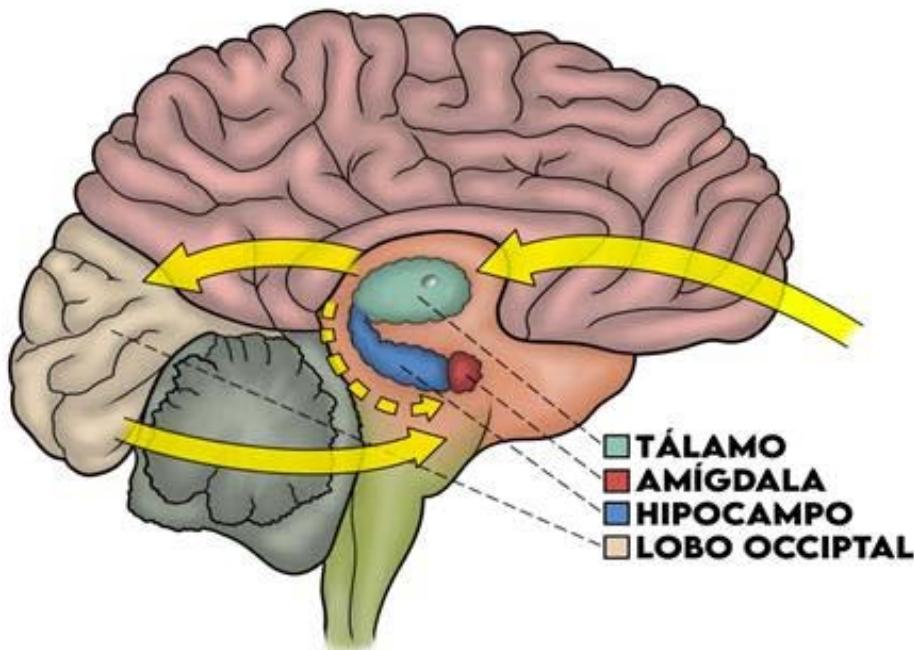 Fonte: Elaborado pelo autor Figura 1: Cerebro
Quando eventos ou circunstâncias antecipadas são consideradas altamente aversivas porque são percebidas como eventos imprevisíveis, incontroláveis que poderiam potencialmente ameaçar os interesses vitais de um indivíduo, é ativado um sistema de resposta cognitiva, afetiva, fisiológica e comportamental complexo, conhecido como ansiedade (Beck & Clark, 2012, p. 17).
A proposta desenvolve o emprego de 5 (cinco) práticas para o desenvolvimento das capacidades emocionais. Desenvolvendo o autoconhecimento, praticando a atenção plena, imaginando as ações a serem realizadas de forma planilhada (treinamento mental), estabelecendo metas com planos eficientes para alcançá- las e sabendo relacionar-se adequadamente com outras pessoas (relações interpessoais), o aluno cria possibilidades para ampliar suas capacidades para enfrentar situações ansiogênicas, o que Ihe permitirá mais clareza e assertividade em suas decisões, possibilitando melhores resultados.
#### . Autoconhecimento
A definição encontrada de autoconhecimento segundo o Dicionário Português online é "Conhecimento de si próprio, das suas características, qualidades, imperfeições, sentimentos etc; que caracterizam o indivíduo por si próprio" (Dicio, 223).
Através do autoconhecimento, é possível olhar para seu mundo interno, compreender suas percepções, reações, pensamentos, sentimentos e comportamentos diante das vivências, em um processo contínuo de reflexões sobre o impacto que o outro ou as situações provocam. A compreensão de como estes aspectos interferem em sua vida auxilia no enfrentamento de situações adversas e acarreta em mudanças individuais que podem gerar reflexos também no coletivo (Silva, 2019 & Torres, 2008).
Sendo assim, para um melhor enfrentamento emocional de situações estressoras as quais o militar é submetido, o autoconhecimento é imprescindível pois, favorece a clareza das ideias, o equilíbrio do pensamento, a resiliência e amelhora da performance (Maia, 2019). Desta maneira saber intervir no processo ansiogênico é uma capacidade desejável.
Nesse sentido, serão apresentadas aqui procedimentos que podem ser realizados através do canal cognitivo, comportamental, e do canal físico. São conhecidas como treinamento com Inoculação do Estresse (TIS). Essas técnicas permitirão que em momentos de ansiedade sejam desenvolvidos recursos para dominar os próprios sentimentos (Monson, et al, 2016).
A prática do auto diálogo é uma possibilidade no canal cognitivo. A pessoa aprende a se concentrar em seu diálogo interno e é treinada para identificar autodeclarações negativas e irracionais. A seguir, é ensinado a substituir por auto verbalizações mais adaptativas A correção do pensamento ansioso requer a descoberta de interpretações alternativas mais realistas que substituam avaliações à ameaça exageradas. Quando a pessoa é treinada a confrontar as situações temidas utilizando imagens mentais, visualizando o desfecho favorável, a exposição recebe o nome de in vitro, ou exposição imagética (Monson et al, 2016, p. 74).
Cruz et al (2020), explica que os benefícios das práticas respiratórias começam na primeira semana com a diminuição do tônus simpático. O ritmo cardíaco é determinado pelo sistema nervoso simpático e parassimpático, sendo os nervos simpáticos responsáveis por aumentarem a frequência cardíaca, enquanto o sistema nervoso parassimpático surge como seu antagonista. Essas práticas estimulam os nervos parassimpáticos, tendo como uma das consequências a redução da frequência cardíaca.
Outra eficiente técnica física é o treino de respiração diafragmática. Estudos concluíram que a prática de respiração diafragmática consciente, diminui a frequência respiratória, aumentando o volume corrente de ar em repouso, sinal deboa adaptação e de uma pessoa saudável. Também são consequências dessa prática a redução dos níveis de ansiedade e a melhora na capacidade cognitiva (Anastácio & Carvalho, 2022).
## i. Atenção Plena
Uma prática que favorece a atenção para si é o Mindfulness, o qual possibilita desenvolver habilidades para lidar com diversas situações que são inerentes à vida, sejam elas agradáveis ou não, e sair de uma postura apenas reacional (Germer, 2016).
Elas auxiliam a não agir no automático e sim com consciência de todo o contexto do momento. Tais recursos proporcionam redução dos efeitos nocivos do estresse, de pensamentos desadaptativos, melhoram da resposta imunológica e o sentimento de satisfação com a vida (Cebolla et al, 2014, Germer, 2016 & Marti et al, 2016).
Outro recurso que precede e inicia boa parte das técnicas de meditação é o controle da respiração. Utilizado como ponto de partida e de retorno, após as distrações, para focar ou retornar ao pensamento trabalhado. o' controle da respiração, facilita o relaxamento e a concentração auxiliando na capacidade de absorção de oxigênio pelo organismo (Ortega et al, 2014, Ramacharaca, 1977 & West, 2013).
A meditação é o treinamento a nível racional da capacidade de promover mudanças no estado de consciência, trata-se da "busca da alteração voluntária do estado de consciência, utilizando a percepção consciente e a auto-observação" (Menezes et al, 2012). Em outra descrição pode-se encontrar: "meditar é um processo autorregulatório, por meio do qual é desenvolvido o controle dos processos atencionais" (Danucalov & Simões, 2004).
A vivência positiva é um de seus benefícios psíquicos. Ela se desenvolve através da sensação de paz interna e de felicidade. Essa satisfação e ideia de harmonia com o mundo permite menor tendência à perda do controle (Cardoso et al, 2004). A meditação estimula a aquisição de autoconhecimento e ensina a lidar com o mundo de uma forma mais tolerante.
Entre as contribuições fisiológicas e neurológicas promovidas pela meditação, pode-se citar: redução na frequência cardíaca; menos consumo de oxigênio;redução do tempo de disparo do estresse; redução dos hormônios cortisol, aldoesterona e noradrenalina. É observado também um aumento nos níveis do neurotransmissor serotonina entre outras (Cardoso et al, 2004).
Vem-se observando um crescente interesse pelas práticas das Medicinas Tradicionais, Complementares e Integrativas (MTCl) por parte dos profissionais de saúde. Cerca de $80\%$ dos tratamentos complementares foram discutidos entre pacientes e médicos (Cardoso et al, 2004).
Para que se tenha um sono saudável a National Institute of Health (NIH) e a American Academy of Sleep Medicine (AASM), dos Estados Unidos, aconselham técnicas de respiração e relaxamento, técnicas de meditação e mindfullness no tratamento da insônia, antes de iniciar o tratamento medicamentoso (Edinger etal, 2021).
Estão incluídos nas diretrizes de tratamento da Sociedade Americana de Câncer (American Cancer Society), que além do tratamento médico oncológico convencional a meditação como forma de se lidar com a doença e suas comorbidades, como ansiedade e depressão (Burke, 2012).
As práticas da atenção plena, demonstram que, através dela, é aprimorada a capacidade de regular as emoções, desenvolver a empatia, reduzir os pensamentos desadaptativos, sendo gerada maior resposta imunológica (Cebolla et al, 2014).
A técnica com enfoques terapêuticos que se baseia em atenção plena conhecida como mindfulness de Jon Kabat-Zinn (1990), é a que possui maior número de trabalhos científicos e que vem sendo cada vez mais incorporada por profissionais de saúde e pela comunidade científica.
Segundo o autor Kabat-Zinn (2003 p.145), mindfulness é a consciência que emerge ao colocarmos atenção intencional no momento presente, de maneira não julgadora do fluxo da experiência, momento a momento". Mindfulness também pode ser entendido como estado de atenção plena ou um estado no qual a atenção é focada no momento, no que está acontecendo internamente (ex.: sensações orgânicas, pensamentos, emoções) ou externamente (no ambiente que nos cerca), com aceitação e sem julgamento.
## ii.Imaginação e Treinamento Mental
O entendimento que se tem sobre o treinamento mental engloba diferentes habilidades mentais como o alcance de metas, o aumento da autoconfiança, o controle da ansiedade, a ampliação da concentração entre outros. (Damarjian & Gould, 2000, Orlick, 2000, Suinn, 1993 & Unestahl, 1989).
Em uma definição mais específica Samulski (2005) descreve que treinamento mental é "a imaginação de forma planejada, repetida e consciente de habilidades motoras, técnicas esportivas e estratégias táticas". Ou seja, é a realização de uma tarefa sendo planejada mentalmente e executada em forma de imaginação, repetidas vezes.
Essa prática pode trazer benefícios porque através da imaginação, busca-sealcançar o movimento perfeito, executar a atividade da forma mais adequada, inclusive corrigindo possíveis vícios pessoais. Os autores Gould & Weinberg (1999), relatam que "um atleta pode reconstruir, através da imaginação, experiências positivas do passado ou visualizar eventos futuros com o fim de preparar-se mentalmente para a performance".
No esporte, o treinamento mental é destinado para dois objetivos: para os movimentos e para as situações. Através de habilidades específicas são treinadas para movimentos individuais e as situações envolvem ações táticas e estratégicas inseridas dentro de um contexto específico. As técnicas empregadas para desenvolver ações táticas e estratégicas no esporte, pode ser facilmente modelada para outras atividades (Samulski, 2005).
São necessárias algumas circunstâncias para que se tenha êxito no treinamento mental. A primeira delas é o relaxamento. Pois, somente dessa forma, com a mente livre de pensamentos que o perturbem ou distraiam, é possível trabalhar integralmente a sua concentração. A pessoa já deve ter realizado o movimento ouvivido situação para que possa modelar. Uma vez tendo o modelo de excelência, deve-se adaptá-lo a sua realidade e capacidade para que possa realmente alcançá-lo. E por fim a situação deve ser vivida de forma intensa, sentindo, ouvindo, envolvendose emocionalmente durante o treinamento mental (Eberspacher, 1995).
Vem sendo comprovado que os resultados são alcançados mais rapidamente quando o executor começa as práticas com a realização do movimento ou situação em forma de "auto conversa" (Eberspacher, 1995). O pensamento pode receber interferências e o foco da atenção pode se dispersar mais facilmente para pessoas menos treinadas. Essa iniciação é otimizada com a "auto conversação".
Assim como em qualquer prática educativa, para aprimorar ou desenvolver uma habilidade é importante a repetição, pois é a maneira de doutrinar o cérebro aos comportamentos desejados como reação imediata a determinadas situações (Silva, 2019).
## iv. Planejamento Estratégico
O planejamento estratégico engloba determinadas técnicas desenvolvidas inicialmente para serem empregadas em organizações. As pessoas também podem se beneficiar destes recursos administrativos em benefício próprio, alcançando melhor qualidade e resultado em seu trabalho. Nesse sentido, o planejamento estratégico pessoal revela-se um instrumento determinante de suporte para se atingir equilíbrio, sucesso e realizações (Prado, 2010).
Para Kich & Pereira (2011, p. 16), 0 Planejamento Estratégico "[...] significa o caminho escolhido, as ações estabelecidas e adequadas para atingir os objetivos". Carvalho et al (2008, p. 13), destacam que, quando se tem um objetivo pessoal claro, facilita a identificação do sentido e direcionamento de vida. De acordo com Estrada et al (2007, p. 109), o Planejamento Estratégico:
[...]consiste em uma técnica administrativa que procura ordenar as ideias das pessoas, de forma que seja possível criar uma visão do caminho que deve ser seguido (estratégia) e, também, ordenar as ações que serão realizadas através do plano estratégico, permitindo o alcance da visão de futuro.
Martins (2010) afirma que planejar é fazer uma "previsão" (do futuro desejado) e determinar os meios para alcançá-lo. Para algumas pessoas, planejar a própria vida pode parecer um exagero e, para outras, isso é uma necessidade. Planejar "[..] significa elaborar esquema para alcançar algo que se deseje, contrapondo-se à improvisação, que é ação ao acaso" (Estrada et al, 2007, p. 107).
Segundo Martins (2010, p. 4), o planejamento pessoal "implica em profundareflexão pessoal sobre os valores e princípios, pontos diferenciais deficientes e competências especiais adquiridas". Esta ferramenta permite a visualização sistemática de onde se quer chegar, qual o caminho a seguir e qual o ponto de partida, o que também é importante. Possuir metas e objetivos claros, possibilita melhor organização para colocar em práticas as ações. De acordo com Moritz etal (2012, p. 105), o planejamento visa decisões mais precisas e "ações para a construção de um futuro melhor".
A priorização das atividades importantes, assim como a redução de urgências ede desperdício de tempo são ações necessárias para que se possa otimizar o emprego do tempo. Para isso é necessária uma reavaliação de como se ocupa o tempo, sendo necessário se considerar três fundamentos: "a) decisão firme de querer exercer o controle efetivo sobre o tempo; b) priorização das atividades por importância; e c) exercício da disciplina, da perseverança, da integridade e de hábitos positivos" (Covey, 1994).
Sua função principal consiste em fazer com que a pessoa desenvolva ações, táticas e estratégias, de forma sistematizada, adequando vida individual e profissional e aprimorando seus recursos com suas oportunidades (Augustin, 2008). Por tanto, 0 planejamento estratégico é um processo que incide na análise das vantagens e desvantagens, das. oportunidades, das ameaças, das possibilidades, com
- objetivo de elaborar estratégias e ações que aumentem a resolutividade dos problemas e fluidez rotina (Pereira, 2010, p. 47).
## v. Equipes de Alto desempenho
Melhorar o desempenho coletivo é um processo que demanda esforço e continuidade. Antes mesmo de se tornar uma equipe de alto rendimento e produzir resultados significativos existem fases que se iniciam com a formação ou a seleção dos membros, passam pela capacitação individual que seguem com a integração e o desenvolvimento da equipe. Essa experiência promove bem-estar emocional, melhora a atmosfera psicológica ou o clima organizacional e por consequência amplia os resultados do grupo, em produtividade e qualidade (Blanchard et al, 2011).
Segundo Dyer et al. (2011), uma equipe de alto desempenho precisa ser compostas por pessoas que apresentem as seguintes características: Conhecimento, experiência ou habilidades técnicas relacionadas ao trabalho da equipe; boas habilidades interpessoais e de comunicação; alto nível de motivaçãopara participar de um esforço coletivo; boas habilidades de gerenciamento de conflitos; capacidade de se adaptar a novas situações; confiabilidade e capacidade de tomar a iniciativa.
De acordo com Luecke (2010), em seu livro Criando Equipes, bons membros de equipe sabem administrar a si mesmos, são comprometidos com o objetivo comum, gostam de trabalhar com outras pessoas que estejam tão comprometidas quanto eles, física e emocionalmente. Devem ser pessoas honestas e dignas de confiança, devem ter altos padrões éticos, e sem medo de admitir seus erros, eles se responsabilizam pela parte que lhes é devida.
Para aprimorar as relações interpessoais é necessário desenvolver habilidades sociais. A competência social é um constructo avaliativo do desempenho de um indivíduo em uma tarefa interpessoal que atende aos objetivos pessoais e às demandas da situação e da cultura, produzindo resultados positivos conforme critérios instrumentais e éticos (Del Prette &, Del Prette (2018)..
Os autores Katzenbach & Smith (2001, p. 231), entendem que "uma equipe verdadeira é um número pequeno de pessoas com habilidades complementares, comprometidas com objetivos, metas de desempenho e abordagens comunspelos quais se consideram mutuamente responsáveis". Eles também nos mostram que o elemento-chave das equipes de alto desempenho é a disciplina.
A comunicação deficiente é a forma mais citada de conflito interpessoal entre membros de equipes de alto desempenho. Conforme pesquisa feita pelo Project Management Institute Brasil (PMI), entre 300 grandes e renomadas empresas envolvidas na pesquisa, $76\%$ acreditam que a comunicação no ambiente de trabalho é a principal responsável pelo fracasso das atividades propostas (Carvalho, 2017).
Existem vários conteúdos que podem ser transmitidos através dos recursos de comunicação, como promover direcionamentos através de cadeia hierárquica, gerar motivação individual ou coletiva, dar feedback individual a respeito de tarefas ou comportamentos entre outras formas (Chiavenato, 2009). A premissa que faz com que a comunicação seja boa é a de que ela deve incluir tanto a transferência da informação quanto o significado do que é comunicado.
Não se pode esquecer que uma equipe precisa de direcionamento, assim pessoas com boa capacidade de direção e liderança deve integrar esse time. Jeronimo Mendes (2012) diz que o líder se forma com o desenvolvimento e dedicação ao autoconhecimento e automonitoramento, mapeando pontos fortes e aqueles em que devem ser melhorados. Renovando-se dia a dia sem abrir mão dos valores e dos princípios morais e éticos. Esse olhar crítico para si mesmo permite a construção de novos comportamentos.
## III. METODOlOGIA
Para melhor esclarecimento dos procedimentos adotados na pesquisa serão apresentados a natureza da pesquisa e seu delineamento. Na sequência é descrito sobre sua população, as variáveis envolvidas na pesquisa, os instrumentos de medidas, os procedimentos empregados na coleta e a análise estatística. Destacando-se que todos esses procedimentos contaram com a participação de alunos que leram e assinaram o Termo de Consentimento Livre e Esclarecido (Anexo 1).
### a) Delineamento de pesquisa
## i. Procedimentos metodológicos utilizados na revisão de literatura
A pesquisa bibliográfica para este estudo foi conduzida por meio de uma busca exploratória abrangente, com o intuito de acessar um amplo espectro de publicações relacionadas ao tema. Utilizando uma variedade de fontes, incluindo artigos, revistas, livros e trabalhos acadêmicos, buscou-se abordar de maneira abrangente as interseções entre habilidades emocionais e desempenho militar de alto risco.
A delimitação do tema começou com a definição clara do escopo e objetivo da revisão, centrando-se na relação entre habilidades emocionais e o desempenho em contextos militares de alto risco. A busca não impôs limitações temporais, permitindo a inclusão de publicações de diversas épocas para garantir uma compreensão abrangente do tema.
Os critérios de seleção foram precisamente orientados para identificar trabalhos que abordassem as habilidades emocionais em conjunto com o desempenho militar em ambientes de alto risco. Dessa forma, a pesquisa priorizou artigos, revistas e outros documentos acadêmicos que oferecessem informações significativas sobre a influência das habilidades emocionais no cenário militar específico em questão.
Ao longo do processo, a identificação de lacunas na pesquisa foi um aspecto crucial. A revisão exploratória permitiu analisar a extensão das informações disponíveis e identificar áreas em que o conhecimento poderia ser mais aprofundado. A ausência de determinados enfoques ou a escassez de estudos específicos forneceram pistas valiosas sobre onde concentrar esforços para contribuir de maneira significativa ao campo.
Em suma, a pesquisa bibliográfica foi guiada pela busca ativa e abrangente de publicações relevantes sobre habilidades emocionais e desempenho militar de alto risco. A ausência de restrições temporais e a análise crítica das lacunas na literatura proporcionaram uma base sólida para a condução do estudo, garantindo que a revisão fosse abrangente, atual e contribuísse efetivamente para o entendimento do tema em questão.
## i. Fase empírica: Planejamento e condução do estudo de campo
Estabelecer o delineamento da pesquisa significa mostrar o planejamento de forma mais ampla, levando em consideração o ambiente onde os dados são coletados, assim como os meios utilizados para controlá-los (Gil, 2008, p.49).
Esta foi uma pesquisa de natureza mista pois foram coletados dados numéricos (Anexos 2 ao 5) com a elaboração de gráficos e, também, foram feitas análises das respostas abertas apresentadas no questionário de final de Curso (Anexo 6).
O delineamento da pesquisa é experimental pois foram feitas intervenções planejadas visando capacitar os alunos ao desenvolvimento de hábitos e competências para que fossem analisados os resultados. A subcategoria do desenho da pesquisa foi investigação ação pois este experimento está sendo realizado na área educacional e foram usadas analise subjetiva do conteúdo, coma hipótese da mudança na realidade social da amostra avaliada.
A pesquisa foi um estudo de corte longitudinal, pois foram feitas duas coletas, uma no início (28/06/2023), antes das intervenções, e outra ao longo (21/09/2023) do Curso. Essa desfasagem temporal de aproximadamente três meses, tem o propósito de identificar se os hábitos e competências foram desenvolvidos pelos alunos ao longo do período.
### b) População/Amostra
A população refere-se a equipes operacionais de alto rendimento, com ênfase emoperações especiais de alto risco. A amostra foi de 30 alunos do Curso de Forças Especiais do Exército Brasileiro, realizado no ano de 2023. Foi uma amostra probabilística estratificada, pois só se candidatam ao Curso de Forças Especiais militares concludentes do Curso de Ações de Comandos (CAC).
O CAC tem aprovação histórica de $20\%$ dos candidatos do público geral (âmbito Forças Armadas), de forma que a amostra possui características do pessoal operacional de alto risco. As características sociodemográficas da população que compôs esse estudo são de oficiais e sargentos do Exército, do sexo masculino, idade média de trinta anos, com ensino superior e formação acadêmica militar.
## i. Variáveis
As Variáveis Independentes (VI) deste projeto de pesquisa foram as horas de capacitação dos alunos nos seguintes assuntos: Autoconhecimento; Planejamento Estratégico; Treinamento Mental: Atenção Plena; e Relações Interpessoais. Essa capacitação ocorreu em cinco encontros na primeira semana, com um total de sete horas.
Através de autoavaliação realizada antes e depois da intervenção, as variáveis Dependentes (VD) observadas foram: o desenvolvimento da capacidade de auto- observação através de uma atitude reflexiva; o emprego de práticas meditativas para o controle da ansiedade; a capacidade de planejamento; a adoção da visualização e do treinamento mental na rotina; e o aprimoramento das comunicações interpessoais.
## i.Instrumentos de medida e técnicas
Foram confeccionados pelo autor quatro instrumentos avaliativos (Anexo 2 ao 5) para levantamento de dados objetivos, aplicados no início e no final do Curso, e um questionário com questões abertas (Anexo 6) ao final do Curso. Os instrumentos tiveram o propósito de identificar se a frequência emitida do comportamento citado, aumentou ou diminuiu. O Questionário buscou identificar o emprego geral das técnicas ministradas e, se houve benefícios fruto do desenvolvimento de habilidades emocionais.
Serão descritos a seguir os 4 (quatro) instrumentos utilizados nesta pesquisa. Instrumento Avaliativo do Planejamento Pessoal (Anexo 2); Instrumento Avaliativo de Atenção Plena (Anexo 3); Instrumento Avaliativo de Inteligência Emocional (IE) (Anexo 4); Instrumento Avaliativo de Relações Interpessoais (Anexo 5). Foram utilizadas a escala com 10 pontos, classificados da seguinte forma: se o item foi totalmente positivo, classificação 10 (dez); se o item foi totalmente negativo, classificação 1 (um). A distribuição do grau de intensidade variou dentro do intervalo. Os comportamentos expressam o que é desejável, é a imagem que o aluno criou em sua mente. Seguiram duas perguntas abertas, com o propósito de gerar reflexão no aluno quanto ao comportamento que vem emitindo.
O material coletado nas questões abertas do Questionário de Avaliação das Práticas Desenvolvidas foi submetido à técnica de análise de conteúdo de Bardin (1977) em leituras flutuantes e sistematizados em temas principais a partir da inferência e frequência dos discursos.
## iiI. Procedimentos
Foram realizadas cinco intervenções de 1h30' (uma hora e trinta minutos) em todos os alunos na primeira semana do Curso (de 26 a 30 de junho de 2023). Em cada encontro foi abordado um dos seguintes temas na sequência: Autoconhecimento, Planejamento Estratégico; Atenção Plena, Treinamento mental e Relações Interpessoais. Em todos os encontros foram realizadas atividades práticas para que o aluno interagisse ativamente com o assunto. Os Instrumentos Avaliativos (Anexos 2 ao 5) foram aplicados no início da intervenção e durante do Curso. Tiveram o propósito de identificar se houve variação em seus "Indicadores".
O Questionário de Avaliação das Práticas desenvolvidas foi aplicado em 21/09/2023 (Anexo 6). Todas as aplicações de instrumentos foram feitas pelo autor, em local limpo, arejado e sem ruido que comprometesse a realização da atividade.
## iv. Análise estatística
Para realizar a análise estatística dos resultados obtidos com os 5 instrumentos de coleta de dados, foram utilizados o teste t, média, desvio padrão e valor de "p",os quais foram calculados por meio do software Excel.
Primeiramente, os dados coletados foram inseridos em planilhas separadas no Excel. Foi realizada uma análise descritiva dos dados, calculando a média e o desvio padrão para cada item dos instrumentos de coleta de dados. Em seguida, foi aplicado o teste t para comparar a média dos comportamentos avaliados em cada instrumento. Foi estabelecido um nível de significância (usualmente $5\%$ ) para determinar se as diferenças entre as médias são estatisticamente significativas.
O valor de $" \mathsf { p } ^ { \prime \prime }$, que é um indicador estatístico, foi calculado para avaliar a significância estatística dos resultados. Levando em consideração que o valor de $" \mathsf { p } ^ { \prime \prime }$ varia de 0 a 1, sendo que valores menores indicam uma maior evidência contra a hipótese nula, ou seja, uma maior probabilidade de que os resultados sejam devido a um efeito real, não ao acaso, neste estudo buscou-se verificar se o valor de $" \mathsf { p } ^ { \prime \prime }$ encontrado foi menor que 0,05 (ou $5\%$, o que demonstrou que os resultados são estatisticamente significativos, indicando que há uma probabilidade menor que $5\%$ de que os resultados sejam devidos ao acaso. Foram gerados gráficos de barras e diagramas de dispersão para visualizar os resultados e identificar possíveis padrões nos dados. Os resultados obtidos serão interpretados e discutidos à luz dos objetivos da pesquisa, com o objetivo de identificar padrões de comportamento e possíveis relações entre eles.
## IV. RESUlTadoS
O estudo meticulosamente examinou os resultados obtidos ao longo do Curso de Forças Especiais, concentrando-se no desenvolvimento de habilidades emocionais em ambientes de alto risco. Dividindo a avaliação em quatro áreas principais - Planejamento Pessoal (Anexo 2), Atenção Plena (Anexo 3), Inteligência Emocional (Anexo 4) e Relações Interpessoais (Anexo 5) - o método adotado incorporou duas coletas distintas de dados durante a extensão do cursoe a aplicação de um questionário (Anexo 6) entre as duas coletas no dia 29/09/2023.
A primeira coleta foi conduzida na primeira semana do Curso, datada em 28/06/2023, fornecendo uma linha de base inicial para a análise. Nesse estágio, os alunos foram avaliados em diversas características, desde Planejamento Rotineiro até Consciência do Pensamento, delineando o ponto de partida para a avaliação do desenvolvimento ao longo do tempo.
A segunda coleta, realizada na vigésima semana do Curso, datada em 03/11/2023, marcou o segundo ponto de avaliação. Esta fase permitiu uma comparação direta com os dados iniciais, revelando detalhes cruciais sobre o progresso dos alunos ao longo do programa. Ambas as coletas de dados envolveram análise quantitativa e qualitativa, combinando dados numéricos e respostas abertas para obter uma compreensão abrangente do impacto do treinamento nas habilidades emocionais dos participantes.
Essa abordagem de coletas múltiplas proporcionou uma visão dinâmica e detalhada da evolução das habilidades emocionais dos alunos ao longo do Curso de Forças Especiais, oferecendo uma base sólida para a análise dos resultados apresentados.
### a) Planejamento Pessoal
O Planejamento pessoal busca identificar como o profissional administra seu tempo de curto a longo prazo. Diz respeito ao controle das atividades em adequação ao tempo disponível. Quanto maior esse controle exercido, melhor será o aproveitamento do tempo e o alcance de melhores resultados.
#### . Planejamento Rotineiro
A primeira coleta de dados sobre como os alunos realizam seu Planejamento Rotineiro foi em 28/06/2023, na primeira semana do Curso. A média do INDICADOR DE PLANEJAMENTO ROTINEIRO, entre oS alunos pesquisados, foi de 7,84. A segunda coleta de dados desse indicador, foi em 03/11/2023, na vigésima semana, e a média entre os alunos foi de 8,11 (figura
- 2). Observa-se um aumento de $2,7\%$ entre as coletas. Em relação a amplitude da melhora, entre as 8 características avaliadas nos instrumentos, esse indicador obteve a menor diferença, classificando-se em $8 ^ { \circ }$ lugar.
- ii.Planejamento Médio longo prazo
A média do INDICADOR DE PLANEJAMENTO MÉDIO LONGO PRAZO, entre os alunos pesquisados na primeira fase foi de 7,78. Já na segunda os resultados apontaram uma média de 8,19 (figura 2). Observa-se um aumento de $4,1\%$ entre as coletas. Em relação a amplitude da melhora, entre as 8 características avaliadas nos instrumentos, esse indicador obteve o $7 ^ { \mathrm { o } }$ lugar.
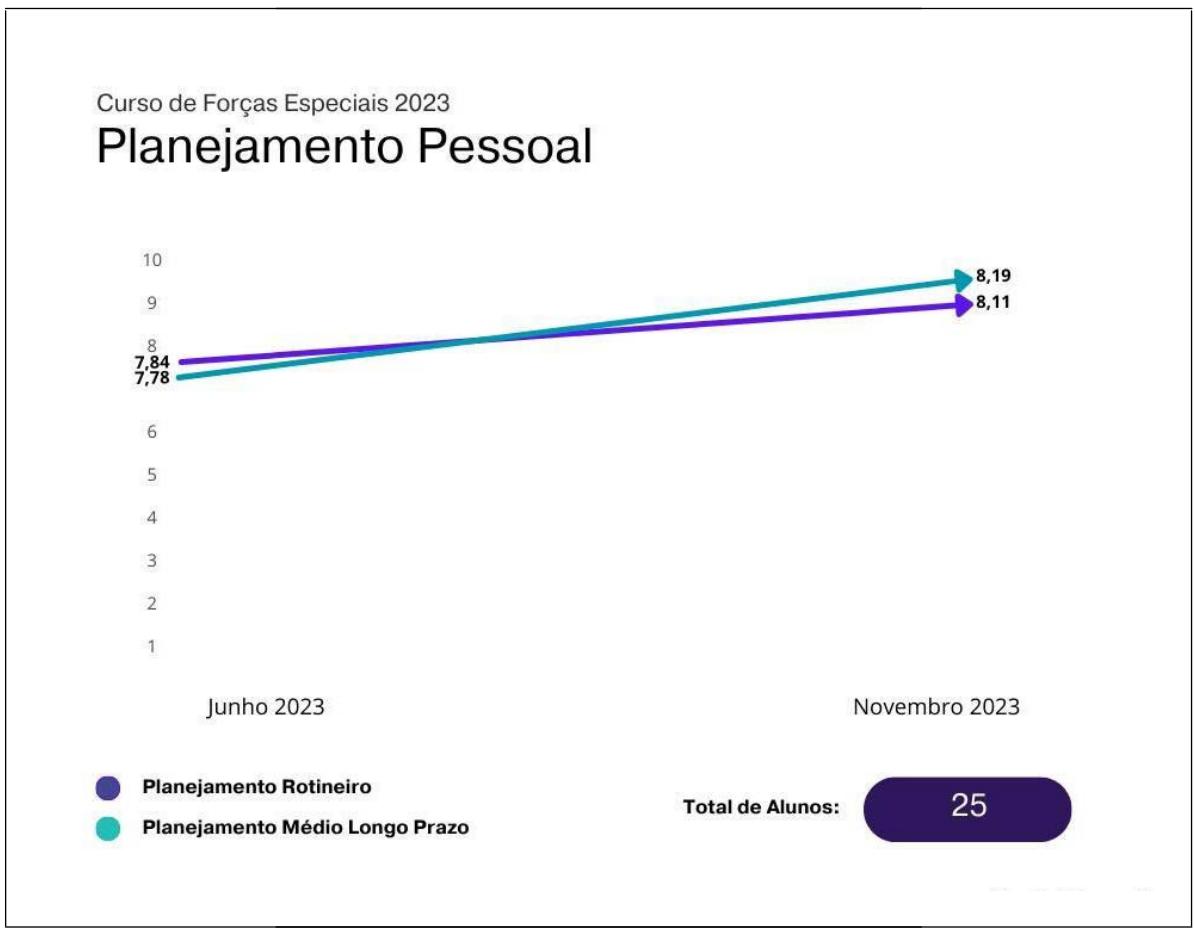 Figura 2: Planejamento pessoal Fonte: Elaborado pelo autor.
### b) Atenção Plena
## i. Consciência do Pensamento
O INDICADOR DE CONSCIÊNCIA DO PENSAMENTO entre OS alunos pesquisados apontou na primeira coleta de dados uma média de 5,92, em contrapartida a segunda coleta resultou em uma média de 7,24 (figura 3). Observa-se um aumento de $13,20\%$ entre as coletas. Em relação a amplitude da melhora, entre as 8 características avaliadas nos instrumentos, esse indicador obteve o 1o lugar.
## i.Consciência Psicomotora
A primeira coleta sobre qual é a Consciência Psicomotora dos alunos, denominada como INDICADOR DE CONSCIÊNCIA PSICOMOTORA, alcançou uma média de 6,00. Ao ser realizada a segunda coleta de dados essa média passou para 7,12 (figura 3). Observa-se um aumento de $11,2\%$ entre as coletas. Em relação a amplitude da melhora, entre as 8 características avaliadas nos instrumentos, esse indicador obteve o ${ \mathfrak { z } } ^ { \circ }$ lugar.
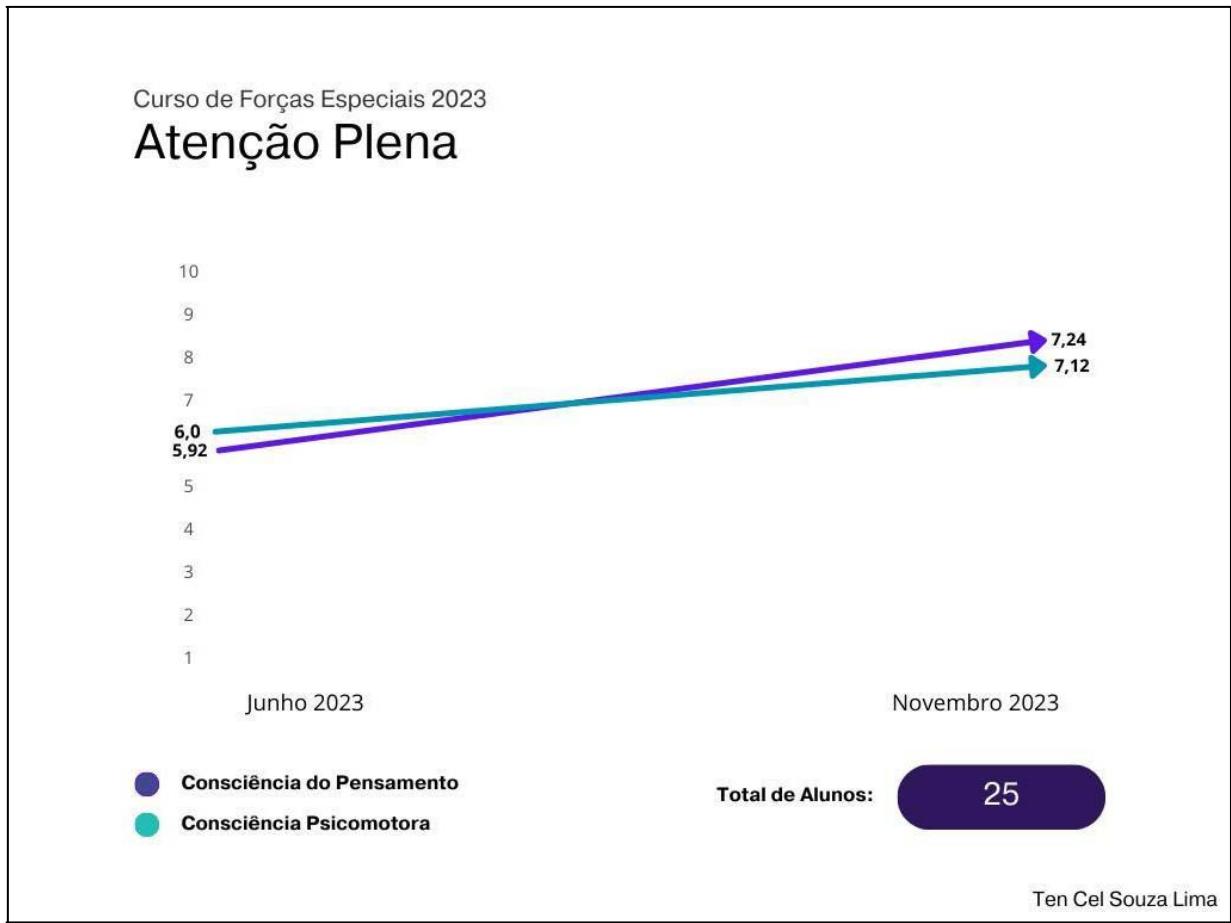 Figura 3: Atenção Plena Fonte: Elaborado pelo autor.
### c)Inteligência Emocional
## i. Características Individuais
Ao ser realizada a primeira coleta de dados do INDICADOR DE CARACTERÍSTICAS EMOCIONAIS INDIVIDUAIS visando identificar as características individuais do comportamento emocional dos alunos, obteve-se como resultado uma média de 6,84. Ao tornar a realizar essa coleta pela segunda vez, a média entre os alunos foi de 8,00 (figura 4). Observa-se um aumento de $11,6\%$ entre as coletas. Em relação a amplitude da melhora, entre as 8 características avaliadas nos instrumentos, esse indicador obteve o $_ { 2 ^ { \circ } }$ lugar.
## i.Características Sociais
O INDICADOR DE CARACTERÍSTICAS EMOCIONAIS SOCIAIS coletado a primeira vez entre os alunos pesquisados, foi de 7,45, já na segunda coleta desse indicador os resultados apontaram que a média entre os alunos foi de 8,24 (figura 4). Observa-se um aumento de $7,9\%$ entre as coletas. Em relação a amplitude da melhora, entre as 8 características avaliadas nos instrumentos, esse indicador obteve o $4 ^ { \circ }$ lugar.
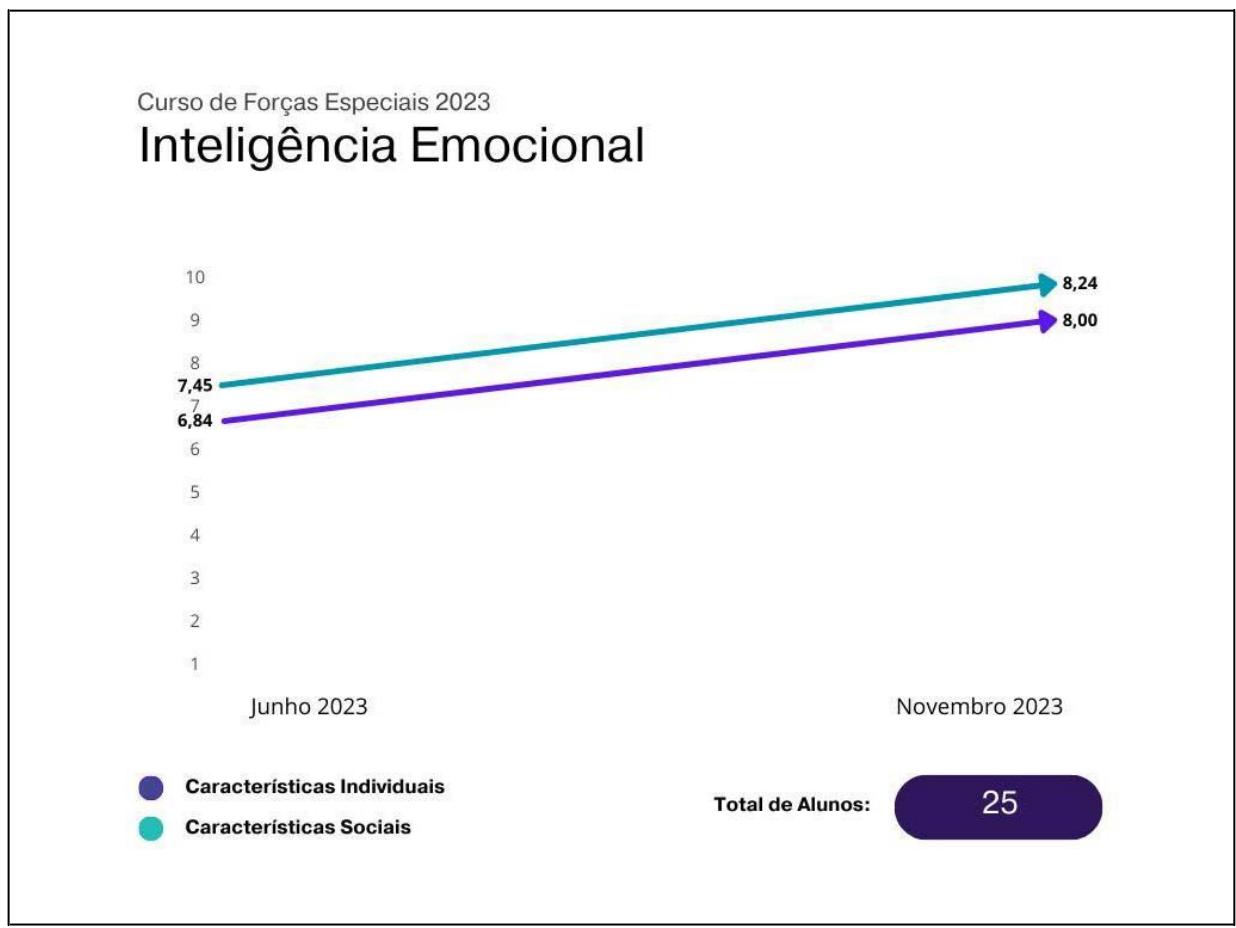 Figura 4: Inteligência Emocional Fonte: Elaborado pelo autor.
### d)Relações Interpessoais
.Transmissão da informação
Por fim, a primeira coleta de dados sobre como os alunos realizam sua comunicação na transmissão da informação realizada em 28/06/2023 apontou uma média do INDICADOR DE TRANSMISSÃO DA INFORMAÇÃO de 7,64. Na segunda coleta a média obtida entre os alunos foi de 8,25 (figura 5). Observa-se um aumento de $6,1\%$ entre as coletas. Em relação a amplitude da melhora, entre as 8 características avaliadas nos instrumentos, esse indicador obteve o $6 ^ { \circ }$ lugar.
## ii. Recepção da Informação
Quanto ao INDICADOR DE RECEBIMENTO DA INFORMAÇÃO entre os alunos pesquisados, a média foi de 7,64 na primeira coleta de dados e na segunda coleta a média foi de 8,40 (figura 5). Observa-se um aumento de $7,7\%$ entre as coletas.
Em relação a amplitude da melhora, entre as 8 características avaliadas nos instrumentos, esse indicador obteve o $\boldsymbol { 5 ^ { \circ } }$ lugar.
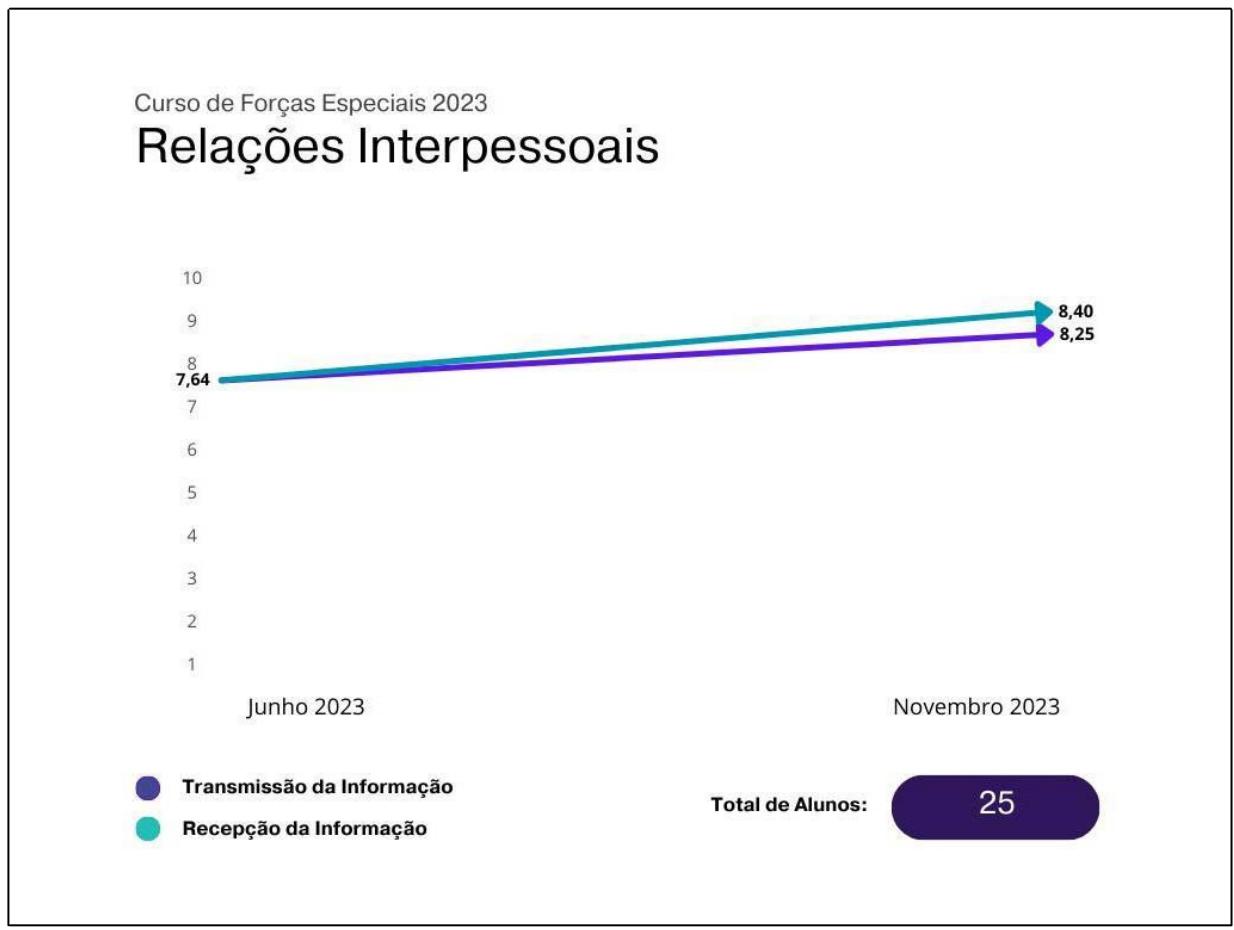 Figura 5: Relações interpessoais Fonte: Elaborado pelo autor.
### e) Questionário de Avaliação das Práticas Desenvolvidas (ANEXO 6)
Este questionário constitui-se de perguntas fechadas e principalmente abertas. Ele tem por objetivo identificar quais práticas foram empregadas nas diferentes situações e, principalmente, identificar quais foram os benefícios observados pelos alunos ao longo do curso. Realizaram a pesquisa 25 (vinte e cinco) alunos. Cada aluno poderia citar mais de um benefício, sendo contabilizada todas as observações realizadas. As respostas foram sistematizadas em temas principais a partir da inferência e frequência dos discursos (figura 6).
No planejamento, os alunos citaram que tiveram benefícios por 6 (seis) vezes. Entre os benefícios citados estão: ajudou a coordenar muitas atividades; organizou e otimizou o tempo; preveniu situações problemas; estabeleceu prioridades; e auxiliou na tomada de decisão.
O autoconhecimento foi citado 9 (nove) vezes. Os momentos identificados como de desenvolvimento desta capacidade foram: o controle do estresse; percepção de autocontrole diante de problemas; administração dos extintos; mais autoconfiança; falar com mais calma; e controlar a ansiedade.
O controle emocional foi citado 10 (dez) vezes e foi usado em momentos de incerteza e pressão psicológica. Seus benefícios são relatados em: melhora raciocínio; melhora da tomada de decisão; mais segurança; e mais equilíbrio nas emoções.
As relações interpessoais foram citadas 13 (treze) vezes. Os exemplos citados onde foram aprimorados os relacionamentos foram: achar soluções em grupo; empatia com o companheiro; saber ouvir; respeitar opinião; e paciência (citada 6 vezes).
As práticas meditativas foram citadas em 24 (vinte quatro) momentos distintos, destacando-se a visualização e treinamento mental por 11 (onze) e o controle da respiração por 8 (oito) vezes. Outros termos usados foram a meditação e o pensamento positivo.
A visualização foi praticada antes do briefing, para projeção de objetivos futuros e para o desfecho de situações problemas. Os benefícios citados foram manter o foco, mais concentração, redução da ansiedade, dominar situações adversas, aumento da confiança, redução de erros e encontrar soluções.
O controle da respiração foi praticado em momentos com grande potencial ansiogênico, como apresentações e discussões do processo decisório, destacando-se momentos de exposição pessoal. Os benefícios citados foram acalmar os nervos (citado quatro vezes), calma e serenidade, relaxamento, reduzir a ansiedade e manter a concentração.
Os benefícios citados criam condições para a melhora do desempenho através da mudança de comportamento, de hábitos resistentes para hábitos mais adaptativos. Mesmo não sendo feita uma pergunta direta, 6 (seis) alunos citaram ter percebido uma melhora nos resultados.
Curso de Forças Especiais 2023
#### Questionário das Práticas desenvolvidas
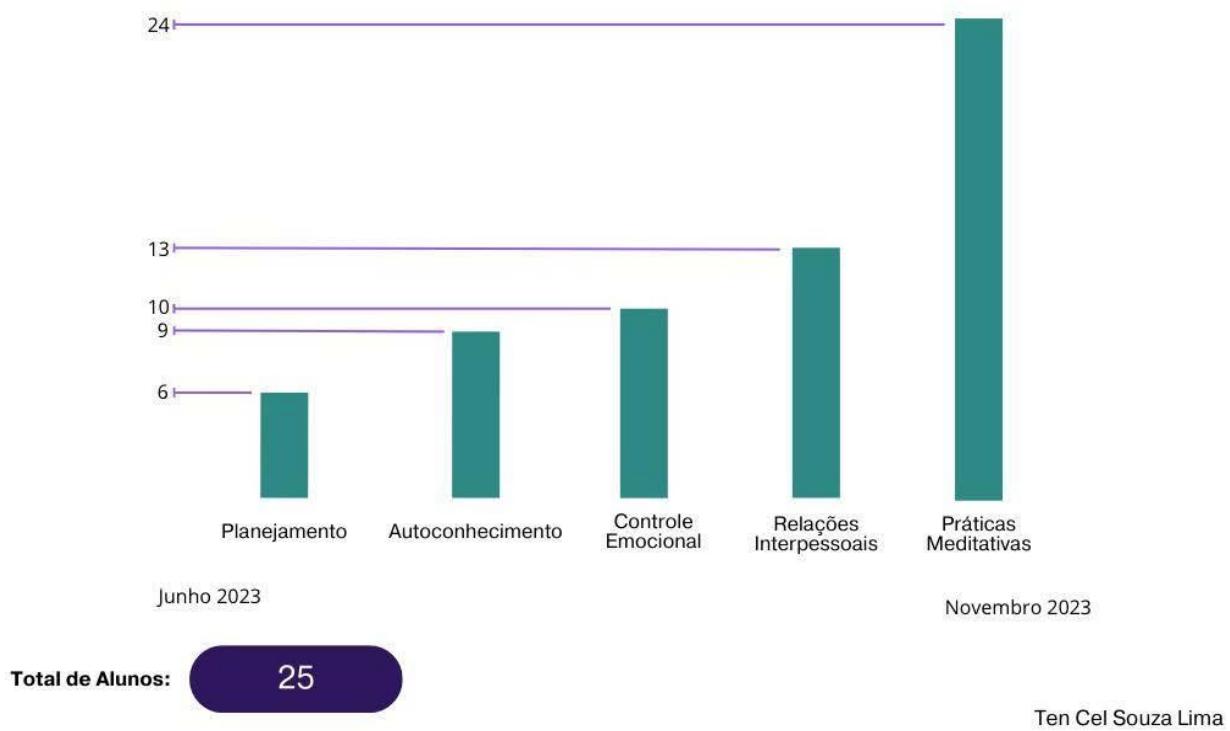 Figura 6: Questionário de Avaliação das Práticas Desenvolvidas Fonte: Elaborado pelo autor.
## V. DISCUSsÃo
O tempo de duração e as situações incontroláveis apresentadas no Curso de Forças Especiais se enquadra em um ambiente operacional de alto risco. Corroborando com a definição de Picano & Willians (2o09). ambiente operacional de alto risco se retrata a lugares desconhecidos ou hostis, em diferentes contextos culturais. Nesse contexto os níveis de ansiedade e estresse dos alunos são elevados.
Sobre os resultados colhidos pode-se observar que as coletas foram feitas em 28/06/2023 e 03/11/2023, sendo o intervalo, entre elas de, aproximadamente, 5 (cinco) meses. É possível observar também que existiu uma evolução significativa na percepção dos alunos em relação a seu comportamento, sendo apresentado mais detalhadamente a seguir.
O planejamento foi o comportamento que obteve menor ampliação do resultado, com melhora global de $3,4\%$. Fato que contribui para este resultado é que sua avaliação começa com índices muito altos restando pouca margem para ampliação. Os relatos dos alunos vão ao encontro com o que fala Moritz et al (2012, p. 105), o planejamento promove decisões mais precisas, prevenção de problemas e otimização do tempo.
Os resultados apresentados no instrumento Avaliativo de Atenção Plena mostram que esse comportamento foi o que obteve mais amplitude de aumento no resultado. A percepção de melhora geral foi de $12\%$ entre as coletas. Conforme afirma Cebolla et al, 2014, Germer, 2016 & Marti et al, 2016, esses recursos reduzem os efeitos do estresse e dos pensamentos desadaptativos melhorando a resposta imunológica e a satisfação com a vida. É relevante que mesmo havendo atingido esse bom resultado em relação aos outros comportamentos, seu índice final é 1 (um) ponto, mas baixo que todos os outros recursos avaliados, havendo ainda uma grande margem de melhora.
Em relação a Inteligência Emocional, foi apresentado o segundo maior percentual de melhora, sendo este de $9,8\%$. Houve mais desenvolvimento das características individuais em relação as características sociais. Demonstrando que o desempenho frente as situações estressoras depende das habilidades emocionais do militar, as quais podem ser aprimoradas em treinamentos (Smith et al, 2020). Os relatos citam benefícios como mais segurança, melhora do raciocínio, melhora da tomada de decisão e mais equilíbrio nas emoções. Fatores que contribuem para a melhora dos resultados.
As Relações Interpessoais apresentaram uma melhora entre as coletas de $6 {, } 8\%$. Houve mais ganho em relação a recepção da informação quando comparada com a transmissão da mesma. A comunicação deficiente é a forma mais citada de conflito interpessoal entre membros de equipes de alto desempenho. Conforme citado por Carvalho (2017), para $76\%$ das empresas pesquisadas a comunicação é a principal responsável pelo baixo resultado das atividades propostas. Relacionamento é comunicação e os relatos apresentados se referem ao aumento da paciência, melhora da escuta e mais flexibilidade no processo decisório, sinalizando que os recursos interpessoais foram aprimorados.
A coleta de dados do Questionário de Avaliação das Práticas Desenvolvidas (Anexo 6), foi realizada isolando-se os comportamentos à medida que eram citados. Porém, nos relatos são feitas conexões entre as práticas.
O controle da respiração é uma técnica frequentemente utilizada nas práticas meditativas, pois a respiração está intimamente ligada à mente e às emoções. Controlar a respiração ajuda a acalmar a mente, reduzir o estresse e aumentar a concentração. O ritmo cardíaco é determinado pelo sistema nervoso. Cruz et al (2020), explica que os resultados dessa prática começam na primeira semanacom a redução do tônus simpático e estímulo do nervo parassimpático o que gera como consequência a redução da frequência cardíaca e dos níveis de ansiedade.
As práticas meditativas promovem reflexão que permitem um estado de observação dos pensamentos e das emoções. Segundo Menezes et al, (2012) a meditação é a "busca da alteração voluntária do estado de consciência, utilizando a percepção consciente e a auto-observação". O desenvolvimento desse habito gera autoconhecimento, relatado em termos como automonitoramento. Sendo esta leitura do aluno simplificada pela percepção de autocontrole diante de situações estressoras. Corroborando com Cardoso et al, (2004), afirmando que a meditação estimula o autoconhecimento e a vivência positiva, gerando menos tendência a perda de controle.
Em relação as emoções, quando se compreende seu funcionamento, é possível, através de monitoramento, lidar de forma mais assertiva, evitando reações impulsivas ou prejudiciais. A compreensão de como estes aspectos interferem na vida auxilia no enfrentamento de situações adversas e acarreta em mudanças individuais (Silva, 2019 & Torres, 2008). O controle emocional ajuda a tomar decisões racionais, mesmo diante de situações desafiadoras.
Ao comparar os resultados dos Instrumentos Avaliativos (Anexos 2 ao 5) e do Questionário (Anexo 6), pode-se observar que os resultados apresentaram semelhanças. Em ambos tem destaque o uso expressivo das práticas meditativas. Foi o comportamento que mais se ampliou e também foi o mais usado. Tem relevância também que estas práticas permeiam outras habilidades como o autocontrole e a observação das emoções.
## VI. CONCLusÃO
Diante dos resultados obtidos, os achados desta pesquisa indicam uma evolução positiva nas habilidades emocionais dos participantes ao longo do curso, com ênfase em áreas específicas, conforme evidenciado nas análises das quatro principais dimensões avaliadas.
No âmbito do Planejamento Pessoal, observase um aumento consistente nas médias dos indicadores de Planejamento Rotineiro e Médio Longo Prazo. Embora o Planejamento tenha sido a área com menor expressão de melhora, a autoavaliação final revela índices elevados de desempenho, destacando a percepção positiva dos participantes em relação a essa dimensão.
A seção sobre Atenção Plena revela progressos notáveis na Consciência do Pensamento e Consciência Psicomotora. A prática de meditação emerge como um fator crucial, antecedendo e permeando outras áreas, como relações interpessoais e equilíbrio emocional.
No tocante à Inteligência Emocional, observase um aprimoramento tanto nas Características Individuais quanto Sociais. O curso parece ter impactado positivamente a compreensão e a gestão das emoções, elementos cruciais em situações de estresse.
Na análise das Relações Interpessoais, identificam-se melhorias consistentes nos indicadores de Transmissão e Recepção da Informação. Esses resultados sugerem uma comunicação mais eficaz, refletindo-se na resolução de problemas em grupo, empatia, habilidade de ouvir e paciência.
Após analisar os benefícios percebidos pelos participantes, destaca-se que as Práticas Meditativas foram as que mais tiveram uma percepção positiva de melhora. Além disso, essas práticas parecem influenciar outras áreas, como controle emocional, autoconhecimento e planejamento.
No entanto, é fundamental reconhecer as limitações deste estudo. A falta de um planejamento adequado para os encontros e a ausência de um acompanhamento contínuo ao longo do curso são fatores que podem ter impactado os resultados. Recomenda-se, portanto, a implementação de uma estrutura mais sólida e acompanhamento mais consistente para intensificar ainda mais as práticas meditativas e auto reflexivas.
Com base nos resultados obtidos, sugere-se uma proposta de intervenção que inclua encontros mais estruturados ao longo do curso, proporcionando uma abordagem mais contínua e intensiva das práticas meditativas, contextualizando- as com a realidade de cada profissional. Isso pode potencializar os benefícios percebidos e contribuir para um desenvolvimento mais robusto das habilidades emocionais.
Além disso, para responder à pergunta sobre modificações no método de formação dos combatentes para enfrentar situações estressoras, recomenda-se a incorporação de práticas meditativas e auto reflexivas de forma mais sistemática no currículo de formação militar. Isso pode fornecer uma base sólida para o desenvolvimento das habilidades emocionais, contribuindo para um melhor desempenho individual e coletivo em ambientes de alta pressão.
Conclui-se, portanto, que os resultados desta pesquisa indicam avanços positivos nas habilidades emocionais dos participantes, apontando para áreas específicas de melhoria. As limitações identificadas oferecem oportunidades para aprimoramentos futuros, enquanto as recomendações sugeridas visam contribuir para intervenções mais eficazes no desenvolvimento emocional dos combatentes em contextos desafiadores.
### ANEXos
Anexo 1: Termo de Consentimento Livre e Esclarecido
#### TERMO DE CONSENTIMENTO LIVRE E ESCLARECIDO
(Resolução 466/2012 do CNS)
Você está sendo convidado para participar da pesquisa "A INFLUÊNCIA DO DESENVOLVIMENTO DE HABILIDADES EMOCIONAIS NO PROCESSAMENTO DE SITUAÇÕES ESTRESSORAS EM TROPAS DE OPERAÇÕES ESPECIAIS".
O objetivo deste estudo é avaliar a influência de sessões de Habilidades Emocionais realizadas com os alunos para o processamento de situações estressoras vivenciadas no Curso de Forças Especiais (CFE). Sua participação é voluntária, a sua recusa não acarretará nenhum prejuízo na sua relação com o pesquisador ou a instituição.
A coleta de dados será realizada através da aplicação de quatro instrumentos e um questionário. Sua identificação é de caráter reservado, de interesse para a pesquisa, seu nome não será informado. Durante toda a pesquisa sua privacidade será assegurada.
A participação no estudo oferece risco mínimo, como possibilidade de constrangimentos por responder um questionário, porém sem risco subjetivo. No entanto, em caso de desconforto pelos assuntos abordados, o senhor poderá optar pela suspensão imediata de sua participação.
Sua participação nessa pesquisa auxiliará na obtenção de dados que poderão ser utilizados para fins científicos, proporcionando maiores informações e discussões que poderão trazer benefícios para o aprimoramento do processo de ensino-aprendizagem do Curso de Forças Especiais, podendo contribuir para a implantação destas práticas durante a formação.
Pesquisador Responsável: LORIVAL DE SOUZA LIMA JÚNIOR Contato
Comitê de ética responsável:
CENTRO UNIVERSITÁRIO ACADEMIA - UNIACADEMIA
EndereÇO: HALFELD 1179. PRÉDIO DO UNIACADEMIA, SALA 215 Município: JUIZ DE FORA Bairro: CENTRO CEP: 36.016-000 UF: MG
Decaro que entendi os objetivos, iscos e benefícios de minha participação na pesquisa: "A INFLUÊNCIA DO DESENVOLVIMENTO DE HABILIDADES EMOCIONAIS NO
PROCESSAMENTO DE SITUAÇÕES ESTRESSORAS EM TROPAS DE OPERAÇÕES ESPECIAIS", e concordo em participar. Declaro que fui verbalmente informado e esclarecido sobre o presente documento, entendendo todos os termos acima expostos, e que voluntariamente aceito participar deste estudo.
Local e data:
Nome do Pesquisador
Nome do Participante
Assinatura do Pesquisador
Assinatura do Participante
Anexo 2: Instrumento Avaliativo do Planejamento Pessoal
<table><tr><td colspan="4">ANEXO 2</td></tr><tr><td colspan="4">INSTRUMENTO AVALIATIVO DO PLANEJAMENTO PessoAL</td></tr><tr><td colspan="4">Nome________________. Data:________/________.</td></tr><tr><td colspan="4">Classifique, de 1 (um) a 10 (dez), o quando você PRATICA OU CONCORDA com os comportamentos descritos a seguir, sentido: 1 (Quase nunca) e 10 (Quase Sempre).</td></tr><tr><td></td><td>Item</td><td>COMPORTAMENTO</td><td>Classificacao</td></tr><tr><td rowspan="6">Rotinho</td><td>a</td><td>Planeja as atividades do dia a dia, está travaico, estudo ou lazer</td><td></td></tr><tr><td>b</td><td>O planejamento ajuda a resolver problemas da falta de tempo</td><td></td></tr><tr><td>c</td><td>Realiza todas as atividades previstas e planejadas para o dia</td><td></td></tr><tr><td>d</td><td>O asignamento precedo permite programar atividades futuras</td><td></td></tr><tr><td>e</td><td>Se preocupa com o tempo que gasta paraLERar</td><td></td></tr><tr><td>f</td><td>Usa o relógio com frequência para marcar e executar atividades</td><td></td></tr><tr><td colspan="3">INDICADOR PLANEJAMENTO ROTINEIRO (a+b+c+d+e+f)6</td><td></td></tr><tr><td rowspan="5">Médio Longo prazo</td><td>g</td><td>A vida que leva hoje foi planejada a tempos antes</td><td></td></tr><tr><td>h</td><td>O SUCCESSÉ resultado de reflexão, planejamento e esforço</td><td></td></tr><tr><td>i</td><td>Comunica e desenvolve planos bem elaborados para o futuro</td><td></td></tr><tr><td>j</td><td>Proportiona recursos e procedimentos para implementação dos planos</td><td></td></tr><tr><td>l</td><td>Tem planos pessoais ou professionis para os prósimos cinco anos</td><td></td></tr><tr><td></td><td>m</td><td>Temdecesso com o planejamento financeiro</td><td></td></tr><tr><td colspan="3">INDICADOR PLANEJAMENTO M. L. PRAZO (g+h+i+j+l+m)6</td><td></td></tr><tr><td colspan="4">Comente sua percepção sobre seu PLANEJAMENTO ROTINEIRO. Existe algo a melhorar?</td></tr><tr><td colspan="4">Comente sua percepção sobre seu PLANEJAMENTO MÉDIO/LONGO PRAZO. Existe algo amelhorar?</td></tr></table>
Anexo 3: Instrumento Avaliativo de Atenção Plena
<table><tr><td colspan="4">ANEXO 3</td></tr><tr><td colspan="4">INSTRUMENTO AVALIATIVO DE ATENÇÂO PLENA</td></tr><tr><td colspan="4">Nome: Data: / /.</td></tr><tr><td colspan="4">Classique, de 1 (um) a 10 (dez), o quando você praticou ou concorda com os comportamentos descritos a seguir, sentido: 1 (Quase nunca) e 10 (Quase Sempre).</td></tr><tr><td></td><td>Item</td><td>COMPORTAMENTO</td><td>Classificacao</td></tr><tr><td rowspan="6">Consciência do Pensamento Mentais</td><td>a</td><td>Pratica minutos de "respiração concentrada" ao longo do dia</td><td></td></tr><tr><td>b</td><td>Reserva tempo, diariamente, para oração, reflexão ou meditação</td><td></td></tr><tr><td>c</td><td>Imagina os resultados desejados realmente acontecido</td><td></td></tr><tr><td>d</td><td>Concentra-se em situações turbulentes sem dificuldade</td><td></td></tr><tr><td>e</td><td>Mantém-se focado no que está acontecido atualmente</td><td></td></tr><tr><td>f</td><td>Consegue adiar recompressas quando é preciso sem pesar</td><td></td></tr><tr><td colspan="3">INDICADOR CONSCÂÊNCIA DO PENSAMENTO (a+b+c+d+e+f)6</td><td></td></tr><tr><td rowspan="6">Consciência Psicomotoras</td><td>g</td><td>Realiza atividades com atençao em cada detailhe</td><td></td></tr><tr><td>h</td><td>Trabalha de forma calma, estabelecendo prioridades</td><td></td></tr><tr><td>i</td><td>Respeita a ordem das prioridades e procura não as interromper</td><td></td></tr><tr><td>j</td><td>Guarda e lembra o nome das pessoas que conhece comfacility</td><td></td></tr><tr><td>l</td><td>Quando assiste uma aula não se distraí com outros estâmulos</td><td></td></tr><tr><td>m</td><td>Foca a atençao nas atividades que realiza (comer,.tomar banho,dirigir etc.)</td><td></td></tr><tr><td colspan="3">INDICADOR CONSCIÊNCIA PSICOMOTORA (g+h+i+j+l+m)6</td><td></td></tr><tr><td colspan="4">Comente sua percepção sobre sua CONSCIÊNCIA DO PENSAMENTO. Existe algo amelhorar?</td></tr><tr><td colspan="4">Comente sua percepção sobre sua CONSCIÊNCIA PSICOMOTORA. Existe algo a melhorar?</td></tr></table>
Anexo 4: Inteligência Emocional
<table><tr><td colspan="4">ANEXO 4</td></tr><tr><td colspan="4">INSTRUMENTO AVALIATIVO DE INTELIGÊNCIA EMOCIONAL (IE)</td></tr><tr><td colspan="4">Nome: Data: / /.</td></tr><tr><td colspan="4">Classifique, de 1 (um) a 10 (dez), o quando você praticou ou concorda com os comportamentos descritos a seguir, sentido: 1 (Quase nunca) e 10 (Quase Sempre).</td></tr><tr><td></td><td>Item</td><td>COMPORTAMENTO</td><td>Classificação</td></tr><tr><td rowspan="6">Características Individuais</td><td>a</td><td>Identifica suas próprias emoções e reconhecer seu impacto em suas ações e decisões</td><td></td></tr><tr><td>b</td><td>Conhece seus próprios limites e possibilidades, sem sesupervolarizar ou subestimar</td><td></td></tr><tr><td>c</td><td>Flexível na adaptação a pessoas com estilos diferentes e a situações voláteis ou antagónicas</td><td></td></tr><tr><td>d</td><td>Possui um sélo senso de seu valor próprio, capacidades epotencial, não se abalando com críticas</td><td></td></tr><tr><td>e</td><td>Mantém emoções e impulsos destrutivos sob controle semcomprometer seu comportamento</td><td></td></tr><tr><td>f</td><td>Adota um tempo de reflexão sobre os estímites recebidos doambiente e como deve responde-los</td><td></td></tr><tr><td colspan="3">INDICADOR IE INDIVIDUAIS (a+b+c+d+e+f)6</td><td></td></tr><tr><td rowspan="6">Características Sociais</td><td>g</td><td>Percebe as emoções alheias, compreende seus pontos de vista e interessa-seativamente por suas preocupações</td><td></td></tr><tr><td>h</td><td>Reconhece e satisfaz às necessidades dos subordinados e companheiros, ajudando-os a melhorarem seu desempenho</td><td></td></tr><tr><td>i</td><td>Cultiva as capacidades dos outros por meios de elogios e feedbacks</td><td></td></tr><tr><td>j</td><td>Soluciona conflitos levando à integração e à aceitação mútua</td><td></td></tr><tr><td>l</td><td>Pratica a colaboração e o trabalho em equipe com alto desempenho</td><td></td></tr><tr><td>m</td><td>Escuta atentamente olhando nos olhos de quem transmite a comunicação</td><td></td></tr><tr><td colspan="3">INDICADOR IE SOCIAIS (g+h+i+j+l+m)6</td><td></td></tr><tr><td colspan="4">Comente sua percepção sobre suas CARACTERÍSTICAS INDIVIDUAIS da inteligência emocional. Existe algo a melhorar?</td></tr><tr><td colspan="4">Comente sua percepção sobre suas CARACTERÍSTICAS SOCIAIS da inteligência emocional. Existe algo a melhorar?</td></tr></table>
Aneo 5: Instrumento Avaliativo Relações Interpessoais
<table><tr><td colspan="4">ANEXO 5</td></tr><tr><td colspan="4">INSTRUMENTO AVALIATIVO RELAÇões INTERPESSOAIS</td></tr><tr><td colspan="4">Nome do avaliado:. (Av. Lateral) Data: / /.</td></tr><tr><td colspan="4">Classifique, de 1 (um) a 10 (dez), o quando você praticou ou concorda com os comportamentos descritos à seguir, sentido: 1 (Quase nunca) e 10 (Quase Sempre).</td></tr><tr><td></td><td>Item</td><td>COMPORTAMENTO</td><td>Classificação</td></tr><tr><td rowspan="6">Transmissão</td><td>a</td><td>Contribui com ideias e sugestões para oroupo</td><td></td></tr><tr><td>b</td><td>Transmite informações importantes de maneira eficiente</td><td></td></tr><tr><td>c</td><td>Cumpre todos os compromisesos programados</td><td></td></tr><tr><td>d</td><td>Avisá quando não vai poder realizar alguma tarefa</td><td></td></tr><tr><td>e</td><td>Expressa suas opinições sem hesitar e de forma segura</td><td></td></tr><tr><td>f</td><td>Fala em tom moderado e de forma e agradável aos ouvintes</td><td></td></tr><tr><td colspan="3">INDICADOR TRANSMISSÃO DA INFORMAÇÃO (a+b+c+d+e+f)/6</td><td></td></tr><tr><td rowspan="6">Recepção</td><td>g</td><td>É receptivo a ideias dos outros quando aparece assemblas</td><td></td></tr><tr><td>h</td><td>Pratica uma "escuta ativa" quando os outros falam</td><td></td></tr><tr><td>i</td><td>Conduz situações conflitantes de forma pacificadora</td><td></td></tr><tr><td>j</td><td>É habilioso em receber feedback e ouvir orientações</td><td></td></tr><tr><td>l</td><td>Aceita mudanças desagradáveis que beneficiem oroupo</td><td></td></tr><tr><td>m</td><td>Procura entender como oanother pensa antes de conclusir</td><td></td></tr><tr><td colspan="3">INDICADOR RECEPÇÂO DA INFORMAÇÂO (g+h+i+j+l+m)/6</td><td></td></tr><tr><td colspan="4">Comente sua percepção sobre sua TRANSMISSÂO da informação. Existe algo a melhorar?</td></tr><tr><td colspan="4">Comente sua percepção sobre sua RECEPÇÂO da informação. Existe algo a melhorar?</td></tr></table>
Anexo 6: Questionário de Liação Daspráticas Desenvolvidas
<table><tr><td>ANEXO 6</td></tr><tr><td>QUESTION ARIO DE AVALIAG O DAS PRATICAS DESENVOLVIDAS</td></tr><tr><td>Nome: (Não IDENTIFICAR) Data: / /</td></tr><tr><td>SUAS REPOSTAS SERÃO Muito IMPORTANTES.</td></tr><tr><td>Vocé leu o Relatório de Analise de Perfil Comportamental DISC?
()SIM ()Não
O Relatório DISC teve alguma utility para você? Qual?</td></tr><tr><td>Vocé leu a Nota de Aula?
()SIM ()Não
A Nota de Aula teve alguma utility para você? Qual?</td></tr><tr><td>Entre os estímulos ansiogênicos e estressores acos quais você se deparou, sejam eles momentos de esforço físico, de grande empenho cognitivo, de distanciameto da familia, de isolamento, entre outros. Descreva os recursos que você empregou para superar as dificuldades encontraras ao longo do CFE.</td></tr><tr><td>Tendo vivenciado, durante o Cursoro de Forças Especiais, um ambiente simulado de operações, em uma escalca de 1 (pouco) a 10 (muito), o quanto as Habilidades Emocionais podem auxiliar o professional a vencer os desafios encontrados nesseo?
Pouco ()1 ()2 ()3 ()4 ()5 ()6 ()7 ()8 ()9 ()10 Muito</td></tr><tr><td>Vocé acredita que de alguma forma os recursos em Habilidades Emocionais tenham auxiliado
VOCÉ durante o CFE? Quais BENEFÍCIOS, VOCÉ acredita que tenham ocorrido?</td></tr><tr><td>O que você acredita que poderia ser feito para melhorar o Programa de Desenvolvimento de Habilidades Emocionais? Sua responça é muito importante. Obligado!</td></tr><tr><td>OBRIGADO PELA ATENÇÂO! FORÇA!</td></tr></table>
Generating HTML Viewer...
References
59 Cites in Article
E Augustin (2008). Planejamento pessoal como base e ligação para o planejamento estratégico organizacional. Dissertação.
L Bardin (1977). Análise de conteúdo.
M Beer,A Heerden (2014). Exploring the role of motivational and coping resources in a Special Forces selection process.
Gregory Belenky,Shabtai Noy,Zahava Solomon,Franklin Del Jones (1985). Psychiatric Casualties (Battle Shock) in Israeli Defense Forces in the War in Lebanon June-September 1982.
P Borne (1970). Men, stress, and Vietnam.
Francisco Medeiros (2022). As não-conformidades construtivas dos sistemas de pistas dos aeroportos brasileiros no que diz respeito às regras de segurança operacional.
Adam Burke (2012). Comparing Individual Preferences for Four Meditation Techniques: Zen, Vipassana (Mindfulness), Qigong, and Mantra.
R Cardoso,L Camano Júnior (2004). Meditation in health: an operational definition.
D Carvalho,M Almeida,J Wright (2008). Como colocar em prática o seu plano estratégico? Utilização da ferramenta de implementação e Gestão Estratégica do BSCP (Balanced Scorecard Pessoal) no método PEP -Planejamento Estratégico Pessoal.
P Carvalho,Z Anastácio (2022). Unknown Title.
R Carvalho (2017). A importância da comunicação no ambiente de trabalho.
A Cebolla,J García-Campayo,M Demarzo (2014). Mindfulness y ciencia: de la tradición a la modernidad.
I Chiavenato (2009). Recursos Humanos.
S Covey (1994). First things first: como definer prioridades num mundo sem tempo.
M Cruz,M Fernandes De Godoy,V Valenti,A Pereira,A Dias Cardoso,S José,R Preto,B Vitor,E Valenti,R Antonio,Z Cardoso (2020). Slow Breathing Exercise on Heart Rate Alternative Therapies.
M Danucalov,R Simões (2006). Neurofisiologia da Meditação.
N Camp,M Carney (1987). Army psychiatry in Vietnam: Preliminary findings of a survey.
Del Prette,A Del Prette,Z (2017). Competência Social e Habilidades Sociais: Manual Teórico-prático.
Dicio (2023). Dicionário Online de Português.
Unknown Title.
(1990). Current Training Programs May Not Prepare Firefighters to Combat Stress.
James Driskell,Beckett Olmstead (1989). Psychology and the military: Research applications and trends..
W Dyer,W Dyer,J Dyer (2011). Equipes que fazem a diferença (Team Building): estratégias comprovadas para desenvolver equipes de alta performance.
Jack Edinger,J Arnedt,Suzanne Bertisch,Colleen Carney,John Harrington,Kenneth Lichstein,Michael Sateia,Wendy Troxel,Eric Zhou,Uzma Kazmi,Jonathan Heald,Jennifer Martin (2021). Behavioral and psychological treatments for chronic insomnia disorder in adults: an American Academy of Sleep Medicine systematic review, meta-analysis, and GRADE assessment.
Damiana Almeida,Vânia Costa,Clarissa Alves,Andressa Santos (2011). Proposta simplificada de avaliação da gestão da qualidade em entidades de classe.
N Franco (2010). Fundamentos em bio-neuro psicologia.
A Gil (2008). Como elaborar projetos de pesquisa.
E Hartmamm,T Sunde,W Kristensen,M Martmussen (2003). Psychological measures as predctors of training performance.
J Kabat-Zinn (1990). Full catastrophe living: Using the wisdom of your body and mind to face stress, pain and illness.
J Katzenbach,D Smith (2001). Equipes de alta performance -the discipline of teams: conceitos, princípios e técnicas para potencializar o desempenho das equipes.
Ricardo Pereira,Rui Eusébio (2009). Riscos Psicossociais. Uma mudança no meio militar: O papel da autoeficácia, qualidade da liderança geral e conflito trabalho-família no burnout.
J Kich,M Pereira (2011). Planejamento Estratégico: os pressupostos básicos para uma implantação eficaz.
R Kilcullen,F Mael,G Goodwin,M Zazanis (1999). Predicting U.S. Army Special Forces field performance.
Jefferson Koonce (1984). A Brief History of Aviation Psychology.
Jared Ledoux (1986). Team task interdependence perceptions: toward an integrative model of teamwork.
J Ledoux (1991). Emotion Systems and the Brain.
J Ledoux (1992). Emotion and the amygdala.
J Ledoux (1992). Emotion and the amygdala.
R Luecke (2010). Criando equipes.
G Martins (2010). Elaboração de um modelo para planejamento estratégico de carreira.
J Mendes,M In: Rizzi,M Sita (2012). Ser mais com equipes de alto desempenho: como recrutar, selecionar, treinar, motivar e dirigir equipes para superar metas.
Carolina Menezes,Débora Dell'aglio,Lisiane Bizarro (2012). Meditação, bem-estar e a ciência psicológica: revisão de estudos empíricos.
Matheus Pedrosa Silva Da Costa (2016). IMPACTOS PSICOLÓGICOS DO TRAUMA: MEMÓRIA E DISSOCIAÇÃO NO TRANSTORNO DE ESTRESSE PÓS-TRAUMÁTICO.
Namu,Com (2020). 1ZA Ii5T0wTmR3kY.
Gilberto Moritz,Mauricio Pereira,Mariana Moritz,Emerson Maccari (2012). A Pós-Graduação brasileira: evolução e principais desafios no ambiente de cenários prospectivos.
J Neil (1993). How psychiatric symptoms varied in World War I and II.
G Page (1996). Clinical psychology in the military: Developments and issues.
J Papez (2010). Sistena límbico.
M Pereira (2010). Planejamento estratégico: teorias, modelos e processos.
J Picanto,T Willians (2009). Avaliação e Seleção de Pessoal de Alto Risco.
L Prado (2010). Planejamento estratégico pessoal para uma vida melhor! Disponível em.
I Rawoot,A Van Heerden,L Parker (2017). Operational Forces soldiers' perceptions of attributes and skills for career success.
S Robbins (2005). Comportamento organizacional. 11.
P Santy,A Holland,D Faulk (1991). Updates for Establishing Astronaut Radiation Limits.
E Smith,M Young,A Crum (2020). Stress, Mindsets, and Success in Navy SEALs Special Warfare Training.
Department Of The Army Washington Dc (1994). The Army. Field Manual Number 1.
(1948). Military leadership psychology and personnel management.
Peter Wolsko,David Eisenberg,Roger Davis,Russell Phillips (2004). Use of mind-body medical therapies.
No ethics committee approval was required for this article type.
Data Availability
Not applicable for this article.
How to Cite This Article
Lorival de Souza Lima Júnior. 2026. \u201cThe Influence of the Development of Emotional Skills in the Performance of Special Operations Troops in Stressful Situations\u201d. Global Journal of Human-Social Science - H: Interdisciplinary GJHSS-H Volume 24 (GJHSS Volume 24 Issue H2): .
Explore published articles in an immersive Augmented Reality environment. Our platform converts research papers into interactive 3D books, allowing readers to view and interact with content using AR and VR compatible devices.
Your published article is automatically converted into a realistic 3D book. Flip through pages and read research papers in a more engaging and interactive format.
This study focuses on the influence of emotional skills development on the performance of special operations forces, specifically within the context of the Special Forces Course in Brazil. The research aims to fill a knowledge gap by exploring how enhancing these skills can positively impact coping with stressful situations in high-risk operational environments. The central problem involves understanding how modifying military training methods can assist fighters in dealing with stressful situations. The hypothesis suggests that improving the psychosocial aspect of military training can result in significant benefits. The study adopts a mixed-methods approach, combining numerical data and analysis of open-ended responses. It employs an experimental design with characteristics of action research, implementing planned interventions to analyze the results. The research is longitudinal, with data collection at the beginning and throughout the Special Forces Course, involving 30 students stratified from the Commando Actions Course. Results are analyzed in four main areas: personal planning, mindfulness, emotional intelligence, and interpersonal relationships. Personal planning shows an overall improvement of 3.4%, emphasizing precise decision-making, problem prevention, and time optimization.
Our website is actively being updated, and changes may occur frequently. Please clear your browser cache if needed. For feedback or error reporting, please email [email protected]
Thank you for connecting with us. We will respond to you shortly.