INTRODUCTION
The year 2026 began with the Trump administration breaking all sorts of international and constitutional rules by illegally and extra-judicially kidnapping President Maduro; by unilaterally withdrawing from international climate change agreements; by hijacking ships in international waters; and by facing national turmoil, when the Immigration and Customs Enforcement (ICE) agency allegedly executed innocent bystanders in Minneapolis. Its next adventure, or shall we call it project, is to potentially attack Iran with the idea of regime change. All of this is occurring amid a global economic and political landscape which stands at various economic and geopolitical junctures. On one side, the internal mechanics of the United States economy are showing signs of what can be described as a very sick condition, characterized by unsustainable debt and institutional fragility. On the other, a looming geopolitical confrontation with Iran threatens to act as the catalyst for a worldwide economic collapse.
In this article, I examine the structural faultlines of the Western economic system, the geoeconomic strategic position of Iran relative to the rest of the world, the market signals warning of a systemic shift, and the potentially terminal consequences of a shift from economic warfare to kinetic conflict in the Middle East.
The analysis situates current U.S. policy choices within the broader context of global energy markets, financial vulnerability, and regional balance-of-power dynamics. It argues that the convergence of economic weakness at home and escalating geopolitical risk abroad amplifies the likelihood of contagion. The study also considers how sanctions, disrupted trade routes, and military escalation could undermine the fragile recovery of interconnected markets.
The paper is structured as follows: Section [sec:the-sick-patient] examines the structural stresses facing Western economies, followed by an analysis of declining governance in Section [sec:erosion-of-governance]. Section [sec:market-signals] evaluates market indicators and gold prices, while Section [sec:why-iran-is-so-important] explores Iran’s geoeconomic significance. Section [sec:strategic-miscalculation] critiques Trump’s strategic miscalculations, leading into an assessment of the geopolitical and economic fallout of potential kinetic conflict in Section [sec:the-economic-aftermath]. Finally, Section [sec:conclusion] concludes with policy recommendations aimed at averting a global economic crisis, or worse.
The Sick Patient: The State of the US Economy
A major driver of economic instability in the U.S. is debt. As of January 2026, U.S. federal debt exceeded $38.5 trillion growing rapidly at around $1 trillion every 100 days pushing the debt to GDP ratio to roughly 126% - a level widely viewed as a fiscal risk. Compare this to Argentina’s broken economy with a debt to GDP ratio in 2024-2025 estimated at 73-84%, with significant volatility driven by currency instability and ongoing debt restructuring.
Ray Dalio’s warnings in 2025-2026 reflect his longstanding view that the U.S. is entering the late stage of a “Big Debt Cycle”, where excessive government borrowing undermines financial stability. Put simply, rising debt and persistent fiscal deficits restrict policymakers’ ability to respond to shocks, increasing the risk of systemic disruption rather than a normal recession. Dalio likens this to an impending “economic heart attack” where the level of debt starts to clog the financial system and weakens capital flows.
Historically, such unsustainable levels of debt create what is known as a ‘debt spiral’, whereby higher borrowing leads to higher interest costs, greater money creation, and declining confidence in the monetary system. In this environment, governments face only difficult tradeoffs (e.g. spending cuts, inflation, or default) none of which are politically or economically benign. Based on the history of the world economic collapse of the 1930s, such conditions often precede major changes in the monetary and financial order rather than short term downturns.
As a result of this, Dalio’s book warns of emerging ‘capital wars’, where foreign holders of U.S. dollars and Treasuries become less willing to finance U.S. deficits. A loss of confidence in U.S. debt would raise borrowing costs and destabilize credit markets, indirectly amplifying risks across leveraged and derivatives based financial systems. No wonder Bessent’s claim that “the US always has a strong dollar policy” seems strange, given that a related report warned that nations considering decoupling face further tariffs.
While Dalio does not focus narrowly on derivatives, his framework aligns with broader concerns (famously echoed by Warren Buffett and Nouriel Roubini) that high leverage and interconnected markets can magnify shocks when confidence in the underlying debt system erodes. Is a 2008 economic scenario or worse still, the 1930s around the corner? Time can only tell. This fiscal trajectory is not merely a domestic concern. It basically represents a fundamental instability in the world's reserve currency.
The Erosion of Governance and the ‘Deep State’
History suggests that economic crises are rarely isolated events. They are fundamentally tied to prolonged periods of ineffective governance. In a recent interview, Jeffrey Sachs argues that the American democratic system has been "hollowed out" by what he calls the "military-industrial-digital complex." This shift, he argues, has degraded the quality of Western leadership, as politicians increasingly prioritize corporate interests over the welfare of the general public. He contrasts today’s figures with historically significant leaders like John F. Kennedy, Charles de Gaulle, and Helmut Kohl, arguing that modern politicians lack intellectual substance, moral seriousness, and a willingness to engage in genuine diplomacy, let alone genuine policy discourse. He expresses strong disapproval, arguing that in the United States and across the Western world, elections have become tactical exercises rather than policy debates, providing clear visions to the future. Sachs uses Barack Obama as a primary example of this phenomenon: a leader who offered rhetorically inspiring campaigns but ultimately pursued foreign policies that were substantively continuous with his predecessors, suggesting that the ‘system’ overrides individual presidential intent.
In essence, he argues that wealthy elites and corporate entities have effectively commodified the electoral process, exerting disproportionate influence over outcomes. As a result, foreign policy is no longer shaped by the common good, but is instead steered by a coalition of the tech sector, defense contractors, and the intelligence community.
Market Signals: Gold, the Dollar, and the Return of Price Discovery
Financial markets are already signaling that the global system is entering a period of extreme instability. According to market analyst Gareth Soloway, even the Federal Reserve has begun to acknowledge that the United States’ fiscal trajectory is unsustainable-a rare and unusually direct critique of Treasury policy from the central bank itself. Historically, such admissions only surface when pressures inside the system have reached a critical threshold.
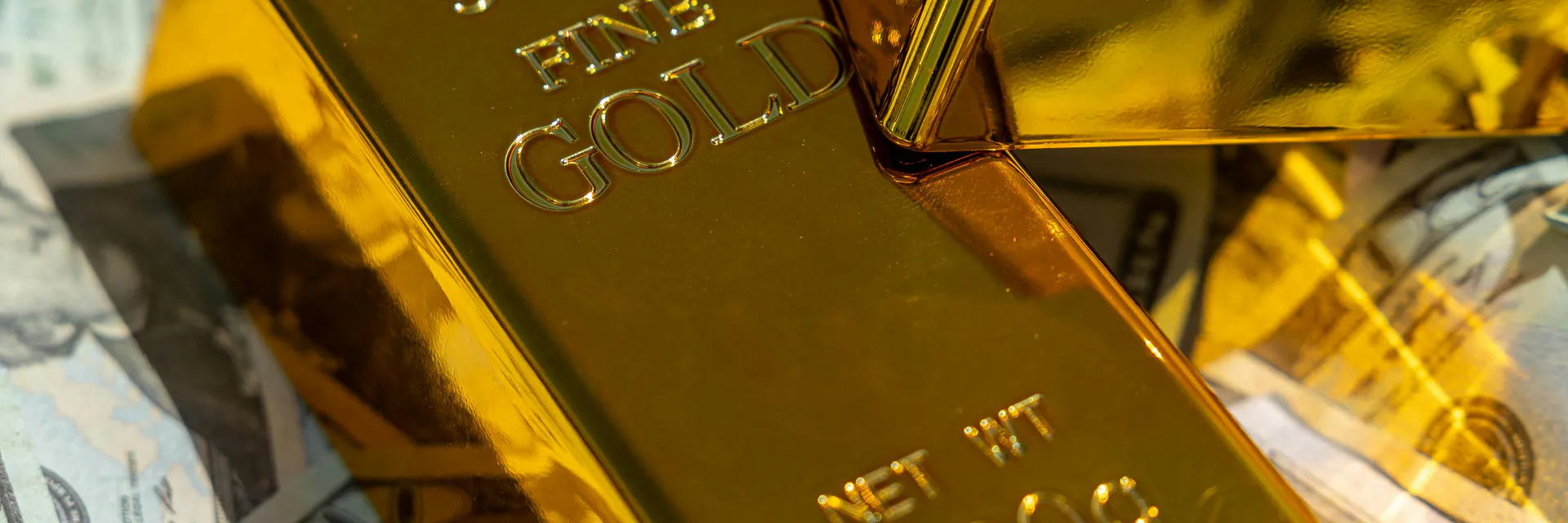
The clearest market expression of eroding confidence in the U.S. dollar is the extraordinary surge in gold. Gold has now entered what traders describe as ‘full price discovery mode’, having broken decisively above all longterm technical resistance. Soloway points out that this means that markets are no longer anchored to historical valuation frameworks; instead, gold is being repriced in response to systemic risk rather than cyclical inflation, having broken the $5,000 mark on 26 January. Another way of viewing this is that investors no longer treat gold as a speculative hedge or portfolio diversifier. Instead, it can be regarded as an insurance against systemic failure-a store of value outside the banking system and beyond political discretion. This shift marks a profound change in investor psychology.
From a technical perspective, analysts now identify strong structural support near the $4,750 level. Beyond that, the next major psychological threshold is $6,000 per ounce, with some longer term projections extending toward $10,000. While such figures may sound extreme, a move toward $10,000 gold would not represent enthusiasm for the metal itself so much as a ‘loss of confidence in fiat currency regimes’, partial dedollarization, and a fundamental deterioration in global economic stability.
Meanwhile, the U.S. Dollar Index (DXY) has experienced one of its sharpest declines in years, raising the specter of ‘imported inflation’ as commodities, energy, and industrial inputs become more expensive in dollar terms.
Why Iran is so important?
In the grand strategy game of international power politics, Iran represents the most coveted real estate on the board, serving as the pivot point for the world’s most important geopolitical maneuvers.
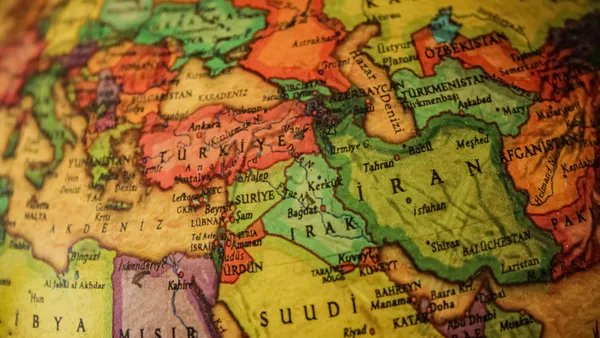
Iran’s strategic geography is arguably incomparable, built upon three pillars of power. First, it serves as a continental bridge, a rare terrestrial link between Asia and Europe that shares borders with seven distinct nations. Second, it functions as a dual-coast maritime hub, anchored by the Caspian Sea to the north and the Persian Gulf to the south. Collectively, these factors transform Iran into the world’s ultimate economic gatekeeper. By commanding the Strait of Hormuz (the world’s most vital oil artery) Iran monitors 20% of global seaborne petroleum. This unique positioning grants Tehran immense geopolitical leverage, allowing it to influence both its immediate neighbors and the world’s reigning superpowers (Sugihartono, 2024).
Moreover, this leverage is inseparable from Iran’s physical landscape, which serves as both a shield and a cage. Paradoxically, Iran is a natural fortress that both protects and confines its inhabitants. Historically, it has been besieged from the northeast by Central Asian powers and from the west by Greeks, Arabs, Ottomans, Russians, and the British. Yet its western frontier remains a graveyard for invaders; the Zagros Mountains present such immense logistical hurdles that both Saddam Hussein’s forces and Iran’s own counteroffensives famously stalled within their peaks (Friedman, 2008). These geographic advantages would present a major roadblock if the United States and Israel decide to attack Iran.
The danger is that any attempt to breach this "mountain fortress" would not remain a localized affair. In fact, it would likely trigger a global economic and security collapse. If the U.S. economy represents dry tinder, a direct confrontation with Iran may be the spark capable of igniting a global conflagration. This assessment is shared by U.N. Secretary General António Guterres, who last year warned: “I am gravely alarmed by the use of force by the United States against Iran today. This is a dangerous escalation in a region already on the edge - and a direct threat to international peace and security. There is a growing risk that this conflict could rapidly get out of control - with catastrophic consequences for civilians, the region, and the world. I call on Member States to de-escalate and to uphold their obligations under the UN Charter and other rules of international law.” (Guterres, 2025).
Strategic Miscalculation
The prevailing narrative in Washington assumes that Iran could be rapidly subdued or strategically isolated. Iran is not Iraq or Libya; it is a massive country, spanning approximately 1.65 million square kms, a population of more than 90 million people, a technologically capable regional power, with deep strategic ties to both Russia and China. For these reasons, any attempt at regime change would reverberate far beyond the Middle East.
The clear danger here, is that U.S. policy has become increasingly reactive, pulled toward a conflict it may in the longer term be unable to manage or control. Economic sanctions, characterised as deliberate economic strangulation, resemble the tactics used against Iran in the 1950s, when external pressure helped pave the way for the overthrow of Prime Minister Mohammad Mosaddegh on 19 August 1953. This episode of the 1953 coup was known as Operation Ajax. Similarly, Maduro’s kidnapping evokes Cold War era interventions in Latin America, echoing the CIA-supported coup against Salvador Allende and the transnational repression that later became known as Operation Condor. History suggests such strategies tend to escalate rather than resolve conflict.
The Economic Aftermath: A Global Shock
A prolonged attack on Iran in 2026 would likely unleash an economic shock that dwarfs the 2008 financial crisis. Oil prices would almost certainly experience a violent breakout as Middle Eastern supply chains are disrupted. J.P. Morgan warns oil could hit USD 130 if Iran-Israel war escalates. At these price levels, severe global economic pain will not be uncommon, particularly for energy dependent countries both in the global south and western Europe.
Additionally, even more concerning would be a closure of the Strait of Hormuz. It is estimated that this would trigger a seismic shock on a global scale, as approximately 21 million barrels per day-around 20% of global daily consumption-passed through this strategic chokepoint in early 2026. In macroeconomic terms, this crisis would likely plunge the world into a synchronized recession. Extremely high energy costs act as a regressive tax, crushing consumer spending and forcing central banks to fight runaway inflation.
Sachs and other like-minded economists predict a weakening dollar would accelerate inflation globally, particularly in energydependent economies. Equity markets would face a high probability of a 15-20% correction, if not a fullscale risk-off liquidation. International trade could fragment further, echoing the breakdown of global cooperation seen in the 1930s. In short, the world would become a very uncomfortable and expensive place to live in.
Conclusion
The evidence from markets and geopolitics points toward a world drifting dangerously close to a catastrophic war. The internal sickness of the U.S. economy marked by debt, speculation, and declining institutional legitimacy has made foreign confrontation an increasingly tempting, if suicidal, tactical diversion for entrenched security interests.
Yet disaster is not inevitable. Sachs argues that the United Nations, weakened though it is, remains indispensable in a nuclear age. A revival of diplomacy, an end to economic warfare, and a recommitment to multilateral restraint are the only viable alternatives to global ruin.
As market data increasingly suggests, confidence in fiscal and monetary stability is eroding. Whether the world chooses to restore that confidence through diplomacy, or watches it disappear in the fires of a Middle Eastern war, may define the course of 2026. Hopefully, we may avoid the so-called Chinese curse of “living in interesting times”.