I. ONCE UPON A TIME
You remember when I showed you my Exum, a Stone, and you asked where I had arranged this stone? Why wasn't it a rock? Was it an artifact? So, it is because you were able to read the inscription; you were able to read the stone as an inscription. For Derrida, there is nothing outside the text because everything is a text that can be read. So, what is the material culture, the bottles, the sticks, and all the remains you have excavated? All these are inscriptions; it is a written type; everything produced and exists is written (...). (Excerpt from a conversation with Ana Emília da Luz Lobato, Derrida's scholar, after I asked for help to understand the arguments of the text "Jacques Derrida: 'There is nothing outside of the text,' the 5th chapter of Reading Material Culture, one of the references I am using to write this article).
One day, not remembered exactly by any of the characters in the passage quoted above, Ana Emilia and I were talking, and, in the middle of the chat, she showed me a small stone that had been collected near a watercourse. According to her, the stone had been enchanted to be Exum within her religiosity. I looked at the rock and noticed traces of a shard. I asked her to talk more about the object and to let me have it in hand. Even though it was not my area of expertise, it was an archaeological artifact, a shard instrument found at random by Ana. We spent minutes arguing about meanings: she asked me to conceptualize an artifact, what I was calling material culture; then she was overjoyed that her Exum was also an artifact, and that conversation was over.
These anecdotal excerpts serve me to enter a part of archaeology that I often find arid: the analysis of the material culture excavated at an archaeological site. The discomfort comes from a fetish for the object that usually affects those who work as archaeologists. I cannot say that I am immune to such a fetish. Still, I agree with Latour (2012) in his argument that by considering objects as active and interconnected social actors, it is possible to overcome the idea of "fetish" as something irrational or deviant. More than that, it is possible to recognize objects' complex and multifaceted role in constructing culture, knowledge, and social interactions.
Material culture helps me to perceive relationships between people: buying, selling, exchanging, and gifting; I need to see women, men, older adults, children, and many others in the material I am excavating. Objects need to tell histories and stories.1 As aesthetically striking as the material is, if I do not see people, my interest in them tends to stay strong; it is always more challenging to give importance to Tableware in various forms and for many uses. Analogous to Ingold (2012), I consider that the lives of things usually extend along not one but multiple lines, entangled in the center but abandoning numerous "loose ends."
When we look at most of the analyses of material culture coming from historical archaeological sites in the Amazon, we find that more published research still needs to be published. Most of the studies are linked to compulsory excavations, which tend to have their contents restricted to reports. Almost always, the analysis of traces is limited to their constitutive attributes (Gomes, 2013; Marques, 2003, 2006; Marques, 2008; Martins, 2013; Silva, 2018, 2019; Zanettini et al., 2002a, 2002b) sometimes it also extends to the provenance of the objects, their uses and inferences about social stratification and customs of the people who manipulated the pieces (Seabra, 2020a, 2020b, 2020c).
Some works diverge and go beyond, such as those made in Santarém in Pará by Symanski and Gomes (2012), Muniz and Gomes (2017) and Muniz (2019); in them, the authors used material culture to also discuss miscegenation social segregation, identity, and the presence of enslaved Africans, from the analysis of the historical material culture excavated at the Aldeia site, in2 the historic center of that city. I also note the comments on the materials mined in various campaigns at the archaeological site Engenho do Murutucu in Belém (Costa, 2017, 2022). With material from the excavations at Murutucu, Costa (2018), from the analysis of clay pipes, presented an archaeological study of slavery in the sugar mills of the Colonial Amazon. Cavalcante (2017), investigating bottles and other fragments that could refer to the storage of beverages, discusses the consumption of alcoholic drinks in the area.
In the works cited above, even those that were developed academically, we can say that the analysis of material culture was eminently "archaeological." I do not make the statement as a scathing criticism. Instead, I recognize its importance and share the same understandings shared by many of the colleagues mentioned. However, I propose, in addition to the necessary archaeological analysis, other reflections that material culture/objects can offer us.
Hodder (2004), in the introduction of The Meanings of Things: Material Culture and Symbolic Expression, explains that giving cohesion/coherence to many ways of perceiving material culture and its many methods of study would be a task made possible only by using "power." It is not my intention to point out gaps in previous studies or to propose a single perception about material culture in Amazonian historical archaeology, but to do an exercise following what Tilley says about the paradigm of archaeology having changed with the conception of material culture – as a system of signification in which the external physical attributes of artifacts and their relations are not considered as exhausting their meaning (Tilley, 2004, p. 185). For the reflections that I will propose, I mobilized several authors from the field of archaeology/anthropology (Hodder, 2004; Tilley, 1991; Tilley et al., 2006), as well as theories from Latour (1994, 1995, 2012) Pierre Bourdieu (1979, 1987) and other "non-archaeologists."
According to Latour (2012), objects lend themselves well as an instrument of inquiry because they are saturated with a wide range of meanings and can stage a multitude of controversies. Latour also highlights the importance of objects and their agency in the construction of social realities, as well as the complexity of the relationships between humans and material culture, approaching the latter as an active, historic, and significant element in social life rather than simply being passively shaped by it (Latour, 1994, 1995, 2012).
Another reference to the reflections of this paper comes from Miller (1991, 2007, 2008, 2010), who deals with the meaning and role of material objects and goods in people's daily lives and the relationship of people with such objects, as well as consumption and material culture – sometimes thought in terms of power and construction of processes of domination, in the terms proposed by the French sociologist Pierre Bourdieu (1979, 1987). In Bourdieu's terms, society is constituted in conflict and diversity. This last condition allows the emergence of specific ways of seeing the world, which respect the dominant one in several senses. Thus, to use Bourdieu's categories, I interpret the excavated material as vestiges of a society constituted in Locus, where they cultivate Habitus Distinct. In this perspective, the notions of beauty, good taste, and contemplation that can incense the excavated material are social constructions from which social agents shape their ways of acting.
The material culture I will deal with here was excavated in 2019 during the archaeological research on a property in the "Ver-o-Peso Architectural, Urban and Landscape Complex." Today's site comprises the cultural center Sesc Ver-o-Peso, in Belém, at Boulevard Castilho Franca n° 768. In this article, I will present the material culture excavated at the Sesc Ver-o-Peso Site, part of a more extensive study that makes up parts of my doctoral reflections (Gomes, 2023a, 2023b).
This article aims to present the material culture excavated at the site described above, from its archaeological analysis, and to discuss inferences arising from reflections from other aspects of the research, always seeking to bring people closer to material culture to tell stories and history. I will show the diversity of objects demonstrating the potential of this materiality to understand various issues such as consumption, social relations, and even the active role that these materials can have in the construction of society.
II. BETWEEN OBJECTS, PEOPLE, AND METHODS
During the archaeological research at the Sesc Ver-o-Peso Site, throughout the excavations, and the visits of students, researchers, and even the inspection visit of fellow archaeologists of IPHAN2, conceptions about the social value of the objects came into dispute, the material culture was being unearthed. Its insertion and intersection between past and present gained body in my observations.
For the collaborators who worked with me, at first, the excavated material was perceived as useless and irrelevant, and the excavations and their methods were strange and even unnecessary, even if sometimes some material aroused their attention and curiosity, generating speculation about its monetary value (Gomes, 2023). It was also possible to perceive issues related to social power since it was an excavation conducted in the historic center of Belém, in work previously embargoed by IPHAN, within the area listed by-laws for the protection of historical and archaeological heritage, in which the right to inheritance and city was unequally distributed (Gomes, 2023b).
It was in this context that the data supporting this article were acquired. The Sesc Ver-o-Peso Site consisted of a ruined mansion that, for methodological purposes, was divided into four areas (Figure 1), area 4, where the structure of garbage deposits was found (Figure 2), the last to be investigated. In areas 1, 2 and 3, wall-to-wall trenches were dug parallel to Boulevard Castilho Franca, and three sampling units of 1 square meter each. In all the open units, traces of human action were found, and part of these objects were collected (plastics and other non-identifiable fractions were discarded, as well as construction materials that could be seen in the structure that would remain standing after the readjustment). Most material culture rescued came from area 4, structure 1 – garbage deposits.
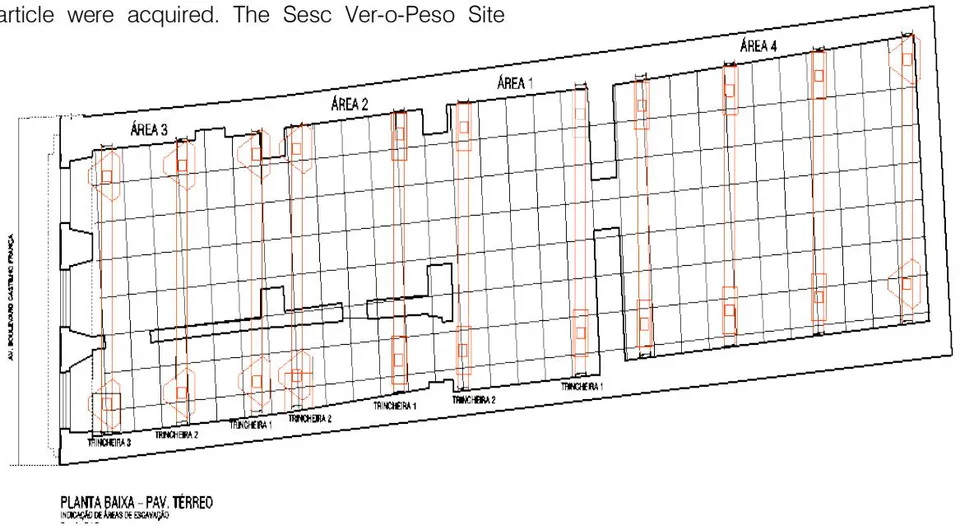
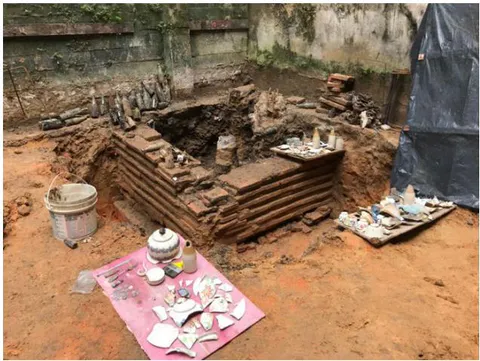
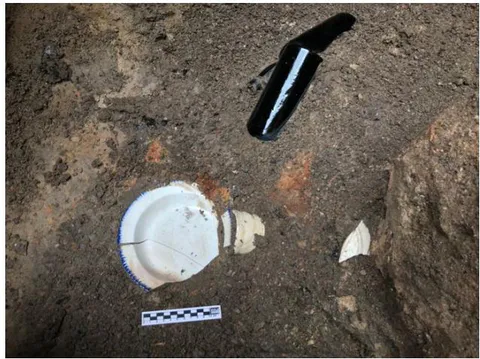
Looking at the plan of the excavation above, a cold and depersonalized image, it is impossible to imagine the fruition of the bodies that participated in that work. This, however, was continuous and not free of disputes for discursive and methodological legitimation. As detailed in other writings (Gomes, 2023a, 2023b), construction workers helped me excavate this area. Everyone wants to use pickaxes and machines to finish "my" job in a week. There were many signs of disbelief when I divided the property into areas (Figure 3) and instructed them on how we would work.
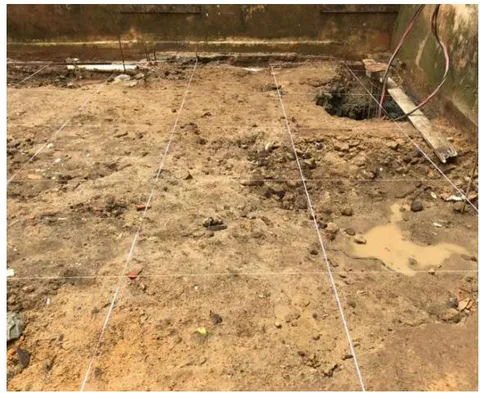
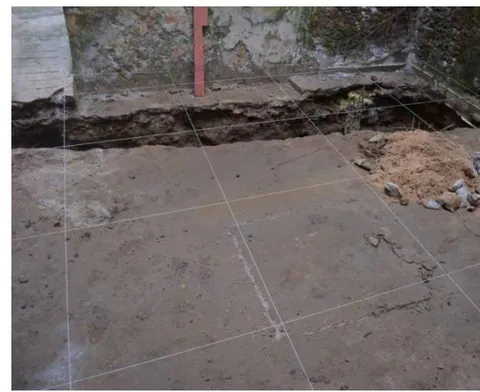
Digging differs from the building. The techniques used, the tools, and even the arrangement of our bodies during archaeological research, even if similar in some measures, need to be quieted. Reliving now moments of the excavation, I recall how body techniques are as much part of the repertoire of the archaeologist researcher, which need to be passed on to collaborators, as well as the manufacture and uses that people made of the excavated objects. In this sense, it is worth reflecting on what Mauss proposes when he says that there is no natural behavior concerning the body and that conversion into a social subject implies specific body learning. The author infers that it is also the task of the anthropologist to analyze [...] how men, from society to society, in a traditional way, know how to use their bodies (Mauss, 2003, p. 401).
The excavation conditions at the Sesc Vero-Peso site, concerning the disposition of materials in the soil and the stratigraphic/archaeological record, did not differ much from other research already carried out in the historic center of Belém (Lopes et al., 2022a, 2022b; Marques, 1999, 2003, 2005, 2006, 2009; Seabra, 2020a, 2020c). Returning specifically to the material culture excavated during the works, in Table 1, I present the quantitative that was curated in the later section. Still, I add that the fragments in Tableware figures are more significant among the items collected, followed by glass, metals, stoneware, construction materials, plastics, etc.
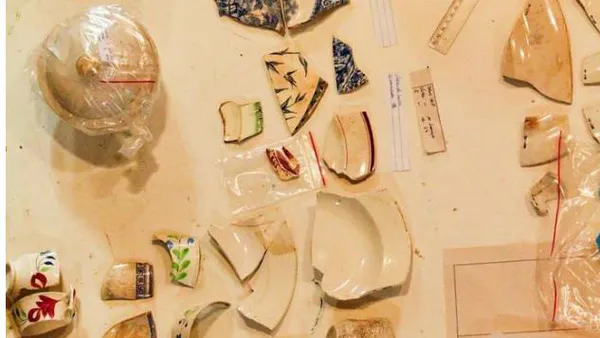
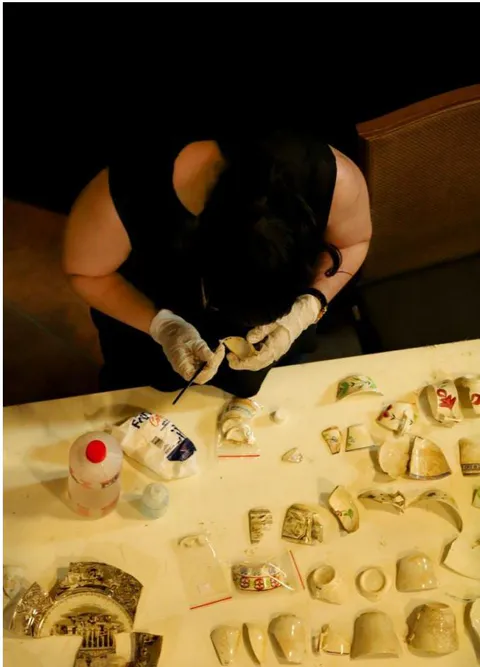
To the archaeologically analyze, all the material culture collected, during the excavation, was submitted to standard curation activities (such as cleaning, numbering, collage, and classification of the remains based on their typology). The sanitization of the pieces played a key role, as they needed to be clean and stabilized for analysis and legible numbering. For this numbering, essential in the subsequent registration in a guard institution, black fine-tipped pens were adopted in pottery, ceramics, stoneware, and milky transparent/white glasses (Figure 4). White Nankin paint was used in the dark glasses, accompanied by a mosquito feather, enamel base, cotton, and acetone. As for the metals and tiles, the numbering was carried out separately through labels tied around each piece with a string. More minor traces or without adequate space for marking (for example, handles, fragments with internal and external decoration) were placed inside zip bags, with an adhesive label identifying its number.
This interpretive movement of cataloging the excavated materials is not done without following curation procedures described in manuals, within the best practices of curatorship and conservation, all with a particular disciplinary "accent." As can be seen, Ana Emília, at the beginning of this text, appropriated an object – spiritually and cosmologically – the practice of organizing, recording, and cataloging the material culture carried out by Archaeology is not the only one. However, given the scientific character of incense, this method has been asserting itself as hegemonic throughout history. I was aware of the insertion of archaeology in a framework of power, and I performed the procedures described in the sequence.
Regarding the archaeological analysis of the materials, I will present the data in infographics for this article, with more attention to ceramics and glass for their numerical representativeness. However, it offers all the typologies found. The criteria used to analyze material culture considered its typologies and specific characteristics.
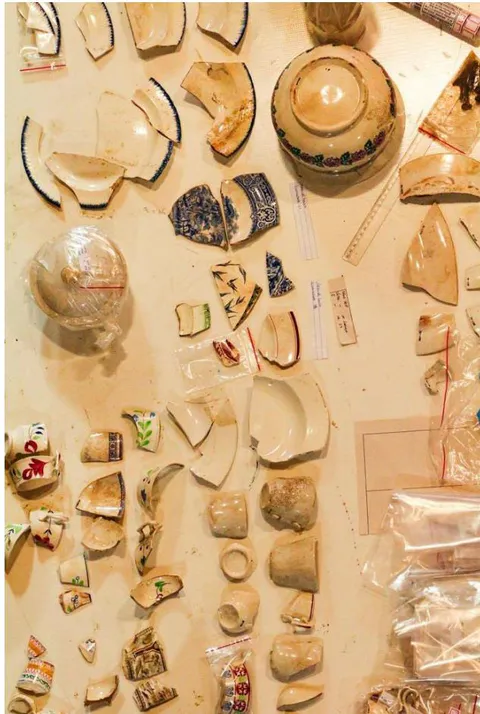
Concerning Tableware, or historical ceramics, after the cleaning and numbering, there was special attention to the possibility of reassembling pieces and thus proceeding to the analysis from the identification of their main differentiating attributes. The variety of shapes and different modes of production make ceramic tableware present a wide range of characteristics. Among the many fragments of Tableware and even whole objects, we can divide this material culture into two types: porous and absorbent (such as refractory Tableware, Tableware, stone, or granite powder Tableware) and the non-porous - non-absorbent (glazed Tableware, stoneware, and porcelain) (Tocchetto et al., 2001). The basis of the analysis form was the scripts of Costa (2010a, 2010b).
For the analysis of the glasses (See: Castro, 2009; Zanettini & Camargo, 1999), the following were observed: color, morphology, production technique, types of lip, base, neck, ring, and body (mainly for the bottles), engraving (identification of the manufacturer or other information about the object), mark (some mark of use, decomposition, breakage and any other relevant type) and observations of some vital characteristic about that fragment and piece (Cavalcante, 2017; Fike, 2006; Rosa, 2019).
For the metals, the analysis was made from the format of how they presented themselves. The coins' year of manufacture, values, and symbols printed on them were identified. As for the cutlery, its characteristics and its state of conservation were observed. Concerning the traces of collected construction materials, such as tiles and tablets, the composition of the ceramic product (or paste) was considered in the case of the former, and for both, the manufacturing material, forming technique, coloring, and decoration technique.
The criteria described above, and even all the manipulation of the objects that this section deals with, are part of the repertoire used by many archaeologists (Castro, 2009; Schávelzon, 1998; Sironi, 2010), including this author, to give meaning to the material culture excavated: arbitrarily, we first remove the objects of human action, and only then seek the relations that permeate them.
III. TABLEWARE, BOTTLES, AND OTHER OBJECTS
In my field diary of January 10, 2019, I recorded:
The Area I completed yesterday it has been scrutinized and photographed. The separated materials are being washed away when the rain does not allow it to be excavated. In area II, trench one was split in two. Portion A was completed, and we found a tiled floor in Portion B.
I begin this section, where I intend to show the results of the analysis of the material culture excavated at the site, with the excerpt above because the description is like a representation, necessary to fill in the mandatory reports, but that does not tell stories: perhaps a part of the history, of my relationship with the excavation, and with the people who worked with me, of the beginning and end of it. One of the remarkable results of this work was undoubtedly to bring together the people who collaborated with me in the archaeological process. I have addressed this aspect in other articles (Gomes, 2020, 2023a, 2023b). Still, I think it is pertinent to go back to it here and make a Mea culpa since the people who participated in the excavation, unfortunately, did not have access to the material when it was being analyzed – and many will probably no longer have any contact with them, in a script already familiar in archaeological works.
Following in part the model proposed by Costa (2010b), 569 remains were analyzed, but more than 1000 fragments and distinct pieces were excavated. Here, it is worth saying that the total number of objects does not necessarily correspond to the total of material analyzed (Table 1). This was because, during the curatorship, all the reassembled fragments began to receive the same numbering so that the same object could be constituted by well more than 20 or 30 fragments.
| Material type | Typology | Quantity |
| Tableware | Whole and reassembled fragments and/or parts | 247 |
| Glass | Whole or broken bottles | 143 |
| Cup base | 2 | |
| Neck | 2 | |
| Bottles | 21 | |
| Marbles | 6 | |
| Plate | 1 | |
| Cups | 7 | |
| Miscellaneous glass fragments | 17 | |
| Metal | Rings | 6 |
| Unidentified metal fragment | 1 | |
| Cutlery | 7 | |
| Coin | 33 | |
| Stoneware | Fragments of Bottles and Whole Bottles | 26 |
| Construction materials | Tile | 18 |
| Tiles | 5 | |
| Plastic | Toothbrushes | 9 |
| Plastic buttons | 9 | |
| Ceramics | Miscellaneous fragments | 8 |
| Bone | Half-button fragment | 1 |
| Total material Analyzed | 569 | |
a) Tableware
In this category were the Tableware and their derivations, the objects made of stoneware. The analysis results concerning its attributes and characterizations are summarized in Infographics 1 and 2 below. In the case of pottery, the analysis began during the identification, separation, and dry-cleaning process to remove residues that hindered the visualization of their folder or decoration or could represent an obstacle to future reassembly. All fragments received a code and were classified based on their shape, paste composition, enamel, decoration technique, decorative style, decorative motif, color, morphology, presence or absence of stamps, marks of use, and observations on the fragment. The infographics below condense the information that will be discussed later. There was the cleaning, cataloging, and analysis of 415 pieces in Tableware, accounted for individually, not considering the reassembly. For methodological and didactic purposes, for the
preparation of the infographics, the reassemblies were considered as single pieces (so the amount of Tableware in Table 1 is 247).
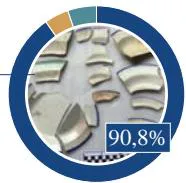
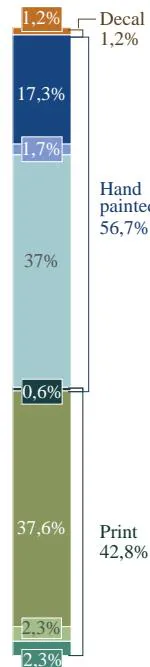
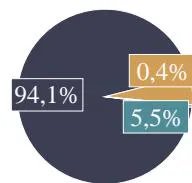
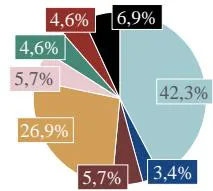
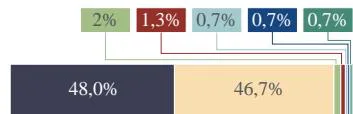
Regarding the Paste, more thanof the sample is fine faience. About the enamel, the type of Blue-Pearlware represents the overwhelming majority. Decoration techniques varied widely, but the predominant ones were Transfer Printed, Hand Painted, Modified Stamping, Stamped Surface, Blue Blur, and Decal. With the decorative styles used in the pottery, the most found were White and Ble, Oriental, Simple, Vinous, White Ware, and Industrial Production. Concerning the colors,
Blue was dominant, but we can say that all combinations of these were also observed.
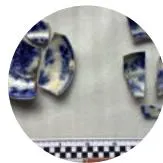
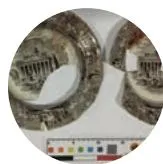
We observed 41 variations and combined decorative motifs, among which the highest incidence were the flower and leaf/ornamental floral motifs, flowers and leaves motif, shell-edged motif with Modified Surface, and a few fragments with Chinoiserie motif. Having morphology as an attribute (Figure 5), 33 distinct types of elements were identified, of which we highlight pieces of cups, fragments of saucers, components of deep Tableware, portions of shallow words, fragments of plates (or bottom or external), and bowls.
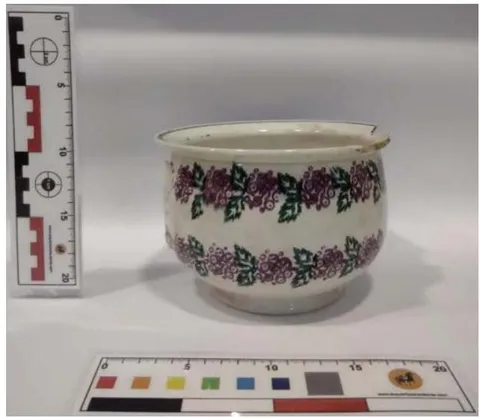
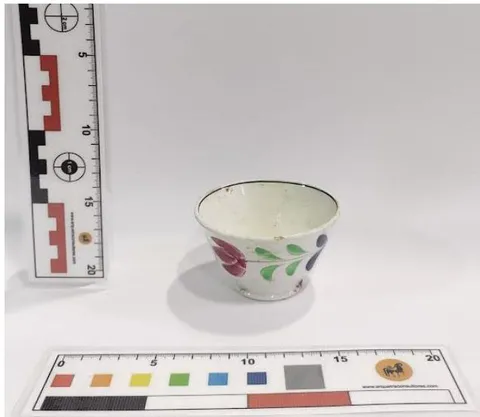
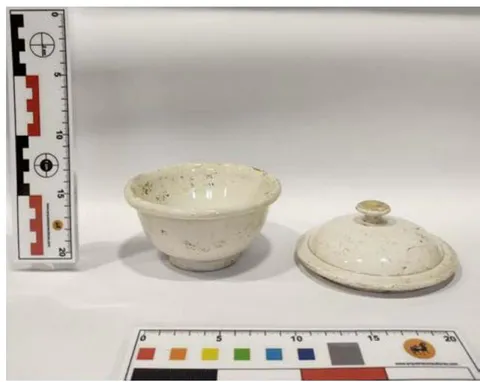
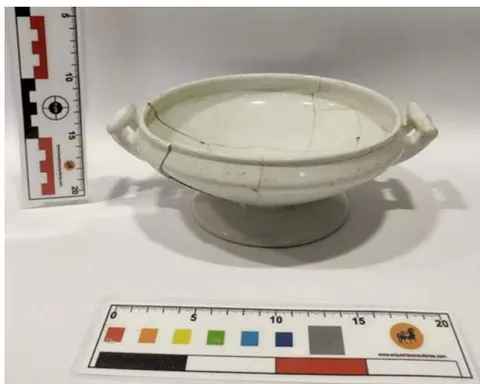
Infographic 1: Archaeological remains of Tableware by attributes
TABLEWAERE REMAINS BY ATTRIBUTES
Sesc Ver-o-Peso site
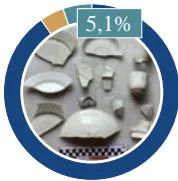
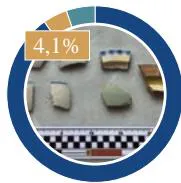
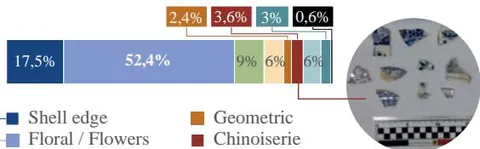
Tablewaere with a Chinoiserie decorative Friezes Without decoration
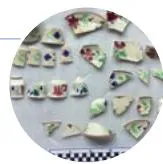
Tablewaere with the hand-painted technique and decorative floral motif with flowers and leaves.
Pearlware Porcelain Creamware
Blue Cobalt blue Brown Polychrome Pink Green Red Other colors
Industrial production White Tablewaere Simple Style ■ Oriental Style
White and blue
White and Blue
Style
Vinous Style
18.8% Plate 3,1% Dessert plate Others Lid Plate
43.8% Deep plate
31.3% Shallow plate
3.1% bottom/base of plate
Saucer Urinal
Cup Bowl
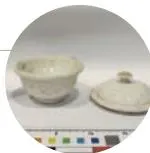
Urinal (semi complete)
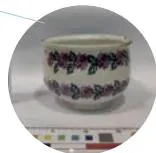
Most stamps found in Sesc are of industrial production, a temporal indication of the nineteenth and twentieth centuries. Symbols present themselves as excellent temporal markers, considering that through them, it is possible to verify both the origin of the country where the fragment was produced and, in some cases, the factory of its production.
Infographic 2: Identifiable Stamps found on the dough remains on Sesc Vero-Peso Site.
STAMPS/SEALS
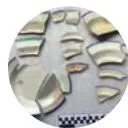
Plate with stamp Davenport.
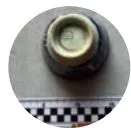
Bowl with the seal L. M. & Cie. Déposé... REILER... SILET MONTEREAU/PORCELANE OPAQUE.
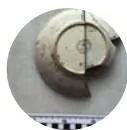
Saucer bottom with seal PORCELAIN OPAQUE ANGLAI-SE D. JOHNSTON./ VIEII... ARD & CIIE/BORDEAUX.
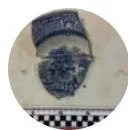
Plate with stamp Woodland/W. Baker & Co.
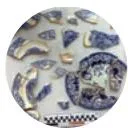
Plate with stamp Porcelaine Royale Opaque Bruxelles J. B. Cappeleman's Aime W. Smith & Co.
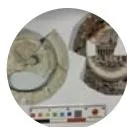
Plate with stamp JGCODWIN... / VIEWS OF LONDON/ JEACOMBRE POTTERY/LIVERPOOL.
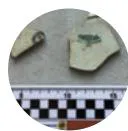
Fragment with the seal HONI SOIY MAL Y PENSE/BAKER.

Terrine bottom with seal IRONSTONE CHINA J & G MEAKIN HANLEY ENGLAND/S. AGUIAR & Co. PARÁ.
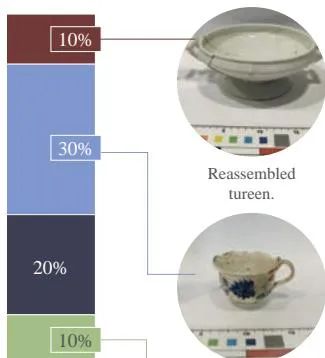
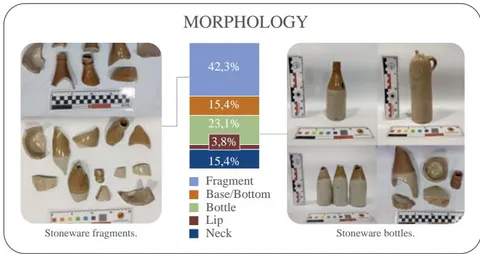
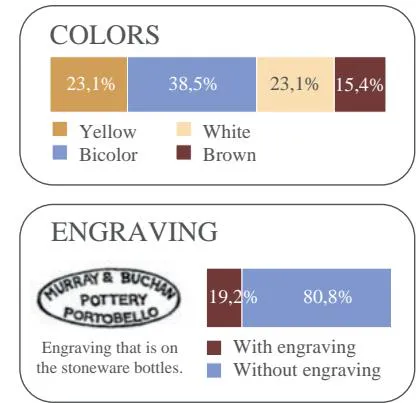
Stoneware is a fine-grained ceramic cooked at elevated temperatures, possessing a glazed characteristic. There are two types of stoneware: white and grey. The first is characterized by being pasted in white with a glassy sound, without polish, porosity and enamel fused to the paste. The second is characterized by having a darker grey, beige, and brown paste, finer granulation, enamel combined to the paste, and waterproof. During the excavation of Sesc Ver-o-Peso, six bottles and 20 fragments of other bottles of this same material were collected, totaling 26.
Infographic 3: Stoneware by attributes analyzed
STONEWARE REMAINS BY ATTRIBUTES
Sesc Ver-o-Peso site
b) Glasses
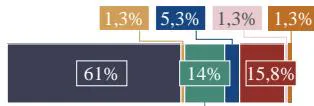
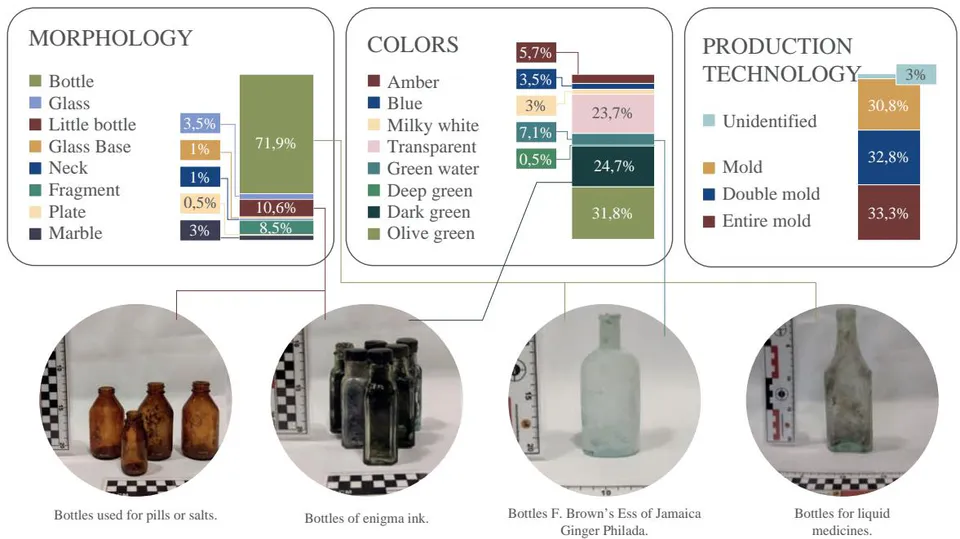
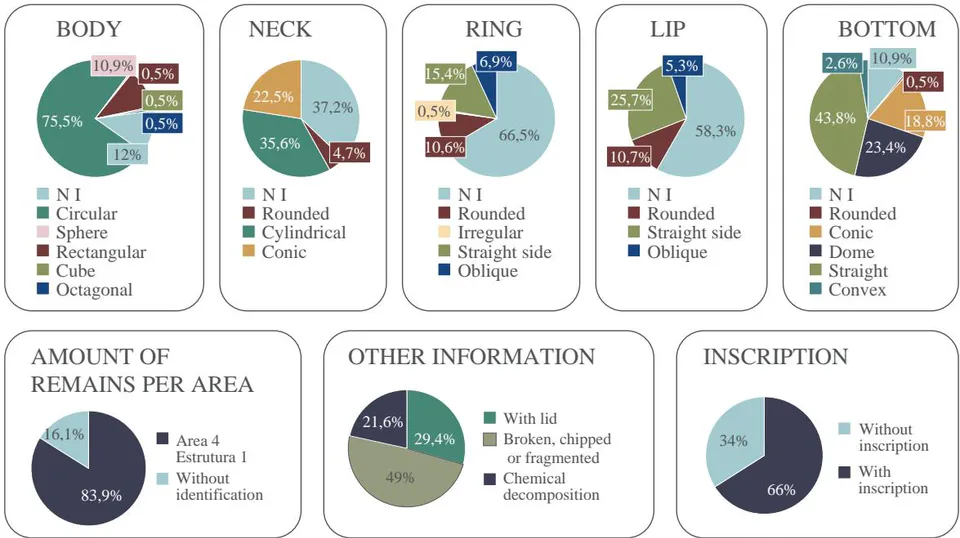
In historical archaeological sites, glass is a common material in different shapes, colors and uses. For example, we can mention bottles, perfumes, medicines, decorations, glasses, pots, windows, chandelierers, and other objects. This type of trace was the second most found during the research at the Sesc Ver-o-Peso site, with 209 fragments and pieces. Among these pieces, the most found were the bottles and jars, with 143 samples. All the bottles and jars were found in structure 1 of area 4, the archaeological dump, but many fragments were found in the other regions.
For the analysis of this type of trace, the following characteristics were observed: color, morphology, production technique, types of lip, base, neck, ring, body (mainly for the bottles), engraving (identification of the manufacturer or other information about the object), mark (some mark of use, decomposition, breakage, and any different relevant kind) and observations (some vital characteristic that needs to be observed about that fragment and piece).
Infographic 4
GLASS REMAINS BY ATTRIBUTES
c) Metals
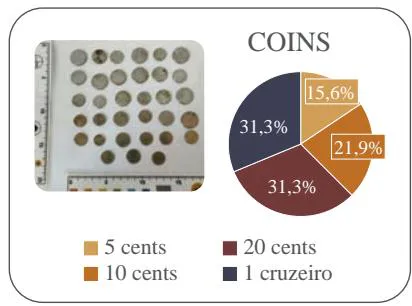
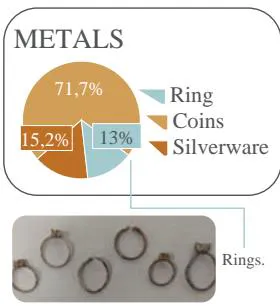
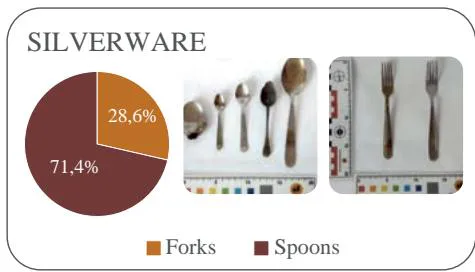
Three types of metallic objects were found in the excavations of the Sesc Ver-o-Peso mansion: coins, cutlery, and rings, so the analysis of this type of trace was made from the format of how it presented itself. A study was made for the coins, identifying the year of manufacture, values, and symbols printed on them, and another for the cutlery; we observed their characteristics and state of conservation. In the case of the rings, we discovered that they were an ornament that came as part of a candy intended for children.
Infographic 5
d) Construction Material
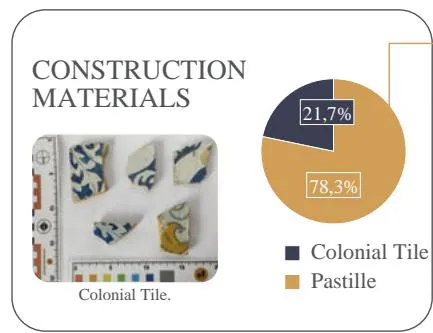
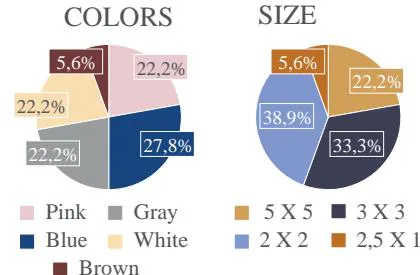
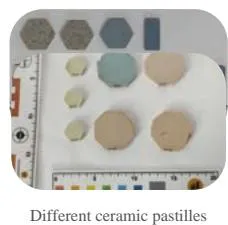
This type of trace is presented in two distinct formats: tiles and ceramic tablets. We collected a sample of each type found; therefore, 23 construction materials were collected, 18 pills, and five tile fragments.
e) Plastics
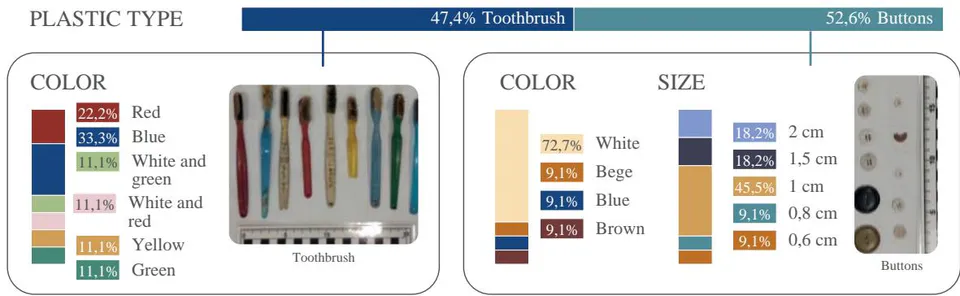
During the excavation of Sesc Ver-o-Peso, 19 pieces of plastic were collected and divided into two shapes: 9 toothbrushes and ten buttons of varied sizes and colors. The buttons are primarily white, being only two colors. Their sizes vary between 0.6 to in diameter: 2 with with with with and 1 with . Between the buttons, there is still a made of bone, which is broken in half.
Infographic 7
IV. OBJECTS TELL HISTORIES AND STORIES
The results presented above can be read in many ways. The data are part of an archaeological study. From the analysis of the remains recovered during the excavations, it is possible to perceive a remarkably close correlation with the material culture excavated in other research in the area covered by the federal listing of the historic center of Belém. This material culture inserts Belém in the context of mercantile transactions and various forms of relationship linked to the expansion of European capitalism, which developed in the region in the eighteenth, nineteenth, and twentieth centuries—addressed in another work (Gomes, 2023b).
In the excavation treated here, pottery was the predominant material culture. Among the Tableware, the fragments of Fine Faience constituted the most significant sample; this paste had its production started in the second half of the eighteenth century and extended until the end of the nineteenth century (Lima, 1995; Miller, 2009; Symanski, 2008; Tocchetto et al., 2001; Zanettini, 1986). There was a tiny display of porcelain fragments to the detriment of faience. This can be inferred by the high value of the latter at the expense of the former. By examining the evidence collected from an excavated garbage deposit, it was possible to find several fragments or even pieces of pottery, and many objects could be reassembled. Below is an inference made by Santos (2005) that liquor containers have a solid connection to the history of men. On the other hand, pottery, in addition to being considered an indicator of social position, Lima (1995, p. 175) says that this belonged to the female domain and was part of the utensils used by women over the centuries.
Tableware is a valuable clue to infer the daily practices of the populations (Lima, 1995, 2011; Symanski, 1998, 2008; Tocchetto, 2003; Tocchetto et al., 2001). The data obtained from Tableware, because of the reflections of the previous archaeologists, end up highlighting the importance of this material culture as a source of information about the daily life of past communities, especially about the activities and roles played by men and women. Given that the area of the site combined commercial and residential use and, over time, was a prestigious place to live to the degraded area due to port activity and subsequent predominance of trade, it does not seem to be adequate to make any definite statement that separates the past use of objects, and their contents, by gender.
This sense of economic value, which also becomes social value – can be interpreted as a clue about what the excavated material says: about the style that unites the practices and goods of a singular agent or a class of agents (Bourdieu, 1994). Second, Bourdieu (1994) states that there is, in social life, a "generative and unifying principle that retranslates the intrinsic and relational characteristics of a position as a unitary lifestyle, that is, as a unitary set of choices of people, of goods, of practices" (p. 23). Distinct distinguished, these principles, retranslated into material culture, are also operators of distinctions: they mobilize forms of differentiation or use the standard tenets of differentiation differently. According to the author, "classificatory schemes, principles of classification, principles of vision and division, different tastes." (p. 23).
By studying the pieces of pottery found in these excavations, it is possible to obtain Insights into the culture, economy, and social organization of Belemense society, which lived in this part of the city at the end of the century. XIX and the beginning of the century. XX and help in the historical reconstitution and understanding of the daily practices of that population. One of the insights, and we can enter the world of speculation, given us by Miller (1991, 2008) in research on consumption and material culture, in which he examines how people relate to their objects and how consumption affects everyday life and social identities. Looking at the pottery fragments, we can foresee a long-term domestic life in the mansion, even if the area was used with commercial tapes. Even today, Tableware continues to affect everyday life, and they still talk about purchasing power and other social markers. When Miller (2010) Emphasizes the importance of considering material culture as a lens to understand social practices and meanings, it is reasonable to think that if Tableware gives a sense of domestic, it can also be linked to issues such as emotional attachment and the role of consumer goods in the construction of identities.
Within the Amazon region, glass is a material widely found in the excavations of historical sites, mainly because of its resistance to the weather Sironi (2010). The study of this material culture is critical due to its popularization after the Industrial Revolution, which allows us to formulate hypotheses about the reconstruction of the daily life of different layers of the population, understanding their customs, lifestyle, consumption patterns, and social stratification (Castro, 2009; Schavelzon, 1998). Glass also lends itself well as a chronological marker, given that its production, with various techniques, is well documented (White, 1978; Castro, 2009).
In the specific case of the glasses analyzed in this project, a detailed chronological table was not made to identify the period of production of the bottles and an estimate for disposal. However, the characteristics of the fragments point to the second half of the nineteenth and early twentieth centuries. Santos (2005) states that drinking in taverns or bars in the late nineteenth and early twentieth centuries is traditionally considered a masculine ethos. The bottles can undoubtedly be used to situate Bethlehem within the expansion project of capitalism since they are direct products of the European Industrial Revolution (Gomes, 2013). The bottles of alcoholic beverages can also create discourses since this historical material culture keeps numerous social and economic relations Fields (Cavalcante, 2017; Santos, 2005).
Excavating the area of Solar da Beira, on the same Boulevard Castilho Franca, in the same period in which I excavated the site Sesc Ver-o-Peso, Seabra (2020c) He came across a substantial number of bottles arranged in much the same way as those found by me. In a recently published article, Seabra and Pina (2023) discuss the reuse of these objects found in the excavations of the Solar da Beira, a prevalent factor in the Amazon of the past, still as in many communities, riverside, of the present. Seabra and Pina (2023, p. 21) indicate that the specific debate about the reuse of glass bottles is an early stage to (re)discover the culture of the region and (re)validate contemporary practices through comparison with ancient traditions. Cavalcante (2017), analyzing bottle glasses at the Engenho Murutucu site, also in Belém, sticks to the consumption of beverages in that place.
The bottles excavated at the Sesc Ver-o-Peso site can corroborate the hypotheses of the two analyses: there was reuse, and they certainly inform about the consumption of beverages in the area. The ambivalence of the bottles gives them a kind of anonymity in the archaeological record, something similar to what Menezes (1983, p. 112) attributes as an advantage of material culture because such a character of anonymity, associated with seriality repetition, makes artifacts an exceptional vehicle for the study of a domain to whose visceral importance historians, in recent years, have drawn attention: every day, the realm of the banal, of the purification of the event, of the tendencies almost in a "natural" state. Drinking is in the bland sphere, as well as the reuse of bottles in a region where these objects offer many possibilities for storing drinks, bottled, etc.
Among the substantial number of remains of bottles of alcoholic beverage glasses, some bottles of medicines, cosmetics, perfumery, ink cartridges, and marbles were also found. Although this research is not the goal, there is openness to do a more in-depth study on health and diseases, such as that done by Bitencourt (2011) in Porto Alegre.
In the late nineteenth century, Belém and other Amazonian cities, driven by the sale of rubber, went through the period known as Belle Époque. The mansion and its material culture, which became the focus of this study, located on Avenida Boulevard Castilhos Franca, which was one of the first wide public roads built in the capital of Pará during this golden period, cannot be dissociated from the Belle Époque
Belenese, even if the economic cycle was relatively short, left indisputable marks on the city's landscape and archaeological record. In this article, I will not dwell on this period.
Bezerra (2011, 2012, 2013) reflected on the relationship of people with objects and the material culture identified as archaeological by researchers in the village of Joanes, in Marajó, part of which ceramics and glass, and in other areas of the Amazon, points to a variety of possibilities within this relationship. The "things of the past" (Bezerra, 2012, 2013) and material culture lend themselves well to discussing the symmetry between people who research archaeology and people who live on, transit through the sites, or relate to the artifacts/things differently.
V. THIS WAY, RIGHT THIS WAY
When drafting this article, the circumstances of the excavation days came to mind at every moment. I recalled the day we dug up the marbles. Amid the discarded material, there are other traces of toys, and I remembered the French movie "Le fabuleux destin d'Amélie Poulain," when the character finds, hidden behind a tile on the bathroom wall, a box with toys and other childhood memories of a stranger who had lived in her apartment in the past. Amelie, tireless, returns the objects to their forgotten owner and alters the course of his life. Using various objects, Amélie changes the course of many lives: sometimes punishing them, as her neighbor prevented from seeing a soccer game, as one should, and the owner of the vegetable stand who mistreats his helper, either making you dream of a traveling Garden Dwarf or giving you answers to a mystery of the torn photos – dear reader, if you have not seen the movie, do it (Jeunet, 2001).
Given the various uses of the mansion and its total abandonment during the research, in addition to its other abandonments and the disposition of the archaeological record, I could not find the children who would have played with those objects. Still, I have no way not to imagine those toys caused laughter, motivated exchanges actively, and gave rise to competition. Today, as an archaeologist and a scientist, I can say what materials were made of, since when these materials began to be manufactured, and this information I can give more precisely; however, it seems more attractive to imagine a time when in that landscape, today so tumultuous of commerce and historical center, children played marbles (in Pará marbles are called shuttlecocks), people hid shards of tableware so they would not let them see who broke them, or bottles were stored with healing to be reused.
Material culture does not have only one analysis key, even in archaeological research. Proposing chronologies and inferring consumption habits from the monetary value of objects found in historical sites is a possibility, but basing the analysis of these objects on these two assumptions is limiting and contributes little to the broader understanding of material culture as a field of study that investigates material objects as an integral part of human experience and culture in general. Which I agree with Prawn when the author says that material culture:
(...) reflect, consciously or unconsciously, directly, or indirectly, the beliefs of the individuals who made, commissioned, acquired, or used them and, by extension, the beliefs of the wider society to which they belonged (Prawn, 1982, pp. 1-2).
If Archaeology, in a reductionist way, is the study of material culture (Lima, 2011), Trigger (2004) highlights that material culture is a source of information about human behavior. However, neither archaeology nor the studies of material culture have definite limits: there is archaeological research that has little or almost no analysis of material culture, as well as studies of material culture linked to other disciplines (Cochran & Beaudry, 2006; Jones, 2007).
In this way, right this way – not all Archaeology uses material culture. Not all study of material culture is associated with Archaeology. Still, I cannot conclude this paper capable to remember one single story that has some human interaction, whether fable or based on real life, that is not in a certain way narrated, or, to resume the chat with my friend Ana Emilia, at the beginning of this article, written with material culture. Objects ensure fascination, frighten, and give power – from Harry Potter's wand to a Jedi's Lightsabers or the ONE Ring of Power, Gollum's precious, heroes and villains are adorned by objects. Mirrors that seek true beauty, lamps that hold genies that guarantee desires, more tragically, the Ax Rodion Raskolnikov used to kill and stolen in Dostoyevsky's novel Crime and Punishment, all stories mediated by some object. Denise Schaan (2009) said that Archaeology is for telling stories, but these stories must be good. Gone are the days when aspects of material life, the archaeological record, were analyzed in a merely instrumental way, serving as a control and, in the happiest cases, complementation of textual documentation – used mainly for dating or for the confirmation or denial of what has come to us verbalized (Menezes, 1983), yet storytelling will always, and invariably, privilege one group/spectrum/idea over others. There is potential in the time in which we live; with the challenges that times, material culture can privilege those who have never had privileges.
ACKNOWLEDGMENT
Thanks to archaeologists and friends Ms. Amanda Seabra and Ms. Amanda Viveiros Pina for their help analyzing the archaeological remains. I want to thank my dear friends Ana Paula Cunha, Marília, Duque,
Camile Castelo Branco, and my tutor, Dr. Daiana Travassos, for their careful reading of the original manuscript in Portuguese. However, I am solely responsible for this text and what it expresses.
Footnotes
In Portuguese, the terms History and Story (História and Estória) do not have the same separation as in English. History is used much more, and the story is increasingly less used. I separate them, but I do not intend to hierarchize them. (p.12) ↩
and the funding from Sesc Pará for the excavations and analyses of archaeological material. (p.1) ↩