
I. INTRODUCTION
Albert Einstein in 1905 first showed that light, which had been considered electromagnetic waves, must also be thought of as particles. American chemist Gilbert Lewis later coined the term photon for light quanta .
As one of the subatomic particles, photons are bosons, having no electric charge and one unit of spin; they are particles that are carriers of the electromagnetic energy.
The energy of a photon depends on radiation frequency, from high-energy gamma-rays and X-rays, through visible light, to low-energy infrared and radio waves. All photons travel at the speed of light[^3].
But the nature of photons still needs better understanding; and the functionality and importance of the photons still needs deeper realization.
II. THE NATURE OF PHOTONS
Photons are matter that have energy but are almost massless[^4].
Photons move by oscillating, because of their energy.
Photons tend to share energy with other matter to form the minimum energy bonds and become bonded photons.
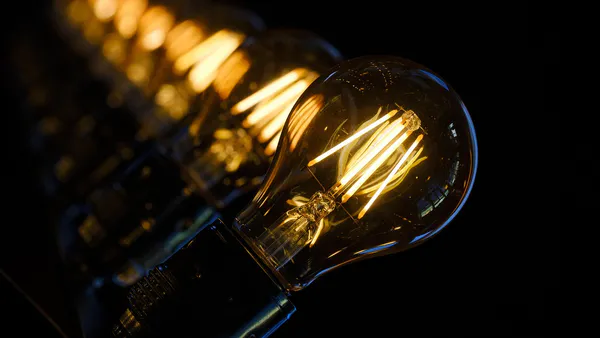
When bonded photons get extra energy than their bonding force, they oscillate faster and break the bond, becoming free photons (light).
Still oscillating with the extra energy, free photons leave the energy source, at the speed of almost 300,000 km per second[^3], until they transfer their extra energy and become bonded photons again.
The oscillations of free photons have different frequencies and wavelengths, depending on the energy. Free photons with wavelengths from 380 to 700 nanometers are visible light; the rest are invisible light.
Let us look at some examples and evidence of how these natures (rules) work:
III. WAVE-PARTICLE DUALITY
As mentioned above, Albert Einstein in 1905 first noticed the phenomenon of wave-particle duality. The observations of the Compton effect by American physicist Arthur Holly Compton in 1922 could be explained only if light had a wave-particle duality. French physicist Louis de Broglie in 1924 proposed that electrons and other discrete bits of matter, which until then had been conceived only as material particles, also have wave properties such as wavelength and frequency. American physicists Clinton Davisson and Lester Germer, and English physicist George Paget Thomson experimentally established the wave nature of electrons in .
Based on the nature of photons, the nature of wave-particle duality is easier to understand:
Free photons are particles. They travel by oscillating with energy, like waves. So, wave-particle duality is just the way they are.
For any other free and small particles, since they all have energy, they will all oscillate like waves. Although, for particles with bigger mass than photons and electrons, the oscillations are not very apparent, because of their energy-mass ratio.
IV. X-RAYS AND GAMMA RAYS
Photons bonded with electrons become X-rays, while photons bonded with the atomic nuclei become gamma rays[^9], when they get enough energy to break free and carry the energy away.
Gamma rays have the shortest wavelength of photon oscillations, shorter than those of X-rays, because gamma rays carry much more energy. The deeper reason is that photons bonded with atomic nuclei share much more energy and need much more energy to break free[^5].
V. AETHER (ETHER)
Aether is a theoretical universal substance believed during the 19th century to function as the medium for transmission of light. Although physicists found no substance of aether, the ideas and theories persist10, 11.
Base on the nature of photons:
Free photons travel by oscillating, with their own energy, in the direction of leaving the energy source, at the speed of almost 300,000 km per second. They do not need a medium.
So, free photons can go everywhere in the Universe, hence, they are energy carriers of the Universe.
So, I propose that free photons are the actual substance of aether.
VI. ENERGY CARRIERS OF THE SOLAR SYSTEM AND THE UNIVERSE
Electrons are a kind of energy carriers in matter and systems, but they need a medium.
Since photons do not need a medium to transfer energy; photons are ubiquitous; and free photons are energy carriers of the electromagnetic fields, I propose that:
Free photons are the main energy carriers of the Universe.
I also assume that the other kind of carriers are neutrinos.