
I. INTRODUCTION
Today, with the creation of the largest space telescope, the James Webb Space Telescope, astrophysicists have the opportunity to look into the depths of the Universe, 13 billion years old in the infrared, and there they did not see the expected picture of the Big Bang. In July 2022, a large group of astrophysicists published an article called "Panic!" [1]. The gravitational lens created by the galaxy cluster Abell 2744 at redshift allowed the telescope. J. Webb to observe 11 galaxies at redshifts , estimated by the photometric method [2]. The X-ray emission of one of these galaxies at was then measured by the Chandra Space Observatory, and it was concluded that the galaxy contained a supermassive black hole (BH) with a mass of , producing powerful radiation during gas accretion [3]. The mass of such a black hole is comparable to the mass of all the stars in the galaxy, while in modern galaxies, the mass of the central black hole is of the mass of the stars. In addition, it is difficult to explain the presence of such a massive black hole in that era when the Universe was million years old. A black hole of stellar origin would not have time to increase its mass to the indicated value. In the new cosmology, a dark matter halo can act in the primary Universe as a reasonably dense object that can shrink (collapse) under the influence of gravitational forces into a black hole. The question arises whether astrophysical dark matter core-halo configurations can form at all and whether they remain stable on cosmological time scales. The authors of the article "On the formation and stability of fermion halos of dark matter in a cosmological framework" give an affirmative answer to this question [4]. Moreover, their results prove that a dark matter halo with a core-ho morphology is a very likely outcome during the nonlinear stages of black hole structure formation. Having become acquainted with the bipolar theory of gravity by Valery Etkin, one may wonder what will happen to the dimensions of the Schwarzschild sphere if gravitational forces are calculated not according to Newton's law, but according to the bipolar law of gravity (more substantial)? [5]. It is easy to calculate the Schwarzschild radius (gravitational radius) of any body within the framework of classical concepts. It is necessary to take the formula for calculating the second escape velocity:
where v2 is the escape velocity. M is the mass. r is the radius. G is the gravitational constant. the proportionality coefficient established experimentally. Its meaning is constantly being clarified: it is now taken to be 6.67408 m3 kg−1 s−2. Let v=c. We make the necessary replacement in the equation and aet: ra =2GM/c2, where ra is the gravitational radius. On the right side of the equation we have two constants - the gravitational constant and the speed of light. So the Schwarzschild radius is a quantity that depends only on the mass of the body and is directly proportional to it. To get some idea of the size of the Schwarzschild radius, we point out that for the Sun it should be slightly less than 3 km. That is, if the entire mass of the Sun is inside a sphere of such a radius, then the Sun will turn into a black hole. Since the Schwarzschild radius for the sun is 3 km, then for a supermassive black hole with a mass of a billion solar masses, the Schwarzschild radius will be about 3·1012 km. The observed size of the massive accretion disk in galaxy III Zw 002, which is located at a distance of about 22 million light years from Earth, is about 52.4 light davs or 150·1011 km. Professor Valery Etkina proposed a new law of gravitational interaction of masses, which asserts the existence of forces of both attraction and repulsion depending on the sign of the density gradient of matter. [5]. He found the conditions under which the new law transforms into Newton's law of gravitation and showed the existence of "strong" gravity. many orders of magnitude greater than Newton's gravitational forces [5]. Using the principle of equivalence of mass and energy, which, when applied to any (baryonic and non-baryonic) continuous medium with mass , has the form Professor Etkin, using the concept of energy density of the gravitational field ( ), where is the density of matter, obtained the potential of the gravitational field:
where const, i.e., the square of the propagation velocity of perturbations in the gravitational field.
By analogy with the concept of the strength of the electric and magnetic fields, Etkin introduced the concept of the strength of the gravitational field , then is expressed in terms of the density gradient of the substance by a simple relation:
Xg = -cg^{2}\nabla\rho/\rho,\(\mathrm{kg}/\mathrm{m}^{2}\cdot\mathrm{c}^{2}).Professor Valery Etkin called this expression the binary law of gravitational interaction, since, in accordance with it, gravitational forces can have a different sign depending on the sign of the density gradient . Since , then, in accordance with (3), the value of acceleration in the gravitational field is proportional to the relative gradient of the matter density:
Professor Etkin writes that, according to (3, 4), the acceleration in a gravitational field is always codirectional with the gradient density of matter and therefore can have a different sign depending on the nature of the distribution of matter in a particular region of the Universe space. However, Etkin points out that his binary law of gravity differs in many respects from Newton's law. First of all, this law is applicable to continuous media in which it is impossible to distinguish "field-forming" or "test" bodies with masses or . This makes it indispensable for the "hidden" mass of the Universe ("dark" matter), since it does not require knowledge of its other parameters that cannot be measured by modern means. This gives the laws of gravitational interaction (3) and (4) a "paradigm" meaning, far beyond the scope of a simple generalization of Newton's law.
II. QUASARS - FACTORIES OF BARYONIC MATTER IN THE EARLY UNIVERSE
In recent years, deep analogies with thermodynamics have been discovered in the physics of black holes. In September 2021, Professors Xavier Calmett and Folkert Kuipers from the Department of Physics and Astronomy at the University of Sussex published a report that the structure of black holes is more complex than previously thought, and quantum gravity can lead to pressure black holes on the quantum environment. Xavier Calmett said: "Our finding that Schwarzschild black holes have a pressure as well as a temperature is even more exciting given that it was a total surprise. Hawking's landmark intuition that black holes are not black but have a radiation spectrum similar to that of a black body makes black holes an ideal laboratory to investigate the interplay between quantum mechanics, gravity, and thermodynamics" [6]. A black hole, generally speaking, is characterized by several macro parameters: mass, electric charge and angular momentum. In the absence of the latter two, the area of the black hole's event horizon and its entropy are proportional to the square of the black hole's mass . The formula for the entropy of a black hole, in this case, has the form:
Where are the fundamental physical constants involved; ; ; :
GN - Newtonian gravitational constant, cE is the speed of light in Einstein's special theory of relativity,
hP is Planck's constant of quantum theory, kB is the Boltzmann constant of thermodynamics.
One can check that they are dimensionally independent. This is precisely what Max Planck took advantage of, proposing to make them the basis of a natural system of physical units. Planck, at the turn of the nineteenth and twentieth centuries, together with the idea of quanta and Planck's constant, found universal (not dependent on our arbitrariness, but only on nature, more precisely, on GN; cE; hP; kB) Planck quantities (dimensions) of length, time, mass and temperature. What the so-obtained Planck scales are responsible for in nature is still unclear to physicists, but this become clearer as we move toward a unified field theory. Planck values are considered a fundamental scale, at which, for example, the concept of continuous space-time ceases to be applicable. It is also believed that the Planck units (Planck quantities) determine the limits of applicability of modern physical theories and, therefore, should play a significant role in their unification. However, today there is an obvious contradiction in Planck's theory related to the thermodynamics of black holes. How does the colossal energy nhv, where n can be a considerable number, go to one oscillator with a negligible average energy U? In addition, we add that the frequency v in the radiation spectrum changes continuously from zero to infinity without any distinguished harmonics, and it becomes completely incomprehensible and illogical that a single oscillator should have a huge number of such frequencies in its stock. It turns out that in the visible region of the spectrum, the oscillator can be excited to a colossal energy nhv, comparable to the energy of hard X-rays, still, at the same time, it can emit only a tiny piece of this energy hv, and the rest of the energy of the oscillator (n-1)hv is, as it were, "frozen" and cannot be realized in any form, at least in non-radiative processes. A similar paradox in Planck's quantum theory was also found in nanotechnology. On July 21, 2020, a scientific group from Peter the Great St. Petersburg Polytechnic University was able not only to detect, but also theoretically explain a previously unknown physical phenomenon, an increase in the amplitude of mechanical vibrations without any external influence [7]. Members of the scientific group V.A. Kuzkin and A.M. Krivtsov discovered a physical paradox, according to which the excitation of mechanical vibrations occurred due to internal thermal resources. This open physical phenomenon is called ballistic resonance (Figure 1) [7].
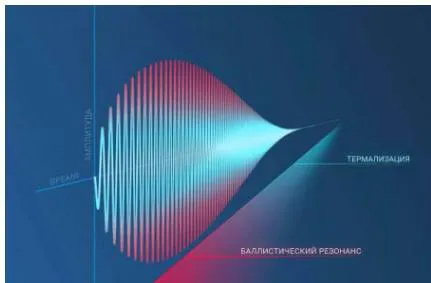
Here's what the authors of the discovery themselves write: "To understand the essence of the process, one can imagine the most ordinary swing. So it was generally accepted that without external influence, it is simply impossible to achieve oscillatory resonance.... But the scientific group discovered a physical paradox, according to which the excitation of mechanical vibrations occurred due to internal thermal resources (that is, the swing swung by itself). The phenomenon of ballistic resonance lies in the fact that during the heat equalization process, mechanical vibrations arise in the crystal lattice of the material, the amplitude of which is raster over time" [7]. That is, if different subsystems of one system that move in resonance but with a phase shift are considered as swings and external influences, then it is possible to transfer energy from a subsystem oscillating with a lower amplitude (temperature) to a subsystem oscillating with a larger amplitude (temperature). But the growth does not occur indefinitely, but reaches a certain value and then gradually fades away, and the temperature equalizes along the entire crystal. In this case, the resonant frequencies do not have to coincide, but their diversity is sufficient. If, simultaneously, one learns to divert part of the energy from the subsystem that increases the amplitude of its oscillations, then this will be a perpetual motion machine of the second kind. It is well known that non-radiative energy transfer processes from one excited center to another with partial or complete dissipation of energy into the crystal lattice or with radiation of this energy are very well developed in a solid, especially in crystals. In addition, one can ask the question: what atom or molecule can be excited to a considerable energy nhv, and at the same time, they are preserved without being destroyed? Apparently, in Planck's theory, any reasonable physics ends, and abstract modeling begins, which has nothing to do with natural phenomena. This happened, in all likelihood, due to the fact that no one at the beginning of the 20th century proposed the present, i.e., solution of this problem free from any contradictions.
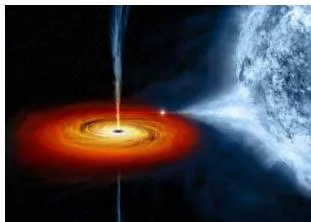
At the edge of a black hole, the physical vacuum is in a conditionally stressed state, resulting of which it is polarized in a quantum manner. Nothing of the kind follows from Einstein's General Theory of Relativity. Einstein's general relativity, in general, is incompatible with quantum concepts. Studying the behavior of quantum fields near a black hole, Stephen Hawking predicted that a black hole necessarily radiates particles into outer space and thereby loses mass [8]. This effect is called Hawking radiation (evaporation). Vacuum polarization occurs under the influence of monstrous gravitational and magnetic fields, as a result of which the formation of not only virtual but also real particle-antiparticle pairs is possible. According to Hawking, on the surface of the event horizon, the direction of expansion of the generated particles ceases to be random, i.e., it becomes polarized, namely, orthogonal to the surface of the black hole [8]. The existence of stable Hawking radiation - the process of emission of various particles by a black hole - was first proved by specialists from the Israel Institute of Technology [9]. A report of the production of a substance with properties identical to plasma in the vicinity of a black hole also appeared in a joint work of Russian, Japanese, and French researchers from the LaPlaz Institute, the National Research Nuclear University MEPhl, and the CELIA laboratory of the University of Bordeaux, published in 2020 [10]. Black hole accretion disks were obtained in laboratory conditions. This structure results from the fall of diffuse material with spinning momentum onto a massive central body (accretion) around neutron stars and black holes. Compression of matter, as well as the release of heat due to friction of differentially rotating layers, leads to heating of the accretion disk. Therefore, the accretion disk emits thermal electromagnetic and X-ray radiation. Experiments have shown that the technique developed by an international group makes it possible to create not only quasi-stationary magnetic fields of record magnitude, but also to simulate the state of plasma emerging in them with a high energy density of matter - particles per cm . The uniqueness of the experiment is that the parameters of the resulting plasma do not need to be scaled; they correspond to the fundamental parameters of the plasma in the vicinity of the black hole of binary systems like Cygnus X-1 (Fig. 2) [10].
Later, researchers at the University of Manchester, led by Nobel Prize winner Andre Geim, discovered that inside graphene, it is possible to recreate conditions identical to those in which matter emerges from the vacuum in the vicinity of black holes and other space objects [11]. In laboratory experiments, they reproduced the Schwinger effect using very narrow strips of graphene. In this case, super-powerful electric or magnetic fields will act on the vacuum so that virtual particles and antiparticles forming dipole structures - positronium - will break apart and form very real positrons and electrons [11].
The experiment showed that the technique developed by the international group makes it possible to create quasi-stationary magnetic fields of record magnitude, and to simulate the state of the plasma arising in them with a high energy density of matter and electromagnetic energy. As a result, we get an electron-positron mixture near the black hole, consisting of approximately equal numbers of negative electrons and positive positrons. In a free state, electrons and positrons annihilate - this is an indisputable fact. However, in the accretion disk, electrons and positrons are not entirely free. They continue to rotate by inertia within the plasma disk at about the speed of light. And it is this speed, or rather the force of inertia, that keeps them from direct collisions and complete mutual destruction. At this stage, electrons and positrons form dipole structures - positroniums. Experimentally, such a pair was discovered in 1951 by the German physicist Martin Deutsch (Figure 3) and reliably established by Professor DB Cassidy and his assistant A. P. Mills, Jr. in 2007 [12].
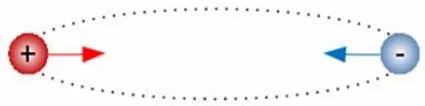
Positronium has stable, compact states with high binding energies, which can be interpreted as particles and unit cells of the quantum vacuum structure. Positronium has a mass of two electronic, and its energy in the ground state of 63161411854 eV. The work of Academician of the Russian Academy of Sciences R.F. Avramenko shows that in the excited state, the vacuum has a lower energy than in the ground state [13]. Cassidy and Mills calculated that in their experiment, the density of positronium atoms was per . Calculations show that with an increase in this density by three orders of magnitude, these atoms at a temperature of 15 kelvin will merge into a single quantum system — Bose-Einstein condensate [12]. Under normal conditions, a vacuum quantum behaves like a quasiparticle in a condensed state. In a state of excitation, a vacuum quantum loses its original state and passes into a new one - into the state neutron (1840;1;0), which then transforms into three particles, proton (1836;1;1), electron (1;1; -1) and antineutrino (1;-1;0) [14]. During the birth of a neutron, several types of elementary particles are released. They form the corresponding radiation, by the combination of which one can detect the processes of production of the proton, deuterium, and tritium neutrons:
-quanta and - form -radiation; neutrino and - neutrino radiation; electrons and positrons (-1; -1; -1) and forms -radiation;
generated single neutrons (1840;1;0) give neutron radiation;
neutrons grouped in pairs form -radiation [14].
It is in this interstellar medium that cold nuclear fusion occurs, allowing the creation of thermal background radiation from the Universe in the microwave range from 10 GHz to 33 GHz. When a vacuum is irradiated by external quanta, the vacuum must be transformed into a substance, in which case the above five types of radiation will be present, and high energy and temperature will also be released [14].
However, the massive appearance of neutrons on the outskirts of the plasma disk marks a fundamentally new stage in formation of mother in the infinite Universe, the evolution of which does not require a Big Bang and has no beginning and end. From this moment on, the conveyor for the production of chemical elements begins to operate. Experimental physics has reliably established that a free neutron decays into a proton and an electron in about 15 minutes. Thanks to this, the most common substance in the Universe is born - hydrogen. Hydrogen atoms gradually accumulate around the rotating disk of protoplasm and envelop it in a reasonably dense layer. At some point, the density of the hydrogen blanket reaches a critical value, and the free escape of neutrons from the plasma disk becomes difficult. The next cycle of synthesis of atoms of matter begins. This is the next chemical element of the periodic table - helium. Such processes of wrapping a neutron centrifuge in a gas cushion are repeated for each new chemical element. The further we move along the periodic table, the denser the outer nucleon layer becomes, and the fewer atoms of a new substance are formed at the output. Therefore, in our Universe, hydrogen makes up of the total mass of all chemical elements. The described process allows us to understand how the synthesis of all chemical components of the universe proceeds. This is not explosive thermonuclear fusion in the depths of several generations of stars still the careful assembly of atoms of chemical elements from elementary particles using a high-speed plasma centrifuge. This synthesis of bits of matter, unlike thermonuclear fusion, is a highly energy-consuming process. In our case, the source of energy is a black hole. To be completely precise, its mass is multiplied by the square of the speed of light. Despite the colossal amount of this energy, the synthesis of chemical elements must stop sooner or later. Later, astrophysicists found that there are galaxies are living with quasars, but they are cold, that is their reserves of cold gas are not depleted, and the birth of stars can continue (Fig. 4) [15].
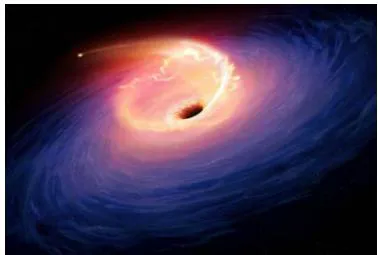
Allison Kirkpatrick, an assistant professor at the University of Kansas at Lawrence, said: "Galaxy CQ4479 shows us that the existence of active black holes does not always stop the birth of stars." This statement contradicts modern scientific knowledge about such systems [15]. In addition to baryonic matter, astrophysicists have found that quasars of supermassive black holes in the centers of galaxies serve as the source of almost all neutrinos that reach Earth from space [16]. Neutrinos, which travel at very high speeds, are a good candidate for hot dark matter. In particular, they do not emit or absorb light - they appear "dark." It has long been assumed that neutrinos, which come in three different types, have no mass. However, experiments have shown that they can change (fluctuate) from one species to another. Importantly, scientists have shown that this change requires them to have mass - making them a legitimate candidate for hot dark matter. A few years ago, physicists at the Pierre Auger Observatory discovered the first hints that all these particles are of extragalactic origin. Three years ago, researchers from the Antarctic IceCube Neutrino Observatory found one of the possible sources of these neutrinos - the blazar TXS 0506+056. The blazar is located in the constellation Orion, the light from which takes about 4.33 billion years to reach Earth. The formation of superluminal neutrinos is associated with the collision of ultrahigh-energy protons with surrounding photons, in which neutrinos appear, and a proton disappears. Protons or heavier nuclei accelerated to ultra-high energy near the dark hole collide with atomic nuclei or low-energy photons. In this case, - and K-mesons are formed, the decay of which produces high-energy cosmic neutrinos. It can be assumed that baryonic matter (proton) turned into a particle of hot dark matter (neutrino) with energy absorption. The process leading to the creation of gamma rays and neutrinos generated by the interaction of protons accelerated to ultra-high energies with matter is presented in (Fig. 7) [16].
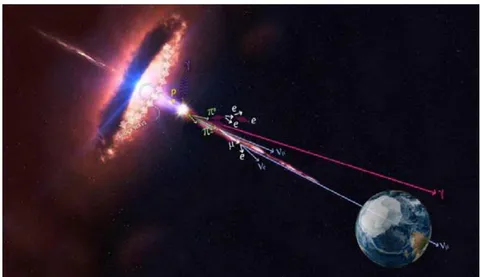
One of the possible reactions during the interaction of protons accelerated in the vicinity of a dark hole with matter is described by formula (6)
Although neutrinos react very weakly with matter, the likelihood of a reaction increases with energy, which is why superluminal neutrinos have been detected with confidence by the IceCube Observatory.
III. CONCLUSION
Thus, new astronomical observations of recent years say with all certainty that black holes formed by both dark and baryonic matter in their development into quasars become not a gravedigger of baryonic matter, but a factory of baryonic matter for new galaxies not only in the early Universe, but and in our time.