I. INTRODUCTION
The Covid-19 Pandemic has generated unprecedented global interests in global deaths and domestic violence. The magnitude and severity of the COVID -19 repercussions is a reliable reflection of understanding its impact on gender. The negative repercussions include high levels of unemployment, economic vulnerabilities and psychological health issues emanating from isolation, alienation and anxieties.
The United Nations identifies violence against women as a problem that transcends race, culture, religion, geographical borders. Violence against women is the most prevalent form of abuse known to man. The various forms of violence suffered by women in South Africa include, but are not limited to, sexual violence, domestic violence, harmful cultural practices and violence in relation to maternal healthcare and reproductive rights.
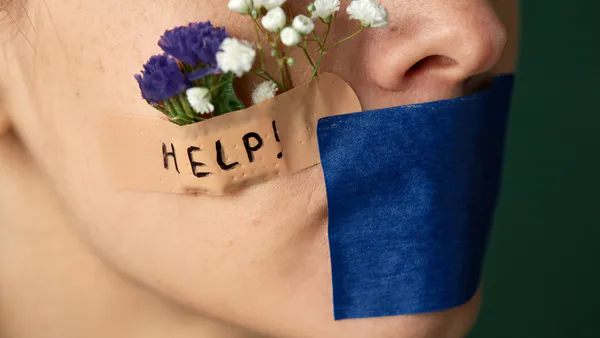
Gender-based violence (GBV) is a problem of pandemic proportions. The restrictions of movement created alienation, isolation and confined people to their homes. Women were subjected to physical and psychological harm. This added to the social concerns and lead to considerable challenges. The limited reported cases provided a birds eye view of how the pandemic was unfolding. This vacillates between the pandemic pandemic and the pandemic of violence. One feeding the other. Internationally, one in three women have experienced physical or sexual violence at the hands of a male partner. (World Health Organization (2021). Devastatingly pervasive: 1 in 3.
Women Globally Experience Violence. [online] www.who.int. Available at: https://www.who.int/news/ item/09-03-2021-devastatinglv-pervasive.1-in-3-womenglobally-experience-Violence (World Health Organization, 2021)
Clearly, isolation and violence against women work simultaneously, whether the abuser has the ability to manipulate the lockdown situation or not. Violence against women is a global issue. Researchers have observed a linkage between gender based violence and the pandemic in India. Violence against women is endemic in the world, but it has reached extreme and crisis proportions in South Africa. Statistics from NGOs, point out that GBV increased in five Southern African countries during the Lockdown. In another report "We have a massive problem with GBVF in South Africa "More Needs to Be Done to Address Gender-Based Violence, Femicide Scourge. "www.iol.co.za, www.iol. co.za/amp//pretoria-news/news/more-needs-to-be-done -to-address-gender-based-violence-femicide-scourge730a1178-Oeda-427d-a12d-373fab53c5fd.! Webpage author! Date published
IN-TEXT CITATION: ("More Needs to Be Done to Address Gender-Based Violence, Femicide Scourge")
Also, producing timely and accurate estimates of the impact of covid-19 is challenging for most countries. These acts infringe some or all of the following rights set out in the Bill of Rights in the South African Constitution: the right to equality, which includes the full and equal enjoyment of all rights and freedoms; the right not to be discriminated against unfairly – the state may not unfairly discriminate against anyone on the grounds of, inter alia, sex and gender; the right to dignity; the right to life; the right to freedom and security of the person, which includes the right to be free from all forms of violence from either public or private sources; not to be tortured in any way; and not to be treated or punished in a cruel, inhuman or degrading way.
Internationally, South Africa has ratified the Convention on the Elimination of all Forms of Discrimination against Women (CEDAW). It is startling that CEDAW does not contain any explicit condemnation or prohibition of violence against women. CEDAW was adopted internationally in 1979, when the international community slowly came to realise that violence against women was a major global problem, and the Committee on the Elimination of Discrimination against Women by issuing two General Recommendations on GBV, namely General Recommendations 12 and 19, issued in 1989 and 1992 respectively. (Jonas, K., Crutzen, R., van den Borne, B., Sewpaul, R. and Reddy, P. (2016). Teenage pregnancy rates and associations with other health risk behaviours: a three-wave cross-sectional study among South African school-going adolescents. Reproductive Health, [online] 13(1). Available at: https://www.ncbi.nlm.nih.gov/pmc/articles/PMC4855358)
General Recommendation 19 states that GBV is a form of discrimination against women and defines it as violence directed against a woman because she is a woman or that affects women disproportionately. The Recommendation states that such violence includes acts that inflict physical, mental or sexual harm, threats of such acts, coercion and other deprivations of liberty. It states that this type of violence affects women's ability to enjoy human rights and fundamental freedoms, and that full implementation of this Convention requires states to take positive measures to eliminate all forms of violence against women.
For violence within the home, in addition to the wide range of Criminal Law remedies, the South African domestic legislation specifically aimed at legal protection against domestic violence is the Domestic Violence Act, (the Act). The Preamble of this Act states that its purpose is to afford the victims of domestic violence the maximum protection from domestic abuse that the law can provide; and to introduce measures which seek to ensure that the relevant organs of State give full effect to the provisions of this Act, and thereby to convey that the State is committed to the elimination of domestic violence.
The COVID-19 pandemic exacerbated inequalities, injustice and exploitation. Lockdown involved a de-escalation of many clinical services, closure of many outpatient departments and limited access to secondary and tertiary medical services. How did this affect the wider population? Teenage pregnancies. ``South Africa recorded increased rates of teenage pregnancies in some parts of the country between 2018 and 2019 and more recently during the COVID-19 pandemic. This was partly due to the difficulty of accessing contraceptives, which was greater during the COVID-19 lockdown. An increase in the adolescent pregnancy rate strongly suggests challenges with accessing sexual and reproductive healthcare services for this vulnerable age group and is a cause for concern. While these estimated numbers are shocking, the reality could be far worse if sexual and reproductive health care declines by more than . (OHCHR. "Convention on the Elimination of All Forms of Discrimination against Women." Ohchr: org, 18 Dec. 1979, www.ohchr.org/en/professionalinterest/pages/cedaw.aspx.)
Further, it is impossible to discern the full extend and diversity due to the lack of disaggregated data available on vulnerable populations, including people with disabilities and others. The lack of data of reported cases of sexual does not reflect the true reality. Governments are not cognisant of the fact that mental health needs and reproductive health needs of the abused women are paramount. There are no 'one dimensional' or 'quick fix' interventions. In respect of reproductive health, women could not access family planning, immunisation and ante natal care. This lead to resource constraints and a compromised health care system.
II. CONCLUSION
Although GBV does not distinguish on the basis of race, or class. Women face a double oppression. In the meantime there are a number of women who lack access to mental health. South Africa is urged to improve its police, judicial and health care systems. More importantly to prioritise women's reproductive rights. It is critical that routine services and family planning are protected. Failure to protect access to reproductive health care will increase the burden of disease. Further, victims of GBV will not have access to emergency treatment. Due to their disconnect from accessing medical and psychological treatment, this creates further trauma and sometimes PTSD. Programmes to prevent and respond to GBV against women must, therefore, be developed to realistically address all forms of violence. Medical services must focus on how to identify, measure and treat the impact of GBV including emotional abuse and controlling behaviours. In conclusion, the following quote is appropriate.
"Not all men practice violence against women but all women live with the threat of male violence every single day. All over the Earth."