
I. INTroduCCiÓn
'n las sociedades letradas existe, hasta el día de hoy y fundamentalmente en los países pobres, un alto porcentaje de personas que solo pueden hacer uso del idioma hablado. Ellas forman parte de ese problema de gravísimas consecuencias como es el analfabetismo, entendido aquí en su sentido más tradicional.
Existe analfabetismo porque al ser la escritura una tecnología, el aprendizaje de la lectura y escritura adquiere la característica de artificialidad, aunque, en el ser humano lo artificial es realmente natural a su esencia. Es esta la razón por la cual este aprendizaje ha devenido en instruccional e institucional. Al no tener acceso todas las personas a la educación formal institucional, básicamente por factor económico, quedan al margen de este aprendizaje, con todas las gravísimas consecuencias que ello implica. El aprendizaje de la lengua materna en su fase oral, e incluso en sus primeros atisbos de la fase escrita, se realiza en el entorno hogareño y familiar extenso. Allí ese proceso de enseñanza y aprendizaje se caracteriza por ser espontáneo, aunque no totalmente carente de método.
Lo que ocurre es que los padres, casi sin darse cuenta, aplican los métodos con los cuales ellos aprendieron a leer y a escribir, así como las primeras nociones de aritmética. Si ello ocurrió hace muchos años puede producirse un desfase no muy recomendable, aunque muy difícil de evitar, porque, como veremos más adelante, el entorno familiar juega un papel sumamente importante y, por ello mismo, los docentes deben tenerlo siempre presente.
Es por ello, que en este artículo segmentamos temas puntuales sobre la importancia de la lectura y la escritura como procesos dinámicos constructivos, el entorno familiar lector y su vinculación con el proceso de enseñanza-aprendizaje de la lectura y la escritura, la
Lengua como herramienta de cohesión social e instrumento de adquisición de lectura y escritura. Además, de incluir otros tópicos sobre la enseñanza institucionalizada y sistemática, que se lleva a cabo considerando los principios científicos, teóricos y prácticos, que constituyen el fruto de las investigaciones realizadas por especialistas en la materia de los más diversos países. Actualmente comprendemos mejor lo que viene a ser la apropiación de la lengua escrita por parte de los niños.
II. MÉTODOS
La presente investigación de tipo descriptivo, basada en la Teoría Stephen Krashen1' le corresponde a un estudio a nivel de doctorado, presentando los problemas más amplios sobre; El proceso de enseñanza y aprendizaje de la lectura y escritura de la lengua materna (dulegaya) en estudiantes de la etnia Guna". El propósito principal de este estudio consistió en analizar la relación e influencia de los factores que afectan el adecuado aprendizaje de la lectura y la escritura de la lengua materna, a través de la metodología utilizada por los docentes para su aprendizaje, así como los hábitos y actitudes que presentan los estudiantes desde el entorno familiar hasta en las relaciones dentro del aula escolar. El análisis investigativo tuvo como escenario el Centro de Educación Básica General Simral Colman en la Comarca Guna Yala, específicamente en grado A y B; los estudiantes presentan dificultad durante el proceso de lectura y escritura. Debido a esta situación, creemos oportuno orientar y capacitar a los docentes y acudientes; procurando acciones tendentes a optimizar el proceso de enseñanza y aprendizaje de nuestros educandos mediante la utilización de fichas lexicales.
III. DESARrOLlO
Kenneth Goodman citado en (Vigliones, 2015) ha enfatizado, al igual que otros especialistas, que sin significado no hay lectura. Pero, por otra parte, consideramos que no se puede desconocer que los lectores no pueden lograr significado sin utilizar el proceso descodificador. Goodman precisa, con gran perspicacia, que el sentido que va a dar el lector al texto leído va a depender de factores tales como el propósito del lector, de su cultura social, de sus conocimientos previos, de su control lingüístico, de sus actitudes y esquemas conceptuales. Nos recuerda, asimismo, que tanto la escritura como la lectura son procesos dinámicos y constructivos. Que la enseñanza de la lectura y escritura debe estar en concordancia con lo que él denomina "lenguaje integral" (erróneamente interpretado en algunos programas escolares donde aparece un área o asignatura de "comunicación integral") para el cual siempre se debe tener en cuenta lo que el niño aporta, que no es tan solo un aporte individual sino fundamentalmente social.
Toda lectura es interpretación y lo que el lector es capaz de comprender y de aprender a través de la lectura depende fuertemente de lo que el lector conoce y cree antes de la lectura. Diferentes personas leyendo el mismo texto variarán en lo que comprendan de él, según sean sus contribuciones personales al significado. Pueden interpretar solamente sobre la base de lo que conocen.
Es muy importante tener presente, que de acuerdo con el modelo de aprendizaje de la lectura y escritura como un procesamiento descendente, el ser humano posee capacidades tanto para el lenguaje oral como para el escrito y dichas capacidades se desarrollan a partir de estructuras que el sujeto construye en interacción con el medio social alfabetizado y por ello antes de conocer y dominar el proceso descodificador puede ya otorgarle un determinado sentido a lo escrito. Ello debido a que nos encontramos totalmente inmersos en una cultura escrita. La escritura y la lectura se van develando mucho antes que el niño entre en contacto con una institución educativa.
Como dice (Arnáez, 2009), los estudios sobre la enseñanza de la lengua, la lectura y la escritura constituyen dos de los pilares fundamentales sobre los que se sustenta la construcción del saber y del saberhacer lingüísticos y sociales.
Hoy está perfectamente establecido que no es cierto que se aprenda única y exclusivamente en la escuela. La denominada educación sistemática es importantísima pero ella no tiene la exclusividad de la enseñanza. Algo más, ella tiene que actuar teniendo en cuenta que los estudiantes, independientemente de sus edades, llevan un cúmulo no sólo de conocimientos previos, sino de actitudes, aptitudes, aspiraciones, problemas, otros.
Descodificación y comprensión no son dos etapas en el aprendizaje de la lectura y escritura. Esto es fundamental comprender y asumir. No es que primero se tenga que enseñar a descodificar y después a comprender, o al revés. No podemos repetir el error que no hace muchos años atrás se cometió acerca de aprender para leer y leer para aprender que hacía que la enseñanza del proceso descodificador se centrara en el primer año de primaria, para continuar en los siguientes grados con el leer para aprender, es decir la lectura al servicio del aprendizaje.
El aprender a leer y escribir implica los dos procesos conjunta y simultáneamente. De esto se desprende que lo importante es el cómo lo enseñemos. Allí se marca la diferencia. Que se puede aprender a leer y escribir con métodos inadecuados, es una realidad. Algo más, hay que tener presente que lo que ahora sabemos sobre el proceso de la lectura y de la escritura, así como de su aprendizaje y enseñanza, es algo relativamente reciente.
Nuestros padres fueron alfabetizados, metodológicamente, muy diferente que nosotros y nuestros hijos lo han sido, a su vez, con la técnica que actualmente se aplica. Esto es muy importante tener presente, porque si perdemos la perspectiva histórica no tendremos una comprensión adecuada de este proceso evolutivo y cómo lo que hoy aplicamos es parte de ese proceso histórico. Si bien es cierto que con diferentes métodos (e incluso antimétodos) se puede llegar al objetivo de enseñar a leer y escribir, ello no significa que la metodología no interesa, que se puede tener carta blanca para aplicar cualquier método. La regla fundamental es que dicha enseñanza debe estar de acuerdo con las últimas investigaciones, con los últimos aportes de los estudiosos de este campo. Conocer los aportes de profesores que a la vez que docentes de aula son investigadores constituye algo sumamente valioso, porque la teoría al margen de la práctica no posee la contundencia de lo que se experimenta. De allí la importancia de una práctica investigativa eminentemente experimental. Tienden al fracaso aquellas elucubraciones (no dejan de ser ello) basadas solo en los estudios de gabinete.
- El entorno familiar y su vinculación con el proceso de enseñanza-aprendizaje de la lectura y la escritura
En el entorno familiar la vinculación de los procesos de enseñanza-aprendizaje de la lectura y la escritura son muy importantes para el desenvolvimiento del ser humano en la sociedad actual, se reconocen como instrumento cultural que contribuye a la construcción y diferenciación de la identidad del educando, pues esta como memoria histórica da cuenta de la relación que existe entre la escritura, lectura y conocimiento de sí mismo, suscribe el proceso de construcción de la identidad del yo; desarrolla la autoconciencia, y amplia los procesos de intersubjetividad en relación con otros. Actualmente, sabemos mucho más acerca de la etapa de la lectura antes de saber leer y sobre la cual se vienen desarrollando programas y talleres de lectura y escritura. Partiendo de esta concepción amplia, hemos ubicado tres grandes etapas en el proceso de formación de un lector: La primera es aquella en la que el niño no lee, sino que otros "/o leen" y se extiende desde el nacimiento hasta el inicio de la lectura alfabética. La segunda es la etapa en la que el niño comienza a leer con otros y, por lo general, suele coincidir con el ingreso a la educación formal y con el proceso de alfabetización propiamente dicho. La tercera etapa concluye con el lector autónomo, aquel que es capaz, no sólo de alcanzar un nivel adecuado de competencias lectoras, sino de encontrar en la lectura una opción permanente de desarrollo intelectual, emocional, cultural y vital.
La experiencia que lleva a cabo (Luna, 2019) señala que La lectura y la escritura forman parte de la vida cotidiana y acompaña al hombre a lo largo de la vida. La lectura y escritura es un complejo y hermoso aprendizaje que abre las puertas a un mundo de conocimientos con valiosos instrumentos didácticos, sobre todo si tomamos en cuenta que tanto el gesto como la palabra hablada son instrumentos que una vez emitidos cumplen su función y son solo retomados hasta que el recuerdo lo permita. Leer y escribir debe considerarse un medio para la expresión liberadora, la creación y movilización de pensamiento que permite reinterpretar y transformar el entorno continuamente, por eso se le reconoce como elementos básicos de la formación de los individuos.
- La Lengua como herramienta de cohesión social e instrumento de adquisición de lectura y escritura
La lengua es, quizá, el único medio por el cual se lleva a cabo el proceso de socialización entre los seres humanos, a través de ella el hablante construye significados para intercambiarlos dialogando con los demás en el marco de los significados sociales y culturales. Hemos visto cuando una persona no exterioriza fácilmente sus ideas, opiniones, sentimientos o participa muy poco en las conversaciones informales o formales le resulta difícil tener buena relación social con los demás. En este sentido, la lengua es un instrumento ineludible para establecer conexión social entre las personas por el hecho de que nos permite utilizar el conjunto de signos lingüísticos para expresarnos oralmente sobre cualquier tema que deseamos abordar en nuestras conversaciones cotidianas. La existencia humana está indisociablemente vinculada a las relaciones sociales proyectadas dentro de la compleja naturaleza del diálogo; el ser humano en ningún caso es un actor solitario en la vida sino alguien que actúa con los demás, usando el sistema de signos propios de la lengua, inventados por nuestros antecesores, para comunicarse. La adquisición de la competencia comunicativa implica aprender a utilizar el lenguaje como medio regulador de nuestras interacciones con los demás, en la medida en que conocemos y compartimos los significados culturales en el núcleo de un determinado grupo social. (Vygotski, 2018), el gran psicólogo ruso, deja las cosas lo suficientemente claras al referirse a la gran importancia del lenguaje, pues él considera que los signos y las palabras sirven a los sujetos como un medio de contacto social con las personas.
La Lengua como instrumento cultural
La lengua es una herramienta cultural de cada pueblo en el sentido de que nos valemos de ella para nombrar las cosas y para preservar y transmitir los elementos culturales acumulados en el seno de una determinada comunidad de una generación a otra. La lengua es un producto cultural y la lengua es productora de la cultura; son dos aspectos interconectados, que no son posibles el uno sin el otro porque no podrían actuar sin la presencia del otro. Es decir, si no existiera la lengua no habría forma de comunicar y difundir la cultura hacia los demás y a las siguientes generaciones; y si no existiera la cultura no tendría sentido la existencia de la lengua, porque no tendría nada que comentar y hablar. La lengua nos permite hablar de todo lo que abarca la cultura: los productos audibles, visibles, comestibles, la historia, las actividades cotidianas de las personas, etc.
La lengua es el medio excelente que empleamos para expresar oralmente nuestros conocimientos generados por nuestra cultura y para dar y recibir instrucciones sobre el cúmulo de actividades que realizan las personas para su subsistencia. Es tanto como decir que la lengua nos acompaña todos los días y en todas partes en el quehacer de los seres humanos.
La Lengua y el desarrollo cognitivo
La lengua es una herramienta para la construcción, desarrollo y expresión del conocimiento, así como el ordenamiento de la experiencia; constituye la base material del pensamiento humano. Cuando una persona tiene problema en el manejo de la lengua le impide desarrollar de forma adecuada su pensamiento, porque no puede terminar de integrarse plenamente sin el uso correcto de este instrumento de aprendizaje. A través del lenguaje conocemos, comunicamos y construimos los significados de lo que vamos aprendiendo en el curso de nuestra vida. La función elemental de la lengua estriba en que con ella el ser humano adquiere a la vez un sistema de productos sociales y culturales y un instrumento de conocimiento de la realidad y de sí mismo, pues no habrá ser humano completo que se conozca y se dé a conocer hacia los demás, sin un nivel avanzado de posesión de su lengua. El ser humano se conoce a sí mismo expresando lo que lleva dentro mediante el uso de la lengua, y le sirve como medio para apropiarse de los nuevos conocimientos; también organiza nuestra experiencia y nuestra conducta e influye y modifica la experiencia y la conducta de los demás.
En resumidas palabras, el lenguaje es un mecanismo del pensamiento y del desarrollo cognitivo. El uso de la lengua materna o de la lengua que se domina con fluidez es determinante en el desarrollo cognitivo del ser humano por el hecho de que le va permitiendo comprender el significado de los aprendizajes que se le van presentando en su vida cotidiana. De esta manera, el sujeto desarrolla y explaya su conocimiento a través del empleo de la lengua; situación que no ocurre en Ailigandi, Guna Yala; donde el educando es obligado a aprender en lengua desconocida para él. La lengua es clave para asimilar los conocimientos que se van adquiriendo en el transcurso de la vida de cada ser humano, ya que nos sirve de instrumento primordial para preguntar, exponer y apropiarnos de los conocimientos acumulados en nuestra cultura y para la comprensión de los aprendizajes. Asimismo, los sujetos que transmiten los conocimientos también lo hacen con la ayuda indiscutible de la lengua porque es el mecanismo por el cual se comunica, transfiere y proporciona explicación acerca de los contenidos y actividades de aprendizaje.
En definitiva, la lengua que manejamos nos sirve para construir nuestros conocimientos, aclarar y resolver dificultades en este proceso. Por ello consideramos prudente acelerar los mecanismos necesarios para promover provechoso aprendizaje durante el proceso de lectura y escritura en todos los educandos de nuestros pueblos originarios.
3. El rol de la lengua materna durante el proceso de enseñanza y aprendizaje
La lengua materna juega un papel fundamental en el proceso de enseñanza y aprendizaje de los alumnos y las alumnas de educación primaria bilingüe en el sentido de que para apropiarse del conocimiento en cualquiera de las áreas previstas en el currículum educativo implica comprender, en gran medida, el discurso en que se expresa cada una de esas parcelas del conocimiento.
Gran parte del proceso de enseñanza y aprendizaje que se fomenta en el salón de clases se lleva a cabo empleando la lengua, ya sea oral o escrita. Como sabemos, los docentes proporcionan un conjunto de informaciones, explicaciones, exposiciones y recomendaciones a los educandos con el fin de fomentar adecuadamente el desarrollo y la práctica de los procesos cognoscitivos del alumnado, utilizando para este proceso el sistema de signos lingüísticos. Además, los niños que asisten a la escuela llevan consigo un conjunto de experiencias y conocimientos que los expresan en su lengua materna debido a que es su principal y único medio de comunicación que tienen para manifestar su cúmulo de conocimientos y comunicarse con los demás.
Enseñar y aprender es básicamente un proceso de comunicación entre los educandos y el docente y entre los mismos alumnos. La comunicación permite a los actores educativos interactuar, conversar e intercambiar puntos de vista en el salón de clases. El aprendizaje es un largo y complejo proceso de construcción del conocimiento que el niño lleva a cabo conversando con los demás y consigo mismo a través del uso del lenguaje, utilizando como un instrumento mediador en sus interacciones sociales. El empleo de la lengua en el proceso educativo permite, en gran medida, la internalización de los conocimientos, que supone la incorporación al plano individual (intrapsicológico) de lo que previamente ha pertenecido al ámbito de nuestras interacciones con los demás (interpsicológico). La internalización hace referencia a la reconstrucción interna de una operación externa (Vygotski, 2018). Dicho en otros términos, en el desarrollo cultural del niño, toda función aparece dos veces: primero, en el ámbito social (entre personas), y posteriormente, en el ámbito individual (en el interior del propio niño). Cuando hablamos del aprendizaje escolar, el desarrollo cognitivo del niño, primero ocurre en el ámbito escolar a través de sus interacciones con el profesor y con sus compañeros, y como resultado de su encuentro con los demás, se apropia de los nuevos aprendizajes; todo ello es posible llegar a ese plano empleando la lengua como instrumento central para apropiarse de los significados de las actividades escolares.
La lengua materna es, pues, un elemento muy importante en el proceso educativo por el hecho de que permite capturarla esencia de los saberes escolares y llegar a la comprensión real y crítica de los conocimientos que se transfieren y aprenden en la escuela. El lograr la comprensión efectiva de los contenidos de la enseñanza no sólo hace crecer y ampliar el conocimiento, sino también le permite al educando ser más consciente de las cosas que hace tanto en la escuela como en su vida cotidiana, y de las cosas que afectan o favorecen una vida armónica y democrática. Empero, sólo se logran asimilar esas cuestiones empleando la lengua materna (ya sea oral o escrita). Difícilmente el niño puede llegar a ser consciente por sí mismo sin la intervención y orientación de los demás; esta colaboración o ayuda se lleva a cabo, en gran medida, usando la lengua materna (oral o escrita); somos conscientes cuando otras personas nos dicen (lengua oral) lo que es importante, por ejemplo, conservar la cultura, la lengua o que es necesario organizarnos y luchar para cambiar algunas cosas que afectan nuestra vida, etc.; y también cuando leemos libros nos hace consciente (lengua escrita), siempre y cuando logremos comprender el contenido de lo que leemos. En este sentido, el uso de la lengua materna en el proceso de enseñanza y aprendizaje permite a los educandos lograr un aprendizaje significativo y percibir las injusticias sociales -cuando el docente aborda de manera crítica los contenidos curriculares— y reflexionar acerca de múltiples temas que se abordan en el aula.
4. La lengua materna y su efecto en la práctica pedagógica bilingüe actual
A pesar de que la lengua materna juega un papel decisivo y actúa como un instrumento indispensable en el proceso de aprendizaje escolar, su uso y enseñanza en la práctica docente bilingüe es escaso y deficiente. Diversas investigaciones realizadas en el ámbito de la educación bilingüe demuestran que el uso y la enseñanza de esta lengua es muy limitado y sólo ha servido como medio de transición hacia la lengua española, lo que ha dado lugar que sólo se usa fundamentalmente en los primeros grados de primaria, donde la función que se le asigna es sólo la de facilitarle a los educandos su adaptación a las demandas educativas y lograr que se alfabeticen en castellano.
En Panamá, los planteamientos de la Dirección Nacional de Educación Intercultural Bilingüe (DNEIB) en favor del uso y la enseñanza de la lengua materna y del castellano en las diferentes actividades y en todos los grados del proceso educativo, proponiendo que éstas deben ser tanto objeto de estudio como medio de comunicación, es decir, una educación bilingüe que privilegie el uso y la enseñanza de las lenguas vernáculas y la lengua nacional para que los educandos se apropien de conocimientos, habilidades y destrezas, hábitos, actitudes y valores que les permitan comunicarse oralmente y por escrito en ambas lenguas, no han trascendido en la práctica docente del profesorado y sólo se han quedado como un ideal más de esta instancia educativa. Por tanto, en la denominada educación bilingüe no se están logrando los propósitos orientados a alfabetizar a los educandos en las dos lenguas.
Las observaciones realizadas en el Centro de Educación Básica General Simral Colman, en torno al uso oral de la lengua materna en el proceso de enseñanza y aprendizaje revelan que el dulegaya (lengua guna) se ve afectada por la exagerada combinación que se hace con el español. Esto se manifiesta constantemente en la práctica docente; cuando los profesores y las profesoras explican, exponen, aclaran y resuelven dudas acerca de los diversos contenidos que abordan en su enseñanza recurren a una gran cantidad de préstamos de palabras y frases en español. Esta situación, en la mayoría de los casos, se torna aún peor cuando el profesor o profesora desempeña su práctica educativa fuera de su grupo étnico debido a que entre profesor y alumnos no comparten la misma lengua, obligando al docente a hablar mucho más en español que en la lengua materna de sus alumnos. Asimismo, se observa que la enseñanza de la lengua materna (lectura y escritura) es todavía peor porque la mayoría de los profesores bilingües tiene grandes dificultades para leer y escribir el idioma materno o indígena que supuestamente domina, por eso sólo enseña algunas palabras y muy escasas oraciones en esta lengua, prefiriendo privilegiar la enseñanza de la lectura y escritura del idioma español.
Refiriéndose a la lengua materna, la Propuesta Curricular de Educación Bilingüe Intercultural Guna (2011), expresa en la página 172 lo siguiente: "Lengua materna como medio de comunicación en el proceso de enseñanza y aprendizaje, y como materia de estudio para su mantenimiento y desarrollo". El área (Comunicación Oral y Convivencia), busca desarrollar las competencias comunicativas y lingüísticas de los niños gunas, para que logren comprender y expresar mensajes orales y escritos de manera competente, en distintas situaciones comunicativas y con diversos interlocutores. Los dos idiomas (dulegaya y español) deberán ser utilizados como medios de comunicación en el proceso de enseñanza y aprendizaje y como materias de estudio formal y sistemático".
La falta de uso y enseñanza adecuada de la lengua materna en la práctica docente bilingüe pueden deberse a los fenómenos siguientes:
Los profesores y las profesoras no están alfabetizados en su propia lengua y, por ende, desconocen la gramática de su lengua materna.
La gran mayoría de los docentes tiene un dominio exclusivamente oral de su idioma materno, y lo habla mezclando con el español; prácticamente le dificulta leerlo y escribirlo (Hamel, 2001)
Muchos de ellos están adscritos a escuelas bilingües de regiones en que no se habla su lengua materna. Esta ubicación laboral la mayoría de las veces se da por la propia voluntad del profesorado que tiene que ver la búsqueda de la comodidad laboral, y algunas veces ocurre por la disposición de las autoridades educativas para cubrir las escuelas ubicadas en comunidades marginadas.
La alta valoración del castellano y la actitud contradictoria hacia la lengua indígena que goza de un prestigio bajo y, con mucha frecuencia, es considerada un "dialecto" que no cuenta con gramática y escritura. La exagerada valoración del español explica por qué los profesores bilingües acentúan mucho la adquisición de la lectura y escritura desde el primer grado de primaria, ignorando que los niños y las niñas aún no manejan el español oral (Hamel, 2001)
Los fenómenos enunciados arriba son los que obstaculizan no sólo el uso y la enseñanza eficiente de la lengua materna, sino también la comprensión de los aprendizajes, pues el empleo de una lengua distinta a la lengua materna de los niños y las niñas dificulta, en gran medida, comprender el significado real de cada una de las actividades de aprendizaje.
- Enfoque metodológico de la Educación Intercultural Bilingüe EBI Guna
Los procesos de construcción de los aprendizajes están relacionados, de forma estrecha, con la progresión que los niños desarrollan en la comprensión de la complejidad del mundo que lo rodea. Por eso la simplificación o descomposición del conocimiento en pequeñas partes para ser enseñadas una por una, no favorecen la comprensión de las múltiples dimensiones de la realidad que le rodea, en este entendido, se la presenta desde el principio en toda su dimensión, y son los niños quienes, de acuerdo a sus capacidades desarrolladas, alcanzan la comprensión cada vez más compleja.
El planteamiento nos va a llevar a la acentuación de los siguientes principios metodológicos:
- El aprendizaje ha de ser significativo y construido por el estudiante. La construcción es un proceso cognitivo interno facilitado por la experiencia personal, por los conocimientos previos por el contacto con las fuentes de conocimiento y por la interacción social.
- El aprendizaje debe ser funcional, que sirva para la vida personal y colectiva del estudiante guna.
- El aprendizaje debe ser motivado. Aquí tienen su importancia las expectativas de éxito por parte de los padres, de docentes y de la comunidad educativa.
- El aprendizaje, siempre que sea posible, debe ser por descubrimiento. Debe ser socializado. Es primordial la participación activa de los niños gunas, en diversos equipos y situaciones grupales para aprender a convivir, tolerarse, respetarse, competir, colaborar. La participación en equipos de trabajo y de juego, es un factor decisivo en la formación de actitudes de aceptación entre los coterráneos y de otras comunidades.
- El aprendizaje deberá ser mediado. El docente es el mediador que facilita la construcción de los aprendizajes significativos: selecciona los contenidos y los estímulos, crea el ambiente, define y guía las actividades, establece los criterios de evaluación.
- Es muy importante que el aprendizaje también sea diferenciado basado en ritmos, actividades, opciones, programas.
La Educación Intercultural Bilingüe (EBl) es fundamentalmente, educación en valores y actitudes. La primera y más importante adquisición de valores, actitudes y normas de conducta, se realiza en el seno de la familia y de los grupos que conforman la vida infantil, mediante la socialización.
Según (Williamsom, 2004), en América Latina y el Caribe no hay un concepto dominante en uso, que trate de la educación y la interculturalidad, sino varios que coexisten y se articulan de maneras muy difusas, plásticas, prácticas, políticas, dependiendo de las características de las sociedades capitalistas latinoamericanas y caribeñas y sus expresiones, urbanas o rurales, integradas o excluidas, del pluralismo étnico, racial, nacional, lingüístico
El modo más eficaz de adquisición de nuevas actitudes, sigue siendo el modo originario: el contagio social. Si las mismas actitudes correspondientes a un mismo valor, se viven simultáneamente en los diversos grupos de pertenencia y referencia, esas actitudes y ese valor son fácilmente asimilados por el sujeto.
Es difícil, pero imprescindible, intentar la acción sinérgica de la familia, de la escuela, de los grupos sociales, de la comunidad, de la sociedad, para una eficaz educación de los valores. Esto exige conjugar los esfuerzos de la educación institucional y de la educación no formal.
. Análisis y resultados de los datos
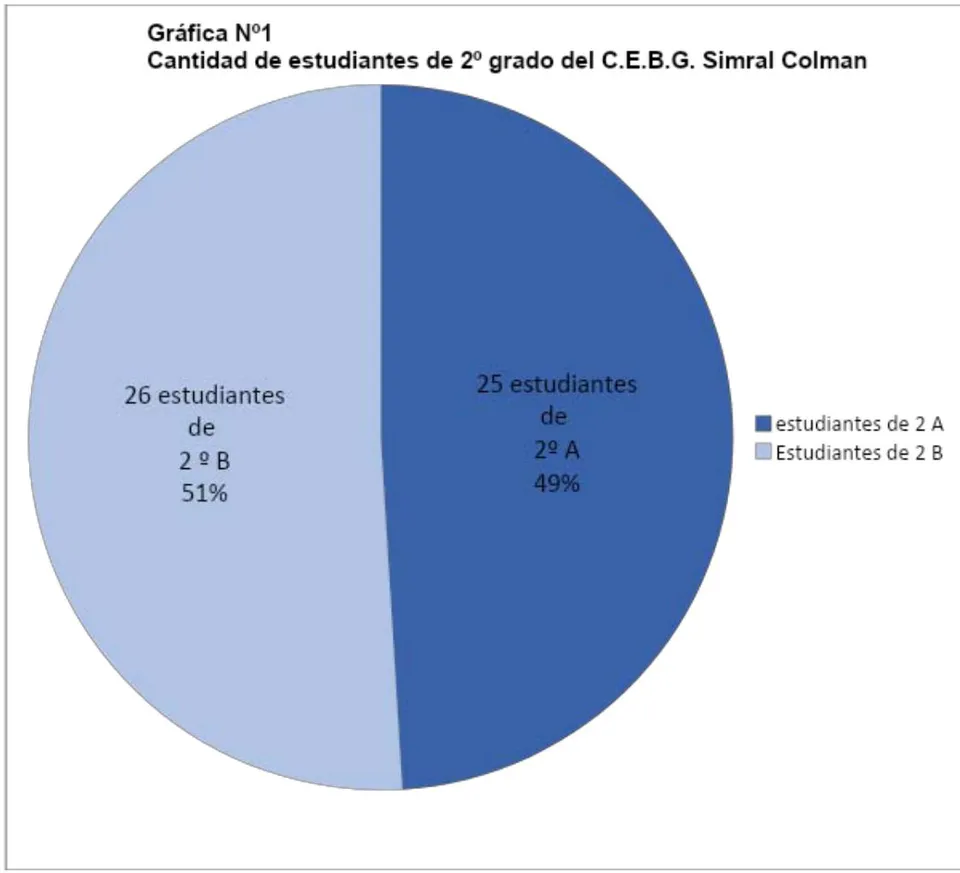
Cuadro No 1: Cantidad de estudiantes de grado del C.E.B.G. Simral Colman
| Descripción | Cantidad | % |
| Estudiantes de 2oA | 25 | 49% |
| Estudiantes de 2oB | 26 | 51% |
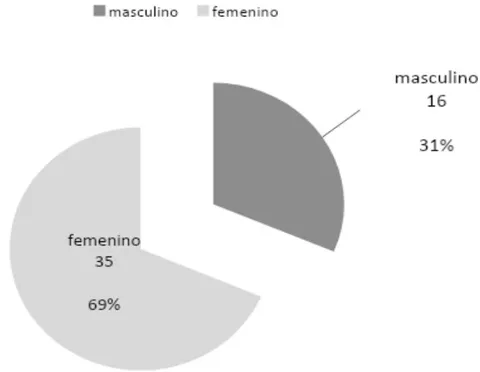
Cuadro No 2: Cantidad de estudiantes de grado por sexo del C.E.B.G. Simral Colman
| Sexo | Cantidad | % |
| Masculino | 16 | 31 |
| Femenino | 35 | 69 |
Conductas que deben aprender los estudiantes
| Conductas que debenlos estudiantes | Cantidad | % |
| Dejar de pelearse tanto | 30 | 58 |
| Dejar dekaarmitas | 30 | 58 |
| Dejar de preocuparse tanto por los exámenes | 30 | 58 |
| No tener miedo a los profesores | 30 | 58 |
| Cumplir con sus compromisos | 30 | 58 |
| Dejar de morderse las uñas | 30 | 58 |
Gráfica No 3
G. Simral Colman
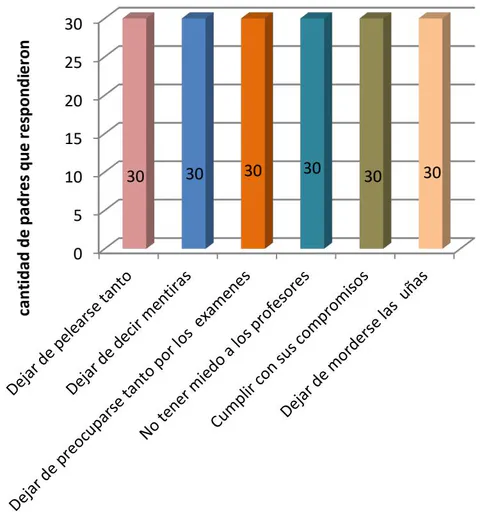
Gráfica 3: Conductas que deben aprender los estudiantes de grado de C.E.B.G. Simral Colman
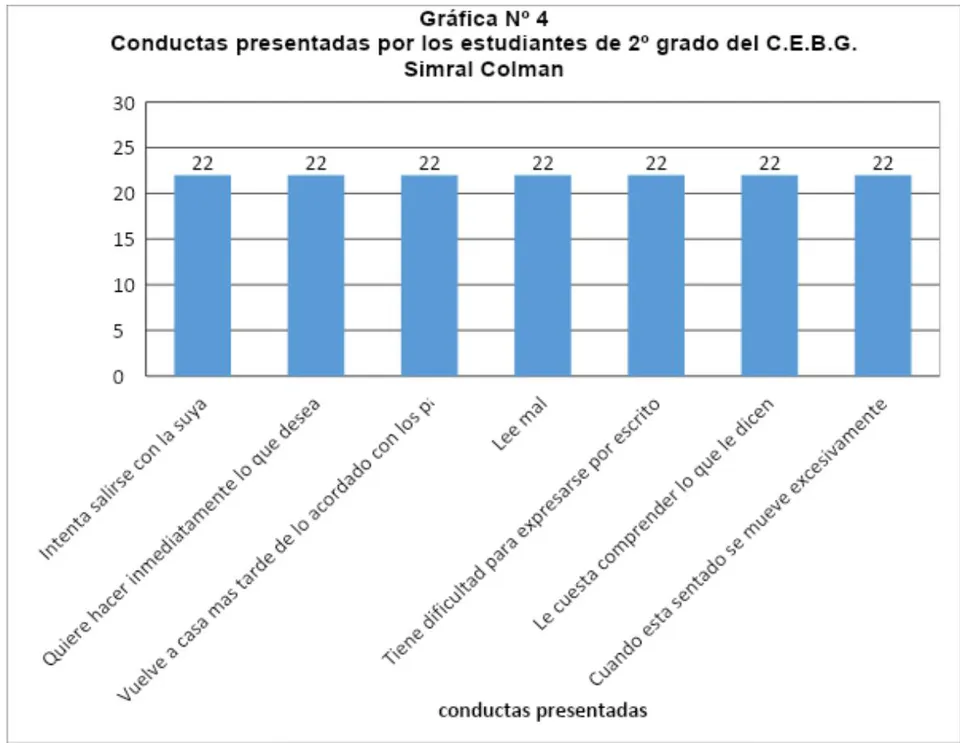
Cuadro No 4: Conductas presentadas por los estudiantes de grado del C.E.B.G. de Simral Colman
| Conductas presentadas por los estudiantes | Cantidad | % |
| Intenta salirse con la suya | 22 | 43 |
| Quiere hacer inmediamente lo que desea | 22 | 43 |
| Vuelve a casa más tarde de lo accordado con los padres | 22 | 43 |
| Lee mal | 22 | 43 |
| Tiene dificultad para expresarse por escrito | 22 | 43 |
| LeceeComprender lo que leDICen | 22 | 43 |
| Cuando está sentado se mueve excessivamente | 22 | 43 |
IV. DIscusión y COnClusiones
Decir que el aprendizaje de una lengua materna en su primera fase es fundamentalmente espontáneo, no significa concluir que sea algo simple. Tenemos que ser consciente que ese aprendizaje es un proceso sumamente complejo y relativamente largo. ¿Cuánto tiempo transcurre entre los primeros balbuceos de un bebé y un hablar que puede ser considerado relativamente fluido, aunque con un léxico bastante reducido? Se aprende una lengua materna, y también por supuesto una segunda lengua, mediante ensayos y errores. Y, lo que es importante destacar, con la participación del quehacer instruccional y educativo del medio hogareño y familiar. Estos aprendizajes son consecuencia del proceso de socialización.
- Es en la escuela en donde se enseña al niño entre otras cosas a leer y escribir para comprender e interpretar el pensamiento de los demás, así como para expresar el propio. Para lograr este propósito es indispensable que los docentes del Centro de Educación Básica General Simral Colman, reconozcan la relación que hay entre la lengua que usa el niño y como iniciarlo en la adquisición del lenguaje escrito; lo cual les permitirá facilitar el proceso de lectura y escritura en ellos.
- La lectura es un proceso interactivo enmarcado en el aula y atribuye al maestro el papel esencial de
crear situaciones de aprendizaje (como la utilización de fichas lexicales), las cuales promueven que los estudiantes desarrollen las habilidades y la capacidad para alcanzar los niveles de mayor complejidad del proceso. Por ello es preciso que como docentes facilitadores de nuestros educandos durante el proceso de lectura y escritura reconozcamos los estilos y ritmos de aprendizaje de cada uno de ellos, a modo de individualizar la construcción de sus propios aprendizajes.
- Es preciso que los docentes que laboran en las comarcas aúnen esfuerzos para motivar a sus educandos de forma tal que valoren su cultura, su lengua, sus tradiciones y sus costumbres; despertando así, su deseo de aprender, construir y crear.
- Al docente no le queda una tarea fácil de acometer. Hoy, el docente de primaria debe tener una buena preparación teórica que abarque desde las doctrinas lingüísticas hasta la estructura de su propia lengua, pasando por las variedades dialectales o lingüísticas de las regiones en cuestión, y una vocación sin límites. Por ello, el conocimiento y el cuidado dela lengua materna no exime a ninguno de los que laboran en poblaciones originarias.
Footnotes
Krashen afirma que la capacidad de usar una lengua solo se adquiere inconscientemente tras comprender los mensajes. Según él, sentarse en un aula no hará que puedas entender, hablar o escribir una lengua. (p.2) ↩