
I. INTRODUCTION
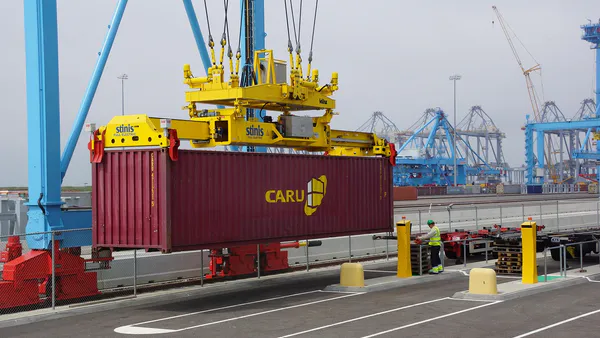
Nowadays in a volatile and interdependent world economy, supply chain management (SCM) is a key factor for business competitiveness. Digital technologies, in particular IoT, are turning traditional supply chains into an intelligent, responsive, connected networks. It is the interconnection of physical devices that collect and exchange data over the internet called IoT. Through the integration of sensors and software into logistics assets such as containers, vehicles and equipment, IoT enables real-time visibility, process automation and data-driven decision making (Akyuz and Bicer 2022). This essay describes how IoT improves supply chain management by increasing operational efficiency, transparency, predictive analytics and sustainability.
II. LITERATURE REVIEW
Academic and industrial experts have discussed the role of IoT in SCM extensively. Lee and Lee (2015) said IoT technologies are the basis of companies moving to more responsive logistics systems. Their study describes how enterprises are adopting sensor-based tools as well as real-time data processing for supply chain agility. In a similar vein, Ben-Daya et al. (2017) reviewed IoT applications for logistics and identified benefits such as increased visibility, risk reduction and responsiveness.
Zhong et al. (2016) have pointed out in that one of the unique features of IoT and Industry 4.0 is the ability of working interdependent with less reliable on human involvement in comparison to older technologies. They stressed that IoT enables intelligent decision making across the supply chain from raw material procurement to final delivery. Kang et al. (2016) contributed by describing how IoT supports predictive maintenance and automation, increasing productivity and reducing equipment downtime.
Ivanov et al. (2015) investigated the choice supports amenities of IoT data-generated decision making in real time improved asset allocation, route optimization, and demand forecasting. Collectively the literature shows a great convergence on the shaping effect of IoT on SCM but also on implementation challenges including cybersecurity, integration cost and requirement of specialized personnel.
III. IOT APPLICATIONS AND BENEFITS FOR SUPPLY CHAINS
a) Visibility and Operational Efficiency
Most critical contribution of IoT is improved end-to-end supply chain visibility. RFID tags, GPS trackers and environmental sensors allow product and vehicle location tracking. This transparency reduces risks of theft, spoilage or delays for businesses. Companies in the food and pharmaceutical sectors, for example, use IoT-enabled cold chain monitoring to keep goods at safe temperature limits during transit (Ben-Daya et al. 2017).
Warehouses, factories and distribution centers Automated though IoT. Smart bins sense inventory depletion and initiate restocking and AGVs do repetitive works in warehouses (Kang et al. 2016). On the factory floor, predictive maintenance reduces machine downtime, extends equipment life and lowers repair costs compared to traditional maintenance methods (Zhong et al. 2016).
b) Data-Driven Decision-Making
IoT produces huge amounts of data which could be used to improve decision making. Forecasting demand, measuring supplier performance and finding inefficiencies are among the predictive analytics based on sensor data managers can use (Ivanov et al. 2015). Real time data can also support just-in-time inventory models to reduce storage costs and improve response time to market demands.
c) Sustainability and Regulatory Compliance
The IoT supports sustainable supply chains by reducing energy consumption, waste and emissions. Sensors monitor carbon output and alert operators of inefficiencies. Moreover, regulatory compliance is improved through real-time logging and digital documentation especially in highly regulated sectors such as healthcare and food logistics (Ben-Daya et al. 2017).
IV. CHALLENGES AND CONSIDERATIONS
IoT implementation has challenges though. The major challenges include high sensor cost, legacy system integration and massive data stream complexity (Kang et al. 2016). More connectivity can increase the risk of cybersecurity attack on all entities and stakeholders of a supply chains. Organizations also have to address workforce skill gaps through training and IT infrastructure.
V. CONCLUSION
From real-time insight to automation and intelligent decision making, the Internet of Things (IoT) is transforming supply chain management. Literature in this area consistently supports the IoT driven notion of more agile, transparent and efficient supply chains, and while challenges including cost and security do persist, the strategic benefits are clear. IoT will play a crucial role as businesses move towards digital transformation, contributing to smarter and more resilient supply chains.