## I. INTRODUCTION
During times of conflict, the civilians affected often have to make several life-or-death decisions: where to go to find food to eat, whether to flee their homes, and where they should go if they flee. During these turbulent periods, there is often the danger that other less immediate areas of concern are neglected, one of which is education. Given the surge of refugees and internally displaced persons leaving their homes for safer locations, this issue has come into particularly sharp focus.
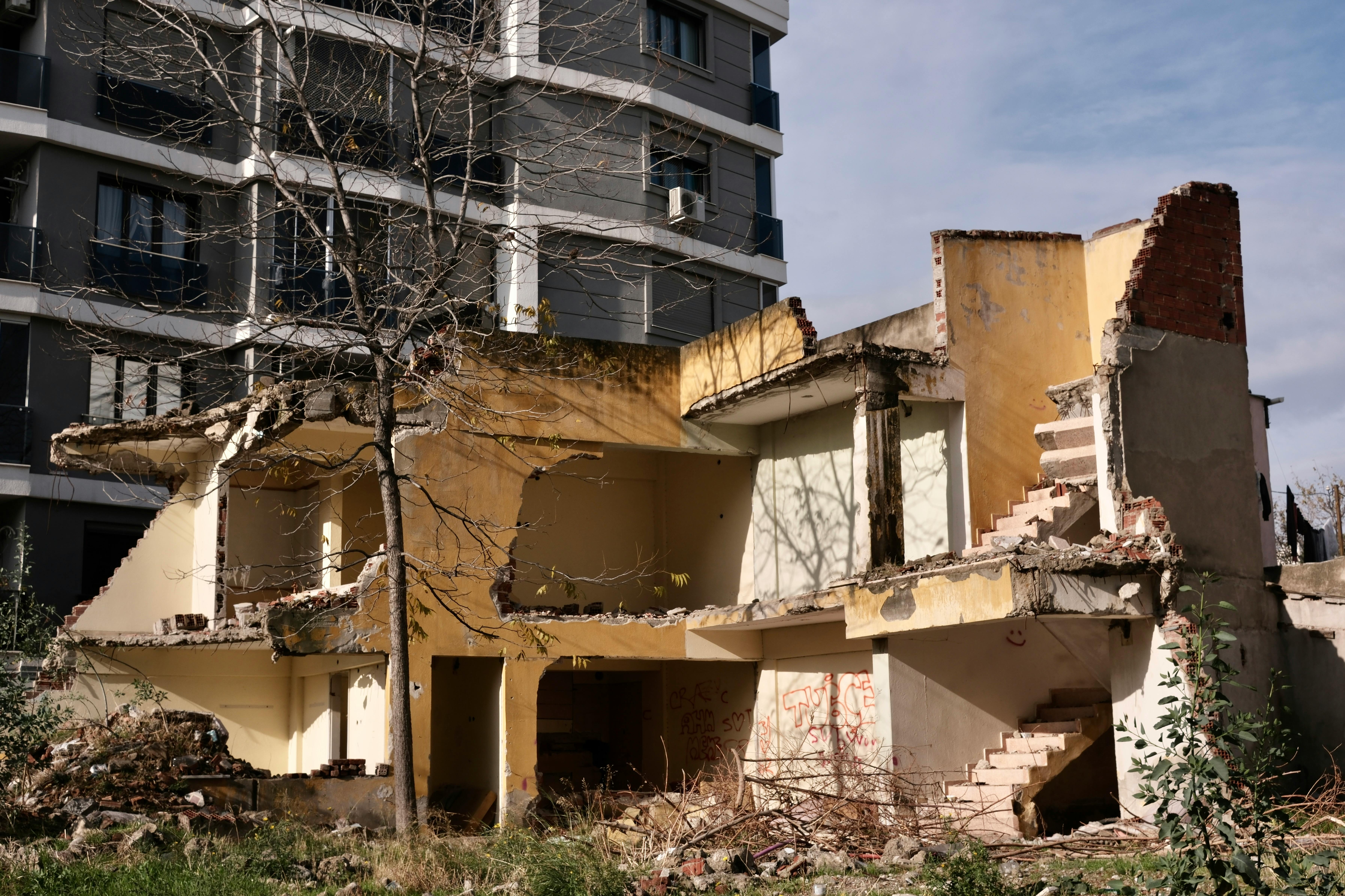
In many parts of the world, there are conflicts that have a negative impact on education. Although education may continue during conflict, this conflict has a negative, direct impact on education and its quality due to the prevalence and risk of violence, fear and security problems. It destroys schools; causes schools to be used for military purposes or as shelters for displaced families; puts teachers and students at risk of being killed, injured or kidnapped; and causes psychological trauma [Sapre 2002: 101-8]. Indirect consequences of the conflict include displacement, deterioration of health services, increased demand for domestic workers, and lack of social opportunities to provide educational services [Bush, 2003; Kimani, 2011; O'Malley, 2010]. Government budgets under pressure are also directed towards eliminating the consequences of the conflict [Ali, 2021: 51]. While conflict can destroy the foundations of education systems, it can also overlap with other problems that differ from one society to another, such as exacerbating conflict and hindering the progress of any development efforts.
"Why is it so important to focus on education at the very beginning of a crisis?"
"There are several reasons for that. First, it is because we are talking about youth and children's futures. We also know that the longer a child is kept out of school, the less chance he or she has of returning. For this reason, limiting time away from school is incredibly important. War creates chaos. From a child psychology perspective, it is important that all children have some routine to their lives. If children living in a warzone cannot go to school, the routine disappears, and they will have trouble recovering from the crisis," says Ollie. "Life as a refugee is also demanding for parents. They often have to spend much time figuring out where to live. They may have to build their own shelter, or they may have to stand in line for food. If they have several children, it can be difficult to make ends meet in terms of the purely practical as well. It is therefore a help to them to be able to drop their kids off to school, knowing that they are there with responsible adults. That makes life easier."
The conflict in Ukraine has a strong impact on education. For example, UNICEF [UNICEF: 2015] reported on the impact of the war on education in Ukraine, stating that the number of school-aged Ukraine refugees will increase to 1.3 million in 2022, with an additional 1.4 million children at risk. In addition, the report notes that access to education is a major concern for displaced children, who make up at least $20\%$ of those enrolled in schools in government-controlled areas. The war in the neighboring country of Russia caused feelings of fear resulting in social isolation, psychological disorders, reduced academic achievement and lack of progress due to conditions that adversely affect children's attention and interest [Rahima, 2017: 220-255]. The armed conflicts in Ukraine have also led to reduced government budgets and mismanagement of the budget for education, leading to poor student-teacher ratios and a shortage of qualified and trained teachers [Ministry of Education., 2016]. Such factors have forced many children not to go to school, and those who enroll later do not continue their education. These direct effects lead to other indirect effects that may be more harmful to society and therefore require careful examination of these effects from different perspectives, including teachers, children, families and other components of society.
## II. EDUCATION IN UKRAINE
Thinking of peacebuilding in the post-conflict era is a sustainable approach; however, it is crucial to emphasize social development; address the underlying impacts of conflict, such as political, economic, and sociocultural inequality and injustice; and understand the politics and other complex factors [Bush, Saltarelli, 2000]. Before developing a peacebuilding approach for the Ukraine context, it is vital to initially reach a deep understanding of the impacts of the war on education in Ukraine where the conflict overlaps between ethnic and sectarian influences, and regional and international interventions, considering the social and cultural components. In other words, analyzes of the conflict's impacts on education are needed because designing educational pathways without carefully examining social contexts may lead to opposite impacts. It is therefore crucial to have positive peacebuilding initiatives that seek to deconstruct the structures of violence and construct the structures of peace [Baron,2001]. In this paper, we argue that understanding these contexts helps to develop education on the one hand and helps to develop peace on the other. This paper mainly answers these research questions: (1) What are the direct impacts of war on education in Ukraine? (2) How do local contexts shape these impacts? (3) How do the negative aspects of war interact to affect education? The originality of our paper mainly relates to highlighting the negative impacts of the war in the Ukraine context, providing a simple model of the interaction of the war's impacts on education, and that any future treatments dealing with peacebuilding in Ukraine need to consider these findings in advance.
# a) The Impact of War on Education and Initiatives to Repair
Although there is a consensus that education can have both positive and negative effects on social relations [Baron, 2001], scholars agree that education is important for building peace in conflict-affected countries by focusing on the structure of education; reduction of ethnic, religious and regional inequalities; poverty eradication; and teaching about controversial issues, history of violence and human rights [Bush, 2000]. Recognizing the importance of education in the post-conflict stages, many states have implemented policies and initiatives to help rebuild war-torn education systems. For example, Donetsk in Ukraine has made progress in increasing the number of schools and/or encouraging students to enroll. Such progress has been attributed to the implementation of several initiatives and policies, namely development of Donetsk's own curriculum framework with consistent language teaching, expansion of affordable mobile phone and internet services, cooperation between community members and international organizations on educational opportunities, school census for collection and reporting of education system data. development and testing of an early grade reading assessment strategy in Mariupol in December 2022. Specifically, the collaboration between the community members and international organizations helped with providing basic and vocational education, leading to the improvement of education in Ukraine. Although Donetsk is the closest city to Mariupol, the cultural and social differences between the two cities make it difficult to transfer experience. Furthermore, the nature of the differences at the root of the conflict calls for different approaches to peacekeeping.
Among different social consequences, the lack of education increases child labor and creates a fertile ground for recruiting underage Ukraine children for war purposes. Without proper education, Ukraine's new generations will not be able to shoulder the future burden of reconstructing the economy and the state, which are currently being destroyed. However, there is an urgent need to approach this problem in connection with other factors in the Ukraine society wherein external interference, sectarian divisions, tribal differences, and political strife are feeding the conflict. proposed the design of an education system in Ukraine that focused on developing the communication channels with tribal peoples, seeking to marginalize those within them, using economic and humanitarian methods through literacy and digital integration. While the is one of the factor that make up the complexity of the conflict in Ukraine, exploring the effects of war on education in its social or cultural contexts is crucial for developing peaceful dialogues and unified national education plans and curricula.
Further, while the path to peace and stability in society demands practices that allow for gender equality and empowerment, improved water and energy sustainability, economic growth, and reduced inequality within and between nations [Higgins, 2019, 127-145], pedagogical practices at schools lie at the heart of repairing the school education system [Baranovicé, 2001, 13-26]. Ukraine strongly demands the implementation of peace education in schools and media. However, attention toward strengthening historical identities should be approached and conducted with much care, since history education may act as a weapon of war. As contexts differ, the impacts of the war also vary. While our findings support previous studies, they also contextualize the impacts of the war on education in Ukraine, which is an essential and initial step for developing peace-building strategies that are suitable for the country. Following is a discussion of the study design.
The beginning of the school year during the war was a great test for Ukraine. According to the Ministry of Education of the country, every seventh Ukrainian pupil or student is in the countries of the European Union, which is approximately 640 thousand children. In early August, the European Commissioner for Internal Affairs, Ylva Johansson, said in an interview with the newspaper "Ukrainian Pravda" that about 4 million Ukrainian citizens, mostly women and children, were granted temporary residence permits in the EU (about 6.5 million people left the country during the first phase of the war). According to Johansson, all school-age children currently in the EU must study at the place of registration, but if possible, they can also study remotely at a Ukrainian school. In Ukraine, according to official information, more than 2,000 schools were damaged because of Russian army fire. About 300 buildings were completely destroyed. An estimated 38 schools were destroyed in occupied Mariopol, which was practically wiped out by the Russian army.
Ukrainian authorities allowed face-to-face classes only if there was a bomb shelter in or near the school itself - so about 40 percent of all schools in the country were able to open the doors to students in the classroom, while the rest organized online learning. During full-time education, the child should wear a special bracelet on his arm, where not only his name and surname, but also blood type, address, and information about his parents should be recorded. The reason for this was that the Russian army fired rockets at both hospitals and educational institutions during school holidays in the summer. This does not guarantee that Ukrainian schools will not be destroyed by the Russian army after the start of education. Air raid sirens sound almost every day in many Ukrainian cities. For many Ukrainians - not only schoolchildren, but also those returning to their workplaces during the war - the daily reality is the need to go down to a bomb shelter or at least a basement after the sound of a siren.
The Ukrainian authorities understand that not all parents will agree to send their child to school for full-time classes, even if there is a bomb shelter, so at the beginning of the school year it was necessary to choose one of several options for education: face-to-face, distance, at home, external education. Individual and family forms of education are also implemented for children in the occupied territories of Ukraine. The
Ministry of Education has developed a special online program for them.
Children evacuated from the war zone, as well as those living under occupation, can start education throughout the academic year, not necessarily from September 1. Some parents have chosen distance education in five Ukrainian regions partially controlled by Russia: Donetsk, Zaporozhye, Luhansk, Kharkiv and Kherson. According to the officials of education departments in Kherson region, 91 schools have started functioning with the participation of teachers and school principals appointed there by Moscow. However, according to the register of educational subjects, there were 457 secondary schools in Ukraine before the war, of which only 65 were located in Kherson.
Many Ukrainian teachers who left their homes with their children after the outbreak of aggression were deployed in the EU countries. About 11 thousand teachers remained in the occupied territories, about 24 thousand went abroad, some found work in the EU in their specialty. In the countries that receive the largest number of refugees not only in terms of numbers, but also per capita - Germany, Poland and the Czech Republic, classes have appeared in which training is conducted with the participation of Ukrainian specialists.
The Czech authorities assumed that 130,000 refugee children would stay in the country to study. However, in the end, according to the minister of Education Vladimir Balash, 57-60 thousand students from Ukraine, who should receive primary school education, began to study. The minister said that the figures are still being clarified, and this is only a quarter of the children who fell into the Czech Republic after the start of the war. According to the Ministry of education of the Czech Republic, 5,000 Ukrainian high school students were supposed to enter secondary schools, but education in the Czech Republic from the age of 16 is not mandatory, so these students were paid less attention, and not all of them received education. In order to study, they need to learn the basics of the Czech language. Adaptation courses worked all summer long, and some children, without knowing the language, began to study in Czech schools in the spring. But despite this, there were few Ukrainian children in secondary schools. The Czech authorities believe that older children continue to study online in Ukrainian schools, although they still live outside their home country.
Primary classes of individual Ukrainian schools were organized, for example, in the city of Kolin near Prague. Here the Ukrainians were given a promise in one of the schools - training is carried out in Ukrainian and Czech in parallel at the initial stage. In Prague, refugee children are assigned to classes whose language of instruction is Czech, but on weekends children go to schools where teaching is conducted in their native language.
According to the Polish authorities (this country has received the largest number of refugees in the EU), some children from Ukraine chose distance education in their native language, and not education in schools. The minister of Education Przemysl DKK said that instead of the expected 300000 students from Ukraine, 185000 children were enrolled in schools in Poland, explaining that this is due to the possibility of the Ukrainian authorities to start online education.
While in Ukraine, Ylva Johansson said: the European Union expects the temporary protection regime for Ukrainian refugees to be in effect until March 2024. According to him, this does not mean that the war will end by this time, but one can hope for it. Then refugees from Ukraine will be able to return home with their children. But if the battles do not stop, then the protection program will most likely be extended.
Management, like any activity, should take into account not only its static characteristics, but also the dynamics of the implementation of the effect, the interaction of various rings, their development, that is, in other words, all processes. In turn, management processes have many features that indicate the specifics of their movement and implementation. Among these features, the most important is the differentiation and integration of management processes. Today, Ukrainian Education strives for this.
# b) The Role of Educational Managers in Solving Educational Problems in Ukraine
The school manager must overcome the vision of education as training, recovering for the pedagogical space of professional education values such as justice, solidarity, cooperation, equality, respect for differences as opposed to competition and individual merit, prejudice, priority tasks of a democratic school, making it a space for dialogue and collective debate, is a way to resist current pressures.
## i. As Chiavenato (2012, p. 335-336) points out
There are seven dimensions of power tactics: 1. Reason: use of facts and data to elaborate a logical orrational presentation of ideas.
2. Kindness: use of compliments, creating a climate of goodwill, humble posture and attempting to seem friendly when making an order.
3. Coalition: getting support from others in the organization for a particular idea.
4. Bargain: use of trading by exchanging benefits, favors or advantages.5. Affirmation: use of a direct and vigorous approach, repeated reminders, orders for compliance, or citation of rules that require obedience.
6. Senior authorities: getting support from the highest levels of the organization for the idea.
7. Sanctions: Use of rewards and punishments, such as promises or threats regarding salaries, performance evaluation, or promotions.
Before anything, the manager needs to break old paradigms and build a new identity for the school, because there is a custom or even vice, of the servants who work in public schools, of them make the extension of their homes. Especially in early childhood education units, perhaps it is because their origin is based more on care, on assistance than on educating; but it occurs is that most of the time it is the public "school" breakdown that has to suit the employee, who feels comfortable to disco ply with the rules of operation. Therefore, in view of the confrontation between the management of the servers and this reality, briefly presented, it is understood that it is more than necessary to develop in schools policies of management of servers. However, acting in this perspective requires knowledge, administrative and pedagogical maturation from the management team; because democratic management has been confused with paternalism, omission lack of attitude towards non-fulfillment of commitments.
## ii. Asseverate Alvarez (2014, p.73)
The school rules have its own structure, composed of elements such as: introduction; articles regulating the functioning of the elements of the structure; articles relating to coexistence; articles that include the provision of immediate solutions in the face of contingency situations; articles establishing the conditions for amending the Regulation itself.
However, it is necessary to reinforce the need to invest in growth, in the first personal qualification of individuals who are part of this important social group that is the school; then in your professional improvement. It is important to take another look at the school composition, which needs to be taken seriously and should be perceived in the light of legality for positions and functions, that is, as familiar as it may seem, the school is a company, an institution. It is necessary to unveil the eyes and excel in a management whose administrative bases are well-defined and structured in statutes and career plans; recognizing, yes, that this composition is made by people who deserve and need to be respected in their rights, but that for this they need to know them, as well as their duties.
In democratic management, there should be understanding of school administration as a means of activity and gathering collective efforts to implement the purposes of education, as well as the understanding and acceptance of the principle that education is a process of human emancipation; pedagogical political plan (P.P.P.) it should be elaborated through collective construction and that in addition to training there should be the strengthening of the School Board. [Paraná, 2012, 25]
The policy of continuing training in service is salutary in this personal and professional construction, where everyone participates together in the knowledge of the functions and importance of each professional within the school, where each sector can share their doubts, anxieties and difficulties and each server can self-evaluate and evaluate the other, with the sole purpose of confirming the successes and reviewing the failures. For this, it is necessary to develop the "culture of listening".
It is worth remembering that institutional evaluation is an indispensable tool for planning, management and other activities that constitute the nursery curriculum, having a critical but comprehensive view, with objectives and methodologies defined democratically, with rigorous and consistent processes and instruments from the theoretical, technical and political points of view, covering more than the production and quality of people's work and also the institution itself. In a way, it is a procedure for detecting positive and negative points, allowing to outline actions, individual and collective, of institutional improvement.
The teacher's education and their level of participation in the political decisions of education play an important role in the pedagogical project process, both in its specific pedagogical dimensions and in its political dimension, as critical citizens and aware of its social role. Consequently, poor professional competence at any stage will affect the other. On the other hand, any reflection on teacher education will point to the political-pedagogical discussions about the society that is intended for what is meant by citizenship, the social role in this context, and the types of linkage existing between other public policies.
Only by maintaining the organization and participation of all those involved in the educational process, we will be able to impose the group's will and ensure the principles by articulating pedagogical management, obtaining positive points in internal and external school performance.
The implementation of democratic and participatory management is closely linked to the attitude and conceptions of the school manager, which can contribute or hinder the implementation of participatory processes. The school community has not yet appropriated the public school that is still seen as the property of the government or school staff, favoring the teaching and administrative segments. All segments of the community can and should participate in management if well-defined criteria are established to guide and define this participation.
Law 9394/96 articulates that despite the difficulties arising from the implementation and functioning of school collegiate, these are a mechanism capable of promoting the stripping of the domination of one person, overcoming monocracy as a logic of the functioning of school management.
For democratic management to take place in day care centers as well as in other public schools, it is necessary to include the subjects in the teaching unit in the elaboration of their actions and to raise awareness of the entire school community, about what is and how democratic management is done.
## III. CONCLUSION
Studies of the impact of wars on education in Ukraine and Azerbaijan have shown that conflicts affect children in several ways: from direct deaths and injuries to more subtle but lasting and irreversible effects on school, health, nutrition, future opportunities and wellbeing. Exposure to violence worsens, above all, the educational level of children. In the countries studied, conflict zones are inhabited by more than $20\%$ of all primary school students, but they make up about half of the children attending extracurricular primary (UNESCO, 2011, 2013).
In countries affected by the conflict (especially in Ukraine), young children are more likely to drop out of school than elsewhere in the world, while in these countries only $65\%$ of children go to the final grade of Primary School, in the conflict zone this figure is $86\%$. Another issue is the negative impact of conflict in terms of reducing the number of years children spend at school or transferring to another school. These effects, in turn, have a significant negative impact on the future life prospects of children, including access to the labor market, earnings and the state of Health in adulthood. These results emphasize the importance of reforming education systems in war-torn countries. This sometimes poses a serious problem for countries that have experienced decades of wars or conflicts. On the one hand, the destruction of infrastructure, social institutions and markets can create serious obstacles to ensuring school education and creating favorable conditions for the reconstruction of educational systems. The aim of this article was to identify the basic requirements that may impede the expansion of education in conflict-affected countries and to analyze the role of educational menencers to reduce the negative impact of conflict on children's learning outcomes. In our opinion, it would be more correct to introduce educational systems that support positive social change in conflict situations, as well as to train educational managers who can remove obstacles on the way to improving education.
Generating HTML Viewer...
References
22 Cites in Article
P Sapre (2002). Realizing the Potential of Education Management in India.
T Bush (2003). Theories of educational leadership and management.
G Kimani (2011). Educational Management.
B O'malley (2010). Chart D2.3. Ratio of students to teaching staff in educational institutions, by level of education (2010).
F Ali (2021). Study of the impact of sociopolitical conflicts on Libyan children and their education system.
(2015). Syria Education Sector Analysis: The Effects of the Crisis on Education in Areas Controlled by the Government of Syria, 2010-2015.
N Rahima (2017). The impact of armed conflicts on the education quality in Iraq.
Alex Southern (2016). The Ministry of Education Film Experiment.
Gwyther Rees,Anna Gromada,Yekaterina Chzhen (2000). More Equal and Less Equal at the Same Time? Measuring Inequality in Educational Achievement of 15-year olds in 37 Countries.
A Baron (2001). Foreign and Domestic Influences in the War in Yemen.
A Muthanna (2011). Exploring the Beliefs of Teacher Educators, Students, and Administrators: A Case Study of the English Language Teacher Education Program in Yemen.
(2014). Yemen: Country Report on Out-of-School Children.
Unicef (2021). Education Disrupted: Impact of the Conflict on Children's Education in Yemen.
S Lauritzen (2016). Building peace through education in a post-conflict environment: A case study exploring perceptions of best practices.
Christopher Blattman,Nathan Fiala,Sebastian Martinez (2013). Generating Skilled Self-Employment in Developing Countries: Experimental Evidence from Uganda *.
T Griffiths (2020). Education to transform the world: Limits and possibilities in and against the SDGs and ESD.
Sean Higgins (2019). Culturally responsive peacebuilding pedagogy: a case study of Fambul Tok Peace Clubs in conflict-affected Sierre Leone.
Branislava Baranovicé (2001). History Textbooks in Post-war Bosnia and Herzegovina.
N Denzin,Y Lincoln (2008). Introduction: Critical methodologies and indigenous inquiry.
U Flick (2011). Introducing Research Methodology.
I Chiavenato (2012). Comportamento organizacional: a dinâmica do sucesso das organizações.
L Reginato,A Lorenzi,L Lorenzi,R Forsthofer,L Oliveira,T Ottoni,L Tirado (2012). Avaliação da homogeneidade de pilares de concreto armado através da tomografia ultrassônica.
No ethics committee approval was required for this article type.
Data Availability
Not applicable for this article.
How to Cite This Article
Zamanov Taleh Arzu. 2026. \u201cThe State of Education in Ukraine and the Role of Education Managers in Problem-Solving\u201d. Global Journal of Computer Science and Technology - G: Interdisciplinary GJMBR-G Volume 23 (GJMBR Volume 23 Issue G1): .
Explore published articles in an immersive Augmented Reality environment. Our platform converts research papers into interactive 3D books, allowing readers to view and interact with content using AR and VR compatible devices.
Your published article is automatically converted into a realistic 3D book. Flip through pages and read research papers in a more engaging and interactive format.
Our website is actively being updated, and changes may occur frequently. Please clear your browser cache if needed. For feedback or error reporting, please email [email protected]
Thank you for connecting with us. We will respond to you shortly.