1. Introduction
Tourism has emerged as one of the most dynamic sectors of the global economy, contributing significantly to employment, foreign exchange earnings, and cultural exchange. In India, tourism is not merely an economic activity but a multidimensional phenomenon that intersects with governance, sustainability, and national identity. The sector’s resilience and adaptability have been tested repeatedly, most recently during the COVID-19 pandemic, which caused unprecedented disruptions to travel and hospitality worldwide. Yet, India’s tourism industry has demonstrated remarkable recovery, underscoring its importance as a driver of inclusive growth and a pillar of national development.
The Indian tourism sector contributes substantially to Gross Domestic Product (GDP) and employment. According to the World Travel & Tourism Council (WTTC), travel and tourism accounted for approximately ₹19.13 trillion in GDP in 2023, representing nearly 7% of India’s economy. Employment generation is equally significant, with millions of jobs created directly and indirectly across hospitality, transport, handicrafts, and cultural industries. Beyond economics, tourism plays a vital role in promoting India’s soft power, enhancing its global image through campaigns such as Incredible India, and fostering cultural diplomacy.
Governance in tourism is a critical lens through which the sector’s evolution can be understood. Policies such as the National Tourism Policy 2024, the Pilgrimage Rejuvenation And Spiritual Augmentation Drive (PRASHAD) scheme, and Swadesh Darshan have sought to balance economic growth with cultural preservation and sustainability. However, challenges remain in ensuring equitable distribution of benefits, addressing environmental concerns, and integrating community participation. The Tourism Area Life Cycle (TALC) model, proposed by Butler (1980), provides a useful framework for analyzing the stages of growth, stagnation, decline, and renewal in Indian destinations.
This paper examines the trajectory of tourism in India through the dual lenses of economic impact and governance. It integrates statistical evidence, policy analysis, and theoretical frameworks to highlight how tourism has evolved as both an economic engine and a governance challenge. By situating India’s experience within global debates on sustainability and resilience, the paper contributes to the broader discourse on tourism governance in emerging economies.
2. Literature Review
2.1. Tourism Governance and Policy Frameworks
Governance in tourism encompasses the structures, processes, and actors that shape decision-making and resource allocation. Scholars such as Bramwell and Lane (2011) emphasize that governance is not limited to government action but involves networks of stakeholders, including local communities, private enterprises, and international organizations. In India, governance has historically been centralized, with the Ministry of Tourism playing a dominant role. However, recent decades have witnessed a shift toward decentralized and participatory approaches, particularly through schemes like PRASHAD and Swadesh Darshan, which emphasize regional and community-based development.
Hall (2011) argues that tourism governance must reconcile competing interests, economic growth, environmental sustainability, and cultural preservation. This tension is evident in India, where rapid infrastructure development often clashes with heritage conservation. The governance challenge lies in creating frameworks that are inclusive, transparent, and adaptive to changing circumstances.
2.2. Sustainability and Tourism Development
Sustainability has become a central theme in tourism literature. Sharpley (2009) critiques the notion of “sustainable tourism” as often being more rhetorical than practical, highlighting the gap between policy aspirations and ground realities. In India, sustainability is particularly relevant given the ecological sensitivity of destinations such as the Himalayas, Kerala’s backwaters, and Rajasthan’s desert ecosystems. The UNWTO (2023) underscores the importance of integrating sustainability into recovery strategies post-COVID-19, emphasizing resilience, innovation, and inclusivity.
Community participation is a recurring theme in sustainability debates. Studies show that tourism initiatives that involve local communities in decision-making are more likely to succeed in preserving cultural heritage and distributing economic benefits equitably. In India, examples such as homestay programs in Himachal Pradesh and eco-tourism initiatives in Sikkim demonstrate the potential of community-based models.
2.3. The Tourism Area Life Cycle (TALC) Model
Butler’s (1980) TALC model remains a foundational framework for analyzing destination development. The model posits that destinations evolvolve through stages: exploration, involvement, development, consolidation, stagnation, decline, and rejuvenation. Applied to India, the TALC model helps explain the trajectory of destinations such as Goa, which experienced rapid growth followed by challenges of overcrowding and environmental degradation, and Kerala, which has sought rejuvenation through sustainable tourism branding.
Critics of TALC argue that the model is overly deterministic and does not account for the diversity of governance contexts. However, its utility lies in providing a structured lens for analyzing patterns of growth and decline. In India, TALC can be complemented by governance frameworks that highlight the role of policy interventions in shaping destination trajectories.
2.4. Tourism and Economic Impact
The economic impact of tourism is well-documented in both global and Indian contexts. WTTC (2024) data highlight tourism’s contribution to GDP and employment, while Ministry of Tourism statistics provide detailed insights into foreign exchange earnings. The steady growth of FEEs until 2019, followed by the sharp decline in 2020 and subsequent recovery, illustrates tourism’s vulnerability to external shocks and its resilience in adapting to crises.
Scholars emphasize that economic impact must be analyzed alongside social and cultural dimensions. Tourism generates employment and foreign exchange but also influences cultural identity, social cohesion, and regional development. In India, tourism has been instrumental in promoting handicrafts, performing arts, and culinary traditions, thereby contributing to cultural preservation.
2.5. Comparative Perspectives
Comparative studies provide valuable insights into India’s tourism trajectory. Countries such as Thailand and Malaysia have leveraged tourism as a major economic driver, but often at the cost of environmental sustainability. India’s challenge is to learn from these experiences while charting its own path that balances growth with governance. The Incredible India campaign, launched in 2002, is often cited as a successful example of branding that enhanced India’s global image, comparable to Malaysia’s “Truly Asia” campaign.
3. Findings and Discussion
3.1. Tourism Growth and Economic Impact
Tourism in India has consistently contributed to GDP, employment, and foreign exchange earnings. The sector’s trajectory reflects both opportunities and vulnerabilities. Between 2011 and 2019, foreign exchange earnings (FEEs) grew steadily, underscoring tourism’s role as a reliable source of revenue. However, the COVID-19 pandemic in 2020 caused a dramatic collapse, followed by a remarkable rebound in 2022–24.
Table 1. India’s Tourism Sector in 2023–24
| Indicator | Value (2023–24) |
|---|---|
| GDP Contribution | ₹19.13 trillion |
| Projected GDP Contribution | ₹21.15 trillion (2024) |
| Employment Supported | 45.5 million jobs |
| Share of National GDP | ~7% |
| Foreign Exchange Earnings | ₹3,10,000 crore |
Source: Ministry of Tourism, Government of India. (2024). India Tourism Statistics 2023–24. New Delhi: Ministry of Tourism.
Table 1 provides a snapshot of the tourism sector’s economic footprint in 2023-24. It highlights the sector’s contribution to GDP, employment generation, and foreign exchange earnings. The upward trajectory across indicators reflects both recovery from the pandemic and India’s growing international appeal. However, sustaining this momentum requires adaptive governance and infrastructure investment, consistent with Butler’s TALC model and Sharpley’s critique of sustainability rhetoric.
Table 2. Foreign Exchange Earnings from Tourism in India, 2011–2024
| Year | FEE from Tourism in India | Percentage (%) change over the previous year |
|---|---|---|
| 2011 | 83,036 | 25.5 |
| 2012 | 95,607 | 15.1 |
| 2013 | 1,07,563 | 12.5 |
| 2014 | 1,20,671 | 11.9 |
| 2015 | 1,34,844 | 11.8 |
| 2016 | 1,54,146 | 14.3 |
| 2017 | 1,77,874 | 15.4 |
| 2018 | 1,94,881 | 9.6 |
| 2019 | 2,11,661 | 8.6 |
| 2020 | 50,136 | -76.3 |
| 2021 | 63,000 | 25.6 |
| 2022 | 1,11,000 | 76.2 |
| 2023 | 2,75,000 | 147.7 |
| 2024 | 3,10,000 | 12.7 |
(₹ crore) Source: Ministry of Tourism, Government of India. (2024). India Tourism Statistics 2023–24. New Delhi: Ministry of Tourism.
Table 2 presents the trajectory of foreign exchange earnings (FEEs) from tourism in India between 2011 and 2024. The steady growth from 2011 to 2019 reflects the sector’s increasing global competitiveness and policy support. The sharp decline in 2020 underscores the disruptive impact of the COVID-19 pandemic, while the subsequent rebound from 2021 onwards demonstrates resilience and adaptive capacity. By 2023-24, FEEs not only recovered but surpassed pre-pandemic levels, highlighting tourism’s role as a critical source of foreign exchange and its contribution to India’s global positioning.
The steady growth until 2019 reflects India’s increasing competitiveness in global tourism markets. The collapse in 2020 highlights vulnerability to external shocks, while the rebound in 2022–24 demonstrates resilience and adaptive governance. This recovery was supported by initiatives such as the Dekho Apna Desh campaign, e-Tourist Visa expansion, and targeted infrastructure investments under PRASHAD and Swadesh Darshan.
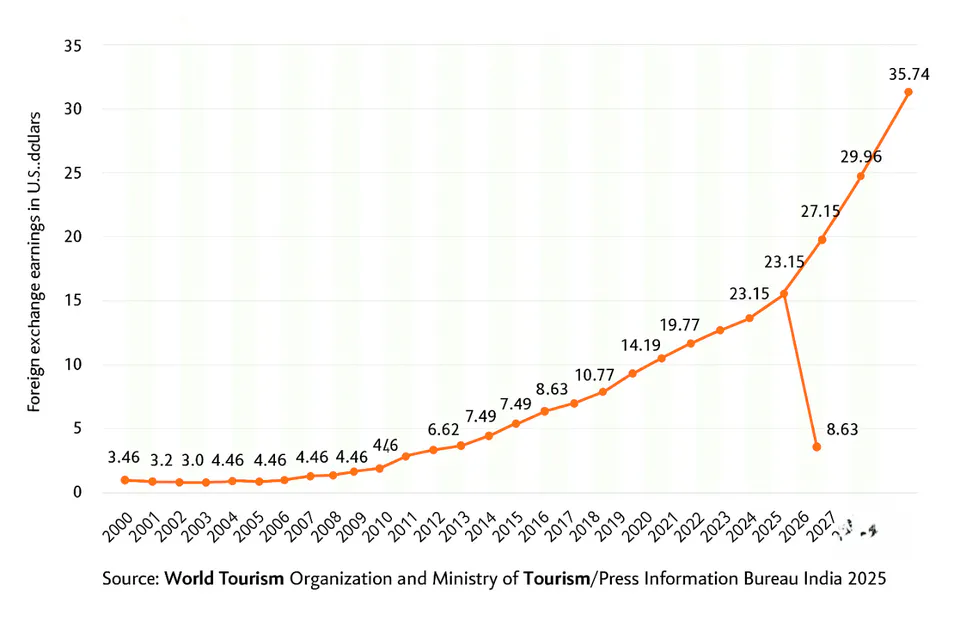
Figure 1 illustrates long-term growth, stagnation, and recovery phases. The TALC model is evident: destinations such as Goa and Kerala experienced consolidation and stagnation, while rejuvenation was achieved through sustainable branding and diversification. The pandemic represents an external shock that disrupted the cycle, but policy interventions enabled rapid recovery.
3.2. Regional Case Studies
3.2.1. Kerala: Branding Sustainability
Kerala’s “God’s Own Country” campaign positioned the state as a global leader in eco-tourism. The integration of Ayurveda, backwaters, and cultural heritage created a unique brand identity. Governance innovations included community-based tourism initiatives, homestays, and responsible tourism missions. Kerala exemplifies rejuvenation in the TALC model, demonstrating how sustainability can drive long-term competitiveness.
3.2.2. Rajasthan: Heritage and Overcrowding
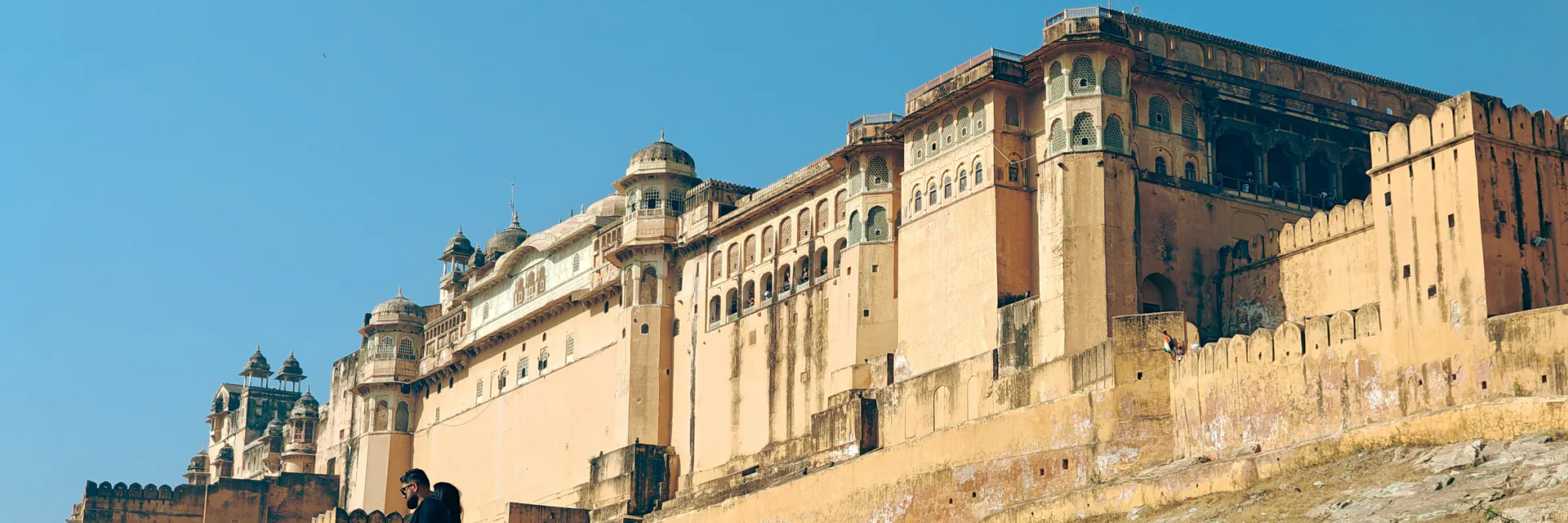
Rajasthan’s forts, palaces, and desert landscapes attract millions of tourists annually. However, destinations such as Jaipur and Jodhpur face challenges of overcrowding, heritage degradation, and uneven distribution of benefits. Governance responses include heritage conservation projects and diversification into rural tourism. Rajasthan illustrates the consolidation and stagnation phases of TALC, requiring governance reforms for rejuvenation.
3.2.3. Goa: Overdevelopment and Rejuvenation
Goa’s beaches made it a global tourism hotspot, but rapid commercialization led to overcrowding, environmental degradation, and social tensions. Governance interventions, including eco-tourism initiatives and stricter regulations on coastal development, aim to rejuvenate Goa’s brand. The case highlights the importance of balancing growth with sustainability.
3.2.4. Northeast India: Emerging Destinations
The Northeast offers unexplored potential, with destinations such as Sikkim, Meghalaya, and Arunachal Pradesh gaining visibility. Governance challenges include infrastructure deficits and political sensitivities. However, initiatives under Swadesh Darshan and PRASHAD are opening new opportunities. The region represents the exploration and involvement stages of TALC, requiring careful governance to avoid unsustainable growth.
3.3. Employment and Social Impact
Tourism generates employment across diverse sectors. WTTC (2024) estimates that tourism supported over 40 million jobs in India in 2023. Employment is not limited to hospitality but extends to transport, handicrafts, and cultural industries. Social impacts include empowerment of women through self-help groups, preservation of traditional crafts, and promotion of cultural identity. However, challenges remain in ensuring equitable distribution of benefits, particularly for marginalized communities.
3.4. Governance and Resilience
The recovery of tourism post-COVID demonstrates the importance of governance. Initiatives such as Dekho Apna Desh, e-Visa expansion, and targeted infrastructure investments under PRASHAD and Swadesh Darshan enabled a rapid rebound. Governance frameworks must continue to emphasize resilience, inclusivity, and sustainability.
3.5. Policy Evolution and Governance
3.5.1. Early Policy Foundations
Tourism governance in India has evolved through successive policy frameworks that reflect changing priorities. The National Tourism Policy of 1982 was the first comprehensive attempt to position tourism as a national priority. It emphasized infrastructure development, heritage conservation, and international promotion. However, implementation was limited by resource constraints and a lack of coordination across ministries.
The National Tourism Policy of 2024 marked a significant shift. It recognized tourism as a driver of employment and foreign exchange, aligning with India’s broader economic liberalization. The policy emphasized public-private partnerships, diversification of products, and integration of sustainability principles. It also laid the foundation for branding initiatives such as Incredible India, which successfully enhanced India’s global image.
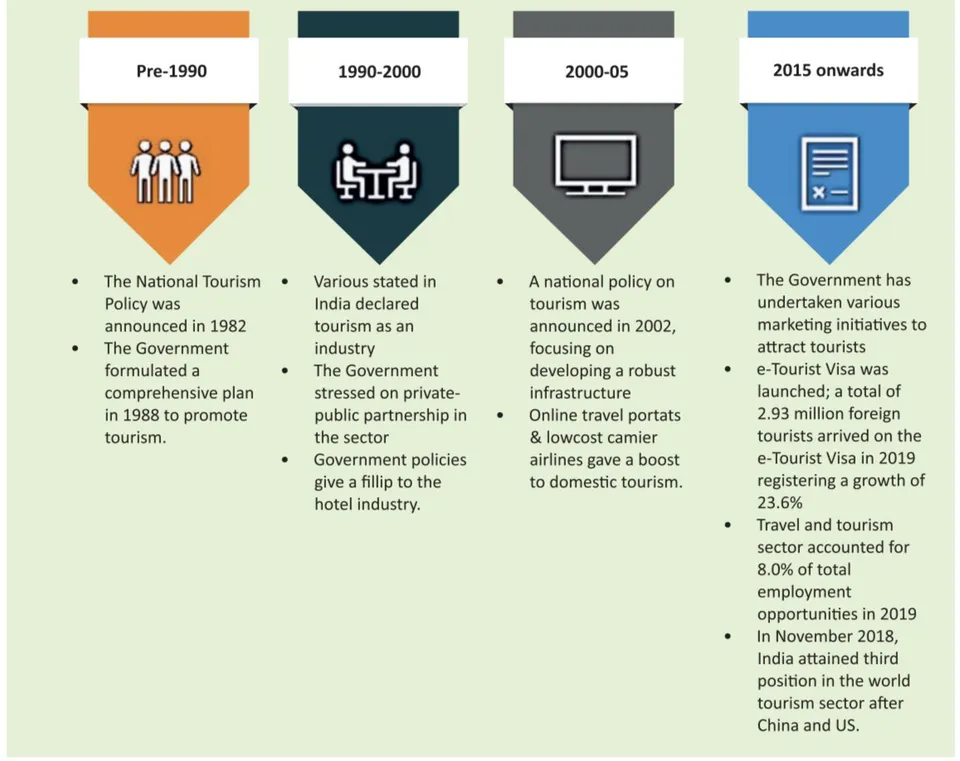
Figure 2 illustrates the trajectory of India’s tourism and hospitality sector, highlighting phases of growth, diversification, and policy intervention. It shows how the sector expanded from modest beginnings into a major contributor to GDP and employment. The upward trend corresponds to initiatives such as the National Tourism Policy (2024), the Incredible India campaigns, and the PRASHAD scheme. The figure reinforces the argument that India’s tourism growth is policy-driven, while also underscoring the need for sustained governance reforms to ensure inclusivity and sustainability.
3.5.2. Branding and Image Building
The Incredible India campaign (2002–2024) is widely regarded as one of the most successful tourism branding exercises globally. It positioned India as a diverse, vibrant, and culturally rich destination. The campaign’s impact was evident in rising international arrivals and foreign exchange earnings. Comparative studies often cite Incredible India alongside Malaysia’s Truly Asia and Singapore’s Uniquely Singapore campaigns as examples of effective nation branding.
Branding was not limited to international promotion. Domestic campaigns such as Dekho Apna Desh (2020) encouraged Indians to explore their own country, particularly during the pandemic when international travel was restricted. This initiative highlighted the importance of domestic tourism as a resilience strategy.
3.5.3. Infrastructure and Regional Development
Governance frameworks increasingly emphasized infrastructure development and regional equity. The PRASHAD scheme (2015) focused on pilgrimage and heritage destinations, recognizing the cultural and spiritual dimensions of tourism. By investing in amenities, accessibility, and conservation, PRASHAD aimed to enhance visitor experience while preserving heritage.
The Swadesh Darshan scheme (2015) targeted thematic circuits such as Buddhist, desert, coastal, and eco-tourism. It sought to diversify tourism products and distribute benefits across regions. The launch of Swadesh Darshan 2.0 (2022) reflected lessons learned from the first phase, emphasizing sustainability, community participation, and digital integration.
3.5.4. Digital Transformation and Visa Facilitation
Governance reforms also included digital initiatives. The e-Tourist Visa program (2014) simplified entry procedures, significantly boosting international arrivals. By 2019, India offered e-Visa facilities to citizens of over 160 countries, demonstrating how governance innovations can directly impact competitiveness.
Digital campaigns, online booking platforms, and mobile applications further enhanced accessibility. The integration of technology into governance frameworks reflects global trends toward smart tourism, where data analytics and digital tools shape decision-making.
3.5.5. Resilience and Recovery Post-COVID
The COVID-19 pandemic tested governance frameworks like never before. International arrivals collapsed, and domestic tourism became the lifeline of the sector. Governance responses included financial support for stakeholders, promotion of domestic travel, and health protocols for safe tourism. Initiatives such as Dekho Apna Desh webinars showcased destinations virtually, maintaining visibility during lockdowns.
The recovery trajectory demonstrates the importance of adaptive governance. By 2023-24, foreign exchange earnings surpassed pre-pandemic levels, underscoring the effectiveness of resilience strategies. India’s experience aligns with UNWTO recommendations on integrating resilience and sustainability into recovery plans.
3.6. Governance Challenges
Despite progress, challenges remain.
Coordination: Tourism governance involves multiple ministries (culture, environment, transport), leading to overlaps and inefficiencies.
Sustainability: Rapid infrastructure development often clashes with ecological preservation, particularly in fragile ecosystems like the Himalayas.
Inclusivity: Benefits are unevenly distributed, with marginalized communities often excluded from decision-making.
Capacity: Local governance structures sometimes lack the capacity to implement policies effectively.
Addressing these challenges requires integrated governance frameworks that balance economic growth with sustainability and inclusivity.
3.7. Comparative Insights
Comparisons with other countries highlight India’s strengths and weaknesses. Thailand and Malaysia leveraged tourism as major economic drivers but faced sustainability concerns. India’s governance frameworks, particularly PRASHAD and Swadesh Darshan, demonstrate attempts to balance growth with heritage and sustainability. However, implementation gaps remain, requiring stronger monitoring and evaluation mechanisms.
4. Conclusion and Policy Recommendations
4.1. Conclusion
Tourism in India has evolved into a critical sector that contributes substantially to GDP, employment, and foreign exchange earnings. The evidence presented in Table 1 and Figure 1 demonstrates a trajectory of steady growth, vulnerability to external shocks, and remarkable resilience in recovery. Regional case studies (Kerala, Rajasthan, Goa, and the Northeast) highlight the diversity of India’s tourism landscape and the applicability of Butler’s TALC model in explaining destination dynamics.
Governance has played a decisive role in shaping this trajectory. Policies such as the National Tourism Policy (2024), branding initiatives like Incredible India, and infrastructure schemes such as PRASHAD and Swadesh Darshan have collectively enhanced competitiveness. The introduction of the e-Tourist Visa and digital campaigns further strengthened accessibility and visibility. The pandemic tested these frameworks, but adaptive governance ensured recovery, aligning with UNWTO’s emphasis on resilience and sustainability.
Yet, challenges persist. Coordination across ministries, sustainability in fragile ecosystems, inclusivity for marginalized communities, and capacity at local levels remain pressing concerns. Addressing these requires governance reforms that are integrated, participatory, and future-oriented.
4.2. Policy Recommendations
4.2.1. Integrated Governance Frameworks
Tourism governance in India must move beyond fragmented approaches. Establishing an integrated framework that coordinates ministries of tourism, culture, environment, transport, and rural development is essential. A national tourism council with representation from the government, private sector, and civil society could ensure coherence and reduce overlaps.
4.2.2. Sustainability as a Core Principle
Sustainability must be embedded in all tourism policies. This includes:
Mandatory environmental impact assessments for new projects.
Incentives for eco-friendly infrastructure and renewable energy adoption.
Strict regulations in fragile ecosystems such as the Himalayas and coastal zones. Kerala’s responsible tourism mission provides a model that can be replicated nationally.
4.2.3. Community Participation and Inclusivity
Tourism must empower local communities, particularly women and marginalized groups. Policies should mandate community consultation in project planning, support self-help groups, and promote homestays and cultural enterprises. This ensures equitable distribution of benefits and strengthens cultural preservation.
4.2.4. Digital Transformation and Smart Tourism
Building on the success of the e-Tourist Visa, India should invest in smart tourism platforms that integrate booking, information, and analytics. Digital tools can enhance visitor experience, monitor sustainability indicators, and support evidence-based policymaking. Partnerships with technology firms and startups can accelerate innovation.
4.2.5. Resilience and Crisis Management
The pandemic highlighted the need for resilience frameworks. Policies should include contingency planning, financial support mechanisms, and health protocols for safe tourism. Domestic tourism must be promoted as a buffer against international shocks. Initiatives like Dekho Apna Desh should be institutionalized as long-term strategies.
4.2.6. Regional Diversification
Tourism benefits must be distributed across regions. The Northeast, with its unexplored potential, requires targeted infrastructure investments, capacity building, and promotion. Swadesh Darshan circuits should be expanded to include lesser-known destinations, reducing pressure on overcrowded sites like Goa and Jaipur.
4.2.7. Monitoring and Evaluation
Effective governance requires robust monitoring and evaluation. Independent audits of schemes such as PRASHAD and Swadesh Darshan can identify gaps and ensure accountability. Data collection must be standardized, transparent, and accessible to researchers and policymakers.
4.3. Closing Reflection
India’s tourism sector stands at a crossroads. The resilience demonstrated in the post-COVID recovery offers optimism, but sustainability and inclusivity must guide future growth. Governance reforms that integrate stakeholders, embed sustainability, empower communities, leverage digital tools, and promote resilience will ensure that tourism continues to be a driver of economic growth and cultural preservation.
By situating India’s experience within global debates, this paper contributes to the discourse on tourism governance in emerging economies. The lessons drawn from India’s trajectory (successes, challenges, and opportunities) provide valuable insights for policymakers, scholars, and practitioners worldwide.
4.4. Future Research Directions
Tourism governance in India is at a pivotal juncture, and future research must address emerging challenges and opportunities that extend beyond traditional economic and policy analyses. Several interdisciplinary directions can enrich scholarship and practice:
4.4.1. Climate Change and Tourism
Climate change poses significant risks to tourism, particularly in ecologically fragile regions such as the Himalayas, coastal zones, and island destinations. Future research should explore adaptive strategies for climate-resilient tourism, including renewable energy adoption, carbon footprint reduction, and disaster preparedness. Comparative studies with other vulnerable countries can provide insights into best practices.
4.4.2. Digital Transformation and Smart Tourism
The integration of digital technologies into tourism governance is accelerating. Research should examine the role of artificial intelligence, big data, and smart platforms in enhancing visitor experience, monitoring sustainability indicators, and supporting evidence-based policymaking. Case studies of smart tourism initiatives in India can highlight opportunities and challenges in digital governance.
4.4.3. Community Governance and Inclusivity
Future research must focus on community-based governance models that empower local stakeholders. This includes examining the role of self-help groups, cooperatives, and indigenous communities in shaping tourism trajectories. Studies should assess how inclusivity can be institutionalized in policy frameworks to ensure equitable distribution of benefits.
4.4.4. Ethics and Tourism Governance
Ethical considerations in tourism governance are often overlooked. Research should explore issues such as cultural commodification, exploitation of labor, and the ethics of heritage conservation. Integrating ethical frameworks into governance can strengthen legitimacy and sustainability.
4.4.5. Comparative and Global Perspectives
India’s experience must be situated within global debates. Comparative research with countries such as Thailand, Malaysia, and China can highlight similarities and differences in governance approaches. Global institutions like UNWTO and WTTC provide frameworks that can be adapted to India’s context, offering opportunities for cross-learning.
By pursuing these directions, future research can deepen the understanding of tourism governance in India and contribute to global scholarhip. The integration of climate resilience, digital innovation, community participation, ethics, and comparative perspectives will ensure that tourism evolves as a sustainable, inclusive, and resilient sector.
4.5. Limitations of the Study
This study is limited by reliance on secondary data sources such as the Ministry of Tourism statistics and the WTTC reports. While authoritative, primary fieldwork and case studies across diverse states would strengthen the analysis. National-level indicators may overlook regional variations in governance and sustainability practices.
Acknowledgements
The authors express their sincere gratitude to the anonymous reviewer for the valuable comments, constructive suggestions, and insightful observations that greatly contributed to the refinement and finalization of this paper.
The authors are particularly grateful to Dr. Ram Thapaliya, Senior Faculty, Department of Conflict, Peace and Development Studies (CPDS), Department of International Relations and Diplomacy (DIRD), Tribhuvan University, Kathmandu, Nepal, and Former Advisor to the Rt. Hon. Prime Minister and Council of Ministers of Nepal, for his encouragement, guidance, and unwavering support during the preparation of this manuscript.
The authors also extend their heartfelt appreciation to Dr. Bingwei Tian, Professor and Assistant Dean, Institute for Disaster Management and Reconstruction (IDMR), Sichuan University, China, for his valuable encouragement and support throughout the development of this paper.
While acknowledging their contributions, the authors alone remain responsible for the facts, interpretations, opinions, and conclusions presented in this paper.