Introduction
In 2017, an essay was published in the Guardian and immediately went viral. Under the title “I’m a relationship virgin: I’m 54 and have never had a boyfriend,” the author conveyed the pain she felt because she had never had a romantic relationship. She described her decades-long quest to answer the question, “what’s the matter with me?” I can’t tell you her name. She was too ashamed to be identified. The byline included the name of the reporter to whom she told her story (Taliotis, 2017). I’ll call her Anonymous.
It was baffling to Anonymous that having a boyfriend “just didn’t happen.” “I am gregarious, have loads of interests, work out,” she said, at the start of a list of qualities that should have helped her case. She had been feeling badly about not having a romantic relationship at least since she was 17 and started going to pubs with her two best friends. The guys flitted around them but not so much around her. She’s still trying to understand why a romantic relationship just didn’t happen. In fact, just before telling her story to the reporter, Anonymous had discussed the matter with her best friend, a woman she had known since she was around seven years old.
When Anonymous went to college, she thought she would find “the one” and her “life as an adult” would begin. But college proved boyfriendless. She came close when, while vacationing with friends, she had some fun with a bartender. That, she said, “made me feel normal. Finally, I was the one. . . who was giggly and giddy with excitement and self-importance.” But the fling only lasted a week.
She has been there for her friends who have married and had children, changing the children’s diapers when they were babies and staying in their lives as they grew up, only to have them ask her why she didn’t have a boyfriend. One of her friends is now divorced and Anonymous sees her more regularly; they often vacation together. But then when Anonymous returns to work, she feels self-conscious about having vacationed with a girlfriend instead of a romantic partner. The shame of never having had a romantic relationship sticks to her.
The culturally conditioned shame of being single
Anonymous did not come to feel badly about her romantic relationship status all on her own. She had internalized the kinds of demeaning messages about single people that are relentlessly communicated in many places around the world, and rarely challenged. They are the ideological waters we swim in (Day, 2016; DePaulo & Morris, 2005).
In their extensive research in Portugal, Norway, Bulgaria, and the UK, Roseneil and her colleagues (Roseneil et al., 2020) found evidence for a powerful set of assumptions they call the “couple norm” – the belief that being in a romantic couple is “the normal, natural, and superior way of being an adult.” Singlehood, in contrast, is believed to be abnormal, unnatural, and inferior. Anonymous described her life in just those terms – saying she finally felt “normal” and important when she started what she hoped would be a lasting relationship with a man she met on vacation. She believed that she would find a boyfriend in college and that would spell the start of her “life as an adult.”
It doesn’t have to be that way. That is not the only story that can be told about Anonymous’s life. But to tell a different story takes critical thinking. It means challenging, rather than perpetuating, the narrative that single people (including those who have had romantic relationships) are deficient, and to be normal, natural, and truly fulfilled, you need to be romantically coupled.
Critical studies disciplines such as Women’s Studies, Black Studies, queer studies, rural studies, and so many more challenge the prevailing stereotypes and dismissive assumptions about the devalued groups in question. They surface the strengths and contributions of the people in those groups that were previously ignored or diminished. Importantly, they also position those groups in the context of whole systems of inequality in which the valued groups are advantaged and the devalued groups are disadvantaged (Mintz, 2024). Without an understanding of those social and structural inequalities, any ways in which the members of the devalued group are doing less well than the members of the valued group are likely to be ascribed to personal deficiencies. If, for example, single people are lonelier or less satisfied with their lives than their romantically coupled peers, a deficit narrative might suggest that they need to look inside themselves and figure out how they are getting in their own way, maybe with the help of counseling or therapy.
Deficit narratives of single people and celebratory narratives of romantically coupled people are communicated in many ways. For example, the assumptions that no one wants to stay single, at least not for the long term, and that only romantically coupled people have truly fulfilling lives, are evident in everyday conversations. They also show up in the experiences that are considered milestones and the events that are deemed worthy of celebration. Popular culture is a major purveyor of the ideologies that glorify marriage and romantic coupling and pity people who are single. But it is not just popular culture. Serious think pieces in prestigious publications often do the same. Social scientists, too, can reinforce prevailing belief systems rather than challenging them. The potential of social scientific research to reach people such as Anonymous has been growing as the media increasingly shares stories of the latest findings from published studies.
When Anonymous’s story was published in 2017, very few academics identified as scholars of singlehood (DePaulo, 2026). Since then, interest has intensified and the field has grown. In part because singlehood studies is still emerging as a recognized discipline, the critical studies approach is not yet well developed or broadly understood.
In this article, I will use a research report recently published in a prestigious journal as a case study of a deficit narrative of single life and show how the focus on single people’s shortcomings can be transcended by taking a critical studies approach. In the report, data analyses are presented to make the case that young adults who stay single fare less well than those who enter their first romantic relationship. In my close reading of the report, I will highlight a number of questions. For example, do the authors seem to assume that everyone wants to be romantically coupled? Do they describe single people in the language of deficiencies and failures, while characterizing their peers with romantic relationship experience positively? Do they focus on the presumed risks and trade-offs of single life, while leaving unacknowledged the risks and trade-offs of romantically coupled life? Do they acknowledge other published research showing the strengths of people who do not have romantic relationship experiences when they are young as well as the problems of people who do have those experiences? Are their interpretations of their findings culturally sensitive? Importantly, in trying to explain why single people sometimes fare less well, do they acknowledge the many ways in which romantically coupled people are applauded, included, and advantaged, while single people are derogated, marginalized, and disadvantaged?
The case study
The article I will be discussing is “Life satisfaction, loneliness, and depressivity in consistently single young adults in Germany and the United Kingdom,” published in the Journal of Personality and Social Psychology in 2026. The authors are Michael D. Kramer, Julia Stern, Laura Buchinger, Geoff MacDonald, and Wiebke Bleidorn. In some ways, it is a very strong publication. The researchers analyzed yearly data from three panel studies from Germany and the United Kingdom. Participants included more than 17,000 people who were surveyed annually from age 16 through 29. At the start of the study, they had no romantic relationship experience. Every year they were questioned about their romantic relationship status, their satisfaction with their lives, their loneliness and depression. The data analyses were meticulous, and the reporting of the results was clear and compelling.
Among the key findings of the Kramer et al. research are that (1) the young adults who entered their first romantic relationship became more satisfied with their lives and less lonely; (2) as the participants grew older, those who stayed single experienced greater decreases in life satisfaction and greater increases in loneliness than those who eventually started a romantic relationship; later in their 20s, the consistently single people reported more depression too; and (3) men, participants with more education and lower well-being, and participants living alone or with their parents were more likely to stay single longer.
Single people are characterized as deficient
Throughout the article, single people are described as deficient, deprived, at risk for various adverse outcomes, as having to endure various costs of single life, and as failing and suffering and missing out. Those words and phrases occur more than two dozen times.
Those characterizations are not just used to describe specific findings. They also undergird sweeping statements about single people’s presumed deficiencies; for example, “Being consistently single in young adulthood is related to broad and consistent well-being costs.” Also, “Both men and women,” the authors note, “suffer relatively equally in consistent singlehood.”
The single people who stay single are described as experiencing “prolonged singlehood,” as if living single were a deadly disease. If it is not clear whether a particular characterization is disparaging, flip the script and apply it to married people. People who stay married are not described as experiencing “prolonged marriage.”
When the authors acknowledge that there could be benefits to living single, they then undermine that statement by warning that those benefits come with trade-offs. For example, they note that singlehood could offer “avenues for identity formation and self-reflection for some young adults,” but then add a qualifier: “such advantages of singlehood may need to be traded off against lower well-being.”
In the article, the possibility that some single people embrace their single life, valuing it for all it has to offer, and want to stay single (DePaulo, 2023 a, b), is nowhere to be found. Instead, we hear about people who “voluntarily delay or abstain from partnering.” In fact, the first sentence of the abstract is, “Young adults increasingly abstain from committed romantic relationships.” “Abstaining” is a different experience than embracing. I moved to California and stayed here because I love it here; I’m not abstaining from living in Virginia.
But that’s what they found
An understandable response to my criticism of the deficit narrative is that the authors are simply describing what they found. According to their analyses, young people who stayed single really did fare less well in some ways than those who entered their first romantic relationship. But it is always important to look beyond the specific measures in a particular study, and consider what was not included and to look beyond the reported research to what other research has found. That may be particularly important in an emerging field about a devalued group whose presumed shortcomings are routinely underscored while their strengths are relatively neglected.
Other research
With regard to other research, a study (Joyner & Udry, 2000) with findings that were very different from those of the Kramer et al. paper is especially relevant. A nationally representative sample of more than 8,000 adolescents between the ages of 12 and 17 reported their romantic relationship status at the start of the study and then a year later. They also completed a measure of depression both times and answered other questions as well. The researchers found that for both the boys and the girls, at every age, those who became romantically involved for the first time became more depressed. That was true even for those who stayed with the same romantic partner the entire year.1
Another study also found that people who entered a romantic relationship (not necessarily their first one) became more depressed (Hu, 2025). Nearly 3,000 people were surveyed four times – when they were 15, 16, 28, and 38 years old. At every age, on average, the single people who entered a romantic relationship became more depressed.
Also relevant is a study of the self-esteem of more than 9,000 Germans who were 17, 27, or 37 at the start of the study and who were followed for three years (Luciano & Orth, 2017). Their romantic relationship status and their self-esteem were assessed four times. If romantic relationships were as beneficial to young adults’ well-being as Kramer and his colleagues suggested, then people who entered a romantic relationship (in this study, not necessarily their first) would be expected to enjoy higher self-esteem. The results were not so straightforward. As the authors noted, “beginning a romantic relationship improves self-esteem if and only if the relationship is well-functioning, stable, and holds at least for a certain period of time (in the present research…one year or longer).” As for the people whose romantic relationship was over in less than a year, they ended up with lower self-esteem than the people who stayed single.
In a study of tenth graders (Douglas & Orpinas, 2019), students with little or no dating experience were less depressed than their peers who did date. They were also flourishing in other ways. Without being told who did or did not have experience dating, their teachers evaluated their social skills and leadership abilities. The students who had never dated (or perhaps had had just one date) were rated as more socially skilled and as better leaders. This suggests a whole different understanding of what it can mean to stay single. The students who were not dating were not at home moping or doomscrolling. They were developing their social skills and their leadership abilities.
An important strength of the Kramer et al. study is its longitudinal design; the Douglas and Orpinas (2019) study is cross-sectional. Also, the tenth graders in that study (typically 15–16 years old) are young compared to the participants in the Kramer et al. research, who ranged in age from 16 to 29. The dynamics could be different at younger ages. The importance of the study of the tenth graders is what it suggests (rather than showing definitively) – that young people who stay single may be benefitting in important ways from doing so.
Research also shows that time spent single may be beneficial to young adults (especially men) who become coupled and then navigate the throes of a romantic breakup (van den Berg & Verbakel, 2024). The study included more than 1,000 German adults who were under 25 when they left home and who eventually became romantically involved and then split up. Some of the adults stayed single for a while before entering a romantic relationship; the others went straight from living at home to living with a romantic partner or spouse. As the authors noted, “Whereas immediately coupled men experienced a relatively steep decline in life satisfaction in the year of the separation, the life satisfaction of initially single men was barely affected.”
The Kramer et al article was thick with references. But some of the studies that documented the strengths of single people or the costs of romantic coupling were excluded or discounted.
Beyond the experiences measured in the research
The results of the studies I just reviewed suggest ways in which the authors’ discussion of the implications of staying single during young adulthood could have transcended deficit narratives. That could have been done by acknowledging the kinds of experiences they did not assess in their research, such as the development of social skills and leadership abilities. The young adults staying single may also have been developing their interests and contributing to their communities. They may have been attending to and caring for the important people in their lives (DePaulo, 2023b).
The authors did mention some important potential benefits of single life, such as autonomy, personal growth, identity exploration, and pursuing higher education or a career, but those were framed as experiences that would need to be “traded off” against lower well-being, rather than experiences that are valuable in and of themselves.
Coupled life is characterized as risk-free
Unlike the young adults who stayed single and were characterized as deficient and at risk, those who experienced their first romantic relationship were not characterized as deficient in any way and no risks to romantic coupling were acknowledged. For example, there is no mention of the gender disparities and conflicts around the division of labor in heterosexual relationships. No mention of the possibility of intimate partner violence. No mention of the risks of investing so much emotional and relationship capital into one person (Cheung, Gardner, & Anderson 2014), and the consequences of that insularity when the relationship ends.
The copious literature on romantic relationships does include the study of conflict, divorce, and other risks of romantic coupling. However, in the emerging field of singlehood studies, social scientists studying well-being do not always acknowledge that research.
There is also no acknowledgment that coupled life comes with its own trade-offs. There are no words of caution that any benefits of romantic coupling may need to be balanced again a vast array of lost opportunities. Those might include, for example, the opportunities for autonomy or personal growth; for solitude, privacy, peace, and personal space; for spending as much time as you like socializing with, or caring for, as many different people as you like without the judgment or complaint of a romantic partner; for the freedom to spend or save as you like; and for the control over the decisions of everyday life as well as bigger life-changing choices (DePaulo, 2023b; Marsh, 2023; Martinez-Phillips, 2024, 2025).
The previously mentioned study showing that adolescents become more depressed when they become romantically involved for the first time (Joyner & Udry, 2000) also kept track of other significant experiences in the participants’ lives – their grades, their relationship with their parents, and any problems with drinking and delinquency. Both the boys and the girls who became romantically involved reported more delinquency and drinking problems than those with no romantic involvement. The boys and the younger girls who were romantically involved were more likely to have grades that were deteriorating. The girls reported that their relationship with their parents was getting worse.2
Longitudinal studies of marriage often show that when people marry, they become a bit happier or more satisfied at first, but over time, that positive feeling subsides (Luhmann, Hofmann, Eid, & Lucas, 2012). The negative ramifications of divorce, though, can be much stronger. In one study, for example (Kalmijn, 2017), the dissatisfaction associated with divorce was more than three times greater than the satisfaction associated with marrying. In the Kramer et al. research, it is possible that there were substantial positive implications of beginning a romantic relationship because it was the young adults’ first. That may have made it feel especially meaningful to them, and it may have attracted special positive attention from others. At the same time, it is possible that the ending of a first romantic relationship is especially devastating.
Kramer and his colleagues warn of the “downstream consequences” of delaying the first romantic relationship, such as “further developmental tasks that are otherwise barred or impeded (e.g., marriage, childbirth).” But there may also be downstream consequences of getting into a romantic relationship too soon or getting into one for the wrong reasons. For example, it is likely that some of the romantically coupled young people in the research started their first romantic relationship because that’s what they thought they should be doing, when in fact they may have been more likely to flourish in single life. Some may ride the romantic relationship escalator up to higher levels of commitment, such as marriage, before realizing that single life is their best life (Gahran, 2017). By then, they are caught between the costs of leaving the marriage and the costs of staying and living inauthentically (DePaulo, 2023a). That’s not acknowledged. Instead, we only hear about how romantically coupled young adults are more satisfied with their lives and less lonely than their peers who are experiencing “prolonged singlehood.”
The glorifying of romantic coupling and the stigmatizing of living single have their own downstream consequences. For example, research shows that even subtle experiences such as being shown romantic photos rather than photos of books or libraries are linked to a reduction of interest in science and technology among women in college. Similarly, if they overhear a conversation about another woman’s date, college women express less interest in careers in science and technology than if they had overheard a conversation about a college course (Park et al., 2011).
For college women, time spent with a romantic partner can come with a cost. In a diary study, women who called or texted or spent time with a romantic partner on a particular day paid less attention in math class and spent less time on their math homework. The next day, those costs continued (Park et al., 2011).
We can’t know from that research alone whether the centering of romantic relationships could undermine women’s pursuit of careers in science and technology, or their pursuit of higher education. What we do know is that education cannot be undone the way a romantic partnership can. Women with degrees will continue to have those degrees but they may or may not continue to have their romantic partners.
Of course, in a research report that is not a review article, authors cannot be expected to be comprehensive in their coverage of the research literature or in their discussion of the implications of their findings. But they can be even-handed in acknowledging that it is not just single life that has risks, costs, and trade-offs.
Valuing relationships beyond romantic ones
In my research on people who are single at heart, I found that they have expansive, open-hearted understandings of relationships (DePaulo, 2023a, b). They value relationships with people and entities beyond just romantic partners, including, for example, friends, relatives, mentors, spiritual figures, and pets. Scholars of singlehood would do well to do the same. Single people’s devalued status can be pinned in part on the typical elevation of romantic relationships above all other peer relationships (Brake, 2012; DePaulo & Morris, 2005). In some ways, relationships other than romantic ones are rendered invisible or insignificant, as when the word “relationship” is used as a shorthand for romantic relationship, even in some of the work of singlehood scholars.
Research supports the value of relationships such as friendships in people’s lives. For example, in the study of people who were surveyed at four different ages and were found to become more depressed if they entered a romantic relationship (Hu, 2025), another question was also included in the survey each time – whether they had at least one close friend. On average, the participants who started a close friendship did not become more depressed at any age. In fact, those who were 28 or 38 years old became less depressed. It was friendship, rather than a romantic relationship, that was more likely to protect them from depression.
Having a close friendship at age 20 is also linked to greater success in life a decade later, a study of 205 adults in the U.S. showed (Roisman, Masten, Coatsworth, & Tellegen, 2004). At age 30, those who had had a close friendship at 20 were more likely to be succeeding at work, more likely to have a close friendship, and more likely to have a close relationship with a romantic partner than their peers who had not had a close friendship. In contrast, having romantic relationship experience at age 20 was not linked to job success, having a close friendship, or even having a close romantic relationship a decade later.
The words “friends” or “friendship” appear nowhere in the discussion of the meaning of the findings in the Kramer et al. article. The authors seem to imply that closeness and intimacy come only from romantic relationships. For example, when they noted that personal characteristics such as gender, education, or living arrangements did not make much of a difference in the implications of a first romantic relationship for well-being, they speculated that “This absence of moderation effects may reflect a somewhat universal response to the prolonged deprivation of closeness and intimacy needs.” In this conceptualization, the single people in their research could have had close lifelong friendships and cherished siblings, but if they never had a romantic relationship, then they were experiencing “prolonged deprivation of closeness and intimacy needs.”
When the authors got to the section in their article on the limitations of their research, they said that “the studies assessed committed romantic relationships, but it is likely that other, more casual forms of romantic and sexual involvement also matter for singles’ well-being.” There was no acknowledgment that friendships matter for singles’ well-being or that it would be important to include relationships other than romantic ones in future research.
Imagine if relationships other than romantic ones were deeply valued and validated – not just in the study I’m critiquing but in the scholarly literature more broadly as well as our everyday lives. Consider again the story of Anonymous and what she revealed about the people in her life. She has a close friend who had been in her life for close to half a century, and another for almost forty years. She has another friend she vacations with often. She has been an important figure in the lives of the children of her friends, from the time they were babies until they were old enough and comfortable enough with her to ask her why she never had a boyfriend.
Consider, too, what else she shared about her life: “I am gregarious, have loads of interests, work out…” She also has a college education. Anonymous is someone with lifelong relationships with friends, closeness with the children of her friends, and a psychologically rich life full of interests and experiences. That she works out suggests that she may have a healthy lifestyle as well. Yet it took a fling with a bartender for her to feel “normal” and important.
Scholars of singlehood have the opportunity to change that. In keeping with a critical studies approach that transcends stereotypes by recognizing devalued people’s strengths and not just their presumed deficiencies, we can underscore the significance of all sorts of relationships in people’s lives. We can make it clear in our work that a good life includes experiences beyond relationships, such as meaningful work, passionate pursuits of important causes, and interesting and varied experiences. We can do so not to spare the feelings of single people or even because it may be the ethical and humane thing to do, but because it’s true.
If Single People Are Not “Deprived” of Closeness and Intimacy, Then What Accounts for the Well-Being Findings?
Kramer and his colleagues did find that young adults who stayed single fared less well in some ways (life satisfaction, loneliness, and at later ages, depression) than those who entered their first romantic relationship. They describe those findings in terms of the supposed deficiencies of single people and suggest that their “prolonged deprivation of closeness and intimacy needs” may be a culprit. They suggest that the practical implications of their work may include “counseling and therapy.” In contrast, I’ve suggested that many people who stay single do have closeness and intimacy from meaningful relationships beyond just romantic ones. But then why did the findings show that they are doing less well in certain ways than their peers who have had their first romantic relationship?
A critical singlehood studies perspective encourages us to look at the broader context of single life, including the many ways in which romantically coupled people are valued and advantaged while those who are single are devalued and disadvantaged. In our research, Wendy Morris and I (DePaulo & Morris, 2005) found that single people are typically judged more harshly than married people, even in studies in which the single people are described in exactly the same way as the married people except for their marital status. We also found that college students who had never had a romantic relationship were judged especially harshly. Those findings suggest that one reason single people are less satisfied is not because they actually are deficient but because they are judged that way. Even in academic journals, they are sometimes described as deficient by social scientists who do not at the same time acknowledge their strengths.
In popular culture, romantic partnering is elaborately and relentlessly celebrated. At a time when growing numbers of young adults all around the world are staying single (Chowkhani & Wynne, 2024), finding a romantic partner is still often depicted as the solution to a character’s troubles and the path to a happy life. In everyday life, too, young people who let others know about their new romantic relationship are often congratulated and cheered and encouraged to talk all about it. Meanwhile, the personal milestones or remarkable achievements of their single peers are far less likely to be praised or even acknowledged.
Along the same lines, maybe people who stay single in their twenties feel lonelier and less satisfied not because they are deprived of closeness or intimacy, but because the closeness and intimacy they do have is devalued and disparaged. Their close lifelong friends may be shrugged off as “just friends.”
In explaining young single people’s greater loneliness, Kramer and his colleagues allude in passing to norms of partnering and social pressures to partner, but mostly pin the young singles’ loneliness on the “absence” of a romantic partner. They don’t consider that the young adults who stay single may be lonely because their friends who became coupled marginalized them, talking to them less (Musick & Bumpass, 2012) and demoting them from dinners to lunches or maybe excluding them entirely. They don’t recognize that the important people in the lives of single people, such as their close friends, are accorded less significance than romantic partners. For example, other people don’t ask about a person’s friends the way they routinely ask about their romantic partner. Single people may feel devalued when the romantic partner of their sibling is invited to family events, but their closest friend is not. When coupled or married people can take time off from work to care for their partner, sometimes by law, while single people are not allowed to take time off to care for an ailing friend, the single people are missing opportunities for deep bonding.
One of the items used to measure loneliness was feeling “left out.” But maybe that is not so much a personal indictment of single people as deficient in well-being as an accurate account of their experiences. Single people often are left out by their coupled friends and relatives who socialize with other couples. They are also left out by institutions, organizations, or societies that are organized around couples. For example, in the workplace, and even in places of worship, single people without children may be left out of special activities or interest groups designed for couples or families.
A critical singles studies perspective would look beyond the suggestion that young adults with no romantic relationship experience may need counseling or therapy. Although help from mental health professionals can be useful to people of all romantic relationship statuses, the focus on single people as especially needy is a deficit narrative that locates the problem within them. They are deficient and need help. It overlooks the possibility that newly coupled young adults could benefit from self-examination. Have they marginalized their single friends since becoming coupled? When they do see their single friends, do they dominate the conversations with tales about their romantic relationship? Do they neglect to ask their single friends about their lives, other than perhaps asking them about potential romantic prospects? Do they see themselves as superior to their single friends?
A critical singles studies perspective would also recognize systems of inequality that advantage coupled people and disadvantage singles. For example, rental agents have been shown to vastly favor applicants for a rental property who were a married couple over a pair of friends; cohabiting couples were favored over pairs of friends, too, even though all three kinds of applicants were described similarly in their applications except for their romantic relationship status (Morris, Sinclair, & DePaulo, 2007). Single people are also systematically disadvantaged in the marketplace when they pay more per person than couples do for products and services such as insurance, entertainment, rental cars, and subscriptions. Single people paying full price are subsidizing the discounts that couples enjoy. Maybe single people are less satisfied with their lives than their peers who are romantically coupled because they are treated unfairly in so many ways. Maybe it is that singlism rather than a pile of personal deficiencies that is undermining their happiness.
The Milestones, Achievements, and Living Arrangements that Are and Are Not Valued
Among the theoretical perspectives the authors used to predict and explain their findings was a developmental tasks model that describes the milestones that characterize the course of adult life. A well-known model from more than half a century ago (Havighurst, 1972), cited by the authors, describes the first four tasks of young adulthood as selecting a mate, learning to live with a marriage partner, starting a family, and raising children.
That sequence does not fit the growing number of young adults who do not have a spouse or children or do not consider those tasks important. A Pew Research Center survey of a U.S. sample found that 33 percent of the men between the ages of 18 and 29, and 39 percent of the women, were not looking for a committed romantic relationship or even a date (Brown, 2020). For older people, the percentages were even higher.
Teenagers are not so interested either. In another Pew Research Center survey, U.S. teens ages 13 to 17 were asked what was important to them as they looked ahead to adult life. Only 36 percent agreed that getting married was very important, behind having a job or career they enjoy (86 percent), having close friends (69 percent), and having a lot of money (58 percent), and just above having children (30 percent). (They were not asked about the importance of having a romantic relationship.)
Nonetheless, the Kramer et al. results suggest that a young adult’s first romantic relationship may still hold some emotional sway. The participants who had become romantically involved by the end of their twenties were faring better in some ways than those who stayed single. As Anonymous’s feelings of shame over not having romantic relationship experience suggests, that first romantic relationship may well be seen as an important milestone and even an indication of self-worth.
But when young adults are asked what counts as a marker of adulthood, they often point to factors such as making independent decisions, achieving financial independence, and taking responsibility for their own lives rather than having a marriage or a committed romantic relationship (Arnett, 2014). Anonymous would pass those criteria with flying colors. She, like so many other successful single people, was making her decisions and maintaining her financial stability without the help of a romantic partner and without the financial advantages that couples often enjoy. If those kinds of achievements were recognized and valued the way romantic relationships are, she and many other single people would likely feel proud of themselves instead of ashamed. They would understand themselves not as deficient, but accomplished.
One of the findings of the Kramer et al research was that young adults who live with their parents (and those who live alone) are more likely to stay single longer than those who live with other people. Here’s how the authors talk about the finding about living with parents: “Living in the parents’ household likely signals both economic and psychological unreadiness to transition into committed romantic relationships.”
By that account, young single people who are living with their parents are doing so because they are “unready” to be romantically coupled; they are deficient. That framing does not acknowledge the many communities in which living in a multigenerational household is deeply valued and quite common (DePaulo, 2015). Young adults in those contexts may be especially likely to be loved and feel loved. Perhaps they are less likely to believe that the only love that counts is the love of a romantic partner.
It is also a framing that assumes that everyone wants to be romantically coupled. To the researchers’ way of thinking, it seems, no one is single because they like being single and want to stay that way; instead, they are “unready” for a committed romantic relationship.
In headlines and images, the media perpetuated the deficit narrative
In my article on transcending the deficit narratives of single life (DePaulo, 2023a), I cautioned that “Research and theories no longer stay put in stodgy academic journals; they make the leap into the popular press, where readers take them to heart.”
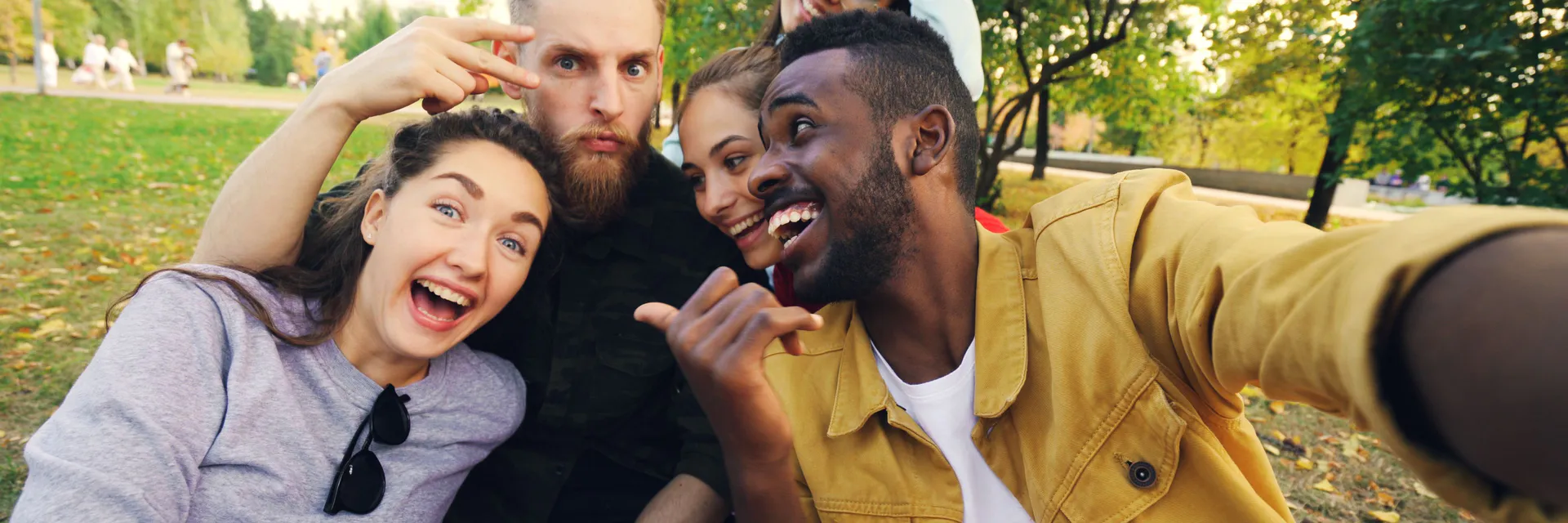
So it was with the article on young people entering their first romantic relationship or staying single. Stories in the media proliferated, with headlines about how staying single may “take a toll on mental well-being,” and start “hampering mental health.” Or how “Being single for a long time makes you unhappy, according to study.” Even more striking than the dispiriting headlines were the photos accompanying the stories. One after another showed sad or even despondent single people, such as the one here.
I don’t know if Anonymous saw any of those stories. If she did, I fear she may have felt ashamed all over again. If her friends or relatives saw them, they might start to wonder whether she is truly miserable (even if she doesn’t seem to be) and whether staying single has made her so.
But here’s something that was not included in the original research report and so was not mentioned in any of the media stories either: The people in the studies who stayed single were not unhappy. In all three studies, at every age from 16 or 17 through 29, the consistently single people were, on average, decidedly happy. Their mean ratings of life satisfaction were solidly on the happy end of the scale.3
Beyond the Case Study
I have been focusing on just one article as a case study in how to transcend deficit narratives of single life by taking a critical studies approach. The issues I’ve highlighted, though, are evident in other publications too. Here, I’ll discuss just a few. Once you know what to look for, it is easy to find others.
An example of an article that seemed to promise an acknowledgement of single people who are thriving was titled “Coping or thriving?” (Girme, Park, & MacDonald, 2023a). This review of the factors predicting well-being in singlehood included several hypothesized examples of processes associated with satisfaction with single life. One possibility, the authors suggest, is a secondary control process whereby single people start out wanting to be romantically coupled and they pursue that goal; but when they never do find a romantic partner, they adjust to “what is perceived as an unchangeable situation.” They did not get what they wanted, so they settled for the single life they did not want.
Another dynamic that Girme and her co-authors hypothesize is that “a number of individuals may never desire a romantic partner at any point across the lifespan,” adding that “Thus, one pathway associated with well-being in singlehood may be a long-term, stable lack of desire for a partner.”
It is undoubtedly true that there are some single people who end up satisfied with their single lives because they have settled for the life they can have rather than the one they want, or because they never wanted a romantic partner in the first place. But both are grudging accounts of what it can mean to be happily single. They don’t seem to be describing single people who are deeply fulfilled by single life and truly thriving. Nowhere in the article do the authors acknowledge, even hypothetically, that some single people (such as the single at heart) are powerfully drawn to single life by all that it offers, such as freedom, autonomy, solitude, and the opportunity to attend to a variety of different people, rather than organizing their lives around one person (DePaulo, 2023c). In response to that critique, the authors made one of the same kinds of statements that Kramer et al. did – they acknowledged some positives about single life, but then qualified that acknowledgment with a warning about what could go wrong. Specifically, they said, “DePaulo notes that the “single at heart” prioritize their freedom and solitude. That’s fair enough, but taken too far, these values have the potential to lead to trouble (Girme, Park, & MacDonald, 2023b).”
In another article, “What social lives do single people want?” the authors identified several profiles of social motives (Park, MacDonald, Impett, & Neel, 2023). One of the profiles was of “independent singles” who value independence and solitude and who are highly satisfied with their single lives. They sound very much like the single at heart who are embracing their single lives, not settling for them. But that’s not how the authors discussed them. Instead, once again, we are offered a narrative of settling as well as an acknowledgment of what independent singles value that is immediately undercut by a warning of potential risks.
The settling narrative was introduced with the observation that the independent singles may be older than other kinds of singles. They continued: “It is possible that those who value independence to a greater degree are more likely to remain single, or, alternatively, being (becoming) single at an older age leads one to place greater value on independence. For example, to the extent that older individuals minimize investing efforts into realizing a less attainable goal such as acquiring a partner . . ., they may be more motivated to value the independence that they do have.” In that telling, the independence afforded by single life is not valuable in and of itself; it is a consolation prize.
The familiar narrative that anything positive about single life is offset by negatives was expressed like this: “preference for independence, even in healthy forms such as solitude, may develop into a source of poor well-being over the long term, if not concurrently.” That statement also illustrates another way in which deficit narratives are inappropriately perpetuated – those happy single people are described as at risk for “poor” well-being. They are not. In every large, nationally representative sample that I’ve seen, single people’s well-being is never at the “poor” end of a rating scale. Typically, they are not even at the mid-point – they are on the positive end of the scale, as they were in the Kramer study.
In the Park et al. article, the independent single people were characterized not as embracing their single lives, but as abstaining from romantically coupled life: “Presumably, those with greater focus on maintaining independence would be the ones who feel more autonomous in their decision to stay out of a highly interdependent relationship.”
Although the independent singles were highly satisfied with their single lives, their overall life satisfaction was the same or lower than that of other groups of singles. As a potential explanation for the life satisfaction findings, the authors point to the independent single people’s “lack of social interactions” (though actually, they were not totally lacking in social interactions). By that telling, independent single people are deficient. Characterizing their relatively low levels of social interaction as a personal deficiency leads to suggestions of personal solutions. One idea the authors have about increasing the social integration of independent single people is to encourage them to have more virtual interactions.
What they do not consider is that the independent single people may already have the ratio of solitude to sociability that they want. As for other possible reasons why their overall life satisfaction is not especially high, a critical studies approach would encourage consideration of the inequalities of single and coupled life. Previously, I described some examples of singlism that were missing from the Kramer et al. explanations for the relatively lower well-being of single people who have not had a romantic relationship (e.g., all the ways in which romantic partnering is valued and celebrated and singlehood is devalued and stigmatized). Those are relevant here, too. Another intriguing possibility (also not mentioned) is that the independent single people, who are particularly happy being single, may be judged more harshly because they are happily single. In two studies from two countries, the U.S. and Israel, single people who wanted to stay single were judged as less happy and secure than single people who wanted to be romantically coupled. They even elicited more anger (Morris & Osburn, 2016; Slonim, Gur-Yaish, & Katz, 2015).
Conclusions
Scholars of singlehood are not studying widgets; we are studying people. The single people who are the topic of our scholarship are a devalued group. The couple norm that sees romantic coupling as “the normal, natural, and superior way of being an adult,” and the related ideologies of marriage and committed romantic relationships that also characterize single life as a lesser life, too often go unchallenged. Perhaps as a consequence, being single – especially being single with no romantic relationship experience – can be a source of great shame and pain.
It doesn’t have to be. Singlehood scholars can be guided by the same kinds of critical thinking that have deepened our understanding of other devalued groups such as women, people of color, queers, people who live in rural communities, and many more. Critical studies scholars look beyond the prevailing ideologically driven emphases on the presumed strengths of the valued group and the deficits of the devalued group to bring to light the overlooked strengths of the devalued group and deficits of the valued group. Because the couple norm and the ideologies of marriage and committed romantic relationships are the default ways of thinking, scholars need to be intentional in their efforts to transcend those biases. Importantly, they also need to expose the systems of inequality that advantage coupled people and disadvantage single people. When those cultural and structural contexts go unrecognized, there is a risk that the devalued group will be characterized as personally deficient rather than unfairly situated. That’s not to say that single people have no shortcomings; of course they do, as do romantically coupled people. But it is important to acknowledge that single people, because of their devalued status, face challenges that romantically coupled people do not.
In studies such as the one I have been critiquing, it can be fairly straightforward to incorporate a critical studies perspective. Two key questions to keep in mind are (1) whether the strengths of the valued group and the shortcomings of the devalued group have been emphasized, with little or no attention to the strengths of the devalued group and the shortcomings of the valued group; and (2) whether systems of inequality have been acknowledged.
If Kramer and his colleagues were reenvisioning their article from a critical studies perspective, they could describe their findings about the ways in which young people who stay single are doing less well than those who enter their first romantic relationship (as they did), but then more fully acknowledge other research that has resulted in very different findings. They could caution that the measures they included (life satisfaction, loneliness, depression) do not represent the full range of experiences that capture the well-being, opportunities to flourish, and potential risks of young adulthood, and then describe those other possible measures. They could be even-handed in their characterizations, acknowledging, for example, that romantically coupled life, and not just single life, comes with trade-offs. They could note the significance of other relationships beyond romantic ones, and the value, in and of themselves, of other life experiences and goals. They could articulate many of the ways in which single people are stereotyped, stigmatized, marginalized and discriminated against – and point to those dynamics as alternative reasons why young single people may feel less satisfied with their lives or lonelier than their peers who have experienced their first romantic relationship. And throughout, they could acknowledge that not all single people want to unsingle themselves; for some, living single is how they flourish.
The authors could incorporate those and other points of critical thinking into their article, while still reporting the findings from their research. The reported findings would not change, but they would be contextualized in a way less likely to perpetuate the couple norm and the ideologies that deem single life a lesser life. The extra efforts involved in writing from a critical studies perspective would be small, but the potential implications, for other scholars and their own critical thinking, as well as for single people, could be substantial.
With less deficit-focused reporting, media accounts would likely differ as well. The stories in the media of the Kramer et al. research emphasized the hazards of staying single; they were illustrated with photos of despairing single people. People such as Anonymous might see those reports and feel even more ashamed of being single. Women in college who were finding their math and science classes fascinating may withdraw effort from those classes to focus more on finding a romantic partner. People who love their single lives, such as the single at heart, might become reluctant to say so, thereby perpetuating the ideology that maintains that no one really wants to be single.
Stories in the media based on a critical studies rendering of the same results would still report the key findings from the research, in which young people who stayed single fared worse in some ways than those who experienced their first romantic relationship. But they might also acknowledge that single people have their own valuable experiences, strengths, opportunities, and accomplishments, and that coupled life also comes with risks as well as rewards. They might point to the ways in which single people are objectively disadvantaged and coupled people are advantaged so readers understand that single and coupled people are not on an even playing field. Knowing that the young adults who stayed single were not dissatisfied with their lives, just less satisfied than their peers with romantic relationship experience, the reporters may have been less likely to illustrate their stories with pictures of forlorn single people.
Critical studies perspectives are subject to resistance and even backlash. Members of the valued, dominant groups may be especially likely to feel threatened by more positive depictions of the devalued group members, and especially resistant to evidence that the devalued groups are objectively disadvantaged. In a survey of a nationally representative sample of adults in the U.S., married and unmarried men and women were asked whether single people are stigmatized and discriminated against (Orth, 2022). They were also given specific examples in which unmarried adults were disadvantaged by unequal taxation, unequal access to health insurance and Social Security benefits, and the lack of certain legal protections from discrimination and asked if they thought that was unfair. In every instance, the married men were least likely to believe that unmarried adults are targets of discrimination and least likely to accept that specific instances of discrimination were unfair.
Persisting in the face of such resistance will be challenging. But it will be worth it for the more accurate and more deeply contextualized understanding of singlehood that could result. Anonymous and millions of other single people might benefit too, when their full humanity is acknowledged in the scholarship about them, and not just their deficits.
Footnotes
The authors did cite the Joyner and Udry (2000) study, but then added, “These previous studies often surveyed smaller convenience samples of adolescents at one time point during their development.” However, the Joyner and Udry sample was nationally representative, with more than 8,000 participants, surveyed multiple times. ↩
The authors acknowledged that some studies had shown adverse effects of adolescent romantic relationships but then added, “However, most of these studies were based on smaller samples.” ↩
Thanks to Michael D. Kramer for sharing the means with me. ↩