I. INTRODUCTION
The complex soil ecosystems are under constant exposure to multitudinous changes due to several biotic and abiotic factors. This hugely impacts its microflora in terms of their survival and existence. Abiotic stress factors like temperature, salinity, water and nutrition deprivation stress are uncontrolled and bring about manifold changes in survivability of micro organisms which are regulated by expression of genes, leading to series of events which assist in its adaptation through temporary slowing, physiological changes and release of protective compounds (Weller, 1998; Swiecelo et al., 2013). Bacterial species adapt themselves by altering their physiological and molecular processes and counter balancing their existence under unfavorable conditions. Therefore, promising bacteria which have biocontrol ability and tolerance to extreme environmental conditions can be used as a bio agent for plant health. Pseudomonas being one of the major ubiquitous soil microbes also faces these unprecedented circumstances in the soil. There are countless documentation of survival and fitness of different Pseudomonas strains recorded under different environmental stresses. Pseudomonas mitigates the stress by producing stress sigma factors and molecular chaperones unlike in cold shock where metabolic changes are induced. These stresses influence the membrane fluidity, transcriptional and translational defects in cells (Noor et al., 2019). The expression of heat stress related genes like heat shock proteins (Hsp), membrane regulatory proteins, ATP binding proteins, expression of osmoprotectant genes are some of the mechanisms by which Pseudomonas have shown to survive through different stress conditions (Ritcher et al., 2010). A general stress Sigma factors RpoS and RpoE are one among involved in survival of Pseudomonas strains under stress. During salt shock responses, P. aeruginosa producing spectrum of osmoprotectant which enables its survival under osmotic stress (Novik et al., 2015). Some of the research shows that stress exposed bacteria shift to viable but non culturable states which serves as the nutrient for the surviving population (Arana et al., 2010). Pseudomonas sp. enter into viable but not culturable during adaptation to environmental changes like oxygen limitation, high NaCl concentrations and high temperatures. The VNBC state cannot be considered as a physiological indication of survival in adverse conditions. The VNBC state of the P. putida might become part of complex functioning of the ecosystem but its actual role and important needs to be ascertained. The ability to survive under different stress deferred with Pseudomonas species. The abiotic stress impacts are well documented with P. aeruginosa strains with respect to medical applications. Scanty reports are generated on understanding the survival mechanisms of agriculturally important Pseudomonas. Some of the studies have proved that Pseudomonas spp shows remarkable effects in plants survival which is exposed to environmental stresses. P. putida subclade has alleviated the impacts of saline stress in plants which were inoculated with the strain. This proves that P. putida can be considered a potential strain in plant applications as well. The inoculation of P. Putida even enhances plant based stress responses in plants (Chu et al., 2019). In our independent studies we have established that P. putida enhances plant growth under high salinity (Ashwitha et al., 2018; Rangeshwaran et al., 2013). Currently it is important to generate data and understand the mechanisms a potential Pseudomonas strain adopts to survive under extreme environmental changes. In our present study we demonstrated the mechanism adopted by P. putida (NBAII RPF9) when subjected to heat shock and salt shock under laboratory culture conditions. Transcriptomic profiling of stress exposed P.putida (NBAII RPF9) using Microarray technique and few of the selected stress related genes were quantified using qRTPCR.
II. MATERIAL AND METHODS
a) Bacterial strain preparation
P. putida (NBAII RPF 9) was used as a model system in the study. Initial inoculum was prepared by inoculating fresh culture of the bacterium to 10 ml of sterile LB liquid medium taken in 30 ml glass screw capped vial. The culture was grown overnight at °C under constant shaking. The overnight culture was used to inoculate two sets of 100 ml sterile LB liquid medium each taken in 250 ml Erlenmeyer flasks. The inoculated broth was incubated overnight at °C under constant shaking. The stress was induced in the following method.
Saline shock: At mid log-phase of growth, solid NaCl was added to one of the flasks to obtain 1 M as final concentration in the medium and maintained for 1 h to subject it to saline shock.
Heat shock: P. putida (NBAII RPF9) was grown in LB broth at °C overnight and cells were harvested by centrifuging at 10,000 rpm for 5 min. The pellets were washed twice with 50 mM phosphate buffer, pH 7.0 and resuspended in 25 ml LB broth. Heat shock was induced by subjecting the culture to 45 °C for 20 min in a water bath. Post treatment, the cultures were centrifuged at 10,000 rpm for 10 min. The cell pellets were frozen until use.
b) RNA isolation and purification
RNA isolation was carried out using Qiagen's RNeasy minikit Cat #74104 using manufacturer's instructions. The bacterial cell pellets were transferred to two ml centrifuge tubes suspended in 600 l of Buffer RLT and lysed using acid washed glass beads with high speed agitation (1000 x g for 5 min) to release the RNA. After a mechanical disruption method, supernatant was decanted. The method was repeated twice for complete disruption of cells. The lysate was left undisturbed for the beads to settle. The lysates were transferred to new microcentrifuge tubes and centrifuged for 2 min at 1000 x g. After centrifugation, 350 l of supernatant was transferred to new microcentrifuge tubes. To this equal volume of 70% ethanol was added and mixed by pipetting method. 750 l of total sample was transferred to RNeasy spin column placed in 2ml of collection tube. The lid was closed and the centrifuged for 15s at 10,000 rpm. The flow through collected at the bottom of the collection tube was discarded. 700 l of Buffer RW1 was added to the RNeasy column. The tubes were again centrifuged for 15s at 10,000 rpm. The flow through was discarded.
500 l of buffer RPE was added to the tubes and centrifuged again 15s at 10,000 rpm and flow through was discarded. The step was repeated again with centrifugation for 2 min at 10,000 rpm to wash the spin column membrane. The RN easy spin column was placed in a new collection tube of 1.5 ml volume. 50 l of RNase free water was added to the spin column membrane and centrifuged at 10,000 rpm for 1 min to elute the RNA. The method was repeated once again for high RNA yield recovery. The purified RNA was stored in -20°C until used. RNA quality and purity was determined using Nanodrop spectrophotometer and bioanalyser. 10 l of RNA sample was mixed with 490 l of 10mM Tris Cl, pH (7.0). 500 l of Tris buffer was considered as control. The absorbance of the sample was determined at 260 nm.
c) Hybridization and processing of microarrays
Hybridization was carried out in custom designed slides from Agilent technologies using eArray of 8x15K array AMADID 033142. Total RNA (200 ng) was mixed with 1.2 l of T7 promoter primer in 1.5 ml microcentrifuge tubes. 2 l of spike mix was added (Agilent One colour quick amp kit) to this mixture and made up to 11.5 l using nuclease free water. Primer and the template were denatured by incubating the reaction at 65 degrees in a shaking water bath for 10 minutes. Later, the reaction was placed on ice for 5 min. Soon later, the 8 l of cDNA master mix was added and again placed on ice. The contents were mixed using a pipette and later incubated at 40°C in a shaking water bath for 2 hours. The samples were further maintained at 65 degrees for 15 min in the water bath. Samples were placed on ice intermediately during sample preparation. 60 l of transcription master mix was added to the above mixture. Incubate this mixture at 40°C for 2 hours.
d) cRNA purification
The total volume of cRNA was made to 100 l with nuclease free water. The samples were purified using a column method. The cRNA samples were quantified directly using Nanodrop ND-1000 UV-VIS Spectrophotometer. One l of cRNA elute sample was used for estimation directly. 1 l of nuclease free water was used as blank. The concentration of cRNA (ng/ l) was determined using the following formula;
Concentration of cRNA * 30 l (elution volume)/1000 = g of cRNA.
The hybridization was carried out using Agilent gene expression Hybridization kit. The hybridised samples were dispensed on Agilent SureHyb provided with the Agilent Microarray Hybridization Chamber Kit (G2534A). The hybridization was carried out at 65 °C for 17 hours.
e) Data analysis
The microarray data was imported in excel format containing sample, array details and summary of differentially regulated genes. The data were segregated as genes showing >1 (up regulated) and genes showing <1 (down regulated) along with annotations. The entire data set was submitted to NCBI GEO, a public database for functional genomics data repository supporting MIAME-compliant data submissions. The array data submissions formatted into Metadata worksheet according to GEO submission format for Agilent one colour experiment. The array data was accepted after scrutiny and provided with GEO accession number.
f) Real time quantitative Reverse transcriptase PCR analysis
Real time PCR was used to validate the results obtained from Microarray studies. A total of 25 genes were selected from the microarray gene list. The study was carried out as follows.
i. Primer design
A total of 25 stress related genes were selected for the study from a microarray database. Primers were designed and synthesized by Chromous Biotech, Bangalore for quantitative analysis of these genes when differentially expressed under stress conditions. P. putida gyrase gene was considered as housekeeping genes. mRNA expression level analysis of differentially expressed genes of P.putida (NBAII RPF 9) under stress was done based on relative quantification of the housekeeping gene.
ii. RT PCR analysis
The bacterial sample was prepared as mentioned above. RNA was isolated from culture pellets obtained by method followed in 3.6.3.1. First strand cDNA was synthesised by the following reaction containing 2 ng of RNA as template to which 1 l of oligo dT primer was added in a micro centrifuge tube. This mixture was mixed and the tube was heated to 70 °C for 5 minutes. The tube was immediately placed on ice. To this mixture, 5 l of MmuLV buffer, 6 l of dNTP mix (10mM), 1 l of MmuLV reverse transcriptase enzyme and the entire mixture was made up to 25 l of reaction mixture with nuclease free water. The tubes were gently mixed and incubated 60 min at 42 °C. The reaction was terminated by heat inactivation and was done by incubation at 75 °C for 5 minutes. RT PCR was performed using Qiagen SYBR PCR kit performed according to manufacturer's protocols. Qiagen SYBR PCR master mix stored in -20 °C was thawed before use. Reaction mixture was prepared containing 2 l of template, 2 l each of forward and reverse primers (0.3 M), 25 l of 2X PCR SYBR green ready mix and this mixture was made up to 50 l using RNAse free water. The master mix was mixed thoroughly. The PCR reaction was run on ABI Step-one Real Time PCR machine. All samples were amplified in triplicate from the same RNA preparation and the mean value was considered. The following amplification program was run. Expression levels were determined as the number of cycles needed for the amplification to reach a threshold fixed in the exponential phase of PCR reaction (CT). CT values from the ABI Step One Plus Real Time PCR (Applied Biosystems, USA) were analysed.
III. RESULTS
The bacterial samples subjected to different stress were analysed for the gene expression patterns. The microarray analysis provided data on genetic expression P. putida (NBAII RPF 9) under heat and salt shock conditions. A total of 5338 genes were expressed by P. putida (NBAII RPF 9). The Microarray slides were hybridised with reference genes from P. putida KT2440, a reference strain. The expression of each gene was normalised to its expression under normal growth conditions. We used the cut off value 2 for fold change in expression.
a) Transcriptome profile of P. putida (NBAII RPF 9) subjected to heat shock conditions
The microarray data revealed that 692 genes were up regulated and 542 genes were down regulated under heat shock conditions when induced to P. putida (NBAII RPF 9) (Fig.1). Microarray results affirmed the detailed list of differentially expressed genes which played a major role in transmitting stress response in P. putida. Among the 692 genes up regulated, 60.9% of the genes were absent under non-stressed conditions and were only expressed under heat shock. In addition, 19% of the down regulated genes were seen to be absent under heat shock conditions. Rest of genes were present under both non-stressed and stressed conditions whereas differential expression was observed in both up regulated and down regulated genes. We observed few genes which were not reported earlier for its stress response in Pseudomonas sp. Most of the genes over expressed above 5 fold included heat shock related genes coding DnaK and genes regulating transport activity. CinA domain protein showed -11.89 fold decreases under heat shock, a natural competence proteins found in Thermus thermophilus. Their actual mechanism of stress tolerance remained unexplained (Table 1 and Table 2). However, we were able to also screen many genes which were involved in transport activity, DNA repair, ATP binding and transcription related genes.
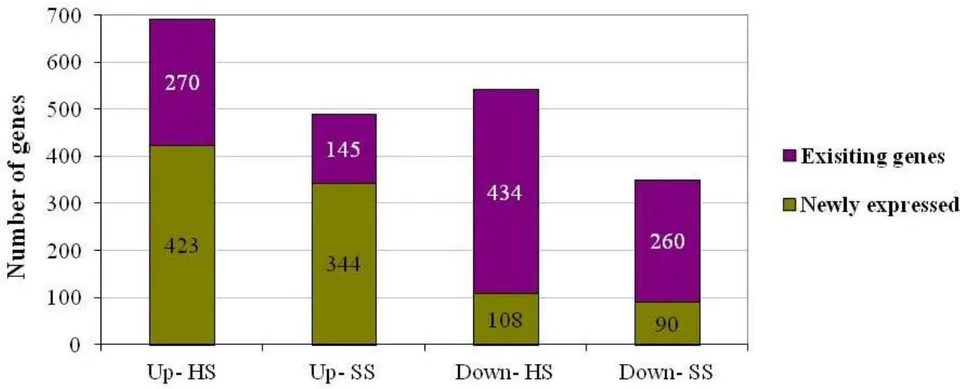
Fig. 1: Total number of differentially expressed genes under different stress conditions; genes up regulated under heat shock (Up-HS), genes up regulated under salt shock (Up-SS), genes down regulated under Heat shock (Down-HS) and genes down regulated under salt shock (Down-SS). Table 1: Most relevant gene expression found up regulated under heat shock in P. putida (RPF 9)
| ID | Name | Gene ontology | Heat shock |
| Fold change | |||
| PP3044 PP_3044 | Phage portal protein, lambda family | DNA binding; viral capsid | 7.80 |
| PP3371 PP_3371 | Sensor histidine kinase | ATP binding; integral to membrane; peptidyl-histidine phosphorylation; two-component sensor activity | 6.75 |
| pcaD PP1380 PP_1380 | 3-oxoadipate enol-lactone hydrolase | 3-oxoadipate enol-lactonase activity; catechol catabolic process | 6.02 |
| PP5376 PP_5376 | Putative uncharacterized protein | 5.96 | |
| glmM PP_4716 | Phosphoglucosamine mutase (EC 5.4.2.10) | carbohydrate metabolic process; magnesium ion binding; phosphoglucosamine mutase activity | 5.82 |
| PP3617 PP_3617 | Putative uncharacterized protein | 5.46 | |
| PP3613 PP_3613 | L-sorbosone dehydrogenase | catalytic activity | 5.30 |
| PP3808 PP_3808 | Putative uncharacterized protein | 5.28 | |
| PP4422 PP_4422 | Succinate-semialdehyde dehydrogenase, putative | oxidoreductase activity | 5.14 |
| PP0709 PP_0709 | Transporter, NCS1 nucleoside transporter family | membrane; nucleobase transmembrane transporter activity | 5.13 |
| gntP PP3417 PP_3417 | Gluconate transporter | gluconate transmembrane transporter activity; membrane | 5.11 |
| dnaK PP_4727 | Chaperone protein DnaK (HSP70) (Heat shock 70 kDa protein) (Heat shock protein 70) | ATP binding; protein folding; response to stress; unfolded protein binding | 5.10 |
| tyrB-2 PP3590 PP_3590 | Aromatic-amino-acid aminotransferase | biosynthetic process; cellular amino acid metabolic process; pyridoxal phosphate binding; transaminase activity | 5.08 |
| hslU PP_5001 | ATP-dependent protease ATPase subunit HslU (Unfoldase HslU) | ATP binding; ATPase activity; HslUV protease complex; peptidase activity, acting on L-amino acid peptides | 5.02 |
| ID | Name | Gene Ontology | Heat shock |
| Fold change | |||
| PP1628 PP_1628 | CinA domain protein | -11.89 | |
| PP2297 PP_2297 | Integrative genetic element Ppu40, integrase | DNA binding; DNA integration; DNA recombination | -10.93 |
| PP0242 PP_0242 | Transcriptional regulator, TetR family | DNA binding; regulation of transcription, DNA-dependent; transcription, DNA-dependent | -5.97 |
| PP3689 PP_3689 | Serine/threonine protein phosphatase, putative | hydrolase activity | -5.76 |
| PP1195 PP_1195 | Putative uncharacterized protein | -5.45 | |
| rpoA PP_0479 | DNA-directed RNA polymerase subunit alpha (RNAP subunit alpha) (EC 2.7.7.6) (RNA polymerase subunit alpha) (Transcriptase subunit alpha) | DNA binding; DNA-directed RNA polymerase activity; protein dimerization activity | -5.26 |
| PP1130 PP_1130 | Putative uncharacterized protein | -5.02 | |
| PP1146 PP_1146 | Putative uncharacterized protein | -4.83 | |
| cyoE2 cyoE-2 PP_0816 | Protoheme IX farnesyltransferase 2 (EC 2.5.1.-) (Heme B farnesyltransferase 2) (Heme O synthase 2) | heme O biosynthetic process; integral to membrane; plasma membrane; protoheme IX farnesyltransferase activity | -4.58 |
| PP3451 PP_3451 | Putative uncharacterized protein | -4.50 | |
| PP4623 PP_4623 | Putative uncharacterized protein | -4.35 | |
| PP2896 PP_2896 | Putative uncharacterized protein | -4.24 | |
| PP3007 PP_3007 | Putative uncharacterized protein | -4.08 | |
| PP2516 PP_2516 | Transcriptional regulator, LysR family | DNA binding; regulation of transcription, DNA-dependent; sequence-specific DNA binding transcription factor activity | -3.81 |
b) Transcriptome profile of P. putida (NBAII RPF9) subjected to salt shock conditions
In case of induced salt shock with 1M NaCl, we observed up regulation of 489 genes and down regulation of 350 genes (Fig.1). 70.3% of the genes were newly up regulated whereas 29.6% of up regulated genes were present under both non-stressed and saline shock conditions. Most relevant genes expressed with more than 2 fold change under stress are documented in Table 3 and Table 4. The transcriptome profile exhibited genes involved majorly in membrane transport, production of osmoprotective compounds and transcriptional regulators. We observed more than 5 fold expression of outer membrane proteins like opr1 and periplasmic polyamine-binding protein. Thirteen major stress related proteins involved in stress response were selected for RT PCR validation expressed under salt shock and having known functions in stress tolerance. After analysing the Microarray data, genes responsible for stress tolerance were selected for validation using RT PCR studies. The full database was submitted to the GEO database. The NCBI GEO accession for the microarray profile is mentioned below
GSE103282 – Investigation on gene expression of Pseudomonas putida (NBAII RPF 9) under abiotic stress [heat].
GSE103283 – Investigation on gene expression of Pseudomonas putida (NBAII RPF 9) under abiotic stress [salt].
| ID | Name | Gene Ontology | salt shock |
| Fold change | |||
| PP0312 PP_0312 | Electron transfer flavoprotein, alpha subunit | electron carrier activity; flavin adenine dinucleotide binding | 6.05 |
| PP2021 PP_2021 | Putative uncharacterized protein | 6.01 | |
| PP2041 PP_2041 | Transcriptional regulator, LysR family | DNA binding; regulation of transcription, DNA-dependent; sequence-specific DNA binding transcription factor activity | 5.87 |
| pqqD2 PP_2681 | Coenzyme PQQ synthesis protein D 2 (Pyrroloquinoline quinone biosynthesis protein D 2) | pyrroloquinoline quinone biosynthetic process; quinone binding | 5.70 |
| PP3211 PP_3211 | ABC transporter, ATP-binding protein | ATP binding; ATPase activity | 5.58 |
| PP0955 PP_0955 | Putative uncharacterized protein | 5.17 | |
| PP3236 PP_3236 | Lipoprotein Oprl, putative | 5.09 | |
| PP3147 PP_3147 | Periplasmic polyamine-binding protein, putative | outer membrane-bounded periplasmic space; transporter activity | 4.98 |
| PP1503 PP_1503 | Putative uncharacterized protein | 4.86 | |
| PP3000 PP_3000 | MaoC domain protein | oxidoreductase activity | 4.61 |
| PP2233 PP_2233 | Hydrolase, isochorismatase family | hydrolase activity | 4.36 |
| PP3193 PP_3193 | Putative uncharacterized protein | 4.33 | |
| PP1524 PP_1524 | rRNA large subunit methyltransferase A, putative | methyltransferase activity | 4.12 |
| PP1149 PP_1149 | Putative uncharacterized protein | 3.89 |
| ID | Name | Gene Ontology | salt shock |
| Fold change | |||
| PP3349 PP_3349 | Major facilitator family transporter | integral to membrane; transmembrane transport; transporter activity | -7.43 |
| trpG PP0420 PP_0420 | Anthranilate synthase, component II | anthranilate synthase activity; biosynthetic process; glutamine metabolic process | -6.83 |
| PP1202 PP_1202 | Membrane protein, putative | -6.44 | |
| PP2702 PP_2702 | Porin, putative | -5.99 | |
| PP3875 PP_3875 | Putative uncharacterized protein | -5.78 | |
| PP1410 PP_1410 | Putative uncharacterized protein | -5.02 | |
| PP4080 PP_4080 | Putative uncharacterized protein | -5.01 | |
| Itg PP3422 PP_3422 | Lytic transglycosylase | lytic transglycosylase activity; membrane; peptidoglycan metabolic process | -4.95 |
| PP3541 PP_3541 | Transporter, MgtC family | membrane | -4.83 |
| clpB PP_0625 | Chaperone protein ClpB | ATP binding; cytoplasm; nucleoside-triphosphatase activity; protein processing; regulation of transcription, DNA-dependent; response to heat; transcription factor binding | -4.81 |
| PP5147 PP_5147 | Hydrolase, haloacid dehalogenase-like family | phosphatase activity | -4.53 |
| PP2699 PP_2699 | Putative uncharacterized protein | -4.48 | |
| trmD PP_1464 | tRNA (guanine-N(1)-)-methyltransferase (EC 2.1.1.31) (M1G-methyltransferase) (tRNA [GM37] methyltransferase) | RNA binding; cytoplasm; tRNA (guanine-N1-)-methyltransferase activity | -4.34 |
| fliN PP4357 PP_4357 | Flagellar motor switch protein FliN | bacterial-type flagellum basal body; chemotaxis; ciliary or flagellar motility; membrane; motor activity | -4.32 |
It was interesting to note that, though both the stress was implicated separately, some of the genes were expressed both in case of heat shock and salt shock. AlgK and trkH were absent under normal growth conditions but they were up regulated under both stress. DnaK, a heat stress related protein were expressed in higher folds (5.19) under heat shock followed by IbpA which had 4.06 fold increase in heat shock conditions and 2.09 folds under saline shock conditions. ClpB gene was up regulated under heat stress whereas its expression was down regulated under salt stress. Five genes which were selected from transcriptome profile of heat stressed P. putida showed its expression comparatively in lesser folds in transcriptome profile of saline stressed P. putida (Table. 5). Among the five genes studied, toluene tolerance protein was expressed in higher fold under saline stress conditions. Eight genes identified from the transcriptome profile of P. putida were also observed under heat shock profile. ABC transporter protein was expressed highest under salt shock with 5.58 fold increases in its expression followed by toluene tolerance ABC efflux transporter showing was down regulated under heat shock stress. Six proteins which were expressed only under saline stress included trehalose synthase, Ben F like porin protein, amino acid permease protein, universal protein and Na+/Pi cotransporter family protein. The salt shock induced the expression of trehalose synthase, amino acid permease and Na+/Pi cotransporter family protein which were not initially expressed under normal growth conditions.
| Stress | Gene | Fold change heat shock | Fold change salt shock |
| Expressed | dnaK | 5.19 | 1.17 |
| under | RNA polymerase sigma | 3.09 | 1.02 |
| both | clpB | 1.74 | -4.81 |
| stress | toluene tolerance protein | 3.32 | 1.11 |
| IbpA | 4.06 | 2.09 | |
| Toluene tolerance ABC efflux transporter | 3.32 | 5.58 | |
| glycine betaine | 1.04 | 1.92 | |
| N-carbomyl | 1.67 | 1.83 | |
| AlgK | 1.74 | 1.91 | |
| trkH | 1.02 | 1.90 | |
| polysaccharide | -1.04 | 1.82 | |
| betaine aldehyde | 2.12 | 1.04 | |
| Cysteine desulfurase | 2.64 | 1.02 | |
| ABC transporter, ATP-binding protein | -1.79 | 5.58 | |
| Expressed | DjlA | 1.25 | - |
| under | dnaJ | 4.27 | - |
| heat shock | GroEL | 3.85 | - |
| GroES | 3.32 | - | |
| 33kDa chaperonin | 1.61 | - | |
| GrpE | -2.13 | - | |
| Expressed | trehalose synthase | - | 1.05 |
| under | BenF protein | - | 1.84 |
| salt shock | amonicacid permease | - | 1.91 |
| Universal protein | - | -1.74 | |
| Na+/Pi cotransporter family protein | - | 1.52 |
salt shock\nammoniacid permease\nUniversal protein\nNa+/Pi cotransporter family protein
c) Analysis of stress related genes coding for proteins using RT PCR
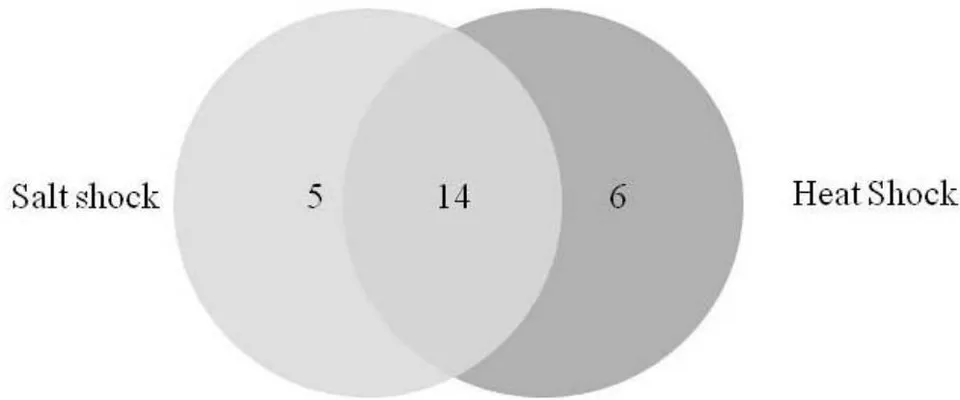
Among the 5338 genes expressed 25 genes from both the stress conditions were selected for further studies. We found that out of these 25 genes, 14 were found to be expressed under both stress conditions, six genes under heat shock and five genes were individually expressed (Fig.2). Primers were custom designed for amplification of these selected genes expressed under heat shock and salt shock (Table. 6 and Table.7) Gyrase gene (gyrA) was selected as housekeeping gene. The data of the RT PCR obtained from were analysed. GyrA gene was used for endogenous control and samples from untreated conditions were considered as calibrators.
| No. | Protein | Accession No. | Primers | |
| Sense | Antisense | |||
| 1 | Chaperone protein DnaK (HSP70) | Q88DU2 | TCGACGGTGAGCACCAGTT | GCAGGGCCAGAGGATCGT |
| 2 | Chaperone protein DnaJ | Q88QT1 | TTGCAAGGCTGGGAAGACATG | AGGTCCAGGCGCACCATCT |
| 3 | 60 kDa chaperonin (GroEL protein) | Q88DU3 | GGCGCTGACACCGAGATC | GGCCAGACGCTCTTGCA |
| 4 | 10 kDa chaperonin (GroES protein) | Q88N56 | GCCGCTGAAAAACCAAACC | GAAAACCACTTTGTCACCCACTT |
| 5 | 33 kDa chaperonin (Heat shock protein) | Q88R81 | GCGATTTGCCTGATACCGATT | AACACCGCGGCGTAGCT |
| 6 | Protein grpE (HSP-70 cofactor) | Q88DU1 | GTGTCGAGCTGACCCTGAAGA | TGGTGGTGCTCAGGGTTGA |
| 7 | Heat-shock protein IbpA | Q88LF1 | GCTGAAGTGACCTACCTGCA | CAGGCACGATGCGCAGCAGGTCGA |
| 8 | RNA polymerase sigma factor | Q88QU7 | CGGAAGAGCTGGGCGAGCG | TCGATCGGGGACTGCATGGTC |
| 9 | DnaJ-like protein DjIA | Q88QT1 | CACGCGGCGGAAGGTACCT | GCTCGTACTCCAGGGACAT |
| 10 | Chaperone protein ClpB | Q88Q71 | CTTCCGCAACACCGTGATCG | ATGAATTCCGGACGGAAGTG |
| 11 | Toluene-tolerance protein | Q88P90 | GTGCTGATCGATGGCTCG | TCGCACGCCTTGCCAGT |
| No. | Protein | Accession No. | Primers | |
| Sense | Antisense | |||
| 1 | Housekeeping gene, gyr A | X54631 | AGACCTACGTTCACGGCGTA | GAACGACAACTCGCGAATAC |
| 2 | Glycine betaine/L-proline ABC transporter, permease protein | Q88R39 | GTGTCACTCAATGCATCAT | GGGAGATATCGGCGGTGTT |
| 3 | Trehalose synthase, putative | Q88FN0 | GTACTTCTGGCACCGGTTCT | CTCGATCAGGTAAGGGATC |
| 4 | N-carbamoyl-beta-alanine amidohydrolase, putative | Q88FQ3 | GACCTGGGCGTGGAAACC | GGTGTCTTCCAGGGTGAACTTG |
| 5 | BenF-like porin | Q88JX6 | AAGGCAAAGCCGAGGAATG | TAAAGGCCCAGCACGTCAAC |
| 6 | Amino acid permease | Q88DR7 | GTTCATCACTGTGATGTTC | AGATCGACAGGATGTAGAAG |
| 7 | Alginate biosynthesis protein AlgK | Q88NC7 | TGACAGCGTGGCCCGGGTGCT | GAAGTCGTATACCAGCTG |
| 8 | Potassium uptake protein, TrkH family | Q88FX4 | TCGTCTGGCTCACCGTCG | CAGAGTGTGTAATCACCCA |
| 9 | Polysaccharide biosynthesis protein | Q88LX2 | AGTTGATTCTGCAAGCACTA | ATCACCGAGCCAGAGGAG |
| 10 | Na+/Pi cotransporter family protein | Q88RI4 | TCATCAGTACCAGCATGCAGAA | CGCAGCGTGTTGTAGAGCAG |
| 11 | Betaine aldehyde dehydrogenase, putative | Q88MT7 | GCATCCGCACCTTCGGCTTCT | CTGGCTACGGCTTTACCCAGGCG |
| 12 | Universal stress protein family | Q88KV2 | CCTGCATGCCAGCATCATCG | GATCGTATCGCTCAGCTGGA |
| 13 | Toluene tolerance ABC efflux transporter, ATP-binding protein | Q88P94 | CGTGCATACTCAGCTGTCG | CCAGCGCCACACGGCGCTTCAT |
| 14 | Cysteine desulfurase | Q88K56 | CAGATAGCGGGCATGGGCAGT | TGCTTAGCGCAGCCGTTCAGG |
| 15 | ABC transporter, ATP-binding protein | Q88HZ1 | GTGTCACTCAATGCATCAT | GGGAGATATCGGCGGTGTT |
The Relative quantification of target gene was calculated based on its expression in non-stressed conditions to stressed conditions. The results summary of the quantification of target genes with their Relative Quantification (RQ) value for the genes expressed under heat shock is represented in Table 8. The highest fold change of 13.67 was observed in IbpA gene followed by
RNA polymerase sigma factor which was expressed under heat shock conditions. Major heat stress related proteins like dna and dnaJ were slightly up regulated, meanwhile, GroES, GroeEL and Hsp33 were upregulated two fold more under heat shock stress by P. putida (NBAII RPF 9). Among 11 heat shock related proteins analysed, djIA was slightly down regulated.
| Sample | CT (Mean) | CT (Std Dev) | Δ CT (Mean) | Δ CT (Std Err) | ΔΔ CT | RQ | RQ (Min) | RQ (Max) |
| gyrA‡ | ||||||||
| Sample 1* | 22.997 | 0.4286 | ||||||
| Sample 2 | 24.7793 | 0.1983 | ||||||
| IbpA | ||||||||
| Sample 1* | 24.9171 | 0.011 | 1.9201 | 0.2476 | 0 | 1 | 0.5792 | 1.7266 |
| Sample 2 | 22.926 | -3.7734 | 13.6741 | |||||
| Sig | ||||||||
| Sample 1* | 18.7844 | 0.197 | -4.2125 | 0.284 | 0 | 1 | 0.5345 | 1.871 |
| Sample 2 | 18.6855 | 0.0434 | -6.0938 | 0.1435 | -1.8813 | 3.6839 | 2.4012 | 5.6519 |
| clpB | ||||||||
| Sample 1* | 28.8711 | 0.0598 | 5.8742 | 0.2511 | 0 | 1 | 0.5748 | 1.7398 |
| Sample 2 | 28.9032 | 0.0698 | 4.124 | 0.1486 | -1.7502 | 3.3641 | 2.1596 | 5.2404 |
| Ttp | ||||||||
| Sample 1* | 22.8046 | 0.1032 | -0.1923 | 0.258 | 0 | 1 | 0.566 | 1.7688 |
| Sample 2 | 22.9226 | 0.5663 | -1.8566 | 0.4243 | -1.6643 | 3.1696 | 0.8942 | 11.2348 |
| djlA | ||||||||
| Sample 1* | 20.8755 | 0.15332 | -4.5524 | 0.265 | 0 | 1 | 0.6005 | 1.6653 |
| Sample 2 | 20.8544 | 0.1357 | -4.5488 | 0.3088 | 0.0036 | 0.9975 | 0.5506 | 1.8073 |
| dnaK | 21.8402 | 0.0734 | -2.7377 | 0.1765 | 0 | 1 | 0.7119 | 1.4046 |
| Sample 1* | 21.7747 | 0.1507 | -3.048 | 0.204 | -0.3103 | 1.24 | 0.8374 | 1.8361 |
| Sample 2 | ||||||||
| dnaJ | ||||||||
| Sample 1* | 20.558 | 0.2356 | -4.02 | 0.2185 | 0 | 1 | 0.6568 | 1.5226 |
| Sample 2 | 20.4092 | 0.4243 | -4.4123 | 0.0367 | -0.3935 | 1.3136 | 0.728 | 2.3702 |
| GroEl | ||||||||
| Sample 1* | 26.9449 | 0.0974 | 2.367 | 0.1804 | 0 | 1 | 0.7067 | 1.415 |
| Sample 2 | 25.894 | 0.395 | 1.0727 | 0.2933 | -1.2943 | 2.4525 | 1.3946 | 4.313 |
| GroES | ||||||||
| Sample 1* | 28.5046 | 0.2374 | 3.9266 | 0.2195 | 0 | 1 | 0.6555 | 1.5256 |
| Sample 2 | 27.2841 | 0.3214 | 2.4614 | 0.2617 | -1.4652 | 2.7611 | 1.6687 | 4.5684 |
| Hsp33 | ||||||||
| Sample 1* | 28.6233 | 0.3699 | 4.0453 | 0.2739 | 0 | 1 | 0.5904 | 1.6939 |
| Sample 2 | 27.4897 | 0.8704 | 2.667 | 0.5353 | -1.3784 | 2.5997 | 0.9279 | 7.2838 |
| GrpE | ||||||||
| Sample 1 | 19.885 | 0.074 | -4.693 | 0.1766 | 0 | 1 | 0.7118 | 1.4049 |
| Sample 2 | 19.5331 | 0.0959 | -5.2859 | 0.1926 | -0.5966 | 1.5121 | 1.0437 | 2.1907 |
The relative quantification of stress tolerant genes produced by P. putida (NBAII RPF 9) under salt shock showed 5 folds increase in expression of toluene tolerance proteins followed by alginate biosynthesis gene which recorded 4.01 fold increase in its expression under salt shock compared to its expression under non-stressed condition (Fig. 3). More than 50% of the saline stress related protein quantification recorded two fold of their expression under salt shock stress than in non-stressed conditions. This expression of these genes may not be imperative under normal growth conditions but they were triggered under salt stress as a protective mechanism of P. putida (NBAII-RPF 9) to surmount the detrimental effects on its survival. Glycine betaine/L-proline ABC transporter was slightly down regulated under salt shock.
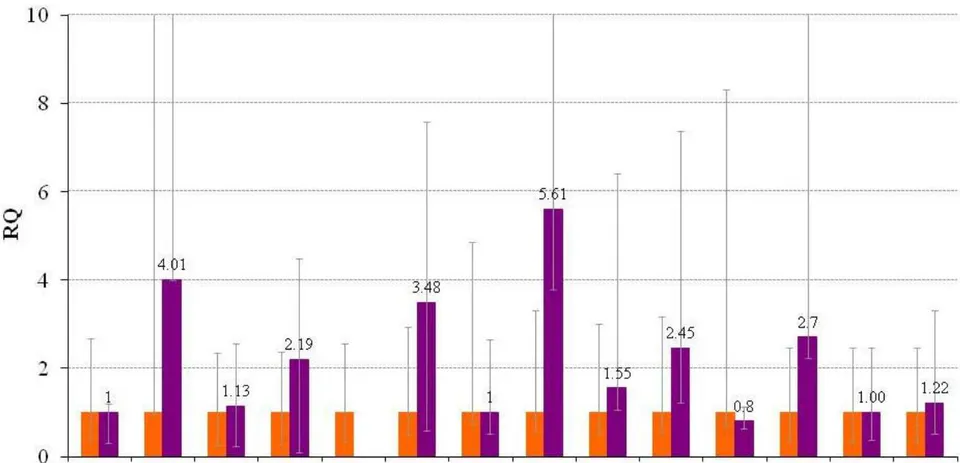
Fig. 3: Graphical representation of RQ values of genes expressed under saline stress by Pseudomonas putida (NBAIL RPF 9). Target1: Amino acid Permease, Target 2: AlgK, Target 3: TrkH, Target 4: Polysaccharide biosynthesis protein, Target 5: Na+/Pi cotransporter family protein, Target 6: Betaine aldehyde dehydrogenase, putative, Target 7: Universal stress protein, Target 8: Toluene tolerance, Target 9: cysteine dehydrogenase, Target 10: ABC transporter, Target 11: Glycine betaine/L-proline ABC transporter, Target 12: Trehalose synthase, Target 13: N-carbamoyl-beta-alanine amidohydrolase, Target 14: BenF-like porin.
IV. DISCUSSION
Microarray is high throughout technology which has enabled specific and sensitive methods for environmental studies and its response to environmental cues (Zhoa, 2003). Based on our literature survey, we were aware that the number of genes expressed during sudden stress was more compared to steady state stress induced. Hence, we preferred to induce a sudden heat shock and saline shock which would probably increase our chances of finding gene expression far more than in steady state conditions. This was even proved in case of our proteomic studies where we found more expression of proteins under abiotic shock rather than steady state stress. Both NaCl and PEG 6000 result in sequestration of water and changing water potential out of the cell. Hence we used NaCl as a medium to induce osmotic stress. The fold induction of stress related proteins were more or less similar (Peterson, 2009). In our earlier studies we have isolated and screened different strains of Pseudomonas having varied stress responses. P. Putida were able to survive under high salinity and high temperature stress whereas P. fluorescens survived better in water limiting stress (Rangeshwaran et al., 2013; Ashwitha et al., 2018). Choudhury et al. (2019) observed that P. fluorescens revealed resistant traits against oxidative stress compared to P. aeruginosa which were sensitive. Salt stress also creates a major impact on soil microbes however, some of the bacterial species mitigate these stress by accumulation of low molecular weight hydrophilic molecules (Kempf et al., 1998). In response to hyperosmotic stress, bacteria adjust their cell turgor by controlling fluxes of ions across cellular membranes. Osmoprotection by compatible solutes and the general stress response are linked, because the structural genes for the proline uptake system OpuE (Spiegelhalter and Bremer, 1998) and the glycine betaine transporter OpuD (Kappes et al., 1996) are partially dependent on SigB for their expression.
P. putida KT 2440 is the only Pseudomonas strain whose whole genome is sequenced and thus it serves as a standard reference for most of the transcriptomic and proteomic studies. In our studies, we customised the microarray slides by hybridising P. putida KT2440 genes. Ballerstedt et al. (2007) have described the functional genes of P. putida. Hence, use of this reference strain has increased the chance of highly sensitive and reproductive microarray analysis with our isolate of interest P. putida (NBAII RPF 9). Salt stress induces opulence of events like changes in cell membrane physiology, exopolysaccharides structural content, membrane composition and homeostasis. Bacillus sp. exhibited up regulation of cell envelope proteins, molecular chaperones, compatible solutes to impart tolerance to high salt/osmolarity stress (Yin et al., 2015). Wang et al. (2011) were successful in an attempt to detect genes in degradation of 3CB by isolation of RNA from sterile soil treated with P. putida KT2440 to find expression of gene in transport and stress response. This provides an insight that microarray analysis of P. putida response can be evaluated even when evaluated directly from environmental samples.
The Microarray data helped us in selecting 25 stress related genes which were quantified using RT PCR. Gyrase gene was selected as housekeeping genes. McMillan et al. (2014) have quantified the genes responsible for Azospirillum cells to turn into cyst like form when stress was induced using qRT-PCR using gyrase as reference gene. Their studies revealed that stably expressed reference genes viz., gyrA, glyA and recA were suitable for normalization of qRT PCR data in A. brasilense under normal and stress conditions. GryA was identified as stable reference genes in Xanthomonas citri (McMillam and Pereg, 2014). In our study we studied Microarray analysis by induction of stress under laboratory conditions.
The quantification was determined with input copy number by relating PCR signal to a standard curve. The RT PCR results analysis with 2- CT for gene expression in a treatment group to that of another sample such as an untreated control (Livak and Schmittgen, 2001; Pabinger et al., 2014). Single peak in the melting curve shows efficient reaction and ruled out any non-specific product. We found expressions of heat shock related proteins under saline shock (1 M NaCl) conditions. This could indicate that P. putida (NBAII RPF9) might provide cross protection to multiple stresses. We found a repressed activity of universal stress protein under saline shock. Universal stress proteins were observed to be expressed in P. putida KT 2440 to deal with survival of the bacteria under excess 3CB during growth. However, their reduction in fold change is unexplained but it is seen to be present even under stress (Wang et al., 2011). Genes for alginate biosynthesis are majorly reported in P. aeruginosa causing cystic fibrosis. Most of the transcriptome studies have been concentrated on human pathogenic Pseudomonas sp. as these have been a challenge due to its complex biology (Balasubramanian and Mathee, 2009). This isolate survives environmental cues by forming biofilm. AlgK was up regulated under sudden saline shock subjected to P. putida (NBAII RPF 9). AlgK is an outer membrane lipoprotein which is involved in localization of algE porin to outer membrane. These cell envelopes act as primary barriers against lethal effects of stresses to bacterial cells (Keiski et al., 2010; Maleki et al., 2015; Wood and Ohman, 2015).
In our study, we found 4.01 times increase in algK over control conditions. Aldehyde dehydrogenase work on mitigating external stresses like oxidative, electrophilic stresses in bacterial cells (Singh et al., 2012), betaine aldehyde dehydrogenase regulated production of compatible solutes viz., glycine betaine which provides tolerance to bacterial strain under osmotic stress (Boch et al., 1997). The BADH activity has been reported to impart tolerance to salt stress even in P. aeruginosa species (Velasco-García et al., 2006). ABC transport proteins are involved in transfer of substrates across membranes. These proteins work closely in stress conditions and regulate movement of cytotoxic compounds across cells (Nagar et al., 2016). We found up regulation of ABC transport proteins, Na+/Pi cotransporter family protein and Toluene tolerance ABC efflux transporter, ATP-binding protein in case of salt shock. The osmotic imbalance could affect the homeostasis of the cell. The transport proteins save the cells from osmotic breakdown. The expression of these transport proteins in P. putida (NBAII RPF 9) was evident for its survival under salt stress. Gulez et al. (2012) carried out a similar transcriptome studies to unveil the stress response of P. putida KT2440 which, has been used in our study to as a standard for generating micro array also exhibited expression of proteins like alginate biosynthesis at early stage of stress which can be related to osmotic shock treatment with 1M NaCl in our experiments. Apart from this protein, heat stress related proteins were also seen to down regulate under salt stress. The universal stress protein was down regulated even in P. putida KT2440 subjected to water stress using PEG 8000 (Gulez et al., 2012). Trehalose is one of the compatible solutes which maintain the imbalance of cells under salt stress majorly by providing carbon and energy source to bacterial cells under high osmolarity conditions. The release of this protein is a major mechanism in halotolerant bacterial strains. Though trehalose is observed to accumulate in osmolarity stress, it is also reported to mitigate heat stress (Reina-Bueno et al., 2012).
Osmoprotectants reduce the lethal effects by increasing stability of macromolecules under low water activity. Most of the studies relate that expression of stress related proteins were in higher fold under shock and slowly reduced when the stress conditions were provided in steady state. Osmolarity stress induced expression of thermo tolerance genes whereas no genes were identified in heat stress related proteins which could mitigate the osmotolerance (Gunashekara et al., 2008). We found the expression of heat shock responsive molecular chaperones as common under tolerance or shock. This indicates that these play a major role under shock or tolerance. All other proteins identified were different but are also involved in stress response. Most of the up regulated heat shock proteins play a pivotal role in maintaining physiological and metabolic functions. Heat stress responsive molecular chaperones like cytosolic-type hsp90, chaperone protein DnaK and heat shock 70 kDa proteinHsp90 is a highly conserved molecular chaperone involved in stabilizing and refolding of denatured proteins and is generally referred as HTPG in prokaryotic system (Challis et al., 2000; Rangeshwaran et al., 2013). The heat shock stress proteins showed high fold expression at initial levels which gradually decreased over a period and the up shift of temperature was followed by a period of acclimatization to the stress induced. Heat shock proteins like DnaK, DnaJ, GroEL, GroES and GrpE were observed to up regulated in heat shock response in Acidithiobacillus ferrooxidans. All these HSPs were also seen to be up regulated even in P. putida (NBAII RPF 9) (Xiao et al., 2009; Chan et al., 2016). GrpE is known to express mainly during low and high temperatures however, they have even been induced under stress induced by chemicals or others making it an essential gene for survival of bacteria under stress conditions. Zhang and Griffiths (2003) demonstrated that grip played a major role in starvation induced thermotolerance at lower temperatures in E.Coli O157:H7. The expression of grpE genes coupled with another stress related gene UspA was measured through fluorescent tagging in E.Coli. Maximum expression of protein was observed when P. fluorescens were exposed to 37 °C which is above optimum temperature for the bacterium. Similar results are previously reported in our earlier research. P. putida and P. fluorescens have increased expression of heat stress related proteins, metabolism regulating proteins and outer membrane proteins (Arana et al., 2010; Rangeshwaran et al., 2013).
Thermal shock induced in biofilm forming P. aeruginosa showed decrease in population to almost nil after exposure to high temperatures for more than 1 minute (Ricker et al., 2018). Contradictorily in our results, P. Putida (NBAII RPF9) showed decreased population however, they were culturable even after prolonged exposure to heat (Ashwitha et al., 2013; Rangeshwaran et al., 2013). In our earlier studies we have demonstrated the selection of abiotic stress tolerant Pseudomonas. Their proteomic studies have revealed an expression cocktail of stress related genes which could possibly be a major reason for P. putida to be able to survive under high temperature and high saline stress. In current research we have attempted to under the mechanism of stress tolerance of P. putida strain when subjected to heat shock and saline shock by analysing its expression pattern using transcriptome studies. The majorly expressed genes were quantified and analysed. The study showed the expression of a few genes already reported and some of them which is reported for the first time. The transcriptome analysis using microarray and further validation with RT PCR technique was useful in investigating the gene expression profiling of P. putida (NBAII RPF 9) and helped us in unravelling the mechanism by which the isolate survived under abiotic stress.
V. CONCLUSION
Pseudomonas is one of the ubiquitous microorganisms with immense demand in agricultural applications. Different species of Pseudomonas have been explored for more than three decades for its use in plant health improvement and disease management. Soil dwelling Pseudomonas are importantly isolated and used as bio agent for agricultural applications. Soil is a complex ecosystem and constantly exposed to innumerable stress due to natural and human activities. This impacts the Pseudomonas sp. which are the one the major constituents of the soil. The ability for the micro-organisms to cope with these stresses are its survival agenda. Though biocontrol research has focused on selection and application of soil dwelling Pseudomonas with excellent plant growth promoting properties, their functioning and effects have never been satisfactory during the application in different field ecosystems. During these years, the research community have come across challenges to decode the lack of performance of most of the best strains when applied to different ecosystems. The advanced biocontrol technologies have created a parallel way of analysis and selection of potential strain which can perform well in normal as well as stressed environmental conditions. The development of new age techniques like microarray and quantitative RT PCR have enabled scientists to dig deep and understand how a bacterium responds when it is exposed to different environmental cues thereby selecting a versatile strain.
ACKNOWLEDGMENT
The authors are grateful to The World Bank and Indian Council for Agricultural Research (ICAR) for funding the Research under the National Agricultural Innovation Project (NAIP).