## I. INTRODUCTION
Translation scholars have frequently discussed aspects of technical and grammatical translation from Arabic into English and vice versa. However, a significant aspect of translating texts creatively and artistically has been overlooked. The term "subjective" refers to the act of changing the form, shape or appearance of the text along with the process of adding, removing and transferring content, whereas "creative" refers to the translator's ability to describe something in a new and imaginative way to produce interesting results. Both subjectivity and creativity can be accomplished through the lived experiences of translators or readers along with their own senses of the world. That being said, translators are not completely free to do whatever they want, nor should they be entirely faithful to the original text, but free to sense, appreciate and respect the cultures of the ST. Therefore, translation is believed to involve transferring thoughts behind or between words and capturing all shades of meanings that evolve around the text (Delisle, cited in Newmark 1988: 76). This is a procedure that should be regarded as the central issue of translation.
Along the same line, translation is believed to involve conveying what is implied and not what is said (Meyer (1974). This, according to Meyer, is the meaning behind meaning. However, in translating the implied meaning, i.e., the sub-text and all shades of meaning, translators must word a sentence in such a way that the implied meaning is equally clear in the target text. Consider the following sentence:
How can he succeed when he won't work hard?
A quick look at the English term "when" may mislead inexperienced translators to fall into the trap of translating such a term as a time expression. However, if one scrutinizes the sentence along the context in which the term "when" is used, they will realize that there is a conditional meaning behind the use of such an expression. It is logical to assume that native speakers of English may not use language in a simple and direct way, and if translators are not equipped with all means, whether theoretical or practical, they will more likely produce an inappropriate translation of the term. Sometimes, a word in a sentence can be used in a way where two or more interpretations are possible. A dictionary at this stage is not really helpful simply because translators may find that the term "when" refers to at what time, on what occasion, at or during the time that, considering that, although, etc. None of these English equivalents conveys the intended meaning. The same thing applies to the Arabic equivalents of the English term "when". Inexperienced translators may literally render this term as "indama, mata, wa min thumma, bil rughmi min, fii hiin, etc. Again, none of these expressions captures the implications behind the use of such a term. Translators here should grasp the relevant meaning of the term based on the context in which it is used. Therefore, an appropriate rendition of the term "when" would be in lam (if) as follows:
kayfa bi imkanihi an yanjaha in lam yakun musta'iddan?
In the above sentence, "when" is translated as conditional and not a time expression. Only by going beyond the explicit meaning of the term and analyzing the context in which it is used can the conditional meaning of "when" be captured. Therefore, relying on the explicit meaning of the word is not enough. Text-producers bring their own assumptions, presuppositions, and general world-views to bear on their processing of texts at all levels. Individual lexical choices are also important. In such cases, translators should go beyond the explicit meaning to perceive the potential meaning of particular choices within the cultural and linguistic community of the source text (Mason 1992: 23). Translators should carefully measure the thought behind the meaning, as the thought that is carried on by the word is its essential meaning and it is this kind of meaning that should not be tampered with. This problem is prevalent when translating cultural terms. For example, the term tabun which corresponds to "a small, jar-shaped oven, sunk in the ground, open on top, used for baking", cannot be translated literally without referring to the culture in which the term is used. The meaning of this term can be understood only within a particular Arabic culture and that is mainly of Syria, Jordan, Palestine, etc. Therefore, understanding the socio-cultural context in which terms are utilized is fundamental in translation.
In addition, proverbs can hardly be translated literally into the target language, simply because they manifest cultural overtones that cannot be rendered adequately without going beyond their literal meanings. The expression Adam kicked the bucket is a term that cannot be translated literally as Darab adam al-satla (literally translated as Adam hit the pail (whether of wood or metal), as the term is used metaphorically to mean tuwuffiya adam, intaqala adam ila rahmatillah, mata adam, corresponding to the English expression Adam passed away. Also, the Arabic proverb asafeer baTni bitzaqiq which corresponds literally to the birds of stomach are chirping cannot be rendered into the target language without understanding its cultural context, simply because its literal meaning has no relevance whatsoever to the meaning manifested in it. The metaphorical meaning underlying such an expression is I am extremely hungry. Therefore, it is fundamental for the translator to provide an equivalent that contains the overall meaning of the expression used.
From a different angle, Arabic sentences such hadihi al-hadiqatu jamilah cannot be translated literally as this a beautiful garden simply because this sentence is not grammatically acceptable in English. Although there is no verb in the Arabic sentence, good translators must use his own experience and render the sentence as This is a beautiful garden. The addition of the verb has resulted from the translator's thorough grammatical analysis of both sentences and his knowledge of both languages.
Taking the above examples into account, it can be argued that translation is not a direct transference of a word in the original text into a word in the target text. It is a careful analysis of the ST culture and the translators' choice of words. Understanding the stylistic features is also of great importance for translators. Therefore, translators are in a situation where they choose from among several more or less equally acceptable target language versions. According to Gutknecht & Rolle (1996: 2), this depends on the following factors:
1. The type of text to be translated.
2. The extent to which the Source Language text bears stylistic markings.
3. The intended target language audience.
4. The extent to which the translator can culturally comprehend the Source Language text identify himself with.
5. The translator's stylistic preference and his ability to recognize and handle stylistic register.
Now translators must consider several things when translating a text. Among the situational factors stated above are the essence, spirit, and sense of sentences which need to be carefully maintained. It follows, therefore, that within the core of the translation process, there lies a choice that, in one way or another, plays a significant role in the process of translation. Regardless of the decision made, whether it is based on careful scrutiny and reconstruction or on the outcome of the translators' trained instinct, the final decision that must be made comes down to choosing the word or expression that translators think is the closest equivalent to the target text. At the same time, translators work hard to maintain the form and function of the source text; they make every effort not to add new shades of meaning, values, norms, forms and functions that are not expressed or implied within the text. Therefore, translators work here as coordinators who are free to choose whatever but at the same time responsible for whatever they choose.
## II. TRANSLATOR'S PERCEPTION
Translators' perception of a text is a crucial aspect of the translation process, as it influences how they interpret and convey the meaning of the source text into the target language. Translators' perception of the text is shaped by a range of factors, such as their linguistic and cultural background, their personal experiences and beliefs, and their knowledge of the subject matter and context of the text. For example, translators who are familiar with the cultural context of the source text may be better able to understand the nuances of the language and convey them effectively in the target language. Similarly, translators who have expertise in a particular field or subject matter may be better equipped to translate technical or specialized texts in that area. However, translators' perception of the text can also be influenced by their personal biases and assumptions, which can lead to inaccuracies or misunderstandings in the translation. Therefore, it is important for translators to maintain a high degree of objectivity and professionalism in their work, and to carefully research and verify any information or terminology that is unclear or unfamiliar (Pym 2010).
That being said, it is axiomatic that in translating literature, for example, four translators would more likely produce four different versions or translations of the same text. This is highly logical because each translator looks at the text from his own perspective. For example, in Shakespeare's play Hamlet, one can see how the expression Thou art a scholar, speak to it, Horatio, uttered by Marcellus (Act 1, Scene 1), has been translated differently by the four translators: Mutran, Jabra, Jamal, and Al-Khuri. Because the word "scholar" is polysemous, each one of these four translators has translated it differently and according to his own personal talent or possible synonyms. The four translations are listed below for the sake of exposition:
(1) anta facih (you are a jurisprudent) - Jabra.
(2) anta fasih c.alim (you are eloquent and knowledgeable) - Mutran
(3) anta rajulun muthagaf wa fasih (you are both a cultured and eloquent man) - Jamal.
(4) antarajulun muta'allim (you are an educated man)- Al-Khuri
Taking into account the religious context in which the word "scholar" was used by Marcellus, and because Marcellus looks at the addressee as a man of knowledge, we understand and agree with several literary critics, who favored the Arabic rendition of the above expression as you are a jurisprudent simply because it is a more acceptable equivalent than all other words provided by other translators. It also gives the gist of the meaning in this context.
However, the question always arises: can the idea expressed intelligently by the writer be maintained in the translation? To answer this question, we should note that translation is a matter of interpretation, and when we write about translation, we only write about it from a translator's perspective. Translators generally see things from their own subjective evaluation and untrammeled viewpoint. For translators, words have personal perception and different kinds of recognition. Therefore, it would be hard for translators to express the words exactly in the same form and function of the target language. In such cases, translators must convey the idea according to their own perception.
When translators are confronted with a word that must be conveyed into the target language, the choices they make can make all the difference in the world. The terminology they choose may have almost the same meaning to that of the other language, paying their utmost attention to avoid contamination or not to allow translation nuances interfere and distort the meaning of the original. For the sake of clarity, translators dig deep for textual and situational resemblance. The search for resemblance and synonymity is what made some linguists and translation practitioners believe that translation is a form of synonymy (Graham 1981). Graham clearly comments on Quine's (1981) idea of synonymy saying that the natural alternative is to abandon the notion of two messages synonymous in all respect with one another and replace it with the requirement that similarity of meaning be attained in some respect, never all (Graham 1981: 10).
## III. SYNONYMY AND TRANSLATORS CHOICES
Synonymy refers to the relationship between words or phrases that have the same or nearly the same meaning. It is a semantic relationship that exists between words or phrases that can be used interchangeably in certain contexts. No one denies that synonymy and translators' choices are directly connected. When translators encounter a word or phrase in the source language that has multiple synonyms in the target language, they must make a decision about which synonym to use in the translation. The choice of synonyms can have a significant impact on the meaning, tone, and style of the translation. Based on their professional experience, translators may choose a synonym that closely matches the intended meaning of the original word or phrase, or they may choose a synonym that better fits the intended audience or the context of the translation. Consider, for example, the English word "happy," which has several synonyms in English, such as "joyful," "content," "pleased," and "glad." When translating a text that uses the word "happy" in the source language, translators may need to choose which of these synonyms to use in the target language, based on the specific context and intended meaning of the text. Therefore, the relationship between synonymy and translators' choices is that translators may need to choose between different synonyms when translating a text from one language to another, and their choice of synonym can influence the meaning and effectiveness of the translation (Dell 'Orletta, F., Montemagni, S., & Venturi, G. (2020).
From a philosophical point of view, Quine, while discussing the indeterminacy of translation, proposes that synonymy roughly consists in approximate likeness in effect on the hearer. Quine's use of the word "synonymy" is not restricted. He points out that the word "synonymy" carries the full generality of "same in meaning", whatever that is. Quine distinguishes between two types of synonymy: broad type and narrow type. Broad synonymy can be formulated in intuitive terms. That is, two sentences command assent concomitantly and dissent concomitantly. This kind of concomitance is due strictly to word usage rather than how things happen in the world. As for the narrow type, it is synonymy of parts and not synonymy of wholes. Quine (1992: 62) states:
Synonymy of parts is defined by appeal to analogy of roles in synonymous wholes; then synonymy in the narrow sense is defined for the wholes by appeal to synonymy of homologous parts.
Part-whole relationships always exist in synonymy. When two sentences have what is called by philosophers "sameness of confirming experience and of disconfirming experience", then we have wholly synonymous sentences (Grice and Strawson 1956: 156). However, when two sentences partially confirm and disconfirm experience, then we have partially synonymous sentences. Here, one can argue, to this effect, that synonymy involves partial overlapping or whole overlapping. That is, the meaning of one message may partially or wholly overlap with the
meaning of another, and the idea of partial and whole overlapping is something that is inevitable in translation. In other words, the meaning of one word is wholly or partially covered by the other. The idea of partial and whole overlapping is represented in Figure (1):
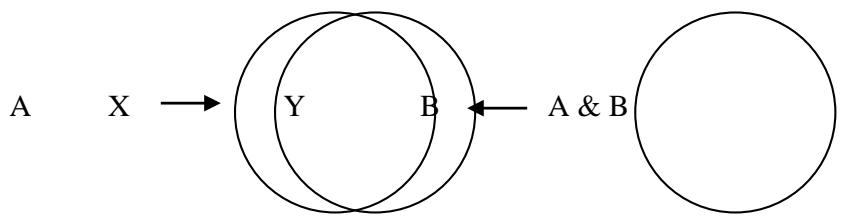 Figure 1: Representation of partial and whole overlapping.
It is axiomatic to point out that total or complete overlapping, if it exists, does not cause any problem. However, for partial overlapping, one could look at A as the original word or even text. Then, B is the target word of the target text. The relationship is that of a mirror image, i.e., one word in a text is mirrored to create the target image. Inevitably, this kind of overlapping cannot always be total, because of at least phonological differences. The most difficult part, however, is that one part is being partially or wholly covered and another part does the covering. There is a neutral part that is not covered in partial overlapping, and this is the area where translators find themselves free to move. Here, portion X in the original occupies accompanying meaning which is not encumbered in the meaning of B. Also, portion Y holds a concomitant meaning that is not included in the meaning of A. Therefore, translators, if possible, must target a total overlapping, a very complicated if not an impossible task.
It is to be noted that complete synonymy does not exist (Ross 1981: 8), and translators seek to preserve the meaning that is similar to the meaning of the original. Ross states:
The translator seeks to convey the same meaning in a new language as is found in the original. Not only must he choose among the various respects in which similarity of meaning is to be preserved; this is less sameness in any particular respect, and is more an equivalence satisfactory to the constraints, which govern his work.
That being said, translators make their intuitive choices with differing degrees of easefulness or sophistication. Their choice actually depends on the subject- matter they are dealing with. It often happens that a person discovers that, upon looking over the printed copy of a translation, particularly when it comes off the press, they could, if given the choice and the chance again, introduce a different alternative. Hence, translators often dislike their translation of a particular subject-matter after it has been published; they feel that they have not done it well. However, when a person reads their own writing, they read it with some satisfaction; they may not change a single jot. This is the difference between translating and writing. Translating, if not done intuitively, is interpretation, whereas writing is creation of the mind. Therefore, translation is made through the imitation of the original text whereas writing is done through the creation of the individual's mind, paying their utmost attention to the original message.
## IV. TRANSLATING VS. WRITING
Translation and writing are closely related, as both involve the creation of a written text that conveys a message or information to a reader. However, while both translation and writing involve the use of language, there are some important differences between the two processes. Translation involves the transfer of a written text from one language to another while retaining its meaning and style. In this process, translators must understand the content and intended meaning of the source text and then express it accurately and effectively in the target language, while also taking into account the cultural and linguistic differences between the source and target languages.
Writing, on the other hand, refers to the process of creating an original written text in a given language. In this process, the writer must come up with an idea or message, organize it logically and coherently, and then express it effectively in writing. Despite these differences, translation and writing share several common features. Both require an understanding of the target audience and the context in which the text will be read. Both also require careful attention to grammar, syntax, vocabulary, and style to ensure that the message is clear and effective. Moreover, the skills and techniques used in writing, such as careful attention to detail, research, and organization, can also be applied to translation to produce high-quality translations that accurately convey the meaning and style of the source text. All in all, writing focuses on creating the idea whereas translating focuses on choosing the closest natural equivalent to a particular lexis. Following is a manifestation of these two skills:
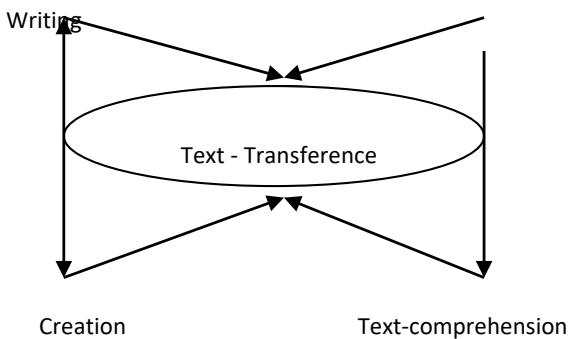 Figure 2: Writing - Translating Representation
In this regard, translators must be modest; they should not be too creative, nor should they be too literal. Being too creative may result in distorting the beauty and intricacy of the original text. Being literal may result in ambiguating the text. Therefore, the translator faces a dilemma and the solution to such information immoderation is to be accurate in such a way that the two texts are closely approximated.
## V. TRANSLATION IS PERSONAL
Translation can be personal in some ways, as the translator's personal background, experiences, and knowledge can influence the way they interpret and convey the meaning of a text. However, it is also important for the translator to maintain a level of objectivity and remain faithful to the intended meaning of the source text, rather than imposing their own personal biases or opinions onto the translation. At the same time, translators' personal characteristics and experiences can influence the translation process in several ways. For example, translators who are familiar with the culture and language of the source text may be better able to understand the intended meaning of the text and convey it accurately in the target language. Similarly, translators who have expertise in a particular subject area may be better equipped to translate technical or specialized texts in that field. In addition, translators' personal style and preferences can also influence the way they approach a translation. For example, some translators may prefer to produce translations that are more literal and faithful to the original text, while others may prioritize the readability and naturalness of the target language (Cronin 2006).
Overall, while personal factors can influence the translation process to some extent, it is important for translators to maintain a high degree of objectivity and professionalism in order to produce accurate and effective translations.
As translators seek to choose their closest natural equivalent, they look backward and forward. They may see that words have changed and therefore they act upon this. They may also discover that words have drifted, disappeared over the years, and there is no reason to believe that they will not continue to do so. Such intuition implies that the translator has a sense of what is called "the other meaning" in relation to the text to be processed. They should experience the text in their own way, feeling words as mobiles, sensing all possible avenues. It is through their own sensitive and artistic talent that they are able to convey this into the target language. Whenever there is some kind of strangeness in the text, they are in a better position to change it into likeness. After all, they are the ones who look backward and forward into language for the purpose of understanding, making changes, maintaining text-functions, etc. In this regard, one finds it relevant to refer to Bakhtin's term 'verbal art' (cited in Diocaretz 1985: 25). This term is used to refer to the concept of 'moving in language', and in this sense, translating would be a movement in the words used to make language along the context in which words or sentences are used. Bakhtin states:
The word is not a thing, but rather the eternally mobile, eternally changing medium of dialogical intercourse. It never coincides with a single consciousness or a single voice. The life of the word is in its transferal from one mouth to another, one context to another, one social collective to another, one generation to another. In the process, the word does not forget where it has been and can never wholly free itself from the dominion of the contexts of which it has been a part.
From a different perspective, some believe that translation is an imitation (Steiner 1975). One often finds in translating literature, for example, that Horace, who, in Odes iv. ii, details the problems of rivaling Pindar, and proceeds to apply his percepts in Odes iv. iv, a brilliant Pindar pastiche on an essentially Roman theme. Horace's work was an imitation of another, but it was an art that consisted of bending the technique of another author to suit his own subject and language.
Furthermore, translation can be viewed as an artistic activity (Kelly 1979: 44). Kelly argues that the translator attempts to create his own personal relationship with the text-producer. He follows this in grasping the inner significance of the text he studies. As for the relationship between the translator and the text, translators should know how to use their minds, not only in a rational way, but also in an intuitive and creative way (Pagnoulle 1993: 89). With regard to the relationship between translators and the text, Pagnoulle argues that in order to translate appropriately, translators should know how to use their minds, not only in a rational way, but also in an intuitive and creative way.
From a philosophical perspective, translation is the reader's interpretation (Gadamer 1975: 10). The concept Gadamer is referring to here is what is called the "hermeneutic circle". This concept refers to knowledge as the lived-experience. Lived-experience is what gives meaning to language and thought. A compelling factor in support of translation as a personal lived-experience is the continual renewal of translating traditional texts. If the goal of translators were to capture the intentions of the text-producer, one translation of the Iliad would be sufficient proof. Instead, one finds new and different translations for almost every poetic or literary work.
## VI. CONCLUSION
This paper has argued that at the center of the translation process, there lies individual choices and the general world-view perceived by translators. Words have personal perception and different recognition, and through their intuition, free will and personal experience, translators can determine the way in which either of the two texts are culturally and linguistically approximated. The free will, however, must be enjoyed by capable translators rather than by mediocre tones. In this sense, Jin's distinction between these two types of translators makes sense as "the new freedom of the capable translators thrives only in so far as they use it to tap the rich resources of the target text (TL) worthy for the production of the original (Jin 1997).
Furthermore, translators' subjectivity and creativity allow translators to make choices based on their personal understanding and interpretation of the source text. They must make choices about how to convey the meaning, tone, and style of the original text in the target language, and these choices can be influenced by a range of factors such as the translator's cultural background, personal preferences, and creative impulses. This subjective element of translation allows for a diverse range of translations that reflect the unique perspectives and styles of individual translators.
On the other hand, there are also constraints to translation that limit the translator's choices and creativity. These constraints, according to Monday (2016), can include linguistic and cultural differences between the source and target languages, the genre and intended audience of the text, and the expectations of the client or publisher. Translators must navigate these constraints and make choices that balance fidelity to the original text with readability and cultural appropriateness in the target language. Translators may also face external constraints such as time limitations, limited resources, and legal or ethical considerations. These constraints can impact translators' choices and creative freedom and may require them to prioritize certain aspects of the translation over others.
Generating HTML Viewer...
References
19 Cites in Article
M Cronin (2006). Locating the ‘missing link’? Not quite Translation and Identity -Michael Cronin Routledge: London and New York, 2006..
(2020). Proceedings of the 7th Italian Conference on Computational Linguistics CLiC-it 2020.
M Diocaretz (1985). Translating Poetic Discourse: Questions on Feminist Strategies in Adrienne Rich.
H Gadamer (1975). Truth and Method.
J Graham (1981). Theory for Translation.
H Grice,P Strawson (1956). In Defense of a Dogma.
C Gutknecht,L Rolle (1996). Translating by Factors.
L Kelly (1979). The True Interpreter: A History of Translation Theory and Practice in the West.
Ian Mason (1992). Discourse, ideology, and translation.
M Meyer (1974). On translating plays.
J Monday (2016). The Role of Choice in Translation.
Peter Newmark (1988). Pragmatic translation and literalism.
C Panoulle (1993). Creativity in non‐literary translation.
A Pym (2010). Exploring translation theories.
W Quine (1981). Theories and Things.
W Quine (1992). Word and Object.
S Ross (1981). Translation and similarity.
G Steiner (1975). After Babel By G. Steiner. (Pp. 507; £2.50.) Oxford University Press: London. 1976..
No ethics committee approval was required for this article type.
Data Availability
Not applicable for this article.
How to Cite This Article
Said M Shiyab. 2026. \u201cTranslation as a Subjective and Creative Act: Choices and Constraints\u201d. Global Journal of Human-Social Science - G: Linguistics & Education GJHSS-G Volume 23 (GJHSS Volume 23 Issue G5): .
Explore published articles in an immersive Augmented Reality environment. Our platform converts research papers into interactive 3D books, allowing readers to view and interact with content using AR and VR compatible devices.
Your published article is automatically converted into a realistic 3D book. Flip through pages and read research papers in a more engaging and interactive format.
Our website is actively being updated, and changes may occur frequently. Please clear your browser cache if needed. For feedback or error reporting, please email [email protected]
Thank you for connecting with us. We will respond to you shortly.