
a) Regional Power Integration Matters
Commitments to low carbon economy and adaptation to climate change, requiring total electrification of our society in the century, leveraged the efforts of electricity industry restructuring, strengthening power grid transmission, and regional /inter-regional electricity market integration [1].
- Interconnection: Initially involves two, and later - more jurisdictions, includes long-term bilateral power purchase agreements (PPA);
- Shallow integration: Involves a number of neighboring jurisdictions, includes long-term PPAs supplemented with short-term electricity markets;
- Deep integration: Full operation of a multi-jurisdictional interconnected system, enables competition achieved through a range of wholesale markets (e.g., day ahead and a series of real-time auctions, capacity auctions, ancillary services, transmission congestion contracts). Deep integration means comprehensive trade agreements regulating the business environment including competition policy, investor rights, product standards, public procurement and intellectual property rights [4].
Some challenges slowing progress and mitigating the full benefits of deeper integration may include difficulty aligning jurisdictional and regional investment decisions; differences in regulatory environments between jurisdictions; insufficient regional institutions; dearth of financing; changes in political frameworks; and jurisdictional and national sovereignty and energy independence concerns.
However, today regional power system integration within a country (e.g., states or provinces) and/or internationally is clearly understood as a critical, productive and much needed approach, and an important strategy to help provide reliable, affordable electricity to their economies and citizens [3]. Increased electricity cooperation and trade between jurisdictions leading to power sector reform and integration can enhance energy security, bring economies-of-scale in investments optimizing them on a regional basis, facilitate financing, enable greater renewable energy penetration, reduce emissions, ensure technical and regulatory harmonization, and allow for synergistic sharing of complementary resources.
b) Deep Integration means Deep Decarbonization
As a critical component of climate change mitigation, deep decarbonization of electricity will enable a more efficient and rapid transition to a zero-carbon electricity system, and greatly contribute to deep decarbonization of our society [5]. Adopting deep integration at regional and inter-regional level will decarbonize regional power sectors at the lowest overall cost [6]. Improving integration and coordination of electricity systems to achieve deep integration levels and related deep decarbonization goals opens up key opportunities such as the higher potential to integrate renewable energy, and economic efficiency gains [7].
c) Regional Transmission Organizations Lead
In North America restructuring of the electricity industry to successfully achieve deep regional integration benefits were demonstrated by the formation of Independent System Operator (ISO), and later - Regional Transmission Organization (RTO) solutions [9-12].
ISOs and RTOs are independent nonprofit organizations responsible for grid reliability, planning and competitive wholesale market operations. Roughly two-thirds of the United States and two major provinces in Canada (Alberta and Ontario) today are served by these organizations.
RTOs manage centralized regional markets for electric energy, ancillary services, capacity, and offer financial contracts for hedging congestion risks, while not taking a position in these wholesale power markets. They also manage the joint transmission assets on behalf of a number of transmission-owning electric utilities as their members while not owning any of these assets. RTO markets are independently monitored for market power abuses and manipulation.
RTOs enable the aggregation of generation resources for economic dispatch [9] by having generation resources over a number of utility control areas cost-optimized and dispatched jointly.
Federally regulated RTOs are governed by boards that are independent of any market participants [13].
The benefits of regional grid integration demonstrated by RTO include:
- Wholesale markets created: Highly liquid and competitive; this includes high competitiveness of the auction structure;
- Regional complementarities in demand: Non-coincident demand provided benefits to regional integration without massive investments in transmission upgrades while systems with highly coincident demands enabled more robust transmission infrastructure to support competition;
- Efficiencies: Increased efficiencies of low-cost baseload units in joint regional dispatch;
- Environmental effects: More intensive use of lower-cost resources in regional dispatch.
A successful example of using RTO for regional grid integration in North America is shown by New England. The New England States Committee on Electricity (NESCOE) representing the collective perspective of the six New England Governors in regional electricity matters, used ISO New England (ISO-NE) as a vehicle for government level planning and policy coordination. With technical coordination provided by ISO-NE NESCOE advanced the New England states' "common interest in the provision of electricity to consumers at the lowest possible prices over the long-term, consistent with maintaining reliable service and environmental quality" [14].
As the initial ISO-NE's mission and governing structure were established in mid-1990ies, New England's existing wholesale electricity markets are currently being modernized to support achievement of clean energy laws, while maintaining system reliability and fostering more affordable electricity for regional consumers. Today the New England States are committed to pursuing a new, regionally based market framework meeting the States' decarbonization mandates and maintaining resource adequacy at the lowest cost by using market-based mechanisms [15]. An example of the current regional wholesale market upgrade is a New England Forward Clean Energy Market (FCEM) [16,17], a centralized auction market that allows multiple bidders, including states and other entities, to purchase a variety of clean energy products from suppliers across New England. This includes transmission system planning to unlock onshore wind resources located far from load centers, to integrate significant levels of new offshore wind resources and new hydro resources, and to facilitate widespread adoption of DERs.
d) Levering the Atlantic Energy Gateway Initiative
While Atlantic Canada and the northeastern US are bound together by natural economic ties, these regions are divided by a border which limits the development of transport and energy infrastructure and does not support the high degrees of economic integration and business co-operation that characterize the continent's key economic regions [18].
To address this major issue at a business community level, national and international discussions addressing this gap were made in 2004 [18-20]. The concept of Atlantica: the International Northeast Economic Region brought together Atlantic Canada; Maine, New Hampshire, Vermont, and upper state New York; as well as southeastern Quebec to enable full participation of these three areas in the North American growth strategy [18, 21]. The Atlantica region was defined chiefly by geography, economic trends and trade patterns; common problems and experiences; and politics.
To enable a significant competitive advantage of Atlantica in the continental and global economies of the future, new forms of overarching co-operation were requested to ensure that "goods, services and people can flow easily and efficiently to the places where the most value can be added to them".
Specifically, the Atlantica region discussions addressed a growing awareness of the importance of regional co-operation in energy, the value of electricity as a unique tradable commodity produced and consumed instantly, and regional power grid issues. An innovative mechanism to create a wholesale market was proposed based on a "natural benefit" for Atlantica. The region was seen as primed for the development of a competitive regional market for electricity, and "the adoption of identical laws in each participating province and state was required with more coordination and uniformity among regulatory authorities" [20, 22].
This effort was further promoted in the Atlantic Gateway and Trade Corridor Strategy, developed jointly by the governments of Canada and the provinces of Nova Scotia, New Brunswick, Prince Edward Island and Newfoundland and Labrador [23-25]. The Atlantic Gateway Memorandum of Understanding (MOU) of October 2007 directed the development of an Atlantic Gateway strategy that would benefit the Atlantic region and Canada through economic growth, increasing international trade and enhancing Canada's competitive position in the global economy. This included a current thrust to grow the energy sector by focusing on generating and exporting electricity from renewable sources, including hydro, wind, tidal, nuclear and biofuels.
Specifically, to leverage clean electricity, the Atlantic Energy Gateway (AEG) initiative was announced in March 2009 to enhance regional co-operation towards the development of Atlantic Canada's clean energy resources [26,27]. With emerging clean electricity opportunities in the region from large hydro, wind and tidal power, and green hydrogen production development, the Atlantic Energy Gateway was clearly seen as one of the strategic gateways to prosperity in Atlantic Canada and beyond [28-31].
The foundations for regional collaboration and planning through the AEG initiative by March 2012 contributed to the following decade of changes defined in the Clean Power Roadmap for Atlantic Canada [32,33] and further shaped by the Government of Canada's commitment to achieve an emissions-free grid ("Clean Grid") by 2035. By fully decarbonizing Canada's electricity grids, the country is enabling the rest of the economy to electrify by 2050 [34-37], and regional grid integration in Atlantic Canada is expected to contribute to effectively meeting the Clean Grid requirements for each of the utilities in the region.
e) Regional Wholesale Market: Advancing a Strategic Step
Addressing the regional wholesale market needs, Nova Scotia demonstrated its leadership in the Atlantic region starting its Energy Reform 2024 as a potential "prelude" to an Atlantic wholesale market operated by an ISO/RO in the region.
energy sector [38,39]. The new legislation changed the way the electricity system in Nova Scotia is structured and regulated, making it more accountable, transparent and competitive by creating an independent energy system operator ("IESO") responsible for the oversight of wholesale market rules, interconnections, system planning and procurement. This decision supported continuing strong efforts of Nova Scotia's government to ensure provincial ratepayers have clean, reliable and affordable electricity.
Based on this decision, the wholesale market needs, the sources and experience with Newfoundland and Labrador, and socio-economic studies of a proposed DC grid from Sable Island offshore wind area to New England will define the requirements to and the skills of the IESO.
As Nova Scotia (and any province in Atlantic Canada) is too small to have their stand-alone wholesale electricity markets function competitively and efficiently in North America, a prompt next step may have to be made to advance regional grid integration opportunities by establishing a Regional Transmission Organization in Atlantic Canada to provide a much higher wholesale electricity level to play [20]. Such an Atlantic RTO representing the next phase of market restructuring in the region will present a critical opportunity for becoming a broad, regionally integrated wholesale electricity market player operating together with NYISO and ISONE in the American Northeast. This strategic step can lever the value of inter-regional coordination and transmission in decarbonizing the electricity industry and contributing to the clean electrification of low carbon economies in North America.
II. MATERIALS AND METHODS
a) RTO as a Deep Integration Toolset
The electricity industry has long been dominated by monopolies, but most of the historical justifications for monopoly no longer apply [13]. Regional solutions for transmission grids and wholesale electricity markets in North America represented by Regional Transmission Organizations (RTO) have been demonstrating substantial and well-documented benefits to the areas they service, including lower costs, improved reliability, and better environmental performance. The advantages brought by RTO make it a compelling option for the regions not yet served and trying to reshape their electricity landscapes; as a result, the areas serviced by RTO are continuously growing [13, 40].
i. RTO History
Historically, wholesale electricity sales developed over time by jurisdictional utilities - regulated monopolies given rights to own and operate transmission and distribution networks in a given geographical area along with the responsibility to serve all loads in that same area [41]. These utilities were vertically integrated, owning the generation, transmission and distribution systems, and were responsible for the entire flow of electricity to consumers [42, 43].
The Energy Policy Act of 1992 (EPAct) [44] laid the initial foundation for the eventual deregulation of the North American wholesale electricity market. This Act called for utility companies to allow external entities fair access to the electric transmission systems. The act's intent was to allow large customers (and in theory, every customer) to choose their electricity supplier and subsequently pay for the transmission to deliver it from the generation to serve their load [42-44].
To satisfy the requirement of providing nondiscriminatory access to transmission and open the wholesale electricity market to competition, in April 1996 the Federal Energy Regulatory Commission (FERC) issued two orders that changed the landscape of how electricity is generated, transmitted, and distributed throughout the North America [10,11].
Order No. 888 (the "Open Access" order) defined its primary objective to establish and promote competition in the generation market, by ensuring fair access and market treatment of transmission customers. Among the key points outlined by FERC to accomplish this goal the Commission required all jurisdictional utilities within the U.S. to file an open-access transmission tariff (OATT) and promoted the concept of forming Independent System Operator (ISO) organizations at the direction or recommendation of FERC to coordinate, control, and monitor the operation of the bulk power system, and administer wholesale electricity markets within their areas of operations.
Order No. 889 (the "Standards of Conduct" order) defined in detail exactly how all participants in the electricity market should interact with transmission providers.
In December 1999 FERC followed up with its Order No. 2000, encouraging the voluntary formation of Regional Transmission Organizations (RTO) to administer the transmission grid and wholesale markets on a regional basis in a larger geographic area throughout North America (including Canada).
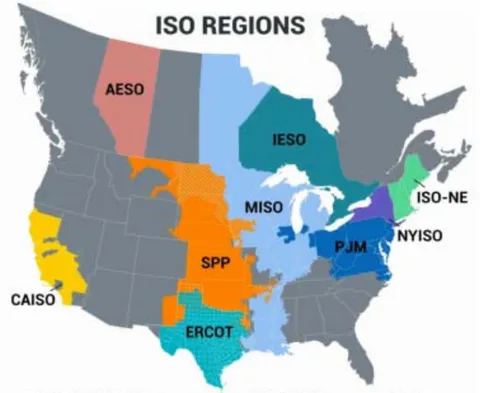
FERC's Orders No. 888, 889 and 2000 brought strong support from the power industry. As of today, there are nine ISO/RTO organizations operating in North America [12] and using competitive market mechanisms that allow independent power producers and non-utility generators to trade power.
In the U.S., six of these organizations: Southwest Power Pool, Inc. (SPP), PJM Interconnection, LLC (PJM), New York Independent System Operator, Inc. (NYISO), Midcontinent Independent System Operator, Inc. (MISO), ISO New England Inc. (ISO-NE), California Independent System Operator Corporation
(CAISO) are subject to the FERC's jurisdiction under sections 203, 205, or 206 of the Federal Power Act. The seventh - The Electric Reliability Council of Texas (ERCOT) serving as an independent system operator within the Texas Interconnection, which is not synchronously interconnected with any other interconnection in North America, is not subject to the FERC's jurisdiction.
In Canada there are two ISO organizations: Alberta Electric System Operator (AESO) serving the province of Alberta, and Independent Electricity System Operator serving the province Ontario.
PJM Interconnection (PJM)
Southwest Power Pool (SPP)
Midcontinent Independent System Operator (MISO)
New York Independent System Operator (NYISO)
ISO New England (ISO-NE)
Fig. 1.1 indicates what areas in North America are covered/serviced by RTO, and what areas (shaded in grey) are not serviced.
The major functions of RTO are administering competitive wholesale markets, and transmission services operations and planning.
ISO, RTO, and ISO/RTO acronyms in publications are often used interchangeably. The only difference between an ISO and an RTO is the size of its footprint (e.g., ISO for servicing one jurisdiction vs RTO for regional service) and the way it prices its services.
ii. RTO Market Values
Wholesale Electricity Markets provide multiple benefits to customers and to the grid. A definition of the market value is clearly presented by an Independent Electricity System Operator covering the province of Ontario, Canada [45]:
- Markets enhance reliability: 'When system-wide problems do arise, RTOs enhance rather than
detract from reliability. They have superior situational awareness over a wider area than is possible for a single utility, so when challenging weather conditions occur or a large generator unexpectedly drops out of service, an RTO will know which generation and transmission resources are available to respond immediately. Although all utilities have contingency plans to maintain service during unexpected events, RTOs' access to a wider range of resources over a broader area offers a greater level of adaptability to more extensive issues, like when a weather event threatens large states or multiple states at once" [13].
- Markets drive economic growth: By offering opportunities for suppliers to earn profits, markets drive job creation and economic growth. Markets also make the pricing of electricity more transparent.
- Markets improve grid operability: Since electricity suppliers are only paid when they produce electricity, markets encourage suppliers to operate
within their limits. If suppliers are unable to supply electricity at any given time, they lose revenue.
- Markets level the playing field: By giving new market entrants a baseline for their decision-making.
RTO administer and evolve regional electricity markets in order to foster competition among suppliers and ensure fair and affordable pricing for ratepayers, which in turn drives innovation. As thoughtfully mentioned in [13], "Power generation and wholesale transmission operations are not natural monopolies; they are structurally competitive. The evidence from more than 20 years of RTO experience in Texas and the East shows that market competition has led to more efficient generator operations and better investment decisions. Without the guaranteed returns managed by monopoly utilities, market participants are more prudent in their spending and risk management".
"The economic and reliability advantages of RTOs are well documented and explain why consumers with growing electricity needs are at the forefront of promoting RTO expansion. In addition, many stakeholders favor RTOs for their environmental benefits, including accelerating clean investment that both displaces legacy fossil resources and better integrates renewable energy resources into the grid" [13].
iii. RTO Products and Operations
RTOs have been discreetly described as an "air traffic control" system for the electric grid [13]. Indeed, "RTOs do not own electric generators or transmission wires, nor do they buy or sell electricity. Instead, they oversee the flow of electricity over the transmission system, ensuring that the amount of electricity generated and consumed stays in balance and that no component of the grid gets overloaded. Thus, the core task performed by RTOs is coordinating electricity power flows from producers to consumers in ways that minimize costs and respect the limits of the grid, and in so doing, help avoid blackouts and other problems."
RTOs benefit from their regional footprint which is much broader than a footprint of each utility when there is a need to address any external forces on the grid outside of an individual utility's control. This allows for enhancing RTO's ability to coordinate power production and consumption in advance of impending or unforeseen issues and keep the system working smoothly.
Today's RTOs operate on a system known as "security constrained, bid-based, economic dispatch." "Security constrained" refers to ensuring that power flows stay within safe operating levels. "Bid based" indicates that the system primarily relies on generator owners' voluntary offers to increase or decrease output. "Economic dispatch" indicates that the RTO seeks to minimize the overall cost to consumers by prioritizing the use of the lowest-cost generation resources available.
The "bid-based economic dispatch" part of the RTO system design works to find the cheapest-available generators to manage grid congestion. Before the day begins, an RTO's day ahead market enables the scheduling of the lowest-cost resources available capable of meeting forecasted demand consistent with safe, reliable operation of the grid. In real time, the RTO will update its economic dispatch every 5-10 minutes based on changes in consumption and production on the system, issuing instructions to generators to increase or decrease their output in consideration of grid limits, making the adjustments in the lowest-cost way as determined by generator offers into the system.
In addition to Energy Market with a day-ahead auction and a series of real-time auctions, RTOs offer other three market elements [46]:
- Ancillary Services and Operating Reserves Market providing flexibility and supporting robust transmission operations,
- Capacity Market addressing resource adequacy needs, and
- Transmission Congestion Contracts Market addressing locational price risks.
iv. RTO Independence and Governance
a. RTO Board Structure
Across the country, ISO/ROs are governed by boards of directors whose members vary in number from 5 to 10. In general, a nominating committee identifies new board members and their appointment is ratified by either a vote of the ISO/RO's members (e.g., PJM, MISO and SPP) or by a vote of the board (e.g., ISO-NE, NYISO). In contrast, the board members of the California Independent System Operator (CAISO) are nominated by the Governor of California and confirmed by the California State Senate - see Table 1.1 for details.
Table 1.1: ISO/RO Governing Entities (see Table 1 in [40])
| ISO/RTO | Governing Entity | Composition | Board Member Selection |
| CAISO | Board of Governors | 5 members | Nominated by Governor of California and confirmed by state senate. |
| ISO-NE | Board of Directors | 9 independent directors plus president/CEO (non-voting.) | Slate nominated by a committee of NEPOOL and NECPUC. Final vote by board. |
| MISO | Board of Directors | 9 independent directors plus president/CEO (non-voting.) | Identified by Nominating Committee, selected by board, and voted on by Members. |
| NYISO | Board of Directors | 10 directors including president/CEO. | Identified by Stakeholder Management Committee, nominated by Governance Committee, and elected by board. |
| PJM | Board of Managers | 9 voting managers plus PJM president (non-voting.) | Selected by Nominating Committee and elected by Members Committee. |
| SPP | Board of Directors | 9 independent members plus the SPP president (non-voting on most matters). | Candidates nominated by Governance Committee and elected by members. |
The RTO Board structure defines whether the decision-making responsibility is "done centrally" or "divided among many individuals." It also determines who will be held accountable when "things go wrong".
Today, the governing board of a new RTO may consider a mix of stakeholder and independent directors in an effort to address these issues provided the rules prevent any one stakeholder sector from gaining too much influence.
Jurisdictional (state or province) participation in RTOs does require a commitment of resources. Typically, a commissioner from each jurisdiction is assigned to serve on a market advisory committee. Jurisdictional participation also brings benefits as its planning, reliability and environmental policies can be met at lower costs to consumers when participating in a well-designed RTO.
b. Jurisdictional Policy Autonomy
Several practical concerns emerge from the political differences across jurisdictions participating in an RTO. E.g., "politically conservative U.S. states worry that joining an RTO with a more politically progressive state may result in conservative state consumers subsidizing progressive state policies, particularly those related to clean energy mandates and other environmental goals. Conversely, some in progressive states are concerned that their policy goals might be hindered if they participate in a regional market with more conservative states. Both types of concerns amount to the desire that the state retain control over its own energy policy choices, especially their preferred generation mix" [13].
c. Managing the Costs of Market Seams
A power system seam is a difference in the methods, rules, or designs of power system operations that can create transaction costs or externalities when crossing market boundaries [201].
RTOs dedicate significant resources to solving seams issues. The five key inefficiencies associated with power market seams within an RTO were summarized in [13] as follows:
- Ineffective interregional transmission planning
- Generator-interconnection delays due to information-sharing requirements
- Reduced resource adequacy capabilities
- Difficulty in managing unintended power flows
- Inefficient trading across lines connecting two markets
Currently, increasing market efficiency can be achieved by intertie optimization [47]. Intertie optimization adjusts power transfers between two markets—that is, on lines connecting the two markets—in ways that maximize the use of the lowest-cost energy available in either market, or in ways that are always consistent with safe operating levels on the grid.
Now, with a better understanding of RTO principles, let's look attentively at RTO experiences in the U.S.
b) Experiences of Regional Transmission Organizations
i. RTOs in the American Northeast
Regional Transmission Organizations (RTO) in the American Northeast: NYISO and ISO-NE administer the region's wholesale markets, plan the transmission system, and operate the power system through collaboration and innovation to ensure reliable and competitively priced wholesale electricity is always available [48].
For over 20 years the RTOs have been consistently demonstrating that "competitive electric markets continue to provide the most powerful and least-cost vehicle available" [49]. These wholesale electricity markets are used as an important regional development tool to attract necessary investments to facilitate the transition of the grid in the coming decades.
With public policies in the Northeast increasingly prioritizing clean energy production and a rapid transition away from fossil fuels, the RTOs address policy-based, societal, or extreme weather challenges through maintaining adequate supply necessary to meet growing consumer demand for electricity, and strengthening electric system reliability as the top priority.
Responding to public policies in their regions that are driving rapid change in the electric system, and impacting how electricity is produced, transmitted, and consumed, the RTOs in the Northeast have been successfully addressing critical strategic issues including:
- Higher projected demand driven by Electrification programs and economic development initiatives,
- Expected changes in electricity peaking driven by electrification of space heating and transportation,
- Interconnection processes balancing generation developer flexibility with the need to manage the process to more stringent timeframes,
- Timely construction of new supply and transmission to support reliability of the grid,
- Increased dependence on variable renewable resources and batteries, and
- New emission-free resources needed to meet the regional goals.
Through necessary studies supporting and contributing to the power grid evolution towards the grid of the future the RTOs are continuously exploring the next steps for their 2035, 2040 and 2050 targets in competitive wholesale markets, transmission, reliability, operations, extreme weather events, and new technologies.
Specifically, ambitious market targets to reduce GHG emissions from economic activity throughout the economy are being considered (e.g., [50] including Forward Clean Energy Market ("FCEM"), compensating non-emitting resources via the development of a centralized, forward market for clean energy, with the corresponding costs allocated to electricity consumers; Net Carbon Pricing ("NCP"), pricing carbon emissions from generators and returning the carbon price revenues to electricity consumers; and Hybrid approaches combining FCEM and NCP.
Examples of innovative efforts in the Clean Energy Transition helping the RTOs adapt to evolving technologies and system conditions [48] include Inverter-Based Resource Integration and Modeling capturing the unique performance characteristics of inverter-based resources (e.g., solar and wind), and Integrated Market Simulator to better and more cost-effectively quantify the potential outcomes of future market design changes or potential changes in system supply and demand conditions.
ii. The RTO West Concept
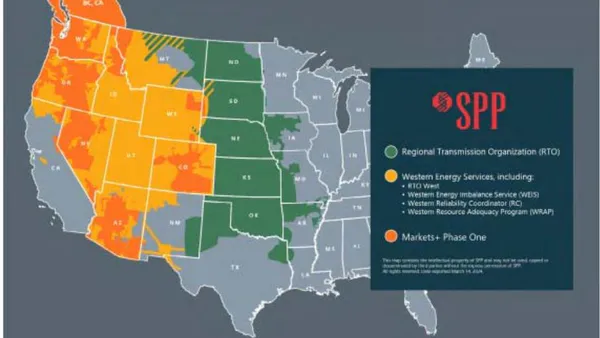
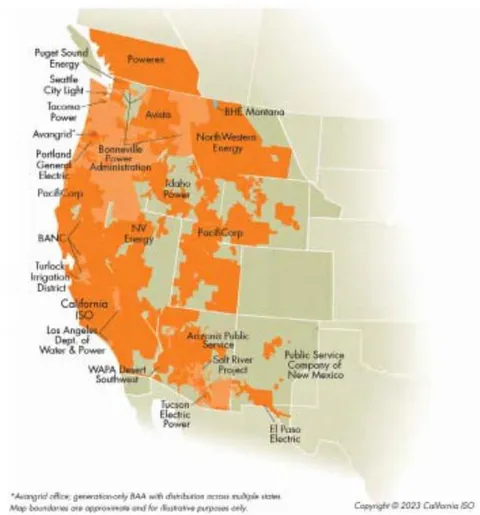
Positive experiences in the West are presented by real time power markets: the Western Energy Imbalance Market (WEIM) operated by California ISO (CAISO), launched in 2014 for participating utilities outside of the CAISO region [51](see Fig. 2.1 below), and a similar Western Energy Imbalance Service market (WEIS) operated by the Southwest Power Pool (SPP), launched in 2021 for other utilities in the West [52]. The current work being done to improve both the WEIM and WEIS by introducing day-ahead markets has strongly driven the concept of a West-wide RTO (or possibly two RTOs [13]) within the next few years.


Planned WEIM entry 2026
A part of this concept is related to improving regional resource adequacy and transmission with planning efforts in the western United States.
Besides the CAISO and SPP efforts towards an RTO West, related initiatives were presented by the
Western Resource Adequacy Plan (WRAP), the Western Transmission Expansion Coalition (WestTEC), and the West-Wide Governance Pathways Initiative (WWGPI).
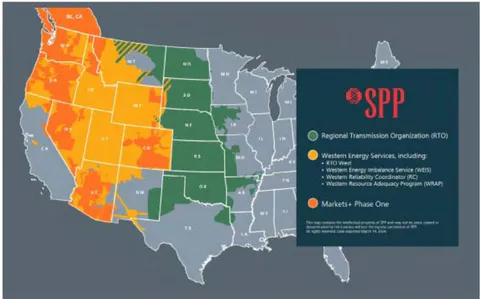
Specifically, most competitive today offering to provide an RTO in the Western Interconnection is presented by Markets+, a conceptual bundle of services proposed by SPP. Markets+ would centralize day-ahead and real-time unit commitment and dispatch and pave the way for the reliable integration of a rapidly growing fleet of renewable generation [53]. SPP filed its Markets+ tariff (the proposed market rules) with FERC in April 2024, and a decision by FERC is expected later this year. In June 2024, SPP proposed changes to its RTO tariff to enable full membership in the RTO for utilities in the Western Interconnection. Several small- and medium-sized utilities in the West have expressed interest in joining SPP as soon as early 2026.
As summarized in [13], "Establishing core RTO functions, namely those around organized markets and regional transmission planning and cost allocation, is a proven, equitable approach that has been shown to advance the core electricity objectives of both progressive and conservative states: lower costs, greater reliability, and environmental benefits. If the states in the West are able to embrace the idea of an RTO (or two) and work toward implementation, they will be on the most promising path for establishing a more comprehensive, efficient, and dynamic system of wholesale electric competition in the region".
iii. Southeast Problems
The Southeast stands apart from the rest of the nation for its lack of any kind of regional competitive wholesale electricity market independent of incumbent vertically integrated utilities [54,60]. While two-thirds of electricity consumers in the United States live in a region with organized competitive wholesale power markets operated by a Regional Transmission Organization or Independent System Operator (RTO/ISO), and with much of the West being currently part of real-time Energy Imbalance Markets administered by CAISO and
SPP and moving promptly to an RTO solution, the Southeast largely retains the decades-old vertically integrated utility model, with each utility separately operating its own generating resources and transmission system.
While utilities in the Southeast are interconnected and there is limited trading of wholesale electricity between them, they each continue to rely almost exclusively on their own generation resources to meet customer needs.
Continuing with business as usual means the risk of generation overbuild is high and increasingly expensive [55]. To bring public attention to values and merits of an RTO in the Southeast, approaches to competitive pricing across the Southeast had been presented [55-57]. The analysis forecast the considerable positive impacts of a seven-state wholesale electricity market being set up in 2025, spanning Alabama, Florida, Georgia, Mississippi, North Carolina, South Carolina and Tennessee [58].
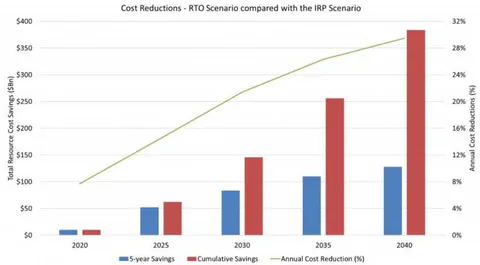
Seeing potential RTO benefits, Southeastern states started exploring ways to bring competition to the region's wholesale markets; e.g., the South Carolina legislature passed and the Governor signed Act No. 187 of 2020, which created an Electricity Market Reform Measures Study to consider establishing or joining a broader regional wholesale market such as an RTO or energy imbalance market [59].
However, in February 2021 a group of utilities including Duke, Dominion Energy South Carolina, Southern Company, Associated Cooperative and the Tennessee Valley Authority, submitted filings to FERC asking to approve a Southeast Energy Exchange Market (SEEM) – a regional energy market in the Southeast U.S. that uses a centralized intra-hour energy exchange to create bilateral trade among its trading participants every 15 minutes. SEEM presented a real-time market including Dominion Energy South Carolina, Duke Energy Carolinas, Southern Co. and 21 other participants [66,67].
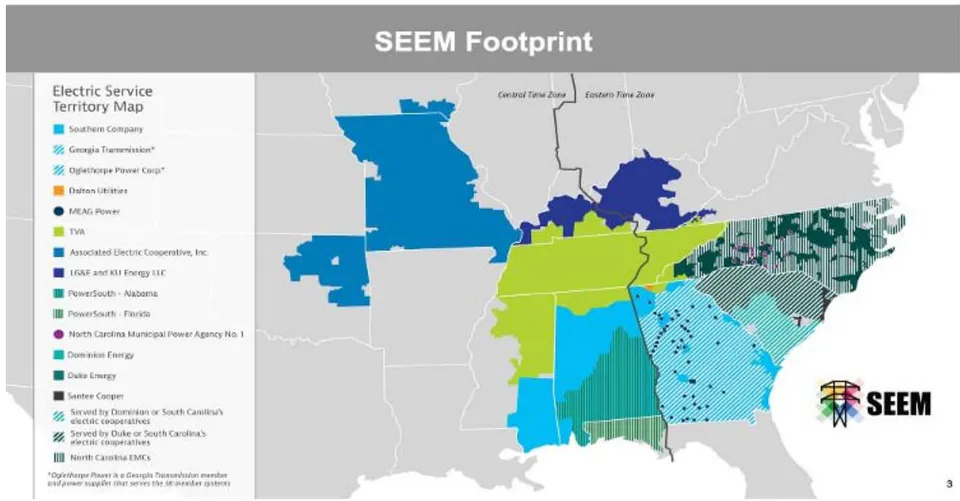
energy markets, and took only very small competitive steps away from the vertically integrated status quo compared to the integrated RTO practice (see Fig. 2.4):
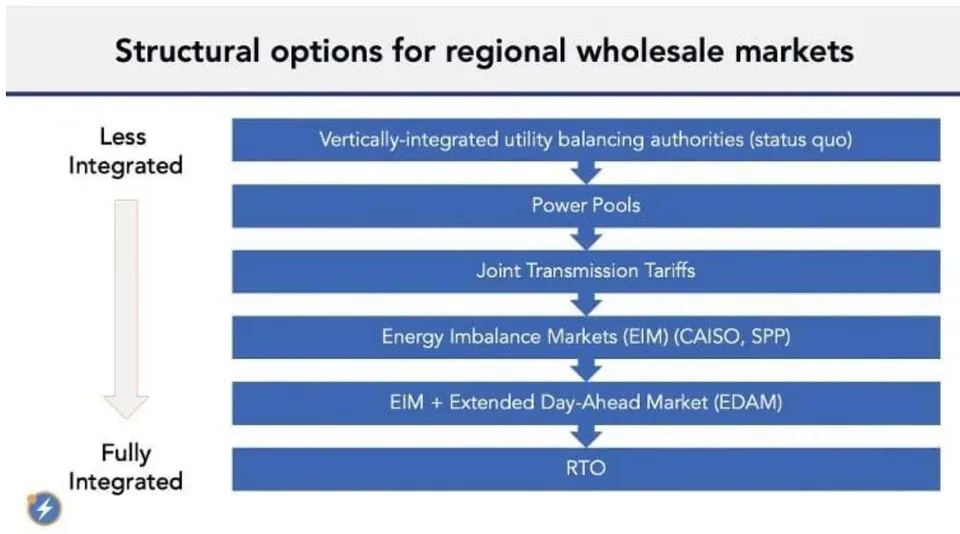
According to the prompt and clear SEEM critics, "With few non-utility generators able to operate in the region today and no clear path for them to join SEEM, the end result of the process is this: if no utility is offering excess generation, no utility is seeking additional generation, and no transmission capacity is sitting idle, no deal – and no savings for customers, even if in a competitive market such opportunities would be revealed....That this approach to power trading would serve utility interests above all" [60]. The critics argued that the benefits of SEEM are "paltry compared to a full organized market and that the proposal lacks the
independence and robustness needed to deliver benefits to consumers" [61].
In March 2021 a number of public interest organizations filed a protest asking the FERC not to approve SEEM [62,63]. However, after the SEEM applicants' response to two FERC's extensive deficiency letters and the FERC deadlocked 2-2 commissioners vote SEEM was allowed to take effect due to rules regarding tie votes by the agency as it "became effective by operation of law" because of the "absence of Commission action on or before October 11, 2021" [64-66]. While SEEM started its operations in November 2022 [67], in July 2023 a federal appeals court agreed with the critics, invalidating SEEM on the grounds that it violates federal regulations that require open access to such markets [61]. It addressed the key issue: while SEEM would be convenient for utilities, its limited structure would have provided little to no benefits to consumers. SEEM's participation requirements also unfairly discriminate against non-utilities that do or may have ongoing bilateral trading relationships with SEEM members but are ineligible to participate in the SEEM exchange. Following an appeals court ruling, the Federal Energy Regulatory Commission is reconsidering its approval of the Southeast Energy Exchange Market [68, 69]. At the same time, several states in the Southeast already started exploring full RTO membership.
Now having summarized RTO experiences in the U.S. in the end of 2024, let's review is today's contribution into regional integration in North America enabling its deep decarbonization.
c) Regional Power Integration for Deep Decarbonization
i. Leading on Deep Decarbonization Pathways
Deep Decarbonization Pathways (DDPs) are seen today as "sector-by-sector blueprints of changes over time in physical infrastructure such as power plants, vehicles, buildings, and industrial equipment—that inform decision makers about the technology requirements and costs of different options for reducing emissions" [70].
All deep decarbonization pathways incorporate "three pillars" of energy system transformation: energy efficiency and conservation, decarbonizing electricity and fuels, and switching end uses to low-carbon supplies. They present the process of improving infrastructure over time by replacing inefficient and carbon-intensive technologies with efficient and low-carbon technologies that provide the same (or better) energy services.
Canada's deep decarbonization pathways [71] present best-in-class regulations that strengthen existing policies for the electricity, buildings and transport sectors, including enhanced electric grid flexibility and storage to handle more intermittent renewables. Fuel switching to decarbonized electricity is the single most significant pathway toward achieving deep emissions reduction globally. However, to minimize both climate and economic risks, in Canada "we need to become global leaders in decarbonization policy and innovation in these sectors, not laggards" [71]. Canadian Electricity System playing a critical and very important role within the context of Deep Decarbonization, presents a critical priority in shaping its pathways.
ii. Optimizing Canadian Electricity System
a. Realities of Canadian Electricity System
An excerpt from a report prepared for Electricity Canada [72] defines Canadian Electricity System today as follows:
"The Canadian electricity sector is unique in generation mix, geography, and regulatory structure when compared with other North American jurisdictions. Regulation of the sector takes place at the provincial level with limited regulation of transmission lines that cross provincial boundaries. Except for Alberta, vertically integrated utilities develop the provincial transmission grid and generation resource mix to benefit the province and ratepayers as much as possible. In Alberta, transmission and distribution functions are provided by unbundled utilities and generation is provided in a competitive, energy-only market.
Given the provincial boundaries in Canada, the abundance of vertically integrated utilities, and the nature of regulation, transmission in provinces has largely been focused on North to South corridors connecting resources to load centers within each province, and from provincial load centers to US load centers on the other side of the border. Some connectivity exists between provinces; however, these connections are generally small relative to the size of the markets being connected. In addition, most extra-provincial interconnections have focused on international trade with the US as opposed to a trans-Canadian network. This is again a function of Canadian geography in that Canadian load centers are often much closer to US load centers on the other side of the international border than they are to other Canadian load centers in neighboring provinces.
Most Canadian provinces operate nearly as islands, with limited connectivity amongst Western Provinces (BC, Alberta, Saskatchewan, and Manitoba) and similarly limited connectivity between the Eastern Provinces (Ontario, Quebec, and Atlantic Canada).
Canada's generation mix is also unique with roughly of electricity generation coming from hydroelectric sources. B.C., Manitoba, Quebec, Newfoundland and Labrador, and Yukon all generate over of their electricity from hydropower, while Alberta, Saskatchewan, and Nova Scotia primarily generate their electricity from fossil fuels."
b. Investments in the Grid a Priority
Reaching net-zero grid emission by 2035 and net-zero economy-wide emissions by 2050 to realize Canada's decarbonization ambitions requires initial investments focused on the electricity sector. Interconnected regions will play a crucial role in achieving net-zero in Canada. To ensure deep decarbonization transition, it is imperative that investments in the planned renewable generation and storage are optimized across jurisdictions using transmission upgrades. Addressing the uniqueness of the Canadian electricity system, its geography and provincial regulatory structure, a set of general recommendations in a report [72] commissioned by Electricity Canada in 2022 was as follows: (1) develop a clear inter-provincial planning process involving provinces, the federal government, and the First Nations; (2) establish a fair and reasonable cost allocation methodology to be used across Canada; and (3) to continue to explore Canada - U.S. transmission development that can provide financial benefits to Canada.
While Canada's electricity sector is backed by zero emission dispatchable hydroelectric and nuclear resources playing a central role in the country's current transition to a low emission economy, making next steps in deep decarbonization objectives requires major investments in new electricity infrastructure across the country.
As of 2022, while investment conditions at an aggregate level were perceived as favourable, they were patchy across provinces and technologies. Overall conditions for investment are relatively positive for nuclear power generation and for newer technologies such as smart grid and energy consumption management, but less so for renewable and hydrocarbon power generation [73]. Also, while public policy factors overall had a neutral impact on investment decisions, provincial regulatory frameworks for the electricity sector were viewed as having a somewhat negative impact. This highlighted the need for a strategic and coordinated approach to developing electrification policies, both within and between provinces, as well as strengthening regulatory conditions within all parts of the electricity sector value chain.
c. Recommended Framework for Inter-Regional Grid Infrastructure
To lead on Canada's Deep Decarbonization Pathways, a collaborative framework to identify and financially support inter-regional electricity transmission projects was recommended by the Canada Electricity Advisory Council in 2024 [74] to outline their governance, cost allocation, and funding components. The European Union's Projects of Common Interest (PCIs) framework [75, 76] was proposed as a starting model.
iii. Strengthening Inter-Regional Ties
a. Inter-Regional Power Sector Integration in the Northeast
An inter-regional integration approach for the North American Northeast (New York, New England in the Unites States and the Canadian provinces of Ontario, Québec and Atlantic Canada) leading deep decarbonization efforts in the power sector at the lowest overall cost was strongly promoted (e.g., [6]). Gains from such an inter-regional approach were seen critical due to the large amount of hydropower and reservoirs in Canada, which could be used to balance non-dispatchable renewable generation. The related aspects highlighted potential increase of transmission capacities between sub-regions, and coordination of capacity constraints (e.g., planning for available regional capacity instead of relying exclusively on the local generation capacity to meet peak demand, thus avoiding unnecessary peak capacity "duplication").
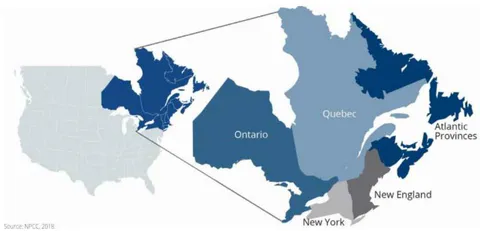
To ensure significantly more attention to adjusting and upgrading electricity sector integration strategies across the region focused on variable renewable generation challenges, increased coordination and collaboration among adjacent jurisdictions is seen as immediate and critical. This involves different integration aspects such as physical infrastructure (e.g., interties - connections allowing electricity to flow between power systems), institutional and regulatory cooperation and harmonization (e.g., shared regulation, market design, and systems operation rules), and commercial integration (e.g., level of trade).
According to [8], to achieve such coordination and collaboration, significant institutional, political and social barriers must be overcome:
- Institutional barriers imply a need for subnational jurisdictions to give special attention to regulatory discrepancies across jurisdictions (e.g., market access or price levels). This is necessary to ensure that regional collaboration leads to a streamlining of efforts to harmonize and facilitate integration of grids across subnational jurisdiction borders.
- Political barriers often take the form of combining renewable deployment efforts with local industrial policy and job creation objectives.
- Social barriers materialize through opposition to projects (e.g. wind farms, dams, transmission lines). A viable path to regional integration must consider both the legitimate concerns in local areas and the regional goals to accelerate renewable energy deployment.
Strengthening regional collaboration through additional dialogue, sharing of information and data, and further technical and economic studies on the gains of and approaches to greater integration was seen as a largely recognized next step toward addressing these barriers."
This approach aligns with a broader vision of the U.S. inter-regional transmission expansion and coordination of planning and dispatch for renewable-energy integration [5, 77, 197, 202].
b. Two-way Electricity Trade Vision
Related studies promoting the benefits of interregional coordination in the Northeast showed a clear move from historical electricity export from Quebec to a "two-way electricity trade" vision.
An example of expanded inter-regional coordination with Hydro-Québec (HQ) for deep decarbonization in the Northeastern U.S. is presented in a related Deep Decarbonization Pathways study [78]. HQ for many years has been playing an important role in Northeast as a key electricity exporter, and there is a significant new resource potential for onshore wind and hydro at relatively low cost within close geographic proximity to the American Northeast. The existing transmission capacity benefits both the Northeast and Québec as it allows south to north exports at certain times during the year in combination with the predominantly north to south flow, keeping transmission utilization rates high. The HQ system, with its large reservoir capacity, has the latent flexibility to provide balancing on both a daily and seasonal scale.
The economic benefits of expanded coordination derive primarily from operating HQ's system as a "regional battery" with extensive south-north as well as north-south flows. This takes greater advantage of the flexibility of the HQ reservoir system and is an expected departure from the longstanding business model of "fixed schedule" HQ electricity exports.
The inter-regional system modeling indicated the daily pattern becoming more dynamic, with exports ramping down during sunrise and ramping up during sunset. This pattern reflects the high levels of solar PV generation in the American Northeast, with HQ importing electricity from the Northeast during daylight hours, particularly during the spring and summer, decreasing HQ hydro generation and increasing reservoir storage.
Another related study [77] concluded that in a low-carbon North American Northeast's future, it is optimal to shift the utilization of the existing hydro and transmission assets away from facilitating one-way export of electricity from Canada to the U.S. and toward a two-way trading of electricity to balance intermittent U.S. wind and solar generation.
For Northeastern U.S. states, a solution based on existing technology was proposed for the use of hydropower reservoirs in neighboring Quebec:
The optimal use of U.S.-Canadian transmission lines will change drastically the role of Quebec hydro as a generation resource in Northeastern power systems as Northeastern states decarbonize their power systems.
Expanding transmission enables Quebec hydro to play a greater balancing role in future low carbon power systems in the Northeast. The role of Quebec hydro as a storage resource suggests that building additional transmission is a complement to deploying clean energy in the Northeast, rather than a substitute.
The Northeast state goals for zero-emission electricity will be achieved at a lower cost if transmission with Quebec is expanded.
c. Inter-Regional Transmission Expansion
The current Canadian transmission system is much more focused on international transmission as opposed to interprovincial transmission, and the value of interprovincial transmission expansion has been underrepresented in historical cost-benefit analyses [79].
Expanding interprovincial transmission in Western Canada shows the most benefits in the reliability categories (risk mitigation, resource adequacy, and resilience) compared to the traditional benefit categories (production cost, emissions avoided, capital cost).
The levels of reliability benefits have to be promptly explored/modelled for the inter-provincial and inter-regional connections between Western and Eastern Canada (e.g., Manitoba and Ontario) and between the Eastern and Quebec interconnections (e.g., Ontario and Quebec, and Quebec and New Brunswick), and within Atlantic Canada.
d. Slower Pace of Regional Integration in Canada
However, in Canada, contrary to leading regions in the U.S. (such as New York and New England) or in the European Union (such as the Nordic Region [80-82]), integration or harmonization reforms so far have been slow. Understanding of the historic evolution of electricity markets across Canada showed the economic and environmental costs resulting from the poor integration level in the country [83].
To address the slower pace of integration in the North American Northwest, key policymakers and stakeholders in eastern Canada, New York and New England were interviewed in 2020 to determine whether there is sufficient institutional and key stakeholder support in the region for an extended multistakeholder, multi-jurisdictional collaborative process dedicated to developing a comprehensive blueprint for such coordination and grid integration [84].
The results confirmed strong support for a broad-based collaborative effort to promote increased electric grid integration and coordination, and to obtain all the economic and environmental benefits that such integration and coordination is likely to yield. However, the inter-regional collaborative "cannot begin, much less succeed", unless three "must have" preconditions are met: support of the affected provincial and state governments, access to adequate data to support essential analytical and modeling activities, and sufficient resources to sustain the overall effort.
iv. Enabling Market Opportunities
a. Market Structures Vary
Electricity market structures in Canada widely vary in vertical integration level, in ownership (from public to private), and in competition level in generation and retail [7]. Having each of the provinces' regulatory bodies, by mandate, ignore what is going on in other provinces "creates uneven and self-centered provincial electricity markets that are not designed to collaborate and, consequently, are poorly positioned to support an efficient deep decarbonization of the economy".
Improving integration and coordination of provincially managed electricity systems in Canada opens "key opportunities: economic efficiency gains, the potential to integrate renewable energy, and improved regulation to support innovation" that can be seized through a more integrated electricity sector.
Proposed strategies inducing regional market integration include: "(1) enhancement of bilateral provincial projects through renewed federal support; (2) a bottom-up movement to provincial convergence, following a Nordic approach to collaboration [80-82]; (3) a negotiated free trade agreement in electricity, under the already established Canadian Free Trade Agreement, capitalizing on the existing "Regulatory Reconciliation and Cooperation" process; and finally (4) a federally led, healthcare-type process where key principles would be imposed on provinces to build the more integrated power system of tomorrow" [7].
b. Benefits and Challenges of Electricity Market Integration
Generic benefits of regional electricity market integration were shown as follows [85]:
- Improving reliability and pooling reserves;
- Reduced investment in generating capacity;
- Improving load factors and increasing demand diversity;
- Economies of scale in new construction;
- Diversity of generation mix and supply security;
- Economic exchange;
- Environmental dispatch and new plant siting;
- Better coordination of maintenance schedules.
Major regulatory challenges experienced included [86]:
- Possibility to trade interconnection capacity day-ahead and intraday;
- Technical features (e.g. technical losses) properly modelled in the allocation process;
- Gate closure time as close to real time as possible;
- Integration of electricity balancing markets.
Important regional integration obstacles in Canada were recognized as follows [85]:
- Structure of political and electoral incentives in the provinces and the federal government
- Redistribution of the gains from a partial or complete integration
- Lack of recognition of the environmental benefits resulting from integration
c. Today's Realities of Inter-Regional Trade: RTO vs Regulated Monopoly
An important reason for slower decision-making on regional and inter-regional power integration in Canada is defined by the critical wholesale electricity market differences in deregulated and regulated monopoly jurisdictions.
Internal market pricing in a deregulated jurisdiction is defined by an RTO-administered wholesale electricity market at marginal cost, and in regulated monopoly jurisdiction - at average cost.
In inter-regional electricity trade the regulated monopoly always exports toward the deregulated jurisdiction pricing at marginal cost which may induce productive inefficiencies of the regulated monopoly. If both jurisdictions are deregulated, "integrated deregulation" in inter-regional electricity trade yields a decrease in overall consumption, which also brings GHG emission reduction [87].
An example of the market differences slowing regional and inter-regional integration is presented by ISO new England with its RTO-administered deregulated market, and New Brunswick and Nova Scotia as regulated monopoly utilities.
d. RTO Opportunities in Atlantic Canada
The electricity system will play a key role in achieving greenhouse gas emissions reduction targets of the Atlantic provinces (New Brunswick, Nova Scotia, Prince Edward Island and Newfoundland and Labrador) through decarbonization of energy supply and enabling electrification of buildings and transportation.
Some implications on the electricity system upgrade in the region, with an emphasis on the potential economic benefits of increased regional coordination, include the following aspects [88]:
- In-region renewable electricity generation: the Maritimes will require significant construction of in-region renewable energy to provide zero-carbon energy and decarbonize the electric power supply regardless of regional coordination measures to import dispatchable, clean energy from Newfoundland and Labrador, or/and from Quebec.
- Dispatchability needed for Deep Decarbonization: achieving very deep levels of decarbonization will require firm, dispatchable low-carbon energy and capacity to ensure reliability, which will be possible/ necessary only with broader regional coordination.
- Low carbon dispatchable energy has significant and growing value: "imported hydropower or other dispatchable, clean energy can meet the need for zero-carbon electricity and the need for firm capacity for system reliability, acts as a hedge against significant uncertainty in commercial development of low-carbon baseload and shows significant value under a wide variety of
uncertainties, in particular in scenarios examining 2030 coal retirement".
A clear curve of regional collaboration efforts and steps in Atlantic Canada was summarized in the presentation "Regional collaboration and infrastructure optimization in energy modelling" in 2024 [89]. It shows that an RTO in Atlantic Canada has been waited for, is required and much needed. Before looking attentively into deep integration opportunities that may allow Atlantic Canada to promptly and strongly contribute to deep decarbonization of the country, let's review the current situation with and upgrade of electricity wholesale efforts in Canada.
III. EXPECTED RESULTS AND OUTCOMES
a) Upgrading Electricity Wholesale in Canada
i. Alberta and Ontario: Leading Competitive Wholesale
Canadian power industry paid serious attention to the development and deployment of competitive wholesale electricity markets in the U.S., and followed the rules and achievements established by FERC. The most industrialized provinces of the country – Alberta and Ontario – followed the experiences in the U.S., leading wholesale electricity market deployment in Canada in Western and Eastern interconnections.
a. Upgrading Operations
Alberta: Electricity policy in the province changed in 1996, with the province restructuring its electricity market away from traditional regulation to a market-based system [90]. The Alberta Electric System Operator (AESO) started operating in 2003 planning and operating the wholesale market and managing/planning the related power grid [91]. The market now includes an increasingly diverse infrastructure for multiple electricity buyers and sellers. AESO operates "independently of any industry affiliations and owns no transmission or market assets" [92].
Alberta's power system is undergoing the greatest transformation in its history, driven by new technologies, government policy and a societal shift toward cleaner forms of energy, and the AESO is playing a leadership role in enabling this transformation [93].
AESO is a member of the ISO/RTO Council (IRC), Western Electricity Coordinating Council (WECC), Western Power Pool (WPP) and North American Reliability Corporation (NERC).
Ontario: The Independent Electricity System Operator (IESO) was established in April 1999 as the Independent Electricity Market Operator (IMO) under the government of Ontario in preparation for deregulation of the province's electrical supply and transmission system [94]. The IMO was renamed to the IESO in January 2005. It is the Crown corporation responsible for operating the electricity market and directing the operation of the bulk electrical system in the province.
As a key service across the electricity sector the IESO manages the wholesale market in the province, including planning for the province's future energy needs, and designing a more efficient electricity marketplace to support sector evolution [95]. The IESO identifies system needs and planned actions from 2025 to 2050 that are needed to ensure the reliability, affordability and sustainability of Ontario's electricity system [96]. The IESO is a member of the ISO/RTO Council, NERC and Northeast Power Coordinating Council (NPCC).
b. Restructuring Energy Markets
The electricity sector is in a time of fundamental change. Every jurisdiction, regardless of its framework, is experiencing reliability and affordability challenges that are becoming more significant as the pace of change increases [97].
AESO and IESO as the leading Canadian electricity wholesale market operators clearly defined the next steps in addressing these changes through restructuring energy markets.
As Alberta's current electricity system is being impacted by transformational change, the AESO Net-Zero Emissions Pathways Report (Net-Zero Report) [98,99] and the AESO 2023 Reliability Requirements Roadmap (Reliability Roadmap) [100,101] noted key operational and reliability challenges that are having implications on the sustainability of the electricity market as currently designed in Alberta.
The need for more structural change to the market design and provincial electricity policy is being driven, among other emerging trends, by technological shifts changing where and what type of resources power the grid:
- Alberta is experiencing a significant change in its generation fleet with the reduction in carbon-emitting generation sources and the increasing pace of development of variable renewable generation resources (i.e., wind and solar). The integration of these resources is important to support a carbon-neutral future. However, these resources must be operated with an accompanying mix of controllable resources.
- Increasingly, supply is not providing attributes that are required to maintain reliability without the need for additional ancillary services and/or technical requirements.
AESO's approach to restructuring energy markets to address this change including the AESO's study, observations and recommendations was presented to the Alberta government in January 2024 [102].
A key recommendation of AESO addresses the ability to procure contracts for controllable/dispatchable technologies[1] focused on the objectives of Reliability, Affordability, Decarbonization by 2050, and Reasonable Implementation. A set of different dispatchable technologies supporting these objectives and demonstrating the current and future role and potential, in AESO's opinion, includes carbon-abated natural gas power, full-scale nuclear, small modular reactors, hydrogen-fueled generation, hydroelectric power, and energy storage resources. Specifically, the reliability objective involves defining and establishing sound technical requirements for all technologies, especially a new and growing class of inverter-based resources (e.g., wind turbines, solar arrays, and batteries).
While AESO worked promptly in 2024 on the Restructured Energy Market design development and engagement (see [103, 104]), IESO also completed its Market Renewal Program [105]. The mission of the Market Renewal Program is to deliver a more efficient, stable marketplace with competitive and transparent mechanisms that meet system and participant needs at lowest cost. The Market Renewal Program (MRP) is modernizing Ontario's electricity markets to address inefficiencies and will be a building block to embrace the continued transition to new and diverse resources [106]. MRP will make improvements to the current electricity market design, by improving how electricity is supplied, scheduled and priced by IESO, leading to system efficiencies and supporting the grid of the future. This project will deliver significant value to the system and Ontario consumers - an expected $700 million in benefits in the first 10 years alone.
c. Accommodating DER Aggregations
In parallel and in coordination with restructuring their energy markets, IESO and AESO have been collaborating with their stakeholders to understand the ways to accommodate DER aggregations (DERA) in their markets.
In response to FERC's Order 2222 [107], ISO/RO across the US are developing and implementing wholesale participation models for DERs that inform potential enhancements in IEASO and AESO. This includes:
- Opportunities to enable new and more diverse DER aggregations (DERAs) to better reflect existing and emerging DER potential in the province
- Potential to enable greater flexibility of aggregated demand-side resources
- Addressing barriers to participation for small resources (e.g., metering/telemetry processes and requirements)
The key areas include DERA participation (e.g., participation and aggregation models will be established
for DERs, maximum and minimum size thresholds needed for individual DERs and/or DERAs, etc.), eligible wholesale market services (e.g., energy, operating reserves and capacity) and metering and settlement for DERAs [108].
IESO sees DERs as emerging major players in the electricity sector in Ontario with at least 5000 MW* of DERs that IESO has visibility to as a result of markets, procurements, programs and initiatives have already been deployed in Ontario. IESO sees potential for substantial growth [109] with additional DERs being deployed to support customer and policy-driven electrification and decarbonization goals, and has been
determining cost-effective ways to enhance the value DERs can provide to Ontario's electricity system by expanding participation in the wholesale markets.
As an example, the IESO's Market Vision and Design Project [110] as a key focus area of DER integration activities explored with stakeholders "foundational" participation models for DER integration into wholesale markets as well as enhanced models to form future DER integration [111]. IESO also plans by 2026 to design in detail and implement the foundational wholesale participation models including market rule/manual amendments and process/tool updates [112].
Table 4.1: Key Features of Foundational and Enhanced Models [112] Key Features of Foundational and Enhanced Models
| Key Focus Area | Foundational Model | Enhanced Model |
| Aggregation Details | ·Enables aggregation at a single node ·Enables heterogeneous aggregation of certain resource types ·Aggregation of residential and small C&I consumers not enabled | ·Enables sub-zonal (or multi-nodal) aggregation ·Enables heterogeneous aggregation of all resources except very small consumers which must be aggregated with resources similarly dependant on Smart Meters ·Aggregation of residential and small C&I consumers is enabled |
| Size | ·Enables DER Aggregations (DER(A)) with a total size of 1 MW or more and will explore the possibility of reducing the threshold for the aggregation size; no minimum size for individual contributors | ·Enables DER(A) of 100 kW or more; no minimum size for individual contributors to an aggregation |
| Products and Services | ·Capacity, Energy and Operating Reserve | ·Capacity, Energy, Operating Reserve and, if there is a system need, regulation service |
| Metering and Settlement | ·Applies existing, relaxed IESO requirements for small resources to DER(A) | ·Will allow for alternative requirements for residential/small C&I DER(A) (by utilizing the Smart Meter Entity for settlement purposes) that reflect the size of the resources and risk mitigation capabilities of participating in aggregate |
Another example is collaboration of AESO with its stakeholders on the development of proposed Amendments to ISO rules related to the Operating Reserve ("OR") Market Review ("OR Market Review Rule Amendments") related to DER/DERA. By May 31, 2023, AESO received comments from its Stakeholders in response to its March 29, 2023 Letter of Notice for Development of Operating Reserves Market Review Rule Amendments [113], and by July 31, 2023 provided its feedback to the stakeholders.
ii. British Columbia: Moving to Deep Integration
BC Hydro, a Crown Corporation of the province of British Columbia, participates in wholesale energy market activities in the Western Interconnection of North America via Powerex Corp., a wholly-owned subsidiary of BC Hydro [114]. The surplus capabilities of the BC Hydro generating system and Powerex's portfolio of transmission service rights enable Powerex to buy, sell and shape power deliveries to BC Hydro customers across the Western Electric Coordinating Council (WECC) region.
Powerex began its participation in the real-time Energy Imbalance Market (EIM) administered by California Independent System Operator (CAISO) on April 4, 2018, pursuant to Commission-approved agreements that recognize its status as a Canadian EIM entity [115]. Powerex has been participating in the EIM in the same format as many other EIM entities in the market managed by CAISO. This includes [116]:
- Flexible Generation - voluntary bids and offers from residual BC Hydro flexible generation;
- Generation and Load Imbalances - deviations from hourly base schedules;
- Transmission rights - set aside ahead of the hour to support EIM transfers.
In November 2022 after its careful review of the two competing alternatives for a fully-integrated RTO solution demonstrating deep integration in the Western interconnection: SPP's Markets+ and CAISO's Energy Day Ahead Market/Energy Imbalance Market (EDAM/EIM), Powerex concluded that SPP's Markets+ is the market platform that will provide Powerex with the
greatest economic, environmental and reliability benefits [117, 118]. Powerex announced that "it will not only participate in the funding of the development of Markets+, but it will also join Markets+ at inception, subject to applicable approval processes".
The following elements of the Markets+ Draft Service Offering were "particularly important to Powerex's decision to pursue Markets+:
- A durable and inclusive governance framework that is in palace from the outset, supported by an experienced and neutral market operator, and the independence of a Markets+ Independent Panel and the SPP Independent Board;
- An approach to GHG tracking that is expected to accurately apply GHG emissions costs to energy generated in, or imported into, jurisdictions with GFHG pricing programs, and in a manner that meets the full intent and spirit of the underlying environmental policy;
- A common resource adequacy requirement that will not only protect reliability, but do so in an equitable manner, leveraging the Western Resource Adequacy Program (WRAP);
- A transmission proposal that will maximize the transmission capability available to Markets+ while minimizing impacts on third-party transmission revenue and equitably allocating congestion revenue to OATT customers, and
- Application of industry best practices in price formation, consistent with FERC policy, ensuring that market prices accurately reflect grid conditions, which drives lower retail rates for consumers over the long-term while supporting reliability".
On Mar 25, 2024, SPP's Board of Directors and its members have approved the initial tariff for its Markets+ service offering in the Western Interconnection, clearing the way for its filing at FERC [119]. As of April 2, 2024, Markets+ is expected to go live in early 2027, pending FERC approval of the tariff [120].
iii. Manitoba and Saskatchewan: Building RTO Alliances
Both Manitoba Hydro and SaskPower made important steps toward strengthening wholesale markets in North America via alliances with leading RTOs in the U.S.
Saskatchewan: In 2022, SaskPower signed a 20-year agreement starting in 2027 with the Southwest Power Pool (SPP) increasing its ability to sell and buy bulk power at the wholesale power market for the central United States managed by SPP [121]. SaskPower is SPP's first international member, and their membership represents both organizations' continued efforts to increase reliability through interregional coordination [122]. SPP and SaskPower have operated as adjacent entities since October 2015 when SPP's service territory
expanded to the North Dakota-Saskatchewan border, coordinating their reliability and transmission functions. SaskPower's participation in the SPP represents a commitment by both organizations to strengthen wholesale market opportunities across their borders.
Manitoba: Manitoba Hydro joined MISO in September 2001 through the execution of a Coordination Agreement [123]. With an installed capacity of close to 5700 MW of hydro power generation Manitoba Hydro operated as a strong contributor to clean electricity resources supplying its U.S. customers with power and energy via the wholesale market managed by MISO. In addition to participating in MISO as the Coordinating Owner, Manitoba Hydro also participates in the MISO Capacity, Ancillary Services, Energy and Financial Transmission Rights markets through which it delivers to the MISO footprint approximately 1000 MW of capacity and 10 TWh of energy on an annual basis.
iv. Quebec Selling to Wholesale Markets in Northeast
a. One Utility, One Interconnection
Hydro-Québec is a vertically integrated provincially-owned power utility established by the government of Quebec. Hydro-Québec's electricity transmission system is managed by its division - Hydro-Québec TransÉnergie (HQT). Quebec Interconnection covering the province of Quebec and operated by HQT is not synchronized with Eastern Interconnection or any other interconnections in North America [124]. TransÉnergie uses HVDC technology (back-to-back converters) to export or import electricity to other transmission grids in the neighbouring Eastern Interconnection.
HQ and the Quebec government have been working successfully (and not without hardships) to increase electricity exports to the U.S. via existing and proposed new transmission lines [125]. Major electricity supply provided by HQT to ISO/RTO wholesale markets in North America includes IESO (Ontario), ISO NE (New England) and NYISO (New York). Today, with the American Northeast committed to rapidly scale variable renewables, inter-regional collaboration between Quebec and the Northeastern U.S. is underway that may "fundamentally reconsider the role of hydropower on the grid" [126, 127].
Inter-regional efforts and opportunities for Quebec are proposed by leading universities in Quebec and well documented, e.g., [6-8, 83, 85, 87, 128-132].
b. The "Battery" of Northeastern America
According to Quebec's Framework Policy on Electrification and the Fight Against Climate Change [133, 134], "the provincial government is aiming to use our considerable hydroelectric resources to make Québec the "battery" of northeastern America. This involves the ability to use electricity exports to contribute to the fight against climate change beyond Québec's borders and the potential to attract even more
companies that want to take advantage of this clean, competitive energy".
"By 2030, the government has set its sights on increasing electricity exports to neighbouring markets under long-term contracts. It will propose energy alliances to neighbouring provinces and states in the American Northeast in order to promote Quebec's resources and increase electricity exports. These energy alliances will make the American Northeast a greener, more competitive region."
According to Hydro Quebec Action Plan 2035 [135], the utility plans to integrate 8,000 to 9,000 MW of new generation assets into the Hydro-Québec grid. As hydropower is the best option for firming up intermittent wind power in Quebec, from 3,800 to 4,200 MW of new hydropower will be added by increasing the capacity of the existing generating stations and building new hydropower facilities, including a pumped-storage facility.
Transmission infrastructure will be deployed to connect additional generating facilities and promising new projects for Québec. By 2035, Hydro-Québec plans to invest a total of $50 billion to install 5,000 kilometers of transmission lines to increase the capacity of our transmission system in order to maximize access to new generation. About half of which will be high voltage (735 kilovolts and 315 kilovolts) and the other half intermediate voltage (between 69 kilovolts and 315 kilovolts) for regional development and local loads [136]. Hydro-Québec plans to launch a major undertaking to upgrade 735-kV lines: the backbone of Québec's transmission system. The first phase will include the optimization of the existing system and the construction of almost 850km of new 735-kV or 315-kV lines, as well as 5 strategic new substations in 3 areas. This infrastructure will allow new generation to be integrated into the grid, transmit additional energy across Québec and increase grid reliability and resilience to increasingly intense weather phenomena [137, 138].
As the Reliability Coordinator for the Quebec's electricity system, Hydro-Québec on October 1, 2024 updated all the data and information it needs to monitor the transmission system of Quebec and meet its operational obligations, including to perform Operational Planning Analyses, Real-time monitoring, and Real-time Assessments, as Reliability Coordinator (RC), Balancing Authority (BA) and Transmission Operator (TOP), under the established by NERC reliability standards [139].
c. Amping Up Electricity Regulation
On June 6, 2024 the Government of Québec tabled Bill 69, An Act to ensure the responsible governance of energy resources and to amend various legislative provisions, in the National Assembly [140]. The bill is essentially aimed at speeding up green energy production in the province, with the ambition of making Québec the first carbon-neutral jurisdiction in North America. Although electricity appears to be at the centre of Bill 69, some changes are also aimed at natural gas and other sectors of the energy supply chain of Québec. According to current strategies and plans, Quebec needs to double its energy production to support initiatives that will allow it to reach its climate targets [141].
Specifically, Bill 69's proposed amendments would [142]:
- Enable Hydro-Québec to enter into renewable electric power supply contracts without being subject to tendering obligations, as well as give Hydro-Québec the ability to sell certain production infrastructure;
- Allow private producers to sell and distribute electric power to other private entities located on a site adjacent to their production site; and
- Introduce a new governance model.
Bill 69, which aims to set up a legal framework to support the province's energy transition [143], is expected to be adopted by the end of 2024.
Keeping in mind the current wholesale electricity updates in all the provinces in Western Canada, Ontario and Quebec, the regional wholesale market reasons and solutions for Atlantic Canada contributing to deep decarbonization via Canada's Clean Grid are proposed in the following chapter.
b) Atlantic RTO as the Energy Gateway Solution
i. Atlantic Energy Gateway
In March 2009 Atlantic Canada made a next step in expanding regional clean electricity collaboration announcing the Atlantic Energy Gateway (AEG) to enhance the development of Atlantic Canada's clean energy resources. AEG represented a collaborative approach coordinated by the Federal Government (Natural Resources Canada and the Atlantic Canada Opportunities Agency), with participation from the governments of the four Atlantic Provinces, four of the major regional utilities, and the Region's two system operators [26, 27].
With emerging clean electricity opportunities in the region ranging from large hydro to wind and tidal power in clean electricity generation and green hydrogen production in clean consumption, the Atlantic Energy Gateway was seen as one of the strategic gateways to prosperity in Atlantic Canada and beyond [28-31].
In early 2011 energy ministers of the Atlantic provinces agreed to speed up regional co-operation efforts, identify priority opportunities and maximize benefits for the region [144]. By March 2012 strong advances were made in better understanding of the ways to move in regional clean electricity collaboration.
On September 10, 2012, the federal and provincial ministers announced the results of studies undertaken under the AEG. The research identified significant potential benefits of regional collaboration, including development and operating cost efficiencies, greater diversity in clean energy supplies, enhanced stability for ratepayers and lower greenhouse gas emissions in the Atlantic region. The research involved significant engagement of the power utilities in the four Atlantic provinces [27].
Specifically, the following understanding below was shared and agreed upon within the AEG initiative.
a. Market Opportunities
The AEG team completed a review of provincial and state clean and renewable energy policies supporting clean and renewable energy targets [145]. The review highlighted that the Atlantic provinces will only cooperate, and truly "buy-in", if there is mutual gain. Greater interprovincial power cooperation was seen necessary for a successful export to New England.
The review highlighted a need for a Regional System Operator that could provide coordinated balancing and load following services for the region. A regional system operator could provide a more efficient and economic structure to facilitate interprovincial power flows. In addition to streamlining the tariff system, a regional system operator that had independence from individual provinces' political decision-making could improve market access for independent producers.
b. Regional Electricity System Operations
The AEG initiative's review of Regional Electricity System Operations in Atlantic Canada was focused on the operations and requirements of a regional transmission system [26]. The review also included a description of the regulatory systems in place in the Atlantic Provinces, and also other relevant regulators including the U.S. Federal Energy Regulatory Commission (FERC), North American Electric Reliability Corporation (NERC), Northeast Power Coordinating Council (NPCC) and Canada's National Energy Board (NEB), regulating international power lines, and energy imports and exports in Canada.
It was indicated that "increasing regional electricity and clean renewable energy cooperation could achieve potential efficiencies and cost benefits to consumers and industry, and expand economic opportunities and benefits for the region. Implementation considerations and some areas that could be reviewed in exploring increased coordination are:
i. Existing generation and transmission structures and policies; ii. Examining opportunities for regional planning for expanded renewable energy iii. Sources to maximise market competitiveness;
iv. Planning for future system operations on a regional basis; and v. Harmonizing certain regulatory functions, while ensuring the Atlantic region maintains its close regulatory, reliability, and business relationships with the Northeast USA and related agencies.
Increasing cooperation and coordination by the Atlantic Provinces' electricity sectors could become the start of an Atlantic Canada power market that is more competitive, both locally and internationally."
c. Regional Transmission Upgrade Options
As a tighter integration of the regional Atlantic Canada electrical system was expected to lead to increased opportunities for inter-provincial energy trade, a resource assessment of the integrated regional system was done through the development of a representative model of the system [146]. The model was used to evaluate the current operation of the system and develop scenarios for increasing amounts of renewable and non-emitting energy sources for domestic and export electricity uses. Various potentially desirable transmission upgrade options and the key interfaces between New Brunswick and Nova Scotia, and New Brunswick and Prince Edward Island were identified to determine their approximate transfer capabilities and the costs to upgrade transmission facilities.
d. Common Unit Commitment and Dispatch Functionality
The AEG initiative supported the development and testing of a regional system model, database, and skill set a common unit commitment and dispatch function for balancing electricity supply and demand in Atlantic Canada to be used for future studies [147]. This was a model upgrade from the New Brunswick System Operator balancing at that time New Brunswick, Northern Maine and Prince Edward Island systems as one balancing area. The results of the common unit commitment and dispatch functionality review were intended to inform policy makers on the appropriateness of pursuing a common system balancing function.
e. Clean Electricity Resources
The AEG Resource Development Modeling Study was focused on regional integrated resource planning (IRP) of future electric generating resources rather than IRP done separately by each of the Atlantic utilities for their medium and long term future generation development for the period of 2015 through 2040 [148]. The objective of the study was to model a more integrated view of the region and determine the economic and environmental benefits compared to the individual provincial models.

f. Renewable Generation Supply Chain Opportunities in Atlantic Canada
The Atlantic Energy Gateway initiative examined a range of issues associated with opportunities for Atlantic Canadian firms in the supply chain for various renewable generation technologies, including onshore wind, offshore wind, tidal energy, biomass energy, and systems to power remote on- and off-grid communities [149].
A summary of Renewable Generation Supply Chain Opportunities included the following (see excerpts from [149] below:
- The supply chain for onshore wind is currently robust, but still offers a number of service-related opportunities to Atlantic Canada, including crane services for installations, operations and maintenance, and logistics services.
- Supply chain development for offshore wind and tidal power, had been limited in the region due to the nascent state of these technologies. However, should these technologies reach commercialization, the resulting supply chains, which have much in common, will offer significant opportunities to the economies of Atlantic Canada as Atlantic Canada is well positioned in both geography and industrial infrastructure to contribute substantially to these supply chains as they mature.
- A healthy biomass supply chain is already established in Atlantic Canada, but opportunity exists to expand this supply chain. Thermal energy applications, especially exports, present the greatest opportunity for growth, but electric generation appears to offer less potential.
- Potential supply chain opportunities also exist related to the development of systems to power on- and off-grid applications that displace diesel generation with renewable resources. Local firms involved in wind/hydrogen demonstration projects may benefit from forming partnerships to develop a standardized control system that would allow for turnkey replication of these wind/hydrogen facilities. The off-grid use of biomass for district heating and/or cogeneration was also analyzed and may offer further supply chain opportunities through greater application in district heating and remote communities. g. Research, Development and Demonstration
The AEG initiative reviewed a complete picture of the clean and renewable energy RD&D activities in Atlantic Canada, both in terms of types of technologies being pursued, and the intellectual and institutional resources present in the region, to help direct future strategies [150]. The AEG RD&D review presented summaries of the current state of clean and renewable energy used in each of the four Atlantic Provinces, and of their research and development capacity. Potential areas of regional cooperation were presented, along with policy considerations intended to support the AEG's clean and renewable energy development initiatives.
ii. Looking into a Clean Electricity Future in Atlantic Canada
a. Leveraging the Pan-Canadian Framework on Clean Growth and Climate Change
The next step in enhancing clean energy opportunities in the Atlantic region was made by the Pan-Canadian Framework on Clean Growth and Climate Change (PCF), a collective plan to grow the economy while reducing emissions and adapt to a changing climate [151]. In December 2016, the PCF, published the outline of a collaborative action plan to meet or exceed Canada's 2030 target of a 30 percent reduction below 2005 levels of greenhouse gas (GHG) emissions. Specific actions to transform regional electricity systems supported by PCF included: (1) increasing the amount of electricity generated from renewable and low-emitting sources; (2) connecting clean power with places that need it; (3) modernizing electricity systems; and (4) reducing reliance on diesel working with Indigenous Peoples and northern and remote communities.
Within PCF the federal government committed to investing in infrastructure through a number of national programs, negotiated agreements with provinces and through the Canada Infrastructure Bank, a federal Crown corporation using federal support to attract private sector and institutional investment to new revenue generating infrastructure projects that are in the public interest. Specifically, the Green Infrastructure stream, through Integrated Bilateral Agreements (IBA), allocated investments in the Atlantic provinces with a minimum of of a province's IBA Green Infrastructure stream allocation supporting greenhouse gas emission mitigation projects, such as new renewable electricity and transmission projects.
To update a regional infrastructure perspective, a regional study was conducted to identify promising electricity infrastructure projects in Atlantic Canada. Specifically, the governments, and their respective electric utilities, of Nova Scotia, New Brunswick, Prince Edward Island, Newfoundland & Labrador and the Atlantic Canada Opportunities Agency collaborated on a regional economic dispatch simulation model to examine promising electricity infrastructure projects to meet a set of carbon-constrained future scenarios.
The regional power grid infrastructure was looked at in terms of current and future diverse clean energy supply led by large hydro and nuclear.
Major hydro advances included the Newfoundland and Labrador Muskrat Falls Project, including its associated transmission projects, to make Newfoundland and Labrador's electricity generation renewable and provide Nova Scotia with 20 percent of the energy and capacity from the Muskrat Falls 824 MW generating station.
Considerations were given to electricity from Churchill Falls, a 5,428 MW hydro generating station operated in Labrador, that will be available for the Atlantic regional trade operations after a long-term power purchase agreement (PPA) with Hydro-Quebec expires August 31, 2041. The Government of Newfoundland and Labrador also saw the 2,250 MW Gull Island renewable energy project on the lower Churchill River as a potential future development opportunity.
In terms of nuclear, New Brunswick Power explored the possible use of Small Modular Reactors at the existing Point Lepreau Nuclear, a 660 MW Generating Station.
Modelling potential futures for the regional electric system showed that regional electricity transmission reinforcement is required enable the introduction of more sources of renewable energy, and that developing new non-emitting "dispatchable" resources is needed to provide firm capacity. It was confirmed that coordinated regional action can achieve deep GHG emissions reductions required. At that time, decision was made to further explore the Regional Hybrid Portfolio Scenario to identify optimal incremental changes to the regional system [88]. This includes investigating an appropriate amount of dispatchable firm generation capacity, and/or storage and demand-side management systems, and transmission reinforcement to support more sources of variable renewable generation for further GHG reduction.
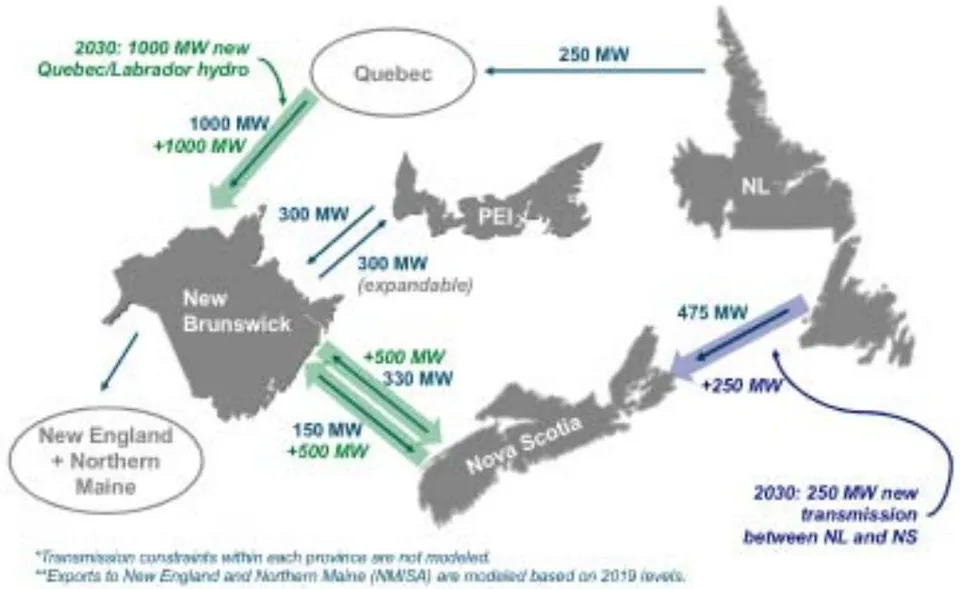
Building on a long history of collaboration, in March 2019, the Atlantic Provinces and the federal government agreed to develop a Clean Power Roadmap for Atlantic Canada. The Roadmap was intended to outline a collective vision for how the Atlantic provinces may collaborate over the coming decades to build a clean power superhighway across the region [32].
Specifically, a shared vision of an interconnected clean power grid was agreed to serve as the foundation for a competitive, electrified economy across the region. "The integrated grid would provide Atlantic Canadians with an affordable and reliable supply of clean power, underpinned by a regionally integrated, modern electricity system that better optimizes supply and demand through smart grid technology and energy storage. It could lead to more efficient investment and management of costs; more choices and economies of scale in building new sites; better coordination of system maintenance, and increased reliability" [32].
The transition planned for Atlantic Canada's power system was seen as significant, opening "new, untapped environmental and economic potential" [33].
A strengthened Atlantic Regional Transmission Loop approach was proposed as the backbone of the regional grid that would connect existing and new power supplies across the region to places that need it, along with smarter distribution networks that optimize supply and demand while maintaining reliability.
The initial Atlantic Loop concept was modified in October 2023 [152] with a focus on expanding "Clean, Reliable and Affordable Electricity Grids in New Brunswick and Nova Scotia" [153, 154]. As part of the first track of collaborative work, priority projects required to meet the 2030 timeline included the building of the Salisbury-Onslow Reliability Tie connecting Nova Scotia
and New Brunswick. Under the second track of work, the parties agreed to confirm and advance areas of critical importance and cooperation on the path to net-zero electricity by 2035, including the continued advancement of Small Modular Reactors, which is specific in New Brunswick, and offshore wind, which is specific in Nova Scotia. This also included further exploring regional transmission and energy exchange opportunities in partnership with neighboring utilities, in Quebec, Newfoundland and Labrador, and Prince Edward Island.
According to Nova Scotia's 2030 Clean Power Plan [155], "NS-NB Regional Transmission Nova Scotia's electricity system is only weakly connected to the North American grid, through New Brunswick. A new line to NB is needed to manage renewables, boost reliability and resiliency. This NS-NB Reliability Tie will run from Onslow to Salisbury, enabling of imports/exports. This project is expected to be online in 2028. Extending this line to Point Lepreau would enable greater access to NB, New England, and Quebec. This new line and extension can be completed by 2029 at a total cost of 1.4B, far less than the Atlantic Loop. This supports regional population growth; enhances reliability; and enables more energy trading. Interprovincial & Federal talks are underway to support these transmission investments."
c. Atlantic Canada's Economy: Commitments and Opportunities
Atlantic governments and businesses have been significantly investing in the development of clean technologies to support the net-zero transition:
Clean Generation:
- Muskrat Falls Hydro: The Muskrat Falls Hydroelectric Project includes the hydroelectric generating facility on the lower Churchill River in Labrador, transmission infrastructure linking the facility to the Churchill Falls facility upstream, and the Labrador-Island Link (LIL) transmission line. Construction of the 824 MW Muskrat Falls facility began in 2013 and was commissioned in November 2021 [156]. The Labrador-Island Link was commissioned in April 2023 [157]. The station at Muskrat Falls has a capacity of over 824 MW and provides 4.5 TWh of electricity per year. [158, 159]
The Muskrat Falls Hydroelectric Project provides an opportunity to consider Phase Two of the Lower Churchill Project that would consist of the development of the 2,250 MW Gull Island generation facility and associated transmission to markets.
Completion of HVDC Power Transmission Lines
Labrador - Island Link (LIL) is a 1,100 km 900-megawatt (MW) high voltage direct current (HVDC) transmission line that carries electricity from a generating facility at Muskrat Falls to the island of Newfoundland [160].
Maritime Link involves a 500 MW (+/- 200 kV) high-voltage direct current (HVDC) transmission line, as well as a 230 kV HVAC (high-voltage alternating current) transmission line [161] that carry electricity from Newfoundland to Cape Breton, Nova Scotia. Maritime Link was commissioned in 2017 [162].
- Deployment of Utility-Scale Battery Storage
Demonstration of Atlantic Canada's leadership in growing utility-scale battery storage [163] includes:
Saint John Energy, New Brunswick: A utility-scale battery energy storage system used as a part of the 42 MW Burchill Wind Project in Saint John, New Brunswick.
The battery is the largest in New Brunswick. It consists of a 5.8 megawatt/11.6 megawatt-hour lithium-ion battery that can deliver 5.8 megawatts of energy to the Saint John Energy grid for a two-hour period on a full charge [164].
NB Power, New Brunswick: Procurement for 50 MW of new battery energy storage in 2023 [165].
Nova Scotia Power: Funding has been committed under the Smart Renewables and Electrification Pathways Program to Nova Scotia Power for three grid locations at White Rock, Bridge Water and Spider Lake, Nova Scotia to install and integrate battery energy storage and grid modernization assets and operating systems totalling 150 MW, 600 MWh in these locations. The Nova Scotia Utility and Review Board approval of three 50-megawatt four-hour duration lithium ion batteries in June 2024. The batteries are supposed to be operational by 2026 [166]. According to Nova Scotia Power Inc., these projects are expected to provide the required firm capacity, renewable integration, frequency and voltage support, and reliability services, to support the transition off coal and continue greening the Nova Scotia electricity system while maintaining a healthy and resilient grid. The utility sees utility-scale battery storage as "poised to play a key role in Nova Scotia's energy transition."
Expectation of clean electricity/clean grid opportunities in the region, according to [167], means that:
- "Future economic opportunities associated with clean technologies will depend on the direction of government regulation, resource availability and investment costs.
- Onshore wind investment is expected to grow strongly over the next decade. Economic opportunities are limited as most major wind farm components are imported.
- Offshore wind projects could create larger local benefits, compared to onshore wind projects, as a much bigger share of the work can be completed
locally. Efforts are underway to adapt the current regulatory environment to accommodate the management of offshore wind projects.
- New hydroelectricity projects in our region are largely limited to Newfoundland and Labrador. These projects would generate large economic benefits if they move forward, but challenges remain to lessen risks around costs and regional integration.
The following clean energy developments are currently considered in the region:
Clean Generation
Offshore Wind Generation in Nova Scotia and Newfoundland and Labrador: The federal-provincial Clean Power Roadmap for Atlantic Canada has already recognized the opportunities for both onshore and offshore wind power [168], and Nova Scotia's provincial government has set a target to license 5 GW of offshore generation capacity by 2030 [169]. It is considered that offshore wind for Atlantic Canada could be "what oil was to Texas or hydro power to Quebec" [170].
In April 2022 the governments of Canada, Newfoundland and Labrador and Nova Scotia committed to expand the mandates of the Offshore Boards in Newfoundland and Labrador and in Nova Scotia to include the regulation of offshore renewable energy development, such as offshore wind [171]. An Act to amend the Canada-Newfoundland and Labrador Atlantic Accord Implementation Act and the Canada-Nova Scotia Offshore Petroleum Resources Accord Implementation Act and to make consequential amendments to other Acts (Bill C-49 [172]) passed third reading in the House of Commons in May 2024 and in the Senate on October 1, 2024, and received royal assent on October 3, 2024. This legislation enables the development of the offshore wind industry in the region.
The Draft Regional Assessment Report for Offshore Wind Development in Nova Scotia was presented to Indigenous Peoples and the public for review and comments on October 31, 2024 [198-200].
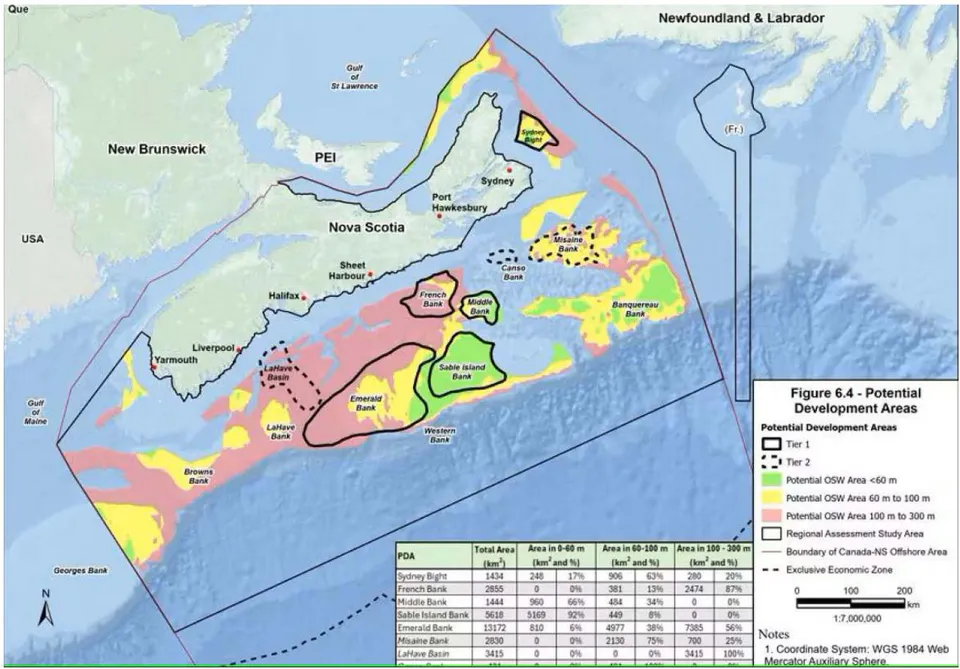
According to Nova Scotia Regional Energy and Resource Table Framework for Collaboration on the Path to Net-Zero [173], as of August 29, 2024, focused collaboration in the short-term included the following vision:
Work planned to advance the Point Lepreau-Salisbury-Onslow Transmission Line as part of a modified Atlantic Loop connecting Nova Scotia and
New Brunswick, with a target in-service date of 2029.
Explore regional transmission and energy exchange opportunities in partnership with utilities in New Brunswick, Quebec, Newfoundland and Labrador, and Prince Edward Island.
As well, socio-economic studies of a New England - Maritimes Offshore Energy Corridor [174] are being considered. This Corridor presents a new HVDC transmission intertie between Nova Scotia and New England to connect two distinct offshore wind resource areas with the two load centers in each respective region, highlighting the economic and environmental benefits.
Consumption
Green Hydrogen and Clean Ammonia Production in Nova Scotia: Nova Scotia is actively pursuing the development of a green hydrogen sector, positioning itself as a leader in clean economic growth and environmental stewardship [175].
In alignment with its environmental and climate change goals, the Province is exploring the vast potential of offshore wind energy to produce green hydrogen and its derivatives such as green ammonia.
Nova Scotia is being engaged in ongoing discussions with Natural Resources Canada regarding Nova Scotia's role in meeting Canada's export ambitions under the Canada-Germany Hydrogen Alliance [176-178]. The province is also reviewing the environmental assessments for the EverWind Point Tupper Green Hydrogen/Ammonia Project - Phase 1 [179] and the Bear Head Energy Green Hydrogen and Ammonia Production, Storage and Loading Facility projects [180]. The approval of each project is contingent on each proponent fulfilling a series of terms and conditions to ensure the environment and human health remain protected.
d. Nova Scotia's Energy Reform 2024
New legislation introduced on February 27, 2024, allowed for modernizing Nova Scotia's electricity system and enhancing public utility regulation in the energy sector [38, 39]. Supporting continuing strong efforts of Nova Scotia's government to ensure provincial ratepayers have clean, reliable and affordable electricity, the new legislation is changing the way the electricity system in Nova Scotia is structured and regulated, making it more accountable, transparent and competitive. Nova Scotia's government refers to a similar approach to managing and regulating the electricity system in other Canadian provinces [39]. The legislation reflects most significant recommendations of the Clean Electricity Solutions Task Force report of January 31, 2024 [181].
According to a legislation summary, The Energy Reform (2024) Act (the "ERA") includes the following [182]:
The ERA creates two new statutes: More Access to Energy Act ("MAEA") and Energy and Regulatory Boards Act ("ERBA"). The ERA also repeals the Utility and Review Board Act and amends the Public Utilities Act, Electricity Act and other legislation.
The MAEA will create an independent energy system operator ("IESO"), which will be responsible for the electricity grid system operator functions, including oversight of wholesale market rules, interconnections, system planning and procurement. The IESO is to be a non-profit corporation, with management and control being vested in a Board of Directors initially appointed by the Governor in Council, and later in accordance with its by-laws. The Nova Scotia Department of Natural Resources and Renewables expects the IESO to be fully operational by late 2025.
The MAEA provides that the IESO is to pursue the following objects:
- Enter into agreements with transmitters giving the IESO the authority to direct the operations of their transmission systems;
- Direct the operation of the IESO-controlled grid;
- Establish and enforce criteria and standards relating to the reliability of the integrated electricity system;
- Maintain the adequacy and reliability of the bulk electricity system;
- Enter into interconnection agreements with transmitters; and
- Facilitate the operation of a competitive electricity market.
In support of the above-noted objects, the IESO is to perform the following functions:
- Carry out competitive procurements, including for electricity supply, capacity, energy storage, ancillary services and "hybrid peaking resources", or as prescribed by regulation or considered appropriate in accordance with the Province's 2030 Clean Power Plan;
- Issue administrative penalties in accordance with market rules and procedures; and
- Carry out transmission interconnection studies.
Under the MAEA, a license will be required to own or operate a transmission system, direct the operation of transmission systems in the province, provide electricity or ancillary services or engage in an "electricity-related activity".
- The ERBA will split the existing Nova Scotia Utility and Review Board ("NSUARB") into two new boards. The newly formed Energy Board ("EB") will be tasked with the regulation of energy.
The ERBA requires the EB to consider a broad array of factors when exercising its authority including:
- Competition and innovation in the provision of energy resources in the province;
- Development of a competitive electricity market;
- Safe, secure, reliable and economical energy supply in the province; and
- Sustainable development (as defined in the Environment Act [183] and sustainable prosperity as defined in the Environmental Goals and Climate Change Reduction Act [184]).
iii. Atlantic RTO - the Next Step
With existing regional solutions for transmission grids and wholesale electricity markets represented by Regional Transmission Organizations (RTO) in North America demonstrating lower costs, improved reliability, and better environmental performance, an RTO concept applied to the Atlantic Canada region (the Atlantic RTO, or ARTO) is seen as a compelling high priority in leveraging the Clean Grid 2035 target in Canada.
The New York Independent System Operator (NYISO) and Independent System Operator New England (ISO-NE), the Regional Transmission Organizations (RTO) in the American Northeast, have been consistently demonstrating that "competitive electric markets continue to provide the most powerful and least-cost vehicle available" [49]. These RTOs have been used in their regions as an important regional development tool facilitating the transition to the clean grid. The historical ties of Atlantic Canada (specifically, the Maritimes) and New England present an important opportunity to learn the ISO-NE lessons, vision and continuous advancements to promptly build a leading North American RTO in Atlantic Canada leveraging an inter-regional integration approach of the second quarter of the century.
The Atlantic RTO should be seen today as a key advancement in Canada's deep decarbonization pathways presenting best-in-class regulations that strengthen existing policies for the electricity sector. The Canadian Net-Zero Emissions Accountability Act of June 2021 shaped Canada's commitment to achieve net-zero emissions by 2050 [185].
Building on the actions in Canada's strengthened climate plan [186] and the Pan-Canadian Framework [187], the 2030 Emissions Reduction Plan [188] reflects the Canadian input to reduce emissions by 40-45 per cent from 2005 levels by 2030 (see the Emission Reduction Plan Progress Report [189] published by the Government of Canada in December 2023).
Strong connection between Deep Decarbonization and Deep Regional/Inter-regional Electricity Market Integration concepts and practices reinforces the role of the Atlantic RTO in realizing the 2030 Emissions Reduction Plan, and ensures the benefits of electricity market integration in Atlantic
Canada such as improved reliability, increased demand diversity, diversity of generation mix and supply security.
The proposed Atlantic RTO is clearly seen as a key upgrade and an important component of the Canadian Electricity System addressing its generation mix, geographical structure and regulatory framework, and advancing inter-regional East-West and North-South power integration.
A special reason for supporting the Atlantic RTO by all the provinces of Atlantic Canada is the necessary and critical avoidance of the current realities of "electricity islands" in the region.
Strengthening regional grid through high voltage alternate current (AC) transmission between Nova Scotia and New Brunswick, and direct current (DC) transmission between Nova Scotia and New England, and having ARTO administer a wholesale electricity market will allow the region to benefit from an attractive set of flexible power opportunities at competitive wholesale level in:
- Generation - to better sell hydro power of Newfoundland and Labrador, and offshore wind power of Nova Scotia;
- Consumption - to better buy commercial power needed in Prince Edward Island, and industrial power (e.g., for green hydrogen) needed in Nova Scotia, and
- Bi-directional power (both generation and consumption) in Nova Scotia and New Brunswick – to address the needs of Atlantic Canada and New England.
The Atlantic RTO is seen as a strategic step in the evolution of the Atlantic Energy Gateway initiative demonstrating a new and more advanced regional leadership example in Canada. As prompt deployment and operation of the Atlantic RTO will make the region more competitive nationally and internationally, increasing cooperation and coordination by the Atlantic Provinces' electricity sectors is currently strongly required. According to a recommendation of the Canada Electricity Advisory Council's "Powering Canada: A Blueprint for Success" report in May 2024 [74], a collaborative framework for the ARTO decision-making can be used to identify and financially support inter-regional electricity transmission projects and outline their governance, cost allocation, and funding components.
industry in New Brunswick (with its New Brunswick System Operator created on October 1, 2004 and amalgamated with the NB Power Corporation on October 1, 2013 [191], as well as its current Transmission and System Operator [192]) and Nova Scotia (through its new Independent Energy System Operator (IESO) [38,39] as well as the skills of the Nova Scotia Power System Operator (NSPSO) [193]).
Also, the civil sub-sector (represented by the organizations that act in the public's interest but are not motivated by government or profit) that has not yet been fully involved, should be promptly engaged to leverage personal, organizational, and societal developments in the region [194]. Deep participation of Canada's indigenous peoples, or First Nations, as a part of the civil electricity sub-sector, makes compelling sense. This engagement would ensure electricity buyers/end users contribution to establishing a competitive wholesale electricity market in Atlantic Canada.
IV. CONCLUSIONS AND RECOMMENDATIONS
To ensure successful steps to a low carbon economy and total electrification, commitments to deep decarbonization in North America require regional power system integration. Regional integration ensures a critical, productive and timely approach and strategy to provide reliable and affordable electricity anywhere, anytime. It can leverage economies, enhance energy security, and reduce greenhouse gas emissions.
The most efficient solution for regional power integration, enabling competitive electricity wholesale is proven by Regional Transmission Organizations (RTO). The RTO concept and practices ensure high efficiency and reliability of regional electricity markets and power transmission system operations. Advanced results of regional integration have been continuously demonstrated by New York Independent System Operator (NYISO) and Independent System Operator New England (ISO-NE) - the leading RTO in the American Northeast, and may be used to learn from their experience.
To improve power integration of regional and interregional electricity trade using an RTO approach, the last frontiers for organized wholesale markets in North America should be identified, addressed and resolved.
In the U.S., the key RTO frontiers being currently publicly discussed are the American West and Southeast regions:
- The current work is being done in the West on establishing a more comprehensive, efficient, and dynamic system of wholesale electric competition in the region. This work has strongly driven an
advanced concept of a West-wide RTO (or two RTOs) within the next few years.
- In the Southeast, the initial approach of large utilities to create real-time bilateral trade via an energy exchange market demonstrated only very small competitive steps away from the vertically integrated status quo compared to the integrated RTO practice. This approach (e.g., Southeast Energy Exchange Market (SEEM)) was not accepted by non-utility generating companies. Today, several states in the Southeast already started exploring full RTO membership.
In Canada, all provincial jurisdictions in western Canada as well as Ontario participate in or manage competitive wholesale electricity markets, and Quebec is considering the next steps in inter-regional integration. Atlantic Canada is the last RTO frontier for competitive regional electricity wholesale in the country that requires detailed public discussion.
An Atlantic RTO (ARTO) proposed here manifests a key upgrade and an important component of the Canadian Electricity System addressing its generation mix, transmission structure and regulatory framework, and advancing inter-regional East-West and North-South power integration. The ARTO would enable best-in-class regulations that strengthen existing policies for the electricity sector, and should be seen as a compelling high priority in leveraging the Clean Grid 2035 target in Canada.
The Atlantic RTO is seen as a strategic step in the evolution of the Atlantic Energy Gateway (AEG) initiative demonstrating a new and more advanced regional leadership example in Canada. Announced in 2009, the AEG initiative by March 2012 made strong advances in better understanding of the ways to move in regional clean electricity collaboration. This included regional electricity market opportunities, regional electricity system operations, regional transmission upgrade options, clean electricity resources, renewable generation supply chain opportunities in Atlantic Canada, and research, development and demonstration needs. The results of the AEG initiative were further promoted in the Clean Power Roadmap for Atlantic Canada (2022), outlining a collective vision for how the Atlantic provinces may collaborate over the coming decades to build a clean power superhighway across the region.
A collaborative framework for the ARTO decision-making should be used to increase cooperation and coordination by the Atlantic Provinces' electricity sectors. This would identify and financially support inter-regional electricity transmission projects and outline their governance, cost allocation, and funding components. According to Canada Electricity Advisory Council's report of May 2024:
- "Powering Canada: A Blueprint for Success" [ARTO42], constructing a Framework for InterRegional Grid Infrastructure is recommended to support inter-regional electricity transmission projects.
The ARTO is positioned as a critically important regional integration advancement in Canada's deep decarbonization pathways. Strong connection between Deep Decarbonization and Deep Regional/Inter-regional Electricity Market Integration concepts and practices reinforces the role of the Atlantic RTO in realizing Canada's 2030 Emissions Reduction Plan. It ensures the benefits of electricity market integration in Atlantic Canada such as increased diversity of generation mix, improved system reliability, increased supply security and demand diversity. Prompt deployment and operation of the Atlantic RTO would make the region more competitive nationally and internationally.
Timely coordination and cooperation of the government, private, academic, and civil electricity sub-sectors on multiple levels in the Atlantic region is suggested so as to achieve the ARTO deployment within the 2025-2035 timeframe. To ensure that this coordination on multiple levels is in place, that the planned work is moving at accelerated pace, and the Atlantic RTO development and deployment milestones are met on time, socio-psychological tools for dedicated groups across all the four sectors should be used.
As a part of the cooperative action, the ARTO development and deployment would greatly benefit from the existing electricity system operator skillset of the industry in New Brunswick and Nova Scotia. Including New Brunswick Power Transmission and System Operator, Nova Scotia Power System Operator, and Nova Scotia's new Independent Energy System Operator.
The civil electricity sub-sector should be promptly engaged with deep participation of Canada's First Nations so as to leverage personal, organizational, and societal developments in the region, and to ensure that electricity buyers/end users contribute to establishing a competitive wholesale electricity market in Atlantic Canada.
ACKNOWLEDGMENTS AND CONFLICTS OF
INTEREST
Conflicts of Interest: The author declares no conflict of interest.