The present work aims to show how the Water Quality Indicators (IQA), defined in the Brazilian legislation, can be obtained using Information and Communication Technologies, such as the Internet of Things (IoT) and Big Data, and organizing them in decision support systems. This allows a decision based on up-to-date data and evidence, turning thewater management smarter. Methodologically, based on bibliographic and documentary data, it describes and evaluates the use of IoT and Big Data in calculating indicators applied to water resource management. The study also shows, in a practical way, how a network of sensors obtains the necessary data for the calculation of the Water Quality Indicator and how they were calculated using Big Data applications. With this, the results demonstrate how Information and Communication Technologies (ICTs) can be used to calculate different indicators in the management of water resources and, with the conceptual elements exposed here, provide greater familiarity with the theme of intelligent watersheds to fill a literature gap.
## I. INTRODUCTION
Recent advances in solutions and the increasing availability of Information and Communication Technologies (ICT) allow, with precision and very high speed, it is possible to collect, transmit and process large volumes of data. Given this, paradigms can be established for the sustainable management of water resources that were previously unimaginable or difficult and complex to implement. However, as Bartos, Wong, and Kerkez (2018) observe, although we have some admittedly smart infrastructure applications, such as autonomous vehicles, energy grid management, and structural health monitoring of buildings and constructions, the integration of these technologies to operate with water is still incipient.
Watersheds refer to the territorial unit, the area of land drained by a river and its tributaries. On the highest part of the terrain, considered as the upper geographical limit of the watershed, are the slopes, or topographical dividers that guide the flow and influence the volume of water and transported sediments; delimited below is the watershed outlet, confluence with a main river or outflow (TOMAZ, 2006). It should be noted that all urban, industrial, agricultural, or preservation areas are part of some watershed. Everything there is "a consequence of the forms of occupation of the territory and the use of the waters that converge there" (PORTO & PORTO, 2008, p. 45). As water is one of the essential resources for human survival, it is in the context of watersheds that phenomena such as water scarcity, floods, or the degradation of springs can be perceived and evaluated.
Xue and Shao (2019) emphasize that watersheds with limited flow capacity, short confluence time, and high ecosystem vulnerability are more vulnerable to natural disasters. However, in geographic areas where the global water crisis is accelerated by scarcity, difficult access, and use, prolonged drought, or inefficient management, nature can help through intelligent techniques that create or increase resilience in the watersheds.
Among the natural resources and common goods threatened by the effects of human activities, water is the main consumption item, surrounded by uncertainties about its sustainability. The fundamental issue is not linked to treatment's availability or technological capacity but to the complexity, effectiveness, and applicability of water resources management and governance tools (CHAFFIN et al., 2016). The systems and processes that need to be monitored require increasingly sensitive and accurate instruments that can capture the full lifecycle of water and associated climatic and environmental factors. The effectiveness of the water balance, therefore, includes observing generation through natural hydrological cycles, its retention, and storage; capture, treatment, distribution, and consumption by the various actors, whether consumers are individuals or companies; and treatment and return to watercourses or for reuse in urban and rural activities.
Managing water resources remains an important global challenge to achieve water security and effectively meet human needs (GÖMEZ et al., 2020). In fact, water security only occurs when, in the hydrographic space considered, it is possible to guarantee that a certain amount of water reaches the set of consumers in quality, volume, and adequate continuity for the maintenance of life (GLEICK & ICELAND, 2018). This condition requires managers define policies and action strategies that achieve ecological sustainability and water security. However, this can only be achieved if preceded by the correct diagnosis, when problems are converted into indicators, facilitating their understanding and decision-making (SOARES, SILVA FILHO & ABREU, 2011).
Das, Laishram, and Jawed (2019) argue that water governance is an important process to improve transparency and decision-making, allowing a clear view of individual responsibilities and the choice of actions based on a participatory process. In this regard, the authors point out that stakeholder engagement is extremely important in creating alternatives to water scarcity and the real dynamics of water resource management.
Magalhães and Barp (2014, p. 201) observe that "the integrated management of watersheds, particularly water management, depends especially on the capacity of public and private organizations to make decisions and outline strategies to achieve predetermined objectives." Thus, it is essential that the decision is based on information and not just on intuition, randomly, or on the opinion of those who make it. For this purpose, indicators are suggested to be used in the context of water resources management.
An indicator can be defined as a measure that summarizes important information about a given phenomenon. It is not just a value associated with this measure, as data only becomes an indicator "when its understanding goes beyond the number, the measure, in the sense of acquiring meaning through the interpreted information" (MALHEiros, COUTINHO & PHILIPPI JR, 2012, p. 35) In the case of sustainable management of watersheds, using ICT to assist in the collection, processing and calculation of the variables that make up the indicators is much more relevant and accurate when done with the help of the Internet of Things (IoT) and Big Data. These, however, are only some of the possible technological solutions.
Kalehhouei et al. (2021) ensure that the use of ICT in watershed management practices to improve decision-making or favor more efficient exploration and management operations can draw on precision equipment, Internet of Things (IoT), sensors, geopositioning systems, Big Data, uncrewed aerial vehicles, and robotics. These options must be evaluated according to availability, costs, the feasibility of operation, and the goals of watershed stakeholders such as residents, farmers, experts, land use planners and managers, and public policymakers. We will consider in this study only the contribution of IoT and Big Data.
Whitmore (2014) notes that IoT represents an evolution of already existing technologies, proposing to connect everyday devices and make them available for online access through the internet, even if they were not designed for this purpose. Big Data is a concept applied to systems and informational resources used to process an extensive set of information, such as those collected by IoT devices and sensors, as it enables the achievement of more accurate diagnoses and makes smarter decisions since decisions supported by evidence are more assertive. Macafee and Brynjolfsson (2012) state that Big Data, in the same way as IoT, can potentially transform organizations and management processes.
Given the challenges and the unprecedented use of IoT and Big Data for the sustainable management of water resources, this study examines the possibility of gathering existing information produced in the context of watersheds to build indicators that faithfully portray a given situation that is of interest or vital importance to analyze. We suggest that using Information and Communication Technologies (ICT), particularly IoT and Big Data, can improve the decision-making process in managing water resources, metaphorically making watersheds smarter.
Results exemplify how the water quality indicators, as defined in the Brazilian legislation, can be obtained using IoT and Big Data and organized in decision support systems. Indeed, although the study considers local legislation issues, the smart solutions identified can be adopted by watersheds in different parts of the world, highlighting the importance of this paper.
## II. CONCEPTUAL ELEMENTS AND THEORETICAL BACKGROUND
### a) Water resources management
Water resources management comes into focus with the growth in urban centers of environmental problems and the risks brought by the dynamics of ecological loss to economic and social security (SANTIN & GOELLNER, 2013; DAS, LAISHRAM & JAWED, 2019). The disproportionality between the population's demand, in all its activities and needs, and what it is possible to capture for water supply is just one of the aspects to be considered.
Miranda (2012) and Zhang (2022) point out that water resource, although essential for the survival of all living beings, is finite and scarce. These authors observe that the exponential growth of occupation in urban centers has been accompanied by wasteful practices, misuse, and irregular disposal of large amounts of polluting materials that will contaminate groundwater and watercourses. These adverse and stressful conditions make it even more difficult for the entire population to access drinking water and basic sanitation, with serious consequences for health, the economy, and the environment.
Almeida and Brito (2002) state that hydric resources are a fundamental element for the balanced development of human activities in any region but that their management is of great complexity. Good management of hydric resources demands analysis, planning, and actions from an integrated perspective. To this, it needs that incorporates short, medium, and long-term time horizons, considering solutions for present problems or those that may occur in the future.
Porto and Porto (2008) emphasize that water resources sustainable management requires the use of a minimum set of instruments that provide the essential data and information base on the life cycle of water, knowledge of use rights and distribution mechanisms, control of anthropic and environmental impacts on water resources, and the decision-making process.
Magalhães and Barp (2014) note that water management in the context of river basins is based mainly on the ability of public and private organizations to carry out planning activities, outline strategies, and make decisions to supply previously determined users who depend on water and share the same source of resources and territory. Since several sectors share the resources of watersheds, they need to be under a complex regime of use and regulation, which is necessarily dynamic.
For managers to handle water resources efficiently and effectively, it is essential to have information, metrics, and indicators to support all stages of the decision-making process (MIZUTANI & CONTI, 2021). Indicators are important, for example, to measure scale, corrosion, odors, and contaminant removal. In this way, Tang et al. (2021) advises that the indicators be quantified considering local conditions and the source of water that will be used to obtain a better result.
### b) Indicators for water resources management
An indicator is characterized by information collected about a given reality, such as indexes, variables, and standardized reference values that make situations measurable. The author Dias (2018) explains that indicators are tools for obtaining information with the main objective of synthesizing them in a simple, logical, and clear way to be informative and facilitate the manager's understanding.
According to Mizutani and Conti (2021), using indicators enables data transformation into measurable information to make them accessible. The way to measure, therefore, allows the redefinition by the concept of tangibility, which assists in determining policies and the performance evaluation process.
Chaves et al. (2020) point out that indicators can be classified into three distinct categories:
- Descriptive indicators, which use direct data without a previous specification of use.
- Performance indicators, which generate more information to demonstrate progress or seek to achieve a certain goal.
- Composite indicators, which generate complete and detailed information on performance evaluation and propose to convey information more broadly, covering different audiences.
Tang et al. (2021) state that in addition to the various ways of using the indicator system, there are many other measures that, when used to support the management of water resources, help guide actions and decision-making. The study of Hafeez et al. (2019), for example, shows the importance of indicators to measure and manage water quality, which are defined using remote sensing and machine learning technologies.
Neto et al. (2009) state that the importance of environmental indicators lies in the possibility of using them to measure the evolution of an ecological system, as they are representative parameters and simple to interpret, used to demonstrate the characteristics of a given region. As suggested by Libânio et al. (2005), in many situations, sanitation indicators correlate with others that demonstrate the living conditions of populations, such as social development indicators, mortality, and morbidity rates due to parasitic diseases and waterborne infectious diseases.
Sugahara et al. (2021, p. 303), in turn, add that "when developing and applying sustainability indicators, these should consider the particularities of a region; otherwise, they will be subject to ineffectiveness or compromising the decision-making process." Dias (2018) complements this by stating that, concerning water resources management, the indicators used are specific to cover all the conditions considered in the water supply process, consumption, and treatment.
Chaves et al. (2020) present indicators that are useful in the management of water resources, such as the geometric rate of annual growth, erosion, sliding and silting, water demand, ecological contamination, effluents from industries and sanitation, social responsibility and human development, population, waterborne diseases environmental damage, water quality (surface and underground), water availability, flood and drought, waste collection and disposal, effluent collection and treatment, improvement of the treatment system, protected areas, water use permits, environmental contamination control, infrastructure, and sanitation.
According to Trojan (2012), an important parameter is given by the flow measurement to help control water loss, including the size of lengths of pipes, and water flow control, based on adopted standards and thus assist in maintenance. Ferraz et al. (1998) contextualize the theme by pointing out that it is important to use industrial consumption indicators, which use water as a source of abstraction and urban release for good management of water resources. Gloria et al. (2017) note that the qualitative and quantitative monitoring of water resources is an excellent way to evaluate the water supply and support managers in making decisions regarding the multiple and integrated uses of water, including the concern with minimizing environmental impacts.
### c) The Contribution of ICT's IOT and Big Data
Neves (2021) describes the term Internet of Things (IoT) as being the interaction produced between everyday objects, which are connected through internet networks and systems, and are considered intelligent, due to the exchange, generation, and processing of data through wireless communication mechanisms, without the need for human intervention.
Zabadal and Castro (2017) point out that, through the internet, it is possible to control them and exchange data between all connected points, devices, systems, and objects so that they have applications in various areas of society, such as health, cities, and smart homes, among others. Smart objects remain active in the system during the exchange of information, and their architecture is composed of four units:
- A power source that feeds the components (such as rechargeable batteries or not).
- Sensors for monitoring the environments in which the objects are inserted or that are acting and performing certain functions.
- Processing and memory that stores the data.
- Wired or wireless communication.
In water resources management, applications involving Information and Communication Technologies (ICT) still need to be improved or, at most, inexpressive. In this sense, Tan (2016) highlights that, within the context of Industry 4.0, $55\%$ of the Internet of Things covers the area of public services and the development of smart cities, while $45\%$ is related to home appliances and vehicles. In a more recent study, Silva et al. (2022) suggests the validity and the potential of IoT and Big Data contribution to the processes of decision-making in the context of watersheds, which this article advances in the proposal and complements it.
Complementarily, the exponential growth of the volume of data generated, especially in the context of smart objects and IoT, imposes the need to develop technologies capable of processing them proportionally and evolutionarily, as is the case of Big Data. According to Caldas (2016), the term Big Data expresses the data currently produced by society and focuses on processing large amounts of data, such as those from social media or sensor networks. In addition, Caldas (2016) emphasizes that Big Data platforms consist of a compilation of functions that act with a high power of data processing, allowing the interaction with stored data to organize them, applying computational techniques, and ensuring the highest possible quality.
Big Data, for management and decision-making processes, is characterized by the junction of five properties: Volume, which is related to the amount of data available for processing; Variety of sources and types, including structured and unstructured information; Speed with which information arises and accumulates; Veracity of data and information generated; and finally, Value that is added to the data, which after processing becomes useful and valuable information (TAURION, 2013).
## III. METHODOLOGY
The methodological procedures involved documentary and bibliographical research with an exploratory approach. Since the subject still needs to be explored, it is necessary to obtain references to the use of IoT and Big Data to assist in calculating useful indicators for managing water resources (Gil, 2008). The conceptual elements exposed here aim to provide greater familiarity with the theme of intelligent watersheds and thus make it better known (SAMPIERI, COLLADO & LUCIO, 1991).
To exemplify how IoT and BIG Data can contribute to data collection and analysis of indicators in "smart river basins," the Water Quality Index (WQI) will be considered due to its importance and relevance. The IQA was created in 1970 by the National Sanitation Foundation (NSF) in the United States and, later, was used by the Environmental Company of the State of São Paulo (CETESB) in Brazil (ANA, 2022).
According to Gloria et al. (2017, p. 3), the reference made to water quality does not concern "only the state of purity of the water, but the physical, chemical and biological characteristics and, depending on these characteristics," the various destinations that will be given to it to the analyzed water. Water quality is demonstrated, therefore, from the set of quantitative measurements of certain substances found in the observed sample.
Almeida and Schwarzbold (2003) explain that the WQI was developed to assess raw water quality to make it available for public supply after treatment. The parameters used in calculating the WQI indicate, for the most part, the contamination caused by the disposal of domestic sewage. Nine variables considered the most relevant for the calculation of the WQI are collected: dissolved oxygen (% Saturation), fecal coliforms (Coli thermotolerances), pH, biochemical oxygen demand (BOD), total phosphorus, nitrate (total nitrogen), turbidity, solids (Total residuals) and temperature). With this, the quality curves and relative weights are determined, attributing a degree of quality referring to the values of the analyzed variables.
The National Water Agency (ANA, 2022) describes the calculation of the WQI according to the following equation:
$$
I Q A = \prod_ {i = 1} ^ {n} q _ {i} ^ {w _ {i}}
$$
Where:
WQI = Water Quality Index is a number between 0 and 100.
Qi = quality of the ith parameter. It is a number between 0 and 100, obtained from the respective quality graph, as a function of its concentration or measurement (analysis result).
wi = weight corresponding to the ith parameter fixed according to its importance for the global conformation of quality, that is, a number between 0 and 1, so that:
$$
\sum_ {i = 1} ^ {n} w _ {i} = 1
$$
Where:
n is the number of parameters entering into the calculation of the WQI.
Fernandes (2006) points out that there are environmental and microbiological standards for the discharge of effluents from water bodies in Brazil destined for countless activities of society that are defined by CONAMA Resolution 357/05 and that Ordinance 05/89-SSMA establishes standards for the emission of liquid effluents used to observe polluting sources.
Table (1) presents the parameters used to calculate the WQI, their nomenclatures, and units of measurement.
Table 1: Parameters used for quality determination
<table><tr><td>Parameter</td><td>Nomenclature</td><td>Unit</td><td>Weight - wi</td></tr><tr><td>Thermotolerant Coli</td><td>Coli</td><td>NMP/100mL</td><td>0,15</td></tr><tr><td>pH</td><td>pH</td><td></td><td>0,12</td></tr><tr><td>BOD5</td><td>BOD</td><td>mg/L</td><td>0,1</td></tr><tr><td>Total nitrogen</td><td>NT</td><td>mgN/L</td><td>0,1</td></tr><tr><td>Total phosphorus</td><td>EN</td><td>mgP/L</td><td>0,1</td></tr><tr><td>Temperature</td><td>DiffT</td><td>oC</td><td>0,1</td></tr><tr><td>Turbidity</td><td>Turb</td><td>NTU</td><td>0,08</td></tr><tr><td>Total waste</td><td>ST</td><td>mg/L</td><td>0,08</td></tr><tr><td>Dissolved Oxygen</td><td>OD</td><td>% saturation</td><td>0,17</td></tr></table>
Lopes and Junior (2010) describe the index as a weighted average in which multiple test results are represented in a single value from 0 to 100. This index is used as a tool for water quality assessment. It can be applied at various points in rivers and lakes over time, comparing them on a quality scale between poor and great.
## IV. RESULTS AND DISCUSSIONS
Using IoT, it is possible to create an information collection system on the water quality parameters from a Wireless Sensor Network (WSN) scattered in the space of a watershed, as exemplified by Figure (1), which represents the space of the Piracicaba, Capivari and Jundiaí Rivers Watershed, which has an area of approximately $15,377\mathrm{km}^2$, being $92.45\%$ in the State of São Paulo and $7.55\%$ in the State of Minas Gerais.
To calculate the WQI, many sensors, each with a specific purpose, would be distributed in strategic locations within the catchment area to collect the necessary information in real-time and transmit it to an information storage and processing center.
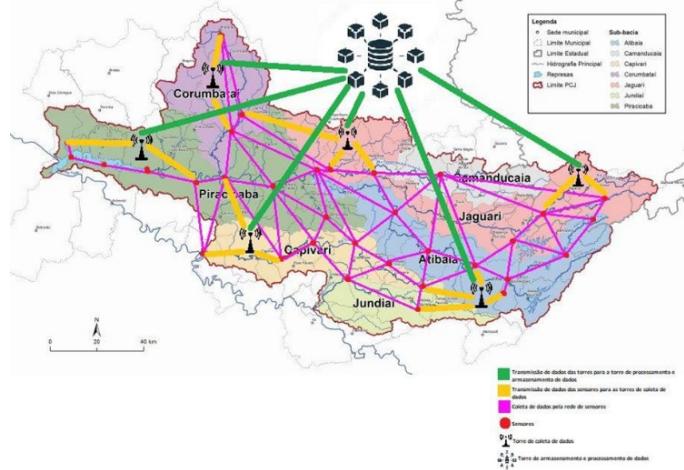 Fig. 1: Simulation of wireless sensor networks to collect water quality parameters in PCJ Basins
Given the variety and volume of information collected from each of the sensors, a database would be required to store the parameters received, and then send them to the Big Data application that would perform the analysis and WQI calculation based on the formula for calculating this indicator.
Seeking to exemplify how IoT and Big Data can contribute to determining the water quality indicator, the parameters already described in Table 1 will be used.
Based on the PH indicator, useful for calculating water quality, it is possible to identify the value using a PH transmitter that measures the acidity or alkalinity of a liquid. PH is calculated using a logarithmic scale with a range from 0 to 14, in which the value 7 corresponds to pure water, and values below 7 show the acidity of the water. In contrast, the values above correspond to basic (alkaline) water.
Daigavane and Gaikwad (2017) describe a low-cost IoT sensor option for obtaining PH values of water using a sensor that works with a 5V power supply and interfaces with Arduino. We have too, n the article by Jiang et al. (2009), the example of a systematic structure of monitoring nodes, which can be divided into five modules, divided into five modules, processing module, transmitter module, detection module, power module, and ZigBee radio and frequency module. The mentioned modules should be waterproofed and placed in a waterproof structure to stay on the surface. Jiang et al. (2009) explain that the power module would provide the electricity required for the pH transmitter, processing module, and ZigBee radio frequency module. The pH transmitter collects the values while the processing module processes and stores them then transfers them to the database station through the ZigBee module. The base station connects and controls each sensor through the ZigBee communication protocol.
Another necessary parameter for the determination of the WQI is the temperature. The temperature value can be obtained using an IoT sensor and subsequent verification with CONAMA Resolution No. 357/05 (2005) patterns, which establishes that the average water temperature for the discharge of effluents must be less than $40^{\circ}\mathrm{C}$, while the variation of temperature of the receiving body must not exceed $3^{\circ}\mathrm{C}$.
Lima (2018) exemplifies that temperature collection can be performed through a sensor composed of resistance that uses metals with a high degree of linearity of resistance in the temperature range for which it was made. It can be used as a thermistor, a semiconductor whose electrical resistance varies according to the temperature, or more robust thermocouples that support high temperatures.
Another important information for calculating water quality is the amount of Thermotolerant Coliforms present in the water body analyzed, which, according to the CONAMA Resolution (2005), is characterized by the set of bacteria belonging to the E. coli group. Some strains of Klebsiella and Enterobacter present this thermotolerance characteristic. However, only E. coli has the human and animal intestine as its primary habitat, which can ferment lactose at $44.5 \pm 0.2^{\circ} \mathrm{C}$ in $24 \mathrm{~h}$.
Medeiros (2016) points out that Thermotolerant Coliforms are considered the specific parameter of water quality intended for potability and bathing, in which the microbiological standard of potability of water for human consumption should be characterized by the absence of E. coli in $100\mathrm{ml}$ of sample of treated water. Medeiros (2016) cites that the information on Thermotolerant Coliforms, as well as Total Waste, can be obtained through colorimetric sensors based on Polydiacetylenes (PDAs) because they have high sensitivity to external stimuli, demonstrating significant changes in structural, chemical, and physical properties with their fluctuations in environmental conditions, and can even detect pathogens.
A wireless sensor can obtain the amount of dissolved oxygen in the water, measure it, and determine if it is within the normal range established by the CONAMA Resolution (2005).
Lima (2018) demonstrates that an alternative is using sensors in conjunction with Arduino boards, as an example given of sensors acquired from Atlas Scientific, which has available a Kit with the following sensors: pH, temperature, conductivity, redox, and dissolved oxygen. These kits come with transmitters and cables for connection to the Arduino for data collection and calibration.
IoT can also be applied to identify water turbidity through a wireless sensor characterized by an infrared light emitter and receiver, in which the reception level of the emitted light is measured. In this verification, the greater the number of particles suspended in the water, the greater the absorption and reflection of infrared light by the liquid, consequently making the water darker, thus increasing the turbidity of the water.
Cardoso (2011) says that the turbidity sensor, called a turbidimeter, is the equipment used to measure the turbidity of a liquid. In this device, the evaluation compares the scattering of a light beam passing through the sample with that of a beam of equal intensity passing through a standard suspension.
As for BOD5, obtaining its measurement through specific sensors is also possible. Some BOD sensors are placed directly in contact with the sample, and through the pressure transducer, the variation inside the bottle is measured, together with a microprocessor that converts the pressure value into mg/l O2 (BOD) showing the BOD value directly on display.
Similarly, information on total phosphorus and nitrogen can be collected via wireless sensors, which can capture the values in real-time by connecting to the network.
Data processing and analysis would then be based on Big Data applications. In addition to offering a flexible solution that allows processing data from the sensor network, these applications can also use external databases and information stored in histories.
## V. CONCLUSION
The feasibility and predictive potential of smart watersheds was discussed throughout the text. The work specifically exemplified how IoT and BIG Data would be used to collect, analyze, and process the variables that comprise the Water Quality Indicator.
With the functionalities described, it is possible to create a system to analyze the data received from each point where the sensors will be located, differentiate the areas, perform the water quality calculation, and then offer recommendations to managers as a subsidy to support decision-making in the field of water resource management. With the use of Big Data is too possible to generate tables and graphs that show future projections of each region based on historical data, confronted with other indicators calculated over the years, such as the flow of water courses, which vary depending on the volume of rainwater that falls along the watershed.
It is also possible, from the application of Big Data, to create a Dashboard to provide managers with detailed and consolidated indicators, such as, for example, the WQI in a specific collection location, in a region of the watershed, along a watercourse and its entire length, along a city or in a more consolidated way the WQI of the watershed.
In this way, with the support of data collected in real-time, and the analysis made by the Big Data platform, it is possible to subsidize and facilitate the decision-making process more assertively and ensure more effective care for the environment and the effects of anthropic activities and interventions.
With the IoT sensor network and Big Data, more thorough and effective control of areas possibly affected by debris discarded in water bodies from the incorrect disposal of materials in cities becomes possible. Once it is possible to obtain the WQI in each demarcated region and thus identify possible causes for the different values, apply specific treatments and more severe policies for each situation for the benefit of the population's health, thus contributing to the sustainability and safety in the territorial space of the watershed.
Some situations, however, require innovative solutions. Not all indicators are possible to have their data obtained through IoT sensors. Human intervention is often required to collect, calculate, and analyze the indicator. A network of sensors scattered in a watershed may need help transmitting information because the technology used may or may not be able to deal with the volume and speed at which the data must be transmitted. Another problem is security since sensors and data transmission equipment may be stolen, making collecting information unfeasible.
This study is limited to a conceptual basis proposal, and we recommend that Big Data and IoT applications be tested based on experimental studies, which will contribute significantly to the discussion on smart watersheds, enabling better management and conservation of water.
It is clarified, finally, that this work did not aim to exhaust the subject, only to demonstrate that Information and Communication Technologies such as IoT and Big Data can be useful by providing information and subsidies to assist the decision-making process for the management of water resources, making the space of a watershed more intelligent.
Generating HTML Viewer...
References
50 Cites in Article
Ab-Pcj Unknown Title.
J Almeida,A Brito (2002). The use of environmental indicators to support planning and management of water resources: the case of the autonomous region of the Azores.
M Almeida,Albano Schwarzbold (2003). Avaliação Sazonal da Qualidade das Águas do Arroio da Cria Montenegro, RS com Aplicação de um Índice de Qualidade de Água (IQA).
Matthew Bartos,Brandon Wong,Branko Kerkez (2018). Open storm: a complete framework for sensing and control of urban watersheds.
M Caldas,E Silva (2016). Fundamentos e aplicação do Big Data: como tratar informações em uma sociedade de yottabytes.
T Cardoso (2011). Turbidity sensor for analysis of water samples.
Brian Chaffin,Ahjond Garmestani,Lance Gunderson,Melinda Benson,David Angeler,Craig Arnold,Barbara Cosens,Robin Craig,J Ruhl,Craig Allen (2016). Transformative Environmental Governance.
Heloisa Chaves,Denise Ferreira,Gabriel Silva,Maíra Gimenes,Rafael Carvalho,Duarcides Mariosa (2020). AVALIAÇÃO DE SUSTENTABILIDADE DOS INDICADORES DO PLANO DAS BACIAS HIDROGRÁFICAS DOS RIOS PIRACICABA, CAPIVARI E JUNDIAÍ.
(2005). Constituição da República Federativa do Brasil.
V Daigavane,M Gaikwad (2017). Water quality monitoring system based on IoT.
Rakhee Das,Boeing Laishram,Mohammad Jawed (2019). Public participation in urban water supply projects – The case of South-West Guwahati, India.
Georgiana Marques,Kiany Cavalcante,Lanna Silva,Natilene Brito,Jose Lima,Emanoel Moura (2018). Effects of legume green manure on the physicochemical quality of maize grains (Zea mays L.).
Orandi Falsarella,Maria Silva,Duarcides Mariosa (2022). processo de decisão na gestão de recursos hídricos.
V Fernandes (2006). Standards for reuse of wastewater in urban environments. II simposio nacional sobre o uso da água na agricultura.
Angela Ferraz,Benedito Junior (1998). Modelo decisório para a outorga de direito ao uso da água no Estado de São Paulo.
A Gil (2002). Como elaborar projetos de pesquisa.
Peter Gleick,Charles Iceland,Ayushi Trivedi (2018). Ending Conflicts Over Water: Solutions to Water and Security Challenges.
L Gloria,B Horn,M Hilgemann (2017). Avaliação da qualidade da água de bacias hidrográficas através da ferramenta do índice de qualidade da água-iqa.
José Gómez,Alon Ben-Gal,Juan Alarcón,Gabrielle De Lannoy,Shannon De Roos,Tomáš Dostál,Elias Fereres,Diego Intrigliolo,Josef Krása,Andreas Klik,Gunther Liebhard,Reinhard Nolz,Aviva Peeters,Elke Plaas,John Quinton,Rui Miao,Peter Strauss,Weifeng Xu,Zhiqiang Zhang,Funing Zhong,David Zumr,Ian Dodd (2020). SHui, an EU-Chinese cooperative project to optimize soil and water management in agricultural areas in the XXI century.
Sidrah Hafeez,Man Wong,Hung Ho,Majid Nazeer,Janet Nichol,Sawaid Abbas,Danling Tang,Kwon Lee,Lilian Pun (2019). Comparison of Machine Learning Algorithms for Retrieval of Water Quality Indicators in Case-II Waters: A Case Study of Hong Kong.
Peng Jiang,Hongbo Xia,Zhiye He,Zheming Wang (2009). Design of a Water Environment Monitoring System Based on Wireless Sensor Networks.
M Kalehhouei,Z Hazbavi,V Spalevic,R Mincato,P Sestras (2021). What is smart watershed management? Agriculture & Forestry/Poljoprivreda i Sumarstvo.
Paulo Libânio,Carlos Chernicharo,Nilo Nascimento (2005). A dimensão da qualidade de água: avaliação da relação entre indicadores sociais, de disponibilidade hídrica, de saneamento e de saúde pública.
E Lima (2018). Sensor module for water quality monitoring with wireless transmission using prototyping platform.
Frederico Lopes,Antônio Magalhães Júnior (2010). Influência das condições naturais de pH sobre o índice de qualidade das águas (IQA) na bacia do Ribeirão de Carrancas.
R Magalhães,A Barp (2014). Inovações metodológicas para construção de cenários estratégicos em bacias hidrográficas.
T Malheiros,S Coutinho,A Philippi (2012). Indicadores de sustentabilidade: uma abordagem conceptual.
A Mcafee,E Brynjolfsson,T Davenport,D Patil,D Barton (2012). Big data: the management revolution.
H Medeiros (2016). Drinking Water Contaminants and Human Health.
Jaqueline Vieira,João Monzoli,Lisandra Teixeira,Valner Jordão,Mario Tomasiello Filho,Daniela Sampaio (2012). Pentaphylacaceae in focus: two new species of Ternstroemia Mutis ex L.f from the Brazilian Atlantic Rainforest.
M Mizutani,De Melo,D Conti (2021). Indicadores De Sustentabilidade Como Ferramenta De Gestão No Planejamento Urbano: Um Estudo Sobre A Cidade De Barueri.
(2022). QUALITY INDICATORS -WATER QUALITY INDEX (WQI).
J Neto,C Krüger,M Dziedzic (2009). Análise de indicadores ambientais no reservatório do Passaúna.
M Neves (2021). Internet of Things (IoT): introduction and application overview.
Monica Porto,Rubem Porto (2008). Gestão de bacias hidrográficas.
R Sampieri,C Collado,P Lucio (1991). Metodología de la investigación.
J Santin,E Goellner (2013). A gestão dos recursos hídricos e a cobrança pelo seu uso.
Arno Schmitz,Mauricio Bittencourt (2017). Crescimento econômico e pressão sobre recursos hídricos.
S Silva,J Santos,G Cândido, Ramalho (2012). Indicador de sustentabilidade Pressão-Estado-Impacto-Resposta no diagnóstico do cenário socioambiental resultante dos resíduos sólidos urbanos em Cuité/PB.
A Soares,J Da Silva Filho,M De Abreu,De Assis,F Soares (2011). Revisando a estruturação do modelo DPSIR como base para um sistema de apoio à decisão para a sustentabilidade de bacias hidrográficas.
Cibele Sugahara,Audrey Martins,Lorena Jucá,Duarcides Mariosa (2021). AVALIAÇÃO DA SUSTENTABILIDADE DO PLANO DAS BACIAS DOS RIOS PIRAICABA, CAPIVARI E JUNDIAÍ 2020-2035: ANÁLISE DOS INDICADORES DE DISPONIBILIDADE E DEMANDAS HÍDRICAS.
J Tan (2016). The Internet of Things and business sustainability.
C Taurion (2013). Big data.
Camilla Tang,Martin Rygaard,Per Rosshaug,John Kristensen,Hans-Jørgen Albrechtsen (2021). Evaluation and comparison of centralized drinking water softening technologies: Effects on water quality indicators.
Ana Tomaz (2006). A política nacional de recursos hídricos (PNRH) e o federalismo no Brasil.
Flavio Trojan,Danielle Morais (2012). Maintenance Management Decision Model for Reduction of Losses in Water Distribution Networks.
Chenyang Xue,Chaofeng Shao (2019). Design of Intelligent Environmental Management and Decision-Making Platform for Small- and Medium-Sized Hydropower-Intensive Watersheds.
Andrew Whitmore,Anurag Agarwal,Li Da Xu (2015). The Internet of Things—A survey of topics and trends.
B Zabadal,B De Castro (2017). Iot e seus principais desafios.
Qiang Zhang,Ruiqi Wang,Ying Qi,Fei Wen (2022). A watershed water quality prediction model based on attention mechanism and Bi-LSTM.
No ethics committee approval was required for this article type.
Data Availability
Not applicable for this article.
How to Cite This Article
Duarcides Ferreira Mariosa. 2026. \u201cUnlocking the Potential of Smart Watersheds: Leveraging Iot and Big Data for Sustainable Water Resource Management and Indicator Calculation\u201d. Global Journal of Human-Social Science - H: Interdisciplinary GJHSS-H Volume 23 (GJHSS Volume 23 Issue H5): .
Explore published articles in an immersive Augmented Reality environment. Our platform converts research papers into interactive 3D books, allowing readers to view and interact with content using AR and VR compatible devices.
Your published article is automatically converted into a realistic 3D book. Flip through pages and read research papers in a more engaging and interactive format.
The present work aims to show how the Water Quality Indicators (IQA), defined in the Brazilian legislation, can be obtained using Information and Communication Technologies, such as the Internet of Things (IoT) and Big Data, and organizing them in decision support systems. This allows a decision based on up-to-date data and evidence, turning thewater management smarter. Methodologically, based on bibliographic and documentary data, it describes and evaluates the use of IoT and Big Data in calculating indicators applied to water resource management. The study also shows, in a practical way, how a network of sensors obtains the necessary data for the calculation of the Water Quality Indicator and how they were calculated using Big Data applications. With this, the results demonstrate how Information and Communication Technologies (ICTs) can be used to calculate different indicators in the management of water resources and, with the conceptual elements exposed here, provide greater familiarity with the theme of intelligent watersheds to fill a literature gap.
Our website is actively being updated, and changes may occur frequently. Please clear your browser cache if needed. For feedback or error reporting, please email [email protected]
Thank you for connecting with us. We will respond to you shortly.