Dhaka, the capital of Bangladesh, faces significant challenges in solid waste management. This study aims to unlock the transformative power of proper solid waste management (SWM) in improving the health and economic well-being of disadvantaged urban residents in the city. While previous literature has focused primarily on waste collection, disposal and recycling, this study explores waste management as a powerful catalyst for poverty alleviation, unlocking the untapped potential for transformative change. Through qualitative and quantitative methods, including surveys, expert interviews and a systematic literature review, the study identifies sources of pollution and factors affecting slum dwellers’ health and human development indicators. It classifies conditions affecting the health-based vitality of slum dwellers. The paper highlights the potential of sustainable waste management practices to improve health outcomes, reduce disease incidence, and alleviate poverty. It emphasizes the need for policymakers to prioritize comprehensive waste management initiatives and promote community awareness and participation to address these issues.
## I. INTRODUCTION
Bangladesh has experienced numerous obstacles since its independence, with one of the most pressing issues still unresolved being solid waste management. Dhaka has a population of 22.4 million as of 2022 living in 360 km2 area, making it one of the most populous cities in the world (Dhaka, Bangladesh Metro Area Population 1950-2023, n.d.-b)[^1]. Its urban population is expanding at a quicker rate of $3.4\%$ annually than the entire population, which is growing at a high rate of $1.4\%$. It is estimated that 40 million people will live here by 2040 (Prodhan and Kaeser, 2020). As a result of the rise in population and consumer goods, solid waste production is increasing rapidly every year and the Dhaka City Corporation (DCC) is struggling to keep pace with the growing waste management of the city.
Due to colossal population growth and lack of awareness, the volume of waste generation is increasing indiscriminately in rapidly urbanised Bangladesh[^2]. The waste generation in Dhaka city has witnessed a significant increase from 2013 to 2021. According to the Climate and Clean Air Coalition (2013), only half of the estimated 1.65 million metric tons of solid waste generated in Dhaka city was collected for disposal annually.
Looking ahead, it is projected that by 2021, Dhaka had to manage approximately 6,500 tonnes of waste per day (Islam, S. 2021). Moreover, the city's hospitals and clinics generate 200 metric tons of waste which contain radioactive materials, hazardous chemicals and pathogenic compounds (Yasmin and Rahman, 2017). This indicates a substantial increase compared to the earlier estimated waste generation in 2013. Furthermore, the waste generation is expected to further escalate to around 8,500 tonnes per day by 2032, highlighting a continuous upward trend in waste generation and management challenges in the city. This massive wave of uncollected garbage poses a significant threat to public health, contributes to environmental degradation and exacerbates poverty.
Therefore, the impact of poor SWM extends beyond environmental crises, significantly affecting public health and exacerbating poverty levels in the city (WHO, 2012). Improper disposal of solid waste, including open dumping and burning, releases harmful toxins and pollutants into the air, soil, and water sources. These pollutants pose a significant risk to the health of residents, leading to respiratory diseases, skin infections, and other illnesses (US Environmental Protection Agency, 2002-2013).
Furthermore, the oxidation of waste disposal sites provides breeding grounds for disease-carrying vectors such as flies, mosquitoes and rats, which increase the incidence of communicable diseases in the community (Choudhury, S. 2010). The ill effects of inadequate solid waste management are more detrimental to the slum areas of Dhaka. The ill effects of inadequate solid waste management are more detrimental to the slum areas of Dhaka. Low-income neighbourhoods, often lacking basic amenities and proper sanitation facilities, bear the brunt of the waste crisis (Jerin, et al., 2022). Residents of these areas are disproportionately exposed to health risks associated with unregulated waste disposal, increasing the risk of disease and pushing them further into poverty.
Dhaka City Corporation DCC, North[^3] and South[^4] are making efforts to solve this ongoing crisis, though it seems to be getting worse every day. Until the residents of the city banded together to find a solution, this massive waste seemed beyond DCC's ability to manage on its own (Prodhan and Kaeser, 2020). Hence, the situation remains unsolved despite earlier efforts, raising questions about the effectiveness and efficiency of waste management schemes. Solid waste management solutions have, however, been outlined in various scholarly articles or at the policy-making level.[^528]
Nevertheless, much of the current literature addressed collection, environment, disposal, and recycling. This study prioritizes waste management as one of the variables in poverty reduction by focusing on the way individuals of all socio-economic levels participate in the economy as a means of human development. Moreover, the implementation of proper waste disposals practices, such as recycling and resource recovery, can yield economic benefits by fostering a circular economy and mitigating strain on finite resources. This research addresses the pressing need for a comprehensive solution to the solid waste management challenges in Dhaka. It emphasizes the importance of an efficient waste management system in safeguarding public health and supporting poverty alleviation efforts[^5].
### a) Research Filed
The study area covers Dhaka City Cooperation (DCC), especially slum areas. This study presents the results of a cross-sectional survey conducted among 200 slum households in Dhaka, providing insights into the adverse consequences of poor waste management on the health and productivity of low-income groups and slums. The survey was conducted in three slum areas of Dhaka: Korail, Mohakhali and Kamrangirchar, selected on the basis of their size, population density and accessibility on their waste management practices, healteh and socio-economic status.
### b) Target Waste
The study covers two types of solid waste under Dhaka City Corporation: namely, domestic waste and medical waste. Liquid and gaseous wastes are not included in the scope of this study.
### c) The Significance of the Study
This study offers fresh perspectives on the threats to human health and the effects of poor waste management practices on poverty reduction and health in Dhaka. By identifying the specific health risks associated with poor waste management and emphasizing waste management as a poverty alleviation variable, this research analyses evidence-based decision-making, supports the development of targeted interventions, and promotes sustainable human development. The study's potential lies in improving public health, creating employment opportunities, guiding policy formulation, and advancing knowledge in waste management, health, and poverty alleviation. Moreover, the analysis presented in this study contributes to the existing literature on urbanization and poverty, providing recommendations for policymakers to address the adverse effects of poor waste management on population health and well-being.
### d) The rationale for this study
Solid waste management is a critical issue in Dhaka where waste collection and disposal are often insufficient and inappropriate (Dhaka City Corporation, The People's Republic of Bangladesh, Japan International Cooperation Agency, 2005). The existing evidence on the linkage between poor solid waste management and adverse health outcomes calls to action by all stakeholders in understanding, prioritizing, and addressing the issue of solid waste in our midst to ensure that our environment and health are preserved (Enayetullah, Sinha, & Khan, 2005).
The need to build on previous research is evident, as there are gaps in current knowledge and inconclusive or controversial findings from previous studies. For instance, the study by (Hasan & Chowdhury, n.d.). shows that solid waste poses a serious health hazard and leads to the spread of infectious diseases, while (Yasmin & Rahman, 2017a) highlights that poor waste collection leads to environmental and marine pollution and can block water drains, resulting in flooding and other standing waters that favour cholera and vector-borne diseases such as malaria and dengue.
Therefore, this study aims to unveil the impact of solid waste management on health and poverty alleviation in Dhaka City by presenting a framework that aids understanding of (poor) solid waste management and its impact on health with a view to stimulating research, guiding the development of policies and implementation of appropriate interventions. The study identifies and describes the main pathways through which poor solid waste management affects health and poverty alleviation, updates concepts in light of new findings and/or new technical advancements, and answers unanswered questions.
## II. LITERATURE REVIEW
Bangladesh's high population density and rapid urbanization contribute to increased waste generation, negatively affecting public health and poverty. The consequences extend beyond health and environment, affecting the poverty level and quality of life. According to Azom et al. (2012), uncontrolled waste management in urban areas leads to the accumulation of solid waste, which not only poses environmental challenges but also has detrimental effects on public health. Their study highlighted the negative impact of improper waste disposal on air quality, water contamination, and the spread of infectious diseases. Similarly, Triassi et al. (2016) emphasized the link between inadequate waste management and respiratory diseases, citing evidence of increased respiratory symptoms and decreased lung function among individuals living in close proximity to open dumping sites.
On the other hand, Yasmin and Rahman (2017) conducted a study on the awareness and practice of household solid waste management among community people and found that poor household solid waste management poses serious health risks and spreads communicable diseases. Their study emphasized the health risks of waste contamination. Poor waste collection also leads to environmental and marine pollution and can block water drains, resulting in flooding and other standing waters that favour cholera and vector-borne diseases such as malaria and dengue.
Silpa Kaza (2018), lead author of the What a Waste 2.0[^6] and urban development expert at the World Bank argues that "Environmentally sound waste management touches many important aspects of development." Transitioning to sustainable waste management will take time and money. The article further claims that for many municipal governments, waste management is the single largest budget line item. It makes up an average of $20\%$ of municipal budgets in low-income countries. "However, when it comes to designing liveable, healthy, and inclusive cities and communities, solid waste management is often an overlooked concern.
Therefore, in the interest of both its citizens and the environment[^7], governments must take swift action to address waste management (What a Waste: An Updated Look into the Future of Solid Waste Management, 2018).[^8] Furthermore, a study by Magaji & Dakyes, (2011) highlighted the socioeconomic implications of poor waste scavenging practices as a means of poverty alleviation in Gwagwalada, Abuja. Their findings revealed that substandard waste management disproportionately affects marginalized populations, leading to increased health disparities and hindering poverty alleviation efforts.
Similarly, Ashikuzzaman and Howlader, (2020) conducted a comprehensive analysis of the economic costs associated with inefficient waste management, underlining the potential economic benefits of implementing sustainable waste management practices.
Considering the circumstances of urban waste management in Bangladesh, Bhuiyan (2010) stressed that a well-structured public-private partnership may enable successful solid waste management and ensure good urban governance in Bangladesh. In their 2016 study on municipal waste management in Bangladesh, in Dhaka, Saifullah and Islam (2016) asserted that MSWM is a complicated issue with drastic consequences for human development, public health, and poverty reduction. The United Nations Human Development Index (HDI) report, covering 1990 to 2021, also emphasizes the importance of health, education and living conditions as key indicators for assessing a country's overall level of human development.
The existing literature reveals contrasting perspectives among academia, governments, and NGOs regarding the adverse effects of waste management. However, the well-being of slum dwellers in terms of health and poverty alleviation remains unattended, hindering their integration into the economy and progress in human development. Therefore, this study underscores the significance of comprehending the intricate interplay of social, economic, and environmental factors that contributes to inadequate waste management practices and their detrimental consequences. By investigating the multifaceted dimensions of waste management and its impact on the health, environment, and socio-economic aspects of the vulnerable population in the city, this research aims to bridge these knowledge gaps and address these pressing issues.
Overall, the study contributes to a growing body of research on waste management in Dhaka and provides a basis for further research and policy development in this area.
### a) Methodology
This study employed a mixed-method research design[^8], combining qualitative and quantitative approaches, to address the research question. It involved a cross-sectional survey conducted among 200 slum households in three areas of Dhaka. To address this, qualitative aspects were incorporated through 25 interviews including 5 expert interviews. The survey was conducted based on location, population density and accessibility in three slum areas of Dhaka such as Korail, Mohakhali and Kamrangirchar. The data collection methods included semi-structured interviews[^9], a questionnaire survey, primary and secondary data analysis[^10] from various sources. By integrating qualitative and quantitative data, the study designed to comprehensively understand the relationship between solid waste management, health outcomes, and poverty alleviation in Dhaka City, capturing both nuanced experiences and broader patterns associated with waste management practices and their effects on individuals and society.
### b) Limitations of the Study
The study faced several challenges in collecting data from the target demographic profiles. The statistical survey included participants from both affluent and low-income areas. Since affluent areas enjoy adequate services from DCC waste pickers, they do not fully represent the vulnerable population resulting in a skewed representation that may not accurately reflect the larger vulnerable population. These limitations should be considered when interpreting the results, as they may give a misleading impression of the overall effectiveness of waste collection services.
Furthermore, the study was limited by the remote geographical location of the area and self-financing. Access to specific slum areas and government officials, NGO[^11] representatives, hospital administrators and interviewers often posed additional barriers to data collection. Survey results indicate a gender distribution with a higher representation of male respondents, highlighting the need to acknowledge the survey's limitations in capturing the experiences and perspectives of those outside the male/female binary. It is momentous to note that the survey did not have the option of identifying outside of the traditional male/female category.
Future surveys should include inclusive gender options so that respondents can accurately self-identify their gender. Despite efforts to address these limitations, an attempt has been made to provide an accurate result by analysing both primary and secondary data.
### c) Ethical Consideration
Ethical considerations for the study on the impact of solid waste management on health and poverty alleviation in Dhaka City encompass several key aspects. Firstly, obtaining ethical approval from the relevant committee was sought to ensure the study adhered to established ethical guidelines. Secondly, the privacy and confidentiality of the participants[^12] were strictly upheld, with measures implemented to safeguard their personal information. Informed consent, wherein participants were fully informed about the study's purpose and potential benefits, was obtained to ensure voluntary participation (Kothari, C. R. 2004).
The study also took into account the cultural beliefs and practices of the participants, ensuring that the research did not infringe upon their cultural values or customs (Connelly, L. M. 2014). Moreover, precautions were taken to prevent any harm to the participants or the community throughout the study duration. It was also ensured that the waste management practices under investigation did not pose any risk to public health or the environment (World Medical Association, 2013).
Furthermore, the study emphasized the principles of avoiding exploitation and coercion of participants, ensuring their autonomy and understanding of their rights (Giordano, et al., 2007). The research was designed to benefit society as a whole, while justifying any potential risks to participants by expected benefits, aligning with the principles outlined in the Nuremberg Code[^13]. Overall, this study demonstrates a commitment to ethical principles, prioritizing the protection of human subjects and ensuring that the potential benefits of the study outweigh any associated risks.
## III. RESEARCH FINDING: DEMOGRAPHIC PROFILE AND DATA ANALYSIS
In this study, primary data collection was directed through a set of questionnaires (Williamson, C., 2013). Following a description of the responses given by the participants, the findings were highlighted in line with the data analysis and presentation. Correspondingly, it involved a retrospective study[^14], where a questionnaire was carefully analysed to ensure that the data collected was presented clearly with the help of tables, percentages and graphs. Largely, the results of these
findings provide a comprehensive understanding of the use of questionnaires for data collection and subsequent data analysis and presentation of findings.
## IV. ANALYSIS OF THE QUESTIONNAIRE: KEY FINDINGS AND DATA ANALYSIS
Question 1: Which of the following best describes you?
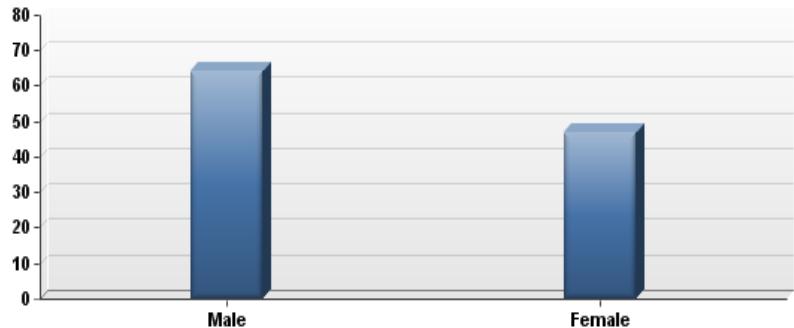
<table><tr><td>#</td><td>Answer</td><td colspan="2"></td><td>Response</td><td>%</td></tr><tr><td>1</td><td>Male</td><td colspan="2"></td><td>64</td><td>58%</td></tr><tr><td>2</td><td>Female</td><td colspan="2"></td><td>47</td><td>42%</td></tr><tr><td></td><td>Total</td><td colspan="2"></td><td>111</td><td>100%</td></tr></table>
<table><tr><td>Statistic</td><td>Value</td></tr><tr><td>Min Value</td><td>1</td></tr><tr><td>Max Value</td><td>2</td></tr><tr><td>Mean</td><td>1.42</td></tr><tr><td>Variance</td><td>0.25</td></tr><tr><td>Standard Deviation</td><td>0.50</td></tr><tr><td>Total Responses</td><td>111</td></tr></table>
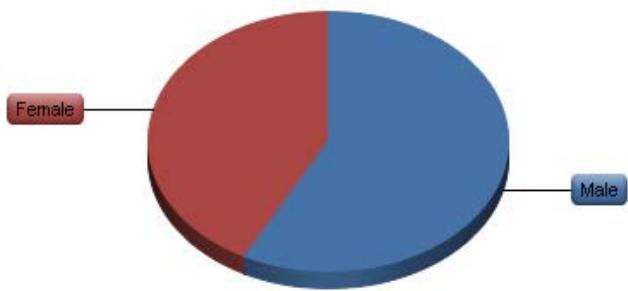
The survey question aimed to determine the gender distribution of respondents, with $58\%$ of the total respondents identified as male and $42\%$ as female. The statistical analysis revealed a mean value of 1.42, indicating that the respondents were more likely to identify as male. At the beginning of the interview, women participated less than men in the survey while being fully aware of health risks and waste issues. It has been observed that Bangladeshi women today have access to education, but their participation and expression in society are low.
Question 2: Please select your age category from the options below:
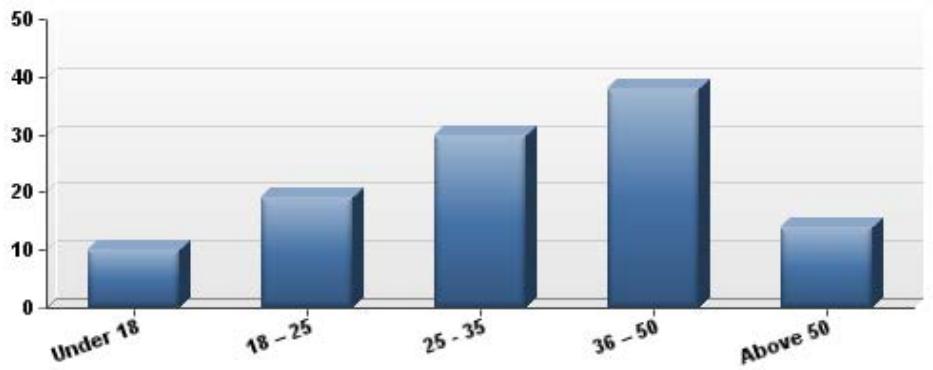
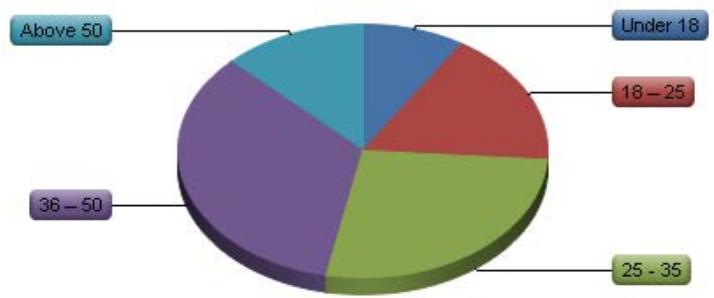
<table><tr><td>#</td><td>Answer</td><td></td><td>Response</td><td>%</td></tr><tr><td>1</td><td>Under 18</td><td></td><td>10</td><td>9%</td></tr><tr><td>2</td><td>18 – 25</td><td></td><td>19</td><td>17%</td></tr><tr><td>3</td><td>25 - 35</td><td></td><td>30</td><td>27%</td></tr><tr><td>4</td><td>36 – 50</td><td></td><td>38</td><td>34%</td></tr><tr><td>5</td><td>Above 50</td><td></td><td>14</td><td>13%</td></tr><tr><td></td><td>Total</td><td></td><td>111</td><td>100%</td></tr></table>
<table><tr><td>Statistic</td><td>Value</td></tr><tr><td>Min Value</td><td>1</td></tr><tr><td>Max Value</td><td>5</td></tr><tr><td>Mean</td><td>3.24</td></tr><tr><td>Variance</td><td>1.33</td></tr><tr><td>Standard Deviation</td><td>1.15</td></tr><tr><td>Total Responses</td><td>111</td></tr></table>
## Analysis and Findings
The question is aimed at gathering information about the age distribution of the respondents. The majority of respondents fell into the age categories of 36-50 (34%) and 25-35 (27%). The other age categories were also represented, with 18-25 accounting for 17%, followed by Above 50 (13%) and Under 18 (9%). The statistical analysis revealed a mean value of 3.24, indicating that, on average, the respondents' age
Question 3: What is your current occupation?
category falls between 25-35 and 36-50. The data highlights the importance of considering age diversity when designing waste management interventions and strategies, as it can lead to more effective strategies that resonate with individuals across various stages of life. By tailoring initiatives to different age groups and addressing their unique characteristics, it becomes possible to promote sustainable waste management practices among individuals of all ages.
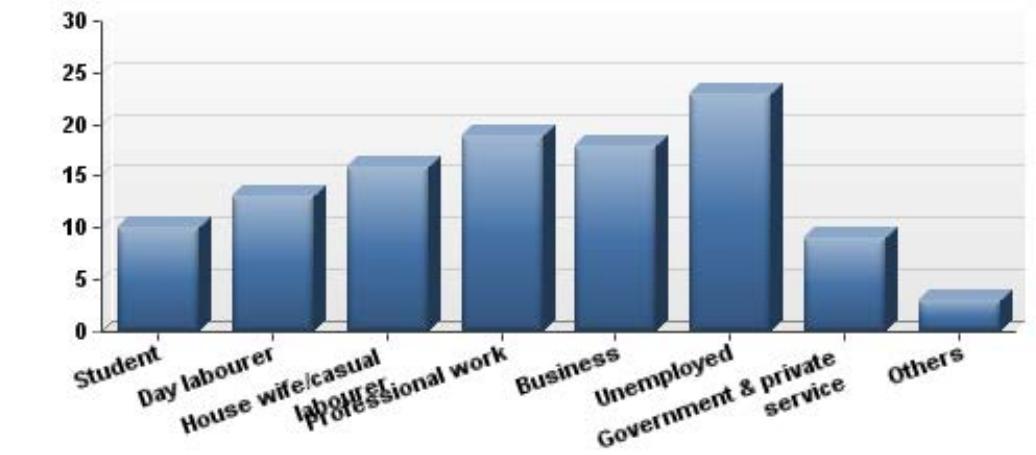
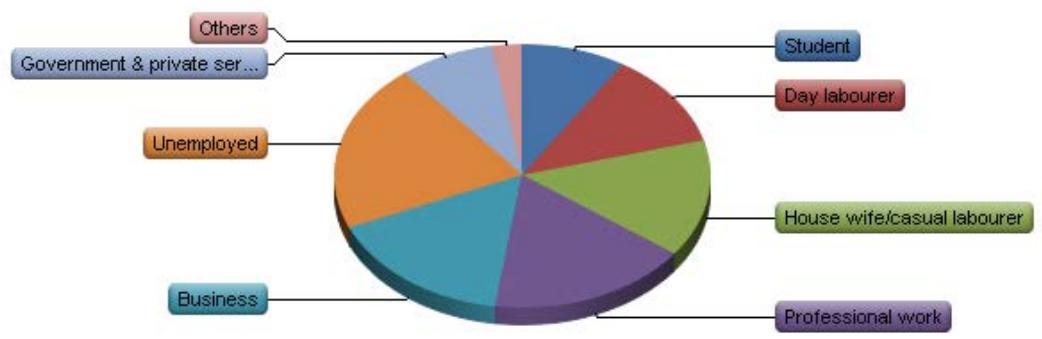
<table><tr><td>#</td><td>Answer</td><td></td><td>Response</td><td>%</td></tr><tr><td>1</td><td>Student</td><td></td><td>10</td><td>9%</td></tr><tr><td>2</td><td>Day labourer</td><td></td><td>13</td><td>12%</td></tr><tr><td>3</td><td>Housewife/casual labourer</td><td></td><td>16</td><td>14%</td></tr><tr><td>4</td><td>Professional work</td><td></td><td>19</td><td>17%</td></tr><tr><td>5</td><td>Business</td><td></td><td>18</td><td>16%</td></tr><tr><td>6</td><td>Unemployed</td><td></td><td>23</td><td>21%</td></tr><tr><td>7</td><td>Government and private service</td><td></td><td>9</td><td>8%</td></tr><tr><td>8</td><td>Others</td><td></td><td>3</td><td>3%</td></tr><tr><td></td><td>Total</td><td></td><td>111</td><td>100%</td></tr></table>
### Others
Sales Assistant
Maid
Musician (Sitarist)
<table><tr><td>Statistic</td><td>Value</td></tr><tr><td>Min Value</td><td>1</td></tr><tr><td>Max Value</td><td>8</td></tr><tr><td>Mean</td><td>4.28</td></tr><tr><td>Variance</td><td>3.53</td></tr><tr><td>Standard Deviation</td><td>1.88</td></tr><tr><td>Total Responses</td><td>111</td></tr></table>
## Analysis and Findings
The purpose of this question is to collect information about the occupation of the respondents. The majority of respondents reported being in the following professions: Unemployed (21%), Business (16%), Professional work (17%), and Housewife/casual labourer (14%). Other significant professions mentioned include Day labourer (12%), Student (9%), and Government and private service (8%). A smaller percentage of respondents indicated other professions, such as Sales assistant, Maid, and Musician (Sitarist). The statistical analysis revealed a mean value of 4.28,
Question 4: What level of education have you received?
indicating that, on average, the respondents' professions fall between Professional work and Business.
Understanding the occupational profile of the surveyed population is crucial for tailoring waste management interventions and strategies to effectively engage different groups. By considering the respondents' professions, policymakers, organizations, and waste management initiatives can develop targeted approaches that address the specific needs, challenges, and opportunities associated with different occupations.
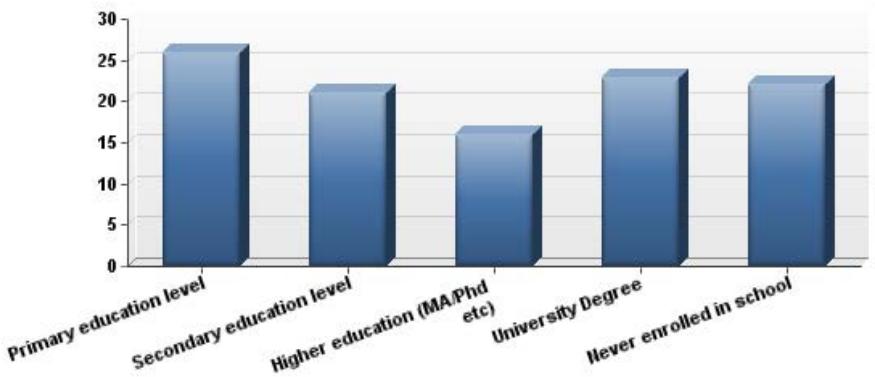
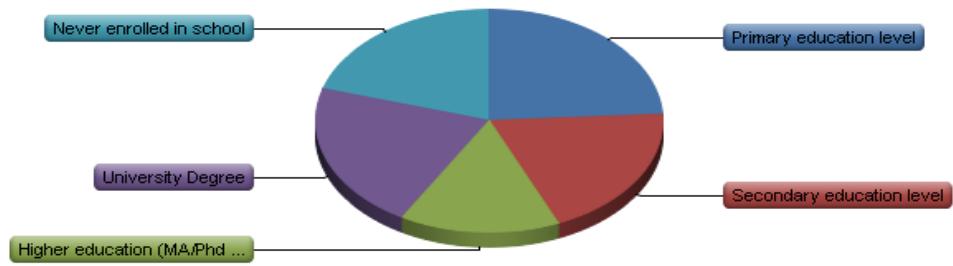
<table><tr><td>#</td><td>Answer</td><td></td><td>Response</td><td>%</td></tr><tr><td>1</td><td>Primary education level</td><td></td><td>26</td><td>24%</td></tr><tr><td>2</td><td>Secondary education level</td><td></td><td>21</td><td>19%</td></tr><tr><td>3</td><td>Higher education (MA/PhD. Etc.)</td><td></td><td>16</td><td>15%</td></tr><tr><td>4</td><td>University Degree</td><td></td><td>23</td><td>21%</td></tr><tr><td>5</td><td>Never enrolled in school</td><td></td><td>22</td><td>20%</td></tr><tr><td></td><td>Total</td><td></td><td>108</td><td>100%</td></tr></table>
<table><tr><td>Statistic</td><td>Value</td></tr><tr><td>Min Value</td><td>1</td></tr><tr><td>Max Value</td><td>5</td></tr><tr><td>Mean</td><td>2.94</td></tr><tr><td>Variance</td><td>2.20</td></tr><tr><td>Standard Deviation</td><td>1.48</td></tr><tr><td>Total Responses</td><td>108</td></tr></table>
## Analysis and Findings
The objective of this question was to collect information about the education level of the respondents. According to the responses, the majority of respondents had completed either Primary education level (24%) or University Degree (21%), Secondary education level (19%) or Higher education (15%), and 20% had never enrolled in school. The statistical analysis revealed a mean value of 2.94, indicating that, on average, the respondents' education level falls between Secondary education level and Higher education. Understanding the educational profile of the surveyed population is essential in designing effective waste management interventions and communication strategies. It highlights the importance of tailoring educational programs and awareness campaigns to cater to different educational backgrounds and literacy levels.
Targeting educational initiatives towards individuals with lower levels of education can help bridge the knowledge gap and promote sustainable waste management practices among a wider segment of the community. Overall, the data highlights the need for an inclusive and holistic approach to waste management education, ensuring that educational initiatives are accessible and beneficial to individuals with varying levels of education.
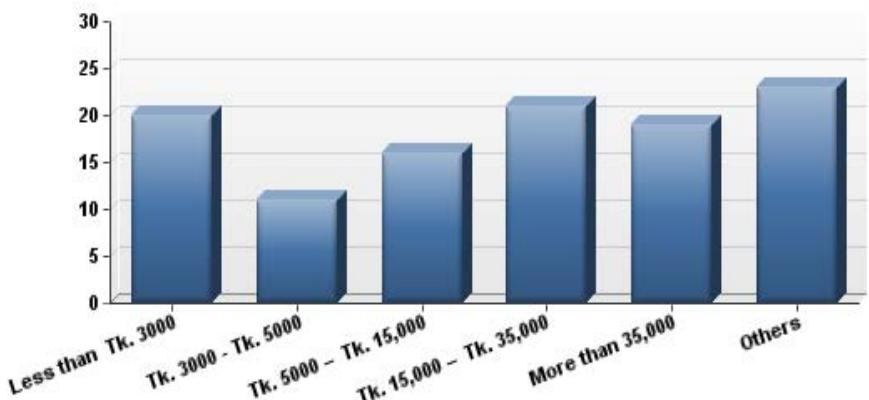
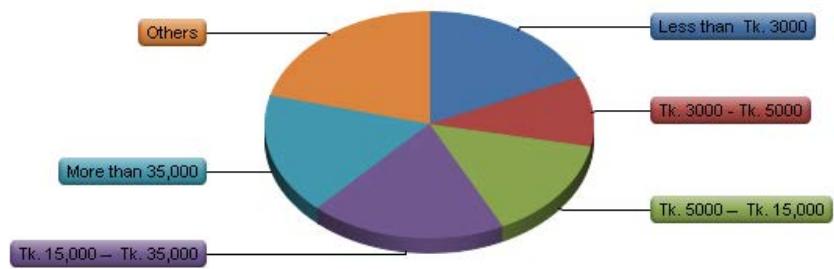
Question 5: What would be your average monthly income range (in BDT)? £1=BDT118
<table><tr><td>#</td><td>Answer</td><td></td><td>Response</td><td>%</td></tr><tr><td>1</td><td>Less than Tk. 3000</td><td></td><td>20</td><td>18%</td></tr><tr><td>2</td><td>Tk. 3000 - Tk. 5000</td><td></td><td>11</td><td>10%</td></tr><tr><td>3</td><td>Tk. 5000 - Tk. 15,000</td><td></td><td>16</td><td>15%</td></tr><tr><td>4</td><td>Tk. 15,000 - Tk. 35,000</td><td></td><td>21</td><td>19%</td></tr><tr><td>5</td><td>More than 35,000</td><td></td><td>19</td><td>17%</td></tr><tr><td>6</td><td>Others</td><td></td><td>23</td><td>21%</td></tr><tr><td></td><td>Total</td><td></td><td>110</td><td>100%</td></tr></table>
<table><tr><td>Statistic</td><td>Value</td></tr><tr><td>Min Value</td><td>1</td></tr><tr><td>Max Value</td><td>6</td></tr><tr><td>Mean</td><td>3.70</td></tr><tr><td>Variance</td><td>3.13</td></tr><tr><td>Standard Deviation</td><td>1.77</td></tr><tr><td>Total Responses</td><td>110</td></tr></table>
## Analysis and Findings
The question aimed to determine the average monthly income range of the respondents. The majority of respondents fell into the following income ranges: Tk. 15,000 - Tk. 35,000 (19%), More than Tk. 35,000 (17%), and Less than Tk. 3000 (18%). Income ranges of Tk. 3000 - Tk. 5000 (10%) and Tk. 5000 - Tk.15,000 (15%) were also reported by a portion of the respondents. The statistical analysis revealed a mean value of 3.70, indicating that, on average, the respondents' income falls between the Tk. 15,000 - Tk. 35,000 range.
Understanding the income distribution among the surveyed population is crucial in assessing the financial capacity to address waste management issues effectively.
Local authorities and relevant stakeholders can utilize this information to design inclusive and equitable waste management strategies that consider the varying income levels within the community. Policymakers and organizations can develop tailored approaches to waste management that are financially viable, sustainable, and supportive of the community's economic well-being.
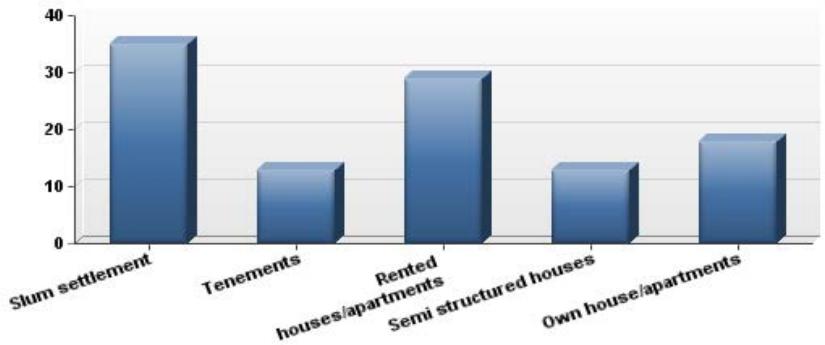
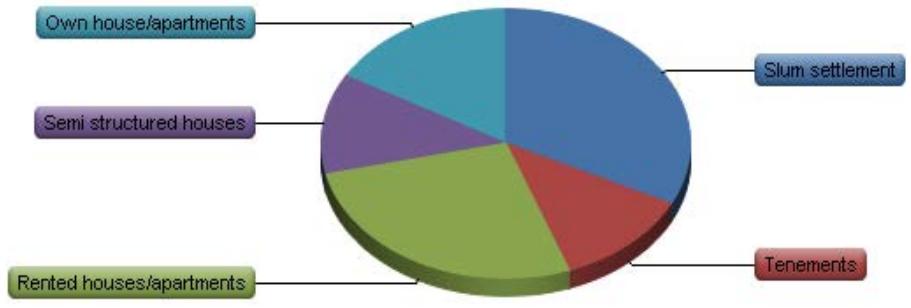
Question 6: What type of housing do you live in?
<table><tr><td>#</td><td>Answer</td><td colspan="2"></td><td>Response</td><td>%</td></tr><tr><td>1</td><td>Slum settlement</td><td></td><td></td><td>35</td><td>32%</td></tr><tr><td>2</td><td>Tenements</td><td></td><td></td><td>13</td><td>12%</td></tr><tr><td>3</td><td>Rented houses/apartments</td><td></td><td></td><td>29</td><td>27%</td></tr><tr><td>4</td><td>Semi-structured houses</td><td></td><td></td><td>13</td><td>12%</td></tr><tr><td>5</td><td>Own house/apartments</td><td></td><td></td><td>18</td><td>17%</td></tr><tr><td></td><td>Total</td><td colspan="2"></td><td>108</td><td>100%</td></tr></table>
<table><tr><td>Statistic</td><td>Value</td></tr><tr><td>Min Value</td><td>1</td></tr><tr><td>Max Value</td><td>5</td></tr><tr><td>Mean</td><td>2.69</td></tr><tr><td>Variance</td><td>2.12</td></tr><tr><td>Standard Deviation</td><td>1.46</td></tr><tr><td>Total Responses</td><td>108</td></tr></table>
## Analysis and Findings
This question was posed to gather information about the type of dwelling occupied by the respondents. The largest group of respondents (32%) reported living in slum settlements, while other common housing types (27%) and own houses/apartments (17%) were also reported. Tenements and semi-structured houses were reported by 12% of the respondents each. The statistical analysis revealed a mean value of 2.69, indicating that the respondents' housing falls between slum settlements and rented houses/apartments. Understanding the types of housing in the surveyed area can provide valuable insights into the living conditions and socioeconomic factors that may impact waste management practices. Local authorities and community organizations can develop comprehensive waste management strategies that address the specific needs and circumstances of different housing types, contributing to improving waste management practices, promoting hygiene, and enhancing the overall quality of life in the surveyed area.
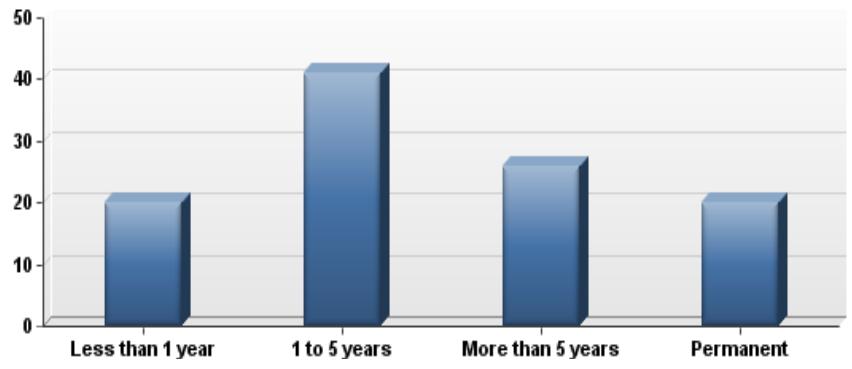
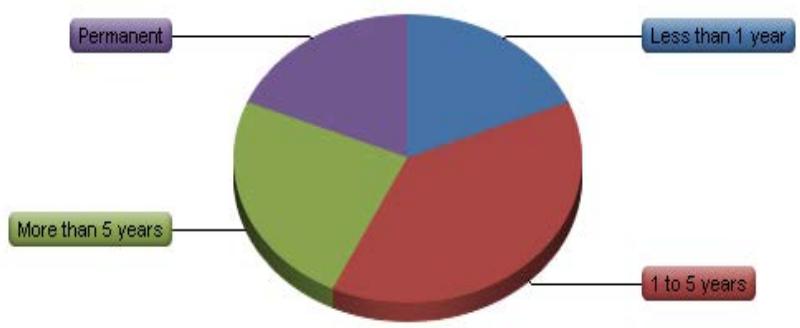
Question 7: How long have you been a resident of this property?
<table><tr><td>#</td><td>Answer</td><td colspan="2"></td><td>Response</td><td>%</td></tr><tr><td>1</td><td>Less than 1 year</td><td colspan="2"></td><td>20</td><td>19%</td></tr><tr><td>2</td><td>1 to 5 years</td><td colspan="2"></td><td>41</td><td>38%</td></tr><tr><td>3</td><td>More than 5 years</td><td colspan="2"></td><td>26</td><td>24%</td></tr><tr><td>4</td><td>Permanent</td><td colspan="2"></td><td>20</td><td>19%</td></tr><tr><td></td><td>Total</td><td colspan="2"></td><td>107</td><td>100%</td></tr></table>
<table><tr><td>Statistic</td><td>Value</td></tr><tr><td>Min Value</td><td>1</td></tr><tr><td>Max Value</td><td>4</td></tr><tr><td>Mean</td><td>2.43</td></tr><tr><td>Variance</td><td>1.00</td></tr><tr><td>Standard Deviation</td><td>1.00</td></tr><tr><td>Total Responses</td><td>107</td></tr></table>
The question is intended to gather information about how long respondents have lived in their current property. According to the responses, the largest group of respondents (38%) reported living in their current property for 1 to 5 years, with a significant percentage (24%) having a residency of more than 5 years. The statistical analysis revealed a mean value of 2.43, indicating that the average duration of residency among
the respondents is between 1 to 5 years. Understanding the length of time individuals have been living in their properties can provide insights into their familiarity with waste management practices and their potential engagement in community initiatives. By tailoring waste management efforts based on the duration of residency, local authorities and community organizations can foster a sense of ownership, engagement, and responsibility among residents, leading to more effective and sustainable waste management practices.
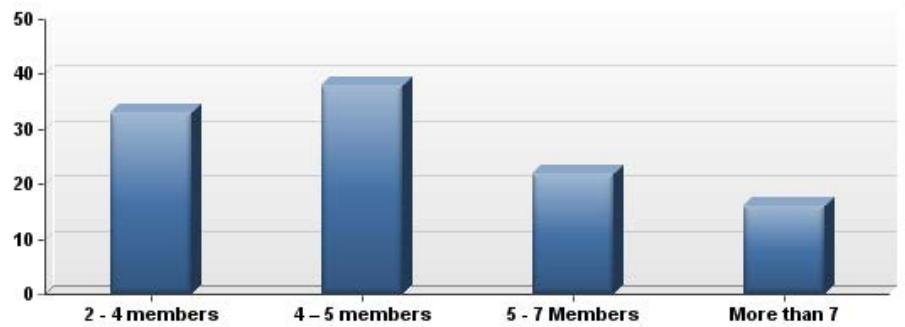
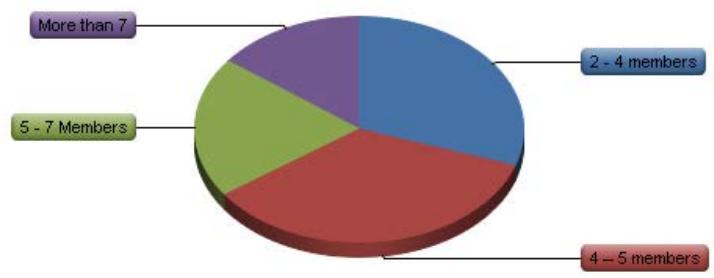
Question 8: How many family members are there within your household?
<table><tr><td>#</td><td>Answer</td><td></td><td>Response</td><td>%</td></tr><tr><td>1</td><td>2-4 members</td><td></td><td>33</td><td>30%</td></tr><tr><td>2</td><td>4-5 members</td><td></td><td>38</td><td>35%</td></tr><tr><td>3</td><td>5-7 Members</td><td></td><td>22</td><td>20%</td></tr><tr><td>4</td><td>More than 7</td><td></td><td>16</td><td>15%</td></tr><tr><td></td><td>Total</td><td></td><td>109</td><td>100%</td></tr></table>
<table><tr><td>Statistic</td><td>Value</td></tr><tr><td>Min Value</td><td>1</td></tr><tr><td>Max Value</td><td>4</td></tr><tr><td>Mean</td><td>2.19</td></tr><tr><td>Variance</td><td>1.06</td></tr><tr><td>Standard Deviation</td><td>1.03</td></tr><tr><td>Total Responses</td><td>109</td></tr></table>
The primary objective of this question is to ascertain how many people make up each family. The data collected provides insights into the household size distribution among the surveyed population. The largest group of respondents (35%) reported having 4-5
members in their household, while a slightly smaller percentage (30%) mentioned having 2-4 members, while 20% stated having 5-7 members. The statistical analysis revealed a mean value of 2.19, indicating that the average household size among the respondents is slightly larger than 2 members. The study also found that families in slum areas are larger and have more children than those in high-income areas. This information is valuable for understanding the demographic profile of the surveyed population and its potential implications for waste generation and management. Tailoring waste management efforts to the specific needs and characteristics of different household sizes can contribute to more efficient and sustainable waste management practices.
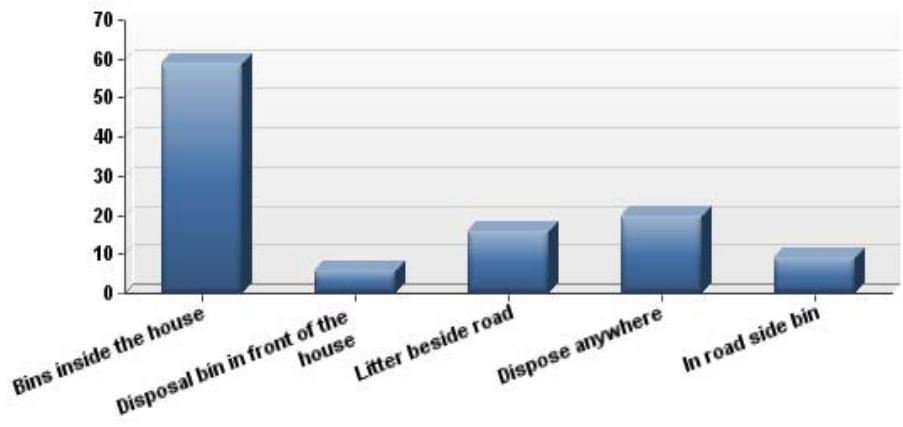 Question 9: Where do you keep your household waste initially?
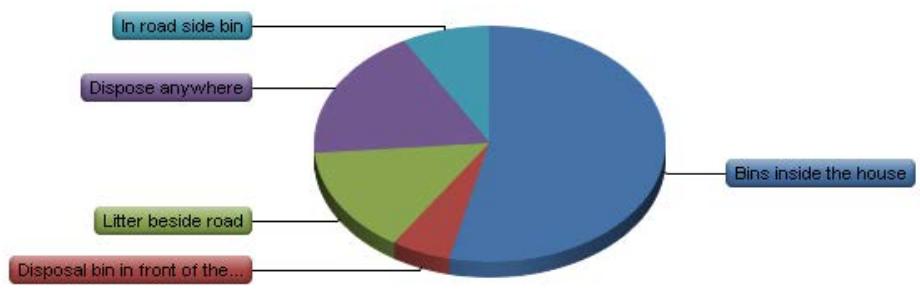
<table><tr><td>#</td><td>Answer</td><td></td><td>Response</td><td>%</td></tr><tr><td>1</td><td>Bins inside the house</td><td></td><td>59</td><td>54%</td></tr><tr><td>2</td><td>Disposal bin in front of the house</td><td></td><td>6</td><td>5%</td></tr><tr><td>3</td><td>Litter beside road</td><td></td><td>16</td><td>15%</td></tr><tr><td>4</td><td>Disposition of anywhere</td><td></td><td>20</td><td>18%</td></tr><tr><td>5</td><td>In roadside bin</td><td></td><td>9</td><td>8%</td></tr><tr><td></td><td>Total</td><td></td><td>110</td><td>100%</td></tr></table>
<table><tr><td>Statistic</td><td>Value</td></tr><tr><td>Min Value</td><td>1</td></tr><tr><td>Max Value</td><td>5</td></tr><tr><td>Mean</td><td>2.22</td></tr><tr><td>Variance</td><td>2.12</td></tr><tr><td>Standard Deviation</td><td>1.46</td></tr><tr><td>Total Responses</td><td>110</td></tr></table>
## Analysis and Findings
The aim of this question is to identify the primary location where the respondents keep their household waste. The data collected provides insights into the common practices of waste disposal among the surveyed population. The majority of respondents particularly in affluent neighbourhoods (54%) reported binning their household waste indoors, while a smaller percentage (5%) reported using a disposal bin in front of the house. Due to a lack of resources, 15% of respondents admitted to littering on roadsides, especially in slum areas, while 18% mentioned littering anywhere. Only 8% stated that they keep their waste in a roadside bin.
The statistical analysis reveals a mean value of 2.22, indicating that keeping household waste in bins inside the house is the most prevalent practice among the respondents. However, a portion of respondents admitted to littering waste beside the road or disposing of waste anywhere, which can contribute to environmental pollution and health hazards. Overall, respondents from affluent areas adopt responsible waste disposal practices by using indoor bins. But this awareness and infrastructural opportunities are not created among slum dwellers about the dangers of littering. Nevertheless, addressing littering and inappropriate waste disposal behaviours is essential to mitigate the negative impacts associated with these practices.
Question 10: Is there any waste disposal service present in your area?
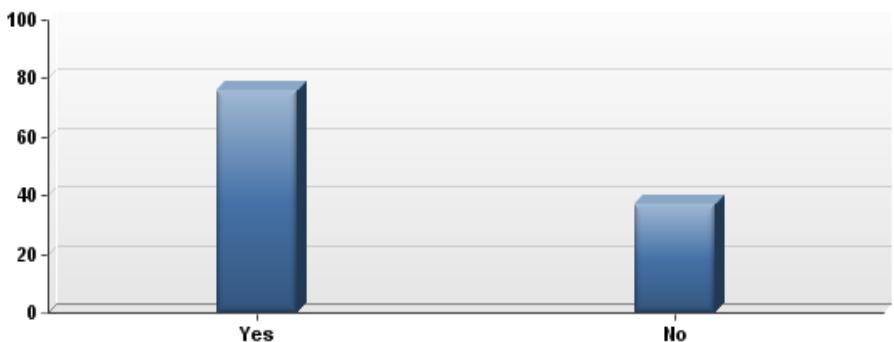
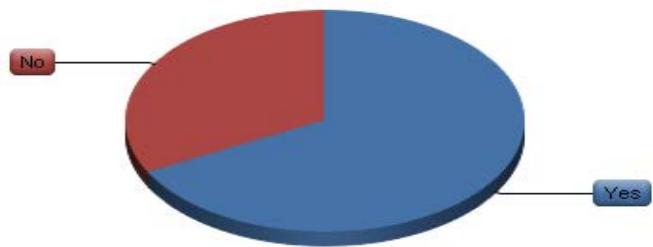
<table><tr><td>#</td><td>Answer</td><td></td><td colspan="2"></td><td>Response</td><td></td><td>%</td></tr><tr><td>5</td><td colspan="2">Yes</td><td colspan="2"></td><td>76</td><td colspan="2">68%</td></tr><tr><td>6</td><td colspan="2">No</td><td colspan="2"></td><td>37</td><td colspan="2">33%</td></tr></table>
<table><tr><td>Statistic</td><td>Value</td></tr><tr><td>Min Value</td><td>5</td></tr><tr><td>Max Value</td><td>6</td></tr><tr><td>Total Responses</td><td>111</td></tr></table>
## Analysis and Findings
The purpose of this question is to ascertain whether the respondents' area provides waste disposal services. $68\%$ of respondents confirmed the presence of waste disposal services in their area, while $33\%$ indicated that there are no services available. While the study was conducted in both high and low-income areas, it was found that there were significant differences in waste management practices among the places. The findings indicate that a majority of respondents have access to waste disposal services, suggesting a well-established waste management infrastructure in high income area. However, a significant proportion of respondents reported the absence of waste disposal services, which highlights the need for attention and potential improvements in waste management infrastructure. To understand differences in waste management, respondents were selected from both high and low-income areas, showing significant differences in waste management practices between locations. Slums, where population density and waste management requirements are high, receive negligible services from DCCs indicating high health risks and, in turn, affecting incomes leading to poverty. However, efforts may be required to address the needs of those who currently do not have access to waste disposal services.
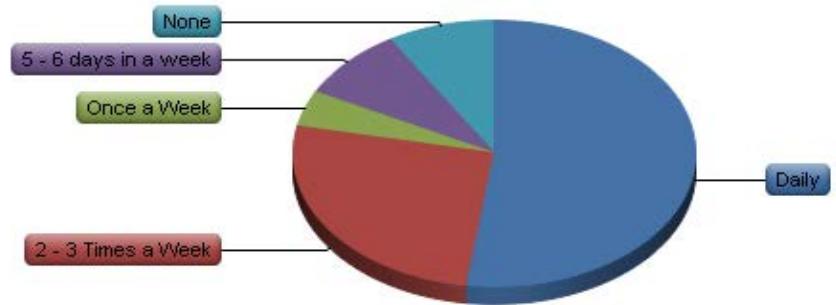
Question 11: If yes, how often does the waste picker collect waste from your household?
<table><tr><td>#</td><td>Answer</td><td></td><td>Response</td><td>%</td></tr><tr><td>1</td><td>Daily</td><td></td><td>12</td><td>52%</td></tr><tr><td>2</td><td>2-3 Times a Week</td><td></td><td>6</td><td>26%</td></tr><tr><td>3</td><td>Once a Week</td><td></td><td>1</td><td>4%</td></tr><tr><td>4</td><td>5-6 days a week</td><td></td><td>2</td><td>9%</td></tr><tr><td>5</td><td>None</td><td></td><td>2</td><td>9%</td></tr><tr><td></td><td>Total</td><td></td><td>23</td><td>100%</td></tr></table>
<table><tr><td>Statistic</td><td>Value</td></tr><tr><td>Min Value</td><td>1</td></tr><tr><td>Max Value</td><td>5</td></tr><tr><td>Mean</td><td>1.96</td></tr></table>
The purpose of the poll is to find out how frequently respondents' homes are visited by DCC's garbage collectors. The data collected provides insights into the regularity of waste collection services provided by waste pickers. $52\%$ of respondents reported that waste pickers collect waste from their households on a daily basis, $26\%$ visited 2-3 times a week, and $4\%$ indicated once a week, $9\%$ mentioned 5-6 days a week, and $9\%$ stated that waste pickers do not collect waste from their households. The statistical analysis showed a mean value of 1.96, indicating that waste pickers generally collect waste from households quite frequently. A small portion of respondents mentioned infrequent waste collection or the absence of waste pickers collecting waste from their households. However, respondents from high-income groups who receive adequate services from DCC waste collection responded positively to these survey questions, in contrast to respondents from low-income areas, particularly slum areas, where the population is substantial but absent.
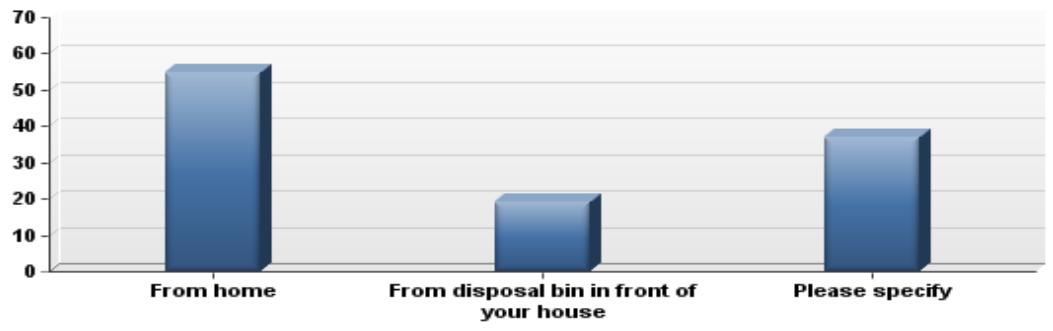
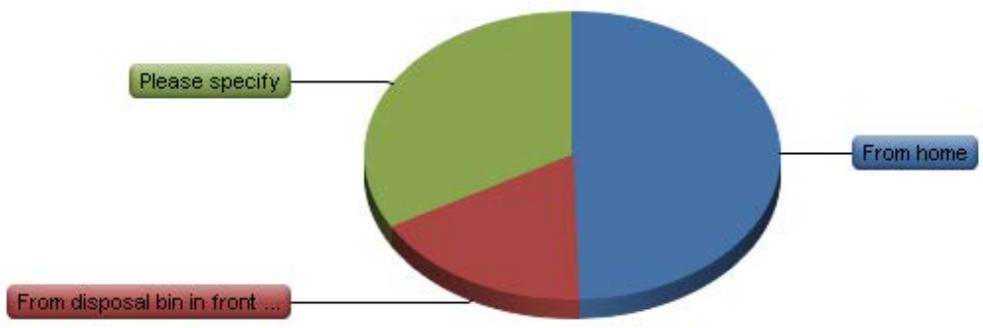
Question 12: From where waste pickers collect your household waste?
<table><tr><td>#</td><td>Answer</td><td colspan="2"></td><td>Response</td><td>%</td></tr><tr><td>1</td><td>From home</td><td colspan="2"></td><td>55</td><td>50%</td></tr><tr><td>2</td><td>From the disposal bin in front of your house</td><td colspan="2"></td><td>19</td><td>17%</td></tr><tr><td>3</td><td>Please specify</td><td colspan="2"></td><td>37</td><td>33%</td></tr><tr><td></td><td>Total</td><td colspan="2"></td><td>111</td><td>100%</td></tr></table>
<table><tr><td>Please specify</td></tr><tr><td>None</td></tr><tr><td>None</td></tr><tr><td>N/A</td></tr><tr><td>Road</td></tr><tr><td>roadside</td></tr><tr><td>N/A</td></tr><tr><td>No idea</td></tr><tr><td>no idea</td></tr><tr><td>No idea</td></tr><tr><td>Don't know</td></tr><tr><td>No idea</td></tr><tr><td>None</td></tr><tr><td>None</td></tr><tr><td>On my own</td></tr><tr><td>None</td></tr><tr><td>None</td></tr><tr><td>Nowhere</td></tr><tr><td>No</td></tr><tr><td>None</td></tr><tr><td>None</td></tr><tr><td>no idea</td></tr><tr><td>no idea</td></tr><tr><td>None</td></tr><tr><td>N/A</td></tr><tr><td>roadside</td></tr><tr><td>None</td></tr><tr><td>roadside</td></tr><tr><td>None</td></tr><tr><td>N/A</td></tr><tr><td>None</td></tr><tr><td>None</td></tr><tr><td>no idea</td></tr><tr><td>None</td></tr><tr><td>None</td></tr><tr><td>Don't know</td></tr></table>
<table><tr><td>Statistic</td><td>Value</td></tr><tr><td>Min Value</td><td>1</td></tr><tr><td>Max Value</td><td>3</td></tr><tr><td>Mean</td><td>1.84</td></tr><tr><td>Variance</td><td>0.81</td></tr><tr><td>Standard Deviation</td><td>0.90</td></tr><tr><td>Total Responses</td><td>111</td></tr></table>
## Analysis and Findings
The question inquired about the sources from which waste pickers collect household waste. Based on the responses, $50\%$ of respondents reported that waste pickers collect waste directly from their homes. Another $17\%$ mentioned that waste pickers collect waste from the disposal bin in front of their houses. Additionally, $33\%$ of respondents provided other specifications about the sources from which waste pickers collect waste. Results showed that $50\%$ of respondents reported that waste pickers collect waste directly from their homes, $17\%$ from the disposal bin in front of their houses, and $33\%$ provided other specifications about the sources from which waste pickers collect waste.
The statistical analysis revealed that the mean value was 1.84, with a minimum value of 1 and a maximum value of 3. The findings highlight the importance of establishing clear communication and understanding between households and waste pickers to ensure efficient waste collection. Additionally, proper waste segregation and disposal practices must be implemented to facilitate waste pickers' work. Overall, the survey data suggests that waste pickers retrieve waste from various sources, including homes and disposal bins.
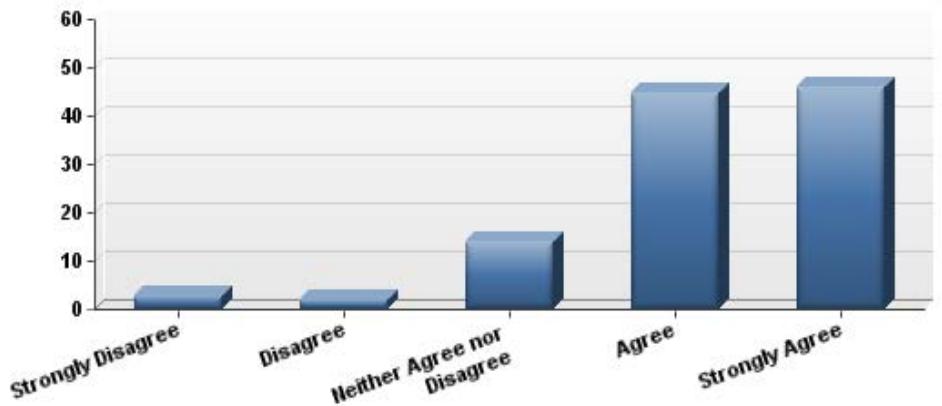
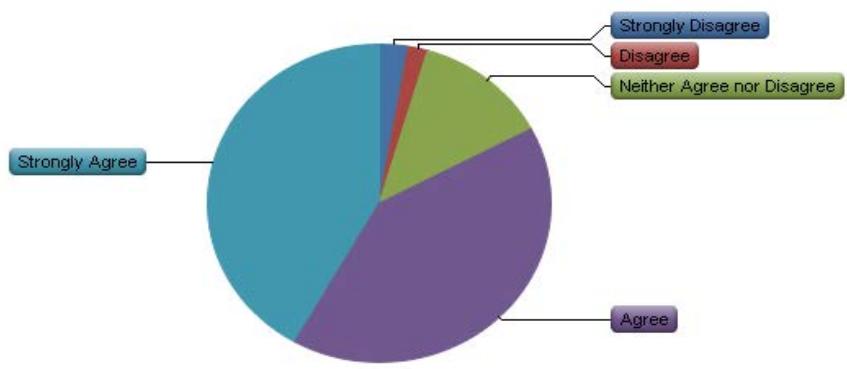
Question 13: In order to maintain hygiene in your household, do you believe it is preferable to dispose of waste in a designated bin outside your house rather than inside, allowing waste pickers to collect directly?
<table><tr><td>#</td><td>Answer</td><td colspan="2"></td><td>Response</td><td>%</td></tr><tr><td>1</td><td>Strongly Disagree</td><td colspan="2"></td><td>3</td><td>3%</td></tr><tr><td>2</td><td>Disagree</td><td colspan="2"></td><td>2</td><td>2%</td></tr><tr><td>3</td><td>Neither Agree nor Disagree</td><td colspan="2"></td><td>14</td><td>13%</td></tr><tr><td>4</td><td>Agree</td><td colspan="2"></td><td>45</td><td>41%</td></tr><tr><td>5</td><td>Strongly Agree</td><td colspan="2"></td><td>46</td><td>42%</td></tr><tr><td></td><td>Total</td><td colspan="2"></td><td>110</td><td>100%</td></tr></table>
<table><tr><td>Statistic</td><td>Value</td></tr><tr><td>Min Value</td><td>1</td></tr><tr><td>Max Value</td><td>5</td></tr><tr><td>Mean</td><td>4.17</td></tr><tr><td>Variance</td><td>0.84</td></tr><tr><td>Standard Deviation</td><td>0.92</td></tr><tr><td>Total Responses</td><td>110</td></tr></table>
The question explores respondents' views on waste disposal practices to maintain household hygiene. The analysis of responses reveals that the majority of respondents (83%) agree or strongly agree that it is preferable to dispose of waste in a designated bin outside their house, allowing waste pickers to collect directly. However, a small percentage of respondents (5%) disagree or strongly disagree with this method. Additionally, 13% of respondents neither agree nor disagree, indicating neutrality or uncertainty about the preferred waste disposal approach. The findings suggest that the majority of respondents prioritize maintaining household hygiene by endorsing the use of designated bins outside their homes, facilitating waste pickers' direct collection.
This preference aligns with the idea of efficient waste management and minimizing potential health risks associated with keeping waste inside the house. Overall, the survey data indicates a positive inclination towards utilizing designated bins outside the house for waste disposal, enabling waste pickers' direct collection.
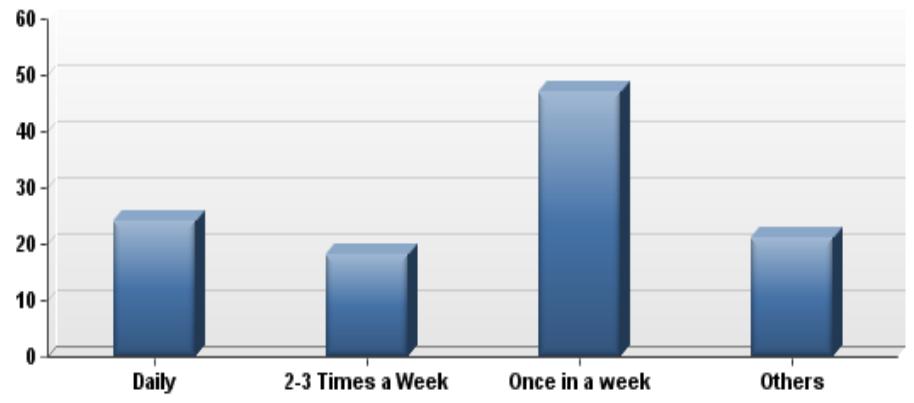
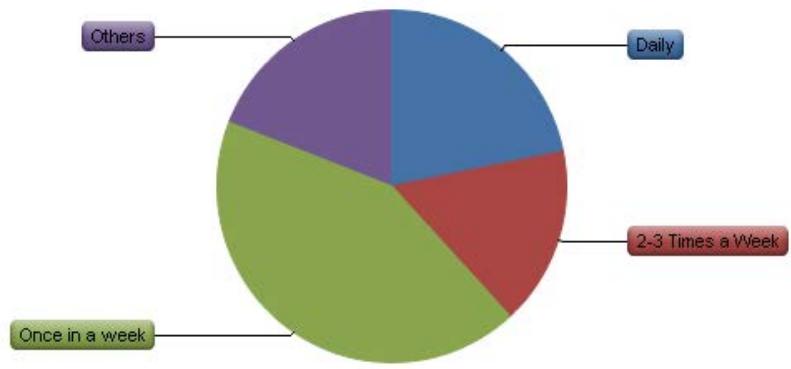
Question 14: How often in a week do DCC waste collectors collect disposed waste from the roadside open bin?
<table><tr><td>#</td><td>Answer</td><td colspan="2"></td><td>Response</td><td>%</td></tr><tr><td>1</td><td>Daily</td><td colspan="2"></td><td>24</td><td>22%</td></tr><tr><td>2</td><td>2-3 Times a Week</td><td colspan="2"></td><td>18</td><td>16%</td></tr><tr><td>3</td><td>Once a week</td><td colspan="2"></td><td>47</td><td>43%</td></tr><tr><td>4</td><td>Others</td><td colspan="2"></td><td>21</td><td>19%</td></tr><tr><td></td><td>Total</td><td colspan="2"></td><td>110</td><td>100%</td></tr></table>
<table><tr><td>Others</td></tr><tr><td>No idea</td></tr><tr><td>No idea</td></tr><tr><td>Sometimes</td></tr><tr><td>No idea</td></tr><tr><td>No idea</td></tr><tr><td>No idea</td></tr><tr><td>not specified</td></tr><tr><td>No idea</td></tr><tr><td>Never</td></tr><tr><td>N/A</td></tr><tr><td>N/A</td></tr><tr><td>No idea</td></tr><tr><td>N/A</td></tr><tr><td>No idea</td></tr><tr><td>No idea</td></tr><tr><td>N/A</td></tr><tr><td>N/A</td></tr><tr><td>No</td></tr><tr><td>N/A</td></tr></table>
<table><tr><td>Statistic</td><td>Value</td></tr><tr><td>Min Value</td><td>1</td></tr><tr><td>Max Value</td><td>4</td></tr><tr><td>Mean</td><td>2.59</td></tr><tr><td>Variance</td><td>1.07</td></tr><tr><td>Standard Deviation</td><td>1.03</td></tr><tr><td>Total Responses</td><td>110</td></tr></table>
## Analysis and Findings
The question inquired about the frequency of waste collection by Dhaka City Corporation (DCC) waste collectors from roadside open bins. The most common frequency reported was once a week, with $43\%$ of respondents indicating this. Daily collection was mentioned by $22\%$, while 2-3 times a week was reported by $16\%$. A smaller proportion $(19\%)$ provided other responses, which varied and included "no idea," "sometimes," "not specified," and "never." The statistical analysis revealed that the mean value was 2.59, with a minimum value of 1 and a maximum value of 4. Overall, the survey data suggests that waste collection from roadside open bins by DCC is primarily reported as once a week, followed by daily and 2-3 times a week.
However, the presence of other responses indicating uncertainty or lack of knowledge emphasizes the need for improved communication and awareness about waste collection schedules. These findings highlight the importance of regular and efficient waste collection services to maintain cleanliness and hygiene in the community, and call for transparent and accessible information about waste collection schedules to ensure proper waste management and minimize potential health and environmental risks associated with waste accumulation.
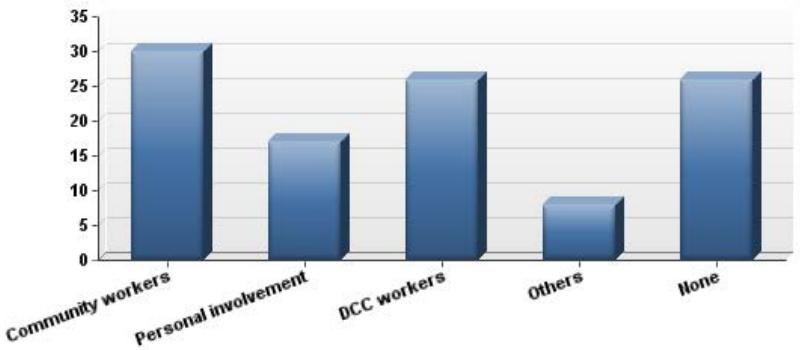
Question 15: Who takes the initiative to clean your neighbourhood?
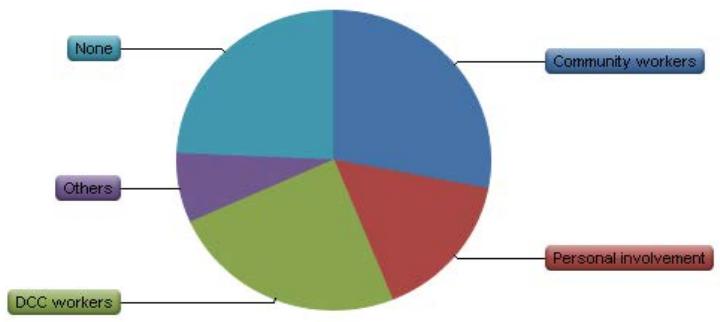
<table><tr><td>#</td><td>Answer</td><td></td><td>Response</td><td>%</td></tr><tr><td>1</td><td>Community workers</td><td></td><td>30</td><td>28%</td></tr><tr><td>2</td><td>Personal involvement</td><td></td><td>17</td><td>16%</td></tr><tr><td>3</td><td>DCC workers</td><td></td><td>26</td><td>24%</td></tr><tr><td>4</td><td>Others</td><td></td><td>8</td><td>7%</td></tr><tr><td>5</td><td>None</td><td></td><td>26</td><td>24%</td></tr><tr><td></td><td>Total</td><td></td><td>107</td><td>100%</td></tr></table>
<table><tr><td>Others</td></tr><tr><td>LBN man</td></tr><tr><td>No idea</td></tr><tr><td>No idea</td></tr><tr><td>No idea</td></tr><tr><td>No idea</td></tr><tr><td>No idea</td></tr><tr><td>N/A</td></tr></table>
<table><tr><td>Statistic</td><td>Value</td></tr><tr><td>Min Value</td><td>1</td></tr><tr><td>Max Value</td><td>5</td></tr><tr><td>Mean</td><td>2.84</td></tr><tr><td>Variance</td><td>2.32</td></tr><tr><td>Standard Deviation</td><td>1.52</td></tr><tr><td>Total Responses</td><td>107</td></tr></table>
The survey found various waste management methods in Dhaka City, $28\%$ of respondents reported that community workers take the initiative to clean their neighbourhoods, while $16\%$ reported personal involvement in waste management. $24\%$ of respondents reported that DCC workers clean their neighbourhood, while $7\%$ reported using other methods. Interestingly, $24\%$ of respondents reported that none of these methods is used in their neighbourhood, indicating a lack of waste management services in those areas. This highlights the need for greater investment in waste management infrastructure and services, particularly in areas where these services are lacking. Additionally, the results suggest that community-based waste management initiatives may be effective in improving waste management in some areas.
Question 16: Can individual/community involvement in waste clean-up improve health and the local environment?
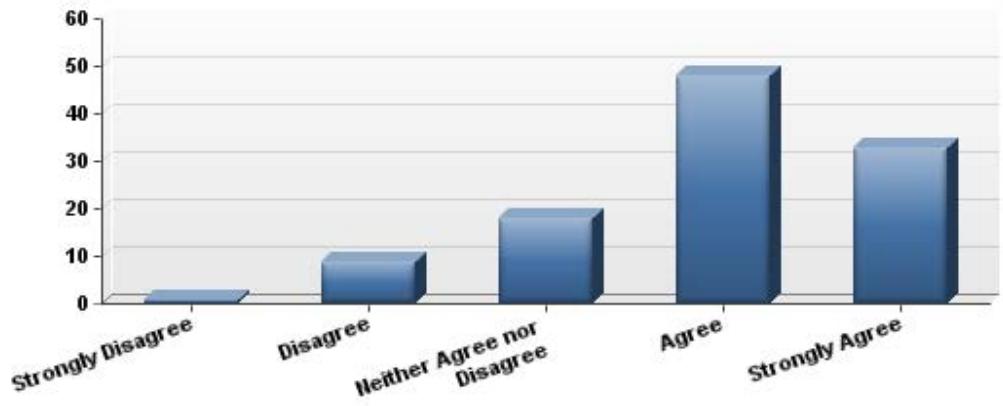
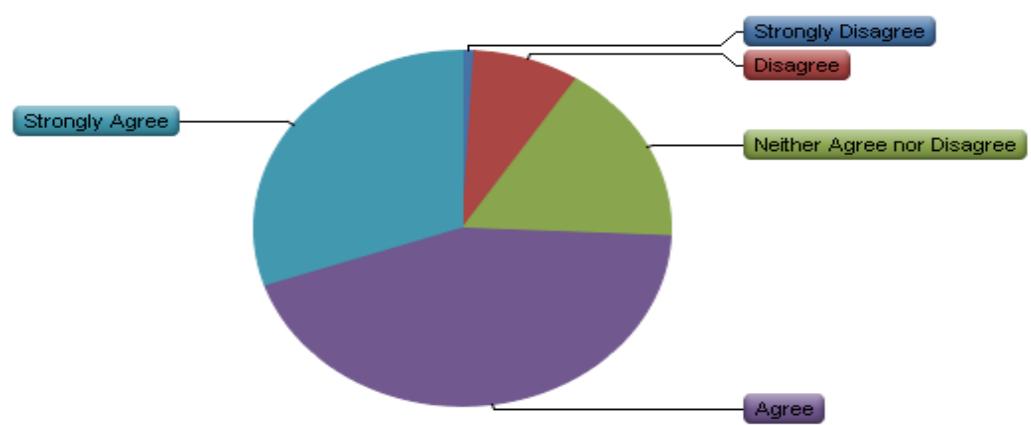
<table><tr><td>#</td><td>Answer</td><td colspan="3"></td><td>Response</td><td>%</td></tr><tr><td>1</td><td>Strongly Disagree</td><td colspan="3"></td><td>1</td><td>1%</td></tr><tr><td>2</td><td>Disagree</td><td colspan="3"></td><td>9</td><td>8%</td></tr><tr><td>3</td><td>Neither Agree nor Disagree</td><td colspan="3"></td><td>18</td><td>17%</td></tr><tr><td>4</td><td>Agree</td><td colspan="3"></td><td>48</td><td>44%</td></tr><tr><td>5</td><td>Strongly Agree</td><td colspan="3"></td><td>33</td><td>30%</td></tr><tr><td></td><td>Total</td><td colspan="3"></td><td>109</td><td>100%</td></tr><tr><td></td><td></td><td colspan="3"></td><td></td><td></td></tr></table>
<table><tr><td>Statistic</td><td>Value</td></tr><tr><td>Min Value</td><td>1</td></tr><tr><td>Max Value</td><td>5</td></tr><tr><td>Mean</td><td>3.94</td></tr><tr><td>Variance</td><td>0.89</td></tr><tr><td>Standard Deviation</td><td>0.94</td></tr><tr><td>Total Responses</td><td>109</td></tr></table>
This question examined the perception of respondents regarding the impact of individual and community involvement in waste clean-up on health and the local environment. The analysis of responses revealed that a significant portion of respondents (44%) agreed, (30%) strongly agreed that individual and community involvement in waste clean-up can improve health and the local environment. However, a smaller percentage disagreed (8%) or strongly disagreed (1%) with this statement. Additionally, 17% of respondents neither agreed nor disagreed, indicating neutrality or uncertainty about the relationship between waste cleanup and health/environmental improvement. The

statistical analysis showed that the mean value was 3.94, with a minimum value of 1 and a maximum value of 5.
Overall, the survey data suggests that a majority of respondents believe in the potential positive outcomes of individual and community involvement in waste clean-up on health and the local environment. These results highlight the importance of promoting and supporting initiatives that encourage community engagement in waste clean-up efforts.
Question 17: Have you or any of your family members had any recent illness in the last 6 months?
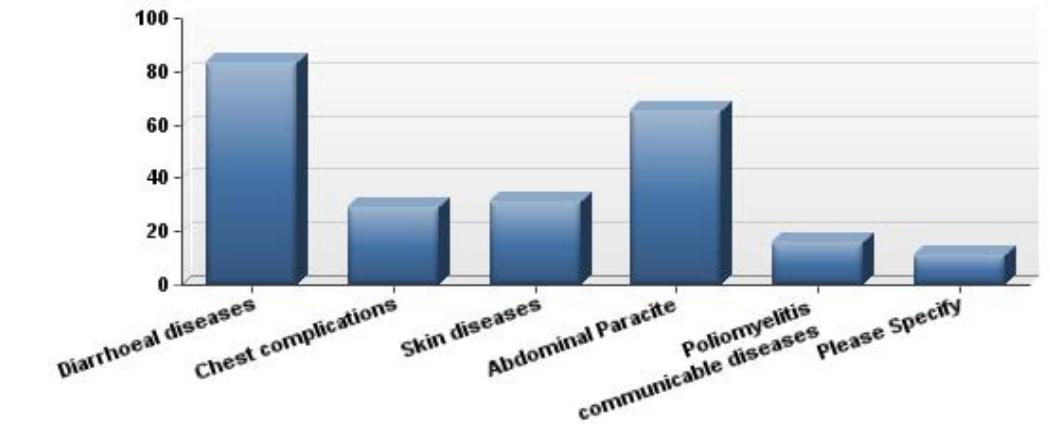
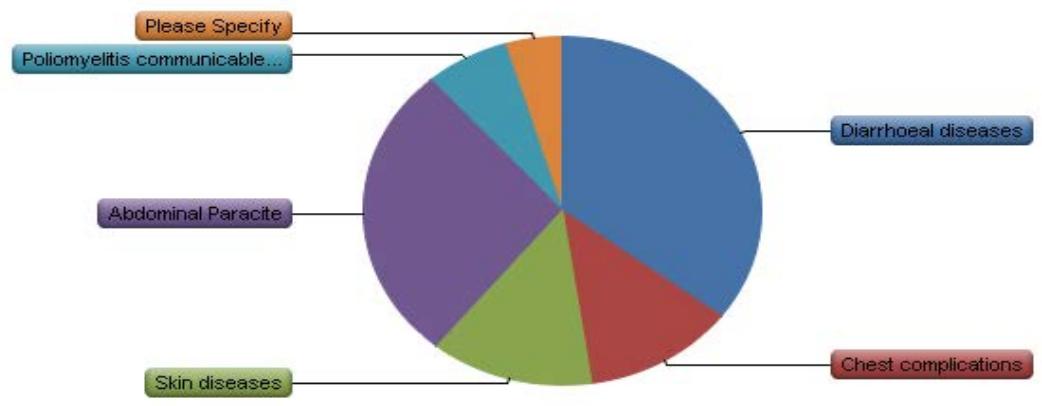
<table><tr><td>#</td><td>Answer</td><td colspan="2"></td><td>Response</td><td>%</td></tr><tr><td>1</td><td>Diarrheal diseases</td><td colspan="2"></td><td>83</td><td>78%</td></tr><tr><td>2</td><td>Chest complications</td><td colspan="2"></td><td>29</td><td>27%</td></tr><tr><td>3</td><td>Skin diseases</td><td colspan="2"></td><td>31</td><td>29%</td></tr><tr><td>4</td><td>Abdominal Parasite</td><td colspan="2"></td><td>65</td><td>61%</td></tr><tr><td>5</td><td>Poliomyelitis communicable diseases</td><td colspan="2"></td><td>16</td><td>15%</td></tr><tr><td>6</td><td>Please Specify</td><td colspan="2"></td><td>11</td><td>10%</td></tr><tr><td colspan="6">Please Specify</td></tr><tr><td colspan="6">NAD/Asthma</td></tr><tr><td colspan="6">Asthma</td></tr><tr><td colspan="6">Asthma</td></tr><tr><td colspan="6">NAD/Asthma</td></tr></table>
<table><tr><td>Statistic</td><td>Value</td></tr><tr><td>Min Value</td><td>1</td></tr><tr><td>Max Value</td><td>6</td></tr><tr><td>Total Responses</td><td>106</td></tr></table>
## Analysis and Findings
In the past six months, respondents' or their families' recent illnesses were inquired about in the survey. The most often stated ailments were skin conditions (29%), chest complications (27%), stomach parasites (61%), and diarrheal infections (78%). Poliomyelitis communicable diseases (15% of respondents) were also mentioned. A small number of respondents (10%) specified other illnesses not listed in the provided options, such as non-allergic rhinitis (NAD) and asthma. These findings suggest a notable prevalence of illnesses associated with waste within the respondents' families.
The presence of diarrheal diseases and abdominal parasites aligns with the potential consequences of poor waste management on water and food contamination, skin diseases and chest complications may also be linked to unhygienic living conditions influenced by waste, and asthma and non-allergic rhinitis (NAD) indicate the possibility of respiratory conditions influenced by waste-related factors. The survey data underscores the importance of addressing waste management and improving sanitation practices to reduce the risk of communicable diseases.
Question 18: Which age group in your family is most affected by communicable diseases related to waste?
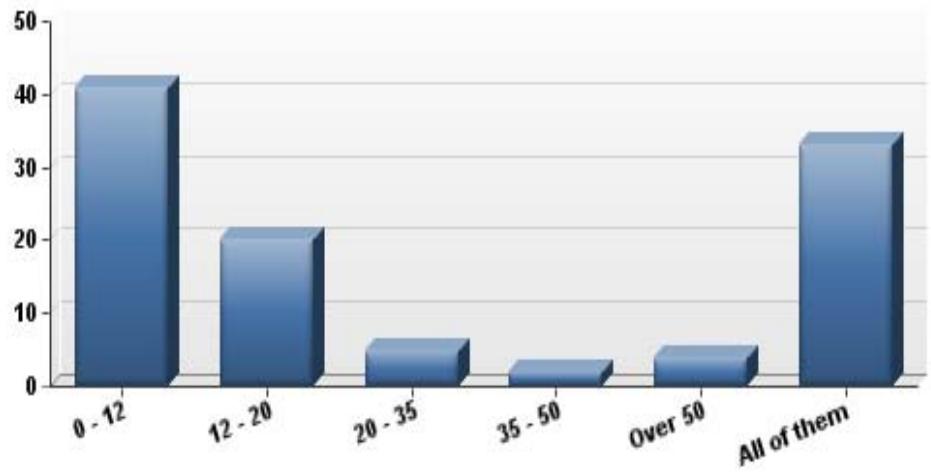
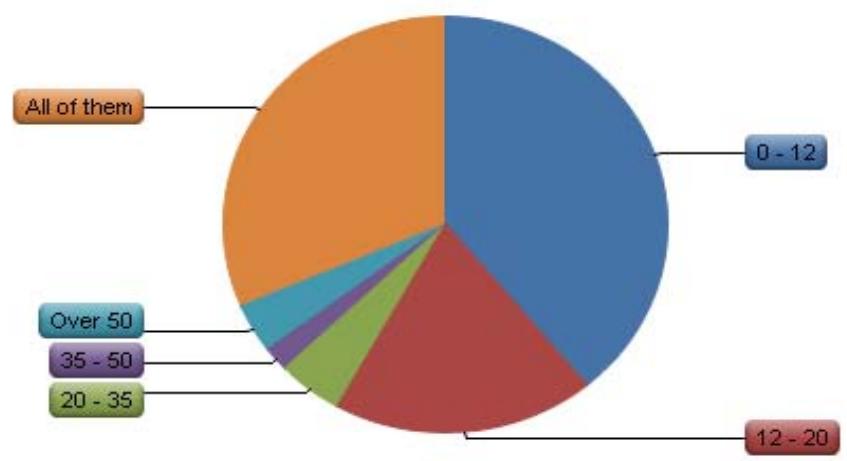
<table><tr><td>#</td><td>Answer</td><td colspan="2"></td><td>Response</td><td>%</td></tr><tr><td>1</td><td>0 - 12</td><td colspan="2"></td><td>41</td><td>39%</td></tr><tr><td>2</td><td>12 - 20</td><td colspan="2"></td><td>20</td><td>19%</td></tr><tr><td>3</td><td>20 - 35</td><td colspan="2"></td><td>5</td><td>5%</td></tr><tr><td>4</td><td>35 - 50</td><td colspan="2"></td><td>2</td><td>2%</td></tr><tr><td>5</td><td>Over 50</td><td colspan="2"></td><td>4</td><td>4%</td></tr><tr><td>6</td><td>All of them</td><td colspan="2"></td><td>33</td><td>31%</td></tr><tr><td></td><td>Total</td><td colspan="2"></td><td>105</td><td>100%</td></tr></table>
<table><tr><td>Statistic</td><td>Value</td></tr><tr><td>Min Value</td><td>1</td></tr><tr><td>Max Value</td><td>6</td></tr><tr><td>Mean</td><td>3.07</td></tr><tr><td>Variance</td><td>4.79</td></tr><tr><td>Standard Deviation</td><td>2.19</td></tr><tr><td>Total Responses</td><td>105</td></tr></table>
## Analysis and Findings
The question explored the age group within respondents' families that is most affected by communicable diseases related to waste. The age group of 0-12 years appears to be the most affected, with $39\%$ of respondents indicating that this age group experiences a higher incidence of communicable diseases related to waste. A smaller proportion of respondents reported the age groups of 20-35 years $(5\%)$, 35-50 years $(2\%)$, and over 50 years $(4\%)$ as being most affected. Additionally, $31\%$ of respondents stated that communicable diseases related to waste affect all age groups within their family. These findings suggest that children (0-12 years) are perceived to be the most vulnerable to communicable diseases associated with waste, and the importance of safeguarding their health through effective waste management practices and preventive measures. Additional research and analysis is needed to establish a definitive correlation, but the data underscores the importance of targeted interventions and education initiatives to protect the health of children and other vulnerable age groups from the impact of waste-related communicable diseases.
Question 19: Is open waste responsible for infectious diseases frequently experienced by your family members?
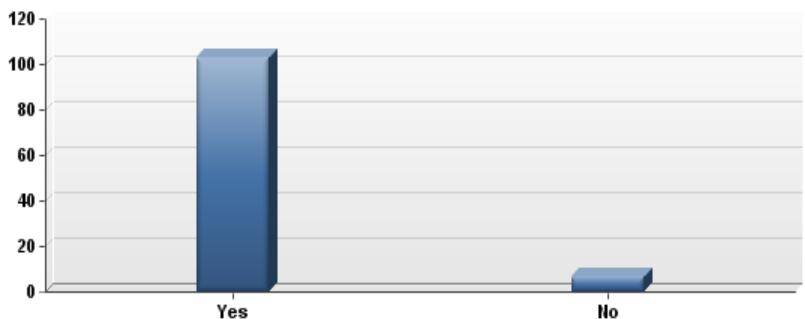
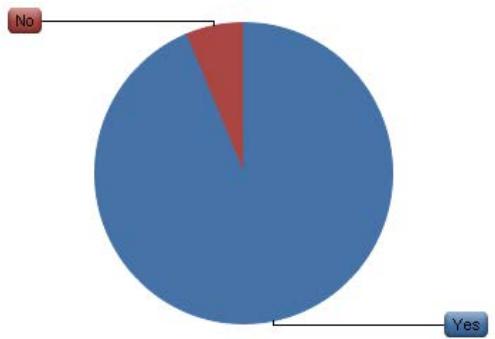
<table><tr><td>#</td><td>Answer</td><td></td><td>Response</td><td>%</td></tr><tr><td>1</td><td>Yes</td><td></td><td>103</td><td>94%</td></tr><tr><td>2</td><td>No</td><td></td><td>7</td><td>6%</td></tr><tr><td></td><td>Total</td><td></td><td>110</td><td>100%</td></tr></table>
<table><tr><td>Statistic</td><td>Value</td></tr><tr><td>Min Value</td><td>1</td></tr><tr><td>Max Value</td><td>2</td></tr><tr><td>Mean</td><td>1.06</td></tr><tr><td>Variance</td><td>0.06</td></tr><tr><td>Standard Deviation</td><td>0.25</td></tr><tr><td>Total Responses</td><td>110</td></tr></table>
## Analysis and Findings
This question seeks to comprehend the perceived responsibility of open waste for the incidence of infectious diseases among household members of the respondents. An overwhelming majority (94%) answered affirmatively, stating that open waste is responsible for the infectious diseases experienced by their family members. A small proportion (6%) responded negatively, suggesting that they do not attribute infectious disease incidence to open waste because they live in affluent areas. This suggests a recognition of the potential health risks associated with open waste and highlights the need for effective waste management practices to mitigate the spread of diseases. Further scientific research and analysis is necessary to establish a definitive causal relationship between open waste and infectious diseases.
Question 20: If yes, how often have you or family members visited a health centre for infectious diseases in the past 6 months?
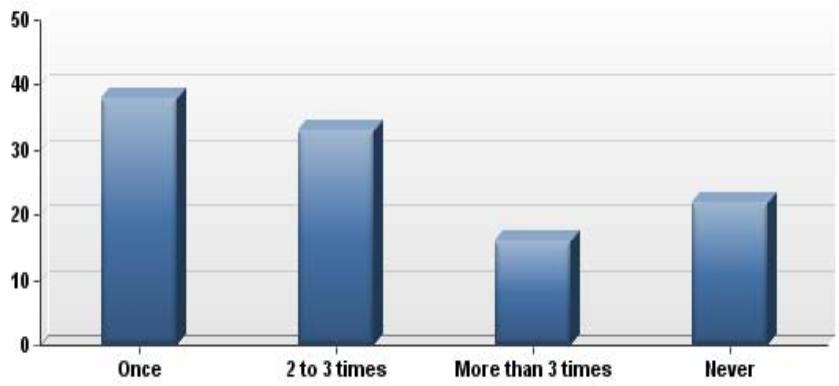
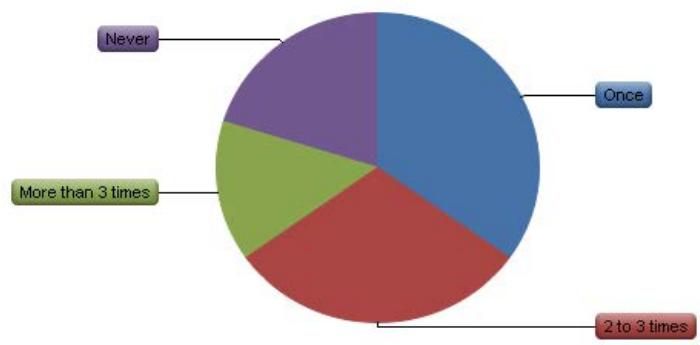
<table><tr><td>#</td><td>Answer</td><td colspan="2"></td><td>Response</td><td>%</td></tr><tr><td>1</td><td>Once</td><td colspan="2"></td><td>38</td><td>35%</td></tr><tr><td>2</td><td>2 to 3 times</td><td colspan="2"></td><td>33</td><td>30%</td></tr><tr><td>3</td><td>More than 3 times</td><td colspan="2"></td><td>16</td><td>15%</td></tr><tr><td>4</td><td>Never</td><td colspan="2"></td><td>22</td><td>20%</td></tr><tr><td></td><td>Total</td><td colspan="2"></td><td>109</td><td>100%</td></tr></table>
<table><tr><td>Statistic</td><td>Value</td></tr><tr><td>Min Value</td><td>1</td></tr><tr><td>Max Value</td><td>4</td></tr><tr><td>Mean</td><td>2.20</td></tr><tr><td>Variance</td><td>1.27</td></tr><tr><td>Standard Deviation</td><td>1.13</td></tr><tr><td>Total Responses</td><td>109</td></tr></table>
## Analysis and Findings
The question studies the frequency of visits to a health centre for infectious diseases in the past 6 months among respondents and their family members. The data collected provides valuable insights into the utilization of healthcare services for infectious diseases. $35\%$ of respondents visited a health centre once during the specified period, while $30\%$ reported visiting 2 to 3 times, while $15\%$ visited more than 3 times. A significant portion $(20\%)$ indicated they had not visited a health centre for infectious diseases within the past 6 months. Further analysis could provide additional context, such as the reasons for seeking healthcare or barriers preventing individuals from visiting health centres.
Question 21: If yes, did your doctor confirm that the disease was caused by waste?
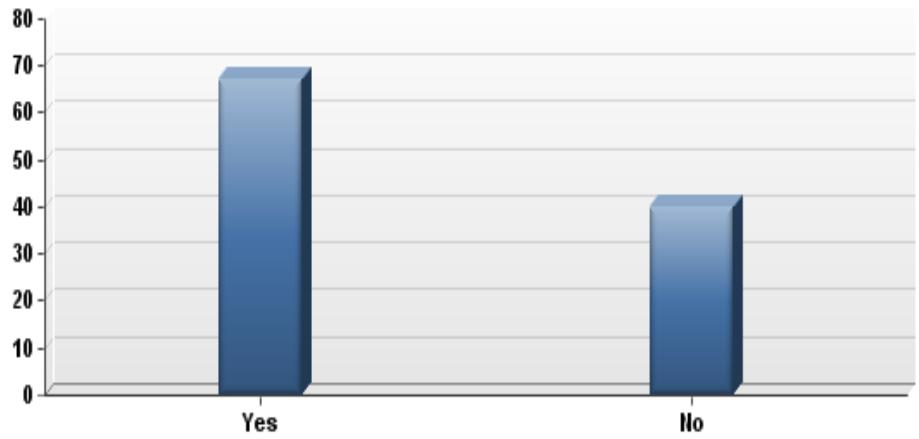
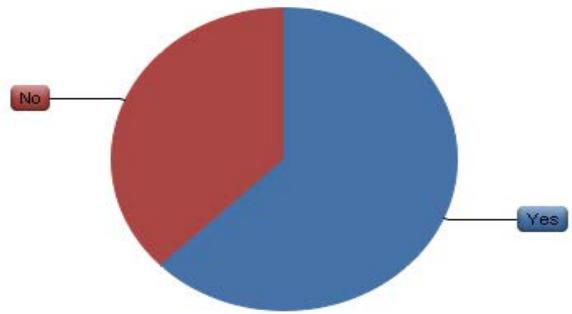
<table><tr><td>#</td><td>Answer</td><td colspan="2"></td><td>Response</td><td>%</td></tr><tr><td>1</td><td>Yes</td><td colspan="2"></td><td>67</td><td>63%</td></tr><tr><td>2</td><td>No</td><td colspan="2"></td><td>40</td><td>37%</td></tr><tr><td></td><td>Total</td><td colspan="2"></td><td>107</td><td>100%</td></tr></table>
<table><tr><td>Statistic</td><td>Value</td></tr><tr><td>Min Value</td><td>1</td></tr><tr><td>Max Value</td><td>2</td></tr><tr><td>Mean</td><td>1.37</td></tr><tr><td>Variance</td><td>0.24</td></tr><tr><td>Standard Deviation</td><td>0.49</td></tr><tr><td>Total Responses</td><td>107</td></tr></table>
## Analysis and Findings
The question asks whether the respondents' doctors have confirmed that the disease they experienced was caused by waste. The data obtained provides insights into the confirmation of waste-related diseases by medical professionals. Of the respondents, $63\%$ answered affirmatively, stating that their doctors confirmed the link between their disease and waste. In contrast, $37\%$ responded negatively, indicating that their doctors did not establish a direct connection between the disease and waste.
These findings suggest that a significant proportion of respondents received confirmation from medical professionals regarding the causal relationship between their illness and waste. However, it is essential to note that further investigation may be necessary to determine the specific types of diseases and waste sources involved, as well as the limitations of diagnostic processes. Overall, the survey highlights the importance of medical confirmation in establishing the connection between diseases and waste, which can guide public health interventions, waste management strategies, and healthcare approaches to mitigate the impact of waste-related illnesses.
Question 22: How many days did you or your family members miss work or school due to a communicable disease in the past 6 months? Please provide the average number of days missed.
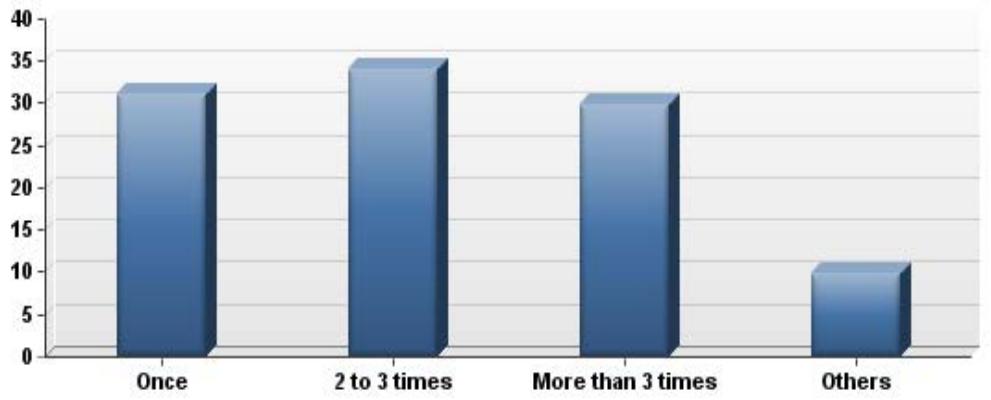
<table><tr><td>#</td><td>Answer</td><td colspan="2"></td><td>Response</td><td>%</td></tr><tr><td>1</td><td>Once</td><td colspan="2"></td><td>31</td><td>30%</td></tr><tr><td>2</td><td>2 to 3 times</td><td colspan="2"></td><td>34</td><td>32%</td></tr><tr><td>3</td><td>More than 3 times</td><td colspan="2"></td><td>30</td><td>29%</td></tr><tr><td>4</td><td>Others</td><td colspan="2"></td><td>10</td><td>10%</td></tr><tr><td></td><td>Total</td><td colspan="2"></td><td>105</td><td>100%</td></tr></table>
<table><tr><td>Statistic</td><td>Value</td></tr><tr><td>Min Value</td><td>1</td></tr><tr><td>Max Value</td><td>4</td></tr><tr><td>Mean</td><td>2.18</td></tr><tr><td>Variance</td><td>0.94</td></tr><tr><td>Standard Deviation</td><td>0.97</td></tr><tr><td>Total Responses</td><td>105</td></tr></table>
## Analysis and Findings
The question looks into how many days in the past 6 months the person or their family members missed work or school because of an infectious disease. The data collected provides valuable insights into the frequency of absences. The responses reveal that the majority of respondents (30%) reported missing work or school once during the specified period. A similar proportion of respondents (32%) reported missing 2 to 3 times, while 29% reported missing more than 3 times. A smaller portion (10%) provided other responses, which were not specified.
Overall, the survey highlights a significant number of absences due to communicable diseases in the past 6 months, with a range from occasional absences to more frequent occurrences. These findings indicate the potential impact of communicable diseases on work and educational attendance. It is worth noting that further analysis could provide additional context and insights into specific factors contributing to the frequency of absences. Nevertheless, the data underscores the importance of implementing measures to prevent and manage communicable diseases, such as promoting vaccination, hygiene practices, and workplace/school policies that support the health and well-being of individuals.
Question 23: Can proper waste management effectively prevent such communicable diseases?
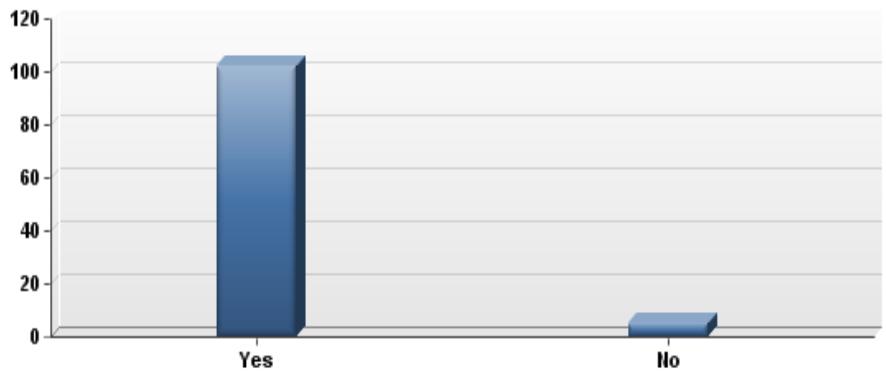
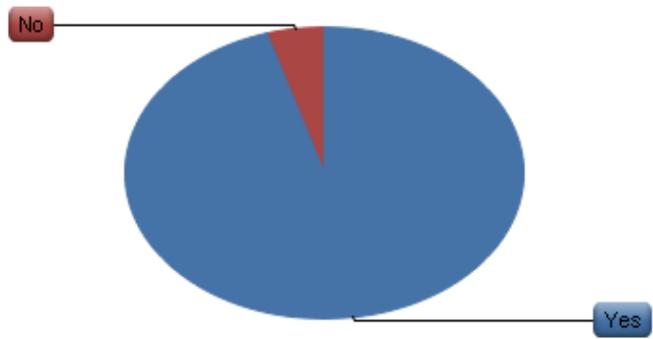
<table><tr><td>#</td><td>Answer</td><td></td><td>Response</td><td>%</td></tr><tr><td>1</td><td>Yes</td><td></td><td>102</td><td>95%</td></tr><tr><td>2</td><td>No</td><td></td><td>5</td><td>5%</td></tr><tr><td></td><td>Total</td><td></td><td>107</td><td>100%</td></tr></table>
<table><tr><td>Statistic</td><td>Value</td></tr><tr><td>Min Value</td><td>1</td></tr><tr><td>Max Value</td><td>2</td></tr><tr><td>Mean</td><td>1.05</td></tr><tr><td>Variance</td><td>0.04</td></tr><tr><td>Standard Deviation</td><td>0.21</td></tr><tr><td>Total Responses</td><td>107</td></tr></table>
## Analysis and Findings
The analysis explores the effects of waste-related health issues on a person's financial stability, productivity at work, and overall well-being. Based on the survey, $95\%$ of respondents believed that proper waste management can prevent communicable diseases, according to an expert from the environment and health department. The statistical analysis of the responses suggests that waste-related health issues have a minimal impact, with a mean value of 1.05 and a minimum value of 1 and a maximum value of 2. The small variance and low standard deviation further support the notion that the impact is relatively consistent across the respondents. Further research could provide additional insights into specific factors that may affect the relationship between waste-related health issues and these aspects of life.
Question 24: To what extent do waste-related health issues impact a person's financial well-being, work efficiency, productivity, and overall prosperity?
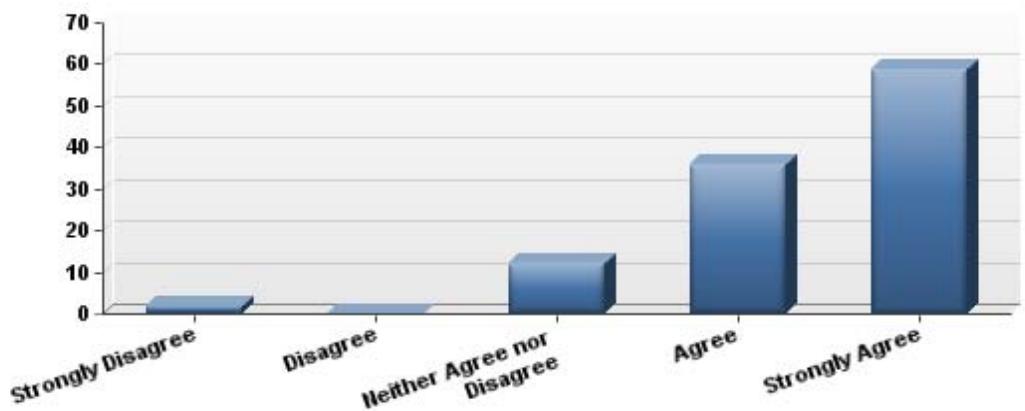
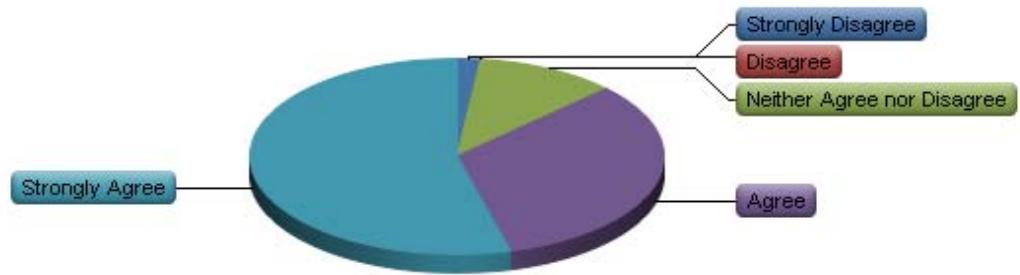
<table><tr><td>#</td><td>Answer</td><td></td><td>Response</td><td>%</td></tr><tr><td>1</td><td>Strongly Disagree</td><td></td><td>2</td><td>2%</td></tr><tr><td>2</td><td>Disagree</td><td></td><td>0</td><td>0%</td></tr><tr><td>3</td><td>Neither Agree nor Disagree</td><td></td><td>12</td><td>11%</td></tr><tr><td>4</td><td>Agree</td><td></td><td>36</td><td>33%</td></tr><tr><td>5</td><td>Strongly Agree</td><td></td><td>59</td><td>54%</td></tr><tr><td></td><td>Total</td><td></td><td>109</td><td>100%</td></tr></table>
<table><tr><td>Statistic</td><td>Value</td></tr><tr><td>Min Value</td><td>1</td></tr><tr><td>Max Value</td><td>5</td></tr><tr><td>Mean</td><td>4.38</td></tr><tr><td>Variance</td><td>0.68</td></tr><tr><td>Standard Deviation</td><td>0.83</td></tr><tr><td>Total Responses</td><td>109</td></tr></table>
## Analysis and Findings
The question seeks to recognise the effects of waste-related health problems on an individual's financial stability, workplace performance, productivity and general well-being. The statistical analysis of the responses suggests that waste-related health issues have a minimal impact, with a mean value of 1.05 and a minimum value of 1 and a maximum value of 2. The majority of respondents (54%) strongly agree that health issues can have a negative impact on their income, efficiency, productivity, and overall prosperity. A significant portion of respondents (33%) agree that health issues can have an adverse effect on their financial stability, work efficiency, productivity, and overall well-being. Neither Agree nor Disagree: A small portion of respondents (11%) neither agree nor disagree with the statement.
Overall, the data highlights the importance of good health and the acknowledgement of its potential influence on various aspects of life. These findings underscore the significance of addressing health concerns and implementing measures to mitigate their adverse effects on individuals' well-being and livelihoods.
Question 25: How does improved health status impact a person's earnings, job opportunities, and quality of life in terms of education, treatment, and nutrition?
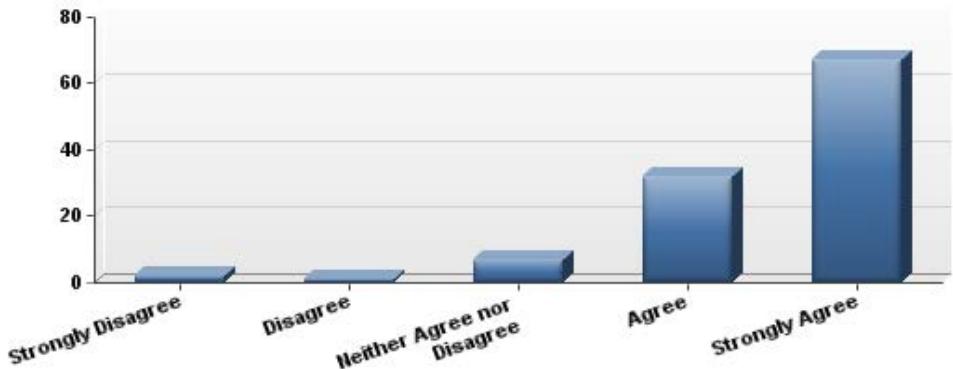
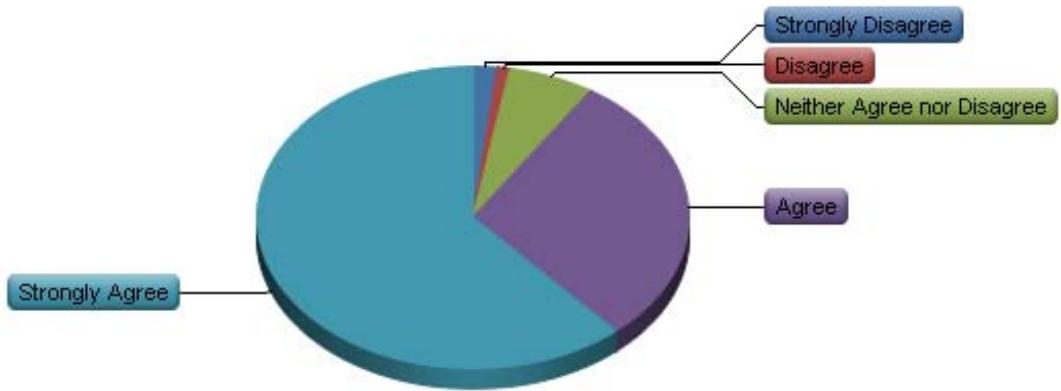
<table><tr><td>#</td><td>Answer</td><td colspan="2"></td><td>Response</td><td>%</td></tr><tr><td>1</td><td>Strongly Disagree</td><td colspan="2"></td><td>2</td><td>2%</td></tr><tr><td>2</td><td>Disagree</td><td colspan="2"></td><td>1</td><td>1%</td></tr><tr><td>3</td><td>Neither Agree nor Disagree</td><td colspan="2"></td><td>7</td><td>6%</td></tr><tr><td>4</td><td>Agree</td><td colspan="2"></td><td>32</td><td>29%</td></tr><tr><td>5</td><td>Strongly Agree</td><td colspan="2"></td><td>67</td><td>61%</td></tr><tr><td></td><td>Total</td><td colspan="2"></td><td>109</td><td>100%</td></tr></table>
<table><tr><td>Statistic</td><td>Value</td></tr><tr><td>Min Value</td><td>1</td></tr><tr><td>Max Value</td><td>5</td></tr><tr><td>Mean</td><td>4.48</td></tr><tr><td>Variance</td><td>0.66</td></tr><tr><td>Standard Deviation</td><td>0.81</td></tr><tr><td>Total Responses</td><td>109</td></tr></table>
## Analysis and Findings
This question explores the relationship between improved health status and its impact on various aspects of a person's life, including earnings, work opportunities, and quality of life. A majority of respondents (61%) strongly agree that improved health status positively affects earnings, job opportunities, and quality of life, suggesting that there is a significant correlation between good health and these aspects of life. Additionally, 67% of respondents strongly agree that improved health status can have a positive impact on the quality of life in terms of education, treatment, and nutrition. However, a portion of respondents (29%) simply agree without strongly agreeing, suggesting that while they acknowledge the positive impact of improved health on earnings, job opportunities, and quality of life, they may not perceive it as an overwhelmingly strong relationship.
The findings from this survey align with existing research that supports the idea that improved health status has wide-ranging benefits and can significantly influence a person's economic and overall well-being. The study reveals that in slum areas, poor waste management is prevalent among $90\%$ of respondents, resulting in health issues, decreased immunity, chronic diseases, and a subsequent decline in income. The findings emphasize the urgent need to improve waste management and healthcare in slum areas to enhance economic productivity and overall quality of life. Investments in infrastructure and targeted programs are necessary to achieve these goals.
## V. A REVIEW ON THE NEW DEVELOPMENT: INSIGHTS FROM STUDIES AND REVIEWS
The new developments in solid waste management (SWM) in Bangladesh can be organized as follows:
### Current Situation in Dhaka
In recent years, solid waste infrastructure management in Dhaka, the capital of Bangladesh, has involved private and public partnerships (Zahur, M.
2007). Despite these efforts, the city has not seen significant changes or a clean look. Additionally, the indiscriminate littering of city dwellers remains unabated.
Collaboration with Japan International Cooperation Agency (JICA) In 2005, the Japan International Cooperation Agency (JICA) initiated a master plan to enhance Dhaka city's SWM capacity and management skills. The plan aimed to address the lack of regulatory administration and laws for waste management (Dhaka City Corporation & JICA, 2005).
Household Waste Management and Collection Systems
Ahsan & Zaman (2014) suggest that there have been changes in the household waste management and collection systems in both South and North Dhaka City Corporation, although there is no visible improvement in the appearance of streets and neighbourhoods.
Medical Waste Management
Dihan et al. (2023) report on Bangladesh's current medical waste management situation, predicting the generation of 50,000 tons of medical waste using an empirical model.
Technological Advances and Management Principles
Singh et al. (2013) highlight the importance of discussing recent technological advances, management principles, pitfalls, and challenges associated with SWM in urban areas.
Proposed Waste Disposal System
Vashi & Desai (2018) propose a waste disposal system that incorporates integrated informal recycling, small-scale bio-methanation, Mechanical Biological Treatment (MBT), and Refuse-Derived Fuel/Waste-to-Energy (RDF/WTE) technologies.
Adoption of the 3R Strategy In 2010, the Department of Environment (DoE) in Bangladesh adopted the 3R strategy (reduce, reuse, recycle) to promote sustainable waste management practices. The 3Rs play a crucial role in reducing greenhouse gas emissions and transforming waste into valuable resources.
Construction of Waste Management Plants
The DoE launched a program to construct two waste management plants—one in Matuail (Dhaka South City Corporation) and another in Amin Bazar (Dhaka North City Corporation). These plants aim to produce compost fertilizer from solid waste collected in different parts of Dhaka, with a daily production capacity of 20 tonnes per plant (Yousuf & Reza, 2013).
Establishment of Secondary Transfer Stations (STS)
The construction of 52 STSs in Dhaka North City Corporation has helped in removing large quantities of waste containers from roads, thereby improving traffic conditions. However, progress in the construction of STSs in Dhaka South City Corporation has been slow, with only 12 of the planned 45 completed (Saqib, M. 2018).
Coordination of Primary Waste Collection
The Primary Waste Collection Service Provider (PWCSP), an NGO, coordinates the collection of waste from households to the STS. In 2016-17, 340 private operators were registered with PWCSP, but there are also unregistered operators involved in waste collection (Prodhan, & Kaeserb, 2019).
Review of Progress and Future Outlook
An overview of progress towards the implementation of solid waste management policies in Dhaka indicates that a modern and environmentally friendly approach is needed. The current waste management practices pose health and livelihood risks. The success of the waste-to-energy project and adherence to the master plan will determine the future of waste management in Dhaka (Jerin et al., 2022).
The developments in SWM in Dhaka, including compost production, construction of STS, and coordination of waste collection, reflect efforts to improve waste management practices (Kabir, 2015). However, the waste management situation in Dhaka requires a more modern and environmentally friendly approach to address the existing challenges effectively.
## VI. DISCUSSION
Solid waste mismanagement is a global problem with far-reaching consequences for environmental pollution, social inclusion and economic sustainability, especially in developing countries, and Dhaka, the capital of Bangladesh, is one of them. Dhaka City Corporation is facing serious challenges in providing a satisfactory service to city dwellers due to limited resources and poor management plans, highlighting the need for more comprehensive and sustained efforts to improve waste management practices in the city (Ahsan, et al., 2014).
Insufficient waste management practices pose significant threats to both the environment and the wellbeing of Dhaka's residents (Haque & Alam, 2012). Hence, it is essential to increase investment in education and training for waste management professionals, infrastructural development, awareness campaigns, and resources to support sustainable waste management practices (World Bank, 2011). This paper highlights the urgent need for innovative approaches, increased awareness, and targeted policies to address the challenges of solid waste management in Dhaka, Bangladesh.
Furthermore, this study provides insights into the challenges and implications of solid waste management in Dhaka. It emphasizes the need for comprehensive strategies involving awareness and education initiatives, policy interventions, and collaboration among stakeholders. Evaluating the effectiveness of these strategies, particularly those targeting vulnerable populations, and exploring innovative waste management approaches are essential for a cleaner and healthier environment, improved public health outcomes, and enhanced human development and poverty alleviation efforts in Dhaka.
As inadequate waste management disproportionately affects these communities, it is crucial to address the unique needs of vulnerable groups (Hoonweg, D. 2012). Solid waste management is interconnected with environmental health, poverty alleviation, and economic development (Wilson, et al., 2015). Therefore, waste management should be approached as an integral part of sustainable development, offering potential benefits such as employment opportunities, reduced health costs, and economic growth (World Bank, 2012).
Nevertheless, further studies should concentrate on assessing the efficacy of these methods, particularly those that target disadvantaged communities, and investigating cutting-edge waste management strategies in the context of Dhaka. By addressing these critical issues, Dhaka can work towards a cleaner and healthier environment, improved public health outcomes, and enhanced human development and poverty alleviation efforts.
## VII. CONCLUSION
Inadequate solid waste management in Dhaka, Bangladesh has far-reaching implications for human development, poverty, and health. The city's poor waste management practices have led to an increased prevalence of infectious diseases, degraded air and water quality, and contributed to a high rate of poverty and illness. It is crucial to recognize the importance of sustainable solid waste management (SWM) in achieving human development goals and addressing these pressing concerns in Dhaka. This study sheds light on the significant impact of solid waste management (SWM) on health outcomes and poverty alleviation in the city. The findings reveal that inadequate municipal solid waste management practices contribute to disease prevalence and pose substantial risks to public health. The inadequate disposal of waste not only leads to environmental pollution but also exacerbates poverty, particularly among low-income groups and slum dwellers.
Although there are numerous causes why a community falls under the grip of poverty, it is crucial to acknowledge that unsanitary living conditions, compromised health, and the prevalence of waste-related communicable diseases significantly contribute to the perpetuation of poverty and the decline in living standards. This research nevertheless underscores the urgent requirement for comprehensive and effective strategies in solid waste management (SWM) specifically tailored to address the needs of vulnerable communities in Dhaka.
By revealing the negative consequences of poor waste management, it highlights the importance of prioritizing sophisticated waste management initiatives. These initiatives should encompass waste reduction, efficient collection systems, and recycling programs. Specifically, prioritizing solid waste management in slum areas should be a key focus. Furthermore, promoting community awareness and participatory campaigns is crucial to foster behavioural changes towards sustainable waste management practices. Achieving these goals requires collaboration between government agencies, non-governmental organizations, and local communities to develop and implement integrated waste management solutions.
The solution is achievable through the allocation of funds and the establishment of collaborative monitoring mechanisms among stakeholders. Applying these measures will yield significant benefits, including improved health, pollution control, reduced disease burden, increased income, and overall enhancement of human development. By striking a balance between these initiatives, Bangladesh can effectively address the challenges of waste management and pave the way for sustainable development.
Further research is required to explore the long-term impact and economic benefits of a comprehensive waste management system in Dhaka city. Scalability and replicability studies of successful waste management models in other urban contexts can contribute to broader knowledge and guide policy decisions. Furthermore, incorporating participatory approaches and engaging local communities will be instrumental in achieving equitable and sustainable SWM outcomes.
Analysis and Findings
[^1]: The current metro area population of Dhaka in 2023 is 23,210,000, a $3.26\%$ increase from 2022. Source: Dhaka, Bangladesh Metro Area Population 1950-2023. (n.d.). MacroTrends. https://www.macrotrends.net/cities/20119/dhaka/population _(p.1)_
[^2]: McAllister, Jessica, "Factors Influencing Solid-Waste Management in the Developing World" (2015). All Graduate Plan B and other Reports. _(p.1)_
[^3]: See, https://dncc.gov.bd _(p.2)_
[^4]: See, https://www.academia.edu/24448799/A_Case_Study_on_Dhaka_South_City_Corporation_DSCC_ _(p.2)_
[^5]: $^{5}$ Singh, P. K., & Chudasama, H. (2020). Evaluating poverty alleviation strategies in a developing country. *PloS one*, 15(1), e0227176. _(p.2)_
[^6]: See, What a Waste: An Updated Look into the Future of Solid Waste Management. https://www.worldbank.org/en/news/immersive-story/2018/09/20/what-a-waste-an-updated-look-into-the-future-of-solid-wastemanagement _(p.3)_
[^7]: In Book: Environmental Thoughts, Part-I, 2019 (pp. 80 - 118) Edition: March-2019 Chapter: Municipal Solid Waste Management in Dhaka City: Current Status, Problems and Possible Solutions Publisher: Toyza Publications _(p.3)_
[^8]: See, https://education.nova.edu/Resources/uploads/app/35/files/arc.doc/mixed methods.pdf _(p.4)_
[^9]: A semi-structured interview is a qualitative research method used to gain an in-depth understanding of the respondent's feelings and beliefs on specific issues. _(p.4)_
[^10]: Johnston, M. P. (2014). Secondary data analysis: A method of which the time has come. Qualitative and quantitative methods in libraries, 3(3), 619-626. _(p.4)_
[^11]: NGO stands for non-governmental organization. Source: ngosour ce.org _(p.4)_
[^12]: American Planning Association. (2002). APA Policy Guide on Solid and Hazardous Waste Management. Retrieved from https://www.planning.org/policy/guides/adopted/wastemgmt.htm _(p.4)_
[^13]: See, Nuremberg Code. https://research.unc.edu/human-research-ethics/resources/ccm3_019064/ _(p.4)_
[^528]: https://digitalcommons.usu.edu/gradreports/528 _(p.1)_
Generating HTML Viewer...
References
47 Cites in Article
Dhaka, Bangladesh Metro Area Population.
A Prodhan,A Kaeserb (2019). Municipal Solid Waste Management in Dhaka City: Present Status, Problems, and Probable Solutions-A Review.
S Ahmed,A Sinha,M Haider,H Craddock (2012). Community Perception of Solid Waste Management (SWM) in Dhaka, Bangladesh.
S Islam (2021). Urban waste management in Bangladesh: an overview with a focus on Dhaka.
Suraiya Yasmin,M Rahman (2017). A Review of Solid Waste Management Practice in Dhaka City, Bangladesh.
Who (2012). Astroviruses: background document for the WHO guidelines for drinking-water quality and the WHO guidelines on sanitation and health.
(2013). Environmental Protection Agency (EPA).
(2002). Environmental Protection Agency (EPA).
S Choudhury (2010). EPA Superfund Sites, Arizona, 1997.
Delufa Jerin,Hasna Sara,Marzuka Radia,Prianka Hema,Shahriar Hasan,Salma Urme,Camilla Audia,Md. Hasan,Zahidul Quayyum (2022). An overview of progress towards implementation of solid waste management policies in Dhaka, Bangladesh.
Atiq Zaman (2005). Peer Review Report For: Policy analysis on municipal solid waste management in Dhaka South City Corporation, Bangladesh: A qualitative study [version 1; peer review: 1 approved with reservations, 1 not approved].
I Enayetullah,A Sinha,S Khan (2005). Urban solid waste management scenario of Bangladesh: Problems and prospects.
G Hasan,Md. Chowdhury (2006). Municipal Waste Management and Environmental Hazards in Bangladesh.
M Azom,K Mahmud,S Yahya,A Sontu,S Himon (2012). Environmental Impact Assessment of Tanneries: A Case Study of Hazaribag in Bangladesh.
Maria Triassi,Rossella Alfano,Maddalena Illario,Antonio Nardone,Oreste Caporale,Paolo Montuori (2015). Environmental Pollution from Illegal Waste Disposal and Health Effects: A Review on the “Triangle of Death”.
Kaza Silpa (2018). What a Waste: An Updated Look into the Future of Solid Waste Management.
J Magaji,O Adekiya,S Sarka (2011). ASSESSMENT OF SOCIO-ECONOMIC IMPACT OF COVID-19 PANDEMIC AMONG THE RESIDENTS OF GWAGWALADA, FCT ABUJA, NIGERIA.
M Ashikuzzaman,Md. Howlader (2020). Sustainable Solid Waste Management in Bangladesh.
M Ashikuzzaman,Md. Howlader (2020). Sustainable Solid Waste Management in Bangladesh.
Shahjahan Bhuiyan (2010). A crisis in governance: Urban solid waste management in Bangladesh.
A Saifullah,M Islam (2016). Municipal solid waste (MSW) management in Dhaka City, Bangladesh.
Jean Saha (1990). Is the Human Development Index (HDI) of the United Nations Development Programme (UNDP) a relevant indicator?.
(2002). Policy Planning for the Future.
(2013). World Medical Association Declaration of Helsinki: ethical principles for medical research involving human subjects.
Margaret Davis (1989). Retrospective Studies.
L Connelly (2014). Ethical considerations in research studies.
James Giordano,Michelle O'reilly,Helen Taylor,Nisha Dogra (2007). Confidentiality and Autonomy: The Challenge(s) of Offering Research Participants a Choice of Disclosing Their Identity.
C Williamson (2013). Questionnaires, individual interviews and focus group interviews.
C Kothari (2004). Research methodology: Methods and techniques.
Christine Dearnley (2005). A reflection on the use of semi-structured interviews.
M Johnston (2014). Secondary data analysis: A method of which the time has come.
M Zahur (2007). Solid waste management of Dhaka city: public private community partnership.
T Ahsan,A Zaman (2014). Household waste management in high-rise residential building in Dhaka, Bangladesh: Users' perspective.
Musfekur Dihan,S Abu Nayeem,Hridoy Roy,Md. Islam,Aminul Islam,Abdulmohsen Alsukaibi,Md. Awual (2023). Healthcare waste in Bangladesh: Current status, the impact of Covid-19 and sustainable management with life cycle and circular economy framework.
Deval Singh,Anil Dikshit,Sunil Kumar (2023). Smart technological options in collection and transportation of municipal solid waste in urban areas: A mini review.
M Vashi,K Desai (2018). A review on recent advancement in solid waste management concept.
(2010). Afghanistan National Development Strategy (ANDS) : final report / Government of the Islamic Republic of Afghanistan, Ministry of Economy..
Tariq Yousuf,A Reza (2013). 3R (Reduce, Reuse and Recycle) in Bangladesh.
M Saqib (2018). Waste Disposal & Management In Dhaka North City Corporation.
M Jerin,M Rashid,S Hossain,A Haque (2022). Assessment of environmental and health impacts due to improper solid waste management in Dhaka City, Bangladesh.
Mohammad Kabir (2015). Municipal Solid Waste Management System: A Study on Dhaka North and South City Corporations.
A Ahsan,M Alamgir,M El-Sergany,S Shams,M Rowshon,N Daud (2014). Assessment of Municipal Solid Waste Management System in a Developing Country.
M Haque,K Alam (2012). Solid waste management in Dhaka, Bangladesh: Problems and prospects.
Schoiswohl Michael (2013). United Nations Development Programme (UNDP).
Daniel Hoornweg,Perinaz Bhada-Tata (2012). What a Waste : A Global Review of Solid Waste Management.
D Wilson,L Rodic,P Modak,R Soos,A Carpintero,K Velis,. Simonett,O (2015). Global waste management outlook.
No ethics committee approval was required for this article type.
Data Availability
Not applicable for this article.
How to Cite This Article
Nahid Aktar. 2026. \u201cUnveiling the Impact of Solid Waste Management on Health and Poverty Alleviation in Dhaka City\u201d. Global Journal of Human-Social Science - H: Interdisciplinary GJHSS-H Volume 23 (GJHSS Volume 23 Issue H5): .
Explore published articles in an immersive Augmented Reality environment. Our platform converts research papers into interactive 3D books, allowing readers to view and interact with content using AR and VR compatible devices.
Your published article is automatically converted into a realistic 3D book. Flip through pages and read research papers in a more engaging and interactive format.
Dhaka, the capital of Bangladesh, faces significant challenges in solid waste management. This study aims to unlock the transformative power of proper solid waste management (SWM) in improving the health and economic well-being of disadvantaged urban residents in the city. While previous literature has focused primarily on waste collection, disposal and recycling, this study explores waste management as a powerful catalyst for poverty alleviation, unlocking the untapped potential for transformative change. Through qualitative and quantitative methods, including surveys, expert interviews and a systematic literature review, the study identifies sources of pollution and factors affecting slum dwellers’ health and human development indicators. It classifies conditions affecting the health-based vitality of slum dwellers. The paper highlights the potential of sustainable waste management practices to improve health outcomes, reduce disease incidence, and alleviate poverty. It emphasizes the need for policymakers to prioritize comprehensive waste management initiatives and promote community awareness and participation to address these issues.
Our website is actively being updated, and changes may occur frequently. Please clear your browser cache if needed. For feedback or error reporting, please email [email protected]
Thank you for connecting with us. We will respond to you shortly.