
I. INTRODUCTION
The rapid growth of mobile connectivity has revolutionised the way we interact with technology and each other. [1] Introducing 5G networks has brought unparalleled speed and efficiency, unlocking various possibilities across various industries. Simultaneously, blockchain technology has garnered significant attention for its potential to revolutionise digital transactions and create trustless, decentralised systems. By combining the power of 5G mobile connections and blockchain technology, we can build a robust and scalable infrastructure for microtransactions, overcoming the limitations of traditional payment systems.
Traditional Proof of Work (PoW) algorithms [2] requires extensive computational power and results in high energy consumption. While these networks have demonstrated their resilience and security, their scalability and transaction processing capabilities remain limited. Moreover, the increasing demand for real-time and low-latency transactions in today's digital landscape necessitates the exploration of alternative consensus mechanisms that can operate efficiently at scale.
In this paper, we propose the utilisation of 5G mobile connections as a layer 1 PoA blockchain node to facilitate microtransactions. [3] The PoA consensus mechanism, known for its low energy consumption and scalability, relies on known facilitators who take turns proposing and validating blocks. By leveraging the robust connectivity and low latency of 5G networks, we can establish a distributed and secure network of mobile devices acting as blockchain nodes. This approach could revolutionise microtransactions by offering near-instantaneous settlement times, increased throughput, and improved scalability.
We aim to address several key research questions in this study, including designing and implementing a PoA blockchain network utilising 5G mobile connections, evaluating its scalability and latency performance, and analysing its suitability for microtransactions. We will explore the integration of smart contracts, enabling the execution of automated and self-executing transactions, and assess the security implications of utilising 5G mobile connections as blockchain nodes.
The outcomes of this research have significant implications for various domains, including finance, supply chain management, the Internet of Things (IoT), and digital identity systems. We can unlock new possibilities for peer-to-peer transactions, micropayments, and decentralised applications by providing a scalable and efficient platform for microtransactions.
In the subsequent sections of this paper, we will delve into the technical details of our proposed solution, present experimental results, discuss potential challenges, and provide insights into the prospects of utilising 5G mobile connections as a Layer 1 PoA blockchain node for microtransactions is a type of crash fault tolerance consensus algorithms, which improves the efficiency of private and consortium blockchains. Unlike PoW, it does not have the longest chain or confirmation rule. New blocks are directly added to the chain with the unanimous approval of a group of trustworthy validators. Cryptographic puzzle solving is not a sport of the validators. As a result, executing this algorithm only requires a small amount of computing power. PoA relies on a set of dependable nodes known as an authority, each identified by a unique ID or public key.
The exchanges that are put away are confirmed by the partners afterwards. Certain qualities of the blockchain result in the good thing about distinctive spaces such as cryptocurrency, monetary segments, the Web of Things, etc. The different properties are decentralisation, straightforwardness, audibility, and cryptographic security. The information is put away safely in a Blockchain. This report investigates the potential of utilising 5G versatile systems as a hub in the Verification of Specialist (PoA) blockchains utilised for microtransactions. PoA employs an agreement calculation that gives specific hubs, called specialists, the control to approve and include pieces in the chain [3]. The organisation must authorise hubs in a PoA blockchain to take part in approval. This makes PoA blockchains more adaptable than open blockchains, which anybody can connect. Microtransactions are little budgetary exchanges that happen online, regularly utilising cryptocurrency. They are utilised to buy advanced products and administrations or create small instalments instead of conventional cash. Moreover, 5G is the fifth era of versatile systems and is anticipated to be rolled out worldwide for a long time. 5G is much quicker than past eras of versatile systems, up to 100 times quicker than 4G. This expanded speed and capacity will permit more data-intensive applications, such as gushing video and virtual reality, to be utilised on versatile gadgets.
II. STATE OF THE ART IN POA BLOCKCHAIN
In recent years, blockchain technology has gained significant attention and widely adopted across various industries. One of the critical challenges in blockchain networks is achieving consensus among the participants. The Proof of Authority (PoA) consensus algorithm is famous for its scalability and energy efficiency. This section presents state of the art in PoA blockchain networks and explores the utilisation of 5G mobile connections as nodes in Layer 1 PoA blockchains for microtransactions.
PoA, or Proof of Authority, is an algorithm used with blockchains and is responsible for delivering fast transactions through a consensus mechanism based on identity as a stake. [5] VeChain, Reltime and Xodex are the most notable platforms of PoA. The approved accounts in PoA-based networks corroborate the transactions and blocks. These are known as validators. The validators run the software and allow them to put the transactions in blocks. This process is automated, and there is no requirement for the validators to monitor the computers. [6] Proof of Authority (PoA) is a consensus algorithm that relies on a set of trusted authorities or validators to validate transactions and create new blocks. Unlike Proof of Work (PoW) and Proof of Stake (PoS) algorithms, where participants compete or stake their tokens, PoA requires validators to be identified and authorised by the network.
In PoA, block validators are known entities with known addresses and public keys, making it easier to identify bad actors. Validator are typically selected based on their reputation, expertise, or stake in the network. Once authorised, a validator can participate in block creation and transaction validation. The consensus is achieved when most validators agree on the validity of transactions and the order of blocks. [7] PoA consensus offers several advantages over other consensus algorithms. It eliminates the need for resource-intensive mining or staking, resulting in lower energy consumption and increased scalability. PoA also provides faster block confirmation times, making it suitable for applications that require high transaction throughput. [8]
III. PROBLEM STATEMENT
Blockchain technology has revolutionised various industries by enabling secure and decentralised transactions. Within the realm of blockchain, microtransactions have gained significant attention due to their potential to facilitate instantaneous and low-cost transactions. However, several challenges hinder blockchain microtransaction systems' widespread adoption and efficient implementation. This paper aims to identify and address these challenges while exploring the opportunities presented by blockchain microtransactions. [9]
Blockchain systems need scalability issues when processing many microtransactions, leading to slow confirmation times and high transaction fees. Solving this problem is crucial to enabling efficient and real-time blockchain microtransactions.
There is, moreover, a need for belief between users and specialists. Usually, no centralised specialist controls the arrangement [7]. The clients must depend on agreement components to guarantee that exchanges are substantial and adjusted. However, these instruments do not culminate and can sometimes fall flat. This will lead to twofold investing and other issues.
Scalability: Current blockchain systems face scalability issues when processing many microtransactions, leading to slow confirmation times and high transaction fees. Solving this problem is crucial to enabling efficient and real-time blockchain microtransactions.
Privacy and Security: While blockchain provides immutability and transparency, preserving the privacy and security of microtransactions is vital. Ensuring the anonymity of users, protecting sensitive transaction details, and preventing unauthorized access or tampering are significant challenges that need to be addressed.
Interoperability: Interoperability among blockchain networks and platforms is essential for seamless microtransactions between users and applications. Developing standardised protocols and frameworks that enable cross-blockchain communication can
enhance the usability and utility of blockchain microtransaction systems.
Energy Efficiency: The resource-intensive nature of blockchain consensus algorithms, such as proof-of-work, raises concerns regarding the environmental impact and energy consumption associated with microtransaction processing. Exploring energy-efficient consensus mechanisms or optimising existing ones can help mitigate these concerns.
User Experience and Adoption: In order to foster widespread adoption of blockchain microtran
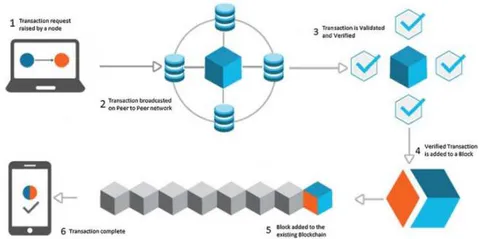
sction systems, it is essential to prioritise an intuitive, user-friendly, and accessible user experience for individuals with diverse technical backgrounds. This entails recognising user requirements, creating intuitive interfaces, and tackling usability challenges. Enhancing the user experience can facilitate greater adoption of blockchain technology. For a visual representation of the transactions through blockchain, please refer to Figure 1, Transactions through Blockchain.
Using blockchain for small transactions is better than the usual method because it has more benefits.
Because blockchain transactions cannot be undone, there is no reason for someone else to handle or manage payments. This makes small payments cheaper because there is no middle person to pay.
People can get their stuff immediately after paying because blockchain payments happen quickly. This is much better than regular small payments that might take a long time to complete. [10]
Blockchain's small financial transactions can be expanded easily, so big service providers can use them without any issues caused by scaling the platform.
Nevertheless, doing small financial transactions using blockchain technology has some problems too.
When you make a payment with blockchain, it cannot be undone. So, the people who provide the service must believe you are trustworthy. This is a big problem because it is hard to know for sure who someone is on the blockchain. [11]
Small payments made through blockchain technology are still new, and there must be more ways to make or help people use them. Companies must spend time and money creating small payment systems that use blockchain technology.
Because small blockchain financial transactions do not have user names, companies must be cautious about keeping their users' personal information private.
We use a type of blockchain called a consortium to make small transactions safer and more private for our customers. Blockchain technology can make online services more trustworthy by using a secure system for saving information and transactions. The consortium blockchain is a type of many organisations managed together instead of just one. This kind of blockchain suits businesses that want to share information and deals but keep it private. Companies can improve their service by using a particular consortium blockchain system. They can use it to keep their information private while still having control over it. Consortium blockchains can protect data and secure information better than traditional centralised databases.
IV. THE INTEGRATION
Integrating 5G mobile networks as nodes in a Layer 1 Proof of Authority (PoA) blockchain architecture for microtransactions represents a groundbreaking and forward-thinking solution to address pressing challenges in various business and industry sectors.
One of the primary motivations for integrating 5G networks into the blockchain infrastructure is the need for enhanced transaction speeds and reduced latency. The emergence of 5G networks, with their remarkable data transfer speeds and low-latency capabilities, presents an ideal opportunity to overcome this bottleneck.
Consider, for instance, the financial industry, which relies heavily on rapid and secure microtransactions. Traditional banking systems need help attempting to quickly process a high volume of microtransactions. This can result in delays and increased operational costs. By integrating 5G networks into the blockchain, financial institutions can significantly expedite microtransaction processing, reducing costs and enhancing overall efficiency.
Moreover, integrating 5G into the blockchain architecture holds immense promise for the Internet of Things (IoT) ecosystem. IoT devices, increasingly prevalent in various industries, require seamless and instantaneous communication for tasks such as sensor data reporting, automated decision-making, and remote control.
IoT devices can interact in real-time using 5G's low latency and high-speed capabilities within a blockchain framework, unlocking many new applications and possibilities.
Another compelling use case lies in supply chain management. The integration of 5G and blockchain can enable the real-time tracking of goods, ensuring transparency and traceability throughout the supply chain. This enhances logistics efficiency and strengthens trust among stakeholders, as they can access important records of product movements and transactions.
Integrating 5G with blockchain in the healthcare sector can have life-saving implications. Telemedicine and remote patient monitoring require rapid data transmission to ensure timely diagnoses and treatment.
With 5G connectivity within a secure blockchain framework, healthcare providers can securely transmit patient data while maintaining privacy and integrity. This innovation can revolutionize healthcare delivery, especially in remote or underserved areas.
Furthermore, integrating 5G into Layer 1 PoA blockchains enhances security and trust in microtransactions. PoA blockchains rely on a network of trusted nodes to validate transactions, reducing the risk of fraudulent activity.
With this, it is possible to strengthen the security of the blockchain while also benefiting from the inherent security features of 5G, such as encryption and authentication.
Challenges are inherent in any technological integration, and this proposal acknowledges potential hurdles. One key challenge is ensuring the compatibility and interoperability of 5G networks with blockchain protocols.
Standardisation efforts and collaboration between telecom companies and blockchain developers will be critical in addressing this issue. Additionally, network reliability and uptime concerns must be carefully considered, as any disruption in 5G connectivity could impact the blockchain's performance.
V. STANDALONESERVER NODE TO MOBILE NODE
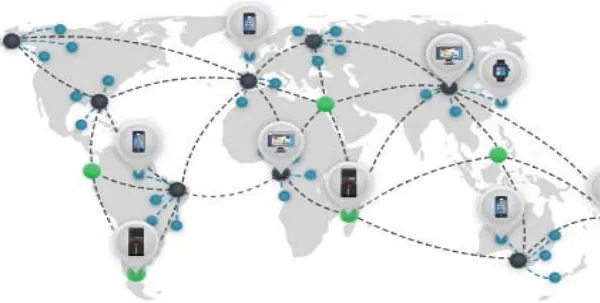
Integrating 5G networks and blockchain technology presents unique opportunities for revolutionising various industries. Mobile devices have become indispensable daily, [12] possessing considerable computational power and connectivity. Harnessing these devices as autonomous servers within a 5G network empowers us to capitalise on their inherent capabilities. In turn, this dramatically bolsters blockchain systems' security, scalability, and efficiency. For a deeper understanding of how these elements interact, please refer to Figure 2: Mobile Node Ecosystem. The motivation behind this work is to explore the potential of mobile nodes in providing trustworthy and efficient validation services, leading to a more robust blockchain ecosystem. [13]
We introduce a sophisticated three-tiered architecture that integrates mobile nodes, a dedicated 5G network, and the blockchain network to create a unified ecosystem. The mobile nodes, fortified with advanced hardware and software competencies, act as independent servers within the confines of the 5G network. These nodes interact with their counterparts in the blockchain network and perform the execution of consensus algorithms and partake in transaction verification procedures. Assuring fluid communication, the committed 5G network comes into play by offering substantial bandwidth, minimal latency, and unwavering reliability. It forms the crucial link that ensures flawless data exchange between the mobile nodes and the blockchain network. Figure 2 Mobile Nodes Ecosystem offers a comprehensive view of this landscape.
We introduce an enhanced PoA consensus algorithm tailored for mobile nodes in a 5G environment. The algorithm leverages the trustworthiness and integrity of the mobile node as a standalone server while considering the specific characteristics of the 5G network. It incorporates mechanisms to prevent collusion, ensure fairness, and minimise the risk of malicious activity. The algorithm's efficiency is demonstrated through performance evaluation and comparison with existing consensus mechanisms.
With servers acting as intermediaries, user data requests often encounter delays due to the need to travel to and from the server. In contrast, 5G mobile devices can access data more directly, resulting in almost instantaneous responses. This low latency is particularly critical for applications that require real-time interactions, such as online gaming, telemedicine, and autonomous vehicles.
5G mobile networks offer unparalleled mobility compared to server-based solutions. Users can access the network from virtually anywhere, untethered from physical servers.
5G mobile networks are equipped with edge computing capabilities, allowing data processing and analysis to occur closer to the data source. This decentralization of computing resources reduces the load on centralized servers and enables quicker decision-making. Applications focused on real-time data analytics, such as smart cities and industrial automation, benefit immensely from this feature.
The adoption of 5G mobile devices has made it better, the access to high-speed internet. Unlike server-based solutions that need specialized infrastructure and equipment, 5G mobile networks are accessible to a broader user base. This inclusivity fosters innovation and economic growth by enabling a wider range of individuals and businesses to use better connectivity.
Managing servers connected to 5G networks can be costly in terms of hardware and operational costs. In contrast, 5G mobile devices are readily available in the market, and users typically bear the cost of their own devices and data plans. This cost-sharing model can be more financially sustainable for individuals and businesses alike.
5G mobile networks offer scalability and flexibility that are challenging to achieve with server-based solutions. As user demands grow, mobile network operators can expand their infrastructure to accommodate increasing traffic. This adaptability is particularly valuable in fluctuating data loads, such as major events or emergencies.
Mobile devices are designed with energy efficiency in mind, aiming to extend battery life while maintaining high performance. On the other hand, data centers and servers demand substantial energy resources for cooling and operation. Using 5G mobile devices can reduce overall energy consumption, aligning with sustainability goals.
5G mobile networks improve security features. It includes end-to-end encryption and authentication protocols. With mobile devices, users can have more control over their data and privacy. It furthers some of the concerns with centralized server systems.
5G mobile networks prioritize the user experience, offering personalized services and content delivery. The adaptability of mobile applications helps better experiences for individual preferences, enhancing user satisfaction.
There are many good things about using the PoA blockchain for making small payments in government. [14] The PoA blockchain works very quickly and can process many transactions at once. This is about small and fast payments called micropayments. It is essential. The PoA blockchain can handle lots of users and is easy to expand. Many people use public services, so this is very important. Thirdly, the PoA blockchain is very safe and has a vital way of ensuring everyone agrees on what is happening. This is crucial for government organisations that handle essential information that needs to be kept safe.
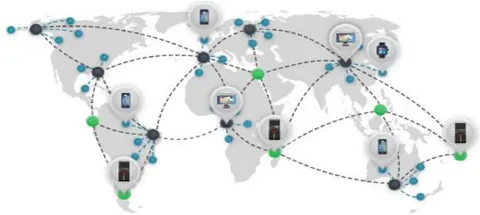
More and more people are using their phones to watch videos and play games, which uses much internet. [15] To ensure everyone can access everything quickly, a new way of sending internet wirelessly has been made called 5G. The advent of this novel wireless technology marks a significant step forward in terms of speed and data handling capacity. Its ability to process extensive information simultaneously and reduce communication delay to virtually nil propels us into a new era of advanced connectivity. See Figure 3, Mobile Phone Performance, for a more comprehensive depiction of these technological advancements and usage of time and battery life. To make progress, it is essential to use a broader range of frequencies, including millimetre wave frequencies. In the past, people rarely used high frequencies because they do not travel very far and can be easily blocked or disrupted.
A big thing that will make 5G better is called massive MIMO. Massive MIMO is a fancy tech that uses many antennas on the tower to make the internet go faster and stop things from getting mixed up.
5G will be beneficial, but there is a big problem with setting up the needed equipment. 5G uses high frequencies that cannot travel very far, so we need more small cells closer together to make it work. Moreover, using massive MIMO will need more base stations than before in older generations of wireless technology.
One way to solve this problem is by using something called blockchain technology. [16] Blockchain is a database that stores information in a way where no one person or group has complete control over it. This might be used to save details about where 5G stations are. If mobile operators save this information on a blockchain, they can quickly and easily set up 5G infrastructure.
Blockchain technology can also be used for smart contracts. [17] Smart contracts are software that performs transactions automatically when specific rules are followed. This can be used to make it easier to rent land and buildings from people. [18]
5G needs new security measures because it uses faster data and different waves requiring special protection. One way to solve the problem is to use quantum cryptography. [19] Quantum cryptography uses the rules of how tiny particles behave to ensure that messages are safe when sent. This can protect the information sent between 5G stations and gadgets.
This advantage is even more pronounced in a federated learning setting, where data is distributed across a network of devices. Using blockchain, 5G networks can ensure that data remains private and secure, even when distributed across a network. This makes federated learning an attractive option for 5G networks, which are expected to be highly distributed.
In addition, blockchain can provide a way to ensure that data is not tampered with or lost. [20] When data is stored on a blockchain, it is immutable and can be easily verified. This means that data stored on a blockchain is more secure than data stored on a centralised server. [21]
VI. PROPOSED SOLUTION
It would be easy to notice if someone tries to use the same money twice, and the payment will not go through. A blockchain can stop people from spending the same money twice. This plan uses one person or group to check and approve every transaction.
This group would write down everything bought or sold and ensure any new sales or purchases match what is already recorded. If the people in charge notice that someone tried to use the same money twice, they can say no to that transaction.
This way of doing things needs one main rule-maker, but it stops people from spending the same money twice and can work with other ways of staying safe, like secret codes. This authority would keep a record of all transactions that have taken place and check each new transaction against this record. If the authority sees that the same currency has been spent twice, it can reject the transaction. The advent of 5G technology brings with it a myriad of opportunities to revolutionise various industries. In this proposed solution, we explore using 5G mobile connections as a node in a Layer 1 Proof of Authority (PoA) blockchain designed explicitly for microtransactions. By combining the speed, low latency, and high bandwidth capabilities of 5G with the security and efficiency of PoA consensus, we can create a robust infrastructure for processing microtransactions in a scalable and decentralised manner.
To build a Layer 1 PoA blockchain suitable for microtransactions, the following components need to be considered.
Consensus Mechanism: Implement a Proof of Authority consensus algorithm that relies on trusted nodes to validate transactions. These nodes will be established using 5G mobile connections, ensuring fast and reliable communication between the blockchain network participants.
Scalability: Leverage the high bandwidth of 5G connections to enable a more significant number of transactions per second (TPS) compared to traditional blockchain networks. This will accommodate the high-volume nature of microtransactions, enabling the system to handle a significant load.
The transformative capability of this technology comfortably meets the high-volume demands of microtransactions, thus enabling the system to shoulder a substantial load without compromising efficiency. For a detailed representation of mobile phone performance during this robust operation re, Figure 4: Mobile Phone Performance During PoA.
Security and Trust: PoA consensus ensures a high level of security by relying on trusted nodes. Mobile operators and reputable organisations can act as placeholders, ensuring the integrity of the network and protecting it from malicious activities.
Network Architecture: Design an optimised network architecture that leverages the distributed nature of 5G mobile connections. This architecture should prioritise low-latency communication, enabling fast transaction confirmation and a seamless user experience for microtransaction participants and integrating the Layer 1 PoA blockchain with the existing 5G infrastructure.
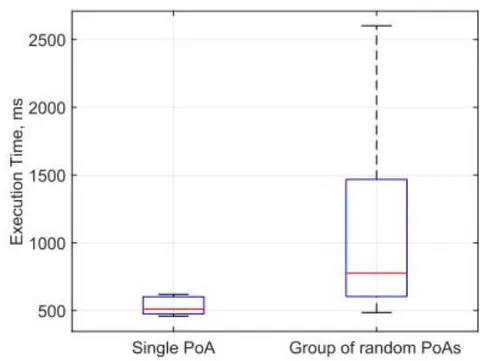
Execution of PoA provided in Figure 5 usually refers to implementing a Proof of Authority (PoA) consensus algorithm in a blockchain network. Proof of Authority is a method for validating transactions and creating new blocks in a blockchain.
Instead of relying on a decentralised network of miners or stakes (as in Proof of Work or Proof of Stake systems), PoA relies on a set of pre-approved authority nodes that are trusted to validate transactions.
In a PoA system, these trusted nodes, known as arbitrators, propose and validate blocks. The arbitrators' reputation secures the system. If a arbitrator were to act maliciously, they could be easily identified and removed from the network, and their reputation would be ruined.
The "Execution of PoA" refers to the process by which these authority nodes perform their function within the blockchain network. This would include validating transactions, proposing new blocks, and maintaining the integrity of the blockchain. It is particularly useful in private and permissioned blockchain networks, where the participants are known and trusted entities.
Mobile Network Compatibility: Ensure the blockchain network is compatible with 5G mobile networks, enabling seamless integration and communication between the blockchain nodes and the broader network.
Mobile Operator Collaboration: Collaborate with mobile network operators to establish trusted nodes using their 5G connections. Mobile operators can act as placeholders, leveraging their infrastructure and
expertise to maintain the blockchain network's integrity.
- Data Privacy and Security: Implement robust encryption and privacy mechanisms to protect user data and transaction information transmitted over the 5G network. This will ensure compliance with data protection regulations and build trust among users.
The proposed solution for utilising 5G mobile connections as a Layer 1 PoA blockchain node opens up several microtransaction use cases, including the Internet of Things (IoT).
Micropayments: Enable seamless, secure, and low-cost micropayments between IoT devices, allowing for new business models and increased automation in various industries.
In-App Purchases and Digital Content: Facilitate frictionless microtransactions within mobile applications, allowing users to make small purchases or access digital content with ease and security.
Mobile Payments and Digital Wallets: Provide a fast and reliable platform for mobile payment services, enabling users to make instant micropayments using their smartphones while ensuring the security of their transactions.
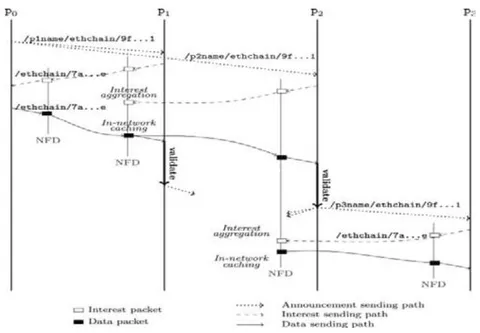
Designing a Layer 1 Proof of Authority (PoA), described in Figure 4, involves creating the foundational layer of a blockchain system that uses the PoA consensus algorithm. Layer 1 in blockchain architecture refers to the base protocol level, including transaction validation and block creation.
In a PoA consensus model, the system relies on a limited number of trusted nodes, known as placeholders, to propose and validate new blocks. As such, the reputation of these placeholders is crucial to maintaining the integrity and security of the network.
The steps in designing a Layer 1 PoA Blockchain could include the following.
Validator are usually reputable entities known within the network whose role is to propose and validate new blocks. Identifying these validators' identities is a crucial step in designing a PoA blockchain.
The integrity of a PoA blockchain depends on the trust placed in the validators. This could involve setting up a system for validators to stake their reputation, ensuring they have a vested interest in maintaining the network's integrity.
The consensus algorithm is how processors agree on the state of the blockchain. A PoA model might involve processors taking turns proposing and validating blocks.
This includes determining how processors are added or removed, how upgrades to the protocol are handled, and how disputes are resolved.
Like any blockchain, a PoA chain needs robust security measures to protect against potential attacks. This could include security audits, intrusion detection systems, and protocols for handling suspected malicious activity.
Since one of the benefits of a PoA blockchain is increased speed and scalability, designing the Layer 1 protocol for optimal performance is crucial.
Validator in decentralised networks can disconnect for various reasons, including network instability, hardware failures, or malicious attacks. When a validator goes offline, it can disrupt the network's consensus mechanism, potentially leading to forks or vulnerabilities. In order to address these challenges, efficient validator replacement mechanisms are required.
One essential approach to replace processors is implementing real-time monitoring and alerting systems. Network operators should continuously monitor the status of processors to detect disconnections or other issues promptly. It is possible through various monitoring tools and metrics, such as ping latency, response time, or heartbeat signals.
Implementing redundancy in the validator set can help mitigate the impact of validator disconnections. Having backup getters ready to take over allows the network to operate smoothly even when a validator disconnects. Load balancing techniques can distribute the workload among getters, ensuring no single validator becomes a bottleneck.
Automated failover mechanisms are crucial for ensuring uninterrupted network operation. Automated scripts or algorithms can identify the issue and trigger the replacement process when a validator disconnects. It can involve selecting a backup validator or launching a new validator node to maintain network integrity.
In some decentralized networks, the validator set can be dynamically adjusted. It means that new validators can be added and removed as needed. When a validator disconnects, the network can quickly replace it with a standby validator without significant disruption.
To encourage getters to maintain reliable connections, networks can implement incentive mechanisms. Validator could receive rewards for maintaining uptime or penalties for frequent disconnections. These incentives can motivate getters to invest in stable network connections and robust hardware.
Decentralized networks can adopt governance mechanisms that allow token holders or network participants to vote on validator replacements. This approach ensures transparency and community involvement in the validator replacement process, reducing the risk of centralization.
Some decentralized networks, such as sharding or sidechains, explore advanced network topologies. These architectures can isolate the impact of validator disconnections to specific network segments, reducing the overall disruption.
Validator Reputation and Trust Building, a reputation and trust system for getters, can help network participants identify reliable getters. Validator with a track record of stable operation and timely replacements are more likely to gain trust and attract delegations.
In critical network disruptions, emergency recovery procedures should be in place. These procedures can involve network-wide snapshots, rollbacks, or other consensus mechanisms to stabilize the network and address any inconsistencies caused by validator disconnections.
The process of validator replacement should be continually improved and tested. Network operators should regularly conduct simulations and drills to ensure the replacement mechanisms work as intended. This proactive approach can help identify potential issues before they impact the live network.
Designing a Layer 1 PoA Blockchain is a complex task that requires thorough knowledge of blockchain technology and careful consideration of network needs and constraints.
The purpose of this Proof of Concept (POC) [22] document is to provide detailed instructions for setting up and running an EVM light node on an Android mobile device using Termux and Geth. This POC aims to demonstrate the feasibility of running a lightweight EVM node on a resource-constrained Android device.
System Specifications
Device: IQOO Z3
Operating System:Android 13
Processor: Snapdragon 768G 2.8 GHz Octa-Core
RAM: 8 GB
Storage: 256GB
Connectivity: WIFI (100Mbpsconnection)
Gethversion: 1.12.0 stable
Network: Mainnet
Before proceeding with the POC, ensure the following prerequisites are met.
Install Termux: Download and install Termux from the Google Play Store on your Android device.
Stable Internet Connection: Ensure a stable internet connection is available for downloading and syncing the blockchain.
Geth: Geth is an EVM client implementation written in the Go programming language. It is a command-line interface (CLI) tool and a full-node implementation that enables users to interact with the
blockchain network, deploy smart contracts, and execute transactions.
Termux: Termux is an Android terminal emulator and Linux environment app that provides a command-line interface on Android devices. It allows users to emulate a Linux environment, runs Linux packages and utilities, and perform software development, system administration, and running server applications.
EVM Light Node: An EVM light node is a type of client that requires fewer computational resources and storage space compared to a full node. It maintains a subset of the blockchain data necessary for specific operations by relying on other full nodes in the network to provide information on demand. Light nodes offer a resource-efficient way to interact with the Blockchain network while minimising storage requirements.
By combining Geth, Termux, and the EVM light node concept, this POC demonstrates the feasibility of running an EVM light node on an Android mobile device. This configuration enables users to utilise the Blockchain network, deploy smart contracts, and access blockchain data using Termux's Linux environment and Geth's lightweight implementation.
Installing Ubuntu 20.04 in Termux
Launch Termux and open the terminal.
Run the following command to update the package repositories: [23].
pkgupdate-y&&pkginstalllwgetcurlproottar-y wgethttps://raw.githubusercontent.com/AndronixApp/AndronixOrigin/master/Installer/Ubuntu20/ubuntu20.sh- Oubuntu20.sh chmod+xubuntu20.sh bashubuntu20.sh
Installing Required Packages
After Ubuntu 20.04 installation is complete, install the necessary packages by running the following command.
Aptinstallsoftware-properties-common
Installing Geth
Add the repository and install Geth by executing the following commands.
add-apt-repository-yppa:geth/geth aptupdate aptinstallgeth
Installing the 'screen' Application
Install the 'screen' application to run Geth in the background as a daemon process.
Apt-getupdate&&apt-getinstallscreen-y
Running Geth in Light Mode
Start Geth in light mode and run it in the background as follows.
screen-dmSgethgeth--syncmodelight--http--http(API"eth, debug."
Checking Sync Status
Attach to the Geth console to check the synchronisation status.
gethattach
In the Geth console, execute the command eth. I amSyncing to view the sync progress.
Output:
currentBlock:2236992, healedBytecodes:0, healedTrienodeBytes:0, healedTrienodes:0,healingBytecode:0,healingTrienodes:0, highest block:17414379, startingBlock:1806912, synchronizedAccountBytes:0, synchronized accounts:0, synchronizedBytecodeBytes:0, synchronizedBytecodes:0, synchronizedStorage:0, synchronizedStorageBytes:0}
Managing the Geth Process
Access the Geth process or detach from it using the following commands:
To access the Geth process: screen -r To detach from the Geth process: Press Ctrl + a, then d Checking Synced Data Size
To determine the size of the syncd data, navigate to the folder where the chain data is stored (usually.geth).
du-sh.geth
After successfully synchronising the EVM light node on the Android device using Termux and Geth, the following observations were made:
Total Number of Block Headers Synced: The light node successfully synchronised 17,414,852 block headers from the main net. This indicates that the node is up to date with the latest block headers of the blockchain.
Average Bandwidth Consumption: The average bandwidth consumption was approximately 25 Mbps during synchronisation. This indicates that the light node effectively utilises network resources while maintaining a relatively low bandwidth requirement.
Blockchain Data Size: The synced blockchain data on the Android device was approximately 11 GB.
This indicates that the light node efficiently stores a subset of the blockchain data, significantly reducing the storage requirements compared to a full node.
- Time for Sync Completion: The synchronisation process took approximately 3 hours to complete, demonstrating the efficiency of the light node synchronisation process. This relatively short time frame allows users to quickly set up a synchronised Blockchain node on their Android device.
VII. REQUIREMENTS
The arrival of 5G technology means that we can use mobile phones to set up blockchain computers in a new way. 5G technology makes mobile devices work faster and with less delay. This is good for using a small computer on your phone. Also, 5G can connect to many blockchain networks at once. This means you can use your phone as a part of a particular computer system. [24]
A PoA blockchain is a way to make transactions that do not need trust or permission from anyone. This means it is good to use for small money transactions. In a PoA blockchain, every member has a share in the network that decides their power. When someone has more to gain, they have more power to control.
A mobile phone with 5G could connect to a PoA blockchain if it promises to keep the connection. The link can be used to check deals and put them in the chain of blocks. The node can also help send transactions to other nodes in the network. This means a network can work without one big boss in charge, and everyone can trust each other.
A 5G phone for a PoA blockchain network can suit people and companies. Users can take part in the blockchain without buying any equipment or technology. It would let people reach the blockchain from any place across the globe. It can help companies find new customers and enter new markets. Also, it would help companies not rely so much on a big boss.
Using 5G phones as part of blockchain networks has enormous potential to change how we use [25] these networks. Using a 5G phone as part of a blockchain can have a lot of good results. Initially, people can join the blockchain without buying equipment or computer programs. Next, it would let people get to the blockchain from any location worldwide. Thirdly, it would enable companies to connect with fresh customers and markets. Fourth, it would help businesses not rely so much on one leader. Using a 5G phone for PoA blockchain is not easy because people need to know a lot, the network might get too busy, and the phone could be stolen or lost.
Using a 5G phone as a part of blockchain technology can be helpful for people and companies. It has excellent potential to lead to many advantages. However, some difficulties must be overcome before this technology can be used entirely. To attach a 5G phone to a Proof of Authority blockchain as a point, there are some things you need to do and problems to overcome. The 5G network needs to be fast and not take a long time to do things in order to work well with blockchain. [26] The computer must always work and be online to ensure everything is clear and precise. Thirdly, the point where data is stored must be safe so no one can harm it. The node needs to quickly and smoothly deal with transactions to match with the network. To create a 5G-based node in a Proof of Authority blockchain, we need to solve some problems. However, if we succeed, it will have lots of advantages. First, it would make transactions happen very quickly. It would use less energy to run the network. Third, it would make the network more spread and less controlled from one central point. Connecting a 5G phone to a secure blockchain could make the network faster and safer.
VIII. LIMITATIONS
In implementing a Layer 1 Proof of Authority (PoA) blockchain architecture for microtransactions with 5G mobile networks as integral nodes, it is imperative to acknowledge and carefully scrutinize the limitations associated with this innovative approach. These limitations have profound implications for such a blockchain system's feasibility, security, and scalability.
One of the critical limitations of employing a PoA consensus mechanism is its inherent tendency toward centralization. Validators in a PoA network are selected based on their identity and reputation, which can lead to a concentration of power among a select few. This centralization aspect may conflict with the principles of decentralization that underlie many blockchain applications.
If decentralisation is a paramount consideration for your specific use case, the benefits of low latency and real-time processing offered by 5G must be carefully weighed against the potential centralization of PoA.
Striking the right balance between these conflicting factors will be pivotal in determining the success and suitability of this integration.
While 5G networks undoubtedly present advantages in terms of speed and capacity, their security implications cannot be underestimated. Blockchain networks rely on robust security measures to ensure the integrity and immutability of transactions and data.
Any vulnerabilities or security lapses within the 5G network infrastructure could pose a significant threat to the overall security of the blockchain system. Thus, a comprehensive assessment and mitigation strategy for potential security risks associated with 5G integration should be integral to the implementation process.
It is also crucial to recognize that not all blockchain applications necessitate the high-speed and low-latency capabilities of 5G networks. In cases where real-time interactions or massive data transfer are not essential components of the use case, the benefits of combining 5G and PoA may be less pronounced.
Implementing such a combination without a genuine need for these features could result in unnecessary complexity and cost, potentially outweighing any perceived advantages. Therefore, careful consideration of the specific requirements and objectives of the blockchain application is imperative to determine whether the integration of 5G is justified.
Furthermore, the success of this integrated approach is contingent upon the availability and adoption of 5G networks in the target deployment areas. It is well-established that the rollout and accessibility of 5G networks vary significantly by region and may not yet be widespread in some areas.
Consequently, the feasibility and effectiveness of integrating 5G with PoA blockchain hinge on the existing infrastructure and adoption rates in the regions where the blockchain system is intended to be deployed. In regions where 5G infrastructure is lacking or underdeveloped, alternative solutions or a phased approach may need to be considered.
IX. CONCLUSION
The number of mobile devices is continuously growing; however, the computational power of those devices could be more widely used, mainly due to battery constraints. Numerous applications could use those FLOPs, and one of them is blockchain. The design of modern blockchain systems mainly relies on Proof-of-Work consent. This paper outlined the main applications of blockchain technology for smartphones and wearable devices, stepping aside from the conventional cryptocurrency perspective and comparing existing market-available systems. Next, a set of protocols coupling together Proof-of-Work, Proof-of-Stake, and Proof-of-Authority blockchain strategies was proposed aiming to involve mobile devices in the new block generation process.
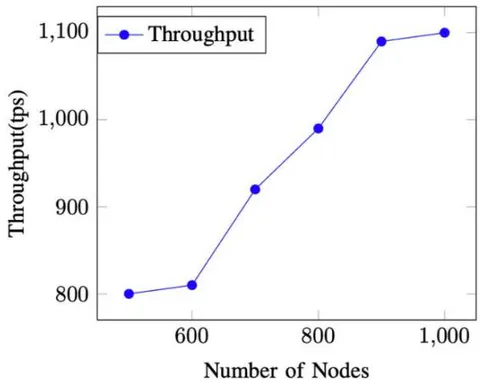
The protocol is already implemented in a real-life distributed test network involving more than 2,500 mobile nodes around the globe. The system's evolution and the subsequent impact on node growth are demonstrated through the Throughput value, as illustrated in Figure 5.
We contrasted our developed system's operation with similar methodologies and concluded that it only incurs a minor impact, , on user-experienced battery consumption. This impact is significantly less than the substantial battery drain, up to , common with regular device operation and other systems. The comparative analysis proves the effectiveness of our design in maintaining a secure and privacy-focused system.
Furthermore, we delved into the primary challenges associated with blockchain adoption, highlighting significant obstacles from both user and regulatory standpoints. This exploration offers valuable insights to refine the system for improved adoption rates. The future directions and the primary mobile blockchain challenges related to the integration of blockchain-based solutions on smartphones conclude the paper.