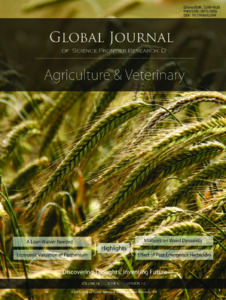
Value Chain Analysis of Red Pepper: The Case of Mareko District, Guragie Zone, Southern Ethiopia

α
Mekdes Dessie
Mekdes Dessie
σ
Mufti Jailan
Mufti Jailan
ρ
Habtamu Mosi
Habtamu Mosi
α Wolkite University

Send Message

To: Author

Value Chain Analysis of Red Pepper: The Case of Mareko District, Guragie Zone, Southern Ethiopia

Article Fingerprint

ReserarchID

CTL8D

Value Chain Analysis of Red Pepper: The Case of Mareko District, Guragie Zone, Southern Ethiopia Banner

AI TAKEAWAY

Connecting with the Eternal Ground
  • English
  • Afrikaans
  • Albanian
  • Amharic
  • Arabic
  • Armenian
  • Azerbaijani
  • Basque
  • Belarusian
  • Bengali
  • Bosnian
  • Bulgarian
  • Catalan
  • Cebuano
  • Chichewa
  • Chinese (Simplified)
  • Chinese (Traditional)
  • Corsican
  • Croatian
  • Czech
  • Danish
  • Dutch
  • Esperanto
  • Estonian
  • Filipino
  • Finnish
  • French
  • Frisian
  • Galician
  • Georgian
  • German
  • Greek
  • Gujarati
  • Haitian Creole
  • Hausa
  • Hawaiian
  • Hebrew
  • Hindi
  • Hmong
  • Hungarian
  • Icelandic
  • Igbo
  • Indonesian
  • Irish
  • Italian
  • Japanese
  • Javanese
  • Kannada
  • Kazakh
  • Khmer
  • Korean
  • Kurdish (Kurmanji)
  • Kyrgyz
  • Lao
  • Latin
  • Latvian
  • Lithuanian
  • Luxembourgish
  • Macedonian
  • Malagasy
  • Malay
  • Malayalam
  • Maltese
  • Maori
  • Marathi
  • Mongolian
  • Myanmar (Burmese)
  • Nepali
  • Norwegian
  • Pashto
  • Persian
  • Polish
  • Portuguese
  • Punjabi
  • Romanian
  • Russian
  • Samoan
  • Scots Gaelic
  • Serbian
  • Sesotho
  • Shona
  • Sindhi
  • Sinhala
  • Slovak
  • Slovenian
  • Somali
  • Spanish
  • Sundanese
  • Swahili
  • Swedish
  • Tajik
  • Tamil
  • Telugu
  • Thai
  • Turkish
  • Ukrainian
  • Urdu
  • Uzbek
  • Vietnamese
  • Welsh
  • Xhosa
  • Yiddish
  • Yoruba
  • Zulu

Abstract

The study was conducted at Mareko Woreda to undertake red pepper value chain analysis and examine the factors that affect the supply of red pepper. The area is known for its surplus production of red pepper. The study has focused on the market channel, conduct, performance of red pepper markets and the main constraints of volume of red pepper supply. Structured questionnaire, focus group discussions, key informant interviews and field observation were used for generating the data. The channel in which, retailers buy red pepper directly from farmers and they in turn sell the red pepper directly to the consumer’s outlooks as the 1st important channel in the study area in terms of volume transacted. About 78.3% of the red pepper producers sold the red pepper by the price set of both parties based on negotiation. With regard to the payment strategy, about 79.17 % of sample farmers sold their product on cash. Traders took a total of 87.75% out of the total profit margin; specifically, among traders, processors profit margin constitutes the highest share (30.71%) followed by retailors (20.49%). The result from the econometric analysis show that, education level of the household head, Average lagged price, Proportion of land allocated for red pepper production, experience of the house hold head were found to have positive influence on marketable supply of red pepper. Likewise, Average input price and diseases were found to influence marketable supply of negatively.

References

17 Cites in Article
  1. Addisu Hailu (2016). Value Chain Analysis of Vegetables: The Case of Ejere District, West Shoa Zone, Oromia National Regional State of Ethiopia.
  2. Astewel Takele (2010). Review of: "Groundwater Potential Zone Assessment Using Remote Sensing, Geographical Information System (GIS), and Analytical Hierarchy Process (AHP) Techniques in Fogera Woreda, South Gondar Zone, Ethiopia".
  3. Ayelech Tadesse (2011). Analysis of Gender Role in Coffee Value Chain in Jimma Zone, Oromia National Regional State, Ethiopia.
  4. Yoseph Ali (2008). Pregnancy Nutritional Status in Ethiopia: A case study of Pregnant Women in Shashemene District, Southern Oromia Region Ethiopia.
  5. Bezabih Emana,Hadera Gebremedhin (2007). Constraints and Opportunities of Horticulture Production and Marketing in Eastern Ethiopia DCG Report.
  6. Samuel Hailemichael Henok,Alemayehu Woldeyess Tefera (2017). Barriers to Uptake of Cataract Surgery in Southern Ethiopia.
  7. Yosef Alemu,Selamawit Ketema,Melkamu Hinsermu,Jibicho Geleto,Shimelis Aklilu,Gebeyehu Wendimu,Tesfa Binalfew,Getachew Tabor (2018). Performance of Snap Bean (Phaseolus vulgaris L.) Genotypes for Green Pod Yield and Quality in the Central Rift Valley of Ethiopia.
  8. Dereje Birhanu (2007). Assessment of forest coffee value chains in Ethiopia: A case study in Kafa zone, Gimbo district.
  9. (2014). Export performance of Agricultural products.
  10. Peijie Wang (1026). Econometric Analysis of the Real Estate Market and Investment.
  11. D Gujarati (2004). Basic Econometrics. 4 th Edition.
  12. John Madeley (2003). Twelfth session of the 143-nation governing council of the United Nations International Fund for Agricultural Development (IFAD).
  13. Jema Haji (2008). Corrigendum to Jema Haji and Hans Andersson “Determinants of efficiency of vegetables production in smallholder farms: The case of Ethiopia”. <i>Food Economics – Acta Agriculturæ Scandinavica, 3</i>, 125–137 (2006)..
  14. Rehima Mussema (2006). Analysis of red pepper marketing: The case of Alaba and Siltie in SNNPRS of Ethiopia.
  15. Maren Freese,Amrei Mensch,Martina Bremer,Jens Schaller,Michael Schöbitz,Steffen Fischer (2013). INFLUENCE OF CURING TEMPERATURE ON THERMAL PROPERTIES AND UV STABILITY OF HYDROXYPROPYL CELLULOSE CROSS-LINKED WITH GLYOXYLIC ACID.
  16. (2013). Annual progress report / United Nations Development Programme (UNDP).
  17. S Wolelaw (2005). Factors Determining Supply of Rice: A Study in Fogera District of Ethiopia.

Funding

No external funding was declared for this work.

Conflict of Interest

The authors declare no conflict of interest.

Ethical Approval

No ethics committee approval was required for this article type.

Data Availability

Not applicable for this article.

How to Cite This Article

Mekdes Dessie. 2018. \u201cValue Chain Analysis of Red Pepper: The Case of Mareko District, Guragie Zone, Southern Ethiopia\u201d. Global Journal of Science Frontier Research - D: Agriculture & Veterinary GJSFR-D Volume 18 (GJSFR Volume 18 Issue D6): .

Download Citation

Issue Cover
GJSFR Volume 18 Issue D6
Pg. 47- 55
Journal Specifications

Crossref Journal DOI 10.17406/GJSFR

Print ISSN 0975-5896

e-ISSN 2249-4626

Keywords
Classification
GJSFR-D Classification: FOR Code: 070199
Version of record

v1.2

Issue date

September 20, 2018

Language
en
Experiance in AR

Explore published articles in an immersive Augmented Reality environment. Our platform converts research papers into interactive 3D books, allowing readers to view and interact with content using AR and VR compatible devices.

Read in 3D

Your published article is automatically converted into a realistic 3D book. Flip through pages and read research papers in a more engaging and interactive format.

Article Matrices
Total Views: 2979
Total Downloads: 1444
2026 Trends
Related Research

Published Article

The study was conducted at Mareko Woreda to undertake red pepper value chain analysis and examine the factors that affect the supply of red pepper. The area is known for its surplus production of red pepper. The study has focused on the market channel, conduct, performance of red pepper markets and the main constraints of volume of red pepper supply. Structured questionnaire, focus group discussions, key informant interviews and field observation were used for generating the data. The channel in which, retailers buy red pepper directly from farmers and they in turn sell the red pepper directly to the consumer’s outlooks as the 1st important channel in the study area in terms of volume transacted. About 78.3% of the red pepper producers sold the red pepper by the price set of both parties based on negotiation. With regard to the payment strategy, about 79.17 % of sample farmers sold their product on cash. Traders took a total of 87.75% out of the total profit margin; specifically, among traders, processors profit margin constitutes the highest share (30.71%) followed by retailors (20.49%). The result from the econometric analysis show that, education level of the household head, Average lagged price, Proportion of land allocated for red pepper production, experience of the house hold head were found to have positive influence on marketable supply of red pepper. Likewise, Average input price and diseases were found to influence marketable supply of negatively.


Our website is actively being updated, and changes may occur frequently. Please clear your browser cache if needed. For feedback or error reporting, please email [email protected]

Request Access

Please fill out the form below to request access to this research paper. Your request will be reviewed by the editorial or author team.
X

Quote and Order Details

Contact Person

Invoice Address

Notes or Comments

This is the heading

Lorem ipsum dolor sit amet, consectetur adipiscing elit. Ut elit tellus, luctus nec ullamcorper mattis, pulvinar dapibus leo.

High-quality academic research articles on global topics and journals.

Value Chain Analysis of Red Pepper: The Case of Mareko District, Guragie Zone, Southern Ethiopia

Mekdes Dessie
Mekdes Dessie Wolkite University
Mufti Jailan
Mufti Jailan
Habtamu Mosi
Habtamu Mosi

Research Journals