
I. INTRODUCTION
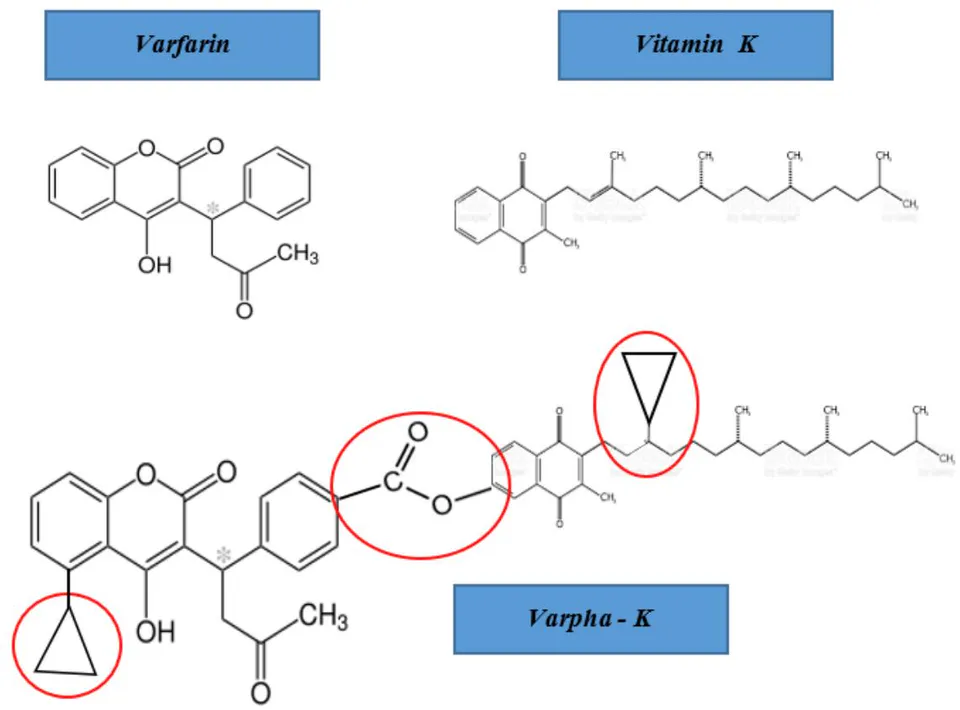
Improving the quality of life has been a human purpose since the beginning of humanity. Thus, the cure and relief of diseases is an incessant search, for which the chemical synthesis of new medicines has contributed to the genesis of new drugs. Pharmaceutical chemistry seeks to discover and develop new chemical molecules that can be useful as medicines, in addition to the possibility of improvement in some molecular physicochemical aspect. One of the most efficient ways to create new bioactive molecules is to use molecules that already exist on the pharmaceutical market, for example, by hybridizing pharmacophoric groups (KOROLKOVAS 1982). All of this facilitates the creation of new drugs and the need for drugs that act in the treatment of bleeding, especially during surgical periods, where these clinical manifestations become much more common and aggressive. These modifications cannot alter the pharmacophoric group, which is the chemical functional group responsible for the therapeutic effects (KOROLKOVAS 1982). Molecular association is a method used for molecular improvement, where a different molecule of the original drug is added to increase the efficiency of the prototype. Thus, our objective was to present the physicochemical aspects related to the association of vitamin K with warfarin molecule (VAR), in order to develop the Varfa-K Prototype, a new drug that has fewer toxic effects, mainly reducing bleeding events caused by VAR.
II. METHODOLOGY
Initially, a small bibliographic review was carried out using scientific outlets on Scielo and Pubmed, in addition, we established filters by publication time (5 years) and Portuguese or English language. Additionally, er also carry one used the methodology of molecular association and insertion of bulky groups. By adding a molecule (vitamin K) to the parent drug and its own antidote against bleeding. The presence of the ester now will determine the decrease in metabolization of both molecules, since they will be separated by the action of the esterase in the biotransformation processes carried out in the liver.
III. RESULTS AND DISCUSSION
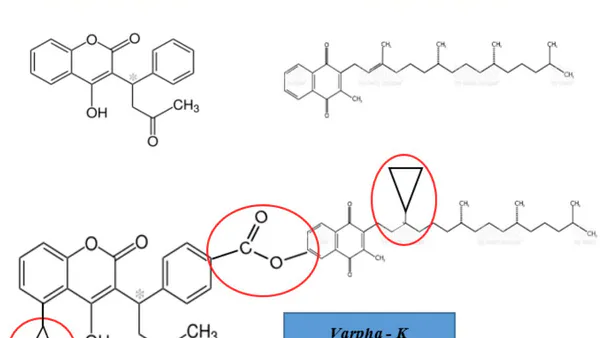
The results with the development of this new molecular academic prototype varpha-K (figure 1) bring great expectations for patients who suffer from intense bleeding and that, depending on the condition, health can even lead to death. This new molecular architecture with the addition of the vitamin K molecule and the insertion of these bulky groups indicates that there will be a favor for the reduction of toxic clinical manifestations associated with the traditional VAR molecule, such as the dreaded tissue bleeding, since vitamin K has anti-hemorrhagic action, in addition to promoting increased bioavailability thanks to the presence of these bulky groups, allowing the new drug to take longer to be metabolized by Cytochrome P450 enzymes.
IV. CONCLUSION
Our studies are just academic hypotheses, but with great therapeutic expectations, since, to this day, there are few studies for improving medication and especially for the toxic effects of warfarin.
Declarations:
Conflito de interesse: Os autores declaram não havem conflitos de interesses.