## I. PREFACE
On a path of a thousand dreams, we are looking for reality
(Yuval Noah Harari)
Whenever the odds seem stacked against human aspirations - when economic growth looks set to remain feeble as far as the eye can see, when too many countries seem destined to grow old before they become rich, when climate change seems to have crossed the tipping point-it is worth remembering the distinctive virtue of our species. Predictions of global doom have proliferated throughout history. Yet the sky hasn't fallen, for one reason: human ingenuity.
It was ingenuity that disarmed the so-called "population bomb"-the idea that "hundreds of millions of people" would starve to death in the 1970s as rapid population growth exhausted finite supplies of food. In fact, agricultural innovations-such as the development of high-yield, pest-resistant crops-caused global food production to grow faster than the population in nearly every part of the world. It was human ingenuity that defeated deadly diseases including once-dreaded HIV/AIDS and, most recently, COVID-19. If climate change is some how tamed by the middle of this century, the main propellant of that success will be human ingenuity.
But this progress is seldom the fruit of a big eureka moment. Human ingenuity works instead through the miracles that occur when governments, private enterprises, and individuals act in ways that benefit entire societies. That depends on conducive conditions, cultivated by a measured blend of policies, rules and practices. This is what is called "the business climate" or "the business enabling environment" - because sustained economic development usually reflects systemwide business success.
For too long, though, the focus has been on what governments can do for the good of business, what technology can do to develop new and more effective product solutions - and not enough on what businesses, governments and civil societies can do for the good of all. For the last decade or so, well-meaning or expedient ideas have been instituted to accelerate the introduction or adoption of renewable energy generation solutions, which have in effect generated their own source of problems and distortions that were counter productive or just ineffective in moving the world towards environmentally friendly solutions that could have contributed to sustainable environmentally friendly solutions for the long term.
Clearly, a crucial first step must be to correct the imbalance or the changing conditions that address policies and institutions to adapt to emerging conditions in a manner that responds to the need for development under emerging conditions. This requires governments, enterprises and civil society to work in complementary and mutually supportive ways to seek and maintain solutions under emerging conditions. This requires an interactive way of working among the various stakeholders to develop solutions aimed at building and sustaining a vibrant productive sector-underpinned by a combination of conditions that will reduce poverty, advance shared prosperity, and speed up the transition to a low-carbon economy. The overall goal is to accelerate smart development by encouraging healthy competition among businesses, technologies - and countries. It must expressly discourage a "race to the bottom" or simplistic solutions that are the unintended by-product of ideas that look good on paper, but don't have the level of understanding of what the society actually needs or finds practical.
This paper may disappoint those who seek crisp, simple, one-size-fits-all solutions. Instead, it looks at what has been achieved so far, the short comings, what we are missing to meet the internationally agreed goals, and the principles we need to bear in mind to seek a more effective approach to the future. This should allow to step up efforts to become business-ready - but not for the fleeting satisfaction of uncertain promise of big bang solutions or national bragging rights, but ultimately far more encompassing goals that may enable reforms that accelerate economic growth, boost productivity, and help reduce carbon emissions at the same time. These developments should aim at creating conditions for human ingenuity to flourish-exactly what the world needs at a time of slowing growth, rising debt, and climate change.
Any reasonable analytical framework recognizes that there is more to a healthy business environment than the "ease of doing business." It accounts for the possibility that reducing the "cost of doing business" can unintentionally mean raising the costs for society at large. Accordingly, a realistic approach assesses not only the regulatory burden on enterprises-how long it takes to start a business, for example-but also the quality of regulations: Do labor laws, for example, protect workers from being arbitrarily fired? Do they inadvertently make women workers less competitive than men and discourage them from seeking work? Beyond assessing the rules and regulations that govern business, the approach should delve into the public services needed to transform intentions into reality. Do public utilities provide reliable water and electricity for businesses? Do governments make it easy for businesses to fulfill their tax obligations and comply with environmental and social safeguards? Do they set up systems to enable government agencies to share business-related information with one another? Do they provide public databases that support transparency and the free flow of information necessary for a healthy business climate?
As things stand, progress is possible for most countries. Governments should step up efforts to become business-ready-but not for the fleeting satisfaction of national bragging rights, or the uncertain promise of a big surge in particular investments. The rewards are far more encompassing: Whencorrectly chosen and carefully sequenced, business reforms can accelerate economic growth, boost productivity, and help reduce carbon emissions at the same time. It creates the conditions for human ingenuity to flourish-exactly what the world needs at a time of slowing growth, rising debt, and climate change. Governments, private sectors and civil society, all genuinely involved, illuminates the path forward.
## II. OUR STARTING POINT
Everything Is True Until Proven Wrong... Right?
(ScienceForum.net)
It is striking how contentious the environmental debate has become over the years. The same as in religion, conflicts all-too-often turn fairly heated between different faiths or even individuals. Yet, at the bottom of it all, whether people may be agnostic or fervent believers in a particular doctrine, they still come out broadly with the same actions to address the big issues at stake.
In some way, this is not much different in the environmental arena, particularly regarding the basic science that underpins the policy and ensuing actions in the field. While some people tend to stick to the basic science, others look at how the issue manifests itself in the field. Inevitably, this brings outdevelopments that seemingly "don't quite fit" what one would expect from the broadly formulated science. Whether it is regional micro-climate developments (such as El Niño or La Niña in South-Western Latin America) or the impact of volcanic eruptions, all such developments need to be properly understood to calibrate the application of the underpinning climate science.
Ultimately, the underlying science, as any human endeavour, is inevitably subject to change in light of emerging evidence -- and thus needs to be reviewed from time to time to ensure that ensuing policies and actions achieve the proper impact. An overly static view of the underlying science and the inferences that usually made, oftentimes tend to radicalize and politicize the debates, rather than permit the full potential to be realized to achieve the intended outcomes.
This paper is to broadly review the record on the subject, the aims and shortfalls achieved so far, overall corrective actions to meet the agreed goals, and some simple criteria to manage the process in future to ensure proper and timely adjustments and results.
In the absence of the innocence that prevailed when the original climate change plans were laid out for the first time, by now most actors in the field aretempered by experience. However, to look at reality head-on, one must understand what it holds in store and be able to conclude on how to approach developments to meet goals while reconciling actions with the constraints of policies, institutions, and capabilities to influence effectively the courses of action.
In doing so, one must stick to the essentials, to separate the wheat from the chaff, be aware that unless one understands the present, it is difficult to portend what the future will hold.
## III. OUR RECORD
Dura lex, sed lex (Maxim of Roman Civil Law: The law is harsh, but it is the law)
Leaving finer points aside, the international community has already been working on the climate change agenda the last 30 years, and we are seeing somecernings short comings, and thus the need to identify key elements for course correction.
There are just too many partial though disquieting signals that suggest that the world is unlikely going to meet the international targets in the Paris Agreement on climate change.
The latest global climate report[^1], already paints a grim picture. The world warmed faster in 2023 and 2024, with green house gases, air and ocean temperatures, and sea-level rise all hitting dangerous new records. But it also reaffirms that global temperature goals aren't yet out of reach.
A fair amount of the shortfalls is the direct outcome of misdiagnoses of the issues to be addressed, an expedient and counter productive approach to policy-making and, more broadly, a decision-making or governance approach that failed to properly responded to the interests and capabilities of the different stakeholders that should have been involved or at least consulted, as suggested above. Much has been written about this, and several articles in Global Journals addressed the issue.[^2]
Moreover, the UN's 2024 Emissions Gap Report[^3] issues a clear warning: Current policies and national climate commitments fall well short of what is needed to rein in climate change.
Calls for pushing harder or blanket condemnations, hardlyconstitute meaningful guides for effective action. In the absence of interim targets to reliably track progress towards internationally agreed goals, a more focused and issues-oriented approach stands a better chance for timely corrective actions. This would help shorten feedback loops to help achieve better and timely results; earlier learning from experience; greater recognition for policy, technical and management changes needed to achieve intended outcomes.
## IV. THE GOALS AND RESULTS
If you can't explain it to a six year old, you don't understand it yourself
The framework that has been established, the Paris Agreement, is the instrument that constitutes the legally binding international treaty on climate change. It sets out the over arching goal to hold "the increase in global average temperature" to well below $2^{\circ}\mathrm{C}$ above pre-industrial levels". World leaders have subsequently stressed the need to avoid by the end of this century, crossing a $1.5^{\circ}\mathrm{C}$ threshold, to avoid unleashing far more severe climate change impacts than we have seen hitherto, including more frequent and severe droughts, heatwaves and rainfall.
As in agreements of this sort, it is tempting to use the quantitative goals as a means to build and ground monitoring arrangements, including forthcoming nationally determined contributions (NDCs) as the main monitoring vehicle to track what countries are doing to collectively reduce greenhouse gas emissions and halt climate change.
Admittedly, these are rather broad-brush tracking vehicles to judge overall performance. They have, however, limited connection to the diverse realities in different countries, particularly their underlying competencies and institutional capabilities, policy contexts, and other factors impinging on their performance. As a result, it should not be too surprising that overall, aggregate global goals are ultimately disconnected with country-level outcomes, particularly as:
- Impacts at country levels are almost independent of what they do and achieve at local levels, as environmental outcomes by their nature largely global, whereas the actions are local, and thus the connection between both tend to be tenuous – thereby leading to genuine concerns of how much it matters. For instance, while Chile having achieved a good performance on carbon reduction, the impact on the country is negligible, as global environmental impact overwhelms and is ultimately the result of what the global community does more broadly, and the way climate change manifests itself at the country level;
- The major and regular changes in international contexts, hardly captured in the international agreements and their tracking arrangements, including policy changes, and their impact on regular economic activities affecting overall including social impact, with attendant use of energy and associated environmental effects;
- The changing technological development, the adaptation they may require in energy and associated investments, the "teething problems" to yield significant carbon reduction benefits;
Although climate change action needs to be massively increased to achieve the goals of the Paris Agreement, the years since its entry into force have already sparked low-carbon solutions and new markets. Increasingly countries, regions, cities and companies are establishing carbon neutrality targets. Zero-carbon solutions are becoming competitive across economic sectors representing $25\%$ of emissions.
However, they tend to be location-specific and climate dependent, thereby requiring complementary outlays (such as storage and transmission investments) to enhance their load factors to competitive levels, thereby increasing their all-in costs. This trend, on the other hand, is most noticeable in the power and transport sectors, and has created new business opportunities for early movers.[^4]
All said, though, the UN's most recent Emission's Gap Report issues a clear warning: Current policies and national climate commitments fall well short of what's needed to rein in climate change. All the progress not with standing, the challenge to meet the agreed goals is still ahead of us.
Limiting global temperature rise to 1.5 degrees C (2.7 degrees F) above pre-industrial levels is essential for avoiding increasingly severe and wide spread climate change impacts, but this requires cutting green house gas (GHG) emissions $42\%$ by 2030 and $56\%$ by 2035, relative to 2023. As things stand, current policies alone will achieve less than a $1\%$ reduction by 2030 and 2035.
Closing these emissions gaps means deploying action at a pace and scale that are unprecedented. Unless countries can collectively and dramatically reduce GHG emissions by 2030, it will become impossible to make up enough lost ground by 2035 to limit warming to 1.5 degrees C with no or limited room to overshoot. As the record stands, this situation could turn, but on a dime - that is, too close for comfort.
Theoretically, the years ahead present a prime opportunity to shift the trajectory. Countries will put forward their next set of climate commitments, or nationally determined contributions (NDCs), detailing their intended climate actions over the next decade. Keeping the 1.5-degree C temperature goal within reach will require these NDCs to achieve a "quantum leap in ambition" and deliver immediate action across all sectors of the economy.
## V. WHAT ARE WE MISSING - DISQUIETING OR PROMISING SIGNALS?
A good decision is based on knowledge; not on numbers
(Plato; Republic) Of all factors that may ultimately explain the performance and pace of progress of the Paris Agreement, three merit highlighting.
First: the UN-grounded institutional frame work relies on Governments and elaborate proceedings aimed at seeking consensus among member countries. This makes the processes slow and challenging to negotiate. The fundamental framework for discussion and decision is the Conference of the Parties (COP), and the annual summit of the United Nations Framework Convention on Climate Change (UNFCCC), consisting of 196 countries including the European Union that are parties to this convention.
It thus should not be too surprising that ever since its yearly sessions, there are only two COP meetings that have established global agreements with specific emission reduction objectives—though with limited attention and follow-up operational actions on progress at country levels:
- COP3, 1997: the Kyoto Protocol established the objective of reducing country emissions by $5\%$.
- COP21, 2015: the Paris Agreement established the goal of limiting global temperature rise to no more than $2^{\circ}\mathrm{C}$ by 2100, through common but responsibilities of the Parties. The Paris Agreement entered into force in 2020.
Second: Not surprisingly, proceedings and conclusions tended to be framed at excessively global and high levels – with precious little attention on: (i) the diversity of institutional and other capabilities of member countries; (ii) the changes that usually occur at global levels occur over time and the way to adjust to them; and (iii) the resources and skills set that are necessary to achieve the agreed goals. In fact, the very broadness of COP approaches inevitably provides little, though much needed specifics for effective action.[^5] To bring discussions to operational levels require technical, organizational and financial skills that are essentially centered in the private sector. Only in recent years relevant private organizations have been invited to the meetings, there by bringing a much-needed element of realism and specificity into the debate. Similarly, civil society organizations also joined part of the proceedings, thereby generating an element of buy-in and feedback.
Third: all said, the natural temptation of existing practices has generated the temptations of translating global targets to country-levelgoals through top-down approaches to meet them. This has generated growing bureaucratization through increased regulatory clearance arrangements, with their attendantslowing of investment processes and increasing costs. This has affected even countries with rather "liberal" economic policies that have traditionally relied on pricing and other market vehicles rather than government approval processes that tend to be institutionally-intensive.
Inevitably, economies have increasingly been straightjacketed by endemic bureaucracy and corruption, stemming from growing regulations and attendant controls.[^6] This is generating its share of antibodies and resistance, which have manifested themselves in a variety of ways:
The US Administration struck down numerous executive orders that were originally aimed at promoting clean energy and climate action that were aimed at protecting the environment. This included rolling back measures to encourage the purchase of electric vehicles, halting offshore wind projects, and reversing restrictions on oil and gas expansion in Alaska British Petroleum(BP) has been cutting its renewable energy investments and instead focused on increasing oil and gas production. The energy giant revealed the shift in strategy following pressure from investors unhappy with its profits and share price that have been lowered than its rivals. BP increased its investments in oil and gas by almost 20% to $10bn a year for the last couple of years, while decreasing previously planned funding for renewables by more than$ 5bn. The move comes as rivals Shell and Norwegian company Equinox have also scaled back plans to invest in green energy and US President Trump's "drill baby drill" comments have encouraged investment in fossil fuels - and other oil companies are consequently pursuing variants of the same policies.
The low load factors (or reserve capacity) of renewables have strained countries that have made major progress in this field, and some cases has generated some country-wide blackouts. Clearly, this will require greater attention to the non-generating part of energy investment programs, like the build-up of reserve capacities, energy storage, transmission investments, as well as pricing and cost recovery practices of such outlays, to overcome the location- and climate-specific nature of renewables. At the same time, this requires recognition of the associated all-in costs to respond appropriately to the reliability demanded in emerging energy markets.
Ironic as it may sound, the very success in pushing for energy efficiency and lower emissions is generating a rapid surge of electricity demand across the U.S. (and other developed countries) for the first time in decades, thanks to new data centers, electric vehicle utilization and other emerging energy needs. Much of the boom is linked to positive changes, like increased manufacturing and cleaner buildings and transportation. But it is also raising the specter of higher electricity costs and expanded fossil fuel use, as well as challenges for the country's aging grid infrastructure. The sheer strain that these changes are causing, has generated some reconsideration of attitudes.
Conversely, in contrast to developed countries, which are the largest greenhouse gas emitters, resource-strapped nations, which constitute a significant part of emerging economies, tend to be more vulnerable to the worst climate change impacts (see graph below), even though they are least responsible for causing the problem.
In the end, that is why international efforts to combat climate change isn't just about halting emissions, but supporting those countries in greater need to enhance their capabilities to address climate change issues while enabling their economic development needs.[^7]
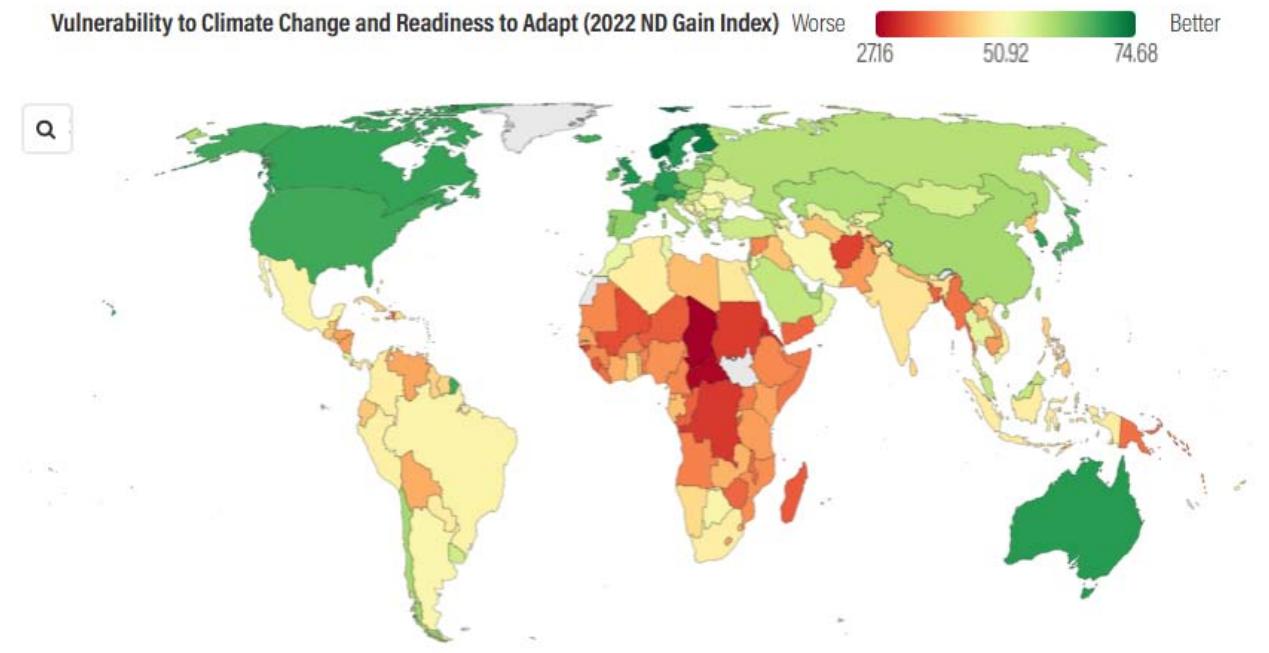
 Fig. 1: Vulnerability To Climate Impacts is Unevenly Distributed Panel label: WORLD. Panel label: RESOURCES. Panel label: INSTITUTE.
Source: Notri Dame Global Adaptation Initiative Country Index(ND-GAIN)
Mobilizing private finance for climate and development in emerging markets and developing economies (which are bound to face higher energy demand growth as the catch up to meet their development needs) is a huge part of what we must do to reach $1.3 trillion by 2035. This will not only require expanded resource mobilization efforts, but a recast of existing platforms to help improve efficiency, simplicity, and speed to leverage financial markets.
This should also help upgrade guarantee products to increase and enhance the choices available to leverage capital for private sector development and public-private partnerships, and meet the needs of emerging technologies (such as geothermal and other energy solutions). The goal of the new platform is to triple guarantee business by 2030, leveraging of vastly greater volumes of private capital than has been traditionally possible of multilateral institutions.
## VI. FIVE TIPS FOR MOVING FORWARD
Nice speech, but what are you going to do
(Shimon Peres to Shai Agassi)
Optimism at the outset routinely outpaces performance reality, leading to disaffection. A sober view of COP proceedings suggests that environmental pundits, like most pundits, seldom bother to review their own as sumptions and prognostications. Claims endlessly repeated and accepted as uncontestable truths, even in the face of the sober reality of increasing global warming that is unfolding, should be an early (though still timely) warning that we are in need of some course correction.
If we are to meet the internationally agreed targets, we will need wiser, not stronger action. A nonnonsense, with knife-edged street smarts ruthlessnessin feedback may be more appropriate than the elegant and mutually congratulatory international proceedings to assess progress and achieve timely and effective action. Rather than getting lost in the forest, here are five simply formulated tips to help focus the review and development of different programs to achieve tangible results:
- Keep an eye on context, and centrality of economic development. The goals and targets normally associated with tracking progress and underpinning policy dialogue on climate change are missing the point. Energy markets and consumers don't care about them. One should n't thus lose sight that decarbonization cannot be considered a goal in itself. Instead, proper weight must be given to the equally important development concerns of achieving secure and affordable energy for emerging economies and people's lives. As the world's population grows by an estimated 2 billion people by 2050, the benefits of energy needs to be extended to the hundreds of millions who do not
have it today. Whatever the plans, they must be affordable and secure for all. Accordingly, the decarbonization challenge has to be addressed while having responding to increasing energy demand. Otherwise, there will be no real constituencies for decarbonization, and the outcomes will just be unresponsive to what markets are demanding, and the way the world is evolving.
- We live in a world of probabilities, not certainties. Be aware of what we know... and don't - and be prepared for surprises. We must be clear that we don't know with any certainty all what is needed to meet the global warming goals, and what this will entail in decarbonization efforts. Our knowledge so far can lead us part of the way, and help us achieve some of the early and intermediate goals. We may accordingly face unexpected developments, and must let them guide the work to wherever they may lead -- including adjusting our longer-term efforts. Seen in this way, shortfalls may constitute valuable feedback to learn and identify course correction. As weupscale our efforts, we must be prepared to call for recasting our approaches, until we have more reliable and sustainable ways of addressing the problem in a proven manner.
- Ground plans and judgements on experienced professionals and empirical evidence. Where possible it's worth while to sort (and where necessary, have regular) diagnoses to define the issues to be addressed and focus of action. It's preferable to go for depth rather than breadth, and be specific on main areas of attention. Validate proposals with knowledge able people with fist-hand experience in the countries and issues concerned. Of course, experts can be wrong - as they often are, but can help keeping the discussion focused on the empirical issues to be addressed. In this regard, avoid being seen as partisan, or a promotional player. Instead, seek grounding arguments on likely or proven outcomes-- their efficiency, effectiveness, pertinence.
- Focus on the near term and the achievable, but buildtowardslonger-term for sustainable results. If decarbonization efforts are to succeed, the very success will inevitably hit supply constraints of raw materials and other supplies -- particularly essential minerals such as copper, lithium, nickel, cobalt and rare earths. In the case of copper, which is one of the most critical minerals driving the clean energy transition, especially for renewable energy technologies, global demand projected to grow by at least $50\%$ by 2050 under the International Energy Agency's Net Zero by 2050 Scenario. More broadly, finding sustainable and efficient sourcing of copper is essential for the energy transition and circular economies. This will require building efforts that
adjust production methods and processes that are themselves less contaminating, and a determined focus on new or modified processes aimed at increased recycling. While recycling does not eliminate the need for mining investment, it creates valuable secondary sources that reduce reliance on new mines and enhance supply security for countries importing minerals.
- There are no one-size-fits-all solutions. The world is too diverse in terms of institutional and other capabilities, policy frameworks, resource bases to accommodate the generalizations that oftentimes have been promoted to be replicated internationally, irrespective of real on-the-ground constraints. A sharper, more analytical and differentiated approach is needed for identifying the constraints in each country, their institutional and policy limitations, incentive structure, to come up with more effective solutions. Partial experience so far seems to point that more made-to-fit approach stand better chances to succeed.
In sum, combating global warming and decarbonizing the world economy constitutes and enormous and challenging task. The issue is pervasive, it involves many countries, sectors, institutions, and it easy to get lost in the forest by looking at the many trees. To succeed, it is essential to focus, simplify without being simplistic, and thus be strategic to be effective.
To this end, one must be aware that energy constitute the single largest sector that generates well over $75\%$ of greenhouse gas emissions, and thus requires priority and focused attention, but not going with a sledge hammer or force-fitting poorly designed policies is just counterproductive. In this regard, it is useful to keep in mind that fossil fuels meet around $80\%$ of the world's primary energy use. There is even greater reliance in many developing countries where security of supply and stable prices are critical to consumers.
The world's primary energy demand is just over 300 million barrels of oil equivalent per day (mboe/d); with around 250 mboe/d from fossil fuels. Of this, 100 mboe/d is from oil, 80 mboe/d is from coal and 70 mboe/d is from gas. So, we face an immense challenge to face as demand for energy continues to grow, driven by rising populations and increased prosperity, the world must transition from fossil fuels to low-carbon energy in a balanced way to achieve net-zero emissions.
To respond to this growing demand in a suitably decarbonized manner, the range of new energy technologies under development globally is broader and appears more promising than ever before, yet the global energy innovation landscape is at a pivotal moment amid signs of slowing momentum in financing and
shifting priorities, according to the International Energy Agency (IEA) latest estimates.[^9]
Beyond the above-mentioned bullets, a supportive public policy, developments in technology and infrastructure, and a functioning carbon market are essential to create the demand signals for the private sector to invest at scale. A new energy system, will inevitably require strengthened (not more bureaucratized) institutional framework to manage such major endeavor, and mobilize private finance for climate and associated development, at a scale of some $1.3 trillion from public and, most importantly, private sectors by 2035. As noted by the Bretton Woods Committee and others, this seems doable, and enable, together with the other pointers mentioned above, achieve credible progress towards the agreed goals.
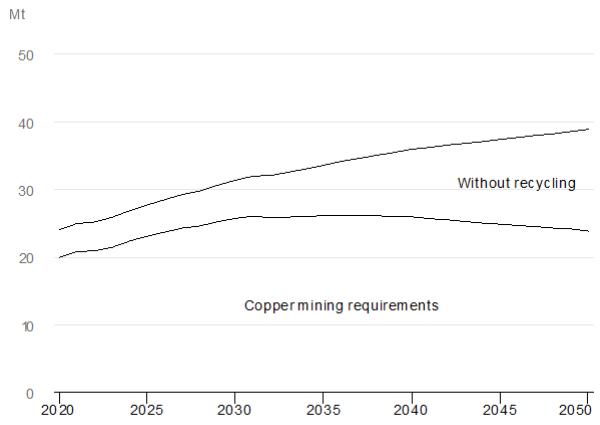 Annex Meeting Incremental Demand of Essential Minerals Through Recicling
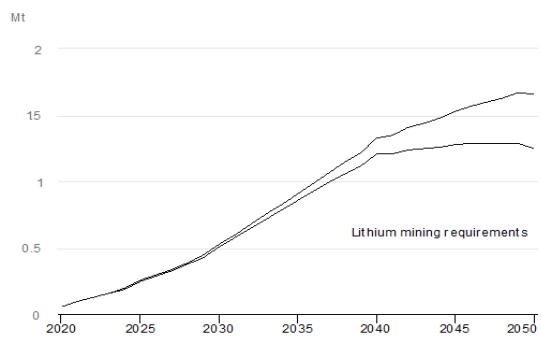
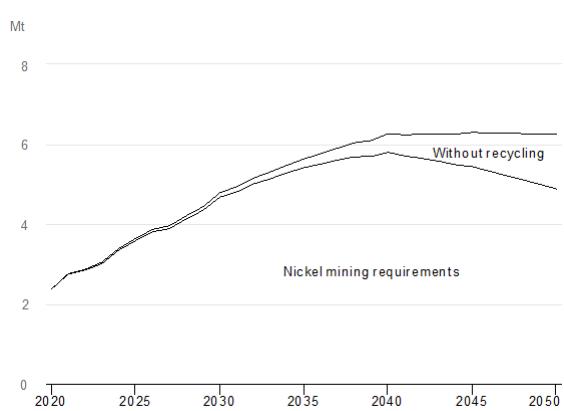
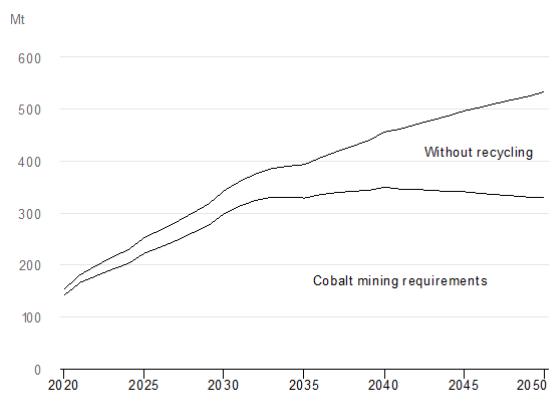 Source: International Energy Agency: Recycling of Critical Minerals, 2024

[^1]: State of the Global Climate, 2024, World Meteorological Organization. _(p.2)_
[^2]: Global Journal of Science Frontier Research - Environment and Earth Science (USA) Jun. 2024: "Chasing the Unknown - the Quest for Decarbonization". M. Schloss. _(p.3)_
[^3]: Global Journal of Science Frontier Research - Environment and Earth Science (USA) Jun. 2023: "Energy Transition in Unsettled Times"M. Schloss. _(p.3)_
[^4]: Global Journal of Science Frontier Research - Environment and Earth Science (USA) (USA) Mar. 2023: "The Elephant in the Room; Preaching or Working on Climate Change"M. Schloss. _(p.3)_
[^5]: "The Challenging Quest for Decarbonization". Miguel Schloss, Oil Gas, Energy Law (OGEL, U.K). Jun. 2024 _(p.4)_
[^6]: $^{6}$ "Recasting Governance for Challenging Times". Miguel Schloss, Global Journal Of Management of Business Research (USA) May 2021 _(p.4)_
[^7]: The Role of Multilateral Development Banks in closing the Climate and Energy Transition Finance Gap. The Bretton Woods Committee _(p.5)_
[^9]: The State of Energy Innovation: International Energy Agency, 2024 _(p.7)_
Generating HTML Viewer...
Funding
No external funding was declared for this work.
Conflict of Interest
The authors declare no conflict of interest.
Ethical Approval
No ethics committee approval was required for this article type.
Data Availability
Not applicable for this article.
How to Cite This Article
Dr. Miguel Schloss. 2026. \u201cWalking on a Knifes Edge to Reconcile Energy and Amp Environment\u201d. Global Journal of Science Frontier Research - H: Environment & Environmental geology GJSFR-H Volume 25 (GJSFR Volume 25 Issue H1): .
Explore published articles in an immersive Augmented Reality environment. Our platform converts research papers into interactive 3D books, allowing readers to view and interact with content using AR and VR compatible devices.
Your published article is automatically converted into a realistic 3D book. Flip through pages and read research papers in a more engaging and interactive format.
Our website is actively being updated, and changes may occur frequently. Please clear your browser cache if needed. For feedback or error reporting, please email [email protected]
Thank you for connecting with us. We will respond to you shortly.