
Introduction
Warehouses are essential components of supply chains because they provide storage, distribution, and inventory management services for goods moving between suppliers, manufacturers, retailers, and customers. As businesses expand globally and consumer expectations for fast delivery increase, warehouses must operate efficiently and accurately. Traditional warehouse operations that rely heavily on manual processes often struggle to meet these demands.
Warehouse Management Systems (WMS) were developed to address these challenges by automating and optimizing warehouse processes. A WMS is a computer-based system that supports the planning, execution, and monitoring of warehouse operations. These systems allow organizations to track inventory levels in real time, improve space utilization, and streamline warehouse workflows.
In the past, many warehouses relied on manual documentation and simple inventory tracking systems. Such approaches often resulted in inaccurate inventory data, delayed order processing, and inefficient warehouse layouts. With the introduction of digital technologies, warehouse operations have become more automated and data-driven. Modern WMS platforms integrate with other enterprise systems such as Enterprise Resource Planning (ERP) and Transportation Management Systems (TMS), allowing organizations to manage their supply chains more effectively.
Additionally, technological advancements such as barcode scanning, radio-frequency identification (RFID), robotics, and artificial intelligence have significantly enhanced the capabilities of warehouse management systems. These innovations enable real-time data collection, automated material handling, and intelligent decision-making.
As supply chains continue to grow in complexity, warehouse management systems are becoming increasingly important. Organizations that adopt advanced WMS technologies can improve operational efficiency, reduce costs, and provide better customer service. Therefore, studying the functions and benefits of warehouse management systems is essential for understanding how modern logistics operations can be optimized.
Problem Statement
Many organizations continue to face operational challenges in managing warehouse activities efficiently. Traditional warehouse operations often rely on manual record keeping, spreadsheets, or outdated inventory systems. These methods are prone to human error and may lead to inaccurate inventory records, misplaced items, and delays in order fulfillment.
Inaccurate inventory information can cause serious problems for businesses. For example, companies may experience stock shortages, overstocking, or incorrect shipments. These issues can lead to financial losses, customer dissatisfaction, and reduced competitiveness in the market.
Furthermore, inefficient warehouse layouts and poorly organized storage systems can increase the time required to locate and retrieve products. Workers may spend unnecessary time searching for items or traveling long distances within the warehouse. As a result, productivity decreases and operational costs increase.
With the growth of e-commerce and same-day delivery services, organizations must process orders quickly and accurately. Customers expect fast shipping and real-time order tracking. Without a reliable warehouse management system, it becomes difficult for businesses to meet these expectations.
Therefore, there is a need to explore how warehouse management systems can improve warehouse operations, enhance inventory accuracy, and support efficient supply chain management.
Research Objectives
The primary objective of this paper is to analyze the role of warehouse management systems in improving warehouse operations and supply chain efficiency.
Specific objectives include:
To examine the functions and features of warehouse management systems.
To evaluate the impact of WMS on warehouse productivity and inventory accuracy.
To identify the operational benefits of implementing WMS technologies.
To explore the challenges organizations face during WMS implementation.
To analyze how emerging technologies enhance warehouse management systems.
Literature Review
Several researchers have examined the role of warehouse management systems in improving logistics performance. Faber, De Koster, and Smidts (2006) highlighted that WMS solutions improve the coordination of warehouse activities and enable better decision-making by providing real-time information about inventory levels and warehouse operations.
Gu, Goetschalckx, and McGinnis (2007) conducted a comprehensive review of warehouse operations and emphasized the importance of efficient storage policies, order picking strategies, and warehouse layout design. Their research showed that advanced information systems such as WMS can significantly enhance operational efficiency.
De Koster, Le-Duc, and Roodbergen (2007) focused on order picking processes and found that order picking is one of the most labor-intensive activities in warehouses. By optimizing picking routes and using automated systems, organizations can reduce travel time and improve productivity.
Recent studies have also explored the use of emerging technologies in warehouse management systems. For example, cloud-based WMS platforms allow organizations to access warehouse data remotely and scale their operations more easily. Similarly, IoT sensors and RFID technologies enable real-time tracking of goods within warehouses.
Minashkina and Happonen (2023) examined the sustainability benefits of modern warehouse management systems. Their research indicates that smart warehouses equipped with automation and digital monitoring systems can reduce energy consumption and improve operational safety.
Overall, existing literature demonstrates that warehouse management systems are essential tools for improving warehouse efficiency, reducing operational costs, and supporting effective supply chain management.
Methodology
This research uses a qualitative methodology based on secondary data analysis. Secondary data were collected from academic books, peer-reviewed journals, logistics research publications, and reputable online sources related to warehouse management systems.
The literature review method was used to analyze previous studies on warehouse technologies and logistics management. By examining multiple sources, the study identifies common findings related to the benefits and challenges of implementing warehouse management systems.
The analysis focuses on understanding how WMS technologies influence warehouse productivity, inventory management, and supply chain performance. This approach provides a comprehensive overview of current knowledge and trends in warehouse management research.
Conceptual Framework
The conceptual framework illustrates the relationship between warehouse management system implementation and warehouse performance outcomes.
Relationship between WMS implementation and warehouse performance outcomes.
Implementation of a warehouse management system is expected to improve operational performance by providing accurate inventory information, optimizing warehouse workflows, and reducing operational costs.
Warehouse Management System Architecture
Modern warehouse management systems typically consist of several interconnected modules that manage different warehouse processes.
Interconnected modules of a modern warehouse management system (WMS).
These modules work together to ensure efficient coordination of warehouse activities and accurate inventory tracking.
Benefits of Warehouse Management Systems
Implementing a warehouse management system provides several operational advantages.
Improved Inventory Accuracy: WMS provides real-time inventory tracking, reducing errors associated with manual record keeping.
Increased Productivity: Automation and optimized workflows allow warehouse workers to perform tasks more efficiently.
Better Space Utilization: WMS systems analyze storage capacity and recommend optimal storage locations for products.
Faster Order Fulfillment: Optimized picking routes reduce the time required to locate and retrieve items.
Cost Reduction: Automation and improved efficiency reduce labor costs and minimize operational waste.
Challenges of Implementing wms
Despite its advantages, implementing a warehouse management system can present several challenges.
High Initial Investment: Purchasing and implementing WMS software may require significant financial investment.
System Integration Issues: Integrating WMS with existing enterprise systems may require technical expertise.
Employee Training Requirements: Staff must be trained to use the new system effectively.
Data Migration Challenges: Transferring data from legacy systems to a new WMS can be complex.
Resistance to Change: Employees may initially resist adopting new technologies or workflows.
Future trends in Warehouse Management
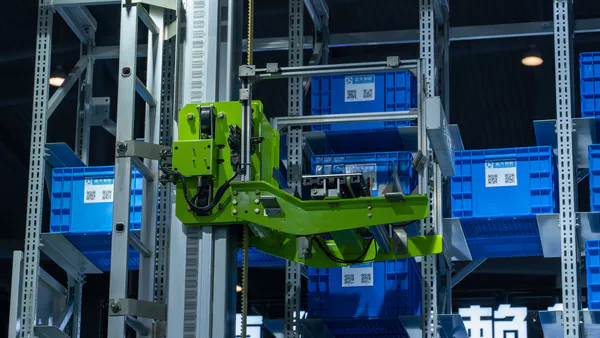
Technological innovations are transforming warehouse operations worldwide. Automation technologies such as robotic picking systems, autonomous mobile robots, and automated storage and retrieval systems are becoming increasingly common in large distribution centers.
Artificial intelligence and machine learning are also being integrated into warehouse management systems to improve demand forecasting, inventory planning, and operational decision-making.
Another emerging trend is the development of smart warehouses that use IoT sensors to monitor equipment, track inventory, and optimize energy consumption. These technologies enable warehouses to operate more efficiently and sustainably.
Cloud-based WMS solutions are also gaining popularity because they allow organizations to access warehouse data remotely and scale their operations more easily.
Conclusion
Warehouse management systems play a vital role in modern logistics and supply chain management. By automating warehouse processes and providing real-time visibility of inventory and operations, WMS technologies help organizations improve efficiency, reduce costs, and enhance customer satisfaction.
The literature reviewed in this study demonstrates that implementing a warehouse management system can significantly improve inventory accuracy, optimize warehouse workflows, and accelerate order fulfillment. However, successful implementation requires careful planning, adequate training, and effective integration with existing enterprise systems.
As technology continues to evolve, warehouse management systems will become even more sophisticated, incorporating advanced automation, artificial intelligence, and data analytics capabilities. Organizations that adopt these technologies will be better positioned to compete in increasingly complex global supply chains.